

HomeSeal 08

Search History
Popular Searches
Dealer Login / Sign Up

In September just passed, BYD stood on the sales champion podium again.
However, behind the crown's glory, the comparison of data is striking: domestic sales dropped nearly 13%, overseas sales surged over 153%. BYD's growth engine, from the fierce red ocean competition domestically, shifted to the high-risk blue ocean market overseas.
Wang Chuanfu steers BYD towards the deep blue, but ahead waiting for him are two major challenges that must be overcome.

In September just passed, BYD sales remained very hot.
Sales and production bulletin shows, in this year September BYD new energy vehicles sold 463,600 units, compared to 396,300 units of the same period last year, a year-on-year surge of 16.99%.
Such dazzling achievements keep BYD far ahead in the industry. At the same time, SAIC Group 406,000 units, nearly 60,000 units less than BYD.
Also Chery 292,300 units, Geely 292,200 units, Changan 228,900 units, Great Wall 114,900 units, all are far from BYD.

It is worth noting that, among BYD's 463,600 units total sales, domestic sales 282,900 units, year-on-year decline 12.97%; overseas sales 180,700 units, year-on-year surge 153.59%.
CPCA data shows, domestic car market September sales year-on-year decline about 25%.
Although BYD domestic sales ran ahead of the general market, the strong contrast of their domestic and overseas sales rise and fall also indicates, when domestic price war sees no end, and plug-in hybrid bonus accelerates to vanish, overseas is no longer a "side plot" to add icing on the cake, but a "main quest" concerning future survival.
Sales growth focus shifts outward, BYD enters a new battlefield.
2. From Making Cars to Making ShipsLeading BYD into this new overseas battlefield, Wang Chuanfu faces two challenges. The first challenge, ships are not enough. Who would have thought, BYD's biggest bottleneck going overseas currently is not cars but ships.
BYD is very hot overseas, if not for transport capacity limits, sales could be increased significantly. To some extent, this is a sweet burden.
As early as 2022, Wang Chuanfu invested 5 billion yuan to order Ro-Ro ships, building a proprietary fleet. January 2024, the first "Pioneer 1" made first voyage to Europe.
Since then, Changzhou, Hefei, Shenzhen, Xi'an, Changsha, Zhengzhou, Jinan ships joined sequentially. A total of 8 ships, annual capacity over 1 million units.

But for today's BYD, such capacity is already far from enough.
This year BYD car export target, jumped from 1.5 million units to 2 million units, next year is as high as 2.5 million units. Existing capacity is like a small boat crossing a river, hard to carry massive volume.
So BYD added again, ordered 10 more Ro-Ro ships, 2027 to 2029 batch delivery.
At that time, BYD's own car transport fleet will expand to 18 ships, annual transport capacity from current 1 million level, jump to 2.5 million level. Export sales constrained by capacity limits, BYD must win this "capacity battle".
3. The Road to Globalization is Still LongTransport ships transport cars manufactured domestically to overseas markets, building factories abroad means directly making cars locally and selling directly.
With Chinese cars becoming more and more powerful, causing certain impact on car markets in multiple overseas countries, they started requiring Chinese car companies to build factories locally, make cars locally and sell locally, keeping jobs, taxes, etc., also locally.
BYD and other Chinese car companies, while transporting Chinese cars out overseas, also need to invest heavily in building factories overseas.
Toyota with annual sales exceeding 10 million units, why becoming the world's largest car company, mainly rooted in it having factories, suppliers, dealers, financial services and after-sales networks everywhere in the world.

Including Europe, Japan, India and other multiple major car markets, currently all have obvious entry barriers for Chinese cars.
They mainly target vehicles entering local markets from China in export form, surrounding and intercepting Chinese cars through tariffs and other measures.
Japanese car companies like Toyota, when going global back then, also encountered such entry barriers. In the 20th century Japanese cars entered the US at the beginning, also encountered huge political resistance.
So Toyota no longer stuck to the old path of "Made in Japan, Sold Globally", but spread production lines overseas, completing manufacturing and sales locally.

BYD currently also walks this path, accelerating overseas factory investment and construction, such as Thailand and Indonesia factories in Southeast Asia, Hungary factory in Europe, Brazil factory in the Americas, etc.
This is letting BYD take root locally, from "Chinese export car company" changing to "Local car manufacturer". Of course, investing and building car factories is just the first step.
Whether R&D management can integrate, whether after-sales can keep up, whether products can adapt to regulations, unions and consumption habits... BYD has many more things to do.
From "BYD of China" to "World BYD", BYD's globalization speed is fast, but compared to giants like Toyota, there is still a long road to go.


Pada bulan September yang baru berlalu, BYD sekali lagi naik ke pentas juara jualan.
Tetapi di sebalik cahaya mahkota, perbandingan sekumpulan data sangat jelas: Jualan domestik turun hampir 13%, jualan luar negara melonjak melebihi 153%. Enjin pertumbuhan BYD, dari 'laut merah' yang ganas di dalam negeri, beralih ke 'laut biru' yang bergelora di luar negara.
Wang Chuanfu mengarahkan BYD menuju biru gelap, tetapi yang menantinya di hadapan adalah dua cabaran besar yang perlu dikalahkan.
Pada bulan September yang baru berlalu, jualan BYD masih sangat tinggi.
Laporan pantas pengeluaran dan jualan menunjukkan, pada September tahun ini BYD menjual 463,600 unit kereta elektrik baharu, berbanding 396,300 unit pada tempoh yang sama tahun lalu, meningkat 16.99% secara tahun ke tahun.
Prestasi cemerlang seperti ini membuatkan BYD masih jauh memimpin dalam industri. Pada tempoh sama, SAIC Group 406,000 unit, hampir 60,000 unit kurang daripada BYD.
Seterusnya Chery 292,300 unit, Geely 292,200 unit, Changan 228,900 unit, Great Wall 114,900 unit, semua jauh berbeza daripada BYD.
Perlu dicatat, daripada jumlah jualan 463,600 unit BYD, jualan domestik 282,900 unit turun 12.97% tahun ke tahun; jualan luar negara 180,700 unit melonjak 153.59% tahun ke tahun.
Data Persatuan Kereta Penumpang China menunjukkan, jualan pasaran kereta domestik pada September turun kira-kira 25% tahun ke tahun.
Walaupun jualan domestik BYD mengalahkan pasaran besar, perbandingan jelas di mana satu naik satu turun antara jualan domestik dan luar negara juga menunjukkan, apabila perang harga domestik tiada akhir dan kelebihan hibrid plug-in bertambahnya, luar negara bukan lagi "plot sampingan" yang menyempurnakan, tetapi "tugas utama" yang berkaitan dengan kelangsungan hidup masa depan.
Fokus pertumbuhan jualan beralih ke luar, BYD memasuki medan baharu.
2. Dari Membuat Kereta ke Membuat Kapal LautMemimpin BYD memasuki medan baharu luar negara ini, Wang Chuanfu menghadapi dua cabaran. Cabaran pertama, kapal tidak cukup. Siapa sangka, halangan terbesar BYD pergi ke luar negara bukan kereta tetapi kapal pengangkut.
BYD sangat popular di luar negara, sekiranya tiada had keupayaan pengangkutan, jualan boleh ditingkatkan dengan ketara. Dalam satu erti kata, ini adalah bebanan yang manis.
Sejak tahun 2022, Wang Chuanfu melabur 5 bilion yuan untuk memesan kapal pengangkut kenderaan, membina armada sendiri. Januari 2024, kapal pertama "Pelopor 1" melakukan perjalanan sulung ke Eropah.
Seterusnya, Changzhou, Hefei, Shenzhen, Xi'an, Changsha, Zhengzhou, Jinan mengikuti satu demi satu. Jumlah 8 kapal, keupayaan tahunan melebihi 1 juta unit.
Tetapi bagi BYD sekarang, keupayaan begini sudah tidak cukup.
Sasaran eksport kereta BYD tahun ini meningkat dari 1.5 juta unit ke 2 juta unit, tahun depan lagi setinggi 2.5 juta unit. Keupayaan sedia ada seperti sampan menyeberangi sungai, suka menampung ribuan tentera.
Maka BYD menambah lagi, memesan tambahan 10 kapal pengangkut, diedarkan secara bertahap dari 2027 hingga 2029.
Pada ketika itu, armada pengangkutan kereta sendiri BYD akan mengembang ke 18 kapal, keupayaan pengangkutan tahunan dari tahap 1 juta unit sekarang, meningkat ke tahap 2.5 juta unit. Jualan eksport terhad oleh keupayaan pengangkutan, BYD mesti menang "perang keupayaan" ini.
3. Laluan Globalisasi Masih PanjangKapal pengangkut membawa kereta yang dibuat di dalam negara ke luar negara, membina kilang di luar negara bermaksud membuat dan menjual terus di tempat tersebut.
Bersama-sama kereta China semakin kuat, memberi kejutan tertentu kepada pasaran kereta di banyak negara luar, mereka mula meminta syarikat kereta China membina kilang di tempat tersebut, membuat dan menjual kereta di tempat tersebut, mengekalkan pekerjaan, cukai dan lain-lain di tempat itu.
Syarikat kereta China seperti BYD, selain membawa kereta China pergi ke luar negara, juga perlu melabur dan membina kilang dengan kuat di luar negara.
Toyota yang jualan tahunan melebihi 10 juta unit, menjadi syarikat kereta terbesar di dunia, utamanya kerana berakar umbi pada ia mempunyai kilang, pembekal, pengedar, perkhidmatan kewangan dan rangkaian selepas jualan di seluruh dunia.
Disebutkan termasuk Eropah, Jepun, India dan beberapa pasaran kereta utama lain, kini mempunyai halangan masuk yang jelas terhadap kereta China.
Mereka utamanya menyasarkan kenderaan China yang memasuki pasaran tempatan melalui bentuk eksport, melalui cukai dan pelbagai langkah lain untuk menyekat kereta China.
Syarikat kereta Jepun seperti Toyota dahulu apabila menuju global, juga menghadapi halangan masuk begini. Pada permulaan kereta Jepun masuk Amerika Syarikat pada abad lalu, juga mengalami rintangan politik yang besar.
Maka Toyota tidak lagi berpegang pada jalan lama "Buatan Jepun, Jual Global", sebaliknya meletakkan barisan pengeluaran ke luar negara, melengkapkan pembuatan dan jualan di tempat tersebut.
BYD kini juga berjalan di jalan seperti ini, mempercepatkan pelaburan dan pembinaan kilang luar negara, contohnya Thailand, Indonesia di Asia Tenggara, Hungary di Eropah, Brazil di Amerika, dan lain-lain.
Ini membolehkan BYD berakar di tempat tersebut, berubah dari "Syarikat Eksport Kereta China" kepada "Pengilang Kereta Tempatan". Tentu saja, melabur dan membina kilang kereta hanyalah langkah pertama.
Adakah pengurusan penyelidikan dan pembangunan boleh diintegrasikan, adakah pasca jualan boleh mengikut, adakah produk boleh disesuaikan dengan peraturan, serikat pekerja dan tabiat pengguna... Banyak lagi perkara yang perlu dilakukan BYD.
Dari "BYD China" ke "BYD Dunia", kelajuan globalisasi BYD sangat pantas, tetapi berbanding raksasa seperti Toyota, masih ada jalan yang panjang perlu dilalui.

BYD Vice President Li Ke clarified the company's global strategic goals for the next phase at a summit in Singapore.

The gist is:
Plan to become the world's largest car manufacturer within the next five years, surpassing Toyota Motor and Volkswagen Group; BYD will adhere to the going global strategy and continuously expand into European, Central American, South American, Asian, and Oceania markets. BYD leads in multiple fields such as energy storage, photovoltaics, and batteries; battery technology is its core competitiveness, not just having advantages in the automotive field. BYD will not enter the US market temporarily, Li Ke stated that BYD hopes for a business environment with certainty and clear prospects; only then can BYD grasp the initiative for investment.
The above are Li Ke's views. Li Ke is not only the Vice President of BYD but also the wife of BYD Chairman Wang Chuanfu; the weight of her expressed views is evident.

Currently, Toyota Motor is the number one car manufacturer in global sales, and the second is Volkswagen Group.
The ranking of the top ten global car manufacturers by sales for the first half of 2026 is as follows:
There are three Chinese car companies among the top ten, and BYD is indeed one of them.
However, looking at the sales data for the first half of the year alone, there is still a big gap between BYD and Volkswagen Group (Germany) in second place; the latter's sales are 2.28 times that of BYD for the same period; meanwhile, Toyota Motor (Japan), ranked first, sold 2.98 times the volume of BYD for the same period, the gap is obvious.

Moreover, the market share of joint venture car brands in China has declined significantly at this stage. The combined market share of the four major German brands (Volkswagen, Audi, BMW, and Mercedes-Benz) has fallen to below 20%, and the Japanese brands are slightly lower. The data shows that the market share of Toyota Motor and Volkswagen Group in major global markets is not to be underestimated. Furthermore, the domestic market has entered a stock stage. Therefore, whether it is BYD, Volkswagen, or Toyota Motor, the main battlefield for their next phase will be the expansion of overseas markets.
For Toyota Motor and Volkswagen Motor, which already occupy a large share of the overseas market, the natural task for the next phase is to fight a battle to protect market share.

Relying on the first-mover advantage in new energy vehicles and the policy advantage of the electrification of China's domestic automotive industry, BYD has successfully become the car company with the highest sales volume in China currently. However, overseas market environments inevitably have significant differences, and the energy structures of different countries and regions also vary significantly. As for the technological moat of electric vehicles, it is objectively not wide enough. Currently, the main advantage of China's new energy vehicles is still the advantage of a complete industrial scale and system.
As Wei Jianjun of Great Wall Motor stated: Automobile electrification is a China strategy, not a strategy of other countries. Therefore, it is impossible to predict now whether BYD can become the world's number one car company within five years as Li Ke predicted. We can only wait and see.

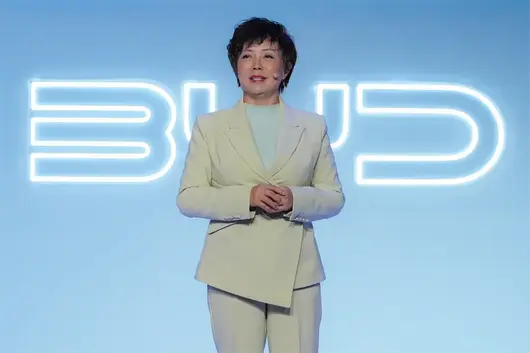

Timbalan Presiden BYD Li Ke memperjelaskan strategi global perusahaan untuk peringkat seterusnya pada satu persidangan di Singapura.
Intipati maksudnya:
Rancangan untuk menjadi pengeluar kenderaan terbesar di dunia dalam lima tahun akan datang, mengatasi Toyota Motor dan Kumpulan Volkswagen; BYD akan mengekalkan strategi pengembangan pasaran luar negara, dan secara berterusan membuka pasaran di Eropah, Amerika Tengah, Amerika Selatan, Asia dan Australia. BYD telah memimpin dalam pelbagai bidang seperti penyimpanan tenaga, photovoltaik, dan bateri, teknologi bateri merupakan keupayan teras yang tidak hanya unggul dalam bidang automotif. BYD sementara tidak akan memasuki pasaran Amerika Syarikat, Li Ke menyatakan BYD ingin persekitaran perniagaan mempunyai kepastian, prospek yang jelas, hanya dengan cara ini BYD dapat menguasai inisiatif untuk pelaburan.
Inilah pandangan Li Ke, Li Ke bukan sahaja Timbalan Presiden BYD, tetapi juga isteri Pengerusi BYD Wang Chuanfu, berat pandangan yang diunjukkannya dapat dilihat.
Sekarang pengeluar kenderaan nombor satu jualan global adalah Toyota Motor, nama kedua adalah Kumpulan Volkswagen.
Peringkat sepuluh teratas jualan kenderaan global syarikat automotif pada separuh pertama tahun 2026 adalah:
Dalam sepuluh teratas, terdapat tiga syarikat automotif China, dan BYD memang ada di dalamnya.
Namun, berdasarkan data jualan separuh tahun sahaja, BYD masih mempunyai jurang yang besar jika dibandingkan dengan Kumpulan Volkswagen Jerman yang menduduki tempat kedua; yang terakhir adalah 2.28 kali ganda jualan BYD pada tempoh yang sama; dan jualan Toyota Motor Jepun yang menduduki tempat pertama adalah 2.98 kali ganda jualan BYD pada tempoh yang sama, jurang tersebut adalah nyata.
Dan pada peringkat semasa, kepenyetan pasaran jenama kereta gabungan milik China telah menurun dengan ketara, jumlah kepenyetan pasaran empat jenama utama Volkswagen, Audi, BMW dan Mercedes dalam kereta Jerman sudah kurang daripada 20%, kereta Jepun adalah sedikit lebih rendah; melalui data boleh dilihat bahawa kepenyetan pasaran Toyota Motor dan Kumpulan Volkswagen di pasaran global yang besar adalah tidak boleh dipandang ringan, sementara pasaran domestik telah memasuki peringkat stok tetap, jadi sama ada BYD, Volkswagen atau Toyota Motor, medan tempur utama peringkat seterusnya adalah pada pengembangan pasaran luar negara.
Bagi Toyota Motor dan Volkswagen yang telah menguasai sebahagian besar pasaran luar negara, langkah seterusnya semestinya adalah memperjuangkan pertahanan kepenyetan pasaran.
BYD bergantung kepada kelebihan mula pertama kenderaan baharu dan kelebihan dasar peng elektrikan industri automotif domestik, berjaya menjadi pengeluar kereta dengan jualan tertinggi di China; namun persekitaran pasaran luar negara sememangnya berbeza secara ketara, struktur tenaga negara dan kawasan yang berbeza juga mempunyai perbezaan besar; mengenai parit teknologi kenderaan elektrik, secara objektif memang tidak cukup lebar, kelebihan utama kenderaan baharu China semasa adalah saiz dan sistem industri yang lengkap.
Seperti yang diceritakan oleh Wei Jianjun dari Kenderaan Great Wall: Elektrifikasi automotif adalah strategi China, bukan strategi negara lain. Oleh itu, sekarang tidak dapat meramalkan sama ada BYD boleh seperti ramalan Li Ke, iaitu menjadi pengeluar kereta nombor satu global dalam tempoh lima tahun, boleh hanya berkata tunggu dan lihat sahaja.

July 8, BYD's 17 millionth new energy vehicle rolled off the line at the Xi'an factory. From 16 million to 17 million, it took less than 3 months. Average daily production exceeds 12,000 units.
 17 million units, what concept is this? Over a century of global automotive history, no new energy vehicle manufacturer has ever reached this scale. More crucially, from the first million taking 13 years to now adding another million in just over 80 days—this acceleration curve is truly staggering. This is not just a leap in production and sales data, but also creates a new benchmark for the development of the global new energy industry.
Many think BYD just rode the wave of new energy policy benefits. But can policy benefits explain the production ramp-up of a million units in three months? Can it explain the overseas growth rate of 789,000 units in half a year, up 68% year-on-year? Can it explain a Chinese carmaker beginning to export technical standards to the globe?
Obviously not.
What truly supports this number of 17 million units are three core capabilities that are hard for others to replicate.
First: Full-stack independent research, from "being bottlenecked" to "holding in hand"BYD's technology route has never been single-point breakthroughs, but rather full-stack independent research.
In March 2026, the second-generation Blade Battery and Flash Charging technology were released. Fully charged in 5 minutes at room temperature, 9 minutes full, plus only 3 minutes at minus 30 degrees — overcoming the "slow charging" and "cold weather charging difficulty" two major global problems in one go.

In May, China's first 4nm process smart driving chip "Xuanji A3" mass-produced, three-chip collaborative computing power exceeds 2,100 TOPS. Same month, BYD took the lead in promising to guarantee city pilot safety for 1 year, all series available with Sky's Eye B Laser version.
From battery, motor, electronic control to chips, smart driving, chassis, BYD achieved full-link independent controllability from upstream lithium mine resources to downstream complete vehicles. Core link independent R&D and production rate exceeds 90%.
Others build cars by assembling supply chains, BYD builds cars from mine to complete vehicle one-stop. Once this system runs smoothly, it is a moat others cannot copy, and also the bottom-line support for BYD pushing the new energy industry to a new height.
Good technology is just a premise. What makes BYD truly amazing is that — these core technologies are not used for "showing off skills". Sky's Eye standard equipment across series, city pilot and smart parking "safety double guarantee", making good technology accessible to everyone. The 17 million units data proves that domestic suppliers already possess global competitiveness in automotive-grade certification, yield control, and cost optimization.
Technology is not used for enshrinement, but for popularization. This is what defining standards should look like.
Second: Vertical integration, from "subject to others" to "self-sufficient"BYD is not only a complete vehicle manufacturer, but also a vertical integrated supply chain giant. Its subsidiaries such as FinDreams Battery, FinDreams Power, BYD Semiconductor, etc. constitute a complete domestic Tier1 camp.
 What is the direct result brought by this model? Core component costs are more than 33% lower than the industry average.
In the early days of global chip shortage and raw material price increase cycles, peers reduced production and stopped work, BYD production capacity was almost unimpacted. When others were bottlenecked by supply chains, BYD quietly built cars. When others were still grabbing chips, BYD had already designed its own chips.
17 million units rolled off the line is not only a victory for the complete vehicle factory, but also a production volume landmark for the domestic supply chain. From second-generation Blade Battery to Sky's Eye smart driving, autonomous controllability and mass production delivery capability of core components have become the industry moat. This fully industry chain autonomous controllability system is itself a new height that the new energy industry can reach.
This model allows cutting-edge technology to quickly trickle down to all series models, no need for high-end cars to exclusively occupy core configurations. Seal 08 sells from 196,900 starting, but equipped with DiSus-A, rear-wheel steering, 905km range, flash charging, smart driving double guarantee — 200,000 RMB car, million-level configuration.
This is not a price war, this is a system war.
Third: Globalization, from "product going overseas" to "standards going overseas"In the first half of 2026, BYD sold 789,000 units overseas, up 68% year-on-year, overseas sales proportion exceeds 43%. June single month exports 175,300 units, creating a new historic high.
But more noteworthy than sales volume is the layout. Thailand, Brazil factories already mass-produced, Hungary, Indonesia factories to start production in 2026. From Southeast Asia to South America to Europe, a localized manufacturing system covering Asia, Europe, and Africa is taking shape.
More crucially — BYD is simultaneously exporting charging standards. Scale implementation of Flash Charging stations overseas at the end of 2026, from "Flash Charge China" to "Flash Charge Planet". Domestic has already built 7,018 Flash Charging stations, covering 325 cities, end of year target 20,000 stations.
Before it was Chinese cars chasing others' standards. Now it is others considering whether to connect to China's charging standards. This role shift is the most worthy of discussion behind 17 million units.
Final Thoughts
Xi'an is the place where BYD's car building dream started. 2003 first car rolled off the line, 2008 global first plug-in hybrid born, to today 17 millionth new energy vehicle rolls out from here.

17 million units is not just cold production capacity numbers, but also a landmark node for Chinese carmakers turning from policy followers to technology definers. From the depth of technology self-research, to the breadth of vertical integration, to the speed of global layout, BYD used a complete system capability to turn 17 million units from numbers into confidence, pushing the Chinese new energy industry to an unprecedented new height.
This is not only a milestone in production and sales volume, but also a new starting point for a Chinese carmaker to export standards and rules to the globe.
#BYD17MillionthNewEnergyVehicleRolledOffLine#
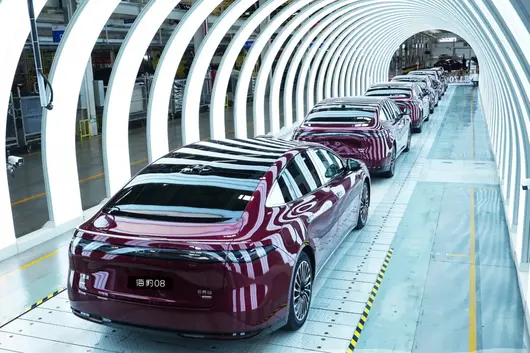

82 days. From 16 million to 17 million, BYD only took 82 days.
This speed, placed in the history of the global automotive new energy industry, is not "rare", it has never happened before.

On July 8, Xi'an, a Seal 08 drove down the production line of the BYD Xi'an Factory.
It marks the official birth of BYD's 17 millionth new energy vehicle, making BYD the first automaker globally to reach 17 million new energy vehicle deliveries.
From 16 million to 17 million, BYD only took 82 days. Sales in the first half of this year reached 1.8085 million, with overseas cumulative sales nearing 790,000, a year-on-year increase of 68%.
In 2003, BYD's first car was delivered here. In 2008, the world's first plug-in hybrid vehicle F3DM was born here.
Today, the 17 millionth new energy vehicle once again drives out of here to the world. From 1 to 17 million, the Xi'an factory witnessed BYD's process from moving China to the world.


Behind 17 Million
In the first half of this year, BYD's cumulative sales reached 1,808,511 vehicles, among which June single-month sales broke through the 400,000 mark for the first time, reaching 403,400 vehicles.
Especially worth noting is the overseas market. Passenger cars and pickups overseas cumulative sales in the first half reached 789,367, up 68% year-on-year, with overseas sales accounting for over 40% of total sales.
In May and June, BYD's market share in Germany exceeded that of Toyota.

This is not a specific model, it is overall market share. Germany is the heart of the European automotive industry, and Toyota is a giant that has cultivated here for 50 years. BYD completed the overtaking here in less than 5 years.
This would have been a joke to German car executives 10 years ago.
Additionally, the BYD Shark PHEV went on sale in the UK, with a WLTP pure electric range of 90km, comprehensive 674km, priced at £47,290, approximately 430,000 RMB.
And in Thailand, BYD has already dominated the feeds.
On July 12, BYD is about to announce its first brand spokesperson, with many Thai fan accounts intensively reposting to heat up the buzz, with the hot candidate pointing to Thai-Chinese star Lingling Kwong.

Chinese automakers in Southeast Asia have permeated from the product level to the cultural level. When Thai young people start screaming for BYD spokespersons, the forty-year emotional monopoly of Japanese cars in Southeast Asia is beginning to crack.

Technical Barriers
This year, BYD has continuously dropped heavy bombs on two main lines: electrification and intelligence.
In March, the second generation Blade Battery and Supercharge technology were launched, which can charge from 10% to 70% in 5 minutes at room temperature, and to 97% in 9 minutes; even in extreme cold environments of -30℃, charging time is only 3 minutes longer than room temperature.

This is mass production technology. No automaker in the world can achieve this charging speed while guaranteeing low-temperature performance.
As of June 30, a total of 7018 Supercharge stations have been built nationwide, covering 325 cities; BYD also announced that by the end of the year, 20,000 Supercharge stations will be built nationwide, leading new energy vehicles into the comprehensive Supercharge era, injecting momentum into the zero-carbon dream.
In May, BYD once again took the lead in promising a 1-year safety backing for City Pilot, and announced that all models can be equipped with God's Eye B Assist Driving LiDAR Version, creating an era of universal City Pilot.


The "Flagship Answer" of 17 Million Vehicles
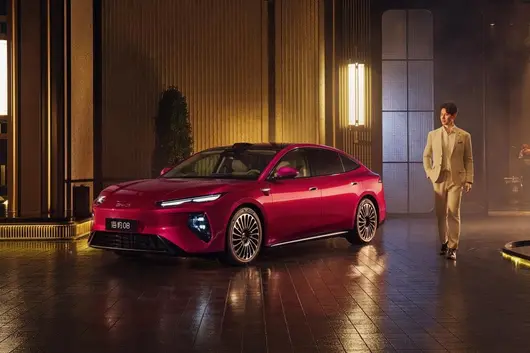
Seal 08
Seal 08 went on sale officially on July 2, priced from 196,900 to 239,900 RMB. At this price, when you look at the configuration of Seal 08, it is enough to make competitors at the same price point silent.

Pure electric version CLTC max range 905 km; all models equipped with Native Supercharge Platform and second generation Blade Battery, 5 minutes to charge well, 9 minutes to charge full. Plug-in hybrid version full tank full battery comprehensive range reaches 1,660 km.
All models standard equipped with front double wishbone and rear five-link independent suspension, equipped with DiSus-A Closed Dual-chamber Air Suspension and Road Preview System, equipped with Rear Wheel Active Steering, turning radius of only 4.62 meters. This is a chassis configuration previously only seen on million-level luxury cars.
All models standard equipped with God's Eye B Assist Driving LiDAR Version; official provides dual safety backing for City Pilot and Intelligent Parking. No industry common sickness of "high specs exclusive, entry reduced specs".
Body dimensions 5150mm×1999mm×1505mm, wheelbase 3030mm; front dual zero gravity seats feature ventilation, heating and massage functions, equipped with 20-speaker Devialet sound system; over 90% soft padding uses Mother and Baby Grade Eco-Friendly Nappa Leather.
Seal 08 integrates 37 global firsts, with unique product strengths such as Supercharge technology, dual safety backing for parking intelligent driving, 905 km pure electric range, DiSus-A plus rear wheel steering, pulling the threshold of million-level flagship experience down to the 200,000 level.

Summary
In 2003, BYD delivered its first car in Xi'an.
At that time, no one believed that this private enterprise starting with batteries could build a decent car, let alone believed it could truly conquer Germany.
But BYD did it.
Ten years ago, Chinese automakers were learning from Toyota. Now, Toyota is learning from BYD.
From the first 1 million vehicles taking 13 years to the latest 1 million vehicles taking only 82 days.
In the future, BYD will continue to adhere to technological innovation, perfect global industrial layout, with higher quality and higher value products, leading the global new energy vehicle industry towards a new height, injecting momentum into the zero-carbon dream.
In May this year, data from the European Automobile Manufacturers Association (ACEA) shows that Chinese car brands in Europe's 31 countries saw overall sales for the first time exceed Japanese brands. Chinese automakers (BYD, SAIC, Geely, Chery, Leapmotor) sold a total of 138,400 vehicles, while Japanese automakers (Toyota, Honda, Nissan, etc.) sold a total of 130,400 vehicles.
The story of Chinese new energy vehicles has just entered the climax.

82 Hari. Dari 16 Juta ke 17 Juta, BYD hanya mengambil masa 82 hari.
Kecepatan ini dalam sejarah industri kenderaan baharu global, bukan "langka", tetapi tidak pernah ada.
8 Julai, Xi'an, sebuah Seal 08 keluar dari barisan pengeluaran kilang BYD Xi'an.
Ini menandakan kenderaan baharu ke-17 Juta BYD secara rasmi telah dilahirkan, BYD sekali gus menjadi pengeluar kereta pertama di dunia yang mencapai pengeluaran kenderaan baharu ke-17 Juta.
Dari 16 Juta ke 17 Juta, BYD hanya menggunakan 82 hari. Penjualan separuh tahun pertama ini 1.8085 Juta, luar negara terkumpul hampir 790,000, pertumbuhan tahunan 68%.
2003, kereta pertama BYD keluar dari sini. 2008, kereta hibrid penyambung soket pertama di dunia F3DM dilahirkan di sini.
Kini, kenderaan baharu ke-17 Juta sekali lagi keluar dari sini menuju dunia. Dari 1 ke 17 Juta, kilang Xi'an menyaksikan proses BYD dari China menuju dunia.
17 Juta di Sebalik
Separuh tahun ini, jumlah jualan terkumpul BYD mencapai 1,808,511 buah, di mana Jun tunggal jualan pertama kali melampaui 400,000, mencapai 403,400 buah.
Terutama perlu diberi perhatian adalah pasaran luar negara, separuh tahun kenderaan penumpang dan pikap luar negara terkumpul dijual 789,367 buah, pertumbuhan tahun 68%, bahagian jualan luar negara melebihi 40%.
Mei dan Jun, bahagian pasaran BYD di Jerman melebihi Toyota.
Ini bukan model tertentu, tetapi bahagian pasaran keseluruhan. Jerman adalah jantung industri automotif Eropah, Toyota adalah raksasa yang telah bekerja keras di sini selama 50 tahun. BYD menggunakan masa kurang daripada 5 tahun untuk menyelesaikan penerusan di sini.
Jika ini diletakkan 10 tahun lalu, eksekutif pengeluar kereta Jerman akan menganggapnya sebagai bahan lawak.
Selain itu, BYD Shark PHEV dijual di United Kingdom, WLTP jarak penuh elektrik 90km, gabungan 674km, harga £47,290, kira-kira RM 430,000.
Sedangkan di Thailand, BYD sudah menjuarai halaman.
12 Julai BYD akan mengisytiharkan duta jenama pertama, akaun peminat Thailand yang banyak membalas semula secara ketat, pilihan popular mengarah ke bintang Thailand Lingling Kwong.
Syarikat kereta China di Asia Tenggara, telah daripada peringkat produk meresap ke peringkat budaya. Apabila anak muda Thailand mula menjerit untuk duta jenama BYD, monopoli emosi selama empat puluh tahun kereta Jepun di Asia Tenggara, mula menunjukkan retak.
Pintu Masuk Teknologi
Tahun ini, BYD terus menabur bom berat pada dua garis utama elektrifikasi dan kecerdasan.
Mac, mengeluarkan Bateri Bilah Edisi Kedua dan teknologi cas pantas, dalam suhu biasa 5 minit boleh cas dari 10% ke 70%, 9 minit cas ke 97%; walaupun dalam persekitaran sejuk melampau零下 30℃, masa cas hanya lebih 3 minit berbanding suhu biasa.
Ini adalah teknologi pengeluaran. Tiada pengeluar kereta di dunia boleh melakukannya pada kelajuan cas ini sambil menjamin prestasi suhu rendah.
Sampai 30 Jun, seluruh negara telah terbina 7,018 stesen cas pantas, meliputi 325 bandar; BYD lebih lagi mengisytiharkan akan membina 20,000 stesen cas pantas di seluruh negara pada akhir tahun, memimpin kenderaan baharu memasuki zaman cas pantas, memberi tenaga untuk impian sifar karbon.
Mei, BYD sekali lagi secara pertama menjanjikan jaminan keselamatan bandar 1 tahun, dan mengumumkan kesemua model boleh memuatkan sistem bantuan pemandu laser Edition B Tian Shen Zhi Yan, membuka zaman pemanduan bandar untuk semua orang.
Jawaban "Flagship" 17 Juta
Seal 08
Seal 08 dilancarkan rasmi 2 Julai, RM 196,900 - RM 239,900. Harga ini, apabila anda melihat peralatan Seal 08, cukup membuat lawan di harga sama senyap.
Versi penuh elektrik CLTC jarak maksimum 905km; kesemua model memuat platform cas原生 dan Bateri Bilah Edisi Kedua, 5 minit cas baik, 9 minit cas penuh. Versi hibrid penuh minyak dan penuh elektrik gabungan jarak cap 1,660 kilometer.
Kesemua model standard lengan ganda depan ditambah lima penggantungan belakang bersandar, memuat Yunian-A tutup rongga udara suspensi dan sistem prapandangan jalan,配备 roda belakang pusingan aktif, radius pusingan hanya 4.62 meter. Ini adalah set konfigurasi sasis yang biasanya hanya boleh dilihat pada kereta mewah peringkat jutaan.
Kesemua model standard sistem bantuan pemandu laser Edition B Tian Shen Zhi Yan; rasmi untuk pemanduan bandar dan parkir pintar menyediakan perisai keselamatan ganda. Tidak melakukan "pilihan tinggi ekslusif, pilihan awal kurang" penyakit industri.
Saiz badan 5150mm×1999mm×1505mm, wheelbase 3030mm; hadapan kedua-dua kerusi graviti sifar mempunyai pengudaraan, pemanasan dan urutan fungsi,配备 20 speaker Devialet audio; lebih 90% pembungkusan lembut menggunakan kulit asli kelestarian ibu dan bayi.
Seal 08 menggabungkan 37 rekod dunia menjadi satu, dengan cas pantas teknologi, parkir pintar ganda perisai keselamatan, 905km jarak penuh elektrik, Yunian-A ditambah roda belakang pusingan kekuatan produk tiada orang ada, menarik ambang pengalaman flagship peringkat jutaan ke peringkat 200,000.
Ringkasan
2003, BYD di Xi'an melancarkan kereta pertama.
Pada ketika itu, tiada siapa percaya syarikat swasta yang bermula dari bateri boleh menghasilkan kereta yang boleh dipercayai, lebih-lebih lagi tidak percaya ia boleh benar-benar menakluki Jerman.
Tetapi BYD telah berjaya.
10 tahun lalu syarikat kereta China belajar Toyota. Sekarang, Toyota belajar BYD.
Dari 100 Juta pertama mengambil 13 tahun, hingga 100 Juta terbaru hanya mengambil 82 hari.
Pada masa depan, BYD akan terus mempertahankan inovasi teknologi, lengkapkan susun atur industri global, dengan produk kualiti lebih tinggi dan nilai lebih tinggi, memimpin industri kenderaan baharu global menuju tahap baharu, memberi tenaga untuk impian sifar karbon.
Mei tahun ini, data Pertubuhan Pengeluar Kereta Eropah (ACEA), jualan keseluruhan jenama kereta China di 31 negara Eropah pertama kali melebihi jenama Jepun. Syarikat kereta China (BYD, SAIC, Geely, Chery, Leapmotor) jumlah dijual 138,400 buah, syarikat kereta Jepun (Toyota, Honda, Nissan, dll) jumlah 130,400 buah.
Cerita kenderaan baharu China, baru sahaja memasuki klimaks.
© 2024 Bitauto.com. All Rights Reserved.
Bitauto (www.yiche.com and www.bitauto.com) is one of the most visited automotive websites in China. We provide detailed info on Chinese car brands available in your area. Please note that the information provided on this website is based on publicly available data and is for reference only. It may not be fully updated or accurate at all times.

Help us improve our website


