

Homeentrepreneur

Search History
Popular Searches
Dealer Login / Sign Up

In Malaysia's SUV market, many buyers compare Proton X50 and Chery Tiggo 8 when selecting a car. These two models are quite close in price and positioning. Today we will make a detailed comparison from multiple aspects to save you the time of research.
Proton X50 OTR price in Malaysia is RM 89,800 - 113,300, with 4 versions total, including 1.5T Executive (RM 89,800), 1.5T Premium (RM 101,800), 1.5T Flagship (RM 113,300), etc.
Chery Tiggo 8 OTR price in Malaysia is RM 129,750 - 129,750, with 1 version total, including 2026 1.6T Standard (RM 129,750), etc.
From the price perspective, Proton X50 starting price is indeed RM 39,950 cheaper than Chery Tiggo 8. If your budget is limited, Proton's entry level version can already meet daily needs. But also note that the few thousand difference may involve trade-offs in features, depending on your specific needs.

Proton X50 Safety Rating is 5★ (ASEAN NCAP), Active Safety Systems include ADAS (ACC, AEB, LKA, LDA, BSM, RCTA).
Chery Tiggo 8 Safety Rating is TBD, Active Safety Systems include Basic.
Regarding safety features, both cars received decent ratings. However, there are some functional differences between the Proton X50 ADAS (ACC, AEB, LKA, LDA, BSM, RCTA) and the Chery Tiggo 8 Basic. If you value active safety more, compare the feature lists of both carefully.

Proton X50 adopts 4WD drive system.
Chery Tiggo 8 adopts FWD drive system.
Proton's 4WD and Chery's FWD will offer different handling experiences, test drive comparison is recommended.

Proton X50 Warranty 5 years/150,000km, Maintenance Interval Every 10,000km or 6 months.
Chery Tiggo 8 Warranty 3 years/100,000km, Maintenance Interval Every 10,000km or 6 months.

Proton X50 and Chery Tiggo 8 are both mainstream choices in the Malaysian market, suitable for family use and daily commuting. If you value brand reputation and resale value more, prioritize the one with better reputation; if you care more about value for money and features, choose the model with richer configuration. Ultimately, it is suggested to test drive both, as personal experience is the most important.

Overall, Proton X50 and Chery Tiggo 8 are both very good car models in the Malaysian market. Which one to choose depends mainly on your personal needs and budget. It is recommended to do your research, compare quotes from multiple dealerships, and test drive to make a final decision. Buying a car is a major matter; spending time on research will definitely not be wrong.


喺馬來西亞嘅 SUV 市場,好多買家喺揀車嗰陣都會拎 Proton X50 同 Chery Tiggo 8 PHEV 嚟比較。呢兩款車喺價位同定位上都幾接近,今日我哋就從多個方面嚟做一個詳細對比,幫你節省做功課嘅時間。
Proton X50 喺馬來西亞嘅 OTR 售價係 RM 89,800 - 113,300,一共有 4 個版本,包括 1.5T Executive(RM 89,800)、1.5T Premium(RM 101,800)、1.5T Flagship(RM 113,300) 等。
Chery Tiggo 8 PHEV 喺馬來西亞嘅 OTR 售價係 RM 159,750 - 159,750,一共有 2 個版本,包括 1.6L Turbo Standard(RM 130,000)、1.6L Turbo Premium(RM 145,000) 等。
從價錢嚟睇,Proton X50 嘅起步價確實比 Chery Tiggo 8 PHEV 平咗 RM 69,950。如果你預算有限,Proton 嘅入門版已經可以滿足日常需要。但都要留意,平嗰幾千蚊,可能喺配備上會有取舍,具體要睇你嘅需要。
Proton X50 嘅安全評級係 5★ (ASEAN NCAP),主動安全系統包括 ADAS (ACC, AEB, LKA, LDA, BSM, RCTA)。
Chery Tiggo 8 PHEV 嘅安全評級係 TBD,主動安全系統包括 Basic。
安全配備方面,兩款車都拿到唔錯嘅評級。不過 Proton X50 嘅 ADAS (ACC, AEB, LKA, LDA, BSM, RCTA) 同 Chery Tiggo 8 PHEV 嘅 Basic 喺功能上有少少分別,如果你比較重視主動安全嘅話,可以仔細對比一下兩者嘅功能清單。
Proton X50 車身長 4400 mm,行李箱 400 L。
Chery Tiggo 8 PHEV 車身長 4400 mm,行李箱 400 L。
兩款車嘅尺寸幾乎一樣,車內空間分別唔大。呢個級別嘅車,日常使用完全夠用。
Proton X50 同 Chery Tiggo 8 PHEV 都係馬來西亞市場嘅主流選擇,適合家庭使用、日常通勤。如果你更重視品牌口碑同二手價,可以優先考慮口碑更好嗰一款;如果你更在意性價比同配備,那就揀配置更豐富嗰款。最終都係建議兩款都去試駕,親身體驗先係最重要嘅。
總嘅嚟講,Proton X50 同 Chery Tiggo 8 PHEV 都係馬來西亞市場好唔錯嘅車型。揀邊一部,關鍵都係要睇你個人需要同預算。建議大家做好功課,多比較幾間車行嘅報價,再去試駕做最終決定。買車係件大事,花少少時間做功課絕對唔會錯。

In Malaysia's SUV market, many buyers compare Proton X70 and Honda HR-V when choosing a car. These two models are quite close in price and positioning. Today, we will make a detailed comparison from multiple aspects to help you save time on research.
The Proton X70 OTR price in Malaysia is RM 106,800 - 122,300, with a total of 3 versions, including 1.5L Standard 2WD (RM 106,800), 1.5L Executive 2WD (RM 115,800), 1.5L Premium 2WD (RM 122,300), etc.
The Honda HR-V OTR price in Malaysia is RM 115,900 - 143,900, with a total of 4 versions, including 2026 e:HEV 1.5L RS (RM 143,900), 2026 1.5T V (RM 137,900), 2026 1.5T E (RM 130,900), etc.
From a price perspective, the Proton X70 starting price is indeed RM 9,100 cheaper than the Honda HR-V. If your budget is limited, the Proton entry-level version can already meet daily needs. But also note, the lower cost may involve trade-offs in features, depending on your specific needs.

The Proton X70 is equipped with a 1.5L Turbo, 140 hp. Official fuel consumption is 7.0 L/100km.
The Honda HR-V is equipped with a 1.5L Turbo, 140 hp. Official fuel consumption is 7.0 L/100km.
Both cars use the same powertrain system, the driving feel is basically the same in daily use. Fuel consumption is also similar, no need to worry too much about this point.

The Proton X70 body length is 4400 mm, trunk 400 L.
The Honda HR-V body length is 4500 mm, trunk 450 L.
In terms of space, the Honda HR-V body is 100 mm longer than the Proton X70, offering an advantage in passenger space. However, the Proton X70 is a bit more flexible for parking in the city, each has its trade-offs.
The Proton X70 uses FWD drive configuration.
The Honda HR-V uses FWD drive configuration.
Both cars have the same drive configuration, both are FWD, daily driving feel will not differ much.
Overall, both Proton X70 and Honda HR-V are very good models in the Malaysia market. Which one to choose depends mainly on your personal needs and budget. We suggest doing your research, comparing quotes from several dealerships, and then test driving to make the final decision. Buying a car is a big deal, taking time to research will never be wrong.


In Malaysia's SUV market, many buyers compare the Proton X50 and Chery Tiggo 8 PHEV when choosing a car. These two cars are quite close in price and positioning. Today, we will make a detailed comparison from multiple aspects to help you save time on research.
Proton X50 OTR price in Malaysia is RM 89,800 - 113,300, with a total of 4 versions, including 1.5T Executive (RM 89,800), 1.5T Premium (RM 101,800), 1.5T Flagship (RM 113,300), etc.
Chery Tiggo 8 PHEV OTR price in Malaysia is RM 159,750 - 159,750, with a total of 2 versions, including 1.6L Turbo Standard (RM 130,000), 1.6L Turbo Premium (RM 145,000), etc.
In terms of price, the starting price of Proton X50 is indeed RM 69,950 cheaper than Chery Tiggo 8 PHEV. If your budget is limited, Proton's entry-level version can already meet daily needs. But be aware, those few thousand Ringgit cheaper might involve trade-offs in features, which depends on your specific needs.
Proton X50 safety rating is 5★ (ASEAN NCAP), active safety system includes ADAS (ACC, AEB, LKA, LDA, BSM, RCTA).
Chery Tiggo 8 PHEV safety rating is TBD, active safety system includes Basic.
Regarding safety features, both cars have received good ratings. However, the Proton X50's ADAS (ACC, AEB, LKA, LDA, BSM, RCTA) and Chery Tiggo 8 PHEV's Basic differ slightly in functionality. If you value active safety highly, you can compare the feature lists of both carefully.
Proton X50 body length 4400 mm, trunk 400 L.
Chery Tiggo 8 PHEV body length 4400 mm, trunk 400 L.
The dimensions of both cars are almost the same, and the interior space difference is small. For this class of cars, it is fully sufficient for daily use.
Proton X50 warranty 5 years/150,000km, service interval every 10,000km or 6 months.
Chery Tiggo 8 PHEV warranty 3 years/100,000km, service interval every 10,000km or 6 months.
Proton X50 and Chery Tiggo 8 PHEV are both mainstream choices in the Malaysian market, suitable for family use and daily commuting. If you value brand reputation and resale value more, you can prioritize the one with better reputation; if you care more about cost-performance ratio and features, then choose the one with richer configuration. In the end, it is recommended to test drive both, as personal experience is the most important.
Overall, Proton X50 and Chery Tiggo 8 PHEV are both very good models in the Malaysian market. Which one to choose mainly depends on your personal needs and budget. It is recommended that you do your homework, compare quotes from a few more dealerships, and then test drive to make the final decision. Buying a car is a big matter, spending time doing homework will definitely not be wrong.

In the Malaysian SUV market, many buyers will compare Proton X50 and GWM Haval H6 when choosing a car. These two cars have very close pricing and positioning. Today, we will make a detailed comparison from multiple aspects to help you save time on research.
The OTR price of Proton X50 in Malaysia is RM 89,800 - 113,300, with a total of 4 versions, including 1.5T Executive (RM 89,800), 1.5T Premium (RM 101,800), 1.5T Flagship (RM 113,300), etc.
The OTR price of GWM Haval H6 in Malaysia is RM 139,750 - 139,750, with a total of 2 versions, including 1.5L Turbo Standard (RM 140,000), 1.5L Turbo Premium (RM 155,000), etc.
From the price perspective, the starting price of Proton X50 is indeed RM 49,950 cheaper than GWM Haval H6. If your budget is limited, Proton's entry-level model is already sufficient for daily needs. But you should also note that the difference of a few thousand might involve trade-offs in features, which depends on your specific requirements.
Proton X50 is equipped with 1.5L 4-cyl, 105 hp power. Official fuel consumption is 6.0 L/100km.
GWM Haval H6 is equipped with Hybrid, 170 hp power. Official fuel consumption is 4.5 L/100km.
In terms of power, the Hybrid of GWM Haval H6 has 65 more horsepower than the 1.5L 4-cyl of Proton X50. However, for daily city driving, both cars have sufficient power and will not feel lacking.
The safety rating of Proton X50 is 5★ (ASEAN NCAP). Active safety systems include ADAS (ACC, AEB, LKA, LDA, BSM, RCTA).
The safety rating of GWM Haval H6 is TBD. Active safety systems include Basic.
In terms of safety features, both cars have received decent ratings. However, the ADAS (ACC, AEB, LKA, LDA, BSM, RCTA) of Proton X50 and the Basic of GWM Haval H6 differ in functionality. If you value active safety, you can compare their feature lists carefully.
Proton X50 has a vehicle length of 4400 mm and a trunk of 400 L.
GWM Haval H6 has a vehicle length of 4400 mm and a trunk of 400 L.
The dimensions of both cars are almost the same, and the interior space difference is not significant. For cars at this level, daily use is completely sufficient.
Proton X50 adopts 4WD drive system.
GWM Haval H6 adopts FWD drive system.
Proton's 4WD and GWM's FWD will have different handling feelings. It is recommended to test drive and compare.
Overall, both Proton X50 and GWM Haval H6 are very good models in the Malaysian market. Choosing which one depends mainly on your personal needs and budget. It is recommended to do your research, compare quotes from several dealerships, and then test drive to make a final decision. Buying a car is a big matter, and taking time to do research will never be wrong.

Dalam pasaran SUV di Malaysia, ramai pembeli membandingkan Proton X50 dan Subaru Crosstrek ketika memilih kereta. Kedua-dua kereta ini mempunyai harga dan kedudukan yang hampir sama, hari ini kita akan buat perbandingan terperinci dari pelbagai aspek untuk membantu anda menjimatkan masa menyiapkan kerja rumah.
Harga OTR Proton X50 di Malaysia adalah RM 89,800 - 113,300, terdapat 4 varian, termasuk 1.5T Executive (RM 89,800), 1.5T Premium (RM 101,800), 1.5T Flagship (RM 113,300) dan lain-lain.
Harga OTR Subaru Crosstrek di Malaysia adalah RM 145,000 - 160,000, terdapat 1 varian, termasuk 2.0L e-Boxer (RM 150,000) dan lain-lain.
Dari segi harga, harga permulaan Proton X50 memang lebih murah RM 55,200 berbanding Subaru Crosstrek. Jika bajet anda terhad, versi permulaan Proton sudah cukup untuk memenuhi keperluan harian. Tetapi perlu diingat, berbeza beberapa ribu itu, mungkin ada kompromi dari segi spesifikasi, bergantung pada keperluan anda.
Proton X50 dilengkapi enjin 1.5L 4-silinder, kuasa 105 hp. Penggunaan bahan api rasmi 6.0 L/100km.
Subaru Crosstrek dilengkapi enjin 1.5L Turbo, kuasa 140 hp. Penggunaan bahan api rasmi 7.0 L/100km.
Dari segi kuasa, 1.5L Turbo Subaru Crosstrek mempunyai 35 hp lebih berbanding 1.5L 4-silinder Proton X50. Namun, untuk penggunaan harian di bandar, kedua-dua kereta mempunyai kuasa yang mencukupi, tidak akan rasa kurang tenaga.
Panjang badan Proton X50 4400 mm, ruang muat 400 L.
Panjang badan Subaru Crosstrek 4400 mm, ruang muat 400 L.
Saiz kedua-dua kereta hampir sama, ruang dalam kabin tidak banyak berbeza. Kereta dalam kategori ini, penggunaan harian sudah cukup.
Proton X50 dan Subaru Crosstrek adalah pilihan utama di pasaran Malaysia, sesuai untuk kegunaan keluarga dan perjalanan harian. Jika anda lebih mengutamakan reputasi jenama dan harga jualan semula, pertimbangkan dahulu model yang lebih baik reputasinya; jika anda lebih mementingkan nilai dan spesifikasi, maka pilihlah model yang lebih lengkap. Akhir sekali, disyorkan untuk mencuba kedua-dua model, pengalaman peribadi adalah yang paling penting.

Secara keseluruhan, Proton X50 dan Subaru Crosstrek adalah model kereta yang sangat bagus di pasaran Malaysia. Memilih yang mana, kuncinya bergantung pada keperluan peribadi dan bajet anda. Kami cadangkan anda menyiapkan kajian dengan baik, bandingkan lebih banyak sebut harga daripada kedai kereta, baru buat keputusan akhir selepas memandu uji. Membeli kereta adalah perkara besar, meluangkan masa untuk meneliti tidak akan salah.

喺馬來西亞嘅 SUV 市場,好多買家喺揀車嘅時候都會拿 Proton X50 同 Hyundai Tucson 黎做比較。呢兩款車喺價位同定位上都幾接近,今日我哋就從多個方面做一次詳細嘅對比,幫你省返做功課嘅時間。
Proton X50 喺馬來西亞嘅 OTR 售價係 RM 89,800 - 113,300,一共有 4 個版本,包括 1.5T Executive(RM 89,800)、1.5T Premium(RM 101,800)、1.5T Flagship(RM 113,300) 等。
Hyundai Tucson 喺馬來西亞嘅 OTR 售價係 RM 143,888 - 197,888,一共有 5 個版本,包括 2025 HEV 1.6T AT 2WD Prestige(RM 197,888)、2025 1.6T DCT 4WD Prestige(RM 186,888)、2025 1.6T DCT 2WD Prime(RM 164,888) 等。
從價錢嚟睇,Proton X50 嘅起步價確實比 Hyundai Tucson 平咗 RM 54,088。如果你預算有限,Proton 嘅入門版已經可以满足日常需求。但也要留意,平嗰幾千蚊,可能喺配備上會有取捨,具體要睇你嘅需求。
Proton X50 嘅安全評級係 5★ (ASEAN NCAP),主動安全系統包括 ADAS (ACC, AEB, LKA, LDA, BSM, RCTA)。
Hyundai Tucson 嘅安全評級係 5★ (ASEAN NCAP),主動安全系統包括 SmartSense。
兩款車嘅安全評級一樣,喺呢個級別入面安全配備都算俾得好齊全啦。而家嘅新車安全性都唔差,唔使太擔心這一點。
Proton X50 車身長 4400 mm,後備箱 400 L。
Hyundai Tucson 車身長 4400 mm,後備箱 400 L。
兩款車嘅尺寸幾乎一樣,車內空間差別唔大。呢個級別嘅車,日常使用完全夠用。
Proton X50 保修 5 年/150,000km,保養間隔 每 10,000km 或 6 個月。
Hyundai Tucson 保修 5 年/300,000km,保養間隔 每 10,000km 或 6 個月。

總體嚟講,Proton X50 同 Hyundai Tucson 都係馬來西亞市場幾好嘅車型。揀邊部,關鍵都要睇你嘅個人需求同預算。建議大家做好功課,多比較幾間車行嘅報價,先至去試駕做最終決定。買車係件大事,花少少時間做功課絕對唔會錯。

喺馬來西亞嘅 SUV 市場,好多買家喺揀車嘅時候都會拿 Proton X70 同 Honda HR-V 來做比較。這兩款車喺價位同定位上都好接近,而家我哋就從多個方面做一個詳細嘅對比,幫你省做功課嘅時間。
Proton X70 喺馬來西亞嘅 OTR 售價係 RM 106,800 - 122,300,一共有 3 個版本,包括 1.5L Standard 2WD(RM 106,800)、1.5L Executive 2WD(RM 115,800)、1.5L Premium 2WD(RM 122,300) 等。
Honda HR-V 喺馬來西亞嘅 OTR 售價係 RM 115,900 - 143,900,一共有 4 個版本,包括 2026 e:HEV 1.5L RS(RM 143,900)、2026 1.5T V(RM 137,900)、2026 1.5T E(RM 130,900) 等。
從價錢嚟睇,Proton X70 嘅起步價確實比 Honda HR-V 平咗 RM 9,100。如果你預算有限,Proton 嘅入門版已經可以滿足日常需求。但都要注意,平嗰幾千蚊,可能喺配備上會有取舍,具體要看你嘅需求。
Proton X70 搭載 1.5L Turbo,馬力 140 hp。官方油耗 7.0 L/100km。
Honda HR-V 搭載 1.5L Turbo,馬力 140 hp。官方油耗 7.0 L/100km。
兩款車用嘅係同一套動力系統,日常開起嚟嘅感受基本無分別。油耗方面都差唔多,唔使太糾結這一點。
Proton X70 車身長 4400 mm,後備箱 400 L。
Honda HR-V 車身長 4500 mm,後備箱 450 L。
空間方面,Honda HR-V 嘅車身比 Proton X70 長咗 100 mm,乘坐空間更有優勢。不過 Proton X70 喺城市入面停車會靈活少少,各有取舍。
Proton X70 同 Honda HR-V 都係馬來西亞市場嘅主流選擇,適合家庭使用、日常通勤。如果你更加睇重品牌口碑同二手價,可以優先考慮口碑更好嗰款;如果你更加在意性價比同配備,嗰就揀配置更豐富嘅款。最後都建議兩款都去試駕,親身體驗先係最重要。
總體嚟講,Proton X70 同 Honda HR-V 都係馬來西亞市場好唔錯嘅車型。揀邊一款,關鍵都要睇你嘅個人需求同預算。建議大家做好功課,多比較幾間車行嘅報價,再去試駕做最後決定。買車係件大事,花少少時間做功課絕對唔會錯。

喺馬來西亞嘅汽車市場,好多買家喺揀車嗰陣都會拿 BMW X5 PHEV 同 Mercedes-Benz GLE 嚟做比較。而家我哋從多個方面做一個詳細嘅比較,幫你省下做功課嘅時間。


BMW X5 PHEV 喺馬來西亞嘅 OTR 售價係 RM 486,800 - 494,800,一共計 2 個版本,包括 xDrive20i(RM 420,000)、xDrive30e(RM 480,000) 等。
Mercedes-Benz GLE 喺馬來西亞嘅 OTR 售價係 RM 544,888 - 544,888,一共計 1 個版本,包括 Standard(RM 544,888) 等。
由價錢睇嚟,BMW X5 PHEV 嘅起步價確實比 Mercedes-Benz GLE 平咗 RM 58,088。如果你預算有限,BMW 嘅入門版已經可以滿足日常需求。但亦要注意,平嘅嗰幾千蚊,可能喺配備上有取舍,具體要看你嘅需求。

BMW X5 PHEV 嘅安全評級係 5★ (Euro NCAP),主動安全系統包括 Premium ADAS。
Mercedes-Benz GLE 嘅安全評級係 5★ (Euro NCAP),主動安全系統包括 Premium ADAS。
兩款車嘅安全評級一樣,喺呢個級別入面安全配備都算給得好齊全咗。而家嘅新車安全性都不差,唔使太擔心呢一點。

BMW X5 PHEV 車身長 4400 mm,後備箱 400 L。
Mercedes-Benz GLE 車身長 4400 mm,後備箱 400 L。
兩款車嘅尺寸幾乎一樣,車內空間差別唔大。呢個級別嘅車,日常使用完全夠用。

BMW X5 PHEV 保修 5 年/無限里程,保養間隔 每 10,000km 或 6 個月。
Mercedes-Benz GLE 保修 3 年/100,000km,保養間隔 每 10,000km 或 6 個月。
總體嚟講,BMW X5 PHEV 同 Mercedes-Benz GLE 都係馬來西亞市場好唔錯嘅車款。揀邊一輛,關鍵都係要看你嘅個人需求同預算。建議大家做好功課,多比較幾間車行嘅報價,再去試車做最終決定。買車係件大事,花啲時間做功課絕對唔會錯。


在马来西亚的汽车市场,很多买家在选车的时候都会拿 Volkswagen Golf GTI 和 Mercedes-Benz C-Class AMG 来做比较。今天我们从多个方面做一个详细的对比,帮你省下做功课的时间。


Volkswagen Golf GTI 在马来西亚的 OTR 售价是 RM 256,962 - 256,962,一共有 3 个版本,包括 2025 2.0T Sepang Edition(RM 262,990)、2025 2.0T Standard(RM 256,962)、DCT(RM 219,800) 等。
Mercedes-Benz C-Class AMG 在马来西亚的 OTR 售价是 RM 443,888 - 443,888,一共有 2 个版本,包括 C 200 Avantgarde(RM 260,000)、C 300 AMG Line(RM 310,000) 等。
从价钱来看,Volkswagen Golf GTI 的起步价确实比 Mercedes-Benz C-Class AMG 便宜了 RM 186,926。如果你预算有限,Volkswagen 的入门版已经可以满足日常需求。但也要注意,便宜的那几千块,可能在配备上会有取舍,具体要看你的需求。

Volkswagen Golf GTI 搭载 2.0L Turbo,马力 220 hp。官方油耗 9.5 L/100km。
Mercedes-Benz C-Class AMG 搭载 3.0L Turbo,马力 350 hp。官方油耗 12.0 L/100km。
动力方面,Mercedes-Benz C-Class AMG 的 3.0L Turbo 比 Volkswagen Golf GTI 的 2.0L Turbo 多了 130 匹马力。不过日常在市区开的话,两款车的动力都够用,不会觉得不够力。

Volkswagen Golf GTI 车身长 4400 mm,后备箱 400 L。
Mercedes-Benz C-Class AMG 车身长 4400 mm,后备箱 400 L。
两款车的尺寸几乎一样,车内空间差别不大。这个级别的车,日常使用完全够用。

Volkswagen Golf GTI 采用 FWD 驱动方式。
Mercedes-Benz C-Class AMG 采用 FWD 驱动方式。
两款车的驱动方式一样,都是 FWD,日常驾驶感受不会有太大区别。

总的来说,Volkswagen Golf GTI 和 Mercedes-Benz C-Class AMG 都是马来西亚市场很不错的车型。选择哪一辆,关键还是要看你的个人需求和预算。建议大家做好功课,多比较几间车行的报价,再去试驾做最终决定。买车是件大事,花点时间做功课绝对不会错。

Di pasaran SUV Malaysia, ramai pembeli membandingkan Proton X50 dan Mitsubishi Xforce apabila memilih kereta. Kedua-dua kereta ini agak hampir dari segi harga dan penempatan. Hari ini, kami akan membuat perbandingan terperinci dari pelbagai aspek untuk membantu anda menjimatkan masa melakukan kajian.
Harga OTR Proton X50 di Malaysia adalah RM 89,800 - 113,300, terdapat keseluruhan 4 varian, termasuk 1.5T Executive (RM 89,800), 1.5T Premium (RM 101,800), 1.5T Flagship (RM 113,300) dan lain-lain.
Harga OTR Mitsubishi Xforce di Malaysia adalah RM 109,930 - 119,930, terdapat keseluruhan 2 varian, termasuk 2026 1.5L Ultimate (RM 119,930), 2026 1.5L Urban (RM 109,930) dan lain-lain.
Daripada segi harga, harga permulaan Proton X50 memang lebih murah RM 20,130 berbanding Mitsubishi Xforce. Jika bajet anda terhad, varian asas Proton sudah boleh memenuhi keperluan harian. Tetapi anda perlu berhati-hati, beberapa ribu ringgit yang lebih murah, mungkin terdapat kompromi dari segi kelengkapan, bergantung pada keperluan anda.
Penghargaan keselamatan Proton X50 adalah 5★ (ASEAN NCAP), sistem keselamatan aktif termasuk ADAS (ACC, AEB, LKA, LDA, BSM, RCTA).
Penghargaan keselamatan Mitsubishi Xforce adalah 5★ (ASEAN NCAP), sistem keselamatan aktif termasuk MI-PILOT.
Penghargaan keselamatan kedua-dua kereta adalah sama, kelengkapan keselamatan di tahap ini dianggap sangat lengkap. Keselamatan kereta baru masa ini tidak buruk, tidak perlu terlalu bimbang mengenai hal ini.
Proton X50 panjang badan 4400 mm, bagasi 400 L.
Mitsubishi Xforce panjang badan 4400 mm, bagasi 400 L.
Saiz kedua-dua kereta hampir sama, ruang dalaman tidak banyak berbeza. Kereta tahap ini, untuk penggunaan harian sudah cukup sepenuhnya.
Proton X50 dan Mitsubishi Xforce adalah pilihan utama di pasaran Malaysia, sesuai untuk kegunaan keluarga dan perjalanan harian. Jika anda lebih mengutamakan reputasi jenama dan harga jual semula, boleh pertimbangkan dahulu yang mempunyai reputasi lebih baik; jika anda lebih mementingkan nisbah harga dan spesifikasi, pilihlah yang memiliki konfigurasi lebih kaya. Akhir sekali, cadangan terbaik ialah cuba memandu kedua-duanya, pengalaman peribadi adalah yang paling penting.

Secara keseluruhannya, Proton X50 dan Mitsubishi Xforce adalah model kereta yang sangat baik di pasaran Malaysia. Memilih mana satu, kuncinya bergantung pada keperluan dan bajet peribadi anda. Kami sarankan anda melakukan kajian dengan baik, bandingkan lebih banyak harga daripada beberapa kedai kereta, kemudian buat ujian memandu untuk membuat keputusan akhir. Membeli kereta adalah perkara penting, meluangkan sedikit masa membuat kajian tidak akan salah.

在马来西亚的汽车市场,很多买家在选车的时候都会拿 Mercedes-Benz GLB 和 Land Rover Discovery Sport 来做比较。今天我们从多个方面做一个详细的对比,帮你省下做功课的时间。


Mercedes-Benz GLB 在马来西亚的 OTR 售价是 RM 299,888 - 352,888,一共有 1 个版本,包括 Standard(RM 299,888) 等。
Land Rover Discovery Sport 在马来西亚的 OTR 售价是 RM 499,800 - 499,800,一共有 1 个版本,包括 Standard(RM 499,800) 等。
从价钱来看,Mercedes-Benz GLB 的起步价确实比 Land Rover Discovery Sport 便宜了 RM 199,912。如果你预算有限,Mercedes-Benz 的入门版已经可以满足日常需求。但也要注意,便宜的那几千块,可能在配备上会有取舍,具体要看你的需求。

Mercedes-Benz GLB 的安全评级是 5★ (Euro NCAP),主动安全系统包括 Premium ADAS。
Land Rover Discovery Sport 的安全评级是 TBD,主动安全系统包括 Basic。
安全配备方面,两款车都拿到了不错的评级。不过 Mercedes-Benz GLB 的 Premium ADAS 和 Land Rover Discovery Sport 的 Basic 在功能上有些差异,如果你比较看重主动安全的话,可以仔细对比一下两者的功能列表。

Mercedes-Benz GLB 保修 3年/100,000km,保养间隔 每10,000km或6个月。
Land Rover Discovery Sport 保修 3年/100,000km,保养间隔 每10,000km或6个月。
两款车的保修条件一样,这方面不用纠结。实际保养成本还要看品牌的服务网络和零件价格,建议去车友群问问真实车主的经验。

Mercedes-Benz GLB 和 Land Rover Discovery Sport 都是马来西亚市场的主流选择,适合家庭使用、日常通勤。如果你更看重品牌口碑和二手价,可以优先考虑口碑更好的那一款;如果你更在意性价比和配备,那就选配置更丰富的那款。最终还是建议两款都去试驾,亲身体验才是最重要的。

总的来说,Mercedes-Benz GLB 和 Land Rover Discovery Sport 都是马来西亚市场很不错的车型。选择哪一辆,关键还是要看你的个人需求和预算。建议大家做好功课,多比较几间车行的报价,再去试驾做最终决定。买车是件大事,花点时间做功课绝对不会错。


在马来西亚的SUV市场,很多买家在选车的时候都会拿 Mercedes-Benz GLE 和 Land Rover Discovery Sport 来做比较。这两款车在价位和定位上都蛮接近的,今天我们就从多个方面做一个详细的对比,帮你省下做功课的时间。
Mercedes-Benz GLE 在马来西亚的 OTR 售价是 RM 544,888 - 544,888,一共有 1 个版本,包括 Standard(RM 544,888) 等。
Land Rover Discovery Sport 在马来西亚的 OTR 售价是 RM 499,800 - 499,800,一共有 1 个版本,包括 Standard(RM 499,800) 等。
从价钱来看,Land Rover Discovery Sport 的起步价比 Mercedes-Benz GLE 便宜了 RM 45,088。老实讲,在这个价位段,几千块的差距其实不算大,关键还是看整体的性价比和长期使用成本。
Mercedes-Benz GLE 搭载 3.0L Turbo,马力 350 hp。官方油耗 12.0 L/100km。
Land Rover Discovery Sport 搭载 3.0L Turbo,马力 350 hp。官方油耗 12.0 L/100km。
两款车用的是同一套动力系统,日常开起来的感受基本没有差别。油耗方面也差不多,不用太纠结这一点。
Mercedes-Benz GLE 的安全评级是 5★ (Euro NCAP),主动安全系统包括 Premium ADAS。
Land Rover Discovery Sport 的安全评级是 TBD,主动安全系统包括 Basic。
安全配备方面,两款车都拿到了不错的评级。不过 Mercedes-Benz GLE 的 Premium ADAS 和 Land Rover Discovery Sport 的 Basic 在功能上有些差异,如果你比较看重主动安全的话,可以仔细对比一下两者的功能列表。
Mercedes-Benz GLE 保修 3年/100,000km,保养间隔 每10,000km或6个月。
Land Rover Discovery Sport 保修 3年/100,000km,保养间隔 每10,000km或6个月。
两款车的保修条件一样,这方面不用纠结。实际保养成本还要看品牌的服务网络和零件价格,建议去车友群问问真实车主的经验。
总的来说,Mercedes-Benz GLE 和 Land Rover Discovery Sport 都是马来西亚市场很不错的车型。选择哪一辆,关键还是要看你的个人需求和预算。建议大家做好功课,多比较几间车行的报价,再去试驾做最终决定。买车是件大事,花点时间做功课绝对不会错。


在马来西亚的SUV市场,很多买家在选车的时候都会拿 Mercedes-Benz GLE 和 Land Rover Discovery Sport 来做比较。这两款车在价位和定位上都蛮接近的,今天我们就从多个方面做一个详细的对比,帮你省下做功课的时间。
Mercedes-Benz GLE 在马来西亚的 OTR 售价是 RM 544,888 - 544,888,一共有 1 个版本,包括 Standard(RM 544,888) 等。
Land Rover Discovery Sport 在马来西亚的 OTR 售价是 RM 499,800 - 499,800,一共有 1 个版本,包括 Standard(RM 499,800) 等。
从价钱来看,Land Rover Discovery Sport 的起步价比 Mercedes-Benz GLE 便宜了 RM 45,088。老实讲,在这个价位段,几千块的差距其实不算大,关键还是看整体的性价比和长期使用成本。
Mercedes-Benz GLE 搭载 3.0L Turbo,马力 350 hp。官方油耗 12.0 L/100km。
Land Rover Discovery Sport 搭载 3.0L Turbo,马力 350 hp。官方油耗 12.0 L/100km。
两款车用的是同一套动力系统,日常开起来的感受基本没有差别。油耗方面也差不多,不用太纠结这一点。
Mercedes-Benz GLE 车身长 4400 mm,后备箱 400 L。
Land Rover Discovery Sport 车身长 4400 mm,后备箱 400 L。
两款车的尺寸几乎一样,车内空间差别不大。这个级别的车,日常使用完全够用。
Mercedes-Benz GLE 采用 FWD 驱动方式。
Land Rover Discovery Sport 采用 4WD 驱动方式。
Mercedes-Benz 的 FWD 和 Land Rover 的 4WD 在操控上会有不同感受,建议试驾对比。
总的来说,Mercedes-Benz GLE 和 Land Rover Discovery Sport 都是马来西亚市场很不错的车型。选择哪一辆,关键还是要看你的个人需求和预算。建议大家做好功课,多比较几间车行的报价,再去试驾做最终决定。买车是件大事,花点时间做功课绝对不会错。

Vehicle Overview

Whether the Audi RS 3 is worth buying depends not on how attractive it looks, but on whether it can meet your actual driving needs. This article will focus on budget, loan pressure, and value compared to peers.
The price is at RM 673,600; buyers can use this to gauge budget pressure and segment positioning first.
Purchase Price Guide
The purchase budget for the Audi RS 3 can be estimated starting at RM 673,600. This number truly affects monthly payments, insurance, and cash flow, not just the showroom sticker price.
If you are hesitating between several versions, you can put the 2025 Sedan 2.5 TFSI quattro (RM 673,600) in the same list to compare. Daily commuters should prioritize comfort and safety, while buyers who frequently drive on highways should value power, assisted driving, and cabin convenience more.
Core Specifications Summary
When reviewing the core specs of the Audi RS 3, the most important thing is translating numbers into real-world feelings.
Turbocharging and a 5-cylinder power base are suitable for judging whether city stop-and-go and highway cruising are easy. 400 PS and 500 N·m output truly matters for not being too strained when fully loaded, climbing slopes, and overtaking. The DCT dual-clutch transmission and four-wheel drive layout settings will affect launch smoothness, wet stability, and long-distance cruising feel.
Pros and Cons Analysis
The pros of the Audi RS 3 need not be exaggerated; what is truly valuable is whether it can make daily use more worry-free: clear budget positioning, easy to compare directly with peer vehicles, power output supporting highway and overtaking needs, and space/body dimensions helping family buyers predict practicality.
Note that the final trade-offs will lie in version configurations, insurance, and long-term maintenance costs. These are not deductions, but life details that should be thought through clearly before ordering.
Common Purchase FAQs
Before purchasing the Audi RS 3, the question buyers ask most often is not about a single specification, but whether it can fit into their lives.
Who is this car for? It is for buyers who prioritize budget, loan pressure, and value among peers. What should family users look for? Prioritize checking rear seat comfort, child seats, luggage, and whether getting in and out daily is convenient. Will driving it daily be troublesome? If energy costs, parking convenience, and version configurations match your lifestyle, it will be easier to get along with.
Competitor Comparison Content
When putting the Audi RS 3 into a list of peer vehicles, it is not recommended to look only at brand or appearance. The truly useful comparison order is: first lock the budget range with RM 673,600, then see if power is sufficient for highway and full load, and finally see if space is suitable for family and luggage.
The results filtered this way are closer to daily life. You will be clearer whether it is suitable for city commuting, family transport, long-distance cruising, or more suitable as a choice emphasizing personality.
Full Ownership Cycle Guide
The key to owning the Audi RS 3 is confirming that insurance, road tax, maintenance, and tire costs are all within acceptable limits. Buying a car does not end with a one-time payment, but is about interacting with it every day.
If you frequently drive the North-South Expressway, power and cabin comfort are more important than a low price alone; if mainly in the city, parking flexibility, visibility, and low-speed smoothness will affect mood more.


In the first half of 2026, Geely Boyue L secured the No. 1 spot in fuel SUV sales with 110,600 units. Over the past year, Boyue L cumulative sales approached 260,000 units; throughout 2025, the Boyue family sales exceeded 300,000 units; this February, it even achieved the single-month sales champion title regardless of energy type, brand, or category.

In the first half of 2026 all-brand SUV sales ranking, only one fuel car entered the top five — Geely Boyue L. With 110,600 units, this model not only secured the fuel SUV sales No. 1, but also occupied an undeniable share in the entire SUV market. Over the past year, Boyue L cumulative sales approached 260,000 units; throughout 2025, the Boyue family sales exceeded 300,000 units; this February, it even achieved the single-month sales champion title regardless of energy type, brand, or category.
In 2026 when new energy penetration rate has exceeded 60%, a fuel SUV delivering such results is somewhat "counter-intuitive". Voices about fuel cars "exiting the stage" never stopped on public opinion platforms, but real market data is telling another story. The fuel car market did not disappear; it is just reshuffling. Products that continuously iterate on core metrics such as intelligence, architecture, and quality instead took a larger share amid "doom and gloom".

Boyue is the most direct proof of this logic. From the first generation model launched in 2016 to today, ten years and four generations, every step landed on the node where user demand changed. In the ten years where fuel cars were repeatedly panned, on what grounds did Boyue become steadier? The answer can perhaps be summed up in one sentence: it solved a user's most real pain point in each generation, never repeating itself.
Strategic perseverance itself is a moat
In the past decade, the biggest variable in the auto industry was not the technology itself, but the enterprise's attitude towards technology routes. Many brands jumped back and forth between fuel and electric; some even strategically gave up fuel car business, treating fuel cars as "cash cows" to harvest, with R&D investment dropping to almost zero. But Geely chose a slightly different path: continued investment in the fuel car base, separate layout for new energy, walking on two legs simultaneously.
This "non-swaying" seems simple but is extremely difficult to execute. It means in the ten years of fuel cars being panned, still continuously throwing money, people, and technology into a "traditional" track. Geely CMA architecture total investment exceeded 20 billion Yuan; GEEA 3.0 electrical architecture development cycle lasted several years; the setup of Xingrui AI technology system involves full-link self-research from chips to algorithms... These investments if not based on long-term judgment of the fuel car market, any enterprise would not be able to persist financially.

And Boyue is the most concentrated carrier of this strategic perseverance. While others were contracting fuel car R&D, Boyue was iterating. While others were reducing specs, Boyue was installing new architectures, new cockpits, new technologies inside. The result is, when the market suddenly discovered fuel car user needs had not disappeared, just upgraded, Boyue was ready with the fourth generation product.
Specific market feedback was also direct. The fourth generation Boyue L launched in May 2025; created monthly sales record in January 2026; cumulative sales 150,303 units for the whole first half, a 29% year-on-year increase. This model's monthly average sales stabilized exceeding 30,000 units. This was not created by a wave of marketing, but the natural release of product fulfillment power in the terminal market over ten years without interruption.

Strategic perseverance, this thing, sounds vague when speaking, but on a ten-year scale, it decides how far a brand can go more than any hit model. Boyue proved with 2.4 million users accumulation that persisting in doing the right thing when others swayed is itself the deepest moat.
Precisely landing on the node of user demand upgrade
Boyue ten years four generations, every generation's change direction is different, but underlying logic is highly consistent: precisely respond to user's "want but haven't spoken out" demand at that time. This logic pervaded the definition process of every generation product.
The first generation Boyue launched in 2016 focused on smart interaction. Ten years ago, China's car market, most cars were still using physical buttons and knobs; car screen functions were limited to simple entertainment and navigation. Boyue pushed "Hello, Boyue" voice interaction as core selling point to market. Sales exceeded 10,000 in the 4th month after launch, 20,000 in the 9th month, 30,000 in the 19th month. It didn't solve the "can it drive" problem, but the "is it easy to use" problem. This also let users feel for the first time that cars can converse, have "temperature". This redefinition of interaction experience was groundbreaking for that era.

The second generation Boyue launched in 2019 switched to smart safety. The 2018 Boyue equipped AEB city pre-collision safety system and AEB-P pedestrian protection system first, also refreshed C-NCAP SUV model safety crash highest record with 58.2 points. Why do safety? Because after first generation Boyue made smart experience work, user expectation for a "good car" naturally extended to safety dimension. They hoped this car not only smart, but also "hard". At that time AEB was exclusive to luxury brands over 300,000; Boyue was the first in class to put it in. This generation answers the question: safety shouldn't be levelled, it should be standard for all users.

The 2022 third generation Boyue turned force point to architecture and quality. Built on CMA global luxury architecture, this is joint R&D modular architecture by Geely and Volvo; total investment exceeded 20 billion Yuan, previously only used for Lynk & Co and Volvo part models. Boyue L is the first mainstream A-class SUV under CMA architecture. Body torsional stiffness reached 32,000 N·m/deg, moose test result 79 km/h, braking distance 35.8 meters. These mechanical quality indicators let a 100,000 Yuan level SUV have confidence to challenge joint venture brands for the first time. Why do architecture? Because first two generations Boyue had achieved class-leading on "visible" intelligence and safety, but "invisible" chassis quality, body rigidity, handling quality are the cornerstone of deciding if a car can win user trust long term. This generation answers: whether fuel car's "base" can reach global car standards.
The 2025 fourth generation Boyue L does architecture's second leap. CMA architecture still as chassis and body base, but at "brain" level switched to GEEA 3.0 electrical architecture. Controllers integrated from 14 to 2, integration increased 86%, signal transmission reached gigabit level, also supports full domain FOTA. Body dimensions also comprehensively upgraded; car length increased from 4,670 mm to 4,730 mm, wheelbase extended from 2,777 mm to 2,785 mm, space utilization rate reached 84.27%. Why do this upgrade? Because by 2025, user requirement for a car upgraded from "good mechanical quality" to "experience throughout the whole lifecycle must be online". Electrical architecture determines if vehicle can continuously obtain new features via OTA, whether can like smartphone always new. This generation answers: whether fuel car can keep up with rhythm in AI and intelligence era, can achieve "better to drive the more you drive".

Four generations products, four completely different force directions: interaction, safety, mechanical architecture, electrical architecture. Every "change" is not to create topics, but because user definition of a "good car" is changing. Boyue doing right thing is always putting user demand half step ahead into product.
Reserve ammunition for long-term competition
Boyue's another easily ignored moat is globalization.

Current Boyue has exported to 60+ countries and regions, ranked No. 1 in China brand sub-segment in Costa Rica, Moldova etc., ranked top 3 in China brand in 10 countries like Panama, Peru, Saudi Arabia etc. But more importantly, Boyue realized local production in Belarus and Malaysia. This is not just "selling cars out", but deep export of product, technology, management "three-in-one". Boyue is the first model in all China brand SUV to achieve this.
Why is this important? Because local production means Boyue is turning into "global car". In Belarus BELGEE factory, Boyue production line management and quality control system synchronized with domestic; in Malaysia, Boyue local production line drove local supply chain upgrade. The effect brought by this deep layout is: when domestic market competition is white-hot, overseas market provided extra sales support and profit source.
Conversely, global scale over 2.4 million volume brings cost sharing ability, again let Boyue L in domestic market can make price more competitive. Starting price after cash subsidy 92,900 Yuan, for a model where CMA architecture, GEEA 3.0 electrical architecture are standard across the series, without global scale support, impossible to achieve.
From another angle, globalization is also Boyue safety margin against domestic market fluctuation. 2026 first half domestic fuel passenger car cumulative sales 4.395 million units; year-on-year growth although stable, new energy squeeze never stopped. And Boyue globalization layout means when it meets pressure in any single market, there are other markets to buffer. For a car model platform needing long term maintain high R&D investment, this risk resistance ability is critical.

Fuel car platform competition bottom line is scale competition. No scale no cost advantage; no cost advantage hard to maintain product iteration speed; no iteration speed will be eliminated by market. Boyue globalization layout, essentially built a positive cycle for itself: sell globally more, cost share thin, product iterate fast, sell more. Once this cycle runs through, hard to be broken.
Summary
The half-year sales champion Boyue took, placed in industry big background, really somewhat "counter-intuitive". Voices about fuel car "exit" never stopped, but real market data gave another answer.
Sorting Boyue ten years four generations trajectory, will find it actually didn't do anything special "out of bounds". Didn't bet on any radical route, didn't rely on low price strategy for volume, didn't rely on any marketing event breakout. What it did is very simple: in a market repeatedly panned, continuously make product above user expectation. From smart interaction to smart safety, from mechanical architecture to electrical architecture, every iteration doesn't repeat itself, every change lands on user demand upgrade rhythm.

In this ten years, industry experienced too many wind tunnels and bubbles. Some brands rely on traffic fast takeoff and fast fall; some products rely on low price volume and quickly exit. But Boyue walked a slower, dumber, but steadier path: persist in fuel car "traditional" market doing tech investment; persist every generation product give different answers; persist take global market as base to operate.
Fuel car market second half, fighting not who voice is loud, but who can make increment in stock, make novelty in tradition. From this angle, Boyue champion may be just a start.

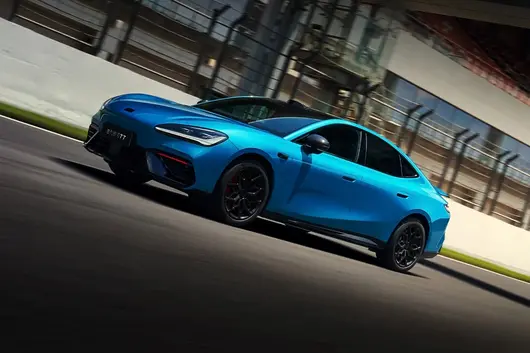
Car Vision Wan Yi Report - Is it impossible to balance EV performance and energy saving? Recently, a new technology has broken a long-standing industry challenge. On July 16, Geely Galaxy held a new product launch event at the Wuxi Star Drive base. The core was not simply launching a new car, but presenting a key technology that truly affects subsequent Geely new energy vehicle models - the Thunder 16-in-1 Intelligent Electric Drive.
This electric drive was first equipped on the Geely Galaxy TT. At the launch event, it secured two Guinness certifications in one go: First, the Galaxy TT equipped with this drive achieved a consumption of only 8.2 kWh per 100 km during testing around Qinghai Lake, setting a record for the lowest energy consumption of mass-produced pure electric vehicles; Second, it completed 46 km of continuous dual-vehicle drifting on a slippery road, breaking the longest drift record previously held by Porsche.

Many audiences only focused on Geely's new cars, but the technology behind Star Drive Technology actually supports the entire technology of this drive and is responsible for mass production implementation. In the past, Star Drive always acted as a supplier for car companies. Although listed among Geely series companies, it rarely appeared alone. This time, taking advantage of the 16-in-1 electric drive, it finally entered the public eye as an independent brand.
Many car owners do not understand what "16-in-1" is, but a simple example makes it clear. In earlier years, EV motors, charging equipment, controllers, and cooling systems were all separate, with a pile of wires connecting each other, occupying chassis space and wasting electricity during current transmission. Currently, most electric drives on the market are just 3-in-1 or 8-in-1, with very low integration levels. Star Drive's 16-in-1 directly integrates 16 functions and components such as motor, electronic control, reducer, smart energy management, smart health management, smart motion control, etc., using specific algorithms to deeply integrate them all into a single system.

The benefits brought by high integration are very practical. The casing of the entire equipment is made of magnesium alloy, with a total weight of 75 kg, 20 kg lighter than ordinary electric drives. It eliminates over 180 scattered parts, reducing high and low voltage harness usage by 30% and 15% respectively. The overall thickness is also thinner than mainstream products on the market. The space saved in the chassis can be reserved for the interior passenger area and trunk. After the body becomes lighter, daily electricity consumption, tire wear, and brake wear will also be lower.

There has long been a challenge in the industry: powerful EVs generally consume a lot of electricity, while energy-saving models have weak handling, making it hard to balance both. Star Drive's 800V platform electric drive broke this limitation, with a comprehensive working efficiency reaching 93.8%. Relying on home-grown developed flat wire motors, silicon carbide power modules, and other technologies, the copper wires inside the motor are significantly shortened, reducing power loss. This is also the key reason it can achieve ultra-low energy consumption.
In terms of driving feel, traditional electric drives have multiple control modules working separately. After pressing the accelerator, signal transmission takes 40 milliseconds, resulting in lag. The 16-in-1 adopts single-chip unified control, with signal transmission shortest at only 2 milliseconds, with power output immediate upon pressing. It is also equipped with 54 sets of independent cooling oil circuits, precisely cooling the motor's hot spots. The maximum motor temperature can be reduced by 15°C, and the service life is increased by 10%. The 46 km long-duration continuous drifting extreme test is also sufficient to prove the strength of this cooling system. In terms of reliability, the entire electric drive completed over 9,000 special tests, and the supporting vehicles accumulated over 5 million kilometers of road testing. With fewer parts, the probability of failure is also reduced.
At the new car integration level, Thunder 16-in-1 was first equipped on the Geely Galaxy TT, a sedan/coupe product that emphasizes youth and personality. Galaxy TT offers rear-wheel drive and four-wheel drive versions, with a single motor maximum power of 245kW, satisfying daily commuting and long-distance travel. In the future, this electric drive will not only be supplied to the Galaxy series; new energy vehicle models under the Geely, Zeekr, Lynk & Co, Volvo, Smart, and other group brands will also be equipped sequentially.

Star Drive itself is an independent global electric drive supplier. Its customers are not only Geely series car companies; overseas brands like Renault, Jaguar Land Rover also have cooperation. It also deeply links with international top parts enterprises like ZF and Magna.
This company named Star Drive Technology (InfiMotion) has a clear technical route and fast iteration speed. In 2021, it landed the first 400V silicon carbide electric drive in China for Zeekr 001. In 2024, it launched the 11-in-1 electric drive, equipped on Geely Galaxy E5, and this car also became the number one exported sales volume for domestic A-level pure electric SUVs. In 2025, it landed magnesium alloy distributed electric drives and 900V high-performance coaxial dual electric drives. The company's development speed is visible to the naked eye. In its first year of establishment, revenue was only 40 million RMB; in 2026, revenue has already broken through 20 billion RMB. The R&D team has nearly 1,000 people, and the Swedish overseas R&D branch also has a team of hundreds. Production bases are built in multiple locations in China such as Wuxi, Shanghai, and Ningbo. Overseas Sweden and Malaysia are laid out simultaneously, forming a supply network covering Europe and Asia.
Star Drive's core competitiveness is concentrated in three areas: technology, quality control, and globalization. To optimize the winding height inside the motor by 1 millimeter, engineers will spend months adjusting production equipment. It is also the first enterprise in the industry to achieve mass production of 900V magnesium alloy electric drives. The magnesium alloy casing is 30% lighter than aluminum alloy. Currently, four related products have been put into production.

We have seen Star Drive Technology at this year's Beijing Auto Show. It very much embodies the characteristics of Geely series enterprises. On one hand, it values the linkage of the industry chain within the group; on the other hand, it is very independent, able to independently obtain business and package capital market stories. The Thunder 16-in-1 launched at this press conference is not just a power accessory for one Geely new car, but also a concentrated reflection of Star Drive's years of technology accumulation. From early 400V silicon carbide electric drives to 11-in-1, 900V magnesium alloy products, to today's 16-in-1 fully integrated electric drive, Star Drive steadily updates technology, building a complete R&D, testing, production, and overseas delivery system, securing its position as a top-tier global electric drive manufacturer. There are not many cases where electric drive components independently form a brand and begin to deeply nest with OEMs. Star Drive Technology's development history is also an example of Chinese automobiles moving towards more segmented industrial forms. The hidden dragon that was hidden behind car companies in the past has officially stepped to the forefront with this 16-in-1 product, allowing the market to see solutions for domestic electric drives to participate in global competition.
車型概覽

Wuling Air EV 值唔值得買,關鍵唔係佢睇落幾吸引,而係佢有冇能力解決你嘅真實用車需要。呢篇文章會將重點放喺整體買車決定。
版本方面,Wuling Air EV 目前可以圍繞 2025 Standard 嚟比較。
買車價格指南
評估 Wuling Air EV 嘅買車預算時,建議首先從版本定位同後續養車成本入手。價格唔係唯一重點,真正決定係咪划算嘅係每日會唔會用到嗰啲配置。
如果你喺幾個版本之間猶豫,可以把 2025 Standard 放喺同一張清單入面比較。日常通勤買家優先睇舒適同安全,經常跑高速嘅買家則更加應該重視動力、駕駛輔助同車廂便利。
核心參數彙總
睇 Wuling Air EV 嘅核心規格,最重要係將數字轉化為生活感受。
Wuling Air EV 嘅核心價值應返回日常場景判斷:你要佢負責通勤、家庭出行、長途,定係作為更有個性嘅選擇。
優缺點分析
Wuling Air EV 嘅優點唔使誇張,真正有價值嘅係佢有冇令日常使用更加省心:車型定位清楚,適合先行作為同級比較對象。
需要留意嘅係,最終取舍會落在版本配置、保險同長期保養成本。呢啲唔係扣分項,而係落單前應該先諗清楚嘅生活細節。
買車常見問題解答
購買 Wuling Air EV 前,買家最常見唔問嘅唔係單一規格,而係佢有冇融入自己嘅生活。
呢輛車適合邊個?適合將整體買車決定放喺首位嘅買家。 家庭用戶要睇乜?優先睇後排乘坐、兒童座椅、行李同日常上下車係咪順手。 每日開會唔會麻煩?如果能源成本、停車方便同版本配置都符合你嘅生活節奏,佢會比較容易相處。
競爭對手對比內容
將 Wuling Air EV 放入同級車名單時,唔建議只睇品牌或外形。真正有用嘅比較次序係:首先從版本定位、品牌售後同日常用途開始比較。
咁樣篩選出嚟嘅結果更貼近日常生活。你會更加清楚佢係適合城市通勤、家庭代步、長途巡航,定係更加適合作為講求個性嘅選擇。
用車全週期指南
擁有 Wuling Air EV 嘅重點,係確認保險、路稅、保養同輪胎成本都喺可接受範圍內。買車唔係一次付款結束,而係每日都要相處。
如果你經常跑南北大道,動力同車廂舒適度會比單純低價更重要;如果主要喺市區,停車靈活性、視野同低速順滑度會更加影響心情。


7月21日,汽车圈有件大事儿——长城欧拉把全球的投资人请到了保定老家,办了一场声势浩大的欧拉“家庭派对”——海外全球投资人峰会。这可不是一次简单的会议参观走访,更像是一场中国智造的“超级路演”。当见惯了奔驰、宝马的海外投资人在徐水试车场里对着一辆中国车频频点头时,折射的其实是一个不争的,让国人骄傲又振奋的事实:中国汽车的出海的故事,真的翻篇了。

小标题:当全球投资人走进保定,他们看到了什么?
7月的保定,因为这场峰会变得格外火热。来自全球各地的投资人,没有去五星级酒店度假,而是直奔长城的技术中心和徐水试车场,开启了一场超级“硬核”的造车版图“长城”深度游。
对于这些见惯了大场面的投资人来说,PPT上的参数远不如赛道上的实测来得真实具体。在徐水专业试车场,他们深度体验了本次活动的C位主角——长城欧拉5。更关键的是,长城欧拉5亮出了“一车多动力”的王牌:纯电、混动、燃油三个版本一字排开,任君挑选。

小标题:为什么一款车要搞“一车多动力”?这是欧拉品牌的全球大局观
很多朋友可能会问,现在不是都在讲纯电吗?为什么长城欧拉5还要大费周章搞燃油和混动?
这恰恰是欧拉最聪明的地方——它读懂了全球市场的差异。
我们来看看数据:长城欧拉5在巴西,首批2000台24小时售罄;在泰国,订单突破5000台且混动版供不应求。巴西和泰国的基础设施能像中国一线城市一样遍地超充桩吗?不能。所以,欧拉没有固执地只推纯电,而是依托“归元平台”的强大兼容性,推出了 “一车多动力” 。

这种战略被形象地称为 “按需定制,自由出行” :
· 纯电版(480km/580km续航),搭载Coffee OS 3智能座舱,主打“超级智能”,剑指欧洲等成熟的纯电市场;
· 混动版,搭载Hi2智能混动系统,实现“三擎六模”智能切换,主打“省+顺”,精准狙击东南亚、南美等正在转型中的市场;
· 燃油版,则覆盖基建尚在完善的新兴市场。
简单来说,长城欧拉5不再是一款车打天下,而是一个平台,衍生出三种动力,精准卡位不同国家的能源政策和消费习惯。这种灵活的身段,正是它撬动全球市场的“芝麻开门”金钥匙。
小标题:从“中国制造”到“全球品质”,欧拉做对了什么?

过去,中国车出海总给人留下“低价走量”的印象。但这次峰会,我们明显感觉到风向变了。
6月份,欧拉品牌销量暴涨229.15%,突破万台大关。这不仅仅是销量的胜利,更是品牌溢价的胜利。在西班牙,欧拉联手ACB篮球联赛搞体育营销;在意大利,长城欧拉5开启浪漫之旅。欧拉正在用高颜值的设计、不输豪华车的底盘调校、以及越级的智能体验,告诉世界:中国车不再是“廉价”的代名词,而是“质优价美”的“Right Car”。
这种底气,来源于长城欧拉5对全球品质的坚持。无论是销往巴西、泰国还是欧洲,长城欧拉5都共享同样的设计语言、同样的智能座舱和同样的舒适标准。这种 “无差别的高品质” ,正是打破海外用户固有偏见的最强武器。
小标题:年轻人的第一台车,为什么不能是“全球车”?
最后,我们把视角拉回国内。很多年轻人觉得,刚上班买个代步车,将就一下得了。

长城欧拉5告诉你,不用将就。它拥有极简圆润的“自然美学”外观,一眼惊艳;它拥有不输高端电车的智能座舱和大模型语音系统;最关键的是,你可以根据自己的钱包和充电条件,选择纯电、混动或燃油。它既是年轻人的第一台高颜值座驾,也是家庭的增购换购首选。
车尚悟语:
当全球投资人排队试驾、纷纷点赞中国智驾时,长城欧拉5已经不仅仅是一款车,它代表了中国车企出海的新范式——不盲目追随,不闭门造车,而是用“全球品质”去适配“全球需求”。
7月起,长城欧拉5即将登陆澳洲、南非、印尼……#长城欧拉5全球车全球赞# 这不仅是一个话题,更是中国汽车工业走向世界舞台中央的铿锵脚步声。这盘全球化的大棋,欧拉不仅落子无悔,而且下干得漂亮!
Di pasaran SUV Malaysia, ramai pembeli membandingkan Proton X50 dan Chery Tiggo 8 semasa memilih kereta. Kedua-dua kereta ini mempunyai harga dan penestrategi yang agak hampir, hari ini kita akan buat perbandingan terperinci dari pelbagai aspek, membantu anda menjimatkan masa membuat kajian.
Proton X50 di Malaysia memiliki harga OTR adalah RM 89,800 - 113,300, terdapat 4 varian, termasuk 1.5T Executive (RM 89,800), 1.5T Premium (RM 101,800), 1.5T Flagship (RM 113,300) dan lain-lain.
Chery Tiggo 8 di Malaysia memiliki harga OTR adalah RM 129,750 - 129,750, terdapat 1 varian, termasuk 2026 1.6T Standard (RM 129,750) dan lain-lain.
Dari segi harga, harga permulaan Proton X50 memang lebih murah RM 39,950 berbanding Chery Tiggo 8. Jika bajet anda terhad, versi pemula Proton sudah boleh memenuhi keperluan harian. Tetapi berhati-hatilah, beberapa ribu ringgit yang murah itu, mungkin ada kompromi dari segi spesifikasi, ia bergantung pada keperluan anda.
Proton X50 dilengkapi enjin 1.5L 4-cyl, kuasa 105 hp. Jimat minyak rasmi 6.0 L/100km.
Chery Tiggo 8 dilengkapi enjin 1.5L Turbo, kuasa 140 hp. Jimat minyak rasmi 7.0 L/100km.
Dari segi kuasa, Turbo 1.5L Chery Tiggo 8 mempunyai 35 hp lebih daripada 1.5L 4-cyl Proton X50. Namun untuk penggunaan harian di bandar, kuasa kedua-dua kereta ini mencukupi, anda tidak akan berasa kurang tenaga.
Proton X50 dijamin 5 tahun/150,000km, jarak penyelenggaraan setiap 10,000km atau 6 bulan.
Chery Tiggo 8 dijamin 3 tahun/100,000km, jarak penyelenggaraan setiap 10,000km atau 6 bulan.
Proton X50 dan Chery Tiggo 8 sama-sama pilihan utama di pasaran Malaysia, sesuai untuk kegunaan keluarga, perjalanan harian. Jika anda lebih mengutamakan reputasi jenama dan harga jual semula, anda boleh mengutamakan versi yang mempunyai reputasi lebih baik; jika anda lebih mementingkan nilai dan spesifikasi, pilihlah versi yang lebih lengkap. Akhir sekali, disarankan untuk memandu uji kedua-duanya, pengalaman langsung adalah yang paling penting.
Secara keseluruhan, Proton X50 dan Chery Tiggo 8 adalah model kereta yang sangat baik di pasaran Malaysia. Memilih yang mana, kuncinya bergantung pada keperluan dan bajet peribadi anda. Disarankan supaya melakukan kajian, membandingkan sebut harga dari beberapa kedai kereta, kemudian buat ujian memandu untuk membuat keputusan akhir. Membeli kereta adalah perkara besar, meluangkan masa membuat kajian tidak akan salah.
© 2024 Bitauto.com. All Rights Reserved.
Bitauto (www.yiche.com and www.bitauto.com) is one of the most visited automotive websites in China. We provide detailed info on Chinese car brands available in your area. Please note that the information provided on this website is based on publicly available data and is for reference only. It may not be fully updated or accurate at all times.

Help us improve our website


