

Homeguide

Search History
Popular Searches
Dealer Login / Sign Up

In Malaysia's SUV market, many buyers compare Toyota Fortuner and BMW X1 when choosing a car. The two models are quite close in price and positioning. Today we will make a detailed comparison from multiple aspects to help you save time on research.
Toyota Fortuner's OTR price in Malaysia is RM 195,880 - 241,880, with a total of 3 versions, including 2024 2.8T VRZ Diesel (RM 241,880), 2024 2.7L SRZ Petrol (RM 202,880), 2024 2.4L Standard Diesel (RM 195,880), etc.
BMW X1's OTR price in Malaysia is RM 252,800 - 252,800, with a total of 2 versions, including sDrive18i (RM 220,000), sDrive20i (RM 250,000), etc.
From a price perspective, Toyota Fortuner's starting price is indeed RM 56,920 cheaper than BMW X1. If your budget is limited, Toyota's entry-level model can already meet daily needs. But be aware, that few thousand cheaper might have trade-offs in features, depending on your specific needs.

Toyota Fortuner's safety rating is 5★ (ASEAN NCAP), active safety systems include .
BMW X1's safety rating is 5★ (Euro NCAP), active safety systems include Premium ADAS.

Toyota Fortuner uses FWD drive mode.
BMW X1 uses FWD drive mode.
Both cars use the same drive mode, which is FWD, so daily driving experience will not differ too much.

Toyota Fortuner warranty 5 years/unlimited mileage, maintenance interval every 10,000km or 6 months.
BMW X1 warranty 5 years/unlimited mileage, maintenance interval every 10,000km or 6 months.

Overall, both Toyota Fortuner and BMW X1 are excellent models in the Malaysia market. Which one to choose depends on your personal needs and budget. We suggest doing your research, comparing quotes from multiple dealerships, and going for a test drive before making a final decision. Buying a car is a big deal, spending time on research will definitely not go wrong.


On October 16, Changan Automobile announced a leadership change. Zhu Hourong will no longer hold any position at Changan Automobile and its holding subsidiaries, continuing to serve as Party Secretary and Chairman of China Changan Automobile Group; Zhao Fei has been promoted to Chairman of Changan Automobile, and Ye Pei to President.

The announcement was short, but the underlying reality of this leadership change is a set of numbers that are not easy: the annual target completion rate for the first three quarters is only 51.7%, first-half net profit attributable to shareholders was 817 million Yuan, down 64.32% year-on-year, deducted non-recurring net profit was 251 million Yuan, down 83.01% year-on-year; the relatively bright spot is overseas, with cumulative deliveries of 729,700 vehicles in the first three quarters, up 56.8% year-on-year, with September's single-month overseas sales share accounting for about 44%.
These numbers outline an uneven performance report. For the new management team, they are taking over not a single-line front, but a two-front situation of defending domestic profits and pushing for overseas delivery.

This leadership change falls during a period with the most concentrated actions by Changan. In recent years, Changan has moved continuously on products, organization, and overseas layout: the model count has been streamlined from 63 to 36, Avatr and Deepal are advancing mid-to-back-office integration, the Thailand factory is ramping up, the Brazil factory has started production, and Europe base site selection is progressing. These actions correspond to the shrinkage of the overall fuel vehicle market domestically, Changan New Energy's baton relay being slow, and fast overseas export growth but local profitability not catching up yet.
Now, actions have been laid out, and the real test is the execution pace: whether the same strategy can form verifiable improvements in average vehicle price, new energy vehicle loss per unit, and overseas regional profitability. After the leadership change, the new team takes over exactly this execution challenge.

First, look at the domestic market. In the first half of the year, the domestic fuel vehicle market size decreased by 27.8% year-on-year, which is an industry-wide contraction; but Changan's sales core base is still pressed heavily on fuel vehicles, and the relay speed of the new energy sector has not outperformed the speed of the market contraction. In the first three quarters of 2026, Changan New Energy sales share was 41.6%, while the industry new energy penetration rate stood at 53.6% during the same period.
Changan's electrification progress is not stagnant, but the gap of running behind the overall market is clear: for every two vehicles sold in the industry, more than one is new energy, but for Changan, only after selling five vehicles does it just pass two. This is the structural explanation for the pressure on the profit statement. Changan's first-half net profit attributable to shareholders declined 64.32% year-on-year, and deducted non-recurring net profit declined 83.01% year-on-year; phased sales pressure and reduced exchange gains are direct causes, but the speed difference of the structural switch is the line worth watching more. Industry profit margins have fallen to around 3.8% during the same period, and the space to trade price for volume is narrowing.

Facing the dilemma, Changan's response has already landed on the product and organization levels. The total number of models has been streamlined from 63 to 36, a 43% compression, with the goal of growing 6 flagship models with annual sales exceeding 300,000 vehicles. Avatr and Deepal are advancing the integration and sharing of platform architecture, three-electric systems, intelligent driving software stacks, and supply chain procurement, with shared resource costs expected to decrease by 20%—30%. At the terminal level, Qiyuan Q05 has been ranked high in sales of compact pure electric SUVs for consecutive months, the Qiyuan brand achieved quarterly profitability in the second quarter, and Avatr reduced losses year-on-year; Qiyuan's average vehicle price increased by 12,000 Yuan year-on-year, and Avatr's average vehicle price increased by 2,000 Yuan year-on-year, indicating that "not blindly following the price war" is beginning to generate average price support on some product lines. However, these are still improvements at the single-quarter, single-brand level; the cost reduction effect will be more fully reflected in the financial statements after the integration is completed by the end of 2026. For this domestic execution challenge, short-term looks at whether new energy penetration rate can bottom out and whether vehicle-level losses can narrow; mid-term looks at whether flagship models with high volume can grow from the 36 models.

If the domestic market is still transitioning, overseas has already seen a volume surge, but the volume surge itself also brings deliverables that need fulfilling. Overseas revenue in the first half of the year was 21.942 billion Yuan, up 78.77% year-on-year, with the proportion of overall revenue rising from 16.89% in the same period last year to 33.43%; overseas gross margin was 20.13%, significantly higher than China's 11.67%. Overseas cumulative deliveries for the first three quarters were 729,700 vehicles, up 56.8% year-on-year, September's single-month share approaching 44%, and the overseas goal of 750,000 vehicles for the whole year is within reach. But in the first half of 2026, foreign operating cost growth of 83.59% was faster than revenue growth of 78.77%, overseas gross margin narrowed by 2.1 percentage points year-on-year, and signs of "volume growth without profit growth" have already appeared in the statements. The tariff structure of the European market is a harder constraint: Chinese-produced electric vehicles face a 10% basic tariff, plus up to 35.3% countervailing duties, with a comprehensive tax rate ceiling close to 45%, making it increasingly difficult to maintain price competitiveness solely relying on complete vehicle exports.

For this, Changan's solution is to push production capacity to the front line of the markets. The Thailand Rayong Factory fully operated in May 2025 with an annual capacity of 100,000 vehicles, expanding to 200,000 vehicles in 2027, serving Southeast Asia and European RHD markets; the Brazil factory started production in March 2026, achieving "Made locally, supplied locally, integrated locally". The selection of local bases in Europe is also progressing, planning 180,000 vehicles capacity in 2028, and 300,000 to 350,000 vehicles in the long term, with the goal of avoiding tariffs and shortening supply chain radius through local manufacturing. A longer-term framework is the "1+N" global manufacturing and supply chain system, setting a main base in each overseas major region, serving multiple KD/CKD assembly nodes, pushing going global from complete vehicle trade to regional closed loops. For this overseas execution challenge, short-term looks at the capacity utilization rate and local procurement ratio of the Thailand and Brazil factories; mid-term looks at whether export growth rates can gradually shift to regional profitability.

The two questions in front of Changan are essentially different cycles: domestic new energy relay looks at penetration rate and vehicle-level loss in the coming few quarters; overseas local profitability looks at capacity utilization rate and local procurement ratio measured in years. The same team running the accounts for two cycles at the same time is the true difficulty of the "two-front situation." Now, the leadership change has only completed the handover, and the real test is in the financial statements of the coming few quarters.

喺馬來西亞嘅 SUV 市場,好多買家喺揀車嗰陣都會拿 Toyota Fortuner 同 BMW X3 嚟比較。呢兩款車喺價格同定位上都幾接近,今日我哋就從多個方面做一個詳細嘅對比,幫你節省做功課嘅時間。
Toyota Fortuner 喺馬來西亞嘅 OTR 售價係 RM 195,880 - 241,880,一共有 3 個版本,包括 2024 2.8T VRZ Diesel(RM 241,880)、2024 2.7L SRZ Petrol(RM 202,880)、2024 2.4L Standard Diesel(RM 195,880)等。
BMW X3 喺馬來西亞嘅 OTR 售價係 RM 325,800 - 358,800,一共有 2 個版本,包括 xDrive20i(RM 320,000)、xDrive30e(RM 360,000)等。
由價錢嚟睇,Toyota Fortuner 嘅起步價真係比 BMW X3 平咗 RM 129,920。如果你預算有限,Toyota 嘅入門版已經可以滿足日常需求。但都要注意,平嗰幾千蚊,可能在配備上有取捨,具體要睇你嘅需求。
Toyota Fortuner 搭載 2.5L Diesel,馬力 187 hp。官方油耗 8.5 L/100km。
BMW X3 搭載 2.0L Turbo,馬力 220 hp。官方油耗 9.5 L/100km。
動力方面,BMW X3 嘅 2.0L Turbo 比 Toyota Fortuner 嘅 2.5L Diesel 多咗 33 匹馬力。不過日常喺市區行,兩款車嘅動力都夠用,唔會覺得唔夠力。
Toyota Fortuner 嘅安全評級係 5★ (ASEAN NCAP),主動安全系統包括。
BMW X3 嘅安全評級係 5★ (Euro NCAP),主動安全系統包括 Premium ADAS。
Toyota Fortuner 保修 5 年/無限制里程,保養間隔 每 10,000km 或者 6 個月。
BMW X3 保修 5 年/無限里程,保養間隔 每 10,000km 或者 6 個月。

Toyota Fortuner 同 BMW X3 都係馬來西亞市場嘅主流選擇,適合家庭使用、日常通勤。如果你更睇重品牌口碑同二手價,可以優先考慮口碑更好嗰一款;如果你更在意性價比同配備,那就揀配置更豐富嗰款。最終都建議兩款都去試駕,親身體驗先至係最重要嘅。

總括嚟講,Toyota Fortuner 同 BMW X3 都係馬來西亞市場幾唔錯嘅車型。揀邊一輛,關鍵都要睇你嘅個人需求同預算。建議大家做好功課,多比較幾間車行嘅報價,再去試駕做最終決定。買車係件大事,花少少時間做功課絕對唔會錯。

In the SUV market in Malaysia, many buyers compare Toyota Fortuner and Subaru Forester when choosing a car. These two cars are quite close in price and positioning. Today, we will make a detailed comparison from multiple aspects to help you save time on research.
Toyota Fortuner's OTR price in Malaysia is RM 195,880 - 241,880, with a total of 3 versions, including 2024 2.8T VRZ Diesel (RM 241,880), 2024 2.7L SRZ Petrol (RM 202,880), 2024 2.4L Standard Diesel (RM 195,880), etc.
Subaru Forester's OTR price in Malaysia is RM 174,000 - 197,000, with a total of 3 versions, including 2024 2.0L S EyeSight GT Edition (RM 189,538), 2024 2.0L S EyeSight (RM 177,538), 2024 2.0L L EyeSight (RM 167,538), etc.
Looking at the price, the starting price of Subaru Forester is RM 21,880 cheaper than Toyota Fortuner. Honestly, in this price segment, a difference of a few thousand is not really significant; the key is to look at overall cost-performance and long-term usage costs.
Toyota Fortuner is equipped with 2.5L Diesel, 187 hp. Official fuel consumption 8.5 L/100km.
Subaru Forester is equipped with 2.0L 4-cyl, 170 hp. Official fuel consumption 8.0 L/100km.
In terms of power, Toyota Fortuner's 2.5L Diesel has 17 more horsepower than Subaru Forester's 2.0L 4-cyl, giving more confidence in mid-range acceleration, especially when overtaking on highways. However, Subaru Forester's fuel consumption might be more friendly, and the difference for daily city commuting will not be too large.
Toyota Fortuner body length 4400 mm, trunk 400 L.
Subaru Forester body length 4400 mm, trunk 400 L.
The dimensions of both cars are almost the same, with little difference in interior space. For cars in this class, daily use is more than enough.
Toyota Fortuner adopts FWD drive mode.
Subaru Forester adopts FWD drive mode.
Both cars have the same drive mode, both are FWD, so there will not be much difference in daily driving experience.

Both Toyota Fortuner and Subaru Forester are mainstream choices in the Malaysian market, suitable for family use and daily commuting. If you value brand reputation and resale value more, you can prioritize the one with better reputation; if you care more about cost-performance and features, then choose the one with richer configuration. Ultimately, it is recommended to test drive both, and personal experience is the most important.

Overall, both Toyota Fortuner and Subaru Forester are very good models in the Malaysian market. Choosing which one depends mainly on your personal needs and budget. It is recommended that everyone do their research, compare quotes from several car dealerships, and then test drive to make a final decision. Buying a car is a big matter; spending some time on research will never go wrong.

Dalam pasaran SUV di Malaysia, ramai pembeli membandingkan Toyota Fortuner dan Subaru Forester ketika memilih kereta.
Toyota Fortuner dijual di Malaysia dengan harga OTR antara RM 195,880 - 241,880. Terdapat 3 varian, termasuk 2024 2.8T VRZ Diesel (RM 241,880), 2024 2.7L SRZ Petrol (RM 202,880), 2024 2.4L Standard Diesel (RM 195,880) dan lain-lain.
Subaru Forester dijual di Malaysia dengan harga OTR antara RM 174,000 - 197,000. Terdapat 3 varian, termasuk 2024 2.0L S EyeSight GT Edition (RM 189,538), 2024 2.0L S EyeSight (RM 177,538), 2024 2.0L L EyeSight (RM 167,538) dan lain-lain.
Dari segi harga, harga permulaan Subaru Forester lebih murah RM 21,880 berbanding Toyota Fortuner. Secara jujur, dalam julat harga ini, perbezaan ribuan ringgit sebenarnya tidak begitu besar, yang penting adalah nilai kos keseluruhan dan kos penggunaan jangka panjang.
Toyota Fortuner mempunyai penilaian keselamatan 5★ (ASEAN NCAP). Sistem keselamatan aktif merangkumi .
Subaru Forester mempunyai penilaian keselamatan 5★ (Euro NCAP). Sistem keselamatan aktif merangkumi EyeSight.
Toyota Fortuner menggunakan penggerak FWD.
Subaru Forester menggunakan penggerak FWD.
Kedua-dua kereta ini menggunakan penggerak yang sama, iaitu FWD. Pengalaman memandu harian tidak akan berbeza jauh.
Kedua-dua Toyota Fortuner dan Subaru Forester adalah pilihan utama di pasaran Malaysia, sesuai untuk kegunaan keluarga dan perjalanan harian. Jika anda lebih menitikberatkan reputasi jenama dan harga kereta terpakai, pertimbangkan terlebih dahulu yang mempunyai reputasi lebih baik; jika anda lebih mementingkan nilai dan peralatan, pilih yang mempunyai pelengkapan lebih kaya. Akhir sekali, disyorkan untuk ujian memandu kedua-duanya, kerana pengalaman peribadi adalah yang paling penting.
Secara keseluruhan, Toyota Fortuner dan Subaru Forester adalah model kereta yang sangat bagus di pasaran Malaysia. Memilih mana satu, kunci utamanya adalah melihat keperluan dan bajet peribadi anda. Kami sarankan untuk melakukan kajian terlebih dahulu, membandingkan harga di lebih banyak dealership, kemudian melakukan ujian memandu untuk membuat keputusan akhir. Membeli kereta adalah perkara penting, mengambil masa untuk melakukan kajian tidak akan salah.

喺馬來西亞嘅 SUV 市場,好多買家喺揀車嘅時候都會拿豐田 Fortuner 同 斯巴魯 Forester 嚟做比較。呢兩部車喺價位同定位上都幾接近嘅,今日我哋就從多個方面做一個詳細比較,幫你節省咗做功課嘅時間。
豐田 Fortuner 喺馬來西亞嘅 OTR 售價係 RM 195,880 - 241,880,合共有 3 個版本,包括 2024 2.8T VRZ Diesel(RM 241,880)、2024 2.7L SRZ Petrol(RM 202,880)、2024 2.4L Standard Diesel(RM 195,880) 等。
斯巴魯 Forester 喺馬來西亞嘅 OTR 售價係 RM 174,000 - 197,000,合共有 3 個版本,包括 2024 2.0L S EyeSight GT Edition(RM 189,538)、2024 2.0L S EyeSight(RM 177,538)、2024 2.0L L EyeSight(RM 167,538) 等。
從價錢睇嚟,斯巴魯 Forester 嘅起價比豐田 Fortuner 平咗 RM 21,880。講真喺呢個價位段,幾千蚊嘅差距其實唔算大,關鍵始終睇整體嘅性價比同長期使用成本。
豐田 Fortuner 嘅安全評級係 5★ (ASEAN NCAP),主動安全系統包括 。
斯巴魯 Forester 嘅安全評級係 5★ (Euro NCAP),主動安全系統包括 EyeSight。
豐田 Fortuner 車身長 4400 mm,後尾箱 400 L。
斯巴魯 Forester 車身長 4400 mm,後尾箱 400 L。
兩部車嘅尺寸幾乎一樣,車內空間差別唔大。呢個級別嘅車,日常使用完全夠用。
豐田 Fortuner 同 斯巴魯 Forester 都係馬來西亞市場嘅主流選擇,適合家庭使用、日常通勤。如果你更重視品牌口碑同二手價,可以優先考慮口碑更好嗰款;如果你更重視性價比同配備,嗰就揀配置更豐富嗰款。最終始終建議兩部都去試駕,親身體驗先係最緊要。
總體嚟講,豐田 Fortuner 同 斯巴魯 Forester 都係馬來西亞市場好唔錯嘅車型。揀邊部車,關鍵始終都係睇你嘅個人需求同預算。建議各位做好功課,多比較幾間車行嘅報價,先至去試駕做最終決定。買車係件大事,花少少時間做功課絕對無錯。

In the Malaysian SUV market, many buyers compare Toyota Fortuner and Volvo XC40 when choosing a car. These two cars are quite close in price and positioning. Today we will make a detailed comparison from multiple aspects to help you save time on research.
The OTR price for Toyota Fortuner in Malaysia is RM 195,880 - 241,880, with a total of 3 versions, including 2024 2.8T VRZ Diesel (RM 241,880), 2024 2.7L SRZ Petrol (RM 202,880), 2024 2.4L Standard Diesel (RM 195,880), etc.
The OTR price for Volvo XC40 in Malaysia is RM 278,888 - 278,888, with a total of 1 version, including 2025 2.0T Plus (RM 278,888), etc.
In terms of price, the starting price of Toyota Fortuner is indeed RM 83,008 cheaper than Volvo XC40. If your budget is limited, Toyota's entry-level version is already sufficient for daily needs. However, also note that the few thousand cheaper may have trade-offs in features, it depends on your specific needs.
The safety rating for Toyota Fortuner is 5★ (ASEAN NCAP), active safety systems include .
The safety rating for Volvo XC40 is 5★ (Euro NCAP), active safety systems include Pilot Assist, City Safety (Standard).
Toyota Fortuner warranty 5 years/unlimited mileage, maintenance interval every 10,000km or 6 months.
Volvo XC40 warranty 5 years/unlimited mileage, maintenance interval every 10,000km or 6 months.
Both Toyota Fortuner and Volvo XC40 are mainstream choices in the Malaysian market, suitable for family use and daily commuting. If you value brand reputation and resale price more, you can prioritize the one with better reputation; if you care more about cost-performance and features, then choose the one with richer configuration. Ultimately it is recommended to test drive both, as personal experience is the most important.

Overall, Toyota Fortuner and Volvo XC40 are both very good models in the Malaysian market. Choosing which one depends mainly on your personal needs and budget. We suggest doing your research, compare quotes from several dealerships, and then test drive to make the final decision. Buying a car is a major matter, spending some time doing research will definitely not be wrong.

In the Malaysian SUV market, many buyers compare Toyota Fortuner and Volkswagen Tiguan when choosing a car. These two cars are quite close in price and positioning. Today, we will make a detailed comparison from multiple aspects to help you save time on research.
The OTR price of Toyota Fortuner in Malaysia is RM 195,880 - 241,880, with a total of 3 versions, including 2024 2.8T VRZ Diesel (RM 241,880), 2024 2.7L SRZ Petrol (RM 202,880), 2024 2.4L Standard Diesel (RM 195,880) etc.
The OTR price of Volkswagen Tiguan in Malaysia is RM 206,540 - 260,024, with a total of 2 versions, including 2025 Allspace 2.0T R-Line (RM 260,024), 2025 Allspace 1.4T Elegance (RM 206,540) etc.
From a price perspective, the starting price of Toyota Fortuner is indeed RM 10,660 cheaper than Volkswagen Tiguan. If your budget is limited, Toyota's entry-level version can already meet daily needs. However, note that the difference of a few thousand might involve compromises in equipment, depending on your needs.
The safety rating of Toyota Fortuner is 5★ (ASEAN NCAP), active safety systems include .
The safety rating of Volkswagen Tiguan is 5★ (Euro NCAP), active safety systems include IQ.Drive.
Toyota Fortuner adopts FWD drive method.
Volkswagen Tiguan adopts FWD drive method.
Both cars share the same drive method, FWD, so the daily driving experience will not differ significantly.
Both Toyota Fortuner and Volkswagen Tiguan are mainstream choices in the Malaysian market, suitable for family use and daily commuting. If you value brand reputation and resale price more, you can prioritize the one with better reputation; if you care more about value for money and equipment, then choose the one with richer configuration. Ultimately, it is recommended to test drive both, as personal experience is the most important.

In general, Toyota Fortuner and Volkswagen Tiguan are both excellent models in the Malaysian market. Choosing which one mainly depends on your personal needs and budget. It is suggested to do your homework, compare quotes from multiple dealerships, and then test drive to make a final decision. Buying a car is a major event, spending time on research will definitely not be a mistake.

In the Malaysian SUV market, many buyers compare Toyota Fortuner and Ford Everest when choosing a car. These two cars are quite close in price and positioning. Today, we will do a detailed comparison from multiple aspects to help you save time on research.
The OTR price of Toyota Fortuner in Malaysia is RM 195,880 - 241,880. There are 3 versions in total, including 2024 2.8T VRZ Diesel (RM 241,880), 2024 2.7L SRZ Petrol (RM 202,880), 2024 2.4L Standard Diesel (RM 195,880), etc.
The OTR price of Ford Everest in Malaysia is RM 266,338 - 430,838. There are 6 versions in total, including 2026 3.0T 4WD Platinum (RM 430,838), 2026 2.0T 4WD Platinum (RM 348,838), 2026 2.0T 4WD Sport (RM 316,838), etc.
From a price perspective, the starting price of Toyota Fortuner is indeed RM 70,458 cheaper than Ford Everest. If your budget is limited, Toyota's entry-level version can already meet daily needs. However, note that the few thousand price difference might mean compromises on features, depending on your specific needs.
Toyota Fortuner is equipped with 2.5L Diesel, 187 hp. Official fuel consumption 8.5 L/100km.
Ford Everest is equipped with 2.5L Diesel, 187 hp. Official fuel consumption 8.5 L/100km.
Both cars use the same powertrain, so the driving experience in daily use is basically the same. Fuel consumption is also similar, no need to worry too much about this.
Toyota Fortuner vehicle length is 4400 mm, trunk capacity 400 L.
Ford Everest vehicle length is 4400 mm, trunk capacity 400 L.
The dimensions of both cars are almost the same, and the interior space difference is not significant. Cars of this class are more than sufficient for daily use.
Toyota Fortuner warranty 5 years/unlimited mileage, maintenance interval every 10,000km or 6 months.
Ford Everest warranty 3 years/100,000km, maintenance interval every 10,000km or 6 months.

Overall, Toyota Fortuner and Ford Everest are both excellent models in the Malaysian market. Which one to choose depends mainly on your personal needs and budget. It is recommended to do your research, compare quotes from a few dealerships, and then go for a test drive to make the final decision. Buying a car is a major decision, spending time on research will never be wrong.

In the Malaysian SUV market, many buyers compare Toyota Fortuner and Hyundai Palisade when choosing a car. These two cars are quite close in price and positioning. Today we will make a detailed comparison from multiple aspects to help you save time on research.
Toyota Fortuner's OTR price in Malaysia is RM 195,880 - 241,880, with a total of 3 versions, including 2024 2.8T VRZ Diesel (RM 241,880), 2024 2.7L SRZ Petrol (RM 202,880), 2024 2.4L Standard Diesel (RM 195,880) etc.
Hyundai Palisade's OTR price in Malaysia is RM 368,838 - 399,838, with a total of 4 versions, including 2023 3.8L 2WD Luxe 7 Seats Petrol (RM 399,838), 2023 2.2T 4WD Executive 7 Seats Diesel (RM 389,838), 2023 3.8L 2WD Luxe 8 Seats Petrol (RM 378,838) etc.
From a price perspective, Toyota Fortuner's entry price is indeed RM 172,958 cheaper than Hyundai Palisade. If you have a limited budget, Toyota's entry-level version can already meet daily needs. But also note, the few thousand dollars cheaper might involve trade-offs in features, it depends on your specific needs.
Toyota Fortuner equipped with 2.5L Diesel, 187 hp. Official fuel consumption 8.5 L/100km.
Hyundai Palisade equipped with 2.0L Turbo, 220 hp. Official fuel consumption 9.5 L/100km.
Regarding power, Hyundai Palisade's 2.0L Turbo has 33 more horsepower than Toyota Fortuner's 2.5L Diesel. However, for daily city driving, both cars have enough power, won't feel lacking.
Toyota Fortuner's safety rating is 5★ (ASEAN NCAP), active safety systems include.
Hyundai Palisade's safety rating is TBD, active safety systems include Basic.
Toyota Fortuner adopts FWD drive mode.
Hyundai Palisade adopts FWD drive mode.
Both cars have the same drive mode, both FWD, daily driving experience won't differ much.

Overall, Toyota Fortuner and Hyundai Palisade are both excellent models in the Malaysian market. Choosing which one depends mainly on your personal needs and budget. We recommend doing your research, compare quotes from several dealerships, and then test drive to make the final decision. Buying a car is a big matter, spending time on research will definitely not be wrong.

Dalam pasaran SUV di Malaysia, ramai pembeli sering membandingkan Toyota Fortuner dengan Volkswagen Tiguan semasa memilih kereta. Kedua-dua model ini mempunyai harga dan segmen yang agak hampir, hari ini kita akan buat perbandingan terperinci dari pelbagai aspek untuk membantu anda menjimatkan masa membuat penyelidikan.
Toyota Fortuner dijual pada harga OTR di Malaysia sebanyak RM 195,880 - 241,880, terdapat 3 varian, termasuk 2024 2.8T VRZ Diesel (RM 241,880), 2024 2.7L SRZ Petrol (RM 202,880), 2024 2.4L Standard Diesel (RM 195,880) dan lain-lain.
Volkswagen Tiguan dijual pada harga OTR di Malaysia sebanyak RM 206,540 - 260,024, terdapat 2 varian, termasuk 2025 Allspace 2.0T R-Line (RM 260,024), 2025 Allspace 1.4T Elegance (RM 206,540) dan lain-lain.
Dari segi harga, Toyota Fortuner memang lebih murah RM 10,660 berbanding Volkswagen Tiguan. Jika bajet anda terhad, versi permulaan Toyota sudah cukup untuk memenuhi keperluan harian. Tetapi perlu diingat, kelebihan ribuan ringgit itu mungkin perlu dikompromi dari segi spesifikasi, bergantung sepenuhnya kepada keperluan anda.
Penilaian keselamatan Toyota Fortuner ialah 5★ (ASEAN NCAP), sistem keselamatan aktif termasuk.
Penilaian keselamatan Volkswagen Tiguan ialah 5★ (Euro NCAP), sistem keselamatan aktif termasuk IQ.Drive.
Panjang kenderaan Toyota Fortuner ialah 4400 mm, kapasiti stor belakang 400 L.
Panjang kenderaan Volkswagen Tiguan ialah 4400 mm, kapasiti stor belakang 400 L.
Saiz kedua-dua kereta hampir sama, ruang dalaman tidak berbeza banyak. Kereta dalam kategori ini, cukup untuk kegunaan harian.
Toyota Fortuner diberi jaminan 5 tahun/jarak tidak terhad, selang penyelenggaraan setiap 10,000 km atau 6 bulan.
Volkswagen Tiguan diberi jaminan 3 tahun/100,000 km, selang penyelenggaraan setiap 10,000 km atau 6 bulan.
Toyota Fortuner dan Volkswagen Tiguan adalah pilihan utama di pasaran Malaysia, sesuai untuk kegunaan keluarga dan perjalanan harian. Jika anda lebih mengutamakan reputasi jenama dan nilai jualan semula, anda boleh pertimbangkan terlebih dahulu model yang mempunyai reputasi lebih baik; Jika anda lebih mementingkan nilai berbanding harga dan spesifikasi, maka pilihlah model dengan konfigurasi yang lebih lengkap. Pada akhirnya, disarankan untuk memandu uji kedua-dua model, pengalaman langsung adalah yang paling penting.
Secara keseluruhan, Toyota Fortuner dan Volkswagen Tiguan adalah model yang sangat bagus di pasaran Malaysia. Pilihan kereta yang mana, kuncinya adalah melihat keperluan dan bajet peribadi anda. Kami cadangkan untuk membuat kajian terlebih dahulu, bandingkan sebut harga di beberapa pusat jualan kereta, kemudian buat uji pandu untuk membuat keputusan akhir. Membeli kereta adalah perkara penting, meluangkan masa untuk membuat kajian adalah tidak akan salah.

喺馬來西亞嘅 SUV 市場,好多買家喺揀車嘅時候都會拎 Toyota Fortuner 同 Ford Everest 黎做比較。呢兩款車喺價位同定位上都幾接近,今日我哋就從多個方面做一個詳細嘅比較,幫你省下做功課嘅時間。
Toyota Fortuner 喺馬來西亞嘅 OTR 售價係 RM 195,880 - 241,880,一共有 3 個版本,包括 2024 2.8T VRZ Diesel(RM 241,880)、2024 2.7L SRZ Petrol(RM 202,880)、2024 2.4L Standard Diesel(RM 195,880) 等。
Ford Everest 喺馬來西亞嘅 OTR 售價係 RM 266,338 - 430,838,一共有 6 個版本,包括 2026 3.0T 4WD Platinum(RM 430,838)、2026 2.0T 4WD Platinum(RM 348,838)、2026 2.0T 4WD Sport(RM 316,838) 等。
從價錢睇,Toyota Fortuner 嘅起步價確實比 Ford Everest 便宜咗 RM 70,458。如果你預算有限,Toyota 嘅入門版已經可以滿足日常需求。但都要注意,便宜嗰幾千蚊,可能喺配備上會有取捨,具體要看你嘅需求。
Toyota Fortuner 搭載 2.5L Diesel,馬力 187 hp。官方油耗 8.5 L/100km。
Ford Everest 搭載 2.5L Diesel,馬力 187 hp。官方油耗 8.5 L/100km。
兩款車用嘅係同一套動力系統,日常開起嚟嘅感受基本冇分別。油耗方面都差唔多,唔使太糾結呢一點。
Toyota Fortuner 嘅安全評級係 5★ (ASEAN NCAP),主動安全系統包括 。
Ford Everest 嘅安全評級係 5★ (ASEAN NCAP),主動安全系統包括 Co-Pilot360。
兩款車嘅安全評級一樣,喺呢個級數入面安全配備都算俾得好齊全。而家嘅新車安全性都唔差,唔使太擔心呢一點。
Toyota Fortuner 車身長 4400 mm,後備箱 400 L。
Ford Everest 車身長 4400 mm,後備箱 400 L。
兩款車嘅尺寸幾乎一樣,車內空間差別唔大。呢個級數嘅車,日常使用完全夠用。
Toyota Fortuner 同 Ford Everest 都係馬來西亞市場嘅主流選擇,適合家庭使用、日常通勤。如果你更睇重品牌口碑同二手價,可以優先考慮口碑更好嗰一款;如果你更在意性價比同配備,那就揀配置更豐富嗰款。最終都係建議兩款都去試駕,親身體驗先係最重要嘅。

總體嚟講,Toyota Fortuner 同 Ford Everest 都係馬來西亞市場好好嘅車型。揀邊一部,關鍵都係要睇你嘅個人需求同預算。建議大家做好功課,多比較幾間車行嘅報價,再去試駕做最終決定。買車係件大事,花少少時間做功課絕對唔會錯。

Dalam pasaran SUV di Malaysia, ramai pembeli membandingkan Toyota Fortuner dan Hyundai Palisade semasa memilih kereta. Kedua-dua model ini mempunyai harga dan kedudukan pasaran yang hampir sama. Hari ini kita akan membandingkan secara terperinci dari pelbagai aspek untuk membantu anda menjimatkan masa membuat kajian.
Toyota Fortuner dijual di Malaysia pada harga OTR RM 195,880 - 241,880, terdapat 3 varian, termasuk 2024 2.8T VRZ Diesel (RM 241,880), 2024 2.7L SRZ Petrol (RM 202,880), 2024 2.4L Standard Diesel (RM 195,880) dan lain-lain.
Hyundai Palisade dijual di Malaysia pada harga OTR RM 368,838 - 399,838, terdapat 4 varian, termasuk 2023 3.8L 2WD Luxe 7 Kerusi Petrol (RM 399,838), 2023 2.2T 4WD Executive 7 Kerusi Diesel (RM 389,838), 2023 3.8L 2WD Luxe 8 Kerusi Petrol (RM 378,838) dan lain-lain.
Dari segi harga, Toyota Fortuner bermula dengan harga RM 172,958 lebih murah berbanding Hyundai Palisade. Jika bajet anda terhad, varian permulaan Toyota sudah boleh memenuhi keperluan harian. Tetapi perlu diingat, perbezaan ribuan ringgit itu mungkin melibatkan kompromi dalam kelengkapan, bergantung pada keperluan anda.
Toyota Fortuner dilengkapi enjin 2.5L Diesel, kuasa 187 hp. Penggunaan bahan api rasmi 8.5 L/100km.
Hyundai Palisade dilengkapi enjin 2.0L Turbo, kuasa 220 hp. Penggunaan bahan api rasmi 9.5 L/100km.
Dari segi kuasa, 2.0L Turbo Hyundai Palisade mempunyai 33 hp lebih berbanding 2.5L Diesel Toyota Fortuner. Walau bagaimanapun, untuk penggunaan harian di kawasan bandar, kuasa kedua-dua kereta sudah memadai dan tidak akan berasa kurang tenaga.
Toyota Fortuner panjang kenderaan 4400 mm, ruang kargo 400 L.
Hyundai Palisade panjang kenderaan 4400 mm, ruang kargo 400 L.
Saiz kedua-dua kereta hampir sama, ruang dalaman tidak jauh berbeza. Kereta pada segmen ini sudah memadai untuk penggunaan harian.
Toyota Fortuner jaminan 5 tahun/jarak tanpa had, selang penyelenggaraan setiap 10,000km atau 6 bulan.
Hyundai Palisade jaminan 5 tahun/300,000km, selang penyelenggaraan setiap 10,000km atau 6 bulan.
Secara keseluruhan, Toyota Fortuner dan Hyundai Palisade adalah model yang sangat bagus di pasaran Malaysia. Pilihan bergantung pada keperluan dan bajet peribadi anda. Kami menyarankan anda membuat kajian, bandingkan harga dari beberapa pengedar kereta, kemudian uji kenderaan untuk membuat keputusan akhir. Membeli kereta adalah perkara penting, meluangkan masa untuk kajian tidak akan salah.

Di pasaran SUV Malaysia, ramai pembeli semasa memilih kereta akan membandingkan Toyota Fortuner dan Hyundai Tucson. Kedua-dua kereta ini mempunyai harga dan posisi pasaran yang agak hampir. Hari ini kita akan melakukan perbandingan terperinci dari pelbagai aspek untuk membantu anda menjimatkan masa membuat kajian.
Toyota Fortuner di Malaysia dijual dengan harga OTR RM 195,880 - 241,880, mempunyai 3 varian, termasuk 2024 2.8T VRZ Diesel (RM 241,880), 2024 2.7L SRZ Petrol (RM 202,880), 2024 2.4L Standard Diesel (RM 195,880) dan lain-lain.
Hyundai Tucson di Malaysia dijual dengan harga OTR RM 143,888 - 197,888, mempunyai 5 varian, termasuk 2025 HEV 1.6T AT 2WD Prestige (RM 197,888), 2025 1.6T DCT 4WD Prestige (RM 186,888), 2025 1.6T DCT 2WD Prime (RM 164,888) dan lain-lain.
Dari segi harga, Hyundai Tucson berharga RM 51,992 lebih murah berbanding Toyota Fortuner. Jujur berkata, pada julat harga ini, perbezaan beberapa ribu tidak terlalu besar, yang penting adalah menilai nilai keseluruhan dan kos penggunaan jangka panjang.
Toyota Fortuner mempunyai penarafan keselamatan 5★ (ASEAN NCAP), sistem keselamatan aktif termasuk .
Hyundai Tucson mempunyai penarafan keselamatan 5★ (ASEAN NCAP), sistem keselamatan aktif termasuk SmartSense.
Penarafan keselamatan kedua-dua kereta adalah sama, ciri keselamatan pada tahap ini adalah lengkap. Keselamatan kereta baharu sekarang tidak buruk, tiada perlu risau terlalu banyak tentang hal ini.
Toyota Fortuner menggunakan cara pemacu FWD.
Hyundai Tucson menggunakan cara pemacu FWD.
Cara pemacu kedua-dua kereta adalah sama, iaitu FWD, pengalaman memandu harian tidak akan berbeza banyak.
Toyota Fortuner jaminan 5 tahun/tanpa had kilometer, selang servis setiap 10,000km atau 6 bulan.
Hyundai Tucson jaminan 5 tahun/300,000km, selang servis setiap 10,000km atau 6 bulan.

Toyota Fortuner dan Hyundai Tucson adalah pilihan utama di pasaran Malaysia, sesuai untuk kegunaan keluarga, perjalanan harian. Jika anda lebih mementingkan reputasi brand dan harga kenderaan terpakai, boleh utamakan yang lebih popular; jika anda lebih mementingkan nilai dan ciri, pilih yang lebih lengkap. Pada akhirnya disarankan untuk test drive kedua-duanya, pengalaman sendiri adalah paling penting.

Secara keseluruhan, Toyota Fortuner dan Hyundai Tucson adalah model yang sangat baik di pasaran Malaysia. Memilih yang mana, penting untuk lihat keperluan dan bajet anda. Disarankan membuat kajian, bandingkan harga dari beberapa dealer, kemudian test drive untuk membuat keputusan akhir. Membeli kereta adalah perkara besar, meluangkan masa membuat kajian tidak akan salah.

喺馬來西亞嘅 SUV 市場,好多買家喺揀車嗰陣都會拿 Toyota Fortuner 同 GWM Haval H6 嚟做比較。呢兩款車喺價位同定位上都幾接近嘅,今日我哋就從多個方面做一個詳細嘅對比,幫你慳咗做功課嘅時間。
Toyota Fortuner 喺馬來西亞嘅 OTR 售價係 RM 195,880 - 241,880,一共有 3 個版本,包括 2024 2.8T VRZ Diesel(RM 241,880)、2024 2.7L SRZ Petrol(RM 202,880)、2024 2.4L Standard Diesel(RM 195,880) 等。
GWM Haval H6 喺馬來西亞嘅 OTR 售價係 RM 139,750 - 139,750,一共有 2 個版本,包括 1.5L Turbo Standard(RM 140,000)、1.5L Turbo Premium(RM 155,000) 等。
從價錢嚟睇,GWM Haval H6 嘅起步價比 Toyota Fortuner 平咗 RM 56,130。老實講,喺呢個價位段,幾千塊嘅差距其實唔算大,關鍵仲係睇整體嘅性價比同長期使用成本。
Toyota Fortuner 配備 2.5L Diesel,馬力 187 hp。官方油耗 8.5 L/100km。
GWM Haval H6 配備 Hybrid,馬力 170 hp。官方油耗 4.5 L/100km。
動力方面,Toyota Fortuner 嘅 2.5L Diesel 比 GWM Haval H6 嘅 Hybrid 多咗 17 匹馬力,中段加速更有信心,尤其係跑高速公路超車嗰陣。不過 GWM Haval H6 嘅油耗表現可能更抵用,日常市區通勤差別唔會太大。
Toyota Fortuner 嘅安全評級係 5★ (ASEAN NCAP),主動安全系統包括 。
GWM Haval H6 嘅安全評級係 TBD,主動安全系統包括 Basic。
Toyota Fortuner 採用 FWD 驅動方式。
GWM Haval H6 採用 FWD 驅動方式。
兩款車嘅驅動方式一樣,都係 FWD,日常駕駛感受唔會有太大分別。
總嘅嚟講,Toyota Fortuner 同 GWM Haval H6 都係馬來西亞市場幾唔錯嘅車型。揀邊一輛,關鍵仲係睇你嘅個人需求同預算。建議大家做好功課,多比較幾間車行嘅報價,再去試駕做最終決定。買車係件大事,花啲時間做功課絕對唔會錯。

In Malaysia's SUV market, many buyers compare Toyota Fortuner and Chery Tiggo 8 PHEV when choosing a car. These two cars are quite close in price and positioning. Today we will make a detailed comparison from multiple aspects to help you save time on research.
Toyota Fortuner OTR price in Malaysia is RM 195,880 - 241,880, with a total of 3 versions, including 2024 2.8T VRZ Diesel (RM 241,880), 2024 2.7L SRZ Petrol (RM 202,880), 2024 2.4L Standard Diesel (RM 195,880), etc.
Chery Tiggo 8 PHEV OTR price in Malaysia is RM 159,750 - 159,750, with a total of 2 versions, including 1.6L Turbo Standard (RM 130,000), 1.6L Turbo Premium (RM 145,000), etc.
In terms of price, Chery Tiggo 8 PHEV's starting price is RM 36,130 cheaper than Toyota Fortuner. Honestly, in this price range, a difference of a few thousand is not actually significant, the key is to look at the overall cost-performance ratio and long-term usage costs.
Toyota Fortuner is equipped with 2.5L Diesel, horsepower 187 hp. Official fuel consumption 8.5 L/100km.
Chery Tiggo 8 PHEV is equipped with Hybrid, horsepower 170 hp. Official fuel consumption 4.5 L/100km.
In terms of power, Toyota Fortuner's 2.5L Diesel has 17 more horsepower than Chery Tiggo 8 PHEV's Hybrid, providing more confidence in mid-range acceleration, especially when overtaking on highways. However, Chery Tiggo 8 PHEV's fuel consumption might be friendlier, and the difference for daily urban commuting will not be too large.
Toyota Fortuner safety rating is 5★ (ASEAN NCAP), active safety systems include.
Chery Tiggo 8 PHEV safety rating is TBD, active safety systems include Basic.
Toyota Fortuner warranty 5 years/unlimited mileage, maintenance interval every 10,000km or 6 months.
Chery Tiggo 8 PHEV warranty 3 years/100,000km, maintenance interval every 10,000km or 6 months.
In summary, both Toyota Fortuner and Chery Tiggo 8 PHEV are very good models in the Malaysian market. Which one to choose depends mainly on your personal needs and budget. We suggest doing your research, compare quotes from several dealerships, and then go for a test drive to make the final decision. Buying a car is a big matter, spending time on research will never be wrong.

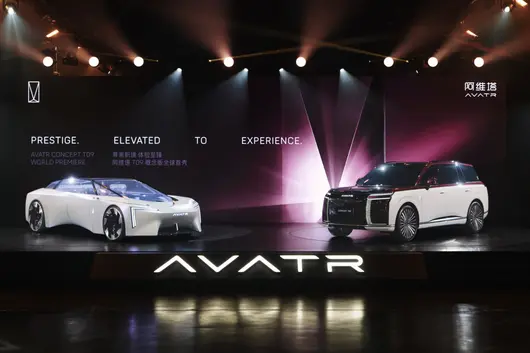
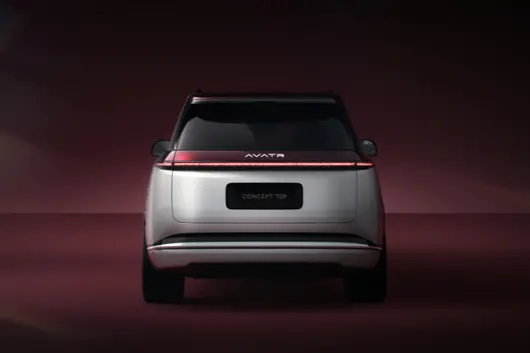
On October 11, 2026, in Paris, earlier than the Paris Motor Show, Avatr brought its all-new flagship T09 here for a global debut, revealing the interior to the public for the first time.

Looking back at domestic large flagship SUVs in the 5-3-2 segment, almost no one has placed their first debut overseas. AITO M9 debuted in Shenzhen, Li L9 appeared in Beijing. The common practice is to build up momentum domestically first, then run to international motor shows for a "European Debut" to go through the motions.

But Avatr T09 went the opposite way. With dimensions 5285×2025×1810mm and a wheelbase of 3150mm, its six-seat layout targets the 500,000 RMB price range. It ran directly to Europe, the home of luxury cars, to complete the global reveal of the entire vehicle. The next day, it went to the Paris Motor Show booth, where 07L and 06T volume-selling models were displayed alongside.
1. Why Paris was ChosenAccording to Avatr's plan, their products will not formally enter the European market until 2027, and the first to land in Norway and Spain is not T09, but 06T and 07L. Doing this naturally has its reasons.


First, look at Avatr's current overseas foundation: the business has spread to over 70 countries and regions, overseas models average price exceeds 300,000 RMB, and the overseas business has already realized profitability. In the Thailand market, Avatr 11 is the luxury pure EV SUV sales leader; in Egypt's high-end EV market, it accounts for a 10% share. The selling price of this car in Singapore is even equivalent to 1.56 million RMB. Avatr has already proven in some overseas markets that selling at a good price is feasible. But Europe is different, this is the BBA stronghold, users have a fixed perception of "luxury", simply shipping the car over won't make it sellable.

This Paris debut is more like a strategic opening move. First bring out the brand ceiling T09, let European designers, media, and industry professionals see firsthand what level Chinese flagship EVs are. Top luxury designers from Hermès, Valentino, etc. were invited to the site to show support, aiming to gain recognition from Western design circles. First use flagship products to boost brand impression points. When 06T, 07L and other main models formally land in Europe later, local consumers' psychological thresholds will be significantly lower. Simply put, low-price overseas expansion is selling one by one, but this flagship-first approach is to export a set of luxury aesthetic standards belonging to Chinese people.
2. Discussing the Product Itself: 500,000 Level Large 6-Seat, Hardware Stacking is Uncompetitive, Distinctiveness is the KeyBack to the car itself, today's 500,000 RMB level domestic large 6-seat SUV market, large cars are really abundant. AITO M9, Li L9, Denza N9, all are 5 meters long, 3-meter class wheelbase. In this track, "large size" is just the basic condition for entry, not a core selling point. Avatr's concept for T09 is very straightforward: The market lacks not bigger cars, but different cars. This time they don't just pursue making the car bigger, the focus is on creating a unique presence.


The new car's appearance originates from the VISION XPECTRA concept car's "Emotional New Luxury" design concept, jointly polished by Munich and Shanghai design centers. The 3D relief grille on the front is very captivating, a total of 362 Avatr LOGO units of different heights, when light shines on it there will be rich light and shadow changes. Front and rear crystal diamond array lights use double-layer diamond cutting process, front lights arranged vertically, rear integrated taillights echo front and back, distinctiveness maxed out.

The car body sides also hide many detailed refinements: sculptural waist-cinching curves, D-pillar directly uses full aluminum panels, did not use cheaper plastic parts. dToF sensor hardware directly fused into car body lines, no abrupt external probes, giving a sense of minimalist European architectural beauty.

The biggest highlight of this debut is the interior revealed for the first time. The core of the entire cabin is the industry-unique Vortex Emotional Vortex Lift-up Interactive Module. 360° seamless curved surface shape, it can connect and interact with the whole car ambient light and triple screen. Greeting, music rhythm, rear vehicle warning all have corresponding light effects, this is a physical interactive module that can move.

Then the immersive integrated triple screen: 10.25-inch instrument screen + dual 17.2-inch center console, passenger screens, seamlessly integrated with air conditioning vents. Dual 3.4K resolution, 98% DCI‑P3 high color gamut, 900nit global brightness, hardware-level passed TÜV low blue light certification, supports HDR Vivid, NFC integrated under the screen, touching phone with phone can connect quickly. Interior uses Nappa leather and real wood trim extensively, making a good distinction between specs stacking and luxury quality.

On the power level, T09 is equipped with all-new Intelligent Super Hybrid, can freely switch between pure electric, plug-in hybrid, extended range three working modes. High-end version equipped with 2.0T hybrid engine + three-motor distributed electric drive, combined horsepower breaks 1000 hp. Base version is 1.5T hybrid paired with dual-motor AWD. Battery is CATL 71.24kWh Xiaoyao Super Hybrid Battery, CLTC pure electric range exceeds 400km max. No range anxiety on long trips, city commuting can also run on pure electric, covering the vast majority of car usage scenarios.
Chassis equipped with Taishan Smart Control full configuration: closed dual-chamber air suspension, distributed electric drive, rear-wheel steering, crab walk mode. This 5.2-meter giant can achieve 4-meter class minimum turning radius. A large SUV can possess handling flexibility close to a small car, obvious advantages in narrow city roads, U-turns in underground garages.
Intelligent Driving Assistance equipped with Huawei ADS 5, four-lidar hardware architecture, hardware configuration has also reached the top tier.
3. T09 is not just a car, it is a key step for Avatr to charge upward
To understand T09, you must understand Avatr's current dual product sequence strategy. Digital sequence, which is the 06/06T, 07/07L, 11, 12 we are familiar with now, mainly sporty, individualistic, young luxury. New flagship sequence, T09 is the first mountain-breaking car, orientation is noble, calm top luxury. Two sequences running parallel, not simply building a few more cars to fill the product line, essentially Avatr wants to fill up the brand's ceiling. Backed by Changan, Huawei, CATL three parties: Changan handles whole vehicle manufacturing and chassis, Huawei outputs intelligent driving and cabin, CATL responsible for battery, whole vehicle, intelligent, and Three Electrified Systems three core links have hard core support, only then can they dare to challenge the 500,000 RMB and above flagship market.
4. Facing Competition: Hardware is similar for everyone, but differentiation is still possibleNow the competition in 500,000 RMB domestic large 6-seater is already intense: AITO M9 attracts Huawei intelligent driving and business users; Li L9 firmly grasps big family users, has mastered the family scenario experience; Denza N9 relies on BYD Three Electrified Systems system to focus on comprehensive cost-performance. Currently at this level, hardware configurations of each company are highly convergent: large size body, hybrid power, air suspension, advanced intelligent driving, basically standard equipment, competing on parameters is hard to create a gap. Avatr T09's targeted breakthrough point is original design and this unique emotional cabin interaction. Others compete on space, comfort, intelligent parameters, it focuses on unique design temperament and human-car emotional interaction. This train of thought is not conceived out of thin air. Avatr 11, 12 have already been verified in the market in advance. The two cars successively won Red Dot, iF multiple international design awards. For many car buying users, exterior design is one of the core decision factors. Even placed in the 300,000 to 400,000 RMB domestic high-end track, 11, 12 have also accumulated a large group of upgrade/replacement users who value aesthetics and are willing to pay for design premium. T09 is equivalent to continuing to lift this "design priority" logic up to the 500,000 RMB flagship level, the approach of focusing on niche markets is also worth looking forward to.
ConclusionBack to the question at the very beginning: Why put the flagship debut at the doorstep of BBA in Paris? This show is not entirely a product launch, but more a brand statement. In the past, many Chinese EVs going overseas focused on cost-performance, while T09 wants to prove: Chinese brands also dare to run to the traditional luxury birthplace, take original design, full set of R&D technology, to compete with legacy luxury brands on the same stage. Of course, the "coming of age" show does not equal having passed the test. Paris lights, foreign designer compliments are just bonus points. T09's real big exam is the moment mass production is handed to domestic consumers. Whether it can carve out its own survival space in the market where M9, L9 have already stood firm, we wait and see.

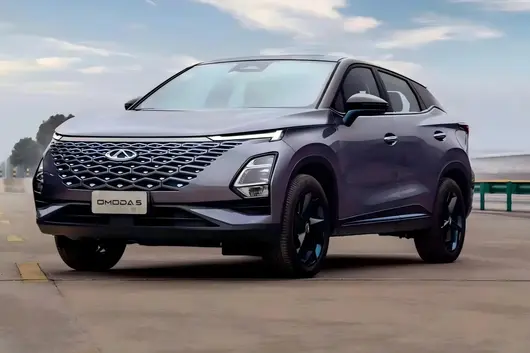
Recently, Chery Automobile announced export data for the first three quarters of 2026: Cumulative exports reached 1.5512 million vehicles, a year-on-year increase of 65.6%, exceeding the total export volume of the entire year of 2025; September's single-month exports hit 207,800 vehicles, setting a new record for single-month exports by Chinese automakers, accounting for nearly 70% of total sales. As the enterprise ranked first in China passenger car exports for 23 consecutive years, this achievement reflects the favorable development trend of Chinese automakers going global.

However, at the same time this data was released, a vehicle malfunction involving the OMODA 5 in the Malaysian market also drew attention. It highlighted that while sales are growing, product quality and production control also require continued focus.
On October 6, a 2023 model OMODA 5 driving normally in Johor Bahru, Malaysia, experienced tearing of the rear axle trailing arm. The rear axle detached from the body along with two rear wheels, leaving the vehicle stopped in the middle of the road. Fortunately, no personnel injuries were sustained. On the evening of October 11, Chery released an official statement. Investigations revealed that local welding positions on the rear axle trailing arms of this batch of vehicles had insufficient welding strength, posing a risk of weld seam tearing under extreme conditions. The enterprise has now cooperated with the Malaysian Land Transport Authority to initiate a recall of 8,878 affected OMODA 5 vehicles, inspecting parts and providing free replacements based on actual conditions.

This is not the first time such issues have arisen with the OMODA 5 in Malaysia. In April 2024, local owners reported rear axle breakages while driving. Chery subsequently recalled 600 vehicles locally. The investigation concluded that after the supplier replaced the welding torch, calibration was not done properly, leading to welding defects on the rear axle. Ultimately, 60 defective vehicles were identified and the rear axles were replaced. At that time, local regulators did not issue a sales suspension, and the matter gradually subsided.
More than two years later, a failure occurred in the same location again, with the severity and scope being wider than last time. The breakage evolved from a single side to overall rear axle detachment, and the recall scale expanded from 600 vehicles to 8,878, an increase of nearly 15 times. Rumors suggest local regulators also adopted stricter handling methods: directly suspending the OMODA 5 model certification. Until the technical investigation is completed, this model cannot be registered, nor can it continue to be sold. Meanwhile, a comprehensive review of the supply chain was launched, verifying risk vehicles one by one according to part numbers, production batches, and VINs, examining the quality control and welding inspection processes of the whole vehicle production assembly and component suppliers.

There is still one question that remains unanswered: Are the vehicles experiencing failures this time within the recall scope of the 600 vehicles from 2024? If within scope, it suggests vehicles repaired back then still carry risks, and the previous rectification plan may not have fully resolved the issue; if outside scope, it indicates the risk batch scope determined at the time was not accurate enough, meaning more hidden risk vehicles existed than previously estimated.
Regardless of the answer, this reminds us that the significance of a recall is not just fixing already sold problematic vehicles, but more importantly feeding the problem back into the production process and quality verification procedures, plugging management loopholes, and avoiding the repetition of the same issues. If this link is not executed properly, the higher the vehicle sales volume, the greater the potential risk scope.
The Malaysian market holds significant importance for Chery. The dual-brand entry of OMODA and JAECOO into the local market has been less than two years, yet cumulative sales have already broken through 30,000 vehicles, ranking in the top three among non-local brands. With the model certification suspended, the impact is not just the cost of parts replacement for over 8,000 vehicles, but also affects brand reputation in the local market and the advancement of subsequent business.
It needs to be explained that the involved 2023 model OMODA 5 had already ceased production in September 2025, replaced by the CHERY O5 which features a multi-link independent suspension. Therefore, this certification suspension will not affect currently on-sale models, but the impact of the event on brand reputation will not be limited to this discontinued model.

Looking deeper, when exports transform from an "incremental supplement" for automakers to a "core component" accounting for nearly 70%, a product failure that attracts attention produces impacts not limited to a single brand or single market. Many overseas consumers' impressions of products are often linked with the overall image of the place of origin. The quality issues of individual enterprises might also affect overseas consumers' overall impression of Chinese automobiles.
Currently, Chery has initiated risk inspections for the same batch of OMODA 5 models in domestic and relevant markets, though it has not yet specified which markets and how many vehicles are involved.
Subsequent progress is worth continued attention: When will the domestic inspection results be announced, and will formal recall procedures be initiated; are the root causes of the two recalls over two years consistent, and whether the rectification back then effectively plugged the process loopholes from the source.

Chinese automakers going global have today reached the milestone of million-level export volume, which is a very difficult achievement to realize. As the scale of going global continues to expand, the tests are not just on market expansion capabilities, but also on the stability of quality systems, supply chain control levels, compliance capabilities facing overseas regulators, and the openness and transparency of handling problems. Selling high volume is capability, but ensuring product stability, moving steadily and far, is a long-term topic that needs more attention. This is not only a problem Chery needs to face, but also a common thought for all Chinese automakers going global.

"Image content | Source: Internet, copyright belongs to the original owner. If there is any infringement, please contact us for removal!"

BYD's financial report data for the first half of 2026 shows that the company's overseas sales of passenger cars and pickups approached 790,000 units, surging by 67.9% year-on-year. The business footprint has expanded to over 120 countries and regions, claiming the sales crown for new energy vehicles in key markets such as the UK, Brazil, and Thailand. Relying on a strong overseas market foundation, BYD's new energy official vehicle business achieved synchronous breakthroughs domestically and overseas, charting a development path of "building benchmarks overseas and continuously expanding capacity domestically". Batch implementation of projects was achieved in multiple overseas countries, while the domestic government procurement market also firmly remained at the forefront.
Central Asian Market Receives Highest Level Recognition
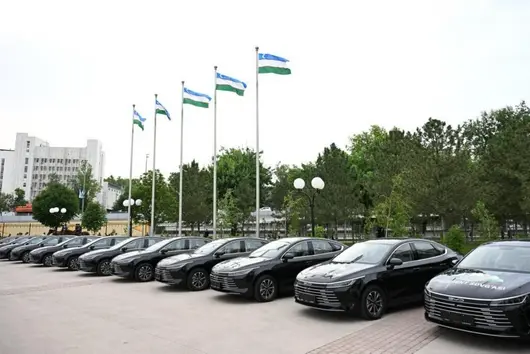
Not long ago, Uzbekistan President Mirziyoyev signed a presidential decree, awarding the national-level "Medal of Friendship" to the BYD team. This supreme honor is strong proof of BYD's deep cultivation of the Central Asian market. Previously, BYD had realized the production of local new energy factories, and the Presidential Palace also selected BYD models as official vehicles. This medal award is another high-level recognition from Uzbekistan officials to BYD, and also a typical case of Chinese new energy vehicles winning the trust of overseas government markets with solid strength.

Overseas Official Vehicle Map Continues to Expand
Uzbekistan is not an isolated case; BYD's overseas official vehicle footprint continues to radiate outward. Pakistan completed the large-scale delivery of nearly 100 BYD pure electric official vehicles, which was also the first time in the country's history to purchase new energy official vehicles in bulk. Pakistan thereby became an important benchmark market for BYD's overseas police vehicle cooperation. The Cape Verde government official vehicle fleet has fully switched to BYD models; European countries such as Hungary and Austria have also included BYD cars in their official vehicle sequences for foreign affairs reception.

Police Vehicles Enter a New Stage of Scale
As an important sub-track of official vehicles, BYD's overseas implementation rhythm continues to accelerate. In September, a batch of BYD Dolphin police cars completed delivery to the Philippine police force, aiding the local official travel electrification transformation. Recently, dozens of Destroyer 05s were officially equipped to the Mexican police force. Currently, BYD has delivered multiple models including SHARK pickups, Seals, Yuan UPs, and Seagulls to police forces in multiple places in Mexico, fully meeting the needs of various duty work. The continuous landing of projects in the Philippines and Mexico means that BYD new energy police vehicles have moved from scattered demonstrations to a new stage of scaled and normalized application.

Domestic Market Firmly Stands in the First Echelon of Procurement
Turning attention back to the domestic market, BYD still firmly occupies the first echelon of new energy official vehicle procurement. According to public information on the China Government Procurement Network, in the second half of the year, government units in many places domestically completed the bulk procurement of BYD official vehicles. As early as the first half of this year, BYD secured the top spot in domestic new energy official vehicle government procurement sales with a market share of over 22%. Centralized procurement in various places in the second half of the year once again confirmed the high recognition of the government market for the brand.
In the field of police equipment, Fang Cheng Bao Titanium 7 Police Edition was put into use in batches in many places nationwide. Now BYD has built a full-category product matrix complete with sedans, SUVs, and pickups, adapting to various police work scenarios such as security patrol, traffic police law enforcement, and emergency handling, etc., helping domestic police travel complete electrification iteration and upgrading.

Once upon a time, the domestic official vehicle market was long occupied by joint venture brands; today, BYD has grown into a high-quality Chinese solution for global government electrification. The official vehicle track tests product power, safety, and brand credibility. Relying on hardcore technical strength, BYD continues to expand the global government market, showcasing the power of Chinese Smart Manufacturing to the world.

巴黎,又一次成为中国汽车的高光舞台。2026年10月11日,阿维塔T09概念版全球首秀,内饰设计首次曝光;10月12日至18日,它还将与阿维塔06T、07L一起亮相巴黎车展。作为旗舰序列开山之作,T09锚定50万级旗舰豪华SUV市场,预计2026年内正式上市。
这不是简单加一款大车,而是阿维塔品牌向上的一次关键落子。

旗舰开山,先立气场
随着T09推出,阿维塔形成数字和旗舰两大序列。数字序列随性奢华,优雅、运动、个性;旗舰序列尊崇奢华,尊贵、从容、气场。T09量产演绎VISION XPECTRA,把“情感新奢”设计哲学推到新高度。远观威仪,近看考究。前脸建筑感强,立体浮雕结构格栅由362个不同立体高度的阿维塔LOGO元素疏密衔接,光影流转。晶钻阵列灯组内外双层钻石切割,火彩质感适配全尺寸SUV体量。2.1㎡超大蚌式前舱盖结合两侧岛屿式隆起,沉稳与动态张力兼得。侧面刀锋线条、收腰曲面、平面剪切曲面与饱满体量对比,D柱铝饰板融入车窗与尾翼形成悬浮车顶,水晶装饰门把手与Dtof传感器岛错落。车尾一体式晶钻尾灯同样双层钻石切割,前后呼应。
不靠夸张吓人,靠建筑秩序和细节撑气场,才是不彰自显。

座舱有温度,Vortex是灵魂
内饰首次曝光,重点不是屏幕多大,而是情感怎么落地。行业独有的Vortex情感涡流,以全车功能、状态全域联动,连接数字情感世界与物理座舱。它采用360°无缝两段式反曲面与可升降设计,内置118颗RGB LED矩阵光源,可与整车氛围灯搭配多种智慧灯效;优化静音电机与机构运行,并设计防夹功能。沉浸式一体三联屏由10.25英寸主驾仪表盘、双17.2英寸中控屏与副驾屏组成,连同两侧空调出风口无缝融合,像巨幅超宽画布,内置NFC,一碰即连。座舱以宁静、慷慨、连接为核心,家人同行、商务交流、独享片刻都强调笃定、舒适、被关照。
科技不是冰冷堆砌,而是能感知、能预判、能共鸣的出行伙伴。

技术密度,旗舰底座
在阿维塔现有量产车中,T09技术密度最高。它深度融合华为乾崑智驾、鸿蒙座舱、全新太行智控技术,并搭载全新智能超级混动技术。2.0T混动发动机与三电机分布式电驱,系统总功率超千匹马力;71.24kWh宁德时代骁遥超级增·混电池,CLTC纯电续航最高超400km,兼顾长续航与高安全,覆盖全场景出行。
所以,50万级旗舰不能只靠设计,技术底座必须够厚。长安、华为、宁德时代三方最高规格技术合力,是T09冲旗舰的底气。

巴黎支点,欧洲考场
按规划,阿维塔2027年登陆欧洲,阿维塔06T与07L作为首批核心产品率先进入挪威、西班牙等市场。目前海外业务已扩展至70个国家及地区,产品平均售价超30万元,并已实现盈利;埃及高端电动车市占率10%;阿维塔11在泰国豪华纯电SUV市场销量第一。2030年计划进入超110个国家和地区,海外销量占总销量超50%。巴黎车展上,T09与06T、07L一起展示中国汽车在原创设计和智能科技上的体系化成果。
欧洲是豪华车诞生地,也是检验豪华含金量的最高标准。阿维塔以“情感新奢”直面传统豪华,是版图延伸,更是品牌价值跃迁。


觉罗观察
阿维塔T09最值得看的,不是某一项参数,而是它试图回答:中国品牌怎么讲“尊崇豪华”?答案不是简单堆料,而是用原创设计立气场,用情感交互做温度,用华为乾崑智驾、鸿蒙座舱、太行智控和宁德时代电池做底座。50万级市场传统豪华根深蒂固,T09要撬动它,概念版惊艳只是第一步,2026年内量产上市才是真正大考。巴黎首秀是信号,欧洲2027是考场。中国旗舰能否把“情感新奢”变成全球用户认可的价值,T09必须用量产车说话。
方向对了,接下来看落地。
© 2024 Bitauto.com. All Rights Reserved.
Bitauto (www.yiche.com and www.bitauto.com) is one of the most visited automotive websites in China. We provide detailed info on Chinese car brands available in your area. Please note that the information provided on this website is based on publicly available data and is for reference only. It may not be fully updated or accurate at all times.

Help us improve our website


