

Homehomeland

Search History
Popular Searches
Dealer Login / Sign Up

Dalam pasaran SUV Malaysia, ramai pembeli sering membandingkan Honda CR-V dan Kia Sportage semasa memilih kereta. Kedua-dua kereta ini mempunyai harga dan kedudukan yang agak hampir, hari ini kita akan membuat perbandingan terperinci dari pelbagai aspek, membantu anda menjimatkan masa untuk membuat kajian.
Honda CR-V mempunyai harga OTR di Malaysia RM 178,200 - 195,900, terdapat 4 versi, termasuk 2026 e:HEV 2.0L 2WD RS (RM 195,900), 2026 1.5T 4WD V (RM 181,900), 2026 e:HEV 2.0L 2WD E (RM 178,200) dan lain-lain.
Kia Sportage mempunyai harga OTR di Malaysia RM 129,639 - 179,320, terdapat 4 versi, termasuk 2025 1.6T DCT 4WD High (RM 179,320), 2025 1.6T DCT 2WD High (RM 159,320), 2025 2.0L AT 2WD High (RM 139,639) dan lain-lain.
Dari segi harga, harga permulaan Kia Sportage lebih murah RM 48,561 berbanding Honda CR-V. Jujur mengatakan, dalam segmen harga ini, beza beberapa ribu ringgit sebenarnya tidak besar, yang penting adalah nilai keseluruhan dan kos penggunaan jangka panjang.

Honda CR-V panjang badan 4500 mm, ruang bagasi 450 L.
Kia Sportage panjang badan 4400 mm, ruang bagasi 400 L.
Dari segi ruang, badan Honda CR-V lebih panjang 100 mm daripada Kia Sportage, ruang duduk dalam kereta akan lebih luas, terutamanya ruang kaki di kerusi belakang. Jika anda kerap mengangkut keluarga atau perlu meletakkan kereta bayi, badan yang lebih besar memang lebih praktikal.

Honda CR-V jaminan 5 tahun/jarak tanpa had, selang penyelenggaraan setiap 10,000km atau 6 bulan.
Kia Sportage jaminan 5 tahun/300,000km, selang penyelenggaraan setiap 10,000km atau 6 bulan.

Honda CR-V dan Kia Sportage adalah pilihan utama pasaran Malaysia, sesuai untuk kegunaan keluarga dan perjalanan harian. Jika anda lebih mengutamakan reputasi jenama dan harga kenderaan terpakai, anda boleh memilih model yang mempunyai reputasi lebih baik; jika anda lebih mengambil berat tentang nilai dan perlengkapan, pilih model dengan perincian lebih lengkap. Akhir sekali disarankan untuk kedua-dua model diuji memandu, pengalaman peribadi adalah yang paling penting.

Secara keseluruhan, Honda CR-V dan Kia Sportage adalah model kereta yang agak bagus di pasaran Malaysia. Memilih yang mana, penting sekali melihat keperluan dan belanjawan peribadi anda. Kami menyarankan anda buat kajian, bandingkan beberapa harga dari pusat jualan kereta, kemudian buat ujian memandu untuk membuat keputusan akhir. Membeli kereta adalah urusan besar, meluangkan masa untuk membuat kajian tidak akan salah.


喺馬來西亞嘅 SUV 市場,好多買家喺揀車嘅時候都會拿 Honda CR-V 同 Ford Everest 嚟做比較。呢兩款車喺價位同定位上都幾接近,而家我哋就由多個方面做一個詳細嘅比較,幫你節省做功課嘅時間。
Honda CR-V 喺馬來西亞嘅 OTR 售價係 RM 178,200 - 195,900,總共 4 個版本,包括 2026 e:HEV 2.0L 2WD RS(RM 195,900)、2026 1.5T 4WD V(RM 181,900)、2026 e:HEV 2.0L 2WD E(RM 178,200) 等。
Ford Everest 喺馬來西亞嘅 OTR 售價係 RM 266,338 - 430,838,總共 6 個版本,包括 2026 3.0T 4WD Platinum(RM 430,838)、2026 2.0T 4WD Platinum(RM 348,838)、2026 2.0T 4WD Sport(RM 316,838) 等。
從價錢嚟睇,Honda CR-V 嘅起步價確實比 Ford Everest 平咗 RM 88,138。如果你預算有限,Honda 嘅入門版已經可以滿足日常需求。但都要留意,平嘅嗰啲幾千塊,可能喺配備上有取捨,具體要睇你嘅需求。
Honda CR-V 搭載 2.0L 4-cyl,馬力 170 hp。官方油耗 8.0 L/100km。
Ford Everest 搭載 2.5L Diesel,馬力 187 hp。官方油耗 8.5 L/100km。
動力方面,Ford Everest 嘅 2.5L Diesel 比 Honda CR-V 嘅 2.0L 4-cyl 多咗 17 匹馬力。不過日常喺市區開,兩款車嘅動力都夠用,唔會覺得唔夠力。
Honda CR-V 嘅安全評級係 5★ (ASEAN NCAP),主動安全系統包括 Honda SENSING (ACC, CMBS, LKAS, RDM)。
Ford Everest 嘅安全評級係 5★ (ASEAN NCAP),主動安全系統包括 Co-Pilot360。
兩款車嘅安全評級一樣,喺呢個級別入面安全配備都算畀得幾齊全。而家嘅新車安全性都唔差,唔使太擔心呢一點。
Honda CR-V 車身長 4500 mm,後廂 450 L。
Ford Everest 車身長 4400 mm,後廂 400 L。
空間方面,Honda CR-V 嘅車身比 Ford Everest 長咗 100 mm,車內乘坐空間會稍微寬裕少少,尤其係後座腿部空間。如果你經常載家人或者需要放嬰兒車,大一點嘅車身確實更實用。

Honda CR-V 保養 5 年/無限制里程,保養間隔 每 10,000km 或 6 個月。
Ford Everest 保養 3 年/100,000km,保養間隔 每 10,000km 或 6 個月。

總體嚟講,Honda CR-V 同 Ford Everest 都係馬來西亞市場幾好嘅車型。揀邊一部,關鍵都係要睇你嘅個人需求同預算。建議大家做好功課,多比較幾間車行嘅報價,再先去試駕先做最終決定。買車係件大事,花啲時間做功課絕對唔會錯。

喺馬來西亞嘅 SUV 市場,好多買家喺揀車嘅時候都會拿本田 CR-V 同現代 Santa Fe 做比較。呢兩款車喺價位同定位上都好接近,今日我哋就從多個方面做一次詳細對比,幫你節省做功課嘅時間。
本田 CR-V 喺馬來西亞嘅 OTR 售價係 RM 178,200 - 195,900,一共有 4 個型號,包括 2026 e:HEV 2.0L 2WD RS(RM 195,900)、2026 1.5T 4WD V(RM 181,900)、2026 e:HEV 2.0L 2WD E(RM 178,200) 等。
現代 Santa Fe 喺馬來西亞嘅 OTR 售價係 RM 225,000 - 270,000,一共有 3 個型號,包括 2025 2.5T DCT 4WD Calligraphy 6 Seats(RM 270,000)、2025 HEV 1.6T AT 2WD Prestige 7 Seats(RM 245,000)、2025 HEV 1.6T AT 2WD Prime 7 Seats(RM 225,000) 等。
從價錢睇落,本田 CR-V 嘅起步價確實比現代 Santa Fe 便宜咗 RM 46,800。如果你預算有限,本田嘅入門版已經可以滿足日常需求。但都要注意,便宜嗰幾千蚊,可能喺配備上會有取捨,具體要睇你嘅需求。
本田 CR-V 配備 2.0L 4-cyl,馬力 170 hp。官方油耗 8.0 L/100km。
現代 Santa Fe 配備 2.0L 4-cyl,馬力 170 hp。官方油耗 8.0 L/100km。
兩款車用同一套動力系統,日常開起嚟嘅感覺基本冇分別。油耗方面都幾差唔多,唔使太糾結這一點。
本田 CR-V 嘅安全評級係 5★ (ASEAN NCAP),主動安全系統包括本田 SENSING (ACC, CMBS, LKAS, RDM)。
現代 Santa Fe 嘅安全評級係 TBD,主動安全系統包括 Basic。
安全配備方面,兩款車都拿到唔錯嘅評級。不過本田 CR-V 嘅本田 SENSING (ACC, CMBS, LKAS, RDM) 同現代 Santa Fe 嘅 Basic 喺功能上有啲分別,如果你比較重視主動安全嘅話,可以仔細對比下兩者嘅功能列表。
本田 CR-V 車身長 4500 mm,行李箱 450 L。
現代 Santa Fe 車身長 4400 mm,行李箱 400 L。
空間方面,本田 CR-V 嘅車身比現代 Santa Fe 長咗 100 mm,車內乘坐空間會稍微寬鬆啲,尤其係後座腿部空間。如果你經常載家人或者需要放嬰兒車,大少少嘅車身確實更實用。

本田 CR-V 同現代 Santa Fe 都係馬來西亞市場嘅主流選擇,適合家庭使用、日常通勤。如果你更加重視品牌口碑同二手價,可以優先考慮口碑更好嗰款;如果你更加在意性價比同配備,嗰就揀配備更豐富嗰款。最終都係建議兩款都去試駕,親身體驗先係最重要。

總嘅嚟講,本田 CR-V 同現代 Santa Fe 都係馬來西亞市場幾唔錯嘅車型。揀邊一輛,關鍵都係要睇你嘅個人需求同預算。大家建議做好功課,多比較幾間車行嘅報價,再去試駕做最終決定。買車係件大事,花少少時間做功課絕對唔會錯。

Dalam pasaran SUV di Malaysia, ramai pembeli yang akan membandingkan Honda CR-V dan Hyundai Santa Fe ketika memilih kereta. Kedua-dua kereta ini sangat hampir dari segi harga dan penempatan, hari ini kita akan buat perbandingan terperinci dari banyak aspek untuk membantu anda menjimatkan masa membuat kajian.
Honda CR-V di Malaysia mempunyai harga OTR sebanyak RM 178,200 - 195,900, terdapat 4 varian, termasuk 2026 e:HEV 2.0L 2WD RS (RM 195,900), 2026 1.5T 4WD V (RM 181,900), 2026 e:HEV 2.0L 2WD E (RM 178,200) dan lain-lain.
Hyundai Santa Fe di Malaysia mempunyai harga OTR sebanyak RM 225,000 - 270,000, terdapat 3 varian, termasuk 2025 2.5T DCT 4WD Calligraphy 6 Seats (RM 270,000), 2025 HEV 1.6T AT 2WD Prestige 7 Seats (RM 245,000), 2025 HEV 1.6T AT 2WD Prime 7 Seats (RM 225,000) dan lain-lain.
Dari segi harga, harga permulaan Honda CR-V memang lebih murah RM 46,800 berbanding Hyundai Santa Fe. Jika bajet anda terhad, varian permulaan Honda sudah memadai untuk keperluan harian. Namun, perlu diingat, perbezaan harga ribuan ringgit ini mungkin ada kompromi dari segi kelengkapan, lihatlah keperluan anda secara khusus.
Pengkelasan keselamatan Honda CR-V ialah 5★ (ASEAN NCAP), sistem keselamatan aktif termasuk Honda SENSING (ACC, CMBS, LKAS, RDM).
Pengkelasan keselamatan Hyundai Santa Fe ialah TBD, sistem keselamatan aktif termasuk Basic.
Dari segi kelengkapan keselamatan, kedua-dua kereta telah menerima pengkelasan yang bagus. Namun Honda CR-V dengan Honda SENSING (ACC, CMBS, LKAS, RDM) dan Hyundai Santa Fe dengan Basic mempunyai perbezaan dari segi fungsi, jika anda lebih mengutamakan keselamatan aktif, boleh bandingkan senarai fungsi kedua-duanya dengan teliti.
Panjang kenderaan Honda CR-V ialah 4500 mm, kapasiti ruang bagasi 450 L.
Panjang kenderaan Hyundai Santa Fe ialah 4400 mm, kapasiti ruang bagasi 400 L.
Dari segi ruang, panjang badan Honda CR-V adalah 100 mm lebih panjang berbanding Hyundai Santa Fe, ruang duduk dalam kenderaan akan sedikit lebih lapang, terutama ruang kaki di bangku belakang. Jika anda sering membawa keluarga atau perlu meletakkan kereta bayi, badan kenderaan yang lebih besar memang lebih praktikal.
Honda CR-V dan Hyundai Santa Fe kedua-duanya pilihan utama pasaran Malaysia, sesuai untuk kegunaan keluarga, perjalanan harian. Jika anda lebih mengutamakan reputasi jenama dan harga jual semula, boleh utamakan yang mempunyai reputasi lebih baik; jika anda lebih memprihatinkan nisbah harga dan prestasi, maka pilih yang mempunyai kelengkapan lebih kaya. Akhir sekali, disyorkan kedua-duanya untuk ujian memandu, pengalaman sendiri adalah yang paling penting.
Secara keseluruhan, Honda CR-V dan Hyundai Santa Fe kedua-duanya model kereta yang sangat bagus di pasaran Malaysia. Memilih yang mana satu, kunci utamanya ialah melihat keperluan peribadi dan bajet anda. Cadangan kita ialah buat kajian terlebih dahulu, bandingkan beberapa tawaran dari dealer kereta, kemudian buat ujian memandu untuk membuat keputusan akhir. Membeli kereta ialah perkara penting, meluangkan masa untuk membuat kajian tidak akan salah.

Dalam pasaran SUV di Malaysia, ramai pembeli ketika memilih kereta akan membandingkan Honda CR-V dan Hyundai Tucson. Kedua-dua kereta ini dalam kategori harga dan kedudukan agak hampir, hari ini kita akan buat perbandingan terperinci dari pelbagai aspek, bantu anda jimat masa buat penyelidikan.
Harga OTR Honda CR-V di Malaysia adalah RM 178,200 - 195,900, mempunyai jumlah 4 varian, termasuk 2026 e:HEV 2.0L 2WD RS (RM 195,900), 2026 1.5T 4WD V (RM 181,900), 2026 e:HEV 2.0L 2WD E (RM 178,200) dan lain-lain.
Harga OTR Hyundai Tucson di Malaysia adalah RM 143,888 - 197,888, mempunyai jumlah 5 varian, termasuk 2025 HEV 1.6T AT 2WD Prestige (RM 197,888), 2025 1.6T DCT 4WD Prestige (RM 186,888), 2025 1.6T DCT 2WD Prime (RM 164,888) dan lain-lain.
Dari segi harga, harga permulaan Hyundai Tucson lebih murah RM 34,312 berbanding Honda CR-V. Jujur berkata, dalam julat harga ini, perbezaan beberapa ribu sebenarnya tidak besar, yang penting adalah lihat nilai keseluruhan dan kos penggunaan jangka panjang.
Honda CR-V dilengkapi enjin 2.0L 4-silinder, kuasa 170 hp. Penggunaan bahan api rasmi 8.0 L/100km.
Hyundai Tucson dilengkapi enjin 1.5L Turbo, kuasa 140 hp. Penggunaan bahan api rasmi 7.0 L/100km.
Dari segi kuasa, 2.0L 4-silinder Honda CR-V mempunyai 30 hp lebih berbanding 1.5L Turbo Hyundai Tucson, lebih yakin dalam pecutan pertengahan, terutama ketika memotong di lebuh raya. Namun, penggunaan bahan api Hyundai Tucson mungkin lebih jimat, perbezaan untuk perjalanan bandar harian tidak akan terlalu besar.
Honda CR-V menggunakan sistem penggerak FWD.
Hyundai Tucson menggunakan sistem penggerak FWD.
Sistem penggerak kedua-dua kereta sama, kedua-duanya FWD, rasa memandu harian tidak akan terlalu berbeza.
Honda CR-V mempunyai jaminan 5 tahun/tanpa had jarak, selang penyelenggaraan setiap 10,000 km atau 6 bulan.
Hyundai Tucson mempunyai jaminan 5 tahun/300,000 km, selang penyelenggaraan setiap 10,000 km atau 6 bulan.

Honda CR-V dan Hyundai Tucson kedua-duanya merupakan pilihan utama pasaran Malaysia, sesuai untuk kegunaan keluarga dan perjalanan harian. Jika anda lebih mementingkan reputasi jenama dan harga jual semula, boleh pilih yang mempunyai reputasi lebih baik; jika anda lebih mementingkan nilai dan peralatan, pilih yang mempunyai lebih banyak peralatan. Akhir sekali, disarankan untuk memandu uji kedua-dua model, pengalaman langsung adalah yang paling penting.

Secara keseluruhan, Honda CR-V dan Hyundai Tucson kedua-duanya adalah model yang sangat baik di pasaran Malaysia. Memilih mana satu, kuncinya adalah melihat keperluan dan bajet peribadi anda. Disarankan buat penyelidikan, bandingkan beberapa tawaran dari dealer kereta berbeza, kemudian buat ujian memandu untuk membuat keputusan akhir. Membeli kereta adalah perkara besar, meluangkan masa untuk buat penyelidikan pasti tidak salah.

Dalam pasaran SUV di Malaysia, ramai pembeli semasa memilih kereta sering membandingkan Honda CR-V dan Mitsubishi Xforce. Kedua-dua kereta ini dari segi harga dan kedudukannya agak hampir, hari ini kita akan membuat perbandingan terperinci dari pelbagai aspek, membantu anda menjimatkan masa untuk membuat kajian.
Harga OTR Honda CR-V di Malaysia ialah RM 178,200 - 195,900, terdapat 4 varian, termasuk 2026 e:HEV 2.0L 2WD RS (RM 195,900), 2026 1.5T 4WD V (RM 181,900), 2026 e:HEV 2.0L 2WD E (RM 178,200) dan lain-lain.
Harga OTR Mitsubishi Xforce di Malaysia ialah RM 109,930 - 119,930, terdapat 2 varian, termasuk 2026 1.5L Ultimate (RM 119,930), 2026 1.5L Urban (RM 109,930) dan lain-lain.
Dari segi harga, harga permulaan Mitsubishi Xforce lebih murah RM 68,270 berbanding Honda CR-V. Secara jujur, pada julat harga ini, beza beberapa ribu sebenarnya tidak besar, yang penting adalah melihat nisbah harga dan prestasi keseluruhan serta kos penggunaan jangka panjang.
Honda CR-V dilengkapi 2.0L 4-cyl, kuasa 170 hp. Penggunaan minyak rasmi 8.0 L/100km.
Mitsubishi Xforce dilengkapi 1.5L Turbo, kuasa 140 hp. Penggunaan minyak rasmi 7.0 L/100km.
Dari segi kuasa, 2.0L 4-cyl Honda CR-V mempunyai 30 hp lebih daripada 1.5L Turbo Mitsubishi Xforce, lebih yakin dalam pecutan tengah, terutamanya semasa memotong di lebuh raya. Namun, penggunaan minyak Mitsubishi Xforce mungkin lebih ramah, beza semasa perjalanan harian di bandar tidak akan terlalu besar.
Panjang badan Honda CR-V adalah 4500 mm, ruang bagasi 450 L.
Panjang badan Mitsubishi Xforce adalah 4400 mm, ruang bagasi 400 L.
Dari segi ruang, panjang badan Honda CR-V lebih 100 mm berbanding Mitsubishi Xforce, ruang duduk di dalam kenderaan akan sedikit lebih lapang, terutamanya ruang kaki di kerusi belakang. Jika anda sering membawa ahli keluarga atau perlu meletakkan kereta bayi, badan yang lebih besar memang lebih praktikal.
Honda CR-V dan Mitsubishi Xforce adalah pilihan utama di pasaran Malaysia, sesuai untuk kegunaan keluarga dan perjalanan harian. Jika anda lebih menghargai reputasi jenama dan harga kedua, anda boleh memilih yang mempunyai reputasi lebih baik; jika anda lebih mementingkan nisbah harga dan kelengkapan, pilih yang mempunyai konfigurasi lebih banyak. Akhir sekali, disarankan untuk memandu uji kedua-dua kereta, pengalaman langsung adalah yang paling penting.

Secara keseluruhan, Honda CR-V dan Mitsubishi Xforce adalah model yang sangat baik di pasaran Malaysia. Memilih kereta mana bergantung pada keperluan dan bajet peribadi anda. Disarankan untuk membuat kajian, membandingkan beberapa tawaran dari dealer kereta yang berbeza, kemudian memandu uji untuk membuat keputusan akhir. Membeli kereta adalah perkara besar, mengambil sedikit masa untuk membuat kajian tidak akan pernah salah.

喺 馬來西亞嘅 SUV 市場,好多買家喺揀車嗰陣都會拿本田 CR-V 同 現代 Tucson 嚟做比較。呢兩款車喺價位同定位上都幾接近,今日我哋就由多個方面做一個詳細嘅比較,幫你省下做功課嘅時間。
本田 CR-V 喺 馬來西亞嘅 OTR 售價係 RM 178,200 - 195,900,一共有 4 個版本,包括 2026 e:HEV 2.0L 2WD RS(RM 195,900)、2026 1.5T 4WD V(RM 181,900)、2026 e:HEV 2.0L 2WD E(RM 178,200)等等。
現代 Tucson 喺 馬來西亞嘅 OTR 售價係 RM 143,888 - 197,888,一共有 5 個版本,包括 2025 HEV 1.6T AT 2WD Prestige(RM 197,888)、2025 1.6T DCT 4WD Prestige(RM 186,888)、2025 1.6T DCT 2WD Prime(RM 164,888)等等。
由價錢睇來,現代 Tucson 嘅起步價比本田 CR-V 平咗 RM 34,312。坦白講,喺呢個價位段,幾千蚊嘅差距其實唔算大,關鍵仲係睇整體嘅性價比同長期使用成本。
本田 CR-V 採用 FWD 驅動方式。
現代 Tucson 採用 FWD 驅動方式。
兩款車嘅驅動方式一樣,都係 FWD,日常駕駛感受唔會有太大分別。
本田 CR-V 保修 5 年/無限里程,保養間隔 每 10,000km 或 6 個月。
現代 Tucson 保修 5 年/300,000km,保養間隔 每 10,000km 或 6 個月。
本田 CR-V 同 現代 Tucson 都係 馬來西亞市場嘅主流選擇,適合家庭使用、日常通勤。如果你更睇重品牌口碑同二手價,可以優先考慮口碑更好嗰一款;如果你更在意性價比同配備,嗰就揀配置更豐富嗰款。最終仲係建議兩款都去試駕,親身體驗先至最重要。
總嚟講,本田 CR-V 同 現代 Tucson 都係 馬來西亞市場好唔錯嘅車型。揀邊一輛,關鍵仲係睇你嘅個人需求同預算。建議大家做好功課,多比較幾間車行嘅報價,再去試駕做最終決定。買車係件大事,花少少時間做功課絕對唔會錯。

當你睇到呢個標題嘅時候,車賣家想先問多一句你頭一個諗到嘅係邊款車,係咪吉利星願呢款車!沒錯,就係當紅炸子雞吉利星願!講真話睇到呢個數據嘅時候車賣家都有少少驚訝,由上市至今 7 月,吉利星願僅用 664 日就賣咗出 80 萬輛,這甚至都比啲造車新勢力從成立到而家嘅銷量總和仲要多!並且吉利星願從 70 萬銷量至 80 萬銷量僅用咗 71 日,即係兩個多月嘅時間,喺傳統銷量淡季,喺汽車市場整體銷量下滑 20% 左右嘅大背景之下,吉利星願仲能夠一分鐘賣咗出去一輛,車賣家就只能講「呢個真係好牛皮

傲視群雄,穩居銷量之巔
今日我哋唔講產品力唔講吉利星願呢款車到底有多勁,畢竟銷量數據已經證明咗消費者對於吉利星願嘅認可度,今日就單純嘅看看吉利星願嘅銷量成績單,因為銷量代表住一切!
作為 2025 年全品類車型銷量冠軍,吉利星願嘅冠軍勢能喺 2026 年依然拉滿,今年上半年累計銷量達到 249418 輛,同比大漲 21%;6 月單月銷量直接冲破 5 萬關口,交出 50906 台嘅亮眼成績,7 月銷量繼續攀升達到 55105 輛,連續兩個月銷量破五萬,呢個銷量亦讓其他車企望塵莫及!更讓競爭對手羨慕嘅係吉利星願已經實現連續五個月月銷超過 3 萬台,係目前市面上唯一達成呢一成就嘅車型。總結一句說話就係「同級別嘅車型仲喺為銷量發愁,而吉利星願則喺思考點樣更快將車交到用戶手中

風靡海外,成為中國智造新名片
吉利星願唔止國內市場賣得好風生水起,喺國外都係格外嘅吃香!目前已經登陸全球 30 多個國家同地區,喺東南亞、拉美、北非多個關鍵市場接連實現突破:巴西上市五個月銷量破萬,達到 10397 台;泰國車展單周狂攬 3300 台訂單;5 月份仲係拿咗印尼、哥斯達黎加、巴拉圭純電市場銷量第一;同時斬獲巴西年度最佳緊湊型電動車、印尼車展最受喜愛電動車兩項國際大獎。另外今年一季佢更成功躋身全球新能源汽車銷量排行榜前三,亦係唯一殺入該榜單前三嘅中國品牌 A0 級車型,真正實現咗國內國外雙領先。

越級產品,夯實銷冠之位
能跑出 664 日 80 萬輛嘅「銀河速度」,呢絕對唔係偶然。過去我哋好多消費者對於 A0 級純電代步車抱有刻板印象:空間侷促、配置簡陋、駕控拉胯,只能滿足短途買菜通勤。但吉利星願跳出咗同級「夠用就好」嘅內捲怪圈,用越級產品力重構咗小型純電車嘅標準,兼顧咗年輕人代步、家庭日常通勤、長途短途出行等多元場景。过硬嘅三電架構、靠譜嘅整車安全、好用嘅智能座艙,令佢擺脫咗廉價代步車嘅標籤,精準踩中咗大眾購車嘅核心痛點,呢或許就係 80 萬用戶願意買單嘅核心原因!

曾經我哋只能仰望海外車企嘅尾燈,如今吉利星願用銷量、用口碑告訴所有人,中國品牌唔單止能造性價比出眾嘅國民車,更能造出風靡全球、刷新行業紀錄、受全球消費者喜愛嘅爆款車型。
當然亮眼成績嘅背後,唔止係產品硬實力,更在於星願真正把用戶放喺中心,堅持同用戶玩埋一齊、雙向奔赴。從車色共創到攜手頂流 IP 卡皮巴拉發布寵粉權益,再到打造「我們嘅星願」公益計劃,彼此見證過四川大涼山背簞籃球隊圓夢,亦攜手為貴州少年點亮咗綠茵夢,吉利星願始終同 80 萬份善意攜手同行,讓用戶唔再只係消費者,而係成為共建者

80 萬輛唔係終點,而係全新起點。吉利星願始終同用戶並肩同行,把每一條真實反饋都變成產品迭代嘅動力,喺國內深耕嘅同時再拓海外版圖。讓我哋繼續見證,呢輛現象級純電細車,點樣持續創造屬於中國汽車嘅銷量奇蹟!


Di pasaran SUV Malaysia, ramai pembeli membandingkan Honda CR-V dan MG MG HS semasa memilih kereta. Kedua-dua kereta ini mempunyai harga dan kedudukan yang agak hampir. Hari ini, kita akan membuat perbandingan terperinci dari pelbagai aspek untuk membantu anda menjimatkan masa menyiapkan tugasan.
Harga OTR Honda CR-V di Malaysia ialah RM 178,200 - 195,900, terdapat 4 varian, termasuk 2026 e:HEV 2.0L 2WD RS (RM 195,900), 2026 1.5T 4WD V (RM 181,900), 2026 e:HEV 2.0L 2WD E (RM 178,200) dan lain-lain.
Harga OTR MG MG HS di Malaysia ialah RM 130,450 - 146,450, terdapat 2 varian, termasuk 1.5L Standard (RM 105,000), 1.5L Executive (RM 115,000) dan lain-lain.
Dari segi harga, harga permulaan MG MG HS adalah RM 47,750 lebih murah berbanding Honda CR-V. Secara jujur, dalam julat harga ini, perbezaan beberapa ribu tidak terlalu besar, yang utama adalah melihat nisbah kualiti-harga keseluruhan dan kos penggunaan jangka panjang.
Panjang badan Honda CR-V ialah 4500 mm, stor belakang 450 L.
Panjang badan MG MG HS ialah 4400 mm, stor belakang 400 L.
Dari segi ruang, badan Honda CR-V adalah 100 mm lebih panjang daripada MG MG HS, ruang tempat duduk di dalam kereta akan sedikit lebih luas, terutamanya ruang kaki di barisan belakang. Jika anda sering membawa keluarga atau perlu meletakkan kerusi kanak-kanak, badan kereta yang lebih besar memang lebih praktikal.
Honda CR-V waranti 5 tahun/milej tanpa had, selang penjagaan setiap 10,000km atau 6 bulan.
MG MG HS waranti 7 tahun/150,000km, selang penjagaan setiap 10,000km atau 6 bulan.
Honda CR-V dan MG MG HS adalah pilihan utama di pasaran Malaysia, sesuai untuk kegunaan keluarga dan perjalanan harian. Jika anda lebih mengutamakan reputasi jenama dan harga semasa, anda boleh memilih model dengan reputasi yang lebih baik; jika anda lebih peka terhadap nisbah kualiti-harga dan kelengkapan, pilih model dengan konfigurasi yang lebih kaya. Akhir sekali, disyorkan untuk memandu kedua-dua model dan merasainya sendiri adalah yang paling penting.
Secara keseluruhannya, Honda CR-V dan MG MG HS adalah model yang sangat baik di pasaran Malaysia. Memilih yang mana, kuncinya adalah melihat keperluan dan bajet anda sendiri. Disyorkan untuk membuat persiapan, membandingkan beberapa kutipan harga dari kereta, kemudian memandu untuk membuat keputusan akhir. Membeli kereta adalah perkara besar, mengambil masa untuk membuat persiapan tidak akan salah.

Di pasaran SUV Malaysia, ramai pembeli apabila memilih kenderaan akan membandingkan Honda CR-V dan MG MG HS. Kedua-dua kereta ini sangat hampir dari segi harga dan kedudukan pasaran, hari ini kita akan membuat perbandingan terperinci dari pelbagai aspek, membantu anda menjimatkan masa membuat kajian.
Harga OTR Honda CR-V di Malaysia ialah RM 178,200 - 195,900, terdapat 4 versi, termasuk 2026 e:HEV 2.0L 2WD RS (RM 195,900), 2026 1.5T 4WD V (RM 181,900), 2026 e:HEV 2.0L 2WD E (RM 178,200) dan lain-lain.
Harga OTR MG MG HS di Malaysia ialah RM 130,450 - 146,450, terdapat 2 versi, termasuk 1.5L Standard (RM 105,000), 1.5L Executive (RM 115,000) dan lain-lain.
Dari segi harga, harga permulaan MG MG HS lebih murah RM 47,750 berbanding Honda CR-V. Jujur, dalam julat harga ini, perbezaan beberapa ribu sebenarnya tidak besar, yang penting adalah melihat nisbah kegunaan dan kos penggunaan jangka panjang secara keseluruhan.
Gred keselamatan Honda CR-V adalah 5★ (ASEAN NCAP), sistem keselamatan aktif termasuk Honda SENSING (ACC, CMBS, LKAS, RDM).
Gred keselamatan MG MG HS adalah TBD, sistem keselamatan aktif termasuk Basic.
Dari segi kelengkapan keselamatan, kedua-dua kereta telah mendapat gred yang baik. Walau bagaimanapun, Honda SENSING (ACC, CMBS, LKAS, RDM) pada Honda CR-V dan Basic pada MG MG HS mempunyai beberapa perbezaan dari segi fungsi. Jika anda lebih mementingkan keselamatan aktif, anda boleh membandingkan senarai fungsi kedua-duanya dengan teliti.
Honda CR-V menggunakan penggerak FWD.
MG MG HS menggunakan penggerak FWD.
Gaya pemanduan kedua-dua kereta adalah sama, iaitu FWD, pengalaman memandu harian tiada perbezaan besar.
Honda CR-V dan MG MG HS adalah pilihan utama di pasaran Malaysia, sesuai untuk kegunaan keluarga, perjalanan harian. Jika anda lebih mementingkan reputasi jenama dan harga kereta terpakai, utamakan yang mempunyai reputasi lebih baik; jika anda lebih mementingkan nisbah kegunaan dan kelengkapan, pilih yang mempunyai konfigurasi lebih kaya. Akhir sekali disarakan untuk mencuba pemanduan kedua-dua model, pengalaman sendiri adalah yang paling penting.
Secara keseluruhannya, Honda CR-V dan MG MG HS adalah model kereta yang sangat baik di pasaran Malaysia. Memilih mana satu, yang penting adalah melihat keperluan dan bajet anda sendiri. Disarankan membuat kajian terlebih dahulu, bandingkan lebih banyak sebutan harga dari kedai kereta, kemudian uji pemanduan untuk membuat keputusan akhir. Membeli kereta adalah perkara besar, menghabiskan masa membuat kajian pasti tidak akan salah.

比亚迪对于中国足球小将的投入,可以说收益超值了,但如果你知道比亚迪的做事风格,那么你就会理解,这波收益是理所应当的。

近期,董路足球小将2018又在西班牙拿下了Brava杯赛冠军。本次赛事共67支球队参加,其中不乏巴萨,马竞等顶级青训梯队。
最后中国足球小将2018来了个9场全胜,决赛击败了科尔内亚夺冠。科尔内亚可能有人知道,是梅西收购的一家青训球队。

本次比赛,来自中国足球小将的小球员乔治(韩承均)9场打进17球,拿下赛事金靴和MVP球员荣誉。

事实上这已经不是中国足球小将头一次拿下国际赛事冠军了,此前在泰国拿下过亚洲青年冠军杯,在意大利拿下过国际青少年杯冠军。
2024年,在足球小将低谷时期,比亚迪选择入局力挺,成为其赞助商确实颇具眼光。

在前几天的比亚迪粉丝嘉年华上,比亚迪李云飞有句话让人记忆深刻。“在还没掌声的时候选择一起同行。”这就是比亚迪的风格,大家可以自己感受。
比亚迪目前在海外市场已经形成了很强的影响力,不仅仅是车卖的好,而且也是国米,曼城和巴黎圣日耳曼等足球豪门的合作伙伴。在帮助球员外出交流比赛等方面确实能提供很大帮助。

这次西班牙杯赛的金靴韩承均就在年初跟随比亚迪去到了国米俱乐部交流。
在比亚迪赞助足球小将期间,已经有李昊炎,刘凯源和吕孟洋等多名球员成功去到西班牙职业梯队。
中国汽车在海外取得了不俗成绩,现在中国足球少年闪耀世界赛场,期待未来中国足球和中国汽车,都能越来越好。
不知道大家觉得比亚迪的这波操作,能打多少分?


Dalam pasaran SUV di Malaysia, ramai pembeli akan membandingkan Honda CR-V dan Chery Tiggo 8 PHEV ketika memilih kereta. Kedua-dua kereta ini mempunyai julat harga dan penentuan pasaran yang agak hampir, hari ini kami akan melakukan perbandingan terperinci dari pelbagai aspek untuk membantu anda menjimatkan masa mencari maklumat.
Harga OTR Honda CR-V di Malaysia ialah RM 178,200 - 195,900, terdapat 4 varian, termasuk 2026 e:HEV 2.0L 2WD RS (RM 195,900), 2026 1.5T 4WD V (RM 181,900), 2026 e:HEV 2.0L 2WD E (RM 178,200) dan lain-lain.
Harga OTR Chery Tiggo 8 PHEV di Malaysia ialah RM 159,750 - 159,750, terdapat 2 varian, termasuk 1.6L Turbo Standard (RM 130,000), 1.6L Turbo Premium (RM 145,000) dan lain-lain.
Dari segi harga, harga permulaan Chery Tiggo 8 PHEV lebih murah RM 18,450 berbanding Honda CR-V. Secara jujur, dalam julat harga ini, perbezaan beberapa ribu ringgit sebenarnya tidak terlalu besar, yang penting adalah melihat keseluruhan nilai wang dan kos penggunaan jangka panjang.
Honda CR-V dilengkapkan dengan enjin 2.0L 4-silinder, kuasa kuda 170 hp. Penggunaan bahan api rasmi 8.0 L/100km.
Chery Tiggo 8 PHEV dilengkapkan dengan Hybrid, kuasa kuda 170 hp. Penggunaan bahan api rasmi 4.5 L/100km.
Dari segi kuasa, Hybrid Chery Tiggo 8 PHEV mempunyai 0 kuasa kuda lebih daripada 2.0L 4-silinder Honda CR-V. Namun, untuk penggunaan harian di bandar, kuasa kedua-dua kereta sudah memadai, anda tidak akan rasa kurang tenaga.
Penilaian keselamatan Honda CR-V adalah 5★ (ASEAN NCAP), sistem keselamatan aktif termasuk Honda SENSING (ACC, CMBS, LKAS, RDM).
Penilaian keselamatan Chery Tiggo 8 PHEV adalah TBD, sistem keselamatan aktif termasuk Basic.
Dari segi peralatan keselamatan, kedua-dua kereta menerima penilaian yang baik. Namun, Honda SENSING (ACC, CMBS, LKAS, RDM) pada Honda CR-V dan Basic pada Chery Tiggo 8 PHEV mempunyai perbezaan dari segi fungsi. Jika anda lebih mengutamakan keselamatan aktif, anda boleh bandingkan senarai fungsi kedua-duanya dengan teliti.
Honda CR-V menggunakan cara penggerak FWD.
Chery Tiggo 8 PHEV menggunakan cara penggerak FWD.
Kedua-dua kereta mempunyai cara penggerak yang sama, iaitu FWD, pengalaman memandu harian tidak akan mempunyai perbezaan yang besar.
Honda CR-V dan Chery Tiggo 8 PHEV kedua-duanya adalah pilihan utama dalam pasaran Malaysia, sesuai untuk kegunaan keluarga dan perjalanan harian. Jika anda lebih mengutamakan reputasi jenama dan harga kereta terpakai, boleh utamakan model dengan reputasi lebih baik. Jika anda lebih mengambil berat tentang nilai wang dan peralatan, maka pilih model dengan peralatan lebih banyak. Pada akhirnya, disarankan untuk memandu kedua-dua model, pengalaman langsung adalah yang paling penting.
Secara keseluruhannya, Honda CR-V dan Chery Tiggo 8 PHEV kedua-duanya adalah model yang sangat baik dalam pasaran Malaysia. Memilih mana satu, penting bergantung kepada keperluan dan bajet peribadi anda. Kami menyarankan anda melakukan riset terlebih dahulu, bandingkan lebih banyak tawaran dari beberapa dealer, kemudian lakukan ujian pemanduan untuk membuat keputusan akhir. Membeli kereta adalah perkara besar, meluangkan masa untuk membuat riset tidak akan salah.


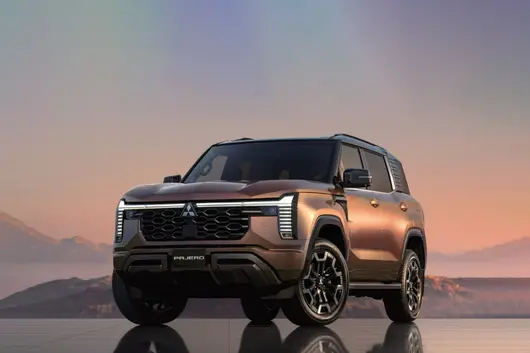
In 2021, the last fourth-generation Pajero rolled off the line at the Gifu Plant. The Japanese hardcore off-road benchmark that has spanned nearly 40 years globally and sold over 3.29 million units entered a 5-year dormancy period.
Recently, Mitsubishi Motor officially unveiled the new Pajero. The fifth-generation product is manufactured in Thailand and launched in Japan and Australia markets. Next year it will be sold in over 100 countries and regions — among which China is likely not included. Besides the diesel engine debut by Mitsubishi not fitting local conditions, the expected starting price of around 330,000 overseas, combined with tariffs and freight, results in a price over 400,000 domestically, also facing severe challenges from same-class products.
For example, GAC has accumulated experience from joint ventures with Mitsubishi and Jeep, launching the Trumpchi Yue 7 with a pre-sale price starting at 179,800. The two models used similar gold paint as advertising color, but the new Pajero loses in size, power, and configuration. Only after 27 years does it return to a body-on-frame chassis, giving the new Mitsubishi car the confidence to challenge the Toyota LC250 Prado again.
01
Body-on-Frame Chassis Revival, Hard Specs Inferior to Yue 7
Focusing on the new Pajero, the first thing to discuss is its chassis. Starting from the third-generation Pajero released in 1999, Mitsubishi switched to a unibody with a built-in ladder frame. This new car is developed based on the latest Triton pickup platform. On one hand, it is a return to reason and ancestral teachings, passing the torch of V97 to Trumpchi Yue 7. On the other hand, it also solves the cost difficulty of independent Pajero development, providing material basis for its resurrection.

This also explains why the new Pajero is manufactured in Thailand — after all, this is the hometown of the Southeast Asian version L200. However, the new Pajero is not simply understood as the off-road version of Triton. Mitsubishi only uses pickup design for the front suspension and front floor; all other chassis components are newly built. The new car adopts a traditional independent ladder frame chassis. High-strength steel and enlarged cross-section make its anti-torsion and anti-bending rigidity improved.
The new Pajero front suspension is double wishbone structure. The rear suspension consists of a solid axle with five links and coil springs. Compared with the four-wheel independent suspension of the previous two generations, its comfort on the highway may be compromised, but the suspension travel and impact resistance will be better. Combined with improved load capacity, the performance of the new Pajero in off-road scenarios is likely stronger than the old model.
On the existing platform basis, Mitsubishi cannot equip the new Pajero with dual-chamber air suspension, variable damping shock absorbers and other chassis hardware like GAC Trumpchi Yue 7, so its ground clearance is fixed at 230mm. Unlike Yue 7 which can adjust from 230-310mm, it is even slightly 5mm lower than the previous generation, but higher than Prado's 221mm. Combined with a wading depth of around 800mm, it is enough for the new Pajero to boast.

As for the 30.4° approach angle, 25.8° departure angle, and 22.6° ramp breakover angle, there is no progress compared to V97, the advantage over Prado is not significant, and it is even more impossible to compare with the lift-able Trumpchi Yue 7. Friends pursuing ultimate passability need to reach the goal through modification later.
02
Diesel Power Main Push, Plug-in Hybrid Still on the Way
The choice of powertrain limited the future of the new Pajero in the Chinese market. Currently, Mitsubishi will only continue to use the 4N16 diesel engine from Triton. The new Pajero is equipped with a twin-turbo 2.4L version, featuring variable geometry turbine technology. After the tail gas after-treatment system, it is the first Mitsubishi diesel engine to meet Euro 6d emission standards.
Moreover, the new Pajero can output 150kW peak power. The 480N·m torque is improved by 10N·m compared to the pickup version, performing better than the previous generation Pajero's 3.2T diesel engine, consistent with the LC250 Prado's 2.8T power, just 20N·m lower in torque.
Choosing the 2.4T diesel engine, the advantage of the new Pajero lies in wide applicability. Although looking at the book values, it is significantly lower than Yue 7 dual motors' 550kW, and acceleration performance has a significant gap, Mitsubishi off-road vehicles can achieve 3.5 tons of towing capacity, which is an ability Trumpchi cannot possess.
Moreover, from information revealed after the press conference, the new Pajero will have HEV and PHEV models later. Among them, Mitsubishi is likely to transplant the Outlander PHEV powertrain to the new Pajero. The combination of 2.4L gasoline engine and dual motors will be more suitable for Chinese owner needs, and can also face off against Tank 500 PHEV in overseas markets.

Regarding gearbox choice, the new Pajero did not continue to use the Triton's 6-speed transmission, but changed to Mitsubishi's latest developed 8-speed automatic transmission.
It may be optimized based on the Aisin AL80F set of Pajero Sport and Prado. Compared with the old 5AT transmission, using tighter gear ratios shows better performance in smoothness and efficiency, and also reinforces oil cooling, meeting the diesel engine's long-time high torque load, calmly coping with the new Pajero's 7 driving mode changes.
Moreover, the new Pajero transmission can also work with S-AWC all-wheel control system and SS4-II Super Select 4WD system, utilizing the newly added AYC active yaw control to help it achieve more stable driving performance. This function mainly uses front wheel braking to vector distribute torque between left and right wheels, correcting driving attitude and trajectory in curves and slippery roads.

Mitsubishi's signature SS4-II is also present. It has four modes: 2H, 4H, 4HLc, and 4LLc. It can realize the switching between two-wheel drive and full-time four-wheel drive on paved roads within 100km/h through planetary gear center differential lock, and can also perform torque-sensing center differential locking and low-speed four-wheel drive independent control, achieving better off-road performance.

03
Dimensions Not as Good as Chinese Off-Roaders, Design Catches up to Mainstream Aesthetics
From body-on-frame chassis, diesel power to Super Select 4WD system, Mitsubishi gives the new Pajero leading performance in class, and in terms of dimensions, it shows even more ambition to steal Prado's business.
The new Pajero's length, width, and height are 4920mm, 1925mm, and 1910mm respectively, with a wheelbase of 2870mm. Compared to V97, it is slightly increased. Except for the wheelbase being 20mm more, each of Mitsubishi new car's three-dimension data is shorter than Prado's. For Japanese consumers who have long been troubled by Toyota's delivery waiting list, the smaller dimensions will instead be an advantage of the new Pajero. If compared with 5-meter level domestic manufacturing like Trumpchi Yue 7 and Tank 500, Mitsubishi's restraint is even more visible.
As for the design part, Mitsubishi improved significantly on the basis of Triton, while maintaining the high body stance of off-road vehicles, paying tribute to classics in details, making the new Pajero follow mainstream aesthetics without disappointing off-road players.

From body lines and surfaces, we can feel Mitsubishi's understanding of toughness. From the bulges on both sides of the hood, the creases of upper and lower waistlines, to the high head, flared fenders and side steps, the new Pajero has a tough look. The black cladding connecting the front and rear bumpers to the wheel arches is selected by Mitsubishi using slightly glossy plastic parts, improving the overall refined feel.
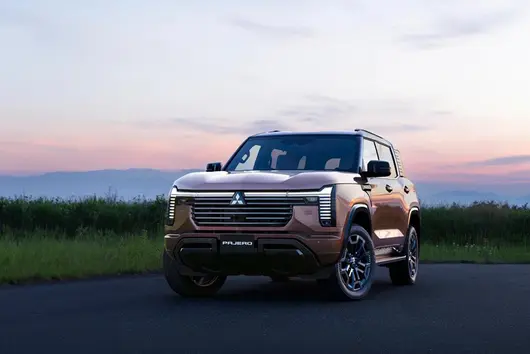
The new Pajero's front face is highly recognizable. It did not continue to use Triton's shape. The square head has a sense of power. The T-shaped DRL combined with the through light strip incorporates the six horizontal bars of the grille, echoing the shape of the rear light clusters, with rich details. The two-tone body reveals the fashionable vibe missing from Mitsubishi in the past.

Disappointing for old car fans, the new Pajero cancels the rear-mounted spare tire, changing to a plain upward-opening tailgate. To save face, Mitsubishi deliberately uses the upper and lower waistline to gather. Combined with the tailgate convex shape, it forms a hexagonal contour to pay tribute to its past self. As for the designer emphasized decoration at the C-pillar position originating from the roll cage of the first-generation Pajero convertible, it is even more of an inside joke element.

Also paying tribute to the first-generation Pajero is the new car's interior. Mitsubishi mainly wants to find the style of that year on the horizontally laid instrument panel. The camel leather trim decoration below the air conditioning vents similar to subway seats does have a retro meaning. Large amounts of soft package stitching use Japanese traditional wood grain craftsmanship. The A-pillar and passenger grab handle have off-road flavor, but the integrated large screen with two 14.3-inch screens pulls people back to 2026.

The center screen can digitally replicate Mitsubishi off-road vehicles' classic three-cluster gauge, and display off-road information such as altitude, heading, pitch angle, roll angle, etc., and can also switch dynamic effects according to driving modes. The new car's center screen also provides wireless smartphone connectivity, and can automatically switch 16 background themes over time, or display a 3D multi-view panoramic image system with透视 chassis.

Mitsubishi first equipped 8 airbags including front outboard airbags on the new Pajero. Coupled with forward collision mitigation and forward collision warning, as well as the first-equipped lane keep assist system capable of offset correction, its active safety capability is enhanced. As for smart assisted driving, the new Pajero's MI-PILOT only has adaptive cruise control with lane keep capability, with a significant gap compared to domestic models.
New Pajero users may not have high requirements for intelligence. Comfort features might be more appealing to them. Mitsubishi prepared acoustic glass for front and rear side windows for the new car, coupled with body noise reduction upgrades, and Yamaha 12-speaker + dual amplifier audio system with active noise cancellation. The new Pajero will have better suppression of engine noise and wind noise.

The new Pajero this time focuses on seven-seat layout. Through the second-row seat 150mm slide and fold, it optimizes the convenience of third-row passenger access. On the basis of improving the first two-row seat ergonomics experience, Mitsubishi equipped seats with heating and ventilation functions. The third row adjusted seating posture. Combined with toe room left after lifting the second-row seat, and three-zone air conditioning that can be independently adjusted, the new Pajero's third row can also satisfy adult sitting. According to current information, the Japan market only has seven-seat version, while the Australia version has five-seat and seven-seat options.

04
Driving Review Summary
Mitsubishi only announced the new Pajero pricing in Australia so far — the entry-level GLS five-seat and seven-seat versions are 68,490 AUD and 69,990 AUD respectively. The top-spec GSR is 84,990 AUD, approximately 330,000 to 410,000 RMB. Compared to the 54,990 AUD before V97 sales stopped, the new Pajero price increased significantly. Compared to the same-spec Triton, it is 8,000 AUD more expensive, but still lower than the Toyota LC250 Prado diesel GX starting price of 72,500 — this price locally should be able to buy the Tank 500 Vanta top-spec version, it just depends on whether consumers have an obsession with the Pajero name.
Domestic off-road players do not need to despair. Although Mitsubishi does not officially introduce the new Pajero, the parallel import channel still exists. At least I heard that some merchants still have stock V97. If the market demand scale is large enough and customer groups can accept a starting price above 400,000, in the future we still have the opportunity to see the new Pajero running on domestic roads — however, it can no longer return to the glory of 20 years ago, after all, the current domestic Prado monthly sales are just above four digits.

In Mitsubishi's plan, Pajero may become an independent series like Range Rover and Defender. In the future, there might also be mid-size Pajero with SUV style and small Pajero with two-door all-electric style. Hope that in the era of new energy ruling the market, domestic car enthusiasts still have the opportunity to play "niche" models, and find different fun in homogenized products.
(END)

喺馬來西亞嘅 SUV 市場,好多買家喺揀車嘅時候都會拎本田 CR-V 同馬自達 CX-30 嚟做比較。呢兩款車喺價位同定位上都幾接近嘅,今日我哋就從多個方面做一個詳細嘅比較,幫你節省咗做功課嘅時間。
本田 CR-V 喺馬來西亞嘅 OTR 售價係 RM 178,200 至 195,900,合共 4 個版本,包括 2026 e:HEV 2.0L 2WD RS(RM 195,900)、2026 1.5T 4WD V(RM 181,900)、2026 e:HEV 2.0L 2WD E(RM 178,200) 等。
馬自達 CX-30 喺馬來西亞嘅 OTR 售價係 RM 122,409 至 146,409,合共 4 個版本,包括 2025 2.0L High+ Premium(RM 146,409)、2025 2.0L High+(RM 138,409)、2025 2.0L High(RM 130,409) 等。
從價錢睇落,馬自達 CX-30 嘅入門價比本田 CR-V 平咗 RM 55,791。老實講,喺呢個價位段,幾千蚊嘅差距其實唔算大,關鍵仲係睇整體嘅性價比同長期使用成本。
本田 CR-V 配備 2.0L 四缸,馬力 170 hp。官方油耗 8.0 L/100km。
馬自達 CX-30 配備 1.5L Turbo,馬力 140 hp。官方油耗 7.0 L/100km。
動力方面,本田 CR-V 嘅 2.0L 四缸比馬自達 CX-30 嘅 1.5L Turbo 多咗 30 匹馬力,中段加速更有信心,尤其係行高速超車嘅時候。不過馬自達 CX-30 嘅油耗可能更加抵,日常市區通勤差別唔會太大。
本田 CR-V 嘅安全評級係 5★ (ASEAN NCAP),主動安全系統包括 Honda SENSING (ACC, CMBS, LKAS, RDM)。
馬自達 CX-30 嘅安全評級係 5★ (ASEAN NCAP),主動安全系統包括 i-Activsense。
兩款車嘅安全評級一樣,喺呢個級數入面安全配備都算好齊全。而家嘅新車安全性都唔差,唔使太擔心呢一點。
本田 CR-V 保修 5 年/無限里程,保養間隔 每 10,000km 或 6 個月。
馬自達 CX-30 保修 5 年/150,000km,保養間隔 每 10,000km 或 6 個月。

總體嚟講,本田 CR-V 同馬自達 CX-30 都係馬來西亞市場好唔錯嘅車款。揀邊一部,關鍵仲係睇你個人需求同埋預算。建議大家做好功課,多比較間車行嘅報價,再去試駕做最後決定。買車係件大事,花少少時間做功課絕對唔錯。

In Malaysia's SUV market, many buyers compare Honda CR-V and Toyota Corolla Cross when choosing a car. These two models are quite close in price and positioning. Today, we will make a detailed comparison from multiple aspects to help you save time doing research.
Honda CR-V's OTR price in Malaysia is RM 178,200 - 195,900, with a total of 4 variants, including 2026 e:HEV 2.0L 2WD RS (RM 195,900), 2026 1.5T 4WD V (RM 181,900), 2026 e:HEV 2.0L 2WD E (RM 178,200), etc.
Toyota Corolla Cross's OTR price in Malaysia is RM 133,800 - 148,800, with a total of 3 variants, including 2026 HEV 1.8L GR Sport (RM 148,800), 2026 HEV 1.8L Standard (RM 140,800), 2026 1.8L Standard (RM 133,800), etc.
Looking at the price, Toyota Corolla Cross's starting price is RM 44,400 cheaper than Honda CR-V. Honestly, in this price range, a difference of a few thousand isn't significant; the key is overall value and long-term ownership costs.
Honda CR-V comes with a 2.0L 4-cyl, 170 hp. Official fuel consumption is 8.0 L/100km.
Toyota Corolla Cross comes with a 1.5L Turbo, 140 hp. Official fuel consumption is 7.0 L/100km.
In terms of power, Honda CR-V's 2.0L 4-cyl has 30 hp more than Toyota Corolla Cross's 1.5L Turbo, offering more confidence in mid-range acceleration, especially when overtaking on highways. However, Toyota Corolla Cross might be more economical, and the difference for daily city commuting won't be significant.
Honda CR-V's safety rating is 5★ (ASEAN NCAP), active safety systems include Honda SENSING (ACC, CMBS, LKAS, RDM).
Toyota Corolla Cross's safety rating is 5★ (ASEAN NCAP), active safety systems include TSS (PCS, LDA, ACC, LTA).
Both cars have the same safety rating; safety features are quite comprehensive within this class. New cars nowadays generally have good safety, so there is no need to worry too much about this point.
Honda CR-V uses FWD drivetrain.
Toyota Corolla Cross uses FWD drivetrain.
Both cars use the same drivetrain, both are FWD, so the daily driving experience won't differ much.

Overall, Honda CR-V and Toyota Corolla Cross are both very good models in the Malaysia market. Which one to choose mainly depends on your personal needs and budget. We suggest doing thorough research, comparing quotes from several dealers, and test driving to make the final decision. Buying a car is a significant decision; spending time on preparation will never go wrong.

In Malaysia's SUV market, many buyers compare Honda CR-V and Toyota Yaris Cross when choosing a car. These two cars are quite close in price and positioning. Today, we will make a detailed comparison from multiple aspects to help you save time on research.
Honda CR-V OTR price in Malaysia is RM 178,200 - 195,900, with 4 versions in total, including 2026 e:HEV 2.0L 2WD RS (RM 195,900), 2026 1.5T 4WD V (RM 181,900), 2026 e:HEV 2.0L 2WD E (RM 178,200), etc.
Toyota Yaris Cross OTR price in Malaysia is RM 99,900 - 109,900, with 2 versions in total, including 2026 1.5L Standard (RM 99,900), 2026 HEV 1.5L Standard (RM 109,900), etc.
From the price perspective, the starting price of Toyota Yaris Cross is RM 78,300 cheaper than Honda CR-V. Honestly, in this price range, a difference of a few thousand is actually not significant; the key is looking at the overall value for money and long-term usage costs.
Honda CR-V is equipped with a 2.0L 4-cyl, 170 hp. Official fuel consumption 8.0 L/100km.
Toyota Yaris Cross is equipped with a 1.5L 4-cyl, 105 hp. Official fuel consumption 6.0 L/100km.
In terms of power, Honda CR-V's 2.0L 4-cyl has 65 more horsepower than Toyota Yaris Cross's 1.5L 4-cyl, providing more confidence in mid-range acceleration, especially when overtaking on highways. However, Toyota Yaris Cross fuel consumption might be more friendly, and there won't be a huge difference in daily city commuting.
Honda CR-V safety rating is 5★ (ASEAN NCAP), active safety systems include Honda SENSING (ACC, CMBS, LKAS, RDM).
Toyota Yaris Cross safety rating is 5★ (ASEAN NCAP), active safety systems include TSS.
Both cars have the same safety rating, safety features are quite complete in this class. New car safety nowadays is not bad, no need to worry too much about this point.
Honda CR-V body length 4500 mm, trunk 450 L.
Toyota Yaris Cross body length 4400 mm, trunk 400 L.
In terms of space, Honda CR-V's body is 100 mm longer than Toyota Yaris Cross, interior seating space will be slightly more spacious, especially rear legroom. If you often carry family or need to put in a stroller, a larger body is indeed more practical.

Honda CR-V and Toyota Yaris Cross are both mainstream choices in the Malaysia market, suitable for family use, daily commuting. If you value brand reputation and resale value more, you can prioritize the one with better reputation; if you care more about value for money and features, choose the one with richer configuration. Ultimately it is suggested to test drive both, personal experience is the most important.

Overall, Honda CR-V and Toyota Yaris Cross are both very good models in the Malaysia market. Which one to choose depends on your personal needs and budget. It is recommended to do research, compare quotes from several car dealerships, then test drive to make the final decision. Buying a car is a big matter, spending some time on research will never be wrong.

Di pasaran SUV Malaysia, banyak pembeli semasa memilih kereta akan membandingkan Honda HR-V dan Subaru Forester. Kedua-dua model ini memiliki julat harga dan kedudukan yang agak hampir, hari ini kita akan membuat perbandingan terperinci dari pelbagai aspek untuk membantu anda menjimatkan masa membuat kajian.
Harga OTR Honda HR-V di Malaysia ialah RM 115,900 - 143,900, terdapat keseluruhan 4 varian, termasuk 2026 e:HEV 1.5L RS (RM 143,900), 2026 1.5T V (RM 137,900), 2026 1.5T E (RM 130,900) dan lain-lain.
Harga OTR Subaru Forester di Malaysia ialah RM 174,000 - 197,000, terdapat keseluruhan 3 varian, termasuk 2024 2.0L S EyeSight GT Edition (RM 189,538), 2024 2.0L S EyeSight (RM 177,538), 2024 2.0L L EyeSight (RM 167,538) dan lain-lain.
Dilihat dari segi harga, harga permulaan Honda HR-V memang lebih murah RM 58,100 berbanding Subaru Forester. Jika bajet anda terhad, varian permulaan Honda sudah boleh memenuhi keperluan harian. Namun, perhatikan juga, beribu ringgit yang lebih murah itu mungkin melibatkan pengorbanan dari segi kelengkapan, bergantung sepenuhnya pada keperluan anda.

Panjang badan Honda HR-V 4500 mm, kapasiti bagasi 450 L.
Panjang badan Subaru Forester 4400 mm, kapasiti bagasi 400 L.
Dari segi ruang, badan Honda HR-V lebih panjang 100 mm berbanding Subaru Forester, ruang dalam kereta akan lebih selesa sedikit, terutamanya ruang kaki di kerusi belakang. Jika anda kerap membawa keluarga atau perlu membawa kereta bayi, badan kereta yang lebih besar memang lebih praktikal.

Honda HR-V menggunakan sistem pemacu FWD.
Subaru Forester menggunakan sistem pemacu FWD.
Sistem pemacu kedua-dua kereta adalah sama, iaitu FWD, rasa memandu harian tidak akan banyak berbeza.

Honda HR-V dan Subaru Forester kedua-duanya merupakan pilihan utama pasaran Malaysia, sesuai untuk kegunaan keluarga dan perjalanan harian. Jika anda lebih mengutamakan reputasi jenama dan nilai jualan semula, boleh utamakan model yang mempunyai reputasi lebih baik; jika anda lebih mengutamakan kos berbaloi dan kelengkapan, maka pilih model yang mempunyai kelengkapan lebih melimpah. Pada akhirnya disarankan untuk ujian memandu kedua-dua model, pengalaman peribadi adalah yang paling penting.

Secara keseluruhannya, Honda HR-V dan Subaru Forester kedua-duanya adalah model kereta yang sangat bagus di pasaran Malaysia. Memilih yang mana, kuncinya bergantung pada keperluan peribadi dan bajet anda. Kami cadangkan anda membuat kajian dengan baik, bandingkan harga dari beberapa dealer, kemudian buat ujian memandu untuk membuat keputusan akhir. Membeli kereta adalah perkara penting, meluangkan masa membuat kajian pasti tidak akan salah.


A return seven years late.
On September 2, Mitsubishi Motors globally unveiled the fifth-generation Pajero. This is the "Mountain Cat" returning to the global stage after seven years following its discontinuation in the Japanese market in 2019. But this time, the Pajero faces a market that is no longer the same as before.

For hardcore off-road enthusiasts, the Pajero is a name carrying the legend of 12 Dakar championships. At its peak, annual global sales once exceeded 170,000 units, especially in Southeast Asia, the Middle East, Australia, and Western China markets, where the Pajero was almost synonymous with "reliable, durable".
However, as the global SUV trend shifted from hardcore off-road to urban SUVs, Pajero sales continued to shrink. By 2018, its annual sales in Japan dropped to 600 units. In 2019, Mitsubishi had to announce the discontinuation of the Pajero in the Japanese market, retaining only limited production overseas.
And the reason for the Pajero's exit is solely one: sales volumes could no longer support the huge R&D investment for an independent platform. It is reported that the fourth-generation Pajero adopted a unibody with an integrated trapezoidal frame, having an independent development system and production line. This system operated well during the peak of 170,000 annual sales, but when sales dropped to the thousand-unit level that year, developing a Pajero independently was no longer economically viable.

But discontinuation is not the end of the story. In 2026, Mitsubishi found the answer to revival. According to multiple media reports, the new car is no longer developed from scratch but mounts an SUV body on the Triton platform, with parts and supply chains highly shared. The significant reduction in R&D costs gave a model originally economically unviable renewed commercial feasibility. However, it is worth noting that this platform solution brought the Pajero back from the fourth-generation semi-monocoque body to the traditional non-load-bearing (with ladder frame) hardcore route — off-road performance is harder, but highway handling and ride comfort are likely not as good as the previous generation. The balance between sentiment and practicality has tilted again.
Not only that, Mitsubishi's ambition lies in expanding the Pajero from a single model to a complete series: In 2028, launch a mid-size Pajero sharing parts with the Outlander; in 2030, launch a mini Pajero targeting K-Car class. Facing difficulties competing directly with Toyota and Honda in the mainstream passenger car market, Mitsubishi chose to establish its own brand position in the "hardcore off-road" niche segment. Mitsubishi Motors predicts that by the 2030 fiscal year, global off-road SUV demand will reach 6.6 million units, an 80% growth over 10 years.

However, imagination is beautiful, but reality is stark. The off-road market today has completely changed: in overseas markets, the Pajero no longer faces only old rivals like Toyota and Ford, but also a group of new players entering from China. According to data from CAAM, in the first half of 2026, China's automobile export volume reached 4.059 million units, a 63% surge year-on-year; in 2025, Chinese brands' market share in Thailand reached 22%, Japanese brands fell below 70% for the first time, and the Tank brand's share in Thailand's non-load-bearing SUV market soared to 53.2%; in Russia and the Middle East, the Tank brand is also expanding rapidly. These Chinese off-road vehicles not only have hardcore strength, but also new weapons of electrification and intelligence — in 2025, the market share of independent brands in China's hardcore off-road market exceeded 70%. In the same year the Pajero was revived, the lineup of opponents was already completely different.

And focusing on the domestic market, the situation is even more complex. According to public information, Mitsubishi's whole vehicle business in China was discontinued in 2023. The new Pajero is unlikely to be imported through official channels; the only entry point is parallel import, with an estimated price of over 400,000 yuan. At this price point, the Tank 500 Hi4-T and Fang Cheng Bao Bao 5 have already equipped air suspension, lidar, and cooling/heating fridges. Domestic users' expectations for off-road vehicles are no longer just "can climb mountains and cross rivers", but "capable in both city and wild".
Meanwhile, Mitsubishi executives have also admitted outright: competing on price with Chinese enterprises is not feasible. This also means that even if the Pajero enters China, it will not take the cost-performance route, but must exist as a niche, high-premium "sentiment" identity. The only question is, how many people are still willing to pay for "sentiment" nowadays?

Usable, but not cutting-edge; pragmatic, but lacks surprises.
The Pajero has returned, using the most mature and cheapest technical solution Mitsubishi has on hand, facing a battlefield that is more crowded and more complex than seven years ago. Today, the global off-road market is still growing, but the definition of growth is being rewritten by Chinese brands. The Pajero will face a new game with changed rules, and whether it can continue its former glory, the market will soon provide the answer.

Recently, US Treasury Secretary Bessent mentioned BYD during a speech at the Charlotte Economics Club (Charlotte Economics Club), stating that BYD is the best car in the $70,000 class that consumers can buy for $35,000. This indirectly indicates that in the eyes of Western political figures like Bessent, the value of BYD products far exceeds the price itself; consumers feel a value experience far beyond the same level after using the product. This is the most authentic and most authoritative endorsement of BYD.

Bessent's remarks continue to spark heated discussion among US netizens: "(Bessent) is BYD's best salesman" "I want a car like this" "Let them build a factory in the US, this will ignite our innovation and competition". These public opinion consensuses signify that the global automotive value logic has been rewritten by BYD: users' perception of automotive quality is no longer defined by brand history, social circle premiums, but returns to core technologies, real configurations, and actual user experiences. BYD is continuously reconstructing the global automotive industry value chain and seizing industry discourse power in the new energy era.

Besides Bessent, BYD's technical strength and industrial value continue to receive high recognition and authoritative endorsement from political figures and industry celebrities from many countries. US California Governor Newsom personally experienced Yangwang U8, highly praising it as a breakthrough technology spanning generations; the President of Uzbekistan bestowed the national-level "Friendship Medal" upon BYD, recognizing its industrial contribution; high-level officials from multiple countries, including Brazilian President Lula, Thai Prime Minister Anutin, and former Chilean President Piñera, also praised BYD's technological innovation, green transformation value, and local development achievements. Multiple national official positive evaluations confirm BYD's global credibility and world-class product strength.

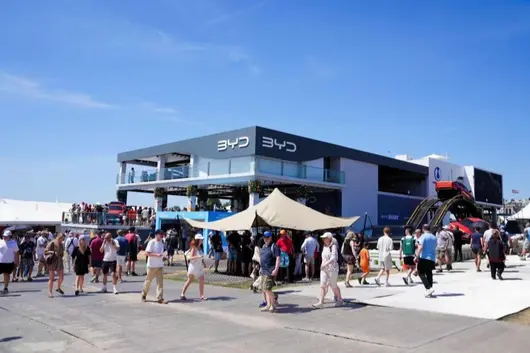
This evaluation by Bessent reflects BYD's unstoppable sales momentum overseas. From January to August this year, BYD's cumulative overseas sales reached 1.158 million vehicles, surpassing the 1.0496 million overseas sales volume of the entire year of 2025. BYD topped the local new energy vehicle sales list in countries such as Thailand, Singapore, Italy, Spain, Brazil, Saudi Arabia, UAE, and South Africa. Today's BYD, relying on its superior quality and upgraded experience, is becoming a household car seen everywhere on streets globally, truly realizing the overseas expansion of technology, products, and brands, becoming the core business card for Chinese Smart Manufacturing to go global.

This heavy overseas sales achievement is by no means solely relying on price advantages, but rather a hardcore result precipitated from full-industry chain independent research. BYD achieves complete independent control of the three core technologies: battery, motor, and electronic control. Relying on continuous technical iteration and large-scale refined manufacturing, based on sticking to product quality, it reshapes the value logic of the automotive industry. High-end car experiences that cost about $70,000 in overseas markets, BYD offers to global consumers with a pricing of only $35,000, breaking the brand premium barriers long held by overseas car companies and reconstructing the global automotive value system.

Stunning market data further confirms the solid reputation. BYD insists on compliance and deep cultivation in overseas markets, relying on the choices of tens of millions of overseas users and actual delivery results to respond to external noise, using hardcore product strength to vindicate Chinese Smart Manufacturing and becoming a vivid model for Chinese industries standing on the international stage.

In the Malaysian SUV market, many buyers compare Honda HR-V and MG MG HS when choosing a car. Both cars are quite close in price and positioning. Today we will do a detailed comparison from multiple aspects to help you save time on research.
Honda HR-V's OTR price in Malaysia is RM 115,900 - 143,900, totaling 4 variants, including 2026 e:HEV 1.5L RS (RM 143,900), 2026 1.5T V (RM 137,900), 2026 1.5T E (RM 130,900), etc.
MG MG HS's OTR price in Malaysia is RM 130,450 - 146,450, totaling 2 variants, including 1.5L Standard (RM 105,000), 1.5L Executive (RM 115,000), etc.
From a price perspective, Honda HR-V's starting price is indeed RM 14,550 cheaper than MG MG HS. If your budget is limited, Honda's entry-level version can already meet daily needs. But note, the few thousand cheaper might involve trade-offs in features, depending on your specific needs.
Honda HR-V is equipped with 1.5L Turbo, 140 hp. Official fuel consumption 7.0 L/100km.
MG MG HS is equipped with 1.5L Turbo, 140 hp. Official fuel consumption 7.0 L/100km.
Both cars use the same powertrain, and the driving feel in daily use is basically no different. Fuel consumption is also similar, so there is no need to worry too much about this point.
Honda HR-V's safety rating is 5★ (ASEAN NCAP), and active safety systems include Honda SENSING (ACC, CMBS, LKAS, RDM).
MG MG HS's safety rating is TBD, and active safety systems include Basic.
Regarding safety features, both cars have received decent ratings. However, Honda HR-V's Honda SENSING (ACC, CMBS, LKAS, RDM) and MG MG HS's Basic have some differences in functionality. If you value active safety, you can carefully compare their feature lists.
Honda HR-V adopts FWD drive mode.
MG MG HS adopts FWD drive mode.
Both cars have the same drive mode, both FWD, and the daily driving feel will not differ much.
Overall, Honda HR-V and MG MG HS are both very good models in the Malaysian market. Which one to choose mainly depends on your personal needs and budget. We suggest doing your homework thoroughly, compare quotes from multiple dealers, and then test drive to make the final decision. Buying a car is a major matter, and spending time doing research will definitely not be wrong.
© 2024 Bitauto.com. All Rights Reserved.
Bitauto (www.yiche.com and www.bitauto.com) is one of the most visited automotive websites in China. We provide detailed info on Chinese car brands available in your area. Please note that the information provided on this website is based on publicly available data and is for reference only. It may not be fully updated or accurate at all times.

Help us improve our website


