

Hometrails

Search History
Popular Searches
Dealer Login / Sign Up

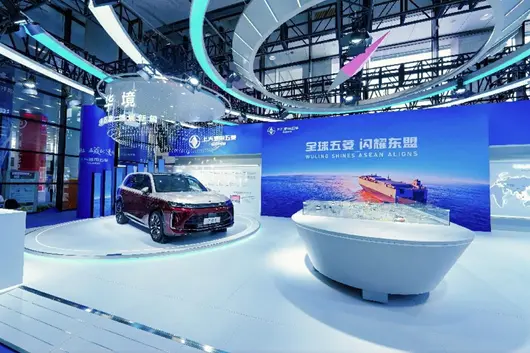
9月17日,广西南宁,上汽通用五菱以“全球五菱 闪耀东盟”为主题,亮相第23届中国—东盟博览会。现场发布Global 5全球战略,与马来西亚陈唱集团达成深度战略合作签约。
作为中国汽车产业协同出海的标杆企业,上汽通用五菱同时入驻本届东盟博览会“新能源和智能网联汽车”展区与“先进技术”展区两大特色展馆,为用户带来搭载华为乾崑科技的旗舰大六座华境S、G20峰会官方用车Air ev、“天”“灵”“神”技术品牌,以及I²MS智能岛制造体系等成果展示,全方位呈现上汽通用五菱从产品到技术、从品牌到生态的全球化实力。

上汽通用五菱“新能源和智能网联汽车”展区

上汽通用五菱“先进技术”展区
当前,全球新能源转型正面临“普惠落差大、本地化门槛高、生态链断层”三重鸿沟。面对时代之问,上汽通用五菱召开全球战略发布会,正式发布Global 5全球战略,以全新姿态,携手东盟及全球合作伙伴,共绘新能源汽车全球生态新蓝图。
中国汽车产业正从“汽车大国”迈向“汽车强国”,在这条强国之路上,上汽通用五菱交出了一份亮眼的成绩单:全球累计产销突破3200万台;新能源汽车销量超400万台;海外出口连续10年增长,累计出口销量突破160万台/套。从最初的借船出海,到今天依托西部陆海新通道、智能制造和绿色制造优势,上汽通用五菱已成长为规模与增速双领先的全球车企,同时也是东盟用户喜爱的中国品牌之一。未来,上汽通用五菱将从实力、模式、市场、保障、目标五个维度规划全球化路径,定义全球汽车产业高质量发展新标准。
Global 5全球战略是上汽通用五菱为中国汽车产业走向全链条生态出海贡献的中国方案。上汽通用五菱以全品类的产品布局带来全场景出行解决方案,以“天灵神”技术体系为核心打造务实可靠的核心技术,以全球首创的I²MS智能岛制造体系打破百年流水线惯例,以“智造链、供应链、销售链、人才链、金融链”五链协同构建全产业链生态布局,以68年造车历史和3200万台累计产销铸就极致的信任与口碑,构建起五大实力底座,将全链路自研自建能力系统性转化为海外市场竞争力。同时,上汽通用五菱针对全球不同市场的发展阶段与政策环境,推出贸易、经销、产销、全产业链、技术授权五大开放合作模式,由浅入深、灵活适配,合作伙伴可根据自身需求自主选择。
此外,上汽通用五菱还构建了全球品质保障、供应链保障、合作伙伴赋能保障、本地化售后保障、可持续经营保障等五大服务保障体系,覆盖合作全生命周期;以东盟为桥头堡,不断深化亚洲、非洲、美洲、欧洲、大洋洲五大市场布局;制定3年深化布局150个国家、拓展500家战略合作伙伴、年销量年均增长50%、成为世界新能源领导品牌、成为产业升级与绿色发展先行者等五大发展目标,以实现“五菱发展之翼”与“五菱伙伴之翼”两翼齐飞的共赢格局。

上汽通用五菱 Global 5 全球战略
作为 Global 5 全球战略发布后的首个落地成果,上汽通用五菱与马来西亚陈唱集团于发布会现场签署深度战略合作协议,正式启动马来西亚本地化产业布局。依托核心零部件供应链出海,上汽通用五菱将搭建马来西亚本土自主供应链体系,持续完善东盟区域产业版图,推进国际化产能布局与跨境产业协同发展。

G20峰会官方用车


上汽通用五菱全球产品矩阵重磅亮相中国-东盟博览会
小结:
上汽通用五菱完整呈现了中国汽车从产品出海向全链条生态出海的系统升级,为地方企业与制造业高质量“走出去”提供了可复制的经验样本。
Dalam pasaran SUV di Malaysia, ramai pembeli membandingkan Honda CR-V dan Kia Sportage semasa memilih kereta. Kedua-dua kereta ini mempunyai harga dan penjenamaan yang sangat dekat, hari ini kita akan buat perbandingan terperinci dari pelbagai aspek untuk membantu anda menjimatkan masa membuat kajian.
Harga OTR Honda CR-V di Malaysia adalah RM 178,200 - 195,900, terdapat 4 versi, termasuk 2026 e:HEV 2.0L 2WD RS (RM 195,900), 2026 1.5T 4WD V (RM 181,900), 2026 e:HEV 2.0L 2WD E (RM 178,200) dan lain-lain.
Harga OTR Kia Sportage di Malaysia adalah RM 129,639 - 179,320, terdapat 4 versi, termasuk 2025 1.6T DCT 4WD High (RM 179,320), 2025 1.6T DCT 2WD High (RM 159,320), 2025 2.0L AT 2WD High (RM 139,639) dan lain-lain.
Dari segi harga, Kia Sportage bermula RM 48,561 lebih murah berbanding Honda CR-V. Jujur berkata, pada julat harga ini, perbezaan ribuan ringgit sebenarnya tidak besar, yang penting adalah nisbah kualiti-harga keseluruhan dan kos penggunaan jangka panjang.

Honda CR-V dilengkapi enjin 4-silinder 2.0L, kuasa 170 hp. Konsumsi bahan api rasmi 8.0 L/100km.
Kia Sportage dilengkapi enjin Turbo 1.5L, kuasa 140 hp. Konsumsi bahan api rasmi 7.0 L/100km.
Dari segi kuasa, enjin 4-silinder 2.0L Honda CR-V mempunyai 30 kuasa kuda lebih banyak berbanding enjin Turbo 1.5L Kia Sportage, memberikan lebih keyakinan dalam pecutan sederhana, terutamanya apabila menyalip di lebuh raya. Namun, konsumsi bahan api Kia Sportage mungkin lebih mesra, perbezaan dalam perjalanan harian di bandar tidak akan terlalu besar.

Honda CR-V menggunakan cara pemanduan FWD.
Kia Sportage menggunakan cara pemanduan FWD.
Kedua-dua kereta ini mempunyai cara pemanduan yang sama, iaitu FWD, tidak akan ada perbezaan besar dalam rasa memandu harian.

Waranti Honda CR-V 5 tahun/jarak tanpa had, selang penyelenggaraan setiap 10,000km atau 6 bulan.
Waranti Kia Sportage 5 tahun/300,000km, selang penyelenggaraan setiap 10,000km atau 6 bulan.

Honda CR-V dan Kia Sportage kedua-duanya pilihan utama dalam pasaran Malaysia, sesuai untuk kegunaan keluarga dan perjalanan harian. Jika anda lebih mementingkan reputasi jenama dan nilai jualan semula, anda boleh utamakan model yang mempunyai reputasi lebih baik; jika anda lebih prihatin dengan nisbah kualiti-harga dan peralatan, pilih model yang lebih dilengkapi. Pada akhirnya, disyorkan untuk uji jalan kedua-duanya, pengalaman peribadi adalah yang paling penting.

Secara umumnya, Honda CR-V dan Kia Sportage adalah model yang sangat baik dalam pasaran Malaysia. Memilih yang mana, yang penting adalah melihat keperluan dan bajet peribadi anda. Kami cadangkan anda membuat kajian, membandingkan lebih banyak tawaran dari kedai kereta, kemudian buat uji jalan untuk keputusan akhir. Membeli kereta adalah perkara besar, mengambil masa untuk membuat kajian tidak akan pernah salah.


喺馬來西亞嘅 SUV 市場,好多買家喺揀車嗰陣都會拿 Honda CR-V 同 Ford Everest 嚟比較。呢兩款車喺價位同定位上都幾接近,今日我哋就從多方面做一個詳細比較,幫住你省下做功課嘅時間。
Honda CR-V 喺馬來西亞嘅 OTR 售價係 RM 178,200 - 195,900,合共有 4 個版本,包括 2026 e:HEV 2.0L 2WD RS(RM 195,900)、2026 1.5T 4WD V(RM 181,900)、2026 e:HEV 2.0L 2WD E(RM 178,200)等。
Ford Everest 喺馬來西亞嘅 OTR 售價係 RM 266,338 - 430,838,合共有 6 個版本,包括 2026 3.0T 4WD Platinum(RM 430,838)、2026 2.0T 4WD Platinum(RM 348,838)、2026 2.0T 4WD Sport(RM 316,838)等。
由價錢睇,Honda CR-V 嘅起步價確實比 Ford Everest 平咗 RM 88,138。如果你預算有限,Honda 嘅入門版已經可以滿足日常需要。但都要記住,平嗰幾千蚊,可能喺配備上有取捨,具體要看你嘅需求。
Honda CR-V 配備 2.0L 4-cyl,馬力 170 hp。官方油耗 8.0 L/100km。
Ford Everest 配備 2.5L Diesel,馬力 187 hp。官方油耗 8.5 L/100km。
动力方面,Ford Everest 嘅 2.5L Diesel 比 Honda CR-V 嘅 2.0L 4-cyl 多咗 17 匹馬力。不過平日喺市區開,兩款車嘅動力都夠用,唔會覺得唔夠力。
Honda CR-V 採用 FWD 驅動方式。
Ford Everest 採用 FWD 驅動方式。
兩款車嘅驅動方式一樣,都係 FWD,日常駕駛感受唔會有太大分別。
Honda CR-V 保修 5 年/無限制里程,保養間隔 每 10,000km 或 6 個月。
Ford Everest 保修 3 年/100,000km,保養間隔 每 10,000km 或 6 個月。

Honda CR-V 同 Ford Everest 都係馬來西亞市場嘅主流選擇,適合家庭用、日常通勤。如果你更睇重品牌口碑同二手價,可以優先考慮口碑更好嗰款;如果你更在意性價比同配備,那就揀配置更豐富嗰款。還係建議兩款都去試駕,親身體驗先係最重要嘅。

總體嚟講,Honda CR-V 同 Ford Everest 都係馬來西亞市場幾唔錯嘅車型。揀邊一輛,關鍵都要睇你嘅個人需求同預算。建議大家做足功課,多比較幾間車行嘅報價,再去試駕做最終決定。買車係件大事,花費少少時間做功課絕對唔會錯。

2026年以来,中国车市新车投放密集,数百款新品涌入,消费者选择空间空前扩大。但新品越多,行业越需要回答一个核心问题:上市期热度退去后,销量能否延续?相较短期爆发,持续热销正成为衡量产品成色的更重要标尺。

在这一标尺下,上汽旗下MG4、MG 07、尚界Z7/Z7T、华境S等多款智电新品的热销跨越上市期与平销期,构成更具含金量的爆款样本:MG4上市一年热销15万辆,连续11个月月销稳态破万;MG 07上市20天锁单4.2万台;尚界Z7/Z7T上市两个月交付破2万,用户净推荐值(NPS)登顶中大型纯电轿跑口碑榜首;华境S月销四连增,累计交付2.5万台,NPS位居25万以内新能源SUV第一梯队。
这些产品分属不同品牌、不同品类、不同价位,却共享同一套方法论:以用户需求为导向,在红海中寻找蓝海。拆解来看,这套方法论有一个前提与三个支点——前提是掌握核心技术,支点是整零协同、规模化与国际化。
核心技术:精准洞察用户需求的前提
科技普惠的底层逻辑,是让领先技术以更具诚意的价格惠及更广泛用户。
上汽的底气,来自近十年在电动化、智能化领域近1900亿元研发投入和超过24000项有效专利。由此形成“智慧脑、健壮身、强劲心”的技术底座,一批核心技术陆续量产落地,构筑起坚实的护城河:半固态电池率先实现量产装车,DMH混动热效率达46.3%,线控底盘首批量产应用,并持有乘用车/商用车
L4双牌照。

正因有这些储备,普惠才不是口号,而是一份可逐条兑现的清单:6万级荣威i6标配8155芯片和豆包大模型;9万级MG4X全系标配半固态电池和后驱五连杆;15万级市场MG 07将800V高压平台、5C超充、845km续航和Momenta R7高阶智驾一并带入,家越07把AI原生座舱送进主流家庭SUV市场;20万级市场,全新一代智己L6标配上汽新一代NEO三电架构、全线控底盘、IM Claw龙虾智能体,让用户先享未来三年的下一代科技;尚界Z7/Z7T系列则标配华为乾崑智驾和896线激光雷达,为用户带来“入门即满配”的智能出行体验。

对用户需求与使用场景的精准洞察,则是技术普惠与精准产品定义的前提。以尚界Z7/Z7T为例,据杰兰路首批用户调研显示,尚界Z7系列车主呈现年轻化、高学历特征,以都市年轻用户为主,女性用户占比达42.3%,远高于行业平均。其中,Z7更吸引年轻未婚女性用户,是喜欢健身、聚会、城市社交的都市玩家;Z7T更受都市高知家庭青睐,车主热衷旅行、露营、钓鱼爬山,猎装造型、大空间和车载冰箱因此接住更大的出行半径。华境S则读懂了另一群人:首批车主中近九成是有娃家庭,六成来自合资置换,他们需要的不是新鲜噱头,而是大六座空间、全系华为乾崑智驾和在预算范围内的“确定性”。产品定义精度,决定热销长度。
整零协同:以产业链协同兑现用户需求
精准洞察需求之后,如何快速规模化兑现?上汽的答案是七十余年建立的全产业链垂直整合体系。
依托华域、延锋、清陶等体系内行业领先的零部件企业,从底盘、内外饰到三电,上汽乘用车与零部件体系建立前置绑定、联合开发的整零协同关系。供应商在项目前期深度绑定,共同定义产品和用户需求,共同评估竞争力,共同优化设计和成本。这是上汽爆款方法论的第一块基石,也是传统车企最难被新势力复制的优势。

协同半径亦向外延伸。与华为合作,使乾崑智驾和鸿蒙座舱成为尚界、华境S全系标配;与Momenta的合作则更深入,形成双向持股、战略互嵌:上汽是Momenta第一大机构股东,Momenta反向持股智己,数据、场景与研发节奏保持同频。更重要的是,Momenta高阶智驾方案已落地荣威、MG、大众、AUDI、别克、凯迪拉克等自主及合资品牌,形成跨品牌、跨体系的规模化应用。对上汽体系品牌而言,这一协同能够加快智能化技术量产落地,形成差异化市场竞争优势;对Momenta而言,方案在多款车型上应用,可迅速放大规模,加快数据闭环,促进技术迭代,构建技术护城河,并提升营收与盈利水平,从而形成良性正向循环。这种“资本+产业+数据”的双向奔赴,保证最前沿智驾模型第一时间在上汽产品上量产落地。
整零协同的本质,是让整个产业链成为需求翻译器:用户的一句抱怨,能以最短路径转化为下一次OTA升级,或下一代产品上的一项标配。
规模化:让科技平权成为可持续的生意
将高配做成标配,最易招致质疑之处在于盈利能否跟上。

上汽的解法是按百万级体量做预判,让核心模块跨车型共用,用规模摊薄研发和制造成本,做到高配平价不减配。同一套Momenta智驾模型,从智己到MG、荣威,再到别克至境、大众ID.ERA、奥迪,随着规模扩大,成本摊销越低;同一项半固态电池技术,从国内MG4家族铺到海外混动车型,规模效应让前沿技术快速量产应用。
用户口碑证明,业务模式成立且健康:85%用户选择华境S高配版本,真正让用户买单的不是低价,而是价值;其新车NPS达到86分,口碑传播成为驱动销量四连增的核心。更关键的是,科技普惠并未以牺牲经营质量为代价。

上半年,上汽核心归母净利润同比增长72%,毛利率提升3个百分点,经营性现金流净额大增158%。在行业竞争加剧、国内需求承压背景下,这组核心经营指标勾勒出一家稳健而有韧性的企业。高配变标配的同时,上汽经营基本盘同样扎实。这是规模化给技术平权上的一道保险:科技普惠并非一次性的价格让利,而是一种可持续的经营模式。
国际化:在全球市场验证并反哺产品迭代
蓝海不止于国内,上汽在海外亦找到突破口。
MG连续11年蝉联中国品牌欧洲销量冠军,欧洲累计交付突破百万辆;1-8月上汽海外销售101.6万辆,同比大涨52.9%。比数字更重要的是姿态变化:7月,MG将技术大会开至品牌发源地伦敦,将概念车带上古德伍德速度节,从卖车出海升级为技术、产能、服务生态的“走进去”,从产品输出升级为标准输出。

百万辆级海外规模,比拼的早已不是某一款车能否卖动,而是一套体系能否长期运转。上汽为此铺设体系化网络:安吉物流42艘自营滚装船、8条国际航线,远洋年运能60万辆,将运力主动权握在自己手中;泰国、印尼、印度三大整车制造基地和巴基斯坦KD工厂,加上法兰克福欧洲工程中心、三大海外研发中心和三大设计中心,让研发制造能力贴近当地市场;3000多个海外营销服务网点和印尼金融服务公司,将销售、售后、金融一并落地。从卖到全球到经营全球,靠的正是这套体系在背后支撑运转。

产品要真正扎根当地市场,离不开本地化的适配与开发。上汽针对印度市场开发本地语音助手,为巴西版MG ZS EV热带气候专门优化电池热管理系统。这些细节背后,是研发体系与市场之间距离的缩短,也是“全球+本土”Glocal 3.0战略最具体的模样。目前,上汽已形成欧洲一个30万辆级和美洲、中东、澳新、东盟、南亚五个5万辆级区域市场,产品和服务遍布170多个国家和地区。
国际化对爆款方法论的反哺隐蔽而关键:全球170多个国家和地区的复杂路况、严苛法规和差异化用户需求,构成最严苛的产品验证场;海外累计销量突破700万辆的用户基盘,又为产品定义提供更大样本的需求洞察。一台能在欧洲街头立足的车,参与国内市场竞争,天然多一分从容。
从懂车到懂你:重新定义价值标准
回看“上汽爆款方法论”,逻辑闭环清晰:前沿技术让普惠成为可能,整零协同让需求快速落地,规模化让“物美价优”可持续,国际化让产品在更大坐标系里接受检验,而这一切的起点,是对用户需求的精准洞察。
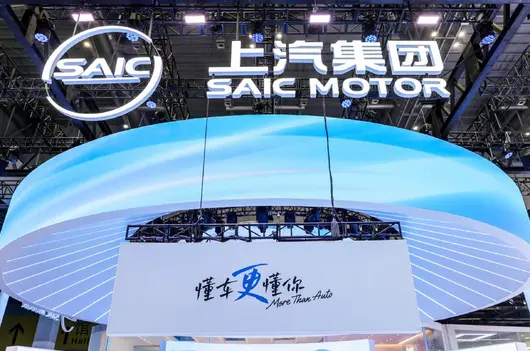
过去,汽车行业竞争核心是“懂车”,把动力、底盘、安全做到极致;今天,决胜关键则是“更懂你”,让每一项前沿科技落地为用户可感知的美好出行。当前沿科技不再只是百万豪车的专属,细分市场的价值标准正在被重新定义。

若将视线从一家企业的经营表现投向中国汽车工业的整体跃迁,技术平权的意义得以真正显现。今年5月,上汽成为中国首个累计产销突破一亿辆的汽车集团。一亿辆背后,是一亿位真实用户对美好出行的向往和选择。上汽通过科技普惠回答了一个时代命题:技术进步的红利,应该属于少数人,还是属于更广泛的主流群体?中国汽车工业用几十年走完从造出车到造好车的路,如今正在回答第三个问题——造人人都享受得起的好车。
从桑塔纳时代的市场换技术,到把技术大会开回百年汽车品牌发源地,再到今天把半固态电池、线控底盘、高阶智驾做成主流市场标配,中国汽车的角色已从技术追随者变为标准定义者,以技术普惠重塑全球竞争格局,正是以上汽为代表的中国品牌的时代使命与担当。


16 September, Leapmotor menganjurkan Hari Teknologi dengan tema "Keyakinan". Pada hari yang sama, syarikat ini baru sahaja mencapai tonggak baharu: Pada Julai, serahan global mencecah 101,300 kenderaan, meningkat 102% berbanding tahun lalu, menjadi jenama Pembuat Baharu pertama di dalam negara yang mencapai serahan bulanan melebihi 100,000 kenderaan; Ogos menyaksikan rekod baharu sekali lagi. Pada tahun 2025, serahan tahunan Leapmotor mencecah 596,600 kenderaan, dengan jualan berlipat ganda selama dua tahun berturut-turut; Januari hingga Ogos 2026, jualan global melebihi 560,000 kenderaan, meningkat 70% berbanding tahun lalu, menduduki tiga teratas dalam jenama kenderaan penumpang baharu di China. Pada masa ini, apabila majoriti Pembuat Baharu lain masih bergelut di sekitar garis keuntungan dan rugi serta perang harga yang tidak berkesudahan, rekod prestasi ini nampak sangat ketara.
Yang lebih menarik perhatian ialah ekspatriasi keluar luar. Paruh pertama tahun ini, Leapmotor mengeksport 96,300 kenderaan, melonjak 372.6% berbanding tempoh sama, melebihi jumlah eksport keseluruhan tahun 2025; Leapmotor International telah membina lebih daripada 1,000 rangkaian perkhidmatan jualan di 45 pasaran, dengan pasaran kenderaan elektrik tulen di Itali melebihi 25%, pada Jun menjadi jenama kenderaan elektrik China dengan jualan tertinggi di pasaran Jerman; T03, C10 menjadi pilihan popular dalam pasaran kenderaan elektrik tulen harga mampu milik Eropah, kilang pemasangan KD di Malaysia juga telah mula beroperasi. Apabila kebanyakan rakan sekerja masih bergelut rapat di dalam negara, syarikat ini telah memindahkan sebahagian besar peningkatan, ke luar negara.
Jualan meningkat, ekspatriasi semakin laju, kepada apakah kepercayaannya? Jawapan yang diberikan oleh Hari Teknologi adalah keupayaan berstruktur yang dikumpul selama 11 tahun.

Pertama, lihat struktur kos. Leapmotor telah membina 18 kilang komponen, penyelidikan dan pembuatan sendiri merangkumi 65% kos keseluruhan kenderaan, tahap umum platform mencecah 90%. Ini menjelaskan mengapa "Teknologi baik boleh diakses semua orang" bukan sekadar slogan: Pemanduan pintar tahap tinggi diturunkan ke tahap 100,000 Yuan; CTC3.0 membatalkan bateri rendah voltan bebas, menjimatkan 2,000 Yuan setiap kenderaan; Pengguna LiDAR paling awal menaik taraf ke pemanduan pintar model dunia perlu melabur 50 juta Yuan, Leapmotor memilih untuk menaik taraf percuma, penggunaan percuma seumur hidup. Penyelidikan sendiri menekan kos ke lokasi yang tidak boleh dicapai orang lain, konfigurasi peringkat lebih tinggi sahaja mungkin berubah menjadi konfigurasi standard.
Kedua, lihat sistem teknologi. Apa yang dilancarkan oleh Leapmotor bukan sekadar satu titik panas, tetapi satu set struktur ditambah tiga sistem utama ditambah pelbagai rizab: Struktur keseluruhan kenderaan LEAP5.0 menghasilkan kadar bilik lebih daripada 100%; Pemanduan pintar model dunia LWM membolehkan kenderaan bergerak dari "mengingati keadaan jalan" menuju "memahami keadaan jalan", satu kenderaan menemui senario ekor panjang yang melalui pembelajaran awan, pasukan kenderaan boleh berevolusi secara sama rata; MM-i electric drive hibrid pelbagai mod melengkapkan teka-teki plug-in hybrid, menyelesaikan susunan daya penuh "eletrik tulen + pelanjutan julat + plug-in hybrid", kuasa lebih tinggi 28% berbanding kelas yang sama, berat lebih ringan 40%; CTC3.0 membatalkan bateri rendah voltan bebas, keupayaan bateri meningkat 7 kali ganda, paten berkaitan dibuka secara sumber terbuka kepada keseluruhan industri — dan bateri generasi ini, dibina di atas pengesahan pemasangan melebihi satu juta kenderaan. Dari struktur ke bateri, dari pemanduan pintar ke robot, setiap satu menunjukkan kepada pengeluaran jisim, pelaksanaan yang boleh dilaksanakan. Zhu Jiangming berkata, Leapmotor tidak berinovasi untuk memamerkan kemahiran — di belakang ayat ini, industri sedang terperangkap dalam persaingan stok skrin, pengiraan kuasa dan konfigurasi.

Punca pertumbuhan menentang arus, mungkin terpendam dalam "usaha bodoh" jenis ini: tidak mengejar konsep jangka pendek, menenggelamkan sumber ke penyelidikan peringkat asas dan pengalaman produk. Konsep robot pintar berbadan fizikal sangat panas, tetapi Leapmotor berkata "hanya robot yang boleh menghasilkan wang yang boleh dipamerkan"; Plug-in hybrid teras langsung dilihat rendah oleh sesetengah orang, Leapmotor menilai ia masih mempunyai tempoh hayat 5 hingga 10 tahun. Kelewatan dalam teknologi, pada akhirnya diwujudkan sebagai pengurusan yang mantap. Sejak model pelanjutan julat pertama memasuki pengeluaran jisim pada tahun 2022 sehingga kini, Leapmotor telah melancarkan 7 model pelanjutan julat, setiap struktur sistem elektrik berasal daripada kerjasama dalaman, bukan pembelian cadangan.
Mengapa jualan dan pasaran modal sering berjaya? Logik asas sama: kitaran positif skala dan keuntungan. Paruh pertama tahun ini, pendapatan Leapmotor 38.1 bilion Yuan, keuntungan bersih 210 juta Yuan, untung selama tiga tempoh setengah tahun berturut-turut — pada masa ini industri secara umum tidak menghasilkan wang, keuntungan ini adalah unik. Pasaran luar negara menyumbang peningkatan margin tinggi, lebih separuh daripada jualan baharu paruh pertama tahun ini berasal dari luar negara. Apa yang dilihat pasaran modal ialah "penganut jangka panjang yang pandai mengira bil" ini. Sejak disenaraikan di bursa saham Hong Kong, pasaran nilai Leapmotor pernah mencapai 60 bilion HKD, broker masih memberikan penilaian overweight dan harga sasaran yang lebih tinggi. Tentu saja, pasaran tidak sepenuhnya bebas keraguan: bimbingan keuntungan 5 bilion Yuan pada awal tahun diturunkan kepada sekitar 3 bilion Yuan, harga saham masih mempunyai pelarasan dalam tahun ini. Keaslian keuntungan, masih memerlukan masa untuk diuji.
Bagi industri automotif China, makna Leapmotor mungkin bukan pada nombor jualan itu sendiri. Apabila perang harga membuat industri menghadapi tekanan, ia membuktikan jalan yang berbeza: bergantung pada penyelidikan sendiri serantau, memegang kos dan pengalaman dalam tangan sendiri, dari "berlumba harga" menuju "berlumba teknologi"; Apabila eksport kenderaan keseluruhan menghadapi rintangan, ia menggunakan output teknologi, tempatan dan paten sumber terbuka, mengubah "produk keluar laut" menjadi "keupayaan keluar laut". Seperti yang dikatakan Zhu Jiangming, teknologi dan inovasi adalah kepercayaan industri yang menghadap masa depan. Sebuah syarikat kenderaan yang boleh untung berterusan, boleh mengeksport sistem ke luar negara, mungkin tepatlah catatan yang paling diperlukan oleh industri automotif China untuk menjadi besar menjadi kuat.
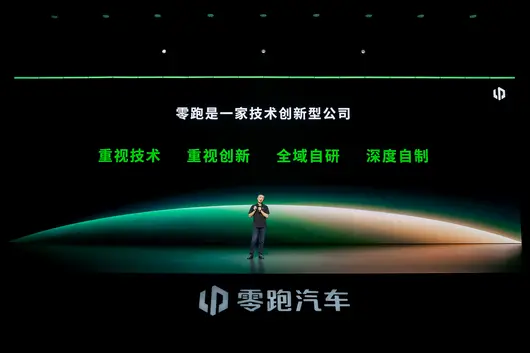

2026 Leapmotor Tech Day, the theme comes down to two words: Confidence. The source of this confidence lies in a deep and extensive self-developed technology layout. The press conference was completely different, engineers were the main stars, raving about their technical innovations and layouts.
Leapmotor Chairman Zhu Jiangming said: Leapmotor has 11,000 people, among them 8,500 are engineers. At the startup phase, in a team of 50 people, 41 were engineers. From this layout we know, Leapmotor is a pure tech company, technology is Leapmotor's deepest confidence, and Leapmotor's soul.

Leapmotor's confidence is not slogans shouted at the press conference, but a systematic technical capability built up through 11 years of hard work. While others chased traffic and hyped concepts, Leapmotor chose a harder path: no concept hype, only technology and innovation, throwing all resources and energy into underlying technology and product experience.
1. Where does Leapmotor's Confidence Really Come From?
To put it plainly, Leapmotor's confidence comes from three "Not Justs".
First, not just full-domain self-development, but also deep in-house manufacturing across the full link.
Leapmotor itself controls 65% of the total vehicle cost, built 18 parts factories, and achieved a platform commonality rate of 90%. From cells to battery packs, from motors to controllers, from plastic pellets to headlights, core components and high value-added components are all done in-house.

Second, not just monthly sales of 100,000, but absolute leadership in product power.
In 2019, Leapmotor only sold 1,000 vehicles a year. Now? Monthly sales over 100,000 units, top 3 in China's new energy brand, top 4 globally in new energy brand sales. Launching new technology every year, platform capabilities allow all series products to use the most cutting-edge specifications at the best time. Higher specs than peers, better quality, good but affordable.
Third, not just a vehicle manufacturer, but a technology supplier providing technology to multiple automakers.
Leapmotor's technology is not only used internally but also exported externally. Full vehicle technology empowerment for FAW and Stellantis Group. 5 partnerships for electronic systems, 8 for electric drive systems, 10 for battery systems. Technology external supply is already Leapmotor's second growth curve.
2. One Architecture: LEAP 5.0, Turning Cars into "Third Mobile Spaces"
Leapmotor has officially announced the launch of a second brand. Its goal is clear: build a brand new product category with over 100% space efficiency rate and high intelligence for the second brand.
LEAP 5.0 architecture has realized this goal.
First, physically, Leapmotor did one thing: changed the design concept of fuel cars, cut redundant designs, and expanded simultaneously in length, width, and height.
With the old fuel car layout, the engine occupied the front compartment, the drive shaft ran through the cabin, and shock towers crowded the wheel arches. The car looked big, but there wasn't much usable space. Leapmotor threw the table, reconstructing from scratch.

Where did the length come from? Leapmotor highly integrated the air conditioning system, front-mount integrated. Parts decreased by 18%, longitudinal occupation reduced by 34%, hoses decreased by 30%, and noise was reduced by 3dB.
Move the powertrain back, letting mechanical systems occupy the cabin as little as possible. The result is cabin longitudinal length reaching about 4400mm, about 700mm more than peers, length space improved by 19%.
Where did the width come from? The two shock towers in traditional cars protrude into the cabin like "horns", squeezing front row legroom uncomfortably. Leapmotor arranged shock absorbers vertically, using aluminum die-cast integrated small shock towers, rotating shock absorbers outward 8.3°, freeing up this space. Front row lateral width reaches about 1100mm, legroom space improved by 37.5%.
Where did the height come from? Use a pure flat low floor to lower the floor by about 70mm, use a native integrated smart smart sunroof above to expand upward by about 800mm. One down, one up, cabin height improved by 63.7%, able to stand and walk in the car, fully open "Loft" space.

With this combination of moves, the space efficiency rate directly reached 100%.
Say energy management, Leapmotor redid the vehicle thermal management system.
Physically, module aggregation, AC box moved out of passenger cabin, refrigerant side integrated. Under three innovations: thermal management components reduced from 69 to 21, longitudinal space occupation pressed from 580mm to 310mm, hoses reduced from 6.2m to 3.3m. AC box moved out of cabin, dashboard internal space released for users.
Control level, industry premiere super domain control thermal management system. First to create 14-way valve, connecting originally independent cooling and heating circuits, supporting 48 switching modes and 54 energy interaction modes. One brain, global synergy. Winter heating power 18kW, leading industry by 20%.
Finally, electronic level, 5.0 Central Domain Control.
LEAP 5.0 is true central integrated control, other domain controls only do execution. Total vehicle wiring harness less than 500 meters. Full vehicle 48V power supply, full vehicle Ethernet, car-cloud AgentOS cloud brain + vehicle-side cerebellum continuously evolving.
This is the wonder of the LEAP 5.0 architecture, designing cars from scratch. Cars designed on this architecture have multiple scenario changes, can be an office, can be a living room, can be a bedroom, can be a king room.
It is reported, Leapmotor second brand new product will be unveiled in 2027.
3. Three Self-Developed Core Technologies, One Harder Than the Other
At this tech day, Leapmotor also launched three self-developed core technologies. Demonstrating Leapmotor's both deep and broad layout in self-development.
First core technology: LWM World Model Intelligent Driving: No reliance on BEV, no dependence on rule code
Leapmotor's intelligent driving has a different thought process from others. No reliance on BEV sensing, no dependence on rule code, LiDAR only for safety redundancy.
There is a "knowledge base" in the cloud, trained with large data volume, enabling the model to understand the world, infer and generate the world, continuously learning and evolving.

There is a "real-time brain" at the vehicle end, reusing cloud capabilities, combining navigation and vehicle real-time status, making real-time decisions at the vehicle end. 200 TOPS, 640 TOPS, 1280 TOPS, different computing power levels can be deployed.
Architecture reconstructed from first principles, maintaining image view representation, saving computing power for BEV transformation. Designed memory storage module, allowing the model to remember history. Inertia and real-time understanding decoupled, driving more comfortable. Rules only used for traffic lights and other traffic laws backup, code volume reduced by 90%.
The most ruthless is fleet-level collaborative learning: When one vehicle encounters complex road conditions and learns how to handle it, other vehicles can also learn via the cloud. This breaks the pain point that intelligent driving industry long-tail scenarios are hard to land.
Leapmotor also made this commitment: All LiDAR version users, free upgrade to latest World Model Intelligent Driving version, lifetime free use. For the earliest over 10,000 LiDAR version users, vehicle hardware platforms were inconsistent, algorithm porting and reconstruction would take at least 50 million, Leapmotor still met the requirement.

Where is the confidence? September 2025 Leapmotor identified the World Model route, March 2026 completed DEMO version, now actual vehicles have been tested by media and users in a single continuous shot in advance. Leapmotor Chairman Zhu Jiangming said: Performance reaches industry first tier. Overtake on a bend, truly achieved.
There is something even more terrifying: Leapmotor will equip World Model advanced driving assistance in vehicles under 100,000 yuan in the future, and it will be free advanced intelligent driving.
Second core technology: MM-i Multimodal Hybrid Electric Drive: Three Firsts, Reconstructing from the Root
This tech day announced: Leapmotor officially entered the plug-in hybrid track. And it's not patching up, but returning to first principles to redo.
What's wrong with traditional hybrid electric drive? Generators only generate, drive motors only drive, parts have idle time. Result is pure EV power is weak, high-speed energy consumption high, volume and weight still large.
Leapmotor brings 3 firsts. First first: Generator reuse architecture. Breaking the "generator only generates, drive motor only drives" industry convention, allowing generators to participate in driving when needed, dual motors output pure EV power together. System peak power 206kW, 28% higher than peers, pure EV acceleration no longer weak.
Second first: Dual electromagnetic clutch coaxial integration. Stack two sets of clutches into the same axis, electric drive Y-direction width only 313mm. Volume 25% smaller than peers, current industry volume smallest hybrid electric drive. Adapts A0 to D-class full series, first time allowing high-performance hybrid to fit into A0-class small cars, returning space to passenger cabin. Entire electric drive only 106kg, 40% lighter than peers, power density 1.94kW/kg, hybrid industry highest.
Third first: Intelligent dual-motor control.
Electricity primary, oil secondary, self-developed control algorithm allows the system to switch seamlessly between Pure EV, Series, Parallel, Engine Direct Drive four conditions, nine modes. Hybrid shifting speed shortened from 400ms to 150ms, combined with microsecond-level torque compensation, switching process has no power interruption, no jerking. Drive efficiency 91.5%, generation efficiency 94.4%, industry highest.
Where is the confidence? This structure was co-created by Leapmotor internal team original conception, breaking overseas traditional clutch patent barriers. Hereby, Leapmotor completes "Pure EV + Range Extender + Plug-in Hybrid" full power layout, A0 to D-class full category coverage, domestic and international mass hybrid market space opened.
Third core technology: CTC3.0 High-Low Voltage Integrated Battery: Changing Centuries-Old Rules
The independent low-voltage battery on cars has been used for hundreds of years. Long-term parking power loss, replace it every few years, once replacement costs a few hundred yuan, lead-acid battery waste still pollutes the environment.

Leapmotor says: Why can't it be integrated into big battery packs?
Like home has a big meter (high-voltage battery, for driving) and a small meter (12V low-voltage battery, for car lights, car machines). Leapmotor integrated the small meter into the big meter, unified management, unified protection.
This innovative design brings the following benefits:
High-low voltage integration: Cancel independent low-voltage battery, integrate low-voltage battery part into battery pack. Cell standardization, higher quality.
Capacity increased 7 times: 12V low-voltage battery capacity increased 7 times, power usage more sufficient, long-term storage no fear of power loss.
Lifetime maintenance-free: No need to replace battery every few years, vehicle use cost saves over 2,000 yuan.
High-low voltage batteries use same specification cells, same level protection, shared thermal management, unified energy distribution. First owner battery lifetime warranty.
Even more ruthless: CTC high-low voltage integrated battery related patents, open source to whole industry. Leapmotor welcomes whole industry follow and use, reduce battery pollution, help environmental protection.

Where is the confidence? Leapmotor is CTC technology earliest use, use quantity most vehicle company. From first generation CTC mass production vehicle mounting to now, three generations CTC technology continuous iteration, 1 million vehicle mounting practice, all key links fully mastered. Not modifying on existing solutions, but redesigning power supply system from bottom layer.
4. Easter Egg: Embodied AI Robots
Leapmotor also hid an Easter Egg — Embodied AI Robots.
11 years full-domain self-development accumulated technology, motors, controllers, batteries, sensing algorithms, computing platforms, all are robots most core underlying capabilities. Leapmotor fully independently mastered, is one of most qualified vehicle companies to make robots in whole industry. Already made fully self-developed robots.
But Leapmotor's concept is: Technology reserve can be forward, product landing must be reliable.
Zhu Jiangming's original words: "Robots that can walk around don't count as ability, robots that can make money are presentable. Leapmotor is exploring a truly scaled implementation, commercially valuable application scenario."
5. Business Performance: Three Consecutive Quarterly Profits
Say back, Leapmotor invested so much money in full industry chain self-development, are assets heavy? Returns big? Look at 2026 Leapmotor sales performance, know it.
First look at domestic sales: August 2026 global delivery 103,129 vehicles, consecutive monthly sales break 100,000. China new energy brand top 3, global new energy brand sales top 4. Cumulative delivery near 1.8 million vehicles, on sale 10 models. Undoubtedly New Force No. 1.

Look at overseas performance again: Already entered global 45 countries and regions, overseas stores over 1,000. Going global 2 years, cumulative exports over 200,000 vehicles. 2026 January-June, Italy cumulative registration volume 24,269 units, surged 1448.8% year-on-year, consecutively winning Italy pure EV market No. 1 for six months.
Look at overseas manufacturing again: Spain CKD factory plan import B10 and B05, expected October 2026 official production launch. Malaysia Kedah Gurun factory already mass produced, Myanmar Yangon factory already mass produced.
Best looking operational quality: Already three consecutive half-years realized profits, 2026 first half net profit attributable to parents 210 million yuan. As of August 2026, own 9,500 person engineering team. Tech driven — Product leading — Scale growth — Feedback to R&D, positive cycle already completed.
Leapmotor's logic has always been clear: Not for technology for technology's sake, but let good tech truly land to next generation products, let more mainstream mass consumers use better specifications and functional experience, good but affordable.
Confidence comes from technology. Technology comes from 11 years one step at a time. This should be the root cause of Leapmotor leading the New Forces.


In the Malaysian SUV market, many buyers compare the Honda CR-V and GWM Haval H6 when choosing a car. These two models are quite close in price and positioning. Today, we will make a detailed comparison from multiple aspects to save you the time of doing research.
The Honda CR-V OTR price in Malaysia is RM 178,200 - 195,900, with a total of 4 versions, including 2026 e:HEV 2.0L 2WD RS (RM 195,900), 2026 1.5T 4WD V (RM 181,900), 2026 e:HEV 2.0L 2WD E (RM 178,200), etc.
The GWM Haval H6 OTR price in Malaysia is RM 139,750 - 139,750, with a total of 2 versions, including 1.5L Turbo Standard (RM 140,000), 1.5L Turbo Premium (RM 155,000), etc.
From a price perspective, the starting price of the GWM Haval H6 is RM 38,450 cheaper than the Honda CR-V. Honestly, at this price range, a difference of a few thousand is not actually that big; the key is to look at the overall value and long-term usage costs.
The Honda CR-V safety rating is 5★ (ASEAN NCAP), active safety systems include Honda SENSING (ACC, CMBS, LKAS, RDM).
The GWM Haval H6 safety rating is TBD, active safety systems include Basic.
In terms of safety equipment, both cars have received good ratings. However, there are some differences in function between the Honda CR-V's Honda SENSING (ACC, CMBS, LKAS, RDM) and the GWM Haval H6's Basic. If you value active safety more, you can compare the feature lists of both carefully.
The Honda CR-V adopts FWD drive mode.
The GWM Haval H6 adopts FWD drive mode.
Both cars have the same drive mode, both are FWD, so there won't be much difference in daily driving feel.
Honda CR-V warranty 5 years/unlimited mileage, maintenance interval every 10,000km or 6 months.
GWM Haval H6 warranty 7 years/150,000km, maintenance interval every 10,000km or 6 months.
Overall, the Honda CR-V and GWM Haval H6 are both very good models in the Malaysian market. Which one to choose mainly depends on your personal needs and budget. We recommend doing your research, comparing quotes from multiple dealerships, and then test driving before making the final decision. Buying a car is a big matter, spending some time doing research will definitely not be wrong.

Dalam pasaran SUV di Malaysia, ramai pembeli semasa memilih kereta akan membandingkan Honda CR-V dan Hyundai Tucson. Kedua-dua kereta ini agak rapat dari segi harga dan posisi pasaran, hari ini kita akan membuat perbandingan terperinci dari pelbagai aspek, membantu anda menjimatkan masa membuat kajian.
Honda CR-V di Malaysia mempunyai harga OTR RM 178,200 - 195,900, terdapat 4 varian, termasuk 2026 e:HEV 2.0L 2WD RS (RM 195,900), 2026 1.5T 4WD V (RM 181,900), 2026 e:HEV 2.0L 2WD E (RM 178,200) dan lain-lain.
Hyundai Tucson di Malaysia mempunyai harga OTR RM 143,888 - 197,888, terdapat 5 varian, termasuk 2025 HEV 1.6T AT 2WD Prestige (RM 197,888), 2025 1.6T DCT 4WD Prestige (RM 186,888), 2025 1.6T DCT 2WD Prime (RM 164,888) dan lain-lain.
Dari segi harga, harga permulaan Hyundai Tucson lebih murah RM 34,312 berbanding Honda CR-V. Secara jujur, dalam julat harga ini, perbezaan beberapa ribu sebenarnya tidak terlalu besar, kuncinya adalah melihat nisbah harga prestasi keseluruhan dan kos penggunaan jangka panjang.
Honda CR-V dilengkapi enjin 2.0L 4 silinder, kuasa kuda 170 hp. Penggunaan bahan api rasmi 8.0 L/100km.
Hyundai Tucson dilengkapi enjin 1.5L Turbo, kuasa kuda 140 hp. Penggunaan bahan api rasmi 7.0 L/100km.
Dari segi kuasa, enjin 2.0L 4 silinder Honda CR-V mempunyai 30 kuasa kuda lebih daripada enjin 1.5L Turbo Hyundai Tucson, memberikan keyakinan lebih untuk pecutan pertengahan, terutamanya apabila memintas di lebuh raya. Namun, penggunaan bahan api Hyundai Tucson mungkin lebih jimat, perbezaannya untuk perjalanan harian di bandar tidak terlalu besar.
Peringkat keselamatan Honda CR-V ialah 5★ (ASEAN NCAP), sistem keselamatan aktif termasuk Honda SENSING (ACC, CMBS, LKAS, RDM).
Peringkat keselamatan Hyundai Tucson ialah 5★ (ASEAN NCAP), sistem keselamatan aktif termasuk SmartSense.
Peringkat keselamatan kedua-dua kereta sama, peralatan keselamatan dalam kategori ini dianggap cukup lengkap. Keselamatan kereta baru sekarang sudah baik, tidak perlu terlalu risau tentang hal ini.
Panjang keseluruhan badan Honda CR-V 4500 mm, ruang muatan belakang 450 L.
Panjang keseluruhan badan Hyundai Tucson 4400 mm, ruang muatan belakang 400 L.
Dari segi ruang, badan Honda CR-V lebih panjang 100 mm daripada Hyundai Tucson, ruang dalaman penumpang sedikit lebih selesa, terutamanya ruang kaki di tempat duduk belakang. Jika anda sering membawa keluarga atau perlu menaruh kereta bayi, badan yang sedikit lebih besar memang lebih praktikal.

Honda CR-V mempunyai waranti 5 tahun/tiada had jarak selat, selang penyelenggaraan setiap 10,000 km atau 6 bulan.
Hyundai Tucson mempunyai waranti 5 tahun/300,000 km, selang penyelenggaraan setiap 10,000 km atau 6 bulan.

Secara keseluruhan, Honda CR-V dan Hyundai Tucson merupakan model kereta yang sangat bagus dalam pasaran Malaysia. Memilih yang mana satu, kuncinya adalah bergantung pada keperluan dan bajet peribadi anda. Kami cadangkan anda membuat kajian, bandingkan harga dari beberapa dealer, kemudian buat ujian memandu untuk membuat keputusan akhir. Membeli kereta adalah perkara besar, menghabiskan masa untuk membuat kajian tidak akan salah.

喺馬來西亞嘅 SUV 市場,好多人揀車嘅時候都會拿 Honda CR-V 同 Hyundai Santa Fe 嚟比較。呢兩款車喺價錢同定位上頭都幾接近,今日我就從多個方面做一个詳細嘅比較,幫你省返做功課嘅時間。
Honda CR-V 喺馬來西亞嘅 OTR 售價係 RM 178,200 - 195,900,一共有 4 個版本,包括 2026 e:HEV 2.0L 2WD RS(RM 195,900)、2026 1.5T 4WD V(RM 181,900)、2026 e:HEV 2.0L 2WD E(RM 178,200)等。
Hyundai Santa Fe 喺馬來西亞嘅 OTR 售價係 RM 225,000 - 270,000,一共有 3 個版本,包括 2025 2.5T DCT 4WD Calligraphy 6 Seats(RM 270,000)、2025 HEV 1.6T AT 2WD Prestige 7 Seats(RM 245,000)、2025 HEV 1.6T AT 2WD Prime 7 Seats(RM 225,000)等。
從價錢睇,Honda CR-V 嘅起步價確實比 Hyundai Santa Fe 平咗 RM 46,800。如果你預算有限,Honda 嘅入門版已經可以滿足日常需要。但都要留意,平嘅嗰幾千蚊,喺配備上可能有取捨,具體要睇你嘅需要。
Honda CR-V 車身長 4500 mm,行李箱 450 L。
Hyundai Santa Fe 車身長 4400 mm,行李箱 400 L。
空間方面,Honda CR-V 嘅車身比 Hyundai Santa Fe 長咗 100 mm,車內乘坐空間會稍微寬敞啲,尤其係後座腿部空間。如果你經常載家人或者需要放嬰兒車,大啲嘅車身確實更加實用。
Honda CR-V 採用 FWD 驅動方式。
Hyundai Santa Fe 採用 FWD 驅動方式。
兩款車嘅驅動方式一樣,都係 FWD,日常駕駛感覺唔會有太大分別。
Honda CR-V 同 Hyundai Santa Fe 都係馬來西亞市場嘅主流選擇,適合家庭使用、日常通勤。如果你更睇重品牌聲譽同二手價,可以優先考慮聲譽好嗰一款;如果你更在意性價比同配備,就揀配備更豐富嗰款。最終都係建議兩款都去試駕,親身體驗先係最重要。

總括嚟講,Honda CR-V 同 Hyundai Santa Fe 都係馬來西亞市場幾好嘅車型。揀邊一部,關鍵都係睇你個人嘅需求同預算。建議大家做好功課,多比較幾間車行嘅報價,先至去試駕做最終決定。買車係件大事,花少少時間做功課絕對唔會錯。

In the Malaysian SUV market, many buyers compare the Honda CR-V and Chery Tiggo 8 PHEV when choosing a car. These two cars are quite close in price and positioning. Today, we will make a detailed comparison from multiple aspects to help you save time on research.
The Honda CR-V's OTR price in Malaysia is RM 178,200 - 195,900, with a total of 4 versions, including 2026 e:HEV 2.0L 2WD RS (RM 195,900), 2026 1.5T 4WD V (RM 181,900), 2026 e:HEV 2.0L 2WD E (RM 178,200), etc.
The Chery Tiggo 8 PHEV's OTR price in Malaysia is RM 159,750 - 159,750, with a total of 2 versions, including 1.6L Turbo Standard (RM 130,000), 1.6L Turbo Premium (RM 145,000), etc.
In terms of price, the starting price of the Chery Tiggo 8 PHEV is RM 18,450 cheaper than the Honda CR-V. Honestly, in this price segment, the difference of a few thousand is not significant; the key is looking at the overall cost-performance and long-term usage costs.
The Honda CR-V is equipped with a 2.0L 4-cyl, 170 hp. Official fuel consumption 8.0 L/100km.
The Chery Tiggo 8 PHEV is equipped with a Hybrid, 170 hp. Official fuel consumption 4.5 L/100km.
In terms of power, the Hybrid of the Chery Tiggo 8 PHEV has 0 more horsepower than the 2.0L 4-cyl of the Honda CR-V. However, for daily city driving, the power of both cars is sufficient, and you won't feel a lack of power.
The Honda CR-V's safety rating is 5★ (ASEAN NCAP), and active safety systems include Honda SENSING (ACC, CMBS, LKAS, RDM).
The Chery Tiggo 8 PHEV's safety rating is TBD, and active safety systems include Basic.
Regarding safety features, both cars have received good ratings. However, there are some differences in functionality between the Honda CR-V's Honda SENSING (ACC, CMBS, LKAS, RDM) and the Chery Tiggo 8 PHEV's Basic. If you value active safety, you can carefully compare the feature lists of both.
The Honda CR-V uses FWD drive mode.
The Chery Tiggo 8 PHEV uses FWD drive mode.
The drive modes of both cars are the same, both are FWD, and there won't be much difference in the daily driving experience.
Overall, both Honda CR-V and Chery Tiggo 8 PHEV are very good models in the Malaysian market. Choosing which one depends mainly on your personal needs and budget. We suggest doing your homework, comparing quotes from multiple car dealerships, and then test driving to make the final decision. Buying a car is a big matter, spending some time on research will never be wrong.
In the Malaysian SUV market, many buyers compare Honda CR-V and Chery Tiggo 8 PHEV when choosing a car. These two cars are quite close in price and positioning. Today we will make a detailed comparison from multiple aspects to help you save time on research.
Honda CR-V's OTR price in Malaysia is RM 178,200 - 195,900. There are 4 versions in total, including 2026 e:HEV 2.0L 2WD RS (RM 195,900), 2026 1.5T 4WD V (RM 181,900), 2026 e:HEV 2.0L 2WD E (RM 178,200), etc.
Chery Tiggo 8 PHEV's OTR price in Malaysia is RM 159,750 - 159,750. There are 2 versions in total, including 1.6L Turbo Standard (RM 130,000), 1.6L Turbo Premium (RM 145,000), etc.
From a price perspective, Chery Tiggo 8 PHEV's starting price is RM 18,450 cheaper than Honda CR-V. Honestly, in this price segment, a difference of a few thousand is not that significant. The key is to look at overall value for money and long-term usage costs.
Honda CR-V is equipped with 2.0L 4-cyl, horsepower 170 hp. Official fuel consumption 8.0 L/100km.
Chery Tiggo 8 PHEV is equipped with Hybrid, horsepower 170 hp. Official fuel consumption 4.5 L/100km.
In terms of power, Chery Tiggo 8 PHEV's Hybrid has 0 more horsepower than Honda CR-V's 2.0L 4-cyl. However, for daily driving in the city, both cars have enough power and you won't feel lacking power.
Honda CR-V's safety rating is 5★ (ASEAN NCAP), active safety systems include Honda SENSING (ACC, CMBS, LKAS, RDM).
Chery Tiggo 8 PHEV's safety rating is TBD, active safety systems include Basic.
In terms of safety features, both cars have received good ratings. However, Honda CR-V's Honda SENSING (ACC, CMBS, LKAS, RDM) and Chery Tiggo 8 PHEV's Basic differ in functionality. If you value active safety, you can compare their feature lists carefully.
Honda CR-V warranty 5 years/unlimited mileage, maintenance interval every 10,000km or 6 months.
Chery Tiggo 8 PHEV warranty 3 years/100,000km, maintenance interval every 10,000km or 6 months.
Overall, Honda CR-V and Chery Tiggo 8 PHEV are both very good models in the Malaysia market. Which one to choose depends on your personal needs and budget. It is recommended to do your research, compare quotes from several dealerships, and go for a test drive to make the final decision. Buying a car is a big matter, spending some time doing research will definitely not be wrong.

“救哪吒还得靠太乙真人。”当浙江太乙圣莲企业管理合伙企业拟出资30亿元入主哪吒汽车母公司合众新能源的消息传出后,这句调侃迅速在车圈传开。名字确实巧得像是剧本写好的——太乙真人救哪吒,神话照进了现实。
但神话归神话,商业归商业。30亿这个数字放在哪吒的债务面前,实在算不上什么大数目。合众新能源债权人申报债权总额超过260亿元,30亿投资中只有11.67亿用于清偿债权和破产费用,剩下的18.33亿拿去补充流动资金。这就像一个申报欠款260万的债务人,有人拿出30万资金参与重整,剩余大部分债务还需要自己处理。

所以问题来了:一个停产近两年、三年累计亏损183亿、连工资都发不出来的车企,凭什么还能让资本掏出30亿?
30亿买的到底是什么?
先看这场交易的操盘主体,浙江太乙圣莲成立于2026年4月,专门为这次重整设立,背后实控人是山子高科董事长叶骥。根据最新的澄清公告,山子高科与太乙圣莲不存在股权控制关系,上市公司并未直接或间接参与本次哪吒汽车重整投资,不并表,重整的盈亏与风险均不会纳入上市公司报表;该投资目前仍处于意向阶段,最终能否落地还取决于债权人表决以及法院裁定。换句话说,此次入局是叶骥依托体外平台独立运作,从一开始就做好了风险隔离。
实际上,叶骥在造车这件事上布局已久。2023年,山子高科收购了邢台龙冈,拿下了河北红星汽车的整车生产资质,并在2024年7月推出量产车型。但这条造车线路的产品集中在物流车和出口市场,并没有涉足主流乘用车市场。对于想规模化造车的叶骥来说,手里始终缺一张完整的乘用车“入场券”。

市场之内,能补齐这一短板的标的极为稀缺,而哪吒汽车恰好持有这张“券”。合众新能源在2017年、2018年先后拿到了发改委、工信部双重造车准入资质,也就是行业稀缺的新能源造车“双资质”。2023 年工信部收紧代工规则,要求代工合作双方均需具备生产资质,彻底抬高了行业入局门槛。到了今天,全新申请造车资质几乎没有落地可能,想要入局,只能通过收购存量资质主体来弯道入场。
太乙圣莲在重整草案中也写得很直白:管理团队“有丰富的汽车产业运营经验和破产重整经验”,本次投资的核心目标就是“维持‘造车双资质’”。合众新能源的管理人在招募受托方时也特别强调了这一点,如果不能保住双资质,哪吒将失去吸引投资的关键筹码。
除了资质,哪吒还留下了三座工厂和一套品牌认知。浙江桐乡350亩的工厂、江西宜春和广西南宁的生产基地,总年产能设计达30万辆。品牌层面,哪吒在2022年曾以15.2万辆的交付量登顶新势力销冠,累计积累了超44万全球车主。这些资产单独拿出来价值有限,但打包在一起,对于想快速切入新能源赛道的企业来说,的确是一条省时间的捷径。

当然,资本看到了入局机会,债权人的处境就没有这么光鲜了。合众新能源普通债权约117亿元,涉及1600余户,80万元以下部分清偿率约为12%,超过80万元的部分直接实施债转股。优先债权约22亿元,前三年只付利息,第四年起才开始还本。地方国资的损失更为沉重,宜春国资平台近20亿元股权投资、当地国企3亿元基建配套投入,在本次重整方案中基本很难回收。
也正因这场交易里冷暖悬殊的利益格局,市场对哪吒的重生保持着理性态度。有债权人判断:此次重整计划通过的可能性很大,但哪吒汽车能否真正重启量产,仍需观察。
“复活者联盟”的真相
哪吒不是第一个靠资本尝试“复活”的新势力。过去两年,威马和高合相继走入破产重整,三条路径各有差异,但底层逻辑却有相似之处。
威马走的是地方政府参与、搭配产业资本的模式。2025年4月,法院批准威马重整计划,深圳翔飞汽车成为新股东,承诺投入超过100亿元,计划在温州基地重启EX5和E5的量产。翔飞当时拿出的发展规划相当宏大,目标在2030年挑战年产100万辆、营收1200亿元。但直到2025年底,威马都没有迎来规模化复产。
高合则选择引入海外资本,绑定地方现有产能。2025年5月,黎巴嫩电动汽车公司EV Electra设立注册资本1.43亿美元的新公司,持股69.8%。资本方看中的是盐城工厂的现成的产能、造车资质,以及高合品牌在中东、欧洲市场具备的出海溢价潜力。然而到了2026年初,EV Electra承诺的后续资金并没有如期到账,盐城基地也没有开启大规模复工。

梳理这三件案例,能看到一条共同的走向:重整方案规划方面,企业都不再优先参与国内市场的正面竞争,而是把目光投向海外或区域市场。哪吒本次重整的第一阶段规划,正是复产哪吒X面向海外,目标年销1万台。
但这恰恰是另一个难题。泰国曾经是哪吒出海最有成效的市场,2024年在当地全年销量7969辆,位列泰国新能源市场全球品牌第三名。然而随着国内母公司陷入债务危机,在泰国的经销商从60余家缩减到了约20家,售后能力大幅下滑,泰国财政部更是拟通过法律途径起诉哪吒泰国子公司,追讨自2022年以来发放的超过20亿泰铢补贴。

然而,在哪吒的“复活”故事里,最微妙的角色是其实是地方国资。它们曾经是哪吒扩张阶段主要的资金来源,而在当前重整方案之下,大部分前期投入很难收回。太乙圣莲投入30亿元,换走约70.62%的股权,原有股东权益被大幅稀释,价值基本清零。新资本以较低的成本,承接了一个完整的造车资质与产能资产,而过去多年积累的亏损和沉没成本,基本由原有投资方和债权人承担。
一个值得注意的细节是,叶骥并非第一次尝试入主哪吒。2025年6月,山子高科方面确认为意向战略投资人,同年9月成为唯一合格重整意向方,当时抛出的是45亿元的重整方案。但因为原重整计划草案未能按期提交,桐乡法院裁定终止原有重整程序,合众新能源一度转入破产清算,这份45亿方案就此作废。如今的这份30亿方案,相比当初缩水了三分之一,已经有债权人公开表达了不满,认为方案的债权清偿率过低。

从最初计划由山子高科相关主体报名,到报价由45亿压缩至30亿,再切换为董事长叶骥的体外SPV操盘,叶骥的策略在调整,但想要拿到整车乘用车资质和产能的目标没有变。当造车资质成为可以单独评估、打包交易的资产,当地方产业基金多年投入,最终只能拿到12%的债权清偿率。这场所谓的“复活”,究竟复活的是品牌,还是一张被重新贴了标签的许可证,可能不同的当事方心里会有不同的答案。

Di pasaran SUV Malaysia, banyak pembeli membandingkan Honda CR-V dan Chery Tiggo 9 ketika memilih kereta. Kedua-dua kereta ini mempunyai harga dan kedudukan yang agak hampir, hari ini kita akan membandingkan secara terperinci dari pelbagai aspek, membantu anda menjimatkan masa membuat kerja penyelidikan.
Honda CR-V di Malaysia harga OTR ialah RM 178,200 - 195,900, terdapat 4 varian, termasuk 2026 e:HEV 2.0L 2WD RS (RM 195,900), 2026 1.5T 4WD V (RM 181,900), 2026 e:HEV 2.0L 2WD E (RM 178,200) dan sebagainya.
Chery Tiggo 9 di Malaysia harga OTR ialah RM 166,800 - 179,800, terdapat 1 varian, termasuk 2026 2.0T Standard (RM 179,750) dan sebagainya.
Dari segi harga, harga permulaan Chery Tiggo 9 lebih murah RM 11,400 daripada Honda CR-V. Jujur berkata, pada julat harga ini, beza ribuan ringgit sebenarnya tidak besar, yang penting adalah nisbah harga-keberfungsi keseluruhan dan kos penggunaan jangka panjang.
Honda CR-V dilengkapi 2.0L 4-cyl, kuasa kuda 170 hp. Penggunaan bahan api rasmi 8.0 L/100km.
Chery Tiggo 9 dilengkapi 2.0L 4-cyl, kuasa kuda 170 hp. Penggunaan bahan api rasmi 8.0 L/100km.
Kedua-dua kereta menggunakan sistem kuasa yang sama, pengalaman memandu pada masa biasa pada dasarnya tiada perbezaan. Dari segi penggunaan bahan api juga hampir sama, tidak perlu terlalu bimbang mengenainya.
Honda CR-V panjang badan 4500 mm, ruang bonet 450 L.
Chery Tiggo 9 panjang badan 4400 mm, ruang bonet 400 L.
Dari segi ruang, badan Honda CR-V lebih panjang 100 mm daripada Chery Tiggo 9, ruang penumpang dalam kereta akan sedikit lebih lapang, terutamanya ruang kaki kerusi belakang. Jika anda kerap membawa keluarga atau perlu meletakkan kereta bayi, badan kereta yang lebih besar memang lebih praktikal.
Honda CR-V waranti 5 tahun / tiada had kilometer, selang penyelenggaraan setiap 10,000km atau 6 bulan.
Chery Tiggo 9 waranti 3 tahun / 100,000km, selang penyelenggaraan setiap 10,000km atau 6 bulan.

Secara keseluruhan, Honda CR-V dan Chery Tiggo 9 adalah model kereta yang sangat baik di pasaran Malaysia. Memilih yang mana satu, yang penting adalah melihat keperluan dan bajet peribadi anda. Disarankan agar anda membuat kerja penyelidikan, membandingkan beberapa sebut harga dari kedai kereta, kemudian membuat ujian memandu untuk membuat keputusan akhir. Membeli kereta adalah perkara besar, meluangkan masa untuk membuat kerja penyelidikan pasti tidak salah.

Dalam pasaran SUV di Malaysia, ramai pembeli membandingkan Honda CR-V dan Chery Tiggo 8 Pro apabila memilih kereta. Kedua-dua kereta ini mempunyai harga dan sasaran pasaran yang agak hampir, hari ini kita akan membuat perbandingan terperinci dari pelbagai aspek untuk membantu anda menjimatkan masa mencari maklumat.
Harga OTR Honda CR-V di Malaysia adalah RM 178,200 - 195,900, terdapat 4 varian, termasuk 2026 e:HEV 2.0L 2WD RS (RM 195,900), 2026 1.5T 4WD V (RM 181,900), 2026 e:HEV 2.0L 2WD E (RM 178,200) dan lain-lain.
Harga OTR Chery Tiggo 8 Pro di Malaysia adalah RM 159,750 - 159,750, terdapat 2 varian, termasuk 1.6L Turbo Standard (RM 130,000), 1.6L Turbo Premium (RM 145,000) dan lain-lain.
Dari segi harga, harga permulaan Chery Tiggo 8 Pro lebih murah RM 18,450 berbanding Honda CR-V. Jujur dikatakan, dalam julat harga ini, beza beribu ringgit sebenarnya tidak begitu besar, yang penting adalah nilai kegunaan keseluruhan dan kos penggunaan jangka panjang.
Pengklasifikasian keselamatan Honda CR-V adalah 5★ (ASEAN NCAP), sistem keselamatan aktif termasuk Honda SENSING (ACC, CMBS, LKAS, RDM).
Pengklasifikasian keselamatan Chery Tiggo 8 Pro adalah TBD, sistem keselamatan aktif termasuk Basic.
Dari segi perlengkapan keselamatan, kedua-dua kereta telah mendapat pengklasifikasian yang bagus. Namun, Honda SENSING (ACC, CMBS, LKAS, RDM) pada Honda CR-V dan Basic pada Chery Tiggo 8 Pro mempunyai perbezaan dari segi fungsi, jika anda lebih mementingkan keselamatan aktif, anda boleh membandingkan senarai fungsi kedua-duanya dengan teliti.
Panjang badan Honda CR-V 4500 mm, ruang bagasi 450 L.
Panjang badan Chery Tiggo 8 Pro 4400 mm, ruang bagasi 400 L.
Dari segi ruang, badan Honda CR-V lebih panjang 100 mm berbanding Chery Tiggo 8 Pro, ruang duduk dalam kereta akan lebih lapang sedikit, terutamanya ruang kaki di bangku belakang. Jika anda sering membawa ahli keluarga atau memerlukan meletakkan kereta bayi, badan kereta yang lebih besar memang lebih praktis.
Honda CR-V menggunakan cara pemanduan FWD.
Chery Tiggo 8 Pro menggunakan cara pemanduan FWD.
Cara pemanduan kedua-dua kereta adalah sama, iaitu FWD, pengalaman memandu harian tidak akan banyak berbeza.
Secara keseluruhan, Honda CR-V dan Chery Tiggo 8 Pro adalah model kereta yang sangat bagus di pasaran Malaysia. Memilih mana satu, yang penting adalah melihat keperluan dan bajet peribadi anda. Kami syorkan anda membuat penyelidikan, membandingkan tawaran beberapa showroom kereta, kemudian buat ujian memandu untuk membuat keputusan akhir. Membeli kereta adalah perkara besar, meluangkan masa membuat penyelidikan pasti tidak salah.

喺馬來西亞嘅 SUV 市場,好多買家在揀車嘅時候都會拿 本田 CR-V 同 奇瑞 Tiggo 7 PHEV 黎做比較。這兩款車喺價錢同定位上都好接近,今日我就從多個方面做一次詳細嘅對比,幫你省下做功課嘅時間。
本田 CR-V 喺馬來西亞嘅 OTR 售價係 RM 178,200 - 195,900,一共有 4 個版本,包括 2026 e:HEV 2.0L 2WD RS(RM 195,900)、2026 1.5T 4WD V(RM 181,900)、2026 e:HEV 2.0L 2WD E(RM 178,200) 等。
奇瑞 Tiggo 7 PHEV 喺馬來西亞嘅 OTR 售價係 RM 129,750 - 129,750,一共有 2 個版本,包括 2025 1.5T 90km CSH(RM 129,750)、Tiggo 7 PHEV 支持邊種充電方法?可以用家居電源插座充電嗎?(RM 117,478) 等。
從價錢來睇,奇瑞 Tiggo 7 PHEV 嘅起步價比 本田 CR-V 平咗 RM 48,450。老實講,喺呢個價錢段,幾千塊嘅差距其實唔算大,關鍵仲係睇整體嘅性價比同長期使用成本。
本田 CR-V 配備 2.0L 4-cyl,馬力 170 hp。官方油耗 8.0 L/100km。
奇瑞 Tiggo 7 PHEV 配備 Hybrid,馬力 170 hp。官方油耗 4.5 L/100km。
動力方面,奇瑞 Tiggo 7 PHEV 嘅 Hybrid 比 本田 CR-V 嘅 2.0L 4-cyl 多咗 0 匹馬力。不過日常喺市區開,兩款車嘅動力都夠用,唔會覺得唔夠力。
本田 CR-V 車身長 4500 mm,後備箱 450 L。
奇瑞 Tiggo 7 PHEV 車身長 4400 mm,後備箱 400 L。
空間方面,本田 CR-V 嘅車身比 奇瑞 Tiggo 7 PHEV 長咗 100 mm,車內乘坐空間會稍微寬敞啲,尤其係後座腿部空間。如果你經常載家人或者需要放嬰兒車,大少少嘅車身確實更實用。
本田 CR-V 採用 FWD 驅動方式。
奇瑞 Tiggo 7 PHEV 採用 FWD 驅動方式。
兩款車嘅驅動方式一樣,都係 FWD,日常駕駛感覺唔會有太大區別。

總嘅來講,本田 CR-V 同 奇瑞 Tiggo 7 PHEV 都係馬來西亞市場好唔錯嘅車型。揀邊一輛,關鍵仲係要睇你嘅個人需求同預算。建議大家做好功課,多比較幾間車行嘅報價,再去做試駕做最終決定。買車係件大事,花少少時間做功課絕對唔會錯。

喺馬來西亞嘅SUV市場,好多買家喺揀車嘅時候都會拿 Honda CR-V 同 Chery Tiggo 8 PHEV 嚟做比較。呢兩部車喺價位同定位上都幾接近,今日我哋就由多個方面做一個詳細嘅比較,幫你節省咗做功課嘅時間。
Honda CR-V 喺馬來西亞嘅 OTR 售價係 RM 178,200 - 195,900,一共有 4 個版本,包括 2026 e:HEV 2.0L 2WD RS(RM 195,900)、2026 1.5T 4WD V(RM 181,900)、2026 e:HEV 2.0L 2WD E(RM 178,200) 等。
Chery Tiggo 8 PHEV 喺馬來西亞嘅 OTR 售價係 RM 159,750 - 159,750,一共有 2 個版本,包括 1.6L Turbo Standard(RM 130,000)、1.6L Turbo Premium(RM 145,000) 等。
由價錢嚟睇,Chery Tiggo 8 PHEV 嘅起價比 Honda CR-V 平咗 RM 18,450。老实講,喺呢個價位段,幾千蚊嘅差距其實唔算大,關鍵仲係睇整體嘅性價比同長期使用成本。
Honda CR-V 嘅安全評級係 5★ (ASEAN NCAP),主動安全系統包括 Honda SENSING (ACC, CMBS, LKAS, RDM)。
Chery Tiggo 8 PHEV 嘅安全評級係 TBD,主動安全系統包括 Basic。
安全配備方面,兩部車都拿到唔錯嘅評級。不過 Honda CR-V 嘅 Honda SENSING (ACC, CMBS, LKAS, RDM) 同 Chery Tiggo 8 PHEV 嘅 Basic 喺功能上有啲差異,如果你比較睇重主動安全嘅話,可以仔細對比一下兩者嘅功能列表。
Honda CR-V 車身長 4500 mm,行李廂 450 L。
Chery Tiggo 8 PHEV 車身長 4400 mm,行李廂 400 L。
空間方面,Honda CR-V 嘅車身比 Chery Tiggo 8 PHEV 長咗 100 mm,車內乘坐空間會稍微寬裕啲,尤其係後座腿部空間。如果你經常載家人或者需要放嬰兒車,大啲嘅車身確實更實用。
Honda CR-V 採用 FWD 驅動方式。
Chery Tiggo 8 PHEV 採用 FWD 驅動方式。
兩部車嘅驅動方式一樣,都係 FWD,日常駕駛感受唔會有太大區別。
總嚟講,Honda CR-V 同 Chery Tiggo 8 PHEV 都係馬來西亞市場好唔錯嘅車型。揀邊一部,關鍵仲係要睇你嘅個人需求同預算。建議大家做好功課,多比較幾間車行嘅報價,再去試駕做最終決定。買車係件大事,花啲時間做功課絕對唔會錯。

[First Commercial Vehicle Network Original]
Currently, the commercial vehicle industry is undergoing profound changes. The wave of new energy is reshaping the competitive landscape not only in the domestic market but also pushing the overseas battlefield to the strategic core of all automakers. From carbon emission regulations in Europe to energy transition demands in Southeast Asia, the global market demand for electric heavy trucks is moving from sporadic testing to scaled germination. However, facing policy barriers, infrastructure differences, and user habits in different countries and regions, how to go global, when to scale the global presence, and with what products and ecosystem has become a must-answer question for every Chinese commercial vehicle enterprise.
Recently, Zhao Minyu, General Manager of DeepWay International, accepted an exclusive interview with First Commercial Vehicle Network, providing systematic responses to key market concerns such as how Chinese new force heavy truck enterprises make their move in the international market and why they have defined 2026 as the brand's "Year of Going Global".
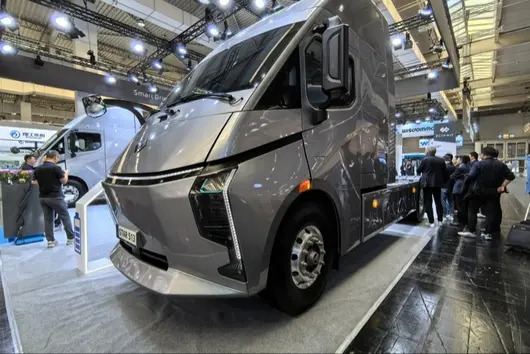
 DeepWay debuts at Hannover Motor Show
Internal and External Factors Resonate; 2026 is the "Year of Going Global"
"2024-2025 was more about market exploration and validation; 2026 is DeepWay's true Year of Going Global." At the beginning of the interview, Zhao Minyu gave a clear judgment. This is not a slogan made on a whim but a key step DeepWay will inevitably take after years of deep cultivation overseas.
Speaking from DeepWay's perspective, Zhao Minyu admitted that the company had begun pilot output of small batches of products overseas in 2024, while in 2025, the focus was on "surveying" the global market and product research. Combined with tempering in China, the global most competitive market with the most rich application scenarios for electric heavy trucks, DeepWay has completed comprehensive validation from technology, products to the supply chain. Zhao Minyu emphasized that the core of the strategic upgrade in 2026 lies in DeepWay having already possessed the complete capability to "understand different regional needs and define localized products based on a unified technology foundation". This is not simply replicating mature domestic models overseas, but deep customization development by the company facing the global market.
 DeepWay International General Manager Zhao Minyu
In recent years, the external market environment for new energy heavy trucks has changed rapidly. Affected by factors such as geopolitical issues, global oil prices have fluctuated violently, and logistics cost uncertainty has risen, causing many countries to start examining the transformation of transport tools from the height of energy security. Zhao Minyu observed that this year, the real demand overseas for electric heavy trucks has seen a "very significant rise". If previously overseas customers were more in testing and waiting on electric heavy trucks, then now in some regions, germination of scaled application has appeared based on TCO (Total Cost of Ownership) calculations and energy independence needs.
In DeepWay's Pre-IPO financing round exceeding $310 million this year, three overseas capitals joined simultaneously, providing multi-dimensional impetus for accelerating going global. In Zhao Minyu's view, what these top-tier investment institutions bring is not only funds but also localized industrial ecosystem resources—from financial leasing, insurance to logistics operations and even localized production resources. All these provide DeepWay with "entry tickets" to take root in the local market. Thus, from localized product definition capability, external market demand explosion to localized ecosystem, all are ready. The convergence of these three forces prompted DeepWay to officially define 2026 as the "Year of Going Global".

No "One Vehicle Conquers the World"; Deep Customization Based on Unified Technology Foundation
Facing distinct regulations, climates, working conditions, and user habits in different countries, how do Chinese new energy heavy trucks break the curse of "not adapting"? The answer given by Zhao Minyu is: persist in not doing "one product for the world"; DeepWay will conduct deep localized customization based on forward R&D of a unified technology foundation.
This is exactly DeepWay's core advantage. As a new energy heavy truck technology enterprise focused on forward R&D, DeepWay's vehicle models are not "fuel-to-electric conversion". Their whole vehicle architecture, core components, and underlying algorithms are all native electrification designs from 0 to 1, greatly improving safety and economy, and making intelligent driving functions faster in response and more precise in control. Software and hardware integration allows their internal R&D team and highly controllable supply chain to respond quickly to customized needs of the overseas market without overly relying on external suppliers.

"What we are building overseas is not a pure sales team, but a sales + product integrated team." Zhao Minyu introduced. The core logic of this model lies in not taking a domestic finalized whole vehicle and requiring overseas customers to adapt, but going down to local real logistics scenarios and reverse defining products.
For example, targeting West Africa's high temperature and rain, and severe salt spray corrosion in coastal areas, DeepWay specifically strengthened air conditioning refrigeration capability, raised chassis salt spray corrosion resistance performance to 480 hours salt spray test standards, and adopted double-layer spray process to strengthen anti-corrosion performance. At the same time, targeting complex local road conditions, motor rated power was increased by 15%. In right-hand drive vehicle markets such as Thailand and Malaysia, DeepWay developed compatible models and put them into operation; in Australia and New Zealand markets, products have passed certification and received positive feedback from cold chain customers, achieving excellent economy in short-distance cold chain transportation.

Currently, DeepWay's global map covers multiple regional markets such as Europe, Middle East, Southeast Asia, Australia and New Zealand, Latin America, and Africa. Zhao Minyu believes that entering Europe, this regulation highland, is to lay a "good foundation" for the global market; and in different regions, they are all doing the same thing: relying on the product foundation verified on a large scale in China, doing good local adaptation, finding matching scenarios, calculating economic accounts clearly for customers, and creating real value.
No "Predator"; Value Output and Ecosystem Co-building
When discussing DeepWay's overseas market map, Zhao Minyu divides it into different strategic levels: Europe is the long-term strategic core, aiming to benchmark global highest standards and establish discourse power; Australia and Middle East are markets for value validation and model innovation, trying new games like super-large electricity capacity models and super-fast charging trunk lines; Southeast Asia is regarded as a "China-like Market". Although price competition is fierce, through deep cultivation of scenarios and doing customization, it can still achieve breakthroughs with technology and supply chain advantages.

But more importantly, DeepWay's internationalization has been endowed with a layer of industry expectation beyond business. Zhao Minyu repeatedly emphasized in the interview, "Chinese enterprises should do value output, not just product output". He called for the industry to follow the "coalition" strategy of Japanese and South Korean car manufacturers going overseas back then, and avoid bringing fierce domestic "involution-style" price wars overseas.
"Overseas, our true competitors are not Chinese friendly businesses, but fuel vehicles." Zhao Minyu pointed out incisively. The biggest mission for Chinese electric heavy trucks at present is to prove the TCO advantage of electric vehicles through competitive products and mature technology, to fight for the market share of traditional fuel vehicles, and jointly make the cake of the overseas electric heavy truck market bigger. This is also one of DeepWay's goals for going global.

Conclusion
"Coexisting with the global industrial ecosystem" is the core concept DeepWay conveyed in this interview. For them, the internationalization road is not only a natural overflow after standing firm in the Chinese market but also an industrial upgrade from product output to output of technology, industry, and standards in all aspects. Through the strategy of "China Validation, Global Customization, Local Symbiosis", DeepWay attempts to play an enabler rather than a "predator" in the overseas market. By supporting local industry ecosystems and integrating into local supply chains, let Chinese advanced electrification supply chain capabilities become a stable force under the global energy turmoil pattern. This may be the best path exploration for Chinese commercial vehicle enterprises from "Going Out" to "Going Deep".

喺马来西亚嘅 SUV 市場,好多買家喺揀車嘅時候都會拿 Honda CR-V 同 Chery Tiggo 8 Pro 來做比較。呢兩款車喺價位同定位上都好接近,今日我哋就從多個方面做一個詳細嘅對比,幫你省咗做功課嘅時間。
Honda CR-V 喺马来西亚嘅 OTR 售價係 RM 178,200 - 195,900,一總有 4 個版本,包括 2026 e:HEV 2.0L 2WD RS(RM 195,900)、2026 1.5T 4WD V(RM 181,900)、2026 e:HEV 2.0L 2WD E(RM 178,200) 等。
Chery Tiggo 8 Pro 喺马来西亚嘅 OTR 售價係 RM 159,750 - 159,750,一總有 2 個版本,包括 1.6L Turbo Standard(RM 130,000)、1.6L Turbo Premium(RM 145,000) 等。
從價錢嚟睇,Chery Tiggo 8 Pro 嘅起步價比 Honda CR-V 平咗 RM 18,450。老實講,喺呢個價位段,幾千蚊嘅差距其實唔算大,關鍵仲係睇整體嘅性價比同長期使用成本。
Honda CR-V 搭載 2.0L 4-cyl,馬力 170 hp。官方油耗 8.0 L/100km。
Chery Tiggo 8 Pro 搭載 2.0L 4-cyl,馬力 170 hp。官方油耗 8.0 L/100km。
兩款車用緊同一套動力系統,日常開起嚟嘅感受基本冇分別。油耗方面都差不多,唔使太糾結這一點。
Honda CR-V 嘅安全評級係 5★ (ASEAN NCAP),主動安全系統包括 Honda SENSING (ACC, CMBS, LKAS, RDM)。
Chery Tiggo 8 Pro 嘅安全評級係 TBD,主動安全系統包括 Basic。
安全配備方面,兩款車都拿到唔錯嘅評級。不過 Honda CR-V 嘅 Honda SENSING (ACC, CMBS, LKAS, RDM) 同 Chery Tiggo 8 Pro 嘅 Basic 喺功能上有啲分別,如果你比較重視主動安全嘅話,可以詳細比較下兩者嘅功能列表。
Honda CR-V 車身長 4500 mm,尾箱 450 L。
Chery Tiggo 8 Pro 車身長 4400 mm,尾箱 400 L。
空間方面,Honda CR-V 嘅車身比 Chery Tiggo 8 Pro 長咗 100 mm,車內乘坐空間會稍微寬鬆少少,尤其係後座腿部空間。如果你經常載家人或者需要放嬰兒車,大啲嘅車身確實更實用。
Honda CR-V 保用 5 年/無限制里程,保養間隔 每 10,000km 或 6 個月。
Chery Tiggo 8 Pro 保用 3 年/100,000km,保養間隔 每 10,000km 或 6 個月。
總體嚟講,Honda CR-V 同 Chery Tiggo 8 Pro 都係马来西亚市場幾唔錯嘅車款。揀邊輛,關鍵仲係睇你嘅個人需求同預算。建議大家做好功課,多比較幾間車行嘅報價,再去試駕先做最終決定。買車係件大事,花少少時間做功課絕對無得錯。
In the Malaysian SUV market, many buyers compare the Honda CR-V and Chery Tiggo 8 when choosing a car. These two cars are quite close in price and positioning. Today, we will make a detailed comparison from multiple aspects to help you save time on research.
The OTR price of Honda CR-V in Malaysia is RM 178,200 - 195,900, with 4 versions in total, including 2026 e:HEV 2.0L 2WD RS (RM 195,900), 2026 1.5T 4WD V (RM 181,900), 2026 e:HEV 2.0L 2WD E (RM 178,200), etc.
The OTR price of Chery Tiggo 8 in Malaysia is RM 129,750 - 129,750, with 1 version in total, including 2026 1.6T Standard (RM 129,750), etc.
From the price perspective, the starting price of Chery Tiggo 8 is RM 48,450 cheaper than Honda CR-V. To be honest, at this price range, a difference of a few thousand is not significant. The key lies in the overall cost-effectiveness and long-term maintenance costs.
Honda CR-V body length 4500 mm, trunk 450 L.
Chery Tiggo 8 body length 4400 mm, trunk 400 L.
In terms of space, the Honda CR-V body is 100 mm longer than the Chery Tiggo 8, providing slightly more interior seating space, especially rear legroom. If you frequently carry family members or need to fit a stroller, a larger body is indeed more practical.
Honda CR-V warranty 5 years/unlimited mileage, maintenance interval every 10,000 km or 6 months.
Chery Tiggo 8 warranty 3 years/100,000 km, maintenance interval every 10,000 km or 6 months.
Both Honda CR-V and Chery Tiggo 8 are mainstream choices in the Malaysian market, suitable for family use and daily commuting. If you value brand reputation and resale value more, you can prioritize the one with better reputation; if you care more about cost-effectiveness and features, then choose the one with richer configurations. Ultimately, it is recommended to test drive both, as personal experience is the most important.

Overall, both Honda CR-V and Chery Tiggo 8 are excellent models in the Malaysian market. Which one to choose ultimately depends on your personal needs and budget. We suggest doing your research, compare quotes from multiple dealerships, and then go for a test drive to make the final decision. Buying a car is a big matter, spending some time on research will certainly not go wrong.

In the SUV market in Malaysia, many buyers compare the Honda CR-V and Chery Tiggo 7 Pro when choosing a car. Both cars are quite close in price and positioning. Today, we will make a detailed comparison from multiple aspects to help you save time on research.
The OTR price of Honda CR-V in Malaysia is RM 178,200 - 195,900, with a total of 4 versions, including 2026 e:HEV 2.0L 2WD RS (RM 195,900), 2026 1.5T 4WD V (RM 181,900), 2026 e:HEV 2.0L 2WD E (RM 178,200), etc.
The OTR price of Chery Tiggo 7 Pro in Malaysia is RM 123,750 - 123,750, with a total of 2 versions, including 1.6L Turbo Standard (RM 125,000), 1.6L Turbo Premium (RM 140,000), etc.
From a price perspective, the starting price of Chery Tiggo 7 Pro is RM 54,450 cheaper than Honda CR-V. To be honest, in this price segment, a difference of a few thousand is actually not significant; the key is to look at overall value for money and long-term usage costs.
The safety rating of Honda CR-V is 5★ (ASEAN NCAP), active safety systems include Honda SENSING (ACC, CMBS, LKAS, RDM).
The safety rating of Chery Tiggo 7 Pro is TBD, active safety systems include Basic.
Regarding safety features, both cars have received good ratings. However, there are some functional differences between Honda CR-V's Honda SENSING (ACC, CMBS, LKAS, RDM) and Chery Tiggo 7 Pro's Basic. If you value active safety highly, you can compare the feature lists of both carefully.
Honda CR-V body length is 4500 mm, trunk 450 L.
Chery Tiggo 7 Pro body length is 4400 mm, trunk 400 L.
Regarding space, the Honda CR-V body is 100 mm longer than Chery Tiggo 7 Pro, the interior seating space will be slightly more spacious, especially the rear legroom. If you often carry family or need to fit a stroller, a slightly larger body is indeed more practical.
Honda CR-V warranty is 5 years/unlimited mileage, maintenance interval every 10,000km or 6 months.
Chery Tiggo 7 Pro warranty is 3 years/100,000km, maintenance interval every 10,000km or 6 months.
Both Honda CR-V and Chery Tiggo 7 Pro are mainstream choices in the Malaysian market, suitable for family use and daily commuting. If you value brand reputation and resale value more, you can prioritize the one with better reputation; if you care more about cost-performance and features, choose the one with richer configuration. Ultimately, it is recommended to test drive both, as personal experience is the most important.
In general, both Honda CR-V and Chery Tiggo 7 Pro are very good models in the Malaysian market. Which one to choose depends on your personal needs and budget. It is recommended that everyone do their research, compare quotes from several car dealerships, and then go for a test drive to make the final decision. Buying a car is a big deal, spending some time on research will never go wrong.
© 2024 Bitauto.com. All Rights Reserved.
Bitauto (www.yiche.com and www.bitauto.com) is one of the most visited automotive websites in China. We provide detailed info on Chinese car brands available in your area. Please note that the information provided on this website is based on publicly available data and is for reference only. It may not be fully updated or accurate at all times.

Help us improve our website


