Toyota has once again shown the strength of its global business, even as competition in the automotive industry continues to intensify. On August 4, the Japanese automaker released its financial results for the first quarter of fiscal year 2027 (from April 1 to June 30, 2026).
The latest report revealed a sharp increase in quarterly net profit, with earnings reaching one of the highest levels recorded for a first quarter. Toyota's three-month profit even came close to the combined full-year earnings of the five largest automakers in China.
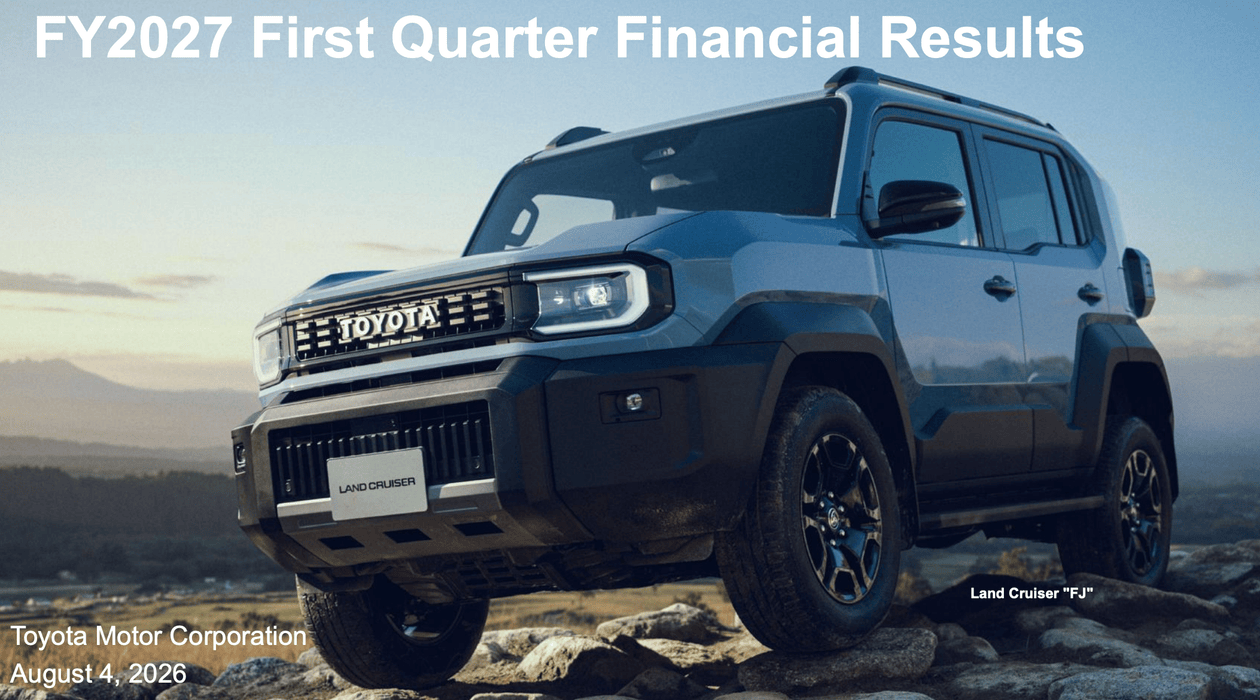
For Malaysian consumers and investors, Toyota remains a familiar sight on local roads, with models such as the Vios, Hilux, Corolla Cross and various Toyota hybrid electric vehicles still being popular choices.
So, how did Toyota achieve such strong profitability despite a challenging market environment? What factors are driving the company's financial performance? Let's take a closer look at the latest results.
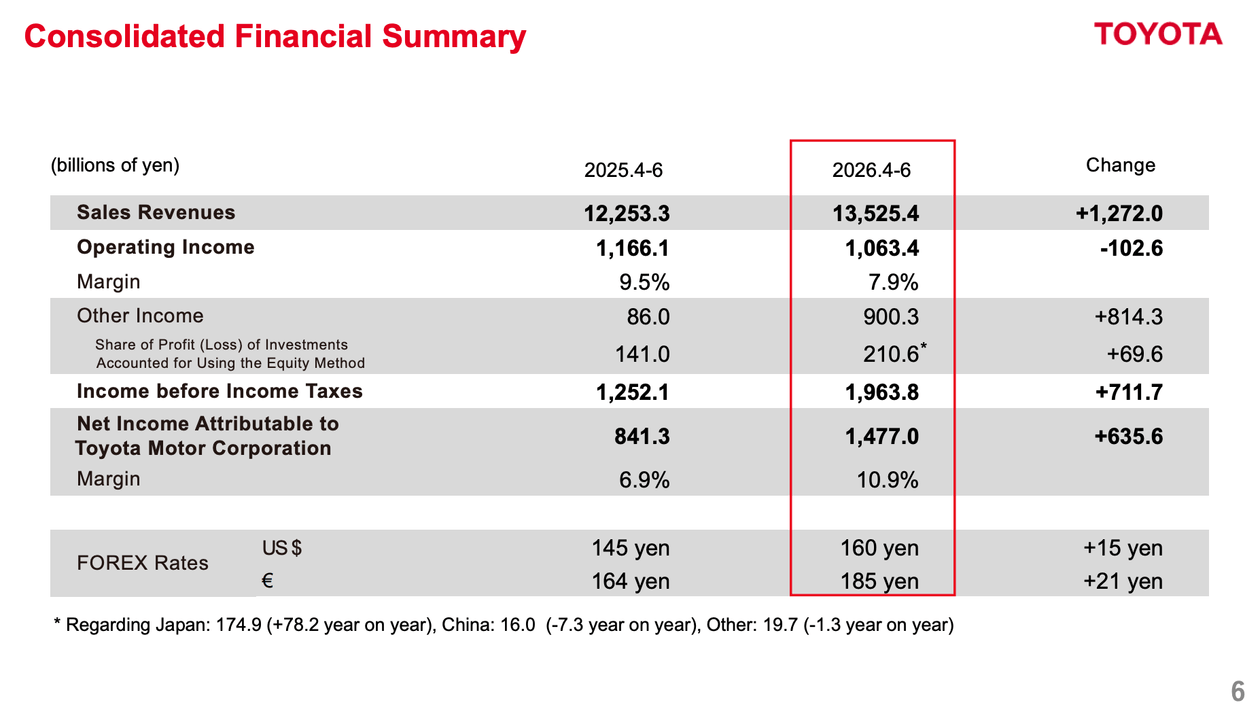
According to its financial report, Toyota recorded consolidated revenue of JPY 13.53 trillion (approximately RM 351 billion) in the first quarter of fiscal year 2027, representing a 10.4% year-on-year increase.
Net profit attributable to Toyota shareholders reached JPY 1.48 trillion (around RM 38.4 billion), a 75.56% increase compared with the same period last year.
Based on the 90-day period, this works out to an average daily net profit of around RM 420 million during the quarter.
To put the figures into perspective, Toyota's Q1 net profit is compared with the full-year 2025 earnings of China's top-performing automakers, converted into Malaysian ringgit.
|
Automaker |
FY2025 net profit attributable to shareholders (approx. in RM) |
|
Toyota |
JPY 1.48 trillion, approx. RM 38.4 billion (Q1 FY2027 only) |
|
BYD |
RMB 32.6 billion, approx. RM 19.7 billion |
|
Chery |
RMB 19.0 billion, approx. RM 11.5 billion |
|
Geely |
RMB 14.4 billion, approx. RM 8.7 billion |
|
SAIC |
RMB 10.1 billion, approx. RM 6.1 billion |
|
Great Wall |
RMB 9.8 billion, approx. RM 5.9 billion |
*Source: Financial reports released by each automaker.
Combining the entire FY2025 net profits of China's top five automotive giants (BYD, Chery, Geely, SAIC, and Great Wall Motors), the grand total comes to approximately RM 51.9 billion.
Yet, in just three months, Toyota amassed more than 70% of what these five giants earned combined over a full year. In terms of profit margin and volume, such financial muscle commands immense respect across the automotive world.
Toyota's profit surge was not driven by higher vehicle sales.
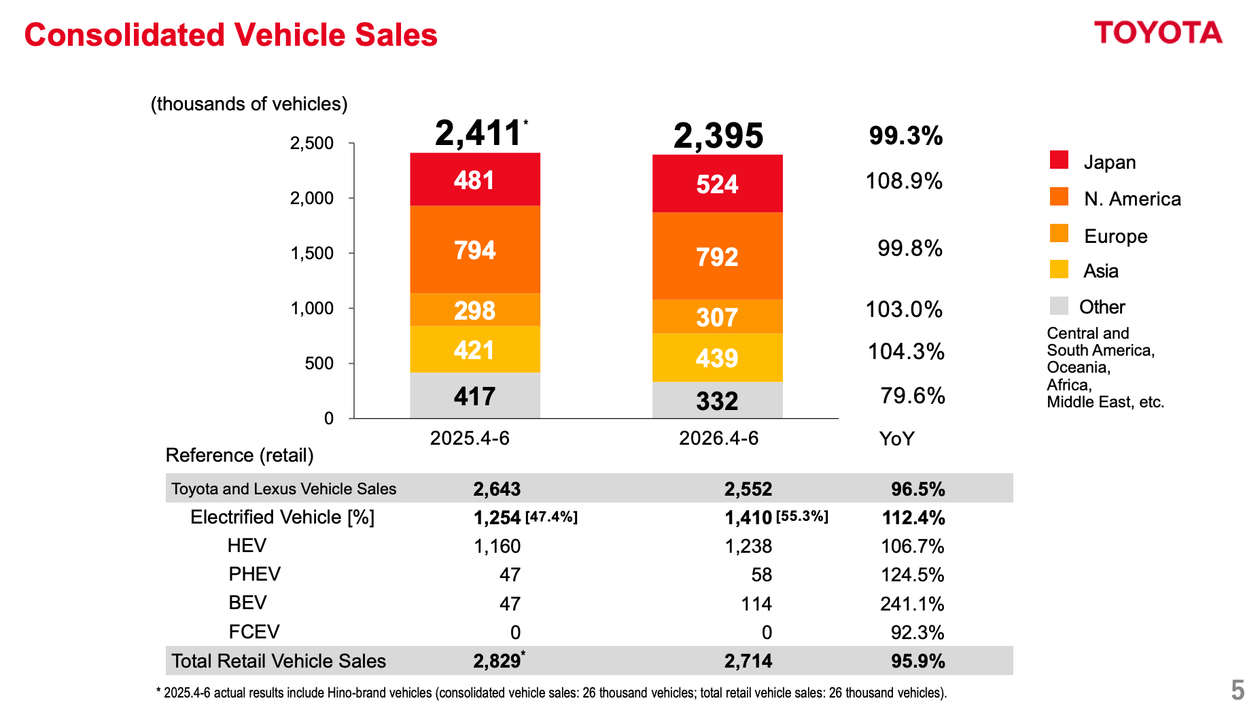
According to its latest financial report, Toyota recorded global consolidated sales of 2.395 million vehicles in the quarter, down slightly by 0.7% year-on-year.
North America remained a strong market for the company, while parts of Asia (particularly China) continued to face challenges.
Amid intense price competition in the Chinese market, Toyota and Lexus recorded 324,000 retail sales in China, equivalent to around 72% of the figure from the same period last year.
So where did Toyota’s profit growth come from?
With sales slightly lower than a year ago, a large part of the increase came from yen depreciation-related gains and higher non-operating income.
Core business faced pressure
Toyota's operating profit stood at JPY 1.06 trillion (around RM 27.5 billion) for the quarter, down 8.8% year-on-year.
Its operating margin also fell from 9.5% to 7.9%, as rising costs for materials such as aluminium and semiconductors continued to put pressure on earnings.
Non-operating income lifts net profit
The biggest contributor to Toyota's 75% net profit growth was the sharp increase in its "other income".
The figure jumped from JPY 86 billion in the same period last year to JPY 900.3 billion this quarter, an increase of more than 900% (around RM 23.3 billion).
Much of this came from foreign exchange gains and valuation gains on US dollar assets and related holdings, including Toyota Industries shares, as the weaker yen boosted the value of overseas assets.
In short, Toyota's record quarterly net profit was not driven entirely by its car business. Currency movements and investment gains also provided a significant boost.
For Malaysian and Southeast Asian buyers, the question is whether Toyota can maintain its strong position as Chinese EV brands continue to gain ground in global markets.
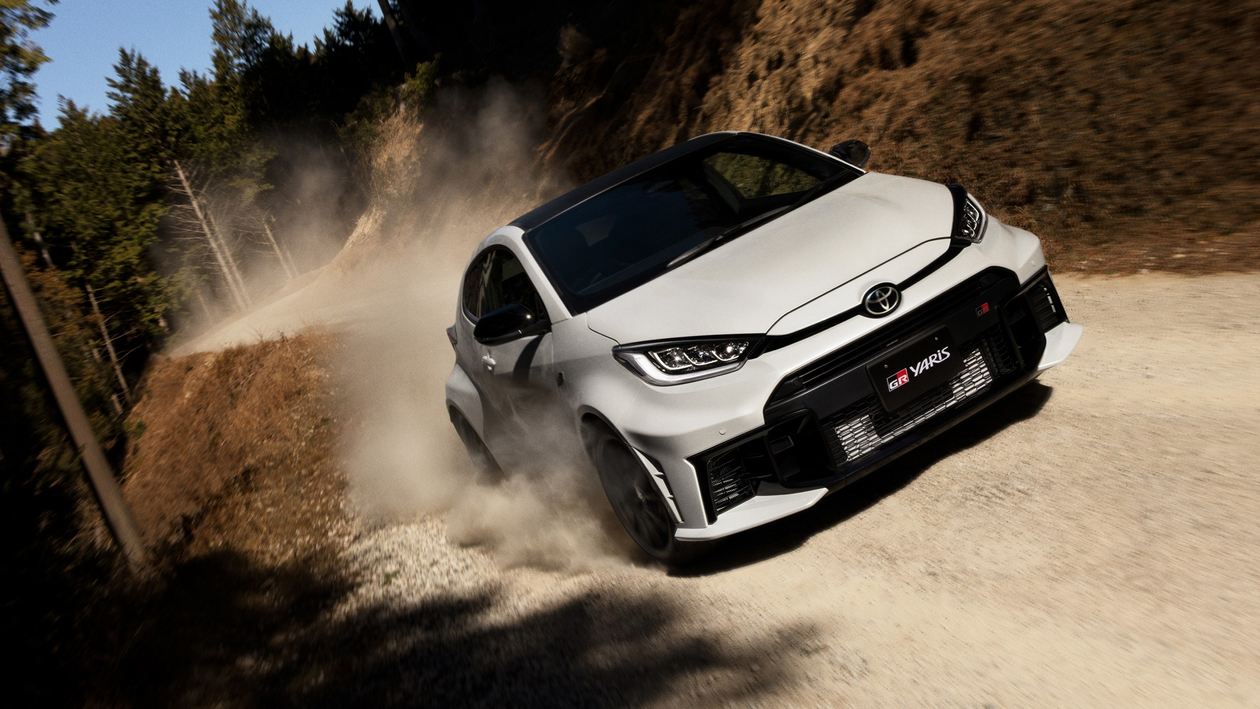
Despite the rapid growth of electric vehicles, Toyota has chosen not to join the ongoing EV price war. Instead, the company is continuing to focus on hybrids while gradually expanding its electrified vehicle lineup.
Hybrid remains Toyota’s biggest strength
Hybrid electric vehicles are still seeing strong demand worldwide.
Toyota expects global sales of hybrid and electrified vehicles to surpass 5 million units for the first time in calendar year 2026.
The company is also planning to upgrade selected battery production lines in Japan between 2027 and 2028, with the aim of producing next-generation batteries that offer lower costs and improved performance.
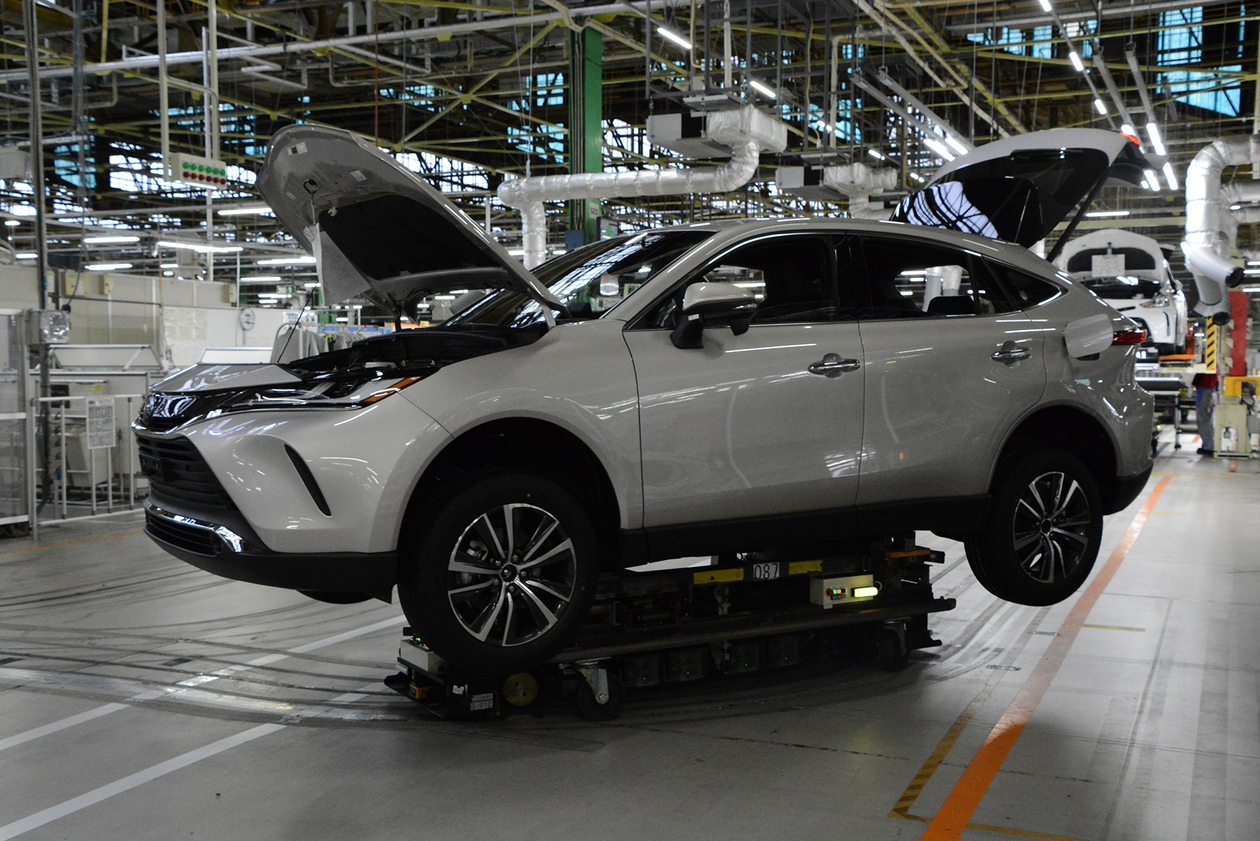
Building local strength in key markets
For China and other Asian markets, Toyota is accelerating efforts to strengthen its local production and sales network.
The company's wholly owned Lexus electrification subsidiary in Shanghai is progressing steadily and is expected to begin operations as soon as possible.
Rather than shifting entirely towards EVs, Toyota is continuing with a two-track approach — improving both conventional vehicles and electrified models to cope with the changing market landscape.
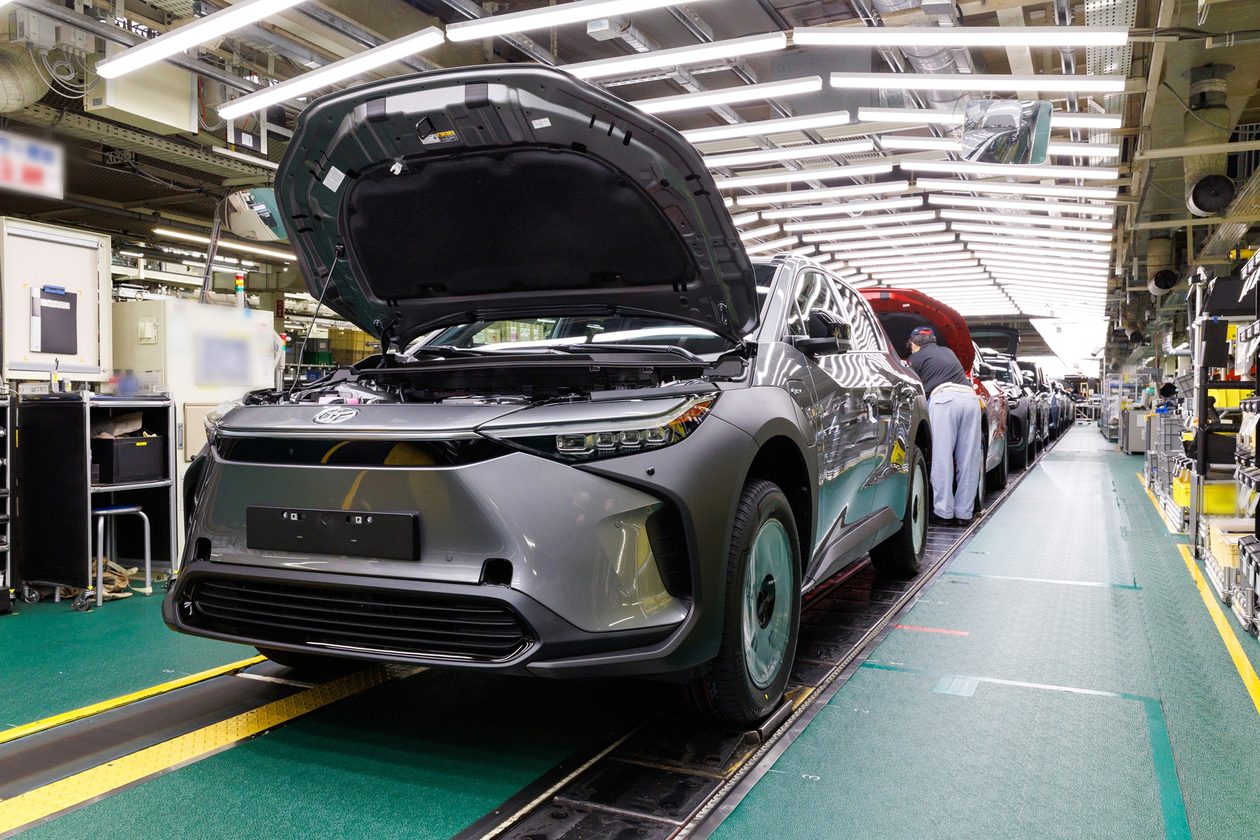
Toyota announces RM 25.9 billion share buyback
Toyota also announced a JPY 1 trillion share buyback programme (around RM 25.9 billion) together with its latest financial results, including the cancellation of 200 million treasury shares.
The move reflects Toyota's strong cash position and its focus on delivering returns to shareholders.
After revising its exchange rate assumption for the full year, with the US dollar-to-yen forecast adjusted from 150 to 160, Toyota has raised its financial outlook for fiscal year 2027.
The company now expects:
However, Toyota also acknowledged that even with the higher forecast, the expected net profit remains below the previous fiscal year's JPY 3.848 trillion.
This suggests Toyota’s annual profit could still decline for the third consecutive year.
The company continues to face several challenges, including rising material costs, supply chain disruptions caused by geopolitical issues such as tensions in the Middle East, and increasingly fierce competition in the global automotive market.
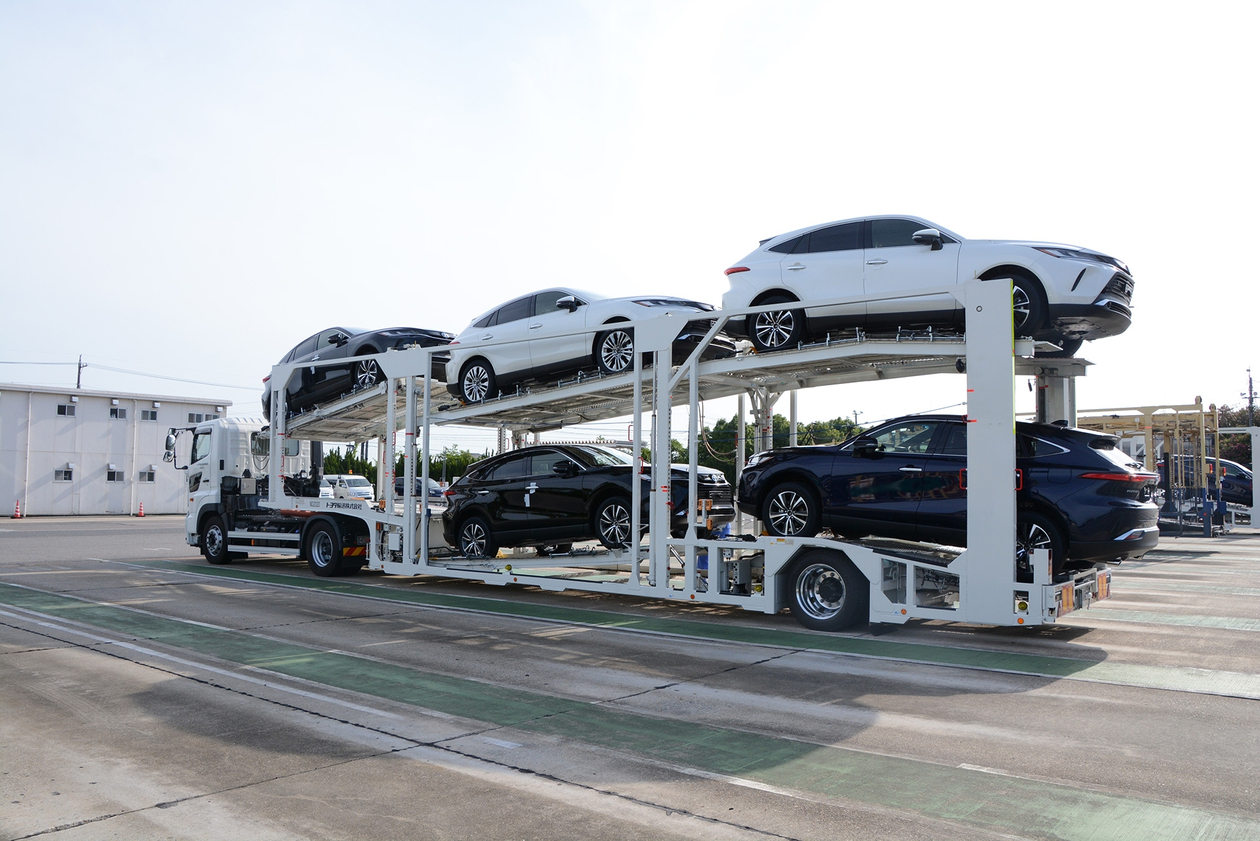
Toyota's Q1 FY2027 results show that the company still has strong earning power despite a challenging market environment.
While its core business continues to face higher costs and pressure in China, Toyota's global operations, hybrid vehicle sales and currency gains helped support its latest quarterly performance.
Back to Malaysia, Toyota remains a familiar and trusted brand, and its strong presence in the local market is unlikely to change anytime soon.

Your go-to source for all things automotive in Malaysia. 🚗 Latest reviews, breaking news, launches & industry trends.
+ Follow This weekend is your chance to own a Volvo Selekt Certified Used Car, priced from just RM 148,000.
What are you waiting for?
#volvo 1 minute ago
This weekend is your chance to own a Volvo Selekt Certified Used Car, priced from just RM 148,000.
What are you waiting for?
#volvo 1 minute ago  We saw this accident this morning, and here’s a reminder to everyone: please drive safe. 2 days ago
  The G50 BMW 3 series is now here, adopting much of the i3's design elements.
So, where's the BMW M3?
#bmw #BMW3Series 4 days ago
The G50 BMW 3 series is now here, adopting much of the i3's design elements.
So, where's the BMW M3?
#bmw #BMW3Series 4 days ago Get the latest car news first!
Your go-to source for all things automotive in Malaysia. 🚗 Latest reviews, breaking news, launches & industry trends.
This weekend is your chance to own a Volvo Selekt Certified Used Car, priced from just RM 148,000.
What are you waiting for?
#volvo 1 minute ago We saw this accident this morning, and here’s a reminder to everyone: please drive safe. 2 days ago The G50 BMW 3 series is now here, adopting much of the i3's design elements.
So, where's the BMW M3?
#bmw #BMW3Series 4 days ago  ProtonGWMVolkswagenJAECOOVolvoPeroduaToyotaHondaTESLAMitsubishiMazdaJetourCheryBYDLexusBMWMercedes-BenziCAURZeekrIsuzuNissanLeapmotorPorscheFordOMODAMINIMGSuzukiXPengHyundaiWulingKiaSubaruDenzaGACLand RoverDongfengCAMAudiPeugeotFotonMAXUSsmartDaihatsuJACJMCMaseratiLotusAlfa RomeoRenaultGolden DragonKaiceneSeresLamborghiniFerrariJeepRolls-RoyceLepasAston MartinMcLarenChevroletBentleyFiatBAICForthingGeelyRoeweAeolusChanganARCFOXDeepalExeedHongqiVoyahJaguarKGMBuforiAcuraCadillacDodgeAbarthINEOSMHEROJMEVFreelander
© 2024 Bitauto.com. All Rights Reserved.
Bitauto (www.yiche.com and www.bitauto.com) is one of the most visited automotive websites in China. We provide detailed info on Chinese car brands available in your area. Please note that the information provided on this website is based on publicly available data and is for reference only. It may not be fully updated or accurate at all times.
Help us improve our website


