

HomeAlam

Search History
Popular Searches
Dealer Login / Sign Up
在马来西亚的汽车市场,很多买家在选车的时候都会拿 Mercedes-Benz Maybach GLS 和 Land Rover Range Rover 来做比较。今天我们从多个方面做一个详细的对比,帮你省下做功课的时间。


Mercedes-Benz Maybach GLS 在马来西亚的 OTR 售价是 RM 1,918,888 - 1,918,888,一共有 1 个版本,包括 Standard(RM 1,918,888) 等。
Land Rover Range Rover 在马来西亚的 OTR 售价是 RM 2,488,000 - 2,798,000,一共有 1 个版本,包括 Standard(RM 2,488,000) 等。
从价钱来看,Mercedes-Benz Maybach GLS 的起步价确实比 Land Rover Range Rover 便宜了 RM 569,112。如果你预算有限,Mercedes-Benz 的入门版已经可以满足日常需求。但也要注意,便宜的那几千块,可能在配备上会有取舍,具体要看你的需求。

Mercedes-Benz Maybach GLS 搭载 3.0L Turbo,马力 350 hp。官方油耗 12.0 L/100km。
Land Rover Range Rover 搭载 3.0L Turbo,马力 350 hp。官方油耗 12.0 L/100km。
两款车用的是同一套动力系统,所以日常开起来的感受基本没有差别。油耗方面也差不多,不用太纠结这一点。

Mercedes-Benz Maybach GLS 保修 3年/100,000km,保养间隔 每10,000km或6个月。
Land Rover Range Rover 保修 3年/100,000km,保养间隔 每10,000km或6个月。
两款车的保修条件一样,这方面不用纠结。实际保养成本还要看品牌的服务网络和零件价格,建议去车友群问问真实车主的经验。

Mercedes-Benz Maybach GLS 和 Land Rover Range Rover 都是马来西亚市场的主流选择,适合家庭使用、日常通勤。如果你更看重品牌口碑和二手价,可以优先考虑口碑更好的那一款;如果你更在意性价比和配备,那就选配置更丰富的那款。最终还是建议两款都去试驾,亲身体验才是最重要的。
总的来说,Mercedes-Benz Maybach GLS 和 Land Rover Range Rover 都是马来西亚市场很不错的车型。选择哪一辆,关键还是要看你的个人需求和预算。建议大家做好功课,多比较几间车行的报价,再去试驾做最终决定。买车是件大事,花点时间做功课绝对不会错。


在马来西亚的轿车市场,很多买家在选车的时候都会拿 Volkswagen Golf R 和 Mercedes-Benz E-Class PHEV 来做比较。这两款车在价位和定位上都蛮接近的,今天我们就从多个方面做一个详细的对比,帮你省下做功课的时间。
Volkswagen Golf R 在马来西亚的 OTR 售价是 RM 338,812 - 338,812,一共有 2 个版本,包括 2026 2.0T Standard(RM 338,812)、DCT(RM 294,800) 等。
Mercedes-Benz E-Class PHEV 在马来西亚的 OTR 售价是 RM 427,888 - 427,888,一共有 2 个版本,包括 E 200 Avantgarde(RM 350,000)、E 300 AMG Line(RM 400,000) 等。
从价钱来看,Volkswagen Golf R 的起步价确实比 Mercedes-Benz E-Class PHEV 便宜了 RM 89,076。如果你预算有限,Volkswagen 的入门版已经可以满足日常需求。但也要注意,便宜的那几千块,可能在配备上会有取舍,具体要看你的需求。

Volkswagen Golf R 搭载 2.0L Turbo,马力 220 hp。官方油耗 9.5 L/100km。
Mercedes-Benz E-Class PHEV 搭载 Hybrid,马力 170 hp。官方油耗 4.5 L/100km。
动力方面,Volkswagen Golf R 的 2.0L Turbo 比 Mercedes-Benz E-Class PHEV 的 Hybrid 多了 50 匹马力,中段加速更有信心,尤其是跑高速公路超车的时候。不过 Mercedes-Benz E-Class PHEV 的油耗可能更友好,日常市区通勤差别不会太大。

Volkswagen Golf R 车身长 4400 mm,后备箱 400 L。
Mercedes-Benz E-Class PHEV 车身长 4400 mm,后备箱 400 L。
两款车的尺寸几乎一样,车内空间差别不大。这个级别的车,日常使用完全够用。

Volkswagen Golf R 采用 FWD 驱动方式。
Mercedes-Benz E-Class PHEV 采用 FWD 驱动方式。
两款车的驱动方式一样,都是 FWD,日常驾驶感受不会有太大区别。

Volkswagen Golf R 和 Mercedes-Benz E-Class PHEV 都是马来西亚市场的主流选择,适合家庭使用、日常通勤。如果你更看重品牌口碑和二手价,可以优先考虑口碑更好的那一款;如果你更在意性价比和配备,那就选配置更丰富的那款。最终还是建议两款都去试驾,亲身体验才是最重要的。

总的来说,Volkswagen Golf R 和 Mercedes-Benz E-Class PHEV 都是马来西亚市场很不错的车型。选择哪一辆,关键还是要看你的个人需求和预算。建议大家做好功课,多比较几间车行的报价,再去试驾做最终决定。买车是件大事,花点时间做功课绝对不会错。


在马来西亚的轿车市场,很多买家在选车的时候都会拿 Volkswagen Golf GTI 和 Mercedes-Benz E-Class PHEV 来做比较。这两款车在价位和定位上都蛮接近的,今天我们就从多个方面做一个详细的对比,帮你省下做功课的时间。
Volkswagen Golf GTI 在马来西亚的 OTR 售价是 RM 256,962 - 256,962,一共有 3 个版本,包括 2025 2.0T Sepang Edition(RM 262,990)、2025 2.0T Standard(RM 256,962)、DCT(RM 219,800) 等。
Mercedes-Benz E-Class PHEV 在马来西亚的 OTR 售价是 RM 427,888 - 427,888,一共有 2 个版本,包括 E 200 Avantgarde(RM 350,000)、E 300 AMG Line(RM 400,000) 等。
从价钱来看,Volkswagen Golf GTI 的起步价确实比 Mercedes-Benz E-Class PHEV 便宜了 RM 170,926。如果你预算有限,Volkswagen 的入门版已经可以满足日常需求。但也要注意,便宜的那几千块,可能在配备上会有取舍,具体要看你的需求。

Volkswagen Golf GTI 搭载 2.0L Turbo,马力 220 hp。官方油耗 9.5 L/100km。
Mercedes-Benz E-Class PHEV 搭载 Hybrid,马力 170 hp。官方油耗 4.5 L/100km。
动力方面,Volkswagen Golf GTI 的 2.0L Turbo 比 Mercedes-Benz E-Class PHEV 的 Hybrid 多了 50 匹马力,中段加速更有信心,尤其是跑高速公路超车的时候。不过 Mercedes-Benz E-Class PHEV 的油耗可能更友好,日常市区通勤差别不会太大。

Volkswagen Golf GTI 的安全评级是 5★ (Euro NCAP),主动安全系统包括 IQ.Drive。
Mercedes-Benz E-Class PHEV 的安全评级是 5★ (Euro NCAP),主动安全系统包括 Premium ADAS。
两款车的安全评级一样,在这个级别里面安全配备都算给得很齐全了。现在的新车安全性都不差,不用太担心这一点。

Volkswagen Golf GTI 车身长 4400 mm,后备箱 400 L。
Mercedes-Benz E-Class PHEV 车身长 4400 mm,后备箱 400 L。
两款车的尺寸几乎一样,车内空间差别不大。这个级别的车,日常使用完全够用。
Volkswagen Golf GTI 采用 FWD 驱动方式。
Mercedes-Benz E-Class PHEV 采用 FWD 驱动方式。
两款车的驱动方式一样,都是 FWD,日常驾驶感受不会有太大区别。
总的来说,Volkswagen Golf GTI 和 Mercedes-Benz E-Class PHEV 都是马来西亚市场很不错的车型。选择哪一辆,关键还是要看你的个人需求和预算。建议大家做好功课,多比较几间车行的报价,再去试驾做最终决定。买车是件大事,花点时间做功课绝对不会错。

在马来西亚的轿车市场,很多买家在选车的时候都会拿 Honda Civic Type R 和 Mercedes-Benz C-Class AMG 来做比较。这两款车在价位和定位上都蛮接近的,今天我们就从多个方面做一个详细的对比,帮你省下做功课的时间。
Honda Civic Type R 在马来西亚的 OTR 售价是 RM 399,900 - 399,900,一共有 3 个版本,包括 2023 2.0T Standard(RM 399,900)、OTR NI(RM 399,900)、Volvo ES90(RM 339,888) 等。
Mercedes-Benz C-Class AMG 在马来西亚的 OTR 售价是 RM 443,888 - 443,888,一共有 2 个版本,包括 C 200 Avantgarde(RM 260,000)、C 300 AMG Line(RM 310,000) 等。
从价钱来看,Honda Civic Type R 的起步价确实比 Mercedes-Benz C-Class AMG 便宜了 RM 43,988。如果你预算有限,Honda 的入门版已经可以满足日常需求。但也要注意,便宜的那几千块,可能在配备上会有取舍,具体要看你的需求。

Honda Civic Type R 搭载 2.0L Turbo,马力 220 hp。官方油耗 9.5 L/100km。
Mercedes-Benz C-Class AMG 搭载 3.0L Turbo,马力 350 hp。官方油耗 12.0 L/100km。
动力方面,Mercedes-Benz C-Class AMG 的 3.0L Turbo 比 Honda Civic Type R 的 2.0L Turbo 多了 130 匹马力。不过日常在市区开,两款车的动力都够用,不会觉得不够力。
Honda Civic Type R 车身长 4450 mm,后备箱 470 L。
Mercedes-Benz C-Class AMG 车身长 4400 mm,后备箱 400 L。
空间方面,Honda Civic Type R 的车身比 Mercedes-Benz C-Class AMG 长了 50 mm,车内乘坐空间会稍微宽裕一些,尤其是后座腿部空间。如果你经常载家人或者需要放婴儿车,大一点的车身确实更实用。

Honda Civic Type R 和 Mercedes-Benz C-Class AMG 都是马来西亚市场的主流选择,适合家庭使用、日常通勤。如果你更看重品牌口碑和二手价,可以优先考虑口碑更好的那一款;如果你更在意性价比和配备,那就选配置更丰富的那款。最终还是建议两款都去试驾,亲身体验才是最重要的。

总的来说,Honda Civic Type R 和 Mercedes-Benz C-Class AMG 都是马来西亚市场很不错的车型。选择哪一辆,关键还是要看你的个人需求和预算。建议大家做好功课,多比较几间车行的报价,再去试驾做最终决定。买车是件大事,花点时间做功课绝对不会错。


在马来西亚的轿车市场,很多买家在选车的时候都会拿 Honda Civic Type R 和 Mercedes-Benz C-Class AMG 来做比较。这两款车在价位和定位上都蛮接近的,今天我们就从多个方面做一个详细的对比,帮你省下做功课的时间。
Honda Civic Type R 在马来西亚的 OTR 售价是 RM 399,900 - 399,900,一共有 3 个版本,包括 2023 2.0T Standard(RM 399,900)、OTR NI(RM 399,900)、Volvo ES90(RM 339,888) 等。
Mercedes-Benz C-Class AMG 在马来西亚的 OTR 售价是 RM 443,888 - 443,888,一共有 2 个版本,包括 C 200 Avantgarde(RM 260,000)、C 300 AMG Line(RM 310,000) 等。
从价钱来看,Honda Civic Type R 的起步价确实比 Mercedes-Benz C-Class AMG 便宜了 RM 43,988。如果你预算有限,Honda 的入门版已经可以满足日常需求。但也要注意,便宜的那几千块,可能在配备上会有取舍,具体要看你的需求。
Honda Civic Type R 搭载 2.0L Turbo,马力 220 hp。官方油耗 9.5 L/100km。
Mercedes-Benz C-Class AMG 搭载 3.0L Turbo,马力 350 hp。官方油耗 12.0 L/100km。
动力方面,Mercedes-Benz C-Class AMG 的 3.0L Turbo 比 Honda Civic Type R 的 2.0L Turbo 多了 130 匹马力。不过日常在市区开,两款车的动力都够用,不会觉得不够力。
Honda Civic Type R 车身长 4450 mm,后备箱 470 L。
Mercedes-Benz C-Class AMG 车身长 4400 mm,后备箱 400 L。
空间方面,Honda Civic Type R 的车身比 Mercedes-Benz C-Class AMG 长了 50 mm,车内乘坐空间会稍微宽裕一些,尤其是后座腿部空间。如果你经常载家人或者需要放婴儿车,大一点的车身确实更实用。
Honda Civic Type R 保修 5年/无限制里程,保养间隔 每10,000km或6个月。
Mercedes-Benz C-Class AMG 保修 3年/100,000km,保养间隔 每10,000km或6个月。
总的来说,Honda Civic Type R 和 Mercedes-Benz C-Class AMG 都是马来西亚市场很不错的车型。选择哪一辆,关键还是要看你的个人需求和预算。建议大家做好功课,多比较几间车行的报价,再去试驾做最终决定。买车是件大事,花点时间做功课绝对不会错。

在马来西亚的SUV市场,很多买家在选车的时候都会拿 Mercedes-Benz GLB 和 Land Rover Discovery Sport 来做比较。这两款车在价位和定位上都蛮接近的,今天我们就从多个方面做一个详细的对比,帮你省下做功课的时间。
Mercedes-Benz GLB 在马来西亚的 OTR 售价是 RM 299,888 - 352,888,一共有 1 个版本,包括 Standard(RM 299,888) 等。
Land Rover Discovery Sport 在马来西亚的 OTR 售价是 RM 499,800 - 499,800,一共有 1 个版本,包括 Standard(RM 499,800) 等。
从价钱来看,Mercedes-Benz GLB 的起步价确实比 Land Rover Discovery Sport 便宜了 RM 199,912。如果你预算有限,Mercedes-Benz 的入门版已经可以满足日常需求。但也要注意,便宜的那几千块,可能在配备上会有取舍,具体要看你的需求。

Mercedes-Benz GLB 搭载 2.0L Turbo,马力 220 hp。官方油耗 9.5 L/100km。
Land Rover Discovery Sport 搭载 3.0L Turbo,马力 350 hp。官方油耗 12.0 L/100km。
动力方面,Land Rover Discovery Sport 的 3.0L Turbo 比 Mercedes-Benz GLB 的 2.0L Turbo 多了 130 匹马力。不过日常在市区开,两款车的动力都够用,不会觉得不够力。

Mercedes-Benz GLB 的安全评级是 5★ (Euro NCAP),主动安全系统包括 Premium ADAS。
Land Rover Discovery Sport 的安全评级是 TBD,主动安全系统包括 Basic。
安全配备方面,两款车都拿到了不错的评级。不过 Mercedes-Benz GLB 的 Premium ADAS 和 Land Rover Discovery Sport 的 Basic 在功能上有些差异,如果你比较看重主动安全的话,可以仔细对比一下两者的功能列表。

Mercedes-Benz GLB 保修 3年/100,000km,保养间隔 每10,000km或6个月。
Land Rover Discovery Sport 保修 3年/100,000km,保养间隔 每10,000km或6个月。
两款车的保修条件一样,这方面不用纠结。实际保养成本还要看品牌的服务网络和零件价格,建议去车友群问问真实车主的经验。

总的来说,Mercedes-Benz GLB 和 Land Rover Discovery Sport 都是马来西亚市场很不错的车型。选择哪一辆,关键还是要看你的个人需求和预算。建议大家做好功课,多比较几间车行的报价,再去试驾做最终决定。买车是件大事,花点时间做功课绝对不会错。

車型概覽

買奧迪 Q8 e-tron 抵唔抵,重點唔係佢睇落幾吸引,而係佢係咪可以解決你嘅真實用車需求。呢篇文會將重點放喺電池、續航同補電安排。
價錢落喺 RM 361,135 - 467,285,買家可以先用佢判斷預算壓力同同級定位。
購車價格指南
奧迪 Q8 e-tron 嘅購車預算可以先從 RM 361,135 - 467,285 開始衡量。呢個數字真正影響嘅係月供、保險同現金流,唔止係展廳入面嘅標價。
如果你喺幾個版本之間猶豫,可以將 2025 55 quattro S line(RM 467,285)、2025 50 quattro Advanced(RM 361,135)放喺同一張清單入面比較。日常通勤買家優先睇舒適同安全,成日跑高速嘅買家則更加應重視動力、輔助駕駛同座艙便利。
核心參數匯總
睇奧迪 Q8 e-tron 嘅核心規格,最緊要係將數字翻譯成生活上嘅感受。
114 kWh 嘅電池容量,重點係咪可以支撐一週通勤同週末出門。24.4 kWh/100km 嘅耗電表現,會影響你幾耐需要補一次電。300 kW、664 N·m 嘅輸出,令高速併線同短距離超車更有底氣。車長 4915 mm、車寬 1937 mm、車高 1633 mm、軸距 2928 mm,可以幫你預判泊車難度同後排乘坐空間。
優點同缺點分析
奧迪 Q8 e-tron 嘅優點唔使誇張,真正有價值嘅係佢係咪可以讓日常使用更省心:預算位置清楚,方便同同級車直接比較、日常能源成本有明確參考、動力輸出能支撐高速同超車需求。
要留意嘅係,需要先確認屋企、公司或常去商場嘅充電條件、市區泊車同狹窄路段仍要看個人駕駛習慣。呢啲唔係扣分項,而係落訂前應該要諗清楚嘅生活細節。
購車常見問題解答
購買奧迪 Q8 e-tron 前,買家最常問嘅唔係單一規格,而係佢係咪可以融入自己嘅生活。
呢部車適合邊個?適合將電池、續航同補電安排放在首位嘅買家。家庭用戶要看咩?優先睇後排乘坐、兒童座椅、行李同日常上下車係咪順手。日日開會唔會麻煩?只要充電條件穩定,電動車嘅通勤體驗通常更安靜,也更容易控制日常能源成本。
競品比較內容
將奧迪 Q8 e-tron 放喺同級車名單嗰陣,唔建議只睇品牌或外形。真正有用嘅比較順序係:先用 RM 361,135 - 467,285 鎖定預算範圍、再睇動力係咪足夠應付高速同滿載、跟住比較能源成本同補能便利、最後睇空間係咪適合家人同行李。
咁樣篩選出來嘅結果更貼近日常生活。你會更清楚佢係適合城市通勤、家庭代步、長途巡航,定係更加適合作為一輛講究個性嘅選擇。
用車全週期指南
擁有奧迪 Q8 e-tron 嘅關鍵,係先把充電安排諗清楚。家用充電、公司充電或商場快充只要其中一項穩定,日常體驗就會輕鬆好多。
如果你常跑南北大道,動力同座艙舒適度會比單純低價更重要;如果主要喺市區,泊車靈活性、視野同低速順滑度會更加影響心情。


車型概覽

買奧迪 A4 值唔值得,關鍵唔係佢睇落幾吸引,而係佢有冇辦法解決你嘅真實用車需要。呢篇文章會將重點放喺佢同級車相比嘅生活適應度。
版本方面,奧迪 A4 而家可以圍繞 2025 Avant 40 TFSI quattro S line、2025 Sedan quattro 嚟比較。
買車價錢指南
評估奧迪 A4 嘅買車預算嗰陣,建議係版本定位同後續養車成本入手。價錢唔係唯一重點,真正決定係咪抵就係每日會唔會用到啲配備。
如果你喺幾個版本之間猶豫,可以把 2025 Avant 40 TFSI quattro S line、2025 Sedan quattro 放喺同一張清單度比較。日常通勤嘅買家優先睇舒適同安全,經常行高速嘅買家就要更加重視動力、輔助駕駛同車廂方便。
核心參數匯總
睇奧迪 A4 嘅核心規格,最緊要係將數字轉化做生活入面嘅感覺。
奧迪 A4 嘅核心價值應該返嚟日常生活場合判斷:你要佢負責通勤、家庭出行、長途,定係作為更有個性嘅選擇。
優點缺點分析
奧迪 A4 嘅優點唔使誇張,真正有價值嘅係佢有冇辦法令日常使用更加省心:車型定位清楚,適合先作為同級比較對象。
需要留意嘅係,最終揀選會落喺版本配備、保險同長期保養成本。呢啲唔係扣分項,而係落訂前應該先諗清楚嘅生活細節。
買車常見問題解答
購買奧迪 A4 前,買家最常問嘅唔係單一規格,而係佢有冇辦法融入你自己嘅生活。
呢輛車適合邊個?適合將佢同級車相比嘅生活適應度放喺首位嘅買家。家庭用戶要睇咩?優先睇後排乘坐、兒童座椅、行李同日常上下車係唔係順手。日日開會唔會麻煩?如果能源成本、停車方便同版本配備都符合你嘅生活節奏,佢會比較容易相處。
競爭對手對比內容
將奧迪 A4 放喺同級車名單嗰陣,唔建議只睇品牌或外形。真正有用嘅比較順序係:由版本定位、品牌售後同日常用途開始比較。
咁樣篩選出嚟嘅結果更加貼近日常生活。你都會更加清楚佢適合市區通勤、家庭代步、長途巡航,定係更加適合作為一輛講求個性嘅選擇。
用車全週期指南
擁有奧迪 A4 嘅重點,係確認保險、路稅、保養同輪胎成本都在可接受範圍內。買車唔係一次付款就結束,而係日日都要相處。
如果你經常行南北大道,動力同車廂舒適度會比單純低價更重要;如果主要喺市區,停車靈活性、視野同低速順滑程度會更加影響心情。

車型概覽

奧迪 S5 值唔值買,關鍵唔係佢睇落幾吸引,而係佢係咪能夠解決你嘅真實用車需要。呢篇文章會將重點放喺長途穩定感同乘客舒適度。
版本方面,奧迪 S5 目前可圍繞 2025 標準來比較。
買車價格指南
評估奧迪 S5 嘅買車預算時,建議係從版本定位同其後養車成本入手。價格唔係唯一重點,真正決定係咪化算嘅係每日會唔會用到嗰啲配置。
如果你喺幾個版本之間猶豫,可以將 2025 標準放喺同一張清單入面比較。日常通勤買家優先睇舒適同安全,常跑高速嘅買家則更應重視動力、輔助駕駛同座艙便利。
核心參數匯總
睇奧迪 S5 嘅核心規格,最重要係將數字轉化為生活入面嘅感受。
奧迪 S5 嘅核心價值應回到日常場景判斷:你要佢負責通勤、家庭出行、長途,定係作為更有個性嘅選擇。
優缺點分析
奧迪 S5 嘅優點唔使誇張,真正有價值嘅係佢係咪可以令日常使用更省心:車型定位清楚,適合先作為同級比較對象。
需要留意嘅係,最終取捨會落喺版本配置、保險同長期保養成本。呢啲唔係扣分項,而係落訂前應該先諗清楚嘅生活細節。
買車常見問題解答
購買奧迪 S5 前,買家最經常問嘅唔係單一規格,而係佢係咪能夠融入自己嘅生活。
呢輛車適合邊個?適合將長途穩定感同乘客舒適度放喺第一位嘅買家。 家庭用戶要睇咩?優先睇後排乘坐、兒童座椅、行李同日常上下車係咪順手。 每日開係唔係麻煩?如果能源成本、停車便利同版本配置都符合你嘅生活節奏,佢會比較容易相處。
競爭對手對比內容
把奧迪 S5 放進同級車名單嗰陣,唔建議只看品牌或外形。真正有用嘅比較順序係:從版本定位、品牌售後同日常用途開始比較。
咁樣篩選出嚟嘅結果更貼近日常生活。你就會更清楚佢係適合城市通勤、家庭代步、長途巡航,定係更適合作為一輛講求個性嘅選擇。
用車全周期指南
擁有奧迪 S5 嘅重點,係確認保險、路稅、保養同輪胎成本喺可接受範圍內。買車唔係一次付款就結束,而係每日都要相處。
如果你常跑南北大道,動力同座艙舒適度會比單純低價更重要;如果主要喺市區,停車靈活性、視野同低速順滑度會更影響心情。



Written by | Zhang Linyu
Edited by | Zhang Nan
Designed by | Zhen Youmei
At 4:30 PM Central Time on July 22, Tesla's Q2 earnings call began, with little mention of its traditional automotive business.
During the Q&A session, analysts no longer asked when the low-cost model colloquially known as Model 2 would go into mass production. Tesla has never officially used this name, nor did they inquire about the progress of the next-generation model.
Elon Musk and his core executives shared information with the audience regarding FSD (Full Self-Driving, Tesla's fully autonomous driving software, which still requires driver supervision at all times in the current version), Robotaxi, Optimus robot, and chip factory.
This forms a certain contrast with Tesla's current revenue structure.
Revenue Increase Without Profit Increase
In Q2 2026, Tesla delivered a total of 480,126 vehicles globally, a 25% year-over-year increase and a 34% quarter-over-quarter increase, marking the company's best Q2 delivery record, second only to the historical record of 497,099 vehicles set in Q3 2025.
Among them, 467,762 Model 3 and Model Y vehicles were delivered, accounting for 97.4% of total deliveries; other models including Model S, Model X, Cybertruck, and Semi trucks totaled 12,364 deliveries, accounting for only 2.6%.

Production for the same period was 451,758 units. Deliveries exceeded production by 28,368 units, and global vehicle inventory days dropped from 27 days in the previous quarter to 15 days.
Tesla did not disclose absolute sales by region for Q2, but Chief Financial Officer Vaibhav Taneja revealed that compared to Q1, deliveries grew 60% in the Americas, 27% in Asia-Pacific, and 12% in EMEA. He also stated that Tesla ended Q2 with the largest order backlog since 2023.

The shareholder letter listed the markets where Q2 delivery records were set: South Korea, Australia, Colombia, Japan, Taiwan, Thailand, Portugal, Philippines, Chile, Slovenia, and Lithuania. Taneja additionally noted that Model Y set sales records in the Netherlands, Australia, and New Zealand.
Sales grew, but profits did not increase correspondingly.
In Q2, Tesla's total revenue was $28.236 billion, up 26% year-over-year, marking the first time revenue over the past 12 months exceeded $100 billion. Among them, automotive business revenue was $20.516 billion, up 23% year-over-year, accounting for 72.7% of total revenue; energy generation and storage business revenue was $3.139 billion, up 13%; service and other business revenue was $4.581 billion, up 50%, becoming the fastest-growing business.

Tesla's gross profit for the quarter was $4.751 billion, up 23% year-over-year; GAAP gross margin was 16.8%, down 41 basis points from 17.2% in the same period last year.
Operating profit was only $398 million, down 57% year-over-year; operating margin dropped from 4.1% to 1.4% compared to the same period last year.
In other words, Tesla's revenue increased by $5.74 billion year-over-year, but operating profit decreased by $525 million.
One source of pressure on profits came from expenses. In Q2, Tesla's R&D expenses reached $2.371 billion, up 49% year-over-year; sales, general, and administrative expenses reached $1.982 billion, up 45%. The two expenses totaled $4.353 billion, almost eating up all gross profit.
The shareholder letter attributed expense growth to three areas: R&D projects such as AI, equity incentives (including 2025 CEO compensation plan), and sales and admin expenses. Equity incentive expenses were $1.151 billion pre-tax this quarter, compared to $635 million in the same period last year.
Automotive regulatory credit revenue dropped from $439 million last year to $146 million, down 67% year-over-year; it was $380 million last quarter. The $7,500 U.S. federal EV tax credit expired on September 30, 2025; after federal law amendments, fines for automakers failing to meet fuel economy standards were zeroed out, removing the motivation to buy Tesla credits.
Automotive business GAAP gross margin was 16.9%; automotive gross margin excluding regulatory credit revenue was 16.3%, higher than 15.0% in the same period last year, but significantly lower than 19.2% in Q1 this year.
Taneja explained that Q1 automotive gross margin was helped by approximately $230 million in reserve reversals for warranties and tariff reductions; these benefits did not repeat in Q2; excluding these impacts, automotive gross margin excluding credits was roughly flat with the previous quarter.
In the attribution of revenue and profit in the shareholder letter, 'decline in average selling price per vehicle' is listed as a negative factor in two places.
The energy business also saw 'revenue increase without profit increase'.
In Q2, Tesla's energy storage deployment reached 13.5 GWh, up 41% year-over-year and 53% quarter-over-quarter, the second-highest quarter in history. However, due to approximately $240 million in warranty expenses caused by supplier cell issues, the energy business gross margin dropped from 39.5% in Q1 to 20.4%.
Service and other businesses became one of the few clear profit growth points.
This business's gross profit grew from $166 million in the same period last year to $648 million, an increase of $302 million quarter-over-quarter; gross margin rose from 5.5% last year and 9.2% last quarter to 14.1%, a historic high.
Tesla's GAAP net profit for the quarter was $1.114 billion, down 5% year-over-year; diluted EPS was $0.32, down 3% year-over-year.
This $1.114 billion includes an unrealized gain from a SpaceX equity investment, $1.005 billion pre-tax and $763 million after-tax. Tesla bought this SpaceX equity for $2.002 billion in Q1 2026, realizing a paper gain of $1.005 billion one quarter later.
Taneja said this approximately $1 billion gain was offset by approximately $300 million in foreign exchange losses and about $100 million in Bitcoin losses. On the income statement, the total 'Other income (expense), net' for the quarter was $590 million.
Excluding equity incentives, SpaceX paper gains, digital asset fluctuations, and special tax items, Tesla's non-GAAP net profit was $1.153 billion, down 17% year-over-year; non-GAAP diluted EPS was $0.33, down 18% year-over-year.
In Q2, Tesla's operating cash flow was $4.697 billion, up 85% year-over-year; capital expenditures reached $5.789 billion, up 142% year-over-year, resulting in $1.092 billion of negative free cash flow.
The company expects capital expenditures for the full year 2026 to exceed $25 billion, and capex will continue to grow in the next two to three years.
As of the end of June, Tesla held $43.524 billion in cash, cash equivalents, and short-term investments, down $1.219 billion from Q1.
Automotive remains Tesla's largest revenue source and the foundation supporting cash flow and capital expenditures, but the earnings call is no longer about cars.
Elon Musk Only Discussed Three Things
After the earnings call began, Elon Musk sounded emotionally down. He later explained to analysts that he was sick that day, 'If I sound a bit off, it's because I'm sick today and feeling unwell.'
He briefly mentioned three things.
The first thing was Cybercab. He announced that Cybercab production has started at the Texas Gigafactory. As a two-seater model designed specifically for Robotaxi with no steering wheel or pedals, Cybercab is seen as the core carrier for Tesla shifting from selling cars to operating an autonomous driving fleet. Tesla has provided Cybercab ride experiences for employees within the Texas factory campus since July.

However, Cybercab will not scale up rapidly in the short term.
Since it uses a completely new chassis, Tesla must first let test vehicles equipped with steering wheels, accelerator pedals, and brake pedals accumulate sufficient driving data to complete the autonomous driving system calibration for the Cybercab chassis.
The second thing was the Optimus robot.
Musk again called Optimus 'the largest product ever', but he also admitted this will be the hardest product for Tesla to date to achieve mass production.

Cars at least have mature supply chains for tires, glass, mirrors, and body parts, but almost all components of Optimus need to be redesigned and supply systems established.
Tesla has dismantled the Model S and Model X production lines at the Fremont factory and started installing the first-generation Optimus production line; the Optimus building at the Texas factory is also under construction.

The shareholder letter said the first batch of Optimus will be deployed within Tesla's Optimus Academy for collecting training data and developing features.
Musk stated that Optimus production ramp will follow a typical S-curve, but due to many new components, the initial flat phase of the curve will be very long.
Musk hopes the third-generation Optimus will eventually reach an annual production of 1 million units, and the fourth generation 10 million units. However, he immediately emphasized these are ideal targets, and achieving true mass production is 'surprisingly difficult'.
The third thing was the chip factory.
This is a massive chip manufacturing project in cooperation between Tesla and SpaceX. Terafab not only produces logic chips but also covers storage chips, advanced packaging, testing, and photomask manufacturing.
Musk did not disclose the site location at the earnings call, only stating there will soon be a separate launch event because this project 'deserves its own day' and should not be squeezed into an earnings call.
He envisioned placing photomask manufacturing, logic chips, storage chips, packaging, and testing in the same building to shorten chip design and validation cycles.
Terafab's main task is not to produce traditional chips for cars, but to solve the AI computing power needed for future large-scale Optimus mass production.
Musk believes that without its own chip manufacturing capability, Optimus will eventually be constrained by AI chip supply.
There was another chip statement in the shareholder letter: Tesla's semiconductor wafer fab in Austin is advancing construction and equipment procurement; the project is still in early stages, aiming to build its own chip manufacturing capability to ensure long-term supply of logic and storage chips. The full shareholder letter does not mention Terafab.
June 4, 2026, Hsinchu, Taiwan, TSMC 2026 Annual Shareholders' Meeting.
A corporate shareholder representative asked TSMC Chairman and CEO C.C. Wei how he viewed Musk building his own wafer fab. Wei said: 'My only comment is to 'bless him'.' He also said TSMC has never lacked opponents; the only way to face them is to continue to strive and win.

Cybercab, Optimus, and Terafab form the main axis of Musk's entire narrative at this earnings call. The traditional automotive business only exists as a cash source and AI implementation platform.
The Limitation on Production Is Not Demand, but Battery Packs
The shareholder letter stated in two places that battery pack capacity is the main limiting factor for recent vehicle production increases. Taneja added at the meeting that production growth will be limited by supply chains, not just batteries, but also electronic components.

In the same quarter, Tesla faced the largest order backlog since 2023.
As of the end of Q2, Tesla's paid FSD subscriptions reached 1.48 million, up 56% year-over-year; global paid users approached 1.5 million, with 55% one-time purchase and 45% subscription. Over 55% of new cars in North America had FSD subscriptions activated at delivery.
The shareholder letter stated Tesla has pushed FSD v14 lite to vehicles equipped with AI3 hardware in the U.S. and South Korea, by distilling driving behaviors from the v14 series on AI4 into the camera and compute configuration of AI3.
Hardware 3 and Hardware 4 correspond to AI3 and AI4. Musk said in the Q&A session that upgrading vehicles below Hardware 4 'will eventually be economically reasonable', but Tesla public documents have no hardware upgrade plans.
The shareholder letter listed nine Robotaxi metro areas: California's SF Bay Area with safety drivers; Texas Austin, Dallas, Houston and Florida Miami, Orlando, Tampa in unsupervised operational ramp-up phase; Arizona Phoenix, Nevada Las Vegas in preparation.

Tesla claimed Robotaxi is online in 7 major metro areas, cumulatively driving over 380,000 miles safely with no accident records.
Analyst Q&A Transcript
Below is the transcript of the Q&A session from Tesla's Q2 2026 Earnings Call, compiled by this publication from the conference call recording, with omissions.
Earnings Call Executive List
Host: Travis Axelrod (Travis Axelrod, Head of Investor Relations at Tesla)
Musk (Elon Musk, Tesla Co-founder and CEO)
Vaibhav Taneja (Vaibhav Taneja, Tesla CFO)
Ashok Elluswamy
Karn Budhiraj
Lars Moravy (Lars Moravy, Vice President of Vehicle Engineering at Tesla)
Brandon Ehrhart (Brandon Ehrhart, Tesla General Counsel and Corporate Secretary)
Q1: Currently there is no mature Optimus supply chain, so Tesla has to do much of the work internally. In the process of advancing this, are there suppliers willing to co-invest with you to establish local manufacturing capability in the U.S., helping Tesla achieve scale faster? From an investment cycle perspective, having partners advance together could improve capital efficiency. How do you consider this?
Musk: Our suppliers are performing exceptionally well. To support Optimus, Robotaxi, and other projects, they have invested and are continuing to invest huge funds.
Especially Samsung Electronics and TSMC, both building wafer fabs. TSMC is building in Arizona, Samsung is building in Texas, investing tens of billions of dollars to produce AI computing chips for Optimus and Robotaxi.
Panasonic has also invested billions of dollars to expand battery production.
Please excuse me, I'm feeling a bit unwell today, slightly sick. If my voice sounds off, it's because I'm indeed feeling unwell today.
Our partners are all excellent. I want to thank them for their support, their investments, and their hard work.
Karn Budhiraj: I want to add a point on this basis. A significant portion of Samsung's wafer fab capacity will be used for future projects. This is a massive investment involving billions of dollars.
We also see investment of similar scale in the storage chip sector. Additionally, investment has emerged in some new dedicated parts areas, such as metal injection molding parts, flexible printed circuits, and various non-traditional technologies. These technologies are mostly designed for robots, differing from our traditional automotive supply chains in the past.
In some areas, if we cannot find suitable partners, we never hesitate to move production internally. We have a very strong manufacturing engineering team and design team that can help us scale up production of these products.
Musk: I also want to thank Micron Technology (Micron Technology, U.S. storage chip manufacturer) for allocating storage chip capacity for us. They must make some very difficult decisions on storage chip capacity allocation. Given the crazy high price of storage chips today, we are very grateful that Micron is willing to reserve space for Tesla in the coming years and allocate considerable capacity to us under reasonable terms.
Q2: Regulations in U.S. states seem to be changing, possibly involving sensor configuration requirements. For Robotaxi deployment, what approach do you want regulators to take? To avoid excessive regulation while ensuring Robotaxi lands correctly, what regulatory environment do you hope to see?
Lars Moravy: When discussing regulations, especially the U.S. regulatory environment, significant progress has been made. The federal government has taken very proactive measures around the 'Federal Motor Vehicle Safety Standards' (FMVSS), beginning to accept and promote specifically designed autonomous vehicles. We are very grateful for the support from the U.S. National Highway Traffic Safety Administration (NHTSA) in this regard.
As for individual states, some recent movements in New Jersey are obviously somewhat disappointing.
But as Ashok said in his opening remarks, what we really care about is the vehicle's own performance. Ultimately, it is product performance that drives regulators and the public to accept this technology.
I believe the best way to regulate is to set a goal or task for companies and innovators, then let us find solutions ourselves. If some regulations define the solution before clearly stating the problem, we certainly won't welcome that practice.
Tesla has always proven itself with actual performance in the past, and will continue to do so in the future. This will also become the foundation for our continued expansion.
Q3: Next, what milestones should investors focus on? After reaching which milestones will you accelerate Robotaxi fleet expansion or market deployment? Is it further safety validation, such as mileage per accident, or other metrics? Additionally, will you consider partnering with third parties like ride-hailing platforms to increase vehicle utilization, or continue to maintain full vertical integration?
Musk: We expect Robotaxi to adopt a vertical integration model, like Tesla's other businesses. I don't think Robotaxi will face a problem of insufficient demand. Its economics will be extremely attractive, with many people wanting to use this service, and demand will exceed our service capacity. In this case, vertical integration is obviously the choice.
The real issue is just what we call the progression of reliability 'multiple 9s'. That is, to scale up, how many 9s of reliability does the system actually need to reach?
Ideally, we want reliability to reach 99.999999%. I believe the only limitation to Robotaxi growth is moving towards more 9s of reliability.
Q4: Outsiders have been discussing the possibility of SpaceX and Tesla merging in some way. The two companies have already carried out extensive cooperation. Will merging the two companies eventually produce synergies? As time passes, is this reasonable?
Musk: As everyone can see from the extensive cooperation carried out by the two companies in many fields, the overlap between their businesses is increasing, especially the Terafab project. This will be a true massive project.
But obviously, we cannot discuss matters like company mergers on an earnings conference call. Such matters must be carried out according to appropriate procedures.
Brandon Ehrhart: We have always benefited from our relationship with SpaceX. SpaceX is an excellent partner, and we have conducted many transactions beneficial to both parties with them.
Earlier this year, we deepened the relationship between the two sides through an investment and a framework agreement. This will enable us to continue working with SpaceX to advance the projects Elon just mentioned, such as Terafab and Digital Optimus.
Musk: Additionally, there are many other collaborations. Grok (the large model of Musk's AI company xAI) has now been integrated into the car, and Grok is also helping drive Digital Optimus. Starlink (SpaceX's satellite internet service) is being integrated into Cybercab. In the future, Starlink will also be integrated into all our automotive products, at least in markets where Starlink is already operating.
Because in Robotaxi application scenarios, the network must cover all places.
Even in Silicon Valley, there are many places with very poor mobile network signals, sometimes even no signal at all. When I drive to work, the first 10 to 15 minutes I cannot actually make calls because the mobile network connection is too poor.
We cannot let Robotaxi enter these 'Bermuda Triangles' lacking mobile network connections and get stuck there. Starlink can provide network connections anywhere, so it is very important. This avoids Robotaxi losing connection.
If people are sitting in the car, they might want to handle work efficiently, or they might hope to get an entertainment experience. With Starlink, people can watch 4K live sports events in the car, and the cost per GB of data is very low. This is actually difficult to achieve through mobile communication networks.
Vaibhav Taneja: You can understand this from the Cybercab ride experience. In a world where you don't need to focus on driving, all the time you sit in the car can be used for other things, whether attending conference calls, watching movies, or doing other activities.
Therefore, if you observe the design of Cybercab, you will see it is equipped with a very large screen.
We have started providing Cybercab ride experiences within the Austin factory. In the not-so-distant future, consumers will also be able to experience it. Once you truly experience it, you will understand why network connections become so important.
Q5: Currently Robotaxi is constantly adding operating cities, but according to media reports, the number of vehicles seems to still be only dozens, not hundreds. Why not concentrate on expanding the scale of Austin or one or two cities first? To achieve higher deployment volume in a major city, what else do you need to solve?
Ashok Elluswamy: The reason we chose to expand to different cities instead of focusing on only one city is that we want to ensure the tech stack has strong generality.
It is indeed a general system. We just want to prove to ourselves and the outside world that this system can run in many different cities, and entering each city does not require investing too much extra work. This is exactly what we see internally.
As Elon just mentioned, the growth rate is actually rising exponentially, it's just that it's currently in the early stage of the exponential curve, so the outside world finds it hard to understand this growth.
As for whether to focus on mileage or vehicle count, since vehicles in the Robotaxi fleet will basically run continuously, while human drivers might only use vehicles a few hours a day, there is a huge difference between the two.
These vehicles will operate continuously for the vast majority of the time. This means that even if the number of vehicles is small, a large amount of mileage can be generated. Therefore, we focus more on unsupervised driving mileage rather than simply the number of vehicles.
We hope to operate a very efficient fleet. All work that improves operational efficiency will further increase the mileage each vehicle in the fleet can contribute.
Vaibhav Taneja: We are trying to expand this business, while also ensuring to solve various problems that may exist. These problems involve not only software but also operations, and we are also working on handling them. Therefore, we hope to first expand the geographic coverage, and before truly large-scale deployment, solve these problems through a smaller, controllable fleet.
Musk: Regarding Cybercab, one point needs special explanation. Because Cybercab uses a completely new vehicle chassis, before mass deployment, we must accumulate driving data specifically for Cybercab.
Model 3, Model Y, and other models already have millions of cars driving on the road, we have a lot of data, but Cybercab does not yet have such data foundation.
We must first let Cybercab equipped with devices such as steering wheels, accelerator pedals, and brake pedals accumulate mileage, thereby completing system calibration for the Cybercab chassis.
When we establish sufficient confidence in this, everyone will see a significant increase in the number of Cybercabs in various cities.
Lars Moravy: Another reason to point out is that total cost of ownership and transportation regulatory environments are not the same between different cities and different states. Currently, there is no unified federal regulatory framework.
The reason we expand city by city is to ensure we can meet these requirements separately and respond to the specific requirements of each city as much as possible.
We must enter every city to meet local requirements. We will continue to do this, and expand the scale further after meeting all conditions.
Q6: The U.S. National Highway Traffic Safety Administration is pushing to cancel pedals and steering wheels. Will these become factors limiting Cybercab production expansion? At the federal level, are there any other problems that need to be solved to truly release your ability to expand Cybercab scale?
Lars Moravy: The short answer is, no. We maintain a very good relationship with the U.S. National Highway Traffic Safety Administration, especially with Administrator Jonathan Morrison.
I think they are just catering to public demand and the trend known worldwide to be coming. They are trying to stay ahead of the trend to ensure appropriate measures are taken.
In the past few years, we have always honestly introduced our plans and ongoing work to them.
I don't want to say the two sides are completely in step, but I feel we have a partner there, and both sides are advancing relevant work together.
[Editor's Note: Morrison was confirmed by the U.S. Senate to serve as NHTSA Administrator on September 18, 2025. He served as NHTSA General Counsel from 2017 to 2021. Before returning to NHTSA in 2025, he was responsible for legal, regulatory, government affairs, and policy in Apple's Special Projects Group (i.e., Apple's car project)]
Q7: Starlink has been integrated into Cybercab. Can Cybercab in turn become a remote hotspot for Starlink mobile services? Also, when do you expect to start developing autonomous driving for Tesla Semi? Considering the shortage of truck drivers, autonomous driving trucks also seem to be a market of large scale.
Musk: As you mentioned, there is indeed a very serious shortage of truck drivers now. Not enough people are willing to drive trucks, and trucks are crucial for U.S. freight transportation. Autonomous Semi will be very important for solving the truck driver shortage problem and also helps improve safety.
For Tesla Semi still driven by truck drivers, autonomous driving functions will also significantly improve driving safety and comfort.
Since the number of Tesla Semis is currently still very small, even by the end of this year, its proportion in Tesla's total vehicles will still be very low, therefore, it is reasonable to prioritize autonomous driving R&D resources for high-volume models.
We will prioritize solving the autonomous driving problems of Model 3, Model Y, and Cybercab, truly making these models achieve universal, unsupervised autonomous driving.
We expect Tesla Semi's autonomous driving function might be realized by the end of this year or early next year. I just don't want the Semi project to distract our attention from continuously improving safety reliability and moving towards more 9s on Model 3, Model Y, and Cybercab.
Therefore, in the next approximately six months, the priority of the autonomous Semi project will be slightly pushed back. However, it will definitely be achievable next year and able to catch up with Tesla Semi's process of large-scale production increase.
As for communication, we might treat the Starlink terminals in Tesla cars as mobile communication base stations, or some kind of network connection relay towers, providing network relay to mobile phones on the ground and anyone who wants to use Wi-Fi.
Obviously, fixed Starlink terminals can also provide similar services. [Editor's Note: Shareholder letter states Tesla Semi will start production at a new factory in Nevada this year]
Q8: Optimus will use microprocessors, microcontrollers, actuators, and other semiconductors. Tesla can purchase from the market, design them themselves and hand them over to third-party wafer fabs for manufacturing, or design and produce them themselves. For these components, which approach do you prefer?
Musk: Optimus uses a large number of highly specialized power electronic devices and circuit boards. All of these are designed by Tesla, but the manufacturing work is completed by suppliers.
Fourth-generation Optimus will be produced in Austin. Compared to third-generation products, the supply system of fourth-generation Optimus will achieve a higher degree of vertical integration.
Our goal is for the production volume of fourth-generation Optimus to be an order of magnitude higher than third-generation products. Ideally, the annual production of third-generation Optimus will be 1 million units, and fourth-generation products will reach 10 million units per year.
Of course, all relevant cautionary statements need to be added here, because scaling up production is an extremely difficult task.
Fourth-generation Optimus will adopt a higher degree of vertical integration. Therefore, at that time we may complete a large amount of printed circuit board related work internally.
Q9: Does Tesla still plan to upgrade Hardware 3 to Hardware 4 in order to run V15 and future versions of FSD? Will existing vehicles still undergo hardware upgrades?
Musk: I think upgrading all vehicles below Hardware 4 will eventually be economically reasonable, basically all cars already equipped with cameras.
If there is not even a camera system, the required modifications might be too many. For any vehicle already designed around the camera system, upgrading at a certain point in time will be economically reasonable. I think we hope to upgrade these vehicles directly to the next-generation AI compute board.
Specifically, there might be two options. We have an upgraded AI4 chip, with a certain degree of improvement compared to AI4, which might go into production around mid-next year. Then there is AI5, we hope AI5 can also achieve mass production around mid-next year. AI5 will initially be applied to Optimus.
Currently, we have made very good progress in AI5. Tesla's chip team is performing excellently, advancing AI5 R&D at an unbelievable speed.
I am very excited about the design of Tesla's AI6 chip. I think it will become the world's best edge computing chip. If someone owns a better chip, I really want to meet him and shake hands, because the AI6 chip is really too excellent.
Progress in chips is very smooth. Thank you again to TSMC, Samsung, and Micron for their support.
Q10: In the current round of capital expenditure cycle, to what extent is the investment speed limited by efficiency? If investment continues to increase, will it lead to a decrease in capital efficiency? To what extent does the capital expenditure speed determine Tesla's progress in lifting supply constraints?
Musk: The requirement I put to the Tesla team is that as long as it doesn't cause excessive waste, we should carry out capital expenditure as quickly as possible.
We are not pursuing extreme high efficiency of capital investment, because that would slow down project progress. We need to strike a balance between capital efficiency and time.
If the project can be completed earlier, then slightly lower capital efficiency is acceptable, because from the company's perspective, this will actually bring higher net present value.
Overall, I am quite satisfied with the current progress. We are carrying out construction and capacity expansion of astonishing scale in multiple completely different fields simultaneously.
I think, previously no company has advanced so much work on such a large scale at the same time. Perhaps when Henry Ford expanded Model T production, it was close to this situation in relative scale; or during World War II, enterprises once tried to massively expand weapon production.
I think, this might be the fastest industrial-scale expansion in the United States since World War II.
Vaibhav Taneja: If you observe our capital expenditure, you will find that all expenditures are used to build assets that can be put into production. We are expanding various factories, including Optimus factories, Cybercab factories, Lithium Iron Phosphate Battery factories that started production earlier this year, Semi factories, and even semiconductor wafer factories.
In addition, we also plan to build large-scale solar manufacturing capacity in the U.S., raising the scale of solar manufacturing in the U.S. by an order of magnitude. This point is very important, the importance of solar manufacturing is underestimated.
None of this work is easy. To build a factory, you must start from zero. Due to too many construction projects underway, Tesla eventually became the general contractor for almost all construction projects.
We are expanding at a very fast speed. This means we need to advance many things simultaneously. Therefore, we can only move forward at the fastest speed humans can reach to ensure these projects can truly operate in the real world.
Musk: I think our capital expenditure efficiency is good beyond conventional scales.
Q11: In the foreseeable future, to what extent will the energy storage business be limited by supply? Of the current energy storage projects, how much is used for public utility peak shaving and valley filling, and how much is used to solve power quality problems caused by drastic fluctuations in electricity consumption at data centers? What is the state of demand in the data center and utility sectors respectively?
Musk: This is not just peak shaving and valley filling, it also includes grid balancing. Battery packs are not only activated for short periods. For balancing the power generated by wind power and solar power, batteries are an excellent tool.
In the future, the vast majority of global energy will be produced through a combination of solar and batteries. All Starlink satellites are also powered by solar panels and batteries. You can completely imagine the Earth as a huge satellite.
The energy the sun can provide far exceeds any other energy source. We believe that power constraints will become a major problem facing AI. In fact, it is already a major problem.
Just starting AI computers requires consuming a large amount of power. The power demand for AI computing is very high, and even super-large cloud computing companies find it difficult to find enough power for AI computing and smoothly enable relevant equipment.
In addition, power fluctuations must be suppressed. Especially during AI model training, power demand will change drastically in a very short time.
During a training process, power consumption might drop 70% within 100 milliseconds. This requires very fast-responding advanced power electronic equipment to suppress large power changes, especially changes during AI model training.
This is why SpaceX bought a large number of Megapacks (Tesla's large-scale energy storage product) for data centers. They are mainly used to suppress power fluctuations appearing during training. Batteries can also help data centers obtain more power from the grid.
If you tell utility companies that during the few hours or days with the worst power usage conditions in the year, they don't need to supply power to you because batteries can undertake the power supply task, then they will be easier to provide power access to you.
In fact, the best way to increase the total output of energy in the United States might be to use batteries on a large scale. The United States has about 1.2 to 1.3 terawatts of power generation capacity, but the average power consumption is only about 0.5 terawatts. That is to say, the power generation capacity in the United States is about 2.5 times the average power consumption.
This means that by just using batteries, the energy output of the United States could potentially double. Therefore, we believe that the demand for Megapacks in the future market will be very high.
21 Julai 2026, Laman Web Fortune China memancarkan senarai 2026 Senarai 500 Syarikat Terkuat China. Syarikat Sailun dengan jumlah perolehan sebanyak 5,118.8 juta USD menduduki tempat ke-399, kenaikan mantap berbanding tahun lalu.

Prestasi Mencatat Rekod Tertinggi,布局 Globalisasi Stabil di Peringkat Teratas Industri
Data kewangan menunjukkan, tahun 2025 Syarikat Sailun menunjukkan tenaga perkembangan melompat yang kuat, perolehan sepanjang tahun mencapai 36.792 bilion Yuan, meningkat 15.69% tahun ke tahun, mencatat rekod tertinggi; keuntungan bersih pemegang saham induk mencapai 3.522 bilion Yuan. Terutamanya, jumlah arus tunai operasi bersih syarikat meningkat tinggi 82.58% tahun ke tahun kepada 4.179 bilion Yuan, mempamerkan kekuatan menjana tunai yang kuat. Dalam aspek membalas pemegang saham, syarikat merancang membahagikan dividen tunai 1.085 bilion Yuan, terus mengekalkan nisbah dividen tinggi.
Sebagai syarikat tayar pertama di China membina kilang di luar negara, globalisasi telah menjadi "penstabil" prestasi Sailun. Tahun 2025, perolehan utama Sailun di luar negara mencapai 28.226 bilion Yuan, meningkat 18.54% tahun ke tahun, kapasiti pelan di luar negara stabil di peringkat teratas tayar China. Pada tahun-tahun kebelakangan ini, dengan kilang baharu di Mexico, Indonesia secara berurutan ditimbulkan, serta akuisisi kilang Shenyang Bridgestone,布局 global Sailun telah dari pengembangan kapasiti tunggal,全面升级 menjadi persaingan dalam kawalan rantaian industri.
Nilai jenama Meningkat Setahun Demi Setahun, Menduduki Peringkat Teratas Tayar China
Semasa skala dan prestasi meningkat ganda, kesan naiktaraf jenama Sailun ketara. Dalam Laporan Analisis "Brand Paling Berharga 500 China 2026", Sailun dengan nilai jenama 125.189 bilion Yuan menduduki tempat ke-97, peningkatan besar 12.293 bilion Yuan berbanding tahun lepas, pertama kali bergelar dalam barisan 100 Brand Paling Berharga di China, mencapai kenaikan mantap berturut-turut sembilan tahun.

Dalam senarai beriktiraf antarabangsa, Sailun juga berprestasi cemerlang. Berdasarkan laporan "25 Brand Tayar Paling Berharga Di Dunia 2026" yang dikeluarkan Brand Finance, Sailun dengan nilai jenama 1.239 bilion USD stabil di tempat ke-10 di dunia, meningkat 37% tahun ke tahun, kepantasan pertumbuhan memimpin syarikat tayar terkemuka dunia. Sehingga kini, Sailun telah连续四年 menduduki peringkat teratas brand tayar China, dan menjadi satu-satunya brand tayar China yang menyertai 10 teratas senarai dunia.

Teknologi Memimpin Lanskap Baru, "Emas Cecair" dan "Inovasi Estetik" Meluaskan Parit Pertahanan
Kejayaan ganda prestasi dan jenama, tidak dapat dipisahkan dari terobosan berterusan teknologi teras. Tahun 2025, pelaburan penyelidikan Sailun mencapai 1.147 bilion Yuan. Dengan bersandar pada teknologi teras "Emas Cecair" dan pelaksanaan industri dalam bidang tayar gergasi, Sailun terus memperkukuh halangan teknologi.
Menghadapi peningkatan berterusan kadar penembusan kenderaan baharu elektrik, Sailun dengan dorongan dua roda "Senyap + Estetik" merebut bahagian pasaran baharu. Syarikat meningkatkan kapasiti tayar senyap kepada 5 juta tayar/tahun, dan inovasi berani dalam estetik tayar, melancarkan tayar berwarna pinggir pertama di dunia. Produk ini dilengkapi dengan teknologi penghidupan sendiri ARMOR SEAL dan teknologi bantal senyap SILENT TREAD, sambil mencapai peningkatan prestasi tiga kali ganda "Keselamatan, Senyap, Jimat Tenaga", dengan corak batu tulis tradisional paras 0.01mm搭配 tuju warna premium, memecahkan tradisi warna hitam seragam tayar. Sailun berjaya melonjak dari pengikut teknologi menjadi penentu standard estetik tayar global, memenuhi secara tepat keperluan standard baharu senyap, hijau, selamat bagi pasaran kenderaan baharu elektrik.

Memasuki suku pertama 2026, perolehan dan keuntungan bersih Sailun terus meningkat ganda, kadar keuntungan kasar meningkat ke 26.86%. Dengan Senarai 500 Syarikat Terkuat China 2026 sebagai titik permulaan baharu, Syarikat Sailun sedang dengan teknologi inovatif sebagai asas, dengan kapasiti globalisasi sebagai sayap, terus mengilap nama besar brand tayar China di dunia, menetapkan standard positif untuk pengindustrian manufaktur China dan ekspor berkualiti tinggi.

Di pasaran SUV Malaysia, ramai pembeli membandingkan Proton X50 dan Chery Tiggo 8 semasa memilih kereta. Kedua-dua kereta ini hampir sama dari segi harga dan kedudukan, hari ini kita akan buat perbandingan terperinci dari pelbagai aspek, bantu anda menjimatkan masa membuat kajian.
Harga OTR Proton X50 di Malaysia ialah RM 89,800 - 113,300, ada 4 varian, termasuk 1.5T Executive (RM 89,800), 1.5T Premium (RM 101,800), 1.5T Flagship (RM 113,300) dan lain-lain.
Harga OTR Chery Tiggo 8 di Malaysia ialah RM 129,750 - 129,750, ada 1 varian, termasuk 2026 1.6T Standard (RM 129,750) dan lain-lain.
Dari segi harga, Proton X50 memang lebih murah RM 39,950 dari permulaan harga Chery Tiggo 8. Jika bajet anda terhad, varian asas Proton sudah boleh penuhi keperluan harian. Tapi kena ingat, ribuan ringgit yang lebih murah tu, mungkin ada kompromi dari segi perlengkapan, tengok saja keperluan anda.

Proton X50 dilengkapi enjin 1.5L 4-silinder, kuasa 105 hp. Penggunaan bahan api rasmi 6.0 L/100km.
Chery Tiggo 8 dilengkapi enjin 1.5L Turbo, kuasa 140 hp. Penggunaan bahan api rasmi 7.0 L/100km.
Dari segi prestasi, enjin 1.5L Turbo Chery Tiggo 8 ada lebihan kuasa kuda 35 berbanding enjin 1.5L 4-silinder Proton X50. Tapi harian di bandar, kuasa kedua-dua kereta cukup, tidak rasa kurang tenaga.

Proton X50 panjang badan 4400 mm, bak bagasi 400 L.
Chery Tiggo 8 panjang badan 4400 mm, bak bagasi 400 L.
Ukuran kedua-dua kereta hampir sama, ruang dalaman sedikit bezanya. Kereta tahap ini, guna harian sudah cukup.

Proton X50 dan Chery Tiggo 8 adalah pilihan utama pasaran Malaysia, sesuai untuk kegunaan keluarga, perjalanan harian. Jika lebih utamakan reputasi jenama dan harga pasaran kedua, boleh utamakan yang lebih reput; jika lebih pentingkan nilai harga dan perlengkapan, pilih yang lebih lengkap. Akhir sekali disyorkan uji pemanduan kedua-dua model, pengalaman sendiri paling penting.

Secara keseluruhan, Proton X50 dan Chery Tiggo 8 adalah model yang bagus di pasaran Malaysia. Pilih yang mana satu, utama tengok keperluan dan bajet anda sendiri. Cadangkan buat kajian, bandingkan sebutan harga dari beberapa dealer, baru uji pemanduan buat keputusan akhir. Membeli kereta adalah perkara besar, luangkan masa buat kajian tidak akan salah.


【Maklumat Teknologi CNMO】Pada 23 Julai, @Tesla melancarkan laporan kewangan suku ke-2 2026. Berikut adalah poin utama:

Kenderaan Elektrik Tanpa Pemandu Cyber Tesla Cybercab telah mula dihasilkan di Pusat Super Texas;
Truk Elektrik Tesla Semi akan dimulakan pengeluaran serias mengikut pelan pada tahun ini di kilang baharu di Nevada;
Pengembangan kapasiti kumpulan bateri berterusan mencatatkan kemajuan; kapasiti kumpulan bateri adalah faktor sekatan utama untuk peningkatan pengeluaran kenderaan elektrik baru-baru ini;
Pusat Super Penyimpanan Tenaga Texas hampir siap, dan dirancang untuk memulakan pengeluaran pada tahun ini;
Lebih ramai pelanggan memilih untuk melanggan perisian bantuan memandu Tesla semasa membeli kereta;
Julat perkhidmatan Robotaxi Tanpa Pemandu Tesla berterusan berkembang, kini telah dilancarkan di 7 bandar utama di Amerika Syarikat;
Selepas garis pengeluaran Model S dan Model X dipensiunkan, Kilang Fremont memulakan pembinaan garis pengeluaran robot manusia Tesla, dirancang untuk bermula pada penghujung tahun ini.
Dari segi perniagaan kenderaan elektrik, jumlah penghantaran Tesla mencapai rekod tertinggi di banyak pasaran: Korea Selatan, Australia, Colombia, Jepun, Thailand, Portugal, Filipina, Chile, Slovenia dan Lithuania, dan sebagainya.

Dari segi pengeluaran dan penyimpanan tenaga, Pusat Super Penyimpanan Tenaga Shanghai mencapai rekod tertinggi, mendorong pemasangan penyimpanan tenaga di pasaran EMEA (Eropah, Timur Tengah & Afrika) mencapai rekod tertinggi; Pusat Super Penyimpanan Tenaga Shanghai masih terus mendorong peningkatan kapasiti. Pusat Super Penyimpanan Tenaga baru di Texas akan memulakan pengeluaran sistem penyimpanan tenaga Megapack dan Megablock generasi ketiga mengikut pelan pada tahun ini.

Dari segi perniagaan robot manusia, Tesla sedang memasang garis pengeluaran generasi pertama robot manusia Tesla di Kilang Fremont, dijangka akan memulakan pengeluaran dengan segera. Robot manusia Tesla terutamanya akan digunakan untuk Optimus Academy kami, untuk mengumpul data latihan dan membangunkan ciri baharu. Selain itu, Tesla terus memajukan pembangunan tapak Pusat Super Texas, pembangunan pembinaan kini sedang berjalan sepenuhnya.
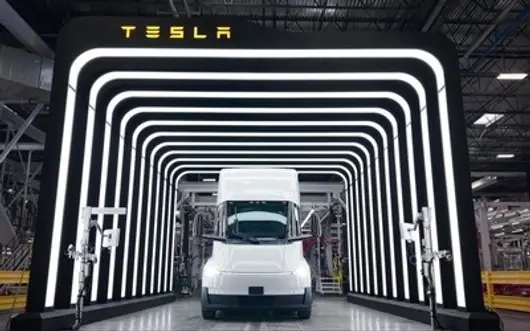

Editor's Note: Looking back at the commercial vehicle market in the first half of 2026, "cool internally, hot externally" is the appearance, while "reconstructing from price wars to value wars" is the essence.
The 2026 Chinese commercial vehicle market stands at a somewhat awkward turning point.
Data from the China Association of Automobile Manufacturers shows that commercial vehicle production and sales totaled 2.272 million and 2.297 million units in the first half of the year, with year-on-year increases of 8.2% and 8.3% respectively—the market is warming up, but the recovery is slow. Accompanying this is intensifying smoke from price wars: vehicle profits are being continuously compressed, and the new energy transition requires continued investment in R&D and production lines. Car manufacturers are cutting costs to survive on one hand and splashing cash to transform on the other; "surviving and maintaining market share" has become the common state of survival for the top-tier group.

Amid a chorus of "doom and gloom", SAIC Commercial Vehicles charted an independent curve that drew attention: sales from January to June grew 28.37% year-on-year, approximately 3.4 times the industry average, making it the only enterprise in the top-tier group to simultaneously achieve the dual advantage of "scale expansion + breakaway speed leadership". Among them, as the core force of the sector, SAIC Maxus accumulated sales of 138,000 units in the first half of the year, with commercial vehicle growth reaching 35.36%, making it the only enterprise in the top ten industry group with growth exceeding 35%.
Light Commercial Vehicles Hold the Core Base, New Energy and Global Expansion Open the Second Growth Curve
The stock competition in the commercial vehicle industry is essentially a "battle to defend the core base". Whoever stabilizes their core base has the confidence to transform.
SAIC Commercial Vehicles' confidence comes first from light commercial vehicles.
In the first half of the year, Maxus Light Commercial Vehicles sold 61,000 units cumulatively, sweeping the "double crown" for single-month and cumulative sales, with a single brand market share exceeding 27%, leading the industry's second place by 7,200 units and third place by over 10,000 units. In June, Maxus Light Commercial Vehicles single-month sales reached 13,902 units, up 62% year-on-year; among them, the Darna series sold 7,207 units in June, surging 218% year-on-year, becoming a phenomenon-level hit in the new energy light commercial vehicle track.
But what truly creates a generational gap between SAIC Commercial Vehicles and its peers is the dual-engine drive of new energy and global expansion.

On the new energy front, SAIC Commercial Vehicles' new energy sales grew 69% year-on-year in the first half of the year, with the domestic new energy penetration rate reaching 47%, far exceeding the industry's overall level of 30.4%. Yujie New Energy Light Trucks sold 12,971 units in the first half of the year, up 65% year-on-year; Darna Super Range-Extended Light Commercial Vehicles reached a CLTC comprehensive range of 1,260 kilometers, with energy consumption as low as 2.65L per 100 kilometers—this set of data directly broke through the two nerves most sensitive to commercial users: "range anxiety" and "operating costs".
On the global expansion front, SAIC Commercial Vehicles cumulatively exported 65,000 units in the first half of the year, up 33% year-on-year. In Greece, Maxus share quadrupled compared to the same period last year; in Singapore, it topped the market share for three consecutive months; in Southeast Asia, it won new energy light commercial vehicle orders one after another; and became the first Chinese commercial vehicle brand to join the DHL German postal delivery fleet.
A statement by Yang Huaijing, Chairman of the Executive Management Committee of SAIC Commercial Vehicles and General Manager of SAIC Maxus, at the 2026 SAIC Maxus Cadres Conference, happened to explain the underlying logic of this strategy: "Products are the core foundation of enterprise development and the key lever for achieving value breakthrough in secondary entrepreneurship. Price competition in the industry will ultimately return to the value of goods itself, and products with better TCO full lifecycle costs and higher TVO full lifecycle value will be more favored by the market."
From "Selling Cars" to "Operating Users", Systematic Capabilities Build Moats
If light commercial vehicles, new energy, and global expansion are the "three reports" for SAIC Commercial Vehicles in the first half of the year, then supporting these three reports is a set of systematic capabilities from technology self-research to global localization.
Technologically, SAIC Commercial Vehicles did not take the shortcut of the industry-wide "outsourcing three-electric systems", but relied on self-developed core platforms such as Hongtu 2.0 Super Commercial Electric Architecture and Xingzhan Pickup Platform to build a full-energy technology route covering pure electric, plug-in hybrid, hydrogen fuel, and super range-extended. The Xingpai Super Mini Range-Extended Technology launched in 2026 and the Tianxing Battery Technology co-researched with CATL respectively solved the three major industry pain points of range, energy consumption, and safety. This strategy of "keeping core technologies in one's own hands" allows SAIC Commercial Vehicles to avoid being choked by suppliers in the new energy transition.

Regarding globalization, SAIC Commercial Vehicles has completed the iteration from "product going global" to "systematic going global". Currently, its products cover more than 100 countries and regions, building a localized sales, service, and modification full-chain system in core markets. Yang Huaijing clearly stated at the Beijing Auto Show facing 200+ overseas dealers from more than 100 countries: "We not only follow the footsteps of the market, but also hold hands with you to jointly define the future of global mobility." At another strategic launch event, he frankly elaborated on the "no price war" global strategy: "In the SAIC Commercial Vehicles team, many are new recruits in the commercial vehicle field, and there are also veterans; only with new recruits and veterans can we better collaborate efficiently to break boundaries. We will not give up any sector; holding fingers into a fist, all five fingers clenched tightly to strike out is the most powerful."
Regarding the ecosystem, SAIC Commercial Vehicles built the Global Modification Ecosystem Alliance and 8S Full-Scenario User Experience Center, pioneering the industry's "7-Day Free Trial" mode for pickups, upgrading the traditional "car selling relationship" to a "wealth creation partnership relationship."
Looking back at the commercial vehicle market in the first half of 2026, "cool internally, hot externally" is the appearance, while "reconstructing from price wars to value wars" is the essence. CAAM predicts that full-year commercial vehicle sales in 2026 will reach 4.5 million units, with a year-on-year increase of only 4.7%—this means stock competition will become the new normal, and the days of relying on rising tides to lift all boats are gone forever.
Under this new normal, SAIC Commercial Vehicles proved one thing with a growth rate of 28.37% and a growth curve about 3.4 times the industry: the stock market is not without opportunities, but opportunities are only left for those enterprises that complete the growth momentum transition in advance.
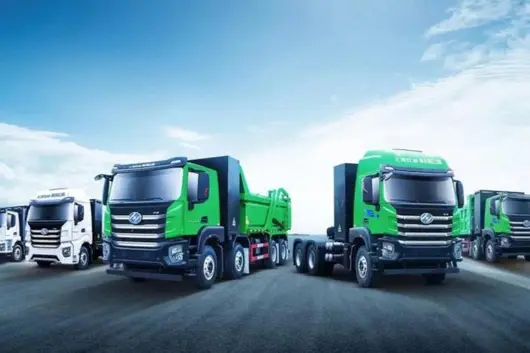

Dalam pasaran SUV di Malaysia, ramai pembeli membandingkan Proton X50 dan Honda HR-V semasa memilih kereta. Kedua-dua kereta ini mempunyai harga dan kedudukan yang agak hampir, hari ini kita akan membuat perbandingan terperinci dari pelbagai aspek, untuk membantu anda menjimatkan masa membuat kajian.
Proton X50 mempunyai harga OTR di Malaysia daripada RM 89,800 - 113,300, keseluruhan ada 4 varian, termasuk 1.5T Executive (RM 89,800), 1.5T Premium (RM 101,800), 1.5T Flagship (RM 113,300), dan lain-lain.
Honda HR-V mempunyai harga OTR di Malaysia daripada RM 115,900 - 143,900, keseluruhan ada 4 varian, termasuk 2026 e:HEV 1.5L RS (RM 143,900), 2026 1.5T V (RM 137,900), 2026 1.5T E (RM 130,900), dan lain-lain.
Dari segi harga, harga permulaan Proton X50 memang lebih murah RM 26,100 berbanding Honda HR-V. Jika bajet anda terhad, versi permulaan Proton sudah memadai untuk keperluan harian. Tetapi perlu diperhatikan, perbezaan ribuan ringgit itu mungkin ada kompromi dari segi peralatan, bergantung pada keperluan anda.
Proton X50 dilengkapi enjin 1.5L 4-silinder, kuasa 105 hp. Penggunaan minyak rasmi 6.0 L/100km.
Honda HR-V dilengkapi enjin 1.5L Turbo, kuasa 140 hp. Penggunaan minyak rasmi 7.0 L/100km.
Dari segi kuasa, 1.5L Turbo Honda HR-V mempunyai 35 hp lebih berbanding 1.5L 4-silinder Proton X50. Namun untuk pemakaian harian dalam bandar, kuasa kedua-dua kereta ini sudah memadai, tidak akan terasa kurang kuasa.
Panjang badan Proton X50 ialah 4400 mm, ruang bagasi 400 L.
Panjang badan Honda HR-V ialah 4500 mm, ruang bagasi 450 L.
Dari segi ruang, badan Honda HR-V adalah 100 mm lebih panjang daripada Proton X50, ruang penumpang lebih unggul. Namun, Proton X50 lebih fleksibel untuk parkir di bandar, setiap satu ada kompromi.
Proton X50 dan Honda HR-V kedua-duanya pilihan utama di pasaran Malaysia, sesuai untuk kegunaan keluarga dan perjalanan harian. Jika anda lebih mengutamakan reputasi jenama dan nilai jualan semula, boleh pertimbangkan model yang mempunyai reputasi lebih baik; jika anda lebih mementingkan nilai dan kelengkapan, pilih model yang mempunyai konfigurasi lebih kaya. Akhir sekali, disarankan untuk mencuba kedua-dua model, pengalaman langsung adalah yang paling penting.

Secara keseluruhan, Proton X50 dan Honda HR-V adalah model yang sangat bagus di pasaran Malaysia. Memilih yang mana, kuncinya adalah melihat keperluan dan bajet anda sendiri. Disarankan untuk membuat kajian, membandingkan beberapa tawaran dari dealer, kemudian buat ujian memandu untuk membuat keputusan akhir. Membeli kereta adalah perkara besar, mengambil masa untuk membuat kajian tidak akan salah.
© 2024 Bitauto.com. All Rights Reserved.
Bitauto (www.yiche.com and www.bitauto.com) is one of the most visited automotive websites in China. We provide detailed info on Chinese car brands available in your area. Please note that the information provided on this website is based on publicly available data and is for reference only. It may not be fully updated or accurate at all times.

Help us improve our website


