

HomeHidden

Search History
Popular Searches
Dealer Login / Sign Up

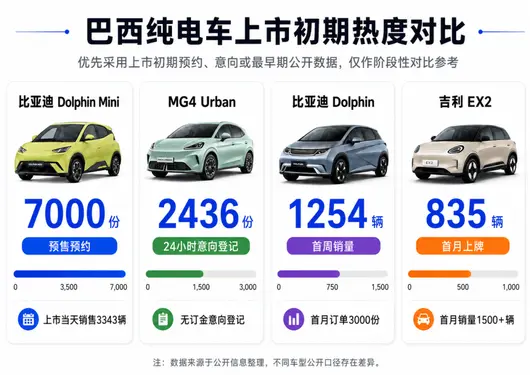
Baru-baru ini, MG4 Urban SAIC (model tempatan di China MG4) mendarat di pasaran Brazil, menerima 2,436 niat pembelian dalam 24 jam pertama selepas pelancaran.
Di pasaran kenderaan elektrik sepenuhnya di Brazil, kehangatan pelancaran awal adalah indikator awal trend jualan seterusnya. Kini, BYD Dolphin Mini, BYD Dolphin dan Geely EX2 yang menduduki tiga teratas jualan kereta elektrik tempatan, semuanya memberikan jawapan yang kuat apabila memasuki pasaran Brazil. Prestasi pelancaran MG4 Urban kali ini juga sama bagusnya, bermakna ia telah memperoleh tiket masuk ke kumpulan teratas.

Faktanya, pelancaran MG4 Urban ke luar negara bukan percubaan produk baru. Pada Ogos 2025, MG4 baharu dilancarkan di China dan segera membuka ruang jualan. Kini, ia telah mencatatkan jualan melebihi 10,000 unit selama 9 bulan berturut-turut, dan pernah menjadi juara jualan kereta kompak di China. Dengan kata lain, sebelum menuju luar negara, MG4 Urban telah melalui ujian yang mencukupi dalam pasaran China yang kompetitif.
Pada awal 2026, MG4 Urban segera memulakan ekspansi luar negara, pertama memasuki United Kingdom, kemudian mendarat di pasaran Eropah Daratan, Australia, Singapura, dan lain-lain. Baru-baru ini, skopnya diperluaskan hingga ke Brazil. Dari Eropah, Australia, Asia Tenggara ke Amerika Selatan, laluan pelancaran produk yang merentasi beberapa pasaran utama telah terbentuk.
Kejayaan MG4 Urban di banyak tempat di seluruh dunia adalah cerminan kepada pertumbuhan yang kukuh dalam perniagaan luar negara SAIC. Pada setengah tahun pertama 2026, jualan luar negara SAIC mencapai 735,000 unit, meningkat 48.7% setaraf tahun, mencatat rekod tertinggi sepanjang masa. Di sebalik itu adalah keupayaan sistem SAIC untuk membina matriks produk global yang merangkumi pasaran pelbagai, bermakna ekspansi luar negara SAIC sedang beralih daripada pengembangan skala jualan ke arah pertumbuhan nilai yang didorong oleh selarasnya produk, jenama dan sistem.
Bukan sekadar satu kereta global
Sebagai langkah terkini dalam pembangunan produk global SAIC, selepas mendarat di pelbagai pasaran luar negara, MG4 Urban telah berturut-turut menerima pengakuan daripada media profesional berwibawa di pelbagai negara.
Dalam tinjauan silang model EV kompak di media automotif berwibawa Inggeris What Car?, MG4 Urban mengungguli Renault 5 dan Hyundai Inster; Media Australia CarExpert menilai harganya mampu milik, namun tiada "rasa murah" dari segi kualiti pemanduan, tahap kelengkapan dan prestasi ruang; Media Jerman Die Welt pula memanggilnya "misteri ruang kelas kompak", mengakui sepenuhnya kecekapan ruang, prestasi kecekapan tenaga dan kegunaan harian.

Selain reputasi media, MG4 Urban juga telah melalui ujian sistem keselamatan berkuat kuasa antarabangsa. Kereta ini telah memperoleh gred keselamatan lima bintang ganda dari Euro NCAP Eropah dan ANCAP Australia-New Zealand. Dalam senario ujian utama seperti impak hadapan condong, impak penuh hadapan dan impak sisi, keutuhan struktur kabin penumpang dan prestasi perlindungan bahagian penting penumpang adalah stabil. Kuasa keselamatan mendapat pengesahan berwibawa daripada dua pasaran tersebut.
Pengakuan konsisten yang diperoleh MG4 Urban di pelbagai pasaran dan sistem penilaian berbilang dimensi mengesahkan bahawa SAIC telah mempunyai kemampuan matang untuk mendefinisikan dan mencipta "kereta global". Kemampuan ini bukan sahaja bergantung pada kekuatan keras pada tahap produk dan teknologi, malah mendapat manfaat daripada kemampuan sistem global SAIC yang dikumpulkan secara jangka panjang dalam bidang penyesuaian undang-undang, piawaian keselamatan dan pelancaran pasaran.
Dan kemampuan sistem global ini, tidak hanya terwujud pada satu produk MG4 Urban.
Setengah tahun ini, SAIC secara berterusan memperluaskan matriks produk global merentasi pasaran berpotensi utama seperti Eropah, Australia-New Zealand, Asia Tenggara dan Timur Tengah-Afrika: Di satu pihak, mempercepatkan pelancaran model utama seperti MG4 Urban, MG S5 EV, MG S6 EV; Di pihak lain, serentak mengeluarkan produk pengingkatan tahunan seperti MG S9 PHEV, MG3 Hybrid+, pelancaran kereta baharu dan pengingkatan model sedia ada dipacu secara serentak.

Dari EV, hibrid ke petrol, daripada hatchback, sedan, SUV ke MPV, pickup, SAIC membina armada produk global melalui pelbagai laluan teknologi selari dan pelbagai strategi selaras mengikut kategori, berbeza mengikut perbezaan struktur tenaga, tingkatan pengguna dan senario penggunaan kenderaan di setiap negara. Matriks produk yang sentiasa berkembang dan berkembang maju ini menjadi sokongan penting bagi SAIC untuk mendalami pasaran global dan menghadapi pelbagai keperluan.
Untuk Ekspansi Automotif China
Menerapkan Label Teknologi
Seiring masuknya ekspansi automotif China ke fasa baharu, skala eksport bukan lagi penunjuk tunggal untuk mengukur kemampuan globalisasi. Keupayaan teknologi dan jenama untuk mencapai kesedaran pengguna tempatan, dan samada penyelidikan, pengeluaran, jualan dan perkhidmatan boleh tertanam dalam industri tempatan, menentukan sejauh mana syarikat boleh berjalan di luar negara.
Pada 2026, jenama MG melancarkan pemasaran luar negara merentasi "pelan global, pengamalan tempatan, dan pengayaan teknologi", berturut-turut menganjurkan dua aktiviti hari teknologi di Frankfurt dan London, menampilkan hasil teknologi Hybrid+ Hibrid Petrol-Elektrik, Plug-in Hybrid+ Hibrid Disambung, SolidCore Bateri Separuh Pepejal, kenderaan pintar dan pemanduan terbantu.

Pentadbiran teknologi ini bukan "memamerkan kekuatan" yang tidak relevan dengan keperluan pasaran, sebaliknya adalah penyelesaian untuk kesukaran transformasi elektrifikasi Eropah. Di Frankfurt, MG mengumumkan pengaktifan Pusat Kejuruteraan Eropah, memasukkan iklim, undang-undang dan tabiat pengguna tempatan secara mendalam ke dalam proses pembangunan produk, serentak memulakan pelan Bateri Separuh Pepejal SolidCore; Ketika ke London, SAIC mengumumkan teknologi Hibrid Disambung Plug-in Hybrid+ generasi baharu, dan memajukan teknologi pemanduan terbantu berikutan persekitaran jalan sebenar Eropah.
Melalui pengucapan proaktif melalui aktiviti hari teknologi, dikombinasikan dengan serangan matriks produk global, SAIC MG secara beransur-ansur membina label jenama "samaan hak teknologi global". Samaan hak teknologi global, bukan sahaja mendorong teknologi yang telah disahkan matang di pasaran China ke luar negara, malah perlu melakukan pembangunan tempatan dengan menggabungkan keperluan tempatan, membolehkan pengalaman kenderaan maju mencapai pasaran pengguna yang lebih luas. MG4 Urban adalah produk perwakilan bagi falsafah ini.
Selain membina kesedaran teknologi, SAIC juga menggunakan panggung budaya automotif global untuk membentuk semula ekspresi jenama MG. Pada Festival Kelajuan Goodwood tahun ini, MG melancarkan secara global dua konsep kereta MG GO! dan Cyber Concept. Dua produk ini mendapat inspirasi rekaan dari model klasik seperti MGB GT, keretapi lumba MG 6R4, MG EX181, sambil melanjutkan gen sejarah jenama, memaparkan kemampuan inovasi MG ke arah era tenaga baharu.

Persidangan teknologi membina kesedaran teknologi, panggung budaya mengukuhkan ketebalan jenama. Jenama MG kini sedang menyatukan secara mendalam pengumpulan jenama seratus tahun dengan kelebihan teknologi elektrifikasi dan pengintelek SAIC. Ia tidak lagi menyampaikan produk tunggal kepada pengguna global, malah menyampaikan latarambelakang teknologi jenama, tuntutan peribadi dan visi jangka panjang.
Berpunca Global
Menuju Pertumbuhan Nilai
Sekarang, SAIC sedang menggabungkan dengan lebih erat pelancaran produk, pembangunan jenama, perkhidmatan pengguna dan penguasaan tempatan, membentuk keupayaan pengurusan jangka panjang di lebih banyak pasaran luar negara.
Di Thailand, MG terus meningkatkan sistem perkhidmatan kenderaan baharu, mengeluarkan strategi perkhidmatan MG SMILE, dan teruskan menyediakan jaminan seumur hidup tiga sistem utama untuk model EV, meluaskan perkhidmatan dari fasa pembelian kenderaan ke kitaran penggunaan; Di India, MG Windsor terus menduduki gred pertama pasaran EV tempatan, melalui pengeluaran tempatan, penyebaran saluran dan susun atur kemudahan pengecasan, sentiasa meningkatkan ekosistem kenderaan baharu; Di Timur Tengah, MG melancarkan model off-road RAKAN yang pertama menggunakan penamaan Bahasa Arab, menjadikan pengamalan tempatan daripada penyelarasan produk menuju pengenalan budaya.

Dari penyelidikan dan pembangunan teknologi di Eropah, ke pelancaran produk di Brazil; Dari peningkatan perkhidmatan di Asia Tenggara, ke pembinaan ekosistem kenderaan baharu di India, globalisasi SAIC telah mengatasi model tradisional eksport kenderaan lengkap, secara beransur-ansur membentuk sistem lengkap yang memacu selaras penyelidikan, pengeluaran, jualan, perkhidmatan dan pembangunan jenama. Pada masa ini, produk dan perkhidmatan SAIC telah memasuki lebih 170 negara dan wilayah, jualan terkumpul luar negara melebihi 7 juta unit, membentuk struktur pasaran global yang disokong pelbagai titik dengan Eropah sebagai teras, Australia-New Zealand, ASEAN, Asia Selatan, Timur Tengah, Amerika.
Dari "Jual kereta ke seluruh dunia" ke "Urus jenama di seluruh dunia", ekspansi luar negara SAIC sedang beralih dari pertumbuhan skala ke pertumbuhan nilai. Skala jualan masih menjadi asas, tetapi nilai jangka panjang yang lebih tinggi ialah teknologi dan produk yang sentiasa diterima, imej jenama yang sentiasa mendalam di minda, dan sistem operasi tempatan yang sentiasa sempurna. Seiring lebih banyak model global memasuki pasaran berbeza, SAIC dengan sistem teknologi yang lebih matang, matriks produk yang lebih kaya, dan pengaruh jenama yang lebih kuat sedang membuka ruang pertumbuhan baharu dalam peta industri automotif global.

In Malaysia's SUV market, many buyers compare the Proton X50 and Chery Tiggo 7 PHEV when choosing a car. These two cars are quite close in price and positioning. Today, we will make a detailed comparison from multiple aspects to help you save time on research.
The OTR price of the Proton X50 in Malaysia is RM 89,800 - 113,300. There are 4 variants in total, including 1.5T Executive (RM 89,800), 1.5T Premium (RM 101,800), 1.5T Flagship (RM 113,300), etc.
The OTR price of the Chery Tiggo 7 PHEV in Malaysia is RM 129,750 - 129,750. There are 2 variants in total, including 2025 1.5T 90km CSH (RM 129,750), What charging methods does the Tiggo 7 PHEV support? Can it be charged using a home power socket? (RM 117,478), etc.
In terms of price, the starting price of the Proton X50 is indeed RM 39,950 cheaper than the Chery Tiggo 7 PHEV. If your budget is limited, Proton's entry-level version can already meet daily needs. But also note, the few thousand ringgit cheaper, there might be trade-offs in equipment, depending on your specific needs.

The Proton X50 is equipped with 1.5L 4-cyl, 105 hp. Official fuel consumption 6.0 L/100km.
The Chery Tiggo 7 PHEV is equipped with Hybrid, 170 hp. Official fuel consumption 4.5 L/100km.
In terms of power, the Chery Tiggo 7 PHEV's Hybrid has 65 more horsepower than the Proton X50's 1.5L 4-cyl. However, for daily city driving, the power of both cars is sufficient, and you won't feel it lacks power.

Proton X50 body length 4400 mm, trunk 400 L.
Chery Tiggo 7 PHEV body length 4400 mm, trunk 400 L.
The dimensions of both cars are almost the same, with little difference in interior space. Cars in this class are completely sufficient for daily use.

The Proton X50 adopts a 4WD drive mode.
The Chery Tiggo 7 PHEV adopts an FWD drive mode.
Proton's 4WD and Chery's FWD will feel different in handling, test drive comparison is recommended.

Proton X50 warranty 5 years/150,000km, maintenance interval every 10,000km or 6 months.
Chery Tiggo 7 PHEV warranty 3 years/100,000km, maintenance interval every 10,000km or 6 months.

In summary, both the Proton X50 and Chery Tiggo 7 PHEV are excellent models in the Malaysian market. Which one to choose depends mainly on your personal needs and budget. We suggest doing your research, comparing quotes from several car dealerships, and then test driving before making a final decision. Buying a car is a big matter, spending some time doing research will definitely not be wrong.


Dalam pasaran SUV di Malaysia, ramai pembeli semasa memilih kereta akan membandingkan Proton X50 dan Subaru Forester. Kedua-dua kereta ini dekat dari segi harga dan kedudukan, hari ini kita akan buat perbandingan terperinci dari pelbagai aspek, membantu anda menjimatkan masa membuat kajian.
Harga OTR Proton X50 di Malaysia ialah RM 89,800 - 113,300, ada 4 varian, termasuk 1.5T Executive (RM 89,800), 1.5T Premium (RM 101,800), 1.5T Flagship (RM 113,300) dan lain-lain.
Harga OTR Subaru Forester di Malaysia ialah RM 174,000 - 197,000, ada 3 varian, termasuk 2024 2.0L S EyeSight GT Edition (RM 189,538), 2024 2.0L S EyeSight (RM 177,538), 2024 2.0L L EyeSight (RM 167,538) dan lain-lain.
Dari segi harga, harga permulaan Proton X50 memang RM 84,200 lebih murah berbanding Subaru Forester. Jika anda bajet terhad, varian permulaan Proton sudah boleh memenuhi keperluan harian. Tapi perlu ingat, perbezaan harga beberapa ribu tu mungkin ada kompromi dalam kelengkapan, bergantung pada keperluan anda.
Proton X50 menggunakan 1.5L 4-cyl, kuasa 105 hp. Konsumsi bahan api rasmi 6.0 L/100km.
Subaru Forester menggunakan 2.0L 4-cyl, kuasa 170 hp. Konsumsi bahan api rasmi 8.0 L/100km.
Dari segi kuasa, 2.0L 4-cyl Subaru Forester ada 65 hp lebih berbanding 1.5L 4-cyl Proton X50. Tapi untuk penggunaan harian di bandar, kuasa kedua-dua kereta sudah cukup, tidak terasa kurang tenaga.
Proton X50 menggunakan cara pemacu 4WD.
Subaru Forester menggunakan cara pemacu FWD.
4WD Proton dan FWD Subaru akan memberikan pengalaman pengendalian yang berbeza, disyorkan untuk ujian pemanduan membandingkan.
Proton X50 jaminan 5 tahun/150,000km, selang servis setiap 10,000km atau 6 bulan.
Subaru Forester jaminan 3 tahun/100,000km, selang servis setiap 10,000km atau 6 bulan.

Proton X50 dan Subaru Forester adalah pilihan utama pasaran Malaysia, sesuai untuk kegunaan keluarga, perjalanan harian. Jika anda lebih mementingkan reputasi jenama dan nilai jual semula, boleh prior yang reputasinya lebih baik; jika anda lebih mementingkan nilai wang dan kelengkapan, maka pilih yang lebih kaya kelengkapan. Akhir sekali disyorkan untuk uji pemanduan kedua-duanya, pengalaman sendiri paling penting.

Secara keseluruhan, Proton X50 dan Subaru Forester adalah model yang sangat baik di pasaran Malaysia. Pilih yang mana satu, penting bergantung pada keperluan peribadi dan bajet anda. Disyorkan buat kajian, bandingkan penawaran harga daripada beberapa peniaga kereta, kemudian buat ujian pemanduan untuk buat keputusan akhir. Membeli kereta adalah perkara besar, luangkan masa buat kajian tidak akan salah.
In the Malaysian SUV market, many buyers compare Proton X50 and GWM Haval H6 when choosing a car. These two cars are quite close in price and positioning. Today, let's make a detailed comparison from multiple aspects to save you the time of doing research.
The OTR price of Proton X50 in Malaysia is RM 89,800 - 113,300, with a total of 4 versions, including 1.5T Executive (RM 89,800), 1.5T Premium (RM 101,800), 1.5T Flagship (RM 113,300) etc.
The OTR price of GWM Haval H6 in Malaysia is RM 139,750 - 139,750, with a total of 2 versions, including 1.5L Turbo Standard (RM 140,000), 1.5L Turbo Premium (RM 155,000) etc.
Looking at the price, the starting price of Proton X50 is indeed RM 49,950 cheaper than GWM Haval H6. If your budget is limited, Proton's entry-level version can already meet daily needs. But also note that the few thousand cheaper ones might involve compromises in features, it depends on your specific needs.
Proton X50 is equipped with 1.5L 4-cyl, horsepower 105 hp. Official fuel consumption 6.0 L/100km.
GWM Haval H6 is equipped with Hybrid, horsepower 170 hp. Official fuel consumption 4.5 L/100km.
In terms of power, GWM Haval H6's Hybrid has 65 more horsepower than Proton X50's 1.5L 4-cyl. However, for daily city driving, the power of both cars is sufficient, you won't feel lack of power.
Proton X50 safety rating is 5★ (ASEAN NCAP), active safety systems include ADAS (ACC, AEB, LKA, LDA, BSM, RCTA).
GWM Haval H6 safety rating is TBD, active safety systems include Basic.
Regarding safety features, both cars received good ratings. However, Proton X50's ADAS (ACC, AEB, LKA, LDA, BSM, RCTA) and GWM Haval H6's Basic have some differences in functionality. If you value active safety, you can compare the feature lists of both carefully.
Proton X50 body length 4400 mm, trunk 400 L.
GWM Haval H6 body length 4400 mm, trunk 400 L.
The dimensions of both cars are almost the same, interior space is not much different. For cars of this class, daily use is completely sufficient.
Proton X50 warranty 5 years/150,000km, service interval every 10,000km or 6 months.
GWM Haval H6 warranty 7 years/150,000km, service interval every 10,000km or 6 months.
Overall, Proton X50 and GWM Haval H6 are both very good car models in the Malaysian market. Which one to choose depends on your personal needs and budget. It is recommended to do your homework, compare quotes from several dealerships, and test drive before making a final decision. Buying a car is a big matter, spending time doing research will never be wrong.

In Malaysia's SUV market, many buyers compare Proton X50 and Mitsubishi Xforce when choosing a car. Both cars are quite close in price and positioning. Today, we will make a detailed comparison from multiple aspects to help you save research time.
The OTR price of Proton X50 in Malaysia is RM 89,800 - 113,300, with a total of 4 versions, including 1.5T Executive (RM 89,800), 1.5T Premium (RM 101,800), 1.5T Flagship (RM 113,300), etc.
The OTR price of Mitsubishi Xforce in Malaysia is RM 109,930 - 119,930, with a total of 2 versions, including 2026 1.5L Ultimate (RM 119,930), 2026 1.5L Urban (RM 109,930), etc.
In terms of price, Proton X50's starting price is indeed RM 20,130 cheaper than Mitsubishi Xforce. If your budget is limited, Proton's entry-level version can already meet daily needs. However, be aware that the few thousand Ringgit difference may come with compromises in features, depending on your specific needs.
Proton X50 is equipped with 1.5L 4-cyl, 105 hp. Official fuel consumption 6.0 L/100km.
Mitsubishi Xforce is equipped with 1.5L Turbo, 140 hp. Official fuel consumption 7.0 L/100km.
In terms of power, Mitsubishi Xforce's 1.5L Turbo has 35 more horsepower than Proton X50's 1.5L 4-cyl. However, for daily city driving, both cars have sufficient power and you won't feel underpowered.
Proton X50 safety rating is 5★ (ASEAN NCAP), active safety systems include ADAS (ACC, AEB, LKA, LDA, BSM, RCTA).
Mitsubishi Xforce safety rating is 5★ (ASEAN NCAP), active safety systems include MI-PILOT.
Both cars have the same safety rating, safety features in this class are quite comprehensive. New cars these days don't have poor safety, no need to worry too much about this.
Proton X50 body length 4400 mm, trunk 400 L.
Mitsubishi Xforce body length 4400 mm, trunk 400 L.
Both cars have almost the same dimensions, interior space difference is not large. Cars in this class are completely sufficient for daily use.

Proton X50 warranty 5 years/150,000km, maintenance interval every 10,000km or 6 months.
Mitsubishi Xforce warranty 3 years/100,000km, maintenance interval every 10,000km or 6 months.

Overall, Proton X50 and Mitsubishi Xforce are both quite good models in the Malaysian market. Which one to choose depends on your personal needs and budget. It is recommended to do research, compare quotes from several dealerships, and then go for a test drive to make the final decision. Buying a car is a big matter, spending time researching will never be wrong.

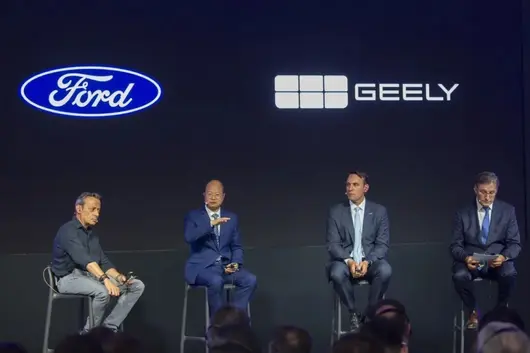
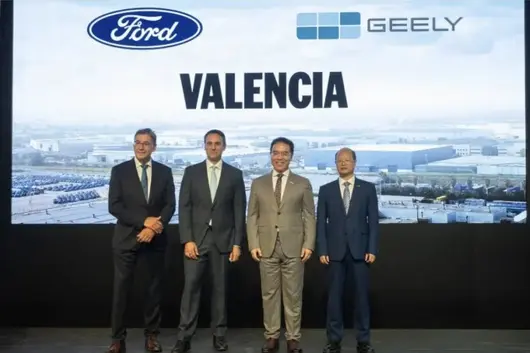
On July 23, 2026, Valencia, Spain. On this day, Geely Automobile and Ford Motor—two "old friends" shaking hands again after 16 years—signed a significant agreement in a factory with nearly 50 years of history.
Geely Automobile announced the acquisition of a 34% equity stake in Ford's Valencia, Spain factory for 221 million euros. Both parties established a joint venture, sharing one of Europe's largest automobile factories with an annual capacity of about 500,000 units. Geely will launch two new energy models here, with the first vehicle rolling off the line in 2028; Ford will continue producing three multi-energy models such as Kuga.

This is not only capacity sharing between the two automakers but also a key strategic move in Geely's globalization strategy—from "going out" to "integrating in," from complete vehicle exports to local manufacturing. Geely is exploring its own path amidst the changes in the global automotive industry.
The "Trust Vote" from 16 Years Ago
To understand the origins of this cooperation, we must turn the clock back to March 28, 2010.
On that day, Geely Holding Group acquired Volvo Cars entirely from Ford for 1.8 billion USD. At that time, Geely was an unknown Chinese private car company, while Volvo was a well-known luxury brand. This "small swallowing big" deal shocked the global automotive industry.
But what kept this story going until now was not the deal itself, but what happened after the deal.
After taking over Volvo, Geely did not rush to integrate but chose to "let the tiger return to the mountains"—keeping Volvo's Swedish headquarters and Belgian factories, respecting its independent development system, and fulfilling all commitments to the brand, employees, and unions made during the acquisition. Ford, as the former parent company, witnessed throughout how Geely protected and revived a classic brand with pragmatic actions.

This commercial integrity of "doing what you say" won Ford's respect and trust for Geely. 16 years later, when Ford faced challenges in capacity efficiency and the market in Europe—the Valencia factory has an annual capacity of 500,000 units, but actual production in 2025 was less than 100,000 units—it chose to extend an olive branch to Geely again. Through capacity sharing, it aims to create new energy vehicle products for Geely and Ford brands for the European market, improve capacity utilization, and jointly expand the regional market. Behind this lies trust accumulation across time cycles.
As Geely Holding Group Chairman Li Shufu often said internally: The fun of business lies in making friends and doing deals at the same time, achieving win-win results in every cooperation, and leaving pleasant memories. This philosophy was concretely embodied in this cooperation.

"Light Asset" Going Overseas: Building a "Network of Friends" Instead of Factories
Unlike most Chinese automakers choosing to "build their own factories" for going overseas, Geely took a differentiated path.
In April this year, Geely Holding Group clarified a new strategy for overseas expansion: instead of building new production factories, it proceeds to advance business layout through cooperation, integration, and reviving existing capacity. For Geely, in the context of tense geopolitical situations and changing global patterns, prioritizing the use of existing factories by partners is a more pragmatic choice.
This "light asset" logic has been repeatedly verified in Geely's previous global layout:
Volvo's European factories provide a manufacturing pivot for Geely to enter high-end markets;
Proton's Southeast Asian network allowed Geely to build a High-Tech Automotive Valley in Tanjong Malim, Malaysia;
Renault's Brazilian factories and channels support new energy cooperation between both parties in the Latin America and Africa market;
The establishment of HORSE Powertrain with Renault achieves deep technical synergy for the global market.

Geely and partners use these ready resources together. This Geely-style localization method improves overseas and market expansion efficiency while reducing regional barrier risks. Wanlian Securities Investment Consultant Qu Fang evaluated: "This belongs to a light asset, high efficiency 'going overseas' layout mode. Compared with building factories, the investment is lower, the implementation cycle is shorter, and the pace of capacity expansion can be adjusted flexibly."
The Spanish joint venture is the European debut of this model. Geely secured a 34% equity stake and stable subcontracting capacity with only 221 million euros, quickly obtaining a production base compliant with EU standards. Relying on Ford's accumulated European supply chain and local operation experience over many years, it greatly reduced the cost and risk of overseas layout.
From "Product Export" to "System Going Overseas"
In the first half of 2026, Geely Automobile's overseas sales reached 474,000 units, up 158% year-on-year, exceeding the total export volume of the full year of 2025. Among them, new energy exports were 277,000 units, surging 585% year-on-year, accounting for 58%.
Behind these numbers is a net Geely wove globally over the past decade-plus—acquiring Volvo, investing in Proton, holding Lotus, and cooperating with Renault to build factories in Korea and Brazil. Now, this net has added a key node: Spain.
Geely Automobile Group CEO Gan Jiayue once emphasized that Geely promotes international development by adhering to the strategies of "global synergy" and "regional deep plowing." Geely has built a global strategic system composed of "five major design centers, five major research and development centers, five major test areas, five major energy technology forms, and five major AI intelligent ecosystems."
In January 2026, Geely Holding released the "One Geely, Leading Comprehensively" 2030 strategic goal: achieving a breakthrough in global total sales of 6.5 million, revenue exceeding 1 trillion yuan, and ranking among the top five global automakers by sales by 2030. The core of the new strategy is integration—unified scheduling in R&D, manufacturing, supply chain, and global market levels, reducing internal duplicate investment, and improving efficiency through scaled synergy.
In terms of overseas layout, Geely focuses on the "3+2" five major markets: Europe, Eastern Europe, ASEAN, Latin America and Africa, and Middle East Asia Pacific. Plan to increase overseas outlets to 2,200 by the end of 2026. Based on the strong performance in the first half of the year, Geely has adjusted the full-year export target to 900,000 units.
Why Europe? Why Now?
Europe is the highland of the global automotive industry and a key market for Geely's global strategy. But the threshold of the European market is rising.
Currently, the EU has set high additional tariffs on imported electric vehicles from China, and direct export would greatly compress price competitiveness. Geely's choice to localize production in Spain is essentially using "local manufacturing" to bypass tariff barriers. A Citigroup research report points out that local production bases help the company avoid import tariffs that the EU might impose on Chinese electric vehicles and greatly improve price competitiveness.
This strategy was also used by foreign automakers entering China thirty years ago—in the 1990s, international giants like Volkswagen and General Motors established joint ventures with Chinese automakers to enter the Chinese market, bypassing high import tariffs through local production. The logic at the time was "trading technology for market." Now the roles are reversing—under the premise of acting in accordance with laws and regulations, Chinese automakers take technology and products to Europe to "trade capacity for market."

A few words by Ford Europe President Jim Baumback at the signing scene were particularly meaningful. He evaluated Geely as "one of the fastest-growing automotive forces globally," possessing world-class electrification capabilities, speed, and vast global scale; while Ford has over a century of engineering wisdom, an unbreakable bond with European users, and the best workforce. He believes the combination of the two will form unparalleled competitive advantages. This statement is both recognition of Geely and reflects Ford's practical considerations for this cooperation.
From "Going Out" to "Integrating In"
Geely Automobile Group Vice President Nan Shengliang defined this cooperation as a "milestone event in global development." He stated that this will further solidify Geely's localization layout in Europe, enabling Geely to truly establish roots in and deeply cultivate Europe with safe and low-carbon products and leading new energy technologies.
From the European media title at the 2006 Frankfurt Motor Show "The Chinese are coming, but can their cars run?" to sharing a factory with Ford in the European heartland in 2026—in 20 years, Geely has walked the complete cycle from being questioned to being recognized.
Behind this is a deep evolution of Geely's globalization strategy: from simple product export to "going out" to establish overseas sales networks; from early capital acquisition learning advanced brands and technologies to "integrating in" through local manufacturing to deeply integrate into regional markets. Geely is exploring not simply product output, but a new paradigm of "using global resources to serve regional markets, using local capabilities to win global competition."
Ending Words
This factory in Valencia, Spain, was once an important asset of Ford in Europe, and now is becoming a key piece on the board of Geely's new globalization game. From the "small swallowing big" of acquiring Volvo to the "light asset" of regional expansion—Geely has written a progressive history of Chinese automaker globalization in 16 years. And this history is still being written.

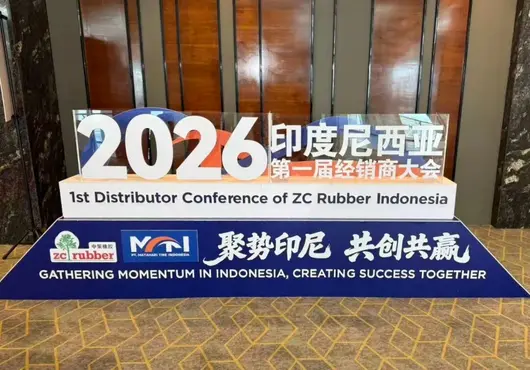
July 23 to 24, the Zhongce Rubber Group Indonesia First Distributor Conference themed "Unite Power in Indonesia, Create Win-Win Together" was grandly held in Jakarta. Shen Haoyu, Director, Senior Vice General Manager of Zhongce Rubber Group Co., Ltd., Wang Xianning, Group Deputy General Manager, and MTI Company General Manager, led the Group Core Management, gathering together with 140 guests including Indonesian local core distributor representatives, to jointly explore regional development opportunities and draw a blueprint for deepening the ASEAN market.

From Product Export to Local Operations, Creating a "289-Day Production Start" Industry Miracle
At the beginning of the conference, Shen Haoyu, Director and Senior Vice General Manager of Zhongce Rubber Group, delivered a welcome address titled "Rooting in Indonesia, Winning the Win-Win with ASEAN". He highly affirmed the leap-forward development of the Indonesia MTI Company since its establishment nearly three years ago, and specially pointed out that the MTI Company achieved excellent results of "289 Days to Production Start, 282 Days to One Million Units Off the Line", truly realizing the industry miracle of full-link linkage in land acquisition, construction, production start, and profitability.

Shen Haoyu emphasized that relying on the Indonesia local manufacturing base, the Group has completely bid farewell to the single product export model and officially entered the new stage of deep localization operation "Rooting in Indonesia, Radiating to ASEAN". In the future, the Group will take the MTI Company as the ASEAN core hub, seize regional economic growth dividends hand in hand with all distributor partners, and comprehensively launch a new journey of high-quality global development.

Hardcore Intelligent Manufacturing and Precise Empowerment Combined, Comprehensively Showcasing Overall Strength
In the special sharing session, multiple core heads of the Group showed the comprehensive strength and empowerment determination of Zhongce to distributors from key dimensions such as capacity, quality, R&D, and channels.
Wang Xianning, Group Deputy General Manager and MTI Company General Manager, systematically introduced the capacity construction and intelligent manufacturing results of the MTI Company. As the second overseas manufacturing factory of Zhongce, the MTI Factory is located in the Kendal Industrial Park, Central Java Province, covering an area of 58.8 hectares. Currently, Phase 1 of the project has reached production capacity, and Phase 2 has started production, providing solid hardcore manufacturing guarantees for deepening the local market.

Zhang Chunsheng, Deputy General Manager of the Group All-Steel Division, detailed elaborated the product technology route and, targeting the complex road conditions of Indonesia locally, shared the iteration and R&D planning of exclusive products, demonstrating a firm commitment to adapting to local needs through technical innovation. In addition, Zhang Xuanfu, General Manager of the Group International Trade Department, and the MTI Company management team, based on the status quo of the Indonesia market, deeply broke down the localization product layout, precise marketing, and channel promotion strategies, directly hitting business pain points, providing distributors with clear and actionable business ideas.

Establish Local Marketing Committee, Build New Ecosystem of Manufacturer-Distributor Collaboration
This conference was not only strategy promotion but also pragmatic empowerment. The conference specially set up a group depth seminar session, building a face-to-face communication platform between manufacturers and dealers. The Zhongce management answered business problems, collected core demands, and discussed sales volume improvement plans one-on-one with distributors in each region, precisely breaking communication barriers. Distributors generally stated that relying on solid product strength and good reputation, the difficulty of terminal customer acquisition was significantly reduced, and customer repurchase rates and sales volume achieved steady growth.

During the meeting, the conference officially issued appointment letters to four Indonesia national agent member units, marking the official establishment of the Indonesia Local Marketing Committee, and achieving the comprehensive landing of a normalized, professional, and institutionalized manufacturer-dealer collaborative cooperation mechanism. That night, Shen Haoyu gave a toast, and all manufacturer-dealer partners talked about cooperation together, further consolidating the foundation of mutual benefit and win-win.
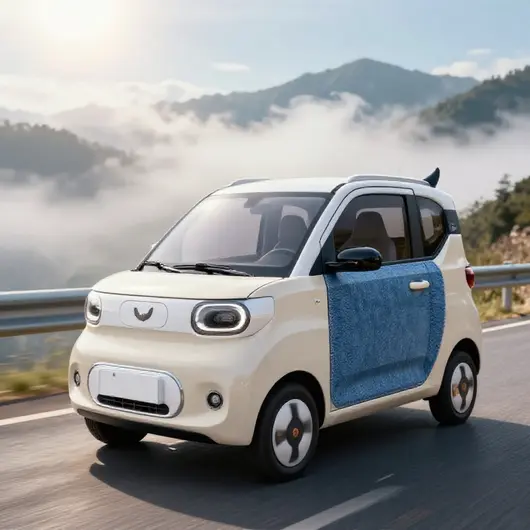
In the Malaysian SUV market, many buyers compare Proton X50 and Kia Sportage when choosing a car. These two cars are quite close in price and positioning. Today we will do a detailed comparison from multiple aspects to help you save time on research.
Proton X50's OTR price in Malaysia is RM 89,800 - 113,300, with a total of 4 versions, including 1.5T Executive (RM 89,800), 1.5T Premium (RM 101,800), 1.5T Flagship (RM 113,300), etc.
Kia Sportage's OTR price in Malaysia is RM 129,639 - 179,320, with a total of 4 versions, including 2025 1.6T DCT 4WD High (RM 179,320), 2025 1.6T DCT 2WD High (RM 159,320), 2025 2.0L AT 2WD High (RM 139,639), etc.
From a price perspective, Proton X50's starting price is indeed RM 39,839 cheaper than Kia Sportage. If your budget is limited, Proton's entry-level version can already meet daily needs. But also note, the few thousand ringgit difference, there might be trade-offs in equipment, it depends on your needs.
Proton X50 is equipped with 1.5L 4-cyl, horsepower 105 hp. Official fuel consumption 6.0 L/100km.
Kia Sportage is equipped with 1.5L Turbo, horsepower 140 hp. Official fuel consumption 7.0 L/100km.
In terms of performance, Kia Sportage's 1.5L Turbo has 35 horsepower more than Proton X50's 1.5L 4-cyl. However, for daily driving in the city, both cars have enough power, you won't feel it's lacking.
Proton X50's safety rating is 5★ (ASEAN NCAP), active safety systems include ADAS (ACC, AEB, LKA, LDA, BSM, RCTA).
Kia Sportage's safety rating is 5★ (ASEAN NCAP), active safety systems include Drive Wise.
Both cars have the same safety rating. Safety equipment is quite complete in this class. New car safety is generally not poor nowadays, no need to worry too much about this point.
Proton X50 body length 4400 mm, trunk 400 L.
Kia Sportage body length 4400 mm, trunk 400 L.
The dimensions of both cars are almost the same, interior space difference is not significant. Cars in this class are completely sufficient for daily use.

Proton X50 Warranty 5 years/150,000km, Service interval every 10,000km or 6 months.
Kia Sportage Warranty 5 years/300,000km, Service interval every 10,000km or 6 months.

Overall, Proton X50 and Kia Sportage are both very good models in the Malaysian market. Which one to choose depends on your personal needs and budget. We recommend doing research, comparing quotes from several car dealers, and then test driving to make the final decision. Buying a car is a major decision, spending time on research is never wrong.

喺馬來西亞嘅 SUV 市場,好多買家喺揀車嗰陣都會拎賓士 GLE 同路虎 發現運動 做比較。呢兩款車喺價錢同定位上都好接近,今日我就從多個方面做詳細比較,幫你慳返做功課嘅時間。
賓士 GLE 喺馬來西亞嘅 OTR 售價係 RM 544,888 - 544,888,合共 1 個版本,包括 Standard(RM 544,888)等。
路虎 發現運動喺馬來西亞嘅 OTR 售價係 RM 499,800 - 499,800,合共 1 個版本,包括 Standard(RM 499,800)等。
從價錢睇,路虎 發現運動嘅起跳價比賓士 GLE 平咗 RM 45,088。老實講,喺呢個價位段,差幾千蚊其實唔算大,關鍵仲係睇整體嘅 CP 值同長期使用成本。

賓士 GLE 搭載 3.0L Turbo,馬力 350 hp。官方油耗 12.0 L/100km。
路虎 發現運動搭載 3.0L Turbo,馬力 350 hp。官方油耗 12.0 L/100km。
兩款車用嘅係同一套動力系統,日常行落嚟嘅感覺基本冇分別。油耗方面都唔差,唔使太糾結呢一點。

賓士 GLE 採用 FWD 驅動方式。
路虎 發現運動採用 4WD 驅動方式。
賓士嘅 FWD 同路虎嘅 4WD 喺操控上會有唔同感覺,建議試駕比較。

賓士 GLE 保用 3 年/100,000 公里,保養間隔 每 10,000 公里或 6 個月。
路虎 發現運動保用 3 年/100,000 公里,保養間隔 每 10,000 公里或 6 個月。
兩款車嘅保用條件一樣,呢方面唔使糾結。實際保養成本仲要睇品牌嘅服務網絡同零件價格,建議去車友群問下真實車主嘅經驗。

賓士 GLE 同路虎 發現運動都係馬來西亞市場嘅主流選擇,適合家庭用、日常通勤。如果你更睇重品牌口碑同二手價,可以優先考慮口碑好啲嗰款;如果你更在意 CP 值同配備,就揀配備更豐富嗰款。最終仲係建議兩款都去試駕,親身體驗先係最重要嘅。

總嘅嚟講,賓士 GLE 同路虎 發現運動都係馬來西亞市場幾唔錯嘅車型。揀邊輛,關鍵仲係要看你嘅個人需求同預算。建議大家做好功課,多比較幾間車行嘅報價,再去試駕做最終決定。買車係件大事,花少少時間做功課絕對唔會錯。


喺馬來西亞嘅汽車市場,好多買家喺揀車嘅時候都會拿路虎 Defender 同保時捷 Macan 嚟做比較。今日我哋由多個方面做一次詳細嘅比較,幫你節省咗做功課嘅時間。


路虎 Defender 喺馬來西亞嘅 OTR 售價係 RM 688,000 - 688,000,總共有 1 個車款,包括 Standard(RM 688,000) 等。
保時捷 Macan 喺馬來西亞嘅 OTR 售價係 RM 469,000 - 469,000,總共有 4 個車款,包括 2025 55 quattro S line(RM 467,285)、2025 50 quattro Advanced(RM 361,135)、PMT 1874, Lorong IKS BukitTengah 14000 Bukit Mertajam(RM 296,610) 等。
由價錢嚟睇,保時捷 Macan 嘅起步價比路虎 Defender 便宜咗 RM 219,000。講真,喺呢個價段,幾千塊嘅差距其實唔算大,關鍵都係睇整體嘅性價比同長期使用成本。

路虎 Defender 搭載 3.0L Turbo,匹馬力 350 hp。官方油耗 12.0 L/100km。
保時捷 Macan 搭載 3.0L Turbo,匹馬力 350 hp。官方油耗 12.0 L/100km。
兩款車用咗同一套動力系統,所以日常開起嚟嘅感覺基本冇分別。油耗方面亦都差唔多,唔使太糾結呢一點。

路虎 Defender 嘅安全評級係 TBD,主動安全系統包括 Basic。
保時捷 Macan 嘅安全評級係 5★ (Euro NCAP),主動安全系統包括 InnoDrive。
安全配備方面,兩款車都拿到唔錯嘅評級。不過路虎 Defender 嘅 Basic 同保時捷 Macan 嘅 InnoDrive 喺功能上有啲差異,如果你比較重視主動安全嘅話,可以仔細對比吓兩者嘅功能列表。
路虎 Defender 採用 4WD 驅動方式。
保時捷 Macan 採用 FWD 驅動方式。
路虎 Defender 嘅 4WD 同保時捷 Macan 嘅 FWD 喺操控上會有唔同感受,建議試駕對比。

總括嚟講,路虎 Defender 同保時捷 Macan 都係馬來西亞市場好唔錯嘅車款。揀邊架,關鍵都要睇你嘅個人需求同預算。建議大家做好功課,多比較間車行嘅報價,再去做試駕做最終決定。買車係件大事,花少少時間做功課絕對唔會錯。


喺馬來西亞嘅汽車市場,好多買家喺揀車嘅時候都會拿 Volkswagen Golf 同 Mercedes-Benz E-Class 嚟做比較。而家我哋從多個方面做一個詳細嘅比較,幫你節省咗做功課嘅時間。


Volkswagen Golf 喺馬來西亞嘅 OTR 售價係 RM 186,530 - 186,530,總共有 1 個版本,包括 2026 1.5T R-Line(RM 186,530)等。
Mercedes-Benz E-Class 喺馬來西亞嘅 OTR 售價係 RM 363,888 - 363,888,總共有 2 個版本,包括 E 200 Avantgarde(RM 350,000)、E 300 AMG Line(RM 400,000)等。
從價錢嚟睇,Volkswagen Golf 嘅起步價確實比 Mercedes-Benz E-Class 平咗 RM 177,358。如果你預算有限,Volkswagen 嘅入門版已經可以滿足日常需求。但都要注意,平嗰幾千蚊,可能喺配備上會有取捨,具體要看你嘅需求。

Volkswagen Golf 配備 2.0L 4-cyl,馬力 170 hp。官方油耗 8.0 L/100km。
Mercedes-Benz E-Class 配備 2.0L Turbo,馬力 220 hp。官方油耗 9.5 L/100km。
動力方面,Mercedes-Benz E-Class 嘅 2.0L Turbo 比 Volkswagen Golf 嘅 2.0L 4-cyl 多咗 50 匹馬力。不過日常喺市區開嘅話,兩款車嘅動力都夠用,唔會覺得唔夠力。

Volkswagen Golf 車身長 4400 mm,行李廂 400 L。
Mercedes-Benz E-Class 車身長 4400 mm,行李廂 400 L。
兩款車嘅尺寸幾乎一樣,車內空間分別唔大。呢個級別嘅車,日常使用完全夠用。

Volkswagen Golf 採用 FWD 驅動方式。
Mercedes-Benz E-Class 採用 FWD 驅動方式。
兩款車嘅驅動方式一樣,都係 FWD,日常駕駛感受唔會有太大分別。

總體嚟講,Volkswagen Golf 同 Mercedes-Benz E-Class 都係馬來西亞市場好唔錯嘅車款。揀邊一輛,關鍵都要睇你嘅個人需求同預算。建議大家做好功課,多比較幾間車行嘅報價,再去試駕做最終決定。買車係件大事,花點時間做功課絕對唔會錯。


在马来西亚的汽车市场,很多买家在选车的时候都会拿 Volkswagen Golf GTI 和 Mercedes-Benz E-Class PHEV 来做比较。今天我们从多个方面做一个详细的对比,帮你省下做功课的时间。


Volkswagen Golf GTI 在马来西亚的 OTR 售价是 RM 256,962 - 256,962,一共有 3 个版本,包括 2025 2.0T Sepang Edition(RM 262,990)、2025 2.0T Standard(RM 256,962)、DCT(RM 219,800) 等。
Mercedes-Benz E-Class PHEV 在马来西亚的 OTR 售价是 RM 427,888 - 427,888,一共有 2 个版本,包括 E 200 Avantgarde(RM 350,000)、E 300 AMG Line(RM 400,000) 等。
从价钱来看,Volkswagen Golf GTI 的起步价确实比 Mercedes-Benz E-Class PHEV 便宜了 RM 170,926。如果你预算有限,Volkswagen 的入门版已经可以满足日常需求。但也要注意,便宜的那几千块,可能在配备上会有取舍,具体要看你的需求。

Volkswagen Golf GTI 搭载 2.0L Turbo,马力 220 hp。官方油耗 9.5 L/100km。
Mercedes-Benz E-Class PHEV 搭载 Hybrid,马力 170 hp。官方油耗 4.5 L/100km。
动力方面,Volkswagen Golf GTI 的 2.0L Turbo 比 Mercedes-Benz E-Class PHEV 的 Hybrid 多了 50 匹马力,中段加速会更有信心,尤其是跑高速公路超车的时候。但 Mercedes-Benz E-Class PHEV 的油耗表现可能更好,日常市区通勤的话差别不会太明显。

Volkswagen Golf GTI 车身长 4400 mm,后备箱 400 L。
Mercedes-Benz E-Class PHEV 车身长 4400 mm,后备箱 400 L。
两款车的尺寸几乎一样,车内空间差别不大。这个级别的车,日常使用完全够用。

Volkswagen Golf GTI 和 Mercedes-Benz E-Class PHEV 都是马来西亚市场的主流选择,适合家庭使用、日常通勤。如果你更看重品牌口碑和二手价,可以优先考虑口碑更好的那一款;如果你更在意性价比和配备,那就选配置更丰富的那款。最终还是建议两款都去试驾,亲身体验才是最重要的。

总的来说,Volkswagen Golf GTI 和 Mercedes-Benz E-Class PHEV 都是马来西亚市场很不错的车型。选择哪一辆,关键还是要看你的个人需求和预算。建议大家做好功课,多比较几间车行的报价,再去试驾做最终决定。买车是件大事,花点时间做功课绝对不会错。


在马来西亚的轿车市场,很多买家在选车的时候都会拿 Volkswagen Arteon 和 Mercedes-Benz E-Class PHEV 来做比较。这两款车在价位和定位上都蛮接近的,今天我们就从多个方面做一个详细的对比,帮你省下做功课的时间。
Volkswagen Arteon 在马来西亚的 OTR 售价是 RM 300,962 - 300,962,一共有 2 个版本,包括 2025 2.0T R-Line(RM 300,962)、DCT(RM 240,848) 等。
Mercedes-Benz E-Class PHEV 在马来西亚的 OTR 售价是 RM 427,888 - 427,888,一共有 2 个版本,包括 E 200 Avantgarde(RM 350,000)、E 300 AMG Line(RM 400,000) 等。
从价钱来看,Volkswagen Arteon 的起步价确实比 Mercedes-Benz E-Class PHEV 便宜了 RM 126,926。如果你预算有限,Volkswagen 的入门版已经可以满足日常需求。但也要注意,便宜的那几千块,可能在配备上会有取舍,具体要看你的需求。

Volkswagen Arteon 搭载 2.0L Turbo,马力 220 hp。官方油耗 9.5 L/100km。
Mercedes-Benz E-Class PHEV 搭载 Hybrid,马力 170 hp。官方油耗 4.5 L/100km。
动力方面,Volkswagen Arteon 的 2.0L Turbo 比 Mercedes-Benz E-Class PHEV 的 Hybrid 多了 50 匹马力,中段加速更有信心,尤其是跑高速公路超车的时候。不过 Mercedes-Benz E-Class PHEV 的油耗可能更友好,日常市区通勤差别不会太大。
Volkswagen Arteon 的安全评级是 TBD,主动安全系统包括 Basic。
Mercedes-Benz E-Class PHEV 的安全评级是 5★ (Euro NCAP),主动安全系统包括 Premium ADAS。
安全配备方面,两款车都拿到了不错的评级。不过 Volkswagen Arteon 的 Basic 和 Mercedes-Benz E-Class PHEV 的 Premium ADAS 在功能上有些差异,如果你比较看重主动安全的话,可以仔细对比一下两者的功能列表。

Volkswagen Arteon 车身长 4400 mm,后备箱 400 L。
Mercedes-Benz E-Class PHEV 车身长 4400 mm,后备箱 400 L。
两款车的尺寸几乎一样,车内空间差别不大。这个级别的车,日常使用完全够用。
Volkswagen Arteon 采用 FWD 驱动方式。
Mercedes-Benz E-Class PHEV 采用 FWD 驱动方式。
两款车的驱动方式一样,都是 FWD,日常驾驶感受不会有太大区别。
总的来说,Volkswagen Arteon 和 Mercedes-Benz E-Class PHEV 都是马来西亚市场很不错的车型。选择哪一辆,关键还是要看你的个人需求和预算。建议大家做好功课,多比较几间车行的报价,再去试驾做最终决定。买车是件大事,花点时间做功课绝对不会错。


在马来西亚的SUV市场,很多买家在选车的时候都会拿 Mercedes-Benz GLC 和 Land Rover Discovery Sport 来做比较。这两款车在价位和定位上都蛮接近的,今天我们就从多个方面做一个详细的对比,帮你省下做功课的时间。
Mercedes-Benz GLC 在马来西亚的 OTR 售价是 RM 336,888 - 336,888,一共有 2 个版本,包括 GLC 200(RM 290,000)、GLC 300(RM 340,000) 等。
Land Rover Discovery Sport 在马来西亚的 OTR 售价是 RM 499,800 - 499,800,一共有 1 个版本,包括 Standard(RM 499,800) 等。
从价钱来看,Mercedes-Benz GLC 的起步价确实比 Land Rover Discovery Sport 便宜了 RM 162,912。如果你预算有限,Mercedes-Benz 的入门版已经可以满足日常需求。但也要注意,便宜的那几千块,可能在配备上会有取舍,具体要看你的需求。
Mercedes-Benz GLC 车身长 4400 mm,后备箱 400 L。
Land Rover Discovery Sport 车身长 4400 mm,后备箱 400 L。
两款车的尺寸几乎一样,车内空间差别不大。这个级别的车,日常使用完全够用。
Mercedes-Benz GLC 保修 3年/100,000km,保养间隔 每10,000km或6个月。
Land Rover Discovery Sport 保修 3年/100,000km,保养间隔 每10,000km或6个月。
两款车的保修条件一样,这方面不用纠结。实际保养成本还要看品牌的服务网络和零件价格,建议去车友群问问真实车主的经验。
Mercedes-Benz GLC 和 Land Rover Discovery Sport 都是马来西亚市场的主流选择,适合家庭使用、日常通勤。如果你更看重品牌口碑和二手价,可以优先考虑口碑更好的那一款;如果你更在意性价比和配备,那就选配置更丰富的那款。最终还是建议两款都去试驾,亲身体验才是最重要的。
总的来说,Mercedes-Benz GLC 和 Land Rover Discovery Sport 都是马来西亚市场很不错的车型。选择哪一辆,关键还是要看你的个人需求和预算。建议大家做好功课,多比较几间车行的报价,再去试驾做最终决定。买车是件大事,花点时间做功课绝对不会错。

車型概覽

Audi S8 值唔值買,關鍵唔係佢望落嚟有多吸引,而係佢有冇解決你嘅真實用車需求。呢篇文章會把重點放喺乘坐空間、行李安排同家人舒適度。
版本方面,Audi S8 目前可圍繞 2025 Standard 嚟比較。
購車價格指南
評估 Audi S8 嘅購車預算時,建議先由版本定位同後續擁車成本下手。價格唔係唯一重點,真正決定係咪抵買嘅係每日用唔用到嗰啲配置。
如果你喺幾個版本之間猶豫,可以把 2025 Standard 放喺同一張清單入面比較。日常通勤買家優先睇舒適同安全,常跑高速嘅買家則更應重視動力、輔助駕駛同座艙便利。
核心參數匯總
睇 Audi S8 嘅核心規格,最重要係將數字轉化為生活中嘅感受。
Audi S8 嘅核心價值應回到日常場景判斷:你要佢負責通勤、家庭出行、長途,還係作為更具個性嘅選擇。
優缺點分析
Audi S8 嘅優點唔使誇張,真正有價值嘅係佢有冇令日常使用更省心:車型定位清楚,適合先作為同級比較對象。
需要留意嘅係,最終取舍會落喺版本配置、保險同長期保養成本。呢啲唔係扣分項,而係落訂前應該先諗清楚嘅生活細節。
購車常見問題解答
購買 Audi S8 前,買家最常問嘅唔係單一規格,而係佢有冇融入自己嘅生活。
呢輛車適合邊個?適合把乘坐空間、行李安排同家人舒適度放喺最前位嘅買家。 家庭用戶要睇咩?優先睇後排乘坐、兒童座椅、行李同日常上落車有冇順手。 每日開會唔會麻煩?如果能源成本、停車便利同版本配置都符合你嘅生活節奏,佢會比較容易相處。
競爭對手對比內容
把 Audi S8 放喺同級車名單時,唔建議只睇品牌或外形。真正有用嘅比較順序係:先由版本定位、品牌售後同日常用途開始比較。
咁樣篩選出嚟嘅結果更貼近日常生活。你會更清楚佢係適合城市通勤、家庭代步、長途巡航,定係更適合作為一個講求個性嘅選擇。
用車全周期指南
擁有 Audi S8 嘅重點,係確認保險、路稅、保養同輪胎成本都喺可接受範圍內。買車唔係一次付款就完結,而係每日都要相處。
如果你常跑南北大道,動力同座艙舒適度會比單純低價更重要;如果主要喺市區,停車靈活性、視野同低速順滑度會更影響心情。

車型概覽

Exeed VX PHEV 值唔值買,關鍵唔係佢睇落幾吸引,而係佢係咪可以解決你嘅真實用車需求。這篇文章會將重點放喺整體買車判斷。
版本方面,Exeed VX PHEV 目前可圍繞 2025 Standard 嚟比較。
買車價格指南
評估 Exeed VX PHEV 嘅買車預算時,建議先由版本定位同後續用車成本入手。價格唔係唯一重點,真正決定係咪抵嘅係成日會唔會用到嗰啲配備。
如果你喺幾個版本之間猶豫,可以將 2025 Standard 放喺同一份清單入面比較。日常通勤買家優先睇舒適同安全,經常跑高速嘅買家則更應重視動力、輔助駕駛同座艙便利。
核心參數匯總
睇 Exeed VX PHEV 嘅核心規格,最重要係將數字翻譯成生活入面嘅感受。
Exeed VX PHEV 嘅核心價值應回到日常場景判斷:你要佢負責通勤、家庭出行、長途,定係作為更有個性嘅選擇。
優點缺點分析
Exeed VX PHEV 嘅優點唔使誇張,真正有價值係佢可唔可以令日常使用更省心:車型定位清楚,適合先作為同級比較對象。
需要留意嘅係,最終取舍會落喺版本配備、保險同長期保養成本。這些唔係扣分項,而係落訂前應該先諗清楚嘅生活細節。
買車常見問題解答
購買 Exeed VX PHEV 前,買家最常見問嘅唔係單一規格,而係佢可唔可以融入自己嘅生活。
呢部車適合邊個?適合將整體買車判斷放喺第一位嘅買家。家庭用戶要睇咩?優先睇後排乘搭、兒童座椅、行李同日常上落車係咪順手。成日開有唔有麻煩?如果能源成本、停車便利同版本配備都符合你嘅生活節奏,佢會比較容易相處。
競爭對手比較內容
將 Exeed VX PHEV 放喺同級車名單入面時,唔建議只睇品牌或外形。真正有用嘅比較順序係:先由版本定位、品牌售後同日常用途開始比較。
咁樣篩選出嚟嘅結果更貼近日常生活。你會更清楚佢係適合城市通勤、家庭代步、長途巡航,定係更適合作為一輛講求個性嘅選擇。
用車全週期指南
擁有 Exeed VX PHEV 嘅重點,係確認保險、路稅、保養同輪胎成本都喺可接受範圍內。買車唔係一次付款完結,而係成日都要相處。
如果你經常跑南北大道,動力同座艙舒適度會比單純低價更重要;如果主要喺市區,停車靈活性、視野同低速順滑度會更影響心情。

車系概覽

JAECOO J7 PHEV 值唔值得買,關鍵唔係佢睇落幾吸引,而係佢可唔可以解決你真嘅用車需求。這篇文章會把重點放喺預算、貸款壓力同同級價值。
價格落喺 RM 158,800,買家可以先用佢判斷預算壓力同同級定位。
購車價格指南
JAECOO J7 PHEV 嘅購車預算可以先從 RM 158,800 開始衡量。呢個數字真正影響嘅係月供、保險同現金流,而不係只係展廳入面嘅標價。
如果你喺幾個版本之間猶豫,可以把 2025 1.5T 106km Standard(RM 158,800) 放喺同一張清單入面比較。日常通勤買家優先睇舒適同安全,常跑高速嘅買家則更應重視動力、輔助駕駛同車廂便利。
核心參數匯總
睇 JAECOO J7 PHEV 嘅核心規格,最重要係把數字翻譯成生活入面嘅感受。
18.3 kWh 嘅電池容量,重點係可唔可以支撐一週通勤同週末出街。 143 Ps、215 N·m 嘅輸出,令高速變線同短距離超車更有底氣。 軸距 2672 mm,可以幫到你預判停車難度同後排乘坐空間。 DHT 變速箱、前輪驅動佈局 嘅設定,會影響起步順滑度、濕地穩定感同長途巡航感。
優缺點分析
JAECOO J7 PHEV 嘅優點唔使誇張,真正有價值嘅係佢可唔可以令日常使用更省心:預算位置清楚,方便同同級車直接比較、動力輸出能支撐高速同超車需求、空間同車身尺寸方便家庭買家預判實用性。
需要留意嘅係,需要先確認屋企、公司或常去商場嘅充電條件。呢啲唔係扣分項,而係落訂前應該先諗清楚嘅生活細節。
購車常見問題解答
購買 JAECOO J7 PHEV 前,買家最常問嘅唔係單一規格,而係佢可唔可以融入自己嘅生活。
呢輛車適合邊個?適合把預算、貸款壓力同同級價值放喺首位嘅買家。 家庭用戶要睇乜嘢?優先睇後排乘坐、兒童座椅、行李同日常上落車係唔係順手。 每日開會唔會麻煩?只要充電條件穩定,電動車嘅通勤體驗通常更安靜,也容易控制日常能源成本。
競品對比內容
把 JAECOO J7 PHEV 放入同級車名單時,唔建議只睇品牌或外形。真正有用嘅比較次序係:先用 RM 158,800 鎖定預算範圍、再睇動力是否足夠應付高速同滿載、接着比較能源成本同補能便利、最後睇空間是否適合家人同行李。
咁樣篩選出嚟嘅結果更貼近日常生活。你會更清楚佢係適合城市通勤、家庭代步、長途巡航,定係更適合作為一輛講求個性嘅選擇。
用車全周期指南

擁有 JAECOO J7 PHEV 嘅關鍵,係先把充電安排想清楚。家充、公司充電或商場快充只要其中一項穩定,日常體驗就會輕鬆好多。
如果你常跑南北大道,動力同車廂舒適度會比單純低價更重要;如果主要喺市區,停車靈活性、視野同低速順滑度會更影響心情。

16年前,吉利从福特手里买走了沃尔沃。
当时很多人的第一反应不是佩服,而是担心:一家中国民营车企,突然接手一家欧洲豪华品牌,这到底是海外并购,还是花钱买了个祖宗回来供着?

16年后,故事又绕回了福特。只不过这一次,坐在谈判桌两边的人,位置已经有点不一样了。
7月23日,福特与吉利宣布,将围绕西班牙瓦伦西亚工厂成立一家面向欧洲市场的合资公司。福特持股约66%,吉利持股约34%,双方将在这里生产福特和吉利品牌的多能源车型。按照规划,两款吉利新能源SUV将在2028年下线,双方还将联合开发一款同时提供纯电、插混和增程版本的新车。

所以严格来说,吉利并没有把福特工厂连人带地打包买走。
但一件事最值得看的,本来就不是股权表格上谁多了几个百分点,而是谁更需要谁。
瓦伦西亚工厂年产能大约50万辆,曾经是福特在欧洲最重要的制造基地之一,生产过嘉年华、蒙迪欧、Galaxy等一大串欧洲消费者耳熟能详的车型。可如今,工厂主要依靠Kuga维持生产,产能利用率只有大约三成,产量相比2019年已经下降超过七成。

一座能造50万辆车的工厂,现在大部分时间都在等订单。机器还在,工人还在,供应链也在,唯独车不够卖。
这就像一家曾经排队两小时才能吃上的老饭店,后厨、桌椅、服务员一样没少,最后发现大厅里只坐了三桌客人。
这个时候,吉利推门进来了。不是来吃饭,而是带着菜单、厨师和一群新顾客,问福特一句:你这个厨房空着也是空着,要不咱俩合伙干?
这才是这条新闻真正有意思的地方。过去中国车企去欧洲,通常是去学习的。学欧洲人怎么做设计,学德国人怎么调底盘,学百年车企怎么管理供应链。实在学不会,就直接挖几个设计师、底盘工程师和销售高管回来。

那时候的中国汽车,像一个突然赚到钱的学生,满世界寻找名师。欧洲车企坐在讲台上,一边收学费,一边多少带点居高临下。
2010年吉利收购沃尔沃,就是这种时代背景下最有代表性的一笔交易。福特当年为什么卖沃尔沃?因为金融危机之后缺钱,需要收缩战线。吉利为什么买?因为需要品牌、技术和成熟的全球体系。
那是一场标准的中国资本换欧洲技术。
可今天的瓦伦西亚合作,逻辑已经反了过来。福特需要吉利带来的,不只是钱,而是新能源产品、车型平台、开发速度,以及能把工厂重新填满的订单。
换句话说,16年前吉利从福特手里买走了一家欧洲豪华品牌;16年后,福特开始邀请吉利回来,帮助自己解决欧洲工厂到底该造什么车。

这不是简单的“风水轮流转”,而是汽车工业权力关系的一次重新排列。因为对于一家汽车公司来说,真正危险的从来不是少卖一款车,而是逐渐失去定义下一款车的能力。
工厂闲置,只是表象。表象背后,是福特在欧洲新能源转型中的尴尬。
过去几年,福特在欧洲做了不少事情。它与大众合作,基于大众MEB平台推出Explorer EV和Capri EV;又与雷诺合作,希望共同开发更便宜的小型电动车;现在再把吉利请进瓦伦西亚。

合作当然没有错。汽车工业本来就是一个高度协作的行业,没有哪家车企能从芯片到轮胎全部自己造。
但当一家百年车企的新产品越来越依赖别人提供平台、技术或者产能方案,事情就不只是“开放合作”这么轻松了。它说明福特正在用合作伙伴,弥补自己在欧洲新能源产品上的速度和成本短板。

过去的福特,是别人来借平台、借工厂、借品牌。现在的福特,开始到处找搭子。大众负责一部分纯电平台,雷诺帮忙解决小型电动车,现在吉利带着新能源SUV和新平台进入西班牙工厂。
不知道的,还以为福特在汽车行业拉了个群,群名就叫“欧洲业务自救互助会”。
而吉利选择这个时候进入瓦伦西亚,也绝不是去欧洲做慈善。
中国车企出海,最简单的阶段,是把车从国内装上船,运到欧洲卖。但随着关税、本地制造规则和政治审查越来越多,单纯出口正在变成一门成本更高、确定性更低的生意。
欧盟目前仍对中国生产的纯电动车实施反补贴措施,同时也在讨论更明确的“欧洲制造”要求。

所以现在中国车企想的,已经不是“怎么把车卖到欧洲”,而是“怎么让自己变成欧洲本地产业的一部分”。比亚迪前脚挖走匈牙利前外长的目的如此,吉利今天和福特合作西班牙瓦伦西亚工厂也是如此。
毕竟自己从零建厂,像重新注册一个新账号。但进入福特已经运营多年的工厂,就像接手一个实名认证、有信用记录,还有当地政府和工会好友列表的老号。

真正值钱的也不是厂房里那几台冲压机,而是背后的工人、供应商、认证经验,以及与当地政府和社区形成的利益关系。
过去欧洲最担心的是,中国汽车会不会抢走欧洲人的饭碗。现在却出现了一个有点尴尬的画面,中国车企要是不来,一些欧洲工人的饭碗反而更难保住。
欧洲一边给中国电动车加关税,担心中国品牌冲击本土产业;另一边又欢迎中国车型进入本地工厂,因为工厂需要订单,地方需要税收,工人需要上班。
嘴上说的是“防止产业空心化”,身体却很诚实地问了一句,你们那两款SUV,什么时候能上生产线?
不过,看到这里也先别急着开香槟。
中国车企走进欧洲工厂,并不等于从此拿到了永久房产证。恰恰相反,中国企业最近一年多在海外遇到的麻烦,已经多到快能单独拍一部国际商战连续剧。

英国政府强行将中国敬业集团旗下的英国钢铁国有化;荷兰政府对闻泰科技旗下安世半导体实施罕见经营干预;巴拿马最高法院裁定和记黄埔旗下公司运营两座运河港口的合同无效;澳大利亚政府明确推动达尔文港回归本国控制,持有99年租约的岚桥集团已经启动法律行动。
资源国那边也没闲着。尼日尔驱逐三名中国石油企业高管,想要赖账;印尼在依靠中国资本和技术成为全球镍产业中心以后,又开始收紧矿石配额、提高税费、调整定价方式,希望把更多利润和资源控制权留在自己手里。

最难绷的是印度,计划长期对中国企业保持严格审查,比亚迪最近就因进口零部件关税问题遭到调查。印度政府还给比亚迪开了张6.5亿的征税单。
这些事情放在一起看,确实容易让人产生一种风雨欲来的感觉。
好像中国企业刚准备大规模走出去,世界各地就开始关门、换锁,然后告诉你,不好意思,最近“国家安全”四个字有点忙,港口归它管,芯片归它管,钢铁归它管,矿也归它管。
但这恰恰也是中国企业真正开始全球化的证明。
以前中国公司在海外存在感没那么强,当然也没那么多摩擦。你只是卖点商品,别人把你当供应商;当你开始买工厂、拿港口、控资源、建供应链,甚至影响一个国家的就业和产业安全,别人看你的眼神自然就变了。

一个从来不出海的人,确实不会在海上遇到风浪。但这不能说明岸上更安全,只能说明他永远到不了对岸。
所以问题从来不是中国企业还要不要出海,而是出海的方式必须升级。
过去中国企业最擅长算生产成本,一块电池多少钱,一辆车多久下线,效率还能提高几个百分点。
以后还得学会算政治成本,政府会不会换届,产业政策会不会转向,“国家安全”的边界会不会突然扩大,合同出了争议以后,当地法律和仲裁机制到底靠不靠谱。
从这个角度再看吉利与福特的合资,反而更有意思了。
福特持股66%、吉利持股34%,表面上看吉利没有控制权,不够“扬眉吐气”。但这可能恰恰是一种勇气和智慧并存的设计。

吉利没有独自买下一座欧洲工厂,再在门口挂块牌子宣布插旗成功,而是把福特留在船上,把西班牙工人留在生产线上,把当地供应商、政府税收和就业都绑进项目里。
以后真有人想掀桌子,先被砸到脚的就不只是吉利,还有福特、当地工会、零部件企业,以及依赖这座工厂吃饭的家庭。
这才是成熟的全球化。不是走到一个国家,宣布这里以后归我了;而是让越来越多当地人发现,这个项目要是没了,他们也会肉疼。
所以最近这些海外摩擦,当然值得警惕,却不值得因此得出“中国企业不该出海”的结论。

接触面越大,摩擦点自然越多。中国企业走出去的资产越重、进入的行业越关键,遇到的阻力就越不会只是商业竞争,而会变成法律、政治、舆论和国家安全的混合题。
这很麻烦,但也是必经之路。
16年前,吉利从福特手里买走沃尔沃,买的是一张进入全球汽车工业的门票。
16年后,吉利走进福特的欧洲工厂,带去的已经不只是钱,而是产品、技术、效率和订单。
以前中国汽车出海,卖的是车。接下来真正要输出的,是一整套造车方式,以及在陌生规则里活下来的能力。
欧洲汽车最担心的事,确实发生了。中国车企不只把车开进了欧洲市场,也开始把自己嵌进欧洲汽车工业的生产线。
但对中国企业来说,真正的考验也才刚刚开始。
卖车只是第一步。真正的全球化,是一边往外走,一边挨打,一边学会怎么不白挨打。

Author | Janson
Editor | Zhi Hao
Half-year revenue of 342.7 billion yuan yet revenue grew without profit growth, Musk bets on Robotaxi to break the deadlock.
Carwest news on July 23, just now, Tesla released its Q2 2026 financial report, and simultaneously held an earnings call to address investors' concerns.
In the second quarter, Tesla's automotive business recovered significantly, delivering 480,100 vehicles, a 25% year-on-year increase, setting a new historical high for the same period.

▲ Overview of Tesla's financial information for the second quarter of the past three years
Tesla's Q2 revenue reached $28.236 billion (approximately 191.2 billion yuan), up 26% year-on-year; Automotive business revenue reached $20.516 billion (approximately 138.9 billion yuan), up 23% year-on-year.
But sales and revenue growth did not bring proportional profit improvement. In the second quarter, Tesla's operating profit was only $398 million (approximately 2.7 billion yuan), a 57% year-on-year decrease; the operating profit margin dropped from 4.1% in the same period last year to 1.4%. Automotive gross margin also dropped from 21.1% in the first quarter of this year to 16.9%.
Looking at the entire first half of the year, Tesla's cumulative revenue reached $50.623 billion (approximately 342.7 billion yuan), of which Automotive business revenue was $36.750 billion (approximately 248.8 billion yuan), still contributing over 70% of revenue.

▲ Overview of Tesla's financial information for the first half of the past three years
On the profit front, Tesla's first-half gross profit totaled $9.471 billion (approximately 64.1 billion yuan), with an overall gross margin of about 18.7%. Regarding deliveries, Tesla produced approximately 860,100 vehicles and delivered approximately 838,100 vehicles in the first half of the year.
Overall, the delivery rebound in Q2 pushed Tesla's first-half revenue to a new high for the same period in the past three years, but the operating profit margin still dropped to 2.65%, and the problem of revenue growing without profit did not get resolved.
Compared to profit performance, Tesla's progress in FSD (Supervised), Robotaxi, and Cybercab was more prominent.
As of the end of the second quarter, Tesla FSD paid user numbers reached 1.48 million, a 56% increase from 950,000 in the same period last year, and up 200,000 from the end of the first quarter this year. Tesla CEO Musk said that as FSD receives regulatory approval in various countries, market demand will further surge.
In addition, Tesla has started pushing FSD v14 lite to vehicles equipped with AI3 (HW3) hardware, distilling the driving behavior of the v14 series on AI4 vehicles to the previous generation hardware platform.
Regarding Robotaxi, Tesla's service scope has expanded to multiple cities in the US. Meanwhile, Cybercab has started production at the Texas Gigafactory and has entered the public road engineering testing phase.
While the profit pressure on Tesla's Model 3/Model Y vehicle sales business continues, FSD subscriptions and Robotaxi are gradually becoming new growth sources outside of Tesla's automotive business.
I. Revenue Grows But Profits Don't, Automotive Gross Margin Declines Quarter-on-QuarterVehicle delivery volume recovered, driving Tesla's Q2 revenue to recover growth.
In the second quarter of this year, Tesla's total revenue reached $28.236 billion (approximately 191.16 billion yuan), up 26% year-on-year; Automotive business revenue reached $20.516 billion (approximately 138.89 billion yuan), up 23% year-on-year.
Specifically, Automotive sales revenue was $20.006 billion (approximately 135.4 billion yuan), Car rental revenue was $364 million (approximately 2.5 billion yuan), and Automotive regulatory credit revenue was $146 million (approximately 1 billion yuan).

▲ Detailed quarterly financial information of Tesla
Tesla stated that Q2 revenue growth was mainly driven by increased vehicle deliveries, FSD subscription growth, expansion of services and other businesses, growth in energy business, and a positive exchange rate impact of about $500 million (approximately 3.4 billion yuan).
However, the decline in average selling price of vehicles offset some of the growth.
In the second quarter, Tesla's gross profit was $4.751 billion (approximately 32.2 billion yuan), up 23% year-on-year; the overall gross margin was 16.8%, down 0.4 percentage points from 17.2% in the same period last year, and down 4.3 percentage points from 21.1% in the first quarter this year.
But the decline in average selling price of vehicles, reduction in regulatory credit revenue, and increased investment in AI projects dragged down overall profit performance.
In the second quarter of this year, Tesla's operating profit was $398 million (approximately 2.7 billion yuan), a 57% year-on-year decrease; the operating profit margin dropped from 4.1% in the same period last year to 1.4%, a year-on-year decline of 2.69 percentage points.
However, Tesla's GAAP net profit was also supported by an investment income. In the second quarter, Tesla recognized $1.005 billion (approximately 6.8 billion yuan) in unrealized gains from its SpaceX equity investment, which was included in other income.
Regarding R&D expenses, Tesla's R&D expenses in the second quarter reached $2.371 billion (approximately 16.1 billion yuan), an increase of about 49% year-on-year.
In terms of automotive manufacturing, Tesla stated that battery pack capacity remains the main factor limiting global automotive production growth.
Tesla is increasing 4680 cell production to support Cybercab, Tesla Semi capacity ramp-up, and Model Y production expansion.

▲ Tesla's battery capacity plans for each factory
Currently, Tesla's Texas 4680 cells have installed annual capacity exceeding 40GWh, the Nevada LFP (Lithium Iron Phosphate) battery project is in the early capacity ramp-up phase, with expected annual capacity of 7GWh, while the Berlin 4680 cell project is still under construction.
In addition, the Tesla Semi new factory is in the equipment debugging phase, planning to start production in 2026.
II. Q2 Deliveries Hit Record High, Cybercab Production Starts, FSD Users Reach 1.48 MillionIn the second quarter of this year, Tesla produced 451,800 vehicles, up 10% year-on-year; delivered 480,100 vehicles, up 25% year-on-year, setting a new historical high for the same period.
In the first half of 2026, Tesla cumulatively produced approximately 860,100 vehicles and delivered approximately 838,100 vehicles.

▲ Tesla's quarterly delivery situation
Among them, Model 3/Y remain the core sales driver, producing 442,900 vehicles and delivering 467,800 vehicles in the second quarter, up 12% and 25% respectively year-on-year, contributing approximately 97.4% of the delivery volume.
Other models including Cybertruck produced 8,822 units, down 34% year-on-year; delivered 12,400 units, up 19% year-on-year.
With deliveries exceeding production, Tesla's inventory pressure significantly eased, global vehicle inventory turnover days dropped from 27 days in the first quarter to 15 days, lower than 24 days in the same period last year.
Tesla set delivery records in multiple markets including South Korea, Australia, Japan, Taiwan, Thailand, etc.
Regarding capacity, Shanghai Factory Model 3/Y annual capacity exceeds 950,000 vehicles, still Tesla's largest vehicle production factory; California, Berlin, and Texas factory related model annual capacities exceed 550,000, 375,000, and 250,000 respectively.
Additionally, Cybercab designed specifically for Robotaxi has started production at the Texas Gigafactory, with installed annual capacity exceeding 125,000 vehicles.

▲ Tesla's installed annual capacity and production status for each factory
The mass-produced Cybercab began public road engineering testing in the second quarter, and in July provided ride services for employees at the Texas factory park.
Robotaxi is also accelerating expansion, currently entering 7 major metro areas in the US. Austin continues to expand areas with unsupervised operations, Dallas and Houston are promoting relevant operations, Miami, Orlando, and Tampa launched unsupervised services in July; San Francisco Bay Area still equips safety drivers. Phoenix and Las Vegas are in the pre-launch preparation phase.

▲ Mass-produced Cybercab in testing
FSD has become another growth point. As of the end of the second quarter, Tesla FSD paid users reached 1.48 million, up 56% year-on-year, up 200,000 from the first quarter; increased by approximately 380,000 in the first half of 2026 alone.
In the second quarter, Tesla FSD net new subscription users set a record, over 55% of new vehicles delivered in North America included FSD subscription, and the order rate also reached a historical high. FSD subscription growth has formed a positive contribution to automotive related revenue and operating profit.
Regarding software, Tesla began pushing FSD v14 lite to vehicles equipped with AI3 (previously referred to by Tesla as HW3) hardware in the US, and pushed it to South Korea in July.
This version distills driving behavior of the v14 series on the AI4 platform to the AI3 platform, adds destination options such as parking lots, roadside, lane entrances, and curbs, and improves performance in scenarios such as navigation, merging/diverging, pedestrian interaction, traffic lights, and vehicle cutting in.
FSD's overseas approvals also made new progress, after the Netherlands, Tesla obtained FSD deployment approval in Lithuania, Estonia, Denmark, and Belgium.
As of July, users in the above opened markets cumulatively used FSD to drive over 50 million kilometers. Tesla stated that FSD implementation is driving local consumers' interest in its vehicles.
III. Cybercab Has No Legal Barriers, Old Owners Need Hardware Upgrade AssessmentDuring the earnings call, Musk and Tesla management focused on responding to Robotaxi operations, Cybercab regulations, Starlink access, Semi autonomous driving capabilities, and AI3 model hardware upgrades. Carwest organized the following 8 key Q&As:
1. How is the current operation of Robotaxi? How to scale up next?
Tesla AI Head Ashok Elluswamy: Currently, Tesla Robotaxi has cumulatively completed over 380,000 miles (approximately 610,000 km) of unsupervised driving in two US states and six cities, with no safety accidents worth noting. Existing accident reports were all collisions or impacts by other road users when the vehicle was stationary.
Tesla started the Robotaxi project in Austin about a year ago, at that time the passenger seat was still equipped with a safety monitor; at the end of 2025, the first batch of fully unsupervised Robotaxi started operations. Since 2026, the weekly unsupervised driving mileage of the fleet has maintained double-digit quarter-over-quarter growth, expected to continue this pace within the year.
Currently, the Robotaxi fleet has been running early versions of FSD V15. V15 planned about seven major improvement routes, with about 40% of improvement content merged into the version used by the fleet. With subsequent capabilities going live, Tesla hopes the engineering investment and preparation time required to enter new cities will gradually approach zero, finally shifting from city-by-city expansion to state-wide operations.
2. How does Tesla want the US to regulate Robotaxi?
Tesla Automotive Engineering Head Lars Moravy: The US Federal level has made不少 progress, especially Federal Motor Vehicle Safety Standards (FMVSS) are gradually accepting vehicles designed specifically for autonomous driving.
Tesla believes reasonable regulation should be for regulatory agencies to propose safety goals and problems to be solved, then allow enterprises to choose technical solutions, rather than specifying beforehand that a certain technical route such as LiDAR or millimeter wave radar must be adopted.
Tesla ultimately still needs to win regulatory agency and public recognition with actual vehicle safety performance, which will also become the basis for Robotaxi to continue expanding.
3. What factors limit Robotaxi expansion? Will it integrate with third-party ride-hailing platforms?
Musk: Tesla expects Robotaxi will not face insufficient demand problems, its operational economics will be very attractive, and market demand may exceed Tesla's service capability for a long time. Therefore, Robotaxi business will continue to adopt a highly vertically integrated model, at this stage there is no need to rely on third-party ride-hailing platforms for customer flow.
What truly limits Robotaxi expansion is system reliability, which is increasing the "9" in reliability indicators. Musk stated that ideally, Robotaxi needs to achieve reliability close to 99.999999%. Continuously improving reliability is the main constraint for current fleet scaling.
4. Could Tesla and SpaceX merge?
Musk: Tesla and SpaceX have increasing business overlap and cooperation in many fields, but company merger is not suitable for discussion on earnings call, if future matters involve similar items, formal decision and approval process must be undergone.
Tesla General Counsel Brandon Ehrhart: In early 2026, Tesla deepened its relationship with SpaceX through equity investment and framework agreement, both parties are cooperating on projects such as Digital Optimus.
5. Why not expand the Austin fleet first?
Ashok Elluswamy: Tesla did not concentrate all vehicles in Austin, mainly to verify the generalization capability of the FSD tech stack, proving the system can adapt to multiple cities with different road environments without massive additional development.
Robotaxi is still in the early stage of exponential growth, the absolute number of vehicles seen by outsiders is not large, but the fleet operates basically continuously, single vehicle driving time is far higher than private cars. Therefore, Tesla focuses more on unsupervised driving mileage, rather than simply focusing on vehicle quantity.
Musk: Cybercab is a brand new model, not having millions of vehicles providing road data like Model 3 and Model Y. Tesla needs to use temporarily added steering wheel, acceleration and braking pedals Cybercab to accumulate mileage, complete calibration for chassis and vehicle dynamics. After relevant data meets requirements, Cybercab quantity in each city will increase significantly.
Additionally, ride-hailing and traffic regulatory requirements vary by city and state in the US. City-by-city expansion also helps Tesla solve software, operations, and local regulatory issues one by one, then expand single market fleet size.
6. What federal regulatory barriers remain for removing steering wheels and pedals from Cybercab?
Lars Moravy: Besides regulatory agencies promoting relevant rule adjustments, Cybercab currently has no other major federal regulatory barriers.
In the past few years, Tesla has explained Cybercab's product planning and technical progress to the National Highway Traffic Safety Administration and other departments. Although both sides cannot be completely consistent on all issues, communication is smooth, regulatory agencies are pushing to cancel traditional requirements such as vehicles must be equipped with steering wheels and pedals according to autonomous driving technology development.
7. Can Cybercab become a Starlink mobile hotspot? When will Tesla Semi add autonomous driving capabilities?
Musk: Starlink terminal mounted on Cybercab may become ground network relay in the future, providing Wi-Fi service for nearby mobile phones or other devices, but relevant solution has not been officially announced.
Regarding Semi, autonomous driving capabilities can alleviate US truck driver shortage, and improve safety and comfort of long-haul transport. However, Semi currently occupies a low proportion in Tesla fleet, Tesla will prioritize investment of R&D resources in larger models such as Model 3, Model Y, and Cybercab.
It is expected that Semi's autonomous driving capabilities will make substantive progress at the end of 2026 or early 2027, and will be put into use in 2027, catching up with the timing of Semi entering large-scale mass production.
8. Will old cars equipped with AI3 hardware be upgraded to new hardware?
Musk: In the long term, upgrading hardware for vehicles equipped with AI3 or earlier computing platforms, and already adopting camera-based solution, may be economically feasible. But if vehicles need massive structural modifications, upgrading may not be economically viable.
Tesla may not simply upgrade AI3 vehicles to existing AI4, but wait for the next generation computing platform. The company is developing improved AI4, performance has a moderate increase compared to existing AI4, expected to launch production around mid-2027.
AI5 is also expected to enter mass production around mid-2027, and will be applied to Optimus first. Musk also revealed that AI6 chip has entered the design phase, with the goal of becoming a globally leading edge computing chip.
Conclusion: Tesla Aggressively Pursues GrowthOverall, Tesla's first-half automotive sales walked out of the valley, but low pricing and increased R&D investment continue to squeeze profits, delivery growth has not yet translated into stronger profitability.
At the same time, FSD paid users growing rapidly, Cybercab put into production, Robotaxi accelerating city expansion, showing Tesla is shifting growth focus from simply selling cars to software subscriptions and mobility services.
Next, determining the success or failure of this transformation is not only whether FSD capabilities can continue to improve, but more importantly whether Robotaxi can cross the reliability and regulatory thresholds to achieve true large-scale commercial operations.

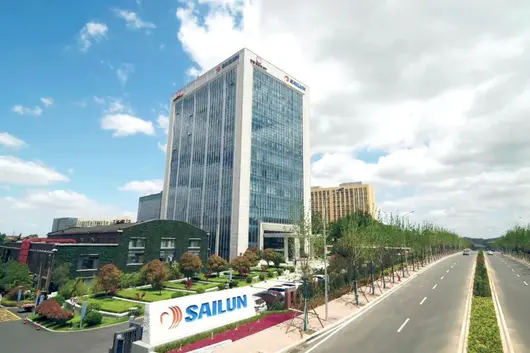
近日,《财富》杂志发布2026年中国500强排行榜。赛轮集团股份有限公司以51.19亿美元营收位列第399位,成为榜单中仅有的两家专业轮胎制造商之一。
据中国轮胎商务网(Tirechina.net)了解,作为采用与《财富》世界500强一脉相承评价方法的权威榜单,中国500强同时覆盖上市与非上市企业,集中呈现中国大型企业的经营规模与发展实力。

榜单荣誉是赛轮营收规模持续增长的直观体现,也折射出一家中国轮胎企业,正在用全球产能、材料技术和品牌投入,尝试跨过中国制造最典型的三道门槛——从出口产品到全球经营,从成本优势到技术溢价,再从制造规模到品牌价值。
500强看的是营收,但企业价值不只由营收决定
《财富》中国500强采用与《财富》世界500强一脉相承的制榜方法,核心尺度是营业收入。因此,赛轮排名跃升首先说明一件事:它的经营规模正在快速扩大。2025年,赛轮实现营业收入367.92亿元,同比增长15.69%,创历史新高。

与此同时,归母净利润达到35.22亿元,盈利能力继续增强。其中,境外主营业务收入达282.26亿元,同比增长18.54%,成为推动业绩增长的重要力量。进入2026年,赛轮仍保持稳健增长态势。一季度公司营收与净利润实现双增,毛利率升至26.86%。
在轮胎行业竞争加剧、全球贸易环境复杂多变的背景下,这份成绩说明赛轮正在逐步摆脱单纯依靠成本参与竞争的发展路径,向技术、产品、制造和品牌共同驱动的综合竞争模式迈进。
第一道门槛:把“产品出海”变成“全球经营”
业绩持续增长,离不开赛轮较早展开的全球化布局。作为国内首家在海外建设轮胎工厂的企业,赛轮目前已在国内青岛、东营、沈阳、潍坊及海外越南、柬埔寨、墨西哥、印尼布局多个生产基地,同时埃及与青岛董家口基地建设稳步推进,覆盖国内外重点市场的产能体系。

这种全球化与规模化的双重优势,让赛轮能够依托本地化制造能够缩短产品交付周期,更贴近区域市场需求,同时增强企业应对国际贸易壁垒和供应链波动的能力。由“产品出海”向“产能出海”、“运营出海”深入推进,也为赛轮境外收入增长及全球市场拓展提供了有力支撑。
第二道门槛:把制造能力变成产品溢价
中国轮胎企业过去最熟悉的竞争方式,是用制造效率和供应链成本换取市场份额。但当产能走向全球、规模逼近头部,继续依赖低价会迅速触及天花板,没有更高附加值的产品,规模甚至可能变成负担。
赛轮试图用技术打破这一约束。2025年,公司研发投入达到11.47亿元,围绕材料、配方、结构及智能制造持续攻关。其中,以“液体黄金”为代表的核心技术,推动了赛轮轮胎产品在安全、节能和耐磨等关键性能上实现综合提升;在高技术门槛的巨型工程子午线轮胎领域,赛轮也已实现49英寸至63英寸巨型工程子午胎的全系列产业化。巨持续的研发投入正在转化为更具辨识度的产品优势,也为赛轮提升盈利质量提供支撑。


第三道门槛:从“全球卖货”走向“全球品牌”
轮胎是一个品牌认知建立缓慢、信任成本极高的行业。消费者更换频率低,又直接关系行车安全,因此成熟品牌积累的口碑、渠道和原厂配套关系,往往比单次广告更难复制。这也是国际头部企业能够长期保持溢价的重要原因。
在Brand Finance“2025年全球最具价值轮胎品牌榜单”中赛轮位列第10位,成为排名最高的中国轮胎品牌。品牌价值与《财富》排名在同一年同步上升,说明赛轮的增长不再只有产能扩张这一条线,技术传播、渠道建设和全球市场认知也在形成合力。

行业评论
对比2025年首度入围时的第426位,到今年的第399位,赛轮完成的是一次规模坐标的上移。更值得行业关注的是,2026年《财富》中国500强中,专业轮胎制造商只有中策橡胶和赛轮两家。这说明中国轮胎产业已经出现能够进入大型企业序列的头部力量,但行业集中度、品牌溢价和全球治理能力仍有继续提升的空间。
接下来,赛轮面前的考题会比扩产更复杂:新建产能能否顺利爬坡,全球供应链能否高效协同,研发投入能否转化为高附加值产品,品牌增长能否抵消成本与贸易压力。任何一项出现短板,都可能让规模增长与价值增长发生脱节。
因此,进入《财富》中国500强并不意味着赛轮已经完成高端化,而是意味着它获得了向更高价值区间进发的规模基础。过去,中国轮胎企业依靠制造效率进入全球市场;未来,真正决定排名含金量的,将是技术、品牌和全球运营共同创造的利润质量。
榜单记录的是赛轮已经走了多远,下一张财务报表和下一轮全球市场竞争,才会回答它还能走多高。
© 2024 Bitauto.com. All Rights Reserved.
Bitauto (www.yiche.com and www.bitauto.com) is one of the most visited automotive websites in China. We provide detailed info on Chinese car brands available in your area. Please note that the information provided on this website is based on publicly available data and is for reference only. It may not be fully updated or accurate at all times.

Help us improve our website


