

HomeTravel

Search History
Popular Searches
Dealer Login / Sign Up

In the SUV market in Malaysia, many buyers compare the Honda HR-V and Chery Tiggo 8 PHEV when choosing a car. These two cars are quite close in price and positioning, so today we will make a detailed comparison from multiple aspects to help you save time on research.
The Honda HR-V OTR price in Malaysia is RM 115,900 - 143,900, there are a total of 4 versions, including 2026 e:HEV 1.5L RS (RM 143,900), 2026 1.5T V (RM 137,900), 2026 1.5T E (RM 130,900), etc.
The Chery Tiggo 8 PHEV OTR price in Malaysia is RM 159,750 - 159,750, there are a total of 2 versions, including 1.6L Turbo Standard (RM 130,000), 1.6L Turbo Premium (RM 145,000), etc.
In terms of price, the starting price of the Honda HR-V is indeed RM 43,850 cheaper than the Chery Tiggo 8 PHEV. If your budget is limited, Honda's entry-level version can already meet daily needs. But also note, the savings of a few thousand might involve trade-offs in equipment, depending on your specific needs.

The Honda HR-V is equipped with a 1.5L Turbo, 140 hp. Official fuel consumption is 7.0 L/100km.
The Chery Tiggo 8 PHEV is equipped with a Hybrid, 170 hp. Official fuel consumption is 4.5 L/100km.
In terms of power, the Hybrid of the Chery Tiggo 8 PHEV has 30 more horsepower than the 1.5L Turbo of the Honda HR-V. However, for daily city driving, the power of both cars is sufficient, you won't feel underpowered.

The Honda HR-V safety rating is 5★ (ASEAN NCAP), active safety system includes Honda SENSING (ACC, CMBS, LKAS, RDM).
The Chery Tiggo 8 PHEV safety rating is TBD, active safety system includes Basic.
Regarding safety features, both cars have received good ratings. However, there are some differences in functionality between the Honda HR-V's Honda SENSING (ACC, CMBS, LKAS, RDM) and the Chery Tiggo 8 PHEV's Basic. If you value active safety, you can carefully compare the feature lists of both.

The Honda HR-V adopts FWD drive method.
The Chery Tiggo 8 PHEV adopts FWD drive method.
The drive method of both cars is the same, both are FWD, there won't be a big difference in daily driving feel.
In summary, the Honda HR-V and Chery Tiggo 8 PHEV are both very good models in the Malaysian market. Choosing which one mainly depends on your personal needs and budget. We recommend doing your research, compare quotes from multiple dealerships, then test drive to make the final decision. Buying a car is a big matter, spending time on research will definitely not go wrong.


中埃產業合作再結碩果。二零二六年係中埃建交七十周年,喺中國國家主席習近平對埃及進行國事訪問、兩國發表聯合聲明明確深化共建「一帶一路」同埃及「二零三零願景」戰略對接後,訪問期間達成嘅合作共識正加速轉化为企业層面嘅務實行動。其中,玲瓏集團與埃及工業部簽署諒解備忘錄,共建綜合性輪胎產業基地,成為本輪合作嘅標誌性項目之一。

總理見證,20 億美元輪胎產業園簽約
埃及總理穆斯塔法·馬德布利博士見證咗簽約儀式。根據諒解備忘錄,埃及工業部與山東玲瓏集團將共建綜合性輪胎產業基地,項目總投資約 20 億美元,主營乘用車、客車、工程裝備輪胎及輸送帶系列產品,並同步配套建設炭黑、鋼簾線等上下游產業。
項目建成後,可創造五千多個就業崗位,產品立足埃及本土市場,重點輻射歐洲、美國等海外市場,助力埃及打造區域性輪胎產業製造出口中心。

全球化佈局再落關鍵一子
對玲瓏而言,埃及項目係佢全球化戰略嘅重要延伸。此前,玲瓏已喺泰國建成年產能超 1720 萬條嘅海外工廠,塞爾維亞工廠作為中國輪胎企業喺歐洲嘅首個生產基地,已通過大眾、奧迪、寶馬等全球知名主機廠審核。埃及基地建成後,將進一步強化玲瓏「在地生產、在地交付」嘅全球供應體系。
埃及地處「一帶一路」要衝,毗鄰歐洲市場,且喺關稅、勞動力成本等方面具備區位優勢。喺歐盟對中國輪胎加徵反傾銷措施嘅背景下,埃及產能佈局亦為中國輪胎企業繞開貿易壁壘、輻射歐美市場提供咗新嘅支點。

中埃製造業合作全方位升級
玲瓏集團項目係本輪中埃產業合作嘅縮影。除輪胎產業外,埃及工業部、埃及主權基金同江蘇長虹智能裝備、意大利 FIDIA 簽署諒解備忘錄,推進埃及汽車生產基地建設;金達控股則喺薩達特工業區投資建設亞麻紗線生產基地。合作領域覆蓋汽車製造、智能裝備、輪胎加工、電池儲能、亞麻製造等。

從合作模式睇,中埃產業合作正從單一項目投資轉向全產業鏈配套佈局,從基礎產品製造轉向裝備研發、技術輸出、工程服務一體化发展,呈現本土化、鏈條化、高端化嘅新趨勢。
隨著「一帶一路」同埃及「二零三零願景」嘅深度對接,以玲瓏輪胎為代表嘅中國製造企業,正為兩國全面戰略伙伴關係注入源源不斷嘅產業動能。


Dalam pasaran SUV di Malaysia, ramai pembeli semasa memilih kereta akan membandingkan Honda HR-V dan Chery Tiggo 8 PHEV. Kedua-dua kereta ini dalam segi harga dan posisinya agak hampir, hari ini kita akan buat perbandingan terperinci dari pelbagai aspek untuk membantu anda menjimatkan masa membuat kajian.
Harga OTR Honda HR-V di Malaysia ialah RM 115,900 - 143,900, dengan 4 varian keseluruhan, termasuk 2026 e:HEV 1.5L RS (RM 143,900), 2026 1.5T V (RM 137,900), 2026 1.5T E (RM 130,900) dan lain-lain.
Harga OTR Chery Tiggo 8 PHEV di Malaysia ialah RM 159,750 - 159,750, dengan 2 varian keseluruhan, termasuk 1.6L Turbo Standard (RM 130,000), 1.6L Turbo Premium (RM 145,000) dan lain-lain.
Daripada harga, harga permulaan Honda HR-V memang lebih murah RM 43,850 berbanding Chery Tiggo 8 PHEV. Jika bajet anda terhad, varian asas Honda sudah boleh memenuhi keperluan harian. Tetapi perlu diingat, perbezaan harga beberapa ribu itu, mungkin ada kompromi pada spesifikasi, bergantung kepada keperluan anda.
Honda HR-V dilengkapi enjin 1.5L Turbo, kuasa 140 hp. Penggunaan minyak rasmi 7.0 L/100km.
Chery Tiggo 8 PHEV dilengkapi Hybrid, kuasa 170 hp. Penggunaan minyak rasmi 4.5 L/100km.
Dari segi kuasa, Hybrid Chery Tiggo 8 PHEV mempunyai 30 kuda lebih berbanding 1.5L Turbo Honda HR-V. Namun untuk penggunaan harian di bandar, kuasa kedua-dua kereta adalah mencukupi, tidak akan terasa kurang tenaga.
Panjang badan Honda HR-V 4500 mm, ruang bagasi 450 L.
Panjang badan Chery Tiggo 8 PHEV 4400 mm, ruang bagasi 400 L.
Dari segi ruang, badan Honda HR-V adalah 100 mm lebih panjang daripada Chery Tiggo 8 PHEV, ruang penumpang dalaman akan sedikit lebih lapang, terutamanya ruang kaki di tempat duduk belakang. Jika anda kerap membawa keluarga atau perlu menaruh kereta bayi, badan yang lebih besar memang lebih praktikal.
Honda HR-V menggunakan sistem pemacu FWD.
Chery Tiggo 8 PHEV menggunakan sistem pemacu FWD.
Sistem pemacu kedua-dua kereta adalah sama, iaitu FWD, pengalaman memandu harian tiada perbezaan besar.
Honda HR-V dan Chery Tiggo 8 PHEV adalah pilihan utama di pasaran Malaysia, sesuai untuk penggunaan keluarga dan pengangkutan harian. Jika anda lebih mengutamakan reputasi jenama dan harga jual semula, boleh utamakan model yang lebih baik; Jika anda lebih mementingkan nilai dan spesifikasi, maka pilih model yang lebih lengkap. Akhir sekali disarankan untuk memandu uji kedua-dua model, pengalaman sendiri adalah yang paling penting.
Secara keseluruhannya, Honda HR-V dan Chery Tiggo 8 PHEV adalah model yang sangat bagus di pasaran Malaysia. Memilih mana satu, kunci utama masih bergantung kepada keperluan dan bajet peribadi anda. Cadangan untuk membuat kajian, membandingkan banyak tawaran kedai kereta, kemudian pergi memandu uji untuk membuat keputusan akhir. Membeli kereta adalah perkara besar, meluangkan masa untuk membuat kajian tidak akan salah.

Di pasaran SUV di Malaysia, ramai pembeli membandingkan Honda HR-V dan Chery Tiggo 8 PHEV ketika memilih kereta. Kedua-dua kereta ini sangat hampir dari segi harga dan kedudukan pasaran. Hari ini kita akan buat perbandingan terperinci dari pelbagai aspek untuk membantu anda menjimatkan masa membuat kajian.
Harga OTR Honda HR-V di Malaysia ialah RM 115,900 - 143,900. Terdapat 4 varian, termasuk 2026 e:HEV 1.5L RS (RM 143,900), 2026 1.5T V (RM 137,900), 2026 1.5T E (RM 130,900) dan lain-lain.
Harga OTR Chery Tiggo 8 PHEV di Malaysia ialah RM 159,750 - 159,750. Terdapat 2 varian, termasuk 1.6L Turbo Standard (RM 130,000), 1.6L Turbo Premium (RM 145,000) dan lain-lain.
Dari segi harga, harga permulaan Honda HR-V memang lebih murah RM 43,850 berbanding Chery Tiggo 8 PHEV. Jika bajet anda terhad, varian pemula Honda sudah boleh memuaskan keperluan harian. Namun perlu diingat, beberapa ribu ringgit yang lebih murah itu mungkin melibatkan kompromi dari segi kelengkapan, bergantung kepada keperluan anda.
Honda HR-V dilengkapi enjin 1.5L Turbo, kuasa 140 hp. Penggunaan minyak rasmi 7.0 L/100km.
Chery Tiggo 8 PHEV dilengkapi sistem Hybrid, kuasa 170 hp. Penggunaan minyak rasmi 4.5 L/100km.
Dari segi kuasa, sistem Hybrid pada Chery Tiggo 8 PHEV mempunyai 30 kuasa kuda lebih berbanding enjin 1.5L Turbo Honda HR-V. Namun untuk penggunaan harian di bandar, kuasa kedua-dua kereta ini sudah memadai dan tidak akan terasa kurang tenaga.
Honda HR-V mempunyai jaminan 5 tahun / tanpa had jarak, selang penyelenggaraan setiap 10,000km atau 6 bulan.
Chery Tiggo 8 PHEV mempunyai jaminan 3 tahun / 100,000km, selang penyelenggaraan setiap 10,000km atau 6 bulan.
Honda HR-V dan Chery Tiggo 8 PHEV adalah pilihan utama di pasaran Malaysia, sesuai untuk kegunaan keluarga dan perjalanan harian. Jika anda lebih mengutamakan reputasi jenama dan harga kereta terpakai, boleh prioratkan model yang lebih dikenali. Jika anda lebih mempedulikan nilai berbanding harga dan kelengkapan, pilih model yang mempunyai konfigurasi lebih kaya. Akhir sekali, adalah disarankan untuk mencuba memandu kedua-duanya, pengalaman langsung adalah yang paling penting.
Secara keseluruhan, Honda HR-V dan Chery Tiggo 8 PHEV adalah model kereta yang sangat bagus di pasaran Malaysia. Memilih mana-mana, kunci utama tetap bergantung kepada keperluan dan bajet peribadi anda. Kami menyarankan anda melakukan kajian terlebih dahulu, bandingkan penawaran dari pelbagai kedai kereta, kemudian buat ujian memandu untuk keputusan akhir. Membeli kereta adalah perkara penting, meluangkan masa membuat kajian pasti tidak akan rugi.

喺馬來西亞嘅 SUV 市場,好多買家喺揀車嘅時候都會拿本田 HR-V 同奇瑞 Tiggo 8 Pro 嚟做比較。呢兩款車喺價錢位同定位上都係蠻接近嘅,今日我哋就從多個方面嚟做一個詳細嘅比較,幫你省咗做功課嘅時間。
本田 HR-V 喺馬來西亞嘅 OTR 售價係 RM 115,900 - 143,900,一共有 4 個版本,包括 2026 e:HEV 1.5L RS(RM 143,900)、2026 1.5T V(RM 137,900)、2026 1.5T E(RM 130,900)等。
奇瑞 Tiggo 8 Pro 喺馬來西亞嘅 OTR 售價係 RM 159,750 - 159,750,一共有 2 個版本,包括 1.6L Turbo Standard(RM 130,000)、1.6L Turbo Premium(RM 145,000)等。
從價錢嚟睇,本田 HR-V 嘅起價確實比奇瑞 Tiggo 8 Pro 平咗 RM 43,850。如果你預算有限,本田嘅入門版已經可以滿足日常需求。但都要注意,平嗰幾千蚊,可能喺配備上會有取捨,具體要睇你嘅需求。
本田 HR-V 嘅安全評級係 5★ (ASEAN NCAP),主動安全系統包括本田 SENSING (ACC, CMBS, LKAS, RDM)。
奇瑞 Tiggo 8 Pro 嘅安全評級係 TBD,主動安全系統包括 Basic。
安全配備方面,兩款車都拿到唔錯嘅評級。不過本田 HR-V 嘅本田 SENSING (ACC, CMBS, LKAS, RDM) 同奇瑞 Tiggo 8 Pro 嘅 Basic 喺功能上有啲差異,如果你比較睇重主動安全嘅話,可以仔細比較一下兩者嘅功能列表。
本田 HR-V 車身長 4500 mm,尾箱 450 L。
奇瑞 Tiggo 8 Pro 車身長 4400 mm,尾箱 400 L。
空間方面,本田 HR-V 嘅車身比奇瑞 Tiggo 8 Pro 長咗 100 mm,車內乘坐空間會稍微寬鬆少少,尤其係後座腿部空間。如果你經常載家人或者需要放嬰兒車,大一點嘅車身確實更實用。
本田 HR-V 採用 FWD 驅動方式。
奇瑞 Tiggo 8 Pro 採用 FWD 驅動方式。
兩款車嘅驅動方式一樣,都係 FWD,日常駕駛感覺唔會有太大分別。
總體嚟講,本田 HR-V 同奇瑞 Tiggo 8 Pro 都係馬來西亞市場好唔錯嘅車型。揀邊一輛,關鍵仲係要睇你嘅個人需求同預算。建議大家做好功課,多比較幾間車行嘅報價,再去試駕做最終決定。買車係件大事,花啲時間做功課絕對唔會錯。
在中国汽车“换道超车”之时,奇瑞新能源爆发式增长进入新常态。随着8月销量发布,奇瑞集团新能源迎来连续第5个月销量突破10万辆:集团8月销售新能源汽车120,909辆,同比增长69.8%,连续5个月批发量位居行业前三;1-8月,集团累计销售新能源汽车725,214辆,同比增长46.2%。

奇瑞新能源销量占世界份额5.5%
根据乘联分会负责人崔东树统计分析,2026年1-7月,奇瑞集团新能源销量的世界份额达到5.5%,位居全球车企集团前五。从4月的10.03万辆到8月的12.1万辆,奇瑞新能源的快速增长推动奇瑞在全球新能源市场地位的跃升。在全球新能源销量份额TOP5名单上,中国车企占据四席,展现了中国汽车在全球市场的品牌新形象。

新能源渗透率持续提升,欧洲新能源增长超3倍
8月,奇瑞集团销售汽车280,128辆,同比增长15.4%,其中出口196,984辆,同比增长52.1%,保持中国品牌汽车第一。
值得关注的是奇瑞规模增长背后新能源渗透率的提升:8月,奇瑞国内市场新能源渗透率再次突破60%,达到61.9%。这意味着,奇瑞在国内市场每卖出3辆汽车,就有2辆是新能源。新能源已经成为奇瑞国内市场绝对主力军。
新能源也成为奇瑞全球化的强力引擎。目前,中国每出口7辆新能源汽车,就有1辆来自奇瑞。8月,奇瑞集团新能源出口近7万辆,同比增长124.2%,占当月总出口的比重达到35.3%。

全球畅销车型JAECOO 7
欧洲市场的“含新量”更高。1-7月,奇瑞在欧洲24国销售汽车超20.8万辆,同比增长201%;其中新能源10.2万辆,同比增长332.5%。从欧洲销量结构看,新能源占比约50%,奇瑞新能源产品加快进入全球高法规市场,产品力得到全球最严苛市场的验证和认可。
爆款矩阵:从风云T7到JAECOO 7
奇瑞在全球市场形成覆盖不同市场、不同价位、不同品类的“爆款矩阵”,推动奇瑞新能源销量持续突破、行业地位稳固提升。
在国内,风云T7上市首日订单破2.3万,验证了“原生全球车”理念的市场爆发力;FREELANDER神行者首款量产车型神行者8开启预售,48小时订单突破1万辆,向高端新能源市场发起冲击;全新QQ3连续5个月销量过1万辆,A0级纯电明星产品地位稳固;智界V9累计交付已突破2万辆,刷新50万级新能源MPV最快交付纪录。

“原生全球车”风云T7
在海外,以新能源为特色的JAECOO 7、JAECOO 5、OMODA 5三款车型进入英国十大畅销车型榜单;JAECOO 5成为澳大利亚细分市场、印尼与泰国纯电市场销量冠军,iCAUR V23位居泰国、南非等地细分市场第一。

iCAUR V23
量质齐升:新能源收入占比升至41.4%
奇瑞新能源不仅有“量的增长”,更有“质的跃升”。奇瑞新能源正从规模扩张迈向价值增长的新阶段。2026年上半年,奇瑞汽车新能源业务收入达592.84亿元,同比增长63.8%,占总收入比重从25.6%提升至41.4%。
截至8月底,奇瑞全球累计销量突破2044万辆,海外累计销量超718万辆,这是新起点,而新能源正为这个新起点注入全新内涵。中国汽车“换道超车”的故事,奇瑞正在全球版图上持续书写。

In Malaysia's SUV market, many buyers compare Honda HR-V and Chery Tiggo 7 Pro when choosing a car. These two models are quite close in price and positioning. Today, we will make a detailed comparison from multiple aspects to help you save time on research.
The Honda HR-V OTR selling price in Malaysia is RM 115,900 - 143,900, with a total of 4 versions, including 2026 e:HEV 1.5L RS (RM 143,900), 2026 1.5T V (RM 137,900), 2026 1.5T E (RM 130,900), etc.
The Chery Tiggo 7 Pro OTR selling price in Malaysia is RM 123,750 - 123,750, with a total of 2 versions, including 1.6L Turbo Standard (RM 125,000), 1.6L Turbo Premium (RM 140,000), etc.
In terms of price, the Honda HR-V's starting price is indeed RM 7,850 cheaper than the Chery Tiggo 7 Pro. If your budget is limited, the Honda's entry-level version can already meet daily needs. However, be aware that the few thousand dollars saved might involve trade-offs in features, depending on your specific needs.
Honda HR-V is equipped with a 1.5L Turbo, horsepower 140 hp. Official fuel consumption 7.0 L/100km.
Chery Tiggo 7 Pro is equipped with a 1.5L Turbo, horsepower 140 hp. Official fuel consumption 7.0 L/100km.
Both cars use the same powertrain, and the driving experience feels basically the same. Fuel consumption is also similar, so no need to worry too much about this point.
Honda HR-V body length is 4500 mm, trunk 450 L.
Chery Tiggo 7 Pro body length is 4400 mm, trunk 400 L.
In terms of space, the Honda HR-V body is 100 mm longer than the Chery Tiggo 7 Pro, providing slightly more passenger space inside, especially rear legroom. If you often carry family or need to fit a stroller, a larger body is indeed more practical.
Honda HR-V warranty 5 years/unlimited mileage, maintenance interval every 10,000km or 6 months.
Chery Tiggo 7 Pro warranty 3 years/100,000km, maintenance interval every 10,000km or 6 months.
Overall, both Honda HR-V and Chery Tiggo 7 Pro are very good models in the Malaysian market. Which one to choose mainly depends on your personal needs and budget. It is recommended that you do your research, compare quotes from several dealerships, and then test drive to make the final decision. Buying a car is a big matter, spending some time researching will definitely not go wrong.
In the Malaysian SUV market, many buyers compare the Honda HR-V and Chery Tiggo Cross when choosing a car. These two models are quite close in price and positioning. Today, we will make a detailed comparison from multiple aspects to help you save time on research.
The OTR price of the Honda HR-V in Malaysia is RM 115,900 - 143,900, with a total of 4 versions, including 2026 e:HEV 1.5L RS (RM 143,900), 2026 1.5T V (RM 137,900), 2026 1.5T E (RM 130,900), etc.
The OTR price of the Chery Tiggo Cross in Malaysia is RM 88,750 - 99,750, with a total of 2 versions, including 2025 HEV 1.5L CSH (RM 99,750), 2025 1.5T Standard (RM 88,750), etc.
Looking at the price, the starting price of the Chery Tiggo Cross is RM 27,150 cheaper than the Honda HR-V. Honestly, in this price segment, a difference of a few thousand is not really significant; the key is to look at the overall value for money and long-term usage costs.
The Honda HR-V is equipped with a 1.5L Turbo, 140 hp. Official fuel consumption 7.0 L/100km.
The Chery Tiggo Cross is equipped with a 1.5L 4-cyl, 105 hp. Official fuel consumption 6.0 L/100km.
In terms of power, the Honda HR-V's 1.5L Turbo has 35 more horsepower than the Chery Tiggo Cross's 1.5L 4-cyl, providing more confidence in mid-range acceleration, especially when overtaking on highways. However, the Chery Tiggo Cross's fuel consumption might be friendlier, and the difference in daily city commuting would not be significant.
The Honda HR-V's safety rating is 5★ (ASEAN NCAP), with active safety systems including Honda SENSING (ACC, CMBS, LKAS, RDM).
The Chery Tiggo Cross's safety rating is TBD, with active safety systems including Basic.
Regarding safety features, both cars have received good ratings. However, the Honda SENSING (ACC, CMBS, LKAS, RDM) of the Honda HR-V and the Basic of the Chery Tiggo Cross have some differences in functionality. If you value active safety more, you can compare the function lists of both in detail.
The Honda HR-V uses FWD drive type.
The Chery Tiggo Cross uses FWD drive type.
Both cars use the same drive type, both FWD, so there won't be a significant difference in daily driving feel.

Both the Honda HR-V and Chery Tiggo Cross are mainstream choices in the Malaysian market, suitable for family use and daily commuting. If you value brand reputation and resale value more, prioritize the one with better reputation; if you care more about value for money and features, choose the one with richer configurations. Ultimately, it is recommended to test drive both; experiencing it personally is the most important.

Overall, both the Honda HR-V and Chery Tiggo Cross are excellent models in the Malaysian market. Which one to choose depends mainly on your personal needs and budget. It is recommended that everyone do their research, compare quotes from several dealerships, and then test drive before making a final decision. Buying a car is a big matter; spending some time researching is never a wrong choice.
In the Malaysian SUV market, many buyers compare the Honda HR-V and Chery Tiggo Cross when choosing a car. These two cars are quite close in price and positioning. Today, we will make a detailed comparison from multiple aspects to save you time doing research.
The OTR price of Honda HR-V in Malaysia is RM 115,900 - 143,900, with a total of 4 versions, including 2026 e:HEV 1.5L RS (RM 143,900), 2026 1.5T V (RM 137,900), 2026 1.5T E (RM 130,900), etc.
The OTR price of Chery Tiggo Cross in Malaysia is RM 88,750 - 99,750, with a total of 2 versions, including 2025 HEV 1.5L CSH (RM 99,750), 2025 1.5T Standard (RM 88,750), etc.
From a pricing perspective, the starting price of the Chery Tiggo Cross is RM 27,150 cheaper than the Honda HR-V. Honestly, in this price segment, a difference of a few thousand is actually not significant; the key is the overall value for money and long-term running costs.
Honda HR-V is equipped with 1.5L Turbo, horsepower 140 hp. Official fuel consumption 7.0 L/100km.
Chery Tiggo Cross is equipped with 1.5L 4-cyl, horsepower 105 hp. Official fuel consumption 6.0 L/100km.
In terms of power, the 1.5L Turbo in the Honda HR-V has 35 more horsepower than the 1.5L 4-cyl in the Chery Tiggo Cross, providing more confidence in mid-range acceleration, especially when overtaking on highways. However, the fuel consumption of the Chery Tiggo Cross might be more competitive, and the difference in daily city commuting won't be too significant.
Honda HR-V's safety rating is 5★ (ASEAN NCAP), active safety systems include Honda SENSING (ACC, CMBS, LKAS, RDM).
Chery Tiggo Cross's safety rating is TBD, active safety systems include Basic.
Regarding safety features, both cars have received good ratings. However, there are some differences in function between Honda HR-V's Honda SENSING (ACC, CMBS, LKAS, RDM) and Chery Tiggo Cross's Basic. If you value active safety highly, you can compare the feature lists of both carefully.
Honda HR-V body length 4500 mm, trunk 450 L.
Chery Tiggo Cross body length 4400 mm, trunk 400 L.
In terms of space, the Honda HR-V body is 100 mm longer than the Chery Tiggo Cross, interior seating space will be slightly more spacious, especially rear legroom. If you frequently carry family members or need to fit a stroller, a larger body is indeed more practical.
Honda HR-V uses FWD drive method.
Chery Tiggo Cross uses FWD drive method.
The drive methods of both cars are the same, both FWD, daily driving experience won't differ too much.
Overall, Honda HR-V and Chery Tiggo Cross are both very good models in the Malaysian market. Which one to choose depends mainly on your personal needs and budget. We recommend doing your research, comparing quotes from several dealers, and then test driving to make a final decision. Buying a car is a big matter, spending some time doing research will never be wrong.
In Malaysia's SUV market, many buyers compare Honda HR-V and Chery Tiggo Cross when choosing a car. These two models are quite close in price and positioning. Today, we will make a detailed comparison from multiple aspects to help you save time on research.
Honda HR-V's OTR price in Malaysia is RM 115,900 - 143,900, with a total of 4 versions, including 2026 e:HEV 1.5L RS (RM 143,900), 2026 1.5T V (RM 137,900), 2026 1.5T E (RM 130,900), etc.
Chery Tiggo Cross's OTR price in Malaysia is RM 88,750 - 99,750, with a total of 2 versions, including 2025 HEV 1.5L CSH (RM 99,750), 2025 1.5T Standard (RM 88,750), etc.
From a price perspective, Chery Tiggo Cross's starting price is RM 27,150 cheaper than Honda HR-V. To be honest, in this price range, the difference of a few thousand is actually not significant. The key lies in overall value for money and long-term usage costs.
Honda HR-V is equipped with 1.5L Turbo, 140 hp. Official fuel consumption 7.0 L/100km.
Chery Tiggo Cross is equipped with 1.5L 4-cyl, 105 hp. Official fuel consumption 6.0 L/100km.
In terms of power, Honda HR-V's 1.5L Turbo has 35 more horsepower than Chery Tiggo Cross's 1.5L 4-cyl, offering more confidence in mid-range acceleration, especially when overtaking on highways. However, Chery Tiggo Cross's fuel consumption might be friendlier, and the difference for daily city commuting won't be too significant.
Honda HR-V warranty 5 years/unlimited mileage, maintenance interval every 10,000km or 6 months.
Chery Tiggo Cross warranty 3 years/100,000km, maintenance interval every 10,000km or 6 months.
Honda HR-V and Chery Tiggo Cross are both mainstream choices in the Malaysian market, suitable for family use and daily commuting. If you value brand reputation and resale value more, you can prioritize the one with better reputation; if you care more about value for money and features, choose the one with richer configurations. Ultimately, it is recommended to test drive both, as personal experience is the most important.
Overall, Honda HR-V and Chery Tiggo Cross are both very good models in the Malaysian market. Which one to choose mainly depends on your personal needs and budget. It is recommended to do your research, compare quotes from multiple car dealers, and then test drive to make the final decision. Buying a car is a major matter, and spending time on research will never be wrong.

In the Malaysian SUV market, many buyers compare Honda HR-V and Mazda CX-8 when choosing a car. The price and positioning of these two cars are quite close. Today we will make a detailed comparison from multiple aspects to help you save time on research.
The OTR price of Honda HR-V in Malaysia is RM 115,900 - 143,900, with a total of 4 variants, including 2026 e:HEV 1.5L RS (RM 143,900), 2026 1.5T V (RM 137,900), 2026 1.5T E (RM 130,900), etc.
The OTR price of Mazda CX-8 in Malaysia is RM 165,360 - 201,360, with a total of 5 variants, including 2025 2.5T 4WD High Plus Petrol (RM 201,360), 2025 2.2L 2WD High Plus Diesel (RM 193,123), 2025 2.5L 2WD High Plus Petrol (RM 186,360), etc.
From a price perspective, the starting price of Honda HR-V is indeed RM 49,460 cheaper than Mazda CX-8. If your budget is limited, Honda's entry-level version can already meet daily needs. But note that the cheaper few thousand might involve trade-offs in equipment, depending on your specific needs.
Honda HR-V's safety rating is 5★ (ASEAN NCAP), active safety systems include Honda SENSING (ACC, CMBS, LKAS, RDM).
Mazda CX-8's safety rating is 5★ (ASEAN NCAP), active safety systems include Brand ADAS.
Both cars have the same safety rating. Safety features are quite comprehensive in this class. New car safety is generally good nowadays, no need to worry too much about this.
Honda HR-V uses FWD drivetrain.
Mazda CX-8 uses FWD drivetrain.
Both cars have the same drivetrain, both are FWD, so daily driving experience won't differ much.
Honda HR-V warranty 5 years/unlimited mileage, maintenance interval every 10,000km or 6 months.
Mazda CX-8 warranty 5 years/150,000km, maintenance interval every 10,000km or 6 months.

Both Honda HR-V and Mazda CX-8 are mainstream choices in the Malaysian market, suitable for family use and daily commuting. If you value brand reputation and resale value more, prioritize the one with better reputation; if you care more about cost-performance and equipment, choose the one with richer configuration. Ultimately, it is recommended to test drive both, personal experience is the most important.

Overall, Honda HR-V and Mazda CX-8 are both very good models in the Malaysian market. Which one to choose depends on your personal needs and budget. We suggest doing your research, compare quotes from several dealerships, and then test drive to make the final decision. Buying a car is a big deal, spending time researching is never wrong.
In the Malaysian SUV market, many buyers compare the Honda HR-V and Mazda CX-8 when selecting a car. These two models are quite close in price and positioning. Today, we will make a detailed comparison from multiple aspects to help you save time doing research.
The OTR price of the Honda HR-V in Malaysia is RM 115,900 - 143,900, with a total of 4 variants, including 2026 e:HEV 1.5L RS (RM 143,900), 2026 1.5T V (RM 137,900), 2026 1.5T E (RM 130,900), etc.
The OTR price of the Mazda CX-8 in Malaysia is RM 165,360 - 201,360, with a total of 5 variants, including 2025 2.5T 4WD High Plus Petrol (RM 201,360), 2025 2.2L 2WD High Plus Diesel (RM 193,123), 2025 2.5L 2WD High Plus Petrol (RM 186,360), etc.
From a price perspective, the Honda HR-V's starting price is indeed RM 49,460 cheaper than the Mazda CX-8. If your budget is limited, Honda's entry-level version can already meet daily needs. However, please note that the price difference might involve trade-offs in features, specifically depending on your needs.
The Honda HR-V comes with a 1.5L Turbo, 140 hp. Official fuel consumption is 7.0 L/100km.
The Mazda CX-8 comes with a 2.0L 4-cyl, 170 hp. Official fuel consumption is 8.0 L/100km.
In terms of power, the Mazda CX-8's 2.0L 4-cyl has 30 more horsepower than the Honda HR-V's 1.5L Turbo. However, for daily driving in the city, the power of both cars is sufficient and you won't feel underpowered.
The Honda HR-V has a safety rating of 5★ (ASEAN NCAP), active safety systems include Honda SENSING (ACC, CMBS, LKAS, RDM).
The Mazda CX-8 has a safety rating of 5★ (ASEAN NCAP), active safety systems include Brand ADAS.
Both cars have the same safety rating, and safety features are quite comprehensive in this class. New car safety is generally good nowadays, so there is no need to worry too much about this.
The Honda HR-V body length is 4500 mm, trunk 450 L.
The Mazda CX-8 body length is 4500 mm, trunk 450 L.
The dimensions of both cars are almost identical, with little difference in interior space. Cars in this class are fully sufficient for daily use.
Both Honda HR-V and Mazda CX-8 are mainstream choices in the Malaysian market, suitable for family use and daily commuting. If you value brand reputation and resale price more, you can prioritize the one with a better reputation; if you care more about cost-performance and features, choose the one with a richer configuration. Ultimately, we suggest test driving both, as personal experience is the most important.
Overall, both the Honda HR-V and Mazda CX-8 are excellent models in the Malaysian market. Which one to choose depends on your personal needs and budget. We recommend doing your homework, comparing quotes from several dealers, and then test driving before making a final decision. Buying a car is a major event, spending some time doing research will never be wrong.
In the Malaysian SUV market, many buyers compare Honda HR-V and Mazda CX-8 when choosing a car. Both cars are quite close in price and positioning, so today we will do a detailed comparison from multiple aspects to save you time on research.
The OTR price of Honda HR-V in Malaysia is RM 115,900 - 143,900, with a total of 4 versions, including 2026 e:HEV 1.5L RS (RM 143,900), 2026 1.5T V (RM 137,900), 2026 1.5T E (RM 130,900), etc.
The OTR price of Mazda CX-8 in Malaysia is RM 165,360 - 201,360, with a total of 5 versions, including 2025 2.5T 4WD High Plus Petrol (RM 201,360), 2025 2.2L 2WD High Plus Diesel (RM 193,123), 2025 2.5L 2WD High Plus Petrol (RM 186,360), etc.
Looking at the price, the starting price of Honda HR-V is indeed RM 49,460 cheaper than Mazda CX-8. If your budget is limited, Honda's entry-level version can already meet daily needs. But be aware, the savings of a few thousand might involve trade-offs in features, depending on your needs.
Honda HR-V's safety rating is 5★ (ASEAN NCAP), and active safety systems include Honda SENSING (ACC, CMBS, LKAS, RDM).
Mazda CX-8's safety rating is 5★ (ASEAN NCAP), and active safety systems include Brand ADAS.
The safety ratings for both cars are the same. In this class, safety features are quite comprehensive. New cars nowadays generally have good safety, so there is no need to worry too much about this.
Honda HR-V uses FWD drive configuration.
Mazda CX-8 uses FWD drive configuration.
The drive configuration for both cars is the same, both are FWD, so the daily driving experience should not differ too much.
Both Honda HR-V and Mazda CX-8 are mainstream choices in the Malaysian market, suitable for family use and daily commuting. If you value brand reputation and resale value more, prioritize the one with the better reputation; if you care more about value for money and features, choose the model with richer configuration. Ultimately, we suggest test-driving both; personal experience is the most important.
Overall, both Honda HR-V and Mazda CX-8 are excellent models in the Malaysian market. Which one to choose mainly depends on your personal needs and budget. We recommend doing your research, comparing quotes from several dealerships, and then test-driving to make the final decision. Buying a car is a big matter, spending time doing research will never go wrong.

On September 1st, over a dozen mainstream domestic automakers successively announced their August sales reports. Judging from the data and the focus of each automaker's sales posters, a clear signal is emerging: the overseas market is upgrading from a former second battlefield to a main battlefield. Chinese automakers' global layout has finally turned from hardships to sweetness, entering a new phase of new-round "qualitative change".

Break out of the zero-sum game, overseas carries the banner of growth
Looking at sales data, in August, the signs of Chinese automakers breaking out of the domestic market's "zero-sum game" are becoming increasingly obvious.
Among them, Chery, known as the "Chinese Automaker Export Champion", stands out the most.
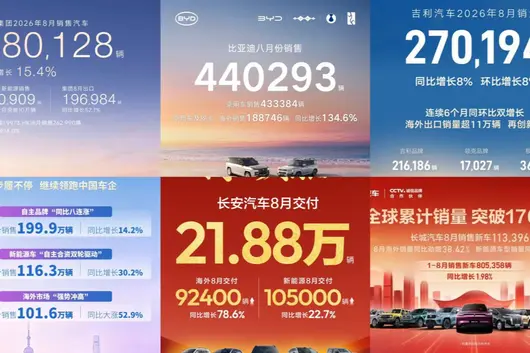
In August, Chery Group's total sales reached 280,000 vehicles, while the overseas market contributed 197,000 vehicles, a year-on-year increase of 52.1%. The export ratio once again exceeded 70%, meaning for every 10 cars sold, 7 were sold overseas. As of August, Chery's cumulative exports have exceeded 7 million vehicles, making it the first Chinese automaker to reach this milestone.
BYD's overseas sales are closing in on Chery. In August, BYD's total volume reached 440,000, making it the only automaker with monthly sales exceeding 400,000. The growth of the overseas market is the biggest driver. BYD's August overseas sales reached 188,700, a surge of 134.6% year-on-year, setting a new historical high for the brand's single-month overseas sales. In comparison, two years ago, BYD's overseas monthly sales basically hovered around just over 30,000 units.

Similar to BYD, Geely Automobile also created a new historical record again. In August, Geely Automobile's total sales were 270,000, with 110,000 overseas, a surge of 205% year-on-year. This is already Geely breaking through 100,000 for three consecutive months. Among these 110,000 units, new energy exports exceeded 70,000, quadrupling year-on-year, reaching 64% of the overseas exports.
Thanks to creating achievements in the overseas market repeatedly this year, Geely had previously adjusted its full-year overseas sales target from 640,000 to 920,000, and will strive for 1,000,000.
Except for the aforementioned automakers, SAIC Motor's August overseas sales reached 139,000, a year-on-year increase of 57.67%, accounting for nearly 40% of total sales. Changan Automobile's August overseas delivery was 92,400, a year-on-year increase of 78.6%, with overseas markets achieving year-on-year growth for seven consecutive months. Great Wall Motor's August overseas sales exceeded 60,000, a year-on-year increase of 38.42%, accounting for 55.1%...

Against the backdrop of increasingly fierce "zero-sum game" in the domestic market and increasingly weak terminal consumption, "export-driven" growth is becoming the most significant and commendable sales feature and highlight for mainstream automakers.
New Grip on Performance, System Layout "Hardships Turn to Sweetness"
More than sales figures, it is the performance that fills Chinese mainstream automakers with the fighting spirit of "setting sail overseas".
If sales are just the process, then performance is the result. The first-half financial report performance of multiple mainstream automakers has shown a historical reversal of revenue structure. Among them, BYD's overseas revenue exceeded domestic revenue for the first time in the first half of the year, with 181.268 billion yuan of overseas revenue accounting for 52.57% of the group's total revenue.
That is to say, the money BYD earned in the first half of the year came more from the overseas market. It is worth noting that although the overseas market failed to completely offset the domestic decline, due to higher pricing in the overseas market and relatively more stable prices, the higher profit space directly promoted the increase in BYD's net profit and gross margin.

Currently, with the continuous release of local overseas capacity and the continuous improvement of the channel system, BYD's overseas market is in a period of significant growth. That is to say, overseas will further become the key grip for BYD's performance growth.
Of course, driven by the combined high profits and scale growth in the overseas market, BYD is not the only one whose performance structure underwent a historical turn. Great Wall Motor's total revenue exceeded 100 billion in the first half of the year for the first time, with overseas market revenue accounting for 55.13% of total revenue, reaching 56.288 billion yuan. This is also the first time overseas revenue exceeded domestic revenue.
Regarding Chery, total revenue in the first half of the year was 143.28 billion yuan, with overseas revenue of 98.968 billion yuan, a year-on-year increase of 51.0%, accounting for a high 69.07% of total revenue. This ratio ranks first among mainstream Chinese automakers, and thanks to the high gross margin of overseas sales, Chery's overall gross margin in the first half of the year also saw an increase, with a net profit margin of 6.3% in the first half of the year.
Changan Automobile's revenue in the first half of the year was 65.634 billion yuan, with overseas revenue of 21.942 billion yuan, a year-on-year increase of 78.77%, with the proportion of total revenue rising to 33.43%, while overseas gross margin remained above 20%. Geely Automobile directly stated in the financial report meeting that the two core driving factors for performance growth in the first half of the year were premiumization and globalization.

Regarding new forces, Leapmotor's operating revenue in the first half of the year reached 38.11 billion yuan, of which the European market contributed 8.875 billion yuan... These data and cases continuously prove: the overseas market is not only a "second growth curve" for Chinese automakers, but also a substantial "performance engine". When scale expansion resonates with high gross margin, going overseas undoubtedly becomes a "must-answer question".
Gold Digging in Overseas Markets, But Challenges Remain
From the data, it is very clear that the overseas market is not only becoming a "hedging instrument" to counter the domestic downward cycle, but is also becoming a gold mine for Chinese automakers.
And this round of gold digging is not just about selling products out. The globalization of mainstream automakers such as Chery, BYD, Geely, Changan, and Great Wall has moved from the 1.0 era to the new stage of system overseas and ecological overseas of the 2.0 era. BYD factories in Thailand, Brazil, Hungary, and other places have been put into production successively; Geely accelerates the promotion of overseas localization projects such as Brazil and Spain; Chery plans to establish more than 10 production bases globally by 2025; Changan plans to expand Thailand factory capacity to 200,000 units...
These overseas factories are becoming the accelerator for Chinese automakers to impact global goals.
Of particular note, in this wave of going overseas, the proportion of new energy is getting higher. BYD exceeds 180,000 units, Geely's new energy export ratio reached 64%, Chery's new energy exports in August approached 40,000 units... And in terms of intelligence, XPeng Motors officially announced in August that it is advancing the global deployment of the second-generation VLA, planning to deliver the second-generation VLA to overseas users successively in the first half of next year.

Under the global wave of electrification transformation, the first-mover advantage of Chinese automakers in new energy and intelligence dimensions also determines that this round of going overseas for Chinese automakers not only has a first-mover advantage but also possesses sustainability.
The outlook is clear, but challenges also accompany it. The net profits of multiple automakers declined in the first half of the year, all mentioning exchange rate gains and losses. That is to say, when the proportion of overseas business changes from "supplement" to "half the landscape", exchange rate fluctuations are no longer an irrelevant detail in financial reports, but a systemic variable that directly affects the actual value of hundreds of billions in revenue.
The risk of exchange rate fluctuations also, to some extent, increases the uncertainty of automakers "gold digging". Besides exchange rate fluctuations, the huge investment in localization construction, financial expenses such as overseas brand building and marketing, will also bring considerable pressure to automakers' financial performance. How to build a stable and healthy input-output ratio will obviously become an inevitable thought for Chinese automakers in the globalization process.
Red Dot Observation:
Of course, no matter what, the data of August and the financial reports of the first half of the year point to a conclusion together: Chinese automakers are entering the "harvest period" of global layout. And within this harvest period, Chinese automakers are proving to the global market with a collective posture that Chinese automobiles have the strength and confidence to compete in the global market.

Dalam pasaran SUV di Malaysia, ramai pembeli akan membandingkan Honda HR-V dan Chery Tiggo Cross apabila memilih kereta. Kedua-dua kereta ini agak hampir dari segi harga dan pelarasan, hari ini kami akan membuat perbandingan terperinci dari pelbagai aspek, membantu anda menjimatkan masa untuk membuat kajian.
Harga Honda HR-V OTR di Malaysia ialah RM 115,900 - 143,900, terdapat 4 varian, termasuk 2026 e:HEV 1.5L RS (RM 143,900), 2026 1.5T V (RM 137,900), 2026 1.5T E (RM 130,900) dan lain-lain.
Harga Chery Tiggo Cross OTR di Malaysia ialah RM 88,750 - 99,750, terdapat 2 varian, termasuk 2025 HEV 1.5L CSH (RM 99,750), 2025 1.5T Standard (RM 88,750) dan lain-lain.
Dari segi harga, harga permulaan Chery Tiggo Cross lebih murah RM 27,150 berbanding Honda HR-V. Jujur berkata, dalam julat harga ini, beza beberapa ribu sebenarnya tidak besar, intinya lihat nilai duit keseluruhan dan kos penggunaan jangka panjang.
Penilaian keselamatan Honda HR-V ialah 5★ (ASEAN NCAP), sistem keselamatan aktif termasuk Honda SENSING (ACC, CMBS, LKAS, RDM).
Penilaian keselamatan Chery Tiggo Cross ialah TBD, sistem keselamatan aktif termasuk Basic.
Dari segi kelengkapan keselamatan, kedua-dua kereta mendapat penilaian yang baik. Walau bagaimanapun, Honda SENSING (ACC, CMBS, LKAS, RDM) pada Honda HR-V dan Basic pada Chery Tiggo Cross mempunyai perbezaan dari segi fungsi, jika anda lebih mengutamakan keselamatan aktif, boleh bandingkan senarai fungsi kedua-duanya dengan teliti.
Honda HR-V waranti 5 tahun/kekilometeran tanpa had, selang penyelenggaraan setiap 10,000km atau 6 bulan.
Chery Tiggo Cross waranti 3 tahun/100,000km, selang penyelenggaraan setiap 10,000km atau 6 bulan.
Honda HR-V dan Chery Tiggo Cross adalah pilihan utama di pasaran Malaysia, sesuai untuk kegunaan keluarga, perjalanan harian. Jika anda lebih mengutamakan reputasi jenama dan harga jual semula, boleh utamakan model yang mempunyai reputasi lebih baik; jika anda lebih mengutamakan nilai dan kelengkapan, maka pilih model dengan spesifikasi lebih lengkap. Akhirnya adalah cadangan kedua-duanya untuk ujian memandu, pengalaman sendiri adalah yang paling penting.
Secara keseluruhannya, Honda HR-V dan Chery Tiggo Cross adalah model yang sangat baik di pasaran Malaysia. Memilih yang mana, intinya masih lihat keperluan dan bajet peribadi anda. Kami sarankan anda buat kajian dengan teliti, bandingkan harga dari beberapa dealer kereta, kemudian pergi ujian memandu untuk membuat keputusan akhir. Membeli kereta adalah perkara besar, luangkan sedikit masa untuk membuat kajian tidak akan salah.

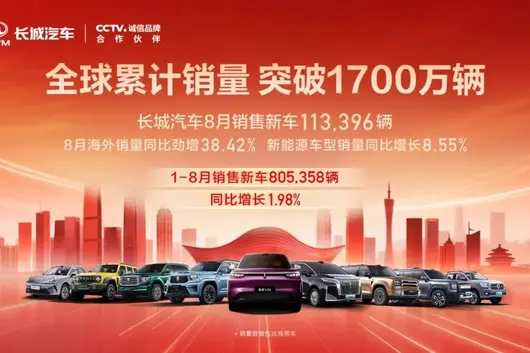
9月1日,长城汽车发布了8月销量数据,11.34万辆的单月销量,环比增长4.93%;1-8月累计销售805,358辆,同比增长1.98%。比这些数字更值得记住的,是长城汽车全球累计销量正式突破1700万辆。

1700万辆是什么概念?在中国汽车品牌阵营中,累计销量能跨过千万门槛的已是凤毛麟角,达到这个量级的,无一不是经历过完整产业周期、扛过多轮市场洗牌的“老将”。这份成绩的分量,不在于数字本身,而在于它背后的时间厚度与战略定力。
然而,如果只看到“稳”,便会错失长城正在发生的一场深层裂变。
海外市场:从“出口红利”到“半壁江山”
上半年,长城海外销量28.9万辆,同比增长45.46%,海外销量规模首次小幅超过国内。这个“首次”的含金量,远超一份季度财报所能承载。
中国汽车出海并非新鲜事,但多数车企的海外业务长期停留在“贸易补充”的定位上——卖得多固然好,卖得少也无伤大雅。长城的不同之处在于,海外市场已不再是“增量”概念,而是实实在在地成长为“半壁江山”。
这背后是一场持续30年的长跑。从早期简单的整车贸易,到今天覆盖“研、产、供、销、服”全链条的生态出海体系,长城在海外构建的已不是销售网络,而是一套完整的产业能力。截至6月底,海外销售渠道超1600家,覆盖欧亚、澳大利亚、中东、南美、东盟、欧盟等核心市场;在泰国、巴西等地建立3个全工艺整车生产基地。

数字背后是结构性的变化。魏牌已启动出海计划,坦克SUV远销30多个国家和地区——不是以“性价比”姿态进入,而是以高端越野品牌的定位直接参与全球竞争。在巴西,长城推出12项用户承诺;在澳洲,18年深耕实现全系ANCAP五星安全评级。这些细节传递出一个信号:长城在海外追求的已不是卖出多少辆车,而是品牌能站多高。
当海外销量首次超过国内,这件事的意义已经超越了商业本身。它意味着中国汽车品牌第一次在全球主要市场建立起真正有深度、有厚度、有品牌认知的产业存在。这不是“出口”,而是“扎根”。
魏建军“破圈”:一场有章法的品牌实验
如果说销量数据体现的是长城“稳”的一面,那么2026年魏建军个人从幕后走向台前,则是这家老牌车企试图在品牌层面“破圈”的明确信号。
4月2日,魏建军与胖东来创始人于东来在长城厂区同框直播,于东来在试车场将坦克700开到时速200公里,直播间人数突破10万。于东来透露,胖东来累计已购置300余台长城汽车。

4月北京车展,魏建军开启“契约”主题直播,这是继平遥商道契约、V9X姓氏契约之后的第三次系统发声。直播中,他以沉浸式探展、跨界对话的形式,用技术落地、全球扎根、文化托举、代际传承五大篇章,将车展竞争从产品技术比拼拉升到价值观共鸣的维度。
这些动作容易被简单归结为“掌门人做网红”的跟风之举。但细看其逻辑,区别明显。
当下的汽车行业,流量焦虑弥漫每一个角落。部分车企掌门人走进直播间,或亲自带货,或制造话题,本质上是试图用个人热度弥补品牌关注的不足。魏建军的做法有一条清晰的线索:他不是在追逐流量,而是在用个人IP为企业价值观背书。
“契约”这个关键词被反复提及,并非偶然。在一个噱头营销泛滥、用户信任普遍透支的时代,“说到做到”和“产品兜底”恰恰是最稀缺的品质。魏建军选择用自己的公信力为这两个词做注脚——这对长城而言,是一种品牌资产的战略性沉淀。流量会退潮,但“这家企业的老板敢出来说话、说话算话”的印象,会在用户心中留下远比一则广告更持久的印记。
魏建军“破圈”的真正价值,不在于他走进了直播间,而在于他为长城贴上了一张难以被模仿的差异化标签。在价格战此起彼伏、产品同质化日益严重的今天,这种品牌层面的区隔,往往比技术参数上的领先更难以逾越。
长期主义:长城“稳”字的底层逻辑
魏建军在2026年多次阐述长城汽车的三个发展核心:底线思维、长期主义、追求有质量的市占率。
这三个词放在今天的中国汽车语境里,每个字都有千钧之重。当行业陷入价格战的泥潭,当多数车企在销量排名中争得头破血流,长城选择了一条不那么热闹的路——不跟风、不盲从、不以内卷的方式参与竞争。
数据验证了这种选择的商业逻辑。2026年第一季度,长城汽车平均单车指导价达到19.65万元,同比提升1.14万元;20万元以上车型销量达11.42万辆,占总销量比例升至39%。在行业整体价格下探的大趋势下,长城逆势实现了产品结构上移与单车价值稳步提升。这不是靠压库或降价冲量得来的成绩,而是产品力与品牌力共同驱动的结果。
研发投入是另一个更有说服力的注脚。长城汽车已连续四年研发投入超百亿元,工程研发团队达2.7万人。2025年,长城控股专利授权量5726项,位居中国自主整车集团第一。在行业普遍降本增效、收缩研发战线的时候,持续高强度的研发投入,体现的是一种穿越周期的战略耐心。
魏建军曾用马拉松比喻造车:“马拉松最大的特点是锲而不舍、节奏为王,衡量一家车企不能只看短期起跑速度,而要看其能否稳健跑到最后。”在他看来,车企不能看短期,要践行长期主义,要有高质量的产出。

这种理念在产品策略上体现得尤为明显。依托全球首个原生AI全动力汽车平台——归元平台,长城实现了“一车多动力、一车多品类”的体系化能力,兼容燃油、混动、纯电、氢燃料电池等多种动力形式。Hi4智能四驱电混技术持续迭代升级。不押注单一技术路线,不盲目追逐短期风口——这恰恰是长期主义最务实的表达。
在一个充满不确定性的行业里,all in某一技术路线、赌某一个风口,短期可能收获惊人增速,但长期风险同样巨大。长城的做法是构建体系化能力,让自己在任何技术路线成为主流时都能从容应对。这种“不急”的姿态,本身就是一种竞争力。
当“稳”成为最稀缺的能力
回到8月的销量数据:11.34万辆,如果只看这个数字,似乎平淡无奇。但如果把它放在中国汽车产业的大背景下——价格战一轮接一轮、新能源转型加速洗牌、传统车企与新势力激烈交锋——长城这份成绩单的“稳”,反而成为市场上最稀缺的能力。
这种“稳”来自三个层面的结构性支撑:海外市场的深度扎根、品牌价值的持续上移、长期主义的战略定力。三者互为因果,形成了一条正向循环的链条:海外扩张提升品牌天花板,品牌向上反哺研发投入,研发积累又为海外竞争提供产品底气。

魏建军在一次采访中说:“诚实守信、有契约精神是企业应该守住的底线,而非可以炫耀的卓越。”这句话或许能解释一个长期存在的疑问:为什么长城汽车的销量不是中国品牌中最大的,却一直是最稳的?
在中国汽车产业从“大”到“强”的跨越中,速度固然重要,但耐力同样不可或缺。当潮水退去,能够跑完全程的,往往不是起跑最快的那一个,而是节奏最稳的那一个。
1700万辆全球累计销量,是长城汽车交出的答卷。这份答卷的珍贵之处,不在于数字本身,而在于它证明了一件事:在中国汽车市场,选择做一家“稳”的公司,不仅是一种价值观,更是一种被验证过的、有效的商业战略。当整个行业都在追求“快”的时候,“稳”本身就是一种差异化,一种最深层的竞争力。

Di pasaran SUV Malaysia, ramai pembeli membandingkan Honda HR-V dan Mazda CX-8 semasa memilih kereta. Kedua-dua kereta ini agak hampir dari segi harga dan positioning. Hari ini, kita akan buat perbandingan terperinci dari pelbagai aspek untuk membantu anda menjimatkan masa membuat kajian.
Harga OTR Honda HR-V di Malaysia adalah RM 115,900 - 143,900, terdapat keseluruhan 4 versi, termasuk 2026 e:HEV 1.5L RS (RM 143,900), 2026 1.5T V (RM 137,900), 2026 1.5T E (RM 130,900) dan lain-lain.
Harga OTR Mazda CX-8 di Malaysia adalah RM 165,360 - 201,360, terdapat keseluruhan 5 versi, termasuk 2025 2.5T 4WD High Plus Petrol (RM 201,360), 2025 2.2L 2WD High Plus Diesel (RM 193,123), 2025 2.5L 2WD High Plus Petrol (RM 186,360) dan lain-lain.
Dari segi harga, harga permulaan Honda HR-V memang RM 49,460 lebih murah daripada Mazda CX-8. Jika bajet anda terhad, versi asas Honda sudah boleh memenuhi keperluan harian. Namun, perlu diingat, beberapa ribu ringgit yang lebih murah mungkin ada pengorbanan dari segi kelengkapan, bergantung pada keperluan anda.
Panjang kenderaan Honda HR-V 4500 mm, ruang muat belakang 450 L.
Panjang kenderaan Mazda CX-8 4500 mm, ruang muat belakang 450 L.
Saiz kedua-dua kereta ini hampir sama, ruang dalam kenderaan tidak banyak berbeza. Kereta dalam kategori ini cukup untuk penggunaan harian.
Jaminan Honda HR-V 5 tahun / tanpa had jarak, selang servis setiap 10,000km atau 6 bulan.
Jaminan Mazda CX-8 5 tahun / 150,000km, selang servis setiap 10,000km atau 6 bulan.
Honda HR-V dan Mazda CX-8 sama-sama pilihan utama di pasaran Malaysia, sesuai untuk kegunaan keluarga dan perjalanan harian. Jika anda mengutamakan reputasi jenama dan harga jual semula, pertimbangkan yang lebih berkualiti; jika anda lebih mementingkan nilai harga dan kelengkapan, pilih yang lebih lengkap. Akhir sekali, disarankan untuk uji memandu kedua-dua model, pengalaman peribadi adalah yang paling penting.
Secara keseluruhannya, Honda HR-V dan Mazda CX-8 sama-sama model yang sangat baik di pasaran Malaysia. Memilih mana satu, kunci utamanya bergantung pada keperluan dan bajet peribadi anda. Disarankan untuk membuat kajian, membandingkan harga di beberapa kedai kereta, kemudian uji memandu untuk membuat keputusan akhir. Membeli kereta adalah perkara besar, meluangkan masa membuat kajian tidak akan rugi.

喺馬來西亞嘅 SUV 市場,好多買家喺揀車嘅時候都會拿 Honda HR-V 同 Chery Tiggo Cross 嚟比較。呢兩款車喺價位同定位上都幾接近,今日我哋就從多個方面做一個詳細嘅比較,幫你攞返做足功課嘅時間。
Honda HR-V 喺馬來西亞嘅 OTR 售價係 RM 115,900 - 143,900,合共有 4 個版本,包括 2026 e:HEV 1.5L RS(RM 143,900)、2026 1.5T V(RM 137,900)、2026 1.5T E(RM 130,900) 等。
Chery Tiggo Cross 喺馬來西亞嘅 OTR 售價係 RM 88,750 - 99,750,合共有 2 個版本,包括 2025 HEV 1.5L CSH(RM 99,750)、2025 1.5T Standard(RM 88,750) 等。
睇返價錢,Chery Tiggo Cross 嘅起步價比 Honda HR-V 平咗 RM 27,150。講真,喺呢個價位段,幾千蚊嘅差距其實唔算大,關鍵仲係睇整體嘅性價比同長期使用成本。
Honda HR-V 嘅安全評級係 5★ (ASEAN NCAP),主動安全系統包括 Honda SENSING (ACC, CMBS, LKAS, RDM)。
Chery Tiggo Cross 嘅安全評級係 TBD,主動安全系統包括 Basic。
安全配備方面,兩款車都拿到唔錯嘅評級。不過 Honda HR-V 嘅 Honda SENSING (ACC, CMBS, LKAS, RDM) 同 Chery Tiggo Cross 嘅 Basic 喺功能上有少少差異,如果你比較重視主動安全嘅話,可以仔細比較下兩者嘅功能列表。
Honda HR-V 車身長度 4500 mm,後備箱 450 L。
Chery Tiggo Cross 車身長度 4400 mm,後備箱 400 L。
空間方面,Honda HR-V 嘅車身比 Chery Tiggo Cross 長咗 100 mm,車內乘坐空間會稍微闊少少,尤其係後座腳位空間。如果你經常載家人或者需要放嬰兒車,大啲嘅車身確實更實用。
Honda HR-V 保用 5 年/無限里數,保養間隔 每 10,000km 或 6 個月。
Chery Tiggo Cross 保用 3 年/100,000km,保養間隔 每 10,000km 或 6 個月。
Honda HR-V 同 Chery Tiggo Cross 都係馬來西亞市場嘅主流選擇,適合家庭使用、日常通勤。如果你比較重視品牌口碑同二手價,可以優先考慮口碑更好嗰一款;如果你比較在意性價比同配備,那就揀配備更豐富嗰款。最後始終建議兩款都去試駕,親身體驗先係最重要。
總體嚟講,Honda HR-V 同 Chery Tiggo Cross 都係馬來西亞市場好唔錯嘅車型。揀邊架車,關鍵始終睇你嘅個人需求同預算。建議大家做足功課,多比較幾間車行嘅報價,然後再去試駕先做最終決定。買車係件大事,花少少時間做功課絕對唔會錯。

喺馬來西亞嘅 SUV 市場,好多買家在揀車嘅時候都會拿 Honda HR-V 同 Mazda CX-60 嚟做比較。這兩款車喺價位同定位上都幾接近,今日我哋就由多個方面做一個詳細嘅對比,幫你省返做功課嘅時間。
Honda HR-V 喺馬來西亞嘅 OTR 售價係 RM 115,900 - 143,900,一共有 4 個版本,包括 2026 e:HEV 1.5L RS(RM 143,900)、2026 1.5T V(RM 137,900)、2026 1.5T E(RM 130,900) 等。
Mazda CX-60 喺馬來西亞嘅 OTR 售價係 RM 200,510 - 252,873,一共有 2 個版本,包括 2026 3.3T 4WD High Plus(RM 252,873)、2025 2.5L 2WD High(RM 200,510) 等。
從價錢嚟睇,Honda HR-V 嘅起步價確實比 Mazda CX-60 平咗 RM 84,610。如果你預算有限,Honda 嘅入門版已經可以滿足日常需要。但都要留意,平嗰幾千蚊,可能喺配備上有取舍,具體要睇你嘅需要。
Honda HR-V 搭載 1.5L Turbo,馬力 140 hp。官方油耗 7.0 L/100km。
Mazda CX-60 搭載 2.0L 4-cyl,馬力 170 hp。官方油耗 8.0 L/100km。
動力方面,Mazda CX-60 嘅 2.0L 4-cyl 比 Honda HR-V 嘅 1.5L Turbo 多咗 30 匹馬力。不過日常喺市區開,兩款車嘅動力都夠用,唔會覺得唔夠力。
Honda HR-V 嘅安全評級係 5★ (ASEAN NCAP),主動安全系統包括 Honda SENSING (ACC, CMBS, LKAS, RDM)。
Mazda CX-60 嘅安全評級係 5★ (Euro NCAP),主動安全系統包括 i-Activsense Pro。
安全配備方面,兩款車都拿到唔錯嘅評級。不過 Honda HR-V 嘅 Honda SENSING (ACC, CMBS, LKAS, RDM) 同 Mazda CX-60 嘅 i-Activsense Pro 喺功能上有啲差異,如果你比較睇重主動安全嘅話,可以仔細對比吓兩者嘅功能列表。
Honda HR-V 車身長 4500 mm,後備箱 450 L。
Mazda CX-60 車身長 4500 mm,後備箱 450 L。
兩款車嘅尺寸幾乎一樣,車內空間差別唔大。呢個級別嘅車,日常使用完全夠用。

Honda HR-V 同 Mazda CX-60 都係馬來西亞市場嘅主流選擇,適合家庭使用、日常通勤。如果你更加睇重品牌口碑同二手價,可以優先考慮口碑更好嗰一款;如果你更加在意性價比同配備,嗰就揀配置更豐富嗰款。最終都係建議兩款都去試駕,親身體驗先係最重要嘅。

總體嚟講,Honda HR-V 同 Mazda CX-60 都係馬來西亞市場好唔錯嘅車型。揀邊部車,關鍵始終都係睇你嘅個人需求同預算。建議大家做好功課,多比較幾間車行嘅報價,先至去試駕做最終決定。買車係件大事,花少少時間做功課絕對唔會錯。


"The concept that autonomous driving naturally involves continuous burning of money is a misconception. Managing the profitability rhythm and operating cash flow well is the greatest responsibility to customers."
What gives the Momenta executives the confidence to say this is its first impressive performance report released after listing.
This performance data is stunning: For the six months ended June 30, 2026, the company achieved operating revenue of 1.6 billion RMB, a 75.9% year-on-year increase; gross profit of 1.17 billion RMB, a 79.4% year-on-year increase; adjusted net loss was only 14.1 million RMB, a significant contraction of 96.6% year-on-year.
It is worth noting that against the backdrop where the autonomous driving industry still generally faces profitability pressure, this data means Momenta's core operations are basically break-even.

In terms of sales, Momenta's production-grade intelligent driving solutions had new installations of approximately 321,000 units in the first half of the year, a year-on-year increase of 83.7%; cumulative production models reached 105, covering 26 OEM clients; cumulative designated models 219, an increase of 49 models compared to the end of 2025; 114 designated orders on hand yet to be delivered.
It can be seen that Momenta's "data flywheel" is already turning.
Regarding the route choice, Momenta CEO Cao Xudong said: "Many people compare the endpoint of autonomous driving to going to the moon, then feel Mount Everest is closest to the moon, so they start climbing it immediately. But we chose another path: first figure out what is needed to go to the moon - we need to build rockets. Production-grade autonomous driving is the rocket we are building; it provides data fuel; large-scale commercialization of L4 is the ultimate moon landing.""
Regarding the price war, company executives said: "We will absolutely not blindly follow the trend to slash prices to the bottom just to secure orders. Intelligent driving concerns life safety; cheap but unsafe systems will directly backfire on the car brand's reputation. "
Momenta also revealed that it is discussing subscription pricing models targeting consumers with OEMs. The industry case of Tesla Version 14 having a subscription rate of about 50% in the first half provides a reference for intelligent driving shifting from one-time licensing to recurring revenue. With the implementation of L3 and improved regulations, Momenta's business model is expected to upgrade from single-vehicle license to "hardware + software + subscription services".
01
Adopting the "overwhelming" strategy to achieve predictable growth
Against the background of the Chinese market where new car lifecycles are short and iteration speed is extremely fast, Momenta adopted the "overwhelming" strategy, meaning the company does not bet on a single model or a single customer, but covers as many OEMs and model matrices as possible, avoiding sales volatility risks through the law of large numbers.
This strategy has clearly been successful - multiple models equipped with Momenta's solution became hits. The new BMW iX3 had orders exceeding 30,000 in two days of launch; the all-new Mercedes-Benz GLC SUV EV had over 12,000 reservations within 24 hours of going online; some domestic top models can achieve a monthly sales volume of about 10,000 units.
On the other hand, Momenta's delivery efficiency is also significantly improving. From the first 100,000 units taking 24 months to install, to now requiring only 36 days for every additional 100,000 units, Momenta's mainstream platform and automated toolchain are transforming "delivery capability" from project-based to platform-based capabilities. Company management stated at the earnings call that their delivery efficiency has evolved from "400 people, one car in two years" to "dozens of people, one car in three months", behind which is the continuous construction of mainstream reuse, tooling, and automation system capabilities.

02
R7 World Model: "3-5x Performance Leap" of the Technical Foundation
The core highlight at the technical level is undoubtedly Momenta R7 World Model. This model has entered the delivery phase in the third quarter of 2026.
Cao Xudong detailed the three-layer architecture of the world model: Pre-training (relying on over 1 million vehicles, 13 billion miles of driving data), Simulation (10 million kilometers of simulated mileage run daily, equivalent to over 4 billion kilometers of real road testing), Reinforcement Learning (system autonomous evolution, surpassing human driving levels).

Compared to the previous generation R6 model, R7 has achieved a 3-5x performance improvement in multiple core scenarios, and does not require customers to change sensors and chips, only software upgrades are needed to achieve it. In the second half of the year, heavyweight models such as Volkswagen E29X, Cadillac X5, Mercedes-Benz GLC/GLE, BMW i3, etc., will sequentially be equipped with R7 for production.
The deeper meaning of the world model lies in enabling Momenta to use the same technical foundation to horizontally connect passenger cars, Robovan, Robotaxi, and even future embodied intelligence scenarios. This "one foundation, multi-scenario reuse" architecture not only dilutes R&D costs but also allows real data generated in different scenarios to feed back into model iteration.
At the company level, it is also emphasizing that its "Four-Dimensional Flywheel" is accelerating: Data Dimension - Total driving data will reach 24 billion kilometers by the end of 2026; Computing Power Dimension - GPU expanded from 20,000 to 60,000 units. This "Data-Computing Power-Model-Business" self-cycling system is the core logic for Momenta to build long-term barriers.
03
Momenta's Choice, "Building Rockets Rather than Climbing Mount Everest"
From Cao Xudong's perspective, the autonomous driving industry has had two completely different approaches from the beginning.
As mentioned earlier, Momenta did not choose the path of most people, but started with the end in mind, "first think clearly what the essence of going to the moon is, what is needed to solve this essential problem - need to build rockets. What we chose is to down-to-earth build rockets."
This path was not clever in the early stage. When others tried to run dazzling demos with a small-scale fleet in a limited area, Momenta chose a slower, heavier, and harder-to-replicate path: first put L2+ production vehicles on the road on a large scale, accumulate massive real driving data, drive algorithm iteration with the data flywheel, and finally feed back to the leap of L4 capabilities.

Cao Xudong summarized this as the company's "Dual-Path Strategy": one leg is production autonomous driving, the other leg is fully autonomous driving. Production autonomous driving is responsible for providing data fuel - equivalent to building rockets; L4 large-scale commercialization landing is the ultimate "moon landing" goal.
Cao Xudong gave a market judgment, After 5 years, the global Robotaxi market capacity is expected to reach 1 to 1.5 million units, Robovan market capacity about 3 million units, the combined total exceeds 20 billion USD."We are targeting the truly scalable Robo areas, not engaging in inefficient competition in small-scale markets."
04
Global Timeline for Robotaxi and Robovan
Precisely based on such forecasts, Momenta's L4 scaled unmanned business is accelerating landing.
Regarding Robovan, the company has launched small-scale pilot operations in Xiangcheng, Suzhou. Partners cover China Post, JD.com, SF Express, ZTO Express, STO Express, YTO Express, J&T Express and other top express logistics enterprises. Application scenarios have expanded from courier connections to night delivery, fresh food, FMCG, etc. Management plans to complete commercial closed-loop verification in two core domestic cities by the end of 2026, expand to dozens of domestic cities in 2027 and enter the UAE market for the first time, and achieve nationwide scaled operations in 2028.
Regarding Robotaxi, Momenta has already conducted tests or operations in 6 cities in 3 countries. Domestically, licenses have been obtained in Shanghai, Suzhou, Wuxi, and Shenzhen; Overseas, besides Abu Dhabi road test licenses, in July 2026 it also became the first Chinese enterprise to obtain the Federal Motor Transport Authority of Germany's national L4 test license. The company plans to obtain test licenses in more than 10 cities globally by the end of 2026, with fleet size reaching hundreds of units; in 2027, expand to more than 30 cities, with fleet size reaching thousands of units.
Another path for going global is parallel to Chinese model exports and overseas localization projects. Currently, models equipped with Momenta's solution have entered 10 countries and regions such as Norway, UK, UAE, Singapore, Australia. With the gradual relaxation of European city NOA-related regulations in 2027, Momenta's accumulated overseas customer relationships and massive driving data are expected to accelerate its penetration in the international market.
© 2024 Bitauto.com. All Rights Reserved.
Bitauto (www.yiche.com and www.bitauto.com) is one of the most visited automotive websites in China. We provide detailed info on Chinese car brands available in your area. Please note that the information provided on this website is based on publicly available data and is for reference only. It may not be fully updated or accurate at all times.

Help us improve our website


