

Homeand

Search History
Popular Searches
Dealer Login / Sign Up

喺馬來西亞嘅 SUV 市場,好多買家喺揀車嘅時候都會拿本田 HR-V 同馬自達 CX-60 嚟比較。呢兩款車喺價位同定位上都幾接近,今日我哋就從多個方面做一個詳細比較,幫你省返做功課嘅時間。
本田 HR-V 喺馬來西亞嘅 OTR 售價係 RM 115,900 - 143,900,一共有 4 個版本,包括 2026 e:HEV 1.5L RS(RM 143,900)、2026 1.5T V(RM 137,900)、2026 1.5T E(RM 130,900) 等。
馬自達 CX-60 喺馬來西亞嘅 OTR 售價係 RM 200,510 - 252,873,一共有 2 個版本,包括 2026 3.3T 4WD High Plus(RM 252,873)、2025 2.5L 2WD High(RM 200,510) 等。
從價錢睇落,本田 HR-V 嘅起步價確實比馬自達 CX-60 平咗 RM 84,610。如果你預算有限,本田嘅入門版已經可以滿足日常需求。但都唔好忘記,平嗰幾千蚊,可能喺配備上有取捨,具體要睇你嘅需求。

本田 HR-V 嘅安全評級係 5★ (ASEAN NCAP),主動安全系統包括本田 SENSING (ACC, CMBS, LKAS, RDM)。
馬自達 CX-60 嘅安全評級係 5★ (Euro NCAP),主動安全系統包括 i-Activsense Pro。
安全配備方面,兩款車都拿到唔錯嘅評級。不過本田 HR-V 嘅本田 SENSING (ACC, CMBS, LKAS, RDM) 同馬自達 CX-60 嘅 i-Activsense Pro 喺功能上有啲分別,如果你比較看重主動安全嘅話,可以仔細比較下兩者嘅功能列表。

本田 HR-V 車身長 4500 mm,行李箱 450 L。
馬自達 CX-60 車身長 4500 mm,行李箱 450 L。
兩款車嘅尺寸差唔多,車內空間分別唔大。呢個級別嘅車,日常使用完全夠用。

本田 HR-V 同馬自達 CX-60 都係馬來西亞市場嘅主流選擇,適合家庭使用、日常通勤。如果你更看重品牌口碑同二手價,可以优先考虑口碑更好嗰一款;如果你更在意性價比同配備,就揀配置更豐富嗰款。最終都係建議兩款都去試駕,親身體驗先最重要。

總嘅嚟講,本田 HR-V 同馬自達 CX-60 都係馬來西亞市場幾唔錯嘅車型。揀邊架,關鍵仲要睇你嘅個人需求同預算。建議大家做好功課,多比較幾間車行嘅報價,再去試駕做最終決定。買車係件大事,花啲時間做功課絕對唔會錯。


喺馬來西亞嘅 SUV 市場,好多買家喺揀車嘅時候都會拿本田 HR-V 同馬自達 CX-60 嚟作比較。呢兩部車喺價錢同定位上都好接近,今日我哋就從多個方面做一個詳細嘅對比,幫你省下做功課嘅時間。
本田 HR-V 喺馬來西亞嘅 OTR 售價係 RM 115,900 - 143,900,總共有 4 個版本,包括 2026 e:HEV 1.5L RS(RM 143,900)、2026 1.5T V(RM 137,900)、2026 1.5T E(RM 130,900)等。
馬自達 CX-60 喺馬來西亞嘅 OTR 售價係 RM 200,510 - 252,873,總共有 2 個版本,包括 2026 3.3T 4WD High Plus(RM 252,873)、2025 2.5L 2WD High(RM 200,510)等。
從價錢嚟睇,本田 HR-V 嘅起步價確實比馬自達 CX-60 較便宜 RM 84,610。如果你預算有限,本田嘅入門版已經可以滿足日常需求。但亦都要注意,省返幾千塊,可能喺配備上會有取捨,具體要睇你嘅需求。
本田 HR-V 嘅安全評級係 5★ (ASEAN NCAP),主動安全系統包括本田 SENSING (ACC, CMBS, LKAS, RDM)。
馬自達 CX-60 嘅安全評級係 5★ (Euro NCAP),主動安全系統包括 i-Activsense Pro。
安全配備方面,兩部車都拿到唔錯嘅評級。不過本田 HR-V 嘅本田 SENSING (ACC, CMBS, LKAS, RDM) 同馬自達 CX-60 嘅 i-Activsense Pro 喺功能上有些分別,如果你比較睇重主動安全嘅話,可以仔細對比一下兩者嘅功能列表。
本田 HR-V 採用 FWD 驅動方式。
馬自達 CX-60 採用 FWD 驅動方式。
兩部車嘅驅動方式一樣,都係 FWD,日常駕駛感受唔會有太大分別。
本田 HR-V 保養 5 年/無限制里程,保養間隔 每 10,000km 或 6 個月。
馬自達 CX-60 保養 5 年/150,000km,保養間隔 每 10,000km 或 6 個月。
總體嚟講,本田 HR-V 同馬自達 CX-60 都係馬來西亞市場好唔錯嘅車型。揀邊一部,關鍵都要睇你嘅個人需求同預算。建議大家做好功課,多比較幾間車行嘅報價,再去試駕先做最終決定。買車係件大事,花少少時間做功課絕對唔會錯。

In the Malaysian SUV market, many buyers compare Honda HR-V and Mazda CX-30 when choosing a car. These two models are quite close in price and positioning. Today, we will make a detailed comparison from multiple aspects to help you save time on research.
The OTR price of Honda HR-V in Malaysia is RM 115,900 - 143,900, with a total of 4 versions, including 2026 e:HEV 1.5L RS (RM 143,900), 2026 1.5T V (RM 137,900), 2026 1.5T E (RM 130,900), etc.
The OTR price of Mazda CX-30 in Malaysia is RM 122,409 - 146,409, with a total of 4 versions, including 2025 2.0L High+ Premium (RM 146,409), 2025 2.0L High+ (RM 138,409), 2025 2.0L High (RM 130,409), etc.
From a price perspective, the starting price of the Honda HR-V is indeed RM 6,509 cheaper than the Mazda CX-30. If your budget is limited, Honda's entry-level version is already sufficient for daily needs. However, keep in mind that the few thousand dollars saved may involve trade-offs in features, which depends on your specific requirements.
Honda HR-V is equipped with 1.5L Turbo, 140 hp. Official fuel consumption 7.0 L/100km.
Mazda CX-30 is equipped with 1.5L Turbo, 140 hp. Official fuel consumption 7.0 L/100km.
Both cars use the same powertrain, and the driving feel is basically the same in daily use. Fuel consumption is also similar, so there is no need to worry too much about this point.
Honda HR-V body length is 4500 mm, trunk 450 L.
Mazda CX-30 body length is 4500 mm, trunk 450 L.
The dimensions of both cars are almost identical, and there is not much difference in interior space. For cars in this class, they are fully sufficient for daily use.
Both Honda HR-V and Mazda CX-30 are mainstream choices in the Malaysian market, suitable for family use and daily commuting. If you value brand reputation and resale value more, you can prioritize the one with better reputation; if you care more about price-performance and features, then choose the one with more features. Ultimately, it is recommended to test drive both, as personal experience is the most important.

Overall, Honda HR-V and Mazda CX-30 are both very good models in the Malaysian market. Choosing which one depends mainly on your personal needs and budget. It is recommended to do your research well, compare quotes from several dealerships, and then test drive to make a final decision. Buying a car is a big matter; spending some time doing research will definitely not be a mistake.

近來,一趟重走絲綢之路嘅萬里行,喺新加坡圓滿收場。
由比亞迪擔任全程出行合作夥伴嘅「2026 絲綢之路萬里行・啟迪之路」,歷經 33 日、行駛上萬公里,橫跨中國六省,並穿越泰國、馬來西亞,最終抵達新加坡。

萬里絲綢之路,比亞迪王朝、海洋、騰勢、方程豹、仰望五網四品牌組成嘅新能源車隊,完成高速、山區、城市等多場景行駛,閃充與天神之眼輔助駕駛系統兩大創新技術,亦經受住咗長途考驗。
由西安行到新加坡,古代絲路駝隊驛站補給嘅艱苦,演變為今日科技賦能嘅舒適旅途。

喺新加坡,截至 2026 年 7 月,比亞迪已连续 19 個月蟬聯新加坡乘用車全品牌銷量第一。今年首七個月,比亞迪喺新加坡嘅乘用車市場份額達到 24.7%,純電市場份額達到 40.3%。
要知道,新加坡嘅養車成本極高,消費者揀選車型更加謹慎。喺呢樣市場環境下,比亞迪車型整體售價唔低,仍持續保持良好嘅銷售表現。

2026 年比亞迪海外亦保持高速增長,1-7 月海外累計銷量超 97 萬輛,同比增長約 76%;7 月海外銷量 17.98 萬輛,同比增長 124.3%。直至目前,比亞迪新能源汽車已進入全球超 120 個國家同地區。
絲路遠行綠能相伴,比亞迪嘅新能源車,正行喺助力全球綠色出行升級嘅征途上。
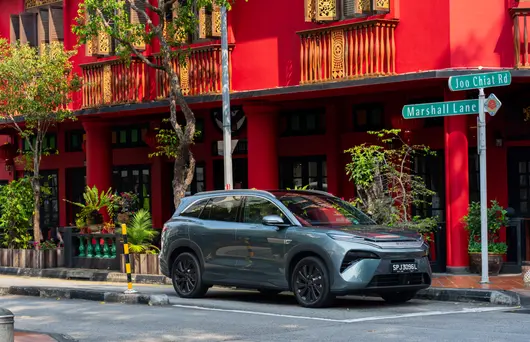

Deepal Automotive delivered its August performance report, with global sales of 28,659 units, cumulative global sales surpassing 947,600 units, leaving a gap of only about 52,000 units to one million.
Looking at the figure for August alone, it dropped slightly compared to 29,213 in July. If you only focus on this one month, you might think it is unremarkable. But what truly matters is the imminent million, and within these 940,000 units, there is far more than just cars.
With Deepal's current pace of nearly 30,000 monthly sales, within at most two months, it will become another brand in China's new energy sector to cross the one million threshold. What is truly worth discussing is not the one million itself, but how this one million was achieved.

The one million for many brands is built up relying on the domestic market. Deepal is not.
Look at a set of numbers, in the first eight months of this year, Deepal's cumulative global sales reached 222,000 units, a year-on-year increase of 11.77%. Among them, overseas cumulative sales reached 52,647 units, with a year-on-year growth of 76.98%, and the overseas growth rate is nearly seven times the overall rate. As of now, Deepal has entered more than 100 countries and regions worldwide, the Thailand base has gone into production, and the right-hand drive market is firmly in its grasp.
What does this mean? It means Deepal's growth is a typical dual-wheel drive, stabilizing the basic domestic market and rapidly opening new overseas markets. This is completely different from the old way of the past where domestic competition became too intense, leading to clearing inventory overseas at low prices.
More critically, Deepal is not sold cheaply overseas; it relies not on price-performance ratio, but on hardcore safety and quality. The Deepal S07 has secured triple five-star safety certifications from Europe's Euro NCAP, Australia's ANCAP, and China's C-NCAP, and is also the individual champion in adult protection for European crash tests. Globally, it has sold over 300,000 units and is popular in more than 80 countries and regions. The Deepal S05 even topped the list for compact pure electric SUV registration for two consecutive months in Spain.
A Chinese brand winning the championship under Europe's most strict safety standards, the significance of this weighs far more than selling tens of thousands of extra cars.

Behind Deepal is Changan, a true central state-owned enterprise.
For a long time in the past, when central enterprises made new energy vehicles, outsiders always had some stereotypes: large ships, slow decisions, hard to turn around, unable to compete with private new forces running fast. But Deepal used four years to go from 0 to 940,000 units, firmly staying in the first tier of central enterprise new energy sales.
There is a background here worth clarifying. Changan's current new energy layout follows a three-pronged approach. Changan Qiyuan is responsible for volume, Avatr aims for the high-end, and Deepal sits in the middle, carrying the tough challenges of mid-to-high-end and globalization.
Where is the difficulty? It lies in that it needs to increase volume, protect profit margins, and expand internationally. Any of these three tasks is not easy on its own, but Deepal has to do them simultaneously. To reach its current position, it relies not on overnight fame from a hit product, but on a complete system: self-developed technology foundation, multiple product matrices, refined channels, plus simultaneous advancement in domestic and international markets.
This is the most important aspect of Deepal worthy of industry attention. In the first half of new energy, one hit product is enough to take off; in the second half, it is about the system. Deepal happens to be a central enterprise model that has perfected the system.
Zooming out a bit, the new energy market in 2026 has actually entered a transparent phase. The price war has gone on until now, with diminishing marginal returns. Relying solely on price cuts to exchange for sales volume makes the path narrower. Those that can truly survive are car companies with complete product matrices, self-developed technology barriers, and global layouts. Deepal covers all three.
In terms of products, it does not rely on one car to survive. Deepal S05 has cumulatively sold 250,000 units, S07 has sold over 300,000 units globally. Added with G318, L06, and S09, it covers multiple segments including mainstream household, sport coupe, and mid-to-large SUV, with success in multiple areas, if one market fails, another succeeds.
In terms of technology, it also doesn't plan to rely on buying. The Force Super Integrated Electric Drive achieved a working efficiency of 94.13%, the Golden Bell Shield battery has cumulatively installed over one million vehicles with zero overheating, and the Micro-core High-frequency Pulse Heating Technology has won the National Invention Patent Gold Award. Even more rarely, Deepal actively open-sources these core patents to the entire industry, using technology sharing to push the entire Chinese new energy sector forward.
This kind of vision cannot be possessed by a car company that only knows how to engage in price involution.

Another point easily overlooked is the foundation of Deepal, which is Super Range Extender.
When range extenders just became popular back then, many people still thought they were transitional solutions, compromises before pure electrification was mature. But after a few years of fighting, the market has voted with its feet; range extenders and plug-in hybrids have long become the core track of the mainstream market, because they exactly solve the real pain point of ordinary families who want the experience of an electric car but fear range anxiety.
Deepal was one of the earliest players to seriously do range extenders in this track, and it started from a forward-developed pure electric platform to do range extenders, not converting oil to electric. This step allows it to enjoy the smoothness and intelligence of pure electricity, while also obtaining the range freedom of range extenders. Technology accessibility and electric equality, these two phrases Deepal shouted are not slogans, but the product logic that carried it to one million sales.
947,600 units, only one step away from one million. This step will be crossed sooner or later. But more important than crossing it is that Deepal has already used these 940,000 units to answer a question that has always hung over the industry: whether Chinese cars going overseas can truly win without relying on cheapness.
The answer is yes.

Auto Review:
The path Deepal provides is very clear: use self-developed technology to establish the product, use safety standards to gain global discourse power, and use systematic capabilities to withstand elimination rounds. It is not simply selling cars abroad, but taking China's technology, standards, and systems out together.
This is the most worth remembering aspect of this Deepal approaching one million. One million is not the end point; it is a new starting point for Chinese cars moving from selling more to selling with strength. And for the industry, what is most precious about Deepal is proving that the national team can also achieve acceleration on this new energy track, running steadily.
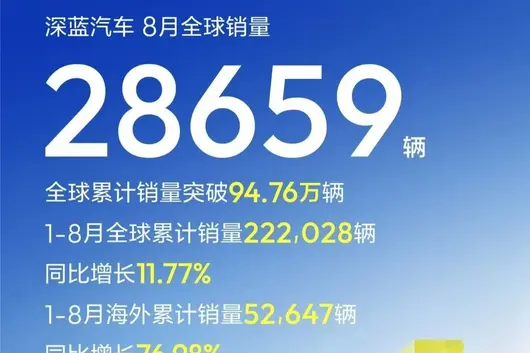

On August 31st, Lotus Sports Cars officially announced that the ELETRE 900 GOLD, EMEYA 900 GOLD, and Lotus Emira 420 Sport three flagship models have officially launched. ELETRE 900 GOLD and EMEYA 900 GOLD are priced at 928,000 RMB and 918,000 RMB respectively. The new cars come equipped with a Handling Equipment Pack, including carbon fiber kits and 10-piston carbon ceramic braking and other performance configurations.

The all-new Emira 420 Sport launches in 2 models, with a price range of 988,000-1,188,000 RMB. The new cars will begin delivery in October. The three new cars have gradually landed at Lotus Experience Stores nationwide.

The biggest product highlight of the two 900 GOLD models lies in taking the "High-Performance Core Handling Equipment Pack" (i.e., "Handling Gold Package") as standard equipment. This equipment pack covers four core components: carbon fiber aerodynamic kit, 10-piston carbon ceramic braking system, forged carbon fiber wheels, and exclusive carbon fiber logo.

The two new cars use carbon fiber parts at 61 locations on the body, with a maximum carbon fiber area reaching 6.1 square meters.


The two models have different positioning focuses. EMEYA 900 GOLD is positioned as a high-performance pure electric four-door GT coupe, while ELETRE 900 GOLD is a pure electric supercar SUV. Together they form Lotus's dual flagship layout in the high-end pure electric sub-market.

In terms of exterior, EMEYA 900 GOLD adds the exclusive Lowe Green paint, inspired by British Racing Green, paying tribute to Lotus's British legends on the racing track.

ELETRE 900 GOLD adds the exclusive Cloud Glaze Cyan paint, drawing from the thousand-year aesthetics of Ru porcelain, replicating the timeless artistic conception of "Rain passed sky green clouds break".

Regarding smart configuration, it is equipped with dual NVIDIA Orin chips, four hidden flip-type LiDARs constituting a five-fold redundant perception system. The cockpit adopts HYPER OS driven by UNREAL Engine, equipped with 55-inch equivalent AR-HUD, PDLC smart partition sunroof, streaming media exterior rearview mirrors, and other tech configurations. In addition, the exclusive track report system can provide professional-level driving data analysis for users.


In terms of power, both models are equipped with dual-motor all-wheel-drive system, total system power 918 horsepower, peak torque 985N·m, matched with a two-speed automatic transmission.

EMEYA 900 GOLD's 0-100km/h acceleration time is 2.78 seconds, top speed 256km/h; ELETRE 900 GOLD's 0-100km/h acceleration time is 2.95 seconds, 0-200km/h acceleration only 11.5 seconds, top speed can reach 265km/h.


In terms of chassis and handling, both 900 GOLD models are equipped with dual-chamber air suspension, CDC 48V active stabilizer bar, rear wheel active steering system. Active rear wheel steering shrinks turning radius at low speeds, turns in same direction as front wheels at high speeds to improve stability. Tires use Lotus and Pirelli joint customized P Zero LTS exclusive tires.

In terms of aerodynamics, the two new cars are equipped with active air dam, active rear diffuser, active spoiler, active grille four major active aerodynamic kits. Lotus official says this is the only model in global mass-produced cars to carry these four configurations simultaneously.

Regarding braking system, standard 10-piston carbon ceramic braking system, front disc size 420mm, rear disc 410mm, compared to traditional cast iron brake discs can reduce about 30kg unsprung mass. Regarding wheels, EMEYA equipped with 22-inch carbon fiber wheels, ELETRE equipped with 23-inch forged carbon fiber insert wheels.

It is worth mentioning, EMEYA 900 GOLD created a lap time record of 1 minute 35.728 seconds at Zhejiang International Circuit, breaking lap time records for four-door sedans and pure electric models; at Malaysia Sepang F1 Circuit in stock condition ran a lap time of 2 minutes 20.317 seconds, breaking the fastest lap time record for mass-produced electric vehicles on this track.
All-new Emira 420 Sport officially landed in the Chinese market.

As a performance upgraded version of the current Emira, Emira 420 Sport is positioned as "Track-level Sports Car". Public reports say the new car domestic expected price is about 1,080,000 RMB. As a reference, current Emira domestic price is 902,800 RMB.
Emira 420 Sport is the first implementation verification in the sports car field after Lotus "Focus 2030" strategy release. Under the wave of electrification transformation, this car is also regarded as one of Lotus's ultimate works of pure fuel mid-engine sports car.

Here are the core information about this new car:
Power Performance: Equipped with a 2.0-liter mid-mounted inline-four turbocharged engine from Mercedes-AMG, after retuning by Lotus team, can output 420 horsepower maximum power and 500 Newton-meters peak torque. Matched with 8-speed dual-clutch transmission, adopting mid-engine rear-wheel drive layout, 0-100km/h acceleration only 3.9 seconds, top speed can reach 300km/h.
Lightweight and Handling: By selecting "Lightweight Handling Kit", total vehicle weight can be reduced by another 25 kilograms, curb weight drops to 1405 kilograms. At the same time, optimized aerodynamic design adds 25 kilograms of downforce to the rear.
Chassis and Configuration: Adopt front and rear double wishbone independent suspension, equipped with Multimatic bidirectional adjustable damping shock absorbers. Standard Michelin Pilot Sport Cup 2 semi-slick tires. Vehicle height lowered by 5mm compared to current model.
Exterior and Aerodynamics: Exterior continues Emira's design, but details are more aggressive. Equipped with carbon fiber louvers tailgate, 20-inch ultra-light aluminum alloy forged wheels and titanium alloy exhaust system. Optimized aerodynamic kit makes external radiator airflow increased by 15%, brake cooling efficiency increased by 10%.

Dalam pasaran SUV di Malaysia, ramai pembeli membandingkan Honda HR-V dan Toyota Fortuner semasa memilih kereta. Kedua-dua kereta ini agak hampir dari segi harga dan kedudukan pasaran, hari ini kita akan buat perbandingan terperinci dari pelbagai aspek, membantu anda menjimatkan masa membuat penyelidikan.
Honda HR-V di Malaysia mempunyai harga OTR RM 115,900 - 143,900, terdapat 4 varian, termasuk 2026 e:HEV 1.5L RS (RM 143,900), 2026 1.5T V (RM 137,900), 2026 1.5T E (RM 130,900) dan lain-lain.
Toyota Fortuner di Malaysia mempunyai harga OTR RM 195,880 - 241,880, terdapat 3 varian, termasuk 2024 2.8T VRZ Diesel (RM 241,880), 2024 2.7L SRZ Petrol (RM 202,880), 2024 2.4L Standard Diesel (RM 195,880) dan lain-lain.
Dari segi harga, harga permulaan Honda HR-V memang lebih murah RM 79,980 berbanding Toyota Fortuner. Jika anda ada bajet terhad, varian permulaan Honda sudah boleh memenuhkan keperluan harian. Tetapi perlu diingat, beberapa ringgit yang lebih murah itu mungkin ada kompromi dari segi peralatan, bergantung kepada keperluan anda.
Honda HR-V menggunakan enjin 1.5L Turbo, kuasa 140 hp. Penggunaan bahan api rasmi 7.0 L/100km.
Toyota Fortuner menggunakan enjin 2.5L Diesel, kuasa 187 hp. Penggunaan bahan api rasmi 8.5 L/100km.
Dari segi kuasa, enjin 2.5L Diesel Toyota Fortuner mempunyai 47 hp lebih berbanding enjin 1.5L Turbo Honda HR-V. Walau bagaimanapun, untuk memandu harian di bandar, kuasa kedua-dua kereta sudah cukup, tidak akan rasa kurang kuasa.
Honda HR-V mempunyai penilaian keselamatan 5★ (ASEAN NCAP), sistem keselamatan aktif termasuk Honda SENSING (ACC, CMBS, LKAS, RDM).
Toyota Fortuner mempunyai penilaian keselamatan 5★ (ASEAN NCAP), sistem keselamatan aktif termasuk .
Penilaian keselamatan kedua-dua kereta sama, dalam kelas ini peralatan keselamatan sudah dianggap cukup lengkap. Keselamatan kereta baru sekarang tidak buruk, tidak perlu terlalu risau tentang hal ini.
Honda HR-V mempunyai jaminan 5 tahun/tanpa had kilometer, selang penyelenggaraan setiap 10,000km atau 6 bulan.
Toyota Fortuner mempunyai jaminan 5 tahun/tanpa had kilometer, selang penyelenggaraan setiap 10,000km atau 6 bulan.
Syarat jaminan kedua-dua kereta sama, tidak perlu terlalu bimbang tentang hal ini. Kos penyelenggaraan sebenar bergantung pada rangkaian servis dan harga komponen, disyorkan bertanya pengalaman pemilik sebenar dalam kumpulan pemilik kereta.

Honda HR-V dan Toyota Fortuner adalah pilihan utama pasaran Malaysia, sesuai untuk kegunaan keluarga, perjalanan harian. Jika anda lebih menghargai reputasi jenama dan nilai semula, pertimbangkan dahulu yang mempunyai reputasi lebih baik; jika anda lebih mementingkan nisbah harga dengan nilai dan peralatan, pilih yang mempunyai konfigurasi lebih lengkap. Pada akhirnya disyorkan kedua-dua unit untuk diuji memandu, pengalaman sendiri adalah yang paling penting.

Secara umum, Honda HR-V dan Toyota Fortuner adalah model kereta yang sangat baik di pasaran Malaysia. Memilih yang mana, bergantung pada keperluan dan bajet peribadi anda. Disyorkan melakukan kajian, bandingkan sebut harga beberapa kedai kereta, baru buat ujian memandu untuk keputusan akhir. Membeli kereta adalah perkara besar, meluangkan masa melakukan kajian tidak akan salah.

Pada pasaran SUV di Malaysia, ramai pembeli akan membandingkan Honda HR-V dan Mazda CX-3 apabila memilih kereta. Kedua-dua kereta ini agak dekat dari segi harga dan kedudukan pasaran. Hari ini kita akan buat perbandingan terperinci dari pelbagai aspek, membantu anda menjimatkan masa membuat penyelidikan.
Harga OTR Honda HR-V di Malaysia ialah RM 115,900 - 143,900, terdapat 4 versi, termasuk 2026 e:HEV 1.5L RS (RM 143,900), 2026 1.5T V (RM 137,900), 2026 1.5T E (RM 130,900) dan lain-lain.
Harga OTR Mazda CX-3 di Malaysia ialah RM 126,159 - 139,159, terdapat 2 versi, termasuk 2023 2.0L High (RM 139,159), 2023 2.0L Plus (RM 126,159) dan lain-lain.
Dilihat dari harga, harga permulaan Honda HR-V memang lebih murah RM 10,259 berbanding Mazda CX-3. Jika bajet anda terhad, versi pemula Honda sudah boleh memenuhi keperluan harian. Tetapi anda perlu ambil tahu, perbezaan harga beberapa ribu itu mungkin ada kompromi pada kelengkapan, bergantung pada keperluan anda.
Pengkelasan keselamatan Honda HR-V ialah 5★ (ASEAN NCAP), sistem keselamatan aktif termasuk Honda SENSING (ACC, CMBS, LKAS, RDM).
Pengkelasan keselamatan Mazda CX-3 ialah 5★ (ASEAN NCAP), sistem keselamatan aktif termasuk i-Activsense.
Pengkelasan keselamatan kedua-dua kereta sama, dalam kategori ini kelengkapan keselamatan dianggap cukup lengkap. Keselamatan kereta baru sekarang tidaklah buruk, tidak perlu risau tentang perkara ini.
Panjang badan Honda HR-V 4500 mm, ruang muatan 450 L.
Panjang badan Mazda CX-3 4500 mm, ruang muatan 450 L.
Saiz kedua-dua kereta hampir sama, ruang dalam kereta tidak banyak berbeza. Kereta dalam kategori ini, penggunaan harian adalah cukup.
Honda HR-V waranti 5 tahun / jarak tanpa had, selang penyelenggaraan setiap 10,000km atau 6 bulan.
Mazda CX-3 waranti 5 tahun/150,000km, selang penyelenggaraan setiap 10,000km atau 6 bulan.

Secara keseluruhan, Honda HR-V dan Mazda CX-3 adalah model kereta yang sangat bagus di pasaran Malaysia. Memilih yang mana, penting adalah melihat keperluan dan bajet peribadi anda. Kami menyarankan anda membuat penyelidikan, bandingkan harga dari beberapa premis kereta, kemudian buat keputusan akhir selepas memandu uji. Membeli kereta adalah perkara besar, meluangkan masa membuat penyelidikan tidak akan salah.


Written by | Liu Ying
Edited by | Huang Dalu
Designed by | Zhen Youmei
On August 26, 2026, Munich is rapidly heating up as the new battlefield for global Robotaxi.
Waymo announced it would launch its first autonomous driving project in Europe here, planning to start commercial operations by the end of 2027 at the latest; while in June prior to this, Uber and Israeli autonomous driving company Autobrains had already made a preemptive layout.
With Baidu Apollo Go, Momenta, and VW MOIA following suit, multiple distinct technical routes are clashing head-on in this city.
On August 6, Igal Raichelgauz (Igal Raichelgauz), founder of Autobrains, publicly questioned mainstream approaches in the industry.
The mainstream view in the autonomous driving industry is that the future of autonomous driving requires more data. As long as enough video is collected, models are trained large enough, and enough vehicles are deployed, the system will eventually learn to drive. This route has shaped today's Waymo, Tesla, and Mobileye.
Autobrains, however, believes that driving AI is like the human brain. Humans do not learn to drive by having seen all scenarios, but because they understand road rules, spatial relationships, and behavioral logic.
This technology is called Thinking AI or Agentic AI by them.

PhD Dropout Founders "Brain Science AI Company"

To understand Autobrains, one must start with its founder Igal Raichelgauz.
He comes from Israel's elite intelligence units. After retiring, he founded a SMS-based instant messaging platform called Figment, then became CTO at speech recognition company LCB, and later held multiple technical positions at Intel.
Every segment was in a different industry, with different technical directions. The only common thread was his obsession with the question of "how machines understand information."
The turning point was at Technion.
In the early 2000s, Raichelgauz came to the Israel Institute of Technology to begin doctoral research on cortical neural networks. His collaborators were neuroscience professor Yehoshua Zeevi (Yehoshua Zeevi), and long-term collaborator Karina Odinaev (Karina Odinaev).
The three wanted to know how the mammalian cerebral cortex interprets meaningful visual worlds from the chaotic light signals received by the eyes?
The deeper the research went, the stranger it became. For a period, the lab was filled with live rats.
Later, the team really inserted electrodes into the rat's cerebral cortex, then converted digital images into electrical signals "written" into them to see how neurons would react. This was not computer simulation; it was real neural tissue responding to digital information.
Unfortunately, this research did not result in a doctoral thesis. Because in 2007, Raichelgauz abandoned his PhD studies and, along with Odinaev and Professor Zeevi, founded Cortica.
Cortica's initial ambition was to translate the way the human brain processes visual information into algorithms.
The logic of traditional machine vision is this. You show the system one million photos of cats, and it learns to recognize cats. You show it one million photos of stop signs, and it learns to recognize stop signs. Essentially, it is "seen enough," reproducing judgment in similar scenarios. Cortica's logic is different. It attempts to let the system extract structural patterns from visual information itself without relying on massive annotation.

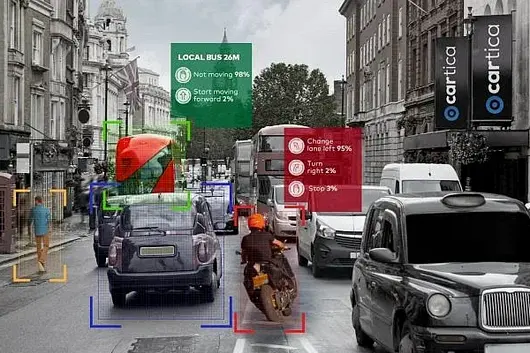
Imagine a scenario. A stormy night, visibility less than 30 meters, an autonomous car driving on a suburban road. Suddenly, a construction worker wearing a reflective vest appears by the roadside, standing next to a temporary traffic cone, waving left to indicate detour. However, this combination, the company's system has never seen in training data.
For traditional systems relying on supervised learning, this scenario is a threat. Because it needs to be "seen" to be recognized, and edge scenarios in the open world are, by definition, impossible to collect completely. Pedestrians obscured by dappled tree shadows, animals suddenly crossing rural roads, bizarre roadblocks never seen before... Each requires dedicated collection, annotation, training, and verification.
Autobrains calls this dilemma the "Supervised Learning Wall." The company has long believed that methods relying on manual annotation and supervised training cannot effectively cover long-tail scenarios in open roads.
"After leading autonomous driving development projects for carmakers for many years, I clearly see that the industry's reliance on data annotation and supervised learning methods is insufficient now. It is too expensive, and once encountering scenarios not specifically trained, it will fail."
The words of Autobrains Senior Vice President Joachim Langenwalter (Joachim Langenwalter) serve as an intuitive description of this "wall." He previously served as Director of Automotive Software at Nvidia, Vice President of Software Strategy at VW Group, and Senior Vice President of Engineering at Stellantis.
Autobrains' founder also said in an interview later: "This process of information processing is not generating text or images, nor searching for images, but interacting in real-time with a large number of dynamic participants in extremely complex real-world environments."
He was talking about cars, but also seemed to be talking about the brain. He believes this is the hardest problem in AI. If this method works on open roads, it means it has solved one of the hardest perception problems in the AI field.

Incubated by Joint Automotive Industry Capital

At inception, the company focused on video content understanding, advertising technology, and security fields. In 2019, Cortica migrated to the automotive industry, giving birth to Cartica AI.
Cartica AI had obvious industry capital incubation colors from the start. The usual autonomous driving startup path is to first establish a company, develop technology, then go to OEMs, Tier 1s, and investors, round after round persuading others to believe in you.
Cartica AI's starting point was not like this. From the moment of its birth, it carried the color of joint industry incubation. OEMs, suppliers, and investment institutions sat at the table together, including Continental, Toyota AI Venture, BMW i Ventures, and Israeli crowdfunding investment platform OurCrowd.
The parent companies of these four institutions are in the upstream and downstream of the automotive industry chain. Continental is a global top-tier automotive parts giant. Toyota AI Ventures and BMW i Ventures represent industrial capital from OEMs in Japan and Germany. OurCrowd is the most active investment platform in Israel.
In other words, Cartica AI was not an isolated laboratory project from the first day of its birth. It was more like a "alternative technical route verification project" jointly supported within the automotive industry.
Later, Cartica AI evolved into Autobrains, with Raichelgauz serving as CEO. PitchBook data shows that Autobrains' predecessor names also included "Cortica Automotive," more clearly revealing its technical inheritance relationship with Cortica.
From Cortica to Cartica AI, then to Autobrains, every name change for this company was not a simple brand adjustment, but a process of technology vertically migrating to automotive scenarios.
Cortica solved "how machines understand the visual world," Cartica AI packaged this technology into solutions facing ADAS and autonomous driving. Autobrains then further locked the commercial target on car companies, Tier 1 suppliers, and mobility platforms.
In terms of specific products, this logic corresponds to the landing forms of different periods of Autobrains.
Liquid AI, released in 2024, breaks driving tasks into multiple independently optimized sub-questions, each handled by a dedicated neural network. Back to that stormy scenario at the beginning. The system does not use one large model to handle rain/fog interference, pedestrian recognition, and gesture understanding simultaneously. Instead, it flows information "like liquid" to the most suitable processing unit. Each unit is only responsible for the layer of judgment it is best at.
The Skills product line, released in October 2024, is the modular commercialization form of Liquid AI. It breaks autonomous driving into a series of "Skills." Each Skill is an AI model end-to-end optimized for specific driving scenarios, activated dynamically according to real-time driving situations. This contrasts with traditional large single neural networks, theoretically easier to extend and verify for new scenarios.
In 2026, Agentic AI entered the core narrative, further organizing driving intelligence into a group of mutually collaborating "scenario agents." Each agent is responsible for specific dimensions of perception, reasoning, and decision-making, and can respond in real-time to the complexity of the real world.
Air-to-Road positioning system, released in September 2024, fuses real-time visual data from vehicle-mounted cameras with satellite images, achieving centimeter-level accuracy positioning, completely without relying on GPS or HD maps. This directly solves the problems of high cost, slow updates, and limited coverage of HD maps, especially attractive for car companies needing to quickly enter new markets.
The company website states that all these technologies have four common points: low computing power requirements, hardware agnosticism (agnostic to sensors and SoCs), no need for large-scale manual annotation, and support for modular expansion.
But in reality, these claims still have a lot of parts that need verification in actual mass production. In public data, detailed independent third-party technical evaluations, large-scale real-road safety data, and standardized comparison tests with mainstream systems are currently lacking.

Its Star Rivals and Friends

Born in the same Israel, there was once a company that changed the global automotive industry landscape.
Mobileye was founded by Amnon Shashua (Amnon Shashua) and Ziv Aviram (Ziv Aviram) in Jerusalem in 1999. It took nearly twenty years to turn a camera-based driving assistance system into the world's most mainstream ADAS supplier.
In March 2017, Intel acquired it for about $15.3 billion. This was the largest acquisition case in the Israeli tech industry at that time. In 2022, Mobileye relisted on Nasdaq as an independent company.
EyeQ series chip shipments exceed 100 million units. Most mass-produced cars on the roads globally with ADAS functions, their eyes are Mobileye's.
The market often sees it as a reference frame that Autobrains cannot avoid.
TechCrunch used the expression "Mobileye challenger (take on Mobileye)" directly in the title when reporting on Autobrains' financing in 2022. Israeli tech media CTech has also placed it in a context of comparison with Mobileye multiple times.
Raichelgauz himself also admitted in an interview: "We are undoubtedly Mobileye's competitors. We are a software company and do not need to develop chips, which allows us to cooperate with different chip manufacturers."
But flipping over Autobrains' shareholder list, you will find its total financing amount is not conspicuous. Public data shows the company's total financing so far exceeds $140 million, holding more than 300 patents, and about 100 to 150 employees. Compared to Waymo and Cruise's financing of tens of billions, this scale is quite low-key.
But the composition of the shareholder list is almost hard to find a second similar company in the industry.
When established in 2019, the first batch of shareholders were famous industry investment institutions.
By Series C, the list expanded further. In November 2021, the company announced completing a $101 million Series C financing round, led by Singapore sovereign fund Temasek, with commercial vehicle brake system supplier Knorr-Bremse and Vietnamese EV manufacturer VinFast following suit. BMW i Ventures and Continental continued to add investments.

In March 2022, this financing round completed its final closing, total amount rising to $120 million. The same batch of industry capital was all present. In the list of investors later announced by Autobrains, global automotive parts supplier Magna and automotive electronics company Aogong also appeared.
Spreading out this list, the OEM dimension includes BMW, Toyota, and Vietnamese EV manufacturer VinFast. The supply chain dimension includes Continental, Magna, and commercial vehicle brake system supplier Knorr-Bremse. The long-term capital dimension includes Singapore sovereign fund Temasek.
This group of investors is itself an important potential customer for Autobrains.

How to Truly Enter Automotive Procurement Systems

One early morning in January 2023, a new onboarding document was received at the Autobrains office in Tel Aviv, Israel.
The person signing was Hilla Tavor (Hilla Tavor). For the previous twelve years, she worked at Mobileye in Jerusalem, serving as Vice President of ADAS Business Development, responsible for relationships with global OEMs. Among them, Ford, GM, VW, BMW, all were on her contact list.
Three weeks later, on February 8, another onboarding document also attracted attention. This time it was Joachim Langenwalter, serving as Senior Vice President of Autonomous Driving Business. According to Autobrains' official announcement, his previous job was Senior Vice President of Engineering at Stellantis, before that Vice President of Software Strategy at VW Group, and even earlier Director of Automotive Software at Nvidia.
Two months, two automotive veterans with extremely deep resume endorsements. This was not a coincidence, but a clear signal.
When Raichelgauz announced Langenwalter's addition, he spoke directly: "Hilla comes from Mobileye, responsible for leading ADAS. Now Joachim joins, responsible for leading autonomous driving."
This means for Autobrains, technology proof has reached a stage. Next, truly entering the automotive procurement system is the key node for enterprise development.
These are two different difficulty problems.
In the early technology stage, persuading a company that your algorithm is effective can rely on demos, releases, and media exposure; there is still a chance. But the automotive procurement system is not a place where one can enter with just a Demo. Procurement cycles range from three to five years. In between, there are functional safety certifications (ISO 26262), intended functionality safety (SOTIF), cybersecurity (UNECE WP.29), and other checkpoints. From prototype demo to mass-produced vehicle, an ADAS system involves a long engineering journey invisible to outsiders.
Mobileye took more than twenty years to build these relationships and trust. What Tavor and Langenwalter bring is precisely these industry accumulations that are difficult to build from zero.

Obtaining a Ticket to the Small Car Market

In all discussions about Autobrains, Robotaxi and L4 autonomous driving occupy most of the版面。But if you only look at this line, it is easy to miss the company's another more pragmatic route.
On December 4, 2024, Autobrains jointly announced the launch of a smart camera ADAS solution with JOYNEXT. JOYNEXT is headquartered in Dresden, Germany, a global Tier 1 supplier serving well-known automakers for over twenty years. It specializes in vehicle-mounted infotainment systems and smart connection gateways. Products have entered millions of vehicles globally.
The solution itself is not complex. It is by integrating Autobrains' AI perception software with JOYNEXT's camera hardware and control software into a compact "single box" module, compliant with European GSR general safety regulations and Euro NCAP requirements, and can be directly inserted into existing vehicle electronic and electrical architectures. After announcing the cooperation, both parties completed on-site demonstrations on test tracks in Germany.
JOYNEXT CEO Stavros Mitrakis (Stavros Mitrakis) said at the cooperation release: "Building a strong ecosystem is crucial for providing reliable and future-oriented technology for global customers. Autobrains is a suitable partner. Cooperating with them, we will be able to provide reliable, high-quality, and cost-effective autonomous driving technology in the future."
The target customers are global OEMs for small cars and compact cars.
Behind this positioning is a simple realistic logic, because the largest volume of the global automotive market has never been in luxury cars and high-end flagships, but in Class A, Class B, small SUVs and other mid-range and entry-level models. With the promotion of EU regulations (mandatory equipment of AEB in new cars) and improvement in consumer cognition, ADAS is becoming a standard from an option.
But cost is the threshold that this market cannot avoid. A complete perception solution requiring LiDAR, HD maps, and dedicated chips may increase the cost of a 100,000 yuan small car by 20,000 to 30,000 yuan. This is economically completely unfeasible. Autobrains' camera-first, low computing power, single box integration solution exactly hits the real demand here: low cost, easy integration, regulatory compliance.
JOYNEXT described this cooperation as an ADAS solution facing the mass production market, rather than a Robotaxi project. Compared to high-order autonomous driving, products facing small car and compact car markets are closer to the true sales baseline of the automotive industry.

Chosen by Vietnamese Automaker VinFast for Cooperation

North of Ho Chi Minh City, on a ordinary urban road in Hanoi, a white VinFast VF 8 is driving slowly. There is no LiDAR on the roof, and no dense sensor arrays can be seen front and back. Only a few inconspicuous positions on the body are equipped with cameras.
This car is testing Autobrains' L2++ system.
VinFast and Autobrains' relationship is another key to understanding this company's commercial logic. It is one of Autobrains' investors, and later became a partner.
On January 27, 2026, VinFast and Autobrains jointly announced strategic cooperation, jointly developing L2++ autonomous driving technology, and exploring a new autonomous driving architecture named "Robo-Car."
The technical claims of the Robo-Car solution are quite radical. Through 7 standard cameras plus one high-performance computing chip (processing about 20 trillion operations per second), without using LiDAR, radar arrays, or HD maps. Positioning relies on Autobrains' self-developed Air-to-Road technology, fusing real-time visual data with satellite images to achieve centimeter-level accuracy positioning under no HD map conditions.
Currently, the L2++ system has launched pilot tests in controlled areas in Hanoi on two main electric SUV models, VinFast VF 8 and VF 9, and plans to expand to larger cities and international markets.
VinFast Global Executive Vice President and Head of ADAS/AD Research Nguyen Van Duong (Nguyen Van Duong) said at the announcement of cooperation: "VinFast's strategic cooperation with Autobrains is helping to shape a disruptive, affordable autonomous driving solution, consistent with our long-term vision for global mobility. Our goal is to push advanced driving technology from early users to ordinary drivers."
Why VinFast? Reuters specifically emphasized in the report on both parties' cooperation that the biggest feature of this solution is not pursuing the highest level of autonomous driving, but achieving higher level intelligent driving capability at the lowest possible cost.
This Vietnamese car company's situation has a certain typicality. It is expanding globally, facing dual competitive pressure from Chinese EV brands like BYD and Xpeng, and traditional European and American car companies. Its early layout in the US market encountered sales declines and product quality problems, urgently needing to find a new differentiation fulcrum in intelligent driving.
But it cannot copy Waymo's high-cost route, nor does it have Tesla's vast data fleet of its own.
Autobrains just provided the answer it needed: low cost, camera-first, no LiDAR needed, not relying on HD maps. Some media called this solution "Low-Cost Tesla Route" because both emphasize camera-first and try to avoid expensive sensor stacking.
But in reality, there is an essential difference in the technical capability level between the two, cannot simply compare. Tesla's FSD capability comes from massive data collection fleet composed of millions of mass-produced cars, and multi-year continuous iteration end-to-end neural network system. Autobrains' cooperation with VinFast is currently still in the testing phase.
A more accurate interpretation is that Autobrains is most likely to find a market in emerging car companies that both need intelligent driving capability, are highly sensitive to cost, and are willing to try non-mainstream suppliers.

Uber's Horse Racing Strategy

On September 8, 2025, Uber and Momenta announced that Munich would become the first city for both parties' European L4 testing, originally planned to start testing in 2026.
However, on June 1, 2026, Uber announced it was ready to cooperate with Autobrains, putting the first stop in German Munich. This news once made outsiders suspect that Autobrains replaced Momenta. At that time, German media Electrive directly asked Uber, but received no reply.
On July 29, 2026, Momenta received full L4 testing license for Germany. The Munich project is still advancing. That is to say, Uber is betting on at least two sets of Robotaxi solutions simultaneously in the same city, leaving the choice of technical route to the market.
Momenta's path is: Uber + Momenta L4 technology + Mass production vehicle platform. Autobrains' path is: Uber + Autobrains Agentic AI + NVIDIA DRIVE Hyperion + Unannounced OEM.
On the night of March 18, 2018, in Tempe, Arizona, USA. An Uber autonomous testing vehicle was driving on a road with almost no streetlights. Ahead, a female pushed a bicycle across the road. The system failed to recognize, the brakes did not start. She died on the spot.
This was the first pedestrian death accident in the history of autonomous driving.
Two years later, Uber announced exiting self-developed autonomous driving. It sold its ATG department to Aurora. Uber also invested $400 million in Aurora and obtained about 26% equity, transforming into "an出行 platform for autonomous driving." It no longer makes its own guns, just doing the dock where shooters set off.
The logic is clear, not betting on a single technical route, but extensive layout, waiting for whoever runs the commercialization first, then deepening cooperation with them.
So far, Uber has woven a network of autonomous driving with more than 30 partners, preparing to invest more than $10 billion in the next few years, and plans to expand autonomous driving services to at most 15 cities by the end of 2026. US has Waymo, Nuro, Avride. Europe has Wayve (London), Momenta (Munich pilot), Middle East has Baidu Apollo Go (Dubai). Now Munich has added Autobrains.
Fast Company described Uber in special reports as one of the largest "platform bettors" in the autonomous driving industry. Compared to developing autonomous driving personally, Uber prefers to cooperate with multiple technical routes simultaneously, filtering the final winner through real operation scenarios.
This is a typical platform-side horse racing strategy. Uber does not need to judge who will win, it just needs to stand at the finish line waiting for the champion to appear.
Against this background, the significance of Autobrains entering Munich becomes clearer. It is not Uber's only European Robotaxi partner, but it is the first Israeli autonomous driving company to obtain a clear cooperation framework in the German market.
Munich's choice is very significant. This is the home of BMW headquarters, the spiritual center of the European automotive industry, and also the typical representative of strict regulations and complex road driving scenarios in European cities. Running Robotaxi here, the value in technical credibility and market demonstration effect far exceeds that of an ordinary small or medium-sized city.
Founder Raichelgauz said in the Munich cooperation announcement: "Cooperating with Uber and Nvidia, we are bringing our method into the autonomous driving mobility field, combining Agentic AI with the required mobility platform and automotive computing power, supporting Robotaxi scaled operation across cities, across vehicles, and across real road conditions."
Of course, the project is still waiting for German regulatory approval. The vehicle manufacturer has not been announced. The fleet size, service area, and commercial launch time have not been determined.
Even so, Autobrains is still worth being taken seriously.
Over the past ten years, the mainstream narrative of the autonomous driving industry has increasingly believed in "big," including large fleets, big data, large computing power, multi-sensors, HD maps, cloud training, and complex system engineering, etc.
This logic indeed pushed industry progress, producing heavyweight players like Waymo, Mobileye, Tesla, etc., but also brought high costs, long cycles, and commercialization pressure.
Until today, large-scale commercialization of fully unmanned driving is still on paper.
Against this background, the question Autobrains raised is a real industry pain point.
If autonomous driving can only be promoted by increasingly expensive systems, then a large number of cost-sensitive models, a large number of users in emerging markets, a large number of application scenarios that cannot afford LiDAR plus continuous cloud update costs, may not truly benefit from this technology.
Autobrains aims precisely to make autonomous driving AI smarter under cost constraints, become reliable enough, cheap enough, and easy to integrate enough.
This is a road, or a wall, needs time to judge.
References:
[1] electrive.com: Uber and Autobrains announce Robotaxi partnership in Munich (2026)
[2] Fast Company: Uber’s $10 Billion Bet: Why the Ride-Hailing Giant is Partnering with 30 Autonomous Driving Companies (June 2026)
[3] TechCrunch: Autobrains takes on Mobileye with $120M funding for its AI-based AV technology (March 2022)
[4] Reuters: Vietnam's VinFast partners with Israel's Autobrains on lower-cost self-driving tech (January 2026)
[5] CTech (Calcalist): From Mobileye to Autobrains: Hilla Tavor joins autonomous driving startup (January 2023)
[6] Automotive World: Autobrains launches Liquid AI to break the "supervised learning wall" (2024)
[7] JOYNEXT Official Newsroom: JOYNEXT and Autobrains announce strategic partnership to deliver cost-effective ADAS solutions (December 2024)
[8] VinFast Official Newsroom: VinFast and Autobrains Announce Strategic Partnership for L2++ and Robo-Car Development (January 2026)
[9] Autobrains Official Website: Technical Whitepaper and Funding Announcement (Agentic AI, Air-to-Road, Skills)

8 月 26 日嘅雁棲湖發佈會,奇瑞帶嚟咗風雲 T7 呢台主打家庭嘅純電 SUV。整場發佈會仲請到吳克勤作為體驗官,傾吓普通人對於安穩出行嘅嚮往。新車一共有 3 個配置,官方指導價 9.79‑11.89 萬,算上搶先置換政策,入門可以做到 9.49 萬,同時畀到 9 重購車權益,呢個價位放喺 10 萬級純電市場,競爭力好值得琢磨。

比較有意思嘅一點,呢台車並唔係先做國內再出海,佢嘅同源車型已經喺南非、泰國上市,仲上過米蘭設計周,係經過海外市場檢驗,再返嚟國內面向普通家庭。

研發階段就參考咗全球 210 個國家地區嘅用車法規同路況。整車累計測試里程超 600 萬公里,光係耐久測試就跑咗 145 萬公里。從巴西嘅減速坎、墨西哥鵝卵石路面,到德國高速彎道、南非非鋪裝爛路,‑40℃到 55℃嘅極端溫度全部都跑透。等如把全球絕大多數典型路況全部試煉一遍之後,先嚟服務國內用戶,呢套驗證強度,喺十萬級車型裡並唔多見。

落到實際家用場景,我將佢嘅產品力拆解成續航空間、設計做工、安全、智能呢幾個大家買車最關心嘅維度。
續航呢塊,風雲 T7 冇玩同車不同電池嘅套路,全系統一 65.05kWh 犀牛電池,CLTC 續航 600km,媒體實測甚至跑到 681.6km,屬於少見嘅實測大於官方標定。電池循環壽命可以做到 2500 次,正常家用能用 15 年,快充 30%‑80% 只需 20 分鐘。北方用戶好關注嘅冬季續航衰減,佢配咗熱泵空調加高壓 PTC 嘅雙源方案,再加上 AGS 進氣格柵、多項低風阻優化,零下 10 攝氏度環境,續航能夠提升 30%。12 合 1 鯤鵬電驅,178kW 峰值功率,動力同能耗做到咗兼顧。
軸距 2700mm,車身 4570×1852×1694mm,車內空間得房率 84%,後排腿部 911mm 係純平地台,坐三個人都唔會太局促。9 層雲感座椅,軟硬調校偏向家用舒適。常規尾箱 450L,仲有 99L 下沉儲物格;放倒二排可以拓展到 1550L,全車 32 處儲物空間,日常買菜、露營裝備都塞得落,家用裝載能力係夠用嘅。

外觀走東方馭風嘅設計思路,風阻做到 0.286Cd,一共 6 種車漆顏色,熾焰橙用咗豪華車上先會見到嘅 8 層塗噴工藝,光線變化下層次感好強。座艙環抱式佈局,菱格縫線、水波紋細節、懸浮揚聲器,內飾有兩套配色,質感喺呢個價位屬於中上水平。
家庭買車,安全係繞唔開嘅重點。車身高強度鋼佔比 80%,熱成型鋼 18.84%,雙框副車架、Pack 防撞梁,仲有 Shotgun 結構分散碰撞衝擊力,全車畀到 9 個安全氣囊。電池防護做得都係下本,31 層鎖子甲防護結構,IP68 防水等級標準遠超國標,擠壓、火燒、鹽霧都做咗超規格測試。底盤由海外團隊調校,50.8:49.2 接近五五開嘅軸荷比,搭配大尺寸襯套、線控制動,開起嚟嘅穩定性同煞車信心都有保障。

智能方面係呢台車一大睇點,搭載 4nm 嘅 8775 艙駕一體芯片,NPU 算力 72TOPS,系統延遲低至 80ms,車機流暢度有硬件打底。15.6 英寸 2.5K 防眩光大屏,亮度 1000nit,CarPlay、HiCar 呢些手機互連全部都支持。接入豆包大模型之後語音交互更自然,仲有小憩、寶寶、哨兵呢類貼合家庭嘅場景模式。獵鷹 500 輔助駕駛,22 顆傳感器,高速領航、100 米循跡倒車、三百多種場景自動泊車,城市通勤、停車入庫都能減輕唔少負擔。

總嘅嚟講,十萬級純電 SUV 選擇非常多,但大都會喺續航、安全、配置上面做取舍。風雲 T7 畀我嘅感受,佢更偏向務實家庭用戶,唔搞花裏胡哨嘅噱頭,經過全球大量路況驗證,全系續航唔縮水,安全配置畀到好足。疊加 9.49 萬起嘅置換價,對於追求穩定、看重家用實用性嘅消費者,係一個唔能忽略嘅選項。
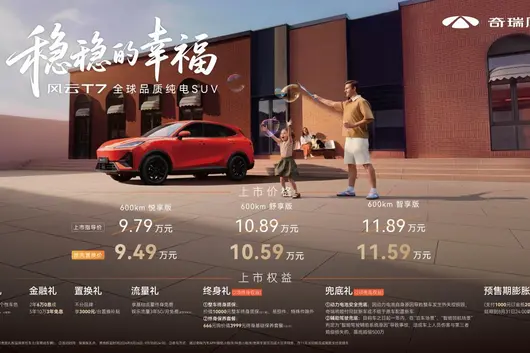

2026 年 8 月 26 日,奇瑞風雲 T7 正式上市,官方指導體價 9.79‑11.89 萬,換購優先價 9.49 萬起,上市即交車。喺國內新能源市場「快速迭代、注重堆料、入門減配」嘅內捲浪潮之下,風雲 T7 走出一條與眾不 同嘅路線:原生全球車,先出海驗證,再回歸國內市場,用三年研發週期、全球嚴苛驗證,主打家用家庭用戶嘅真實用車訴求,試圖重塑十萬級純電 SUV 嘅價值標尺。
反向出海:一台為全世界造嘅家用純電 SUV
當前絕大多數中國新能源車型嘅邏輯係:國內完成研發上市,市場驗證之後,再做局部修改適應海外法規,實現出口。風雲 T7 則選擇反向路徑:同源車型 Lepas L6 已經率先登陸南非、泰國,後續將進入歐盟、英國、澳大利亞、以色列等市場,先經受全球市場檢驗,再面向國內消費者開售。

風雲 T7 依托奇瑞全球 1+7+N 研發體系打造,研發週期長達三年,對標 2026 版 E‑NCAP 五星安全標準,適應全球 210 個國家地區用車環境。研發階段投入 81 臺耐久試驗車,累計完成 145 萬公里耐久驗證、600 萬公里全球路試,足跡遍佈 21 個國家,覆蓋全球絕大多數典型路況;同時邀請 5000 多名海内外用戶參與共創,兼顧不同地區嘅審美與用車習慣。

奇瑞提出嘅「全球車,快唔到一點」,正係風雲 T7 嘅產品底色。佢唔追求快速上新,而係把安全、耐久、可靠性放在首位,把海外嚴苛標準直接平移去國內版本,亦都係佢區別於同價位好多車型嘅核心差異點。
產品力解析:續航平權,把核心硬件俾到每一位用戶
風雲 T7 定位緊湊型純電 SUV,車身尺寸 4570×1852×1694mm,軸距 2700mm,五座佈局,車身尺寸兼顧城市好開好停,同時滿足三口之家日常出行空間需求。
三電系統:全系 600km,拒絕入門版續航縮水
十萬級純電市場一個普遍現象:入門版本縮減電池、降低續航,用低價吸引用戶,長續航版本需要大幅加價。風雲 T7 直接實現續航平權:三款配置全部搭載 65.05kWh 犀牛磷酸鋰鐵電池,CLTC 續航統一 600km,百公里電耗 12.9 度,30%‑80% 直流快充只需 20 分鐘,支援 6.6kW 對外放電,滿足露營戶外場景。

動力採用 12 合 1 鯤鵬超能電驅,前置單電機最大功率 178kW,峰值扭矩 275N·m,最高車速 180km/h,兼顧城市通勤與高速超車能力。底盤為前麥花臣 + 後多連桿獨立懸掛,由海外底盤專家團隊調校,560mm 低重心設計,帶來唔錯嘅行駛穩定性;整車擁有 500mm 涉水深度,電池包具備完善嘅液冷、PTC 預加熱、寬溫域熱泵空調,兼顧低溫環境續航表現。
外觀與座艙:家用取向,實用配置唔係吝嗇
風雲 T7 採用東方馭風美學家族設計,封閉式前臉搭配 L 型日行燈,整車線條簡潔穩重,兼顧全球市場審美。全系標準配備 AGS 智能主動進氣格柵,全車 14 項低風阻優化,有效降低風噪、提升續航表現;車尾貫穿式尾燈,全系標準配備電動尾門,喺同價位屬於非常實在嘅配置。

市場格局:十萬級純電 SUV,務實路線嘅新挑戰者
當前 10‑12 萬純電 SUV 賽道競爭白熱化,埃安、零跑、名爵等多款產品同台競技。呢個細分市場嘅用戶,大多數係家庭第一台車,訴求好現實:穩定續航、可靠安全、夠用嘅配置、低用車成本,對於花巧嘅噱頭配置並唔鍾意。

風雲 T7 同風雲 T9L 定位形成區隔:T7 係城市家用純電 SUV,適合日常通勤為主,充電方便嘅家庭;T9L 係插混大五座,適合經常長途出行、冇固定充電條件嘅用戶,兩者互補,完善風雲品牌嘅家用新能源矩陣。

風雲 T7 嘅上市,代表奇瑞風雲品牌嘅一種產品思路:唔盲目堆砌參數,唔做入門減配,將全球標準落地去家用車型,用保養同安全兜底,服務普通家庭真實用車場景。
喺好多車型一味追求加速、大屏幕、花巧功能嘅時候,風雲 T7 回歸家用本質:續航夠用、安全可靠、底盤扎實、售後省心。「先出海再回家」嘅開發模式,亦畀國內新能源行業提供一個參考:好車唔止服務國內市場,更經得住全球市場檢驗。
對於普通消費者嚟講,如果預算喺 9‑12 萬,想要一台 600km 續航、有終身保養、兼顧城市通勤同短途出遊嘅純電 SUV,風雲 T7 係值得重點考慮嘅務實選擇。
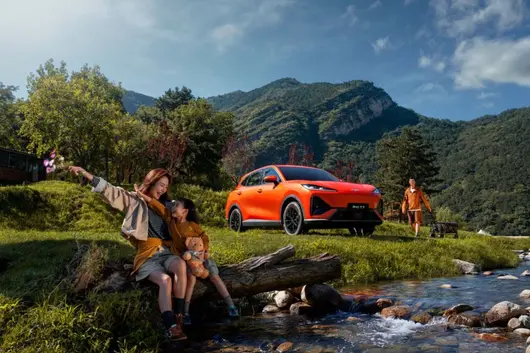

August 26, 2026, Chery Fengyun T7 officially launched, official guide price 97,900-118,900 RMB, early trade-in price starts from 94,900 RMB, immediate delivery upon launch. Amidst the fierce competition in the domestic new energy market characterized by "fast iterations, spec stacking, and downgraded entry-level", the Fengyun T7 walks a path distinct from othersa common route: Native global vehicle, validate overseas first, then return to the domestic market, with a three-year R&D cycle and rigorous global verification, focusing on the real usage demands of household family users, attempting to reshape the value benchmark for the 100,000-level pure electric SUV.
Reverse overseas expansion: A home electric SUV built for the world
Currently, the logic for the vast majority of Chinese new energy models is: complete R&D and launch domestically, verify in the market, then make local modifications to adapt to overseas regulations to achieve exports. The Fengyun T7 chooses a reverse path: the homologous model Lepas L6 has already launched in South Africa and Thailand, followed by the EU, UK, Australia, Israel and other markets, to withstand global market testing before being sold to domestic consumers.
Created based on Chery's global 1+7+N R&D system, the Fengyun T7 has an R&D cycle of up to three years, benchmarked against the 2026 Version E-NCAP 5-Star Safety Standard, adapted for driving environments in 210 countries and regions. The R&D phase invested in 81 durability test vehicles, cumulatively completed 1.45 million km durability verification and 6 million km global road tests, covering 21 countries, encompassing most typical road conditions globally; at the same time, over 5,000 domestic and international users were invited to participate in co-creation, balancing aesthetics and usage habits of different regions.
Chery's proposal "Global Vehicle, No Rushing Allowed" is exactly the product DNA of the Fengyun T7. It does not pursue rapid updates, but places safety, durability, and reliability as the top priority, directly transferring overseas rigorous standards to the domestic version, which is also the core differentiation point distinguishing it from many models at the same price point.
Product Capability Analysis: Range Equality, Giving Core Hardware to Every User
The Fengyun T7 is positioned as a compact pure electric SUV, body dimensions 4570×1852×1694mm, wheelbase 2700mm, 5-seat layout, body dimensions balance easy driving and parking in the city, while meeting the daily travel space needs of a 3-person family.
Three-Electric System: All Models 600km, Refuse Range Shrinkage on Entry-Level
A common phenomenon in the 100,000-level pure electric market: entry-level versions reduce battery capacity, lower range, using low prices to attract users, while long-range versions require significant price hikes. The Fengyun T7 directly achieves range equality: all three configurations are equipped with the 65.05kWh Rhino LFP battery, CLTC range unified at 600km, energy consumption 12.9 kWh/100km, 30%-80% DC fast charging only takes 20 minutes, supports 6.6kW V2L (Vehicle to Load), meeting camping outdoor scenarios.
Powertrain uses the 12-in-1 Kunpeng Super Electric Drive, front single motor max power 178kW, peak torque 275 N·m, max speed 180 km/h, balancing city commuting and highway overtaking capabilities. Chassis is Front MacPherson + Rear Multi-link independent suspension, tuned by an overseas chassis expert team, 560mm low center of gravity design, bringing good driving stability; the vehicle has 500mm wading depth, battery pack has complete liquid cooling, PTC pre-heating, wide temperature range heat pump AC, balancing range performance in low-temperature environments.
Exterior and Cabin: Family-Oriented, Practical Configurations Not Stingy
Fengyun T7 adopts the Oriental Wind Aesthetics Family Design, closed front grille paired with L-shaped daytime running lights, overall vehicle lines are simple and steady, balancing global market aesthetics. All models standard equip AGS Intelligent Active Grille Shutter, 14 items of low drag optimization for the whole car, effectively reducing wind noise and improving range performance; full-width taillights, all models standard equip power tailgate, which is very practical configuration at this price point.
Market Landscape: 100,000-Level Pure Electric SUV, A Pragmatic Challenger
Current 100,000-120,000 RMB pure electric SUV track competition is hyper-competitive, with products from Aion, Leapmotor, MG and others competing on the same stage. Users in this niche market are mostly buying their first family car, demands are very realistic: stable range, reliable safety, sufficient configurations, low ownership costs, not interested in flashy gimmick configurations.
Fengyun T7 and Fengyun T9L positioning form differentiation: T7 is a city home pure electric SUV, suitable for daily commuting, families with convenient charging conditions; T9L is a PHEV large 5-seater, suitable for frequent long-distance travel, users without fixed charging conditions, complementing each other, perfecting the Fengyun brand's home new energy matrix.
The launch of Fengyun T7 represents a product strategy of the Chery Fengyun brand: not mindlessly stacking parameters, not doing trimmed-down entry-level, implementing global standards on home models, using warranty and safety guarantees, serving ordinary family real-world usage scenarios.
When many models blindly pursue acceleration, large screens, and flashy functions, the Fengyun T7 returns to the family essence: sufficient range, reliable safety, solid chassis, worry-free after-sales. The development model of "Overseas First, Then Home" also provides a reference for the domestic new energy industry: good cars not only serve the domestic market, but must withstand the test of the global market.
For ordinary consumers, if the budget falls between 90,000-120,000 RMB, wanting a 600km range, with lifetime warranty, pure electric SUV balancing city commuting and short trips, the Fengyun T7 is a pragmatic choice worth considering in depth.

日前,奇瑞风云T7正式上市。这款车一共三个版型,上市指导价定在9.79万元到11.89万元之间,如果算上置换补贴,抢先置换价更是来到了9.49万元起。在十万级纯电SUV这个竞争最激烈的市场里,风云T7的定价策略很明确:不玩套路,直接把全球标准的产品拉到这个价位段。
说实话,现在市面上不少十万级纯电车型为了把价格压下去,惯用的手法是在续航、安全配置或者智能化上做高低配差异。入门版往往电池缩水、续航打折,想要长续航和完整的安全配置就得加钱上高配。

风云T7这次反其道而行之,全系标配65.05kWh的犀牛电池,CLTC纯电续航统一给到600公里,实测续航甚至跑到了681.6公里。这种反向虚标的做法,对于每天通勤几十公里、周末还想带家人近郊出游的普通用户来说,意味着实实在在的安心。更关键的是,30%到80%的快充只需要20分钟,一杯咖啡的时间就能补回将近300公里的续航,日常使用基本不会有什么里程焦虑。
安全方面,风云T7下了不少硬功夫。车身采用九横五纵笼式结构,高强度钢占比达到80%,热成型钢占比18.84%。更值得关注的是,它按照2026版E-NCAP五星安全标准开发,配备了同级最多的9个安全气囊,其中包括48L的双腔远端气囊。电池安全同样没有妥协,6D锁子甲31层防护结构、IP68级防水、200kN的侧边抗挤压性能,这些参数对于普通消费者可能有点抽象,但简单来说就是:遇到碰撞、涉水或者极端天气,电池包不容易出问题。奇瑞还给出了动力电池安全兜底承诺,如果因为电池自身原因导致热失控损毁,直接赔付同款新车。这种承诺在行业内并不多见,说明厂家对自身产品有足够的底气。

智能化配置是另一个亮点。风云T7搭载了同级首发的8775舱驾一体芯片,采用4nm制程,算力达到72TOPS。这套芯片同时驱动智能座舱和辅助驾驶,系统响应延迟控制在80毫秒。实际体验层面,它支持300多种全场景自动泊车,包括跨楼层智能泊车和100米循迹倒车,对于停车困难户来说非常实用。高速领航辅助功能能够提前500米预判变道和匝道汇入,长途驾驶可以减轻不少疲劳。15.6英寸的2.5K高清大屏、支持CarPlay和HiCar的全品牌手机互联,这些配置放在十万级车型里,确实算得上诚意满满。

当然,风云T7最大的差异化标签还是全球车。奇瑞连续23年位居中国品牌乘用车出口第一,全球用户超过2000万。风云T7并不是国内特供车型简单改个标出海,而是从研发之初就同步适配全球210个国家和地区的用车需求。它经历了全球21个国家的实车验证,累计测试里程超过600万公里,其中耐久专项实测145万公里,覆盖了从北欧极寒到中东高温、从东南亚高湿到德国高速的100多种极限路况。同源车型Lepas L6已经在南非、泰国上市,接下来还要进入欧盟、澳新等市场。这种先跑遍全球再回国上市的路径,让风云T7在底盘调校、环境适应性、法规符合性上都积累了大量前置经验。

从实际用车场景来看,风云T7的产品定义很贴近中国家庭的日常需求。84%的车内得房率、后排纯平地板、1955mm乘1310mm的纯平大床模式,带娃出行或者露营休息都比较实用。450升的后备厢常规容积,放倒后能扩展到1550升,装婴儿车、露营装备或者搬家的大件物品都够用。9层云感舒适座椅支持三档加热和吸风,冬天不用冻屁股,夏天不会闷汗。这些细节看起来不如续航、加速那么耀眼,但恰恰是家庭用户每天上车都能感知到的体验。
上市权益方面,风云T7也拿出了真金白银的诚意。除了3000元置换补贴和2年6万0息或5年10万3年免息的金融方案,还有价值6000元的个性车色限时免费、整车终身质保(含三电)、666元购价值3999元的终身基础保养套餐等。对于预算在十万出头、想买一台靠谱纯电SUV的消费者来说,这些权益进一步降低了购车和用车的门槛。

总的来说,风云T7的产品逻辑很清晰:在十万级价位段,不做够用就行的将就产品,而是把长续航、高安全、真智能和全球验证的品质一次性给到位。它可能不是参数最炸裂的车型,但胜在均衡和踏实。如果你是一位注重实用性、希望少折腾、追求稳稳当当用车体验的家庭用户,风云T7值得去店里实际看一看、试一试。毕竟,在这个价位段,能把全球标准和600公里续航同时做到全系标配的,目前还真不多见。
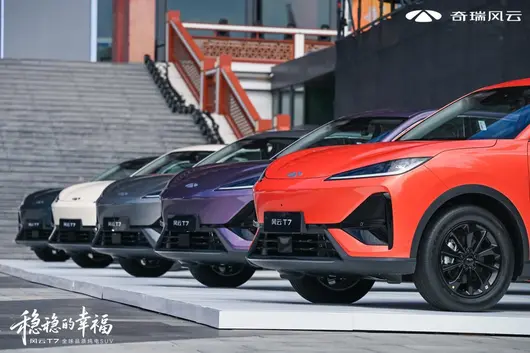
In Malaysia's SUV market, many buyers compare Honda HR-V and Toyota Yaris Cross when choosing a car. These two models are quite close in price and positioning. Today, we will do a detailed comparison from multiple aspects to help you save time on research.
Honda HR-V OTR price in Malaysia is RM 115,900 - 143,900, with a total of 4 versions, including 2026 e:HEV 1.5L RS (RM 143,900), 2026 1.5T V (RM 137,900), 2026 1.5T E (RM 130,900), etc.
Toyota Yaris Cross OTR price in Malaysia is RM 99,900 - 109,900, with a total of 2 versions, including 2026 1.5L Standard (RM 99,900), 2026 HEV 1.5L Standard (RM 109,900), etc.
From a price perspective, the starting price of Toyota Yaris Cross is RM 16,000 cheaper than Honda HR-V. To be honest, in this price range, a difference of a few thousand is not significant. The key is to look at overall value for money and long-term maintenance costs.
Honda HR-V is equipped with 1.5L Turbo, 140 hp. Official fuel consumption 7.0 L/100km.
Toyota Yaris Cross is equipped with 1.5L 4-cyl, 105 hp. Official fuel consumption 6.0 L/100km.
In terms of power, Honda HR-V's 1.5L Turbo has 35 more horsepower than Toyota Yaris Cross's 1.5L 4-cyl, providing more confidence in mid-range acceleration, especially when overtaking on highways. However, Toyota Yaris Cross may have better fuel economy, and the difference in daily city commuting will not be too significant.
Honda HR-V body length 4500 mm, trunk 450 L.
Toyota Yaris Cross body length 4400 mm, trunk 400 L.
In terms of space, Honda HR-V's body is 100 mm longer than Toyota Yaris Cross, so the interior seating space will be slightly more spacious, especially legroom in the rear seats. If you often carry family or need to fit a stroller, a larger body is indeed more practical.
Honda HR-V adopts FWD drive type.
Toyota Yaris Cross adopts FWD drive type.
Both cars have the same drive type, both are FWD, so there won't be a significant difference in daily driving experience.

Honda HR-V warranty 5 years/unlimited mileage, service interval every 10,000km or 6 months.
Toyota Yaris Cross warranty 5 years/unlimited mileage, service interval every 10,000km or 6 months.
Both cars have the same warranty conditions, no need to worry about this aspect. Actual maintenance costs depend on the brand's service network and parts prices. It is recommended to ask real owners in car owner groups for their experience.

Overall, Honda HR-V and Toyota Yaris Cross are both very good models in the Malaysian market. Which one to choose depends on your personal needs and budget. We suggest doing your research, comparing quotes from several dealerships, and test driving before making a final decision. Buying a car is a big matter, taking some time to research is never wrong.
In the SUV market in Malaysia, many buyers compare Honda HR-V and Toyota Corolla Cross when choosing a car. These two models are quite close in price and positioning. Today, we will make a detailed comparison from multiple aspects to help you save time on research.
Honda HR-V OTR price in Malaysia is RM 115,900 - 143,900. There are 4 versions in total, including 2026 e:HEV 1.5L RS (RM 143,900), 2026 1.5T V (RM 137,900), 2026 1.5T E (RM 130,900), etc.
Toyota Corolla Cross OTR price in Malaysia is RM 133,800 - 148,800. There are 3 versions in total, including 2026 HEV 1.8L GR Sport (RM 148,800), 2026 HEV 1.8L Standard (RM 140,800), 2026 1.8L Standard (RM 133,800), etc.
From a price perspective, Honda HR-V's starting price is indeed RM 17,900 cheaper than Toyota Corolla Cross. If your budget is limited, Honda's entry-level version can already meet daily needs. But note that the savings of a few thousand might involve trade-offs in features, depending on your needs.
Honda HR-V is equipped with 1.5L Turbo, 140 hp. Official fuel consumption 7.0 L/100km.
Toyota Corolla Cross is equipped with 1.5L Turbo, 140 hp. Official fuel consumption 7.0 L/100km.
Both cars use the same powertrain system, and the daily driving feel is basically the same. Fuel consumption is also similar, no need to worry too much about this.
Honda HR-V body length 4500 mm, trunk 450 L.
Toyota Corolla Cross body length 4400 mm, trunk 400 L.
In terms of space, Honda HR-V body is 100 mm longer than Toyota Corolla Cross, interior passenger space will be slightly more spacious, especially rear legroom. If you often carry family or need to fit a stroller, a slightly larger body is indeed more practical.
Honda HR-V warranty 5 years/unlimited mileage, maintenance interval every 10,000km or 6 months.
Toyota Corolla Cross warranty 5 years/unlimited mileage, maintenance interval every 10,000km or 6 months.
Both cars have the same warranty conditions, no need to worry about this. Actual maintenance costs depend on brand service network and parts prices. It is recommended to ask real owners in car groups about their experience.

Overall, Honda HR-V and Toyota Corolla Cross are both very good models in the Malaysia market. Which one to choose depends on your personal needs and budget. We recommend doing your research, comparing quotes from multiple dealerships, and then test driving to make a final decision. Buying a car is a big matter; spending time on research is definitely worth it.
In Malaysia's SUV market, many buyers compare Honda HR-V and Toyota Yaris Cross when choosing a car. These two cars are quite close in price and positioning. Today, we will make a detailed comparison from multiple aspects to help you save time on research.
Honda HR-V's OTR price in Malaysia is RM 115,900 - 143,900, with a total of 4 versions, including 2026 e:HEV 1.5L RS (RM 143,900), 2026 1.5T V (RM 137,900), 2026 1.5T E (RM 130,900) etc.
Toyota Yaris Cross's OTR price in Malaysia is RM 99,900 - 109,900, with a total of 2 versions, including 2026 1.5L Standard (RM 99,900), 2026 HEV 1.5L Standard (RM 109,900) etc.
From a price perspective, Toyota Yaris Cross's starting price is RM 16,000 cheaper than Honda HR-V. Honestly, in this price segment, a difference of a few thousand is not really significant; the key is to look at overall cost-performance and long-term usage costs.
Honda HR-V is equipped with 1.5L Turbo, 140 hp. Official fuel consumption 7.0 L/100km.
Toyota Yaris Cross is equipped with 1.5L 4-cyl, 105 hp. Official fuel consumption 6.0 L/100km.
In terms of power, Honda HR-V's 1.5L Turbo has 35 more hp than Toyota Yaris Cross's 1.5L 4-cyl, offering more confidence in mid-range acceleration, especially when overtaking on highways. However, Toyota Yaris Cross's fuel consumption might be more friendly, and the difference in daily city commuting won't be too significant.
Honda HR-V's safety rating is 5★ (ASEAN NCAP), active safety systems include Honda SENSING (ACC, CMBS, LKAS, RDM).
Toyota Yaris Cross's safety rating is 5★ (ASEAN NCAP), active safety systems include TSS.
Both cars have the same safety rating, safety features in this class are quite complete. New cars nowadays have no issues with safety, no need to worry too much about this.
Honda HR-V adopts FWD drive mode.
Toyota Yaris Cross adopts FWD drive mode.
Both cars use the same drive mode, both are FWD, daily driving experience will not differ too much.
Honda HR-V and Toyota Yaris Cross are mainstream choices in the Malaysia market, suitable for family use and daily commuting. If you value brand reputation and resale value more, you can prioritize the one with better reputation; if you care more about cost-performance and features, then choose the one with richer configuration. In the end, it is recommended to test drive both, personal experience is the most important.
Overall, Honda HR-V and Toyota Yaris Cross are both quite good models in the Malaysia market. Choosing which one depends on your personal needs and budget. We suggest doing your research, comparing quotes from multiple dealers, and then test driving to make the final decision. Buying a car is a big matter, spending some time on research will definitely not be wrong.

In the Malaysian SUV market, many buyers compare the Honda WR-V and Subaru Crosstrek when choosing a car. These two cars are quite close in price and positioning. Today we will make a detailed comparison from multiple aspects to help you save time on research.
The OTR price of Honda WR-V in Malaysia is RM 89,900 - 107,900, with a total of 4 versions, including 2023 1.5L V (RM 99,900), 2023 1.5L E (RM 95,900), 2023 1.5L S (RM 89,900), etc.
The OTR price of Subaru Crosstrek in Malaysia is RM 145,000 - 160,000, with a total of 1 version, including 2.0L e-Boxer (RM 150,000), etc.
When looking at price, Honda WR-V is indeed RM 55,100 cheaper than Subaru Crosstrek. If your budget is tight, Honda's entry-level version already meets daily needs. But also note, the few thousand ringgit savings might come with compromises on features, depending on your needs.

Honda WR-V is equipped with 1.5L 4-cyl, horsepower 105 hp. Official fuel consumption 6.0 L/100km.
Subaru Crosstrek is equipped with 1.5L Turbo, horsepower 140 hp. Official fuel consumption 7.0 L/100km.
In terms of power, Subaru Crosstrek's 1.5L Turbo has 35 more horsepower than Honda WR-V's 1.5L 4-cyl. However, for daily city driving, both cars have sufficient power and won't feel underpowered.

Honda WR-V body length 4400 mm, trunk 400 L.
Subaru Crosstrek body length 4400 mm, trunk 400 L.
The dimensions of both cars are almost the same, and the interior space difference is not significant. For this class of cars, daily use is fully sufficient.

Honda WR-V adopts FWD drive mode.
Subaru Crosstrek adopts FWD drive mode.
Both cars have the same drive mode, both are FWD, daily driving experience will not differ much.

Both Honda WR-V and Subaru Crosstrek are mainstream choices in the Malaysian market, suitable for family use and daily commuting. If you value brand reputation and resale value more, you can prioritize the one with better reputation; if you care more about cost-effectiveness and features, then choose the one with richer configuration. Finally, it is suggested to test drive both, personal experience is the most important.

Overall, Honda WR-V and Subaru Crosstrek are both very good models in the Malaysian market. Which one to choose depends mainly on your personal needs and budget. It is recommended to do your homework, compare quotes from several car dealerships, and then test drive to make the final decision. Buying a car is a big matter, spending time doing homework is never wrong.


In the SUV market in Malaysia, many buyers compare Honda WR-V and Subaru Crosstrek when choosing a car. These two cars are quite close in price and positioning. Today, we will make a detailed comparison from multiple aspects to help you save time doing research.
Honda WR-V OTR price in Malaysia is RM 89,900 - 107,900, there are 4 trim levels in total, including 2023 1.5L V (RM 99,900), 2023 1.5L E (RM 95,900), 2023 1.5L S (RM 89,900) etc.
Subaru Crosstrek OTR price in Malaysia is RM 145,000 - 160,000, there is 1 trim level in total, including 2.0L e-Boxer (RM 150,000) etc.
From the price perspective, Honda WR-V's starting price is indeed RM 55,100 cheaper than Subaru Crosstrek. If your budget is limited, Honda's entry-level version is sufficient for daily needs. But also note, saving those few thousand might involve trade-offs in features, depending on your specific requirements.
Honda WR-V body length 4400 mm, trunk 400 L.
Subaru Crosstrek body length 4400 mm, trunk 400 L.
The dimensions of both cars are almost the same, the interior space difference is not significant. For this level of car, it is completely sufficient for daily use.
Honda WR-V adopts FWD drive mode.
Subaru Crosstrek adopts FWD drive mode.
Both cars have the same drive mode, both are FWD, daily driving experience will not be much different.
Honda WR-V and Subaru Crosstrek are both mainstream choices in the Malaysian market, suitable for family use, daily commute. If you value brand reputation and resale price more, you can prioritize the one with better reputation; if you care more about value for money and features, then choose the one with richer configuration. Ultimately, it is suggested to test drive both, personal experience is the most important.
Overall, Honda WR-V and Subaru Crosstrek are both very good models in the Malaysian market. Which one to choose depends on your personal needs and budget. It is recommended to do research, compare quotes from several car dealers, then test drive to make the final decision. Buying a car is a big matter, spending some time on research will definitely not be wrong.

In the Malaysian SUV market, many buyers compare Honda WR-V and Subaru Forester when choosing a car. These two cars are quite close in price and positioning. Today we will make a detailed comparison from multiple aspects to help you save time on research.
Honda WR-V OTR price in Malaysia is RM 89,900 - 107,900, with a total of 4 versions, including 2023 1.5L V (RM 99,900), 2023 1.5L E (RM 95,900), 2023 1.5L S (RM 89,900) etc.
Subaru Forester OTR price in Malaysia is RM 174,000 - 197,000, with a total of 3 versions, including 2024 2.0L S EyeSight GT Edition (RM 189,538), 2024 2.0L S EyeSight (RM 177,538), 2024 2.0L L EyeSight (RM 167,538) etc.
From the price perspective, Honda WR-V entry price is indeed RM 84,100 cheaper than Subaru Forester. If your budget is limited, Honda's entry version can already meet daily needs. But note that the few thousand difference might involve trade-offs in features, depending on your needs.
Honda WR-V equipped with 1.5L 4-cyl, horsepower 105 hp. Official fuel consumption 6.0 L/100km.
Subaru Forester equipped with 2.0L 4-cyl, horsepower 170 hp. Official fuel consumption 8.0 L/100km.
In terms of power, Subaru Forester 2.0L 4-cyl has 65 hp more than Honda WR-V 1.5L 4-cyl. However, for daily city driving, both cars have sufficient power, you won't feel lack of power.
Honda WR-V body length 4400 mm, trunk 400 L.
Subaru Forester body length 4400 mm, trunk 400 L.
Dimensions of both cars are almost identical, interior space difference is not significant. Cars in this class are completely sufficient for daily use.
Honda WR-V adopts FWD drive system.
Subaru Forester adopts FWD drive system.
Drive system of both cars is the same, both are FWD, no big difference in daily driving experience.

Honda WR-V and Subaru Forester are mainstream choices in Malaysian market, suitable for family use, daily commuting. If you value brand reputation and resale value more, prioritize the one with better reputation; if you care more about value for money and features, choose the one with richer configuration. Ultimately suggest test driving both, personal experience is most important.
Overall, Honda WR-V and Subaru Forester are both excellent models in Malaysian market. Which one to choose, key depends on your personal needs and budget. Suggest everyone do research, compare quotes from several dealers, then test drive to make final decision. Buying a car is a big matter, spending time on research is never wrong.

August 25, the Silk Road 10,000-Mile Journey activity, bearing world-class historical and cultural significance, concluded successfully in Singapore!
This fleet, composed of five BYD networks and four brands, departed from Xi'an, the starting point of the Silk Road, lasted 33 days, crossed six domestic provinces, passed through Thailand, Malaysia, and finally arrived in Singapore. Along the way, Flash Charge efficiently replenished energy, God's Eye ensured safety and peace of mind, and Cloud Suspension provided comfortable and stable travel. BYD used disruptive technology to solve all pain points of long-distance travel for new energy vehicles.
In Singapore, BYD is regarded by local users as high-end luxury cars. Taking the Dolphin as an example, the price in Singapore is around 900,000 RMB, truly unaffordable for ordinary people. Even selling at such a high price, sales rose steadily. From January to July, the market share of the overall passenger car market was 24.7%, occupying one-quarter of the entire Singapore passenger car market. Among them, the market share of pure electric vehicles reached 40.3%. It has also ranked first in total brand sales for 19 consecutive months.


Currently, BYD New Energy Vehicles have entered 120 countries and regions. In the first half of this year, sales in Thailand, the UK, Italy, Spain, Saudi Arabia, the UAE, South Africa, and other places were booming. In Brazil, nearly 100,000 units were sold in just 6 months.
From January to July, overseas cumulative sales exceeded 970,000 units, a year-on-year increase of 76%; July overseas sales were 179,800 units, a year-on-year increase of 124.3%.
Based on overseas sales figures, it can be seen that foreigners do not favor century-old brands. Seeing the reliable, safe, smart, and energy-efficient BYD, they simply cannot turn away.
In ancient times, there was the Silk Road; Zhang Qian's mission to the Western Regions opened up ancient trade routes. Today, BYD New Energy Vehicles cross borders for travel, retracing the Silk Road with China's smart manufacturing, supporting green transportation on the Belt and Road, and using technical strength to promote green transformation.
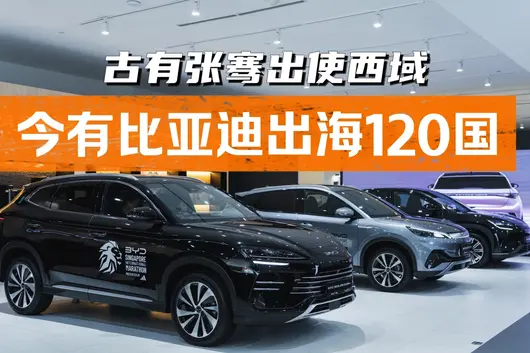
© 2024 Bitauto.com. All Rights Reserved.
Bitauto (www.yiche.com and www.bitauto.com) is one of the most visited automotive websites in China. We provide detailed info on Chinese car brands available in your area. Please note that the information provided on this website is based on publicly available data and is for reference only. It may not be fully updated or accurate at all times.

Help us improve our website


