BMW Group's latest scorecard for the first half of 2026 is out, and it's a mixed bag. Navigating a brutal slowdown in China, supply chain hiccups, and global trade tensions, the German luxury giant is facing one of its toughest quarters yet—even as a few bright spots emerge.
Here is a straightforward breakdown of what the numbers actually mean for BMW, and how the automaker plans to gamble on its "Neue Klasse" strategy to turn things around.
Hit by a barrage of global uncertainties, BMW Group's core financials for the first half of 2026 pulled back, signaling a cooling period. With global economic growth cooling down, the true value and resilience of the luxury automotive segment are facing a severe test.
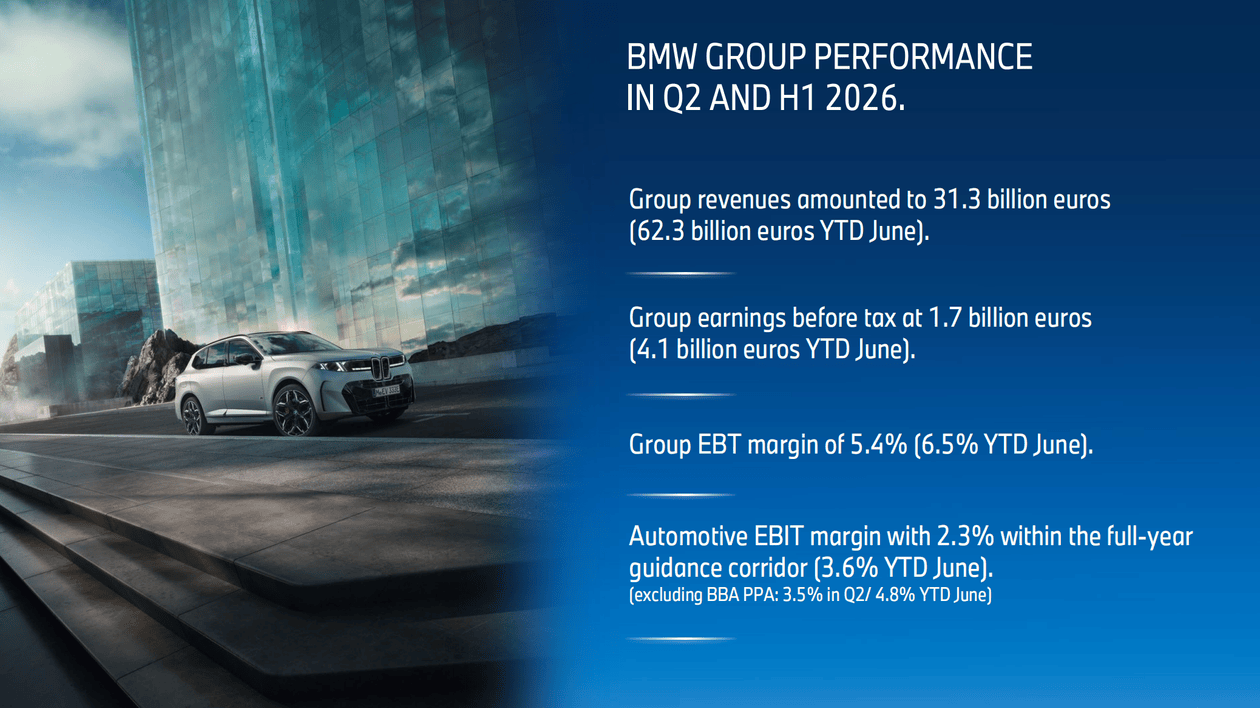
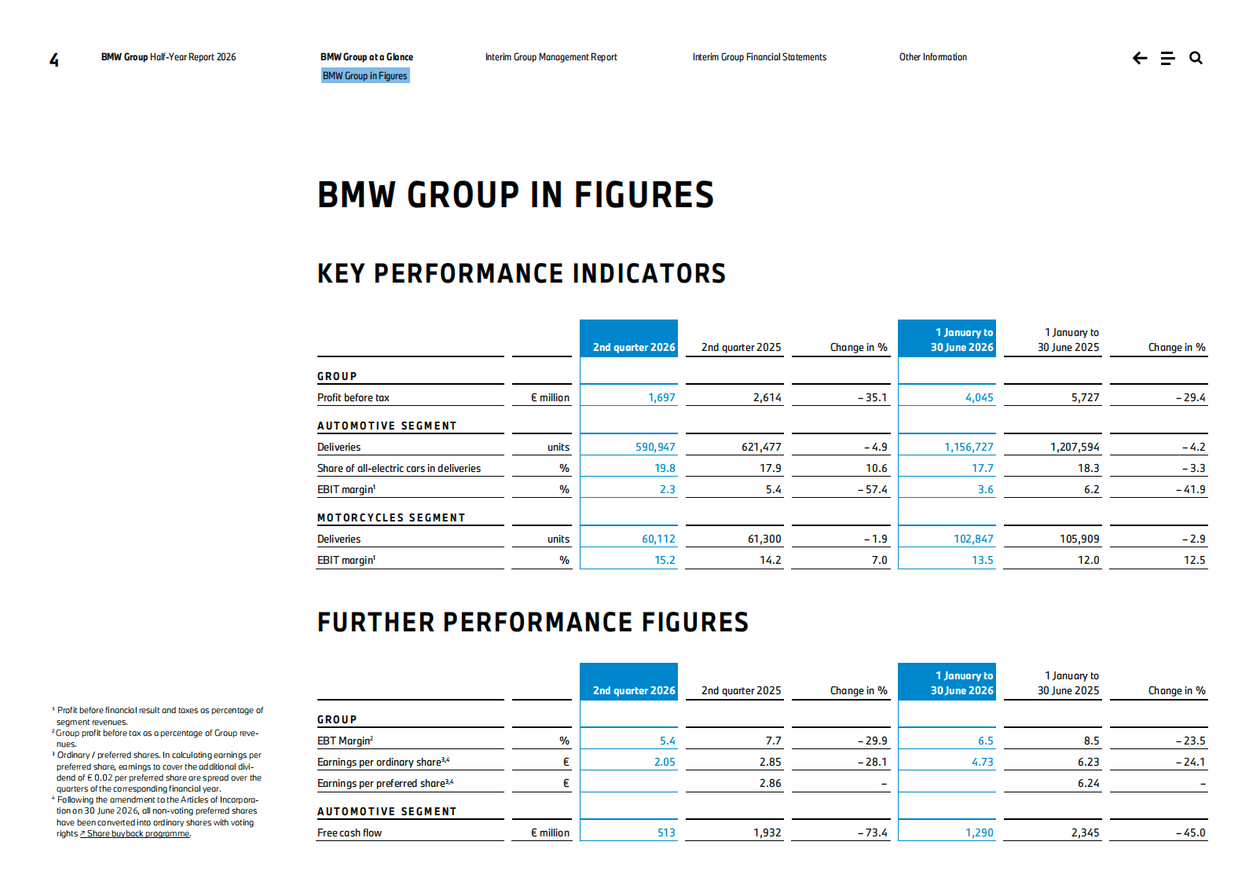
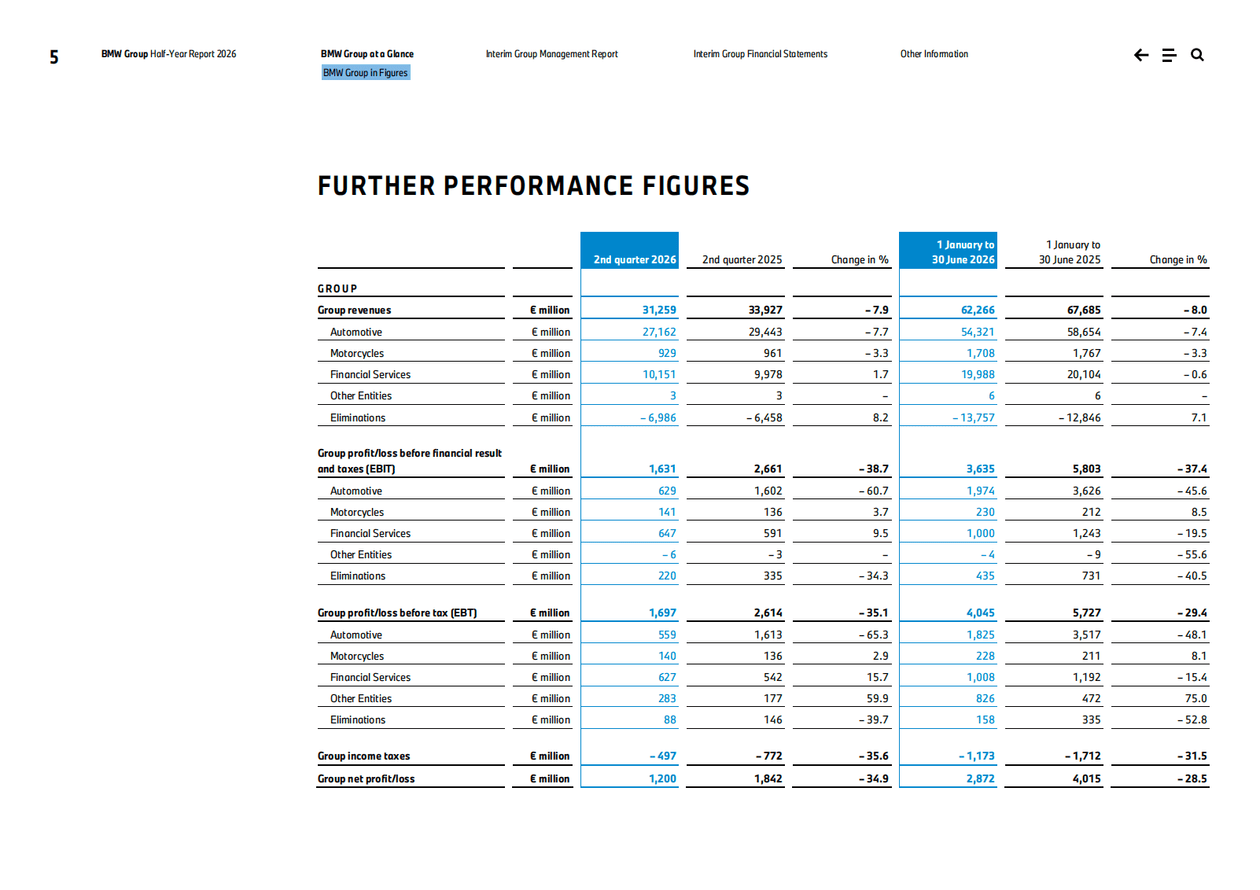
Facing intense profitability pressures, BMW is not taking it lying down, demonstrating strict financial discipline and swift adaptability.
Walter Mertl, BMW's Board Member for Finance, noted during the earnings call that the automaker is ramping up efficiency drives on top of the €2.5 billion saved last year.
To lean out the organization and build the agility needed for heavy future EV R&D investments, BMW has hammered out a sweeping restructuring framework with its Works Council, which includes voluntary redundancy packages.
While these lean initiatives will trigger short-term restructuring charges, they will protect and preserve BMW’s cash cushion over the long haul, keeping the group insulated against broader market cycles.
However, looking closely at individual regions reveals a stark contrast between different markets:
Home Turf in Europe
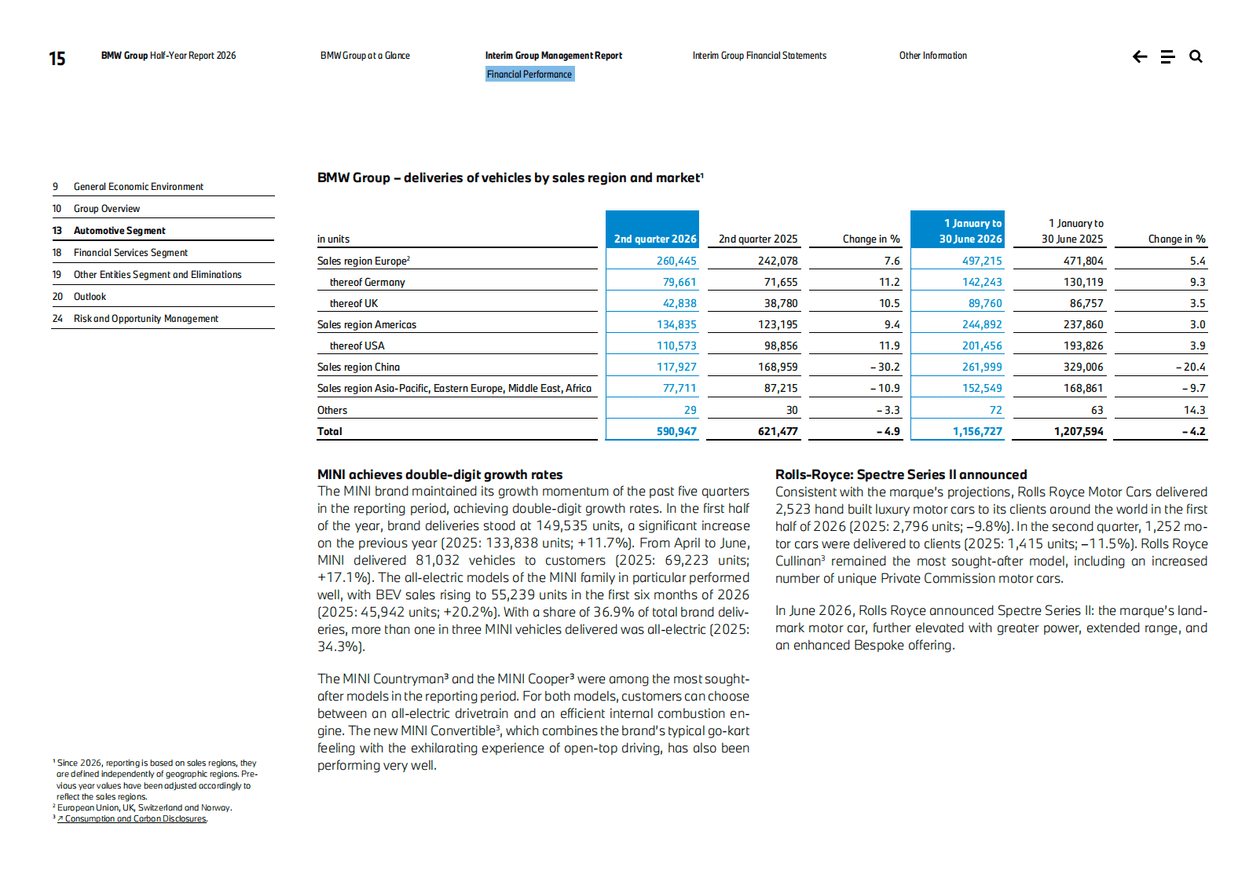
Europe remains BMW’s most resilient stronghold. Deliveries on the continent bucked the global trend, climbing 5.5% in the first half of the year, with a strong 7.6% surge in Q2.
This underlines robust demand for both BMW's latest internal combustion engine (ICE) and all-electric lineups.
Standout Performance in the US
The US market delivered another stellar performance. First-half sales rose 3.9%, fueled by a massive 11.9% spike in the second quarter alone. The core BMW brand once again outpaced the broader luxury market average in the region.
Sales Slowdown in China
Hit by an unprecedented price war, a broader consumer slowdown, and a massive surge in EV adoption, BMW's first-half deliveries in China dropped 20.4% to 261,773 vehicles.
The Long-Term Play
Navigating the growing pains of the world's largest auto market, BMW executives have stressed that their core strategy remains on a healthy balance between sales volume, pricing power, and profitability.
BMW would rather scale back on chasing raw sales numbers than blindfold themselves into a bottomless price war. This disciplined approach protects the brand's residual value, premium positioning, and the long-term viability of its dealer network across the Greater China region.
Sitting at the absolute top of the group's automotive pyramid, Rolls-Royce was not immune to the high interest rate environment and volatile shifts weighing down the ultra-luxury segment in the first half of 2026.
Global Deliveries
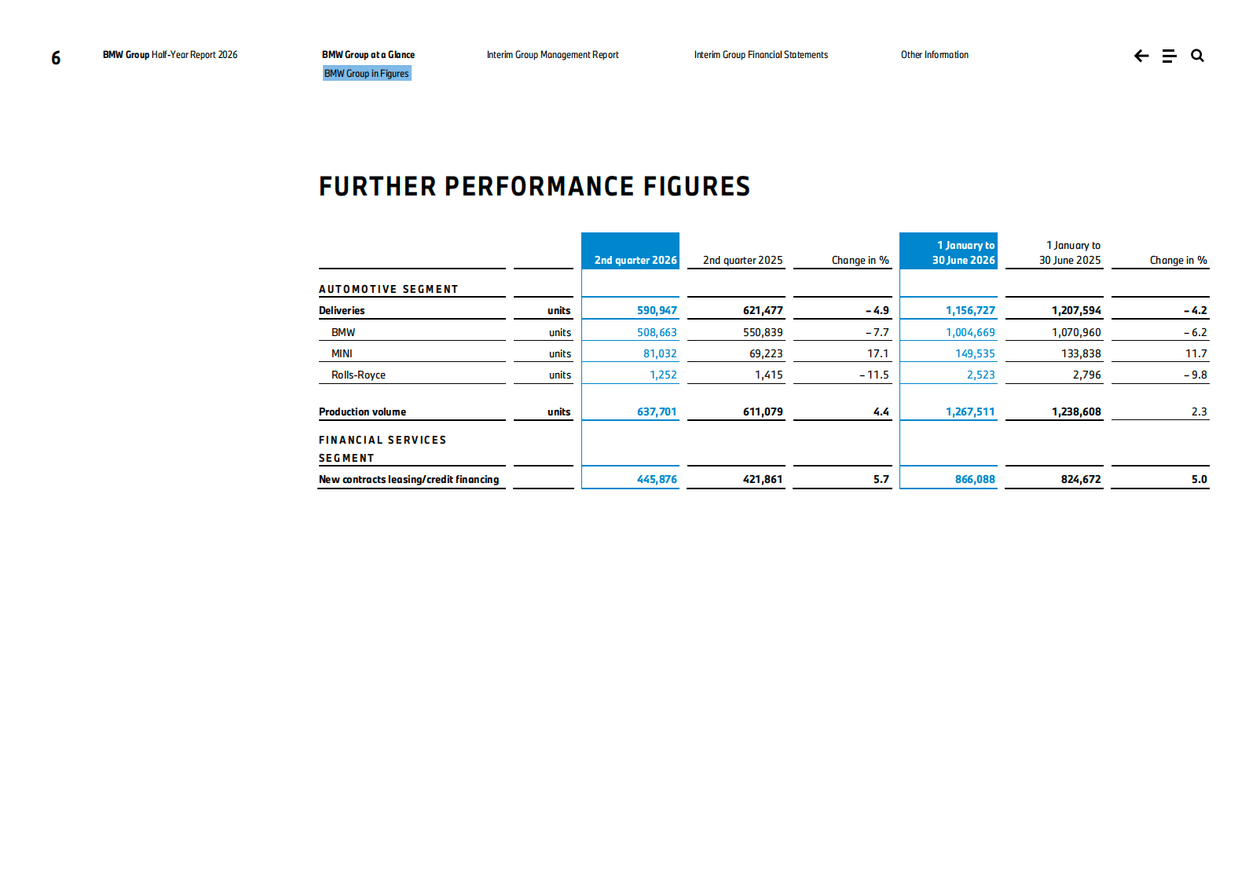
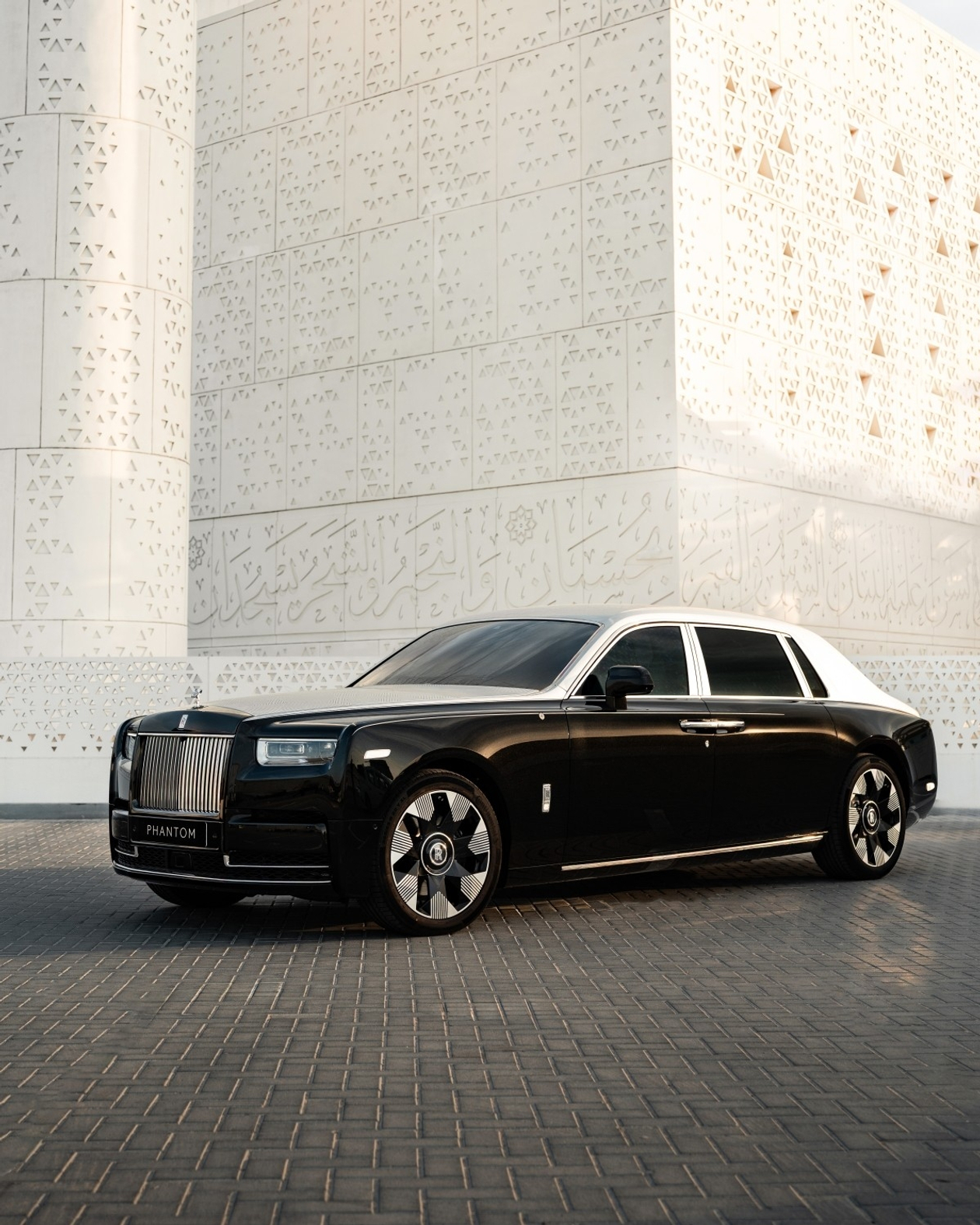
Rolls-Royce delivered 2,523 cars globally in the first six months, a 9.8% slide year-on-year. Zooming into Q2 alone, deliveries hit 1,252 units, marking an 11.5% annual drop.
Doubling Down on Exclusivity
The cooling sales trend mirrors what is happening across the broader ultra-luxury market right now.
For Rolls-Royce, scarcity trumps everything. The brand continues to protect its prestige through extreme Bespoke customization and high per-car profit margins, while the steady rollout of its first all-electric model, the Spectre, anchors its long-term future.
If internal combustion cars built BMW's legacy, battery-electric vehicles (BEVs) and the revolutionary "Neue Klasse" architecture are the lifeblood of its future.
Judging by the first-half figures, BMW's heavy bets on electrification are finally paying off.
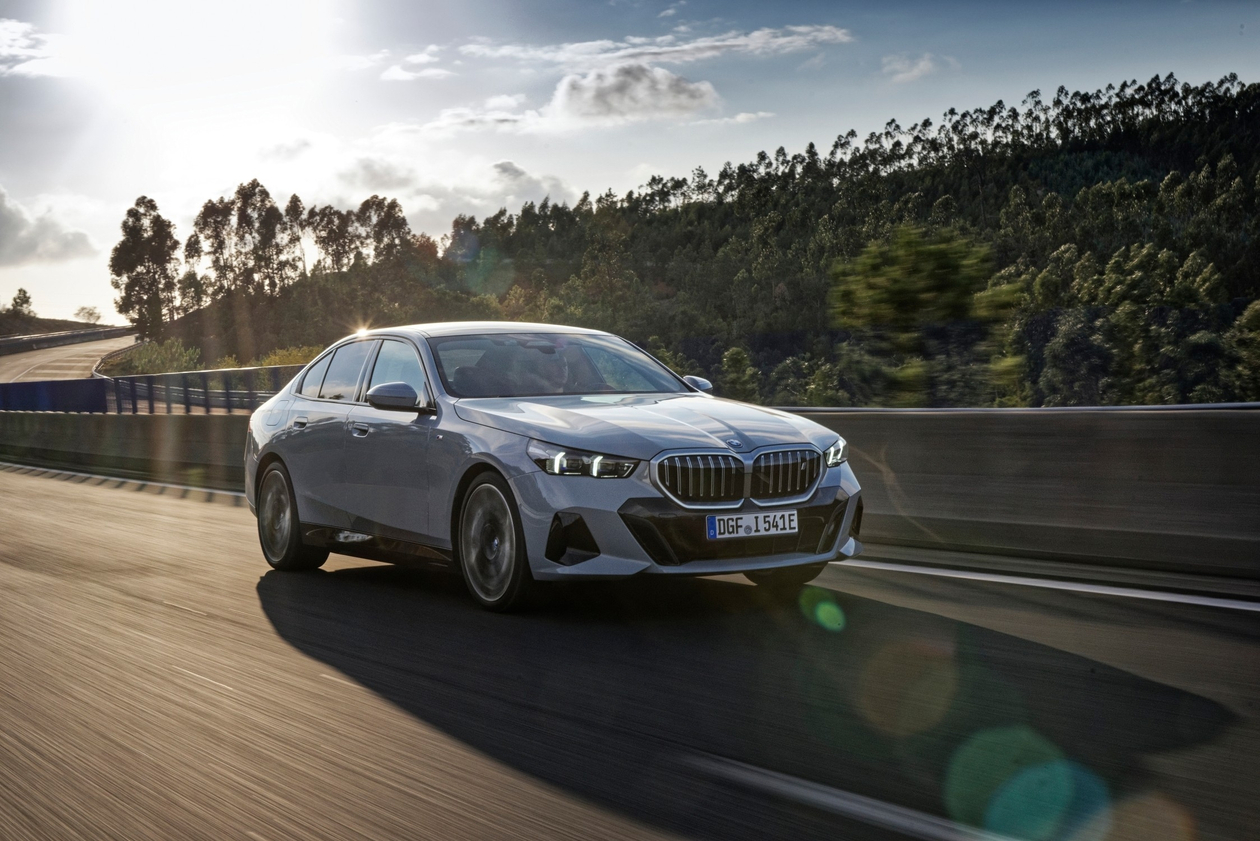
Electric Share Creeps Up
BMW Group delivered 204,295 all-electric vehicles globally in the first six months of 2026.
This means roughly one out of every five vehicles the group sells worldwide is now a pure EV, bringing its BEV sales share to 17.7%.
European EV Surge
Local appetite skyrocketed following the European launch of the all-new electric BMW iX3 in early March.
Second-quarter BEV sales on the continent surged 37.9% to over 81,500 units, pushing the EV ratio in Europe to an incredible one-in-three milestone.
The Neue Klasse Betting Chip
As the pioneer model for BMW's epoch-making Neue Klasse platform, order books for the all-new electric iX3 are filling up fast, rapidly closing in on the 10,0000-unit milestone.
Right on its heels, the second Neue Klasse model, the all-electric i3 sedan, opened for pre-orders in June to stellar market feedback.
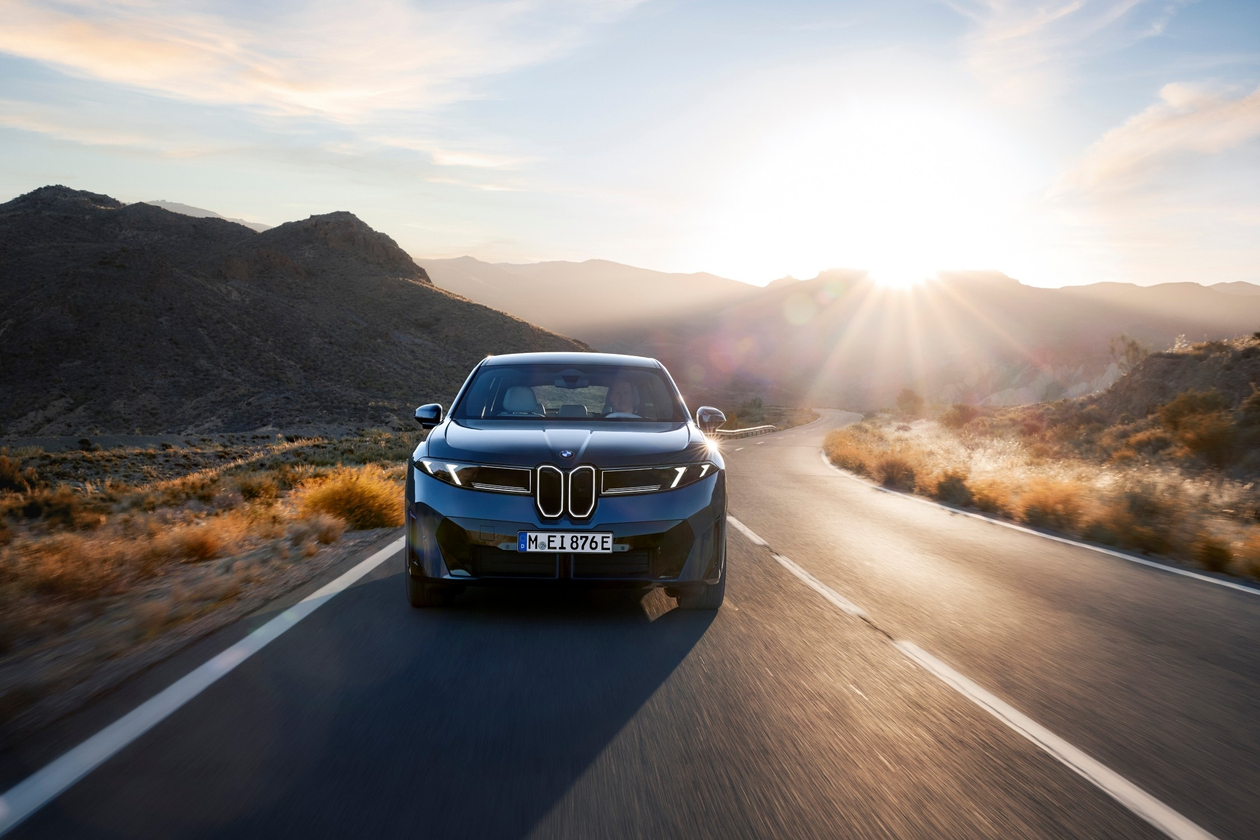
Tech Trickle-Down and Powertrain Agility
Beyond dedicated EVs, BMW's signature "powertrain flexibility strategy" continues to be its secret weapon.
The luxury flagship 7 Series and the popular X5 are inheriting core technology trickling down from the Neue Klasse platform. This will allow BMW to offer up to five different powertrain options (ranging from efficient ICE to PHEV and BEV) globally.
Beyond the core BMW brand, the group's other business units also put up strong numbers in the first half of 2026.
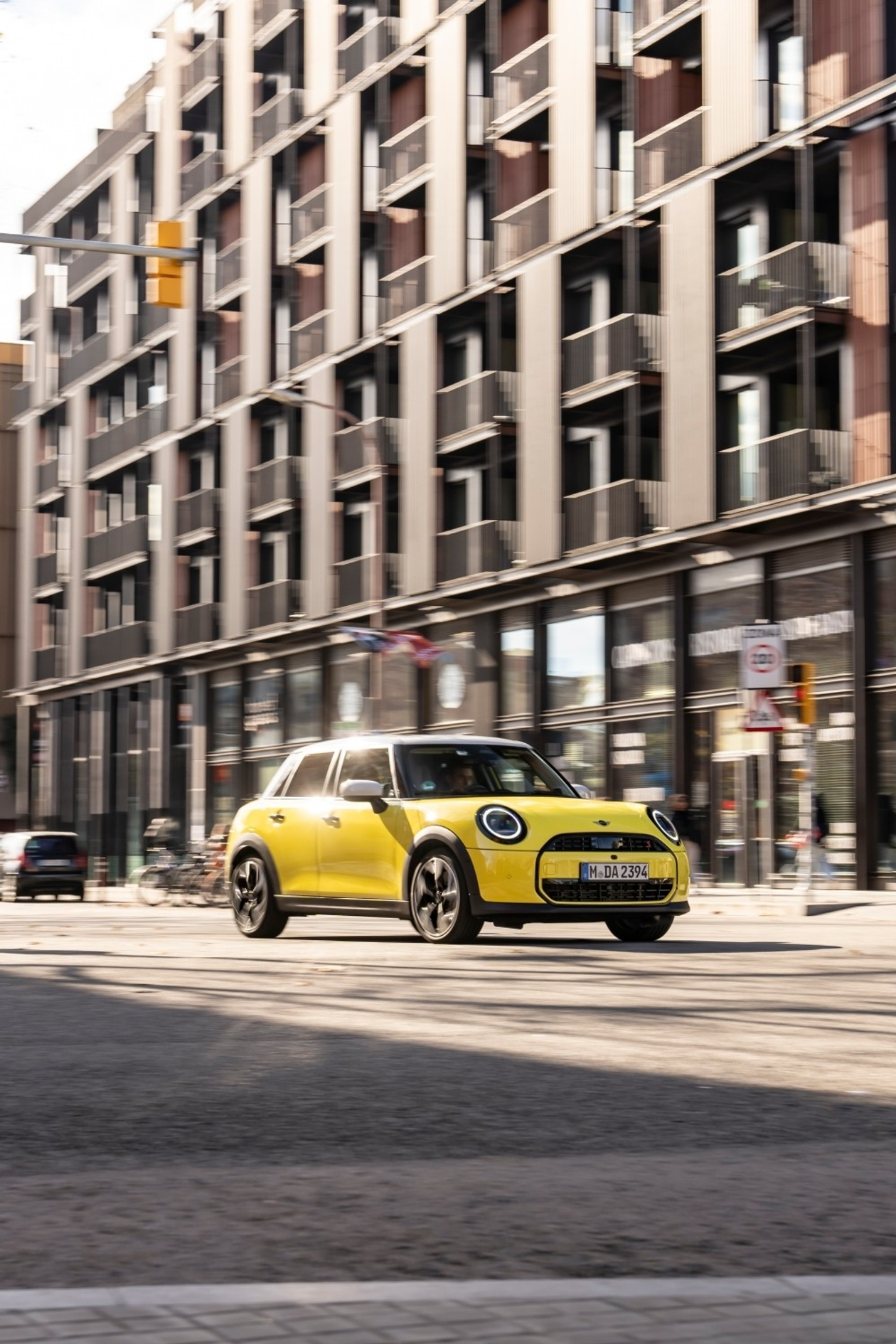
MINI Finds Its Second Wind
Global deliveries climbed 11.7% year-on-year to hit 149,535 vehicles.
The heavy lifting was done by the new, fully electrified generation of MINI. All-electric variants accounted for 36.9% of total brand sales (more than one out of three MINIs sold), proving that the brand’s youthful, electric pivot is paying off.
Financial Services Provide Stability
Risk management is critical during macroeconomic volatility, and BMW's financial wing held the line. New financing and leasing contracts rose 5.0% in H1 to 866,088 agreements, lifting the global penetration rate to 52.9%.
Even more reassuring is the rock-solid credit asset quality, with the credit loss ratio remaining at a historic low of just 0.27%, providing a steady stream of cash flow support for the parent group.
BMW Group officially reaffirmed its full-year guidance for 2026:
For premium car buyers and enthusiasts in Malaysia, BMW’s latest financial report cards send a few signals.
First, despite the growing pains in the traditional luxury segment, BMW is refusing to sacrifice its brand value or disrupt its product rollout just to chase short-term sales volume.
Second, given the massive early success of the Neue Klasse lineup in markets like Europe, Malaysian drivers can look forward to experiencing this tech revolution firsthand in the coming years.
From perfecting the driving dynamics of internal combustion engines to leading the digital shift in the Neue Klasse era, BMW is proving that true luxury isn't just about thriving in good times—it is about having the absolute muscle to navigate downturns and rewrite the future.

Your go-to source for all things automotive in Malaysia. 🚗 Latest reviews, breaking news, launches & industry trends.
+ Follow This weekend is your chance to own a Volvo Selekt Certified Used Car, priced from just RM 148,000.
What are you waiting for?
#volvo 1 minute ago
This weekend is your chance to own a Volvo Selekt Certified Used Car, priced from just RM 148,000.
What are you waiting for?
#volvo 1 minute ago  We saw this accident this morning, and here’s a reminder to everyone: please drive safe. 2 days ago
  The G50 BMW 3 series is now here, adopting much of the i3's design elements.
So, where's the BMW M3?
#bmw #BMW3Series 4 days ago
The G50 BMW 3 series is now here, adopting much of the i3's design elements.
So, where's the BMW M3?
#bmw #BMW3Series 4 days ago Get the latest car news first!
Your go-to source for all things automotive in Malaysia. 🚗 Latest reviews, breaking news, launches & industry trends.
This weekend is your chance to own a Volvo Selekt Certified Used Car, priced from just RM 148,000.
What are you waiting for?
#volvo 1 minute ago We saw this accident this morning, and here’s a reminder to everyone: please drive safe. 2 days ago The G50 BMW 3 series is now here, adopting much of the i3's design elements.
So, where's the BMW M3?
#bmw #BMW3Series 4 days ago  ProtonGWMVolkswagenJAECOOVolvoPeroduaToyotaHondaTESLAMitsubishiMazdaJetourCheryBYDLexusBMWMercedes-BenziCAURZeekrIsuzuNissanLeapmotorPorscheFordOMODAMINIMGSuzukiXPengHyundaiWulingKiaSubaruDenzaGACLand RoverDongfengCAMAudiPeugeotFotonMAXUSsmartDaihatsuJACJMCMaseratiLotusAlfa RomeoRenaultGolden DragonKaiceneSeresLamborghiniFerrariJeepRolls-RoyceLepasAston MartinMcLarenChevroletBentleyFiatBAICForthingGeelyRoeweAeolusChanganARCFOXDeepalExeedHongqiVoyahJaguarKGMBuforiAcuraCadillacDodgeAbarthINEOSMHEROJMEVFreelander
© 2024 Bitauto.com. All Rights Reserved.
Bitauto (www.yiche.com and www.bitauto.com) is one of the most visited automotive websites in China. We provide detailed info on Chinese car brands available in your area. Please note that the information provided on this website is based on publicly available data and is for reference only. It may not be fully updated or accurate at all times.
Help us improve our website


