The 2026 season of Formula 1 and the World Endurance Championship (WEC) presents a phenomenon that leaves motorsport fans utterly speechless – the top-tier race cars have collectively slowed down.
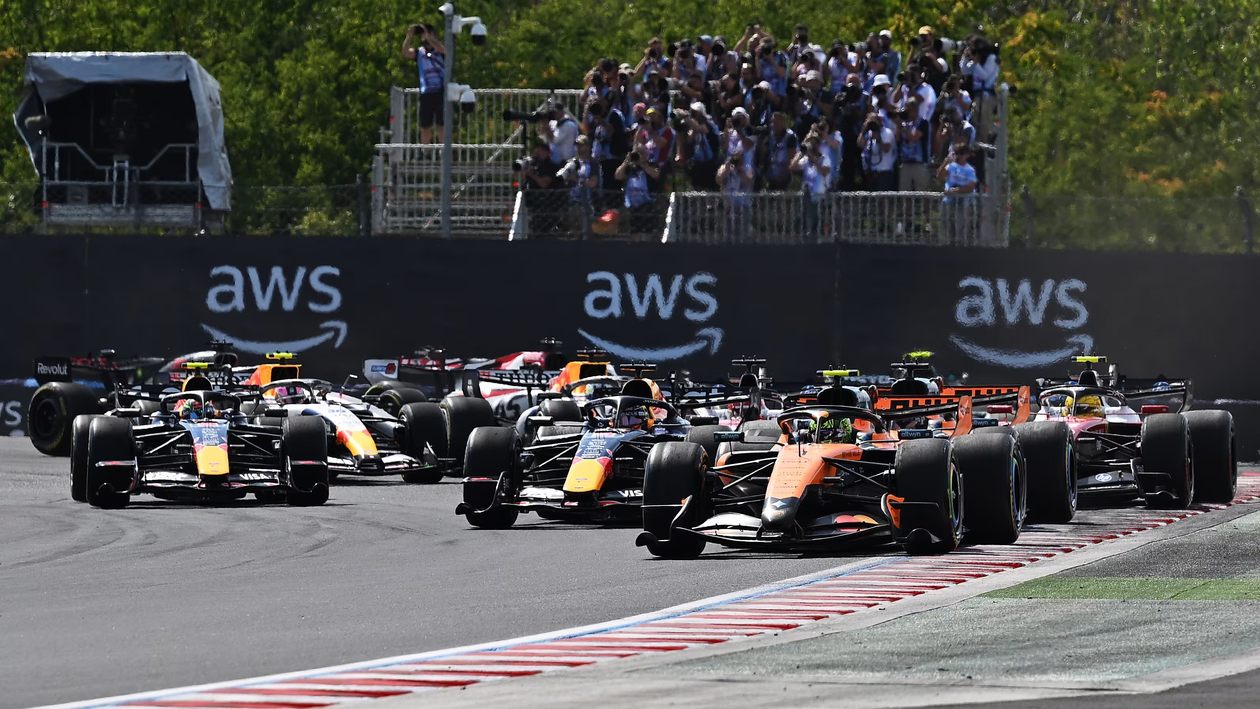
During qualifying for the F1 Australian GP, Mercedes' George Russell claimed pole position with a lap time of 1m 18.518s. On the exact same circuit last year, Lando Norris took pole with a 1m 15.096s lap. That is over three seconds slower. Norris did not mince words, calling the new car the "worst ever". This is not just a few drivers being dramatic – right from the opening race, everyone has been complaining that the car "gets slower the harder you push it".
Things are hardly any better over in WEC. Lap times in the Hypercar category are similarly tumbling, and from the 2026 season onwards, the FIA and ACO have decided to stop publishing the Balance of Performance (BoP) data for each race – leaving fans to merely guess why the cars have lost pace.
So, why are top-tier race cars slowing down across the board?
F1's slowdown is baked directly into the rulebook. The new regulations for the 2026 season are widely regarded as the "biggest revolution in history" for F1.
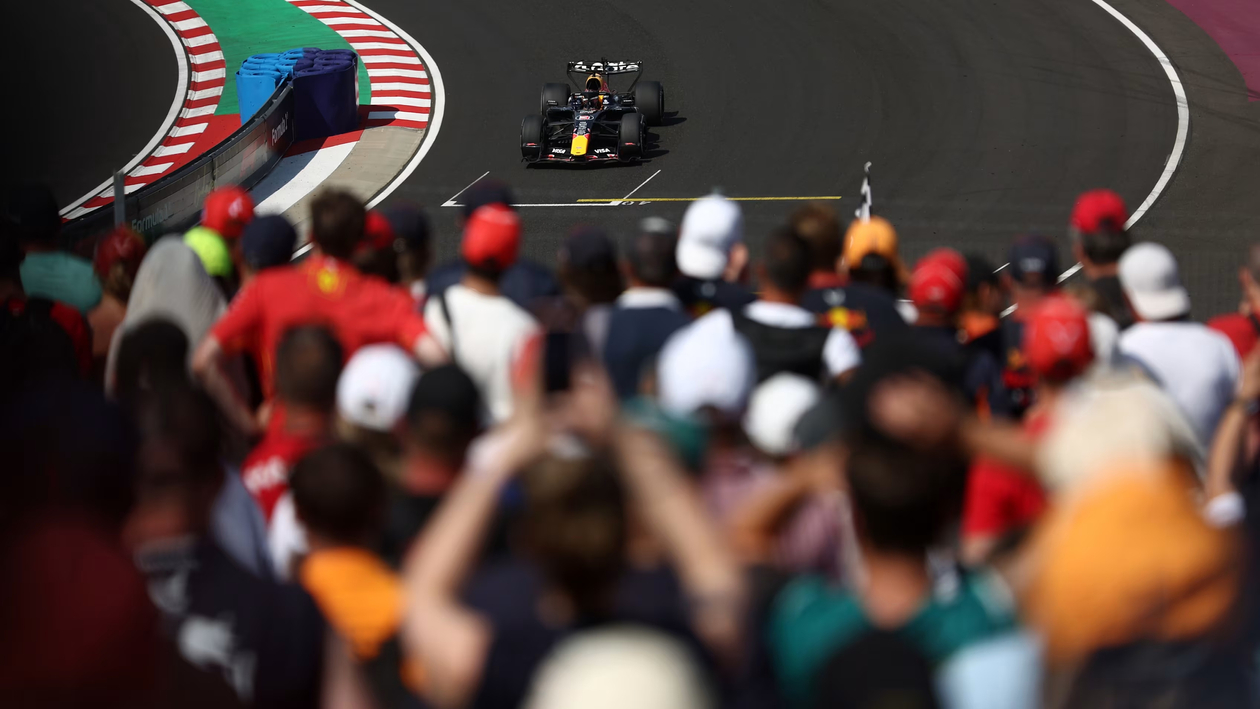
Overall dimensions have shrunk significantly. The wheelbase has been trimmed from 3,600 mm to 3,400 mm, overall width narrowed from 2,000 mm to 1,900 mm, and the floor width slashed by 150 mm. Minimum car weight drops from 798 kg to 770 kg – although some reports cited 768 kg, the FIA and most authoritative sources confirmed 770 kg.
Shaving off nearly 30 kg sounds great, right? The problem is that the slight gain in agility from weight reduction is completely wiped out by other regulatory changes.
Downforce has been slashed by 15% to 30%. With ground-effect floor tunnels abolished, cornering grip has taken a massive hit. Drag has indeed been reduced by 40% – making the cars faster down the straights, but painfully slow through the corners. How do you think a car feels to drive when it flies down the straights but struggles through every bend?
What truly infuriates the drivers, however, is the complete overhaul of the power unit.
The biggest change to the 2026 F1 power unit is the near 50:50 power split between the internal combustion engine (ICE) and the electric motor. The MGU-H has been scrapped, while MGU-K output shoots up from 120 kW to 350 kW. Battery capacity remains capped at 4 megajoules.
In plain English: electric motor output has nearly tripled, but the battery capacity hasn't grown alongside it.
The result? As drivers go full throttle down the straight, battery power visibly plummets. Once depleted, the car is forced into a state known as "super clipping" – where the system aggressively harvests energy to recharge the battery even while the driver is pinned at wide-open throttle.
McLaren Team Principal Andrea Stella put it bluntly: "Super clipping is when the electric motor begins harvesting energy, even though the driver is at full throttle".
You read that right – the driver has the pedal to the metal, yet the car is slowing down.
Traditional clipping merely meant the MGU-K stopped deploying power once the battery ran flat, meaning the car simply "stopped accelerating". But super clipping goes further – it actively drains power from the internal combustion engine to charge the battery.
At peak harvesting, the power delivered by the engine to the rear wheels drops to a paltry 135 hp. Imagine an F1 machine, flat out on a straight, sending just 135 hp to its rear tyres.
That is not even the worst part.
Super clipping poses a major risk of rear-end crashes – if the car ahead abruptly decelerates down a straight, the trailing car has virtually no time to react.
The FIA was forced to rush through a rule adjustment before the Miami GP, raising the peak super clipping power from 250 kW to 350 kW and reducing maximum energy harvesting per lap from 8 MJ to 7 MJ. But that merely reshuffles the way the cars are slow; it does not resolve the core problem.
Williams Team Principal James Vowles was even more candid – stating that the new cars might only be a few seconds faster than F2, which is completely unacceptable for F1.
FIA Single-Seater Technical Director Nikolas Tombazis admitted the new cars would be 1.0 to 2.5 seconds slower than the previous generation, but insisted this was "by design" – arguing that every new regulatory cycle requires a performance reset.
The question is, what is the cost of this "reset"? It turns Formula 1 into an energy management championship, demoting drivers from true racers to mere "battery administrators".
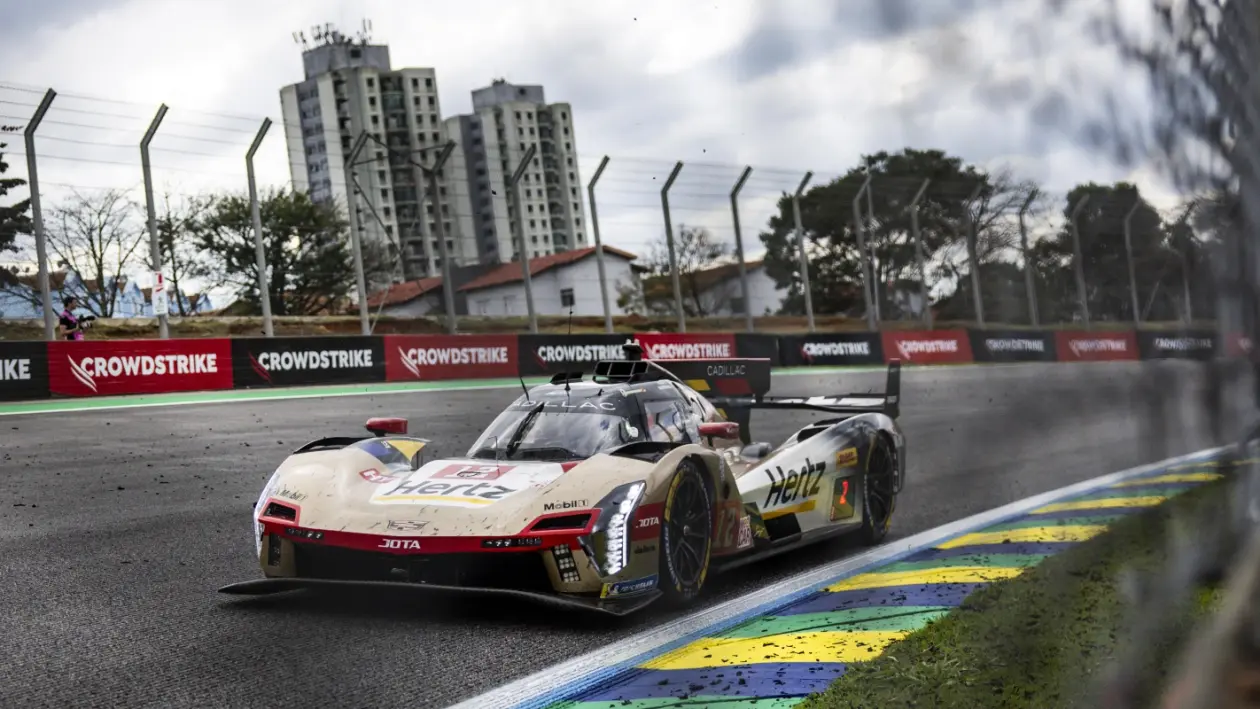
LMH and LMDh represent two completely different technical philosophies. The former involves bespoke prototypes developed by manufacturers from the ground up, while the latter relies on cost-effective spec designs based on LMP2 chassis.
To level the playing field, the FIA and ACO constantly tweak vehicle weight, power output, and energy deployment via BoP – hobbling the fast cars and boosting the slower ones so everyone laps at a similar pace.
Porsche has had enough. After narrowly losing the 2025 24 Hours of Le Mans to Ferrari, the German brand concluded that genuine "fair competition" between LMH and LMDh simply does not exist. In October 2025, Porsche officially announced its complete withdrawal as a factory entrant in WEC for 2026. Lamborghini had already announced the suspension of its SC63 LMDh programme in August 2025.
For 2026, the FIA and ACO took things a step further by keeping BoP data secret for every race. Motorsport fans can no longer even see which team was burdened with extra ballast or stripped of horsepower.
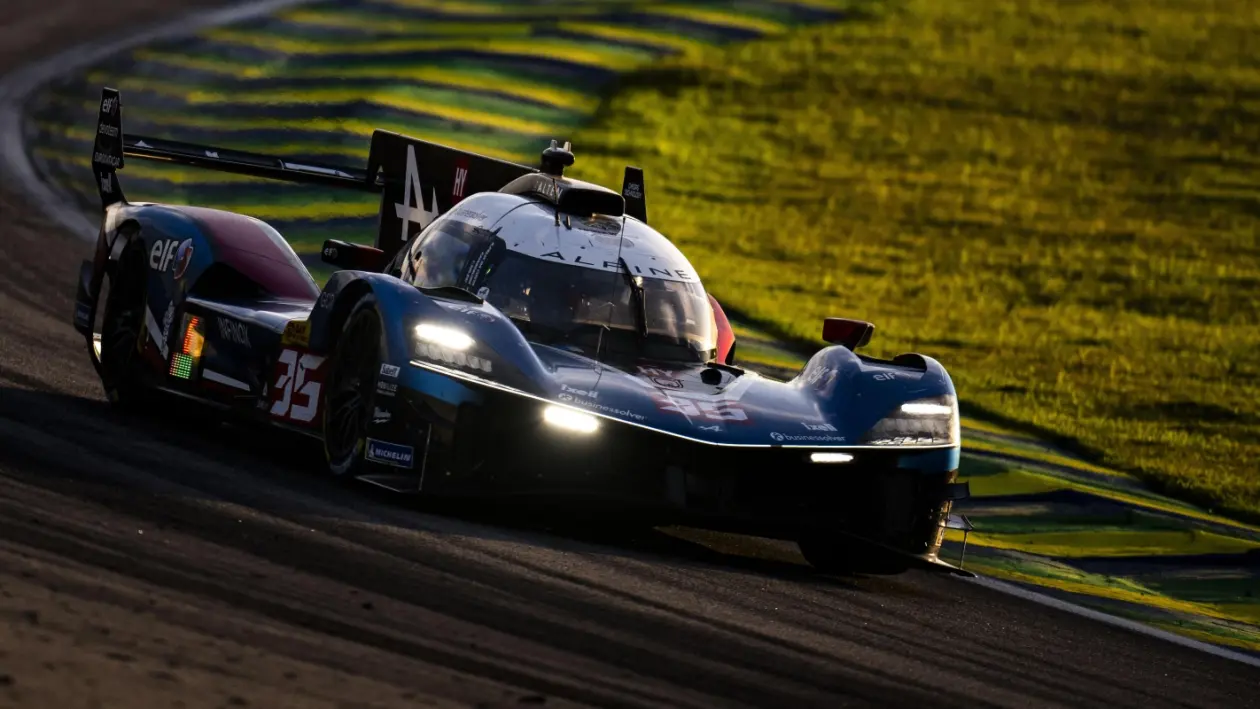
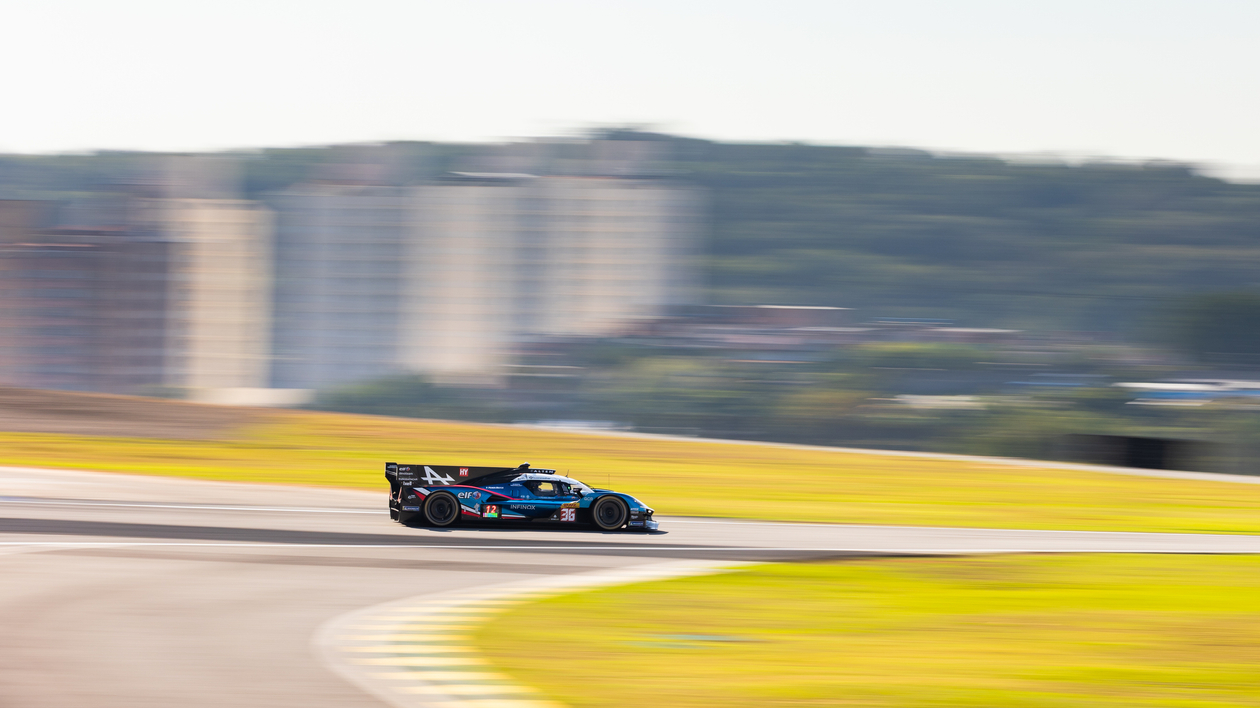
Alpine rolled out extensive aerodynamic upgrades for its A424 LMDh, while BMW introduced an Evo package. Yet none of these updates aim to set blistering lap times; they exist solely to "survive" within the BoP framework. Toyota was even more blunt, warning that a clear "two-tier divide" has opened up between LMH and LMDh.
This is no longer motorsport – it is a mathematical calculation contest.
Looking at F1 and WEC side by side, the underlying rationale for slowing down is identical.
Safety. FIA Single-Seater Director Tombazis put it clearly: if every regulation cycle starts faster than the previous generation, where will we be in 20 years? Lateral G-forces generated by modern F1 cars in high-speed corners are already pushing drivers and tyres to their absolute limits. The 2017–2021 cars were already "dangerously close to exceeding circuit limits".
Cost. Faster cars mean exponentially higher R&D budgets. The primary reason for Lamborghini halting its LMDh project was "excessive costs and challenges". Porsche's exit from WEC was similarly tied to financial pressures exacerbated by the BoP system.
Spectacle. F1's new rules aim to make trailing and overtaking easier by downsizing car dimensions and trimming downforce. The trade-off is a 3-second drop in lap times, but the FIA maintains that "close wheel-to-wheel racing matters more than sheer lap time".
While safety and cost controls are undoubtedly crucial, when a driver goes full throttle down a straight and the car actively slows down, the core essence of the sport becomes twisted. F1 is F1 because it represents the pinnacle of speed on earth. If an F1 machine is merely a few seconds faster than an F2 car, what separates the premier category from feeder series?
The collective slowdown of Formula 1 and endurance racing is no coincidence – it is a deliberate choice.
F1 chose regulatory resets to cap the relentless pursuit of speed. The price? The 2026 cars are three seconds slower, drivers are forced to lift off to charge down the straights, and the internal combustion engine is relegated to a glorified generator.
WEC chose BoP to flatten performance peaks. The consequence? The fastest cars are penalised, manufacturers lose the incentive for technical innovation, and legendary names like Porsche and Lamborghini pack their bags.
Top-tier racing is slowing down, trading ultimate speed for safety and cost management. But the question remains: when F1 is barely faster than F2, and when WEC conceals its BoP figures, is motorsport truly protecting itself – or is it neutering its own soul?
Put another way: what is the true essence of motorsport? And when we watch racing, what are we really looking for?
Image source: formula1.com / fiawec.com

Your go-to source for all things automotive in Malaysia. 🚗 Latest reviews, breaking news, launches & industry trends.
+ Follow We saw this accident this morning, and here’s a reminder to everyone: please drive safe. 2 days ago
  The G50 BMW 3 series is now here, adopting much of the i3's design elements.
So, where's the BMW M3?
#bmw #BMW3Series 4 days ago
The G50 BMW 3 series is now here, adopting much of the i3's design elements.
So, where's the BMW M3?
#bmw #BMW3Series 4 days ago  DRIFT PARTY in Malaysia! Can the Xiaomi SU7, Yangwang U8 mix it up against JDM favourites in KL?
Our adventure with the Xiaomi SU7 and Yangwang U8 brings us to APDCrew circuit as we give witness a drift show. With pro drifters and fan-favourites - RX7s, S15s, Skylines, Supras, and more - in the mix, can our Xiaomi SU7 and Yangwang U8 hold their own?
It's also a quick look at Malaysian car culture, including some wildly modified minivans, and more!
#drift #malaysia #xiaomisu7 #yangwangu8 #larrychen #drifting #JDM跑車 4 days ago
DRIFT PARTY in Malaysia! Can the Xiaomi SU7, Yangwang U8 mix it up against JDM favourites in KL?
Our adventure with the Xiaomi SU7 and Yangwang U8 brings us to APDCrew circuit as we give witness a drift show. With pro drifters and fan-favourites - RX7s, S15s, Skylines, Supras, and more - in the mix, can our Xiaomi SU7 and Yangwang U8 hold their own?
It's also a quick look at Malaysian car culture, including some wildly modified minivans, and more!
#drift #malaysia #xiaomisu7 #yangwangu8 #larrychen #drifting #JDM跑車 4 days ago Get the latest car news first!
Your go-to source for all things automotive in Malaysia. 🚗 Latest reviews, breaking news, launches & industry trends.
We saw this accident this morning, and here’s a reminder to everyone: please drive safe. 2 days ago The G50 BMW 3 series is now here, adopting much of the i3's design elements.
So, where's the BMW M3?
#bmw #BMW3Series 4 days ago DRIFT PARTY in Malaysia! Can the Xiaomi SU7, Yangwang U8 mix it up against JDM favourites in KL?
Our adventure with the Xiaomi SU7 and Yangwang U8 brings us to APDCrew circuit as we give witness a drift show. With pro drifters and fan-favourites - RX7s, S15s, Skylines, Supras, and more - in the mix, can our Xiaomi SU7 and Yangwang U8 hold their own?
It's also a quick look at Malaysian car culture, including some wildly modified minivans, and more!
#drift #malaysia #xiaomisu7 #yangwangu8 #larrychen #drifting #JDM跑車 4 days ago  ProtonGWMVolkswagenJAECOOVolvoPeroduaToyotaHondaTESLAMitsubishiMazdaJetourCheryBYDLexusBMWMercedes-BenziCAURZeekrIsuzuNissanLeapmotorPorscheFordOMODAMINIMGSuzukiXPengHyundaiWulingKiaSubaruDenzaGACLand RoverDongfengCAMAudiPeugeotFotonMAXUSsmartDaihatsuJACJMCMaseratiLotusAlfa RomeoRenaultGolden DragonKaiceneSeresLamborghiniFerrariJeepRolls-RoyceLepasAston MartinMcLarenChevroletBentleyFiatBAICForthingGeelyRoeweAeolusChanganARCFOXDeepalExeedHongqiVoyahJaguarKGMBuforiAcuraCadillacDodgeAbarthINEOSMHEROJMEVFreelander
© 2024 Bitauto.com. All Rights Reserved.
Bitauto (www.yiche.com and www.bitauto.com) is one of the most visited automotive websites in China. We provide detailed info on Chinese car brands available in your area. Please note that the information provided on this website is based on publicly available data and is for reference only. It may not be fully updated or accurate at all times.
Help us improve our website


