In 2023, a Mazda CX-30 rolled twice in a late-night motorway accident in Pennsylvania, leaving the vehicle extensively damaged. Its driver, Michael Polk, escaped with little more than bruising and seatbelt marks. Four hours after being taken to hospital, he walked out of the emergency department.
For Mazda, cases like this are an important part of understanding vehicle safety. Crash-test ratings provide a useful benchmark, but accidents on public roads do not always happen at the speeds, angles or conditions used in standardised tests.
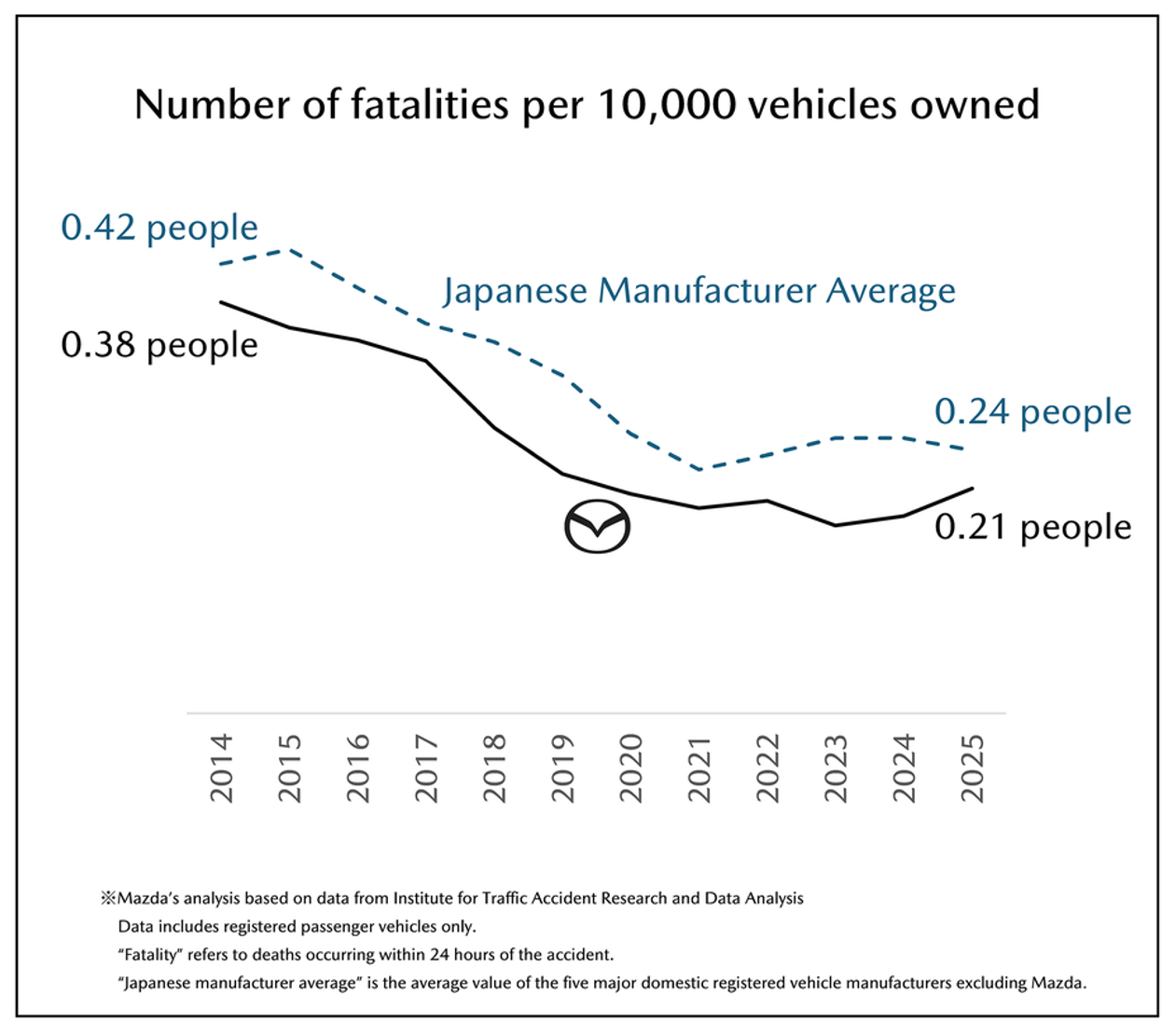
That thinking is reflected in Mazda's safety development work, which combines crash protection with efforts to prevent accidents in the first place.
In Japan, Mazda recorded 0.21 fatal traffic accidents per 10,000 vehicles in use in 2025, compared with an automotive industry average of 0.26. The figures provide one measure of real-world outcomes, although differences in vehicle use and other factors also affect accident rates.
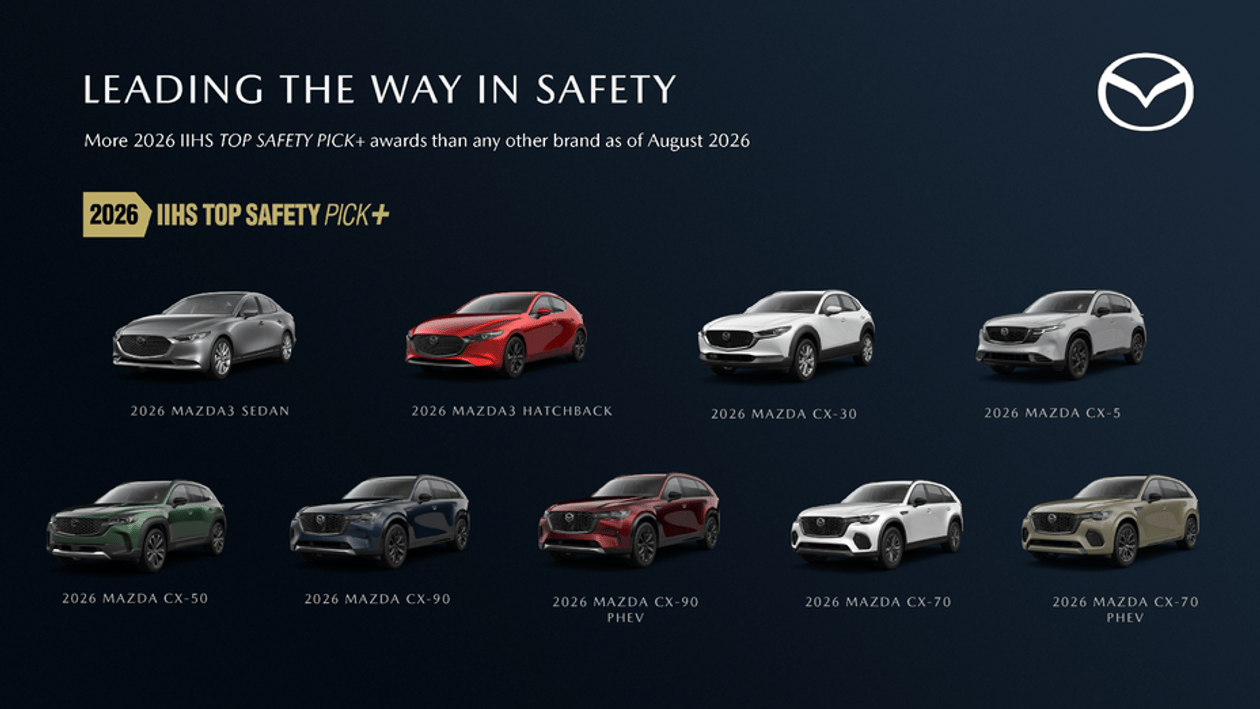
Mazda also secured nine TOP SAFETY PICK+ awards in the 2026 Insurance Institute for Highway Safety (IIHS) evaluations, including an award for the new CX-5. No other individual brand received more awards that year.
The company's longer-term ambition is to achieve zero fatal accidents by 2040.
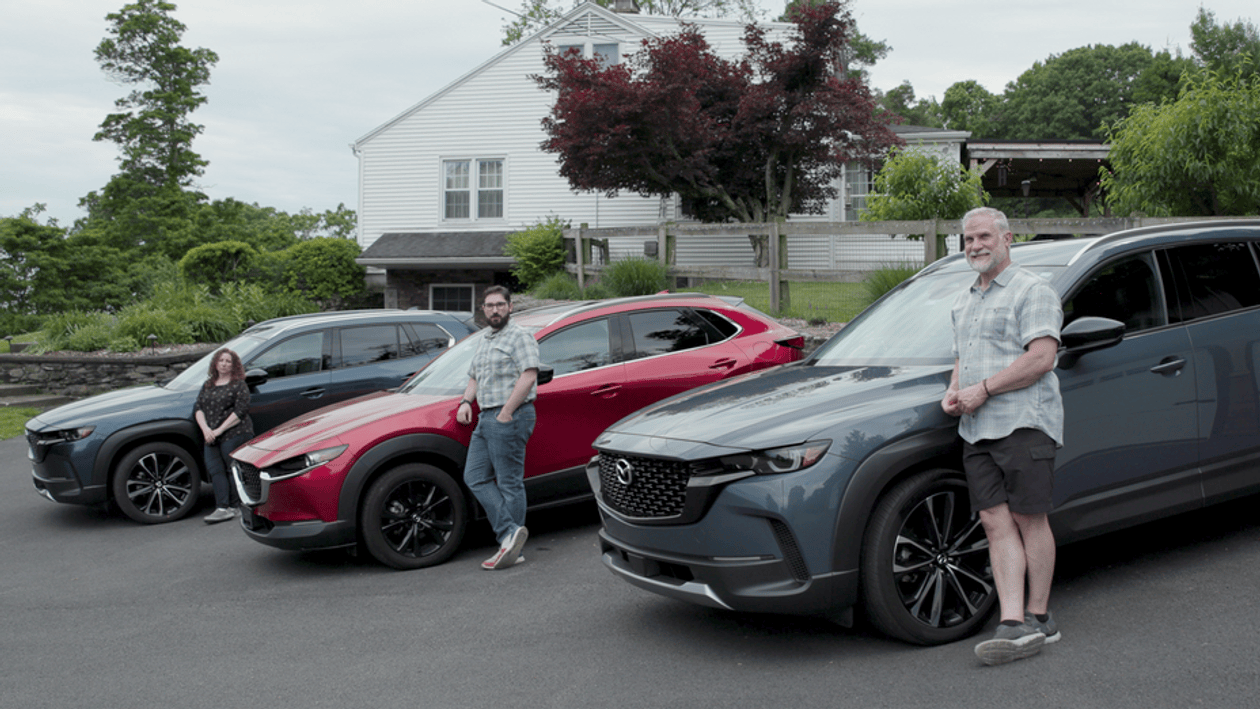
The Polk family from Pennsylvania have had a strong connection with Mazda after Michael's accident. His parents, Greg and Laura, are also now Mazda drivers.
On the night before Mother's Day in 2023, Michael was returning home after a long day at work in his Mazda CX-30. The journey involved a lengthy stretch of dark, monotonous motorway.
Exhausted, he briefly fell asleep behind the wheel.
Michael recalled that he had closed his eyes for what seemed like a second. When he regained consciousness, the car had overturned. Disorientated in the darkness, he could not tell which way was up and had to call for help from inside the vehicle.
At around 12.30am, Laura received a call from her son. She knew he had been in an accident, but hearing his voice brought some relief.
Michael was taken to hospital for examination. Despite the severity of the crash, his injuries were limited to bruising near his eye and marks from his seatbelt. He was discharged after four hours and returned to work the following day.
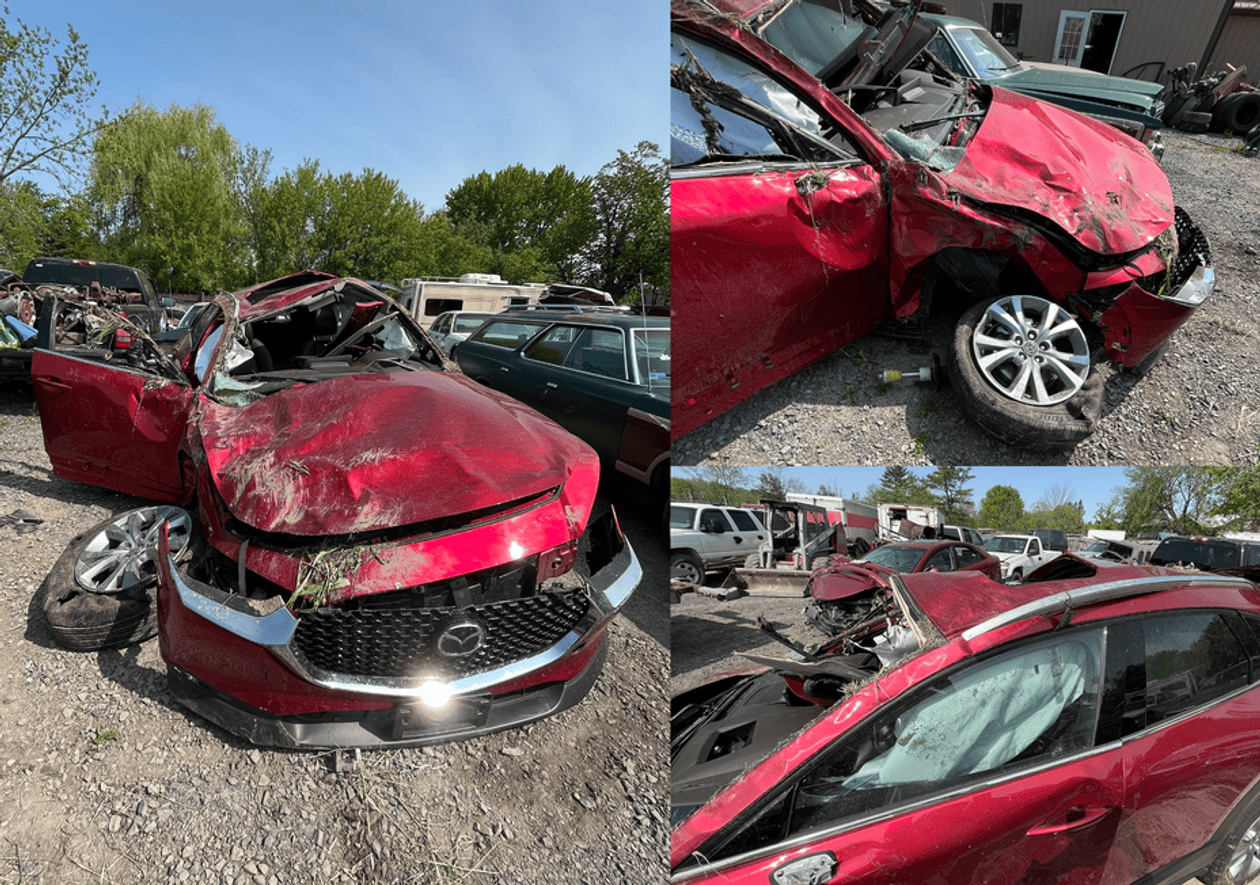
The family only saw the full extent of the damage the next day. The CX-30 had rolled twice, leaving the bodywork severely deformed.
Laura described how difficult it was to reconcile the condition of the wrecked car with the sight of her son standing beside her, able to walk around normally. She credited the Mazda with saving his life.
The accident reinforced the family's confidence in the brand. Michael replaced his damaged car with another red CX-30, while Laura bought a CX-50. Greg, who drives around 40,000km annually for work as a salesman, also chose a CX-50.
For car buyers, safety ratings from organisations such as ASEAN NCAP and IIHS are often an important consideration. They offer a standardised way to assess crash protection and compare vehicles.
Mazda regards these assessments as an essential part of safety development, but not a complete picture of how a vehicle will perform in every accident.
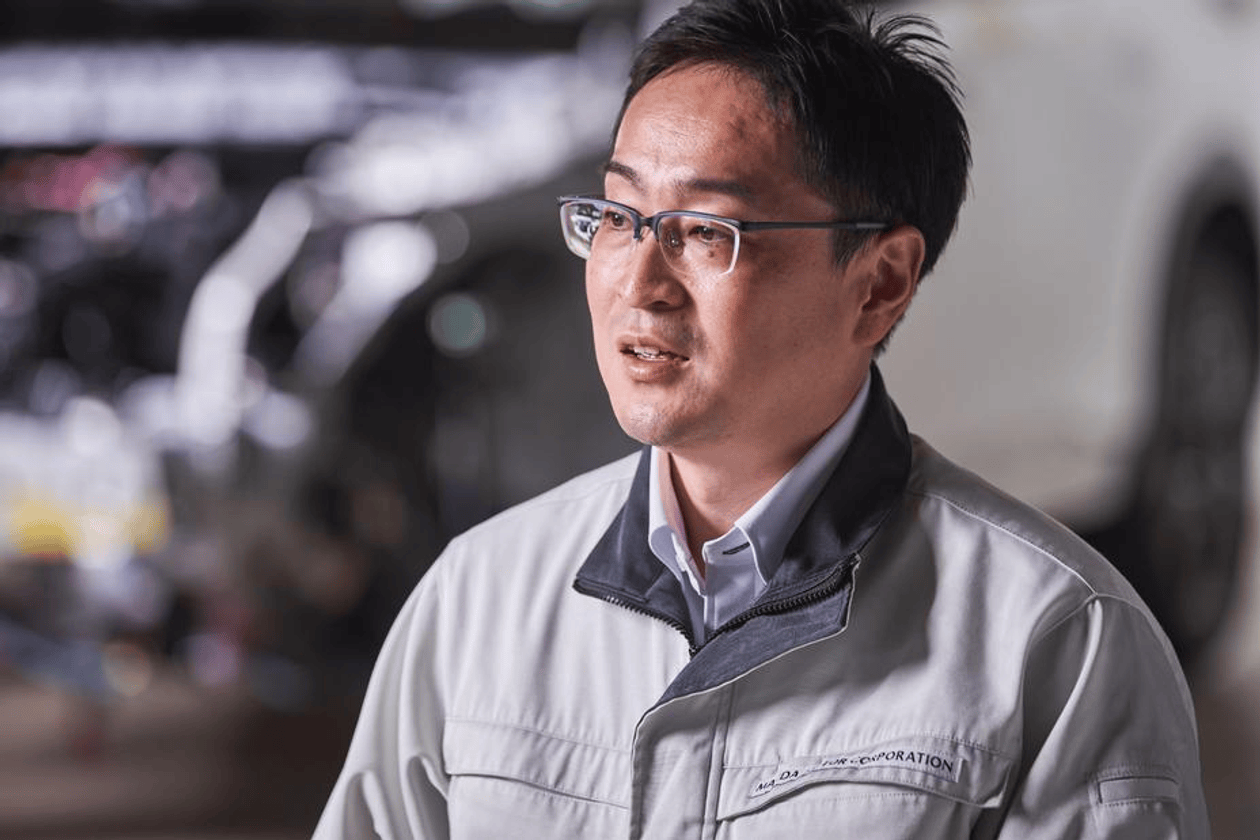
Takashi Hamada
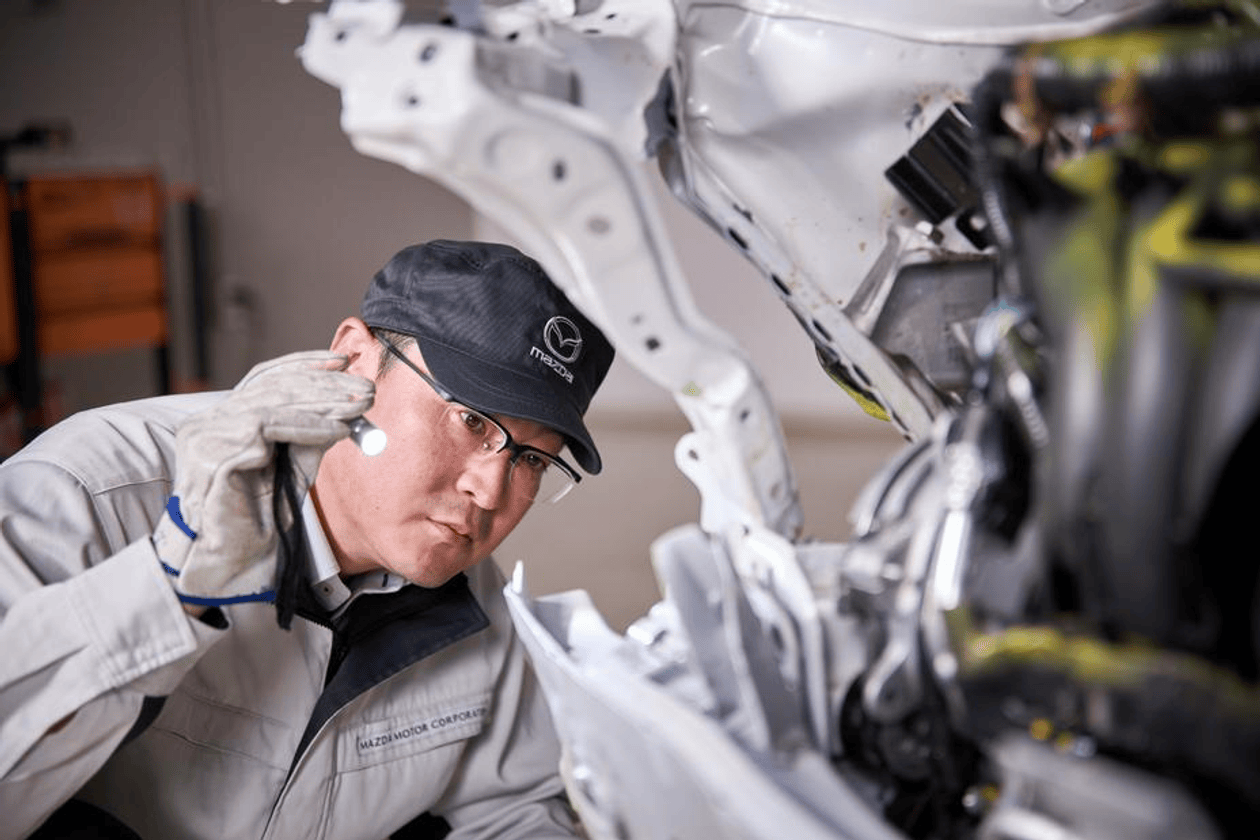
Takashi Hamada, an engineer in Mazda's crash safety development division, describes three levels of vehicle safety.
The first is meeting the legal requirements necessary for a vehicle to be sold. The second involves independent assessments, including IIHS and NCAP testing, which evaluate vehicles against established criteria.
The third is protection in real-world accidents.
A vehicle might perform well in a frontal crash test, for example, but an actual collision could involve an offset impact, an unusual angle or multiple impacts. The size, weight and structure of the other vehicle or object can also change how crash forces are transferred.
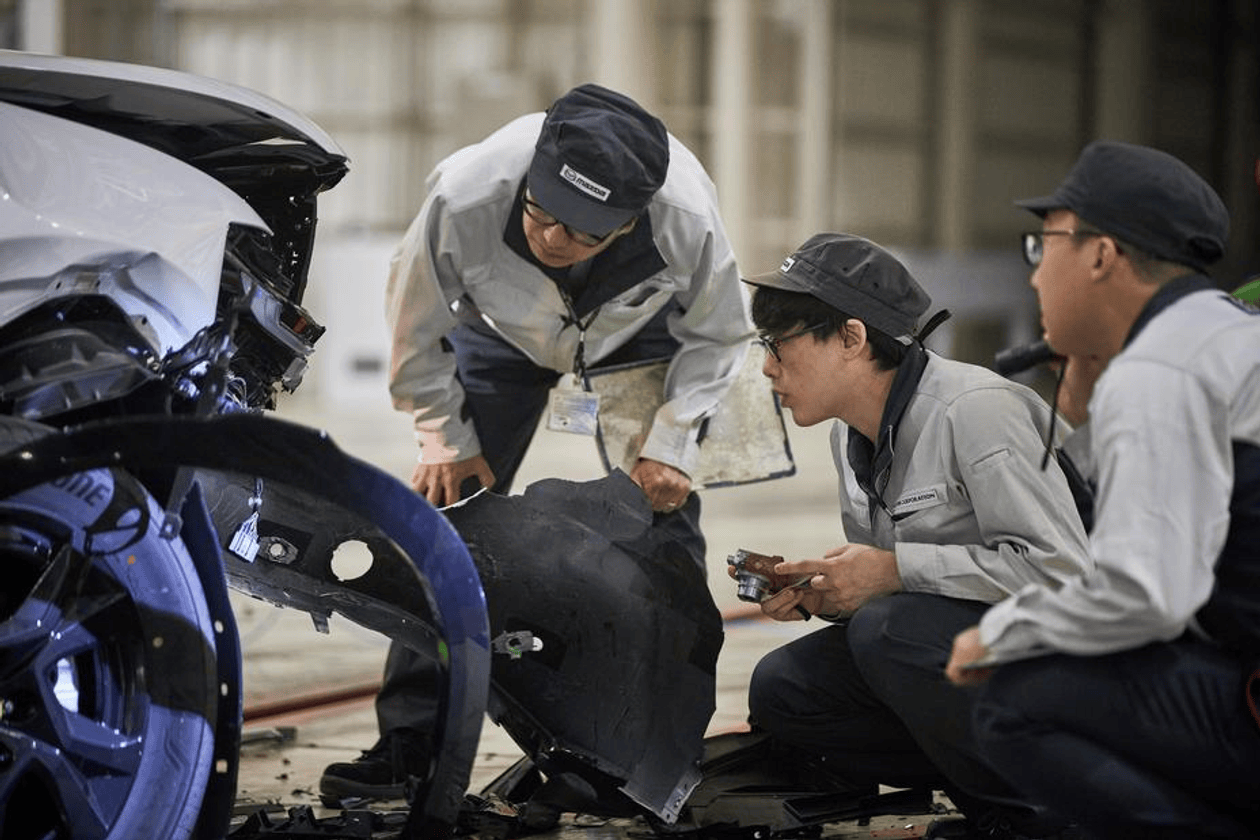
Mazda therefore studies actual accident cases and recreates different collision scenarios during development. Engineers examine how vehicle structures deform, how forces travel through the body and how the passenger compartment can be protected under less predictable conditions.
Rather than treating a high test score as the final objective, the company uses the results alongside real-world accident research to identify areas for further improvement.
One of the clearest examples of Mazda's approach is the body structure of the new CX-5.
In a frontal crash test conducted at a relative impact speed of 100km/h, the front section of the vehicle was heavily deformed. The passenger compartment, however, retained its structural integrity, and the doors could still be opened after the impact.
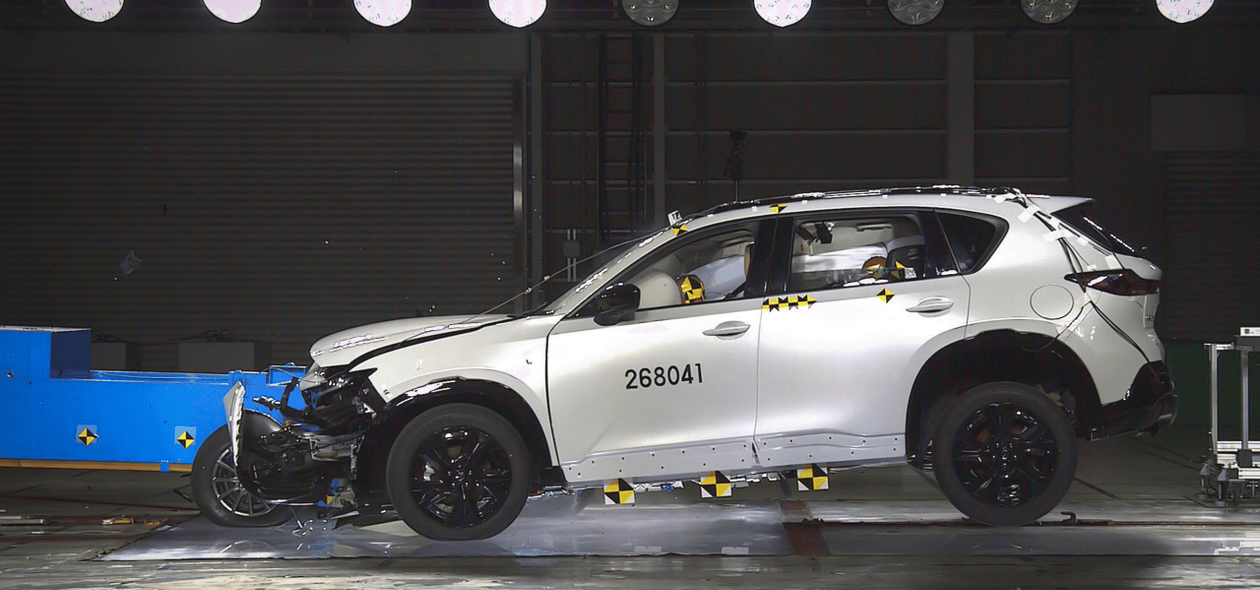
The result illustrates the different jobs performed by various parts of a car's structure.
The passenger compartment must resist deformation to maintain survival space for occupants. The front section, meanwhile, is designed to crumple progressively, absorbing energy and helping manage the forces transmitted during a collision.
A car that suffers extensive damage at the front is not necessarily one that has performed poorly. What matters is how effectively the structure manages the impact and protects the people inside.
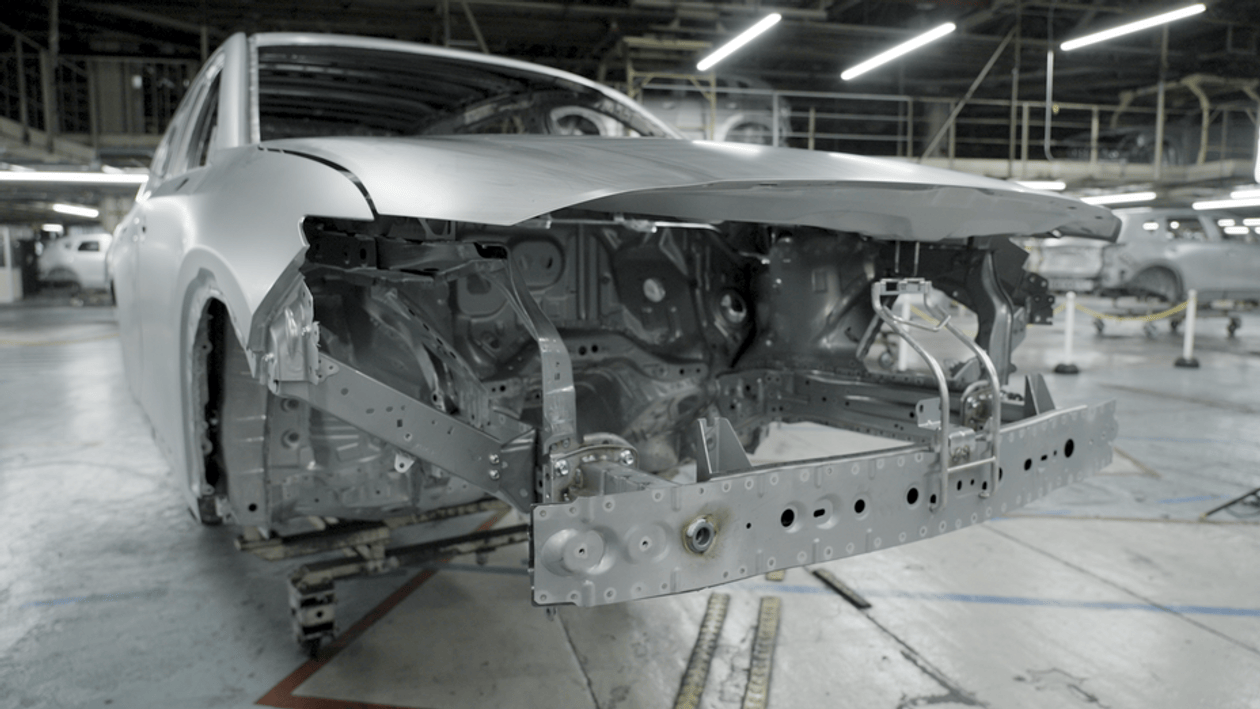
For the new CX-5, Mazda has extended the front bumper reinforcement beam and introduced 2.0 GPa-class hot-stamped ultra-high-strength steel developed jointly with Nippon Steel.
Mazda describes the application as a world first. The material allows engineers to combine high strength with reduced weight, while the revised front structure is intended to distribute collision forces more effectively through the vehicle.
This is particularly important in offset or angled impacts, where only part of the front structure may initially make contact.
Mazda's safety work is not limited to what happens during a collision.
Under its Mazda Proactive Safety philosophy, the company also considers how vehicle design can help drivers avoid dangerous situations.
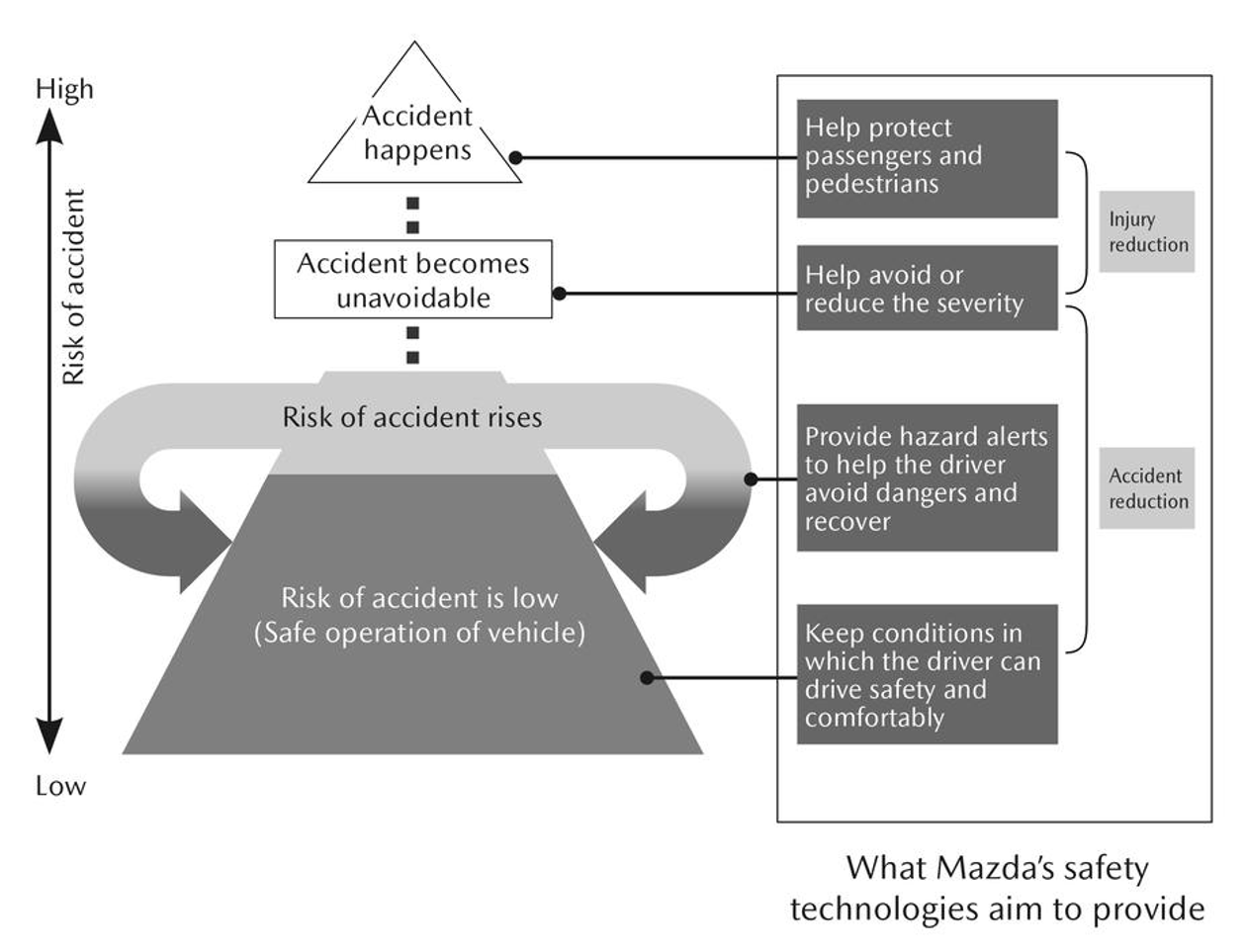
Mazda Proactive Safety.
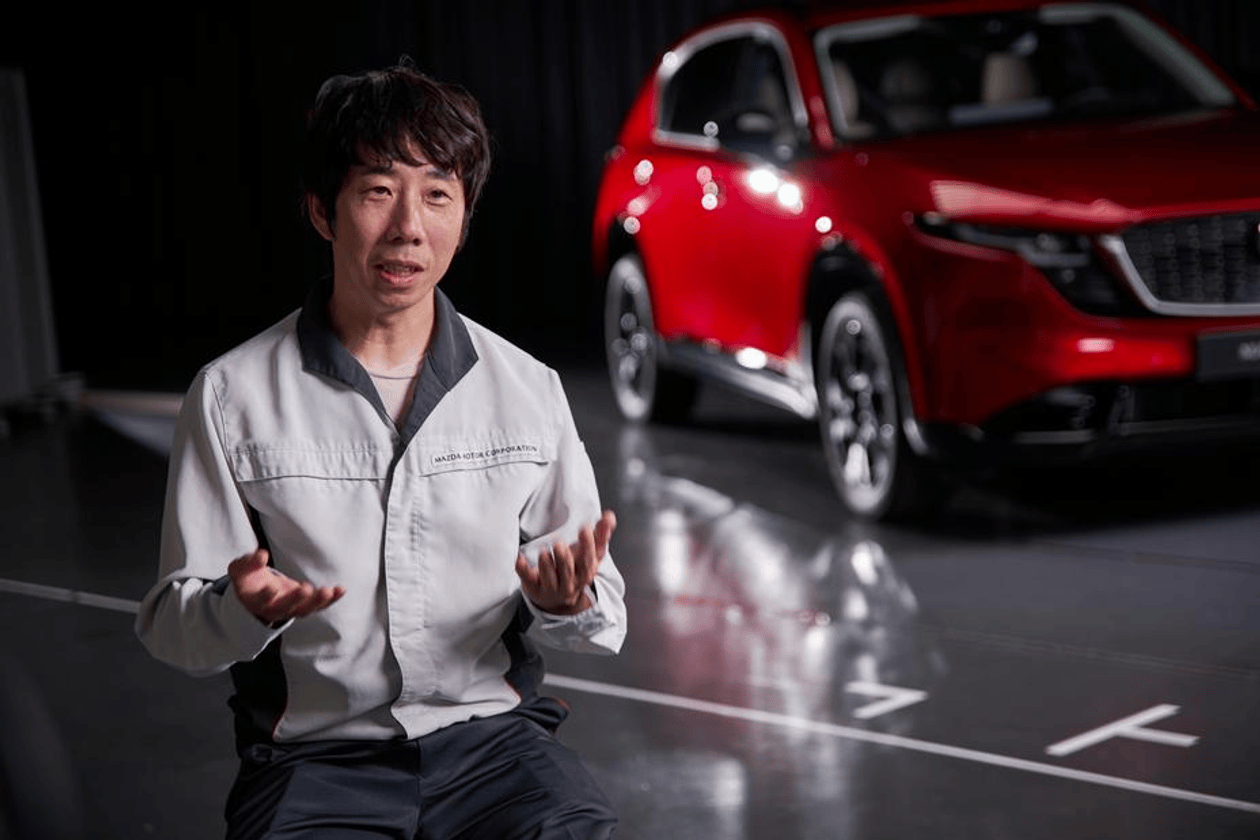
Masayoshi Horiue
Masayoshi Horiue, an engineer responsible for Mazda's fundamental safety technologies, explains that drivers are better placed to make appropriate decisions when they feel comfortable and at ease.
This is why Mazda treats driving position, visibility and the arrangement of controls as safety considerations rather than simply matters of convenience.
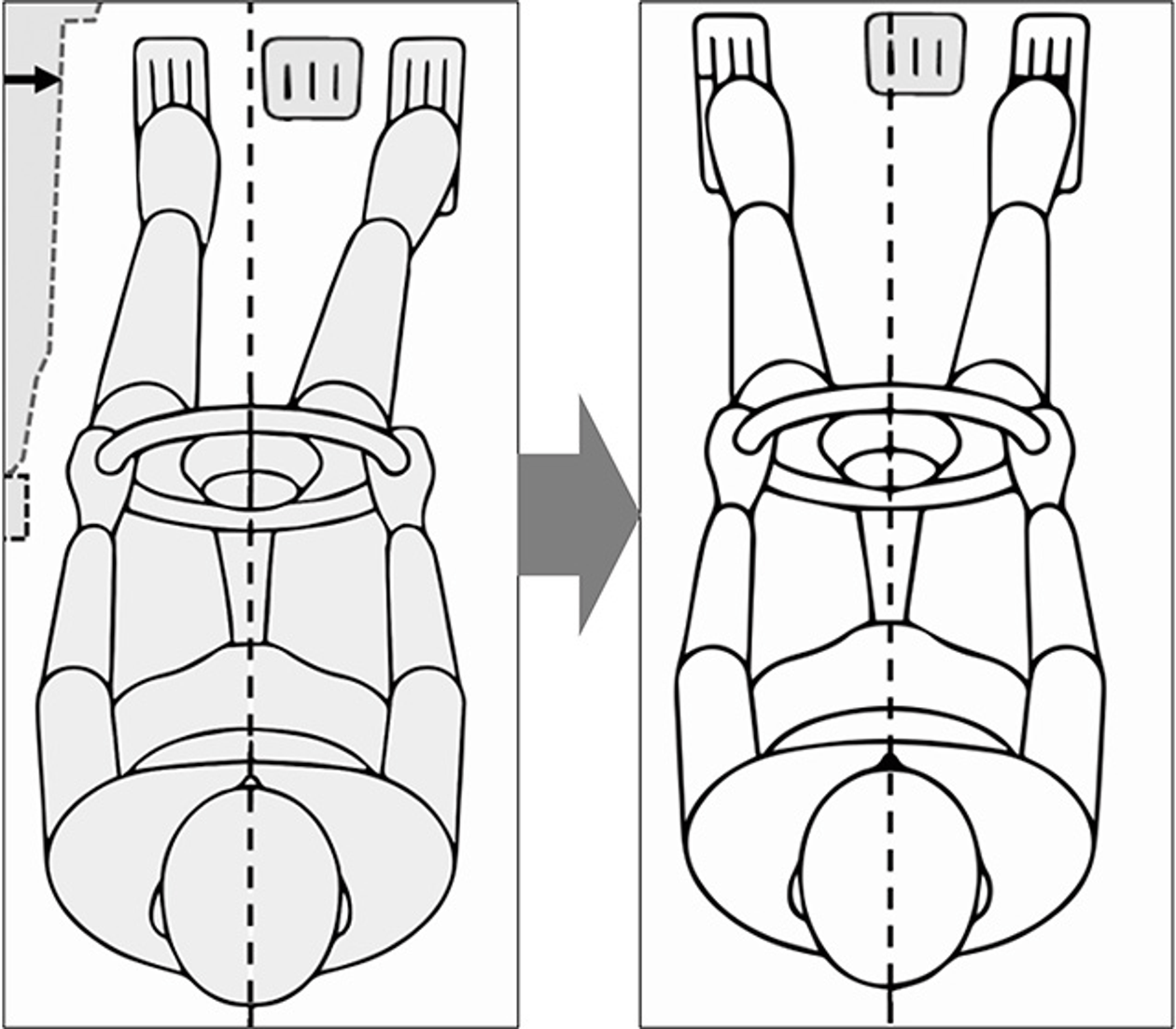
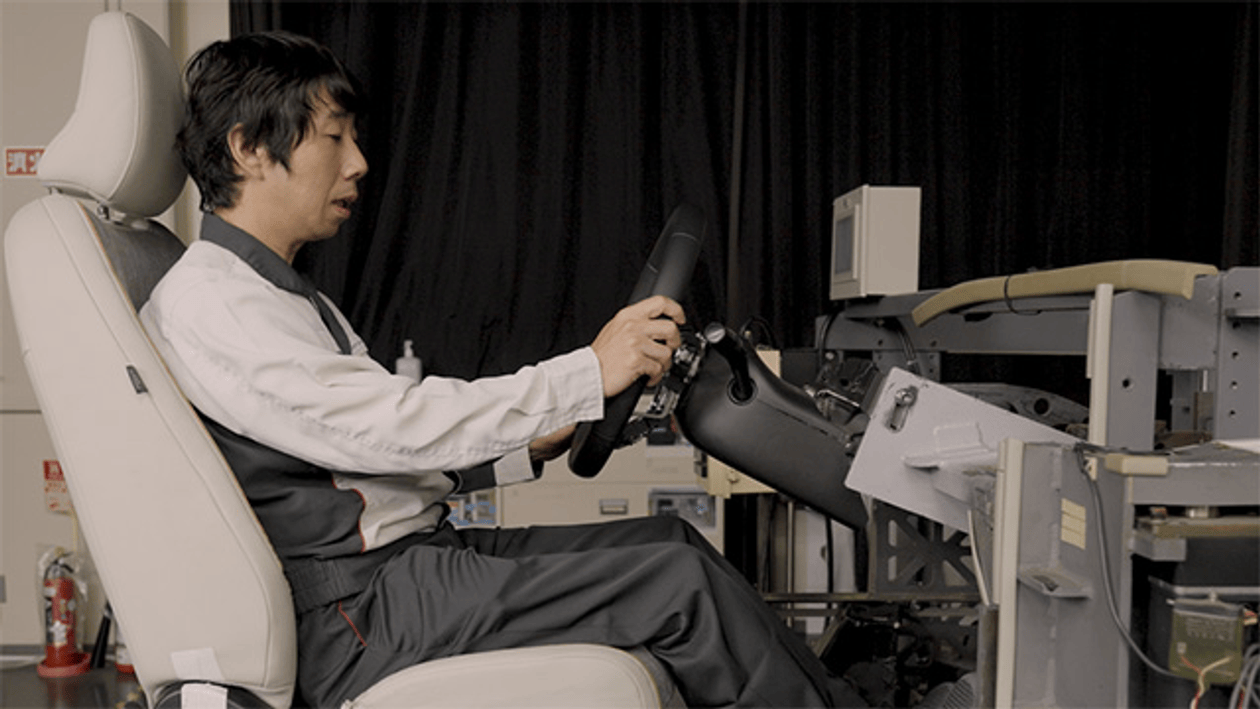
Long journeys can become tiring when a driver has to maintain an unnatural seating position. Poor posture can also make it harder to operate the steering wheel and pedals comfortably.
Mazda's ergonomic approach focuses on keeping the driver's joints at natural angles and ensuring that the main controls are within easy reach.
In vehicles equipped with the relevant adjustment technology, the driver can enter their height and have the seat, head-up display and mirrors adjusted automatically.
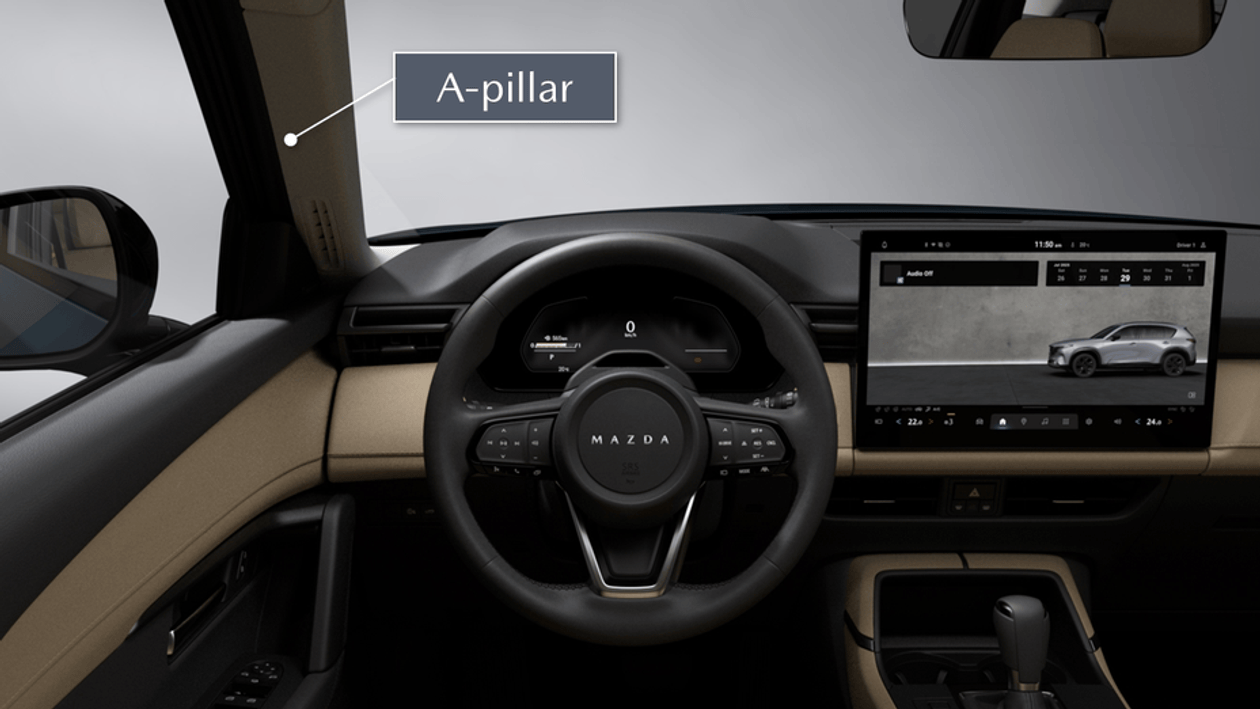
The new CX-5 also features slimmer A-pillars to improve forward-side visibility.
A-pillars are essential structural components, but they can obscure pedestrians, cyclists or approaching vehicles, particularly when turning at junctions.
By reducing the obstruction, Mazda aims to make it easier for drivers to see potential hazards without having to lean or move their heads significantly.
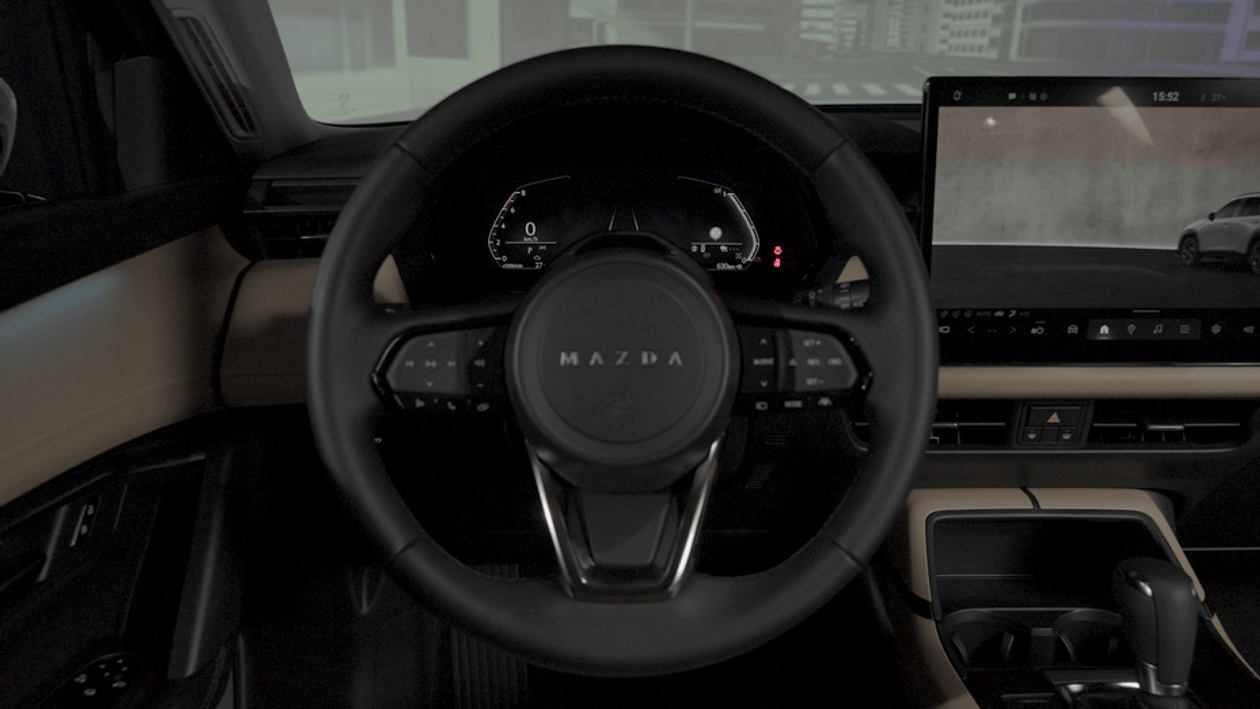
Mazda also considers how drivers interact with the vehicle's displays and controls.
Its human-machine interface (HMI) places essential driving information directly ahead of the driver, while less critical functions are grouped within the central infotainment display.
Voice commands and conveniently positioned physical controls provide additional ways to operate vehicle functions, which can reduce unnecessary glances away from the road and keeping the driver's hands on the steering wheel.
Horiue said, "People notice when something is dangerous. They don't notice when it's not."
"Safety is about helping avoid accidents, but it's also about creating peace of mind. I believe people can truly enjoy driving only when they have that peace of mind as a foundation. I want to keep improving my skills and build cars that let people feel at ease, and enjoy driving because of it."
When Michael Polk later had the opportunity to thank Mazda's engineers, he told them that their attention to safety had made it possible for him to be there.
"I don't have words to express how thankful I am, but at the very least, thank you."
His experience cannot, on its own, establish how a vehicle will perform in every crash. But it does illustrate the importance of the work Mazda's engineers describe.
Crash-test ratings remain valuable information for buyers. Mazda's approach is to use those results as one part of a wider development process, alongside accident research, structural engineering and ergonomics.
The objective is not simply to achieve a high score in a controlled test, but to improve the chances of avoiding an accident and protecting occupants when a collision does occur.

Your go-to source for all things automotive in Malaysia. 🚗 Latest reviews, breaking news, launches & industry trends.
+ Follow Honda plans to enter the pickup truck segment, and they've signed an MoU with Mitsubishi to use the Triton as the basis of their new truck.
Excited for a Honda-badged pickup? 1 minute ago
 Cherry's president and chairman Yin Tongyue has publicly apologised over the recently Chery Omoda 5 axle incident in Malaysia.
#chery 1 minute ago
 Now with TWIN TURBO!
Thailand just debuted the updated 2027 Isuzu D-Max, with its 2.2L Ddi MaxForce diesel engine now fitted with TWO turbos, pushing out 204 PS and 500 Nm.
Malaysia bila lagi?
#isuzu #isuzuDMax 1 minute ago
Get the latest car news first!
Your go-to source for all things automotive in Malaysia. 🚗 Latest reviews, breaking news, launches & industry trends.
Honda plans to enter the pickup truck segment, and they've signed an MoU with Mitsubishi to use the Triton as the basis of their new truck.
Excited for a Honda-badged pickup? 1 minute ago Cherry's president and chairman Yin Tongyue has publicly apologised over the recently Chery Omoda 5 axle incident in Malaysia.
#chery 1 minute ago Now with TWIN TURBO!
Thailand just debuted the updated 2027 Isuzu D-Max, with its 2.2L Ddi MaxForce diesel engine now fitted with TWO turbos, pushing out 204 PS and 500 Nm.
Malaysia bila lagi?
#isuzu #isuzuDMax 1 minute ago 
© 2024 Bitauto.com. All Rights Reserved.
Bitauto (www.yiche.com and www.bitauto.com) is one of the most visited automotive websites in China. We provide detailed info on Chinese car brands available in your area. Please note that the information provided on this website is based on publicly available data and is for reference only. It may not be fully updated or accurate at all times.

Help us improve our website


