
Search History
Popular Searches
English
Dealer Login / Sign Up
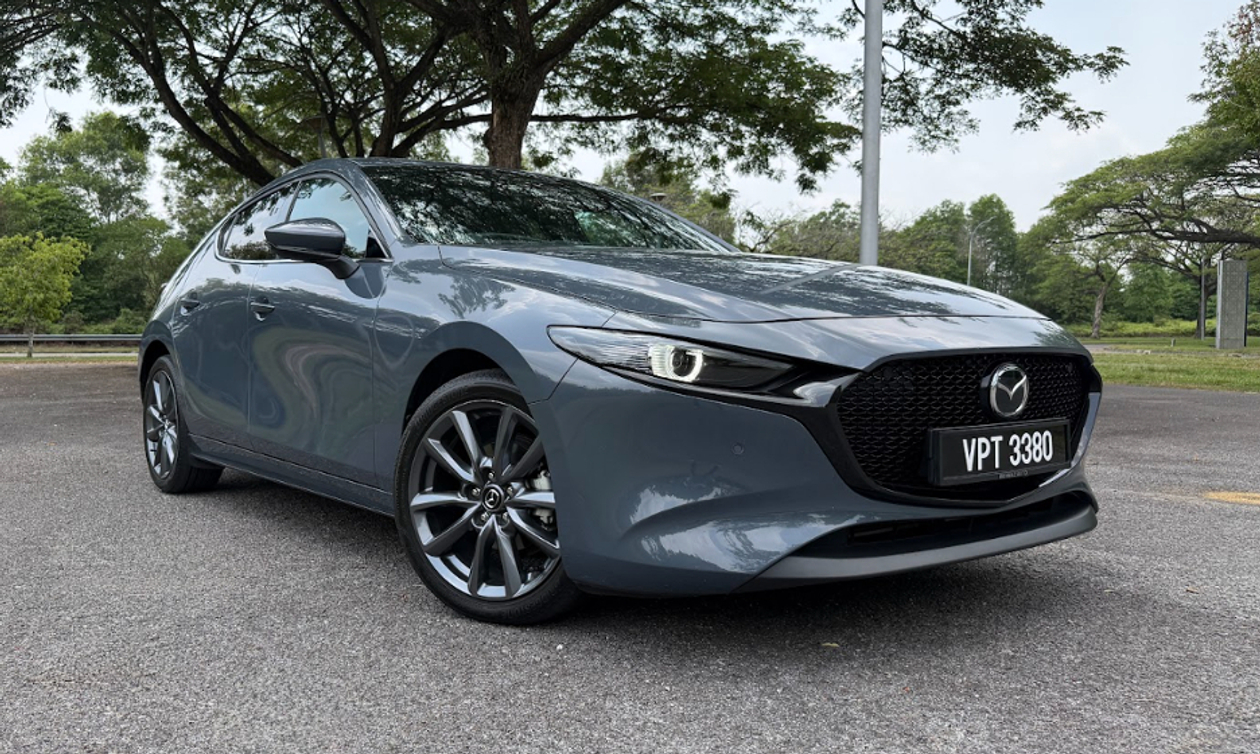
On paper, an RM 119,900 asking price for a car that has a 1.5-litre naturally-aspirated engine sounds about as realistic as paying RM 50 for a cup of coffee. But some people do pay that, because there’s a difference between coffee and… coffee.
One serves to keep you awake, while the other is something you savour – the beans from places you’d struggle to pin on the map, the handiwork of the barista’s many years in the art; all distilled into a single cup.
At this point, it’s beyond just a caffeine shot, but rather the experience as a whole. In more ways than one, that’s the Mazda 3.
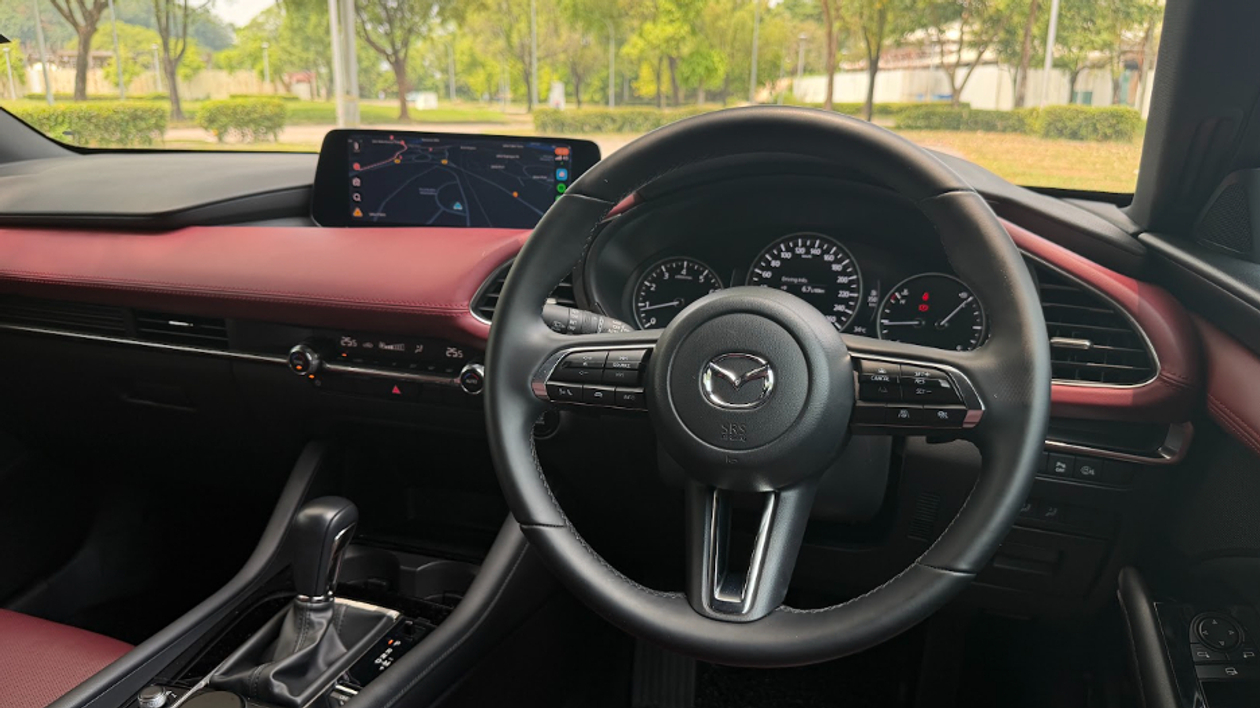
I’ll save you the esotericism here – in this newly-announced 1.5 High Plus specification, it’s bound to satiate even the fussiest of value-hunters.
Dual-zone climate control? Present. Full leather seats, draped in sensual Burgundy with 10-way power adjustment for the driver? In. Head-up display to complement a full array of advanced safety technologies, including Stop & Go Mazda Radar Cruise Control? Also here for you.
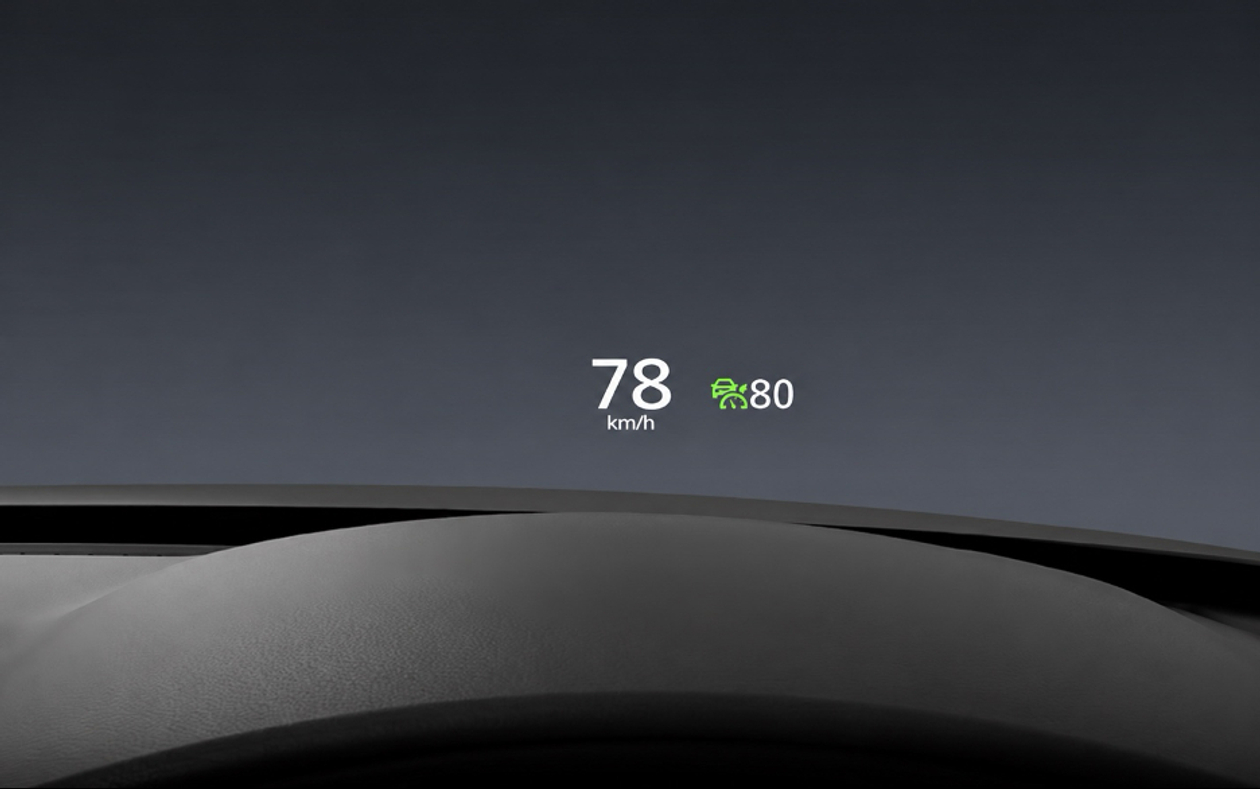 Head-up display in the Mazda 3 as standard
Those are the easy bits, though. They fit neatly into a brochure, and these days you don’t have to look particularly hard to find another car offering a similarly long equipment list for the money.
The harder part to quantify is why a Mazda 3 feels like a Mazda 3.
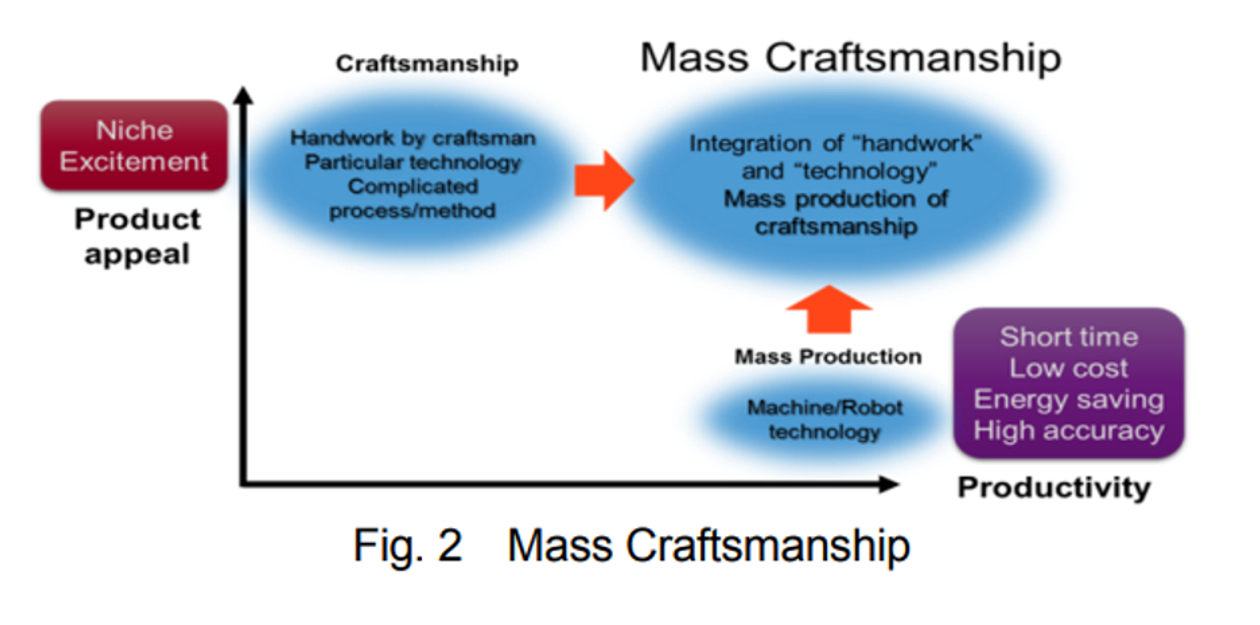 What goes into the Mazda 3. Source: Mazda Technical Review
Mazda itself has a term for some of the thinking that went into this generation of cars: “Mass Craftsmanship” (マス・クラフツマンシップ).
Strip away the words and the idea is fairly simple – take something that a skilled craftsman usually creates by hand, understand exactly what makes it special, and then figure out how to reproduce that quality thousands of times over.
That’s easier said than done.
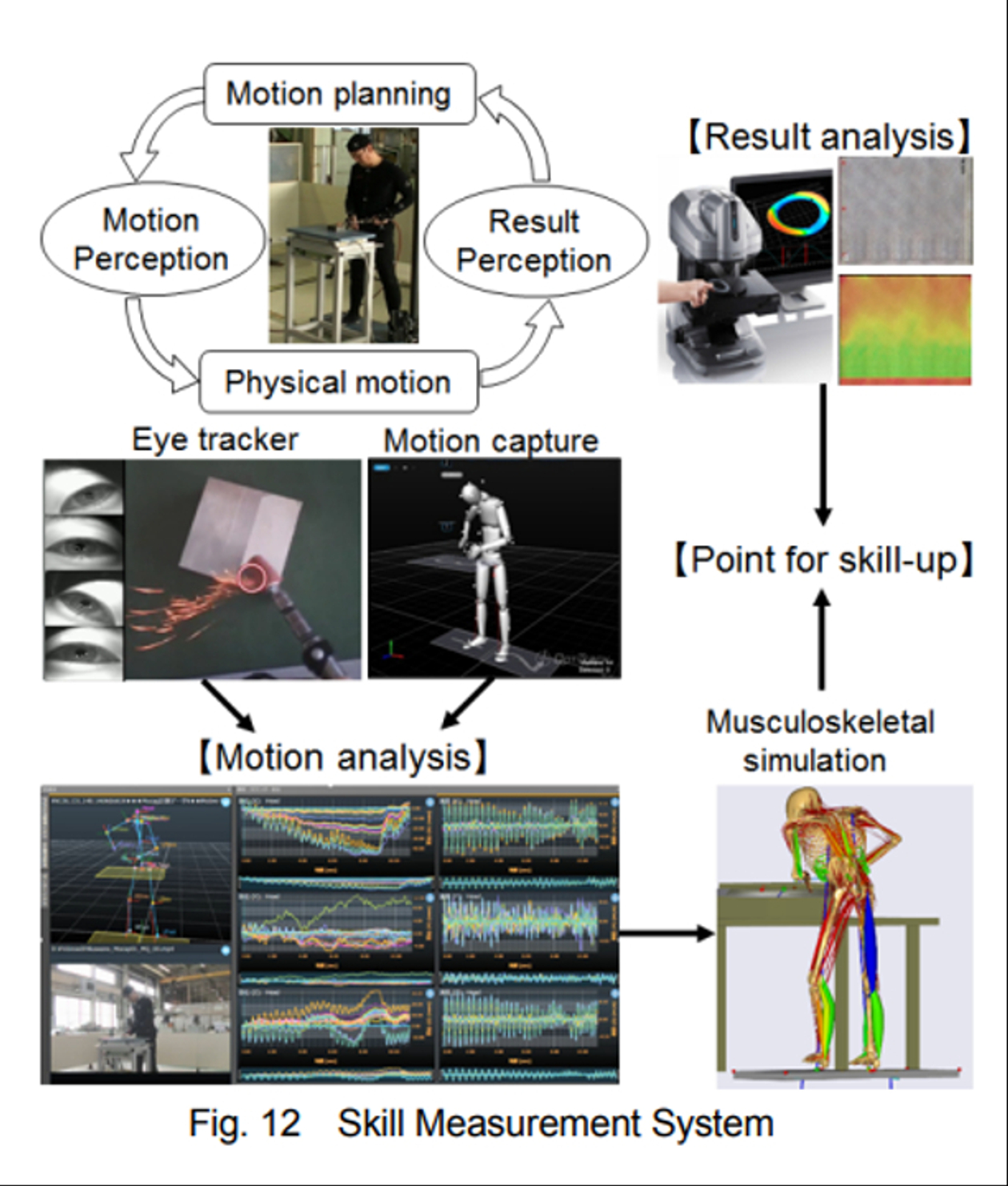
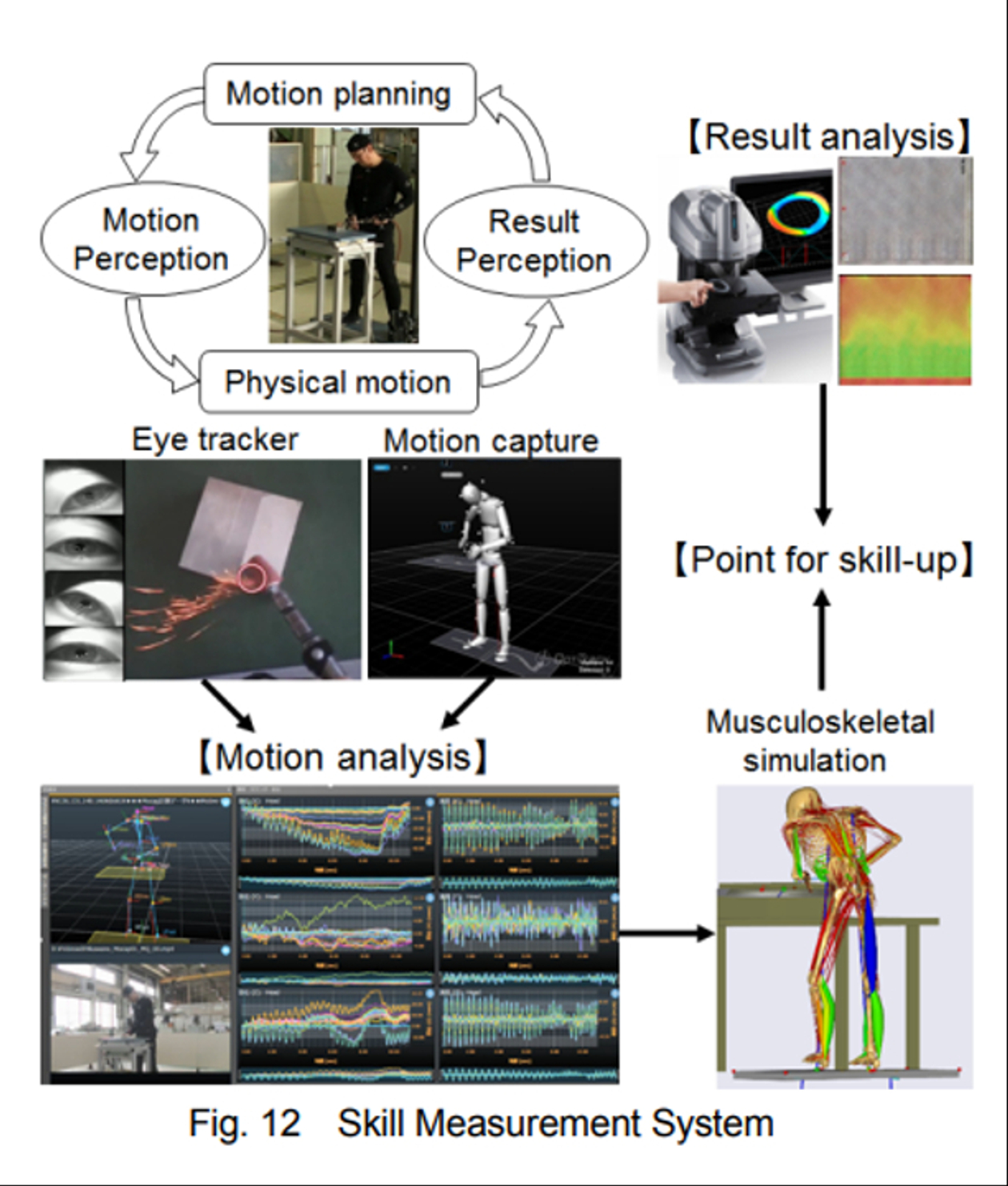 Mazda’s own technical papers detail how its production engineers studied these takumi skills through motion capture, eye tracking and even musculoskeletal analysis, breaking down movements developed over years of experience into measurable data that could then be transferred into the production process.
In other words, the craftsmanship isn’t remarkable simply because somebody in Hiroshima can sculpt a beautiful clay model by hand. The difficult bit is getting the 50,000th Mazda 3 rolling off a production line to still look like the designer intended.
You can see the result before you even open the door.
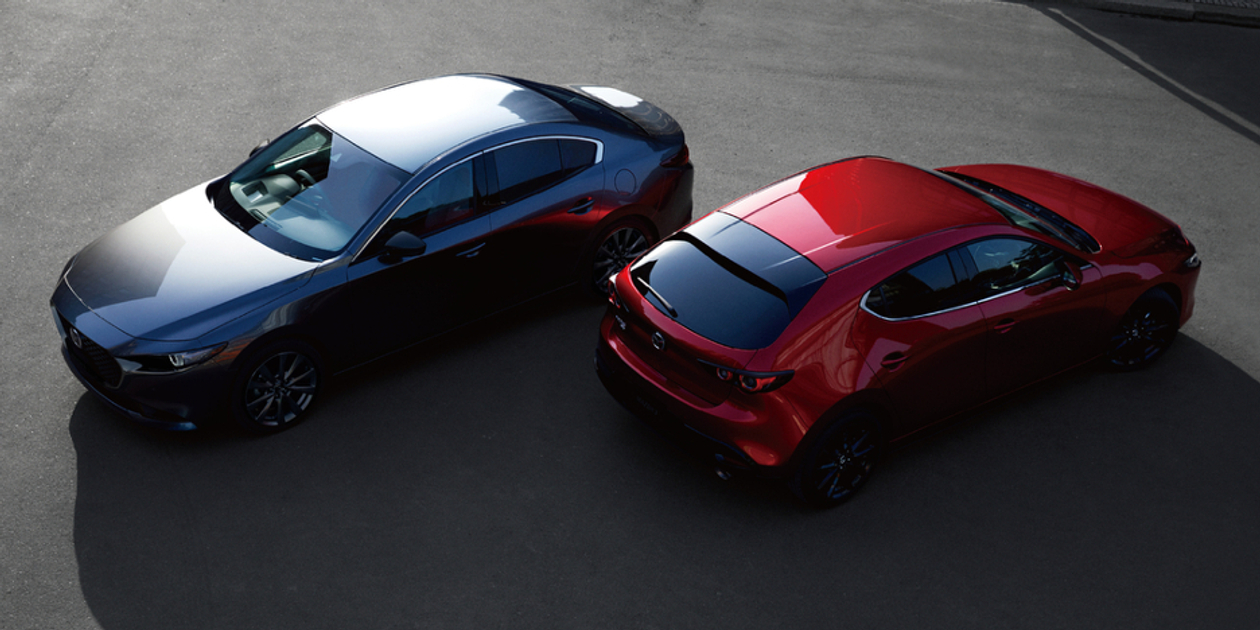
Mazda’s Kodo design philosophy has gradually moved towards what it calls an “aesthetics of subtraction”, and nowhere is that more obvious than on the Mazda 3 Liftback. Where most modern cars rely on creases, slashes and character lines to give a flat piece of sheet metal some drama, there’s remarkably little of that here.
Instead, you get these enormous, largely uninterrupted surfaces running down the sides of the car. Their shape is defined less by a crease stamped into the metal and more by the light reflected across it.
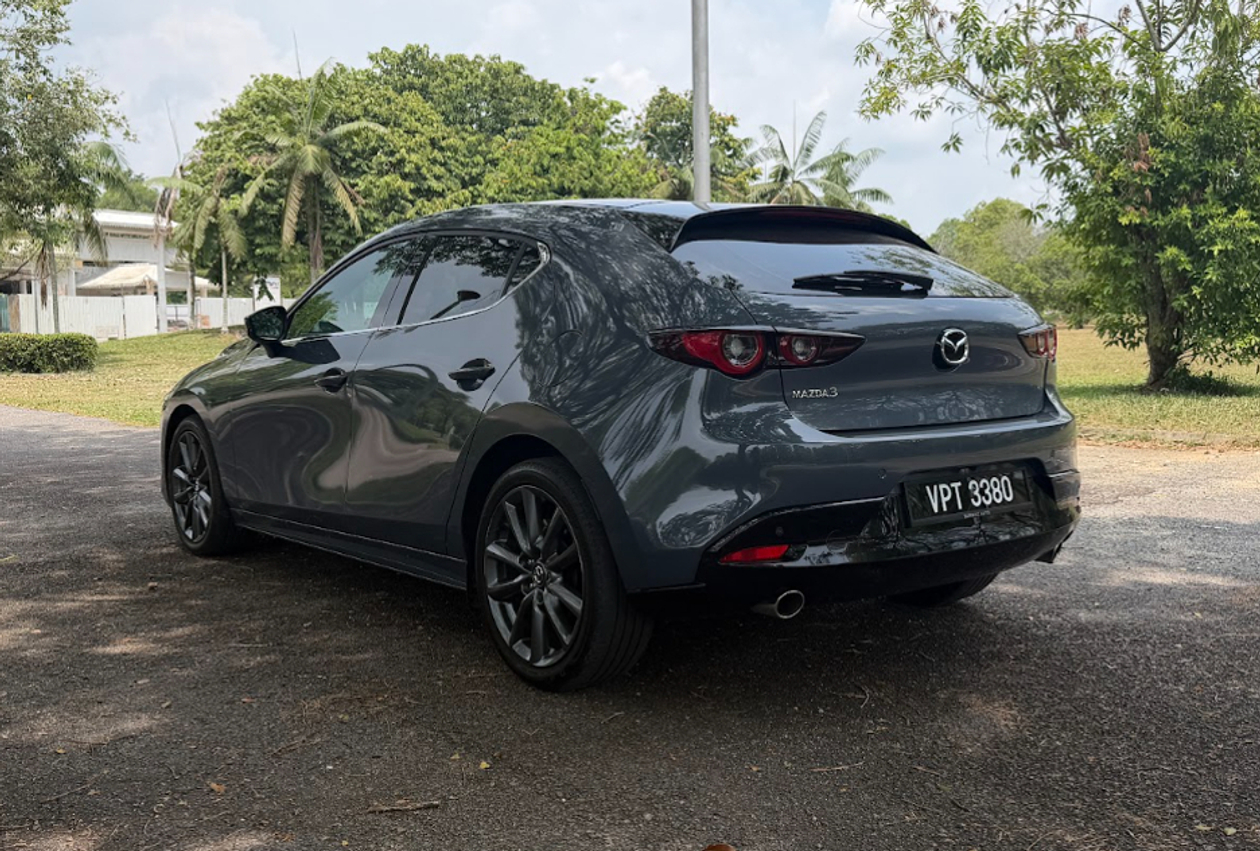
Walk past a Mazda 3 and the body almost seems to change shape with you.
Then throw Polymetal Grey into the mix. It’s the same with other Mazda shades, but we’ll talk about this here because it’s the colour you see in these pics.
It’s a strange colour even by Mazda standards. The original design brief sought to combine two seemingly contradictory qualities: the hardness of metal with the smooth, almost viscous appearance of resin.
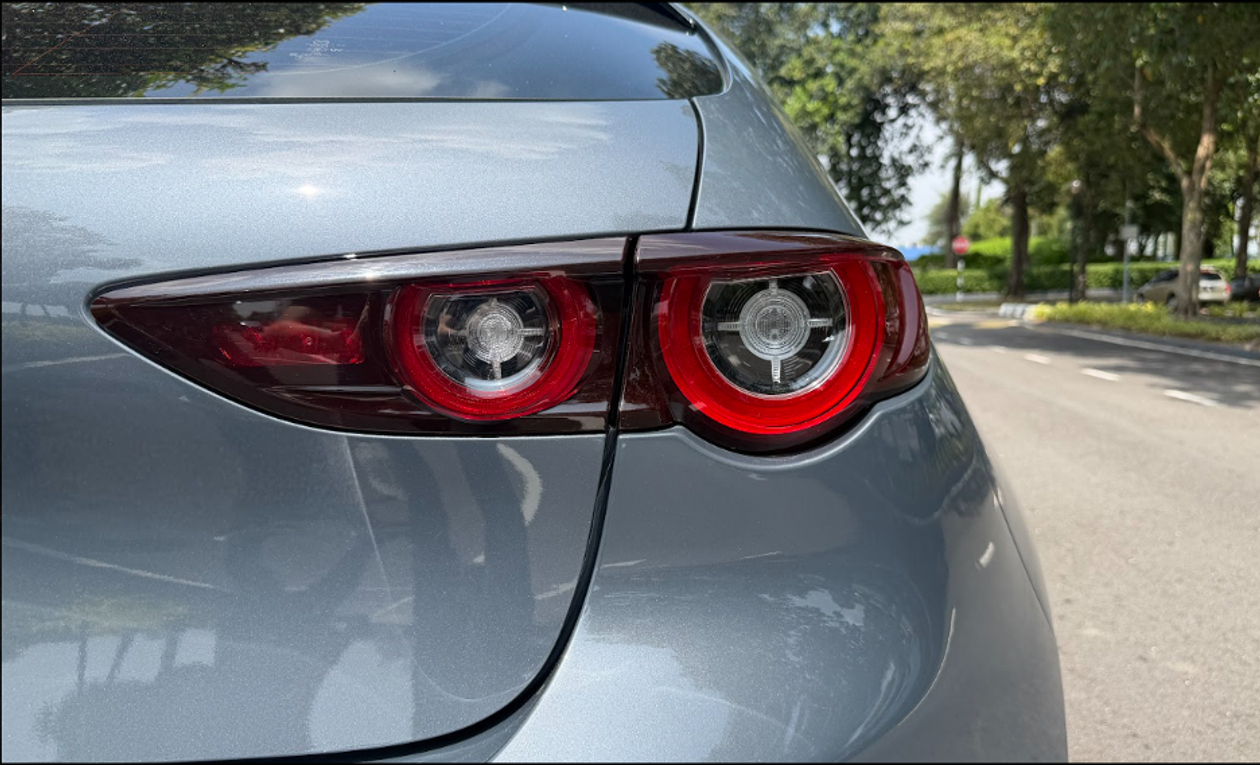
The result is a grey that rarely seems content with actually being grey. Under one light it takes on a distinctly blue hue; under another it looks almost silver, while an overcast day brings out something much flatter and more industrial; which moves the paint beyond just ‘interesting’ to being part of the design.
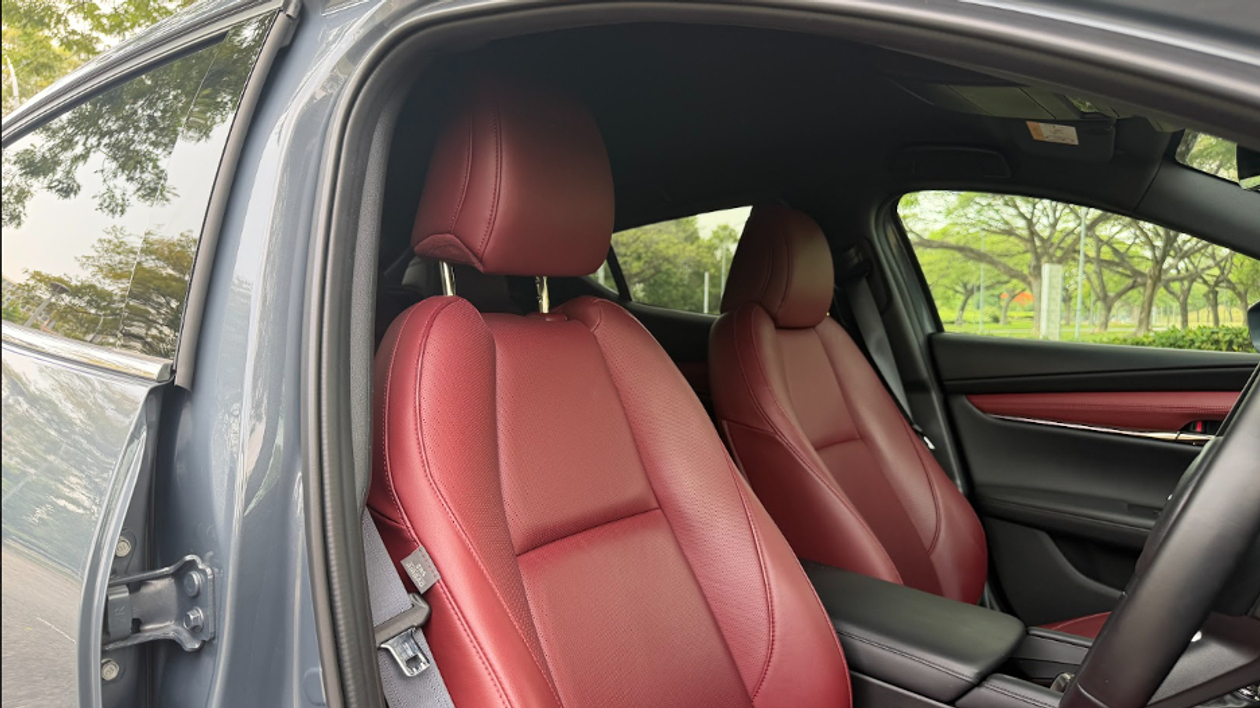
Pair that exterior with the Burgundy leather interior and you also get one of the more unusual colour combinations in the segment.
That wasn’t incidental either – Mazda’s original design material specifically singled out Polymetal Grey and Burgundy as a pairing it expected to appeal to buyers with a particular eye for design.
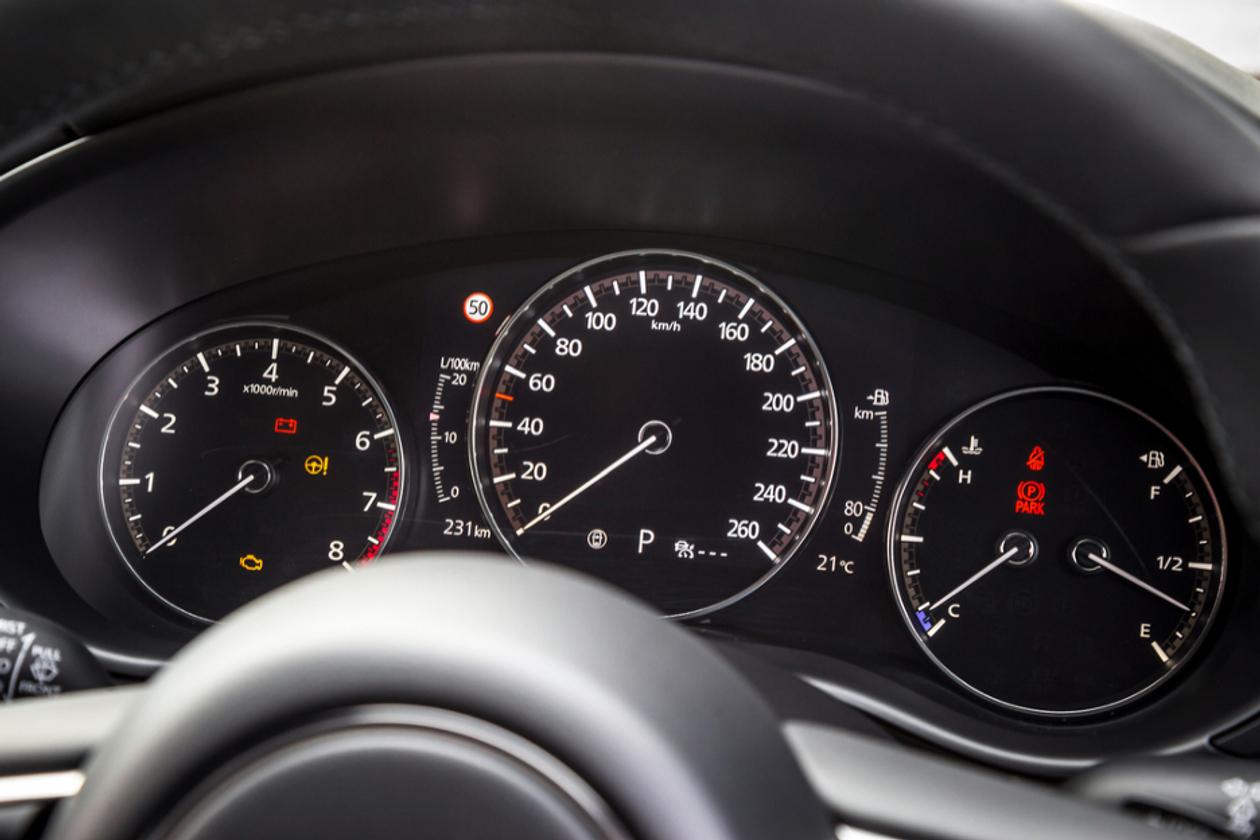
Then you start finding the really nerdy stuff.
When Mazda was developing the interior, even the colour of the cabin lights came under scrutiny. Rather than accepting the relatively broad colour variation possible with ordinary white LEDs, Mazda specified a much tighter chromaticity range so that the lighting would reproduce the colours and materials of the cabin consistently.
The audio system received much the same treatment.
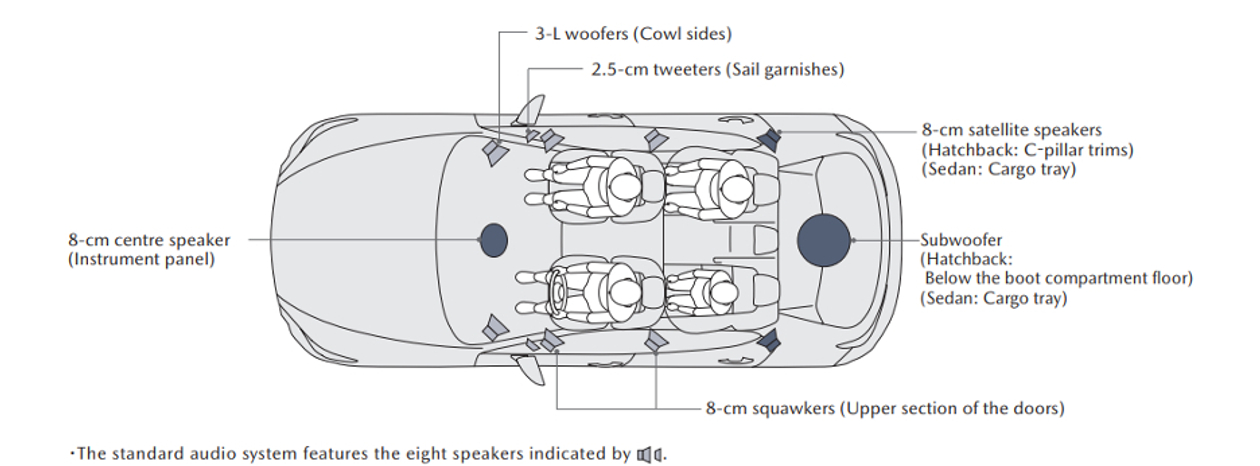
Convention says you put the big speakers in the doors because, well, that’s where car speakers tend to go. Mazda instead modelled how sound propagated through the cabin and moved the bass drivers into dedicated 3-litre enclosures around the cowl sides.
That solved more than one problem. Moving the woofers out of the doors meant the doors no longer needed such large openings to accommodate them, which in turn allowed the structure to do a better job of keeping unwanted noise outside.
One engineering decision feeds into another, and you end up with something the owner experiences simply as, “this car is damn quiet and the speakers sound super good!”
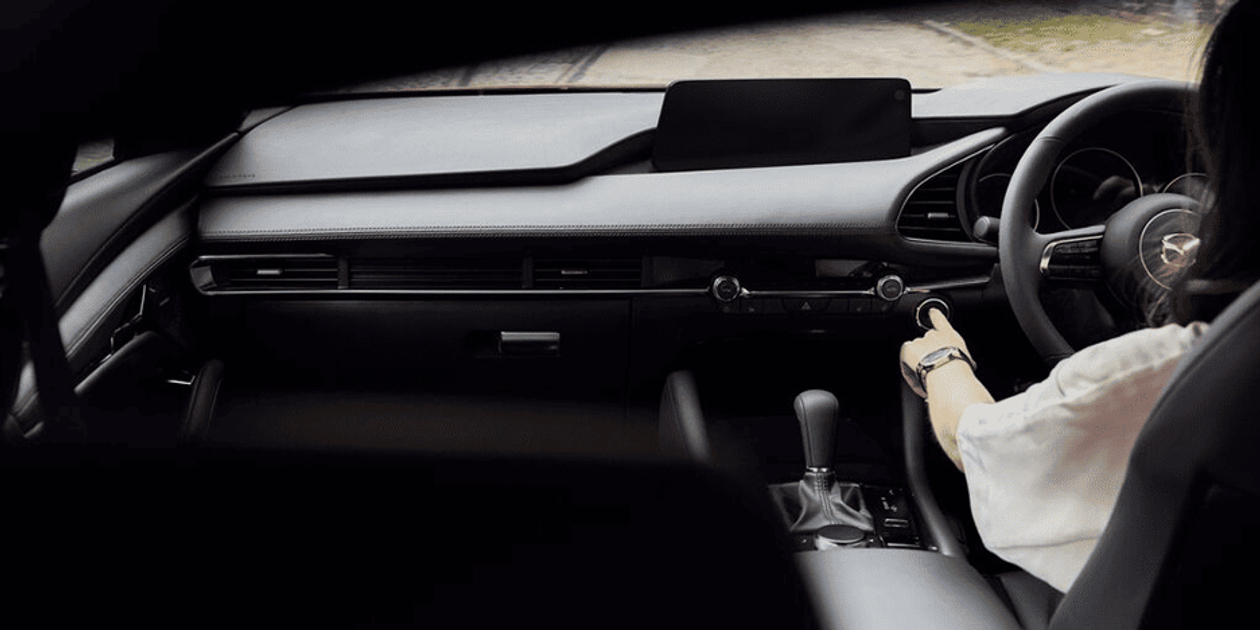
Even the dashboard follows the same thinking. There’s no television bolted vertically onto the centre console (how refreshing!), no enormous wall of fake buttons and relatively little inside demanding that you look at it.
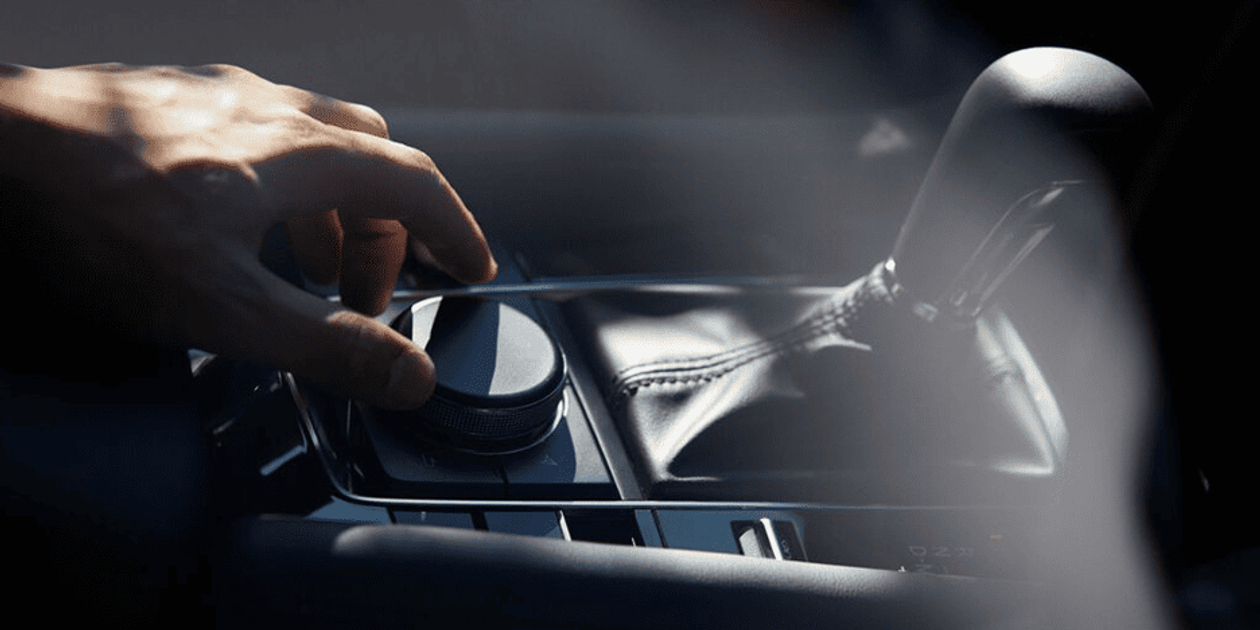
Mazda instead worked on making the physical controls, graphics and feedback feel like parts of the same interface. Panel divisions were deliberately tucked into shadows where possible to reduce visual clutter. Even the movement of the rotary commander was considered alongside what happens graphically on the screen.
None of this makes for a particularly exciting equipment-list comparison. Neither does designing a seat around the position of your pelvis.
Yet that’s essentially what Mazda did.
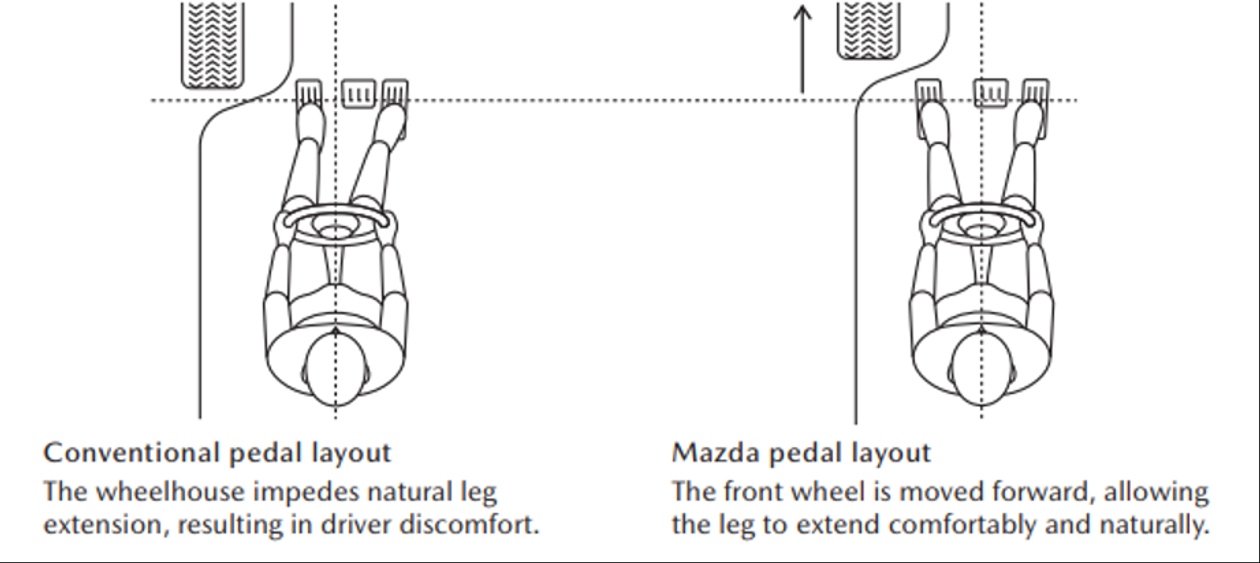
Its engineers studied the way the human body naturally maintains balance while walking, then tried to allow the body to behave similarly inside the car.
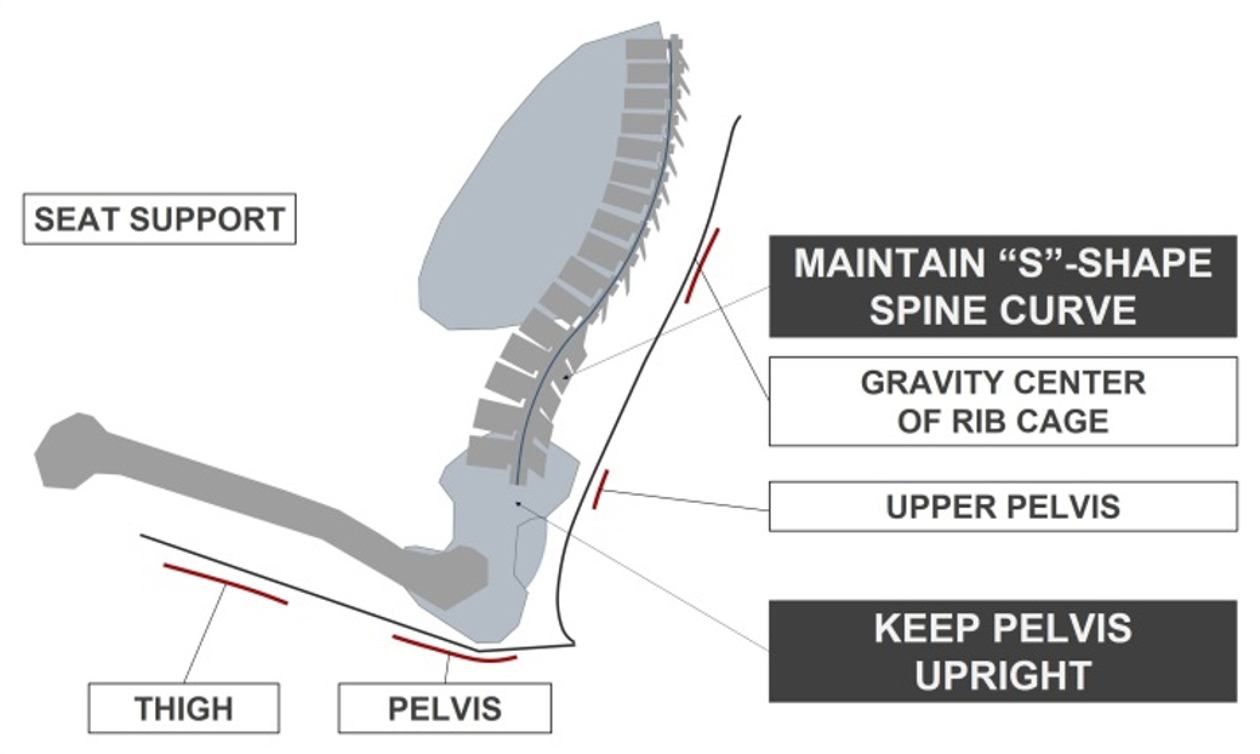
The seats were developed to help keep the pelvis upright and the spine closer to its natural S-shaped curve, rather than allowing the occupant to collapse into the seat and then rely on muscular effort to compensate for every movement of the car.
That human-centred thinking spills directly into the way the Mazda 3 drives.
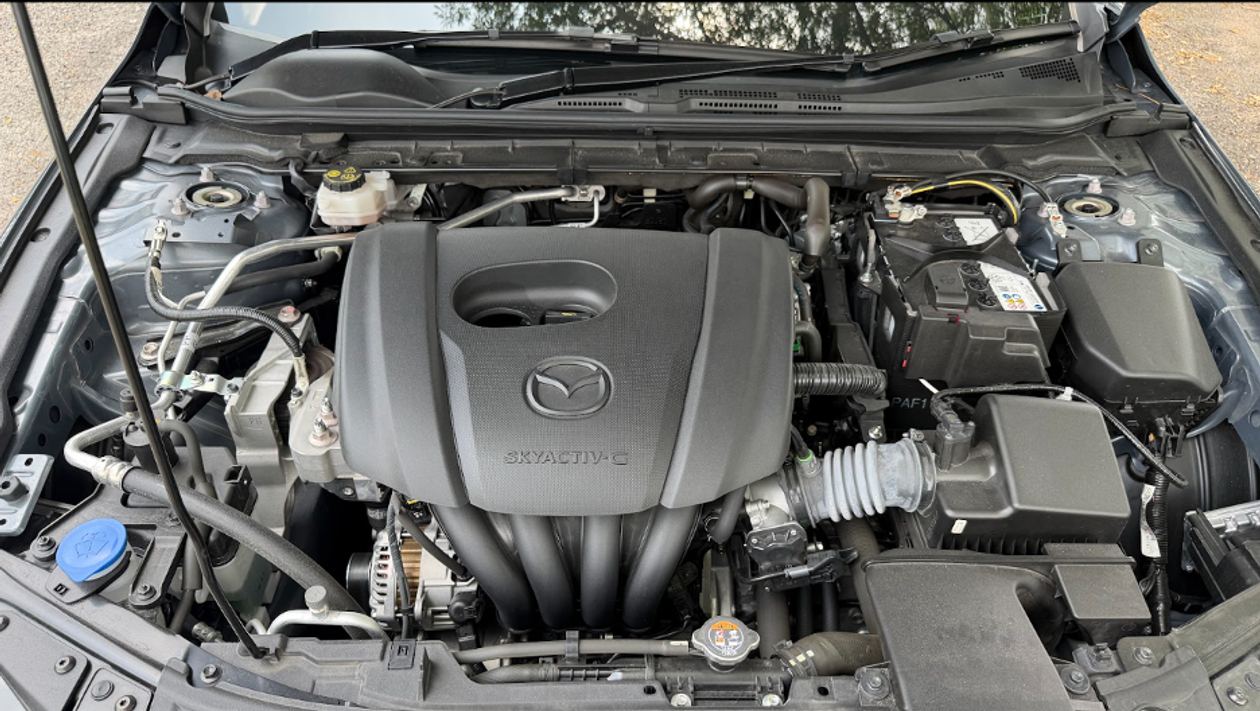
The 1.5L Skyactiv-G unit itself is hardly going to set your trousers on fire. You get 118 HP and 153 Nm, sent to the front wheels through a six-speed Skyactiv-Drive automatic.
In an era where the segment has largely embraced CVTs, DCTs and increasingly electrified transmissions, Mazda has stubbornly held onto a conventional torque-converter automatic.
There’s something rather refreshing about that. Pull a paddle and you get a gear. Put your foot down and it changes ratio. There are no simulated CVT steps and none of the low-speed clutch behaviour associated with a dual-clutch gearbox.
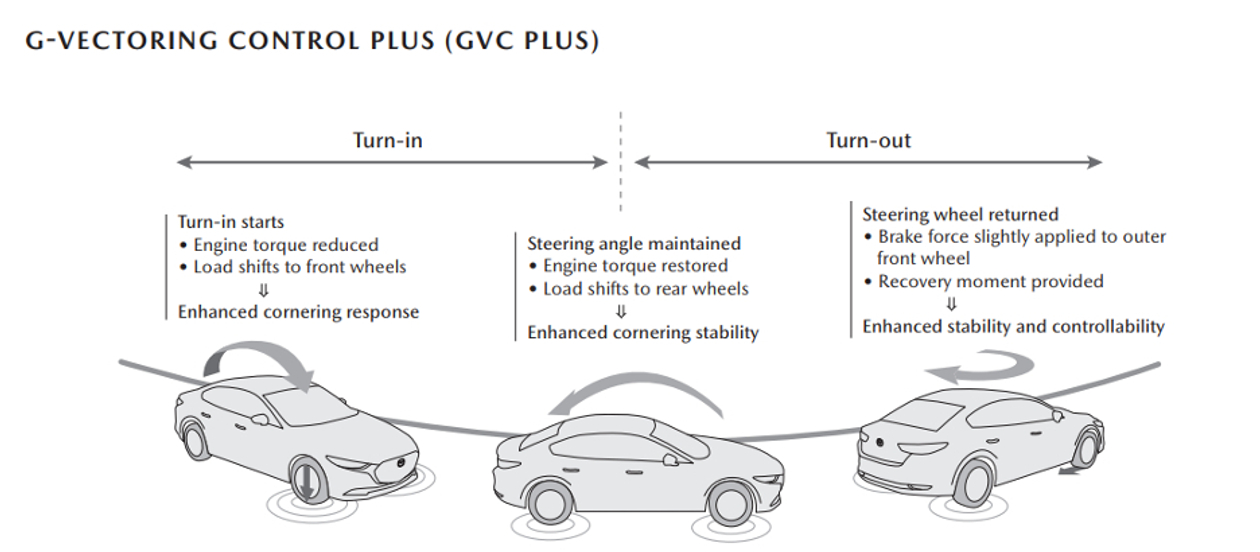
The same philosophy applies when you turn the steering wheel.
Mazda’s G-Vectoring Control Plus – GVC Plus – is often lumped in with torque-vectoring systems, but that isn’t quite what it does. The original GVC made minute changes to engine torque in response to steering input, subtly manipulating longitudinal acceleration and therefore the load being placed through the tyres as the car turns.
GVC Plus goes one step further.
As you unwind the steering on the way out of a corner, it can apply a tiny amount of braking force to an outside wheel, creating a stabilising yaw moment that helps the car settle back into a straight line.
The clever bit is that you’re not really supposed to notice any of this.
There’s no GVC light flashing on the dashboard every time it intervenes, nor should you feel the car dramatically dragging a brake around a corner. Mazda’s engineers were more interested in making the transitions between yaw, roll and pitch feel natural, reducing the little corrections the driver – and the bodies of everyone inside – have to make as the car changes direction.
It’s an extraordinarily complicated way of making a car feel uncomplicated.
Small company; big on feel
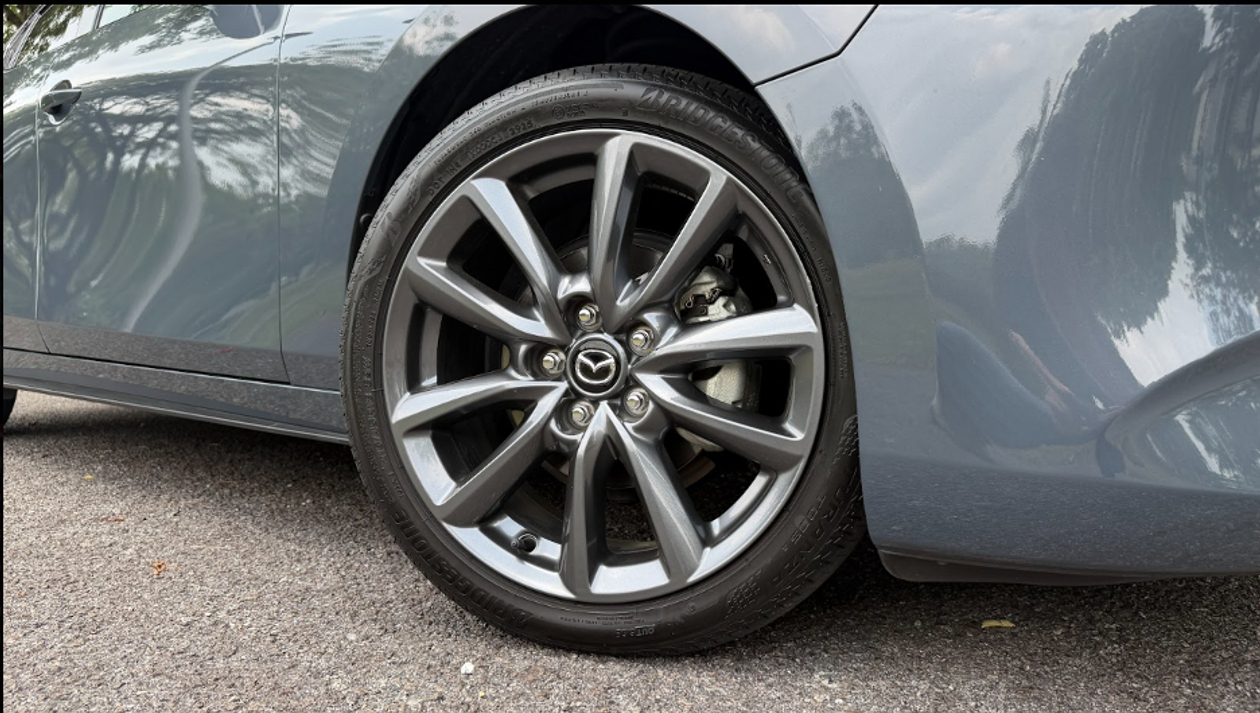
Mazda is also a relatively small manufacturer trying to play this game. It doesn’t enjoy multi-million-unit volumes or have a sprawling collection of brands across which to spread every development cost.
Its own production-engineering work acknowledges the challenge of competing as a smaller player, and much of its answer has been to create value somewhere other than simply piling on equipment.
Which is also why I don't think the Mazda 3 1.5 needs to win some imaginary spreadsheet championship to make sense.
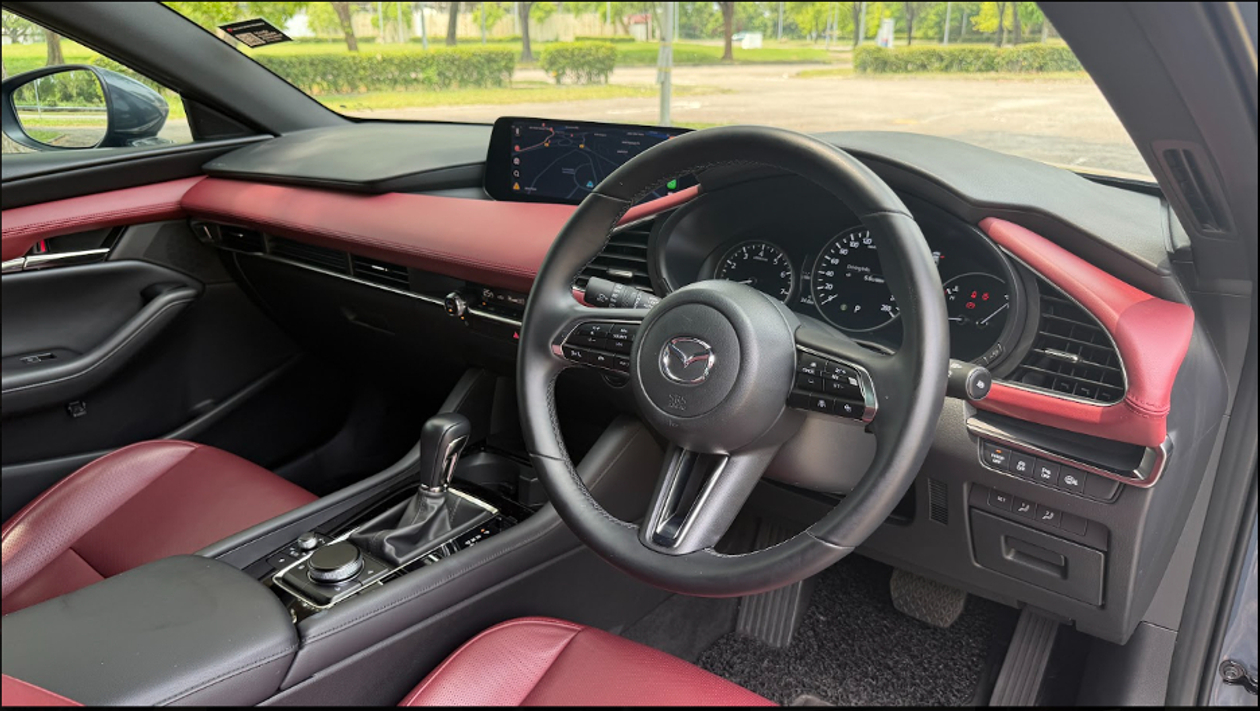
Yes, there are faster cars for RM 119,900. There are turbocharged cars for less, cars with more room in the back and cars with enough screens inside to run air-traffic control from the driver's seat.
The Mazda 3, however, does remarkably well to appeal to a very particular sort of person.
The sort who'll park the car, walk ten paces away and turn around for another look. Who'll eventually notice that Polymetal Grey wasn't quite the same colour when they left home that morning.
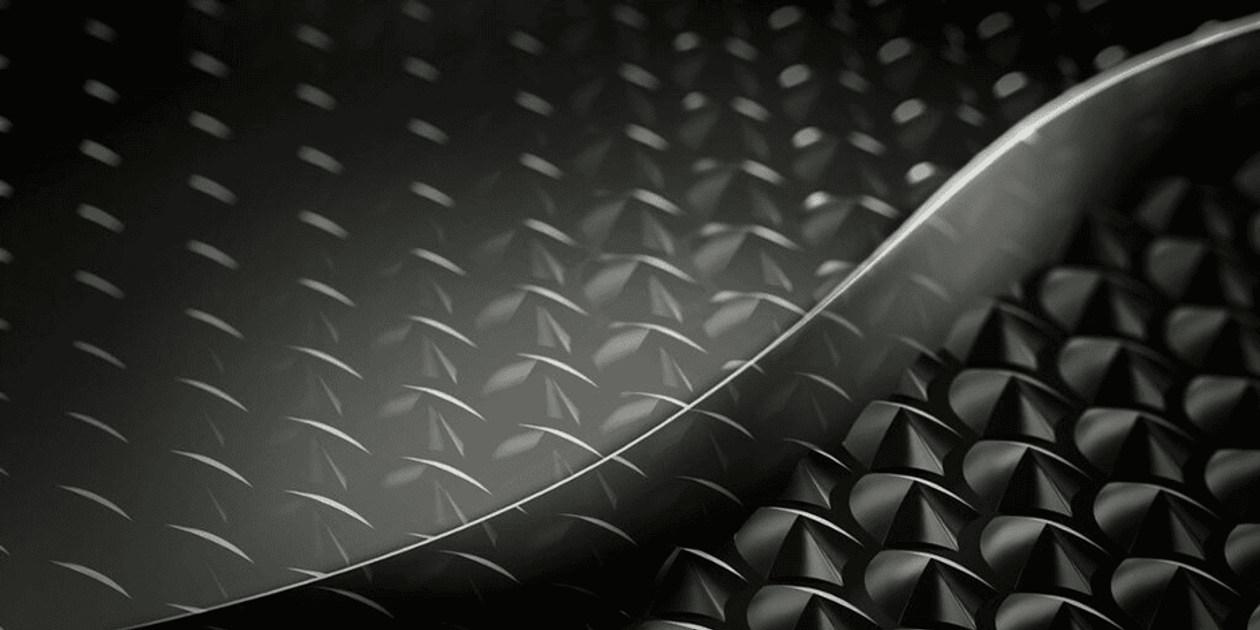
Who prefers a knurled rotary dial and a satisfying click to stabbing at a piece of glass. Who probably doesn't need to know that Mazda spent time thinking about their pelvis, but is secretly delighted to discover that it did.
And the new Mazda 3 range doesn't suddenly abandon the practical stuff either. You still get the equipment, the full suite of safety systems, plus Bermaz's 5-year/100,000 km manufacturer warranty and 5 years/100,000 km of free scheduled maintenance, including scheduled labour, parts and lubricants.
For sheer experience, the Mazda 3 is more than a match for absolutely anything. It's a car that you’ll think about a lot once you take the first curve - and you’ll wonder how your next drive can ever come close unless you have one.
For more on the Mazda 3, find out in this link.


Your go-to source for all things automotive in Malaysia. 🚗 Latest reviews, breaking news, launches & industry trends.
+ Follow There is one car on the market right now, that for less than RM 120k, can get you:
- Perfect driving position
- Seats that don't make your back hurt in long drives
- A drive that you can't forget, even more so in the corners
Answer in the comments. 1 minute ago
There is one car on the market right now, that for less than RM 120k, can get you:
- Perfect driving position
- Seats that don't make your back hurt in long drives
- A drive that you can't forget, even more so in the corners
Answer in the comments. 1 minute ago  BYD's CKD partner has been confirmed to be with Sime Motors!
Which CKD BYD are you looking forward to? 1 minute ago
BYD's CKD partner has been confirmed to be with Sime Motors!
Which CKD BYD are you looking forward to? 1 minute ago  ⛽ Fuel prices drop across the board starting tomorrow (Oct 15 - Oct 21)! 5 hours ago
 Get the latest car news first!
Your go-to source for all things automotive in Malaysia. 🚗 Latest reviews, breaking news, launches & industry trends.
There is one car on the market right now, that for less than RM 120k, can get you:
- Perfect driving position
- Seats that don't make your back hurt in long drives
- A drive that you can't forget, even more so in the corners
Answer in the comments. 1 minute ago BYD's CKD partner has been confirmed to be with Sime Motors!
Which CKD BYD are you looking forward to? 1 minute ago ⛽ Fuel prices drop across the board starting tomorrow (Oct 15 - Oct 21)! 5 hours ago © 2024 Bitauto.com. All Rights Reserved.
Bitauto (www.yiche.com and www.bitauto.com) is one of the most visited automotive websites in China. We provide detailed info on Chinese car brands available in your area. Please note that the information provided on this website is based on publicly available data and is for reference only. It may not be fully updated or accurate at all times.

Help us improve our website


