

HomeChery

Search History
Popular Searches
Dealer Login / Sign Up

Recap:
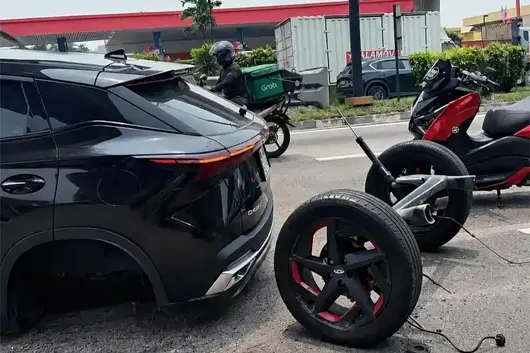
Malaysia, an OMODA 5 SUV with the Chery brand suffered an axle breakage accident; specifically the 2023 OMODA 5 model, after official investigation, it was determined that this batch of vehicles may have insufficient welding strength at partial locations of the rear axle longitudinal arm, under extreme conditions there is a risk of weld seam tearing, which could lead to detachment.

This model variant has already been discontinued, Chery Malaysia subsidiary has cooperated with the relevant arrangements of the Malaysian Road Transport Department to recall 8,878 OMODA 5 vehicles with issues; the solution is to inspect relevant components, decide whether replacement is needed based on specific circumstances, replacement is free. Meanwhile Chery Automobile stated, adhering to the principle of prudence, the company has initiated a special risk investigation for the same batch of OMODA 5 vehicles in the domestic and relevant markets, maintaining active communication with regulatory authorities; subsequently Chery will announce results to the society in a timely manner in a responsible attitude based on the investigation results.
At the same time, we express apologies for the inconvenience caused to users.

And in 2024, there were already complaints from owners regarding OMODA 5 rear axle breakage during driving, namely adopting torsion beam non-independent suspension; Chery recalled 600 vehicles in Malaysia at that time, after confirming the issue originated from improper calibration of rear axle welding equipment, rear axles were replaced for 60 affected vehicles.


The domestic model corresponding to the OMODA 5 SUV is the Chery OMODA, this vehicle is currently discontinued, the last batch is the 2025 model. Its body dimensions are 4,400*1,830*1,588 mm, wheelbase is 2,630 mm, it is a compact SUV with smaller dimensions; adopts front MacPherson independent suspension, rear torsion beam non-independent suspension, it is a front-engine front-wheel drive vehicle. The vehicle is equipped with a 1.5T turbocharged engine, power parameters are 115 kW/230 N·m, 2025 model matched with Continuously Variable Transmission (CVT).
Chery Automobile's attitude towards facing product issues is still commendable, under necessary premises, discontinued models will also be recalled.


Rujukan:
Di Malaysia, sebuah SUV OMODA 5 jenama Chery mengalami kejadian paksi patah; model khusus ialah OMODA 5 tahun 2023, melalui siasatan rasmi, didapati kenderaan dalam lot tersebut mungkin mempunyai kekuatan kimpalan yang tidak mencukupi pada lokasi kimpalan separa lengan gandar belakang, dalam keadaan ekstrem terdapat risiko sambungan kimpal koyak, yang seterusnya menyebabkan komponen terlepas.
Model struktur ini telah berhenti dikeluarkan sebelum ini, anak syarikat Chery Malaysia telah bekerjasama dengan susunan Jabatan Pengangkutan Jalan Malaysia, melakukan tarikan semula bagi 8,878 unit model OMODA 5 yang bermasalah; Penyelesaiannya ialah memeriksa komponen berkaitan dan menentukan sama ada perlu diganti bergantung pada keadaan khusus; penggantian adalah percuma. Pada masa yang sama Chery Automobile menyatakan berdasarkan prinsip berhati-hati, syarikat telah melancarkan siasatan risiko khas bagi model OMODA 5 lot yang sama di pasaran domestik dan berkaitan, dan mengekalkan komunikasi aktif dengan pihak pengawalan; Seterusnya Chery akan mengikuti hasil siasatan, dengan sikap bertanggungjawab, mengumumkannya kepada masyarakat pada masa yang tepat.
Sementara itu, kami memohon maaf atas ketidakselesaan yang dialami pengguna.
Pada tahun 2024, telah ada pemilik mengadu OMODA 5 mengalami paksi belakang patah semasa memandu, iaitu suspensi balok torsi bukan berasingan yang digunakannya; Chery ketika itu telah menarik semula 600 unit kereta di Malaysia, selepas mengesahkan masalah berpunca daripada pengkalibrasian peralatan kimpalan paksi belakang yang tidak tepat, dan menukar paksi belakang bagi 60 kenderaan yang terjejas.
Model domestik bagi OMODA 5 SUV ialah Chery OMODA, kereta ini sekarang dalam keadaan tidak dijual, Lot terakhir ialah model 2025. Dimensi kenderaan ialah 4400*1830*1588 mm, Jarak paksi ialah 2630 mm, iaitulah SUV saiz kecil; menggunakan suspensi McPherson berasingan hadapan, suspensi balok torsi bukan berasingan belakang, ialah kereta pemacu hadapan enjin hadapan. Kenderaan ini dilengkapi enjin turbin 1.5T, Parameter kuasa ialah 115kW/230N·m, Model 2025 padan dengan transmisi tanpa langkah (CVT).
Sikap Chery Automobile terhadap masalah produk ini wajar dipuji, di mana perlu, model yang henti pengeluaran juga boleh ditarik semula.

Author | Janson
Editor | Zhihao
A Chery SUV was driving on the road when its two rear wheels fell off on their own.
Car Thing news on October 12, recently, a 2023 model Chery OMODA 5 in Malaysia experienced a rear axle detachment event, the vehicle's two rear wheels fell off together with the rear axle assembly directly, the car also lay across the road, fortunately no casualties were caused.

▲ Online circulating video from the rear-facing dashcam of the involved vehicle
In the evening of October 11, Chery Automobile publicly apologized for the vehicle rear axle detachment event. The explanation showed that the involved batch of vehicles might have insufficient welding strength at partial welding positions of the rear axle beam, and in extreme cases there is a risk of weld seam tearing.

▲ Chery releases issue statement
Currently, Chery Malaysia subsidiary has initiated a recall, involving 8,878 OMODA 5 vehicles, relevant parts will be inspected, and replaced free of charge depending on the situation, domestic same-batch models have also initiated risk inspection.
Chery also confirmed that models using this structure were previously discontinued. The company has initiated a special risk inspection for domestic and relevant market same-batch models, will publish follow-up progress in a timely manner based on the inspection results, and publicly apologize for this matter.
After the incident, Malaysia Land Transport Authority (JPJ) has temporarily suspended the certification and new car registration of the affected OMODA 5 models, and required Chery to investigate the relevant vehicles and production processes.

▲ Online circulating bystander perspective of the accident
Public information shows, Malaysia 2023 model Chery OMODA 5, launched in July 2023, adopts 1.5T engine, matched with CVT transmission, rear suspension is torsion beam non-independent suspension.
From public information, this model may correspond to Chery OMODA (OMODA 5) domestically, launched in China in July 2022.
According to public terminal sales data statistics, from 2022 to 2024, OMODA accumulated sales of about 17,200 units domestically, respectively versions adopting 1.6T engine + multi-link architecture and 1.5T engine + torsion beam suspension.
Among them, domestic 2023 model OMODA 1.5T model also adopts torsion beam rear suspension, similar to the chassis structure of the Malaysia involved model.
This is not the first time Chery OMODA 5 has had a similar incident in Malaysia.
In April 2024, an OMODA 5 rear axle breakage incident occurred locally. Chery subsequently investigated and found that after parts supplier changed the welding head of the automatic welding equipment, equipment calibration deviated.

▲ 2024 axle breakage incident announcement
At that time, Chery recalled 600 OMODA 5 vehicles in Malaysia for inspection, among which 60 units were equipped with affected parts.
Two years later, the same model appeared rear axle detachment event again. However, currently it cannot be confirmed whether the two incidents were caused by the same manufacturing defect.

Pengarang | Janson
Sunting | Zhihao
Satu SUV Chery memandu di jalan, dua roda belakang terlepas sendiri.
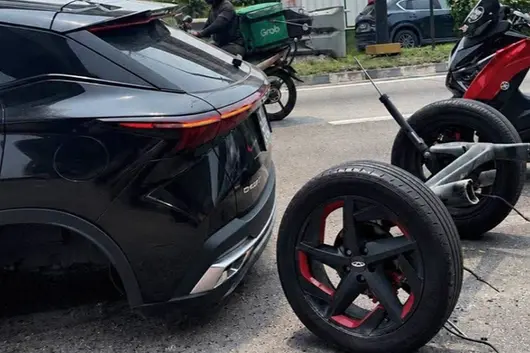
Che Dong Xi, 12 Oktober melaporkan, baru-baru ini, sebuah Chery OMODA 5 model 2023 di Malaysia berlaku kejadian gandar belakang terlepas, kedua-dua roda belakang kenderaan bersama kit gandar belakang secara langsung jatuh, kereta juga terhenti membujur di jalan, syukur tiada korban nyawa.
▲Video rear view rakaman pemacu kenderaan yang dikhabarkan daripada sumber awam
11 Oktober malam, Kereta Chery kerana kejadian gandar belakang terlepas mohon maaf secara terbuka, penjelasan menunjukkan, kenderaan dalam batch yang terlibat mungkin mempunyai masalah kekuatan kimpalan pada bahagian tertentu lengan gandar belakang, dalam keadaan ekstrem terdapat risiko terkelak sambungan kimpalan.
▲Chery mengeluarkan penjelasan masalah
Pada masa ini, Anak syarikat Chery Malaysia sudah memulakan penarikan balik, melibatkan 8878 buah OMODA 5, akan melakukan pemeriksaan terhadap komponen berkaitan, dan menukar percuma bergantung pada keadaan, model batch sama di China juga sudah memulakan siasatan risiko.
Chery turut mengesahkan, model yang menggunakan struktur ini sudah dihentikan pengeluaran sebelum ini. Syarikat sudah memulakan siasatan risiko khusus model batch sama di negara asal dan pasaran berkaitan, akan mengikut hasil siasatan mengumumkan perkembangan selanjutnya, dan mohon maaf secara terbuka mengenai hal ini.
Selepas kejadian berlaku, Jabatan Pengangkutan Jalan Malaysia (JPJ) sudah sementara menangguhkan pengesahan dan pendaftaran kereta baharu model OMODA 5 yang terjejas, dan meminta Chery menyiasat kenderaan berkaitan dan proses pengeluaran.
▲Sudut pandangan orang awam terhadap kemalangan yang dikhabarkan dari internet
Maklumat terbuka menunjukkan, Chery OMODA 5 Malaysia model 2023, dilancarkan pada Julai 2023, menggunakan enjin 1.5T, dipasangkan transmisi CVT, suspensi belakang adalah suspensi balok pusing tidak bersandar.
Berdasarkan maklumat terbuka, model ini mungkin sepadan dengan Chery OMODA di China, dilancarkan pada Julai 2022 di China.
Berdasarkan statistik jualan terminal terbuka, 2022 hingga 2024, OMODA terkumpul dijual di China kira-kira 17,200 unit, iaitu versi menggunakan enjin 1.6T + struktur pelbagai batang dan enjin 1.5T + versi suspensi balok pusing.
Antara itu, model 1.5T Chery OMODA 2023 di China juga menggunakan suspensi belakang balok pusing, struktur rangka serupa dengan model yang terlibat di Malaysia.
Ini bukan kali pertama OMODA 5 Chery berlaku kejadian seumpama di Malaysia.
April 2024, di sana pernah berlaku kejadian patah gandar OMODA 5. Chery kemudian menyiasat mendapati, pembekal komponen selepas menukar kepala kimpal peralatan kimpal automatik, terdapat ralat pada kalibrasi peralatan.
▲Pengumuman kejadian patah gandar pada 2024
Pada ketika itu, Chery di Malaysia menarik balik 600 buah OMODA 5 untuk pemeriksaan, di mana 60 buah memuatkan komponen yang terjejas.
Selepas dua tahun, model yang sama sekali lagi berlaku kejadian gandar belakang terlepas. Namun, pada masa ini tidak dapat dipastikan kedua-dua kejadian sama ada disebabkan oleh cacat pembuatan yang sama.

When the domestic car market is deeply stuck in stock competition, the incremental logic of Chinese car companies is being rewritten. Chery Group's "double breakthrough" report card for September, not only refreshes the single-month export record of China's automotive industry, but also unusually received capital endorsement from international investment banks.
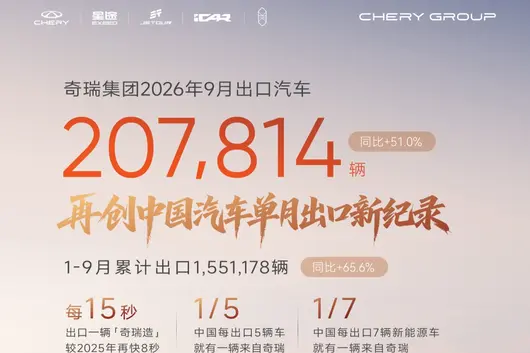
 Data shows, Chery Group's single-month export volume reached 207,814 vehicles in September, a year-on-year increase of 51%. This means, in the just passed month, on average every 15 seconds, a car bearing a Chery badge drives overseas. What is more worth noting is, cumulative exports from January to September reached 1,551,178 vehicles, this figure has surpassed its total export volume for the whole year of 2025, a cumulative growth rate of 65.6% appears particularly noticeable in the current macro environment.
At the end of September, JPMorgan released a research report, covered Chery Automobile for the first time and issued an overweight rating, listing it as the preferred target for Chinese passenger cars. In the capital market, ratings backed by real money are often more persuasive than companies talking to themselves. The core reason given by JPMorgan is, Chery's overseas business has evolved from pure trade exports to the local operation stage, and formed a scale-based profitability platform.
 A qualitative leap from going out to rooting down
For a long period in the past, the outside world's impression of Chinese car going overseas often stayed at cost-effectiveness and Asia-Africa-Latin America markets. But Chery's September report card is breaking this stereotype.
A representative one is the UK market. In September, Chery's single-month sales volume in the UK reached 32,823 vehicles, taking the UK monthly brand sales champion for the second consecutive month. In such a strict regulation, traditional automotive industry extremely mature European core market, JAECOO 7 topped the sales list of all models, JAECOO 5, OMODA 5 also made it into the top 10. In other words, for every 10 new cars sold in the UK, 1 comes from Chery.
This breakthrough is not an isolated case. Jan-Aug, Chery cumulative sales in 24 European countries reached 234,000 vehicles, year-on-year growth of 193%, among which new energy models account for nearly half and growth rate exceeded 3 times. Being able to achieve scale breakthrough in a high regulatory threshold market like Europe, indicates China car's competitiveness is no longer limited to price dimension, but truly touches the comprehensive competition of product power, brand power, and compliance capability.
 New Energy: From Overflow to Engine
Another change worth deep thought for the industry is the role conversion of new energy going overseas. Data shows, Jan-Sept Chery exports new energy vehicles 529,337 vehicles, year-on-year increase 136%. Currently, for every 7 new energy vehicles exported by China, 1 comes from Chery. Behind this proportion, is the collaborative overseas expansion of multiple new energy brand matrices such as OMODA & JAECOO, iCAR, Zhongheng. From Thailand, Malaysia to Saudi Arabia, UAE, Chery's new energy products are establishing segment advantages in markets at different levels.
JPMorgan specifically mentioned in the report, it is expected that Chery's new energy penetration rate and gross margin will increase significantly. This actually points out a breakthrough trend in the industry, new energy going overseas is turning from a channel for domestic capacity overflow, into the core engine for Chinese car brands to achieve high-end and intelligent image output.
 Industry Implications Behind Capital Favoritism
Looking at Chery's recent global actions, whether it is brand topping in the UK market, or 3 car models winning the Turin Design Award, or the investment in global top 10 styling centers and thousands of design teams, all point to the same direction: Chinese car overseas logic is upgrading from selling products to outputting brands and systems.
The positive ratings given by JPMorgan and other institutions, are essentially pricing this systematic overseas capability. When overseas business can contribute continuously growing revenue and profit, the valuation model of Chinese car enterprises needs to be re-examined.
From cumulative export volume first breaking 7 million vehicles, to single-month exports reaching a new high again, to obtaining preferred target certification from international capital, Chery's globalization path provides a new sample. In the big exam of globalization, the real moat is not a certain hit model, but the depth of local operations, the breadth of product matrices, and the adaptability to cross different market cycles.

Apabila pasaran kereta domestik terjerat dalam permainan bahagian pasaran sedia ada, logik pertumbuhan pengilang kereta China sedang ditulis semula. Kumpulan Chery September yang menyerahkan laporan prestasi "dua capaian" ini, bukan sahaja memecahkan rekod eksport sebulan industri automobile China, malah jarang menerima sokongan modal daripada bank pelaburan antarabangsa.
Data menunjukkan, jumlah eksport sebulan Kumpulan Chery September mencapai 207,814 unit, meningkat 51% pada tahun yang sama. Ini bermakna, pada bulan yang baru berlalu ini, setiap 15 saat, satu unit kereta dengan logo kenderaan kumpulan Chery dihantar ke luar negara. Lebih menarik, jumlah eksport terkumpul Januari hingga September 1,551,178 unit, angka ini telah melampaui jumlah eksport keseluruhan tahun 2025, kadar pertumbuhan terkumpul 65.6% dalam persekitaran semasa agak menonjol.
Hujung September, JPMorgan menerbitkan laporan penyelidikan, kali pertama meliputi Chery Automobile dan memberikan rating beli lebih, menjadikannya sasaran pilihan utama automotif China. Di pasaran modal, rating dengan modal sebenar sering lebih meyakinkan daripada dakwaan syarikat sendiri. Sebab utama JPMorgan adalah, perniagaan luar negara Chery telah berkembang daripada eksport perdagangan semata-mata ke fasa pengoperasian tempatan, dan membentuk platform keuntungan berskala.
Perubahan kualiti daripada keluar ke luar kepada berakar
Pada masa lalu untuk jangka masa panjang, imej luaran terhadap eksport kereta China sering berhenti pada nisbah harga dan nilai serta pasaran Asia, Afrika, Amerika Latin. Tetapi laporan prestasi Chery September ini sedang memecahkan stereotaip ini.
Satu yang mewakili ialah pasaran United Kingdom. September, jualan Chery di United Kingdom sebulan mencapai 32,823 unit, bulan kedua berturut-turut memperoleh kejuaraan jualan jenama sebulan United Kingdom. Dalam pasaran teras Eropah seperti ini yang peraturan ketat, industri kereta tradisional sangat matang, JAECOO 7 memuncaki kedudukan pertama jualan semua model, JAECOO 5, OMODA 5 juga memasuki 10 teratas. Dengan kata lain, di United Kingdom setiap 10 unit kereta baharu dijual, 1 unit berasal dari Chery.
Pecahan ini bukan satu-satunya contoh. Januari hingga Ogos, Chery di 24 negara Eropah jualan terkumpul 234,000 unit, meningkat 193% pada tahun yang sama, di mana nisbah model kenderaan baharu tenaga hampir separuh dan kadar pertumbuhan lebih daripada 3 kali ganda. Dapat mencapai pecahan berskala di pasaran dengan ambang peraturan tinggi seperti Eropah, menunjukkan kekompetitifan kereta China tidak lagi terhad pada dimensi harga, tetapi benar-benar menyentuh persaingan komprehensif kekuatan produk, kekuatan jenama dan keupayaan pematuhan.
Kenderaan Baharu Tenaga: Dari Luapan ke Enjin
Perubahan lain yang perlu difikirkan oleh industri ialah perpindahan peranan eksport kenderaan baharu tenaga. Data menunjukkan, Januari hingga September Chery eksport kenderaan baharu tenaga 529,337 unit, meningkat 136% pada tahun yang sama. Pada masa ini, setiap 7 unit kenderaan baharu tenaga dieksport dari China, 1 unit berasal dari Chery. Di sebalik nisbah ini, ada matriks jenama kenderaan baharu tenaga OMODA & JAECOO, iCAUR, Zongheng dan lain-lain eksport bersepadu. Dari Thailand, Malaysia ke Arab Saudi, Emiriah Arab Bersatu, produk kenderaan baharu tenaga Chery sedang membina kelebihan pasaran sasar di pasaran peringkat berbeza.
JPMorgan menyebut secara khusus dalam laporan penyelidikan, jangka kadar penetrasi dan margin kasar kenderaan baharu tenaga Chery akan meningkat dengan ketara. Ini sebenarnya menandakan satu trend pecahan industri, eksport kenderaan baharu tenaga sedang berubah daripada saluran luapan kapasiti domestik, menjadi enjin utama bagi jenama kereta China untuk mencapai pemajuian tinggi, mengekspor imej kecerdasan.
Insight industri di sebalik sokongan modal
Melihat tindakan globalisasi Chery terkini, sama ada penjajaran jenama puncak di pasaran UK, atau 3 model kereta yang menang dalam Anugerah Reka Bentuk Turin, sama ada pelaburan pusat gaya teratas 10 global dan pasukan reka bentuk seribu orang, semua mengarah ke arah yang sama: logik eksport kereta China sedang berkembang daripada menjual produk ke mengekspor jenama dan penambahbaikan sistem.
Rating positif yang diberikan oleh JPMorgan dan institusi lain, pada hakikatnya adalah penilaian keupayaan ekspor bersistem ini. Apabila perniagaan luar negara boleh menyumbang pendapatan dan keuntungan yang berkembang berterusan, model penilaian syarikat kereta China perlu ditinjau semula.
Dari rekod eksport terkumpul melampaui 7 juta unit, ke rekod eksport sebulan tertinggi sekali lagi, sehingga mendapatkan pensijilan sasaran pilihan modal antarabangsa, laluan globalisasi Chery memberikan contoh baharu. Dalam ujian besar globalisasi, parit pertahanan sebenar bukan satu model kereta yang meletup, tetapi kedalaman pengoperasian tempatan, keluasan matriks produk, dan keupayaan menyesuaikan diri untuk menembusi kitaran pasaran yang berbeza.


In September, the situation in the Chinese auto market was more severe than expected. Although accurate September sales data hasn't been received yet, according to the China Passenger Car Association (CPCA) data for September 1-27, passenger car sales declined by 29%, with no hot sales scene similar to previous years' 'Golden September and Silver October'. Of course, the reason could also be that September last year was rushing to end subsidies, so sales were at a high level, so in the same period of 2026, it became a significant decline.
However, the good news is that although the domestic market performance was poor, car companies' sales in overseas markets continued to grow, especially the export sales of Chery, BYD, Geely, SAIC Group, Leapmotor, etc. continued to hit new highs, largely filling the domestic gap.
At least from the sales figures, the Chinese automotive industry maintained resilience.
01
BYD continues to sprint, can a monthly scale of 500,000 be achieved?
In September, the number one spot in the Chinese auto market was still held by BYD, with performance leading by a significant margin.
BYD's September sales reached 463,600 units, creating a monthly new high for 2026, with year-on-year growth of nearly 17%, data quite exaggerated. This also shows BYD's sales momentum is still robust, having formed a head effect, and this robustness mainly comes from exports to overseas markets. BYD's September export volume has reached 180,000 units, exceeding one-third of total sales, so overseas sales are an important strategic pivot for BYD.

From a structural perspective, BYD passenger car sales were 456,700 units, continuing the growth trend; among them, pure electric vehicle models were 273,000 units, plug-in hybrid 183,500 units. This data also reflects that 'selling more pure electric vehicles' is indeed a trend in 2026.
At the brand level, the Dynasty Series and Ocean Series totaled 395,000 units, mainly driven by the growth in Yuan UP and Yuan PLUS sales of the Dynasty Series. Regarding the Ocean Series, because the Seagull faces a generational change, the overall scale is slightly smaller. However, considering the all-new Seagull will become a five-seater model, body dimensions are fully increased, and fast charging is supported, it is expected that after listing it will put considerable pressure on Geely Galaxy Xingyuan, and may even allow the Ocean Series to gain growth of over 20,000 units.

Fangchengbao sales in September reached 43,200 units, this doesn't include Fangcheng S series. It is expected that Fangchengbao will move towards 50,000 units afterwards. Denza stabilized at 18,200 units, there was no previous Denza D9 one-time surge. Later N8L pure electric, all-new N8 listing, is also able to continue upward. Yangwang brand sales 389 units. It is said that Yangwang will also launch a flagship model similar to Rolls-Royce Ghost, 2 million level, worth looking forward to.
Clearly, BYD's current strategic focus is twofold: on the one hand to accelerate overseas market growth, on the other hand to push overall sales further up in the domestic market through new cars like Seagull, Fangcheng S, etc., and the popularization of fast charging technology. Currently, BYD is likely to make a push for monthly sales of 500,000 at the end of the year, with annual sales expected to be around 4.3 million units, which is quite difficult in such a tough year of 2026.
02
Geely and Chery: Who will break 300,000 first?
The battle for second place between Chery and Geely is still ongoing. The September sales data released by the two car companies differs by only 140 units. This data can even be ignored, because selling 300,000 units a month by a car company is equivalent to 10,000 units a day. Getting 140 units could be the difference of 10 minutes in working time.
Chery Group September sales reached 292,308 units, but Chery's absolute main force in sales is exports. Chery Group September single-month exports were 207,814 units, up 51% year-on-year, creating a new record for Chinese car single-month exports, data is quite exaggerated. Overall, Chery's January-September cumulative sales reached 2.2068 million units, export sales were 1.5512 million units. Among them, new energy vehicle sales also exceeded 858,000 units. Based on this, Chery is expected to exceed about 3.1 million units this year, with quite excellent performance.

But the problem is also here, over 70% of Chery Group's single-month sales share comes from exports, domestic less than 90,000 units. Once the overseas market changes, such as insufficient transport ship capacity, or certain regions introduce restrictive measures, Chery's sales may fluctuate.
In Chery's brand structure, the Chery brand is the absolute main chunk, sales 198,681 units, mainly relying on Tiggo series and Arrizo series to support, and both domestic and overseas performance are relatively stable. Chery's hard-core off-road and personalized Jetour brand, September sales were 57,497 units, overall relatively stable, but should soon be caught up by BYD Fangchengbao. iCAR brand maintained at the 10,000 level, was 10,858 units, after launching V27 it at least stabilized the state of over 10,000, later there is iCAR V25 to see if it can advance further.

Exeed only has 4,905 units, basically ignorable domestically, this scale is even insufficient to support a press conference or new car R&D. The Luxeed brand September wholesale sales were 5,008 units. This may be related to the delivery rhythm shifting to Luxeed R7 and RX after the bulk delivery of Luxeed V9. As for whether Luxeed can return to the 10,000 level later still needs observation.
Regarding Geely, September sales were 292,200 units, also creating a new high for the year. Actually Geely Auto overall was only 140 units less than Chery Group, can be fully understood as a subtle difference in declaration scope. Such a gap is indeed fierce, but the sales structure of the two is completely different.

Geely Auto's domestic and overseas sales structure is relatively balanced. September domestic sales were about 180,000 units, and exports were 106,685 units. Export sales increased by 162% year-on-year, standing firm on the 100,000 unit stage for four consecutive months. Overall export scale is still only half of Chery's, you can also understand that Geely Auto has a lot of growth space overseas.
Looking by brand, Geely Galaxy sales were around 130,000 units, mainly benefiting from export growth, returned to the growth channel. And Geely fuel vehicle sales also maintained at a high monthly average of 106,000 units. Later there will be Xingyue L PLUS, Xingrui L PLUS and other new cars, estimated to further grow.
Zeekr brand sales 37,216 units, achieved year-on-year doubled growth, has stabilized in the second tier of New Forces, almost on the same line as NIO, Xpeng, Li Auto, and Harmony Intelligent Mobility Alliance. Compared to these brands exceeding 40,000 units, the gap between Zeekr and them is already very small, and Zeekr currently has no new models launched, perhaps in 2027 there will be further changes.

Lynk & Co brand sales 18,493 units, mainly still in the painful period of product transformation, needs to balance gasoline cars and PHEV, naturally not as focused as Zeekr.
Overall, Geely's development momentum is quite balanced and stable. Geely Auto's monthly sales scale this year has not yet broken through 300,000 units, but always can stabilize in the interval of 250,000 to 290,000 units moving upwards, unaffected by external environment, then the probability of breaking through 300,000 units in the fourth quarter is very high. If calculated by monthly average exceeding 300,000 units for the last three months, annual cumulative sales are expected to reach around 3.4 million units, overall on par with Chery, but better in balance. If overseas exports can continue to rise, the result will be more ideal.
It is worth mentioning that both Chery and Geely have recently adjusted their sales management. For example, Geely uses executive vice president level management to manage Lynk & Co brand sales, which may have a positive effect on Lynk & Co brand sales recovery.
Chery's adjustment is even more radical, overseas person-in-charge directly came to unify Chery domestic sales and marketing business. Previously responsible sales executive vice president then fully in charge of Jetour brand. This means Chery now is domestic and overseas one board game, Jetour wants to open a piece of market separately, also can see Chery's craving for the domestic market.
03
New Forces Leapmotor leads by a significant margin, 30,000 units scale to qualify for the list
Regarding New Forces, the number one sales position in September still belongs to Leapmotor Auto, monthly sales maintained at 100,000 level, belongs to leading by a significant margin.
Leapmotor's specific September sales figure was 105,656 units, up 59% year-on-year. This number is already at the same level as Toyota and Volkswagen in the domestic market sales, of course this data also includes export sales. Can also see Leapmotor pushing forward simultaneously on domestic and overseas two lines. As long as it can stabilize the 100,000 unit monthly sales, this year has a chance to impact 1 million units scale, can say Leapmotor's early layout won itself the first ticket on board for New Forces.

Second place is very unexpected - from the data perspective it is Changan Qiyuan. This brand has always been quite low-key, but September sales reached 46,507 units. If no unexpected sales best will still be Qiyuan Q05. This car's performance far exceeded expectations, already rushed up in the 70,000 to 100,000 yuan market interval, can even grab a part of Xingyuan's sales. There is also part of sales from overseas market, so Qiyuan's volume rise speed is quite fast.

Third place is Fangchengbao, September sold 43,181 units total, up nearly 80% year-on-year, data still considerable. After Titanium 7 launched Fast Charging version, pure electric vehicle sales increased very fast, next will launch Titanium 9, overall sales have further space. The information currently known is, Fangcheng S and Fangcheng S GT two car order situations are quite good, price interval in 180,000 to 240,000 yuan, aiming exactly at Xiaomi SU7 price belt. If monthly sales of these two cars can rush up to 8,000 to 10,000 units, it will help Fangchengbao overall sales stable at 50,000 units scale.

Fourth place is Xpeng Auto, September sales were 41,256 units. Currently Xpeng model data has not been released yet, but Xpeng MONA L03 sales are about 14,000 units, accounted for 1/3 of Xpeng's sales.
Xiaomi Auto September sales exceeded 40,000 units, specific data disclosure is limited. Known is Xiaomi Peng Cheng first month delivery exceeded 10,000 units. Actually Xiaomi Peng Cheng's first sales period sales are not as optimistic as expected, it is said Xiaomi internal has already positioned Peng Cheng as slow heating model. But overall, Xiaomi Peng Cheng two new cars still pushed Xiaomi 2026 since first time back to above 40,000, indicating Xiaomi sales still in upward channel.

September Harmony Intelligent Mobility Alliance sales were 37,490 units, among which includes Aito sales. In the fourth quarter Harmony Intelligent Mobility Alliance new car launch will obviously increase, including Luxeed New R7, Luxeed RX, as well as Stelato V8, and Aito M7, M8 new models will also be pushed to market. For Harmony Intelligent Mobility Alliance price is high problem in market feedback, at least Seres has already started for Aito M6 launch three-year interest free, perhaps next Harmony Intelligent Mobility Alliance will also have a volume selling strategy.
NIO company September delivery 37,408 units, only difference dozens of units with Harmony Intelligent Mobility Alliance. Among them NIO brand 21,318 units, Onvo 8,763 units, Firefly created high sales, reached 7,327 units. Now external expectations for NIO are all on end-of-year release of all-new generation ET5 and ES6.
Zeekr September sales 37,216 units, huge increase year-on-year, also narrowed the gap with NIO. However Zeekr quite a part of sales comes from overseas exports. Currently can see, Zeekr in overseas market sales share is very high, including in Malaysia, Thailand etc. all have very high visibility, this mainly benefits from Zeekr priority going overseas, priority develop right-hand drive models strategy.
Hyper Aion September sales 35,494 units. Aion after launching i60, N60 overall performance still quite stable. Later there will be Ray 7 such young car, perhaps can rush a wave again.

Li Auto 31,817 units, down 6.3% year-on-year, main reason is Li Auto i6 is about to switch new car, currently in clearing inventory stage, intermediate will have two months gap. In addition Li Auto i9 is said order situation quite good, almost has filled up Li Auto i8 market demand, expect subsequent Li Auto pure electric models有望 exceed 30,000 units.
Regarding other brands, Deepal Auto sales 30,185 units, MG sales 30,000 units, BAIC New Energy sales 24,080 units, performance stable.
Some brands are still at monthly sales 10,000-20,000 unit level, including Denza sales 18,198 units, Voyah sales 13,025 units, Avatr sales 8,183 units, still not over 10,000.
Overall, September New Forces performance was better than expected, this also squeezed traditional joint venture brand market. Need to note, on this New Forces list, if sales cannot exceed 30,000 units, actually pressure will be very big, including now Changan Auto aspect has started to integrate Deepal and Avatr, just hoping to pull through internal efficiency.
(END)

September pasaran kereta China lebih teruk daripada yang dijangkakan, walaupun data jualan September yang tepat belum diterima, tetapi berdasarkan data 1-27 September yang diberikan oleh Persatuan Pasar Kereta China, jualan kenderaan penumpang telah menurun sebanyak 29%, sama sekali tidak ada gambaran jualan panas "Musim Jualan Emas September dan Perak Oktober" seperti tahun-tahun lalu. Tentu saja, sebabnya mungkin pada September tahun lalu adalah disebabkan oleh berakhirnya subsidi, jadi jualan berada di tahap tinggi, jadi pada tahun 2026 yang sama ia berubah menjadi penurunan secara besar-besaran.
Tetapi berita baik ialah, walaupun pasaran dalam negara表现 tidak baik, tetapi jualan syarikat kereta di pasaran luar negara semakin meningkat, terutamanya syarikat seperti Chery, BYD, Geely, SAIC Group, Leapmotor dll jualan eksport mereka terus memecahkan rekod baharu, pada dasarnya mengisi kekosongan dalam negara.
Setidaknya dari segi angka jualan, industri kenderaan China masih mengekalkan ketahanan.
01
BYD Teruskan Tindakan, Adakah Sasaran 500,000 Unit Sebulan Dapat Dicapai?
Tempat pertama pasaran kereta China bulan September masih BYD, prestasi adalah kepimpinan mutlak.
Jualan BYD pada bulan September mencapai 463,600 unit, memecahkan rekod bulanan tertinggi tahun 2026, peningkatan secara tahunan hampir 17%, data sangat berlebihan. Ini juga menunjukkan momentum jualan BYD masih stabil, telah membentuk kesan pemimpin, dan kestabilan ini berasal terutamanya dari eksport ke pasaran luar negara. Jumlah eksport BYD pada bulan September telah mencapai 180,000 unit, lebih daripada sepertiga jumlah jualan, jadi jualan luar negara adalah titik sokongan strategik yang penting untuk BYD.
Dari segi struktur, jualan kenderaan penumpang BYD ialah 456,700 unit, terus mengekalkan trend pertumbuhan; di mana model elektrik murni 273,000 unit, hybrid susun tambah 183,500 unit, data ini juga mencerminkan "semakin banyak dijual model elektrik murni" benar-benar trend tahun 2026.
Khusus kepada tahap merek, Rangkaian Dinasti dan Rangkaian Laut jumlah 395,000 unit, di dalamnya terutamanya adalah pertumbuhan jualan Yuan UP dan Yuan PLUS Rangkaian Dinasti, manakala dari segi Rangkaian Laut kerana Seagull menghadapi generasi baru, jadi skala keseluruhan kecil sedikit. Tetapi dengan mempertimbangkan Seagull baharu akan berubah menjadi model 5 tempat duduk, saiz kenderaan ditingkatkan secara menyeluruh, ditambah lagi dengan sokongan Pengecasan Pantas, dijangka selepas pelancaran akan memberi tekanan tidak kecil kepada Geely Galaxy Star Wish, bahkan mungkin membolehkan Rangkaian Laut mendapat peningkatan lebih daripada 20,000 unit.
Fang Cheng Bao pada bulan September jumlah jualan mencapai 43,200 unit, ini belum kira siri Fang Cheng S, dijangka selepas ini Fang Cheng Bao akan bergerak ke arah 50,000 unit. Dan Denza stabil pada 18,200 unit, tidak ada gelombang aliran Denza D9 sebelum ini, selepas ini N8L Murni Elektrik, N8 baharu dilancarkan, juga dapat terus meningkat. Yangwang merek jualan 389 unit, dikatakan Yangwang akan juga mengeluarkan model flagship seperti Rolls-Royce Ghost, tahap 2 Juta, worth watching.
Jelas, tumpuan strategi semasa BYD, dari satu segi mempercepat pertumbuhan pasaran luar negara, dari satu segi lain di pasaran dalam negara melalui Seagull, Fang Cheng S dll kereta baharu dan penyebaran teknologi Pengecasan Pantas, mendorong jualan keseluruhan terus naik. Setakat ini, BYD kemungkinan besar akan membuat tindakan jualan bulanan 500,000 unit pada hujung tahun, jualan tahunan sekitar 4.3 Juta unit, ini sangat tidak mudah pada tahun 2026 yang begitu sukar.
02
Geely dan Chery Siapa Yang Dahulu Mencapai 300,000
Persaingan tempat kedua antara Chery dan Geely masih terus, data jualan September yang diumumkan oleh kedua-dua syarikat kereta hanya berbeza 140 unit, data ini bahkan boleh diabaikan, kerana satu syarikat kereta jualan 300,000 unit sebulan, setara 10,000 unit sehari, mendapat 140 unit mungkin jurang 10 minit masa kerja.
Kumpulan Chery September jualan mencapai 292,308 unit, tetapi utama Chery adalah eksport. Eksport tunggal bulan Kumpulan Chery September 207,814 unit, meningkat secara tahunan 51%, memecahkan rekod baru jualan eksport bulanan tunggal industri kenderaan China, data sangat berlebihan. Secara keseluruhannya, jualan kumulatif Chery Januari hingga September mencapai 2.21 Juta unit, jualan eksport 1.55 Juta unit, di mana jualan kenderaan baru juga melebihi 858,000 unit, jika diira kira-kira Chery tahun ini berpotensi melebihi 3.1 Juta unit, prestasi sangat cemerlang.
Tetapi masalah ada di sini juga, Kumpulan Chery tunggal bulan lebih daripada 70% nisbah jualan datang dari eksport, dalam negara kurang 90,000 unit. Sekali jika pasaran luar negara berubah, misalnya kapal angkutan kapasiti tidak mencukupi, atau beberapa daerah mengeluarkan langkah sekatan, jualan Chery mungkin berfluktuasi.
Dalam struktur merek Chery, merek Chery adalah utama besar, jualan 198,681 unit, terutamanya bergantung pada siri Tiger Ru dan siri Arrizo menopang, dan prestasi dalam dan luar negara agak stabil. Jetour merek yang menekankan off-road keras dan peribadi, September jualan 57,497 unit, secara keseluruhan stabil, tetapi harus akan dikejar oleh Fang Cheng Bao BYD dengan cepat. iCAR merek kekal pada tahap 10,000 unit, 10,858 unit, selepas mengeluarkan V27 sekurang-kurangnya mengekalkan keadaan lebih 10,000 unit, selepas ini ada iCAR V25 lihat sama ada boleh maju lebih lanjut.
Exeed hanya 4,905 unit, di dalam negara pada dasarnya boleh diabaikan, skala tahap ini bahkan tidak cukup untuk menyokong satu persidangan atau pembangunan kereta baru. Dan Luxeed merek September jualan pukal 5,008 unit, ini mungkin dengan sebahagian besar Luxeed V9 serahan selepas ini, kelajuan serahan beralih ke Luxeed R7 dan RX, sehingga Luxeed selepas ini sama ada boleh kembali ke tahap 10,000 unit masih perlu diperhatikan.
Dari segi Geely, September jualan 292,200 unit, sekali lagi memecahkan rekod tertinggi tahun ini. Sebenarnya Geely Automobile keseluruhan hanya kurang 140 unit dari Kumpulan Chery, boleh difahami sebagai perbezaan kecil dalam kaedah pengisytiharan, jurang ini memang tegang, tetapi struktur jualan kedua-duanya sama sekali berbeza.
Struktur jualan dalam dan luar Geely Automobile agak seimbang. September jualan dalam negara hampir 180,000 unit, manakala eksport 106,685 unit, jualan eksport meningkat secara tahunan 162%, telah terus empat bulan kekal di tangga 100,000 unit. Skala eksport keseluruhan masih hanya separuh Chery, anda juga boleh fahami ruang pertumbuhan Geely Automobile di luar negara masih sangat besar.
Dari segi merek, Geely Galaxy jualan 130,000 unit sekitar, ini terutamanya berkat pertumbuhan eksport, kembali ke laluan pertumbuhan. Dan jualan kereta bahan api Geely juga kekal di tahap tinggi purata 106,000 unit sebulan, selepas ini ada kereta baru Star越 L PLUS, Star越 L PLUS dll, dianggarkan akan terus bertambah.
Merek Zeekr jualan 37,216 unit, mencapai peningkatan dua kali lipat secara tahunan, telah stabil di kumpulan kedua kekuatan baru, dan Nio, XPeng, Li Auto, HarmonyOS hampir pada garis sama. Membandingkan merek lebih 40,000 unit ini, jurang Zeekr dengannya sangat kecil, dan Zeekr saat ini belum ada model baru dikeluarkan, mungkin sampai 2027 akan ada perubahan lebih lanjut.
Merek Lynk & Co jualan 18,493 unit, terutamanya masih berada dalam tempoh penyakit peralihan produk, perlu serentak mengimbangi kereta bahan api dan PHEV, semulajadi tidak seperti Zeekr yang terpusat.
Secara keseluruhannya, momentum pembangunan Geely agak seimbang dan stabil. Tahun ini Geely Automobile jualan bulanan skala belum memecah 300,000 unit, tetapi sentiasa boleh stabil di julat 250,000 hingga 290,000 unit ke atas, tidak terjejas oleh pengaruh persekitaran luar, maka ke hujung keempat memecah 300,000 unit kebarangkalian sangat besar. Jika ikut tiga bulan terakhir purata lebih 300,000 unit sebulan, jualan kumulatif tahunan berpotensi mencapai sekitar 3.4 Juta unit, dengan Chery secara keseluruhannya sama rata, tetapi dalam keseimbangan lebih baik, jika eksport luar negara masih boleh terus naik, hasil akan lebih ideal.
Penting untuk disebut, Chery dan Geely dua syarikat kereta baru-baru ini telah membuat penyesuaian kepada pengurusan jualan. Misalnya Geely oleh Timbalan Ketua Eksekutif pengurusan merek Lynk & Co jualan, ini mungkin akan memberi kesan positif kepada pulih jualan merek Lynk & Co.
Penyesuaian Chery lebih radikal, pengurus luar negara terus datang menguruskan jualan dalam negara dan perniagaan pemasaran Chery, sebelum ini负责 jualan Timbalan Ketua Eksekutif则全面主管 Jetour merek. Ini bermakna Chery sekarang adalah strategi dalam dan luar satu permain, Jetour perlu membuka sendiri satu pasaran, juga nampak Chery terhadap pasaran dalam negara kegemaran.
03
Kekuatan Baru Leapmotor Kepimpinan Jelas, 30,000 Unit Saiz Baru Dapat Melekat di Meja
Dari segi Kekuatan Baru, September jualan tempat pertama masih milik Leapmotor, jualan bulanan kekal pada tahap 100,000 unit, adalah kepimpinan jelas.
Sangkaan angka jualan Leapmotor September 105,656 unit, meningkat 59% secara tahunan. Angka ini sudah dan Toyota, Volkswagen di pasaran dalam negara jualan satu tahap, tentu saja data ini juga termasuk jualan eksport. Juga nampak Leapmotor di dalam dan luar dua garis serentak推进,只要 dapat kekal 100,000 unit jualan bulanan, tahun ini ada peluang serang skala 1 Juta unit, boleh kata Leapmotor persiapan awal untuk diri sendiri memenangkan tiket pertama naik kapal Kekuatan Baru.
Tempat kedua sangat mengejutkan — dari segi data adalah Changan Qiyuan. Merek ini sentiasa rendah profil, tetapi September jualan mencapai 46,507 unit. Jika tiada rancangan jualan terbaik akan Qiyuan Q05, prestasi kereta ini jauh lebih tinggi daripada jangkaan, sudah di julat pasaran 70,000 hingga 100,000 Yuan telah maju, bahkan boleh rebut sebahagian jualan Star Wish. Selain itu ada sebahagian jualan datang dari pasaran luar negara, jadi kelajuan pertumbuhan Qiyuan sangat pantas.
Tempat ketiga adalah Fang Cheng Bao, September总共 menjual 43,181 unit, meningkat hampir 80% secara tahunan, data masih boleh. Titanium 7 mengeluarkan versi Pengecasan Pantas selepas ini, model elektrik murni jualan naik cepat, seterusnya masih akan mengeluarkan Titanium 9, secara keseluruhan jualan mempunyai ruang lebih lanjut. Maklumat yang diketahui saat ini adalah, Fang Cheng S dan Fang Cheng S GT dua kereta tempahan keadaan agak baik, julat harga 180,000 hingga 240,000 Yuan, menjangkau adalah Xiaomi SU7 julat harga. Jualan bulanan dua kereta ini sekiranya mampu mencapai 8,000 hingga 10,000 unit, akan membantu Fang Cheng Bao secara keseluruhan jualan kekal di skala 50,000 unit.
Keempat adalah Kereta XPeng, September jualan 41,256 unit. Setakat ini XPeng data mengikut model belum diumumkan, tetapi XPeng MONA L03 jualan kira-kira 14,000 unit sekitar, mencapai 1/3 jualan XPeng.
Kereta Xiaomi September jualan lebih 40,000 unit, data pendedahan terhad, yang diketahui adalah Peng Cheng pertama bulan serahan lebih 10,000 unit. Sebenarnya Xiaomi Peng Cheng tempoh jualan pertama tidak seperti jangkaan begitu optimis, dikatakan Xiaomi dalaman telah Peng Cheng diletakkan sebagai model pemanasan perlahan. Tetapi dari segi keseluruhan, dua kereta baru Xiaomi Peng Cheng masih mendorong Xiaomi sejak 2026 kali pertama kembali ke atas 40,000 unit, menunjukkan Xiaomi jualan masih berada di laluan naik.
September HarmonyOS jualan 37,490 unit, di dalamnya termasuk jualan AITO. Suku keempat HarmonyOS jualan kereta baharu akan jelas bertambah, termasuk Luxeed R7 baharu, Luxeed RX, serta Stelato V8, serta AITO M7, M8 model baharu juga akan ditawarkan ke pasaran. Untuk masalah harga HarmonyOS yang agak tinggi dalam maklum balas pasaran, setidaknya Seres telah mula推出 untuk AITO M6 tiga tahun bebas faedah, mungkin seterusnya HarmonyOS juga akan ada gelombang strategi jualan tinggi.
Syarikat Nio September serahan 37,408 unit, dengan HarmonyOS hanya berbeza puluhan unit. Di mana Nio merek 21,318 unit, Onvo 8,763 unit, Firefly mencipta jualan yang agak tinggi, mencapai 7,327 unit, sekarang luaran terhadap Nio harapan semua pada pelancaran hujung tahun Generasi Baru ET5 dan ES6.
Zeekr September jualan 37,216 unit, meningkat secara besar-besaran secara tahunan, juga mengecil jurang dengan Nio. Namun Zeekr sebahagian besar jualan datang dari eksport luar negara. Setakat ini nampak, Zeekr di pasaran luar negara jualan nisbah sangat tinggi, termasuk di Malaysia, Thailand dll ada sangat tinggi kepenglihatan, ini terutamanya berkat Zeekr terdahulu luar negara, terdahulu membangunkan model stering kanan strategi.
Hyper Aion September jualan 35,494 unit, Aion dalam mengeluarkan i60, N60 selepas ini secara keseluruhan prestasi masih sangat stabil, selepas ini akan ada Ray 7 seperti kereta sedan kekinian ini, mungkin boleh buat gelombang lagi.
Kereta Li Auto 31,817 unit, menurun 6.3% secara tahunan, sebab utama Li Auto i6 akan menukar kereta baharu, saat ini berada dalam fasa membersihkan stok, tengah ada dua bulan jeda. Selain itu Li Auto i9 dikatakan tempahan keadaan agak baik, hampir sudah mengisi Li Auto i8 keperluan pasaran, dijangka seterusnya Li Auto model elektrik murni berpotensi lebih 30,000 unit.
Dari segi baki merek, Kereta Deepal jualan 30,185 unit, MG jualan 30,000 unit, BAIC Tenaga Baharu jualan 24,080 unit, prestasi stabil.
Ada juga merek masih berada pada tahap jualan bulanan 10,000-20,000 unit, termasuk Denza jualan 18,198 unit, Voyah jualan 13,025 unit, Avatr jualan 8,183 unit, masih belum melepasi 10,000.
Secara keseluruhannya, September Kekuatan Baru prestasi lebih baik daripada jangkaan, ini juga memampat pasaran merek gabungan tradisional. Yang perlu diingat, dalam senarai Kekuatan Baru ini, jualan sekiranya tidak dapat lebih 30,000 unit, sebenarnya tekanan akan sangat besar, termasuk sekarang Changan Automobile mulai menggabungkan Deepal dan Avatr, adalah hanya ingin dapat menghubung kecekapan dalaman.
(AKHIR)


On October 7, Chery Automobile announced, integrating the main brand into the global market system, with the Jetour brand accelerating its premiumization. This is the second move in the organizational layout of Chery's Globalization 3.0, following the executive adjustments on September 23. Many view this as ordinary personnel news, but in my opinion, Chery is using organizational restructuring to answer a key proposition for Chinese automakers going global: What does Globalization 3.0 rely on for implementation?

It's Not About Changing People, It's About Changing Tactics
Let's look at the logic behind the two adjustments first. On September 23, Zhang Guozhong was appointed Executive Vice President of Chery Holding Group, and Zhang Guibing became Executive Vice President of Chery Automobile. The core of this adjustment is "Big Chery" system synergy, where Zhang Guozhong integrated financial, trade, and diversified industrial resources from the holding group to provide ammunition for globalization. In contrast, the adjustment on October 7 clarified the two main lines of battle on the front line.

The first line involves integrating the Chery main brand into the global market system. Zhang Guibing not only manages the domestic business group of the Chery brand but also simultaneously manages the Global Styling Design Center, Global Human Resources Center, Global Legal Center, Global Spare Parts Ecosystem Division, etc., and concurrently holds the positions of General Manager of the International Business Group and Director of the Market and Marketing Management Committee. The intention of this arrangement is very clear: to thoroughly connect the domestic and international marketing, human resources, legal, spare parts, and other systems, solving the most headache-inducing problem for Chinese automakers going overseas, which is the separation of domestic and overseas operations.

The second line involves accelerating the premiumization of the Jetour brand. Executive Vice President Li Xueyong manages the Jetour Brand Division, focusing on promoting the premium development of the Jetour brand, building a more globally competitive off-road brand, while also managing the Corporate Publicity Department and concurrently serving as Executive Deputy Director of the Market and Marketing Management Committee.
One focuses on global system synergy, the other on pushing a distinctive brand upwards. These two main lines, one defending and one attacking, constitute the organizational skeleton of Chery Globalization 3.0.
The Connotation of Globalization 3.0 Has Changed
Why is Chery making such large-scale organizational adjustments at this time node? The answer lies in the strategic connotation of Globalization 3.0.

The concept proposed by Chery Chairman Yin Tongyue is "In somewhere, For somewhere, Be somewhere", meaning "Wherever, For Whom, Become a Local". If "In somewhere" is the past, selling cars to over 130 countries and regions; "For somewhere" is the ongoing task, developing adapted products according to local needs; then "Be somewhere" is the true core of Globalization 3.0, where the entire system of manufacturing, services, operations, partners, etc., goes in and integrates in.

This means Chery's goal is no longer to pursue growth in export numbers, but to replicate the models of Toyota and Volkswagen, promoting the global implementation of an entire system including manufacturing, supply chain, brand, and localization. Organizational adjustments are precisely to support this strategic transformation.
How Strong Are the Export Figures? The Confidence Behind Organizational Adjustments
In the first three quarters, Chery Group sold 2.2068 million vehicles cumulatively, up 9.9% year-on-year, creating a historical high for the same period. Cumulative exports reached 1.5512 million vehicles, up 65.6% year-on-year, surpassing the total export volume of the previous year. In September alone, exports reached 207,814 vehicles, setting a new record for monthly car exports by Chinese automakers.

Exports account for 70.3% of total sales, the highest proportion among domestic independent brands. Chery has ranked first in Chinese brand passenger car exports for 23 consecutive years, with products sold in over 130 countries and regions, possessing 16 overseas factories covering countries and regions such as Brazil, Spain, and Thailand.
It is precisely this volume that makes organizational adjustments a necessity. A scale of exports exceeding 1.5 million vehicles a year can no longer run on the model of separated domestic and overseas operations.
Jetour Premiumization: Competing for Mindshare in the Global Off-Road Track
Looking at the Jetour line again. Currently, the hardcore off-road and "box-style" track is a global hotspot. Official data shows that in September 2026, 57,497 vehicles were sold, with cumulative global sales breaking 2.56 million. Products are sold in 100 countries and regions, ranking first in domestic brand SUV sales in 15 overseas markets, and topping the box-style category sales in 9 markets.

Li Xueyong once led Jetour to accurately position "Travel+", growing from a blank sheet of paper to a dark horse in the car market. This adjustment in division of labor aims to further build up and strengthen this distinctive Jetour brand,抢占 global off-road mindshare. More worthy of attention is that Li Xueyong also manages the Corporate Publicity Department and concurrently serves as Executive Deputy Director of the Market and Marketing Management Committee, indicating that Jetour premiumization is not just a product issue, but a brand narrative and global image issue.
Implementation is Accelerating, From Europe to Africa
Strategy and organization are set, the key now is implementation. In April this year, Chery activated its Europe Operating Center in Barcelona, Spain, and simultaneously launched the Spain Research Institute, undertaking central platform functions such as operations, compliance, supply chain coordination, finance, and public affairs. This is Chery's first overseas regional operating center. Yin Tongyue positioned it as "Building a system that understands Europe better and serves the European market better".

In South Africa, Chery officially commissioned the Rosslyn plant in July, fully retaining the original 692 employees, driving nearly 3,000 upstream and downstream jobs. Production is scheduled for mid-2027, with an annual capacity of 50,000 vehicles per shift, striving for a 40% localization rate before 2028. In Rayong Province, Thailand, an 80,000-vehicle annual capacity new energy factory was put into production in April 2026, directly entering the traditional advantage market of Japanese fuel cars with pure electric models.

These layouts share a common characteristic: not going to sell cars, but to root down. Retaining local employees, increasing localization rates, and establishing R&D centers are the true meaning of "Be somewhere".
Challenges Remain, Bridging the Gap from 'Volume' to 'Profit'
But we must clearly see that a high export ratio implies high risk exposure. EU anti-subsidy investigations, import tariff increases in some markets, overseas price wars, shipping cost fluctuations叠加 exchange rate fluctuations, these are the realistic challenges Chery must face. Export volume does not equal profit. Whether Chery can convert its globalization first-mover advantage into sustainable profitable growth will be the most worthy proposition to watch.
Returning to this announcement on October 7. The signal conveyed is clear: Chery Globalization 3.0 has moved from strategic slogans to organizational fulfillment. The main brand secures the global baseline, Jetour pushes for high-end incremental growth, Zhang Guibing coordinates the global system synergy, and Li Xueyong strengthens Jetour brand and public relations marketing. This chess game is not a single-point breakthrough, but a systematic promotion. At the beginning of the fourth quarter, it is the critical window to sprint towards annual goals and plan the next year's operational plan. Chery is accelerating the transformation of Globalization 3.0 from strategic blueprint to organizational layout. Future results in the global market implementation deserve continued attention.


Chery Automobile telah mengumumkan pada 7 Oktober bahawa jenama utama telah dimasukkan sepenuhnya ke dalam sistem pasaran global, manakala jenama Jetour mempercepatkan pendudukan pasaran premium. Ini merupakan langkah kedua susunan organisasi Chery Globalisasi 3.0 selepas penyesuaian eksekutif pada 23 September. Ramai melihat ini sebagai berita perubahan kakitangan biasa, tetapi menurut saya, Chery sedang menjawab satu isu penting dalam ekspansi syarikat kereta China melalui perubahan susunan organisasi ini, apa yang menjadi asas pelaksanaan Globalisasi 3.0?
Bukan Menukar Orang, Tetapi Menukar Strategi
Bagi melihat logik dua kali penyesuaian ini. Pada 23 September, Zhang Guozhong dilantik sebagai Naib Presiden Tetap Chery Holding Group, manakala Zhang Guibing telah dilantik sebagai Naib Presiden Tetap Chery Automobile. Intipati penyesuaian ini adalah kerjasama sistem "Chery Besar", di mana Zhang Guozhong mengintegrasikan sumber dalam kewangan, perdagangan dan industri pelbagai industri bagi memberikan sokongan logistik kepada globalisasi. Manakala penyesuaian pada 7 Oktober pula telah memperjelaskan dua garisan operasi utama di hadapan.
Garisan pertama ialah jenama utama Chery dimasukkan sepenuhnya ke dalam sistem pasaran global. Zhang Guibing tidak sahaja mengawasi kumpulan perniagaan jenama Chery di dalam negeri, tetapi juga mengawasi Pusat Reka Bentuk Bentuk Global, Pusat Sumber Manusia Global, Pusat Undang-undang Global, dan Bahagian Ekosistem Bekalan Global, sambil menyandang jawatan sebagai Pengurus Kumpulan Perniagaan Antarabangsa dan Pengerusi Jawatankuasa Pengurusan Pemasaran. Niat pengaturan ini sangat jelas, iaitu untuk membuka sepenuhnya sistem pemasaran, sumber manusia, undang-undang, dan bekalan antara dalam dan luar negara, menyelesaikan masalah "pemisahan sistem domestik dan luar negara" yang paling mengelirukan dalam ekspansi syarikat kereta China dahulu.
Garisan kedua ialah jenama Jetour mempercepatkan pendudukan pasaran premium. Naib Presiden Eksekutif Li Xueyong mengawasi Bahagian Kumpulan Jenama Jetour, fokus mendorong pengembangan jenama Jetour ke tahap premium, membina jenama off-road yang lebih kompetitif secara global, dan juga mengawasi Jabatan Hubungan Perusahaan, sambil menyandang jawatan sebagai Timbalan Eksekutif Jawatankuasa Pengurusan Pemasaran.
Satu pihak mengawal kerjasama sistem global, satu pihak mengawal pengasahan jenama khusus, dua garis utama satu bertahan dan satu menyerang, membentuk rangka kerja organisasi Globalisasi 3.0 Chery.
Isi Kandungan Globalisasi 3.0 Telah Berubah
Kenapa Chery membuat penyesuaian organisasi sebegitu besar pada masa ini? Jawapannya tersembunyi dalam makna strategik Globalisasi 3.0.
Concept yang dicadangkan oleh Presiden Chery, Yin Tongyue ialah "In somewhere, For somewhere, Be somewhere", bermaksud "Di mana saja, Untuk mana saja, Menjadi sebahagian di situ". Jika "In somewhere" adalah perkara masa lalu, menjual kereta ke lebih 130 negara dan wilayah; "For somewhere" adalah perkara yang sedang berlangsung, membangunkan produk yang sesuai mengikut permintaan tempatan; maka "Be somewhere" adalah hakikat sebenar Globalisasi 3.0, keseluruhan sistem termasuk pengeluaran, perkhidmatan, operasi dan rakan kongsi masuk dan menyatu ke dalamnya.
Ini bermaksud sasaran Chery bukan lagi mengejar pertumbuhan angka eksport, tetapi meniru model Toyota dan Volkswagen untuk memajukan pelaksanaan global keseluruhan sistem pengeluaran, rantai bekalan, jenama dan tempatan. Penyesuaian organisasi tepat untuk memberikan sokongan kepada transformasi strategik ini.
Seberapa Kuat Data Eksport? Keyakinan Penyesuaian Organisasi
Pada tiga suku pertama, Chery Group telah menjual kumultif 2.2068 juta unit, meningkat 9.9% berbanding tahun sebelumnya, mencapai rekod tertinggi sepanjang tempoh yang sama. Eksport terkumpul sebanyak 1.5512 juta unit, meningkat 65.6% berbanding tahun lalu, mengatasi jumlah eksport keseluruhan tahun lalu. Eksport pada September tunggal sebanyak 207,814 unit, memecahkan rekod baharu eksport bulanan tunggal syarikat kereta China.
Eksport mewakili 70.3% daripada jumlah jualan, nisbah ini berada pada tahap tertinggi dalam jenama sendiri dalam negara. Chery telah menduduki tempat pertama eksot kereta penumpang jenama China selama 23 tahun berturut-turut, produk dijual ke lebih 130 negara dan wilayah, mempunyai 16 kilang luar negara, meliputi negara dan wilayah seperti Brazil, Sepanyol, Thailand.
Sekaligus dengan skala ini, menjadikan penyesuaian organisasi sebagai satu keperluan. Dengan skala eksport tahunan melebihi 1.5 juta unit, model "pemisahan sistem domestik dan luar negara" sudah tidak lagi boleh diteruskan.
Penghambatan Jetour, Merebut Persepsi Minda Laluan Off-Road Global
Lihatlah kembali garisan Jetour. Laluan off-road teguh dan gaya "kotak" sedang menjadi panas global. Data rasmi menunjukkan September 2026 penjualan kereta sebanyak 57,497 unit, jualan terkumpul global melebihi 2.56 juta unit, produk dijual ke 100 negara dan wilayah di seluruh dunia, menduduki tempat pertama jualan SUV jenama China di 15 pasaran luar negara, dan menjadi juara jualan kategori "kotak" di 9 pasaran.
Li Xueyong pernah带领 Jetour menepati penempatan tepat "Perjalanan +", dari kertas kosong menjadi kuda hitam industri kereta. Penyesuaian pembahagian kerja kali ini adalah untuk membawa jenama khusus Jetour ini semakin kuat dan besar, merebut persepsi minda global off-road. Yang lebih menarik untuk diperhatikan, Li Xueyong juga mengawasi Jabatan Hubungan Perusahaan, menyandang jawatan Timbalan Eksekutif Jawatankuasa Pengurusan Pemasaran, ini menunjukkan bahawa penghambatan Jetour bukan sahaja masalah produk, tetapi lebih kepada naratif jenama dan imej global.
Pelaksanaan Semakin Pantas, Dari Eropah ke Afrika
Strategi dan organisasi telah disediakan, yang penting lihat pelaksanaan. Pada April tahun ini, Chery melancarkan Pusat Operasi Eropah di Barcelona, Sepanyol, dan secara serentak memulakan Institusi Penyelidikan Sepanyol, menanggung fungsi platform pusat seperti operasi, kepatuhan, penyelarasan rantai bekalan, kewangan dan hal ehwal awam. Ini adalah pusat operasi kawasan luar negara pertama Chery. Yin Tongyey mengistiharkannya sebagai "membina satu sistem yang lebih memahami Eropah, lebih baik melayani pasaran Eropah".
Di Afrika Selatan, Chery secara rasmi melancarkan Kilang Rosslyn pada Julai, menyimpan lengkap 692 pekerja asal, membawa hampir 3,000 peluang pekerjaan atas dan bawah aliran, merancang untuk memulakan pengeluaran pada pertengahan 2027, kapasiti tahunan satu shift akan mencapai 50,000 unit, berusaha mencapai kadar tempatan 40% sebelum 2028. Di Wilayah Rayong, Thailand, kilang tenaga baharu dengan kapasiti tahunan 80,000 unit telah memulakan pengeluaran pada April 2026, secara langsung menembus pasaran tradisional kereta petrol Jepun dengan model elektrik tulen.
Tata letak ini mempunyai ciri umum: bukan untuk menjual kereta, tetapi untuk mengakar. Menyimpan pekerja tempatan, meningkatkan kadar tempatan, mendirikan pusat penyelidikan dan pembangunan, inilah makna sebenar "Menjadi sebahagian di situ".
Cabaran Masih Ada, Lompatan dari "Kuantiti" ke "Keuntungan"
Tetapi mesti dengan jelas melihat, peratusan eksport tinggi bermakna terdedah risiko tinggi. Siasatan subsidi Kesatuan Eropah, beberapa pasaran menaikkan cukai import, perang harga luar negara, gabungan kebolehubkos kos maritim dengan kebolehubkos kadar pertukaran, ini semua adalah cabaran nyata yang mesti dihadapi Chery. Jumlah eksport tidak sama dengan keuntungan, adakah Chery boleh menukarkan keunggulan permulaan globalisasi kepada pertumbuhan keuntungan mampan, akan menjadi isu yang paling menarik perhatian.
Kembali ke pengumuman pada 7 Oktober ini. Isyarat yang dipancarkan adalah jelas, Globalisasi 3.0 Chery telah memasuki tempoh pemenuhan organisasi dari slogan strategik. Jenama utama memastikan asas global, Jetour mengejar kenaikan premium, Zhang Guibing menyelaras kerjasama sistem global, Li Xueyong memperkuatkan jenama Jetour dan hubungan awam pemasaran. Catur ini bukan pecahan titik tunggal, tetapi pemajuan sistematis. Pada permulaan suku keempat, inilah jendela penting untuk mencapai sasaran tahunan dan merancang pelan operasi tahun depan, Chery mempercepatkan transformasi Globalisasi 3.0 dari peta jalan strategik kepada susunan organisasi, hasil pemenuhan masa depan di pasaran global layak untuk diperhatikan secara berterusan.




© 2024 Bitauto.com. All Rights Reserved.
Bitauto (www.yiche.com and www.bitauto.com) is one of the most visited automotive websites in China. We provide detailed info on Chinese car brands available in your area. Please note that the information provided on this website is based on publicly available data and is for reference only. It may not be fully updated or accurate at all times.

Help us improve our website


