

HomeChery

Search History
Popular Searches
Dealer Login / Sign Up


By Kong Wenqing
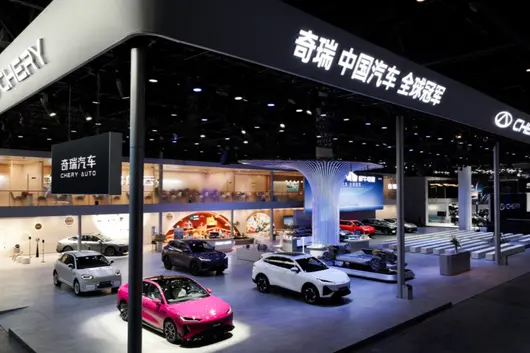
When the lights at Hall 5 of the China Western International Expo Center turned on, a name rewriting the global automotive landscape shone brightly—Chery. On August 21, the first day of the 2026 Chengdu International Auto Show, this Chinese automaker declared with a shocking premiere titled 'China's Automotive Global Champion': Chinese cars are not only powering up in their home market but are also leading the race in the global arena.
One minute, 200,000 units, a brand new milestone for going global

Just before the auto show opened, Chery just released a performance report that caught the industry's attention: July exports broke 200,000 units for the first time in a single month, with a 'Chery-made' vehicle heading overseas every 16 seconds on average—this pace is almost equivalent to the time it takes for the audience to take a photo at the booth, several Chery vehicles have already embarked on their global journey.
Cumulative exports from January to July exceeded 1.14 million units, a year-on-year increase of 71.2%; cumulative global users broke through 20.16 million, including nearly 7 million overseas users. More worth noting is that in the first half of 2026, Chery's global sales share reached 4.1%, tying with Ford for the ninth spot globally, joining BYD and Geely to see the 'Three Chinese Seats' appear in the global top 10 lineup for the first time.
'Highest Globalization Content'—this label is being repeatedly verified: products enter over 130 countries and regions, with over 20,000 overseas employees and a localization rate as high as 85%. From revitalizing a national brand in Spain to completely retaining more than 690 local employees at the South Africa factory, Chery's 'going global' has long been more than simple vehicle exports; it is a comprehensive implementation of the industry chain, talent, and supply chain.
Global cars gather to make an appearance, every model is 'intensely competitive' to the extreme

Walking into the booth, 38 show cars and five brands share the stage, the heaviest hitter being the Fengyun T7, positioned as a 'Native Global Car'. Its answer is: Global quality is not 'a label attached after selling globally, but starts from the first day of product definition'.
To this end, Chery pre-researched global regulations two years in advance, benchmarked against the 2026 version of E-NCAP standards; delved into 5,000+ global users and 15 typical national scenarios for upfront requirement analysis; invested in 81 exclusive durability vehicles with cumulative testing exceeding 6 million kilometers; completed over 80 local adaptations for Thai right-hand drive preferences, Indonesian bumpy road conditions, European front-end parking habits, etc. European highways, Middle East high heat, Southeast Asia high humidity, Nordic severe cold—Fengyun T7 must satisfy all simultaneously.
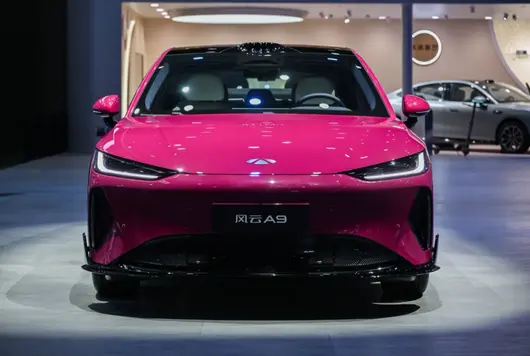
The Fengyun A9 appearing on the same stage won the 2026 German Red Dot Product Design Award, becoming a footnote to Eastern aesthetics moving towards becoming global design trend definers. The all-new QQ3 Modern Edition was led by a domestic team that won four Red Dot design awards, integrating classic elements with intelligent electric era technology, with sales exceeding 10,000 for four consecutive months and breaking 10,000 in its first overseas month—the happiness of 1.6 million QQ users globally is spreading to more countries.

The debut Arrizo 7, with a 'Fluid Water Flow' design language, offers dual power choices of C-DM Super Energy Hybrid and Kunpeng Fuel Edition, launching an assault on the 'New Benchmark for Global Quality Family Sedans'.
Young people are 'redefining' Chery

Data better explains the change: among Fengyun A9 users, those under 35 account for 73.6%, and females account for 42.7%; young users make up 65% of Fengyun T7; among the first batch of all-new QQ3 deliveries, 20-35 year old users reached 41%.
Young people are voting with their feet. On the booth, post-95s and post-00s designers and engineers in the Fengyun A9 R&D team participated deeply, connecting with over 10,000 young users cumulatively over the full cycle, landing more than 330 co-creation sessions, and refining more than 7,800 valid suggestions. After the all-new QQ3's OTA upgrade, users developed more play styles themselves—remote control of courier services via APP, voice calls to create surprises, and automatic parking usage rate as high as 96.3%.
Marketing methods are also breaking boundaries: In July, Fengyun A9 crossed over into fashion with a 'Tech Aesthetics Show', and the initiated duet challenge made this coupe a street snap trend item. The 'Stunning Looks' theme day of this auto show further made the booth a spot for fashion influencers to check in and take photos—from free makeup changes to celebrity looks, to merchandise of celebrities like Yang Zi and Yu Shi, Chery is conversing with young people using young people's context.
Battery safety 'cannot be rushed at all', but hardcore enough to be 'stepped on'

The hardest core area of the booth belongs to the Rhino Battery 'Tech Ecosystem Island'. A battery stepping challenge was set up on-site, allowing audiences to personally verify the ultra-high strength of the 'Rhino Shield O-Grid Structure'. The exhibits were even more direct: After the cell bottom was extruded and deformed by 50% (3 times the national standard) followed by 3 needle pricks, no smoke or fire; 10 needle pricks (10 times the national standard) were equally safe; after the end-side extrusion deformation of 40% and full submersion in water, it still discharged stably.
Behind this is a system nearly 'obsessive': from the material end Rhino Crystal, structure end Rhino Shield, to the intelligent control end Rhino Cloud, building three lines of defense; designed according to the 2026 new national standard, five stages of demagnetization achieve level-hundred ppb magnetic foreign matter control (industry average 200ppb), level-hundred purification workshop reaches medical operating room standard; 8,000+ control points, 300+ quality gates, 20 years of big data traceability, covering the full lifecycle.
At the vehicle level, the Rhino Battery has endured a 95°C extreme temperature difference from 55°C high heat to -40°C severe cold; salt erosion strength is 1.7 times the national standard, collision is 3 times, scraping bottom is 4 times the national standard, cumulative verification exceeds 25 million kilometers. As of now, Chery has 71 models awarded global 5-star safety certification, ranking first among Chinese brands.
Technology 'showcasing their core capabilities', the moat gets wider and wider

The Flying Fish Digital Intelligence Chassis i attracted attention at its premiere—four-wheel independent wire-controlled braking, wire-controlled steering, hub motors, and active suspension integrated into a 4-in-1 intelligent driving unit, achieving lateral driving with 90° wheel angle, '0' meter turning for on-site steering, and highest over 90 km/h Moose test vehicle speed.
Lingxi Smart Cockpit Carmind large model first integrates the Doubao end-to-end voice model, with 550ms ultra-fast response, 3 seconds of patient listening without interruption, precise understanding of fuzzy intent, achieving 2,000+ in-car tool calls and scenario closure.
At the power end, Kunpeng Sky Engine reached the industry peak with 48.57% thermal efficiency (λ=1), matching the Golden Extended Range System with fuel-to-electric conversion efficiency exceeding 4.0 kWh/L. Axial flux dual motor power density reached 18.4 kW/kg, variable flux motor increased whole-vehicle high-speed range by 10%. Solid-state battery exhibit energy density reached 400 Wh/kg, while needle prick and electric drill produced no smoke or fire.
Setting off from Chengdu, Chery conveys a clear signal to the world: Chinese automobiles are becoming global champions. And this auto show is merely a wonderful moment on its path to accelerate running.

Penulis / Kong Wenqing
Apabila lampu di Pavilion 5 Chengdu Barat Pusat Pameran Antarabangsa China menyala, nama Chery yang sedang mengubah skop automotif global menjadi sangat ketara. Pada 21 Ogos, hari pertama Pameran Kereta Antarabangsa Chengdu 2026, syarikat automotif China ini dengan persembahan sulung yang mengguncang "Juara Automotif China Juara Global" mengisytiharkan: Automotif China bukan sahaja beraksi di halaman sendiri, tetapi juga sudah memimpin di arena global.
Satu minit, 200,000 kenderaan, satu tonggak baharu eksport luar negara
Tidak lama sebelum pembukaan pameran, Chery baru sahaja menjayakan laporan prestasi yang menarik perhatian industri: Eksport tunggal bulan Julai pertama kali menembusi 200,000 kenderaan, purata setiap 16 saat sebuah "Chery buatan" menuju ke luar negara – kelajuan ini hampir sama dengan masa penonton mengambil satu foto di stan pameran, beberapa Chery sudah menjejakkan jejak ke seluruh dunia.
Eksport kumulatif Januari-Julai melebihi 1.14 juta kenderaan, peningkatan tahun ke tahun 71.2%; Pengguna global kumulatif menembusi 20.16 juta, di mana pengguna luar negara hampir 7 juta. Lebih menarik, pada paruh pertama 2026, bahagian pasaran jualan global Chery telah mencapai 4.1%, menyamai Ford di kedudukan kesembilan global, bersama BYD dan Geely membolehkan "Tiga Kerusi China" pertama kali muncul dalam kalangan sepuluh teratas global.
"Kandungan globalisasi tertinggi" – label ini sedang divalidasi berulang kali: Produk masuk ke 130 buah negara dan wilayah, pekerja luar negara lebih 20,000 orang dan kadar tempatanisasi mencapai 85%, dari Sepanyol menghidupkan semula jenama negara ke kilang Afrika Selatan yang mengekalkan lebih 690 orang pekerja tempatan, "ekspor luar" Chery bukan lagi sekadar eksport kenderaan lengkap, tetapi satu pelaksanaan menyeluruh rantaian industri, bakat, rantaian bekalan.
Kereta Global berkumpul muncul, setiap model "bersaing" sehingga ke hujung
Masuk stan pameran, 38 model kenderaan dipamerkan, lima jenama utama sama-sama hadir, yang paling berat ialah Fengyun T7 yang diposisikan sebagai "Kereta Global Asli". Jawapannya ialah: Kualiti global bukan "label yang dilekatkan selepas dijual ke seluruh dunia, tetapi bermula sejak hari pertama definisi produk".
Untuk itu, Chery meneliti peraturan global dua tahun awal, menyelaraskan dengan piawaian E-NCAP edisi 2026; masuk 5,000+ pengguna global, 15 situasi negara tipikal buat keperluan awal; melabur 81 unit kenderaan tahan lasak khas, ujian kumulatif melebihi 6 juta kilometer; mengadaptasi keutamaan stereng kanan Thailand, jalan bergetar Indonesia, kebiasaan masuk gudang dengan bahagian hadapan Eropah dll lengkap 80+ penyesuaian tempatan. Eropah jalan laju, Timur Tengah panas, Asia Tenggara lembap, Eropah Utara beku – Fengyun T7 mesti memenuhi semua.
Fengyun A9 yang muncul bersama-sama pula merangkul Anugerah Reka Bentuk Produk Red Dot Jerman 2026, menjadi catatan estetika Timur menuju definisior trend reka bentuk global. Edisi moden QQ3 baharu oleh pasukan pemenang empat anugerah Red Design China yang menguruskan, menggabungkan unsur klasik dengan teknologi era pintar elektrik, jualan empat bulan berturut-turut melebihi 10,000, luar negara bulan pertama menembusi 10,000 – kegembiraan 1.6 juta pengguna QQ global, sedang merebak ke lebih banyak negara.
Arrizo 7 yang tampil sulung pula dengan bahasa reka bentuk "Gaya Air Bergerak", menawarkan pilihan kuasa ganda C-DM Super Hybrid dan edisi bahan api Kunpeng, menegakkan serang ke "Patokan Baharu Kenderaan Keluarga Kualiti Global".
Generasi muda sedang "mengenal semula" Chery
Data lebih jelas menerangkan perubahan: Pengguna Fengyun A9, di bawah 35 tahun mencecah 73.6%, wanita 42.7%; Pengguna muda Fengyun T7 65%; Edisi baharu QQ3 penyerahan pertama, pengguna 20-35 tahun mencecah 41%.
Generasi muda menunjukkan sokongan dengan kaki. Di stan pameran, dalam pasukan reka bentuk Fengyun A9, pereka dan jurutera generasi selepas 1995, 2000-an terlibat secara mendalam, seluruh kitaran kumulatif menghubungkan lebih 10,000 pengguna muda, melaksanakan 330+ mesyuarat bersama, mengumpulkan lebih 7,800 cadangan efektif. Selepas peningkatan OTA QQ3 baharu, pengguna sendiri membangunkan lebih banyak permainan – APP buka pos jarak jauh, suara seru buat kejutan, parking automatik penggunaan mencecah 96.3%.
Cara pemasaran juga merentasi batas: Bulan Julai Fengyun A9 dengan "Pamer Estetika Teknologi" lintas industri fesyen, cabaran duet yang dimulakan menjadikan kereta coupe ini sebagai barang gaya jalanan. Hari tema rupa malaikat Pameran Kereta kali ini, menjadikan stan pameran sebagai tempat fesyenista ambil gambar – dari solek artis sama model percuma, hingga barangan sampingan artis seperti Yang Zi, Yu Shi, Chery sedang berinteraksi dengan generasi muda menggunakan bahasa generasi muda.
Keselamatan bateri "tidak boleh segera", tetapi keras hingga boleh "langkah di atasnya"
Kawasan paling keras di stan pameran, iaitu Pulau Ekosistem Teknologi Bateri Rino. Tetapkan cabaran langgar bateri, penonton boleh menguji sendiri "Struktur Perisai Rino Bentuk Huruf J" kekuatan ultra tinggi. Paparan lebih langsung: Sel bawah penekanan berubah bentuk 50% (3 kali piawaian negara) kemudian 3 tindik jarum, tidak berasap tidak terbakar; 10 tindik jarum (10 kali piawaian negara) juga selamat; Sisi hujung penekanan berubah bentuk 40% kemudian celup air sepenuhnya, masih stabil memancar.
Di sebaliknya ialah satu sistem yang hampir "obsesif": Dari bahagian bahan Kristal Rino, bahagian struktur Perisai Rino, sehingga bahagian kawalan pintar Awan Rino, membina tiga talian pertahanan; Mengikut edisi 2026 piawaian negara baru, lima langkah pembersihan magnet mencapai paras ppb seratus pengawalan zarah asing magnetik (industri umum 200ppb), paras ppb seratus kilang pembersihan mencapai piawaian bilik pembedahan perubatan; 8,000+ titik kawalan, 300+ pintu kualiti, 20 tahun penjejakan data besar, menutupi kitaran hidup.
Pada tahap kenderaan lengkap, Bateri Rino melalui 95°C perbezaan suhu melampau dari 55°C panas ke -40°C sejuk, kekuatan perosakan garam 1.7 kali piawaian negara, perlanggar 3 kali piawaian negara, menggores dasar 4 kali piawaian negara, kumulatif pengesahan melebihi 25 juta kilometer. Sehingga kini, Chery sudah 71 model kenderaan mendapat pengesahan keselamatan lima bintang global, menduduki tempat teratas jenama China.
Rak teknologi "paparkan aset", parit pertahanan semakin luas dibina
Cekak Pintar Flyfish i persembahan sulung menarik minat – brek kawalan wayar bebas empat roda, pusingan kawalan wayar, motor roda, suspensi aktif terangkai pada unit perjalanan pintar 4 dalam 1, boleh capai perjalanan sampingan sudut roda 90°, pusingan tempah "0" meter, laju ujian elk melebihi 90 km/j tertinggi.
Kabin Pintar Lingxi Carmind model besar pertama pasang model suara Doubao hujung ke hujung, tindak balas 550ms pantas, 3 saat dengar bersabar tidak potong, niat kabur faham tepat, capai 2,000+ alat dalaman kenderaan panggilan dan skenario tertutup.
Bahagian kuasa, Mesin Kunpeng Tianqing dengan kecekapan terma 48.57% (λ=1) menjuarai industri, padan sistem penambahan jarak emas kecekapan penukaran minyak elektrik melebihi 4.0 kWh/L. Ketumpatan kuasa motor ganda flux paksi mencapai 18.4 kW/kg, motor flux boleh ubah menjadikan kenderaan lengkap jauh pantas naik 10%. Paparan bateri pepejal ketumpatan tenaga mencapai 400 Wh/kg, serentak tindik jarum, gerudi elektrik tidak berasap tidak terbakar.
Berangkat dari Chengdu, Chery menghantar satu isyarat jelas ke global: Automotif China, sedang menjadi Juara Global. Dan pameran kereta ini, hanyalah satu saat yang menarik dalam jalan lajunya mempercepat.

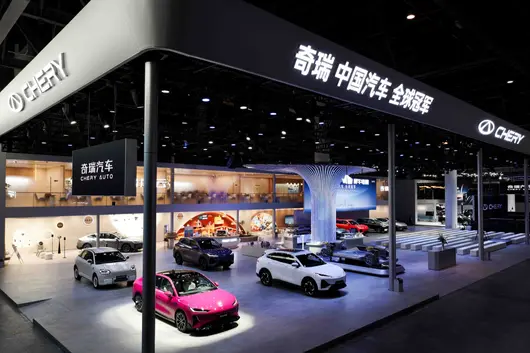
On August 21, the 2026 Chengdu Auto Show officially kicked off. Chery Group, themed "Chinese Cars Global Champions", brought 38 models from its five major brands: Chery, Exeed, Jetour, iCAR, and Zongheng to Hall 5. Among them, the Chery brand showcased 12 heavyweight models. Fengyun A9 and Fengyun T7, the "Visual Twin Stars", appeared on stage together. The QQ3 Modern Edition opened a trial experience, and the new global benchmark for quality family sedans, Arrizo 7, made its global premiere. The simultaneous display of multiple new cars demonstrated the upgrade of Chery's globalization system capabilities and released a strong signal that this old-brand car enterprise is comprehensively transforming towards the intelligent-electric era.

The most eye-catching on the booth belonged to Chery's first native global model of the intelligent-electric era - Fengyun T7. This pure electric SUV was launched first in South Africa and Thailand previously, landed in China and Indonesia markets in August, entered the EU in September, and will be launched in the UK, Malaysia, Australia and other places successively in October.

'A true global car is not one developed domestically and then modified for export, but one anchored to the global market from the start of R&D.' Li Xueyong, Executive Vice President of Chery Automobile Co., Ltd. expressed this on site. It is revealed that Fengyun T7 targeted the global market from the project initiation, pre-researched global regulations two years in advance, benchmarked against the 2026 E-NCAP standards, more than 5,000 global users participated in the survey, and 15 typical national scenarios were included in the product definition.

In terms of product power, Fengyun T7 highlights four major selling points: 'Super Performance', 'Beautiful Globally', 'Safer', and 'Smart'. The exterior adopts 'Wind-Driving Aesthetics' design language, integrating Eastern heritage with mainstream global aesthetics; in terms of power, it is equipped with a 65.05kWh Rhino Battery, combined with wide temperature range heat pump air conditioning and high voltage PTC system, CLTC pure electric range reaches 600 kilometers. In terms of safety, relying on Rock Solid Body, 9 airbags and Master-level tuned chassis to build a solid foundation; in terms of intelligence, equipped with Cockpit-Driver Integrated 8775 Chip, Lingxi Smart Cockpit 2.0 and Falcon 500 Driving Assistance System. Fengyun T7 pre-sale price is 109,900 yuan to 129,900 yuan, pre-sale 9 days orders have broken through 16,787 units. The new car will be officially launched on August 26.
Also appearing on stage with Fengyun T7 is the Global True C-Class Flagship Fengyun A9L ULTRA AWD version. The car is equipped with Snow Leopard AWD System, front double wishbone and rear five-link suspension, equipped with Falcon 700 Driving Assistance and Lingxi Smart Cockpit 2.0, body 88% high-strength steel-aluminum ratio, 9 airbags plus Rhino Battery, highlighting dual upgrade of performance and safety.

Another highlight of this auto show is the first public appearance of Arrizo 7. This new car, positioned as "New Benchmark for Global Quality Family Sedan", draws inspiration from the stillness and movement changes of water - body stretches steadily when stationary, shapes flow with momentum when moving, forming unique "Moving Water Momentum" design language. Chery hopes to use this "Read at a Glance" global aesthetics to reduce the cognitive threshold for users in different cultural backgrounds.

In terms of power, Arrizo 7 offers two choices: C-DM Super Energy Electric Hybrid and ICE Kunpeng Fuel version. The strategy of 'One Car Dual Energy' clearly targets the differentiated needs of users in different global regions for performance and energy consumption.
In addition, the brand new QQ3's No. 001 official modified version - QQ3 Modern Edition also opened pre-order trial. The car integrates Neo Retro design concept, paying tribute to classics with Retro Futurism, blending classic elements from 100 years of automotive industry with intelligent-electric era technology.

If new cars are the protagonists of the booth, then technology display is Chery's 'Hidden Trump Card'. This auto show, Chery brought Rhino Battery, Kunpeng Power, AI Intelligence and other fields' frontier technology results, demonstrating the layout of transforming from a traditional car manufacturer to a global AI technology ecosystem group.

As a major highlight of the booth, Chery created the "Tech Ecology Island" themed booth. A Rhino Battery Safety Experience dedicated line was set up on site, visitors can observe solid-state battery exhibits up close, watch extreme safety demonstrations of battery piercing and cell squeezing followed by soaking in water, and personally participate in safety challenges. Transforming obscure technical parameters into visible, touchable, and perceptible experiences, Chery attempts to tell the audience in this way: Safety is not a parameter written in the configuration sheet, but a bottom line that can withstand extreme tests. A science popularization space oriented towards teenagers, "Chery Future Classroom", was also specially set up within the booth.
Facing the young consumer group, Chery's layout is not limited to products. On August 22, the first day of the audience day, Chery opened the "Ultimate Looks Theme Day" in Hall 5 - Good-looking people, good-looking cars, and good-looking booths gathered together. Fengyun A9 Most Beautiful Photo Zone, QQ3 Supermodel Photo Zone, combined with professional lighting settings and celebrity same-style makeup experience, turned the auto show into a trendy photo studio.
The Ruixiang Life Ecosystem Space next door upgraded the Trend Modification District, Smart Control Zone, Wild Fun Camp, Life Market, Comfortable Cockpit five major areas. Chery Group's official modification platform Shanyi Tech made its first appearance in the Trend Modification District, bringing diverse personalized exteriors and off-road modification kits.

In the first half of 2026, Chery's global market sales share surged to 9th place globally, with Chinese brands occupying three of the top ten positions. As of the end of July, Chery's global cumulative car users broke through 20.16 million, among which overseas users exceeded 6.99 million. From January to July this year, Chery cumulative exported 1.146 million vehicles, a year-on-year increase of 71.2%; single month export in July 202,533 vehicles, becoming the first Chinese vehicle enterprise to break through 200,000 vehicles in a single month of exports.
From China to the world. At this new starting point with 20.16 million users, Chery is using the logic of "Native Global Cars" to redefine the path of Chinese cars going global - not modifying domestic cars to sell them out, but from the first day of R&D, making every car naturally belong to the world

21 Ogos, Pameran Kereta Chengdu 2026 secara rasmi dimulakan. Kumpulan Chery dengan tema "Kereta China Juara Global", membawa 38 model daripada lima jenama utamanya iaitu Chery, Exeed, Jetour, iCAR, dan Voyah masuk ke Dewan 5. Di antaranya, jenama Chery membawa 12 model utama, Fengyun A9 dan Fengyun T7 "Dwi Bintang Kecantikan" muncul serentak, versi moden QQ3 memulakan pra-tempahan, dan penanda aras baru kereta keluarga berkualiti global, Arrizo 7, menyaksikan tayangan globalnya. Penampilan berpusat beberapa kereta baharu bukan sahaja menunjukkan penambahbaikan keupayaan sistem globalisasi Chery, tetapi juga melepaskan isyarat kuat bahawa syarikat automotif lama ini sedang bertransformasi sepenuhnya ke arah zaman kecerdasan dan elektrik.
Pada panggung pameran yang paling menarik perhatian, ialah model global asli pertama Chery pada zaman kecerdasan elektrik — Fengyun T7. SUV elektrik tulen ini telah dilancarkan lebih dahulu di Afrika Selatan dan Thailand, memasuki pasaran China dan Indonesia pada Ogos, masuk ke Kesatuan Eropah pada September, dan akan secara beransur-ansur dilancarkan di United Kingdom, Malaysia, Australia, dan lain-lain pada Oktober.
"Kereta global sejati bukan dipasarkan semula selepas pembangunan di dalam negara, tetapi ditakrifkan global sejak permulaan penyelidikan dan pembangunan." Naib Presiden Eksekutif Chery Automobile Co., Ltd., Li Xueyong, menyatakan sedemikian di tempat kejadian. Difahalkan, Fengyun T7 sejak awal projek telah menyasar pasaran global, mengkaji peraturan global dua tahun lebih awal, menyaingi piawaian E-NCAP 2026, lebih 5,000 pengguna global terlibat dalam kajian, 15 senario negara tipikal dimasukkan ke dalam definisi produk.
Dari segi keupayaan produk, Fengyun T7 menonjolkan empat jualan utama "Lari Super, Cantik Global, Lebih Selamat, Pintar Bagus". Reka bentuk luaran menggunakan gaya seni "Memanah Angin", menggabungkan asas Timur dengan estetika global utama; Dari segi kuasa, ia dilengkapi bateri Badak 65.05kWh, disokong penghawa dingin pam haba bersempadan suhu lebar dan sistem PTC bertekanan tinggi, jangkauan elektrik CLTC mencapai 600 kilometer. Dari segi keselamatan, ia bergantung pada badan kereta batu, 9 beg udara dan chassis laras peringkat maestro untuk membina asas; Dari segi kecerdasan, ia dilengkapi cip 8775 kabin-pemanduan, kabin pintar Lingxi 2.0 dan sistem bantuan pemanduan Falcon 500. Harga pra-pesanan Fengyun T7 ialah 109,900 Yuan hingga 129,900 Yuan, tempahan 9 hari pra-pesanan telah melangkaui 16,787 unit. Kereta baharu akan dilancarkan secara rasmi pada 26 Ogos.
Dapat dilihat di panggung yang sama dengan Fengyun T7, ialah jenama flagship global sebenar Kelas C, Fengyun A9L ULTRA versi pemacu empat roda. Kereta ini menggunakan sistem pemacu empat roda Snow Leopard, suspensi depan double wishbone dan belakang lima link, dilengkapi sistem bantuan pemanduan Falcon 700 dan kabin pintar Lingxi 2.0, 88% pengisian keluli-aluminium kekuatan tinggi pada badan, 9 beg udara ditambah bateri Badak, menonjolkan penambahbaikan gandaan prestasi dan keselamatan.
Satu lagi daya tarikan utama pameran keret kali ini ialah tayangan umum pertama Arrizo 7. Kereta baharu yang ditetapkan sebagai "penanda aras baru kereta keluarga berkualiti global" ini mengambil inspirasi daripada perubahan pergerakan air — semasa hening, badan kereta merehat dengan mantap, semasa bergerak, permukaan bentuk mengalir dengan tenaga, membentuk gaya seni "Tenaga Air Bergerak" yang unik. Pihak Chery berharap dengan estetika global yang "memahami dengan sekilas mata" ini, dapat mengurangkan ambang kognitif pengguna dalam konteks budaya yang berbeza.
Dari segi kuasa, Arrizo 7 menyediakan dua pilihan C-DM Super Electric Hybrid dan versi minyak Kunpeng ICE. Strategi satu kereta, dua kuasa, jelas menyasarkan keperluan berbeza pengguna di seluruh dunia terhadap prestasi dan kecekapan tenaga.
Selain itu, versi penyesuaian rasmi nombor 001 bagi QQ3 baharu — QQ3 Moden juga memulakan tempahan awal. Kereta ini merangkumi reka bentuk Neo Retro, menghormati klasik dengan futurisme retro, menggabungkan elemen klasik dalam industri automotif seratus tahun dengan teknologi zaman kecerdasan dan elektrik.
Jika kereta baharu ialah watak utama panggung, maka pameran teknologi ialah "kad tersembunyi" Chery. Pada pameran kereta kali ini, Chery membawa hasil teknologi terkini di banyak bidang seperti bateri Badak, kuasa Kunpeng, kecerdasan AI, menunjukkan pelan untuk bertransformasi daripada pengeluar automotif tradisional kepada kumpulan ekologi teknologi AI global.
Sebagai sorotan besar panggung, Chery telah membangun panggung tema "Pulau Ekologi Teknologi". Di tapak ditetapkan laluan pengalaman keselamatan bateri Badak, pengunjung boleh melihat pameran bateri pepejal dari dekat, menonton demonstrasi keselamatan terhad di mana bateri ditikam, sel ditekan kemudian direndam air, dan secara langsung menyertai cabaran keselamatan. Mengubah parameter teknikal yang sukar difahami menjadi pengalaman yang boleh dilihat, disentuh, dan dirasa, Chery cuba memberitahu penonton dengan cara ini: keselamatan bukan parameter yang ditulis dalam senarai spesifikasi, tetapi asas yang tahan terhadap ujian ekstrem. Dalam panggung pameran juga ditetapkan ruang sains khusus "Chery Masa Depan Kelas" untuk belia.
Menghadapi kumpulan pengguna muda, pelan Chery tidak terhad kepada produk sahaja. Pada 22 Ogos, hari pertama hari pengunjung, Chery membuka "Hari Tema Rupa Syurga" di Dewan 5 — kumpulan tiga dalam satu orang cantik, kereta cantik, dan panggung cantik. Zon Pengambilan Gambar Paling Cantik Fengyun A9, zon Pengambilan Gambar Model Super QQ3 dilengkapi dengan pencahayaan profesional dan pengalaman solekan model yang sama, menjadikan pameran kereta seperti studio fesyen.
Ruang Ekologi Kehidupan Ruixiang di sebelahnya telah menaik taraf lima zon termasuk zon fesyen ubah suai, zon kawalan pintar, kem alam semula jadi, pasar kehidupan, dan kabin selesa. Platform pengubahsuaian rasmi di bawah kumpulan Chery, Teknologi Shanyue, melangkah ke zon fesyen ubah suai untuk kali pertama, membawa pelbagai penampilan peribadi dan kit ubah suai luar bandar.
Pertama setengah tahun 2026, bahagian pasaran jualan global Chery melonjak ke kedudukan ke-9 di dunia, di kalangan sepuluh besar, jenama China memegang tiga tempat. Setakat akhir Julai, pengguna kereta global Chery telah melebihi 20.16 juta, di mana pengguna luar negara melebihi 6.99 juta. Januari hingga Julai tahun ini, Chery secara kumulatif mengeksport 1.146 juta kereta, meningkat 71.2% setahun semasa; Eksport tunggal bulan Julai 202,533 unit, menjadikan Chery sebagai syarikat automotif China pertama yang menembusi 200,000 unit dalam eksport bulanan tunggal.
Datang dari China, pergi ke seluruh dunia. Berdasarkan titik permulaan baharu 20.16 juta pengguna, Chery sedang menggunakan logik "Kereta Global Asli", mendefinisi semula laluan eksport kereta China — bukan menukar kereta domestik untuk dijual, tetapi sejak hari pertama penyelidikan dan pembangunan, memastikan setiap model secara semula jadi milik dunia

August 21, the 29th Chengdu International Automobile Exhibition officially opened. Chery Group, themed "Chinese Car, Global Champion", brought 38 models from its five brands Chery, Exeed, Jetour, iCAR, and Vantec to Hall 5 of the China Western International Expo City. Among them, the Chery brand exhibited 12 models. Fengyun A9 and Fengyun T7, the "Visual Twin Stars", appeared on stage together. The QQ3 Modern Edition started the experience session, and the new benchmark for global quality family sedans, Arrizo 7, made its global debut.

[Li Xueyong, Executive Vice President of Chery Automobile Co., Ltd.]
This press conference, in the past, was merely a routine product showcase. But placed at this time node of August 2026, the significance is completely different — one month ago, Chery just obtained a report card sufficient enough to rewrite the narrative of China's automotive industry.
Global Ninth, New Benchmark for Chinese Automotive Industry
According to statistics compiled by CPCA Secretary-General Cui Dongshu based on data from organizations such as OICA, from January to June 2026, Chery Group's global sales share reached 4.1%, ranking ninth globally alongside Ford USA. This is the first time Chery has entered the top ten in global car company sales. At the same time, BYD ranked sixth with 4.8% share, and Geely Group ranked seventh with 4.6%. For the first time, three Chinese car companies appeared simultaneously in the top ten global sales list. The three Chinese brands accounted for a combined 13.5% of the global market share.
The top five car companies were Toyota (11%), Volkswagen (8.1%), Hyundai Kia (7.6%), Stellantis (6.0%) and Renault Nissan (5.4%), while General Motors ranked eighth with 4.5%.

Five years ago, the top ten on this list were almost monopolized by traditional giants from Japan, Germany, the US, and South Korea. In the first half of 2026, although Toyota still ranked first with about 5.39 million vehicles, it declined by 2.8% year-on-year — this is the first time in two years that Toyota has seen a year-on-year decline in global sales for the first half of the year. Volkswagen Group's sales in the first half reached 4.126 million vehicles, down 6.3% year-on-year, widening the gap with Toyota to 1.26 million vehicles. A common reason for the collective slowdown of traditional giants is being squeezed by local brands in the Chinese market.
Meanwhile, the collective breakthrough of Chinese car companies is rewriting the rules. Chery Group sold 1.358 million vehicles in the first half of the year, up 7.7% year-on-year, setting a historic high. Exports reached 943,817 vehicles, up 71.5% year-on-year, with exports accounting for nearly 70%. From the Export Champion to the Global Top Ten, Chery's global breakthrough is becoming a sample for high-quality Chinese automotive globalization.
From "Export First" to "Global Ninth", Quantity Accumulates into Quality
Chery has maintained "Export First" for 23 years. As of the end of July, Chery's global cumulative car users surpassed 20.16 million, of which overseas cumulative users exceeded 6.99 million. For every 3 Chery owners, about 1 is from overseas. Today, for every 5 cars exported from China, 1 is from Chery.
In July 2026, Chery Group exported 202,533 vehicles, up 70.1% year-on-year. This is not only a new Chinese car monthly export record for five consecutive months, but also the first car company in the history of China's automotive industry to break 200,000 vehicles in a single month of exports. Converted, on average, a "Made by Chery" vehicle is sent to the global market every 16 seconds. From January to July this year, Chery cumulatively exported 1.146 million vehicles, up 71.2% year-on-year.

But more worth attention than the numbers is the change in structure. Europe is becoming an important engine for Chery's global growth. In the first half of the year, Chery cumulatively sold 174,000 vehicles in Europe, up 212% year-on-year; among them, new energy models accounted for 86,000 vehicles, up 385% year-on-year, nearly half the total. In the UK market, Chery entered the top two of the new car sales list for all brands and all markets for four consecutive months. Taking root in the European market, the most stringent in global standards, marks that Chery's globalization has entered a new stage from "selling to more countries" to "entering higher threshold markets".
Meanwhile, Chery is advancing from a participant in the global automotive industry to a rule maker. In June 2026, the International Automotive Task Force (IATF) announced in Detroit, USA, that Chery Automobile officially became a member of the organization's board of directors, possessing voting rights, becoming the third Asian car company to obtain this qualification. From product export to standard participation, this is a key benchmark for the depth of a car company's globalization.
Chengdu Auto Show: A Collective "Global Car" Roadshow
Every car exhibited in Hall 5 of the Chengdu Auto Show is almost labeled with the same tag: "Global".
Fengyun T7 is Chery's first native global model in the Smart Electric Era. Chery Executive Vice President Li Xueyong's definition on this is clear: A true global car is not developed domestically first and then changed for export, but anchored globally from the start of R&D. The homologous model of Fengyun T7 has been presold in South Africa and launched in Thailand, and will subsequently enter markets such as the EU, Australia/New Zealand, UK — tested on real road conditions in multiple countries globally first, then returned to the domestic market. The new car presale price is RMB 109,900 to 129,900, with presale orders breaking 16,787 units in 9 days.

Arrizo 7 made its global debut at this auto show. The new car draws inspiration from the dynamic changes of water, forming the "Dynamic Water Momentum" design language, offering two power choices: C-DM Super Energy Electric Hybrid and Kunpeng Fuel Version. Designed for the global market from the R&D stage, completing all temperature zone and all road condition testing. Fengyun A9L ULTRA AWD version appeared on stage together, equipped with Snow Leopard AWD, Falcon 700 Driving Assistance and Lingxi Smart Cockpit 2.0. QQ3 Modern Edition started the experience session, integrating the Neo Retro design concept.
On the technical level, Chery built a "Tech Ecosystem Island" theme space at the exhibition booth. Through physical disassembly, immersive experiments, interactive participation, etc., technical parameters were transformed into perceptible experiences. The scene set up a Rhino Battery Safety Experience Special Line, where visitors could watch battery penetration, cell extrusion then soaking in water limit safety demonstrations. The booth also set up a popularization space "Chery Future Classroom" for teenagers. In addition, Chery Group's official modification platform Shanyi Tech made its debut at the Ruixiang Life Ecological Space Trend Modification District.
Final Thoughts:
From Export First to Global Ninth, Chery took 23 years. In these 23 years, it completed the paradigm shift from "Chinese cars sold globally" to "Cars made by global standards sold back to China".

At the 2026 Chengdu Auto Show, the Chery brand exhibited 12 models, each is a "Native Global Car". The five brands' 38 models appeared together, showcasing not only the product lineup but also a globalization system that has already been tested and proven.
Global Ninth is not the end point. When a Chinese car company stands in the top ten of global sales, every car it exhibits at the auto show takes on meaning beyond the product itself.


21 Ogos, Pameran Kereta Antarabangsa Chengdu Ke-29 rasmi dibuka. Kumpulan Chery dengan tema "Kereta China Juara Dunia", membawa lima jenama bawah naungannya iaitu Chery, Exeed, Jetour, iCAR, dan Zongheng dengan sebanyak 38 model kenderaan untuk masuk ke Pavilion 5, Pusat Pameran Antarabangsa Barat China. Di mana jenama Chery mempamerkan 12 model, Fengyun A9 dan Fengyun T7 "Bintang Ganda Estetik" muncul bersama, Edisi Moden QQ3开启体验期, Arrizo 7 sebagai penanda aras baharu kenderaan keluarga berkualiti global mengadakan kemunculan perdana global.
【Li Xueyong, Timbalan Pengerusi Eksekutif, Chery Automobile Co., Ltd.】
Pelancaran ini jika di masa lalu, hanyalah satu pameran produk biasa. Tetapi jika dilihat pada titik masa Ogos 2026, maknanya sudah berbeza sama sekali — sebulan lalu, Chery baru saja menerima satu senarai pencapaian yang cukup untuk mengubah naratif industri automotif China.
Kedudukan Kesembilan Global, Pakuan Baharu Kereta China
Menurut statistik Cui Dongshu, Setiausaha Agung Persatuan Kereta Penumpang China berdasarkan data daripada Pertubuhan Automotif Dunia dan institusi lain, Januari hingga Jun 2026, bahagian pasaran jualan global Kumpulan Chery mencapai 4.1%, bersama Ford Amerika menduduki tempat kesembilan dunia. Ini adalah kali pertama Chery masuk ke dalam sepuluh besar jualan pengeluar kereta dunia. Pada masa yang sama, BYD dengan 4.8% bahagian pasaran menduduki tempat keenam, Kumpulan Geely dengan 4.6% menduduki tempat ketujuh. Dalam barisan sepuluh besar jualan global, untuk pertama kalinya tiga pengeluar kereta China muncul serentak. Tiga jenama China keseluruhan menempati 13.5% bahagian pasaran global.
Enam pengeluar kereta teratas masing-masing Toyota (11%), Volkswagen (8.1%), Hyundai Kia (7.6%), Stellantis (6.0%) dan Renault Nissan (5.4%), General Motors dengan 4.5% menduduki tempat kelapan.
Jika lima tahun lalu, sepuluh teratas senarai ini hampir dikuasai sepenuhnya oleh gergasi tradisional Jepun, Jerman, Amerika dan Korea. Setengah tahun pertama 2026, walaupun Toyota masih menduduki tempat pertama dengan kira-kira 5.39 juta unit, ia telah turun 2.8% secara year-on-year — ini merupakan pertama kali dalam dua tahun Toyota menghadapi penurunan jualan global semester pertama secara year-on-year. Jualan Kumpulan Volkswagen semester pertama 4.126 juta unit, turun 6.3% secara year-on-year, jarak dengan Toyota semakin luas ke 1.26 juta unit. Kumpulan kehilangan tenaga gergasi tradisional mempunyai sebab sama: di pasaran China diperas oleh jenama tempatan.
Sementara itu, terobosan kolektif pengeluar kereta China sedang mengubah peraturan. Jualan Kumpulan Chery semester pertama 1.358 juta unit, meningkat 7.7% secara year-on-year, mencipta rekod tertinggi. Eksport 943,817 unit, meningkat 71.5%, peratusan eksport hampir 70%. Dari juara eksport ke sepuluh besar global, terobosan globalisasi Chery sedang menjadi contoh globalisasi berkualiti tinggi industri automotif China.
Dari "Juara Eksport" ke "Kesembilan Global", perubahan kuantiti berkumpul menjadi perubahan kualiti
"Juara Eksport" Chery telah kekalkan selama 23 tahun. Sehingga akhir Julai, pengguna kenderaan global terkumpul Chery telah menembusi 20.16 juta, di mana pengguna luar negara terkumpul melebihi 6.99 juta. Setiap 3 pemilik Chery, kira-kira 1 berasal dari luar negara. Hari ini, setiap 5 kereta yang dieksport dari China, 1 berasal dari Chery.
Julai 2026, Kumpulan Chery mengeksport 202,533 unit kenderaan, meningkat 70.1%. Ini bukan sahaja memecahkan rekod eksport bulanan tunggal keretabaru China selama lima bulan berturut-turut, malah menjadi pengeluar kereta pertama dalam sejarah industri automotif China yang menembusi eksport 200,000 unit dalam satu bulan tunggal. Jika dikira, purata setiap 16 saat ada satu "Chery" dihantar ke pasaran global. Januari hingga Julai tahun ini, Chery secara terkumpul mengeksport 1.146 juta unit kenderaan, meningkat 71.2%.
Tetapi yang lebih layak mendapat perhatian daripada angka ialah perubahan struktur. Eropah kini menjadi enjin penting pertumbuhan global Chery. Semester pertama, jualan terkumpul Chery di Eropah 174,000 unit, meningkat 212%; di mana model kenderaan tenaga baharu 86,000 unit, meningkat 385%, peratusan hampir separuh. Di pasaran United Kingdom, Chery secara berterusan masuk ke dua teratas senarai jualan kenderaan baharu semua jenama selama empat bulan berturut-turut. Di pasaran automotif dengan standard global paling ketat iaitu Eropah, memperkukuh kedudukan, menandakan globalisasi Chery daripada "dijual ke lebih banyak negara" masuk ke fasa baru "memasuki pasaran dengan piawaian lebih tinggi".
Sementara itu, Chery sedang bergerak dari peserta dalam industri automotif global kepada penyusun peraturan. Jun 2026, Kumpulan Kerja Automotif Antarabangsa (IATF) mengisytiharkan di Detroit, Amerika Syarikat, bahawa Chery Automobile secara rasmi menjadi ahli lembaga pengarah institusi tersebut, mempunyai hak mengundi dalam lembaga, menjadi pengeluar kereta ketiga di Asia yang layak mendapat ini. Dari eksport produk kepada penglibatan piawaian, ini adalah piawai utama kedalaman globalisasi pengeluar kereta.
Pameran Autos Chengdu: Persembahan Kolektif "Kereta Global"
Setiap kereta yang dipamerkan di Pavilion 5 Pameran Autos Chengdu, hampir semuanya mempunyai satu label yang sama: "Global".
Fengyun T7 merupakan model global asli pertama era Pintar Elektrik Chery. Li Xueyong, Timbalan Pengerusi Eksekutif Chery, definisinya sangat jelas: Kereta global yang sebenar, bukan dibangunkan di dalam negara terlebih dahulu kemudian diubah untuk dipasarkan, tetapi menetapkan sasaran global sejak peringkat penyelidikan dan pembangunan. Model induk Fengyun T7 sudah pra-pengjualan di Afrika Selatan, dilancar di Thailand, seterusnya akan masuk ke pasaran Kesatuan Eropah, Australia-New Zealand, United Kingdom — terlebih dahulu diuji keadaan jalan sebenar di banyak negara global, kemudian kembali ke negara asal. Harga pra-pengjualan 109,900 Yuan hingga 129,900 Yuan, pra-pengjualan 9 hari jumlah pesanan menembusi 16,787 unit.
Arrizo 7 pada pameran kali ini mengadakan kemunculan perdana global. Baharu, mengambil inspirasi daripada perubahan dinamik air, membentuk bahasa reka bentuk "Kekuatan Air Bergerak", menyediakan pilihan kuasa C-DM Super Energy Electric Hybrid dan Edisi Enjin Petrol Kunpeng. Dari peringkat penyelidikan dan pembangunan sudah menyasarkan pasaran global, menyelesaikan ujian semua zon suhu, semua keadaan jalan. Fengyun A9L ULTRA Edisi Penggerak Empat Roda muncul bersama, dilengkapi Penggerak Empat Roda Snow Leopard, Bantuan Memandu Falcon 700 dan Lingxi Smart Cabin 2.0. Edisi Moden QQ3开启体验期, menggabungkan falsafah reka bentuk Neo Retro.
Dari segi teknologi, Chery di stesen pameran membina ruang tema "Pulau Ekologi Teknologi", melalui pembedahan objek sebenar, eksperimen imersif, penglibatan interaktif dan bentuk lain, mengubah parameter teknikal kepada pengalaman yang boleh dirasai. Di lokasi menyediakan talian khas Pengalaman Keselamatan Bateri Rhinoceros, pelawat boleh melihat pembuktian keselamatan maksimum penusukan bateri, penjanaan sel bateri dijejalkan kemudian direndam dalam air. Stesen pameran juga menyediakan ruang pendidikan sains "Kelas Masa Depan Chery" yang menyasarkan kanak-kanak dan remaja. Di samping itu, platform ubah suai rasmi bawahan Kumpulan Chery iaitu Shanyi Technology pertama kali muncul di kawasan ubah suai moden ruang ekologi Ruixiang Life.
Catatan Penutup:
Dari Juara Eksport ke Tempat Kesembilan Global, Chery menggunakan 23 tahun. Dalam 23 tahun ini, ia telah menyelesaikan peralihan paradigma daripada "Kereta China dijual ke Global" kepada "Kereta yang dibuat dengan piawaian Global dijual kembali ke China".
Pameran Autos Chengdu 2026, jenama Chery mempamerkan 12 model kenderaan, setiap model adalah "Kereta Global Asli". Lima jenama 38 model kenderaan muncul bersama, menunjukkan bukan sahaja senarai produk, malah merupakan satu sistem globalisasi yang telah berjaya dilalui.
Kedudukan Kesembilan Global bukan titik akhir. Apabila satu pengeluar kereta China menduduki tempat sepuluh besar jualan global, setiap model kereta yang dipamerkannya di pameran autos, sudah mempunyai makna yang melebihi produk itu sendiri.

Exhibits in Hall 5 of the Chengdu Auto Show ripped open the true background of Chery's globalization.
 On August 21, the Chengdu International Auto Show opened, with Chery showcasing 38 complete vehicles and core technology exhibits representing five major brands at the Western International Expo City.
This seemingly conventional brand-centric exhibition was actually a local review of Chery's globalization achievements.
Last month, Chery's single-month exports broke 200,000 units, making it the first Chinese automaker to achieve this, with global cumulative users officially crossing the 20.16 million mark.
Multiple native global vehicles debuted at this Auto Show, hiding the core logic behind Chery securing the top spot in Chinese brand passenger car exports for 23 consecutive years.
Native global vehicles achieve systematic overseas expansionChery's globalization does not take the old path of modifying domestic models for export.
 The Fengyun T7 debuted at this Auto Show was launched for the global market from the first day of product definition.
The R&D team pre-researched global regulations 2 years in advance, designing fully to align with the latest European crash standards.
They visited 15 typical countries, collected over 5,000 global user surveys, and directly incorporated usage habits of different markets into the initial product definition.
To adapt to extreme environments in different regions worldwide, the Fengyun T7 completed 7 major categories of extreme environment verification.
To adapt to extreme environments in different regions worldwide, the Fengyun T7 completed 7 major categories of extreme environment verification.
South Asian rainy season verification for off-road wading ability, Middle East high-temperature sun exposure verification for equipment overheating protection, Indonesian high-humidity environment control for filter odor residue.
Siberian low temperatures reinforced wiper life, Nordic polar night optimized interior lighting and charging backlight, Brazilian gravel roads reinforced battery connector protection, Mexican cobblestone roads specialized verification for durability and noise.
Every verification corresponds to user pain points in real markets.
 Chery invested 81 exclusive durability vehicles for synchronized road testing, with total accumulated testing mileage exceeding 6 million kilometers, covering over 100 extreme road conditions.
For user habits in different regions, the team conducted over 80 localization adaptations.
Thailand RHD market strengthened steering feel, Australia/New Zealand regions added eyeglass cases to adapt to driving habits with sunglasses.
European market adapted for vehicle head-in parking habits, triggering the front camera early.
Localization details gained global market acceptance.
Currently, Fengyun T7 has launched in South Africa and Thailand, and will subsequently land in China, Indonesia, EU, Australia/New Zealand, and other markets.
Sales data validates the effectiveness of this approach.
In July this year, Chery Group exports exceeded 200,000 units, a year-on-year increase of more than 70%, breaking China's single-month car export record for five consecutive months.
January to July cumulative exports exceeded 1.14 million units, with growth rate maintaining above 70 percent.
 In the European market, sales in the first half of the year broke through 174,000 units, with new energy vehicles accounting for nearly half.
The UK market has held the runner-up spot on the single-month sales leaderboard for three consecutive months, and the Canadian market officially launched in May this year.
Chery's overseas expansion is not just about selling cars.
Currently, Chery products are sold in over 130 countries and regions, with overseas employees exceeding 20,000, and local staff accounting for 85 percent.
The Spanish joint venture factory revitalized the local national brand, while the South African factory retained over 600 original employees, driving over 3,000 jobs in upstream and downstream industries.
Full-domain localization of industry, talent, and supply chains is Chery's globalization's most solid moat.
Technology foundation supports global market premiumThe confidence of globalization ultimately must land on technical hard power.
 At this Auto Show, Chery unveiled a full set of technical achievements including Rhinoceros Battery, Kunpeng Power, Flying Fish Digital Intelligent Chassis, without stacking concepts; every item corresponds to user pain points in global markets.
Among them, the systematic safety logic of the Rhinoceros Battery best reveals Chery's engineering background.
The Rhinoceros Battery does not take the shortcut of single-point technology breakthroughs, building a complete protection system from material, structure, and intelligent control three dimensions.
At the material end, cathode, anode, separator, and electrolyte standards were upgraded, all significantly higher than national standards.
At the structure end, it adopts 31-layer armor protection, four layers of energy-absorbing underbody guards paired with high-strength steel, and I-beam frame forming a triple crash barrier.
At the intelligent control end, 24/7 cloud monitoring provides real-time monitoring and warning for over 300 battery signals.
On verification standards, Chery proactively raised thresholds.
Cell-level 10-needle nail penetration test has no fire or smoke; even after bottom extrusion deformation by 50%, nail penetration remains safe.
Bottom impact energy of the battery pack reaches 1500 Joules, ten times the national standard.
Burn, squeeze, scrape bottom, drop tests, all far exceed national standard requirements.
 Vehicle-end collaborative verification covers six major scenarios: high temperature, extreme cold, high salinity, collision, scraping bottom, and wading, with cumulative verification mileage exceeding 25 million kilometers.
Manufacturing end control is equally stringent.
Chery adopts a five-step demagnetization process, applying highest-grade magnetic rods, controlling magnetic foreign objects to ppb level within Class 100.
The production workshop cleanliness reached Class 100 medical operating room standards, and the full-line maglev logistics line guarantees production precision.
Independently developed back-pressure helium detection process achieves dual cell detection, and full-line AI quality inspection covers all processes.
Over 8,000 process control points, over 300 product quality gates, guarding every detail.
Except for batteries, Kunpeng Tianqing engine thermal efficiency broke through 48.5%, axial flux motor power density reached industry leading level, Flying Fish Digital Intelligent Chassis achieved four-wheel independent wire control.
Complete technical shelving supports the product power of Chery's global vehicles.
The proportion of young users continues to rise, Fengyun A9 users under 35 exceed 70 percent, and the usage rate of the all-new QQ3 intelligent functions remains high, all direct proof of technology landing into user experience.
The path Chery takes is very practical.
No concept hype or chasing trends, making every car to the highest global standard, investing every technology where users can perceive it.
Exporting first for 23 consecutive years is not luck, it's the reputation accumulated car by car, the barrier built technology by technology.

Pameran di Pavilion 5 Chengdu Auto Show telah mendedahkan realiti globalisasi Chery.
Pada 21 Ogos, Pameran Kereta Antarabangsa Chengdimula, Chery membawa 38 model kereta penuh dan pameran teknologi teras 5 jenama utama memaparkan di Bandar Pameran Antarabangsa Barat.
Perkongsian jenama terkumpul yang kelihatan biasa ini, sebenarnya merupakan satu semakan semula tempatan terhadap prestasi globalisasi Chery.
Pada bulan lalu, eksport Chery sebulan melepasi 200,000 kenderaan, menjadi pengeluar kereta pertama di China mencapai pencapaian ini, pengguna terkumpul global rasmi melepasi ambang 20.16 juta.
Berbagai model kereta global asli muncul secara terkumpul di pameran ini, di sebaliknya tersembunyi logik teras Chery yang menduduki tempat pertama eksport kereta penumpang jenama China selama 23 tahun berturut-turut.
Kereta Global Asli Menjalankan Eksport Berstruktur
Globalisasi Chery tidak mengikuti jalan lama mengubah model domestik untuk dijual ke luar negara.
Fengyun T7 yang muncul di pameran kereta ini, sejak hari pertama definisi produk telah ditetapkan ke pasaran global.
Pasukan penyelidikan dan pembangunan mengkaji peraturan global 2 tahun lebih awal, direka bentuk sepenuhnya mengikut piawaian perlanggaran Eropah terkini.
Mereka mengembara 15 negara tipikal, mengumpul lebih 5,000 tinjauan pengguna global, memasukkan tabiat penggunaan pasar berbeza terus ke dalam definisi produk awal.
Untuk menyesuaikan dengan persekitaran ekstrem berbeza di seluruh dunia, Fengyun T7 telah menyelesaikan pengesahan 7 kategori persekitaran ekstrem.
Untuk menyesuaikan dengan persekitaran ekstrem berbeza di seluruh dunia, Fengyun T7 telah menyelesaikan pengesahan 7 kategori persekitaran ekstrem.
Musi hujan Asia Tenggara menguji keupayaan pengilangan air tingkat gurun, Timur Tengah panas terik menguji perlindungan kepanasan peralatan, persekitaran lembap Indonesia mengawal sisa bau penapis.
Suhu rendah Siberia mengukuhkan hayat penyapu cermin, Fajar Utara mengoptimumkan pencahayaan dalam kereta dan lampu latar cas, jalan kerikil Brazil mengukuhkan perlindungan penyambung bateri, jalan batu Mexico menguji bunyi bising tahan lama secara khusus.
Setiap pengujian sepadan dengan kesukaran pengguna di pasar sebenar.
Chery melabur 81 kenderaan tahan lama khusus ujian jalan serentak, jumlah jarak ujian keseluruhan kenderaan melebihi 6 juta kilometer, meliputi lebih 100 persekitaran jalan ekstrem.
Mengikut tabiat pengguna kawasan berbeza, pasukan membuat lebih 80 penyesuaian tempatan.
Pasar kereta kanan Thailand memperberat rasa kemudi, wilayah Australia dan New Zealand menambah kotak cermin mata untuk menyesuaikan tabiat memandu memakai cermin mata gelap.
Pasar Eropah menyesuaikan tabiat memandu masuk, pencetus awal kamera hadapan.
Penyesuaian tempatan dalam butiran, memberi penerimaan pasar global.
Kini Fengyun T7 telah dilancarkan di Afrika Selatan, Thailand, seterusnya akan mendarat secara berperingkat di China, Indonesia, Kesatuan Eropah, Australia-New Zealand dan banyak lagi pasar.
Data jualan mengesahkan keberkesanan taktik ini.
Bulan Julai tahun ini eksport Kumpulan Chery melebihi 200,000 unit, meningkat 70% setahun, lima bulan berturut-turut mencatat rekod eksport sebulan kereta China.
Januari hingga Julai eksport terkumpul melebihi 1.14 juta unit, kadar pertumbuhan kekal di atas 70%.
Pasar Eropah jualan pada separuh tahun pertama melebihi 174,000 unit, perkadaran model tenaga baharu hampir separuh.
Pasar England kekal tempat kedua jualan sebulan selama tiga bulan berturut-turut, pasar Canada juga rasmi mendarat pada Mei tahun ini.
Eksport Chery bukan sahaja menjual kereta.
Kini produk Chery dijual di lebih 130 negara dan kawasan, pekerja luar negeri lebih 20,000 orang, perkadian pekerja tempatan mencapai 85%.
Pabrik gabung Sepanyol menyegarkan jenama kebangsaan tempatan, pabrik Afrika Selatan mengekalkan lebih 600 pekerja asal, menggerakkan lebih 3,000 peluang pekerjaan dalam dan luar.
Lokalisasi penuh industri, bakat, rantaian bekalan, itulah parit pertahanan paling kukuh globalisasi Chery.
Tapak Teknik Menopang Premium Pasar Global
Keyakinan globalisasi, akhirnya bergantung pada kekuatan teknikal sebenar.
Pameran kereta ini Chery memaparkan hasil teknologi penuh seperti Bateri Rhinoceros, Kuasa Kunpeng, Tapak Bawah Pintar Digital Ikan Terbang dan hasil teknologi lengkap, tanpa menimbun konsep, setiap satu sepadan dengan kesukaran pengguna pasar global.
Di antara itu, logik keselamatan sistem Bateri Rhinoceros, paling jelas menunjukkan asas sains teknikal Chery.
Bateri Rhinoceros tidak mengambil jalan pintasan突破 teknikal tunggal, dari tiga dimensi bahan, struktur, kawalan pintar membina sistem perlindungan lengkap.
Di hujung bahan menaik piawaian positif, negatif, pemisah, cecair elektrolit, semua jauh melebihi keperluan piawaian negara.
Di hujung struktur menggunakan perlindungan perisai 31 lapisan, empat lapisan papan pelindung bawah serap tenaga digabungkan keluli kuat tinggi, bingkai rasuk huruf 'Mu' membentuk penghalang perlanggaran tiga kali.
Di hujung kawalan pintar pemantauan awan 24 jam, lebih 300 isyarat bateri pemantauan dan amaran masa nyata.
Dari segi piawaian pengesahan, Chery secara aktif menaikkan ambang.
Ujian tusukan 10 jarum pada tahap sel tidak berapi atau berasap, selepas mampatan bawah berubah bentuk 50%, tusukan tetap selamat.
Tenaga perlanggaran bawah paket bateri mencapai 1500 Joule, sepuluh kali piawaian negara.
Ujian bakar, mampat, seret bawah, jatuh, semua jauh melebihi keperluan piawaian negara.
Ujian gabungan hujung kenderaan merangkumi enam senario suhu tinggi, sejuk ekstrem, garam tinggi, perlanggaran, seret bawah, merenti air, jumlah jarak pengesahan melebihi 25 juta kilometer.
Pengawalan hujung pembuatan juga sama ketat.
Chery menggunakan lima proses penyingkiran magnet, menerapkan batang magnet tahap tertinggi, kawalan bahan asing magnetik mencapai tahap ppb dalam 100.
Kebersihan bengkel pengeluaran mencapai standard bilik pembedahan perubatan Tahap 100, garisan logistik levitasi magnet sepanjang garis menjamin ketepatan pengeluaran.
Proses ujian helium tekanan belakang yang dibangunkan sendiri mencapai pengesanan ganda sel, pengesanan kualiti AI sepanjang garis pengeluaran meliputi semua proses.
Lebih 8,000 titik kawalan proses, lebih 300 pintu kualiti produk, menjaga setiap butiran.
Selain bateri, kecekapan haba enjin Kunpeng Tianqing menembus 48.5%, ketumpatan kuasa motor aliran magnet paksi mencapai tahap terunggul industri, tapak bawah Pintar Digital Ikan Terbang mencapai kawalan wayar bebas empat roda.
Rak teknikal lengkap, menopang kekuatan produk kereta global Chery.
Perkadian pengguna muda terus meningkat, Fengyun A9 perkadian pengguna di bawah 35 tahun melebihi 70%, penggunaan fungsi pintar QQ3 baharu kekal tinggi, semuanya adalah bukti langsung teknologi diterap ke pengalaman pengguna.
Jalan yang Chery lalui sangat praktikal.
Tidak membual konsep tidak mengejar trend, membuat setiap kereta ikut piawaian tertinggi global, meletakkan setiap teknologi ke tempat yang boleh dirasai pengguna.
Eksport berturut-turut 23 tahun tempat pertama bukan nasib, adalah reputasi yang dibina kereta demi kereta, adalah tembok yang dibina teknologi demi teknologi.

August 21, 2026, the Chengdu Auto Show officially opened. The Chery brand showcased 12 products, covering pure electric, hybrid, and fuel powertrain forms. Among them, the most attention-grabbing are the Fengyun T7, launching on August 26, and the Arrizo 7, returning after many years.

Photos of multiple new Chery cars in real vehicle shots
Fengyun T7: 600km Range Across Full Lineup, Pre-sale Starting at 109,900 YuanThe Fengyun T7 is positioned as a pure electric compact SUV. Pre-sales have already started, with a price range of 109,900 to 129,900 yuan. The entire series is equipped with 65.05kWh LiFePO4 Rhino batteries, with CLTC range unified at 600km. Fast charging from 30% to 80% takes approximately 20 minutes. The powertrain adopts a rear single-motor layout, with a maximum power of 178kW and peak torque of 275N·m.

Fengyun T7 Real Vehicle - Cockpit
Configuration gradient differences are mainly reflected in intelligent configurations. The top trim features the Qualcomm 8775 chip (4nm process, 72 TOPS computing power) and Falcon 500 driver assistance system, supporting highway NOA pilot and over 300 automatic parking scenarios. Middle and low trim cockpits use the 8155 chip; high-order intelligent driving functions are limited to the top trim, and LiDAR is not equipped.

T7 Real Vehicle - Rear Space
Fengyun T7 Real Vehicle - Trunk Space
As the brand's first "global car", Fengyun T7 is designed according to the 2026 version E-NCAP five-star safety standard. The body uses 80% high-strength steel and 18.84% hot-formed steel, with 9 airbags as standard. The homologous model has already launched in South Africa and Thailand. After launching domestically on August 26, it will undergo global synchronous sales. In the 100,000 to 150,000 yuan pure electric SUV market, the new car may compete with models like BYD Yuan PLUS, Deepal S05, AION AION Y, etc. The 600km range across the full series and the starting price of 109,900 yuan are its main differentiating features, but the wheelbase is at an average level among peers.
Arrizo 7: Fastback Coupe Style Returns, Dual Power Options Available
Arrizo 7 Real Vehicle Body
Arrizo 7 Real Vehicle - Rear Space
Arrizo 7, which was discontinued in 2017, makes its debut for the new generation at this auto show. The new car adopts a fastback coupe body shape, continuing the large-sized polygonal front grille design, and the rear is equipped with a full-width light group and diffuser decoration. According to official information, C-DM Super Energy Electric Hybrid and Kunpeng Fuel two power versions will be provided. The fuel version is expected to be equipped with a 1.5T engine, matched with CVT or dual-clutch transmission. Expected to launch in the fourth quarter of 2026.
Fengyun A9 and Fengyun A9L: Pure Electric and Hybrid, Covering Mid-Size and Large-Size Sedans Pure electric mid-size coupe Fengyun A9 launched on July 25. This car is equipped with 70.11kWh Rhino battery, CLTC pure electric range 655km; equipped with 12-in-1 high-power electric drive system, peak power 175kW; cockpit uses 3nm process high-performance chip, middle trim and above equipped with 23-speaker sound system, high trim offers passenger seat zero-gravity seat option and Falcon driving assistance system (27 high-precision sensors, including 1 LiDAR).

The Fengyun A9L ULTRA four-wheel drive version displayed at the same time is equipped with Kunpeng Super Energy Electric Hybrid CDM 6.0, CLTC pure electric range 260km, system maximum power 470kW, 0-100km/h acceleration 4.9 seconds. The chassis adopts a front double wishbone plus rear high-level five-link structure, equipped with CDC electromagnetic suspension and road active preview system.
QQ3 Modern Edition: Personalized Factory-Modified Mini Car
QQ3 Modern Edition, as the first official modified version of QQ3, adopts Neo Retro design concept, combining retro elements with two exclusive colors: British Green and Milk Coffee. QQ3 EV powertrain offers two motors of 58kW and 90kW, using rear-engine rear-drive layout, CLTC range comes in 310km and 420km versions. Cockpit equipped with Qualcomm 8155 chip and 15.6-inch 2.5K central control screen, supporting L2 level assisted driving and 540° panoramic image.

QQ3 EV Modern Edition Real Vehicle - Cockpit

QQ3 EV Modern Edition British Green Real Vehicle - Wheels
 QQ3 EV Modern Edition British Green Real Vehicle - Trunk Space
 From the product line perspective, Fengyun T7 enters the 100,000 level pure electric SUV market with a 600km range standard across the full series and global verification system; Arrizo 7 covers family sedan users with dual power forms; Fengyun A9 and A9L form complementarity in pure electric and hybrid sedan fields respectively; QQ3 Modern Edition explores the boutique small car market segment with personalized design.
Chery's global R&D system and multi-energy parallel strategy provide wider market coverage capabilities. The Rhino battery safety verification standards and the global synchronous development mode of models constitute product endorsement. However, all models face fierce competition in their respective market segments. There are already multiple mature products from emerging brands and joint venture brands in the market. The brand premium capability of Fengyun and Arrizo series is still in the accumulation stage.
As these models launch one after another, Chery's product density in the new energy era will further increase. Whether its global standards can translate into market acceptance by end-users still needs to observe subsequent delivery performance and user feedback. (Editor: Xiaozhou)
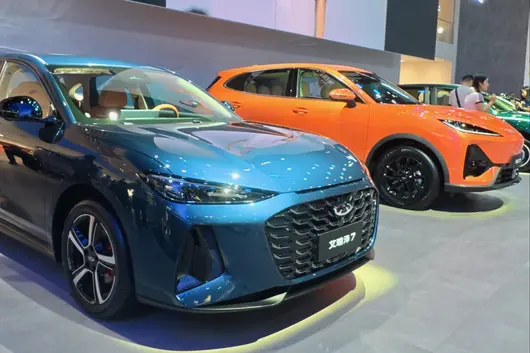

21 Ogos 2026, Pameran Kereta Chengdu secara rasmi dibuka. Chery memaparkan 12 produk, merangkumi pelbagai bentuk kuasa seperti elektrik tulen, hibrid, dan bahan api fosil. Daripada itu, yang paling menjadi tumpuan adalah Fengyun T7 yang akan dilancarkan pada 26 Ogos, serta Aize 7 yang kembali selepas lama.
Foto Kereta Sebenar Chery Pelbagai Model Baharu
Fengyun T7: Julat 600km Penuh, Prapenjualan Bermula 109,900 YuanFengyun T7 dikategorikan sebagai SUV kompak elektrik tulen, prapenjualan telah dibuka sebelum ini, julat harga adalah 109,900 hingga 129,900 Yuan. Keseluruhan rangkaian dilengkapi bateri Rhino Lithium Iron Phosphate 65.05kWh, julat CLTC diselaraskan kepada 600km. Masa cas pantas dari 30% hingga 80% adalah kira-kira 20 minit. Dari segi prestasi, ia menggunakan susun atur motor tunggal di bahagian belakang, kuasa maksimum 178kW, tork puncak 275N·m.
Fengyun T7 Kereta Sebenar - Kabin
Perbezaan tahap konfigurasi terutamanya ditunjukkan dalam konfigurasi pintar. Varian teratas dilengkapi cip Qualcomm 8775 (proses 4nm, kebolehan pengiraan 72 TOPS) dan sistem bantuan memandu Falcon 500, menyokong NOA Litar Laju dan lebih 300 senario parkir automatik. Varian sederhana dan rendah cip kabin adalah 8155, fungsi pintar tahap tinggi terhad kepada varian teratas, tidak dilengkapi radar laser.
Fengyun T7 Kereta Sebenar - Ruang Barisan Belakang
Fengyun T7 Kereta Sebenar - Ruang Peti Muatan
Sebagai "kereta global" pertama jenama ini, Fengyun T7 direka mengikut piawaian keselamatan lima bintang E-NCAP versi 2026. Badan kenderaan menggunakan 80% keluli kekuatan tinggi dan 18.84% keluli berbentuk panas. Piawai kelengkapan 9 beg udara. Model asal telah dilancarkan terdahulu di Afrika Selatan dan Thailand. Selepas dilancarkan dalam pasaran domestik pada 26 Ogos, ia akan dijual serentak di seluruh dunia. Dalam pasaran SUV elektrik tulen 100,000 hingga 150,000 Yuan, kereta baharu mungkin bersaing dengan model seperti BYD Yuan PLUS, Deepal S05, AION Y, dsb. Julat 600km dan harga prapenjualan 109,900 Yuan untuk seluruh rangkaian adalah ciri pembezaan utamanya, tetapi jarak gandar berada di tahap sederhana dalam kelas yang sama.
Aize 7: Gaya coupe belakang condong kembali, menyediakan pilihan kuasa berganda
Foto Kereta Sebenar Aize 7 - Badan
Foto Kereta Sebenar Aize 7 - Ruang Barisan Belakang
Aize 7 yang pernah dihentikan pengeluaran pada 2017 menyertai persembahan model generasi baharu pada pameran kereta kali ini. Kereta baharu menggunakan bentuk badan coupe belakang condong, melanjutkan reka bentuk gril hadapan poligon saiz besar, bahagian belakang dilengkapi dengan kelompok lampu menyeluruh dan hiasan pemencar. Menurut pengenalan rasmi, ia akan menyediakan versi kuasa Hibrid C-DM Super dan Petrol Kunpeng. Versi petrol dijangka dilengkapi enjin 1.5T, dipadankan dengan pemindah gear CVT atau Double Clutch. Dijangka dilancarkan pada suku keempat 2026.
Fengyun A9 dan Fengyun A9L: Menutupi Sedan Elektrik Tulen dan Hibrid, Sederhana dan Sederhana BesarSedan coupe elektrik tulen Fengyun A9 sederhana telah dilancarkan pada 25 Julai. Kereta ini menggunakan bateri Rhino 70.11kWh, julat CLTC elektrik tulen 655km; dilengkapi sistem pemacu elektrik kuasa tinggi 12 dalam 1, kuasa puncak 175kW; kabin menggunakan cip prestasi tinggi proses 3nm, bermula dari varian sederhana dilengkapi sistem audio 23 pengeras suara, varian tinggi menyediakan pilihan kerusi graviti sifar untuk penumpang hadapan dan sistem bantuan memandu Falcon (27 sensor ketepatan tinggi, termasuk 1 radar laser).
Fengyun A9L ULTRA versi enjin kuasa empat roda yang dipaparkan pada masa yang sama, dilengkapi dengan hibrid super kuasa Kunpeng CDM 6.0, julat CLTC elektrik tulen 260km, kuasa maksimum sistem 470kW, pecutan 0 ke 100km dalam 4.9 saat. Chassis menggunakan struktur lima lengan lima aras belakang ditambah dua garpu hadapan, dilengkapi dengan gantungan elektromagnetik CDC dan sistem pratengsahan jalan aktif.
QQ3 Edisi Moden: Kereta Kecil Ubah Suai Rasmi Bersendiri
QQ3 Edisi Moden sebagai versi ubah suai rasmi pertama QQ3, menggunakan reka bentuk konsep Neo Retro, memadankan elemen renaissance dengan warna hijau British dan warna kopi susu khas. Kuasa QQ3 EV menyediakan dua motor 58kW dan 90kW, menggunakan susun atur roda belakang, julat CLTS dibahagikan kepada dua versi 310km dan 420km. Kabin dilengkapi cip Qualcomm 8155 dan skrin kawalan tengah 15.6 inci 2.5K, menyokong L2 memandu bantuan dan imej 540° panoram.
Foto Kereta Sebenar QQ3 EV Edisi Moden - Kabin
Foto Kereta Sebenar QQ3 EV Edisi Moden Warna Hijau British - Rim
QQ3 EV Edisi Moden Kereta Sebenar Warna Hijau British - Ruang Peti Muatan
Dari segi barisan produk, Fengyun T7 memasuki pasaran SUV elektrik tulen 100,000 dengan julat penuh piawai 600km dan sistem pengesahan global; Aize 7 meliputi pengguna kereta keluarga dengan bentuk kuasa berganda; Fengyun A9 dan A9L masing-masing membentuk pelengkap dalam domain sedan elektrik tulen dan hibrid; QQ3 Edisi Moden menerokai pasaran ceruk kereta kecil premium dengan reka bentuk peribadi.
Sistem penyelidikan dan pembangunan globalisasi Chery dan strategi tenaga serentak pelbagai menyediakan kemampuan liputan pasaran yang agak luas, piawaian pengesahan keselamatan bateri Rhino dan model pembangunan serentak global bagi model membentuk sokongan produk. Namun, setiap model dalam pasaran ceruk masing-masing menghadapi persaingan sengit, pasaran sudah mempunyai produk matang dari kuasa baharu dan jenama kongsi, keupayaan premium jenama siri Fengyun, Aize, dsb masih dalam fasa pengumpulan.
Sepanjang model-model ini dilancarkan secara berperingkat, ketumpatan produk Chery pada era tenaga baharu akan semakin ditingkatkan, sama ada piawaian globalisasinya boleh ditukar kepada pengiktirafan pasaran hujung perlu diperhatikan dengan prestasi penghantaran seterusnya dan maklum balas pengguna. (Editor: Xiao Zhou)

On August 21, the 2026 Chengdu International Auto Show officially opened. Chery Group showcased 38 models from its five major brands: Chery, Exeed, Jetour, iCAR, and Vantech. Among them, the Chery brand brought 12 models. Fengyun A9 and Fengyun T7, the "Visual Twin Stars", appeared on stage together; the QQ3 Modern Edition started its early tasting experience; the new benchmark for global quality family sedan, Arrizo 7, welcomed its global debut.
In 2026, Chery arrived at a new historical coordinate in the global automotive industry landscape. In the first half of 2026, Chery's global sales share jumped to 9th position globally. Among the top ten, Chinese brands occupied three spots. By the end of July, Chery's global cumulative car users broke 20.16 million, among which overseas cumulative users exceeded 6.99 million. It has ranked first in Chinese car brand exports for 23 consecutive years. From January to July this year, Chery's cumulative vehicle exports reached 1.146 million, with a year-on-year growth of 71.2%. In July, with an achievement of 202,533 vehicles, it became China's first automaker to break 200,000 vehicles in monthly exports.

Behind the sales numbers is Chery's re-anchoring of the definition of "Global Car". Li Xueyong, Executive Vice President of Chery Automobile Co., Ltd., stated that Chery firmly believes that real global cars are not developed domestically then modified for export, but are anchored to the global market from the start of R&D. Chery insists on creating true native global cars facing the global market from the initial product definition. At this Chengdu Auto Show, Chery presented a global model matrix of the new energy era with global same-spec models meeting diverse global needs, re-validating the new pattern of "Global cars have entered China Time".
As Chery's first native global model in the Smart Electrification Era, the global quality pure electric SUV Fengyun T7 is the absolute focus of this auto show. The new car adopts "Wind-riding Aesthetics" exterior design, integrating Eastern heritage with global mainstream aesthetics. In terms of power, it is equipped with a 65.05kWh Rhinoceros Battery, combined with a wide-temperature range heat pump air conditioning and high-voltage PTC system, achieving CLTC 600km pure electric range. In terms of safety, it relies on the Fortress Body, 9 airbags, and master-level tuned chassis to build a solid overall vehicle safety base; in terms of intelligence, it is equipped with an Integrated Cockpit and Driving 8775 Chip, Lingxi Smart Cockpit 2.0, and Falcon 500 Driver Assistance System.

In terms of market, Fengyun T7's pre-sale price is 109,900 yuan to 129,900 yuan. Within 9 days of pre-sale, orders broke 16,787 units. According to plans, the new car will officially launch on August 26. In addition, Fengyun T7 has already entered South Africa and Thailand markets. It will enter China and Indonesia markets in August, launch in the EU market in September, and enter the UK, Malaysia, Australia, and other places in October.
The True Global Class C Flagship — Fengyun A9L ULTRA 4WD Version appeared together. The car features Yunzheng Exterior, Fengchen Interior, three-color light-up grille, and electric speed-control spoiler, combined with Snow Leopard 4WD and Front double wishbone + Rear five-link suspension, meeting the dual pursuit of performance and looks by young users; meanwhile, it is equipped with Falcon 700 Driver Assistance, Lingxi Smart Cockpit 2.0, the overall vehicle high-strength steel and aluminum ratio reaches 88%, equipped with 9 airbags and Rhinoceros Battery.
Particularly worth noting is that the new benchmark for global quality family sedan Arrizo 7 welcomed its first public debut at this Chengdu Auto Show. This classic compact sedan that was silent for years officially completed its generation update and returned. Arrizo 7 draws inspiration from the dynamic changes of water, integrating the calmness of still water and the power of moving water into the overall vehicle design, forming a unique "Power of Moving Water" design language — when stationary, the body is relaxed and steady; when moving, the model surface flows dynamically. Besides global aesthetic design, the new car also provides C-DM Super Electric Hybrid and ICE Kunpeng Fuel Version two power choices, meeting differentiated needs of users in different global regions for performance and energy consumption.

In addition, the new QQ3's No. 001 official modification version — QQ3 Modern Edition also started early order taking at the auto show. The car incorporates Neo Retro design concept, paying tribute to classics with Retro-Futurism, integrating classic elements from 100 years of automotive industry with Smart Electrification era technology.
This year is Chery's "Electrification Transformation" product year, and also its technical year embracing Smart Electrification Era and continuously deepening new energy strategy. At this auto show, Chery brought frontier technology achievements in multiple fields such as Rhinoceros Battery, Kunpeng Power, AI Intelligence. As a major highlight of the booth, Chery created "Tech Ecology Island" themed booth, through forms of physical dismantling, immersive experiments, interactive participation, etc., transforming technical parameters into vivid experiences that audiences can see, touch, and perceive. A Rhinoceros Battery Safety Experience Line was set up on site. Visitors can observe solid-state battery exhibits up close, and watch extreme safety demonstrations of battery puncture, cell squeeze and water immersion.
At this Chengdu Auto Show, Chery presented a global model matrix of the new energy era with global same-spec models meeting diverse global needs, re-validating the new pattern of "Global cars have entered China Time".


On August 21, the 2026 Chengdu International Auto Show officially opened. Chery Group, with the theme "Chinese Cars, Global Champions", brought 38 models from its five major brands Chery, Exeed, Jetour, iCAR, and Traverse to Land at Hall 5 of China Western International Expo City. Among them, the Chery brand displayed 12 models, with Fengyun A9 and Fengyun T7 "Beauty Twin Stars" appearing on stage together, the QQ3 Modern Edition starting a trial experience, and the global quality family sedan new benchmark Arrizo 7 welcoming its global premiere.

Fengyun T7: Pre-sale orders break 16,000 in 9 days, officially launched on August 26
As Chery's first original global model in the smart electric era, the Fengyun T7 is positioned as a "Global Quality Pure Electric SUV". The new car adopts a "Wind-Taming Aesthetics" exterior design, equipped with a 65.05 kWh Rhino Battery, combined with a wide temperature range heat pump air conditioning and high-voltage PTC system, achieving a CLTC pure electric range of 600 km. Regarding intelligence, it is equipped with a Cockpit-Driving Integrated 8775 Chip, Lingxi Smart Cockpit 2.0, and Falcon 500 Driving Assistance System.
The pre-sale price of the Fengyun T7 is 109,900 yuan to 129,900 yuan. Official data shows pre-sale orders broke 16,787 units in 9 days. According to the plan, the new car will be officially launched on August 26. Regarding the launch rhythm, the Fengyun T7 has already been launched in South Africa and Thailand, will land in China and Indonesia markets in August, enter the EU in September, and land in the UK, Malaysia, Australia, etc., in October.
Li Xueyong, Executive Vice President of Chery Automobile Co., Ltd., stated at the press conference: "Chery believes that a true global car is not developed domestically and then modified for export, but anchored to the global market from the start of R&D."

[Global Quality Pure Electric SUV Fengyun T7]
Arrizo 7 Global Premiere: The "Dynamic Water Momentum" of the 80,000-level Family Sedan
The classic family sedan Arrizo 7, silent for many years, officially returned at this auto show, welcoming its global public premiere. The new car is positioned as a "Global Quality Family Sedan New Benchmark", anchoring the 80,000 to 100,000 level market.
The most noteworthy thing about this car is the design. Arrizo 7 draws inspiration from the dynamic and static changes of water, forming the "Dynamic Water Momentum" design language—when stationary, the body is spread out and steady; when moving, the surface flows with momentum. Regarding power, the new car provides C-DM Super Power Electric Hybrid and Kunpeng Petrol Version choices. According to official information, the Arrizo 7 is expected to officially launch in Q4 2026.

[Global Quality Family Sedan New Benchmark Arrizo 7]
Fengyun A9L Sports Edition On Display: 4WD 470kW, 0-100 4-Second Level
The Fengyun A9L Sports Edition appeared simultaneously at the auto show. The new car is equipped with a full set of exclusive performance upgrade kits, including blacked-out front ventilation outlets, spoiler components, 20-inch wheel rims, six-piston fixed calipers, and FNC-coated large ventilated slotted brake discs.
Regarding power, the new car is equipped with the Kunpeng Super Power Electric Hybrid CDM 6.0 System. The 4WD version has a combined power of 470 kW, peak torque of 854 N·m, 0-100 acceleration enters 4-second level, and combined range exceeds 2,000 km. The chassis adopts a front double wishbone + rear multi-link suspension structure. The data level is indeed impressive. However, the top-spec pricing at the 230,000 yuan level, in this price segment, the competitors faced are not only Chinese brands, but also Tesla Model 3 and Volkswagen ID. series. Whether this positioning as "Global True C-Class Flagship" can be accepted by the market at the terminal, still needs continuous sales to answer.

[Global True C-Class Flagship Fengyun A9L ULTRA 4WD Version]
QQ3 Modern Edition: Neo Retro Futurism
The QQ3 Modern Edition is another interesting product on the Chery stand. The No. 001 official modified version, Neo Retro design concept, fuses classic elements of the automotive industry with the tech feel of the smart electric era. Essentially, it is making friends with young people using design language.
The new QQ3 sold over 10,000 units monthly for four consecutive months, broke 10,000 units in the first month overseas. The QQ series has a global cumulative 1.6 million users, with users aged 20-35 accounting for 41%. In the global market, small car categories often carry emotional value beyond transportation tools. The logic of the QQ3 Modern Edition is very close to this logic: it sells not just a commute tool, but a form of personality expression.

[QQ3 Modern Edition]
Rhino Battery and Three Major Core Technologies
The Rhino Battery zone is the core of this technology showcase. A safety experience special line was set up on site, where the audience can watch extreme demonstrations of battery puncture and cell extrusion followed by water soaking.

[Rhino Battery Cell Squeeze and Water Soak Safety Demo]
The logic of the Rhino Battery is "Three Defense Lines": Rhino Crystal (Material/Cell)—Cathode standard strict 16%, Anode strict 20%, Separator strict 14%, Electrolyte strict 20%; Rhino Shield (Pack Structure)—31 layers of protection, 980DP high-strength steel underbody guard; Rhino Cloud (BMS Smart Control)—7x24h cloud monitoring.
Several tests shown on site: 10-needle puncture (10x national standard) no smoke no fire; bottom extrusion 50% (3x national standard) then 3-needle puncture no smoke; end-side extrusion 40% then fully soaked in water then discharged no smoke. 400Wh/kg sulfide all-solid-state battery was displayed simultaneously, according to official plan mounted on cars in 2026, mass market in 2027.
Manta Smart Intelligent Chassis i is another forward-looking technology. 4-in-1 Smart Driving Unit, integrating brake-by-wire, steer-by-wire, hub motor, active suspension, can achieve 90° wheel turn angle lateral driving, "0" meter turn in place, Elk test ≥ 90 km/h. But the cost, regulations, and supply chain maturity of the brake-by-wire chassis are still in the early stage, mass production landing takes time.
Regarding Kunpeng Power, Kunpeng Tianqing thermal efficiency 48.57%, oil-electric conversion efficiency > 4.0 kWh/L; Variable flux motor CLTC efficiency 96.7%, high-speed range increased by 10%. Lingxi Smart Cockpit-Carmind Large Model integrated 10 billion parameters, 550ms semantic response, supports 2,000+ in-car tool calls.
Final Thoughts:
At the 2026 Chengdu Auto Show, Chery used 38 models, 5 major brands, and a string of hard data to give its answer to "Global Cars".
From Fengyun T7's original R&D logic, to Arrizo 7's Oriental aesthetics expression, to QQ3 Modern Edition's youthful attempt, to Rhino Battery's systematic safety—Chery is doing something rarely done by Chinese brands: defining products with global standards, supporting overseas expansion with technical capabilities, and communicating with the world through design language.
This logic has been preliminarily validated by the market in the past few months: July single-month exports first broke 200,000 vehicles, global share rose to ninth in the first half of the year, January-July cumulative exports 1.146 million vehicles. And the achievement of 16,000 orders for Fengyun T7 in 9 days of pre-sale, also indicates that this "Original Global Car" logic is being accepted by more users.
Of course, from "Chinese Cars" to "Global Cars", from "Going Out" to "Going Up", there is still a long road ahead. But at least at Hall 5 of the Chengdu Auto Show, Chery has already shown people a clear direction—not selling Chinese cars to the world, but making global cars come from China. This direction is worth continued attention.
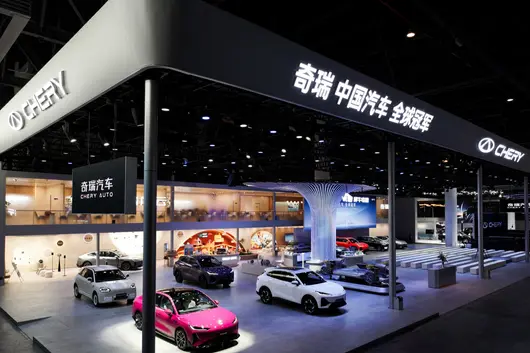

21 Ogos, Pameran Automotif Antarabangsa Chengdu 2026 secara rasmi bermula. Chery Group membawa serta 38 model daripada lima jenama bawah naungannya, Chery, Exeed, Jetour, iCAR, dan Zhongheng untuk dipamerkan. Di antaranya, jenama Chery membawa 12 model, di mana Fengyun A9 dan Fengyun T7 "Bintang Ganda Cantik" muncul bersama-sama, QQ3 edisi Moden mula menerima tempahan awal, dan Arrizo 7 standard baharu rumah keluarga berkualiti global menyaksikan debut globalnya.
Pada tahun 2026, Chery telah tiba pada koordinat sejarah baharu dalam struktur industri automotif global. Sepanjang setengah tahun pertama 2026, bahagian pasaran jualan global Chery melonjak ke posisi ke-9 di dunia, di mana jenama China menduduki tiga tempat daripada sepuluh teratas. Sehingga hujung Julai, jumlah pengguna kereta global kumulatif Chery melangkaui 20.16 juta, di mana pengguna luar negara kumulatif melebihi 6.99 juta, dan telah menduduki tempat pertama dalam eksport jenama automotif China selama 23 tahun berturut-turut. Pada Januari hingga Julai tahun ini, Chery telah mengeksport sebanyak 1.146 juta unit kereta secara kumulatif, meningkat 71.2% berbanding tahun sebelumnya. Pada bulan Julai, dengan pencapaian 202,533 unit, ia menjadi syarikat kereta China pertama yang menembusi 200,000 unit dalam sebutan bulanan.
Di sebalik angka jualan, terdapat penetapan semula definisi "kereta global" oleh Chery. Li Xueyong, Timbalan Presiden Eksekutif Chery Automobile Co., Ltd. menyatakan bahawa Chery yakin bahawa kereta global yang sebenar, bukan dibangunkan di dalam negara dahulu kemudian diubah untuk dieksport, tetapi ditetapkan secara global sejak permulaan penyelidikan dan pembangunan. Chery konsisten membina kereta global asli yang sebenar dengan sasaran pasaran global dari awal definisi produk. Di Pameran Automotif Chengdu kali ini, Chery sekali lagi mengesahkan corak baharu "kereta global telah memasuki masa China" dengan matriks model global era tenaga baharu yang sama di seluruh dunia dan memenuhi pelbagai keperluan global.
Sebagai model global asli pertama Chery dalam era kecerdasan dan elektrik, SUV Elektrik Murni berkualiti global Fengyun T7 adalah tumpuan utama pameran kali ini. Kereta baharu menggunakan reka bentuk luaran "Estetika Mengawal Angin", menggabungkan asas Timur dengan estetik arus perdana global menjadi satu. Dari segi kuasa, ia dilengkapkan dengan bateri Badak 65.05kWh, dikombinasikan dengan penghawa dingin pam haba suhu luas dan sistem PTC voltan tinggi, mencapai jarak larian elektrik murni CLTC 600km. Dari segi keselamatan, ia bergantung pada badan Batu, 9 beg udara dan suspensi teladan master, membina asas keselamatan keseluruhan kenderaan; dari segi kecerdasan, ia dilengkapi cip terpadu kabin-pemanduan 8775, Lingxi Cabin 2.0 dan sistem bantuan pemanduan Falcon 500.
Dari segi pasaran, harga pra-lancaran Fengyun T7 adalah dari 109,900 Yuan hingga 129,900 Yuan, dan tempahan selama 9 hari pra-lancaran telah melebihi 16,787 unit. Menurut perancangan, kereta baharu akan dilancarkan secara rasmi pada 26 Ogos. Selain itu, Fengyun T7 telah memasuki pasaran Afrika Selatan dan Thailand, pada bulan Ogos akan memasuki pasaran China dan Indonesia, pada bulan September akan dilancarkan di pasaran Kesatuan Eropah, pada bulan Oktober akan memasuki United Kingdom, Malaysia, Australia dan tempat-tempat lain.
Jenama sebenar global Kelas C - Fengyun A9L ULTRA edisi pacuan empat roda muncul bersama-sama di pentas. Kereta ini mempunyai luaran Yunzheng, dalaman Fengchen, gril pencahayaan tiga warna, sayap belakang kawalan kelajuan elektrik, dikombinasikan dengan pacuan empat roda Snow Leopard, suspensi lengan ganda hadapan + lima batang belakang, memenuhi permintaan ganda pengguna muda terhadap prestasi dan kecantikan; pada masa yang sama dilengkapkan dengan bantuan pemanduan Falcon 700, Lingxi Cabin 2.0, nisbah keluli-aluminium kekuatan tinggi keseluruhan kenderaan mencapai 88%, dilengkapi dengan 9 beg udara dan bateri Badak.
Yang paling bernilai untuk diperhatikan adalah, Arrizo 7 standard baharu rumah keluarga berkualiti global menyaksikan penampilan awam pertamanya di Pameran Automotif Chengdu kali ini. Sedan kompak klasik yang telah lama senyap ini telah selesai menggantikan dan kembali secara rasmi. Arrizo 7 mengambil inspirasi dari perubahan ketenangan dan pergerakan air, menggabungkan ketenangan air tenang dan kekuatan air bergerak ke dalam reka bentuk keseluruhan kenderaan, membentuk bahasa reka bentuk "Aliran Air Bergerak" yang unik - apabila diam, badan kenderaan terbuka dan stabil, apabila bergerak, muka bentuk mengalir dengan daya. Selain reka bentuk estetik global, kereta baharu juga menyediakan pilihan kuasa campuran elektrik C-DM Super Power dan ICE Kunpeng, memenuhi keperluan berbeza pengguna di pelbagai daerah global terhadap prestasi dan kecekapan tenaga.
Selain itu, versi modifikasi rasmi nombor 001 daripada QQ3 baharu — QQ3 Edisi Moden juga membuka tempahan awal di pameran. Kereta ini mengintegrasikan reka bentuk konsep Neo Retro, menghormati klasik dengan futurisme retro, menggabungkan elemen klasik dalam industri automotif seratus tahun dengan teknologi era kecerdasan dan elektrik.
Tahun ini adalah tahun produk Chery "Peralihan ke Elektrik", dan juga tahun teknologinya merangkul era kecerdasan elektrik dan memperdalam strategi tenaga baharu secara berterusan. Di pameran ini, Chery membawa hasil teknologi depan di pelbagai bidang seperti Bateri Badak, Kuasa Kunpeng, Kecerdasan AI dan lain-lain. Sebagai satu sorotan utama di stan pameran, Chery telah membangunkan stan pameran ber tema "Pulau Ekologi Teknologi", melalui bentuk seperti pemecahan fizikal, eksperimen penyelam, penyertaan interaktif, dan lain-lain, menukarkan parameter teknikal kepada pengalaman hidup yang boleh dilihat, disentuh, dan dirasai oleh penonton. Di tapak telah ditetapkan talian khas pengalaman keselamatan Bateri Badak, pengunjung boleh memerhatikan pameran bateri pepejal secara dekat, melihat demonstrasi keselamatan terhad tusukan bateri, pengejatan sel bateri dan rendaman air.
Di Pameran Automotif Chengdu kali ini, Chery sekali lagi mengesahkan corak baharu "kereta global telah memasuki masa China" dengan matriks model global era tenaga baharu yang sama di seluruh dunia dan memenuhi pelbagai keperluan global.

21 Ogos, Pameran Autom Antarabangsa Chengdu 2026 rasmi dibuka. Kumpulan Chery dengan tema "Kenderaan China Juara Dunia", membawa lima jenama Chery, Exeed, Jetour, iCAR, dan Zhongheng dengan jumlah 38 model melanda Balai 5 Pusat Konvensyen Antarabangsa Barat China. Di mana jenama Chery mempamerkan 12 model, Fengyun A9 dan Fengyun T7 "Bintang Ganda Estetik" muncul bersama, QQ3 Edisi Moden memulakan pra-ujian, penanda aras baru sedan keluarga kualiti global Arrizo 7 menerima pembedahan dunia global.
Fengyun T7: Pra-penjualan 9 hari tempahan pecah 16,000, rasmi keluar pada 26 Ogos
Sebagai model global asli pertama Chery Era Pintar Elektrik, Fengyun T7 dilokasikakan sebagai "Kenderaan SUV Penuh Elektrik Kualiti Global". Kereta baharu menggunakan reka bentuk luaran "Estetik Angin", dilengkapi bateri Rhinoceros 65.05kWh, digabungkan dengan sistem hawa dingin热泵 suhu lebar dan sistem PTC voltan tinggi, CLTC jarak bateri semata-mata mencapai 600km. Dari segi kecerdasan dilengkapi cip integrasi kapsul dan memandu 8775, Lingxi Cockpit Pintar 2.0 dan sistem bantuan memandu Falcon 500.
Pre-harga Fengyun T7 adalah 109,900 Yuan hingga 129,900 Yuan, data rasmi menunjukkan tempahan pra-penjualan 9 hari telah mencapai 16,787 buah. Mengikut pelan, kereta baharu akan rasmi keluar pada 26 Ogos. Dari segi irama keluar, Fengyun T7 kini telah keluar di Afrika Selatan dan Thailand, Ogos akan tiba di pasaran China dan Indonesia, September memasuki Kesatuan Eropah, Oktober tiba di United Kingdom, Malaysia, Australia dan tempat lain.
Pengerusi Eksekutif Chery Automobile Co., Ltd. Li Xueyong berkata di lokasi pelancaran: "Chery meyakini, kenderaan global sebenar, bukan hanya dikembangkan di China kemudian diubah untuk keluar, tetapi dari permulaan penyelidikan merancang untuk menyasar global."
[Kenderaan SUV Penuh Elektrik Kualiti Global Fengyun T7]
Arrizo 7 Pembedahan Dunia: "Tenaga Air Mengalir" Sedan Keluarga Kelas 80,000
Sedan keluarga klasik Arrizo 7 yang senyap bertahun-tahun kembali rasmi pada pameran ini, menerima perlihatan umum pertama kali di dunia. Kereta baharu dilokasikakan sebagai "Penanda Aras Baru Sedan Keluarga Kualiti Global", menyasarkan pasaran 80,000 hingga 100,000.
Kereta ini yang paling bernilai untuk diberitahu adalah reka bentuk, Arrizo 7 mengambil inspirasi dari perubahan statik dan dinamik air, membentuk gaya reka bentuk "Tenaga Air Mengalir" — apabila statik badan kenderaan terbentang stabil, apabila bergerak permukaan jenis aliran berkekuatan. Dari segi kuasa, kereta baharu menyediakan pilihan C-DM Super Power Elektrik Hibrid dan versi bahan bakar Kunpeng. Mengikut maklumat rasmi, Arrizo 7 dijangka keluar rasmi pada suku keempat 2026.
[Teras Baru Sedan Keluarga Kualiti Global Arrizo 7]
Fengyun A9L Edisi Sukan Muncul: Empat Penggerak 470kW, 0-100km/j 4 Saat
Fengyun A9L Edisi Sukan muncul serentak di pameran, kereta baharu dilengkapi dengan set penambahbaikan sukan eksklusif penuh, termasuk lubang ventilasi hadapan hitam, komponen aerodinamik, roda 20 inci, pemegang kaliper enam piston tetap dan piringan brek berongga berlatar FNC saiz besar.
Dari segi kuasa, kereta baharu dilengkapkan dengan sistem CDM 6.0 Super Power Elektrik Kunpeng, versi empat penggerak kuasa gabungan 470kW, tork maksimum 854N·m, pecutan 0-100 masuk ke darjah 4 saat, jarak gabungan bateri memecahkan 2000km. Rangka menggunakan struktur suspensi depan double wishbone + belakang multi-link. Dari segi data memang cukup keras. Tetapi harga top trim darjah 230,000, di kelas harga ini saingan yang dihadapi bukan hanya jenama China, ada juga Tesla Model 3 dan Volkswagen ID. Series. Penarafan "Flagship Global Sebenar Darjah C" ini boleh diterima pasaran di terminal, perlu teruskan jualan untuk menjawab.
[Flagship Global Sebenar Darjah C Fengyun A9L ULTRA Edisi Penggerak Empat]
QQ3 Edisi Moden: Neo Retro Futurisme Retro
QQ3 Edisi Moden adalah produk menarik lain di stan Chery. Versi pembaikan rasmi No. 001, reka bentuk filosofi Neo Retro, menggabungkan elemen klasik industri automotif dengan teknologi zaman era pintar elektrik. Pada asasnya menggunakan gaya reka bentuk untuk bergaul dengan orang muda.
QQ3 baru berturut-turut empat bulan jualan bulanan melebihi 10,000, luar negara bulan pertama pun pecah 10,000, QQ Series jumlah global 1.6 juta pengguna, 20-35 tahun pengguna 41%. Di pasaran global, kategori kereta kecil sering memikul nilai emosi melampaui alat pengangkutan.思路 QQ3 Edisi Moden sangat dekat dengan logik ini: ia tidak hanya menjual alat pengangkutan, tetapi ungkapan personaliti.
[QQ3 Edisi Moden]
Bateri Rhinoceros dan Tiga Teknologi Terusan
Rumah pameran Bateri Rhinoceros adalah teras demonstrasi teknologi kali ini. Lokasi menyediakan talian pengalaman keselamatan khusus, penonton boleh melihat demonstrasi limit bateri tikam, sel ditekan kemudian direndam air.
[Demonstrasi Keselamatan Tekan Bateri Rhinoceros dan Rendam Sel]
Logik Bateri Rhinoceros adalah "Tiga Garis Pertahanan": Rhinoceros Crystal (Bahan/Sel) — standard katod ketat 16%, anod ketat 20%, pemisah ketat 14%, elektrolit ketat 20%; Rhinoceros Shield (Struktur Pack) — 31 lapisan perlindungan, pelindung bawah keluli kuat 980DP; Rhinoceros Cloud (BMS Kawalan Pintar) — pemantauan awan 7×24 jam.
Tesis yang dipaparkan di lokasi: 10 jarum tikam (10 kali piawaian negara) tidak berasap tidak terbakar; tekan bawah 50% (3 kali piawaian negara) kemudian 3 jarum tikam tidak berasap; tekan sisi ujung 40% kemudian direndam air sepenuhnya kemudian nyahcas tidak berasap. Bateri pepejal sulfida 400Wh/kg serentak dipamerkan, mengikut pelan rasmi 2026 naik kereta, 2027 keluar massal.
Rangka Cerdas Flyfish i adalah teknologi prospektif lain. Unit pengembaraan pintar 4 Dalam 1, integrasi pckk kawalan elektronik, steering kawalan elektronik, motor roda, suspensi aktif, boleh capai sudut roda 90° pergerakan melintang, "0" meter belokan tempoh, Ujian Rusa Elk ≥90km/j. Tetapi kos rangka kawalan elektronik, undang-undang, kematangan rantaian bekalan masih di peringkat awal, keluaran massal perlu masa.
Dari segi kuasa Kunpeng, kecekapan terma Kunpeng Tianqing 48.57%, kecekapan penukaran minyak-elektrik >4.0kWh/L; kecekapan motor flux berubah CLTC 96.7%, jarak highway meningkat 10%. Lingxi Cockpit-Carmind model besar parameter 10 bilion, 550ms respons semantik, sokongan 2000+ alat dalam kereta dipanggil.
Penulis pada Akhir:
Pameran Autom Chengdu 2026, Chery menggunakan 38 model, lima jenama dan siri data keras, memberikan jawapan sendiri mengenai "Kenderaan Global".
Dari logik penyelidikan asli Fengyun T7, hingga ungkapan estetik timur Arrizo 7, hingga cubaan muda QQ3 Edisi Moden, hingga keselamatan berstruktur Bateri Rhinoceros — Chery sedang membuat sesuatu yang jarang dilakukan jenama China: menggunakan piawaian global untuk mentakrifkan produk, menggunakan kekuatan teknologi untuk menyokong keluar laut, menggunakan gaya reka bentuk untuk berdialog dengan dunia.
Logik ini beberapa bulan lalu telah mendapat pengesahan pasaran secara初步: Julai jualan tunggal keluar pertama kali melebihi 200,000 buah, separuh tahun pertama bahagian global naik ke kesembilan, Januari-Julai jumlah keluar 1.146 juta. Dan prestasi 1.6 tempahan 9 hari Fengyun T7 pra-penjualan, juga menunjukkan logik "Kenderaan Global Asli" ini sedang diterima oleh lebih banyak pengguna.
Sememangnya, dari "Kenderaan China" ke "Kenderaan Global", dari "Keluar Luar" ke "Naik Ke Atas", di tengah ada jalan yang sangat panjang. Tetapi sekurang-kurangnya di Balai 5 Pameran Autom Chengdu, Chery sudah menunjukkan arah yang jelas — bukan menjual Kenderaan China ke global, tetapi membiarkan Kenderaan Global berasal dari China. Arah ini, bernilai untuk terus diperhatikan.

2026 Chengdu Auto Show Media Day, the Chery main booth in Hall 5 of the Western International Expo City welcomed a large number of media and audience. This year's Chery theme is set as "Chinese Cars, Global Champions". The Chery brand independently brought 12 complete vehicles, without empty parameter stacking. Heavyweight new cars, hardcore technology exhibition areas, and youth-oriented interactive experiences are presented together. It allows people to appreciate real cars up close and intuitively feel Chery's global hard power in the intelligent electricity era.

Booth Center Spotlight: Native Global Pure Electric SUV Fengyun T7, and the all-new QQ3 Modern Edition. Fengyun T7, as the first native global car of the intelligent electricity era, is not manufactured domestically and then modified for overseas release; its product definition stage benchmarks global regulations, accommodating complex usage environments in multiple countries. The vehicle adopts Aerodynamic Aesthetics design, equipped with Rhino Battery, CLTC range 600km, featuring integrated Cockpit-Driving 8775 Chip and Falcon 500 Intelligent Driving System. Currently, the vehicle is in the pre-sale phase, with a pre-sale price of 109,900-129,900 RMB. Pre-sale orders broke 16,787 units within 9 days. It will also launch in overseas markets such as the EU, Australia/New Zealand, and Thailand, serving as a benchmark product for Chery's globalization.

The other C-spot traffic magnet, the all-new QQ3 Modern Edition, is the No. 001 official facelift version of the all-new QQ3. Pre-orders kicked off on-site at the auto show. The new car adopts Neo Retro-futurism design, blending classic automotive industrial elements with modern intelligent electric technology. Retro color schemes paired with sports decals create a light luxury vibe for this city commuter. The QQ series has accumulated 1.6 million global users. The standard version sold over 10,000 units consecutively for four months domestically, while the overseas launch also broke 10,000 units in its first month. The arrival of the Modern Edition further meets young users' demand for personalized commuter vehicles.

Following the two center-stage display cars, the Fengyun A9 and Fengyun A9L ULTRA AWD version were featured prominently. Fengyun A9 won the German Red Dot Design Award, marking a milestone for Chery's 20 million global users. Many young engineers participated in its R&D, with tens of thousands of users co-creating and refining details. Over 70% of users are under 35 years old. The upgraded Fengyun A9L ULTRA AWD version is positioned as a true global Class C flagship. With Yun Zheng exterior, Feng Chen exclusive interior, paired with a tri-color illuminated grille and electric speed-controlled rear spoiler. Hardware includes the Snow Leopard AWD system, front double-wishbone + rear five-link suspension, Falcon 700 Advanced Intelligent Driving, Rhino Battery, and 9 Airbags. Looks, performance, intelligence, and safety are all maximized.

Another major highlight of this auto show is the global premiere of the "Global Quality Sedan New Benchmark" Arrizo 7. The new vehicle uses "The Momentum of Moving Water" as its design language, drawing from the beauty of water in motion and stillness. Its shape is simple yet durable, catering to global aesthetics. It offers C-DM Super Power Electric Hybrid and Kunpeng Fuel powertrains, balancing energy consumption and performance. The new car is expected to officially launch in Q4, bringing native global car standards down to the 80,000-100,000 RMB mainstream sedan market. Additionally, the Fengyun T9 series, the all-new Tiggo 9, and Arrizo 8 PRO models are exhibited simultaneously, fully covering mainstream consumption segments for SUVs and sedans.
After viewing the display cars, the Rhino Battery exhibition area within the "Tech Eco Island" is the core technical highlight of the venue. Addressing the battery safety concern most cared about by NEV users, Chery brought limit experiments directly to the booth site. Ten times national standard needle puncture, three times national standard extrusion, plus a cell soaking demonstration after extrusion. The exhibits did not catch fire or emit smoke. Audiences could see the aquarium immersion experiment with their own eyes and even participate in battery stepping challenges, transforming obscure battery technology into an intuitive experience that ordinary people can understand. Raw materials such as high enthalpy change separators and composite current collectors were also displayed on-site. The 400Wh/kg solid-state battery modules also appeared synchronously. The Rhino Crystal, Rhino Shield, and Rhino Cloud three-layer defense system builds a complete safety loop from materials, structure, to cloud monitoring. In addition to batteries, frontier technology exhibits like the Flying Fish Digital Intelligence Chassis i and Kunpeng Power were also displayed externally.
The youthful atmosphere throughout the entire booth is also very prominent. The "Celestial Appearance Theme Day" on August 22 is about to open, setting up multiple photo check-in stations where visitors can experience makeup styles matching the brand ambassadors. The CHERY COFFEE zone and Ruixiang Life Eco Space are divided into five major blocks, including the Trend Modification District and Wild Fun Camp. The Shanyi Modification Platform also brought modification kits, bringing human-car-home life scenarios to the booth. A "Chery Future Classroom" was even specially set up to provide new energy science popularization for teenagers.

From industry data, Chery has been the number one in domestic brand exports for 23 consecutive years. July single-month exports broke 200,000 vehicles, with global cumulative users surpassing 20.16 million. In the past, going overseas was mostly about product export. However, native global cars like Fengyun T7 and Arrizo 7 are developed from the R&D source according to global standards. At this Chengdu Auto Show, Chery brings the results of its globalization back to the domestic market. On one side are home-use new cars accessible to the masses; on the other are hard technologies that are visible and tangible. Not playing with empty concepts, it hands in an answer sheet for the intelligent electricity era's global cars.
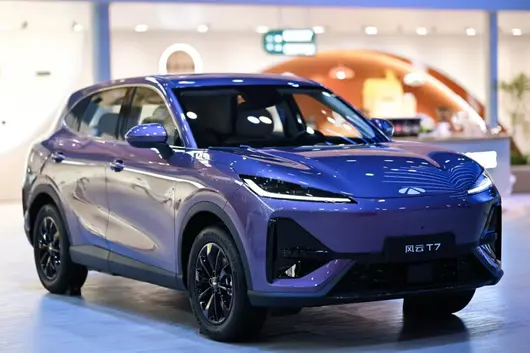

August 19, Chery Executive Vice President, General Manager of International Business Group and General Manager of MoJia Robotics Zhang Guibing revealed during the 2026 World Robot Conference that MoJia Robotics (AiMOGA Robotics) under Chery has launched IPO preparations, is currently negotiating with multiple listing venues, and the timetable is yet to be determined. He stated that listing can raise financing for technical investment and also help improve governance transparency.

MoJia's starting point was not building robots, but the digital virtual avatar Mornine (Mornine). Around 2023, Chery's overseas brand OMODA heated up the C5 model, creating virtual human Mornine that resonates with Gen Z, active on promotional animations, brand live streaming platforms, and more.
The turning point began with operational pain points encountered in Chery's overseas stores. Zhang Guibing revealed that overseas sales are affected by peak and off-peak seasons, staff turnover is frequent, recruitment is difficult, and even if hired, multi-language training is a high threshold. The team thus conceived the idea of "letting Mornine walk into reality", which became the origin of the AiMOGA Robot project.
At the end of 2023, Mornine's first prototype went off the line, and in early 2024, it made its first public appearance at Chery's Global Dealer Conference. After more than two years of technical accumulation, on January 7, 2025, Chery officially invested to establish "Anhui MoJia Smart Innovation Robotics Technology Co., Ltd.", with registered capital of 100 million yuan, legal representative Zhang Guibing, MoJia transformed from an internal project to an independent legal entity.

In February of the same year, Mornine completed its first overseas commercial debut at the Kuala Lumpur store in Malaysia; in April, it appeared at the Shanghai Auto Show, demonstrating multi-modal perception and dexterous operation capabilities; in October, at the Chery Global Innovation Conference, it gave an autonomous speech in seven languages, becoming the focus of the whole event.

From December 2025 to January 2026, MoJia completed the first round of capital increase and strategic investment, registered capital increased to about 104 million yuan. After capital increase, the latest equity structure shows Chery Motors holds 96%, Bethel 1.40%, Fuchun Dyeing 1.20%, Hexie Chaoyue Fund 0.40%, Zhiyuan Innovation 0.20%, Wuhu Economic Development Zone Weida Venture Capital 0.40%, Wuhu Sci-Tech Investment Fund 0.40%.
In terms of performance, MoJia's cumulative global deliveries have exceeded 3,000 units, approximately 2,000 sold overseas, business covers 60 countries and regions, it is the world's first humanoid robot to complete dual EU software and hardware certification. On April 27, 2026 press conference, signed an order for 1,000 intelligent police robots at once and delivered 110 units on-site, product line thus expanded from "4S store sales associates" to the public security field.
Key customers cover Chery's overseas dealer network and public security departments of multiple cities.
Zhang Guibing revealed plans to increase global delivery volume to 10,000 units in 2027, join the industry's first tier, and proposed "three specific actions: improving reliability and cost-effectiveness of large-scale applications, iterating in over 50 countries and 100+ scenarios, achieving 100 unit deliveries to trigger 1,000 unit intent signings."
Industrialization advances in three stages according to "scenario-driven technology", first make child companion scenario robots, then expand to public service and enterprise service scenarios, finally promote robots entering homes.
In terms of supporting construction, 31 innovation labs have been set up, "AiMOGA Academy" established, signed with 100 universities to train talent, quadruped robot production line annual capacity reaches 15,000 units.

At Chery AI Night in January of this year, Chery Chairman Yin Tongyue proposed a "One Bottom Line, Three Directions" strategy, using cars as the cornerstone to promote AI extension to the physical world, covering humanoid robots, Robotaxi, smart agricultural machinery and other scenarios, "putting the car brain into the bodies of other industries". He revealed Chery's R&D budget for 2026 exceeds 32 billion yuan, the "2R Technology" composed of Robotaxi and MoJia is one of the four key focuses, and stated that the original intention of the layout is a rethinking of the "second growth point after the total number of future cars decreases".
At the April 27 MoJia press conference, he once again stated: "We most do not want to be defined as a car company, but as a high-tech, embodied, innovative company facing the future."
He proposed "intelligent cars are mobile robots", robots and intelligent cars have highly homogeneous underlying technologies in perception, planning, control, etc., technology modules and supply chains can be transferred.
2026 is regarded by the industry as the year of concentrated release of automakers' embodied intelligence layouts, globally over 20 mainstream automakers have entered the game through self-research, incubation, investment, etc., the industry is shifting from technology exploration to mass production racing.
MIIT data shows, China's quadruped robots already account for nearly 70% share of global sales. The industry generally judges that 2026 to 2028 will be the key verification window for humanoid robots to go from "prototypes" to "mass production of 10,000 units", but commercialization loop is still in early "strategic loss" stage, bottlenecks such as limited application scenarios and high costs remain to be broken. Against the background of the automotive industry profit margin falling below 3%, embodied intelligence has been regarded by many automakers as a "second growth curve" to hedge against the slowdown of the main business growth.
Source: Car Observer


Hari Media Pameran Kereta Chengdu 2026, Balai 5 Kompleks Ekspo Antarabangsa Barat Panggung Utama Chery menerima ramai media dan penonton. Tema Chery bagi sesi ini ditetapkan "Kereta China, Juara Global", jenama Chery secara bersendirian membawa 12 kenderaan lengkap, tanpa penimbunan parameter yang kosong, kenderaan baharu penting, bahagian teknologi kukuh, pengalaman interaktif muda disajikan bersama, boleh menghargai kenderaan sebenar dari dekat, dan dapat merasai dengan jelas kekuatan global era kecerdasan elektrik Chery.
Posisi Utama Pentas: SUV Elektrik Global Asli Fengyun T7, serta QQ3 Edisi Moden Baharu. Fengyun T7 sebagai kereta global asli pertama era kecerdasan elektrik, bukan dibuat di dalam negara kemudian diubah untuk pasaran luar, peringkat definisi produk sudah menyaingi undang-undang global, memenuhi persekitaran penggunaan kereta yang kompleks di banyak negara. Kenderaan ini menggunakan reka bentuk estetika angin, dilengkapi bateri Rhinoceros, jarak laluan CLTC 600km, dilengkapi cip 8775 kabin dan pemanduan terpadu, sistem pemanduan pintar Falcon 500. Kini kenderaan ini dalam fasa pra-penjualan, harga pra-penjualan 109,900 - 129,900 Yuan, tempahan 9 hari pra-penjualan melebihi 16,787 unit, seterusnya akan muncul di pasaran luar negara seperti EU, Australia-Selandia Baru, Thailand, merupakan produk piawaian globalisasi Chery.
Kenderaan Utama C yang lain yang popular adalah QQ3 Edisi Moden Baharu, merupakan versi ubah suai rasmi No. 001 bagi QQ3 Baharu, di tapak pameran memulakan tempahan awal. Kenderaan baharu menggunakan reka bentuk Neo Retro Futurisme, menggabungkan elemen industri automotif klasik dengan teknologi kecerdasan elektrik moden, warna klasik dengan pelekat sukan, menjadikan kenderaan bandar sederhana suasana mewah sederhana. Siri QQ telah mengumpulkan 1.6 juta pengguna global, edisi biasa menjual melebihi 10,000 di negara ini selama empat bulan berturut-turut, bulan pertama di luar negara juga menjual melebihi 10,000, kedatangan Edisi Moden memenuhi keperluan pengguna muda terhadap kenderaan personalisasi.
Mengikuti dua kenderaan pentas utama, Fengyun A9 dan Fengyun A9L ULTRA Empat Roda dipamerkan. Fengyun A9 memenangi Hadiah Reka Bentuk Red Dot Jerman, merupakan kereta sport sedan tonggak Chery dengan 20 juta pengguna global, ramai jurutera muda terlibat dalam penyelidikan, ribuan pengguna bersama-sama mengemaskini butiran, pengguna berumur di bawah 35 tahun melebihi 70%. Fengyun A9L ULTRA Empat Roda yang ditingkatkan ditetapkan sebagai Flagship Kelas C Global sebenar, reka bentuk wajah Yunzheng, interiur eksklusif Fengchen, dilengkapi gril bercahaya tiga warna, sayap belakang kawalan elektrik kelajuan; secara perkakasan menggunakan sistem empat roda Snow Leopard, suspensi depan double wishbone + belakang lima linkage, sistem pemanduan pintar Falcon 700 tahap tinggi, bateri Rhinoceros, 9 beg udara semuanya lengkap, penampilan, prestasi, kecerdasan, keselamatan ditingkatkan secara menyeluruh.
Pameran kali ini ada sorotan besar, pelancaran global "Pakar Baharu Kereta Keluarga Kualiti Global" Arrizo 7. Kenderaan baharu menggunakan "Aliran Air Bergerak" sebagai bahasa reka bentuk, mengambil keindahan statik dan dinamik air, bentuk mudah dilihat dan tahan lama, sesuai dengan cita rasa global. Menyediakan dua sistem kuasa C-DM Super Hybrid Elektrik dan Kunpeng Petrol, menyeimbangkan keperluan tenaga dan prestasi, kenderaan baharu dijangka dilancarkan rasmi pada suku keempat, menurunkan piawaian kereta global asli ke pasaran keluarga utama 80,000-100,000. Selain itu, siri Fengyun T9, Tiggo 9 Baharu, Arrizo 8 PRO dipamerkan serentak, mencakupi secara lengkap sektor SUV dan sedan utama.
Selepas melihat kenderaan pameran, bahagian bateri Rhinoceros di "Pulau Ekologi Teknologi" adalah fokus teknologi utama. Keselamatan bateri yang paling dikhabar oleh pengguna kenderaan tenaga baharu, Chery secara langsung membawa eksperimen had ke tapak pentas. Tikusan 10 kali piawaian negara, tekanan 3 kali piawaian negara, tambahan demonstrasi sel bateri direndam air selepas ditekan, produk pameran tidak terbakar atau berasap. Penonton dapat melihat eksperimen kolam ikan direndam, dan dapat mengikuti cabaran pijak bateri, mengubah teknologi bateri yang sukar difahami menjadi pengalaman yang boleh difahami orang awam. Di tapak juga mempamerkan membran perubahan entalpi tinggi, kolektor arus komposit dan bahan mentah lain, modul bateri pepejal 400Wh/kg juga muncul serentak, tiga sistem perlindungan Rhinoceros Crystal, Rhinoceros Shield, Rhinoceros Cloud, membina kitaran keselamatan lengkap dari bahan, struktur hingga pemantauan awan. Selain bateri, Chassis i Fish Intelijen dan Kuasa Kunpeng serta teknologi terdepan dipamerkan.

Suasana muda di seluruh pentas juga sangat ketara. Hari Tema Wajah Cantik pada 22 Ogos akan dibuka, ditentukukan banyak lokasi check-in, dan dapat mengecam riasan yang sama dengan duta. Kawasan Kopi Chery COFFEE, Ruang Ekologi Kehidupan Rui, terbahagi kepada lima sektor utama seperti kawasan ubah suai moden, kem alam semula jadi, platform ubah suai Shanyi juga menyediakan set ubah suai, membawa senario kehidupan manusia, kereta, rumah ke pentas, bahkan secara khusus menubuhkan "Kelas Masa Depan Chery", memberi pendidikan sains tenaga baharu kepada remaja.
Berdasarkan data industri, Chery telah menduduki tempat pertama eksport jenama bebas selama 23 tahun berturut-turut, eksport bulan Julai melebihi 200,000 unit, pengguna global terkumpul melebihi 20.16 juta. Pada masa lalu, eksport lebih kepada output produk, sedangkan kereta global asli seperti Fengyun T7 dan Arrizo 7, dari sumber penyelidikan dikembangkan mengikut piawaian global. Pada pameran Chengdu kali ini, Chery membawa hasil globalisasi kembali ke dalam negara, satu sisi adalah kenderaan baharu rumah tangga yang boleh dijangkau rakyat, satu sisi lagi adalah teknologi kukuh yang dapat dilihat dan disentuh, tidak bermain konsep kosong, menyerahkan jawapan kereta global era kecerdasan elektrik.

19 Ogos, Chery Naib Presiden Eksekutif, Pengurus Kumpulan Perniagaan Antarabangsa dan juga Pengurus Besar Robot MoJia, Zhang Guibing mendedahkan semasa Konvensyen Robotik Dunia 2026 bahawa anak syarikat Chery, Robot MoJia (AiMOGA Robotics) telah memulakan penyediaan IPO, sedang berunding dengan banyak lokasi tersenarai, jadual masa belum ditetapkan. Beliau menyatakan, senarai awam boleh membiayai pelaburan teknologi, juga membantu meningkatkan ketelusan pentadbiran.
Asas permulaan MoJia bukan membina robot, tetapi citra virtual digital Mornine (Mornine). 2023 sekitar tahun, jenama antarabangsa Chery OMODA melakukan promosi pra-luncur untuk model C5, membina orang virtual Mornine yang boleh membentuk resonansi dengan Generasi Z, aktif di platform seperti animasi promosi, siaran langsung jenama dan lain-lain.
Pusingan bermula dengan kesakitan operasi yang dihadapi oleh cawangan luar negara Chery. Zhang Guibing mendedahkan, jualan luar negara dipengaruhi oleh musim puncak dan lesu, pertukaran kakitangan kerap, sukar mendapatkan pekerja, walaupun dapat menerima pekerja, latihan pelbagai bahasa adalah ambang tinggi, pasukan dari sini muncul idea "Bawa Mornine ke dunia nyata", idea ini menjadi asal usul projek AiMOGA Robot.
Di akhir 2023, unit prototaip pertama Mornine keluar dari talian pengeluaran, awal tahun 2024 tampil secara terbuka kali pertama di Persidangan Pesaing Global Chery. Selepas melalui lebih dua tahun pengumpulan teknologi, pada 7 Januari 2025, Chery secara rasmi melabur untuk membentuk "Anhui MoJia Zhichuang Robot Technology Co., Ltd.", modal berdaftar 100 juta Yuan, wakil undang-undang Zhang Guibing, MoJia bertukar dari projek dalaman kepada subjek undang-undang berasingan.
Februari tahun yang sama, Mornine menyelesaikan pameran komersial antarabangsa pertamanya di cawangan Kuala Lumpur, Malaysia; April muncul di Pameran Kereta Shanghai, menunjukkan keupayaan pengimejan multimodal dan pengendalian cekap; Oktober dalam Konvensyen Inovasi Global Chery berucap secara mandiri dalam tujuh bahasa negara, menjadi fokus keseluruhan majlis.
Disember 2025 hingga Januari 2026, MoJia menyelesaikan kitaran pertama penambahan modal untuk menarik pelabur strategik, modal berdaftar meningkat kepada kira-kira 104 juta Yuan. Struktur saham terkini selepas penambahan modal menunjukkan, Chery Automobile memegang 96%, Bitway 1.40%, Fuchun Dyeing 1.20%, Harmony Beyond Fund 0.40%, Zhong Yuan Innovation 0.20%, Wuhu Economic Development Zone Weida VC 0.40%, Wuhu Sci-Tech Innovation Investment Fund 0.40%.
Dari segi prestasi, serah terima terkumpul global MoJia telah melampaui 3000 unit, kira-kira 2000 unit dijual ke luar negara, perniagaan merangkumi lebih 60 negara dan wilayah, adalah robot humanoid pertama di dunia yang melengkapkan pengesahan perisian dan keras EU. Pada pelancaran 27 April 2026, menandatangani pesanan 1000 unit robot polis pintar secara serentak dan serahkan 110 unit di lokasi, garisan produk dari sini daripada "Panduan Pelanggan Kedai 4S" meluaskan ke bidang keselamatan awam. Pelanggan utama merangkumi rangkaian pesaing luar negara Chery dan jabatan keselamatan awam banyak bandar.
Zhang Guibing mendedahkan rancangan 2027 jumlah serah terima global ditingkatkan kepada 10,000 unit, masuk ke barisan teratas industri, dan mengemukakan “meningkatkan kebolehpercayaan dan kecekapan kos aplikasi berskala besar, iterasi dalam lebih 100 skenario di lebih 50 negara, capai serah terima 100 unit untuk mencetuskan penandatanganan niat untuk 1000 unit” tiga tindakan khusus.
Pengindustrian mengikut "Teknologi didorong skenario" majukan dalam tiga fasa, buat dahulu robot skenario pengiring kanak-kanak, kemudian meluaskan perkhidmatan awam dan perkhidmatan syarikat skenario, akhir sekali dorong robot masuk ke rumah. Dari segi pembinaan sokongan, telah dibina 31 makmal inovasi, menubuhkan "Kolej AiMOGA", menandatangani perjanjian dengan 100 universiti untuk memupuk bakat, litar pengeluaran robot empat kaki kapasiti pengeluaran tahunan mencapai 15,000 unit.
Januari tahun ini di Malam AI Chery, Presiden Chery Yin Tongyue mengemukakan strategi "Satu asas, tiga arah", dengan kereta sebagai asas dorong AI meluas ke dunia fizikal, liputi robot humanoid, Robotaxi, jentera pertanian pintar dan lain-lain skenario, "Pasang otak kereta ke badan industri lain". Beliau mendedahkan bajet R&D Chery 2026 lebih 32 bilion Yuan, Robotaxi dan MoJia membentuk "Teknologi 2R" adalah salah satu daripada empat perkara utama, dan menyebut maksud asal susun atur adalah berfikir semula terhadap "Titik pertumbuhan kedua selepas jumlah kereta masa depan berkurang".
Pada 27 April dalam pelancaran MoJia, beliau sekali lagi menyatakan: "Kami paling tidak mahu ditakrifkan sebagai sebuah syarikat kereta, malah sebuah syarikat berorientasi masa depan, teknologi tinggi, berbadani, inovatif."
Beliau mengemukakan "Kereta pintar adalah robot bergerak", robot dan kereta pintar pada teknologi asas pengesanan, perancangan, kawalan dan lain-lain sangat serupa asal usulnya, modul teknologi dan rantaian bekalan boleh dipindahkan.
2026 dianggap oleh industri sebagai tahun pelepasan terkumpul susun atur kecerdasan berbadani pengeluar kereta, global telah ada lebih 20 pengeluar kereta utama melalui penyelidikan sendiri, inkubasi, pelaburan dan lain-lain cara masuk pasaran, industri sedang dari eksplorasi teknologi menuju lumba pengeluaran besar.
Data Kementerian Perindustrian menunjukkan, robot empat kaki China telah menduduki hampir 70% bahagian jualan global. Penghakiman umum industri, 2026 hingga 2028 akan menjadi tingkap pengesahan utama robot humanoid daripada "prototaip" menuju "pengeluaran berskala sepuluh ribu unit", tetapi kitaran komersial tertutup masih berada di tahap awal "kerugian strategik", skenario aplikasi terhad, kos agak tinggi dan lain-lain hambatan masih perlu ditembusi. Di bawah latar belakang nisbah keuntungan industri kereta jatuh di bawah 3%, kecerdasan berbadani telah oleh banyak pengeluar kereta dianggap sebagai "garis pertumbuhan kedua" untuk melawan perlambatan pertumbuhan perniagaan utama.
Sumber: Observasi Kereta
August 21, the 2026 Chengdu Auto Show opened, Chery Group held the theme "China's Automotive, Global Champion", bringing Chery, Exeed, Jetour, iCAR, Vantech five major brands, total 38 models landed in Hall 5. Among them Chery brand brought 12 models, Fengyun T7 and Fengyun A9 "Beauty Twin Stars" appeared on stage together, Fengyun T7 was the focus of this booth.

Fengyun T7 is Chery's Smart Electric Age first native global model, previously launched in overseas markets like Thailand, South Africa, Indonesia. Domestic pre-sales market response was quite good. Official data shows pre-sale 9 days orders exceeded 16,787 units, pre-sale price 109,900 to 129,900 yuan. According to plan, new car will officially launch on August 26.

In terms of product power, Fengyun T7 features four key selling points "Super Performance, Global Beauty, Safer, Smart". Exterior adopts "Wind-riding Aesthetics" design language, blending Eastern heritage with global mainstream aesthetics together. Power equipped with 65.05 kWh Rhino Battery, paired with wide temperature range heat pump AC and high voltage PTC system, CLTC pure electric range 600 km, official real-world test without AC conditions range up to 647 km, supports 40 minutes fast charging to 80%, charging and range performance quite good.

Safety is the part Fengyun T7 emphasizes heavily. Whole vehicle relies on Rock-solid Body, 9 airbags and master-tuned chassis. Intelligence aspect equipped with Cockpit-Driving Integrated 8775 Chip, Lingxi Smart Cockpit 2.0 and Falcon 500 Driving Assistance System. Chery also gave "Bottom-line" policy: vehicle due to battery thermal runaway quality issues can compensate original price new car, due to vehicle own issues leading to intelligent driving assistance failure compensate up to 5 million yuan, superimposed whole vehicle and three-electric lifetime warranty, after-sales guarantee strength quite sufficient.
From user structure view, Fengyun T7 youthfulness characteristics obvious, users under 35 age proportion 65.2%, female users proportion 35.7%. 109,900 yuan starting pre-sale price paired with 600 km range, this "Native Global Car" aiming at just young family pure electric first purchase market. Final launch price if have more surprises? Worth looking forward to!
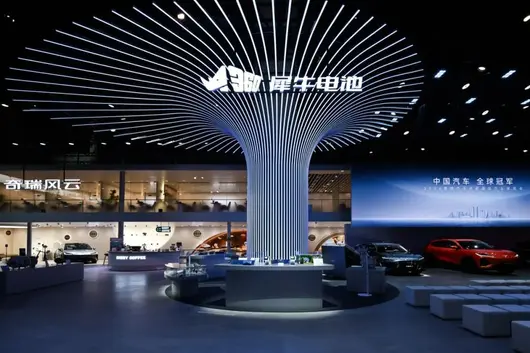

21 Ogos, Pameran Kereta Chengdu 2026 dibuka, Kumpulan Chery dengan tema 'Automotif China Juara Global', membawa Chery, Exeed, Jetour, iCAR, Zongheng lima brand bersama 38 model kenderaan ke Hall 5. Di antaranya brand Chery membawa 12 model kenderaan, Fengyun T7 dan Fengyun A9 'Bintang Kembar Estetik' muncul bersama, Fengyun T7 ialah fokus stan ini.
Fengyun T7 ialah model global asli pertama era Chery Pintar Elektrik, sebelum ini telah dilancarkan di pasaran luar negara seperti Thailand, Afrika Selatan, Indonesia, domestik membuka pra-penjualan sambutan pasar baik. Data rasmi menunjukkan, tempahan pra-penjualan 9 hari telah pecahkan 16,787 unit, harga pra-penjualan 109,900 hingga 129,900 Yuan. Mengikut pelan, kereta baharu akan dilancarkan rasmi pada 26 Ogos.
Dari segi kekuatan produk, Fengyun T7 menonjolkan empat titik jualan utama 'Laju Super, Cantik Global, Lebih Selamat, Pintar'. Reka bentuk luar menggunakan bahasa reka 'Estetika Menguasai Angin', menggabungkan akar oriental dengan estetika global mainstream. Daya muat dengan bateri Rhinos 65.05 kWh, disertai dengan sistem pemanas haba suhu luas dan sistem PTC tekanan tinggi, jarak tempuh elektrik tulen CLTC 600 kilometer, ujian rasmi tanpa sistem penyaman udara boleh capai 647 kilometer, menyokong cas pantas 40 minit hingga 80%, prestasi cas dan jarak tempuh agak baik.
Keselamatan ialah bahagian yang ditekankan Fengyun T7. Keseluruhan kenderaan bertopang badan kokoh, 9 beg udara dan chasis penalaan master, dari segi kecerdasan dilengkapi cip gabungan kabin-pemanduan 8775, Lingxi Smart Cockpit 2.0 serta sistem bantuan pemanduan Falcon 500. Chery juga memberikan dasar 'Dasar Perlindungan': kenderaan kerana masalah termal bateri boleh diganti dengan kereta baru dengan harga asal, masalah kenderaan sendiri menyebabkan sistem bantuan pemanduan pintar rosak, ganti sehingga 5,000,000 Yuan, ditambah dengan jaminan hayat keseluruhan kenderaan dan tiga sistem elektrik, jaminan selepas jualan agak mencukupi.
Dari struktur pengguna, ciri muda jelas pada Fengyun T7, pengguna berumur bawah 35 tahun membentuk 65.2%, pengguna wanita membentuk 35.7%. Harga pra-penjualan dari 109,900 Yuan disertai jarak tempuh 600 kilometer, model 'Global Asli' ini menasarkan pasaran pembelian pertama elektrik untuk keluarga muda. Adakah harga pelancaran akhir akan ada kejutan lagi? Perlu dinantikan!
© 2024 Bitauto.com. All Rights Reserved.
Bitauto (www.yiche.com and www.bitauto.com) is one of the most visited automotive websites in China. We provide detailed info on Chinese car brands available in your area. Please note that the information provided on this website is based on publicly available data and is for reference only. It may not be fully updated or accurate at all times.

Help us improve our website


