

HomeProton Satria

Search History
Popular Searches
Dealer Login / Sign Up

Pada pasaran SUV di Malaysia, ramai pembeli semasa memilih kereta sering membandingkan Proton X90 dan Mazda CX-60. Kedua-dua kereta ini berada pada tahap harga dan segmen yang agak hampir. Hari ini, kita akan melakukan perbandingan terperinci dari pelbagai aspek untuk membantu anda menjimatkan masa menjalankan kajian.
Harga OTR Proton X90 di Malaysia ialah RM 106,800 - 122,800, terdapat 4 varian, termasuk 2026 1.5T Prime X (RM 122,800), 2026 1.5T Prime (RM 116,800), 2026 1.5T Lite (RM 106,800) dan lain-lain.
Harga OTR Mazda CX-60 di Malaysia ialah RM 200,510 - 252,873, terdapat 2 varian, termasuk 2026 3.3T 4WD High Plus (RM 252,873), 2025 2.5L 2WD High (RM 200,510) dan lain-lain.
Dari segi harga, harga permulaan Proton X90 memang lebih murah RM 93,710 berbanding Mazda CX-60. Jika bajet anda terhad, varian entry Proton sudah boleh memenuh keperluan harian. Tetapi perlu diingat, beza harga beberapa ribu ringgit ini mungkin ada pengorbanan pada spesifikasi, bergantung pada keperluan anda.

Proton X90 menggunakan enjin 1.5L Turbo, tenaga kuda 140 hp. Konsumsi minyak rasmi 7.0 L/100km.
Mazda CX-60 menggunakan enjin 2.0L 4-cyl, tenaga kuda 170 hp. Konsumsi minyak rasmi 8.0 L/100km.
Dari segi tenaga, 2.0L 4-cyl Mazda CX-60 mempunyai 30 hp lebih daripada 1.5L Turbo Proton X90. Namun untuk penggunaan harian di bandar, kedua-dua kereta ini mempunyai tenaga yang mencukupi dan tidak akan terasa kurang kuasa.

Pengelasan keselamatan Proton X90 ialah 5★ (ASEAN NCAP), sistem keselamatan aktif termasuk ADAS (ACC, AEB, LKA, LDA, BSM, RCTA).
Pengelasan keselamatan Mazda CX-60 ialah 5★ (Euro NCAP), sistem keselamatan aktif termasuk i-Activsense Pro.
Dari segi peralatan keselamatan, kedua-dua kereta ini mendapat pengelasan yang baik. Namun ADAS (ACC, AEB, LKA, LDA, BSM, RCTA) pada Proton X90 dan i-Activsense Pro pada Mazda CX-60 mempunyai perbezaan dari segi fungsi. Jika anda lebih mengutamakan keselamatan aktif, anda boleh membandingkan senarai fungsi kedua-duanya dengan teliti.

Proton X90 jaminan 5 tahun/150,000km, selang servis setiap 10,000km atau 6 bulan.
Mazda CX-60 jaminan 5 tahun/150,000km, selang servis setiap 10,000km atau 6 bulan.
Ketentuan jaminan kedua-dua kereta adalah sama, tidak perlu bimbang di sini. Kos penyenggaraan sebenar bergantung pada rangkaian servis jenama dan harga komponen, disyorkan bertanya pengalaman pemilik sebenar dalam kumpulan peminat kereta.

Proton X90 dan Mazda CX-60 sama-sama pilihan utama pasaran Malaysia, sesuai untuk kegunaan keluarga dan perjalanan harian. Jika anda lebih mengutamakan reputasi jenama dan harga jual semula, utamakan yang lebih terkenal; jika anda lebih mementingkan nilai dan peralatan, pilih yang lebih lengkap. Akhir sekali disyorkan untuk memandu ujian kedua-duanya, pengalaman peribadi adalah yang paling penting.

Secara keseluruhan, Proton X90 dan Mazda CX-60 adalah model kereta yang sangat bagus di pasaran Malaysia. Memilih yang mana bergantung pada keperluan dan bajet peribadi anda. Disyorkan untuk membuat kajian, bandingkan banyak tawaran dari kedai kereta, kemudian buat ujian memandu untuk keputusan akhir. Membeli kereta adalah perkara besar, mengambil masa untuk membuat kajian tidak akan rugi.


15 Julai, Geely Xingyuan kumulatif jualan telah melompati 800,000 unit. Dari 0 ke 800,000, hanya menggunakan 21 bulan, purata setiap minit menjual 1 unit, setiap hari menjual lebih 1,200 unit. Kereta kecil kelas A0 yang pernah dilihat sebagai "membeli-belah dan perjalanan ringan", berjaya menjadikan dirinya sebagai jenama fenomena di pasaran kereta China. 10 Ogos, Xingyuan sekali lagi memaparkan langkah besar—hak istimewa peminat khusus 800,000 pengguna rasmi dikeluarkan, gelombang ini terus menaikkan harapan dalam industri automotif.

I. Satu unit dihantar setiap 60 saat
21 bulan, 800,000 unit, apa konsepnya? Setara purata setiap 60 saat terdapat satu Xingyuan menemui pemiliknya. Tahun 2025, Xingyuan terus mendaki puncak juara jualan semua kategori pasaran kereta China, meninggalkan banyak sedan, SUV di belakang; Setengah tahun pertama 2026, kumulatif jualan meningkat ke 249,000 unit, meningkat 21% berbanding tahun sebelumnya; Jualan tunggal bulan Julai 55,105 unit, melampaui ambang 50,000 unit selama dua bulan berturut-turut. Dalam pasaran tenaga tulen kelas A0, saham pasarnya melebihi 30%. Ada yang mengatakan had kereta kecil kelas A0 rendah, Xingyuan sebaliknya membuktikan: Kereta kecil, boleh juga menguasai keseluruhan arena.
Imej ini didakwa dihasilkan oleh AI

II. Dari Juara Jualan China ke Top Global
Lebih hebat, hasrat Xingyuan bukan sahaja di negara ini. Suku pertama 2026, ia terus masuk ke dalam tiga besar jualan kereta baru global, merupakan satu-satunya model yang tersenarai daripada merek China. Saat ini, Xingyuan telah mendarat di lebih 30 negara di seluruh dunia, menyandang top 2 eksport model kereta hatchback tenaga baharu China; Brazil dilancarkan 5 bulan jualan melebihi 10,000 unit, Jun mendaki puncak juara jualan tenaga baharu Thailand, 5 Ogos sekali lagi secara rasmi dilancarkan di Australia, suku ketiga juga akan masuk ke Uni Eropah dan United Kingdom. Dari pasaran berkembang pesat merentas ke negara maju, Xingyuan yang berlari di jalan luar negara, telah menjadi kad perutusan China yang bergerak.


III. Langkah Ganas Di Sebalik Kelajuan Galaksi
Pecutan Xingyuan juga telah mengangkat seluruh merek Geely Galaxy. Januari-Julai 2026, Geely Galaxy kumulatif jualan 627,000 unit, duduk kuat di kerusi utama jualan merek baharu, sekali lagi masuk ke dalam tiga merek tenaga baharu global; Sehingga kini, kumulatif jualan telah melampaui 2.44 juta unit, menjadi merek tenaga baharu tercepat di dunia mencapai skala ini. Di sebalik "kelajuan galaksi" yang berkilau ini, Xingyuan adalah enjin yang paling ganas. Tanpa kecerian Xingyuan, tiada penerbangan Galaxy. Satu kereta kecil kelas A0 menopang prestij keseluruhan merek, perkataan ini meletakkan dua tahun lalu, tiada siapa yang berani percaya.

800,000 unit, adalah satu peringkat penting, lebih kepada garis permulaan baharu. Dari "meletus sejurus dilancarkan" ke "Juara adalah biasa", Xingyuan dengan satu set data kukuh, memaparkan tenaga besar model kereta kecil dengan jelas. Seterusnya, ia akan membawa kepercayaan 800,000 pengguna, menyerang ke arah kelub Club Satu Juta. Legenda pecutan yang dipentaskan oleh pemilik kereta kecil China, baru sahaja bermula.



Written by | Wu Jing
Edited by | Huang Dalu
Designed by | Zhen Youmei
On July 10, 2026, on the eve of the tenth anniversary of the South China Sea Arbitration Ruling, China Daily released an AI-generated video: a monkey wearing traditional Filipino attire was thrown into the sea, operated by hands representing the United States and Japan, and sprayed with water cannons from a suspected Chinese Coast Guard ship.
The Philippine government characterized this as derogatory and racist expression; President Marcos summoned the Chinese ambassador; the Chinese Ministry of Foreign Affairs responded that the video does not represent the official stance, but reiterated non-recognition of the arbitration ruling.
Nineteen days later, on July 29, Marcos signed Executive Order No. 121, launching the Electric Vehicle Incentive Strategy (EVIS) with a total scale of 60 billion pesos (about 1 billion US dollars), aiming to transform the Philippines into a regional automotive manufacturing center.

On the list of investors this policy most hopes to attract, Chinese automakers appear exactly — In March this year, the Philippines' trade and economic institution in China held a Philippines-China business cooperation meeting, publicly inviting Chinese electric vehicle, power battery, and component companies to invest in the Philippines.
EVIS provides matching funds for corporate capital expenditures, covering R&D and worker training: Pure electric vehicles and parts up to 40% subsidy, hybrid, plug-in hybrid, fuel cell models up to 30%. Entry threshold: choose one, minimum capital 5 billion pesos (about 81 million US dollars), or electric vehicle annual capacity 10,000 units. Single model subsidy cap 1.5 billion pesos, each automaker can declare up to two models, issued as tax credit, deductible for corporate income tax, consumption tax, VAT, and import tariffs.
The Philippines hopes to use this money to convert electric vehicle consumption into local capacity. But as of now, no Chinese vehicle manufacturer has publicly announced participation in EVIS.
The first to respond was Mitsubishi Motors, which has produced vehicles in the Philippines for decades.
From CARS to EVIS
EVIS did not appear out of thin air. Its policy source can be traced back to the 2022 Electric Vehicle Industry Development Act (EVIDA) — In that year, the Philippines had already reduced import tariffs on complete electric vehicles and core parts to zero to stimulate consumption, after which an incentive framework for EV manufacturing was brewing for about four years, EO 121 is the implementation of this clue.
In contrast, there was a contraction in fuel vehicle era policies. In January this year, Marcos signed the 2026 national budget of 6.793 trillion pesos, simultaneously vetoing 92.5 billion pesos in unstarted reserve appropriation, including 4.32 billion pesos of fiscal support funds under the CARS plan. The Philippine Association of Parts Manufacturers stated that CARS and RACE are the 'lifeline' of local manufacturing; this veto made automakers and suppliers immediately nervous.

CARS landed in 2015, budget 27 billion pesos, aiming to rebuild the Philippines' status as a regional complete vehicle manufacturing center: Automakers promise filed models (Toyota Vios, Mitsubishi Mirage) to achieve at least 200,000 units of local mass production, can receive subsidies according to production capacity and investment promises. RACE is its follow-up, originally to further enhance local competitiveness.
The government quickly clarified: CARS was not abolished, only the 2026 disbursement channel was vetoed. On January 19, the Budget Management Department, Department of Trade and Industry, and Ministry of Finance jointly announced that all payable subsidy amounts with issued verification tax payment certificates will be paid as scheduled — Among the plan's 5.43 billion pesos total appropriation, 1.44 billion pesos had been allocated previously. RACE was announced by the Ministry of Trade and Industry in April not to proceed, but in July the government expressed consideration to restore the plan, to be implemented in parallel with EVIS, fate not yet finally decided.
The center of policy is clear: Old debts paid as usual, new resources directed to electrification. The Philippine Ministry of Finance's statement on this is, the national thinking has shifted from 'how to maintain fuel vehicle capacity' to 'how to keep the manufacturing link of the next generation new energy vehicle in the country'.
This shift has its inevitability. Global automotive electrification is the trend, the value of pure assembly fuel vehicle bases is shrinking, high-value-added opportunities concentrate on drive motors, power batteries, power semiconductors, in-vehicle software and chips, thermal management systems, hybrid technology, battery recycling, and other fields. Continuing to subsidize backward fuel vehicle capacity is just maintaining a structure that is losing competitiveness.
This doesn't mean CARS was wrong back then. It solved a real dilemma: With large production bases like Thailand, Indonesia nearby, how to enable automakers to achieve mass production scale in the Philippines? CARS broke the deadlock to some extent by binding capacity and investment promises with subsidies.
It's just that this scheme designed in 2015 cannot adapt to the electrification and intelligence wave sweeping the globe in recent years.
Why Chinese Automakers Will Not Build Factories
Chinese automakers are at the forefront of the global electrification and intelligence wave, but they basically will not accept invitations like the Philippines.
First is market scale. Philippines 2025 new car sales about 493,000 units, far smaller than Indonesia, Thailand's million-unit level markets, relying solely on domestic demand cannot support a large new energy vehicle factory.

Second is industrial foundation. Thailand has a complete complete vehicle, parts, and export system, Chinese automakers entering Thailand is expanding on the existing automotive ecosystem. Indonesia relies on nickel resources and battery material industry chain to attract CATL, BYD, etc. Although Philippines also has nickel mines, it has not yet formed a new energy material and parts industry chain of the same scale.
Third is import substitution. BYD, Geely, Chery, Great Wall, and SAIC and other Chinese brands have entered the Philippines, but mainly rely on complete vehicle import. Enterprises can supply directly from China, or set production in Thailand or Indonesia, export to the Philippines after satisfying ASEAN rules of origin. As long as the combined cost of these two plans is lower than local production, building factories in the Philippines is not the optimal choice.
Finally is China-Philippines relations. The video trouble at the beginning cannot directly explain why Chinese automakers did not go to the Philippines to build factories, and currently no enterprise publicly stated investment decisions were affected by the event. But automotive manufacturing has a long recovery cycle, assets are difficult to migrate, China-Philippines relations are still a risk that Chinese enterprises must consider additionally. Smart electric vehicles also involve maps, cameras, data storage and remote upgrades, easier to enter data compliance and security review scope than traditional fuel vehicles.
OCTA Research survey in July 2026 showed that 64% of Philippine adult respondents do not trust China, up 9 percentage points from the first quarter of that year. Philippine Statistics Authority data shows 2025 Chinese investment commitments accounted for 3.76% of all foreign investment commitments. These data cannot prove the South China Sea dispute stopped Chinese investment, but can indicate the Philippines has not yet become a priority layout for Chinese capital.
The Philippines also finds it hard to force enterprises to build factories by greatly raising tariffs. Toyota and Mitsubishi local factories combined annual capacity about 110,000 units, far below national demand. Before local capacity is established restricting imports, first may bring car price rise, consumer choice reduction, and market shrinkage.
60 billion pesos can help existing automakers like Mitsubishi upgrade production lines, but not enough to change the regional layout of Chinese automakers. Therefore, in the foreseeable future, the possibility of Chinese automakers building complete vehicle factories in the Philippines is very low.
Why Toyota, Mitsubishi Can Produce in the Philippines
Automotive Business Review believes the goal that EVIS truly likely to achieve is not to exchange for Chinese automakers building factories, but to help existing enterprises like Toyota, Mitsubishi complete electrification renovation, avoid the Philippines existing automotive manufacturing capacity continue to loss.
Toyota and Mitsubishi's manufacturing history in the Philippines both exceed half a century: Toyota traces back to 1962 Philippine enterprise Delta Motors assembling Toyota cars, current Toyota Philippines company established 1988, Bicutan factory started 1989, Santa Rosa factory opened 1997; Mitsubishi Philippines predecessor established 1963, production started 1964.

Their rooting is the product of specific historical conditions. After WWII Philippines long lacked foreign exchange, 1949 starting foreign exchange control forced automakers to import parts local assembly; 1973 phased automotive manufacturing plan (PCMP) further restricted complete vehicle import, mandatory increase localization rate.
Institutional signal is clear: To long term enter the Philippines market, must assemble locally, gradually localise. At that time ASEAN had no regional production network, Thailand also at beginning.
After 1990s control lifted, ASEAN tariffs dropped, Thailand, Indonesia developed larger scale industry clusters, automakers no longer need to set up factories in every country. Philippines factory scale small, supply chain incomplete, market not big enough, Ford, Honda, Nissan gradually withdrew from local production.
Toyota, Mitsubishi stayed, first sunk cost of factory, equipment, workers and suppliers, second enough large market share. What CARS plan did was actually stabilize these two's existing capacity.
This also explains why Mitsubishi is EVIS's first responder: Santa Rosa factory annual capacity about 50,000 units, produces Mirage, Mirage G4, L300 and other models, adding hybrid production lines need not push down rebuild, workers can be retrained, local suppliers can enter new energy supply chain.
For Mitsubishi, importing hybrid models is transforming existing production lines, not building a production system from scratch. This is the key why it was able to express participation intention before EVIS officially issued.
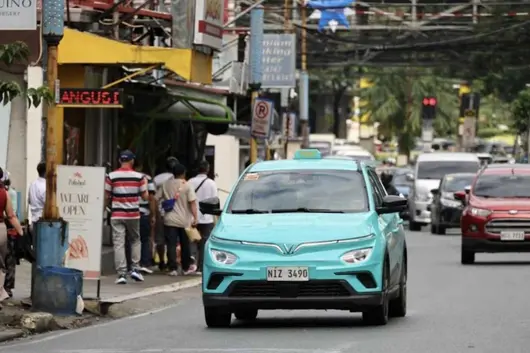

Recently, there's an interesting topic in the automotive world — "rapid-production cars are being stopped".
The issue started at the 2026 China Auto Forum, where automotive executives publicly criticized some brands for cutting necessary testing phases to accelerate market entry, effectively making consumers act as "test drivers" and creating safety hazards. At almost the same time, the National Automotive Standardization Technical Committee proposed increasing the total mileage for reliability driving tests for new energy vehicle models to 30,000 kilometers. From industry self-reflection to standard upgrades, the gears calling for "rapid-production cars" to be stopped are accelerating their rotation.
Simply put, some brands, in order to grab market share, have forcibly compressed R&D testing that should take several years down to 18 months or even shorter. In the fuel vehicle era, it generally took over 36 months from design to market launch for a new car; now many brands cut it in half. A netizen commented poignantly: "Even QQ Speed new cars have to be tested on the test server for half a year before officially launching." Virtual racing cars in games need half a year of testing, while real cars worth over 100,000 in reality, some brands only give half a year.

In this wave of "nothing works faster than speed," Chery Fengyun T7 appears a bit out of place.
On August 9, "Auto Man Old Xu" publicly questioned on Weibo: Others have finished the facelift for three generations of cars, but Fengyun T7 is still "coming soon". Is this due to poor R&D efficiency, or is there another reason? After the question was raised, Li Xueyong, Executive Vice President of Chery Automobile, gave three responses to "cannot be fast" — R&D cannot be fast, testing cannot be fast, co-creation cannot be fast.
To be honest, this response sounds quite official. But if you see what Fengyun T7 has actually been doing over the years, you might understand a bit.

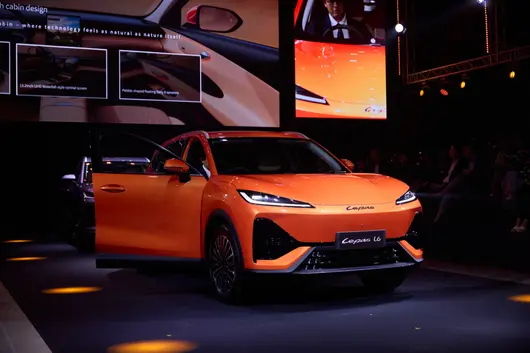
Fengyun T7 is not a "China-exclusive car" — it is called LEPAS L6 overseas. South Africa has already pre-sold, Thailand has already launched, and it will subsequently enter over 130 countries and regions including the EU, Australia-New Zealand, UK, etc. A car must meet regulatory standards of so many countries at the same time; just in terms of regulatory adaptation, this cannot be completed in 18 months.
Let's look at testing. Fengyun T7 has cumulatively invested 963 test vehicles, with global durability test mileage reaching 1.45 million kilometers. Test routes cover the EU, Australia, South America, Middle East, Southeast Asia, Russia, experiencing extreme environments such as high temperature, extreme cold, high humidity, and high salinity. This is not beautiful data run out in a lab, but polished inch by inch on real extreme road conditions. Regarding safety, it benchmarks the 2026 version E-NCAP Five-Star standards, covering four dimensions: safe driving, collision avoidance, collision protection, and post-collision safety. These testing phases cannot be saved on any single one, nor can any be rushed.

Additionally, there are the top 10 global R&D design centers, over a hundred designers collaborating, and over 1,000 global users deeply co-creating. From design to verification to user feedback polishing for a car, every link requires time.
Of course, from the consumer's perspective, whether these reasons for "slowness" hold water is a topic worth discussing. After all, the market waits for no one — while you spend five years polishing a car, competitors may have already completed the iteration of two generations of products. Technology updates so fast, will long-cycle R&D lead to obsolescence upon launch? For this question, I'm afraid no one can give a standard answer.

But thinking from another angle, building cars is ultimately not building phones. If a phone has bugs, a restart fixes it; if a car has issues on the highway, that is a life-threatening matter. Rather than letting users act as "test drivers" to find issues after launch, it's better to solve all issues before launch. Fengyun T7 follows a path of "go overseas first, then return home" — first run around the globe to verify quality, then return to the domestic market. This path spends several times more time than "rapid production", but every step is unavoidable.
At the end of the day, this controversy of "fast and slow" reflects the clash of two car-building logics: one treats cars as fast-moving consumer goods, pursuing speed and traffic; the other treats cars as durable goods, obsessing over quality and safety. "Rapid-production cars" being stopped is never about the ability to iterate quickly, but rather about neglecting safety and perfunctorily handling quality.

Is Fengyun T7's "slowness" actually a shortcoming in R&D efficiency, or is it a time cost that a global car must pay? This question, perhaps only after it truly launches and stands the test of the market and time, can we get a clear answer.
Do you think, when it comes to building cars, should it be fast or should it be slow?

In Malaysia's SUV market, many buyers compare the Proton X90 and Toyota Corolla Cross when choosing a car. These two models are quite close in price and positioning. Today, we will make a detailed comparison from multiple aspects to help you save time on research.
The OTR price of the Proton X90 in Malaysia is RM 106,800 - 122,800, with a total of 4 versions, including the 2026 1.5T Prime X (RM 122,800), 2026 1.5T Prime (RM 116,800), 2026 1.5T Lite (RM 106,800), etc.
The OTR price of the Toyota Corolla Cross in Malaysia is RM 133,800 - 148,800, with a total of 3 versions, including the 2026 HEV 1.8L GR Sport (RM 148,800), 2026 HEV 1.8L Standard (RM 140,800), 2026 1.8L Standard (RM 133,800), etc.
In terms of price, the starting price of the Proton X90 is indeed RM 27,000 cheaper than the Toyota Corolla Cross. If you have a limited budget, the Proton entry-level version can already meet daily needs. But be aware that the savings of a few thousand might involve trade-offs in features, depending on your specific needs.
The Proton X90 is equipped with a 1.5L Turbo engine, delivering 140 hp. Official fuel consumption is 7.0 L/100km.
The Toyota Corolla Cross is equipped with a 1.5L Turbo engine, delivering 140 hp. Official fuel consumption is 7.0 L/100km.
Both cars use the same powertrain system, and the driving experience is basically the same for daily use. Fuel consumption is also similar, so no need to worry too much about this point.
The Proton X90 warranty is 5 years/150,000km, maintenance interval every 10,000km or 6 months.
The Toyota Corolla Cross warranty is 5 years/unlimited mileage, maintenance interval every 10,000km or 6 months.
Both the Proton X90 and Toyota Corolla Cross are mainstream choices in the Malaysian market, suitable for family use and daily commuting. If you value brand reputation and resale value more, you may prioritize the one with better reputation; if you care more about cost-performance ratio and features, choose the one with richer configuration. Ultimately, we suggest test driving both, as personal experience is the most important.

Overall, the Proton X90 and Toyota Corolla Cross are both very good car models in the Malaysian market. Choosing which one mainly depends on your personal needs and budget. We suggest doing your homework, comparing quotes from several dealerships, and then test driving to make a final decision. Buying a car is a major event, and spending time on research will never be a mistake.
Dalam pasaran SUV di Malaysia, ramai pembeli akan membandingkan Proton X90 dan Mazda CX-3 semasa memilih kereta. Kedua-dua kereta ini hampir sama dari segi harga dan sasaran pasaran, hari ini kita akan buat perbandingan terperinci dari pelbagai aspek, bantu anda menjimatkan masa untuk membuat kajian.
Harga OTR Proton X90 di Malaysia adalah RM 106,800 - 122,800, terdapat 4 varian, termasuk 2026 1.5T Prime X (RM 122,800), 2026 1.5T Prime (RM 116,800), 2026 1.5T Lite (RM 106,800) dan lain-lain.
Harga OTR Mazda CX-3 di Malaysia adalah RM 126,159 - 139,159, terdapat 2 varian, termasuk 2023 2.0L High (RM 139,159), 2023 2.0L Plus (RM 126,159) dan lain-lain.
Dari segi harga, harga permulaan Proton X90 memang lebih murah RM 19,359 berbanding Mazda CX-3. Jika bajet anda terhad, versi asas Proton sudah boleh memenuhi keperluan harian. Namun perlu diingat, beberapa ringgit yang lebih murah itu mungkin ada pertimbangan dalam kelengkapan, ia bergantung pada keperluan anda.
Penarafan keselamatan Proton X90 ialah 5★ (ASEAN NCAP), sistem keselamatan aktif termasuk ADAS (ACC, AEB, LKA, LDA, BSM, RCTA).
Penarafan keselamatan Mazda CX-3 ialah 5★ (ASEAN NCAP), sistem keselamatan aktif termasuk i-Activsense.
Penarafan keselamatan kedua-dua kereta adalah sama, pada tahap ini, kelengkapan keselamatan dianggap sangat lengkap. Keselamatan kereta baharu sekarang tidak buruk, tidak perlu terlalu risau tentang perkara ini.
Panjang badan Proton X90 4400 mm, bahagian belakang 400 L.
Panjang badan Mazda CX-3 4500 mm, bahagian belakang 450 L.
Dari segi ruang, badan Mazda CX-3 lebih panjang 100 mm daripada Proton X90, ruang penumpang lebih unggul. Namun, Proton X90 lebih fleksibel untuk berhenti di bandar, masing-masing ada kelebihan.
Proton X90 jaminan 5 tahun/150,000km, selang servis setiap 10,000km atau 6 bulan.
Mazda CX-3 jaminan 5 tahun/150,000km, selang servis setiap 10,000km atau 6 bulan.
Syarat jaminan kedua-dua kereta adalah sama, tidak perlu bimbang mengenai hal ini. Kos penyelenggaraan sebenar juga bergantung pada rangkaian servis jenama dan harga spare part, disyorkan bertanya pengalaman pemilik sebenar dalam kumpulan pemilik kereta.

Proton X90 dan Mazda CX-3 adalah pilihan utama pasaran Malaysia, sesuai untuk kegunaan keluarga, perjalanan harian. Jika anda lebih mementingkan reputasi jenama dan harga kedua, boleh utamakan model dengan reputasi yang lebih baik; jika anda lebih mementingkan nisbah harga dan kelengkapan, pilih model yang lebih lengkap. Pada akhirnya disarankan untuk uji pemandu kedua-duanya, pengalaman sendiri adalah yang paling penting.

Secara keseluruhan, Proton X90 dan Mazda CX-3 adalah model yang sangat baik di pasaran Malaysia. Pilih yang mana, penting untuk lihat keperluan peribadi dan bajet anda. Disarankan untuk membuat kajian, bandingkan tawaran beberapa dealer kereta, kemudian uji pemandu untuk buat keputusan akhir. Membeli kereta adalah perkara besar, meluangkan masa untuk kajian tidak akan salah.

Di pasaran SUV Malaysia, ramai pembeli membandingkan Proton X90 dan Toyota Corolla Cross ketika memilih kereta. Kedua-dua kereta ini agak hampir dari segi harga dan kedudukan, hari ini kita akan buat perbandingan terperinci dari pelbagai aspek, membantu anda menjimatkan masa membuat kajian.
Proton X90 di Malaysia harga OTR ialah RM 106,800 - 122,800, terdapat 4 versi, termasuk 2026 1.5T Prime X (RM 122,800), 2026 1.5T Prime (RM 116,800), 2026 1.5T Lite (RM 106,800) dan lain-lain.
Toyota Corolla Cross di Malaysia harga OTR ialah RM 133,800 - 148,800, terdapat 3 versi, termasuk 2026 HEV 1.8L GR Sport (RM 148,800), 2026 HEV 1.8L Standard (RM 140,800), 2026 1.8L Standard (RM 133,800) dan lain-lain.
Dari segi harga, harga permulaan Proton X90 memang lebih murah RM 27,000 berbanding Toyota Corolla Cross. Jika anda bajet terhad, versi permulaan Proton sudah boleh memenuhi keperluan harian. Tetapi juga perlu ambil perhatian, beberapa ribu ringgit yang murah itu, mungkin ada pilihan pada kelengkapan, bergantung pada keperluan anda.
Panjang badan Proton X90 4400 mm, bagasi 400 L.
Panjang badan Toyota Corolla Cross 4400 mm, bagasi 400 L.
Saiz kedua-dua kereta hampir sama, ruang dalam kenderaan tiada perbezaan besar. Kereta kelas ini, penggunaan harian sudah cukup.
Proton X90 jaminan 5 tahun/150,000km, selang penjagaan setiap 10,000km atau 6 bulan.
Toyota Corolla Cross jaminan 5 tahun/jarak tidak terbatas, selang penjagaan setiap 10,000km atau 6 bulan.
Proton X90 dan Toyota Corolla Cross adalah pilihan utama pasaran Malaysia, sesuai untuk kegunaan keluarga dan perjalanan harian. Jika anda lebih mengutamakan reputasi jenama dan harga barang terpakai, boleh utamakan yang lebih baik reputasinya; jika anda lebih mementingkan nilai dan kelengkapan, pilih yang lebih kaya konfigurasi. Akhir sekali disarankan untuk mencuba kedua-duanya, pengalaman sendiri adalah yang paling penting.
Secara keseluruhannya, Proton X90 dan Toyota Corolla Cross adalah model kereta yang sangat bagus di pasaran Malaysia. Memilih yang mana, kunci utama masih bergantung pada keperluan dan bajet peribadi anda. Disarankan buat kajian, bandingkan beberapa harga di dealer kereta, baru pergi ujian pandu buat keputusan akhir. Membeli kereta adalah perkara besar, habiskan masa buat kajian pasti tidak salah.

喺馬來西亞嘅 SUV 市場,好買家在揀車個陣都會拿 Proton X90 同 Mazda CX-3 嚟比較。呢兩款車喺價格同定位上面都好接近,今日我哋就由多個方面做一次詳細嘅對比,幫你節省做功課嘅時間。
Proton X90 喺馬來西亞嘅 OTR 售價係 RM 106,800 - 122,800,一共有 4 個版本,包括 2026 1.5T Prime X(RM 122,800)、2026 1.5T Prime(RM 116,800)、2026 1.5T Lite(RM 106,800) 等。
Mazda CX-3 喺馬來西亞嘅 OTR 售價係 RM 126,159 - 139,159,一共有 2 個版本,包括 2023 2.0L High(RM 139,159)、2023 2.0L Plus(RM 126,159) 等。
由價錢嚟睇,Proton X90 嘅起步價確實比 Mazda CX-3 平咗 RM 19,359。如果你預算有限,Proton 嘅入門版已經可以滿足日常需要。但要留意,平嗰幾千蚊,可能會喺配備上面有取捨,具體要看你嘅需要。
Proton X90 搭載 1.5L Turbo,馬力 140 hp。官方油耗 7.0 L/100km。
Mazda CX-3 搭載 1.5L Turbo,馬力 140 hp。官方油耗 7.0 L/100km。
兩款車用咗同一套動力系統,日常開起嚟嘅感覺基本冇分別。油耗方面都差唔多,唔使太糾結這一點。
Proton X90 嘅安全評級係 5★ (ASEAN NCAP),主動安全系統包括 ADAS (ACC, AEB, LKA, LDA, BSM, RCTA)。
Mazda CX-3 嘅安全評級係 5★ (ASEAN NCAP),主動安全系統包括 i-Activsense。
兩款車嘅安全評級一樣,喺呢個級別裡面安全配備都算好齊全。而家嘅新車安全性都唔差,唔使太擔心這一點。
Proton X90 車身長 4400 mm,尾箱 400 L。
Mazda CX-3 車身長 4500 mm,尾箱 450 L。
空間方面,Mazda CX-3 嘅車身比 Proton X90 長咗 100 mm,乘坐空間更有優勢。不過 Proton X90 喺城市入面停車會靈活啲,各有取捨。
Proton X90 同 Mazda CX-3 都係馬來西亞市場嘅主流選擇,適合家庭使用、日常通勤。如果你更睇重品牌口碑同二手價,可以優先考慮口碑更好嗰一款;如果你更在意性價比同配備,就揀配置更豐富嗰款。最終都係建議兩款都去試駕,親身體驗先係最重要。
總體嚟講,Proton X90 同 Mazda CX-3 都係馬來西亞市場好唔錯嘅車型。揀邊一部,關鍵都係睇你嘅個人需求同預算。建议大家做好功課,多比較幾間車行嘅報價,再去試駕做最終決定。買車係件大事,花啲時間做功課絕對唔錯。

喺馬來西亞嘅 SUV 市場,好多買家喺揀車嘅時候都會拎 Proton X90 同 Toyota Fortuner 黎做比較。呢兩款車喺價位同定位上都幾接近,今日我哋就從多個方面做一次詳細比較,幫你省返做功課嘅時間。
Proton X90 喺馬來西亞嘅 OTR 售價係 RM 106,800 - 122,800,合共 4 個版本,包括 2026 1.5T Prime X(RM 122,800)、2026 1.5T Prime(RM 116,800)、2026 1.5T Lite(RM 106,800) 等。
Toyota Fortuner 喺馬來西亞嘅 OTR 售價係 RM 195,880 - 241,880,合共 3 個版本,包括 2024 2.8T VRZ Diesel(RM 241,880)、2024 2.7L SRZ Petrol(RM 202,880)、2024 2.4L Standard Diesel(RM 195,880) 等。
從價錢嚟睇,Proton X90 嘅起步價確實比 Toyota Fortuner 平咗 RM 89,080。如果你預算有限,Proton 嘅入門版已經足以應付日常需要。不過都要注意,平嗰幾千蚊,可能喺配備上會有取舍,具體睇你嘅需求。
Proton X90 配備 1.5L Turbo,馬力 140 hp。官方油耗 7.0 L/100km。
Toyota Fortuner 配備 2.5L Diesel,馬力 187 hp。官方油耗 8.5 L/100km。
动力方面,Toyota Fortuner 嘅 2.5L Diesel 比 Proton X90 嘅 1.5L Turbo 多咗 47 匹馬力。不過日常喺市區開,兩款車嘅動力都夠用,唔會覺得唔夠力。
Proton X90 車身長 4400 mm,行李箱 400 L。
Toyota Fortuner 車身長 4400 mm,行李箱 400 L。
兩款車嘅尺寸幾乎一樣,車內空間分別唔大。呢個級別嘅車,日常使用完全足夠。
Proton X90 同 Toyota Fortuner 都係馬來西亞市場嘅主流選擇,適合家庭使用、日常通勤。如果你更睇重品牌口碑同二手價,可以優先考慮口碑更好嗰一款;如果你更在意性價比同配備,就揀配置更豐富嗰款。最終都建議兩款都去試駕,親身試過先至係最重要。

總而言之,Proton X90 同 Toyota Fortuner 都係馬來西亞市場幾唔錯嘅車型。選擇邊輛,關鍵始終係睇你個人需求同預算。建議大家做足功課,多比較幾間車行嘅報價,先去試駕做最終決定。買車係件大事,花少少時間做功課絕對唔會錯。
In Malaysia's SUV market, many buyers compare Proton X90 and Toyota Yaris Cross when choosing a car. Both cars are quite close in price and positioning. Today, let's do a detailed comparison from multiple aspects to help you save time on research.
Proton X90's OTR price in Malaysia is RM 106,800 - 122,800, with a total of 4 versions, including 2026 1.5T Prime X (RM 122,800), 2026 1.5T Prime (RM 116,800), 2026 1.5T Lite (RM 106,800), etc.
Toyota Yaris Cross's OTR price in Malaysia is RM 99,900 - 109,900, with a total of 2 versions, including 2026 1.5L Standard (RM 99,900), 2026 HEV 1.5L Standard (RM 109,900), etc.
From a price perspective, Toyota Yaris Cross's starting price is RM 6,900 cheaper than Proton X90. To be honest, in this price range, a difference of a few thousand isn't really that big. The key is still looking at overall value for money and long-term usage costs.
Proton X90's safety rating is 5★ (ASEAN NCAP), active safety systems include ADAS (ACC, AEB, LKA, LDA, BSM, RCTA).
Toyota Yaris Cross's safety rating is 5★ (ASEAN NCAP), active safety systems include TSS.
Both cars have the same safety rating, and safety features are quite comprehensive within this class. New cars nowadays generally have good safety, so there's no need to worry too much about this point.
Proton X90 adopts FWD drive method.
Toyota Yaris Cross adopts FWD drive method.
Both cars have the same drive method, both are FWD, and daily driving feel won't differ too much.
Both Proton X90 and Toyota Yaris Cross are mainstream choices in the Malaysian market, suitable for family use and daily commuting. If you value brand reputation and resale value more, you can prioritize the one with better reputation; if you care more about value for money and features, choose the one with richer configuration. Finally, it is recommended to test drive both, as personal experience is the most important.

Overall, Proton X90 and Toyota Yaris Cross are both very good models in the Malaysian market. Which one to choose depends mainly on your personal needs and budget. It is recommended to do your homework, compare quotes from several dealerships, and then test drive to make the final decision. Buying a car is a big thing, spending some time doing research will never go wrong.

In Malaysia's SUV market, many buyers compare Proton X90 and Honda WR-V when choosing a car. These two cars are quite close in price and positioning. Today, we will make a detailed comparison from multiple aspects to help you save the time of doing research.
The Proton X90 OTR price in Malaysia is RM 106,800 - 122,800, with a total of 4 versions, including 2026 1.5T Prime X (RM 122,800), 2026 1.5T Prime (RM 116,800), 2026 1.5T Lite (RM 106,800), etc.
The Honda WR-V OTR price in Malaysia is RM 89,900 - 107,900, with a total of 4 versions, including 2023 1.5L V (RM 99,900), 2023 1.5L E (RM 95,900), 2023 1.5L S (RM 89,900), etc.
From a price perspective, the starting price of the Honda WR-V is RM 16,900 cheaper than the Proton X90. Honestly, at this price point, a difference of a few thousand isn't that big; the key is looking at overall value for money and long-term usage costs.
The Proton X90 body length is 4400 mm, trunk 400 L.
The Honda WR-V body length is 4400 mm, trunk 400 L.
The dimensions of both cars are almost the same, and the interior space is not very different. Cars at this level are completely sufficient for daily use.
The Proton X90 adopts FWD drive method.
The Honda WR-V adopts FWD drive method.
Both cars use the same drive method, both are FWD, there won't be much difference in daily driving feel.
Both Proton X90 and Honda WR-V are mainstream choices in the Malaysian market, suitable for family use and daily commuting. If you value brand reputation and second-hand value more, prioritize the one with better reputation; if you care more about value for money and equipment, choose the one with richer configurations. Ultimately, it is recommended to test drive both, as personal experience is most important.

Overall, Proton X90 and Honda WR-V are both quite good models in the Malaysian market. Which one to choose depends mainly on your personal needs and budget. We recommend doing your research, comparing quotes from several car dealerships, and then test driving to make a final decision. Buying a car is a big matter; spending time doing research is never wrong.

In Malaysia's SUV market, many buyers compare Proton X90 and Honda WR-V when choosing a car. The price and positioning of these two cars are quite close. Today, we will conduct a detailed comparison from multiple aspects to help you save time on research.
The OTR price of Proton X90 in Malaysia is RM 106,800 - 122,800. There are 4 versions in total, including 2026 1.5T Prime X (RM 122,800), 2026 1.5T Prime (RM 116,800), 2026 1.5T Lite (RM 106,800), etc.
The OTR price of Honda WR-V in Malaysia is RM 89,900 - 107,900. There are 4 versions in total, including 2023 1.5L V (RM 99,900), 2023 1.5L E (RM 95,900), 2023 1.5L S (RM 89,900), etc.
Looking at the price, the starting price of Honda WR-V is RM 16,900 cheaper than Proton X90. Honestly, in this price range, a difference of a few thousand is actually not significant. The key is to look at the overall value for money and long-term usage cost.
Proton X90 body length 4400 mm, trunk 400 L.
Honda WR-V body length 4400 mm, trunk 400 L.
The dimensions of the two cars are almost the same, with little difference in interior space. For this class of cars, it is completely sufficient for daily use.
Proton X90 warranty 5 years/150,000km, maintenance interval every 10,000km or 6 months.
Honda WR-V warranty 5 years/unlimited mileage, maintenance interval every 10,000km or 6 months.
Both Proton X90 and Honda WR-V are mainstream choices in the Malaysian market, suitable for family use and daily commuting. If you value brand reputation and resale value more, you can prioritize the one with better reputation; if you care more about value for money and features, then choose the one with richer configuration. Ultimately, it is recommended to test drive both, as personal experience is the most important.
In general, both Proton X90 and Honda WR-V are very good models in the Malaysian market. Which one to choose depends on your personal needs and budget. It is recommended to do your homework, compare quotes from several dealerships, and then test drive to make the final decision. Buying a car is a big deal, spending some time on research is never wrong.
In Malaysia's SUV market, many buyers compare the Proton X90 and Honda WR-V when choosing a car. These two models are quite close in price and positioning. Today, we will make a detailed comparison from multiple aspects to help you save time on research.
The OTR price for the Proton X90 in Malaysia is RM 106,800 - 122,800, with a total of 4 versions, including 2026 1.5T Prime X (RM 122,800), 2026 1.5T Prime (RM 116,800), 2026 1.5T Lite (RM 106,800), etc.
The OTR price for the Honda WR-V in Malaysia is RM 89,900 - 107,900, with a total of 4 versions, including 2023 1.5L V (RM 99,900), 2023 1.5L E (RM 95,900), 2023 1.5L S (RM 89,900), etc.
In terms of price, the Honda WR-V's starting price is RM 16,900 cheaper than the Proton X90. Honestly, in this price range, the difference of a few thousand is not really significant; the key is to look at overall value for money and long-term usage costs.
The Proton X90 uses FWD drive type.
The Honda WR-V uses FWD drive type.
Both cars use the same drive type, which is FWD, so there won't be a huge difference in daily driving feel.
Proton X90 Warranty 5 years/150,000km, Service Interval Every 10,000km or 6 months.
Honda WR-V Warranty 5 years/Unlimited mileage, Service Interval Every 10,000km or 6 months.
Both the Proton X90 and Honda WR-V are mainstream choices in the Malaysian market, suitable for family use and daily commuting. If you value brand reputation and resale value more, you can prioritize the one with better reputation; if you care more about value for money and features, choose the one with richer configuration. Ultimately, it is recommended to test drive both, as personal experience is the most important.
Overall, both the Proton X90 and Honda WR-V are very good models in the Malaysian market. Choosing which one depends mainly on your personal needs and budget. It is recommended to do your research, compare quotes from several car dealerships, and then test drive to make the final decision. Buying a car is a big matter; spending some time on research will never be wrong.

In the Malaysia SUV market, many buyers compare the Proton X70 and Subaru Crosstrek when choosing a car. These two cars are quite close in price and positioning. Today we will make a detailed comparison from multiple aspects to help you save time doing research.
The OTR price for the Proton X70 in Malaysia is RM 106,800 - 122,300, with a total of 3 versions, including 1.5L Standard 2WD (RM 106,800), 1.5L Executive 2WD (RM 115,800), 1.5L Premium 2WD (RM 122,300), etc.
The OTR price for the Subaru Crosstrek in Malaysia is RM 145,000 - 160,000, with a total of 1 version, including 2.0L e-Boxer (RM 150,000), etc.
From a price perspective, the starting price of the Proton X70 is indeed RM 38,200 cheaper than the Subaru Crosstrek. If your budget is limited, Proton's entry-level version is already enough to meet daily needs. But be aware, the cheaper difference of a few thousand might involve trade-offs in features, depending on your specific needs.

The Proton X70 is equipped with a 1.5L Turbo, 140 hp. Official fuel consumption 7.0 L/100km.
The Subaru Crosstrek is equipped with a 1.5L Turbo, 140 hp. Official fuel consumption 7.0 L/100km.
Both cars use the same powertrain system, the daily driving experience is basically no difference. Fuel consumption is also similar, no need to worry too much about this point.

Proton X70 body length 4400 mm, trunk 400 L.
Subaru Crosstrek body length 4400 mm, trunk 400 L.
The dimensions of both cars are almost the same, the interior space difference is not large. Cars of this level are more than enough for daily use.
Proton X70 adopts FWD drive mode.
Subaru Crosstrek adopts FWD drive mode.
The drive modes of both cars are the same, both are FWD, the daily driving experience will not have too much difference.
Proton X70 and Subaru Crosstrek are both mainstream choices in the Malaysia market, suitable for family use and daily commuting. If you value brand reputation and resale value more, you can prioritize the one with better reputation; if you care more about cost-performance and features, then choose the one with richer configuration. Ultimately it is suggested to test drive both, personal experience is the most important.
Overall, Proton X70 and Subaru Crosstrek are both very good models in the Malaysia market. Which one to choose, key depends on your personal needs and budget. We suggest everyone do research well, compare quotes from several dealerships, then go test drive for final decision. Buying a car is a big matter, spending some time doing research will definitely not be wrong.


Dalam pasaran SUV di Malaysia, ramai pembeli sering membandingkan Proton X90 dan Honda CR-V semasa memilih kereta. Kedua-dua kereta ini hampir sama dari segi harga dan kedudukan pasaran, hari ini kita akan buat perbandingan terperinci dari pelbagai aspek, membantu anda menjimatkan masa membuat kajian.
Harga OTR Proton X90 di Malaysia ialah RM 106,800 - 122,800, terdapat 4 varian, termasuk 2026 1.5T Prime X (RM 122,800), 2026 1.5T Prime (RM 116,800), 2026 1.5T Lite (RM 106,800) dan lain-lain.
Harga OTR Honda CR-V di Malaysia ialah RM 178,200 - 195,900, terdapat 4 varian, termasuk 2026 e:HEV 2.0L 2WD RS (RM 195,900), 2026 1.5T 4WD V (RM 181,900), 2026 e:HEV 2.0L 2WD E (RM 178,200) dan lain-lain.
Dari segi harga, harga permulaan Proton X90 memang RM 71,400 lebih murah berbanding Honda CR-V. Jika bajet anda terhad, varian asas Proton sudah boleh memenuhi keperluan harian. Tetapi perlu diingat, perbezaan harga itu mungkin melibatkan pengorbanan pada kelengkapan, bergantung pada keperluan anda.
Proton X90 dilengkapi enjin Turbo 1.5L, kuasa 140 hp. Konsumsi bahan api rasmi 7.0 L/100km.
Honda CR-V dilengkapi enjin 4-silinder 2.0L, kuasa 170 hp. Konsumsi bahan api rasmi 8.0 L/100km.
Dari segi kuasa, enjin 4-silinder 2.0L Honda CR-V mempunyai 30 hp lebih banyak berbanding enjin Turbo 1.5L Proton X90. Namun untuk penggunaan harian di bandar, kedua-dua kereta mempunyai kuasa yang mencukupi, anda tidak akan rasa kurang tenaga.
Penarafan keselamatan Proton X90 ialah 5★ (ASEAN NCAP), sistem keselamatan aktif termasuk ADAS (ACC, AEB, LKA, LDA, BSM, RCTA).
Penarafan keselamatan Honda CR-V ialah 5★ (ASEAN NCAP), sistem keselamatan aktif termasuk Honda SENSING (ACC, CMBS, LKAS, RDM).
Kedua-dua kereta mempunyai penarafan keselamatan yang sama, kelengkapan keselamatan dalam kategori ini memang lengkap. Keselamatan kereta baharu pada masa ini tidak kurang, tidak perlu terlalu bimbang tentang perkara ini.
Waranti Proton X90 5 tahun/150,000km, selang penyelenggaraan setiap 10,000km atau 6 bulan.
Waranti Honda CR-V 5 tahun/tanpa had jarak, selang penyelenggaraan setiap 10,000km atau 6 bulan.

Proton X90 dan Honda CR-V adalah pilihan utama dalam pasaran Malaysia, sesuai untuk penggunaan keluarga dan perjalanan harian. Jika anda lebih mementingkan reputasi jenama dan nilai semula, boleh utamakan mana-mana yang mempunyai reputasi lebih baik; jika anda lebih mementingkan nilai kos dan kelengkapan, pilih yang mempunyai konfigurasi lebih kaya. Pada akhirnya disarankan untuk mencuba kedua-dua kereta, pengalaman diri adalah yang paling penting.
Keseluruhannya, Proton X90 dan Honda CR-V adalah model kereta yang bagus dalam pasaran Malaysia. Memilih mana satu, kuncinya bergantung pada keperluan peribadi dan bajet anda. Disarankan anda membuat kajian, bandingkan beberapa tawaran harga dealer, kemudian buat keputusan akhir setelah uji jalan. Membeli kereta adalah perkara penting, meluangkan masa membuat kajian tidak akan salah.

Dalam pasaran SUV di Malaysia, ramai pembeli membandingkan Proton X90 dan Honda HR-V semasa memilih kereta. Kedua-dua kereta ini mempunyai harga dan kedudukan pasaran yang agak hampir. Hari ini, kita akan membuat perbandingan terperinci daripada pelbagai aspek untuk membantu anda menjimatkan masa membuat kajian.
Harga OTR Proton X90 di Malaysia adalah RM 106,800 - 122,800, terdapat keseluruhan 4 versi, termasuk 2026 1.5T Prime X (RM 122,800), 2026 1.5T Prime (RM 116,800), 2026 1.5T Lite (RM 106,800) dan lain-lain.
Harga OTR Honda HR-V di Malaysia adalah RM 115,900 - 143,900, terdapat keseluruhan 4 versi, termasuk 2026 e:HEV 1.5L RS (RM 143,900), 2026 1.5T V (RM 137,900), 2026 1.5T E (RM 130,900) dan lain-lain.
Dari segi harga, harga permulaan Proton X90 memang lebih murah RM 9,100 berbanding Honda HR-V. Jika bajet anda terhad, versi masuk Proton sudah boleh memenuhi keperluan harian. Tetapi perlu juga mengambil kira, perbezaan harga beberapa ribu ringgit itu mungkin terdapat kompromi dalam kelengkapan, bergantung pada keperluan anda.
Proton X90 dilengkapi enjin Turbo 1.5L, kuasa 140 hp. Penggunaan bahan api rasmi 7.0 L/100km.
Honda HR-V dilengkapi enjin Turbo 1.5L, kuasa 140 hp. Penggunaan bahan api rasmi 7.0 L/100km.
Kedua-dua kereta menggunakan sistem kuasa yang sama, perasaan memandu sehari-hari pada asasnya tidak berbeza. Penggunaan bahan api juga hampir sama, tidak perlu terlalu bimbang tentang perkara ini.
Proton X90 jaminan 5 tahun/150,000km, jarak selang servis setiap 10,000km atau 6 bulan.
Honda HR-V jaminan 5 tahun/tanpa had jarak, jarak selang servis setiap 10,000km atau 6 bulan.
Proton X90 dan Honda HR-V adalah pilihan popular di pasaran Malaysia, sesuai untuk kegunaan keluarga, perjalanan harian. Jika anda mengutamakan reputasi jenama dan harga jual semula, utamakan yang mempunyai reputasi lebih baik; jika anda lebih mementingkan nilai dan kelengkapan, pilih yang mempunyai konfigurasi lebih lengkap. Akhirnya, disyorkan untuk ujian memandu kedua-duanya, pengalaman sendiri adalah yang paling penting.

Secara keseluruhannya, Proton X90 dan Honda HR-V adalah model kereta yang sangat baik di pasaran Malaysia. Memilih mana satu, kunci utamanya adalah keperluan dan bajet peribadi anda. Disarankan untuk membuat kajian terlebih dahulu, bandingkan tawaran harga dari beberapa pengedar, kemudian ujian memandu untuk membuat keputusan akhir. Membeli kereta adalah perkara penting, meluangkan masa membuat kajian pasti tidak salah.

喺馬來西亞嘅 SUV 市場,好多買家喺揀車嗰陣都會拿 Proton X90 同 Honda CR-V 嚟做比較。這兩款車喺價位同定位上都幾接近,今日我就從多個方面做一個詳細比較,幫你省返做功課嘅時間。
Proton X90 喺馬來西亞嘅 OTR 售價係 RM 106,800 - 122,800,一共有 4 個版本,包括 2026 1.5T Prime X(RM 122,800)、2026 1.5T Prime(RM 116,800)、2026 1.5T Lite(RM 106,800) 等。
Honda CR-V 喺馬來西亞嘅 OTR 售價係 RM 178,200 - 195,900,一共有 4 個版本,包括 2026 e:HEV 2.0L 2WD RS(RM 195,900)、2026 1.5T 4WD V(RM 181,900)、2026 e:HEV 2.0L 2WD E(RM 178,200) 等。
從價錢嚟睇,Proton X90 嘅起步價確實比 Honda CR-V 平咗 RM 71,400。如果你預算有限,Proton 嘅入門版已經可以滿足日常需要。但都要注意,平嗰幾千塊,可能喺配備上會有取舍,具體要看你嘅需要。
Proton X90 嘅安全评分係 5★ (ASEAN NCAP),主動安全系統包括 ADAS (ACC, AEB, LKA, LDA, BSM, RCTA)。
Honda CR-V 嘅安全评分係 5★ (ASEAN NCAP),主動安全系統包括 Honda SENSING (ACC, CMBS, LKAS, RDM)。
兩款車嘅安全评分一樣,喺呢個級別入面安全配備都算俾好足。而家嘅新車安全性都唔差,唔使太擔心這一點。
Proton X90 採 FWD 驅動方式。
Honda CR-V 採 FWD 驅動方式。
兩款車嘅驅動方式一樣,都係 FWD,日常駕駛感受唔會有太大分別。
Proton X90 同 Honda CR-V 都係馬來西亞市場嘅主流選擇,適合家庭使用、日常通勤。如果你更睇重品牌口碑同二手價,可以優先考慮口碑好嗰一款;如果你更在意 CP 值同配備,就揀配備更豐富嗰款。最終仲係建議兩款都去試駕,親身感受先係最重要。
總括嚟講,Proton X90 同 Honda CR-V 都係馬來西亞市場好唔錯嘅車型。揀邊一輛,關鍵仲係睇你嘅個人需要同預算。建議大家做足功課,多比較幾間車行之報價,先去試駕做最後決定。買車係件大事,花少少時間做功課絕對無錯。

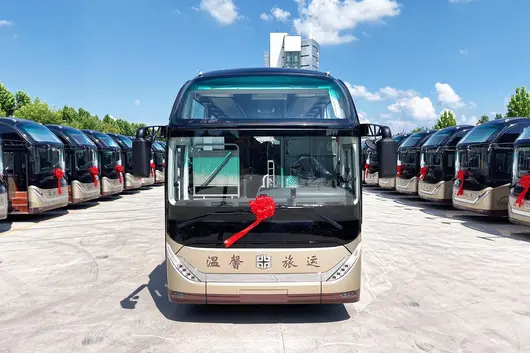
As tides rise in the Dongjiang and the banks widen, and winds strengthen in the Bay, making it the perfect time to set sail. On August 3, 2026, a grand delivery ceremony was held at the Zhongtong Bus plant. A batch of Zhongtong H13E super-capacity pure electric tour buses were officially delivered to Dongguan Wenhuan Tourism Passenger Transport Co., Ltd. (referred to as "Dongguan Wenhuan Passenger Transport").

This delivery is not only a capacity upgrade for Dongguan Wenhuan Passenger Transport but also a key strategic advancement in its development—to take green high-end capacity as a fulcrum, upgrade services from "travel guarantee" to "high-end experience," and empower green and efficient operation of diverse travel scenarios.
The Greater Bay Area, one of the most economically vibrant regions in China, features dense cross-city traffic. Business areas such as tour charters, corporate commuting, study tours, team building, and scenic spot shuttles overlap, placing higher requirements on vehicle range, dispatch stability, and service quality.
Dongguan Wenhuan Passenger Transport has deeply cultivated the Greater Bay Area passenger transport market for many years. Its business covers tourism reception, corporate commuting support, and student study tours. It has built a "direct to scenic spots + cross-city shuttle + study tour team building + government/enterprise commuting" full-scenario operation system and has grown into a representative enterprise in the Greater Bay Area's comprehensive tourism passenger transport industry.

To adapt to regional diversified, high-intensity operation needs and realize the service upgrade from "basic travel guarantee" to "high-end quality experience," Dongguan Wenhuan Passenger Transport introduced a batch of Zhongtong H13E models. This model is equipped with a 650.19kWh high-performance battery, solving industry operation pain points with its core advantage of super-long range.
At the delivery ceremony, a person in charge of Dongguan Wenhuan Passenger Transport introduced that the Greater Bay Area's multi-scenario interwoven operation model has strict requirements for vehicle range and reliability. The H13E is a 13-meter level pure electric tour benchmark model tailored by Zhongtong Bus for the Bay Area's exclusive working conditions. The super-capacity configuration brings solid, long-lasting range ability, perfectly adapting to long-distance cross-city and long-station operation needs. It effectively reduces the frequency of mid-way recharging, significantly improves single-vehicle dispatch rate and operation efficiency, and comprehensively optimizes passenger travel experience with stable driving quality, empowering enterprise high-end passenger transport services.
With the in-depth promotion of the "Dual Carbon" strategy, zero-emission, high-efficiency new energy vehicle models have become the core tool for the transformation, upgrading, and high-quality development of the passenger transport industry.
Based on relying on product core strength to achieve capacity upgrades and cost reduction with efficiency increase, this batch landing of the Zhongtong H13E is exactly an important strategic layout of Dongguan Wenhuan Passenger Transport closely following industry trends and deeply cultivating green passenger transport.

Compared to traditional fuel vehicle models, the Zhongtong H13E has prominent energy-saving and consumption-reduction advantages. Calculated based on industry routine working conditions of 300 km daily operation, the vehicle's pure electric drive can reduce single-kilometer energy consumption costs by over 60%, and maintenance costs by about 40%. In full lifecycle operations, it can save enterprises a significant amount of operating expenses, truly converting low-cost and high-dispatch advantages into core market competitiveness for the enterprise.
Market choice is the most direct verification for products. From January to July 2026, Zhongtong tour group bus market share continued to climb, with sales of medium and large tour buses over 8 meters increasing significantly year-on-year. Among them, the Zhongtong H series, with core advantages such as high comfort, high safety, and high energy efficiency, has become one of the main models for capacity renewal of domestic top travel transport enterprises.
Relying on continuously iterated product technology and a global coverage service assurance system, the Zhongtong H series buses with diverse power not only continuously obtain customer repurchases in important domestic travel and commute markets but are also exported to Chile, Portugal, Singapore, UAE, and other multiple countries and regions, becoming an important force for Chinese buses going green overseas.
Delivery is just the prologue! A batch of Zhongtong pure electric buses heading to Dongguan represents the deepening of cooperation and is once again the start of value co-creation. Taking this as a new starting point, Zhongtong Bus will continue to refine products and cultivate services, empower industry upgrade with green smart travel solutions, and strive together towards a cleaner, more efficient, and better future.

喺馬來西亞嘅 SUV 市場,好多買家喺揀車嘅時候都會拿寶騰 X90 同本田 HR-V 嚟做比較。呢兩款車喺價錢同定位上都幾接近,今日我哋就會由多個方面做詳細比較,幫你節省做功課嘅時間。
寶騰 X90 喺馬來西亞嘅 OTR 售價係 RM 106,800 - 122,800,合共 4 個版本,包括 2026 1.5T Prime X(RM 122,800)、2026 1.5T Prime(RM 116,800)、2026 1.5T Lite(RM 106,800) 等。
本田 HR-V 喺馬來西亞嘅 OTR 售價係 RM 115,900 - 143,900,合共 4 個版本,包括 2026 e:HEV 1.5L RS(RM 143,900)、2026 1.5T V(RM 137,900)、2026 1.5T E(RM 130,900) 等。
從價錢嚟睇,寶騰 X90 嘅起步價確實比本田 HR-V 平咗 RM 9,100。如果你預算有限,寶騰嘅入門版已經可以滿足日常需求。但都要留意,平嗰幾千蚊,可能喺配備上會有取捨,具體要睇你嘅需求。
寶騰 X90 嘅安全評級係 5★ (ASEAN NCAP),主動安全系統包括 ADAS (ACC, AEB, LKA, LDA, BSM, RCTA)。
本田 HR-V 嘅安全評級係 5★ (ASEAN NCAP),主動安全系統包括 Honda SENSING (ACC, CMBS, LKAS, RDM)。
兩款車嘅安全評級一樣,喺呢個級別入面安全配備都算好齊全。而家嘅新車安全性都唔差,唔使太擔心呢一點。
寶騰 X90 保養 5 年/150,000km,保養間隔 每 10,000km 或 6 個月。
本田 HR-V 保養 5 年/無限里程,保養間隔 每 10,000km 或 6 個月。
寶騰 X90 同本田 HR-V 都係馬來西亞市場嘅主流選擇,適合家庭使用、日常通勤。如果你更看重品牌口碑同二手價,可以優先考慮口碑好嗰一款;如果你更在意性價比同配備,嗰就揀配備更豐富嗰款。最終始終建議兩款都去試駕,親身體驗先係最重要。
總體嚟講,寶騰 X90 同本田 HR-V 都係馬來西亞市場幾唔錯嘅車款。揀邊輛車,關鍵始終都要睇返你嘅個人需求同預算。建议大家做好功課,多比較幾間車行嘅報價,再去試駕做最終決定。買車係件大事,花少少時間做功課絕對唔會錯。

In Malaysia's SUV market, many buyers compare the Proton X70 and Subaru Forester when choosing a car. Both cars are quite close in terms of price and positioning, so today we will make a detailed comparison from multiple aspects to help you save time on research.
The OTR price of Proton X70 in Malaysia is RM 106,800 - 122,300, with a total of 3 versions, including 1.5L Standard 2WD (RM 106,800), 1.5L Executive 2WD (RM 115,800), 1.5L Premium 2WD (RM 122,300), etc.
The OTR price of Subaru Forester in Malaysia is RM 174,000 - 197,000, with a total of 3 versions, including 2024 2.0L S EyeSight GT Edition (RM 189,538), 2024 2.0L S EyeSight (RM 177,538), 2024 2.0L L EyeSight (RM 167,538), etc.
From a price perspective, the starting price of Proton X70 is indeed RM 67,200 cheaper than Subaru Forester. If your budget is limited, Proton's entry version can already meet daily needs. But you should also note that the difference of a few thousand might involve trade-offs in features, depending on your specific requirements.

Proton X70 is equipped with a 1.5L Turbo engine, producing 140 hp. Official fuel consumption is 7.0 L/100km.
Subaru Forester is equipped with a 2.0L 4-cyl engine, producing 170 hp. Official fuel consumption is 8.0 L/100km.
In terms of power, Subaru Forester's 2.0L 4-cyl has 30 more horsepower than Proton X70's 1.5L Turbo. However, for daily city driving, the power of both cars is sufficient, and you won't feel a lack of power.
Proton X70 body length is 4400 mm, trunk space 400 L.
Subaru Forester body length is 4400 mm, trunk space 400 L.
The dimensions of both cars are almost identical, and the interior space difference is minimal. For this class of vehicles, it is completely sufficient for daily use.

Both Proton X70 and Subaru Forester are mainstream choices in the Malaysia market, suitable for family use and daily commuting. If you value brand reputation and resale value more, you can prioritize the one with better reputation; if you care more about value for money and features, then choose the one with richer specifications. Ultimately, it is recommended to test drive both models, as personal experience is the most important.
Overall, Proton X70 and Subaru Forester are both very good models in the Malaysia market. Which one to choose depends mainly on your personal needs and budget. We suggest everyone do their research, compare quotes from several dealerships, and then test drive to make the final decision. Buying a car is a major matter; spending time on research will never be wrong.

© 2024 Bitauto.com. All Rights Reserved.
Bitauto (www.yiche.com and www.bitauto.com) is one of the most visited automotive websites in China. We provide detailed info on Chinese car brands available in your area. Please note that the information provided on this website is based on publicly available data and is for reference only. It may not be fully updated or accurate at all times.

Help us improve our website


