

HomeYuan Plus

Search History
Popular Searches
Dealer Login / Sign Up

Penetration rate 67%, but new energy vehicles have not defeated fuel cars!
In September 2026, retail sales of conventional fuel passenger cars were 530,000, a year-on-year decrease of 43%. The sales share of fuel cars in China's passenger car market fell below one-third for the first time in history. New energy vehicle penetration rose to 67%, setting a new historical record. Many people immediately declared a death sentence for fuel cars here and announced victory for new energy vehicles.

But breaking down these numbers, the 67% penetration rate is indeed a real figure, but it is simultaneously a number accelerated by policy, amplified by replacement traffic, and highly differentiated in terms of power form.
It proves that new energy vehicles have crossed the threshold accepted by consumers, but perhaps they have not yet proved that they have crossed the threshold of sustainable growth without external support.
#Behind the 67% penetration rate, how much is inflated?#
In the early stage of new energy development, a large portion of sales actually relied on the B-end, after all, it is difficult for a new thing to directly gain recognition from C-end consumers when entering the market.
Like in the past period, the proportion of new energy vehicles in newly registered ride-hailing cars was as high as 92%. The penetration of new energy in the urban logistics delivery field is also accelerating. During these years, brands like Aion reached up to 26% share in the new ride-hailing market during peak sales periods. Basically, 1 out of every 4 new ride-hailing cars was an Aion.
The characteristic of this B-end procurement is centralized and large volume. It can quickly push up the penetration rate number, but it does not reflect the result of ordinary families voting with their wallets in the showroom, but rather batch decisions under operating costs and policy drivers.
Returning to this year, this "accusation" of high B-end share might not hold true as before. Data shows, the private car purchase share rose from 67% in 2020 to 84% in 2025. The share of family second cars broke through 50% for the first time. After the ride-hailing market tended to be saturated, the B-end share shrank to 9%.
The sales foundation of new energy vehicles is shifting from "operational support volume" to "private consumer take-over". New energy brands like Aion and Hongqi, which once highly relied on the B-end, have been struggling to reduce B-end share and rebuild C-end recognition over the past two years. This process itself shows that penetration built relying on the B-end is unsustainable, and the market is actively correcting it.
But if therefore one thinks 67% is already a "purely market-oriented" result, then it ignores two important influencing factors.

First, currently domestic new energy policies are still supporting the bottom. In 2025, the scale of trade-in exceeded 11.5 million vehicles. More than half of domestic retail participated in trade-ins, pulling a large amount of future demand to the present. In 2026, subsidies changed from fixed amounts to proportional calculation and upper limit control. The average subsidy for scrapping updates and replacement updates decreased by about 20% and 30% compared to 2025, respectively. Purchase tax also adjusted from fully exempt to half exempt.
After policy retreat, cumulative retail of passenger cars from January to September 2026 decreased by 22% year-on-year. Although cumulative retail of new energy vehicles remained growing, the growth rate narrowed significantly compared to the previous two years. This means that in the 67% penetration rate, there is embedded a layer of cost paid by finance, and a layer of replacement traffic consumed in advance.
Secondly, the denominator calculating this penetration is contracting. 67% is new energy retail volume divided by total passenger car retail volume. In September 2026, total passenger car retail was 1.618 million, a year-on-year drop of nearly 28%. When the denominator itself is shrinking rapidly, part of the penetration rise comes from "fuel cars falling faster", not "new energy rising enough".
In September, new energy retail was 1.084 million, also down 16.4% year-on-year. New energy and fuel cars were both in a decline interval in 2026. The new high in penetration rate was completed in a shrinking market. Therefore, reading this number as "new energy is crushing fuel cars" at this time is obviously a misjudgment.
Besides, part of the retail statistics scope includes exports. A large number of new cars sold overseas are counted in the total, but it is not a market happening in China. From January to September 2026, new energy vehicle exports were 4.006 million, growing 1.3 times year-on-year. Exports are real industrial achievements, but they are not evidence that "Chinese consumers chose new energy". If exports are stripped from the numerator of penetration, the real penetration of domestic C-end new energy will naturally be lower than 67%.
#Export share over half, relying on competitiveness or production capacity transfer?#
Aside from domestic sales share, a better means to measure the value of China's new energy is to look at whether it also gained recognition in overseas markets?
In September 2026, new energy passenger car exports were 558,000, up 163.5% year-on-year. The share of new energy in passenger car exports continued to rise. Against such data background, has China's new energy already possessed global brand competitiveness?
To answer this question, we need to judge from two aspects, namely "share acquisition driven by product power" and "capacity release under production capacity pressure". The two cannot be distinguished in total numbers, but are completely different in strategic meaning.
First look at this layer of production capacity pressure. In the first half of 2026, the auto industry capacity utilization rate was only 70.6%, lower than the 75% healthy line.
Export volume has accounted for 39.34% of total domestic vehicle production, close to four-tenths. A certain domestic overseas-head brand had total sales of 1.3575 million in the first half, exports 943,800 vehicles, share about 69.5%. This situation where one car company's 70% sales come from overseas is hard to judge as a natural result of competitiveness going global, and looks more like a passive choice due to domestic base contraction.

Against this, some institutions also made judgments. Morgan Stanley believes Chinese car companies rely on pushing millions of cars overseas to maintain factory operations; otherwise, capacity utilization would be below 50%. After all, capacity transfer is a layer of background color that cannot be peeled off from high export growth, but this also does not need to be denied, after all, export profits can also exchange for domestic financial bleeding, but packaging this as China's new energy global competitiveness is somewhat inappropriate.
Currently, China's new energy going overseas may mainly rely on systemic cost advantages. For example, BYD ATTO 3 terminal sales price in Germany is about 38,000 Euros, domestic Yuan PLUS is about 140,000 RMB. Even adding 10% basic tariff, up to 35.3% countervailing tax and 19% VAT, Chinese car companies' single vehicle profit in Europe is still significantly higher than domestic.
After tariffs were imposed in Europe, China's new energy did not collapse line by line. Actually, it relied on this cost advantage. Behind the 45% comprehensive tax rate, Chinese brand sales in Europe actually exceeded Japanese brands in monthly registration volume for the first time in May 2026. The "cheaper than you even after tax" systemic cost advantage is still able to manifest.
But in the Southeast Asian market, some Chinese car companies concentratedly swarmed into the A-segment new energy track. Prices highly overlap in the 100,000 to 150,000 RMB range. They moved the domestic "trading price for volume, fast stock distribution" tactic exactly as is to there. In the Thai market, the average price of Chinese brand electric vehicles dropped from about 1.2 million Thai Baht in 2023 to an 800,000 Baht range in 2026. Single vehicle gross profit compressed by 15% to 20%.
Channel end saw dealers belonging to the same Chinese brand diverting goods across regions. Individual enterprises compressed after-sales spare parts reserves to boost short-term sales. Overseas channels were simplified to "find agents, wholesale". Therefore, in the Southeast Asian market, the weight of "capacity transfer" in export high growth is significantly higher. It is not because the product is not good enough, but because the tactic itself is a continuation of domestic involution.
So at this time look again at the question raised earlier: Export share over half, is it competitiveness or capacity transfer?
In Europe, the component of competitiveness is heavier. Tariffs failed to stop sales, showing cost advantage and product definition capability are real. But this competitiveness is still built on "relative price-performance ratio", not brand premium; in Southeast Asia and the Middle East, the components of capacity transfer and involution overflow are heavier. Short-term shipment looks good, but long-term might overdraft the collective reputation of Chinese brands.
#Share less than one-third, fuel cars sentenced to death?#
Fuel cars are indeed receding in the incremental market, but the number "one-third" cannot directly reflect the final outcome of fuel cars, and even makes it impossible to lightly predict the future of fuel cars.
Why say so, because behind this number there are three facts that cannot be ignored.
The first fact: In the current Chinese auto market, the stock of fuel cars is 320 million vehicles, not simply one-third.
As of 2026, the national stock of fuel cars is about 320 million, accounting for 88% of the total domestic cars. The 67% new energy passenger car penetration rate talks about new car sales, while the average lifecycle of a fuel car is over ten years. Even if the new car market completely stops selling pure fuel cars starting tomorrow, the 320 million stock will still run on the road for over ten years.
Sales share and stock share are two time scales. Deriving the latter's extinction curve from the former is the error most easily made by linear thinking. Fuel car maintenance, servicing, parts, used car circulation, constitute a chain industry based on stock. The profit pool of this industry chain will not evaporate overnight just because new car penetration exceeds half.

The second fact: Some say gas stations are decreasing, but the current fuel car refueling system is not decoration. 110,000 gas stations cannot directly turn oil to electricity. Its current state looks more like a network undergoing self-upgrade.
Currently, according to public data, there are about 110,000 gas stations nationwide, serving an average of about 2,900 fuel cars per station. This density means the fuel car refueling system cannot have the possibility of systemic collapse before stock is scrapped on a large scale. More importantly, gas stations themselves are changing from "refueling" to "comprehensive energy service stations".
Many stations are refueling while installing fast charging piles. If a gas station can serve fuel cars and electric cars simultaneously, then the boundary between "fuel car supporting" and "new energy supporting" becomes blurred. At this time, using "number of gas stations" to argue for the vitality of fuel cars is naturally inappropriate.
The third fact, and most easily ignored: HEV is not new energy, but it is holding the position for fuel cars.
HEV (oil-electric hybrid) does not belong to the new energy category. It is classified into the fuel car camp in China, but exactly this "non-new energy" category has become the only direction still in positive growth in the fuel car big market.
In August 2026, HEV wholesale sales were 107,000, up 54% year-on-year; September HEV retail was about 115,000 to 120,000, the only category maintaining growth in the fuel camp; Globally, in the first half of 2026, pure gasoline cars accounted for 49% of new car sales, HEV accounted for 18%. The internal combustion engine has not disappeared, it is transforming from "unique power source" to "an efficient component in the power system".
So at this time, the judgment "fuel car share falls below one-third" depends on how you define "fuel car". If only pure fuel (without any electrification) is counted, the share is indeed shrinking rapidly. But if HEV is counted in the fuel car camp (policy caliber is indeed so), the actual position of fuel cars is far more than one-third.
HEV's counter-trend growth shows that a large number of consumers need "fuel-saving cars that don't need charging", not "electric cars that need changing refueling habits". This demand is real, scalable, and will not be completely replaced by pure electricity in the short term. Equating "pure fuel share decline" with "internal combustion engine technology exit" will underestimate the technical depth of traditional car companies in hybrid and efficient internal combustion engines, and also overestimate the speed of pure electricity replacement.
#New energy prosperity, is someone forced to bear the cost?#
New energy penetration rate reached 67%, not denying it showed a more prosperous trend compared to before. As for true or false prosperity, it needs to be viewed more calmly.
If "true" is defined as private consumption becoming the main force, then it is true; if "true" is defined as not relying on subsidies, not relying on replacement overdraft, not relying on capacity transfer, then it has not been fully achieved. But using "true or false" as a direct judgment might be too arbitrary. A more accurate question is: In this round of new energy prosperity, who bears the cost, who obtains the benefits, who digests the risk.

Consumers bear a part; they exchanged lower usage costs for range anxiety and refueling inconvenience; Finance bears a part; purchase tax exemption and replacement subsidies are real concessions; Car companies bear a part; the price war and capacity expansion costs are appearing on the income statement; Export markets also bear a part; high growth is triggering more and more trade barriers and localization requirements.
So prosperity is not false, but it is a prosperity with cost, a prosperity with structural differentiation, a prosperity far from the "crushing" degree.
67% penetration rate proves new energy has crossed the acceptance threshold, but it has not proved new energy has crossed the threshold of "sustainable growth without external support", nor has it proved fuel cars' resilience in stock, refueling network and hybrid form can be ignored.
Fuel cars were not sentenced to death, new energy has not received a life-exemption gold medal. China's auto market in 2026 is not a war where the outcome is already decided, but a transition period where two power systems, two cost structures, and two growth logics are running simultaneously, squeezing each other, shaping each other. At this time, if the transition period is taken as the final outcome, the thinking is somewhat too naive.
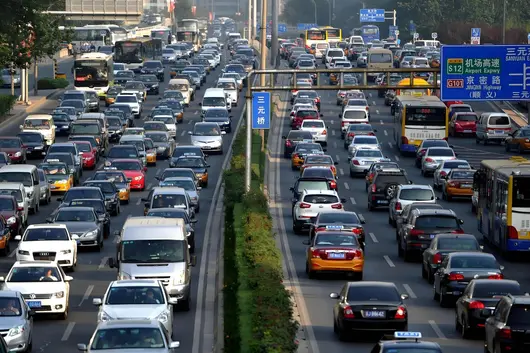

Kadar penetrasi 67%, tetapi kenderaan tenaga baharu tidak memukuli kenderaan bahan api!
September 2026, jualan runcit kenderaan penumpang bahan api konvensional 530,000 unit, menurun 43% berbanding tahun lalu. Perkadaran jualan kenderaan bahan api dalam pasaran kenderaan penumpang di China, untuk kali pertama dalam sejarah jatuh di bawah sepertiga, kadar penetrasi tenaga baharu meningkat ke 67%, mencatat rekod tertinggi, ramai orang terus menghukum mati kenderaan bahan api di sini, dan mengumumkan kemenangan tenaga baharu.
Tetapi apabila kumpulan nombor ini dipecahkan, kadar penetrasi 67% ini memang merupakan nombor yang benar, tetapi ia juga merupakan angka yang dipercepatkan oleh dasar, diperbesarkan oleh aliran penggantian, dan terbeza tinggi dari segi bentuk kuasa.
Ia boleh membuktikan kenderaan tenaga baharu telah melepasi ambang penerimaan oleh pengguna, tetapi mungkin belum membuktikan kenderaan tenaga baharu telah melepasi ambang pertumbuhan berterusan tanpa sokongan luaran.
#Di sebalik kadar penetrasi 67%, berapa peratus yang dipalsukan?#
Pada peringkat awal pembangunan kenderaan tenaga baharu, sebahagian besar jualan sebenarnya bergantung pada segmen B, kerana sesuatu yang baharu memasuki pasaran sukar untuk terus mendapat pengiktirafan pengguna segmen C.
Sebagai contoh, pada beberapa tempoh lalu, peratusan kenderaan tenaga baharu dalam pendaftaran baharu teksi aplikasi mencecah 92%, penetrasi tenaga baharu dalam bidang logistik pengedaran bandar juga semakin laju. Pada beberapa tahun ini, brand seperti Aion semasa puncak jualan, perkadaran pasaran teksi aplikasi baharu sekali mencapai 26%, pada dasarnya setiap 4 teksi aplikasi baharu, 1 daripadanya adalah Aion.
Ciri pembelian segmen B ini adalah tumpuan dan jumlah besar, ia boleh menaikkan nombor kadar penetrasi dengan cepat, tetapi ia tidak mencerminkan hasil undi dompet biasa rumah tangga di dalam galeri, tetapi keputusan pukal di bawah pendorong kos operasi dan dasar.
Balik ke tahun ini, "tuduhan" perkadaran tinggi segmen B ini mungkin tidak lagi sekuat dahulu. Data menunjukkan, perkadaran pembelian kenderaan peribadi meningkat dari 67% pada tahun 2020 ke 84% pada tahun 2025, perkadaran kenderaan keluarga kedua pertama kali melepasi 50%, selepas pasaran teksi aplikasi mencapai ketepuan, perkadaran segmen B menyusut ke 9%.
Kawasan asas jualan kenderaan tenaga baharu, sedang beralih dari "mendukung jumlah operasi" ke "penggunaan peribadi mengambil alih", Brand tenaga baharu seperti Aion, Hongqi yang pernah sangat bergantung pada segmen B, selama dua tahun lalu sedang berusaha sukar menurunkan perkadaran segmen B, membina semula pengiktirafan segmen C, proses ini sendiri menunjukkan, kadar penetrasi yang dibina dengan segmen B adalah tidak lestari, dan pasaran sedang membetulkannya secara aktif.
Tetapi jika kerana ini beranggap 67% sudah merupakan hasil "pasar tulen", maka ia mengabaikan dua faktor pengaruh penting.
Pertama, dasar tenaga baharu di China semasa masih menopang. Saiz program penukaran kenderaan lama dengan baru pada tahun 2025 mencecah melebihi 11.5 juta unit, lebih daripada separuh jualan runcit domestik terlibat dalam program penukaran ini, menarik banyak permintaan masa depan ke masa kini. Pada tahun 2026, subsidi beralih dari jumlah tetap kepada pengiraan nisbah dan kawalan had atas, purata subsidi kenderaan lupus dan penukaran berbanding tahun 2025 masing-masing menurun kira-kira dua puluh peratus dan tiga puluh peratus, cukai pembelian juga beralih dari percuma sepenuhnya kepada diskaun setengah.
Selepas dasar surut, jualan runcit kumulatif kenderaan penumpang Januari hingga September 2026 menurun 22% berbanding tahun lalu. Jualan runcit kumulatif kenderaan tenaga baharu walaupun masih mengekalkan pertumbuhan, tetapi kadar pertumbuhan mengecil secara besar berbanding dua tahun sebelum ini, ini bermaksud dalam kadar penetrasi 67%, ada lapisan kos yang dibayar oleh perbendaharaan, serta lapisan aliran penggantian yang dibelanjakan lebih awal.
Kedua, penyebut yang mengira kadar penetrasi ini sedang mengecut. 67% adalah jumlah jualan runcit tenaga baharu dibahagikan dengan jumlah jualan runcit kenderaan penumpang keseluruhan. Pada September 2026, jumlah jualan runcit kenderaan penumpang keseluruhan 1.618 juta unit, turun hampir 28% berbanding tahun lalu. Apabila penyebut sendiri mengecut dengan cepat, kenaikan kadar penetrasi ada yang datang dari "kenderaan bahan api jatuh lebih laju", bukan "kenderaan tenaga baharu naik cukup banyak".
September, jualan runcit tenaga baharu 1.084 juta unit, turun juga 16.4% berbanding tahun lalu. Tenaga baharu dan kenderaan bahan api pada tahun 2026 sama-sama berada dalam zona penurunan. Pencapaian kadar penetrasi baru adalah dalam pasaran yang mengecut. Jadi membaca nombor ini sebagai "kenderaan tenaga baharu sedang menindas kenderaan bahan api" jelas merupakan salah tafsiran.
Selain itu, sebahagian statistik jualan runcit termasuk bahagian eksport. Banyak kenderaan baharu yang dijual ke luar negara dikira dalam jumlah keseluruhan, tetapi ia bukan berlaku di pasaran China. Januari hingga September 2026, eksport kenderaan tenaga baharu 4.006 juta unit, meningkat 1.3 kali ganda berbanding tahun lalu. Eksport adalah pencapaian industri yang sah, tetapi ia bukan bukti "pengguna China memilih kenderaan tenaga baharu". Jika eksport dibuang daripada pengangka kadar penetrasi, kadar penetrasi kenderaan tenaga baharu segmen C sebenar domestik sememangnya akan lebih rendah daripada 67%.
#Perkadaran eksport melebihi separuh, bergantung pada daya saing atau pemindahan kapasiti?#
Selain daripada perkadaran jualan domestik, satu cara lebih baik untuk mengukur kandungan emas tenaga baharu China adalah membandingkan sama ada ia juga diterima di pasaran luar negara?
September 2026, eksport kenderaan penumpang tenaga baharu 558,000 unit, meningkat 163.5% berbanding tahun lalu. Perkadaran kenderaan tenaga baharu dalam eksport kenderaan penumpang terus meningkat. Dalam konteks data seperti ini, adakah kenderaan tenaga baharu China sudah memiliki daya saing jenama global?
Untuk menjawab soalan ini, kita perlu menilai dari dua aspek, iaitu "perolehan pasaran didorong kuasa produk" dan "pelepasan kapasiti bawah tekanan". Kedua-duanya tidak dapat dibezakan dalam jumlah nombor, tetapi berbeza sama sekali dalam erti strategi.
Lihat dahulu lapisan tekanan kapasiti. Sepanjang pertama semester 2026, keupayaan guna industri automotif hanya 70.6%, di bawah garisan kesihatan 75%.
Jumlah eksport telah mencapai 39.34% daripada jumlah keluaran kenderaan keseluruhan domestik, hampir empat puluh peratus. Satu brand teraju domestik yang keluar ke luar negara jumlah jualan keseluruhan semester pertama 1.3575 juta unit, eksport 943,800 unit, perkadaran kira-kira 69.5%. Situasi dimana 70% jualan satu syarikat automotif datang dari luar negara, sukar untuk dianggap sebagai hasil semula jadi daya saing ke luar negara, lebih seperti pilihan pasif mengecutnya asas domestik.
Tentang ini, juga ada institusi membuat penilaian, Morgan Stanley berpendapat syarikat automotif China bergantung pada mendorong jutaan buah kereta ke luar negara untuk mengekalkan operasi kilang, jika tidak keupayaan guna akan di bawah 50%. Lagipun pemindahan kapasiti adalah lapisan asas yang tidak boleh dibuang dalam pertumbuhan tinggi eksport, tetapi ini tidak perlu disangkal, lagipun keuntungan eksport boleh menggantikan pendarahan domestik, tetapi membungkusnya sebagai daya saing global tenaga baharu China agak tidak wajar.
Setakat ini, keluaran luar negara tenaga baharu China mungkin masih bergantung pada kelebihan kos sistemik. Seperti BYD ATTO 3 di Jerman harga terminal kira-kira 38,000 Euro. Yuan PLUS domestik kira-kira 140,000 Yuan. Walaupun ditambah 10% tarif asas, maksimum 35.3% cukai anti-subsidi dan 19% cukai jualan, keuntungan kenderaan tunggal syarikat automotif China di Eropah masih jauh lebih tinggi daripada domestik.
Selepas Eropah mengenakan tarif tambahan, tenaga baharu China tidak runtuh sepenuhnya, sebenarnya bergantung pada kelebihan kos ini. Di sebalik kadar cukai gabungan 45%, penjualan jenama China di Eropah sebaliknya mencapai melebihi jenama Jepun dalam jumlah pendaftaran bulanan pada Mei 2026 buat pertama kali. Kelebihan kos sistemik yang "lebih murah walaupun telah ditambah cukai" masih dapat dilihat.
Tetapi dalam pasaran Asia Tenggara, sebahagian syarikat automotif China membanjiri laluan tenaga baharu kelas A. Harga berserakan tinggi dalam lingkungan 100,000 hingga 150,000 Yuan. Strategi "tukar harga dengan jumlah, cepat sediakan stok" yang digunakan di dalam negara dipindahkan begitu sahaja ke sana. Di pasaran Thailand, harga purata kenderaan elektrik jenama China dari kira-kira 120,000 Baht pada 2023 turun ke lingkungan 80,000 Baht pada 2026, margin keuntungan kenderaan tunggal dipadatkan 15% hingga 20%.
Dalam saluran pengedaran, pengedar yang sama jenama China melakukan pemindahan barang antara kawasan. Sesetengah syarikat untuk mencapai jualan jangka pendek memampatkan simpanan bekalan selepas jualan, menyederhanakan saluran luar negara menjadi "cari ejen, laluan borong". Jadi, dalam pasaran Asia Tenggara, berat "pemindahan kapasiti" dalam pertumbuhan tinggi eksport adalah jelas lebih tinggi. Bukan kerana produk tidak cukup baik, kerana strategi itu sendiri adalah lanjutan persaingan sengit domestik.
Maka pada masa ini lihat semula soalan yang dibangkitkan sebelumnya, perkadaran eksport melebihi separuh, adakah daya saing atau pemindahan kapasiti?
Di Eropah, komponen daya saing lebih berat. Tarif tidak dapat menahan jualan, menunjukkan kelebihan kos dan keupayaan definisi produk adalah nyata. Tetapi daya saing ini masih berdasarkan "nilai relatif", bukan premi jenama. Di Asia Tenggara dan Timur Tengah, komponen pemindahan kapasiti dan peluahan persaingan lebih berat. Jumlah penghantaran jangka pendek nampak bagus, jangka panjang mungkin akan menyangga kepercayaan kolektif jenama China.
#Perkadaran kurang daripada sepertiga, kenderaan bahan api dihukum mati?#
Kenderaan bahan api memang surut dalam pasaran pertumbuhan, tetapi nombor "sepertiga" ini tidak boleh secara langsung mencerminkan tamat hayat kenderaan bahan api, malah tiada cara untuk membuat ramalan mudah tentang masa depan kenderaan bahan api.
Mengapa dikatakan demikian, kerana di sebalik nombor ini ada tiga fakta yang tidak boleh diabaikan.
Fakta pertama: Dalam pasaran automotif China semasa, stok kenderaan bahan api adalah 320 juta unit, bukan sekadar sepertiga.
Setakat tahun 2026, jumlah kenderaan bahan api di seluruh negara sekitar 320 juta unit, mengambil 88% daripada jumlah kereta domestik. Kadar penetrasi 67% kenderaan penumpang tenaga baharu membincangkan jualan kenderaan baru. Sebuah kenderaan bahan api mempunyai hayat purata melebihi 10 tahun. Walaupun dari esok pasaran kenderaan baru sepenuhnya berhenti menjual kenderaan bahan api tulen, stok 320 juta unit masih akan berjalan di jalan raya melebihi 10 tahun.
Perkadaran jualan dan perkadaran stok adalah dua skala masa. Menggunakan yang pertama untuk terbitkan lengkung kemusnahan yang kedua, adalah kesilapan pemikiran linear yang paling mudah dibuat. Pembaikan, penyelenggaraan, bekalan, edaran kereta二手 kenderaan bahan api, membentuk satu industri berasaskan stok. Kolam keuntungan industri ini tidak akan menyusut dalam semalam kerana kadar penetrasi kenderaan baru melebihi separuh.
Fakta kedua: Ada orang mengatakan stesen minyak berkurang, tetapi sistem pengisian tenaga kenderaan bahan api semasa bukan hiasan. 110,000 stesen minyak juga tidak boleh terus bertukar kepada elektrik. Keadaan semasa ia lebih seperti rangkaian yang sedang menaik taraf sendiri.
Sekarang, menurut data terbuka, stesen minyak seluruh negara sekitar 110,000 unit, purata setiap stesen melayani sekitar 2,900 unit kenderaan bahan api stok. Ketumpatan ini bermaksud sistem pengisian tenaga kenderaan bahan api, sebelum stok surut secara besar-besaran, mustahil wujud kemungkinan runtuh secara sistemik. Yang lebih penting, stesen minyak sendiri sedang berubah dari "isian minyak" kepada "stesen tenaga komprehensif".
Banyak stesen semasa mengisi minyak, juga memasang tiang cas pantas. Jika sebuah stesen minyak dapat melayani kenderaan minyak dan kereta elektrik serentak, maka sempadan antara "kelengkapan kenderaan bahan api" dan "kelengkapan tenaga baharu" menjadi kabur. Pada masa ini, jika menggunakan "bilangan stesen minyak" untuk berhujah tentang daya hidup kenderaan bahan api, sememangnya tidak wajar.
Fakta ketiga, dan paling mudah diabaikan: HEV bukan kenderaan tenaga baharu, tetapi ia sedang mempertahankan kubu untuk kenderaan bahan api.
HEV (hibrid petrol-elektrik) tidak termasuk kategori kenderaan tenaga baharu. Ia dalam China dikategorikan dalam kempen kenderaan bahan api. Tetapi sebaliknya kategori "bukan tenaga baharu" ini, menjadi satu-satunya arah yang masih positif dalam pasaran besar kenderaan bahan api.
Agustus 2026 jualan pukal HEV 107,000 unit, meningkat 54% berbanding tahun lalu. September jualan runcit HEV sekitar 115,000 hingga 120,000 unit, adalah kategori satu-satunya dalam kempen bahan api mengekalkan pertumbuhan. Sepanjang dunia, semester pertama 2026, kenderaan petrol tulen mengambil 49% daripada jualan kenderaan baru, HEV mengambil 18%. Enjin pembakaran dalaman tidak hilang, ia sedang berubah dari "sumber kuasa tunggal" kepada "komponen berkecekapan tinggi dalam sistem kuasa".
Maka pada masa ini, penilaian "perkadaran kenderaan bahan api jatuh di bawah sepertiga", bergantung pada bagaimana anda mentakrifkan "kenderaan bahan api". Jika hanya mengira kenderaan petrol tulen (tanpa sebarang pengelektikan), maka bahagian itu memang sedang menyusut dengan cepat. Tetapi jika memasukkan HEV dalam kempen kenderaan bahan api (pada sudut dasar adalah demikian), medan sebenar kenderaan bahan api jauh lebih daripada sepertiga.
Pertumbuhan HEV yang menentang arah menunjukkan, banyak pengguna memerlukan "kereta jimat minyak yang tidak perlu dicas", bukan "kereta elektrik yang perlu ubah kebiasaan pengisian tenaga". Permintaan ini adalah nyata, berperingkat, dan tidak akan digantikan sepenuhnya oleh petrol tulen dalam jangka pendek. Menganggap "kehilangan bahagian petrol tulen" sama dengan "kemenangan enjin pembakaran dalaman", akan merendahkan pendalaman teknologi syarikat automotif tradisional dalam hibrid dan enjin pembakaran berkecekapan tinggi, serta melebih-lebihkan kadar penggantian oleh petrol tulen.
#Kemakmuran tenaga baharu, adakah ada pihak terpaksa mencanggung kos?#
Kadar penetrasi kenderaan tenaga baharu mencecah 67%, tidak menafikan menunjukkan trend yang lebih makmur berbanding sebelum ini. Sama ada makmur yang benar atau palsu, perlu dilihat dengan lebih tenang.
Jika "benar" ditakrifkan pengguna peribadi menjadi utama, maka ia benar. Jika "benar" ditakrifkan tidak bergantung pada subsidi, tidak bergantung pada pencairan penukaran, tidak bergantung pada pemindahan kapasiti, maka ia belum sepenuhnya melakukannya. Tetapi menggunakan "benar atau palsu" sebagai penilaian langsung mungkin terlalu arbitrer, soalan yang lebih tepat ialah: kemakmuran tenaga baharu pusingan ini, kos ditanggung oleh siapa, keuntungan diperolehi oleh siapa, risiko dicernakan oleh siapa.
Pengguna menanggung sebahagian, mereka menukar kos penggunaan yang lebih rendah dengan keresahan jarak jauh dan ketidakselesaan pengisian tenaga. Perbendaharaan menanggung sebahagian, pemotongan cukai pembelian dan subsidi penukaran adalah pengurangan harga sebenar. Syarikat automotif menanggung sebahagian, kos perang harga dan pengembangan kapasiti sedang kelihatan dalam jadual keuntungan. Pasaran eksport juga menanggung sebahagian, pertumbuhan tinggi sedang menimbulkan lebih banyak halangan perdagangan dan keperluan tempatan.
Jadi kemakmuran itu tidak palsu, tetapi ia adalah kemakmuran yang mempunyai kos, kemakmuran perbezaan struktur, kemakmuran yang jauh belum ke tahap "menindas".
Kadar penetrasi 67% membuktikan kenderaan tenaga baharu telah melepasi ambang penerimaan, tetapi ia tidak membuktikan kenderaan tenaga baharu telah melepasi ambang "pertumbuhan berterusan tanpa sokongan luaran", dan tidak membuktikan ketahanan kenderaan bahan api dalam stok, rangkaian pengisian tenaga dan bentuk hibrid boleh diabaikan.
Kenderaan bahan api tidak dihukum mati, kenderaan tenaga baharu juga tidak mendapat medali emas kekebalan. Pasaran automotif China tahun 2026, bukan satu perang yang sudah menentukan kemenangan, tetapi satu tempoh peralihan di mana dua sistem kuasa, dua struktur kos, dua logik pertumbuhan berjalan serentak, saling menekan, saling membentuk. Pada masa ini jika tempoh peralihan dianggap sebagai tamat, pemikiran agak terlalu naif.

On October 7, 2026, BYD Executive Vice President and Head of International Business Li Ke publicly stated at the Singapore Milken Asia Summit that BYD plans to surpass Toyota and Volkswagen within the next five years to become the world's largest automobile manufacturer. This is not a temporary slogan; Chairman Wang Chuanfu of BYD has already clearly outlined the plan to "become the largest car manufacturer by scale within five years" at the shareholder meeting in June 2026. Li Ke subsequently further emphasized that this goal will be achieved solely through organic growth, relying neither on the US market nor driving sales through acquiring car companies.
Looking at the current volume gap, Toyota's global sales in 2025 were approximately 11.32 million units, Volkswagen's about 8.98 million units, and BYD ranked sixth with 4.6 million units. In the first half of 2026, Toyota sold 5.39 million units, while BYD's sales for the same period were 1.81 million. The volume gap is still close to three times. To catch up within five years, BYD needs to add over 1 million units in sales annually, making the challenge extremely difficult. However, growth momentum is the core variable: Among the top 10 global carmakers, Toyota's recent compound annual growth rate was only 0.4%, and Volkswagen even declined by 1.3%, while BYD is the fastest-growing automaker. The industry generally believes it is basically unquestionable that BYD will surpass Stellantis, GM, and Hyundai-Kia within two to three years. It is highly feasible for BYD to surpass Volkswagen to become the second largest globally within five years, and whether it can finally catch up to Toyota depends on the future trajectory of the global market.
BYD has clearly stated it will temporarily not enter the US passenger car market, instead shifting its focus to Europe and emerging markets. Factories in Thailand and Uzbekistan are already in production, the Hungary factory is set for mass production in the fourth quarter, and factories in Brazil and Indonesia are also under construction. In September 2026, BYD's overseas monthly sales reached 179,900 units, a year-on-year surge of 153.9%. Its plug-in hybrid models have surpassed Volkswagen and Ford competitors in the European market. Unlike the positioning of traditional automakers, BYD spans multiple sectors including automobiles, energy storage, batteries, and photovoltaics. This full-industry-chain new energy engineering capability is exactly the core confidence behind its challenge to traditional global giants.
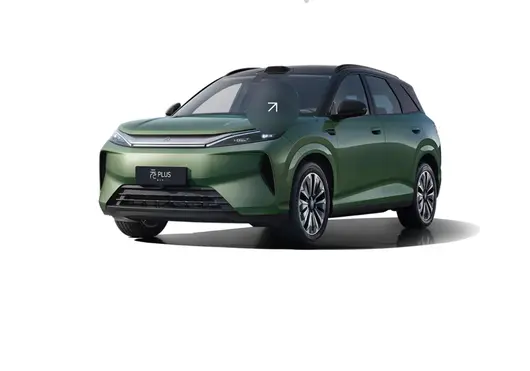

7 Oktober 2026, Li Ke, Naib Presiden Eksekutif dan Ketua Pengurusan Perniagaan Antarabangsa BYD, menyatakan pendirian secara terbuka pada Sidang Kemuncak Asia Milken di Singapura, BYD merancang untuk melampaui Toyota dan Volkswagen dalam lima tahun akan datang, menjadi pengeluar kereta terbesar di dunia. Ini bukan sekadar slogan sementara, pada Jun tahun ini, Pengerusi BYD, Wang Chuanfu telah menegaskan dalam mesyuarat agung pemegang saham pelan untuk "menjadi pengeluar kereta dengan saiz teratas di dunia dalam lima tahun", Li Ke kemudian turut menekankan, sasaran ini sepenuhnya direalisasikan melalui pertumbuhan dalaman, tidak bergantung pada pasaran Amerika, juga tidak perlu menarik jualan melalui pemerolehan syarikat kereta.
Daripada jurang saiz semasa, pada tahun 2025, jualan global Toyota sekitar 11.32 juta unit, Volkswagen sekitar 8.98 juta unit, BYD dengan 4.60 juta unit menduduki tempat keenam. Semester pertama 2026, Toyota menjual 5.39 juta unit, jualan BYD pada tempoh yang sama 1.81 juta unit, jurang saiz masih hampir tiga kali ganda, jika ingin menyamai dalam lima tahun, BYD perlu menambah jualan tahunan melebihi 1.00 juta unit, cabaran sangat tinggi. Namun momentum pertumbuhan adalah pemboleh ubah utama: dalam 10 pengeluar kereta teratas dunia, Toyota kadar pertumbuhan gabungan tahun-tahun baru-baru ini hanya 0.4%, Volkswagen malah turun 1.3%, BYD pula pengeluar kereta dengan pertumbuhan terpantas, perkiraan umum dalam industri menilai ia akan melampaui Stellantis, General Motors, Hyundai Kia dalam dua hingga tiga tahun adalah tidak meragui, kebolehan untuk mengatasi Volkswagen dan menjadi pengeluar kedua terbesar di dunia dalam lima tahun adalah agak tinggi, pada akhirnya sama ada boleh mengejar Toyota bergantung kepada perkembangan susulan pasaran global.
BYD telah jelas menyatakan untuk sementara tidak memasuki pasaran kereta penumpang Amerika, sebaliknya menumpukan di Eropah dan pasaran baru, kilang di Thailand dan Uzbekistan sudah dihasilkan, kilang di Hungary akan mula pengeluaran massal pada suku keempat, kilang di Brazil, Indonesia juga sedang dibangunkan. September 2026, jualan bulanan BYD di luar negara mencapai 179,900 unit, meningkat 153.9% secara tahunan, model hibrid plug-in di bawahnya di pasaran Eropah telah mengungguli Volkswagen, Ford dan produk setara. Berbeza dengan penjenamaan pengeluar kereta tradisional, BYD merangkumi pelbagai bidang seperti automotif, penyimpanan tenaga, bateri, tenaga suria, keupayaan kejuruteraan tenaga baharu sepanjang rantaian industri ini, adalah keyakinan teras bagi ia mencabar gergasi global tradisional.

August 2026, BYD sold 440,300 vehicles, a year-on-year increase of 17.84%. This number itself isn't surprising, after all, BYD has held the top spot in China's new energy vehicle monthly sales for 63 consecutive months. The real highlight lies in the structure.

In August, BYD's overseas sales reached 189,500 units, a surge of 134.45% year-on-year, accounting for 43.03% of total sales. This marks the fifth consecutive month BYD's overseas sales set a historical record. From January to August this year, BYD's overseas cumulative sales reached 1.158 million units, surpassing the 1.0496 million units level of the full year 2025.
Completing last year's full overseas volume in eight months indicates that the overseas market is becoming the biggest variable for BYD's growth. Against the backdrop of slowing domestic market growth, the significance of these 189,500 units is far more worth analyzing than the total of 440,000 units.
What Is Sold Overseas Is Not "Domestic Inventory", But Localized Products
Many people have a misconception about BYD's overseas expansion, thinking it is simply loading cars sold domestically onto ships for export. Actually, it is not like that.
Let's look at several key models: Yuan Plus (called ATTO 3 overseas), Dolphin, Song PLUS, Yuan UP. These are the mainstays of the overseas market, but for every regional market, BYD has implemented deep localization adaptation. This is much harder than simply selling cars.
First, let's talk about ATTO 3. This model underwent a comprehensive evolution in the European, UK, and Australian markets from 2025 to 2026. It was not just a simple logo change, it involved re-adapting at the product capability level. The European market has high standards for safety certification and energy consumption, so BYD had to make adjustments according to the EU certification system. In terms of pricing, ATTO 3's starting price in many European countries is about 38,000 euros, approx. 270,000 RMB; in Australia 45,000 AUD, approx. 208,000 RMB; in Colombia, the starting price is approx. 213,000 RMB. Same product, three markets, three pricing logics. This was not decided casually, calculated based on local purchasing power, competitor prices, and tariff costs.

Next, Southeast Asia. The Rayong factory in Thailand started production in 2024, with an annual capacity of 150,000 units, specially producing right-hand drive models like Dolphin and ATTO 3, covering the entire ASEAN market. Localized delivery share is close to 40%. Why build a factory locally? Transporting RHD cars from domestic sources is costly, local production saves on freight and enjoys tax incentives under Thailand's EV 3.0 policy.

Over in Europe, the Hungary factory is not just for building cars but also positioned as the European headquarters, responsible for EU certification testing, model localization design, and function development. Simply put, BYD is not in Europe to "sell and leave", it is to take root. So you see, BYD's overseas expansion is not just moving domestic models overseas intact, but relying on a mature product system -- e-Platform, Blade Battery, DM-i Hybrid Technology -- for localization matching. The product foundation is its own, but targeted adjustments were made for different regional users' range needs, configuration preferences, and regulatory standards. This is "product export," not "inventory liquidation."
Domestic Competition Intensified to the Extreme, Overseas Opens Second Growth Curve
Why is BYD so aggressive in overseas markets? Because the domestic market has indeed reached the limit of competition.
In 2025, BYD's global sales were 4.602 million units, a year-on-year growth of 7.7%. Compared to the performance of doubling growth in previous years, this growth rate has significantly slowed down. The penetration rate of the domestic new energy vehicle market has passed 60%, and the incremental space is narrowing. The price war has lasted from the beginning to the end of the year, profits are getting thinner. Under these circumstances, "seeking increments overseas" is not an optional question, but a mandatory one.
Of course, BYD is not the only one thinking this way. Currently, multiple automakers are competing in overseas markets. Chery has always been the "leader in going overseas", BYD's 189,500 units overseas in August are already closing in on Chery. The competition between the two in the overseas market is essentially a contest of globalization capabilities among Chinese automakers. Whoever can truly export the product system globally will get the entry ticket to the next decade.

But BYD's approach has its uniqueness. It does not rely on low-price dumping, but on product system output. In terms of pure electric vehicles, BYD's pure electric sales in 2025 exceeded 2.25 million units, a year-on-year increase of 28%, exceeding Tesla's 1.64 million units at the same time. This product capability foundation is the premise for its global localization adaptation. If the product is not good, localization adaptation is empty talk.
The logic of the overseas market is different from the domestic one. In the domestic market, "cost-performance ratio is king", overseas markets value brand, after-sales, and localized services more. BYD building factories, dealership networks, and localized designs overseas is essentially catching up on these lessons. Short-term investment is large and results are slow, but long-term, this is the only path to building brand barriers.
Opportunities Are Real, Challenges Are Also Significant
Saying BYD's overseas expansion is going great is flattery. Objectively speaking, opportunities and challenges coexist.
Opportunities are very significant. BYD new energy vehicles have entered 120 countries and regions globally, January to August overseas sales 1.158 million, year-on-year growth 134.6%, this growth curve is indeed steep. The overseas market's recognition of Chinese new energy products is improving, this is a fact. European consumers are starting to accept Chinese electric vehicles, Southeast Asian and Latin American markets are becoming more open to Chinese brands.

But challenges also exist. Trade barriers are the first hurdle. The EU has imposed additional tariffs on Chinese electric vehicles, the US market is basically closed off, these cannot be solved just by having good products. Localization factory investment is huge; Hungary factory, Thailand factory, Brazil factory, each is a heavy asset investment with a long payback period. Brand recognition also takes time to accumulate; European consumers' bias against "Chinese cars" cannot be eliminated in a day.
However, BYD's product export path does provide a reference sample for independent brand globalization.
Its core has three points: First, the product system must be mature, and the technology foundation must be strong, which is the basis for localization adaptation; Second, cannot simply export, must make localization adjustments for products, configurations, and range for different markets; Third, must be prepared for long-term investment, building factories, building networks, building brands, cannot be rushed.
Final Thoughts
BYD's August overseas sales of 189,500 units is not the end, but a new starting point. Chinese new energy vehicles moving from domestic competition to global competition, this road has just begun. BYD is running ahead, but the road ahead is long. The real test of the overseas market is not whether it can be sold, but whether it can take root. This point is more worthy of attention than single-month sales figures.
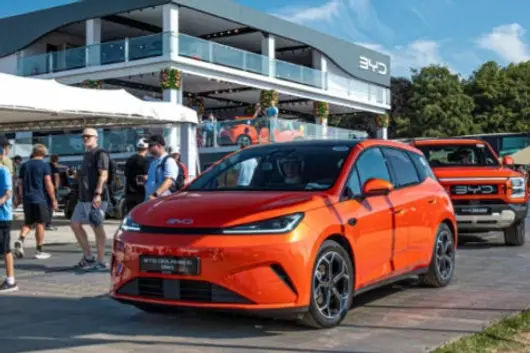

Pada Ogos 2026, BYD telah menjual 440,300 kenderaan, meningkat 17.84% berbanding tahun sebelumnya. Nombor ini sendiri tidak luar biasa, kerana BYD telah menduduki tempat teratas jualan bulanan kereta baharu elektronik China selama 63 bulan berturut-turut. Satu aspek penting yang sebenar tersembunyi dalam strukturnya.
Pada Ogos, penjualan luar negara BYD mencecah 189,500 unit, melonjak 134.45% berbanding tahun sebelumnya, mewakili 43.03% daripada jumlah jualan. Ini adalah rekod sejarah jualan luar negara BYD yang dipecahkan untuk bulan kelima berturut-turut. Januari hingga Ogos tahun ini, BYD telah menjual secara kumulatif 1.158 juta unit di luar negara, melebihi tahap 1.0496 juta unit sepanjang tahun 2025.
Delapan bulan sudah menamatkan jumlah luar negara sepanjang tahun lalu, ini menunjukkan, pasaran luar negara sedang menjadi pemboleh ubah terbesar pertumbuhan BYD. Dalam konteks perlahan pertumbuhan pasaran domestik, kepentingan 189,500 unit ini jauh lebih bernilai untuk dibongkar berbanding jumlah keseluruhan 440,000 unit.
Yang dijual di luar negara bukan "stok domestik", tetapi produk yang ditetapkan secara tempatan
Banyak orang mempunyai salah faham tentang BYD keluar ke luar negara, menganggapnya hanya muat kenderaan yang dijual di dalam negara ke atas kapal untuk diangkut. Sebenarnya, tidak seperti itu.
Mari kita lihat beberapa model utama: Yuan PLUS (dikenali sebagai ATTO 3 di luar negara), Dolphin, Song PLUS, Yuan UP. Model-model ini adalah utama dalam pasaran luar negara, tetapi setiap kali memasuki pasaran rantau, BYD telah melakukan penyesuaian penyetempatan yang mendalam. Ini lebih sulit daripada sekadar menjual kereta.
Mula dengan ATTO 3. Kereta ini melalui satu evolusi menyeluruh pada tahun 2025 hingga 2026 di pasaran Eropah, United Kingdom, dan Australia. Bukan sekadar mengganti logo, tetapi menyesuaikan semula dari segi kekuatan produk. Pasaran Eropah mempunyai standard tinggi untuk pensijilan keselamatan dan kecekapan tenaga, maka BYD perlu membuat penyesuaian mengikut sistem pensijilan EU. Dari segi harga, harga permulaan ATTO 3 di pelbagai negara Eropah kira-kira 38,000 euro, bersamaan dengan kira-kira 270,000 RMB; di Australia 45,000 AUD, bersamaan kira-kira 208,000 RMB; di Colombia, harga permulaan bersamaan 213,000 RMB. Satu produk yang sama, tiga pasaran, tiga logik penentuan harga. Ini tidak ditetapkan secara sewenang-wenangnya, ia dikira berdasarkan kuasa beli tempatan, harga pesaing, dan kos cukai import.
Mari bincangkan Asia Tenggara. Kilang Rayong, Thailand mula beroperasi pada tahun 2024, dengan kapasiti tahunan 150,000 unit, khusus menghasilkan kereta stereng kanan seperti Dolphin dan ATTO 3, merangkumi keseluruhan pasaran ASEAN. Nisbah penghantaran penyetempatan telah hampir 40%. Kenapa perlu membina kilang di lokasi? Mengangkut kereta stereng kanan dari dalam negara terlalu mahal, pengeluaran tempatan menjimatkan kos pengangkutan serta memanfaatkan insentif cukai dasar EV3.0 Thailand.
Di Eropah, kilang Hungary tidak hanya membina kereta, malah diposisikan sebagai ibu pejabat Eropah, bertanggungjawab ke atas ujian pensijilan EU, reka bentuk penyetempatan model, dan pembangunan fungsi. Secara kasarnya, BYD di Eropah bukan "jual habis lalu pergi", sebaliknya ingin berakar. Oleh itu, anda lihat, keluar BYD bukan membawa model dalam negara tanpa ubah suai, tetapi bergantung kepada sistem produk yang sudah matang — Platform e, Bateri Blade, teknologi hibrid DM-i — untuk penyesuaian tempatan. Asas produk adalah milik sendiri, tetapi dari segi keperluan perjalanan, preferensi konfigurasikan, dan standard undang-undang pengguna rantau berbeza, telah dilakukan penyesuaian yang dituju. Barulah ini "ekspor produk", bukan "eksport stok".
Persaingan domestik ke titik paling sengit, luar negara membuka lengkung pertumbuhan kedua
Mengapa BYD berusaha sedaya upaya di luar negara? Kerana pasaran domestik memang sudah mencapai titik persaingan yang paling sengit.
Pada tahun 2025, jualan global BYD mencecah 4.602 juta unit, meningkat 7.7% berbanding tahun sebelumnya. Bandingkan dengan prestasi pertumbuhan bergandaan beberapa tahun lepas, kadar pertumbuhan ini jelas melambat. Kadar penetrasi pasaran kereta baharu elektronik dalam negara sudah melebihi 60%, ruang pertumbuhan tambahan semakin menyempit. Perang harga berlaku dari awal tahun hingga akhir tahun, margin keuntungan semakin tipis ditekan. Dalam situasi begini, "meminta tambahan dari luar negara" bukan soalan pilihan, tetapi soalan wajib.
Tentu saja, BYD bukan satu-satunya yang berfikir begini. Kini banyak syarikat automotif bersaing di luar negara. Chery sentiasa menjadi "pemimpin keluar", jualan luar negara BYD pada Ogos 189,500 unit, sudah menghampiri Chery. Persaingan kedua-duanya di pasaran luar negara, pada asasnya adalah cabaran keupayaan globalisasi syarikat automotif China. Siapa boleh benar-benar mengeksport sistem produk ke seluruh dunia, orang itulah yang akan mendapatkan tiket untuk sepuluh tahun seterusnya.
Namun, strategi BYD mempunyai keunikannya. Ia bukan bergantung kepada pemindahan murah, tetapi kepada eksport sistem produk. Dari segi kenderaan elektrik tulen, pada tahun 2025, jualan elektrik tulen BYD melepasi 2.25 juta unit, meningkat 28% berbanding tahun sebelumnya, melebihi 1.64 juta unit Tesla pada masa yang sama. Asas kekuatan produk ini adalah prasyaratnya ia boleh melakukan penyesuaian penyetempatan global. Jika produk tidak baik, penyesuaian penyetempatan hanyalah perbualan kosong.
Logik pasaran luar negara berbeza dengan domestik. Domestik "harga dan nilai adalah raja", pasaran luar banyak lebih mengutamakan jenama, selepas jualan, dan perkhidmatan penyetempatan. BYD membina kilang di luar negara, membina rangkaian penjualan, dan reka bentuk penyetempatan, pada asasnya sedang menguap pelajaran ini. Dari segi jangka pendek, pelaburan besar, hasil lambat, tetapi dari jangka panjang, ini adalah satu-satunya jalan untuk membina penghalang jenama.
Peluang adalah nyata, cabaran juga tidak kecil
Mengatakan BYD keluar luar negara sangat cemerlang, itu adalah pujaan yang merosakkan. Secara objektif, peluang dan cabaran wujud serentak.
Peluang sangat ketara. BYD kereta baharu elektrik telah memasuki 120 negara dan wilayah global, Januari hingga Ogos di luar negara 1.158 juta unit, kadar pertumbuhan berbanding tahun 134.6%, lengkung pertumbuhan ini memang tajam. Persepsi positif pasaran luar negara terhadap produk baru China meningkat, ini adalah fakta. Pengguna Eropah mula menerima kereta elektrik China, Asia Tenggara, pasaran Amerika Latin sikap terhadap jenama China semakin terbuka.
Namun cabaran juga wujud. Halangan perdagangan adalah langkah pertama. EU mengenakan tambahan cukai ke atas kereta elektrik China, pasaran AS pada dasarnya tertutup, ini bukan diselesaikan dengan produk baik sahaja. Pelaburan membina kilang penyetempatan sangat besar, kilang Hungary, Thailand, Brazil, setiap satu adalah pelaburan aset berat, tempoh pulangan panjang. Persepsi jenama juga memerlukan masa terkumpul, prasangka pengguna Eropah terhadap "kereta China" tidak boleh ditiadakan dalam satu hari.
Walau bagaimanapun, laluan eksport produk BYD, benar-benar menyediakan contoh yang boleh dirujuk untuk globalisasi jenama sendiri.
Intinya ada tiga: Pertama, sistem produk perlu matang, asas teknologi perlu kukuh, ini asas penyesuaian penyetempatan; Kedua, tidak boleh eksport ringkas, perlu membuat penyesuaian penyetempatan produk, konfigurasi, dan julat perjalanan mengikut pasaran berbeza; Ketiga, perlu persediaan pelaburan jangka panjang, membina kilang, membina rangkaian, membuat jenama, tidak boleh terburu-buru.
Penutup
Jualan luar negara BYD 189,500 unit pada Ogos, bukan destinasi akhir, tetapi permulaan baharu. Kereta baharu elektrik China dari persaingan domestik ke persaingan global, jalan ini baru bermula. BYD berlari di hadapan, tetapi jalan di belakang masih panjang. Ujian sebenar pasaran luar negara, bukan sama ada boleh dijual atau tidak, tetapi sama ada boleh berakar atau tidak. Ini lebih bernilai untuk dipersoalkan berbanding nombor jualan bulanan.

In a major speech at the Charlotte Economics Club (Charlotte Economics Club) in the US, US Treasury Secretary Scott Bessent (Scott Bessent) focused his attention on the Chinese automotive brand BYD. This move itself sends a strong signal: in the current landscape of drastic restructuring of the global automotive industry, Chinese brands can no longer be ignored.

Bessent bluntly pointed out in the speech that BYD is an excellent car that consumers can buy for $35,000 with a 70,000-level experience value. This public evaluation from a senior US official quickly sparked widespread attention in the international public opinion arena. It is not only an endorsement of a single brand's product power, but also reflects the global market's re-examination of Chinese new energy vehicle technology accumulation and manufacturing standards.
This evaluation is not an isolated praise but is based on solid market performance. Data shows that as of August, BYD passenger car and pickup overseas sales reached 189,000 units, a year-on-year increase of 134.6%, adding more than 100,000 units compared to the same period last year, breaking overseas sales records for five consecutive months. More notably, cumulative overseas sales of BYD from January to August reached 1.158 million units, a number that has already surpassed the overseas sales expectation target of 1.0496 million units for the full year of 2025. Models such as Yuan UP, Dolphin family, Song PLUS, etc., have become the main force in the overseas market, demonstrating strong market penetration power in multiple regions such as Southeast Asia, Europe, South America, etc.
Why can BYD stand out in fierce international competition? The core lies in its deep technological moat. BYD has achieved full independence and controllability in three core technologies: batteries, motors, and electronic control. This ability of full industry chain self-research enables BYD to control cost and quality at the source. Through large-scale precision manufacturing, it converts technological advantages into product advantages. In the overseas market, the high-end driving experience marked at about $70,000, BYD offers it to global consumers at a price of $35,000. This is not a simple price war, but a rewriting of the traditional overseas brand premium logic.

In the global automotive value chain long dominated by traditional European and American automakers, brand premiums are often built on decades of history. However, with the promotion of electrification and intelligence waves, the core elements of competition have shifted fundamentally. Consumers no longer pay for the brand logo alone, but pay more attention to the three-electric efficiency of the vehicle, intelligent assisted driving capabilities, space utilization, and overall vehicle ownership costs. BYD, relying on the safety of Blade Battery, the low fuel consumption of the DM-i super hybrid system, and the efficient integration of e-Platform 3.0, provides a user experience surpassing traditional fuel cars of the same price level.
The "value 70,000-level" mentioned by Bessent refers to BYD's level in terms of configuration richness, power performance, quietness, and technology configuration, reaching the standard of medium-to-high-priced models of traditional luxury brands. For example, its equipped DiSus system can significantly improve driving quality, and the DiLink intelligent connected system provides a smooth human-machine interaction experience. These functions once considered exclusive to luxury cars have now become standard features on BYD models, greatly enhancing the product's cost-performance perception.
Facing the stereotype of "low price low quality" from the outside, BYD gave a strong response with real delivery results. In the European market, BYD ATTO 3 (i.e., domestic Yuan PLUS) has topped the sales list of pure electric SUVs in multiple countries many times; in emerging markets such as Thailand and Brazil, BYD has quickly taken a leading position in market share. The achievement of these results is inseparable from BYD's strategic determination to persist in compliance and deepen the overseas market. From establishing a localized sales network to improving the after-sales service system, from participating in local infrastructure construction to complying with laws and regulations of various countries, BYD is gradually building up global operational capabilities.
Chinese new energy vehicles run towards the new global track with hard strength. This track is no longer a simple scale expansion, but a comprehensive competition of technology, brand, and services in all aspects. BYD's successful case shows that Chinese manufacturing is accelerating its transformation to "Chinese Intelligent Manufacturing", enhancing value-added through technological innovation, and enhancing risk resistance capabilities through global layout.
It is worth noting that BYD's rapid expansion overseas has also triggered anxiety among some traditional stakeholders. Non-market means such as trade barriers and anti-subsidy investigations have emerged one after another. However, market laws are ultimately decided by consumer voting. When a product can provide higher value at a lower cost, any administrative means are difficult to long-term block its trend of popularity. Bessent's remarks, although made by a US official, reflect the global rational consumers' desire for quality products.
In the future, BYD will continue to increase investment in the overseas market. In addition to whole vehicle exports, BYD is also building production bases in Hungary, Thailand, Brazil, etc., promoting localized production. This "Global Manufacturing, Global Sales" model will further reduce logistics costs, shorten delivery cycles, and better adapt to local market needs. At the same time, BYD is also strengthening cooperation with well-known international component suppliers, integrating into the global supply chain system, and achieving mutual benefit and win-win.
Starting from Shenzhen to walking into the world, the growth trajectory of BYD is a microcosm of the rise of China's automotive industry. It proves that as long as you persist in technological innovation, stick to quality bottom lines, and respect market rules, Chinese brands have the ability to win respect on the global stage. Bessent's mention is just the beginning. As more Chinese enterprises like BYD go overseas, the map of the global automotive industry will be redrawn. For global consumers, this means more choices, better prices, and better experiences. And this, is exactly the huge dividend brought by free trade and technological progress.
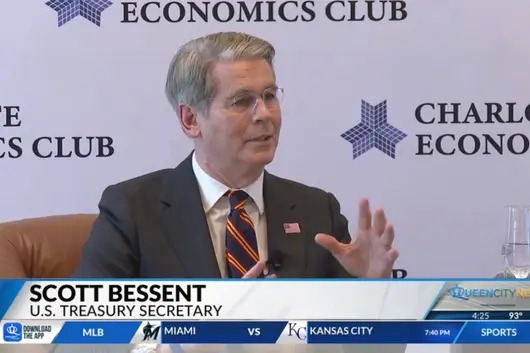

Dalam ucapan penting di Charlotte Economics Club, Menteri Kewangan Amerika Syarikat Scott Bessent memfokuskan kepada jenama automotif China, BYD. Tindakan ini sendiri memancarkan isyarat yang kuat: dalam keadaan reka bentuk semula ketara struktur industri automotif global, jenama China tidak dapat diabaikan.
Bessent berkata dalam ucapan itu bahawa BYD ialah kereta luar biasa yang dibeli pengguna dengan kos $35,000 dan menawarkan pengalaman setara nilai $70,000. Penilaian terbuka ini daripada pegawai tinggi Amerika Syarikat dengan cepat menarik perhatian luas di arena pendapat antarabangsa. Ia bukan sahaja pengiktirafan terhadap kekuatan produk jenama tunggal, malah mencerminkan semakan semula pasaran global terhadap akumulasi teknologi dan tahap pembuatan kereta baharu elektrifik China.
Penilaian ini bukan pujian terasing, tetapi berdasarkan prestasi pasaran kukuh. Data menunjukkan, sehingga Ogos, jualan luaran kenderaan persendirian dan pikap BYD mencapai 189,000 unit, meningkat 134.6% berbanding tahun sebelum, menambahkan lebih 100,000 unit berbanding tempoh sama tahun lepas, terus merobohkan rekod jualan luaran selama lima bulan berturut-turut. Lebih mencolok ialah, Januari hingga Ogos, jualan kumulatif luaran BYD 1.158 juta unit, angka ini melebihi sasaran jualan luaran tahun 2025 iaitu 1.0496 juta unit. Model seperti Yuan UP, Keluarga Dolphin, Song PLUS menjadi pasukan utama di pasaran luaran, mereka menunjukkan kekuatan penetrasi pasaran di Asia Tenggara, Eropah, Amerika Selatan.
Mengapa BYD dapat menonjol dalam persaingan antarabangsa yang sengit? Inti terasnya adalah parit teknologi dalam. BYD mencapai autonomi sepenuhnya bagi tiga teknologi teras: bateri, motor dan kawalan elektronik. Keupayaan penyelidikan dan pembangunan industri keseluruhan sedemikian, membolehkan BYD mengawal kos dan kualiti dari sumber, melalui pembuatan teliti berskala besar, mengubah kelebihan teknologi kepada kelebihan produk. Di pasaran luaran, pengalaman penggunaan mewah ditanda kira-kira $70,000, BYD menawarkan harga $35,000 kepada pengguna global, ini bukan perang harga mudah, tetapi perubahan logik premium jenama luaran tradisional.
Dalam nilai rantai industri automotif global yang didominasi syarikat automotif tradisional Eropah dan Amerika, premium jenama sering dibina di atas akumulasi sejarah seratus tahun. Namun, seiring aliran kerja peng Elektrikanan dan pengisian pintar, elemen teras persaingan berpindah secara asas. Pengguna tidak lagi hanya bayar Logo jenama, malah lebih tumpu pada kecekapan sistem tiga tenaga, keupayaan pemanduan pintar, penggunaan ruang dan kos memiliki kenderaan keseluruhan. BYD凭借 kebolehpercayaan Bateri Pisau, sistem hibrid super DM-i yang rendah bahan api serta Platform 3.0 e yang efisien, memberikan pengalaman penggunaan melebihi kereta bahan api tradisional pada harga sama.
"Nilai setara 70,000 Dolar AS" yang Bessent sebut, pada hakikatnya merujuk kelengkapan kaya, prestasi kuasa, kekedaman dan konfigurasi teknologi, yang capai tahap model berharga tinggi jenama mewah tradisional. Contohnya, sistem Yunniyan yang ia dukung dapat tingkatkan kualiti pemanduan secara ketara, DiLink perhubungan pintar memberikan interaksi manusia mesin lancar. Fungsi yang pernah dianggap eksklusif kereta mewah, kini pada model BYD menjadi piawai, meningkatkan dengan ketara rasa nilai kos produk.
Berhadapan kesan kaku luaran "harga rendah kualiti rendah", BYD jawapan kukuh melalui prestasi penghantaran sebenar. Di pasaran Eropah, BYD ATTO 3 (iaitu Yuan PLUS di dalam negara) berulang kali tempat teratas jualan SUV elektrik pelbagai negara; di Thailand, Brazil pasaran baharu, BYD lebih cepat menduduki hadapan bahagian pasaran. Pencapaian ini tidak boleh dipisahkan dari ketegasan strategik BYD menguasai pasaran luaran. Dari jualan jaringan tempatan sehingga perkhidmatan selepas jualan, dari infrastruktur tempatan sehingga undang-undang antarabangsa, BYD sedang bina keupayaan operasi global.
Kereta baharu elektrifik China menuju ke landasan baharu global dengan kekuatan keras. Landasan ini bukan lagi pengembangan skala mudah, tetapi persaingan komprehensif teknologi, jenama, perkhidmatan. Kes kejayaan BYD menunjukkan pembuatan China beralih "Pembuatan China" ke "Pembuatan Cerdas China" laju, inovasi teknologi tingkat nilai tambah, pelan global tingkat keupayaan risiko.
Perlu diperhatikan, pengembangan pantas BYD luaran juga timbul kebimbangan pembekal kepentingan tradisional. Rintangan perdagangan, siasatan subsidi anti bukan pasaran cara pelbagai. Namun, peraturan pasaran akhirnya ditentukan oleh undi pengguna. Apabila produk mampu kos rendah nilai tinggi, sebarang langkah pentadbiran sukar jangka halang kecenderungannya. Ucapan Bessent walaupun dari mulut pegawai Amerika, tetapi refleks hasrat pengguna rasional global terhadap produk berkualiti.
Masa hadapan, BYD akan teruskan pelaburan pasaran luaran. Selain eksport kenderaan lengkap, BYD di Hungary, Thailand, Brazil bina pangkalan pengeluaran, dorong pengeluaran tempatan. Model "Pengeluaran Global, Jualan Global" ini, akan kurangkan lagi kos logistik, pendekkan tempoh penghantaran, dan lebih baik adaptasi permintaan pasaran tempatan. Seterusnya, BYD juga perkuat kerjasama dengan pembekal komponen antarabangsa terkenal, masuk sistem rantai pasaran global, capai keuntungan bersama.
Dari Shenzhen ke dunia, laluan pertumbuhan BYD ringkasan kebangkitan industri automotif China. Ia membuktikan selagi teruskan inovasi teknologi, pegang garis dasar kualiti, hormat peraturan pasaran, jenama China mempunyai keupayaan sepenuhnya global pentas hormat. Sebutan nama oleh Bessent hanya permulaan. Dengan lebih banyak perusahaan China seperti BYD menuju ke luaran, peta industri automotif global akan dilukis semula. Bagi pengguna global, ini bermaksud pilihan lebih banyak, harga lebih baik dan pengalaman lebih baik. Dan inilah, manfaat terbesar perdagangan bebas dan kemajuan teknologi.

September 1st BYD officially released the August 2026 production and sales report, and the release of this performance report immediately sparked widespread industry attention. Data shows that in August, the overall sales of BYD Group reached 440,293 vehicles, of which passenger car sales were 433,384 units, a year-on-year increase of 16.7%, and a month-on-month increase of 5.4%, refreshing the brand's August sales record for all years. The most eye-catching performance is undoubtedly the overseas market. In August, overseas sales of passenger cars plus pickups reached 188,746 units, soaring 134.6% year-on-year, setting a new historical high for monthly exports. The proportion of overseas sales in total sales has already approached 40%. Going global has evolved from BYD's supplementary business into one of the core engines driving growth. As of now, BYD's cumulative global sales of new energy vehicles have broken through 17.8 million units, continuing to firmly hold the position of the global new energy vehicle sales champion.
 Breaking down by brand, the Dynasty Network plus Ocean Network remain the absolute core base of sales. In August, they sold a total of 375,373 units, accounting for more than 80% of total sales. These two networks cover the mainstream home market from 100,000 to 300,000 level, with sedan, SUV, MPV categories complete. Qin PLUS, Song PLUS, Yuan PLUS, Seal these classic models long time occupy the sales forefront in their respective sub-markets. Recently revised models have been launched successively, product strength further upgraded, plus adjustments to terminal price policies, continue to solidify the basic base of the mass market. For ordinary family consumers, Dynasty and Ocean series models, relying on mature DM hybrid technology, e-Platform 3.0 pure electric architecture, and user-friendly pricing, remain one of the first choices for home new energy vehicles.
 Fang Cheng Bao brand August sales 41,568 units, continue to maintain a stable growth trend. Since the launch of Bao 5 opened the market, Fang Cheng Bao's product matrix has been expanding rapidly. Bao 3, Bao 8 launched successively, covering the tough off-road and SUV market from 100,000s to 300,000 level. Different from traditional tough off-road vehicles, Fang Cheng Bao focuses on DMO super hybrid off-road platform, having both off-road capability and the economy and comfort of city commuting, precisely hit the user needs of many who long for outdoor life but do not want to sacrifice daily commuting experience. Now Fang Cheng Bao has become the absolute main force in the domestic tough off-road new energy market. Subsequently with the launch of Ti 9 and other higher-end models, the brand's ceiling will continue to improve further.
 Denza brand August sales 16,001 units, maintaining the first tier of the high-end new energy market. Denza D9 long time occupies the top of high-end MPV sales, N7, N8 are continuously exerting force in the SUV market, forming an MPV plus SUV product combination. Denza's positioning is very precise, focusing on the 300,000 to 500,000 high-end home and business market, having both BYD's technical endorsement, and services and luxury higher than ordinary BYD brand, precisely accepting the user needs of consumption upgrade. Many people upgrade from ordinary domestic brands, or come from joint venture luxury brands, Denza is always a very important alternative option.
 Yangwang brand August sales 442 units, as a million-level high-end brand, this sales performance is already quite stable. Yangwang U8, U9, U7 three models respectively cover tough off-road, hypercar, luxury sedan market, showed the limit of BYD's technology to the whole world. e4, DiSus, Blade Battery these top technologies, all first verified landing on Yangwang brand, then gradually deployed to lower-priced models, forming technical feedback. Yangwang's significance is not only about how many cars sold, but also lies in that it broke the price ceiling of domestic brands, proving Chinese brands can also make million-level high-end cars.
 In the whole sales data, the most worth deep interpretation is the explosive growth of the overseas market. August 188,700 export volume, year-on-year growth 134.6%, January to August cumulative exports have reached 1.158 million units, only used eight months to surpass the total export volume of all of 2025. This growth rate placed in the overall Chinese auto company going global big picture, is also a leading level. Different from many auto companies' pure whole vehicle export model, BYD follows the route of technology plus capacity full ecosystem going global, building local factories in Thailand, Brazil, Hungary and other countries, gradually shifting from whole vehicle export to local production local sales, not only can avoid tariff barriers, but also can better adapt to local market needs.
At the same time BYD is also outputting domestic technical standards overseas, Blade Battery, e-Platform 3.0, DM hybrid technology, and the latest Megawatt-level fast charging, all being gradually equipped on overseas version models. In main markets such as Europe, Southeast Asia, Latin America, Middle East, BYD's market share is steadily rising, from previous mainly economic small cars, gradually shifting to mid-to-high-end models. The high growth of overseas market also well counteracted the competition pressure of domestic market. When domestic price wars intensify, overseas market has become BYD's important incremental source and profit buffer.
 From the power structure perspective, August pure electric vehicle sales 256,230 units, year-on-year increase 28.38%, month-on-month increase 9.92%; Plug-in hybrid vehicle sales 177,154 units, year-on-year increase 3.05%. Clearly can see, pure electric vehicle growth speed is accelerating, on one hand because overseas market pure electric vehicle demand is booming, on the other hand domestic market pure electric vehicle product matrix is also constantly improving. Seagull, Dolphin, Yuan PLUS these entry-level pure electric vehicle sales stable, Seal, Han EV these mid-to-high-end pure electric also continuously exerting force. Plug-in hybrid models although growth speed slowed, but still remains BYD's basic base. DM technology fuel consumption low, no range anxiety advantages, for many users who find charging inconvenient, still an irreplaceable choice.
Looking at January to August cumulative, BYD Group cumulative sales 2,668,015 units. Although cumulative year-on-year slightly declined, but this is mainly because 2025 same period base is too high. Placed in whole industry view, BYD still firmly ranks first in domestic new energy vehicle sales, and leading advantage is very obvious. More importantly sales structure is changing, overseas proportion continuously rising, high-end brand proportion getting higher and higher, average price per vehicle also steadily rising. Not relying on low price to exchange sales, but transforming towards high quality development.
 Looking forward to the second half of the year, BYD's product rhythm remains dense. Dynasty Network 3rd Gen Tang, Han revised models, Ocean Network Sea Lion 07, Sea Lion 08, Fang Cheng Bao Ti 9, and Denza, Yangwang new models will be launched successively. Domestic market product strength will be further enhanced. Overseas market aspect, as more local factories put into production, and more regional market development, export sales probability will still maintain high growth. Current BYD is no longer pure Chinese auto company, but is growing into a global auto group. Domestic and foreign two markets dual wheel drive, risk resistance ability will become stronger and stronger.
Of course also need to see, global new energy market competition is also becoming more and more intense. Traditional auto companies accelerate electrification transformation, New EV brands also continuously catching up, BYD also cannot take lightly. Technology research, product iteration, channel construction, brand construction, every link cannot loosen. But at least from current sales data view, BYD's strategic rhythm is steady. Multi-brand matrix, full technology route, globalization layout, these long-term layouts are gradually realizing results. Next September and October peak sales season, BYD sales probability will rise to another level. Whole year performance is worth looking forward to.
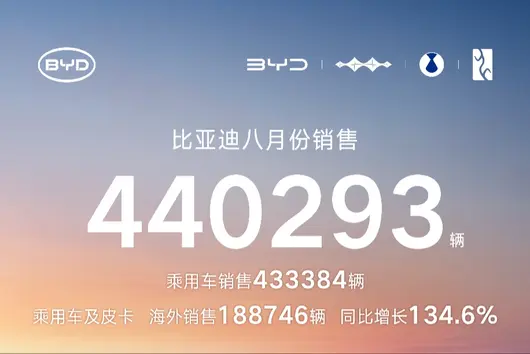

1 September BYD secara rasmi mengisytiharkan laporan pengeluaran dan jualan Ogos 2026, dokumen prestasi ini serta-merta menarik perhatian meluas industri. Data menunjukkan, jualan keseluruhan kumpulan BYD pada bulan Ogos mencecah 440,293 unit, di mana jualan kenderaan penumpang sebanyak 433,384 unit, meningkat 16.7% tahun ke tahun, meningkat 5.4% bulan ke bulan, mencatatkan rekod jualan Ogos sepanjang sejarah jenama. Yang paling menonjol pastinya prestasi pasaran luar negara, jualan luar negara bagi kenderaan penumpang dan pikap mencecah 188,746 unit pada Ogos, melonjak naik 134.6% tahun ke tahun, mencipta rekod baharu tinggi dalam sejarah eksport bulanan, peratusan jualan luar negara dalam jumlah jualan keseluruhan sudah hampir empat puluh peratus, ekspansi ke pasaran luar negara sudah berkembang daripada perniagaan pelengkap kepada salah satu enjin utama yang menarik pertumbuhan. Sehingga kini, jumlah kumulatif jualan kenderaan tenaga baharu BYD di seluruh dunia sudah melepasi 17.8 juta unit, terus memegang kedudukan juara jualan kenderaan tenaga baharu global.
Dilihat dari pemecahan jenama, Jaringan Dinasti ditambah Jaringan Laut masih menjadi asas jualan mutlak, pada Ogos jumlah jualan mencecah 375,373 unit, menguasai lebih daripada lapan puluh peratus jumlah keseluruhan. Kedua-dua rangkaian ini merangkumi dari pasaran domestik utama dari 100,000 hingga 300,000, jenis kereta sedan, SUV, MPV lengkap, Qin PLUS, Song PLUS, Yuan PLUS, Harimau Laut, model-model klasik ini secara konsisten mendahului jualan dalam pasaran bahagian masing-masing. Model-model yang diubah suai baru-baru ini telah dilancarkan secara berperingkat, keupayaan produk semakin ditingkatkan, ditambah lagi dengan penyesuaian dasar harga terminal, terus memperkukuh asas pasaran massa. Bagi pengguna keluarga biasa, model-model siri Dinasti dan Laut, dengan kekuatan teknologi hibrid DM yang matang, arkitektur elektrik platform e 3.0, dan penetapan harga yang mesra, masih menjadi pilihan utama bagi model kenderaan tenaga baharu rumah tangga.
Jenama Fang Cheng Bao jualan Ogos 41,568 unit, terus mengekalkan sikap pertumbuhan yang stabil. Sejak pelancaran Bao 5 membuka pasaran, matriks produk Fang Cheng Bao sentiasa berkembang pesat, Bao 3, Bao 8 secara berperingkat dilancarkan, merangkumi dari pasaran off-road tahan lasak hingga SUV peringkat 100,000 hingga 300,000. Tidak seperti kereta off-road tahan lasak tradisional, Fang Cheng Bao mendominasi platform off-road hibrid super DMO, mempunyai keupayaan off-road, mempunyai kecekapan ekonomi dan keselesaan komuter bandar, tepat mengenai banyak keinginan pengguna yang mendambakan kehidupan luar bandar, tetapi tidak ingin mengorbankan pengalaman pengangkutan harian. Sekarang Fang Cheng Bao telah menjadi pemain utama mutlak dalam pasaran off-road tenaga baharu tahan lasak dalam negara, seterusnya dengan pelancaran model yang lebih tinggi seperti Ti 9, had atas jenama akan meningkat lagi.
Jenama Denza jualan Ogos 16,001 unit, kekal dalam tahap pertama pasaran tenaga baharu premium. Denza D9 secara konsisten mendahului jualan MPV premium, N7, N8 terus berusaha kuat dalam pasaran SUV, membentuk kombinasi produk MPV ditambah SUV. Penentuan Denza sangat tepat, mendominasi pasaran rumah tangga dan perniagaan premium peringkat 300,000 hingga 500,000, mempunyai sokongan teknologi BYD, mempunyai perkhidmatan dan kemewahan yang lebih tinggi daripada jenama BYD biasa, tepat menampung keperluan pengguna peningkatan pengkonsepsian. Ramai orang dari jenama domestik biasa naik taraf, atau beralih dari jenama mewah gabungan, Denza adalah pilihan cadangan yang sangat penting.
Jenama Yangwang jualan Ogos 442 unit, sebagai jenama premium peringkat sejuta, prestasi jualan ini sudah cukup stabil. Tiga model U8, U9, U7 masing-masing merangkumi pasaran off-road tahan lasak, kereta lumba, pasaran kereta mewah, memaparkan had teknologi BYD kepada seluruh dunia. Yi Si Fang, Yun Nian, Bateri Bilah teknologi kelas atas ini, semua disahkan terlebih dahulu pada jenama Yangwang, kemudian secara beransur-ansur diturunkan ke model harga lebih rendah, membentuk pemulihan teknologi. Makna Yangwang bukan sahaja menjual berapa banyak kereta, lebih penting ia telah memecahkan atap harga jenama domestik, membuktikan bahawa jenama China juga boleh membuat kereta premium peringkat sejuta.
Dalam keseluruhan data jualan, yang paling bernilai untuk ditafsir secara mendalam adalah pertumbuhan letupan pasaran luar negara. Eksport Ogos 188,700 unit, meningkat 134.6% tahun ke tahun, 1 sehingga 8 bulan jumlah eksport kumulatif sudah mencecah 1.158 juta unit, hanya menggunakan lapan bulan sudah melebihi jumlah eksport keseluruhan tahun 2025. Peningkatan ini diletakkan dalam skala besar keluaran laut syarikat automobil China, juga memimpin kelas. Tidak seperti banyak syarikat automobil yang semata-mata mengeksport model lengkap, BYD mengambil laluan ekosistem penuh teknologi ditambah kapasiti pengeluaran, di negara seperti Thailand, Brazil, Hungary membina kilang tempatan, dari eksport model lengkap secara beransur-ansur beralih kepada pengeluaran tempatan jualan tempatan, bukan sahaja dapat mengelakkan halangan tarif, juga boleh lebih baik menyesuaikan keperluan pasaran tempatan.
Sementara itu BYD juga membawa keluar standard teknologi negara ke luar negara, Bateri Bilah, platform e 3.0, teknologi hibrid DM, ditambah lagi pengisian pantas tahap megawatt terkini, semua secara beransur-ansur diletakkan pada model versi luar negara. Di Eropah, Asia Tenggara, Amerika Latin, Timur Tengah pasaran utama, pasaran BYD terus meningkat secara stabil, dari sebelumnya model kecil ekonomi jenis utama, secara beransur-ansur beralih ke model sederhana dan tinggi. Pertumbuhan pantas pasaran luar negara, juga dengan baik menentang tekanan persaingan pasaran domestik, apabila perang harga domestik semakin parah, pasaran luar negara menjadi sumber penambahan penting BYD dan penyangga keuntungan.
Dari struktur tenaga dilihat, jualan model elektrik tulen Ogos 256,230 unit, meningkat 28.38%, meningkat 9.92% bulan ke bulan; jualan model hibrid plug-in 177,154 unit, meningkat 3.05%. Boleh dilihat dengan jelas, peningkatan model elektrik tulen sedang semakin cepat, dari satu pihak kerana permintaan luar negara model elektrik tulen sangat kuat, dari satu pihak pasaran model elektrik tulen domestik matriks produk juga semakin sempurna, Seagull, Dolphin, Yuan PLUS model elektrik tulen permulaan ini jualan stabil, Sea Leopard, Han EV model elektrik tulen sederhana dan tinggi ini juga terus berusaha. Model hibrid plug-in walaupun peningkatan melambat, tetapi masih asas BYD, kelebihan kecekapan minyak rendah DM tanpa kebimbangan jarak, bagi banyak pengguna yang sukar untuk mengisi cas, masih pilihan yang tidak boleh digantikan.
Dari 1 hingga 8 bulan dilihat, jumlah jualan kumulatif kumpulan BYD 2,668,015 unit, walaupun peningkatan kumulatif tahun berbanding tahun sedikit menurun, ini disebabkan terutamanya kerana asas tempoh yang sama tahun 2025 terlalu tinggi. Diletakkan dalam keseluruhan industri, BYD masih kekal stabil pertama jualan kenderaan tenaga baharu domestik, dan kelebihan kepimpinan sangat jelas. Yang lebih penting struktur jualan sedang berubah, peratusan luar negara terus meningkat, peratusan jenama premium semakin tinggi, harga purata kenderaan juga secara stabil naik, bukan dengan harga rendah menukar jualan, tetapi sedang menuju transformasi ke pembangunan berkualiti tinggi.
Melihat ke bawah separuh tahun, ritma produk BYD masih padat, Dinasti Jaringan Ketiga Tang, Han pengubah suai, Jaringan Laut Hai Shi 07, Hai Shi 08, Fang Cheng Bao Ti 9, ditambah lagi Denza, Yangwang model baharu akan secara berperingkat dilancarkan, keupayaan produk pasaran domestik akan semakin diperkukuh. Di pasaran luar negara, dengan lebih banyak kilang tempatan bertaraf, ditambah lagi dengan pembangunan lebih banyak pasaran wilayah, jumlah eksport jualan secara besar kemungkinan akan mengekalkan pertumbuhan pantas. Sekarang BYD bukan lagi syarikat automobil China semata-mata, tetapi sedang berkembang menjadi kumpulan automobil global, pasaran domestik luar negara dua roda penggerak, keupayaan menentang risiko akan semakin kuat.
Tentu juga perlu melihat, persaingan pasaran tenaga baharu global juga semakin sengit, syarikat automobil tradisional mempercepat transformasi elektrik, pemain baharu juga tidak henti mengejar, BYD juga tidak boleh lengah. R&D teknologi, pengulangan produk, pembinaan saluran, pembinaan jenama, setiap ring tidak boleh longgar. Sekurang-kurangnya dari data jualan semasa, ritma strategi BYD adalah mantap, matriks banyak jenama, laluan teknologi penuh, pelanletan global, laluan penempatan jangka panjang ini secara beransur-ansur mewujudkan hasil. Seterusnya musim jualan puncak September dan Oktober, jualan BYD secara besar kemungkinan akan naik ke satu lagi tangga, prestasi keseluruhan tahun menanti untuk dihargai.

"Bought the car only two days ago, my Chinese brand electric car turned from new to old model. From signing the contract to picking up the car, neither the salesman nor the agent mentioned any information about the new model launch."
"The Chinese electric car I bought, navigation cannot plan charging routes, this is terrible."
"After picking up the car, the software version was found to be the old version, but the vehicle system falsely displayed it as the latest version."
"The dashboard displayed motor fault warning, accompanied by low-speed vibration and noise similar to a fuel engine. After sending to the official service center, they only connected software to clear error codes and cleared the dashboard warning, but the vibration and noise remained."
Without explanation, can you guess these criticisms and complaints come from overseas users of Chinese cars? And they are concentrated in overseas social media platforms, local forums, and media exposure in the recent half-year. While Chinese cars are racing in overseas markets, they are also kicking up more dust of problems.
Going overseas is the current lifeline for Chinese cars. This year, domestic auto market sales collapsed, price system breached, profit margin fell to 3.4%, going overseas has become an inevitable choice for everyone.

Moreover, Chinese cars lead in smart and electric technology, backed by industrial chain advantages, under the necessity of global market energy transition, going overseas is a convergence of timing, location, and people.
But it needs to be noted, this is a prepared industrial expedition, cannot because of intensified domestic competition, that pressure spills over, and crowding and trampling is played out overseas.
Knocking on the door of the global market, Chinese cars find it difficult
First, tell a recent story. In January 2026, China and Canada signed an electric vehicle tariff quota agreement: Canada grants 49,000 units annual import quota for Chinese-made electric vehicle models, tariffs within the quota drop to 6.1%, rising to 70,000 units by 2030.
This is a rare chance for Chinese cars to re-enter the North American market. The last time Chinese-made cars could enter Canada was before October 2024. After that, the country implemented 100% punitive tariffs on all Chinese-made cars, the entire North American market closed doors to Chinese cars, until this time reopening a crack.
How important this opportunity is for Chinese brands, look at the response of independent car companies. BYD, Geely, Chery, started planning immediately. BYD previously had Seagull, Dolphin, Yuan Plus (Atto 3), and Seal four cars entered the Canadian Ministry of Transportation pre-review list, favorable timing assisted, immediately selected site plans to open 20 stores first, and simultaneously researched building factories in Canada.

Geely relied on previous Volvo and Polestar channel resources, stated letting Zeekr land in Canada first within the year. Chery's action was most agile, completed trademark registration for Exeed, Omoda, Jaecoo and other brands, core position recruitment, vehicles shipped to Canada in May, first batch of 10 dealers open before end of June, almost done in one go.
The speed of three top independent car companies reveals the importance of entering the North American market, and also reflects the "anxiety" of Chinese cars, a situation urgent, first come first served, opportunity cannot be lost, time doesn't wait anxiety, mixed with strong offensive power and anxiety behind the attack.
Why so urgent? Because this road is not easy. 30 years ago, Chinese cars started the earliest overseas expansion, could only rely on low-price fuel cars, seizing price troughs lacking local auto industry, weak coverage by Europe, US, Japan, Korea. Many years later, relying on upgraded cost-performance, step by step broke into Europe, US edges, Oceania, Central Asia, Africa, etc.
Until smart electrification overtaking, Chinese cars had strength and confidence, strong attack Middle East high-end, European core and North American market. Clearing thorns and brambles all the way, only then got the ticket to join the world auto industry today.
So, the more so in the "internal cold, external hot" current, the more opportunity and challenge coexist, more cannot let problems breed even spread. A thousand-li dike collapses at an ant hole, let alone Chinese car globalization dike is being built.
Sharp tool or "lethal weapon"? Don't be rash with "fast iteration"
Overseas users' criticisms and complaints about Chinese cars actually had precedents long ago. Three years ago when Chinese car exports topped the global first place for the first time, exploded with a round of concentrated quality issue complaints, even triggered recalls. After that, product-related complaints and criticisms gradually decreased, praises for Chinese cars intelligent leading technology online increased more and more.
But since this year, problems became frequent again, cases cited at article start are just tip of iceberg. While Chinese car companies busy with overseas expansion, probably also need to see timely: product quality, after-sales network and brand trust three curves slopes, are not keeping up with sales curve's steep rise.
In the years new energy accelerated capturing ground, Chinese car companies accustomed to a set of tactics: fast iteration, exchange price for volume, use OTA to clean up. This logic works in domestic market because domestic consumers have high tolerance for new brands, car replacement cycle short, used residual value anxiety offset by low purchase cost.
But overseas market completely different. European consumers average car replacement cycle is 8 to 10 years, Australian consumers legal protection awareness for after-sales service far exceeds domestic, UK consumers check Euro NCAP ratings and J.D.Power reliability surveys before buying cars. In these markets, one serious software fault or one perfunctory after-sales handling, might not be "deal with later" problem, but directly terminate a brand's future locally.
In January this year, foreign car review website driveauthority.com published "Common Problems With Chinese Electric Cars in 2026", summarized Chinese electric cars' five high-frequency problems: software instability, insufficient after-sales network, parts supply delays, ADAS calibration weaknesses, rapid residual value depreciation.
Software instability or function not perfect, fundamental reason is product not mature adaptation pushed to market, this not technical capability insufficient, but anxious to occupy market and hoping for luck. Currently, such problems although not formed scale complaints overseas, this is by no means ignore-able reason. Avoid delivering vehicles with faults, avoid giving brand negative impact, is Chinese cars should learn lesson.
After-sales network and parts supply, prerequisite for survival and rooting, according to relevant survey shows, currently indeed not well solved. Compared with Japan and Korea brands, Chinese cars overseas after-sales three structural dilemmas: outlets not enough, parts unavailable, technicians cannot repair, still need to continue effort as top priority.
However, already Chinese car companies took action, Great Wall in Australia, South Africa established overseas parts central warehouse; Changan in Saudi Arabia, Qatar and other countries did 325 person-times technician training.

As for Chinese ADAS calibration problems exposed overseas, this structural mismatch between Chinese development and global validation, probably still needs Chinese car companies constantly conquer overseas road rights, data return, regulations, certifications and other barriers related to smart driving. This not one day two-night matter, but only conquered these difficulties, Chinese smart driving advantage can truly win overseas users' praise.
More hidden is residual value problem, yet most lethal. With overseas base expansion and domestic pressure continuing increase, Chinese cars overseas "same category fighting" inevitably intensifies, brands more familiar with fast iteration tactics, inevitably will accelerate speed of new cars and iteration placed overseas.
Jan-May this year, statistics show domestic new car releases exceeded 500 models. Same period overseas market, conservative estimate Chinese brand average each at least launched 2-5 new models/facelifts/generation products. Each model change accompanied configuration upgrade, even "more features no price increase", inevitably will impact previous generation model residual value.
Fast iteration is competitiveness in domestic, but overseas if handle improperly, may become trust killer. Especially in UK, Australia and other countries with strong used car culture, negative impact will be significantly amplified.
But tech competition doesn't allow slowing down, solution path perhaps can under premise of fast iteration, establish overseas consumer expectation management and old user compensation mechanisms. At least can advance publicity product roadmap, let consumers have time to make purchase decision, rather than after buying car find self "backstabbed".
Chinese car overseas expansion is moving from "selling cars" Phase 1.0, entering "establishing brand" Phase 2.0. This stage won't because holding "full industry chain + low cost + high tech + fast iteration" advantage loop, have shortcut to walk. At first, Japanese cars spent twenty years to establish global network and brand system. Now Chinese cars probably also need down to earth, do every detail in every market, can truly establish brand in global market.
Volume and price rise, why profit can't catch up?
Chinese car overseas expansion, also facing another unavoidable challenge.
First look at results: Five years ago, Chinese car overseas average unit price was about 100,000 yuan, now risen to 300,000 yuan. Volume and price rising, report card is not bad. But turn to profit side is: This year Q1, Chinese car overseas profit contribution ratio overall below 10%, compared to 2.226 million vehicles export at same period, profit margin obviously low.
Where is problem? Main reasons lie in: Exchange rate and price war.
Statistics show, this year Q1, only A-shares/H-shares mainstream listed auto companies, due to RMB appreciation exchange loss, total exceeded 10 billion yuan, largest loss were BYD and Geely.
This scene like exactly Japanese cars' experience in early 90s. At that time, Japanese car exports large, but localization seriously insufficient, exchange rate fluctuation directly swallowed profit. Just that crisis, forced Toyota's global localization transformation, investment build factories, supply chain localization, Toyota finally stood at global No.1. Chinese car companies although long ago realized localization importance, but in implementation, mostly still cognition and action not in sync.
BYD is active action group, overseas investment build factories, rapid expansion. Few days ago shareholder meeting, Wang Chuanfu stated "By 2030, BYD in scale can achieve true global No.1". Target clear, but outside scale, profit structure optimization equally urgent.

Except exchange rate, price war problem also unavoidable. Although overseas average unit price already risen to 300,000 yuan, when domestic price war fought to "A jin of car cheaper than a jin of pork", many car companies still unconsciously moved this logic to overseas.
End of last year, some Chinese brands fought price war in Thailand market, some models price reduction reached 38%. Early this year, Chinese brand price war drama played in UK.
EU attitude to price war quite decisive. January 2026, China-EU reached "Price Commitment Agreement", by setting "floor price" (price floors) replace previous anti-subsidy tariffs. This "price instead of tax" operation, let Chinese cars lose using low price leverage European mass market chance, but looking in reverse, it forces Chinese brands must go higher.
Players can stay in Europe, must possess two abilities: one product power indeed solid, two brand story allows European middle class to pay. This road very narrow, any walked through are kings, because this not only needs car, but system investment of over ten years.
Chinese car globalization victory hand, never lies in who faster than who, nor lies in who sells more. Lies in who still selected, trusted, recommended to friends by local consumers ten years later. This not a beautiful export sprint, but a trust long run spanning at least ten years; needs not "Western Pass" survival instinct, but "Nanyang" city building determination.
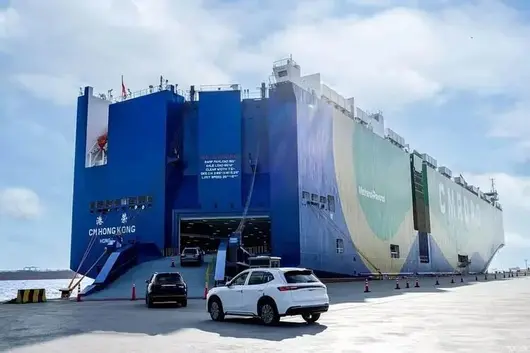

BYD officially announced the latest overseas market data on July 12. The brand's cumulative new energy vehicle deliveries in the Thailand market officially exceeded 130,000 units. Coinciding with the second anniversary of BYD's Thailand CKD factory production launch, the event also saw the regional premiere of the new model BYD SEALION 5 DM-i. With the dual achievements of a sales milestone and a new car launch, the brand's deep foundation in the Southeast Asian market was verified. During the offline delivery ceremony on the day, the commemorative 130,000th new energy vehicle was the newly released SEALION 5 DM-i. The vehicle was delivered to well-known Thai film and television actress Usa Sencan. She became well-known to locals for her role as Grandma in the film A Letter to Grandma. Selecting a popular local actor as the milestone owner effectively narrows the distance between the brand and local ordinary consumers, further shaping a brand image that fits local Thai life.

BYD Thailand factory is located in Rayong Province WHA Industrial Park, which is also the brand's first overseas passenger car production base globally. The factory's planning and design annual production capacity is 150,000 units. Since production launch, the factory has steadily promoted the localization process of whole vehicle manufacturing. Five main models have been locally produced. The product matrix covers compact pure electric sedans, city pure electric SUVs, and multiple household plug-in hybrid SUVs, namely DOLPHIN, ATTO 3, SEAL 5 DM-i, SEALION 5 DM-i, SEALION 6 DM-i. They comprehensively cover mainstream commuting and multi-person family travel needs in the Thailand market. These five locally produced models have successfully obtained the MiT Thailand Made Certification granted by the Thailand Industrial Federation (FTI). This certification is a key qualification for local new energy vehicles to enjoy car purchase subsidies and tax preference. At the same time, it represents that the whole vehicle manufacturing process and parts supply standards perfectly fit local Thai industrial specifications, which can effectively control terminal selling prices and enhance product competitiveness in the local market.

Reviewing the factory's two-year development journey, BYD's sales growth momentum in Thailand has been very rapid. In November 2025, the factory completed the delivery of the 70,000th whole vehicle. The delivery model was SEALION 6, and the owner was an excellent local employee of the factory, Pattaraporn. In just eight months, the cumulative market delivery volume climbed from 70,000 units to 130,000 units, adding 60,000 new deliveries, which intuitively reflects that Thai consumers' acceptance of new energy vehicles continues to improve. Charging facilities distribution for new energy vehicles in Southeast Asian cities is uneven. Long-distance travel with pure electric models often faces power replenishment difficulties. BYD's mature DM-i super hybrid system happens to solve this pain point. Short-term commuting relies on pure electric mode to reduce vehicle usage costs, while long-distance travel relies on the fuel system to eliminate range anxiety. This power technology adapted to regional travel scenarios is the core factor for continued strong sales of several hybrid SUVs under the brand.
Beyond production capacity and sales growth, BYD Thailand factory continues to promote supply chain and talent localization construction. During the two-year production launch, the factory created a large number of local jobs. The proportion of Thai employees in grassroots and technical positions exceeds 90%. At the same time, the local parts procurement ratio continues to be improved, driving the synchronized development of Thailand's local auto parts supporting industry, and helping the local industry to improve the new energy vehicle upstream and downstream industry system. The official launch of the SEALION 5 DM-i this time further perfects the brand's compact hybrid SUV product line, which can compete head-on with local mainstream fuel and hybrid models, enriching Thailand consumers' new energy vehicle purchasing choices.

From the landing of the first overseas whole vehicle manufacturing base to exceeding 130,000 deliveries in two years and five models achieving local mass production, BYD has firmly occupied the mainstream position in the Thailand new energy market by relying on the local production model and hybrid products tailored to regional travel needs. Relying on mature overseas manufacturing bases and a complete product layout, the brand will continue to launch new models in the future, continue to dig deep into the ASEAN market, use Thailand as a fulcrum to radiate the entire Southeast Asia, continuously improve the overseas influence of Chinese new energy vehicle brands, and provide reliable solutions for green transportation transformation in the Southeast Asia region.
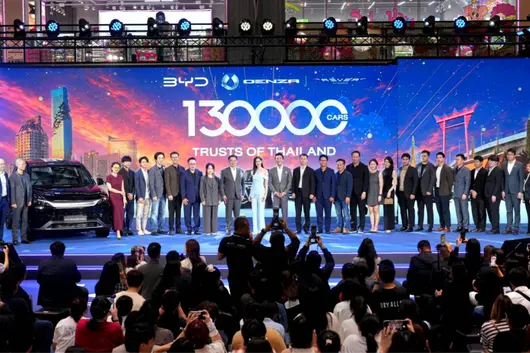

BYD secara rasmi mengedarkan data pasaran luar negara terkini, pada 12 Julai kuantiti penghantaran kumulatif kenderaan elektrik baharu jenama ini di pasaran Thailand secara rasmi melepasi 130,000 unit, bertepatan dengan ulang tahun kedua pengeluaran kilang kereta lengkap BYD di Thailand. Di lokasi acara, pelancaran rantau untuk model baharu BYD SEALION 5 DM-i juga berjaya diselesaikan. Dengan pencapaian tonggak jualan dan penampilan kereta baharu, ini mengesahkan pengumpulan mendalam jenama ini di pasaran Asia Tenggara. Pada majlis penghantaran luar talian hari itu, model kenderaan elektrik ke-130,000 yang bermakna kenangan ini merupakan SEALION 5 DM-i yang baru sahaja dilancarkan. Kenderaan tersebut diserahkan kepada pelakon filem dan televisyen terkenal Thailand, Usa Senkham, yang dikenali oleh penduduk tempatan kerana watak Nenek dalam filem "Cinta untuk Nenek". Memilih pelakon tempatan popular sebagai pemilik tonggak berjaya berkesan mengurangkan jarak antara jenama dan pengguna biasa tempatan, seterusnya membentuk imej jenama yang sesuai dengan kehidupan tempatan Thailand.
Kilang BYD Thailand dipilih di Kawasan Perindustrian WHA, Rayong, yang juga merupakan tapak pengeluaran kenderaan penumpang luar negara pertama jenama ini di peringkat global. Perancangan dan reka bentuk kilang merancang kapasiti pengeluaran tahunan 150,000 unit. Sejak pengeluaran bermula, kilang telah memajukan proses pembuatan tempatan kereta lengkap dengan stabil. Kini telah dicapai pengeluaran tempatan bagi lima model utama, dengan matriks produk merangkumi kereta elektrik kecil, SUV elektrik bandar, dan beberapa SUV campuran rumah tangga, masing-masing DOLPHIN, ATTO 3, SEAL 5 DM-i, SEALION 5 DM-i, SEALION 6 DM-i, merangkumi keperluan pengangkutan utama pasaran Thailand dan pengangkutan keluarga multiorang. Kelima-lima model pengeluaran tempatan ini berjaya mendapat pengiktirafan MiT Pembuatan Thailand yang dianugerahkan oleh Persekutuan Perindustrian Thailand (FTI). Pengiktirafan ini merupakan kualiti penting bagi model kenderaan baharu tempatan untuk menikmati subsidi pembelian kereta dan potongan cukai, serentak menunjukkan bahawa proses pembuatan kenderaan lengkap dan piawaian komponen sepadan sepenuhnya dengan norma industri tempatan Thailand, dapat mengawal harga terminal dengan berkesan, meningkatkan daya saing produk di pasaran tempatan.
Menyusuri perkembangan kilang selama dua tahun, prestasi penjualan BYD di Thailand berkembang dengan sangat pantas. Pada November 2025, kilang telah menyiapkan penghantaran ke-70,000 unit kereta lengkap, model yang diserahkan ialah SEALION 6, pemiliknya merupakan pekerja tempatan yang cemerlang di kilang, Pattaraporn. Selepas hanya lapan bulan, jumlah penghantaran kumulatif pasaran meningkat dari 70,000 unit ke 130,000 unit, penambahan penghantaran 60,000 unit, secara jelas menunjukkan penerimaan pengguna Thailand terhadap model kenderaan baharu semakin meningkat. Kawasan Asia Tenggara, taburan infrastruktur pengecasan bandar tidak sekata, model elektrik tulen mudah menghadapi masalah pengisian tenaga semasa perjalanan jauh, sistem DM-i hibrid super matang BYD tepat menyelesaikan masalah utama ini, perjalanan dekat bergantung pada mod elektrik untuk mengurangkan kos penggunaan, perjalanan jauh boleh bergantung pada sistem bahan api untuk menghapuskan kebimbangan jarak, teknologi kuasa yang disesuaikan dengan senario perjalanan kawasan ini, ialah faktor teras terus popularnya SUV hibrid di bawah naungan.
Di luar peningkatan kapasiti dan penjualan, kilang BYD Thailand terus memacu pembinaan rantaian industri dan tempatanisasi bakat. Selama dua tahun pengeluaran, kilang telah mencipta banyak peluang pekerjaan untuk tempatan, pekerja tempatan Thai di peringkat asas dan teknikal melebihi 90 peratus, serentak terus meningkatkan nisbah pembelian komponen tempatan, memacu pembangunan industri sokongan suku kereta tempatan Thailand serentak, membantu tempatan melengkapkan sistem industri hulu ke hilir kenderaan baharu. Pelancaran rasmi SEALION 5 DM-i kali ini, seterusnya melengkapkan garis produk SUV hibrid kompak jenama, boleh bersaing secara langsung dengan model bahan api dan hibrid utama tempatan, memperkayakan pilihan pembelian kenderaan baharu bagi pengguna Thailand.
Dari pemeteraan tapak pengeluaran kereta lengkap luar negara yang pertama, sehingga dua tahun penghantaran melepasi 130,000 unit, lima model mencapai pengeluaran tempatan, BYD dengan pakatan model pengeluaran tempatan, produk hibrid yang sesuai dengan keperluan perjalanan kawasan, dengan teguh menduduki kedudukan utama pasaran kenderaan baharu Thailand. Berlandaskan tapak pengeluaran luar negara yang matang dan susun atur produk yang lengkap, jenama seterusnya akan terus melancarkan model baharu, terus menanam dalam pasaran ASEAN, dengan Thailand sebagai titik sokongan merentas seluruh Asia Tenggara, sentiasa meningkatkan pengaruh luar negara jenama kenderaan baharu China, menyediakan solusi boleh dipercayai untuk transformasi pengangkutan hijau di kawasan Asia Tenggara.

In 2025, BYD Yuan family cumulative sales exceeded 430,000 units, accounting for about 9.3% of BYD's total annual sales, contributing greatly to BYD reaching the top five globally.
After entering 2026, BYD needed to find a carrier for the second-generation Blade Battery and new-generation Flash Charge technology within the Yuan family, so the Third-Generation Yuan PLUS was born.
This product with the largest iteration range in the history of the BYD Yuan family has maintained high discussion levels since its debut at the Beijing Auto Show.
At the same time of the new car launch, the 2025 model Yuan PLUS dropped prices wildly. Now, the naked car price has lowered to over 70,000 yuan. Comparing vertically with the previous generation Yuan PLUS and horizontally with competitors from other car companies, is the Third-Generation Yuan PLUS truly more worth buying?
Size explosion, DiSus-C downshifted, BYD squeezes toothpaste dryWhen I arrived at the BYD store to experience the Third-Generation Yuan PLUS, coincidentally, a previous generation Yuan PLUS owner also came to see the car. Their car was parked next to the new model. In front of the massive body of the Third-Generation Yuan PLUS, the previous generation Yuan PLUS looked like an "elderly leisure vehicle".

(Image Source: EV Tong Photography)
The Third-Generation Yuan PLUS, with a 210mm increase in length and a 50mm increase in wheelbase, has a more majestic appearance, with an aura comparable to a mid-size SUV. The interior space has also increased significantly, with ample legroom in the rear and acceptable trunk capacity. It is worth noting that the Third-Generation Yuan PLUS supports an electric sunshade, protecting us from sunlight intrusion during hot summers.
"Large" is the most intuitive feeling the Third-Generation Yuan PLUS gives EV Tong (ID: dianchetong233), but as a product with huge upgrades, its highlights go far beyond this.
Although the experience time was not long, the details of the Third-Generation Yuan PLUS still made EV Tong very satisfied. For example, the front memory seats can adjust automatically, facilitating users getting on and off. The passenger leg rest, 12-inch HUD, hot and cold refrigerator, and other configurations show BYD's sincerity everywhere.
Regarding range, chassis suspension, power, etc., the Third-Generation Yuan PLUS has also been comprehensively upgraded. The downshift of DiSus-C, range up to 630 kilometers, and optional DiPilot 300 (except for the lowest trim) make its experience compared to the previous generation undergo a qualitative leap.

(Image Source: EV Tong Photography)
As the BYD Yuan family, and even the entire Dynasty series, the product with the largest upgrade range, Yuan PLUS performs better than the previous generation in all aspects. Especially after experiencing the comfort brought by large space, even though the previous generation product price dropped by tens of thousands of yuan directly, EV Tong still more recommends consumers buy the new generation product.
Moreover, the Third-Generation Yuan PLUS has no real cars in the showroom of this store, the only display car is the test drive car. Combining this car's orders breaking through 10,000 units in the first week of launch and orders breaking through 50,000 units in less than a month, EV Tong has reason to believe that BYD is too late to lay out more display cars in the store to deliver to consumers as soon as possible.
Both the experience of EV Tong (ID: dianchetong233) and the hot orders can prove the strength and market performance of the Third-Generation Yuan PLUS.
The Third-Generation Yuan PLUS perfectly carries the new generation of BYD's three-electric technology and flash charge technology, making up for the Yuan family's long-standing product shortcomings, enabling this popular home SUV to complete the transformation from "Qualified Commuter EV" to "All-around Home Pure Electric SUV". This car is expected to carry the sales banner of the Yuan family, continuously consolidating BYD's dominant position in the 100,000-150,000 RMB mainstream home pure electric SUV market.
Perhaps some people are curious, even if only upgrading size, battery, fast charging, Yuan PLUS is still highly competitive in the 100,000-150,000 price segment, why does BYD want to comprehensively upgrade this car from start to finish, even to the extent of downshifting DiSus-C, advanced intelligent driving, HUD, and other configurations. In the view of EV Tong, BYD might also want to make money lying down, but market changes are forcing BYD to change.
Facing double-sided clamping, BYD responds with "Change"BYD's Seagull, Dolphin, Yuan UP, Yuan PLUS and other models once had a dominant position in the A00 to A-class new energy vehicle market. However, the situation changed this year. Geely Galaxy Star Wish, Leapmotor A10, Changan Qiyuan Q05 and other products, relying on the characteristics of good quality and cheap price, conquered the mid-to-low-end market.
Not only that, joint venture brands also showed their fangs. Some joint venture models, using Chinese suppliers such as Momenta and Huawei, improved product hardness, and Volkswagen ID.3, Bozhi 3X and other products became increasingly competitive.
BYD is facing a double-sided clamp from independent brands and joint venture brands, needing stronger products to consolidate its dominant position in the 100,000-150,000 RMB SUV market. Although the previous generation Yuan PLUS had no inferior competitiveness, it showed weakness facing larger and smarter competitors.

(Image Source: EV Tong Photography)
Taking Bozhi 3X as an example, this car is equipped with Momenta intelligent driving technology, and the car length is as high as 4600mm, slightly higher competitiveness compared to the previous generation Yuan PLUS. The Third-Generation Yuan PLUS not only surpassed in size and led in range, but the price was also relatively affordable, capable of suppressing most peer products.
BYD's overseas strategy also needs the Third-Generation Yuan PLUS as a mainstay. Yuan PLUS is named ATTO 3 overseas, with excellent performance in many countries and regions such as South Korea, Thailand, Brazil, UK, New Zealand, etc., and is BYD's main export model.
After entering 2026, the domestic car market size declined year-on-year. Many car companies chose to break the game overseas. Changan, Geely, Great Wall, Li Auto, Leapmotor, Xiaomi and other car companies are all accelerating their layout of the overseas market. Multiple foreign-funded and joint venture brands will also use China as a production base, using China's complete industrial chain advantage to build cars and then transport them to the overseas market for sale.
In the past, BYD could use China's industrial chain advantage to form dimensional striking attacks in the overseas market. But with domestic car companies collectively accelerating the overseas layout pace, BYD will also face competition from independent brands in the overseas market.
For this reason, whether domestically or overseas, BYD needs products with stronger competitiveness to cope with models from global car companies. EV Tong (ID: dianchetong233) believes that the Third-Generation Yuan Plus is just the beginning. When BYD's other products are updated and iterated in the future, the upgrade range will also increase.

(Image Source: EV Tong Photography)
In the mid-to-high end and high-end markets, BYD is already laying out through the launch of new cars rather than upgrading original products, such as the Ocean Series's Seal 08, Sea Lion 08, Dynasty Network's Tang, Han models. In the mid-range market, Han, Tang, Song and other family mid-range models are expected to have comprehensive upgrades in configurations during the next update iteration.
What might make BYD feel the most tricky is the low-end market. The 100,000 yuan and below market, product profit space is small, but competition intensity is very high. BYD's Seagull, Dolphin, Yuan UP domestic market competitiveness continues to decline. Geely Galaxy Star Wish, Leapmotor A10 and other models have such high cost-performance ratio that BYD is helpless.
The reason why the Third-Generation Yuan PLUS upgrade range is unprecedented is mainly that BYD needs to respond to market changes through product configuration changes. The current 100,000 yuan to 150,000 yuan pure electric SUV track competition is white-hot, independent new cars continue to press down, joint venture models make up for intelligent shortcomings. The shortcomings of the old Yuan PLUS size, chassis, energy replenishment, intelligent driving are gradually exposed. The terminal can only rely on large price reductions to exchange for sales. The Third-Generation Yuan PLUS faces overseas and domestic dual competition through comprehensive upgrades with stronger product power.
Third-Generation Yuan PLUS, A High-Score Answer SheetBYD Dynasty Network Sales Division General Manager Lu Tian stated on Weibo that in May this year, the Yuan family cumulative delivery was 56,691 vehicles, among which Yuan PLUS delivered 15,277 vehicles, Yuan UP delivered 41,414 vehicles. Compared with the peak monthly delivery of over 40,000 units, even with overseas market assistance, Yuan PLUS sales still declined significantly.
The comprehensively upgraded Third-Generation Yuan PLUS is expected to achieve BYD's expected goals, defeating many competitors at home and abroad, but it is difficult to help Yuan PLUS return to the state of monthly delivery over 40,000 units.
On the one hand, new cars from other car companies are launched continuously, constantly competing with Yuan PLUS for the market. On the other hand, there is relatively obvious competition within BYD. Above is Song PLUS, Song Pro, below is Yuan UP. Many of Yuan PLUS's crises come from its own products.

(Image Source: EV Tong Photography)
It can also be seen from the sales released by Lu Tian that the Yuan family cumulative delivery is still very high, but among them, most delivery models are cheaper Yuan UP. In addition to improving product competitiveness, BYD may also need to re-organize the product line, reduce internal competition, and avoid internal friction.
Now the new energy market is no longer the era of BYD's exclusive dominance. Externally, competitors continue to engage in close-quarters combat, internally, its own models flow up and down. Even if product power fully crosses levels, Yuan PLUS is unlikely to replicate the brilliant sales of monthly breakthrough 40,000. After all, consumers are increasingly rational in buying cars now. Low-price commuter needs will directly choose the lower threshold Yuan UP. Pursuing larger space and higher specifications will directly choose the Song series step by step. Yuan PLUS exactly stays in the awkward interval in the middle.
The greater value of this car lies in undertaking two major tasks of technology popularization and overseas offensive: Internally, put the second-generation Blade Battery, 800V Flash Charge, DiSus-C and other high-end technologies down to mainstream home models, letting ordinary people also experience BYD's top-tier car building technology; Externally, iterate the overseas version ATTO 3, relying on stronger comprehensive product power, hold on to core overseas markets such as Southeast Asia, Europe, Japan & Korea, etc. In the wave of collective overseas rolling of independent brands, stabilize its own overseas basic disk.
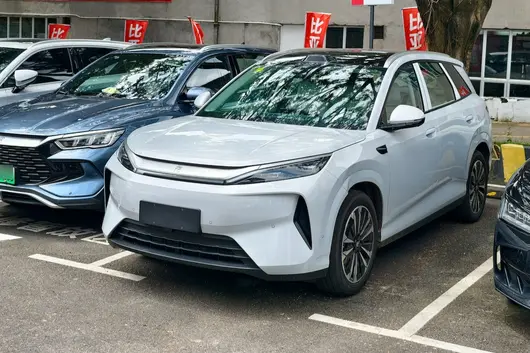

In May, China's new energy vehicle penetration rate hit a new high again, reaching 62.9%. In early June, the single-week rate even broke 70%. BYD exerted efforts in both technology and products. In May, the brand alone secured 330,000 sales, leading by a landslide. From January to May, BYD brand cumulative sales reached 1.208 million units, still firmly holding the top spot. Not just the brand, according to automotive group classification, BYD remains first, still leading by a landslide. Perhaps we are accustomed to BYD topping the charts, yet most people fail to combine these two facts. 1.208 million units is just the tip of the iceberg; more terrifying giants are actually beneath the surface.


In the past, BYD had also lost the single-month sales championship, such as during the off-season of January and February. At that time, no matter which brand surged up, it was only temporary. More importantly, the brand that surged up did not play an obvious driving role. BYD is different; during its surge, it drives the rise of new energy penetration rates. Previously, when Qin Plus DM-i emerged, it was like this. New energy penetration rose from less than 30% at that time to over 50%.
In the first half of this year, especially after the flash charging technology was released on March 5th, BYD welcomed another explosion. On the surface, it's a monthly sales figure of over 300,000, but what is truly terrifying are those unfulfilled orders. The second-generation Blade Battery is too in demand, so Denza and Fang Cheng Bao are both fighting the Dynasty and Ocean Networks for batteries. Even though the FinDreams factory has already been working overtime, the delivery speed still can't keep up with the order growth rate.

More noteworthy is that this wave of BYD's sales surge did not rely on price wars. I analyze two main reasons: First is flash charging technology, fully charged in 5 minutes, fully powered in 9 minutes, even at -30 degrees, it takes only 3 minutes more. It solves not only the pain point of slow charging, but also due to the popularity of flash charging piles, it directly widens the core gap with other brand electric vehicles. For pure electric models, your usage experience and my usage experience are completely different. The quantitative change in charging speed has developed into a qualitative change in experience. So many consumers would rather wait than choose models without flash charging. This is a technology war, a value war!

Even more ruthless is the ADAS safety net strategy. After the strategy release, the selection of God's Eye B increased, and usage volume surged even more. More importantly, the safety net strategy replaced promotion with action. Who has better ADAS, don't look at what is said, look at what the car companies do! I dare to guarantee smart parking, dare to guarantee urban navigation pilot! This is not just technical confidence, bringing us one step closer to L3, but also a rectification of marketing in the automotive industry. You claim you're in the first tier, you claim you are far ahead. Come on, I'm covering the risk, will you follow? Consumers are not fools. What you say is flowery, it is not as good as BYD's actual actions. This is a cognition war, a service war!

BYD calls itself a leader in new energy vehicles, not just talk. It is indeed pulling the industry forward, and also leads by example, guiding industry progress. After BYD launched DM-i, everyone followed up with plug-in hybrids, which is indeed keeping up, and also took away a lot of low-price market occupied by BYD. Now BYD has accelerated again. Flash charging technology is a large technical threshold. From PPT to implementation on vehicles, it takes considerable time. Plus flash charging piles are already all over the country, making it harder for followers to catch up.
And ADAS guarantee is a clear strategy, testing not only peers' technical level but also overall vehicle integration capability and service quality. If technology isn't good, you can make two pages of PPT to confuse consumer cognition, but promises are written in black on white, not just talk. And until now, no one dares to follow up solidly.

Currently, BYD's growth engine has started. Not only are domestic orders surging, overseas is also full of good news. In May, BYD passenger cars and pickups overseas sales hit a new high, year-on-year increase exceeded 80%, Jan-May cumulative exports exceeded 610,000 units. From Seagull, Yuan PLUS such civilian models, to SHARK pickup, to Denza high-end product line, BYD's full category models are continuously selling well in the global market. In dozens of countries such as Thailand, Brazil, Italy, BYD has firmly held the top spot in new energy sales, brand recognition and market share rising in sync.
Many people don't know, BYD's pricing overseas is far higher than domestic: Yuan PLUS price in UK is comparable to BMW 3 Series, Denza Z9GT pricing in Europe benchmarks Porsche Taycan.

Even more worth looking forward to, this is far from BYD's full strength. In the second half of the year, BYD will welcome a new round of product year: Dynasty Network's Da Tang, Da Han will welcome flagship updates, Ocean Network's Seal 08, Sea Lion 08 will complete mainstream market product line, Denza Z Hypercar will land Goodwood for global premiere, Fang Cheng Bao S series will also launch in Q3 to challenge the performance market. These models will all be equipped with second-generation Blade Battery and God's Eye ADAS system, and the speed of technology downgrading is still accelerating.
BYD's speed is "Chinese Speed", it is setting standards for the industry with its own actions. All competitors have no other choice, either keep up or get eliminated. With a big boss like BYD here, the elimination round is about to start.
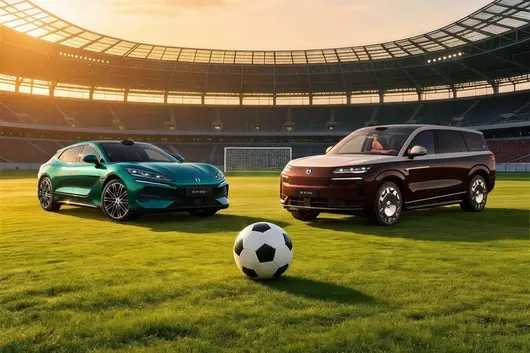

On May 21, the BYD Third-generation Yuan PLUS officially launched. The new car offers 4 models, with a price range of 119,900-149,900 RMB. As a replacement product, the new car will be built on the e-Platform 3.0 Evo, adopting rear-wheel drive and featuring standard 2nd-generation Blade Battery + Flash Charging technology. In addition, the vehicle appearance and interior have both been significantly upgraded, and it offers God's Eye B High-level Intelligent Driving.

Let's first talk about what everyone cares about most: Range and Charging, which is also the new car's biggest highlight. The Third-generation Yuan PLUS comes standard with the 2nd-generation Blade Battery across the entire series; safety and durability go without saying, as it is BYD's signature technology. The range offers two versions: 540 km and 630 km. It is completely sufficient for daily commuting and weekend trips around the area, and there is no need to panic even when running mid-to-long distances.

Regarding charging, it directly solves the pain points of pure electric vehicles. The new car comes standard with BYD Flash Charging technology, official data is very solid: 5 minutes to charge enough, 9 minutes to charge fully. Even in extreme cold weather at minus 30 degrees, it only takes 3 minutes longer than room temperature. Equipped with a user-friendly zero-gravity flash charging gun, charging does not require bending over or exerting effort. It also supports invisible payment; just walk away after charging without operating the phone.

Currently, BYD nationwide flash charging stations have exceeded 6,000. Along the way when going out, fast charging points can basically be found. The new car also comes with 1 year of free flash charging rights. Daily usage costs are lower, completely saying goodbye to the troubles of "charging slow, finding piles difficult".
Intelligent driving and parking are also arranged very well. The Third-generation Yuan PLUS can be optionally equipped with God's Eye B - Assistance Driving Laser Edition, which is DiPilot 300, paired with the latest God's Eye 5.0. It has stronger learning capabilities, can achieve pilot assistance on city roads and highways, handles traffic jams and complex road conditions easily, making driving easier.

Third-generation Yuan Plus
The new car is built based on the BYD e-Platform 3.0 Evo architecture. The biggest structural change is switching completely from the current front-wheel drive layout to a rear-wheel drive layout. It offers two motor versions: 200kW and 240kW, with a maximum torque reaching 310N · m. The chassis is synchronously upgraded to front MacPherson rear five-link independent suspension. High-spec models are equipped with DiSus-C Intelligent Damping Body Control System and iTAC Intelligent Torque Control System. The entire series comes standard with the 2nd-generation Blade Battery and 800V High-voltage Flash Charging technology, greatly relieving users' energy replenishment anxiety.

Body dimensions are comprehensively expanded. The new car's length, width, and height are 4665 × 1895 × 1675mm respectively. The wheelbase reaches 2770mm, longer by 210mm and 50mm than the current model respectively. Trunk capacity is 750L, with a new 180L electric front trunk added, a total of 39 storage spaces are set for the whole vehicle. Appearance continues the Dragon Face design language, offering 6 brand new car colors including Dream Pink, Playful Blue, Aura Green, etc., and two-tone versions, equipped with semi-hidden door handles and horizontal wave tail lights.

Interior is upgraded to a minimalist tech style, replacing with a brand new dual-spoke steering wheel and electronic column gear shift. The center console adds a wireless charging panel, retaining some physical buttons. In terms of comfort configuration, it offers Queen's Co-pilot (electric leg rest + ventilation heating), intelligent warm/cold refrigerator, 16-speaker audio system, and 256-color ambient lighting, etc. In terms of safety, it is equipped with 7 airbags, TBC High-speed Tire Blowout Stabilization System, and Far-end Airbag.

In terms of the intelligent cockpit, the new car comes standard with DiLink 150 Intelligent Cockpit System and a 15.6-inch adaptive rotating floating screen. In terms of intelligent driving, it comes standard with God's Eye C Assistance Driving System (DiPilot 100), supporting Full-speed Adaptive Cruise Control, AEB Automatic Emergency Braking, and LKA Lane Keeping Assist, etc. High-spec models can optionally upgrade the LiDAR to God's Eye B Intelligent Driving System, supporting City NOA and High-level Automatic Parking.
Auto Circle Car Review
When BYD Yuan PLUS was just launched in 2022, the domestic pure electric compact SUV market was still in a blue ocean market. The competitors it faced were only models like AION Y and Geometry C. Therefore, it quickly won the market, achieving sales of over 10,000 in its first full delivery month, and only took 14 months to reach the 300,000 unit milestone, dominating the sales champion list of the same level for a long time, establishing a benchmark status. It is worth mentioning that it is also BYD's first global model, becoming a bridgehead product for entering the overseas market.
As of April 24, 2026, BYD Yuan PLUS (Overseas Name ATTO 3) has covered 116 countries and regions and achieved sales of over 1.1 million units in the global market, including overseas markets such as Thailand, Singapore, Australia, Sweden, and Israel, where it has achieved sales champion status in the local new energy market, successfully helping BYD open the door to the overseas market. However, in the domestic market, with the constant arrival of new same-level competitors in the past 2 years, Yuan PLUS's market influence has gradually been affected.
Actually, at BYD's technology launch event in March this year, the Third-generation Yuan PLUS did not appear in the lineup of the first batch of 11 models equipped with 2nd-generation Blade Battery and Megawatt Flash Charging technology. At that time, I also had a doubt, that whether this technology could be applied to products around 100,000 RMB, and when it would be applied. Unexpectedly, in just two months, the Third-generation Yuan PLUS arrived. After a full-dimensional upgrade in product power, its price is basically flat with the old models. What kind of market performance it will achieve, and how competitors will respond, let us wait and see.
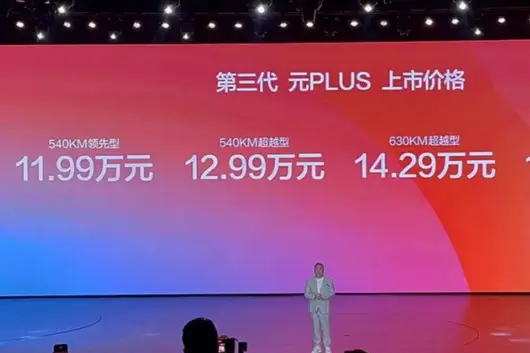

【Lead: May 2026, BYD delivered a sales report of over 380,000 units, among which overseas sales exceeded 160,000 for the first time; however, BYD's single-month sales historical peak remained at 514,800 units in December 2024, with 57,200 units exported that month. These two sets of data reflect that BYD, sitting in the top chair of the new energy sector, is undergoing structural changes. BYD that grabbed the export dividend, exports soared; meanwhile, the domestic car market is experiencing a change from incremental to stock even possibly to shrinking volume. Even BYD cannot escape the pain of involution, presenting the "double life" of the industry leader, half smooth, half rough.】
Author: Li Suwan
According to April imported new car registration data released by the Korean Association of Import Cars (KAIDA), Chinese brand registration volume surpassed Japanese brands in the South Korean market for the first time, ranking in the top three countries for imported car sales. Of note, BYD's sales of 2,023 units exceeded the combined sales of the three Japanese brands Lexus (1,079 units), Toyota (829 units), and Honda (66 units) (1,974 units). Korean media generally regard this ranking as an important signal of the shift in the structure of the imported car market in South Korea.

Directly raising the cloud sail to cross the vast sea, BYD's overseas market continued to maintain high growth in May this year. Passenger cars and pickups overseas sales reached 160,177 units, an 80.7% increase year-on-year, setting a new historical record. Seagull, Song PLUS, Yuan Series and other models continued to sell well, with SHARK pickup truck volume exceeding 4,000 units for two consecutive months. With the product matrix continuously enriching and the global layout continuing to deepen, BYD's globalization process is advancing rapidly.
Benefiting from overseas market pull, BYD's total sales increased slightly by 0.26% year-on-year in May this year, ending the consecutive 8 months of year-on-year decline, and continued to win the champion of Chinese automotive enterprises' new energy vehicle sales with 383,453 units. Thus far, BYD has remained in the first place of domestic new energy vehicle monthly sales for a consecutive 60 months.

Relying on the "systematic ecological export" strategy from technology, production, channels to brand, BYD is becoming more and more brave in the overseas market. However, BYD's life situation at this time is like two sides of a coin. It advances boldly in the overseas market, but encounters cruel new tests in the domestic market. The current monthly sales in China are almost halved compared to the peak period. Structural adjustments are a mixture of joy and worry, and BYD is once again standing at a critical crossroads.
Can BYD Weld the Highlight Moment?
In the new energy track, BYD is the undisputed "Di King" in China and even globally. So far, its cumulative new energy vehicle sales have exceeded 16.5 million units. In recent years, while a group of international traditional car giants failed in the transition to electrification, leading enterprises such as "Di King" drove China's automotive industry to accelerate overtaking on a bend.
BYD's boss Wang Chuanfu has a forward-looking strategic vision, allowing this car company to catch the dividends of new energy and export two wind vane points. Relying on Blade Battery, DM-i Super Hybrid, e Platform and other full-stack self-developed systems, BYD has built cost moats that many car companies cannot cross through vertical integration of the industry chain, quickly grabbing the pure electric and hybrid market, gradually mastering strong pricing power in the 100,000-200,000 yuan main force model market, and further diluting R&D and production costs with scale effects, constantly pushing the cost advantage to the extreme.
While holding the "Price Slaughter Knife" to expand in the domestic car market, BYD also accelerated its extension of its entire industry chain layout, full-stack self-research, and cost advantages to the overseas market, precisely adapting to the needs of global diversified markets with a full price product matrix. In Southeast Asia/South America/Middle East markets, Yuan PLUS (ATTO3), Seagull focus on entry-level commuting, cost-performance ratio crushes Japanese fuel small cars, BYD's market share in Brazil's EV market exceeds 70%; in European and other markets, Seal, Song PLUS, Sea Lion 07EV constitute a core competitive matrix against Volkswagen ID series, Tesla Model 3/Model YCore Competitive Matrix. BYD's high-end models are gradually breaking the overseas market's stereotype that "Chinese cars rely on low prices", such as Denza focusing on European mid-to-high-end niche markets. Also, BYD commercial vehicle coordination, electric buses, forklifts go out simultaneously, such as Singapore electric bus market share exceeds 60%, passenger vehicles + commercial vehicles double pull local reputation.

Not only did products go out, BYD also accelerated localization of production globally, breaking tariff and delivery problems. Its four complete vehicle factories in Thailand, Brazil, Hungary, and Uzbekistan have started production, with Malaysia and Cambodia under construction. In addition, BYD's own RoRo fleet guarantees stable export capacity, solving industry sea transport bottlenecks, and signed top local automotive groups in each country as agents, gradually building thousands of brand direct + authorized stores in Europe, Southeast Asia, Middle East, and Latin America. With a set of combinations hitting, BYD's export has obviously accelerated.
After exports increased by about 1.4 times year-on-year in 2025 and broke the one million unit threshold for the first time, BYD's sales overseas continued to rise this year, largely buffering the pressure of BYD's sales decline in the domestic car market. However, for BYD to weld the highlight moment or even sprint to higher goals, it is inevitable to withstand the current cruel tests of domestic price wars backlash, narrowing technology advantages, and brand upward obstacles, breaking the dilemma of "defenders".

Can we find the key to value upward?
This year's domestic car market, how can it be described with a single word "hard". According to CPCA weekly report, national passenger car market retail in May was 1.545 million units, down 20% year-on-year, cumulative retail in the first 5 months of this year was 7.15 million units, down 19% year-on-year.
Due to weak consumption and car market shrinkage, car companies were forced to cut prices to grab market share, dozens of models collectively cut prices, exchanging price for volume diluted profits. At the same time, car companies also encountered unfavorable factors such as price increases in upstream lithium carbonate, non-ferrous metals and other raw materials. Price wars, high costs and weak demand are like three big mountains, further squeezing the profit space of the automotive industry. January to April 2026, automotive industry profit margin 3.4%, total profit 111.9 billion yuan, down 17% year-on-year, profitability pressure is still relatively large. In such a big environment, as the Leader BYD cannot be immune. In the first quarter this year, the company's net profit attributable to shareholders of the listed company was 4.085 billion yuan, down 55.38% from 9.155 billion yuan in the same period last year.
In the most competitive Chinese car market globally, in white-hot competition, BYD faces competitors like Geely Galaxy with nearly "pixel-level" benchmarking, plus the fierce attacks of new forces such as Leapmotor and Xiaomi, the difficulty to break the situation is not small. For example, Geely Galaxy's Xingyuan grabbed the Seagull's sales champion in the under 100,000 yuan niche market in 2025, in the 100,000 to 200,000 yuan core area, BYD even encountered more fierce encirclement and suppression by Leapmotor and other brands. Previously, BYD relied on Blade Battery and Super Hybrid to laugh off the Jianghu, but now Geely has Thor EM-i Super Electric Hybrid, SAIC has DMH, plus CATL's Qilin Battery, Shenhang Battery, Xiaoyao Battery and other technologies and products empowering many car companies, new energy sector hundreds of flowers blooming, BYD's technology is no longer unique. In addition, BYD also faces the challenge of user demand iteration. With new energy penetration rate exceeding 50%, the market moves from "trying new things" to "picky" stage, consumer car buying logic is also changing. BYD has room for improvement in smart cockpit, chassis tuning and other details, and its ride-hailing image is also difficult to support higher brand premium.
How to break the situation? BYD launches a combo, besides accelerating the promotion of globalization process, the more important measure is to focus on internal improvements, accelerate the iteration and upgrade of various technologies. In terms of intelligence, as of May 28, the number of BYD vehicles with assisted driving has exceeded 3.15 million units, Heavenly Eyes generates more than 200 million kilometers of data daily. On May 28, BYD announced the launch of urban pilot safety backup service, becoming the first car company in the world to realize both urban pilot and intelligent parking "double backup" at the same time. Three days after the conference, the daily active user volume of urban pilot for models equipped with Heavenly Eyes A, B assisted driving system increased by 50%. Previously, after the intelligent parking safety backup was launched, the function usage rate has increased from 21% to more than 90%. Wang Chuanfu said: "Dare to back it up, is true safety."

In the field of power technology, after the launch of the second-generation Blade Battery and Flash Charge technology, BYD is tightly rolling to continuously convert technological innovation into product competitiveness. Third-generation Yuan PLUS, Fang Cheng Bao Bao 5 Flash Charge version, Bao 8 Flash Charge version, Denza N9 Flash Charge version and other models have successively launched. At the same time, Dynasty Network Great Tang will be launched in mid-June, Denza N8L Flash Charge version, Seal 08, Sea Lion 08 will also be launched successively, further expanding BYD's Flash Charge product matrix.

In addition, BYD increased the intensity of high-endization, Denza, Fang Cheng Bao and Yangwang gradually have results, May Fang Cheng Bao, Denza combined sales 46,489 units. Among them, Fang Cheng Bao sales 30,186 units, up 139.7% year-on-year, creating a new high this year; Denza sales 16,303 units, continuing to maintain growth trend; Yangwang sales 286 units, up 105.8% year-on-year. The three high-end brands join forces, finally breaking the bottleneck of their proportion in BYD's total sales of less than one tenth.
Although the cruel fact is if export volume is excluded, BYD's sales in the domestic market in May are still far from the peak period, but its total sales year-on-year bottoming out slightly rising is still a positive signal. BYD is empowering products through new technologies such as second-generation Blade Battery and Flash Charge. With the "Great Tang" known as the most cruel "Value Assassin" in the full-scale market, holding 100,000 pre-sale orders, coming soon, and other new models successively launched, BYD is launching a new round of offensive value upward. It has come to a critical crossroads again, needing to use patience, wisdom and courage different from the past to deal with this profound change from "Scale Priority" to "Value Supreme", even not limited to the car making field. Recently, BYD announced making humanoid robots, perhaps starting to speed up the exploration and transformation towards technology companies outside the automotive congestion space, wanting to catch the new trend of AI.
Review
Currently, the domestic car market is declining, car prices are falling, and car company profits are declining. In such a big environment, car companies led by BYD face severe challenges while opening up a new round of continuous upward exploration of China's new energy vehicle industry. Going overseas is one of the breakthrough paths, but more importantly, how to find the key to value upward through technical innovation in this most competitive market in China.
(This article is original to "Heyan Yueche", without authorization, shall not be reproduced)
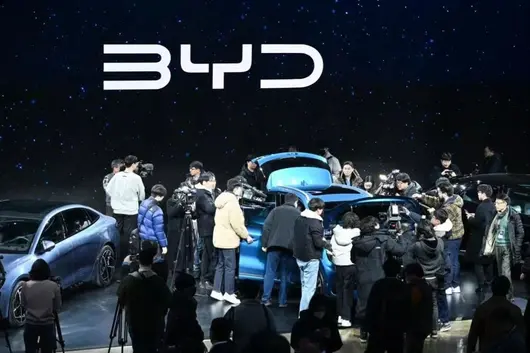

May 21, BYD Third-Generation Yuan PLUS officially launched. The new car is available in four configuration models, with an official guide price range of 119,900 - 149,900 yuan. As the third-generation product of BYD's first global strategic passenger car, the Yuan PLUS undergoes a significant upgrade this time, not only standardizing the second-generation Blade Battery and Flash Charging technology across the entire series, but also featuring significant upgrades in body size, chassis, intelligent driving, and other aspects. Lu Tian, General Manager of the Sales Division of BYD Dynasty Network, stated that the Third-Generation Yuan PLUS will, with its fully upgraded product strength, further raise the value threshold for products in the same class.

The pricing strategy of the Third-Generation Yuan PLUS is essentially another realization of BYD's "scale dividend → technology diffusion" closed loop. Since the launch of Yuan PLUS in 2022, global cumulative sales have exceeded 1.1 million units, best-selling in over 100 countries and regions. Cumulative sales reached 300,000 units within 14 months of launch, and surpassed 1 million units within 39 months, becoming the third BYD model IP to cross the 1-million sales mark after the Qin Family and Song Family. Million-level production and sales scale means that fixed costs such as R&D per vehicle, molds, and production line depreciation have been significantly spread out, which is exactly where BYD's confidence lies in standardizing the second-generation Blade Battery and Flash Charging technology for the whole series at an entry price of 119,900 yuan.

At the level of three-electric technology and charging, the core upgrades of the Third-Generation Yuan PLUS focus on the second-generation Blade Battery and Flash Charging technology. BYD officially released the second-generation Blade Battery and Flash Charging technology in March 2026. At room temperature, charging from 10% charge to 70% takes only 5 minutes, and charging to 97% takes only 9 minutes. Under extreme cold conditions of minus 30 degrees Celsius, charging from 20% to 97% takes only about 3 minutes longer than room temperature. This performance effectively solves the two long-standing industry ills faced by lithium iron phosphate batteries: "slow charging and difficult cold-weather charging".

Regarding range, the new car provides two CLTC range versions of 540km and 630km. Combined with flash charging capability, it forms a relatively balanced solution between charging efficiency and driving range. In terms of charging ecosystem, BYD has built over 6,000 flash charging stations nationwide and simultaneously provides one year of free flash charging benefits to car buyers.

At the intelligent driving level, the Third-Generation Yuan PLUS can be equipped with Eye of Heaven B - Assisted Driving LiDAR Version (DiPilot 300), equipped with Eye of Heaven 5.0 system, newly enhanced reinforcement learning capability, supporting city and highway pilot assistance and one-key automatic parking function. Intelligent driving configurations appear as optional in the price segment below 150,000 yuan, providing differentiated choices for consumers who value intelligent experience.

Regarding power and chassis, the Third-Generation Yuan PLUS is equipped with a 240kW high-power motor, adopts a rear-engine rear-drive layout, equips front MacPherson and rear five-link independent suspension, and YunNian-C intelligent damping body control system. In terms of safety, the iTAC 2.0 intelligent torque control system can actively predict slip risks, the TBC high-speed tire burst steady driving system considers straight and cornering conditions, capable of maintaining vehicle trajectory in the instant of high-speed tire burst, cooperating with high-rigidity body structure and 7 airbags, building a relatively comprehensive active and passive safety protection system.

As BYD's first "strategic overseas" global passenger car, Yuan PLUS is sold overseas under names such as ATTO 3, and has already won pure electric sales championships in many countries and regions such as Singapore, Australia, Thailand, New Zealand, Sweden, Israel, etc. Yuan PLUS hot sales cover 116 countries and regions globally, winning the A-class pure electric SUV annual sales champion for three consecutive years. This global operation experience brings double support to the third-generation models: on the one hand, global million-level user data feeds back product definition, making the new car's understanding of target group needs more precise; on the other hand, the global standard quality control system also provides endorsement for product quality.

Written at the end: Looking at the current market, the competition in the 100,000-150,000 yuan pure electric SUV niche track is becoming increasingly intense, with models such as Geely Galaxy E5, Changan Deepal S05, and Aion AION Y competing side by side, market competition has shifted from basic parameter comparison to a contest of comprehensive driving experience. Industry insiders believe that the Third-Generation Yuan PLUS, by virtue of three-electric technology advantages, perfect charging network and million user reputation, will have a profound impact on the A-class pure electric SUV market pattern, pushing the industry towards the direction of long range, fast charging, and high intelligence.
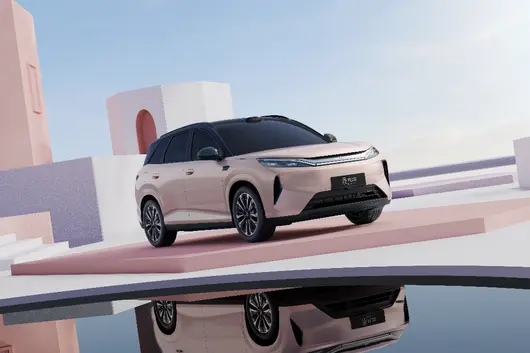

As BYD's first global strategic passenger vehicle, Yuan PLUS has relied on global design, global standards, and global quality since its launch in 2022 to become an outstanding performer in its sub-segment: Cumulative sales exceeded 300,000 units in just 14 months, reaching a milestone of 1 million units in 39 months. It is BYD's third model IP to enter the "Million Club" family after Qin and Song.
In the domestic market, it has consecutively ranked first in A-class pure electric SUV sales for many years; the overseas market also performs brilliantly, covering more than 110 countries and regions worldwide. It topped pure electric sales charts in countries like Singapore, Australia, Thailand, Sweden, becoming a core support for BYD's global expansion.

Today, against the backdrop of growing consumer demands, the 3rd Generation Yuan PLUS is officially launched with an official guide price of 119,900-149,900 Yuan, positioned as a "Yuanli Smart Fun Flash Charging SUV". The new car is comprehensively refreshed with three aces, three cross-level breakthroughs, and three leading strengths, committed to precisely matching the needs of energetic youth, young families, and tech practical groups with its all-around product power, defining a new benchmark for A-class SUVs.
Specifically, relying on the reputation of millions of users for iterative upgrades, the 3rd Generation Yuan PLUS continues the model's genetic heritage but fits the travel preferences of contemporary young users better. The new car takes range and recharging as core breakthrough points, equipping the entire series with the second-generation Blade Battery, achieving optimization in structural strength, durability, and safety, offering 540km and 630km dual CLTC range versions, worry-free for daily commuting and long-distance travel.

In terms of recharging, the new car comes standard with BYD Flash Charging technology, achieving "5 minutes to fully charge, 9 minutes to full charge", taking only 3 minutes more even in -30°C low-temperature environments; paired with zero-gravity flash charging gun and seamless payment, recharging is more efficient. According to introduction, there are currently over 6,000 flash charging stations nationwide, combined with 1 year of free flash charging benefits, significantly reducing vehicle use costs.
In terms of intelligent driving, the new car offers an optional Sky-Eye B-Assisted Driving Laser Edition (DiPilot 300), equipped with the latest Sky-Eye 5.0 system, supporting city and highway pilot assistance, one-key automatic parking, capable of calmly handling congestion and complex road conditions, bringing an ultra-safe, ultra-humanized, ultra-efficient driving experience.
In addition, the new car also achieves three breakthroughs. In terms of design and cockpit experience, the 3rd Generation Yuan PLUS exterior offers 6 single-color + 3 two-color options totaling 9 car colors, paired with agile lines, blade D-pillars, and floating roofs, maximizing recognizability; body dimensions reach 4665/1895/1675mm, wheelbase is 2770mm, bringing a more spacious seating space. The whole car also achieves 39 storage spaces, paired with a 180L electric front trunk (supporting knock-to-unlock), rear agile dual storage boxes, integrated cooling/heating car refrigerator, and automotive-grade tissue box, organizing small items orderly.

Worth mentioning, the new car also features a Co-Driver Inspiration Nook, allowing free placement of trendy figure toys and green plants to create an exclusive private small world, better meeting the needs of contemporary young consumers. The cockpit focuses on the "Joy for Self" experience: equipped with an all-around Queen Co-Driver, ventilation/heat/thigh rest + power nap mode fully available, the infotainment system features My Little Pony limited theme, built-in Cyber Practice, Hands-free Karaoke functions, and can connect with Goodbaby, XiaoTianCai, Breo and other ecosystem devices, balancing comfortable rest and diverse entertainment, warm and convenient.
In terms of power and chassis, the 3rd Generation Yuan PLUS is equipped with a 240kW high-power motor, rear-engine rear-drive layout paired with front MacPherson and rear five-link independent suspension, making steering more agile; combined with DiSus-C Intelligent Damping Body Control System, can effectively filter road bumps, driving and riding is more stable and comfortable.
And in the safety aspect consumers care more about, the new car is equipped with iTAC 2.0 Intelligent Torque Control System, upgraded from passive remedy to active pre-control, reducing the risk of rear-wheel drive slipping and swaying; TBC High-speed Tire Blowout Stabilization System upgraded, considering both straight lines and curves, able to stabilize the body even at extreme speeds; combined with high-rigidity body and 7 airbags, active protection and passive safety are online simultaneously.

Not only that, to further fit young users, the 3rd Generation Yuan PLUS also specially invited new generation actress Wang Churan to serve as the spokesperson, while linking with the famous IP My Little Pony to carry out in-depth co-branding, launching rich trendy content, strengthening young trendy labels, committed to capturing Gen Z consumers.
It can be seen that as a global ride accumulated over 1.1 million users' trust, the 3rd Generation Yuan PLUS, while continuing the model's championship heritage, with product power upgrade, trendy design, and thoughtful benefits, once again consolidates the A-class pure electric SUV benchmark status, helping young people unlock a free and comfortable pure electric travel life.
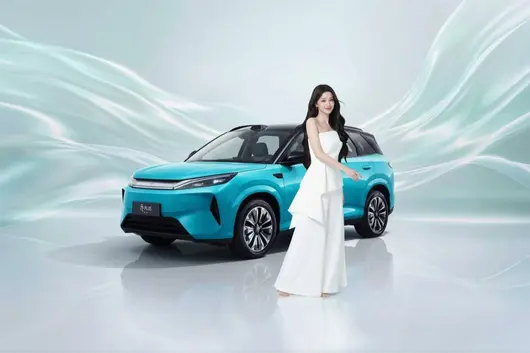

Chinese car companies going global are becoming increasingly powerful; recently even Singapore, this "classic petrol paradise", has been captured by Chinese cars in the last two years.
In Q1 2026, the share of pure EVs in new car sales in Singapore surged to 57.6%. This is the first time in history that pure EVs sold more than the combined total of petrol cars and hybrids.
What does this mean? Now when people buy cars, EVs have become the default first choice.
This shift is directly reflected in the sales rankings; I organized a table to make it clearer:
 From this list, you can most intuitively feel the impact of Chinese brands.
In the top 10, Chinese brands took four seats. Besides BYD at the top, Chery, GAC, and MG broke into the top 10 for the first time collectively, directly squeezing out several old rivals from Korean and Japanese series.
What's more terrifying is the overall momentum. In January 2023, the market share of Chinese brands in Singapore was a pitiful 3.3%; by February 2026, this figure surged to 39.5%.
A 10-fold leap over three years, this is no longer "grabbing a piece of cake", this is simply "making a whole new table of dishes".
And this is not the end. By April, the monthly market share of Chinese brands even surged to 48.5%, just a step away from half the market.
Behind this is the collective charge of more than ten brands such as Zeekr, XPeng, Dongfeng, and Leapmotor. It can be said that in Singapore, buying Chinese cars has become a very mainstream, even fashionable thing.
So, do you know which Chinese car models Singaporeans love to buy the most?
I did some research; the following models are currently the undisputed "stars":
 BYD Atto 3: This is BYD's absolute mainstay. It can be said that it alone drove the entire EV trend in Singapore. It was the sales champion for 14 consecutive months in Singapore; just knowing that tells you how deeply rooted it is locally.
Chery Omoda E5: This is Chery's "secret weapon" for breaking records. From selling 90 units a month to 600 units in a quarter, it relies on this precisely positioned electric SUV.
GAC Aion Y Plus: GAC's sales are almost entirely supported by it. Its advantage is: competitive price, and it perfectly fits the standard for Singapore's Class A Certificate of Entitlement, immediately lowering the car purchasing threshold.
MG 4 Electric: This hatchback electric small car sold very well in Europe, and it is the same in Singapore.
It looks stylish, handles flexibly, and has a fair price, making it especially popular among young people.
Honestly, the explosion of Chinese brands in Singapore absolutely did not rely on the old impression of "dumping low prices".
First, they fully mastered the policy. The Singapore government offers up to 30,000 SGD in subsidies for EVs, but levies a surcharge of up to 35,000 SGD on high-emission vehicles.
With this inflow and outflow, it is clear who is more cost-effective. Chinese brands are also smart, focusing on models that meet the Class A Certificate of Entitlement standards, directly saving users a large sum of money.
Second, the product power has truly improved. In a mature market like the Lion City, consumers are very shrewd. Now Chinese EVs, range anxiety is basically solved, and charging networks are expanding rapidly. Most importantly, for the same money, the infotainment system, intelligent assisted driving, and that smooth large screen you get offer an experience far superior to Japanese or even German cars at the same price.
Finally, it is a shift from "single combat" to "group fight". Previously relying on just BYD, now Chery, GAC, Zeekr are all here, forming a brand matrix.
When everyone goes into the store and sees, everywhere are Chinese cars, this "momentum" rises. On the contrary, old brands like Mercedes-Benz and BMW, although also good cars, clearly lagged half a beat in reaction speed to electrification. Sales dropped nearly 40% year-on-year, this is the most direct price.
Looking forward, although the Singapore market is not huge, only over 50,000 vehicles a year, it is the benchmark for Southeast Asia.
Being able to stand firm in Singapore is like holding a "passport" to the global high-end market. For Chinese car brands, this is not just selling cars, but also proving brand value.
The upcoming battle is about competing in service, charging ecosystem, and user reputation. However, from what we see now, Chinese brands have already run far ahead; traditional car companies really need to step up their game.
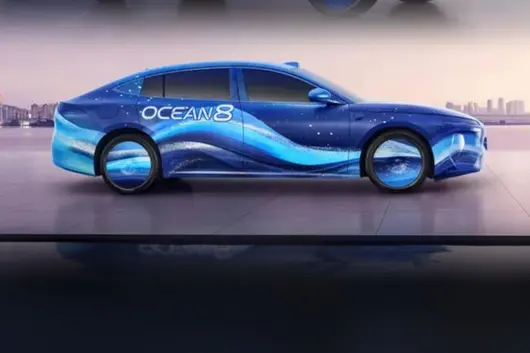
© 2024 Bitauto.com. All Rights Reserved.
Bitauto (www.yiche.com and www.bitauto.com) is one of the most visited automotive websites in China. We provide detailed info on Chinese car brands available in your area. Please note that the information provided on this website is based on publicly available data and is for reference only. It may not be fully updated or accurate at all times.

Help us improve our website


