

Homearts

Search History
Popular Searches
Dealer Login / Sign Up

[Portal Kenderaan Dagangan Pertama Asli]
Sekarang ini, industri kenderaan dagangan sedang mengalami transformasi mendalam. Gelombang elektrifikasi tenaga baharu bukan sahaja membentuk semula格局 persaingan di pasaran domestik, malah menolak medan pasaran luar negara ke teras strategi semua pengeluar automotif — dari peraturan pelepasan karbon Eropah hingga kepada tuntutan peralihan tenaga di Asia Tenggara, permintaan global terhadap truk berat elektrik sedang berkembang daripada percubaan terpencar kepada benih penskalaan. Walau bagaimanapun,面对 perbezaan dasar, infrastruktur dan kebiasaan pengguna di negara dan kawasan yang berbeza, bagaimana untuk keluar negara, bila untuk keluar negara secara berskala, dan dengan produk serta ekosistem seperti mana, telah menjadi soalan wajib yang diletakkan di hadapan setiap syarikat kenderaan dagangan China.
Baru-baru ini, Pengurus Besar DeepWay Shenxiang Antarabangsa, Zhao Minyu, menerima wawancara eksklusif dari Portal Kenderaan Dagangan Pertama, memberikan respons sistematik terhadap keprihatinan utama pasaran yang seperti bagaimana syarikat truk berat baharu China dapat bermain di pasaran antarabangsa, dan mengapa tahun 2026 didefinisikan sebagai tahun permulaan jenama "keluar negara".
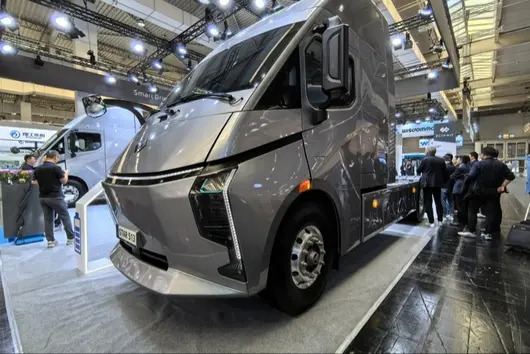
 DeepWay Shenxiang muncul di Pameran Hannover
Resonansi faktor dalaman dan luaran; Tahun 2026 adalah "Tahun Permulaan Keluar Negara"
"2024-2025 lebih banyak mengenai eksplorasi dan pengesahan pasaran, tahun 2026 adalah tahun permulaan keluar negara yang sebenarnya bagi DeepWay Shenxiang." Pada permulaan temubual, Zhao Minyu memberikan pernyataan tegas ini; ini bukan slogan yang dibuat secara tergesa-gesa, melainkan langkah kritikal yang pasti diambil oleh DeepWay Shenxiang selepas pendalaman bertahun-tahun di luar negara.
Dari sudut pandang DeepWay Shenxiang, Zhao Minyu mengakui bahawa sejak tahun 2024, syarikat telah mula mengeksport produk ujian kecil ke luar negara, manakala tahun 2025 memberi tumpuan pada "mengenal pasti keadaan" dan kajian produk pasaran global. Ditambah dengan uji kaji di pasaran truk berat elektrik domestik China yang merupakan medan persaingan paling sengit dan aplikasi paling kaya di dunia, DeepWay Shenxiang telah menyelesaikan pengesahan menyeluruh dari teknologi, produk hingga rantaian bekalan. Zhao Minyu menekankan bahawa peningkatan strategi tahun 2026 adalah teras kerana DeepWay Shenxiang kini telah mempunyai keupayaan lengkap "memahami keperluan kawasan berbeza, melaksanakan definisi produk tempatan berdasarkan pangkalan teknologi bersatu". Ini bukan sekadar menyalinkan model matang domestik ke luar negara secara mudah, malah merupakan pembangunan tersuai mendalam yang syarikat lakukan menuju pasaran global.
 Pengurus Besar DeepWay Shenxiang Antarabangsa Zhao Minyu
Pada tahun-tahun kebelakangan ini, persekitaran pasaran luar bagi truk berat tenaga baharu telah berubah secara mendadak. Disebabkan oleh faktor-faktor seperti politik geopolitik, goncangan harga minyak global telah meningkat, dan ketidakpastian kos logistik telah naik, menyebabkan banyak negara mula menilai semula peralihan kenderaan pengangkutan dari sudut keselamatan tenaga. Zhao Minyu memerhatikan bahawa sejak awal tahun ini, permintaan sebenar luar negara terhadap truk berat elektrik telah mengalami "peningkatan yang sangat besar". Jika sebelum ini pelanggan luar negara lebih melihat truk berat elektrik sebagai percubaan dan pemerhatian, maka sekarang di beberapa kawasan, berdasarkan pengiraan kos kitaran hayat (TCO) dan keperluan kebebasan tenaga, benih aplikasi berskala telah muncul.
Dalam kitaran pembiayaan Pre-IPO DeepWay Shenxiang tahun ini sebanyak 310 juta dolar AS, tiga modal luar negara utama serentak masuk, memberikan dorongan pelbagai dimensi untuk mempercepat keluar negara. Dalam pandangan Zhao Minyu, institusi pelaburan tahap tertinggi ini membawa bukan sahaja dana, malah sumber ekosistem industri tempatan — dari pembiayaan sewa, insurans hingga pengendalian logistik malah sumber pengeluaran tempatan, semua ini memberikan "kereta masuk" untuk DeepWay Shenxiang membenam di pasaran tempatan. Dengan itu, dari keupayaan definisi produk tempatan, letusan permintaan pasaran luar, hingga ekosistem tempatan, ketiga-tiga kekuatan ini bertemu, mendorong DeepWay Shenxiang untuk secara rasmi mentakrifkan tahun 2026 sebagai "Tahun Permulaan Keluar Negara".

Tidak melakukan "Satu Model untuk Semua Negara"; Penyesuaian Mendalam Berdasarkan Pangkalan Teknologi Bersatu
Mempertahankan peraturan, iklim, keadaan operasi dan kebiasaan pengguna yang berbeza-beza antara negara, bagaimana truk berat tenaga baharu China boleh memecahkan kutuk "tidak sesuai"? Jawapan Zhao Minyu ialah: Berkeras untuk tidak melakukan "satu model untuk semua negara", DeepWay Shenxiang akan melakukan penyesuaian tempatan yang mendalam berdasarkan pangkalan teknologi penyelidikan dan pembangunan yang betul (R&D).
Inilah sebenarnya keutamaan teras DeepWay Shenxiang. Sebagai syarikat teknologi truk berat tenaga baharu yang fokus kepada penyelidikan dan pembangunan yang betul, model DeepWay Shenxiang bukan "ubah petrol jadi elektrik", arkitektur kenderaan, komponen teras dan algoritma bawah tanah direka bentuk elektrik asli dari 0 ke 1, secara besar-besaran meningkatkan keselamatan dan ekonomi, serta membuat fungsi pemanduan pintar lebih pantas bertindak balas dan kawalan lebih tepat. Sistem terintegrasi perisian dan perkakasan membolehkan pasukan penyelidikan dalaman dan rantaian bekalan yang boleh dikawal tinggi bertindak balas dengan cepat terhadap keperluan tersuai pasaran luar, tanpa perlu bergantung terlalu banyak pada pembekal luar.

"Apa yang kami bina di luar negara bukan hanya pasukan jualan, malah pasukan terintegrasi jualan + produk." Zhao Minyu memperkenalkan. Logik teras model ini ialah, bukan mengambil kereta lengkap yang telah ditetapkan di China untuk meminta pelanggan luar negara menyesuaikan diri, malah menyelam ke dalam skenario logistik tempatan yang sebenar, membalikkan proses definisi produk.
Contohnya, untuk skenario penggunaan cuaca panas dan hujan lebat di kawasan Afrika Barat, serta korosi kabut garam yang teruk di kawasan pesisir, DeepWay Shenxiang secara khusus memperkuat keupayaan penyejukan aircond, menaikkan prestasi anti-korosi tahan kabut garam chasis kepada piawai ujian kabut garam 480 jam, dan menggunakan proses penyepuh dua lapisan untuk memperkuat prestasi anti-korosi. Pada masa yang sama, untuk keadaan jalan yang kompleks di kawasan tempatan, kuasa terjejas motor elektrik dinaikkan sebanyak 15%. Di pasaran kenderaan pemandu sebelah kanan seperti Thailand dan Malaysia, DeepWay Shenxiang telah membangunkan model yang sesuai dan memasukkannya ke dalam operasi; di pasaran Australia dan New Zealand, produk telah menerima pengesahan dan mendapat maklum balas positif daripada pelanggan rantai sejuk, mencapai ekonomi yang amat baik dalam pengangkutan rantai sejuk jarak pendek.

Sekarang ini, peta global DeepWay Shenxiang telah merangkumi pasaran di Eropah, Timur Tengah, Asia Tenggara, Australia dan New Zealand, Amerika Latin serta Afrika dan banyak kawasan lain. Zhao Minyu berpendapat, memasuki Eropah ini adalah tanah tinggi peraturan, untuk memberikan asas yang kukuh untuk pasaran global; dan di kawasan yang berbeza, mereka melakukan perkara yang sama: bersandarkan pada pangkalan produk yang telah disahkan secara besar-besaran di China, buat penyesuaian tempatan, cari skenario yang sepadan, kira akaun ekonomi untuk pelanggan, ciptakan nilai sebenar.
Tidak menjadi "Penjarah"; Output Nilai dan Pembinaan Ekosistem Bersama
Apabila membincangkan peta pasaran luar DeepWay Shenxiang, Zhao Minyu membahagikannya kepada tahap strategik yang berbeza: Eropah adalah teras strategik jangka panjang, bertujuan untuk menyamai piawaian tertinggi global, membina suara; Australia dan Timur Tengah adalah pasaran untuk pengesahan nilai dan inovasi model, cuba permainan baharu seperti model kapasiti elektrik sangat besar, laluan pengisian pantas sangat; manakala Asia Tenggara dipandang sebagai "Seperti Pasaran China", walaupun persaingan harga sengit, tetapi melalui pendalaman skenario dan penyesuaian yang baik, masih boleh mencapai terobosan凭借 kelebihan teknologi dan rantaian bekalan.

Tetapi yang lebih penting, antarabangsa DeepWay Shenxiang telah diberi harapan industri yang melangkaui komersial. Zhao Minyu berulang kali menekankan dalam temubual, "Syarikat China harus melakukan output nilai, bukan hanya output produk". Beliau menyeru industri untuk mencontohi strategi berpukal syarikat automotif Jepun dan Korea pada masa dahulu, mengelakkan perang harga yang saling menekan di dalam negara yang sengit dibawa ke luar negara.
"Di luar negara, pesaing sebenar kami bukan rakan kongsi China, malah kenderaan diesel." Zhao Minyu menunjuk dengan tepat. Misi terbesar truk berat elektrik China pada masa ini adalah, melalui produk yang kompetitif dan teknologi matang, membuktikan kelebihan TCO kereta elektrik, berebut saiz pasaran kenderaan diesel tradisional, bersama-sama membesarkan kek pasaran truk berat elektrik luar negara, ini juga salah satu matlamat DeepWay Shenxiang keluar negara.

Penutup
"Bersama hidup dengan ekosistem industri global" — inilah konsep teras yang DeepWay Shenxiang hantar dalam temubual ini. Baginya, laluan antarabangsa bukan sahaja larian semula jadi semasa berdiri dengan teguh di pasaran China, malah satu peningkatan industri dari output produk ke output teknologi, industri, dan piawaian secara menyeluruh. Melalui strategi "Pengesahan China, Tersuai Global, Bersama Hidup Tempatan", DeepWay Shenxiang cuba memainkan peranan pemberi kuasa di pasaran luar negara, bukan "penjarah". Melalui pemupukan ekosistem industri tempatan, menerap diri ke dalam rantaian bekalan tempatan, membuat keupayaan rantaian bekalan elektrik China yang canggih menjadi kekuatan stabil di bawah corak kegawatan tenaga global. Mungkin inilah jalan terbaik bagi syarikat kenderaan dagangan China daripada "Keluar" ke "Masuk".

2026年,中国汽车的智能化竞争进入了一个有些微妙的阶段。
工信部装备工业一司披露,2026年以来,国内搭载L2级组合驾驶辅助功能的乘用车渗透率已经达到70.5%,NOA功能渗透率达到34.2%。对今天的购车者而言,辅助驾驶正在从高配车型上的加分项,变成越来越常见的基础能力。
行业已经开始为下一阶段做准备。2025年底,首批两款L3级有条件自动驾驶车型获得准入许可,在北京、重庆的指定道路和限定条件下开展试点。与此同时,不少新车在发布时强调面向L3预留感知、计算、供电、转向和制动冗余。硬件准备好了,不代表消费者现在就能使用L3,却说明车企已经在为法规和责任边界的变化提前投入。

车上的摄像头、激光雷达和芯片越来越多,另一个问题也变得突出:这些汽车究竟由谁来思考?
从供给端看,智驾能力并不像车型数量那样分散。在车企自研之外,华为乾崑、Momenta和地平线分别从整套系统、硬件软件和计算平台进入不同品牌,成为传统车企智能化落地的重要支撑。
中国汽车工业协会发布的《2025城市NOA汽车辅助驾驶研究报告》显示,2025年前11个月,国内城市NOA乘用车销量约312.9万辆,其中采用第三方合作方案的约67.9万辆;在这部分市场中,Momenta与华为HI模式合计占比约八成。地平线则从芯片和计算底座覆盖更广泛的车型,这不仅说明智驾功能正在快速普及,更显示出底层能力仍集中在少数供应商和具备自研能力的主机厂手中。

对传统汽车企业而言,采购成熟方案很自然。过去几十年,车企本来就是借助全球供应链组织零部件,再完成整车定义、集成和制造。只是当车辆体验开始由算法持续改写,供应商掌握的就不再只是一个零部件,还包括数据、迭代速度,以及一部分产品定义权。
这让长安的选择变得值得讨论。
一是2025年底,中国长安第3000万辆中国品牌汽车下线,长安拥有的庞大产品和用户基础迎来了新台阶。而成为“新央企”之后,长安仍在推进2017年提出的目标:向智能低碳出行科技公司转型。

二是长安旗下的智驾也不是单一路线。阿维塔以及部分深蓝车型采用华为乾崑方案,深蓝L06由长安、深蓝与地平线共同开发,启源E07则是长安全栈自研高阶辅助驾驶较早的量产落点。
开放合作可以快速补齐产品能力,但一家希望成为科技公司的大型车企,还需要建立自己的核心能力。
因此,当天枢领航随长安启源Q06进入15万—20万元级新能源SUV市场时,值得看的不只是这辆车增加了哪些功能。长安还要验证一件更难的事:自研智驾能否进入主流价位,并依靠足够大的量产规模跑出自己的数据闭环。

Q06,要在家用SUV市场多争一点什么
15万—20万元买一辆新能源SUV,消费者已经很难缺少选择。零跑C11、深蓝S07、比亚迪海狮06等产品,都在争夺要求越来越全面的家庭用户。空间要大,续航要够,舒适配置不能少,辅助驾驶也逐渐成为购车时需要比较的一项。
9月4日晚开启预售的长安启源Q06共推出9款车型,预售价14.99万—19.19万元,覆盖纯电与增程两种动力。这个区间很难再靠某一项配置决定胜负。看重空间的用户还要比较舒适性,关心续航的人也会计算补能时间,辅助驾驶是否好用,则需要真正开起来才能判断。
Q06的产品组合带着这种野心。4837毫米的车长和2940毫米的轴距,先回应家庭用车的空间需求;纯电与增程两条路线,让充电条件和出行半径不同的用户都有选择。高配纯电车型采用总功率330千瓦的后双电机方案,800V高压平台和6C快充则把竞争延伸到驾驶与补能体验。前双叉臂、后五连杆悬架,以及零压座椅、后排娱乐屏和冷暖冰箱,继续补足家庭用户能够直接感知的部分。
这些配置并不需要逐项拿来决胜。它们放在一起,说明Q06既要争空间和性价比用户,也想让启源多一些性能、舒适和科技方面的辨识度。同价位产品越来越全面,Q06必须让消费者记住具体的不同。
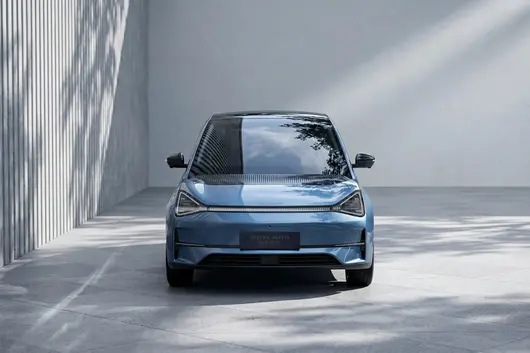
而作为首款搭载了天枢领航的量产车,启源Q06在智能辅助驾驶上提供了一个天枢领航提供了一个感知较强的切口——驾驶员可以用自然语言向车辆表达临时的驾驶意图。
长安汽车首席智能驾驶技术官陶吉把它类比为一个需要偶尔沟通的司机。例如,用户希望在一段路上少变道,或者在熟悉的通勤路线上表达自己的车道偏好,传统设置里的几个档位很难覆盖这些需求。
交互式领航通过多模态理解衔接端到端驾驶,让表达意图的方式更自然。陶吉同时谈到世界模型、心智模型和本体模型,分别涉及道路环境、其他交通参与者的意图以及车辆自身的运动边界。这些仍有一部分属于继续探索的技术方向。对当前Q06而言,更现实的任务是把已经开放的交互能力和驾驶辅助体验做扎实。

家用车里的科技感,最终要落在每天怎么用、能否减少操作负担上。用户愿不愿意持续使用,比发布会上能演示多少条指令更有说服力。
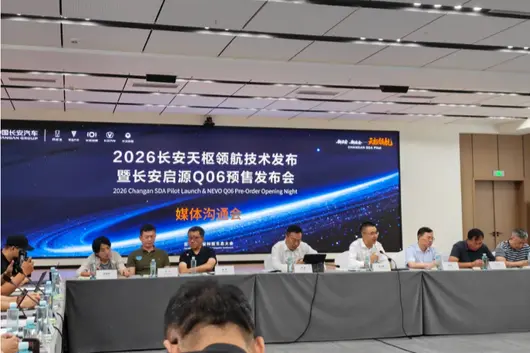
而根据长安在沟通会上的披露,Q06预售两小时订单达到1.1万辆,Ultra版本占比53%,后双电机版本占比约三成。这是一个积极的早期信号,说明新技术和新的动力方案受到关注。
从大众侃车的试驾感受来看,Q06在操控、舒适配置和辅助驾驶体验上都很有竞争力。真正的考验,是这些优势能否在日常使用中保持一致。
一家大车企,为什么还要自己做
对Q06来说,“自研”本身不会自动变成卖点。它的价值取决于长安能否把自己的产品想法落实到车上,并在用户用车的过程中持续改进。
长安汽车执行副总裁、长安品牌事业部总经理杨大勇在现场说:“原因很简单,就是两个字,品牌。”他随后补充:“我们是希望长安启源也好,长安汽车也好,长安品牌的产品的核心技术要出自长安自己的手。”

这并非临时起意。长安在2018年发布“北斗天枢”计划,2025年又推出“北斗天枢2.0”,明确采用“自主研发+合作共创”两条路线。此前全栈自研高阶辅助驾驶已经在启源E07量产,天枢领航则继续把这条路线推向覆盖面更大的产品。
因此目前看来,天枢领航并不意味着长安放弃与华为、地平线等企业合作。不同品牌、价格和产品定位可以选择不同方案;长安需要补上的,是自己定义功能、发现问题和决定迭代次序的能力。交互式领航就是一次具体尝试:它来自长安对用户怎样使用车辆的判断,也要求算法和整车工程共同完成。
沟通会现场,除了品牌与智驾负责人,产品、研发、座舱、制造和服务负责人也轮番回答问题。一套驾驶辅助系统装进量产车,要经过整车定义、工程开发、生产灌装、验证和售后,远不止算法部门完成一次模型训练。

长安汽车副总裁、首席网络安全官、首席数字官,同时担任长安科技董事、总裁的贺刚,从整车工程角度解释了这一点。智能驾驶出现问题,原因可能在感知和决策,也可能来自转向、制动或动力。他在现场反问:“是眼睛出了问题、脑子出了问题,还是腿出了问题?”

对用户来说,这些最终表现为车辆开得是否顺畅、动作是否符合预期。对研发团队而言,则要把整车数据、算法和执行机构放到一起分析。找到问题后,再采集相关案例、训练模型,经过验证后推送新版本。贺刚说:“只有你发现问题以后,你才能够自己快速地改进。”
据贺刚介绍,长安已把跨城市的泛化测试纳入开发体系,在45座城市开展路测,并通过仿真、实车和虚实融合验证打磨系统。这是长安在沟通会上的披露,最终仍要由不同城市、不同用户的长期使用来检验。
长安同时推出天枢领航安心包,提供相关补偿与专属服务,具体保障以条款为准。当前开放的仍是L2级辅助驾驶,驾驶员需要承担相应责任;企业则要接住用户使用中暴露的问题。贺刚的表述是:“我们会为整个的结果来兜底、来负责,包括后面的持续使用期。”
自研还要面对投入与回报。长安汽车2026年半年报显示,上半年归母净利润8.17亿元,同比下降64.32%。这条财报信息放在这里的意义很直接:技术必须进入主流产品并获得用户认可,长期投入才有更稳固的基础。Q06承担的正是这次规模化验证。
开出中国,天枢领航还要过哪些关
出海仍是技术沟通会上的热点话题,但讨论天枢领航出海之前,需要先看长安已经把车卖到了哪里。
长安的“海纳百川”计划把全球市场分为五大区域。截至2025年4月,长安披露已建成9个海外工厂,全球渠道网点超过9000个,泰国新能源整车基地也进入投产阶段。销量方面,长安海外销量从2022年的24.9万辆增长到2025年的63.73万辆,2026年上半年出口45.5万辆。海外已经成为长安扩大规模的重要来源。
渠道、工厂和销量铺开以后,智能驾驶必须跟上产品走出去的速度。在中国好用的系统,换一个国家是否仍然好用?这也是大众侃车在现场追问长安的问题,涉及当地道路、法规、数据处理,以及左右舵交通环境变化带来的适应工作。
贺刚举了一个很具体的例子:巴西、墨西哥一些道路上的减速带,对识别和减速提出了不同要求。有的地区网络条件有限,交通标识、道路参与者和驾驶习惯也与国内不同。这些差异都需要车辆在当地重新学习和验证。

长安巴西工厂
智能驾驶出海不能只靠更换界面语言,也不能把国内表现直接当成海外体验的保证。当地道路的数据从哪里来,如何发现新的问题,更新后怎样验证,都需要一套能够持续运转的办法。
谈到本地算力,贺刚在现场说:“你要做全球化的业务,你就应该在全球对应的这些地区建本地的算力中心。”长安提出在当地开展数据闭环,其考虑既包括适应当地道路,也包括满足数据处理的法律要求。
海外数据合规也不等于所有数据一律禁止跨境。多数市场允许满足条件的跨境传输,但企业需要说明采集目的和范围、数据接收方,以及用什么机制提供保护。
例如,欧盟GDPR要求目的限制和数据最小化,向第三国传输个人数据还要满足相应条件。车辆位置、驾驶习惯、车内语音一旦能够关联个人,就不能因为训练模型需要而无限采集。沙特、阿联酋和巴西的具体规则不同,同样要求企业为个人数据跨境传输建立合法路径,不能默认全部回传总部。

本地算力、数据闭环和验证体系会增加短期投入,也决定了系统能否真正适应当地道路。按照贺刚在沟通会上的判断,海外高速领航可能先于城区能力铺开,阿联酋则可能成为较早尝试城区领航的市场。这仍是推进方向,具体落地要跟随当地测试与法规条件。
让技术成为买车的理由
回到Q06,天枢领航给它增加的底气,首先是一种更鲜明的智能体验。空间、补能和舒适性构成产品基础,驾驶辅助与自然语言交互则提供了新的识别度。
长安有多年整车研发、制造和服务积累,可以从整辆车的角度处理智能化问题;自研让产品定义与软件迭代之间的距离更短。接下来需要证明的是,这些能力能否在Q06上配合好,让用户每天开得顺手,更新之后还能感到具体改进。
如果Q06能够建立这样的口碑,启源收获的就会超过一款新车的热度。长安可以把经过量产检验的能力用到更多车型上,让研发积累得到复用,也让品牌逐渐形成更清晰的技术标签。
Q06值得期待的地方,就在于它把长安的整车经验和自研智驾带到了主流家庭能够考虑的价位。当天枢领航从试驾时的新鲜感,变成日常用车中愿意打开、用得顺手的功能,它给Q06增加的底气,才会真正变成消费者买车的理由。


Volume increased, but profits did not follow.
Against the backdrop of the domestic automotive market decline and overseas boom, every traditional listed auto company stands at a crossroads, though everyone's feeling is different.
In this context, Changan Automobile, upgraded to a central automotive SOE, delivered its first semi-annual report after promotion, and the financial data does not look good.
01
In H1 2026, Changan Automobile's revenue was 65.634 billion yuan, down 9.71% year-on-year; net profit attributable to shareholders was 817 million yuan, down 64.32% year-on-year; net profit excluding non-recurring gains and losses was only 251 million yuan, plummeting 83.01% year-on-year. Gross margin was 14.5%, slightly down 0.08 percentage points year-on-year.

On the surface, this is a report card with declining revenue, profit, and gross margin. But carefully reviewing this semi-annual report reveals the situation is not as simple as it appears.
In the first half, Changan Automobile recorded a net exchange loss of about 230 million yuan, while last year's same period had a net exchange gain of about 1.356 billion yuan. One in and one out, the difference is 1.586 billion yuan. This is also an objective reality faced by all listed Chinese automotive companies.
Affected by this, Changan Automobile's financial expenses changed from a net gain of 1.957 billion yuan in the first half of last year to a net expense of 69 million yuan now, a difference as high as 2.026 billion yuan.
Changan Automobile also admitted in the semi-annual report: "After deducting the impact of exchange gains, the net profit attributable to shareholders of the listed company increased by 12% year-on-year." In other words, more than 64% of the decline in net profit was largely caused by exchange rate fluctuations.
 [Image Source: Changan Automobile Announcement]
Apart from exchange losses, Changan Automobile accrued about 456 million yuan in asset impairment provisions in the first half, among which inventory price decline provisions reached 468 million yuan, while last year's same period was only 59 million yuan. If this impairment is deducted, the net profit for the first half could reach 1.273 billion yuan.
The combination of these two non-recurring factors is the real driver behind the sharp decline in this automotive central enterprise's profits.
Changan Automobile mentioned at the performance explanation meeting that, affected by the overall industry downturn in the first half, market demand continued to weaken. The company went all out to stabilize operations and grab sales volume. Although the half-year results were below expectations due to the general environment, it still stabilized the core business.
But in the view of AutosKline, guarding the core business itself has already consumed a large amount of resources.
02
In the first half, Changan Automobile's total sales volume was 1.1189 million units, down 17.44% year-on-year. Among them, new energy vehicle sales were 414,200 units, down 8.3% year-on-year.
But excluding the gap of about 70,000 units from the Lumin model which stopped production this year, the new energy sales actually grew by about 11% year-on-year. This means the sales growth of other products is just enough to fill the exit of old products.
 [Image Source: Changan Automobile Announcement]
In this view, the contraction of fuel vehicles is the more troublesome problem.
Data from the China Association of Automobile Manufacturers shows that the domestic fuel vehicle market contracted by 27.8% year-on-year in the first half. Changan Automobile's main fuel models such as CS75 PLUS, sales volume dropped nearly 40% year-on-year.
Looking by brand, the situation is more differentiated.
Changan Qiyuan delivered 173,800 units in the first half, achieved profitability in a single quarter in the second quarter, becoming the first brand in Changan Automobile's new energy sector to achieve self-sustaining growth. At the same time, Deepal Automobile delivered 164,200 units, a year-on-year growth of 14.6%, overseas sales 35,800 units, skyrocketing by 141%.
Avatr, which was highly expected internally by Changan Automobile, became the group's financial bleeding point. It delivered only 31,500 units in the first half, a year-on-year plunge of 46.74%. Cumulative losses over 4 years of establishment exceeded 13.2 billion yuan, to the point where Zhu Huarong proposed an integration plan for Avatr and Deepal Automobile in April this year for cost reduction and efficiency improvement.
 [Image Source: Avatr Prospectus]
The Changan fuel vehicle main lineup, as the main force of fuel cars, delivered about 329,800 units cumulatively in the first half. Affected by the overall contraction of the fuel vehicle market, sales continued to be under pressure. The highlight lies in the performance of hybrid models.
AutosKline believes that in the process of switching from old to new drivers of momentum, Changan Automobile is experiencing a period of transition. The profit pool of fuel vehicles is quickly drying up, and although the scale of new energy business is expanding, profitability has not caught up yet.
03
In comparison, the overseas market became a highlight for Changan Automobile in the first half, just like most listed auto companies.
In the first half of this year, Changan Automobile's overseas sales were 455,000 units, a year-on-year increase of 51.9%; overseas income was 21.942 billion yuan, a year-on-year increase of 78.77%, with the share of total revenue rising from 16.89% to 33.43%. Overseas gross margin was 20.13%, far higher than the 11.67% of domestic business.
Changan Automobile's overseas strategy is named "Embrace All Waters". It was upgraded to version 2.0 in April this year, establishing the four principles of "Long-term, Localization, Systematization, and ESG Integration". The goal is to achieve overseas sales of 1.5 to 1.8 million units by 2030.

In the first half, its Brazil factory officially started production, the Thailand factory's 20,000th vehicle came off the line, and the overseas sales network has expanded to 129 countries and regions. However, the two subsidiaries responsible for exports encountered increased revenue but not increased profit.
Chongqing Xingzhi Technology revenue was 10.905 billion yuan, a year-on-year growth of 85%, net profit 165 million yuan, down 65% year-on-year; Changan International Sales Service revenue was 4.316 billion yuan, a year-on-year growth of 25.6%, net profit 137 million yuan, down 58% year-on-year; overseas gross margin also decreased by 2.1 percentage points year-on-year.
04
The costs of overseas channel construction, brand promotion, and localized operations are being incurred in advance, and profits are naturally eroded. More importantly, the larger the export scale, the greater the exchange rate risk exposure.
According to foreign currency monetary items disclosed in the semi-annual report, as of June 30, Changan Automobile's foreign currency assets totaled about 7.967 billion yuan, foreign currency liabilities about 3.356 billion yuan, net foreign currency exposure about 4.612 billion yuan.

As Changan Automobile stated in the semi-annual report, if the Renminbi appreciates or depreciates by 5% against the US dollar, it will increase or decrease net profit by about 66.1935 million yuan as a result.
Although Changan Automobile has already carried out forward foreign exchange hedging business, the amount sold for hedging in the first half was about 372 million yuan. Relative to over 4.6 billion yuan of net exposure, the coverage ratio is less than 10%, making it difficult to effectively hedge exchange rate fluctuation impact.
05
In addition, from the end of the first half to the release of the latest August sales data, Changan Automobile's overall situation has not improved.
Total sales for the first 8 months of this year were 1.4772 million units, down 17.92% year-on-year. The decline rate is still expanding compared to the first half. Independent brands' sales for the first 8 months were down 20.18% year-on-year, compared to 19.91% in the first half. The decline is also expanding.
The only comforting thing is new energy. Changan Automobile's August new energy single-month sales broke through 100,000 units, a year-on-year growth of 12.98%, and new energy penetration rate broke through 51%.
 [Image Source: Changan Automobile Announcement]
From accumulated data, new energy's first 8 months cumulative sales were 589,500 units. The year-on-year decline has narrowed from 8.3% in the first half to 5.03%. Qiyuan, Deepal and other brands continued to scale up, becoming main drivers.
But if placed under the group's overall performance, this result is obviously not enough.
At the beginning of the year, the group set an annual sales target of 3.3 million units. The completion rate for the first 8 months was less than 45%. In the remaining 4 months, monthly average needs to exceed 450,000 units to meet the target. In the current market environment, this is an impossible mission.
06
For such reality, perhaps Changan Automobile itself is also hard to feel satisfied.
At the semi-annual performance explanation meeting on August 31, facing online investor questions, Changan Automobile management's answer left people bewildered.
When investors asked about HEV model sales, Changan Automobile answered how advanced the Blue Whale Ultra Engine hybrid technology is; when asked about second-half performance outlook, the official answer was "Will continue to deeply promote three major plans" and "Persist in value orientation, volume and profit balanced operating principle"; when asked about capacity utilization rate, it only said "See disclosed relevant reports", turning to explain how to improve operational efficiency.

Behind these answers to non-questions, reflects Changan Automobile's caution and avoidance when communicating with investors under operational pressure. No matter how grand the enterprise high-level strategy is depicted, it cannot cover the reality of operational difficulties.
In the first half, Changan Automobile's three core strategies - Smart "Beidou Tianshu", New Energy "Shangri-La", and Overseas "Embrace All Waters", all made progress in technology and scale. But between strategy and profit, there are multiple variables such as product, market, cost, exchange rate, etc.
R&D investment has not yet converted to significant profit contribution. New energy brands are still continuously losing money. Fuel vehicle base accelerates contraction. Export business volume increases but profit does not.
07
After the semi-annual report release, multiple mainstream brokerages' judgment on Changan Automobile was highly consistent. They believe its short-term performance is dragged by exchange rate and other non-recurring factors, but the medium-to-long term logic of overseas expansion, new energy loss reduction, and smart technology remains unchanged.
CITIC Securities believes Q2 product structure continued to optimize, overseas sales hit a quarterly high. At the same time, based on domestic demand pressure, it lowered the full-year earnings forecast. Guoyuan Securities values Tianshu Smart Driving completion from hardware to complete solution loop.
However, institutions' prediction for full-year net profit ranges from 2 billion yuan to 5.6 billion yuan, divergence is quite large. Most research reports also warned of domestic demand continuing to bear pressure, industry competition intensifying, overseas trade barriers and exchange rate fluctuation, etc. risks.

For this semi-annual report, capital market feedback was relatively flat. On the first trading day after the semi-annual report release (August 31), Changan Automobile micro-dropped 0.42%. In that week, its stock price only micro-grew 0.28%, closing at 7.12 yuan. The stock price being nearly zero fluctuation might be because the profit performance forecast released in July already released most negative news in advance.
But if the time line is lengthened, since this year, Changan Automobile stock price has fallen from 11.74 yuan at year start to 7.11 yuan at noon close on September 10, a decline of 39.44%.
Views of AutosKline:
Changan Automobile's semi-annual report is a typical answer sheet for a traditional auto giant experiencing pain during key transition period.
Exchange losses and asset impairment amplified the profit decline. But even excluding these factors, fuel vehicle base contraction, new energy not yet profitable, overseas expansion investment period triple pressure superposition is the truly structural problem to face.
Beidou Tianshu, Shangri-La, Embrace All Waters, these strategy names are loud enough. Technical level also indeed let outside world see this central enterprise's strength. But Changan Automobile needs to prove not only owning advanced technology, but more is products can sell well, money can earn.
Text is original by AutosKline, content reference materials from listed company announcements and industry public information (related companies and institutions should be responsible for the authenticity of truth); some parts from Internet images, copyright belongs to original owner.
This account article, without authorization, cannot reprint, violators will be prosecuted. At the same time, article content does not constitute investment advice to anyone! Stock market risk is high, investment must be cautious!


In the SUV market in Malaysia, many buyers compare Honda CR-V and Chery Tiggo 8 when choosing a car. These two models are quite close in price and positioning. Today, we will conduct a detailed comparison from multiple aspects to help you save time on research.
The OTR price of Honda CR-V in Malaysia is RM 178,200 - 195,900, totaling 4 versions, including 2026 e:HEV 2.0L 2WD RS (RM 195,900), 2026 1.5T 4WD V (RM 181,900), 2026 e:HEV 2.0L 2WD E (RM 178,200), etc.
The OTR price of Chery Tiggo 8 in Malaysia is RM 129,750 - 129,750, totaling 1 version, including 2026 1.6T Standard (RM 129,750), etc.
In terms of price, the starting price of Chery Tiggo 8 is RM 48,450 cheaper than Honda CR-V. Honestly, in this price segment, a difference of a few thousand is not significant; the key is the overall value for money and long-term usage costs.

The safety rating of Honda CR-V is 5★ (ASEAN NCAP), active safety systems include Honda SENSING (ACC, CMBS, LKAS, RDM).
The safety rating of Chery Tiggo 8 is TBD, active safety systems include Basic.
In terms of safety features, both cars have received decent ratings. However, there are some functional differences between Honda CR-V's Honda SENSING (ACC, CMBS, LKAS, RDM) and Chery Tiggo 8's Basic. If you value active safety more, you can compare the feature lists of both carefully.

Honda CR-V body length 4500 mm, trunk 450 L.
Chery Tiggo 8 body length 4400 mm, trunk 400 L.
Regarding space, the Honda CR-V body is 100 mm longer than Chery Tiggo 8, the interior seating space is slightly more spacious, especially the rear legroom. If you often carry family or need to place a stroller, a slightly larger body is indeed more practical.

Honda CR-V and Chery Tiggo 8 are both mainstream choices in the Malaysian market, suitable for family use and daily commuting. If you value brand reputation and resale price more, you can prioritize the one with better reputation; if you care more about value for money and features, choose the one with richer configuration. Ultimately, it is recommended to test drive both, as personal experience is the most important.

Overall, Honda CR-V and Chery Tiggo 8 are both very good models in the Malaysian market. Which one to choose mainly depends on your personal needs and budget. It is recommended to do research, compare quotes from multiple dealerships, and then test drive to make the final decision. Buying a car is a big matter, spending time doing research will never be wrong.

In the Malaysian SUV market, many buyers tend to compare the Honda CR-V and Chery Tiggo 8 when choosing a car. These two vehicles are quite close in price and positioning, so today we will do a detailed comparison from multiple aspects to save you the time of doing research.
The OTR price of Honda CR-V in Malaysia is RM 178,200 - 195,900, with a total of 4 variants, including 2026 e:HEV 2.0L 2WD RS (RM 195,900), 2026 1.5T 4WD V (RM 181,900), 2026 e:HEV 2.0L 2WD E (RM 178,200), etc.
The OTR price of Chery Tiggo 8 in Malaysia is RM 129,750 - 129,750, with a total of 1 variant, including 2026 1.6T Standard (RM 129,750), etc.
In terms of price, the starting price of the Chery Tiggo 8 is RM 48,450 cheaper than the Honda CR-V. Honestly, in this price range, a difference of a few thousand is actually not significant; the key is to look at overall value for money and long-term usage costs.
The safety rating of Honda CR-V is 5★ (ASEAN NCAP), and the active safety system includes Honda SENSING (ACC, CMBS, LKAS, RDM).
The safety rating of Chery Tiggo 8 is TBD, and the active safety system includes Basic.
Regarding safety features, both vehicles have received decent ratings. However, there are some differences in functionality between the Honda CR-V's Honda SENSING (ACC, CMBS, LKAS, RDM) and the Chery Tiggo 8's Basic. If you prioritize active safety, you can compare the feature lists of both carefully.
The Honda CR-V has a body length of 4500 mm and a trunk capacity of 450 L.
The Chery Tiggo 8 has a body length of 4400 mm and a trunk capacity of 400 L.
In terms of space, the Honda CR-V's body is 100 mm longer than the Chery Tiggo 8's, so the interior passenger space will be slightly more spacious, especially the rear legroom. If you often carry family members or need to fit a stroller, a larger body is indeed more practical.
Honda CR-V adopts FWD drive mode.
Chery Tiggo 8 adopts FWD drive mode.
Both vehicles have the same drive mode, both are FWD, so the daily driving experience won't differ much.
In general, both Honda CR-V and Chery Tiggo 8 are quite good models in the Malaysian market. Which one to choose ultimately depends on your personal needs and budget. We recommend doing your research, comparing quotes from multiple dealerships, and then test driving to make a final decision. Buying a car is a big matter, so spending some time doing research will never be a mistake.

喺馬來西亞嘅 SUV 市場,好多買家喺揀車嘅時候都會拎本田 CR-V 同奇瑞 Tiggo 8 嚟做比較。呢兩部車喺價位同定位上都幾接近,今日我哋就從多個方面做一個詳細嘅比較,幫到你節省做功課嘅時間。
本田 CR-V 喺馬來西亞嘅 OTR 售價係 RM 178,200 - 195,900,合共 4 個版本,包括 2026 e:HEV 2.0L 2WD RS(RM 195,900)、2026 1.5T 4WD V(RM 181,900)、2026 e:HEV 2.0L 2WD E(RM 178,200) 等。
奇瑞 Tiggo 8 喺馬來西亞嘅 OTR 售價係 RM 129,750 - 129,750,合共 1 個版本,包括 2026 1.6T Standard(RM 129,750) 等。
由價錢睇,奇瑞 Tiggo 8 嘅起步價比本田 CR-V 平咗 RM 48,450。實講,喺呢個價位段,幾千蚊嘅差價其實唔算大,關鍵仲係睇整體嘅性價比同長期使用成本。
本田 CR-V 配備 2.0L 4-cyl,馬力 170 hp。官方油耗 8.0 L/100km。
奇瑞 Tiggo 8 配備 1.5L Turbo,馬力 140 hp。官方油耗 7.0 L/100km。
動力方面,本田 CR-V 嘅 2.0L 4-cyl 比奇瑞 Tiggo 8 嘅 1.5L Turbo 多咗 30 匹馬力,中段加速更有信心,尤其係跑高速公路超車嘅時候。不過奇瑞 Tiggo 8 嘅油耗可能更慳,日常市區通勤差別唔會太大。
本田 CR-V 嘅安全評級係 5★ (ASEAN NCAP),主動安全系統包括 Honda SENSING (ACC, CMBS, LKAS, RDM)。
奇瑞 Tiggo 8 嘅安全評級係 TBD,主動安全系統包括 Basic。
安全配備方面,兩部車都拿到唔錯嘅評級。不過本田 CR-V 嘅 Honda SENSING (ACC, CMBS, LKAS, RDM) 同奇瑞 Tiggo 8 嘅 Basic 喺功能上有少少分別,如果你比較重視主動安全嘅話,可以仔細比較下兩者嘅功能列表。
本田 CR-V 採用 FWD 驅動方式。
奇瑞 Tiggo 8 採用 FWD 驅動方式。
兩部車嘅驅動方式一樣,都係 FWD,日常駕駛感受唔會有太大分別。
本田 CR-V 同奇瑞 Tiggo 8 都係馬來西亞市場嘅主流選擇,適合家庭用、日常通勤。如果你好重視品牌口碑同二手價,可以優先考慮口碑好嗰個;如果你好介意性價比同配備,就揀配備豐富嗰個。最終都建議兩部都去試駕,親身體驗先至最重要。

總嚟講,本田 CR-V 同奇瑞 Tiggo 8 都係馬來西亞市場好唔錯嘅車型。揀邊一部,關鍵都係睇你嘅個人需求同預算。建議大家做好功課,多比較幾間車行嘅報價,先至去試駕做最終決定。買車係件大事,花少少時間做功課絕對無錯。

喺馬來西亞嘅 SUV 市場,好多買家在揀車嗰陣都會拿 Honda CR-V 同 Mazda CX-9 嚟做比較。呢兩款車喺價位同定位上都幾接近,今日我哋就從多個方面做個詳細比較,幫你省返做功課嘅時間。
Honda CR-V 喺馬來西亞嘅 OTR 售價係 RM 178,200 - 195,900,一共有 4 個版本,包括 2026 e:HEV 2.0L 2WD RS(RM 195,900)、2026 1.5T 4WD V(RM 181,900)、2026 e:HEV 2.0L 2WD E(RM 178,200)等。
Mazda CX-9 喺馬來西亞嘅 OTR 售價係 RM 328,810 - 345,810,一共有 2 個版本,包括 2023 2.5T 4WD(RM 345,810)、2023 2.5T 2WD(RM 328,810)等。
從價錢睇,Honda CR-V 嘅入門價確實比 Mazda CX-9 平咗 RM 150,610。如果你預算有限,Honda 嘅入門版已經可以滿足日常需求。但都要注意,平少少嘅幾千蚊,可能會喺配備上有取舍,具體要睇你嘅需求。
Honda CR-V 搭載 2.0L 4-cyl,馬力 170 hp。官方油耗 8.0 L/100km。
Mazda CX-9 搭載 2.0L Turbo,馬力 220 hp。官方油耗 9.5 L/100km。
動力方面,Mazda CX-9 嘅 2.0L Turbo 比 Honda CR-V 嘅 2.0L 4-cyl 多咗 50 匹馬力。不過日常喺市區開,兩款車嘅動力都夠用,唔會覺得唔夠力。
Honda CR-V 採 FWD 驅動方式。
Mazda CX-9 採 FWD 驅動方式。
兩款車嘅驅動方式一樣,都係 FWD,日常駕駛感受唔會有太大分別。
Honda CR-V 保用 5 年/無限制里程,保養間隔 每 10,000km 或 6 個月。
Mazda CX-9 保用 5 年/150,000km,保養間隔 每 10,000km 或 6 個月。

Honda CR-V 同 Mazda CX-9 都係馬來西亞市場嘅主流選擇,適合家庭使用、日常通勤。如果你更睇重品牌口碑同二手價,可以優先考慮口碑更好嗰一款;如果你更在意性價比同配備,就揀配置更豐富嗰款。最終都係建議兩款都去試駕,親身體驗先係最重要。

總嘅嚟講,Honda CR-V 同 Mazda CX-9 都係馬來西亞市場好唔錯嘅車型。揀邊一輛,關鍵都係要睇你嘅個人需求同預算。建議大家做好功課,多比較幾間車行嘅報價,先去試駕做最終決定。買車係件大事,花少少時間做功課絕對唔會錯。
In Malaysia's SUV market, many buyers compare Honda CR-V and Mazda CX-8 when choosing a car. These two cars are quite close in price and positioning. Today we will do a detailed comparison from multiple aspects to help you save time on research.
The OTR price of Honda CR-V in Malaysia is RM 178,200 - 195,900, with a total of 4 versions, including 2026 e:HEV 2.0L 2WD RS (RM 195,900), 2026 1.5T 4WD V (RM 181,900), 2026 e:HEV 2.0L 2WD E (RM 178,200) etc.
The OTR price of Mazda CX-8 in Malaysia is RM 165,360 - 201,360, with a total of 5 versions, including 2025 2.5T 4WD High Plus Petrol (RM 201,360), 2025 2.2L 2WD High Plus Diesel (RM 193,123), 2025 2.5L 2WD High Plus Petrol (RM 186,360) etc.
From a price perspective, the starting price of Mazda CX-8 is RM 12,840 cheaper than Honda CR-V. Honestly, in this price range, the difference of a few thousand is not significant; the key lies in the overall cost-performance ratio and long-term usage costs.
Honda CR-V is equipped with a 2.0L 4-cyl, 170 hp. Official fuel consumption 8.0 L/100km.
Mazda CX-8 is equipped with a 2.0L 4-cyl, 170 hp. Official fuel consumption 8.0 L/100km.
Both cars use the same powertrain system, the driving experience in daily use is basically no different. Fuel consumption is also similar, no need to worry too much about this point.
Honda CR-V safety rating is 5★ (ASEAN NCAP), active safety systems include Honda SENSING (ACC, CMBS, LKAS, RDM).
Mazda CX-8 safety rating is 5★ (ASEAN NCAP), active safety systems include Brand ADAS.
Both cars have the same safety rating; safety features in this class are quite complete. New car safety in the current market is not bad, no need to worry too much about this.
Honda CR-V body length 4500 mm, trunk 450 L.
Mazda CX-8 body length 4500 mm, trunk 450 L.
The dimensions of both cars are almost the same, the interior space difference is not significant. For cars in this class, daily use is completely sufficient.

Honda CR-V and Mazda CX-8 are both mainstream choices in the Malaysia market, suitable for family use, daily commuting. If you value brand reputation and resale value more, you can prioritize the one with better reputation; if you care more about cost-performance and features, then choose the one with richer configuration. Ultimately, it is recommended to test drive both, personal experience is the most important.
In general, Honda CR-V and Mazda CX-8 are both very good models in the Malaysia market. Which one to choose depends on your personal needs and budget. It is recommended that everyone do their homework, compare quotes from multiple dealerships, and go test drive to make a final decision. Buying a car is a big matter, spending some time doing homework will never be wrong.
In Malaysia's SUV market, many buyers compare Honda CR-V and Mazda CX-8 when choosing a car. These two models are quite close in price and positioning. Today, we will make a detailed comparison from multiple aspects to help you save time on research.
Honda CR-V OTR price in Malaysia is RM 178,200 - 195,900, with a total of 4 variants, including 2026 e:HEV 2.0L 2WD RS (RM 195,900), 2026 1.5T 4WD V (RM 181,900), 2026 e:HEV 2.0L 2WD E (RM 178,200), etc.
Mazda CX-8 OTR price in Malaysia is RM 165,360 - 201,360, with a total of 5 variants, including 2025 2.5T 4WD High Plus Petrol (RM 201,360), 2025 2.2L 2WD High Plus Diesel (RM 193,123), 2025 2.5L 2WD High Plus Petrol (RM 186,360), etc.
From a price perspective, the starting price of Mazda CX-8 is RM 12,840 cheaper than Honda CR-V. Honestly, in this price range, a difference of a few thousand is not that big. The key is still looking at overall cost-performance and long-term usage costs.
Honda CR-V safety rating is 5★ (ASEAN NCAP), active safety system includes Honda SENSING (ACC, CMBS, LKAS, RDM).
Mazda CX-8 safety rating is 5★ (ASEAN NCAP), active safety system includes Brand ADAS.
Both cars have the same safety rating. Safety features in this class are quite comprehensive. New car safety nowadays is not bad, no need to worry too much about this.
Honda CR-V body length 4500 mm, trunk 450 L.
Mazda CX-8 body length 4500 mm, trunk 450 L.
The dimensions of both cars are almost the same, and the interior space difference is not big. Cars in this class are sufficient for daily use.
Honda CR-V warranty 5 years/unlimited mileage, maintenance interval every 10,000km or 6 months.
Mazda CX-8 warranty 5 years/150,000km, maintenance interval every 10,000km or 6 months.
Overall, Honda CR-V and Mazda CX-8 are both very good models in the Malaysian market. Which one to choose depends mainly on your personal needs and budget. It is recommended to do research, compare quotes from several dealerships, and then test drive to make a final decision. Buying a car is a big matter, spending some time on research will definitely not go wrong.
In the Malaysian SUV market, many buyers compare Honda CR-V and Mazda CX-30 when choosing a car. These two cars are quite close in price and positioning. Today, we will make a detailed comparison from multiple aspects to help you save time on research.
The OTR price of Honda CR-V in Malaysia is RM 178,200 - 195,900. There are 4 versions in total, including 2026 e:HEV 2.0L 2WD RS (RM 195,900), 2026 1.5T 4WD V (RM 181,900), 2026 e:HEV 2.0L 2WD E (RM 178,200) etc.
The OTR price of Mazda CX-30 in Malaysia is RM 122,409 - 146,409. There are 4 versions in total, including 2025 2.0L High+ Premium (RM 146,409), 2025 2.0L High+ (RM 138,409), 2025 2.0L High (RM 130,409) etc.
From a pricing perspective, the starting price of Mazda CX-30 is RM 55,791 cheaper than Honda CR-V. Honestly, in this price range, a difference of a few thousand isn't actually that big. The key is still to look at the overall cost-effectiveness and long-term usage costs.
Honda CR-V is equipped with a 2.0L 4-cyl, horsepower 170 hp. Official fuel consumption 8.0 L/100km.
Mazda CX-30 is equipped with a 1.5L Turbo, horsepower 140 hp. Official fuel consumption 7.0 L/100km.
Regarding power, Honda CR-V's 2.0L 4-cyl has 30 more horsepower than Mazda CX-30's 1.5L Turbo, providing more confidence in mid-range acceleration, especially when overtaking on highways. However, Mazda CX-30's fuel consumption might be more friendly, and the difference for daily city commuting won't be too significant.
Honda CR-V's safety rating is 5★ (ASEAN NCAP), active safety systems include Honda SENSING (ACC, CMBS, LKAS, RDM).
Mazda CX-30's safety rating is 5★ (ASEAN NCAP), active safety systems include i-Activsense.
Both cars have the same safety rating. Safety features in this class are quite comprehensive. New car safety is not lacking nowadays, so there is no need to worry too much about this.
Honda CR-V body length 4500 mm, trunk 450 L.
Mazda CX-30 body length 4500 mm, trunk 450 L.
The dimensions of both cars are almost identical, and the interior space difference is not significant. For this class of cars, daily use is perfectly adequate.

Honda CR-V adopts FWD drive mode.
Mazda CX-30 adopts FWD drive mode.
Both cars have the same drive mode, both are FWD, and there won't be much difference in daily driving feel.

Overall, Honda CR-V and Mazda CX-30 are both very good models in the Malaysian market. Choosing which one depends on your personal needs and budget. We suggest doing your research, comparing quotes from several dealerships, and then test driving to make the final decision. Buying a car is a big matter, spending some time doing research will definitely not be wrong.

Dalam pasaran SUV di Malaysia, ramai pembeli ketika memilih kereta sering membandingkan Honda CR-V dan Mazda CX-8. Kedua-dua kereta ini hampir sama dari segi harga dan kedudukan, hari ini kita akan buat perbandingan terperinci dari pelbagai aspek, membantu anda menjimatkan masa untuk melakukan penyelidikan.
Honda CR-V mempunyai harga OTR di Malaysia sebanyak RM 178,200 - 195,900, terdapat 4 varian, termasuk 2026 e:HEV 2.0L 2WD RS (RM 195,900), 2026 1.5T 4WD V (RM 181,900), 2026 e:HEV 2.0L 2WD E (RM 178,200) dan lain-lain.
Mazda CX-8 mempunyai harga OTR di Malaysia sebanyak RM 165,360 - 201,360, terdapat 5 varian, termasuk 2025 2.5T 4WD High Plus Petrol (RM 201,360), 2025 2.2L 2WD High Plus Diesel (RM 193,123), 2025 2.5L 2WD High Plus Petrol (RM 186,360) dan lain-lain.
Dari segi harga, harga permulaan Mazda CX-8 adalah RM 12,840 lebih murah daripada Honda CR-V. Jujur dikatakan, dalam julat harga ini, perbezaan beberapa ribu ringgit sebenarnya tidak besar, yang penting adalah nilai keseluruhan dan kos penggunaan jangka panjang.
Honda CR-V mempunyai penarafan keselamatan 5★ (ASEAN NCAP), sistem keselamatan aktif termasuk Honda SENSING (ACC, CMBS, LKAS, RDM).
Mazda CX-8 mempunyai penarafan keselamatan 5★ (ASEAN NCAP), sistem keselamatan aktif termasuk Brand ADAS.
Penarafan keselamatan kedua-dua kereta adalah sama, dalam kelas ini peralatan keselamatan dianggap cukup lengkap. Kereta baharu sekarang tidak kurang dari segi keselamatan, tidak perlu terlalu bimbang tentang hal ini.
Honda CR-V menggunakan cara penggerak FWD.
Mazda CX-8 menggunakan cara penggerak FWD.
Kedua-dua kereta menggunakan cara penggerak yang sama, iaitu FWD, rasa memandu sehari-hari tidak akan berbeza banyak.
Honda CR-V dan Mazda CX-8 adalah pilihan utama dalam pasaran Malaysia, sesuai untuk kegunaan keluarga dan perjalanan harian. Jika anda lebih menekankan reputasi jenama dan harga jualan semula, boleh utamakan yang mempunyai reputasi lebih baik; jika anda lebih mementingkan nisbah nilai dan kelengkapan, maka pilih yang mempunyai konfigurasi lebih kaya. Pada akhirnya adalah dinasihatkan untuk memandu uji kedua-dua kereta, pengalaman langsung adalah yang paling penting.
Secara keseluruhan, Honda CR-V dan Mazda CX-8 adalah model kereta yang sangat baik dalam pasaran Malaysia. Memilih mana satu, yang utama adalah melihat keperluan dan bajet peribadi anda. Adalah disarankan agar anda membuat penyelidikan, membandingkan tawaran harga dari beberapa pengedar kereta, kemudian memandu uji untuk membuat keputusan akhir. Membeli kereta adalah perkara besar, meluangkan masa untuk membuat penyelidikan tidak akan salah.

Pasar SUV di Malaysia, ramai pembeli membandingkan Honda CR-V dan Mazda CX-30 semasa memilih kereta. Kedua-dua kereta ini mempunyai harga dan penempatan yang hampir sama, hari ini kami akan buat perbandingan terperinci dari pelbagai aspek, membantu anda menjimatkan masa membuat kajian.
Harga OTR Honda CR-V di Malaysia ialah RM 178,200 - 195,900, terdapat 4 versi, termasuk 2026 e:HEV 2.0L 2WD RS (RM 195,900), 2026 1.5T 4WD V (RM 181,900), 2026 e:HEV 2.0L 2WD E (RM 178,200) dan lain-lain.
Harga OTR Mazda CX-30 di Malaysia ialah RM 122,409 - 146,409, terdapat 4 versi, termasuk 2025 2.0L High+ Premium (RM 146,409), 2025 2.0L High+ (RM 138,409), 2025 2.0L High (RM 130,409) dan lain-lain.
Daripada harga, harga permulaan Mazda CX-30 lebih murah RM 55,791 daripada Honda CR-V. Jujurnya, dalam julat harga ini, perbezaan beberapa ribu tidak besar, penting untuk melihat nilai keseluruhan dan kos penggunaan jangka panjang.
Honda CR-V dilengkapi enjin 2.0L 4-silinder, kuasa 170 hp. Penggunaan bahan api rasmi 8.0 L/100km.
Mazda CX-30 dilengkapi enjin 1.5L Turbo, kuasa 140 hp. Penggunaan bahan api rasmi 7.0 L/100km.
Daripada segi kuasa, 2.0L 4-silinder Honda CR-V mempunyai 30 kuasa kuda lebih daripada 1.5L Turbo Mazda CX-30, pecutan pertengahan lebih berkeyakinan, terutama ketika memotong di lebuh raya. Namun penggunaan bahan api Mazda CX-30 mungkin lebih mesra, perbezaan untuk perjalanan harian bandar tidak akan terlalu besar.
Panjang badan Honda CR-V 4500 mm, ruang bagasi 450 L.
Panjang badan Mazda CX-30 4500 mm, ruang bagasi 450 L.
Saiz kedua-dua kereta hampir sama, ruang dalaman tidak banyak berbeza. Kereta dalam kelas ini, penggunaan harian cukup.
Honda CR-V menggunakan cara pendorong FWD.
Mazda CX-30 menggunakan cara pendorong FWD.
Cara pendorong kedua-dua kereta sama, kedua-duanya FWD, pengalaman memandu harian tidak akan berbeza terlalu banyak.
Waranti Honda CR-V 5 tahun/ tiada had jarak, selang penyelenggaraan setiap 10,000km atau 6 bulan.
Waranti Mazda CX-30 5 tahun/150,000km, selang penyelenggaraan setiap 10,000km atau 6 bulan.
Secara keseluruhan, Honda CR-V dan Mazda CX-30 adalah model kereta yang sangat baik di pasaran Malaysia. Memilih yang mana, penting untuk melihat keperluan dan bajet peribadi anda. Disyorkan membuat kajian terlebih dahulu, bandingkan beberapa harga kedai kereta, kemudian buat ujian memandu untuk membuat keputusan akhir. Membeli kereta adalah perkara penting, menghabiskan masa membuat kajian pasti tidak akan salah.

喺馬來西亞嘅 SUV 市場,好多買家喺揀車嘅時候都會拿 Honda CR-V 同 Mazda CX-60 黎做比較。呢兩款車喺價位同定位上都好接近,今日我哋就由多個方面黎做一個詳細嘅比較,幫你省下做功課嘅時間。
Honda CR-V 喺馬來西亞嘅 OTR 售價係 RM 178,200 - 195,900,一共有 4 個版本,包括 2026 e:HEV 2.0L 2WD RS(RM 195,900)、2026 1.5T 4WD V(RM 181,900)、2026 e:HEV 2.0L 2WD E(RM 178,200) 等。
Mazda CX-60 喺馬來西亞嘅 OTR 售價係 RM 200,510 - 252,873,一共有 2 個版本,包括 2026 3.3T 4WD High Plus(RM 252,873)、2025 2.5L 2WD High(RM 200,510) 等。
由價錢嚟睇,Honda CR-V 嘅起步價確實比 Mazda CX-60 平咗 RM 22,310。如果你預算有限,Honda 嘅入門版已經可以滿足日常需求。但都要注意,平嗰幾千塊,可能喺配備上會有取捨,具體要看你嘅需求。
Honda CR-V 嘅安全評級係 5★ (ASEAN NCAP),主動安全系統包括 Honda SENSING (ACC, CMBS, LKAS, RDM) 。
Mazda CX-60 嘅安全評級係 5★ (Euro NCAP),主動安全系統包括 i-Activsense Pro 。
安全配備方面,兩款車都拿到唔錯嘅評級。不過 Honda CR-V 嘅 Honda SENSING (ACC, CMBS, LKAS, RDM) 同 Mazda CX-60 嘅 i-Activsense Pro 喺功能上有些差異,如果你比較看重主動安全嘅話,可以仔細對比下兩者嘅功能列表。
Honda CR-V 車身長 4500 mm,後備箱 450 L 。
Mazda CX-60 車身長 4500 mm,後備箱 450 L 。
兩款車嘅尺寸幾乎一樣,車內空間分別唔大。呢個級別嘅車,日常使用完全夠用。
Honda CR-V 保修 5 年/無限制里程,保養間隔 每 10,000km 或 6 個月 。
Mazda CX-60 保修 5 年/150,000km,保養間隔 每 10,000km 或 6 個月 。

Honda CR-V 同 Mazda CX-60 都係馬來西亞市場嘅主流選擇,適合家庭使用、日常通勤。如果你更看重品牌口碑同二手價,可以優先考慮口碑更好嗰款;如果你更在意性價比同配備,那就揀配置更豐富嗰款。最終都好建議兩款都去試駕,親身體驗先係最重要嘅。

總嚟講,Honda CR-V 同 Mazda CX-60 都係馬來西亞市場幾唔錯嘅車型。揀邊一輛,關鍵都要睇你嘅個人需求同預算。建议大家做好功課,多比較幾間車行嘅報價,再去試駕做最終決定。買車係件大事,花點時間做功課絕對唔會錯。

In Malaysia's SUV market, many buyers compare the Honda CR-V and Mazda CX-3 when choosing a car. These two cars are quite close in price and positioning. Today, we will do a detailed comparison from multiple aspects to help you save time on research.
The OTR price of the Honda CR-V in Malaysia is RM 178,200 - 195,900, with a total of 4 versions, including 2026 e:HEV 2.0L 2WD RS (RM 195,900), 2026 1.5T 4WD V (RM 181,900), 2026 e:HEV 2.0L 2WD E (RM 178,200), etc.
The OTR price of the Mazda CX-3 in Malaysia is RM 126,159 - 139,159, with a total of 2 versions, including 2023 2.0L High (RM 139,159), 2023 2.0L Plus (RM 126,159), etc.
From a price perspective, the starting price of the Mazda CX-3 is RM 52,041 cheaper than the Honda CR-V. Honestly, in this price range, a difference of a few thousand is not that big. The key is to look at overall cost-performance ratio and long-term usage costs.
The Honda CR-V is equipped with a 2.0L 4-cyl, 170 hp. Official fuel consumption 8.0 L/100km.
The Mazda CX-3 is equipped with a 1.5L Turbo, 140 hp. Official fuel consumption 7.0 L/100km.
In terms of power, the Honda CR-V's 2.0L 4-cyl has 30 hp more than the Mazda CX-3's 1.5L Turbo, with more confidence in mid-range acceleration, especially when overtaking on highways. However, the Mazda CX-3's fuel consumption might be friendlier, and the difference in daily city commuting won't be too big.
The Honda CR-V uses FWD drive mode.
The Mazda CX-3 uses FWD drive mode.
The drive mode of both cars is the same, both are FWD, and the daily driving experience won't be much different.
Honda CR-V warranty 5 years/unlimited mileage, service interval every 10,000km or 6 months.
Mazda CX-3 warranty 5 years/150,000km, service interval every 10,000km or 6 months.

Honda CR-V and Mazda CX-3 are both mainstream choices in the Malaysian market, suitable for family use and daily commuting. If you value brand reputation and resale value more, prioritize the one with better reputation; if you care more about cost-performance and features, choose the one with richer configurations. In the end, it is recommended to test drive both, as personal experience is the most important.
Overall, both Honda CR-V and Mazda CX-3 are very good car models in the Malaysian market. Choosing which one depends on your personal needs and budget. It is recommended to do your research, compare quotes from several dealerships, and then test drive to make the final decision. Buying a car is a big deal, spending some time doing research will never be wrong.

On the evening of September 9, Zotye Auto disclosed that its new A0-class model has officially entered the batch trial production phase. The company's stock price had hit the limit-up for the two trading days prior. From the court ruling accepting bankruptcy reorganization in 2021 to the new model entering batch trial production now, Zotye Auto's path to recovery has spanned five years.
This A0-class pure electric model named Wink Y01 International Edition is positioned as the core strategic model for the overseas market, but the company simultaneously warned that regulatory certification, channel construction, and funding availability in the target market still face uncertainties, and sales have not yet been generated as of now. What exactly does batch trial production mean? Can the overseas-first strategy be successful? Have the financial fundamentals truly improved? This article unfolds the analysis from three dimensions.
From Bankruptcy to Trial Production, Zotye Took Five Years
Zotye Auto's crisis can be traced back to 2018, when sales halved to 154,800 units that year, and continued to decline thereafter. In 2020, the parent company Tianniu Group was declared bankrupt by the court due to serious insolvency, and Zotye fell into a debt crisis. In June 2021, the Jinhua Intermediate Court ruled to accept the reorganization application; in October, Jiangsu Shen Shang Holding Group became an investor with an investment of 2 billion yuan; in December, the reorganization plan was approved and executed by the court.

Image Source: Zotye Auto
After reorganization, the return to full vehicle production was not smooth. In October 2022, the company announced the resumption of full vehicle production, but progress was slow. In 2024, full vehicle sales were only 14 units, production was zero, and the full vehicle business basically stagnated. Since 2026, the pace has accelerated significantly: in March, the Shenkang Body Mold Factory resumed work and production; on September 3, new model molds were delivered, the mold factory fully resumed work, marking the completion of R&D trial production and verification, entering the production batch verification stage. On the same day, the coating line at the Yongkang base completed tank dipping; on September 9, the Wink Y01 International Edition Launch Event and Batch Trial Production Kick-off Meeting were held.

Image Source: Zotye Auto
Looking at product parameters, the Wink Y01 body dimensions are 3912×1745×1545mm, wheelbase 2520mm, positioned as an A0-class pure electric model, based on the brand new iterative S pure electric small car technology platform, dimensions between BYD Seagull and Dolphin. It needs to be pointed out that batch trial production and formal mass production (SOP) still have an essential difference. The former mainly verifies process stability and quality consistency, and has not yet entered scaled production and sales. Zotye's announcement clearly stated that the model has not yet formed sales.
Overseas First, Is This the Way Out?
Zotye Auto determined the 2026 strategic direction as "Focus on Main Business, Low-Cost Operation, Rapid Resumption of Production, Overseas First". Choosing overseas as a breakthrough point has practical logic: domestic new energy vehicle market competition is white-hot. With Zotye's current brand power and financial strength, direct participation in domestic competition is relatively difficult.
Industry background provides external opportunities. According to the China Association of Automobile Manufacturers data, in the first half of 2026, China's automobile export volume was 4.059 million units, a year-on-year increase of 63%; among them, new energy vehicle exports performed especially brightly. According to the China Passenger Car Association data, cumulative new energy vehicle exports from January to July reached 2.96 million units, a year-on-year increase of 72%.
As an emerging growth pole, Southeast Asia, according to China Passenger Car Association data, China's automobile exports to Southeast Asia reached 1.985 million units in 2025, a year-on-year increase of 24.7%; Philippines, Australia, Thailand, Indonesia and other markets' new energy penetration rates are rising rapidly. Leading car companies are accelerating layout in Southeast Asia. Geely Auto set the 2026 ASEAN regional target at the level of 300,000 units. Its single monthly overseas export in July reached 106,700 units, a year-on-year increase of 202%.

Image Source: Zotye Auto
Zotye's overseas layout is concentrated in ASEAN and South Asia: In the first half of the year, a strategic cooperation consensus on the new energy industry chain was reached with Indonesia BPKN. A strategic cooperation main agreement for KD (knock-down assembly) was signed with India Kaly Emotors, planning to jointly build an SKD project with an annual output of 30,000 sets. The company set up an International Department at the Yongkang base, and is discussing cooperation in multiple markets simultaneously. The KD mode as a light asset overseas route can avoid tariffs, reduce costs, and utilize local channels, fitting the "Low-Cost Operation" positioning.
However, the Overseas First strategy faces multiple practical barriers.
First is intense competition. BYD Seagull, Wuling Bingo and other A0-class small cars have already established a first-mover advantage in Southeast Asia. Geely and Chery are also accelerating local capacity layout. Zotye as a latecomer has weak brand awareness.
Second is the certification cycle is relatively long. Zotye Auto listed it as the primary uncertainty factor in its announcement.
Third is channel construction requires continuous investment. Signing KD agreements does not equal actual sales volume. Capacity ramp-up, dealer network construction, and after-sales system establishment all require time and funds. From actual data, Zotye Auto's overseas business is still in the start-up phase: In the first half of 2026, revenue from foreign regions was only 5.21 million yuan, accounting for 2.74% of total revenue, completing only a small number of overseas full vehicle order shipments.
Under Profit Turnaround, Hidden Worries Remain
According to Zotye Auto's 2026 semi-annual report, the company's revenue was 190 million yuan, a year-on-year decline of 32.08%; net profit attributable to parent company owners was 80.3893 million yuan, a year-on-year increase of 154.36%. This is the first time in nearly seven years that the semi-annual report turned from loss to profit, and it is also an important driver for the recent stock price increase.

Image Source: Zotye Auto 2026 Semi-Annual Report
However, the quality of the turnaround needs careful scrutiny. According to semi-annual report data, Zotye's non-recurring net profit attributable to parent company owners was -152 million yuan, with losses expanding year-on-year by 40.31%, indicating the main business is still losing money and the magnitude has increased. The turnaround mainly comes from non-recurring gains and losses such as debt settlements. In terms of income structure, the 190 million yuan mainly comes from auto parts and door industries, full vehicle business has not substantially resumed production. In 2025, full year revenue was 521 million yuan, a year-on-year decline of 6.66%; net profit attributable to parent company owners was -367 million yuan, with losses narrowed year-on-year by 63.29%. Although losses narrowed continuously, the trend of revenue decline has not been reversed.
Regarding assets and liabilities, as of the end of June, Zotye's asset-liability ratio was as high as 94.01%. Although it decreased from 96.55% at the end of 2025, it is still at an extremely high level, with a fragile financial structure. Net cash flow from operating activities was 89.167 million yuan, showing significant improvement year-on-year. The company clearly hinted in its announcement: "Still facing certain funding pressure. Subsequent mass production and market launch require continuous capital investment. Availability of funds exists uncertainty."
Since 2026, Zotye Auto has made progress in debt resolution. In January, it repaid in full ahead of schedule the debt of 385 million yuan from Bank of China and China Construction Bank. The debt liability fulfillment was completed, and the corresponding assets' judicial freezing was lifted, creating conditions for resumption of work and production. However, debt resolution is only solving historical baggage. Whether continuous operating cash flow can be formed is the key to recovery. Wink Y01 mass production and overseas market performance will directly determine the fundamental direction of Zotye Auto.
Conclusion:
On the whole, Zotye Auto is at a critical node transitioning from "Survival Maintenance after Bankruptcy Reorganization" to "Substantial Recovery of Full Vehicle Business". Wink Y01 batch trial production, completion of production line renovation, and landing of overseas KD cooperation indicate recovery has extended from financial debt resolution to production capacity reconstruction.
However, data such as revenue decline, expanded deducted loss, high asset-liability ratio, and low proportion of overseas revenue also remind the market that there are still many hurdles between batch trial production and scaled sales. Resumption of work and production is only the first step. Whether it can stand firm in the overseas A0-class new energy market and restore the main business's self-funding ability still needs time and capital investment to verify.

現時嘅比亞迪,早已憑真材實料嘅產品實力站穩全球市場,收穫多國政要同海外消費者嘅雙重認可,徹底打響中國智造嘅招牌。
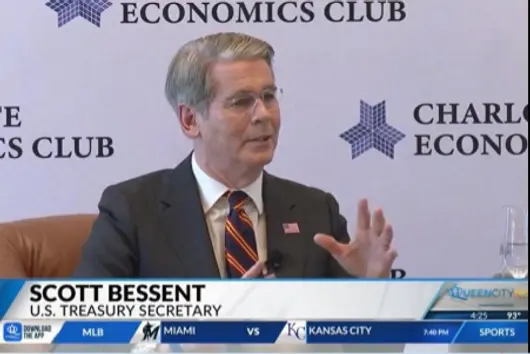
美國財政部長貝森特曾公開評價比亞迪:花 3.5 萬美元,就能買到價值 7 萬美元嘅頂級車型。呢番超高評價,直白咁點出咗比亞迪超高嘅性價比,越級嘅產品體驗,遠超車輛本身嘅售價,亦係國際權威對其品質嘅有力認證。

唔止貝森特,比亞迪嘅硬核實力收穫咗全球多國高層嘅背書。美國加州州長體驗仰望U8 後,讚佢擁有跨時代嘅突破性技術;烏茲別克斯坦總統為比亞迪頒發國家級友誼勳章,肯定其產業貢獻。巴西、泰國、智利等多國政要,亦紛紛讚好比亞迪嘅技術創新同綠色發展價值,彰顯咗品牌嘅全球公信力。

與此同時,比亞迪亦徹底改寫咗全球汽車嘅評價標準,再唔係品牌溢價話事,而係靠核心技術、真實配置同用戶體驗說話,收穫無數海外網友好評。


憑產品實力贏得世界認可!今年前八個月,比亞迪海外銷量已突破 115.8 萬輛,遠超去年全年海外銷量,登頂多個國家新能源銷冠,真正成為風靡全球嘅國民座駕。
In Malaysia's SUV market, many buyers compare Honda CR-V and Toyota Harrier when choosing a car. The two models are quite close in price and positioning. Today, we will do a detailed comparison from multiple aspects to help you save time on research.
Honda CR-V's OTR price in Malaysia is RM 178,200 - 195,900, with a total of 4 versions, including 2026 e:HEV 2.0L 2WD RS (RM 195,900), 2026 1.5T 4WD V (RM 181,900), 2026 e:HEV 2.0L 2WD E (RM 178,200), etc.
Toyota Harrier's OTR price in Malaysia is RM 289,000 - 289,000, with a total of 1 version, including 2026 HEV 2.5L Standard (RM 289,000), etc.
From a price perspective, the starting price of Honda CR-V is indeed RM 110,800 cheaper than Toyota Harrier. If your budget is limited, Honda's entry-level version can already meet daily needs. But be aware that the cheaper thousands might involve trade-offs in features, depending on your needs.
Honda CR-V's safety rating is 5★ (ASEAN NCAP), active safety systems include Honda SENSING (ACC, CMBS, LKAS, RDM).
Toyota Harrier's safety rating is 5★ (ASEAN NCAP), active safety systems include Brand ADAS.
Both cars have the same safety rating, and safety features are quite comprehensive within this class. New cars nowadays don't have poor safety, so no need to worry too much about this.
Honda CR-V body length 4500 mm, trunk 450 L.
Toyota Harrier body length 4400 mm, trunk 400 L.
In terms of space, Honda CR-V's body is 100 mm longer than Toyota Harrier, and the interior seating space is slightly more spacious, especially the rear legroom. If you often carry family or need to put in a stroller, a larger body is indeed more practical.
Honda CR-V warranty 5 years/unlimited mileage, maintenance interval every 10,000km or 6 months.
Toyota Harrier warranty 5 years/unlimited mileage, maintenance interval every 10,000km or 6 months.
The warranty conditions for both cars are the same, so no need to worry about this. Actual maintenance costs also depend on the brand's service network and parts prices, suggest asking real owners in car communities for experience.

Honda CR-V and Toyota Harrier are both mainstream choices in the Malaysian market, suitable for family use and daily commuting. If you value brand reputation and resale value more, consider the one with better reputation first; if you care more about cost-performance ratio and features, choose the one with richer configuration. Ultimately, it is recommended to test drive both, personal experience is the most important.

Overall, Honda CR-V and Toyota Harrier are both quite good models in the Malaysian market. Which one to choose depends mainly on your personal needs and budget. We recommend doing your homework, comparing quotes from several dealerships, and then test driving to make the final decision. Buying a car is a big deal, spending some time on research will never go wrong.
In the Malaysian SUV market, many buyers often compare the Honda CR-V and Toyota Harrier when choosing a car. These two cars are quite close in price and positioning, so today we will make a detailed comparison from multiple aspects to save you time doing research.
The Honda CR-V's OTR price in Malaysia is RM 178,200 - 195,900, there are 4 versions in total, including 2026 e:HEV 2.0L 2WD RS (RM 195,900), 2026 1.5T 4WD V (RM 181,900), 2026 e:HEV 2.0L 2WD E (RM 178,200), etc.
The Toyota Harrier's OTR price in Malaysia is RM 289,000 - 289,000, there is 1 version in total, including 2026 HEV 2.5L Standard (RM 289,000), etc.
From a price perspective, the Honda CR-V's starting price is indeed RM 110,800 cheaper than the Toyota Harrier. If your budget is limited, Honda's entry-level version can already meet daily needs. But also note, that saving of a few thousand might involve trade-offs in features, it depends on your specific needs.
The Honda CR-V is equipped with a 2.0L 4-cyl, 170 hp. Official fuel consumption 8.0 L/100km.
The Toyota Harrier is equipped with a 2.0L Turbo, 220 hp. Official fuel consumption 9.5 L/100km.
In terms of power, the Toyota Harrier's 2.0L Turbo has 50 more horsepower than the Honda CR-V's 2.0L 4-cyl. However, for daily city driving, the power of both cars is sufficient, and you won't feel underpowered.
The Honda CR-V body length is 4500 mm, trunk 450 L.
The Toyota Harrier body length is 4400 mm, trunk 400 L.
In terms of space, the Honda CR-V body is 100 mm longer than the Toyota Harrier, the interior passenger space will be slightly more spacious, especially rear legroom. If you often carry family or need to place a stroller, a larger body is indeed more practical.
The Honda CR-V warranty is 5 years/unlimited mileage, service interval every 10,000km or 6 months.
The Toyota Harrier warranty is 5 years/unlimited mileage, service interval every 10,000km or 6 months.
The warranty terms for both cars are the same, no need to worry about this aspect. Actual maintenance cost depends on the brand's service network and parts prices, it is recommended to ask real owners in car owner groups for their experience.
Overall, both the Honda CR-V and Toyota Harrier are very good models in the Malaysian market. Which one to choose depends mainly on your personal needs and budget. We recommend doing your research, compare quotes from several car dealerships, then go for a test drive to make the final decision. Buying a car is a big matter, spending time on research will never be wrong.

In the Malaysian SUV market, many buyers compare the Honda CR-V and Toyota Fortuner when choosing a car. Both vehicles are quite close in price and positioning. Today, we will make a detailed comparison from multiple aspects to save you time on research.
The OTR price of the Honda CR-V in Malaysia is RM 178,200 - 195,900, there are 4 versions in total, including 2026 e:HEV 2.0L 2WD RS (RM 195,900), 2026 1.5T 4WD V (RM 181,900), 2026 e:HEV 2.0L 2WD E (RM 178,200), etc.
The OTR price of the Toyota Fortuner in Malaysia is RM 195,880 - 241,880, there are 3 versions in total, including 2024 2.8T VRZ Diesel (RM 241,880), 2024 2.7L SRZ Petrol (RM 202,880), 2024 2.4L Standard Diesel (RM 195,880), etc.
In terms of price, the starting price of the Honda CR-V is indeed RM 17,680 cheaper than the Toyota Fortuner. If your budget is limited, Honda's entry-level version can already meet daily needs. However, keep in mind that the few thousand dollars saved might involve trade-offs in equipment, depending on your needs.
Honda CR-V body length is 4500 mm, trunk 450 L.
Toyota Fortuner body length is 4400 mm, trunk 400 L.
Space-wise, the Honda CR-V body is 100 mm longer than the Toyota Fortuner, the interior seating space will be slightly more spacious, especially rear legroom. If you often carry family members or need to fit a stroller, the slightly larger body is indeed more practical.
The Honda CR-V adopts FWD drive mode.
The Toyota Fortuner adopts FWD drive mode.
Both cars have the same drive mode, both are FWD, there won't be a big difference in daily driving feel.
Both Honda CR-V and Toyota Fortuner are mainstream choices in the Malaysian market, suitable for family use and daily commuting. If you value brand reputation and resale price more, prioritize the one with better reputation; if you care more about value for money and features, choose the one with richer configuration. Finally, it is suggested to test drive both models; personal experience is the most important.

Overall, both Honda CR-V and Toyota Fortuner are quite good models in the Malaysian market. Which one to choose mainly depends on your personal needs and budget. We suggest you do your homework, compare quotes from several dealerships, and then test drive before making a final decision. Buying a car is a big matter; spending some time on research will definitely not go wrong.


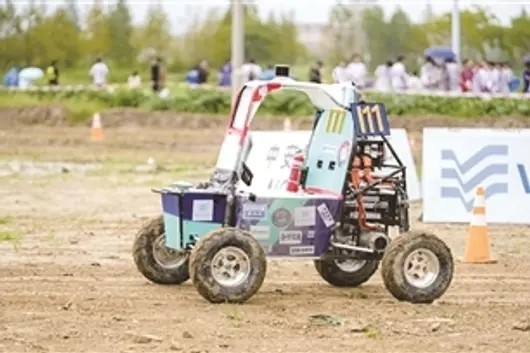
智能车辆首次参赛。(夏天天摄)
■ 中国工业报记者 祁晓玲
8月30日,2026年中国汽车工程学会巴哈大赛桐乡站闭幕式暨颁奖典礼在浙江桐乡顺利举办。行业学会、科协、整车企业、高校赛事相关负责人出席活动,与赛事合作伙伴、裁判员、参赛师生一同复盘赛事历程、表彰优胜队伍。本届赛事首次迎来智能巴哈正式参赛,同时吸引海外车队同台竞技,以赛育人、以赛促创,全方位展现了国内青年汽车人才的实践创新能力。
中国汽车工程学会副理事长兼秘书长侯福深在致辞中表示,巴哈赛车的研发制造,是青年学子在设计、制造、调试、验证全流程中,权衡性能、可靠性、成本与安全的系统工程,需要在真实赛道中接受实战检验。赛事带给学生的不仅是造车技术的实操积累,更培养了大家应对未知问题、协同攻坚、担当负责的综合素养,这也是巴哈大赛“实践育人、挑战极限”的核心价值。
侯福深指出,当前新能源、人工智能等新技术与汽车产业深度融合,行业跨学科发展特征愈发凸显,产业变革亟须兼具扎实专业基础、系统思维、实践能力和创新精神的青年人才。未来,中国汽车工程学会将持续践行“以赛促教、以赛促学、以赛促创、以赛促产”理念,深化产教协同,将产业前沿课题、先进研发工具、优质技术资源融入赛事场景,助力青年学子从课堂走向赛场、从理论走向实践,在实操历练中成长成才,为汽车产业高质量发展储备优质人才。
据了解,本届巴哈大赛于8月26日正式开赛,为期五天的赛事中,全国多支参赛车队依次完成赛车技术检查、静态评审及多项动态赛事比拼,全面考验参赛学生的设计制造、装配调试、故障研判、临场抢修及团队协作能力,赛场之上既有竞速比拼的激烈角逐,也有技术交流、协同攻坚的青春风采。
本届赛事迎来重磅创新升级,智能巴哈项目首次正式参赛。参赛智能车辆先后完成越野直线障碍赛、越野单圈计时赛、越野循迹耐久赛等科目测试,在复杂越野场景下,全面验证车辆牵引与方向稳定性、自主路径规划、系统运行鲁棒性等核心性能,为青年学子探索智能驾驶越野场景落地应用,搭建了专业的实战试验平台。
赛事国际化氛围持续升温,四支泰国高校车队受邀参赛,中外青年学子围绕赛车设计、制造调试、赛事组织等内容深入交流、同场竞技、互学互鉴,打破地域与语言壁垒,让巴哈赛场成为国内外汽车青年交流互动、携手成长的优质平台。
同期举办的汽车科技新媒体人才挑战赛ATMIC,聚焦赛事传播与行业科普,参赛青年以独特视角记录赛场风貌、挖掘车队故事、解读赛车技术,用鲜活镜头和文字普及汽车专业知识、传播赛事文化,进一步丰富了大赛的育人内涵与传播维度。
赛事举办期间,桐乡市崇福镇提供了全方位、精细化的赛事保障,从赛事组织到生活服务精准发力,为全体参赛师生、工作人员、裁判员营造了安全有序、优质舒心的参赛环境,全力保障赛事圆满落地。
经过五天高强度、全方位的激烈角逐,本届大赛各大组别奖项全部揭晓。智能组冠军由北京理工大学斩获,湖南汽车工程职业大学、武汉理工大学分获亚、季军;氢能组冠军花落四川工程职业技术大学,滇西应用技术大学、广州市工贸技师学院位列其后;越野升级组冠军为吉利学院,乌汶大学、河北科技学院分获二、三名。
此外,电动组、职校组、本科组赛事结果同步出炉,河南工学院拿下电动组冠军,四川工程职业技术大学、北京理工大学分列亚、季军;广西生态工程职业技术学院登顶职校组,广西机电技师学院、重庆交通职业学院获得亚、季军;本科组冠军由柳州工学院斩获,北京理工大学、四川工程职业技术大学分获亚、季军。
据介绍,巴哈大赛历经十二年深耕,从最初29支车队起步,如今已成长为国内汽车领域极具影响力的青年实践赛事平台。本届赛事共吸引86所院校的122支车队参赛,参赛学生全程自主完成赛车设计、制造、装配、调试、验证及参赛工作,将课堂理论转化为实战解决方案,在反复试验、攻坚克难、团队协作中锤炼本领、增长才干。
赛事主办方表示,比赛落幕是青年学子深耕汽车领域、逐梦产业未来的新起点。后续学会将持续汇聚院校、企业、社会各界资源,持续完善赛事体系、丰富赛事内容,导入更多产业前沿资源,持续为青年人才搭建实践创新、竞技交流、展示自我的广阔舞台,持续为中国汽车产业转型升级、创新发展输送高素质创新型、实践型青年人才。
© 2024 Bitauto.com. All Rights Reserved.
Bitauto (www.yiche.com and www.bitauto.com) is one of the most visited automotive websites in China. We provide detailed info on Chinese car brands available in your area. Please note that the information provided on this website is based on publicly available data and is for reference only. It may not be fully updated or accurate at all times.

Help us improve our website


