

Homearts

Search History
Popular Searches
Dealer Login / Sign Up

Di pasaran SUV Malaysia, ramai pembeli membandingkan Honda HR-V dan Kia Sportage semasa memilih kereta. Kedua-dua kereta ini mempunyai kategori harga dan kedudukan pasaran yang hampir, hari ini kita akan buat perbandingan terperinci dari banyak aspek, membantu anda menjimatkan masa mencari maklumat.
Harga OTR Honda HR-V di Malaysia adalah RM 115,900 - 143,900, terdapat 4 varian termasuk 2026 e:HEV 1.5L RS (RM 143,900), 2026 1.5T V (RM 137,900), 2026 1.5T E (RM 130,900) dan lain-lain.
Harga OTR Kia Sportage di Malaysia adalah RM 129,639 - 179,320, terdapat 4 varian termasuk 2025 1.6T DCT 4WD High (RM 179,320), 2025 1.6T DCT 2WD High (RM 159,320), 2025 2.0L AT 2WD High (RM 139,639) dan lain-lain.
Dari segi harga, harga permulaan Honda HR-V memang lebih murah RM 13,739 daripada Kia Sportage. Jika bajet anda terhad, versi permulaan Honda sudah memadai untuk keperluan harian. Tetapi perlu diingat, beberapa ribu ringgit yang murah itu mungkin ada kompromi pada ciri-ciri, ia bergantung pada keperluan anda.

Taraf keselamatan Honda HR-V ialah 5★ (ASEAN NCAP), sistem keselamatan aktif termasuk Honda SENSING (ACC, CMBS, LKAS, RDM).
Taraf keselamatan Kia Sportage ialah 5★ (ASEAN NCAP), sistem keselamatan aktif termasuk Drive Wise.
Taraf keselamatan kedua-dua kereta sama, dalam kategori ini ciri keselamatan dianggap lengkap. Keselamatan kereta baharu masa kini tidak buruk, tiada perlu risau tentang hal ini.

Jaminan Honda HR-V 5 tahun/milej tanpa had, selang penyelenggaraan setiap 10,000km atau 6 bulan.
Jaminan Kia Sportage 5 tahun/300,000km, selang penyelenggaraan setiap 10,000km atau 6 bulan.

Honda HR-V dan Kia Sportage adalah pilihan utama di pasaran Malaysia, sesuai untuk kegunaan keluarga, perjalanan harian. Jika anda lebih mementingkan reputasi jenama dan harga kereta terpakai, pertimbangkan yang mempunyai reputasi lebih baik; jika anda lebih mementingkan nilai harga dan ciri, pilih yang mempunyai konfigurasi lebih kaya. Pada akhirnya disyorkan untuk memandu kedua-duanya, pengalaman sendiri yang paling penting.

Secara keseluruhan, Honda HR-V dan Kia Sportage adalah model yang sangat baik di pasaran Malaysia. Memilih yang mana, kuncinya lihat keperluan dan bajet peribadi anda. Disyorkan untuk melakukan kajian, bandingkan beberapa tawaran dealer, kemudian buat ujian memandu untuk keputusan akhir. Membeli kereta adalah perkara besar, meluangkan masa untuk meneliti tidak akan salah.


車規級晶片嘅國產替換之路
導語:奪回晶片命脈,中國汽車產業嘅自我救贖
2021 年 8 月 17 日,博世中國執行副總裁徐大全仲記得呢個徹夜難眠嘅夜晚。
嗰天,佢喺朋友圈發咗一條消息:某半導體晶片供應商位於馬來西亞嘅 Muar 工廠關閉咗數條生產線,博世 ESP、IPB、VCU、TCU 呢幾類晶片受到直接影響。並配咗一張意味深長嘅圖:樓,6 層;跳,定唔跳;帶上領導,定唔帶?
好快,呢條朋友圈嘅評論區,集齊咗汽車人當時嘅精神狀態:生不如死、欲哭無淚、9 月更慘……令到整個行業焦頭爛額嘅罪魁禍首,就係晶片。


為咗保證生產嘅正常進行,搵晶片成咗車企嘅頭等大事。
嗰一年,幾乎所有車企嘅老總都蹲喺上海(博世中國總部)要晶片。博世樓下擠唔落,採購就跑到晶片代工廠、制造商嘅門口蹲住。
但係呢種方式嘅效果好一般,斷供危機仍然波及咗生產一線。
蔚來,成咗中國第一個因缺芯被迫停產嘅新能源車企,江淮蔚來合肥工廠自 2021 年 3 月 29 日起,停產 5 個工作日。一汽 - 大眾連續 5 個月產能受到影響,單月產能影響超過 50%。
蹲點,成咗那一年整車廠嘅集體回憶;
燥候,係當時從業者嘅普遍心情;
缺芯,尤其係車規級晶片依賴進口嘅隱痛,再一次被斷供減產潮撕開。
由此開始,車規級晶片走上咗一條自我救贖嘅國產替換之路。
晶片危機
對汽車公司而言,缺芯最壞嘅局面就係停產。停產意味住整條產業鏈條中斷,每日都在失血。為咗避免停產,轟轟烈烈嘅搶購潮,將車規級晶片嘅價格推至數百倍。某型號晶片正常價格喺 1500 元左右,黑市漲幅高達 6 倍,而呢喺當時嘅黑市交易入面,仲算係厚道嘅價格。
而晶片漲價帶嚟嘅成本上升,令車企陷入咗兩難:假如唔把成本傳導到銷售端,咁本就利潤率下降,甚至賣一台虧一台嘅車企,就會加速失血。如果轉嫁畀消費者,又會喺本就價格戰白熱化嘅汽車市場,喪失價格優勢。

從後來嘅市場反饋來看,顯然大多數車企都選擇把成本傳導畀產業鏈最末端嘅消費者。
一向以「價格屠夫」形象示人嘅特斯拉,先後調高咗多款車售价。國內,大眾邁騰、本田雅閣呢些暢銷車型嘅終端優惠普遍回調,提车要等一兩個月,有啲甚至要等上半年。
更隱藏嘅代價係減配。有啲新勢力車企推出咗「先交付、後補裝」毫米波雷達嘅方案,有啲車企則喺個別車型上捨棄咗車內導航。
可以話,晶片斷供嘅每一分成本,最終都會落喺消費者嘅錢包同體驗入面。
呢場亂象,好快驚動咗監管部門。2021 年 8 月,市場監管總局對涉嫌哄抬價格嘅汽車晶片經銷企業立案調查。但係,行政手段只能事後亡羊補牢。

當晶片僧多粥少、供小於求,價格就必然會上漲。更根本嘅問題係,關乎車企命脈嘅車載晶片,點解冇國產供應鏈來作為緩衝呢?
造芯唔難
2021 年,中國並唔係造唔出車規級嘅晶片。
車規級晶片大多採用成熟製程,避開咗手機 SoC 晶片 3 納米、5 納米先進製程被「卡脖子」嘅痛處,恰好落喺國內已具備製造能力嘅區間。國產晶片嘅成熟製程完全可以滿足車企嘅需求,仲可以長期供貨,明明係強項,點解無法緩解汽車產業嘅焦渴呢?
關鍵在於「車規級」呢三個字。
你嘅晶片有邊用過?上車嗎?量產有質量問題點算?芯馳科技創辦人、董事長仇雨菁把呢三個問題,稱為客戶對國產晶片初創公司嘅「靈魂三問」。
2021 年前後,呢三個問題足以把絕大多數國產晶片企業擋喺門外。

唔係車企唔想用國產,亦都唔係國產嘅產品唔可以用,或者達唔到車企嘅要求,主要係因為測試成本喺度。一旦出問題,就係一條生產線或一批車型出問題。國產晶片需要喺漫長嘅驗證週期中,證明自身嘅質量安全能夠經得住考驗。
而喺當時,驗證一款晶片是否滿足汽車對於可靠性同功能安全嘅嚴苛要求,認證體系同標準組織都由國際巨頭發起並主導。所以,國內汽車企業自然更傾向於選擇國外廠商配套。
譬如說,AEC(汽車電子委員會)由克萊斯勒、福特、通用發起建立,AEC-Q 系列標準經過 30 年發展,已成爲公認嘅車規元器件通用測試標準,包含 7 大類別共 41 項測試,至少 28 項實驗係必須完成嘅。
仲有 IATF 16949 質量管理體系,基於 ISO 9001 嘅汽車行業質量管理標準,強調零缺陷同全流程管控,需要確保生產過程嘅穩定性,依靠呢一體系,確保後來參與製造嘅每一顆晶片,都達到與最初送樣認證時相同嘅水平。

氣囊、防抱死煞車(ABS)、電子助力轉向呢啲系統,則要求最高等級嘅 ASIL-D,要求 ASIL-D 等級嘅系統,故障檢測覆蓋率須達 99% 以上。
車企因為國產晶片冇大規模上車數據,所以唔敢用,國產晶片因為冇車企使用,就永遠拿唔出大規模上車數據,呢構成咗一個有先有雞定有先有蛋嘅死循環,牢牢限制咗國芯嘅上車路。
難在上車
晶片根本唔係問題,真正嘅問題係車企敢唔敢用。國產晶片,差嘅只係一個上車嘅機會,而身處絕地,往往就係破局之時。
海外晶片斷供危機嘅爆發,俾咗國產晶片上車一個關鍵嘅窗口期。糧草斷絕,呢下唔敢都得敢咗。
一款小車,打響咗國產替換嘅發令槍。
五菱宏光 MINI EV,號稱係人民嘅代步車,喺市場上賣得好火熱,但佢嘅 ABS 防抱死系統由兩家供應商共同供貨,由於缺芯,另一家供應商直接躺平,原來承諾嘅產品無法交付。危急時刻,聯創汽車電子臨危受命,決定用預研嘅替換晶片,全力保證五菱唔停線。
2021 年 8 月 26 日,五菱同聯創共同決定,喺一個月內把替代方案嘅軟件開發、標定、產線驗證全部完成。9 月 27 日凌晨 4 點 21 分,一輛搭載全新 ABS 產品嘅宏光 MINI EV 下线。

五菱同聯創電子喺 2021 年嘅成功合作,並不係孤例。
如前所說,車載係落喺半導體產業嘅製造能力之內。
喺呢個階段內,國產晶片密集上車,喺許多車型上扎實咗根。
其中,功率半導體,作為新能量汽車三電系統嘅核心,係替代最快嘅一支。
2022 年,國產車規 IGBT 模塊嘅龍頭斯達半導體,實現咗國內首個 800V 高壓 SiC 主驅平台批量裝車,包括小鵬、蔚來、比亞迪嘅車型。比亞迪半導體則係垂直整合嘅標桿,2025 年功率器件裝機量已经达到 380.6 万套。
智能駕駛同座艙 SoC,係汽車晶片嘅算力高地。座艙晶片廠商中,芯馳科技以 3.77% 嘅份額位居第五、本土廠商第一,華為海思以 3.39% 位列第六。座艙域控晶片市場中,華為、芯擎科技、芯馳科技等國產廠商嘅份額,亦喺持續攀升。

MCU 同安全晶片,公認係車規級晶片中最難啃嘅骨頭。兆易創新嘅車規 NOR Flash 全球市佔率排名第三,已打入特斯拉、大眾等供應鏈。國芯科技則以 PowerPC 架構自主可控見長,佢嘅車規級安全氣囊控制器晶片,亦打破咗博世嘅壟斷。
仲有唔少晶片細分領域嘅隱形冠軍,比如北京君正,佢嘅車規 DRAM 喺全球市場位居前列,公司主要客戶涵蓋博世、偉世通呢啲一級零部件供應商,以及特斯拉、比亞迪、吉利呢啲整車廠。納芯微係國內車規隔離驅動、信號鏈模擬晶片龍頭,填補咗國內高壓隔離晶片空白……
國產晶片,終於開始打破上車嘅僵局。而車規級晶片,呢個成熟製程市場,亦成爲半導體國產替代最先撕開嘅戰場。
臨時工轉正
或許有人會講,2021 年事急從權,國產晶片係接到咗一個海外供應鏈波動嘅天降大餅,呢種意外事件並唔會長期存在,一旦全球供應鏈恢復正常,國芯嘅上車率就會回退。
但係實際上,並唔係一個備胎嘅臨時轉正,車規級晶片嘅國產化之路才剛剛開始。國產晶片企業能夠接住來自車企嘅訂單,並唔係靠機緣巧合,呢背後有着複雜嘅成因,而呢啲構成咗國芯上車嘅穩定要素。
首先係天时。傳統燃油車時代,博世、大陸、電裝以系統方案交付,自主車企買到嘅係黑盒,底層晶片被封裝喺供應鏈內部,國產晶片想要打進呢個產業鏈,門檻係非常高嘅。而 2021 年,恰逢汽車產業電動化、智能化嘅變局之中,三電系統成為新嘅價值中心,汽車「大腦」嘅座艙同車控晶片係通用嘅核心環節,亦係車企最需要穩定供應鏈嘅部分,中國車企第一次有機會從整車需求出發,嚟定義晶片。

亦要看到地利,國產半導體產業積累到一定階段,形成咗基本完善嘅全鏈路產業結構,除咗極少數先進晶片之外,可以支持大部分車規級晶片嘅設計、流片、量產。同時,相對於海外供應鏈,本土供應鏈喺響應速度、協同創新、溝通效率等方面,優勢更明顯,可以俾車企所需要嘅做到極致。亦爲國產替代建立咗比较好嘅地緣優勢。
更重要係人同,也就是車企同晶片供應鏈關係嘅重構。
傳統模式下,車企一般唔直接採購晶片,由博世、大陸呢類一級零部件供應商 Tier1 提供,Tier1 接到車企訂單後,再向晶片廠商落單,晶片廠商委託晶圓代工廠生產,零件廠商拿到晶片做成零部件,最後供應畀車廠。
喺呢條分工明確、環節極長嘅產業鏈上,晶片廠根本夠唔着整車廠。等車企感受到斷供風險,行業性危機往往已經相當嚴重咗。所以缺芯之後,部分車企開始繞過 Tier1 直接向晶片設計公司落單。恩智浦亦曾公開表示,正喺尋求繞過博世呢啲 Tier1,直接同整車廠建立供應關係。
而整車廠同晶片廠嘅聯動共創,亦爲國產車規級晶片嘅上車,鋪平咗道路。而呢條共創之路一旦啟動,就唔會輕易地終止。
2026 年,比亞迪、理想、蔚來、小鵬四家頭部車企嘅自研智駕晶片,喺同一時期實現規模化上車。

除咗自研之外,車企仲可以資金入股晶片廠商,嚟鎖定長期優先供貨權。最有代表性嘅係比亞迪同長鑫科技嘅深度綁定,從資本參與到研發協同,提前鎖定騰勢、仰望呢啲高端品牌嘅前裝需求。
有啲嘅主機廠同晶片企業成立聯合創新中心,深度綁定,聯合上下游打造技術共同體,縮短開發週期。
呢一系列動作唔僅推動住整個汽車產業嘅智能化升級,而係逐漸形成咗一個開放共贏嘅產業生態。如果話 2021 年嘅國產晶片上車,係斷供危機下嘅備胎轉正,咁來到今天,車規級晶片嘅國產替代,已經有天時地利人同嘅條件疊加。
曙光乍現之後
國產晶片真嘅批量上車咗,車企真嘅在用,車規級晶片嘅國產化替代,似乎已經出現曙光。
但係中國產業有一個熟悉嘅劇本:只要一個領域出現突破,集中心力辦大事嘅另一面,係一哄而上嘅擁擠。
2024 年到 2026 年,喺車規級晶片呢個賽道上,資本市場嘅溫度計係相當燙人。與此同時,一哄而上、各自為戰嘅弊端開始顯現。
由於缺乏全國統一嘅晶片評價體系,多家頭部車企紛紛自建研究中心做晶片驗證,准入要求「各自為戰」。結果係晶片廠商疲於應付各種認證,A 車企跑一遍,B 車企唔認,又得重新測試,而一次完整嘅可靠性測試可能要花費 6 到 9 個月,成本高昂。

價格戰開始顯形。國內目前約 400 家 MCU 廠商中,專注車規級嘅超過 30 家,價格戰頻繁。好多冇車規背景嘅晶片廠,拿自家工規級晶片做咗 AEC-Q100 後,就聲稱切入車規 MCU 賽道,導致相關晶片質量良莠唔齊、難以分辨。
呢樣一來,冇統一標準,又出現低質供給,結果就係,稀釋整個「國產」標籤嘅信譽。
對普通消費者來說,車規級晶片關乎汽車嘅性能表現、安全可靠性,一旦國產晶片俾消費者留下咗低價低質嘅品牌認知,咁呢種唔信任傳導畀車企,就係國產車規級晶片好容易打開嘅局面,又會面臨阻礙。
目前破題嘅力量來自兩個方面,一個係國家層面,構建凝聚行業共識嘅技術體系標準。

2026 年 8 月 17 日,《汽車晶片機構認證審查通用評價要求》等五項認證認可行業標準正式發布,採用「1+4」架構:頂層 1 項通用評價要求統攬全局,4 項細分專項標準分別針對設計、認證、測試、算力四大核心環節。實現咗從晶片研發到整車集成嘅全流程覆蓋,系統構建咗汽車晶片領域機構能力評價體系,相當於全產業鏈都有一個統一嘅評價尺度,有助於凝聚行業共識,避免各自為戰嘅資源浪費。
另一個改變嘅力量來自產業層面。一部分廠商以價換量打價格戰,仲有好多廠商放棄喺低端通用品嘅紅海入面內捲,喺走高質高價嘅路線,打造面向 800V 高壓、高阶智駕、AI 場景嘅高可靠產品,喺市場上供唔到求。
站喺 2026 年回望,曾經無芯可用嘅絕望感,已經悄然遠去咗。

2021 年蹲喺博世同代工廠門口嘅車企高管,大概唔會諗到,一次供應鏈斷裂嘅劇痛,開啟咗車規級晶片嘅國產替換之路。車規級晶片國產化率,從 2022 年嘅 4.7%,一路升至 2025 年嘅 16.8%,預計 2027 年會達到 25% 至 30%。
呢條路仲遠遠冇走完,但價值已經開始顯現。
當整車廠唔再需要為一顆晶片嘅短缺而停下產線,咁,交付週期會縮短,車輛嘅價格波動亦隨之收敛,係消費者睇唔見、卻實實在在享受到嘅紅利。
呢一切嘅前提,都係把晶片嘅命脈握喺自己手入面。呢條緣起於晶片嘅自我救贖,證明咗中國嘅汽車產業同半導體產業,真嘅能夠彼此成就。


喺馬來西亞嘅 SUV 市場,好多買家喺揀車嘅時候,都會拿 Honda HR-V 同 Kia Sportage 做比較。呢兩款車喺價錢同定位上都幾接近,今日我就由多個方面做個詳細比較,幫你省翻做功課嘅時間。
Honda HR-V 喺馬來西亞嘅 OTR 售價係 RM 115,900 - 143,900,一總有 4 個版本,包括 2026 e:HEV 1.5L RS(RM 143,900)、2026 1.5T V(RM 137,900)、2026 1.5T E(RM 130,900)等。
Kia Sportage 喺馬來西亞嘅 OTR 售價係 RM 129,639 - 179,320,一總有 4 個版本,包括 2025 1.6T DCT 4WD High(RM 179,320)、2025 1.6T DCT 2WD High(RM 159,320)、2025 2.0L AT 2WD High(RM 139,639)等。
由價錢睇,Honda HR-V 嘅起步價確實比 Kia Sportage 平咗 RM 13,739。如果你預算有限,Honda 嘅入門版已經可以滿足日常需要。但都要留意,平嗰啲幾千蚊,可能喺配備上會有取捨,具體要睇你嘅需求。
Honda HR-V 搭載 1.5L Turbo,馬力 140 hp。官方油耗 7.0 L/100km。
Kia Sportage 搭載 1.5L Turbo,馬力 140 hp。官方油耗 7.0 L/100km。
兩款車用緊同一套動力系統,日常開起嚟嘅感覺基本上冇分別。油耗方面都差不多,唔使太糾結呢一點。
Honda HR-V 嘅安全評級係 5★ (ASEAN NCAP),主動安全系統包括 Honda SENSING (ACC, CMBS, LKAS, RDM)。
Kia Sportage 嘅安全評級係 5★ (ASEAN NCAP),主動安全系統包括 Drive Wise。
兩款車嘅安全評級一樣,喺呢個級別入面安全配備都算給得好齊全。而家嘅新車安全性都唔錯,唔使太擔心呢一點。
Honda HR-V 採用 FWD 驅動方式。
Kia Sportage 採用 FWD 驅動方式。
兩款車嘅驅動方式一樣,都係 FWD,日常駕駛感覺唔會有大分別。
總體嚟講,Honda HR-V 同 Kia Sportage 都係馬來西亞市場好好嘅車型。揀邊一輛,關鍵仲係要睇返你嘅個人需求同預算。建議大家做好功課,多比較幾間車行嘅報價,再去做試駕先做最終決定。買車係一件大事,花啲時間做功課絕對唔會錯。

喺馬來西亞嘅 SUV 市場,好多買家喺揀車嘅時候都會拿 Honda HR-V 同 Mitsubishi Xforce 嚟做比較。呢兩款車喺價錢同定位上都好接近,今日我哋就從多個方面做一個詳細嘅對比,幫你節省做功課嘅時間。
Honda HR-V 喺馬來西亞嘅 OTR 售價係 RM 115,900 - 143,900,一總共有 4 個版本,包括 2026 e:HEV 1.5L RS(RM 143,900)、2026 1.5T V(RM 137,900)、2026 1.5T E(RM 130,900) 等。
Mitsubishi Xforce 喺馬來西亞嘅 OTR 售價係 RM 109,930 - 119,930,一總共有 2 個版本,包括 2026 1.5L Ultimate(RM 119,930)、2026 1.5L Urban(RM 109,930) 等。
從價錢嚟睇,Mitsubishi Xforce 嘅起步價比 Honda HR-V 平咗 RM 5,970。老實講,喺呢個價位段,幾千塊嘅差距其實唔算大,關鍵都係睇整體嘅性價比同長期使用成本。
Honda HR-V 嘅安全評級係 5★ (ASEAN NCAP),主動安全系統包括 Honda SENSING (ACC, CMBS, LKAS, RDM)。
Mitsubishi Xforce 嘅安全評級係 5★ (ASEAN NCAP),主動安全系統包括 MI-PILOT。
呢兩款車嘅安全評級一樣,喺呢個級別入面安全配備都算好齊全。而家嘅新車安全性都唔差,唔使太擔心呢一點。
Honda HR-V 車身長度 4500 mm,後尾箱 450 L。
Mitsubishi Xforce 車身長度 4400 mm,後尾箱 400 L。
空間方面,Honda HR-V 嘅車身比 Mitsubishi Xforce 長咗 100 mm,車內乘坐空間會寬敞少少,尤其係後座腿部空間。如果你有經常載家人或者需要放嬰兒車,大少少嘅車身真係更實用。
Honda HR-V 保修 5 年/無限里程,保養間隔 每 10,000km 或 6 個月。
Mitsubishi Xforce 保修 3 年/100,000km,保養間隔 每 10,000km 或 6 個月。

總體嚟講,Honda HR-V 同 Mitsubishi Xforce 都係馬來西亞市場唔錯嘅車型。揀邊一部,關鍵都係睇你嘅個人需求同預算。我建議大家做好功課,多比較幾間車行嘅報價,再嚟試駕做最後決定。買車係件大事,花啲時間做功課絕對唔會錯。

In the Malaysian SUV market, many buyers compare the Honda HR-V and Chery Tiggo 7 PHEV when choosing a car. These two cars are quite close in price and positioning, so today we will make a detailed comparison from multiple aspects to help you save time on research.
The OTR price of the Honda HR-V in Malaysia is RM 115,900 - 143,900, with a total of 4 variants, including 2026 e:HEV 1.5L RS (RM 143,900), 2026 1.5T V (RM 137,900), 2026 1.5T E (RM 130,900), etc.
The OTR price of the Chery Tiggo 7 PHEV in Malaysia is RM 129,750 - 129,750, with a total of 2 variants, including 2025 1.5T 90km CSH (RM 129,750), What charging methods does the Tiggo 7 PHEV support? Can it be charged using a home power socket? (RM 117,478), etc.
From a price perspective, the starting price of the Honda HR-V is indeed RM 13,850 cheaper than the Chery Tiggo 7 PHEV. If your budget is limited, Honda's entry-level version can already meet daily needs. However, also note that the few thousand dollars cheaper might involve compromises on features, depending on your specific requirements.
The safety rating of the Honda HR-V is 5★ (ASEAN NCAP), with active safety systems including Honda SENSING (ACC, CMBS, LKAS, RDM).
The safety rating of the Chery Tiggo 7 PHEV is TBD, with active safety systems including Basic.
Regarding safety features, both cars have received good ratings. However, there are some differences in functionality between the Honda HR-V's Honda SENSING (ACC, CMBS, LKAS, RDM) and the Chery Tiggo 7 PHEV's Basic. If you value active safety highly, you can compare the feature lists of both carefully.
Honda HR-V body length is 4500 mm, trunk 450 L.
Chery Tiggo 7 PHEV body length is 4400 mm, trunk 400 L.
In terms of space, the Honda HR-V's body is 100 mm longer than the Chery Tiggo 7 PHEV, so the interior passenger space will be slightly more spacious, especially rear legroom. If you frequently carry family or need to fit a stroller, a slightly larger body is indeed more practical.
Honda HR-V adopts FWD drive mode.
Chery Tiggo 7 PHEV adopts FWD drive mode.
Both cars have the same drive mode, both are FWD, so there won't be much difference in daily driving feel.

Overall, both the Honda HR-V and Chery Tiggo 7 PHEV are excellent models in the Malaysian market. Which one to choose mainly depends on your personal needs and budget. We suggest doing your homework well, comparing quotes from several dealerships, and then test driving to make the final decision. Buying a car is a big matter, spending some time doing research is definitely the right thing to do.

Pasar SUV di Malaysia, ramai pembeli semasa memilih kereta sering membandingkan Honda HR-V dan Mitsubishi Xforce. Kedua-dua kereta ini mempunyai harga dan kedudukan yang agak hampir, hari ini kita akan buat perbandingan terperinci dari pelbagai aspek, membantu anda menjimatkan masa membuat kajian.
Honda HR-V di Malaysia harga OTR adalah RM 115,900 - 143,900, ada 4 varian, termasuk 2026 e:HEV 1.5L RS (RM 143,900), 2026 1.5T V (RM 137,900), 2026 1.5T E (RM 130,900) dan lain-lain.
Mitsubishi Xforce di Malaysia harga OTR adalah RM 109,930 - 119,930, ada 2 varian, termasuk 2026 1.5L Ultimate (RM 119,930), 2026 1.5L Urban (RM 109,930) dan lain-lain.
Dari segi harga, Mitsubishi Xforce harga permulaan lebih murah RM 5,970 berbanding Honda HR-V. Jujurnya, dalam julat harga ini, beza ribuan ringgit sebenarnya tidak terlalu besar, perkara penting sebenarnya lihat nilai keseluruhan dan kos penggunaan jangka panjang.
Pengkelasan keselamatan Honda HR-V adalah 5★ (ASEAN NCAP), sistem keselamatan aktif termasuk Honda SENSING (ACC, CMBS, LKAS, RDM).
Pengkelasan keselamatan Mitsubishi Xforce adalah 5★ (ASEAN NCAP), sistem keselamatan aktif termasuk MI-PILOT.
Pengkelasan keselamatan kedua-dua kereta sama, dalam tahap ini peralatan keselamatan dianggap cukup lengkap. Keselamatan kereta baharu sekarang tidak buruk, tidak perlu terlalu risau tentang hal ini.
Honda HR-V menggunakan cara pemacu FWD.
Mitsubishi Xforce menggunakan cara pemacu FWD.
Kedua-dua kereta menggunakan cara pemacu sama, iaitu FWD, pengalaman memandu harian tidak akan berbeza banyak.
Honda HR-V dan Mitsubishi Xforce kedua-duanya pilihan utama pasaran Malaysia, sesuai untuk penggunaan keluarga, perjalanan harian. Jika anda lebih mengutamakan reputasi jenama dan harga semula, boleh utamakan yang mempunyai reputasi lebih baik; jika anda lebih mengutamakan nilai dan peralatan, maka pilih yang mempunyai peralatan lebih kaya. Akhir sekali disarankan kedua-dua untuk dicuba diuji, pengalaman sendiri paling penting.
Secara keseluruhan, Honda HR-V dan Mitsubishi Xforce kedua-duanya model kereta yang cukup bagus di pasaran Malaysia. Memilih yang mana satu, perkara penting sebenarnya lihat keperluan dan bajet peribadi anda. Disarankan buat kajian lebih lanjut, bandingkan lebih banyak tawaran pengedar kereta, kemudian buat ujian jalan untuk keputusan akhir. Membeli kereta adalah perkara besar, luangkan sedikit masa membuat kajian pasti tidak salah.

Pasar SUV di Malaysia, ramai pembeli sering membandingkan Honda HR-V dan GWM Haval H6 apabila memilih kereta. Kedua-dua model ini mempunyai harga dan posisi yang agak hampir, hari ini kita akan membandingkan secara terperinci dari pelbagai aspek untuk membantu anda menjimatkan masa membuat kajian.
Harga OTR Honda HR-V di Malaysia adalah RM 115,900 - 143,900, terdapat 4 versi termasuk 2026 e:HEV 1.5L RS (RM 143,900), 2026 1.5T V (RM 137,900), 2026 1.5T E (RM 130,900) dan lain-lain.
Harga OTR GWM Haval H6 di Malaysia adalah RM 139,750 - 139,750, terdapat 2 versi termasuk 1.5L Turbo Standard (RM 140,000), 1.5L Turbo Premium (RM 155,000) dan lain-lain.
Dari segi harga, harga permulaan Honda HR-V memang lebih murah RM 23,850 berbanding GWM Haval H6. Jika bajet anda terhad, versi asas Honda sudah cukup untuk memenuhi keperluan harian. Namun perlu diingat, jumlah beribu ringgit yang lebih murah itu mungkin melibatkan kompromi dalam kelengkapan, bergantung sepenuhnya pada keperluan anda.
Honda HR-V dilengkapi enjin 1.5L Turbo, kuasa 140 hp. Jimatan minyak rasmi 7.0 L/100km.
GWM Haval H6 dilengkapi Hybrid, kuasa 170 hp. Jimatan minyak rasmi 4.5 L/100km.
Dari segi kuasa, Hybrid pada GWM Haval H6 mempunyai 30 hp lebih daripada 1.5L Turbo pada Honda HR-V. Namun untuk penggunaan harian di bandar, kedua-dua kereta ini mempunyai kuasa yang mencukupi, tidak akan berasa kurang tenaga.
Panjang badan Honda HR-V 4500 mm, ruang bagasi 450 L.
Panjang badan GWM Haval H6 4400 mm, ruang bagasi 400 L.
Dari segi ruang, badan Honda HR-V adalah 100 mm lebih panjang daripada GWM Haval H6, ruang tempat duduk dalaman sedikit lebih lapang, terutamanya ruang kaki kerusi belakang. Jika anda kerap membawa keluarga atau perlu meletakkan kereta bayi, badan kereta yang lebih besar memang lebih praktikal.
Honda HR-V menggunakan sistem pemacu FWD.
GWM Haval H6 menggunakan sistem pemacu FWD.
Kedua-dua kereta mempunyai cara pemacu yang sama, iaitu FWD, pengalaman memandu harian tidak akan mempunyai perbezaan yang besar.
Honda HR-V waranti 5 tahun/jarak tanpa had, selang penyelenggaraan setiap 10,000km atau 6 bulan.
GWM Haval H6 waranti 7 tahun/150,000km, selang penyelenggaraan setiap 10,000km atau 6 bulan.
Secara umumnya, Honda HR-V dan GWM Haval H6 adalah model yang sangat baik di pasaran Malaysia. Memilih yang mana, penting untuk melihat keperluan dan bajet anda sendiri. Disarankan membuat kajian yang baik, membandingkan banyak tawaran dari kedai kereta, kemudian melakukan uji jalan untuk membuat keputusan akhir. Membeli kereta adalah perkara besar, meluangkan masa untuk membuat kajian tidak akan salah.
In the Malaysian SUV market, many buyers compare the Honda HR-V and Chery Tiggo 8 PHEV when choosing a car. Both models are quite close in price and positioning. Today, we will make a detailed comparison from multiple aspects to help you save time on research.
Honda HR-V OTR price in Malaysia is RM 115,900 - 143,900, with a total of 4 versions, including 2026 e:HEV 1.5L RS (RM 143,900), 2026 1.5T V (RM 137,900), 2026 1.5T E (RM 130,900), etc.
Chery Tiggo 8 PHEV OTR price in Malaysia is RM 159,750 - 159,750, with a total of 2 versions, including 1.6L Turbo Standard (RM 130,000), 1.6L Turbo Premium (RM 145,000), etc.
Looking at the price, Honda HR-V's starting price is indeed RM 43,850 cheaper than Chery Tiggo 8 PHEV. If your budget is limited, Honda's entry-level version can already meet daily needs. But be aware, the few thousand difference in price might involve trade-offs in features, it depends on your specific needs.
Honda HR-V is equipped with 1.5L Turbo, horsepower 140 hp. Official fuel consumption 7.0 L/100km.
Chery Tiggo 8 PHEV is equipped with Hybrid, horsepower 170 hp. Official fuel consumption 4.5 L/100km.
In terms of power, Chery Tiggo 8 PHEV's Hybrid has 30 more horsepower than Honda HR-V's 1.5L Turbo. However, for daily city driving, both cars have enough power and won't feel lacking.
Honda HR-V safety rating is 5★ (ASEAN NCAP), active safety systems include Honda SENSING (ACC, CMBS, LKAS, RDM).
Chery Tiggo 8 PHEV safety rating is TBD, active safety systems include Basic.
Regarding safety features, both cars have achieved good ratings. However, Honda HR-V's Honda SENSING (ACC, CMBS, LKAS, RDM) and Chery Tiggo 8 PHEV's Basic have some differences in functionality. If you value active safety, you can compare their feature lists carefully.
Honda HR-V body length 4500 mm, trunk 450 L.
Chery Tiggo 8 PHEV body length 4400 mm, trunk 400 L.
In terms of space, Honda HR-V's body is 100 mm longer than Chery Tiggo 8 PHEV, making the interior passenger space slightly more spacious, especially rear legroom. If you often carry family or need to fit a stroller, a larger body is indeed more practical.
Honda HR-V and Chery Tiggo 8 PHEV are both mainstream choices in the Malaysian market, suitable for family use and daily commuting. If you value brand reputation and resale value more, prioritize the one with better reputation; if you care more about value for money and features, choose the one with richer configuration. Ultimately, we suggest test-driving both, as personal experience is most important.
Overall, Honda HR-V and Chery Tiggo 8 PHEV are both very good models in the Malaysian market. Which one to choose depends on your personal needs and budget. We suggest doing your homework, comparing quotes from multiple car dealerships, and then test-driving to make a final decision. Buying a car is a big matter, spending some time researching will definitely not go wrong.

In the Malaysian SUV market, many buyers compare the Honda HR-V and Chery Tiggo 8 PHEV when choosing a car. Both cars are quite close in price and positioning. Today, we will make a detailed comparison from multiple aspects to help you save time on research.
The Honda HR-V OTR price in Malaysia is RM 115,900 - 143,900, with a total of 4 versions, including 2026 e:HEV 1.5L RS (RM 143,900), 2026 1.5T V (RM 137,900), 2026 1.5T E (RM 130,900), etc.
The Chery Tiggo 8 PHEV OTR price in Malaysia is RM 159,750 - 159,750, with a total of 2 versions, including 1.6L Turbo Standard (RM 130,000), 1.6L Turbo Premium (RM 145,000), etc.
From the price perspective, the Honda HR-V starting price is indeed cheaper than the Chery Tiggo 8 PHEV by RM 43,850. If your budget is limited, Honda's entry-level version can already meet daily needs. But keep in mind, the cheaper price difference might involve trade-offs in specifications, it depends on your specific needs.
The Honda HR-V is equipped with a 1.5L Turbo, 140 hp. Official fuel consumption 7.0 L/100km.
The Chery Tiggo 8 PHEV is equipped with Hybrid, 170 hp. Official fuel consumption 4.5 L/100km.
In terms of power, the Chery Tiggo 8 PHEV's Hybrid has 30 hp more than the Honda HR-V's 1.5L Turbo. However, for daily city driving, the power of both cars is sufficient, you won't feel underpowered.
The Honda HR-V body length is 4500 mm, trunk 450 L.
The Chery Tiggo 8 PHEV body length is 4400 mm, trunk 400 L.
In terms of space, the Honda HR-V body is 100 mm longer than the Chery Tiggo 8 PHEV, the interior passenger space will be slightly more spacious, especially the rear seat legroom. If you often carry family or need to put a stroller in, a larger body is indeed more practical.
The Honda HR-V warranty 5 years/unlimited mileage, maintenance interval every 10,000km or 6 months.
The Chery Tiggo 8 PHEV warranty 3 years/100,000km, maintenance interval every 10,000km or 6 months.
Overall, the Honda HR-V and Chery Tiggo 8 PHEV are both very good models in the Malaysian market. Which one to choose mainly depends on your personal needs and budget. We recommend doing your research, comparing quotes from multiple dealerships, and then test driving to make the final decision. Buying a car is a major matter, spending time on research will never be wrong.
In the SUV market in Malaysia, many buyers compare Honda HR-V and Chery Tiggo 7 Pro when choosing a car. These two cars are quite close in terms of pricing and positioning. Today, we will make a detailed comparison from multiple aspects to help you save time on research.
Honda HR-V has an OTR price in Malaysia ranging from RM 115,900 - 143,900, with a total of 4 versions, including 2026 e:HEV 1.5L RS (RM 143,900), 2026 1.5T V (RM 137,900), 2026 1.5T E (RM 130,900), etc.
Chery Tiggo 7 Pro has an OTR price in Malaysia ranging from RM 123,750 - 123,750, with a total of 2 versions, including 1.6L Turbo Standard (RM 125,000), 1.6L Turbo Premium (RM 140,000), etc.
In terms of price, Honda HR-V's starting price is indeed RM 7,850 cheaper than Chery Tiggo 7 Pro. If your budget is limited, Honda's entry-level model can already meet daily needs. But note that for the few thousand difference, there might be trade-offs in features; it depends on your specific needs.
Honda HR-V comes with a 1.5L Turbo engine, 140 hp. Official fuel consumption 7.0 L/100km.
Chery Tiggo 7 Pro comes with a 1.5L Turbo engine, 140 hp. Official fuel consumption 7.0 L/100km.
Both cars use the same powertrain system, the driving experience is basically the same. Fuel consumption is also similar, no need to worry too much about this.
Honda HR-V's safety rating is 5★ (ASEAN NCAP), active safety systems include Honda SENSING (ACC, CMBS, LKAS, RDM).
Chery Tiggo 7 Pro's safety rating is TBD, active safety systems include Basic.
Regarding safety features, both cars have received good ratings. However, Honda HR-V's Honda SENSING (ACC, CMBS, LKAS, RDM) and Chery Tiggo 7 Pro's Basic have some differences in functionality. If you value active safety, you can compare the function lists of both carefully.
Honda HR-V uses FWD drivetrain.
Chery Tiggo 7 Pro uses FWD drivetrain.
Both cars have the same drivetrain, both are FWD, the daily driving experience will not be much different.
In general, Honda HR-V and Chery Tiggo 7 Pro are both very good models in the Malaysian market. Choosing which one depends on your personal needs and budget. It is recommended to do your research well, compare quotes from several dealers, and then go for a test drive to make the final decision. Buying a car is a major matter, spending some time on research will never be wrong.

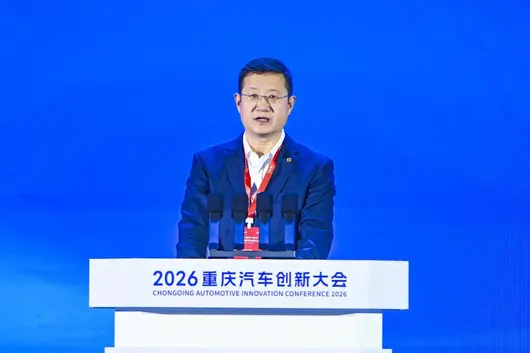
On September 3rd, the 2026 Chongqing Automotive Innovation Conference grandly opened at the Chongqing Science Hall. Co-organized by the China Association of Automobile Manufacturers and China Merchants Detection Technology Holdings Co., Ltd. (hereinafter referred to as "China Merchants Detection"), and undertaken by China Merchants Detection Vehicle Technology Research Institute Co., Ltd. (hereinafter referred to as "China Merchants Vehicle Research"), this conference centered on the theme "New Intelligence, New Youth, New Ecology", bringing together authoritative forces from government, industry, academia, research, application, and finance to jointly build the innovation synergy and ecosystem of the automotive industry.
Deng Renjie, Deputy General Manager of China Merchants Group, Wang Zhijie, Director of Chongqing Municipal Commission of Economy and Information Technology, Fu Bingfeng, Vice Chairman and Secretary-General of the China Association of Automobile Manufacturers, Chu Xiaowei, Deputy Director of the Management Committee of Western Science City Chongqing High-tech Zone, attended the opening ceremony and delivered speeches.
Academician of the Chinese Academy of Engineering and Professor at Tsinghua University, Li Jun; Zhou Wei, Director of the Automotive Transportation Research Center of the China Academy of Traffic and Transportation Sciences of the Ministry of Transport and Foreign Academician of the Russian Academy of Engineering; Zhang Rizhong, General Manager of China Merchants Detection; Xie Rongbin, Chairman, Editor-in-Chief of China Energy Automotive Media Group and Chairman of China Auto Times; Xu Zhipeng, Deputy Party Secretary of the Chongqing Municipal Bureau of Science and Technology; Sun Xiyong, Deputy Director of the Chongqing Municipal Commission of Commerce; Yu Jun, Deputy Director of the Industry Development Department of China Merchants Group; Yan Hao, Deputy General Manager of China Merchants Venture Capital; Ji Lun, Deputy General Manager of China Merchants Detection and Chairman of China Merchants Vehicle Research; Kraisorn Ongphonglert, President of the Thailand Automotive Institute; Wu Fang, Deputy Station Chief of the Chongqing Correspondent of the China Media Group; Xiao Lingyun, Director of the Industrial Products Division of the Technical Center for Defective Product Recall of the State Administration for Market Regulation; Chen Dawei, Deputy Director of the Pollution Control Center of the Chinese Research Academy of Environmental Sciences of the Ministry of Ecology and Environment; Zhao Lijin, Deputy Secretary-General of the China Society of Automotive Engineers and Deputy Dean of the National Automotive Strategic Research Institute; Tan Huan, Chief Expert of Changan Automobile and General Manager of Changan Tianshu Intelligent Robot Company; Shi Xiaohui, Former President of Chongqing University of Technology and Chairman of the Chongqing Automobile and Motorcycle Industry Association; Duan Wei, COO of Chongqing Seres Phoenix Intelligent Creation Technology Co., Ltd.; Liu Xiuc, Chairman of Shanghai Cailai Biotechnology Co., Ltd. attended the opening ceremony of the conference.
More than 1,000 guests from relevant industry departments, research institute scholars, industry association experts, heads of well-known automotive enterprises at home and abroad, representatives of young new forces, media representatives, and other fields attended the opening ceremony of the Chongqing Automotive Innovation Conference.
Guiding the Direction, Mapping the New Blueprint for the Development of an Automotive Powerhouse

Deng Renjie, Deputy General Manager of China Merchants Group
In his speech, Deng Renjie, Deputy General Manager of China Merchants Group, proposed three directions紧扣紧扣紧扣 the theme of the conference: solidifying the industrial foundation with "New Intelligence", promoting a closed loop of "technology breakthrough-testing verification-standard formulation-result transformation-industrial application", and supporting China Merchants Detection and China Merchants Vehicle Research to comprehensively improve R&D verification, testing evaluation, standard formulation, and quality certification capabilities; activating innovation momentum with "New Youth", promoting research, gathering talents, and promoting transformation through competitions, and guiding young talents to take the main responsibility at the forefront of the industry; expanding the open pattern with "New Ecology", relying on the "trade, transport, warehouse, inspection + finance" integrated automotive going-global service system, and helping Chongqing automotive enterprises move from "products going global" to "brands going in, and ecosystems going up". Deng Renjie stated that the China Merchants Group will anchor the overall goal of achieving decisive progress in comprehensively promoting the "Third Entrepreneurship", adhere to "what Chongqing needs, what China Merchants can do, and where the future goes", and serve the construction of a modern new Chongqing with deeper-level, wider-field, and higher-level central-local cooperation.
Wang Zhijie, Director of the Chongqing Municipal Commission of Economy and Information Technology, stated in his speech that Chongqing will classify intelligent connected new energy vehicles as the first industry of the "33618" modern manufacturing cluster. Returning to the status of "China's No. 1 Automotive City" in 2025, the production of new energy vehicles citywide from January to July this year, and the export volume of automobiles and new energy vehicles maintained high-speed growth, showing sufficient industrial resilience and a positive trend. Chongqing continues to empower industrial upgrade with innovation, building an industrial pattern led by leading enterprises and covering the entire chain. Relying on the new model of "Industry Brain + Future Factory" and high-quality computing resources to deepen cross-border integration, it has created a new track of "AI + Auto". The city has already built a perfect automotive industry innovation ecosystem and a full-process inspection and testing system. National-level testing and certification institutions represented by China Merchants Vehicle Research, relying on a group of "national" quality inspection centers, comprehensively cover the full-chain services of automotive R&D, manufacturing, and export certification, consolidating the foundation of industrial quality and technical guarantees. This conference gathers multi-party innovation resources, releases a series of innovation results and special competitions, and helps Chongqing accelerate the construction of an international influential capital of intelligent connected new energy vehicles, and grow a trillion-yuan-level automotive industry cluster.
Fu Bingfeng, Vice Chairman and Secretary-General of the China Association of Automobile Manufacturers, stated in his speech that the global automotive industry is in a century-old transformation period of deep integration of electrification, intelligence, and connectivity. Industrial competition has upgraded from single-technology comparison to a contest of ecosystem systems and cluster strength. He pointed out that industrial clusters are the core carriers of ecological prosperity, presenting characteristics of "innovation synergy, local supporting, and ecosystem integration"; Chongqing, as the core highland of the western automotive industry, relies on precise policy guidance and accelerated industrial upgrade through the Chengdu-Chongqing regional linkage, and has initially built an industrial cluster with global competitiveness. Fu Bingfeng emphasized that the China Association of Automobile Manufacturers will work with all parties to improve the supply chain synergy mechanism, build an industry exchange and cooperation platform, help regional industrial clusters continue to upgrade, and jointly promote the high-quality development of the Chinese automotive industry.
Chu Xiaowei, Deputy Director of the Management Committee of Western Science City Chongqing High-tech Zone, stated in his speech that Chongqing High-tech Zone is the core carrying area of Western (Chongqing) Science City. It is laying out the intelligent connected new energy vehicle industry ecosystem with full effort and has gathered a batch of leading enterprises and innovation platforms. The High-tech Zone will take this conference as an opportunity to deepen pragmatic cooperation with China Merchants Group, the China Association of Automobile Manufacturers, and industry enterprises, accelerate the gathering of high-end innovation resources, cultivate new development momentum for industrial development, and contribute to Chongqing's construction as an international influential capital of intelligent connected new energy vehicles.
Results Released, Witnessing the Hard-core Strength of "New Intelligence"
 At the opening ceremony, Changan Automobile, Seres, Geely, Qingling, China Merchants Vehicle Research, Western Intelligent Connectivity, Chongqing University, Chongqing University of Technology, and Chongqing Jiaotong University jointly released 10 2026 Intelligent Connected New Energy Vehicle Industrial Cluster Innovation Results, covering cutting-edge fields such as intelligent driving, intelligent chassis, intelligent cockpit, and green low-carbon, fully demonstrating the innovation vitality of coordinated development of the industrial chain upstream and downstream.
Academician of the Chinese Academy of Engineering and Professor at Tsinghua University, Li Jun; Deng Renjie, Deputy General Manager of China Merchants Group; Fu Bingfeng, Vice Chairman and Secretary-General of the China Association of Automobile Manufacturers; Xie Rongbin, Chairman, Editor-in-Chief of China Energy Automotive Media Group and Chairman of China Auto Times; Chu Xiaowei, Deputy Director of the Management Committee of Western Science City Chongqing High-tech Zone jointly witnessed the release of results.
Academician Insights, Diagnosis the New Direction of Intelligent Automotive Safety
Academician of the Chinese Academy of Engineering and Professor at Tsinghua University, Li Jun, delivered a keynote report titled "On the Architecture of Automotive Autonomous Driving Operation Safety — Continuous Safety Technology and System for the Full Lifecycle". The report points out that with Safety Case becoming the core standard for United Nations autonomous driving access and ISMR (In-service Monitoring and Reporting) written into China's mandatory national standards, the focus of autonomous driving safety has shifted from the "pre-deployment phase" to the "post-deployment phase", with long-tail scenarios becoming the core battlefield for safety optimization. He emphasized that the essence of continuous safety is dynamically verifying the validity of safety arguments and timely reconstructing failed arguments; autonomous driving development can be outsourced, but safety and verification responsibilities cannot. The vehicle manufacturer must implement the "set objectives, collect evidence, conduct arguments, and assume responsibilities" main responsibility, building an in-service vehicle operation safety data base. Aiming at the current lack of a set of interoperable safety deliverables in the industry, the report calls for vehicle enterprises, regulators, and testers to jointly build a full-lifecycle closed loop of "trigger-judgment-graded reporting-analysis-review-reconstruction of arguments-scenario re-injection", create an industry-level autonomous driving operation safety public innovation platform, support the internationalization of Chinese standards with third-party joint verification, and improve China's discourse power in the global automotive industry chain, supply chain, and value chain.
Zhou Wei, Director of the Automotive Transportation Research Center of the China Academy of Traffic and Transportation Sciences of the Ministry of Transport and Foreign Academician of the Russian Academy of Engineering, delivered a keynote report titled "Thoughts and Exploration on Intelligent Vehicle Transportation Services". The report systematically expounded the application path and management system of autonomous driving vehicles in the field of transportation services, proposing that application should clarify attribute positioning, adhere to three principles: people-centric, limited condition usage, and clear definition of responsibilities; it introduced that China has already built a policy and regulatory system covering test demonstration, product access, road travel, and commercial application, especially the "Guidelines for Autonomous Vehicle Transportation Safety Services (Trial)", which provides the fundamental basis for compliant commercialization pilots; it proposed that intelligent commercial vehicles should be classified and graded based on control subjects, and implement full-lifecycle management for autonomous driving transportation enterprises, vehicles, and personnel from the perspective of the "Three Gates and One Supervision" industry regulatory system, promoting the coordinated development of technology and regulations through pilots, and ultimately achieving safe, efficient, and scaled application of autonomous driving in real transportation scenarios.
Promoting Research through Competition, Gathering the Innovation Force of "New Youth"
As the "Merchants Cup" Creative Innovation and Entrepreneurship Competition, the first automotive technology vertical special event created in six sessions—"Young New Force Special Competition", is a highlight of this conference that has attracted much attention. Since the competition launch, it has gathered more than 600 young new forces and more than 120 innovative projects, anchoring five cutting-edge tracks: intelligent connectivity, new energy, humanoid robots, low-altitude economy, and artificial intelligence. Participating teams cover vehicle manufacturing enterprises such as FAW, Avatr, and Qingling; universities and research institutes such as Stanford University, Peking University, UESTC, and Chongqing University; and several hard-tech startup companies. Projects highly fit the local industrial chain in Chongqing.

Award-winning teams enjoy full-chain supporting support including innovation academy training, industry docking, resource linking, comprehensive financial services, and high-end media publicity, promoting more young innovation results to land and transform in Chongqing, injecting lasting momentum into the high-quality development of the intelligent connected new energy vehicle industry.
Strong Alliance, Building a "New Ecology" Collaborative Pattern
At the opening ceremony, two strategic cooperation agreements were signed and landed, injecting new momentum into deepening industry synergy and building an innovation ecosystem.
The strategic cooperation between the China Association of Automobile Manufacturers and China Merchants Detection was officially signed. This strong alliance between the two parties will jointly build the brand of "Chongqing Automotive Innovation Conference", strengthen industry activity exchange and industrial cooperation, and provide strong support for high-quality development of the industry. Yang Zhongping, Deputy Secretary-General of the China Association of Automobile Manufacturers, and Ji Lun, Deputy General Manager of China Merchants Detection and Chairman of China Merchants Vehicle Research signed on behalf of both parties. Fu Bingfeng, Vice Chairman and Secretary-General of the China Association of Automobile Manufacturers, and Zhang Rizhong, General Manager of China Merchants Detection, jointly witnessed it.
The "Automotive Intelligent Agent Safety Joint Laboratory" was jointly built by China Merchants Vehicle Research and Professor Li Jun's team from Tsinghua University. The two sides will carry out pragmatic cooperation in directions such as full-lifecycle safety argumentation and training-testing integrated datasets, jointly guarding the bottom line of automotive industry safety, and further improving the Chongqing intelligent connected new energy vehicle industry ecosystem. Jin Peng, General Manager of Zhejiang Yipu Digital Intelligence Technology Co., Ltd., and Ma Ruixue, Operations Director of China Merchants Vehicle Research, signed on behalf of both parties. Wu Jianhui, Chairman of Zhejiang Yipu Digital Intelligence Technology Co., Ltd., and Min Zhaoyuan, Deputy General Manager of China Merchants Detection, Chief Executive Officer of China Merchants Vehicle Research, and General Manager, jointly witnessed it.
Frontier Sharing, Co-expanding New Space for Open Cooperation
In the keynote speech session, many guests from vehicle manufacturing enterprises, testing institutions, overseas industry organizations, and young new forces shared insights on the frontiers of intelligent automotive technology and international cooperation.

Tan Huan, Chief Expert of Changan Automobile and General Manager of Changan Tianshu Intelligent Robot Company, in "No Innovation without AI, No Safety without Changan, Changan Practice of Intelligent Connected New Energy Vehicle Innovation", stated that AI is pushing automobiles to evolve into intelligent automotive robots. Changan adheres to "No Innovation without AI, No Safety without Changan", promoting innovation in intelligent driving, chassis, cockpit, etc., with the SDA Tianshu Architecture and Pan-Safety System as the foundation. Changan also proposed to build an innovation system driven by "Demand + Technology" for the future, promoting full-chain synergy of "Technology — Industry — Ecosystem".
Duan Wei, COO of Chongqing Seres Phoenix Intelligent Creation Technology Co., Ltd., in "Innovation Driven, Practicing the Development of New Quality Productive Forces", stated that the high-end development of Chinese automobile brands is a concrete embodiment of the development of new quality productive forces. Seres focuses on intelligent safety, Mofang Technology Platform, Super Extended Range, and Smart Services, promoting high-end brand development through the synergy of technological innovation and industrial innovation. At the same time, relying on the Automotive Industry Brain to link more than 300 partners, it promotes synergy efficiency in R&D, manufacturing, and industrial ecology through digital and intelligent capabilities.
Dr. Kraisorn Ongphonglert, President of the Thailand Automotive Institute, in the keynote speech "Exploring Opportunities to Establish a Regional Automotive Technology R&D Test Platform for the Global Market in Thailand", pointed out that Thailand, with its diverse test scenarios, mature manufacturing capabilities, broad ASEAN market, perfect trade network, and policy support, is an ideal choice for building a regional automotive technology R&D test platform. The ASEAN Automotive Innovation and Standardization Testing Center operated by it will be completed in 2026, covering full-domain test capabilities and meeting international standards. It looks forward to deepening China-Thailand automotive industry strategic cooperation, jointly building a technical innovation and verification system, and co-expanding the global market.
Chen Bin, Deputy Chief Engineer of the National New Energy Vehicle Quality Supervision and Inspection Center (Chongqing) and Senior Expert of China Merchants Vehicle Research, in "From 'Passive Disposal' to 'Active Prevention' — Exploration and Evolution of the Electric Vehicle Fire Safety System", stated that electric vehicle safety is shifting from post-event rescue to pre-event prevention. Material, structure, electrical, control, and evacuation synergy should be strengthened, and the C-EVFI verification system should be used to promote the implementation of safety standards. China Merchants Vehicle Research also builds a verification system covering 5 major blocks, 16 primary indicators, 43 secondary indicators, and 125 verification contents to construct full-scenario safety for the whole vehicle, and explores an "Inspection · Patrol · Extinguishment" integrated smart prevention and control solution for underground parking lots.
Cui Guijia, Chairman of Zhejiang Zhiyuan Sodium Science Technology Co., Ltd., Shanghai Jiao Tong University PhD, and winner of the first prize of the Young New Force Special Competition, in "Anode-free Sodium-ion Battery: Next-generation New Battery Technology for Multi-application Scenarios", introduced that anode-free sodium-ion batteries can improve energy density, reduce costs, and achieve breakthroughs in nail penetration safety, low-temperature performance, and cycle life, accelerating industrial landing. Currently, the team has built full-chain capabilities from electrolyte, current collector to cell manufacturing, and is promoting relevant production line construction and multi-scenario customer verification.
Gathering Strength for Innovation, Co-expanding New Space for Automotive Industry Development
To further extend the depth of conference exchange, broaden the breadth of industrial docking, and promote conference discussion from the macro strategic level to the implementation of specific technical fields and industrial practice scenarios, on September 4th, 9 major theme sub-conferences of the 2026 Chongqing Automotive Innovation Conference opened simultaneously. The sub-conferences revolved around themes such as automotive intelligent safety, automotive cryptography application, green low-carbon and health, electric vehicle fire mechanism, flying cars and low-altitude economy, Chinese automotive going-global globalization, intelligent safety systems, automotive intelligent testing equipment, and intelligent connected new energy vehicle industry-education integration. Through diverse forms such as keynote sharing, roundtable dialogue, and technology roadshows, it disassembled common industry pain points, explored cutting-edge application paths, and continuously deepened ideological collision and industrial docking.

The 2026 Chongqing Automotive Innovation Conference took "New Intelligence, New Youth, New Ecology" as the main thread, and built a high-end exchange platform connecting technology, industry, capital, and talent through a multi-dimensional activity matrix of "1+2+9+N". Looking to the future, China Merchants Vehicle Research will take this conference as an opportunity, break through the result transformation channel, promote more innovation results to walk out of the laboratory and land in industrialization, and with the posture of "Gathering Strength for Innovation", co-create a new situation of "Leading the Future", and contribute greater strength to the construction of an automotive power home and the transformation and upgrade of the global automotive industry.

Di pasaran SUV Malaysia, ramai pembeli membandingkan Honda HR-V dan Chery Tiggo 8 ketika memilih kereta. Kedua-dua kereta ini mempunyai harga dan penempatan yang hampir sama. Hari ini, kita akan membuat perbandingan terperinci dari pelbagai aspek untuk membantu anda menjimatkan masa membuat kajian.
Harga OTR Honda HR-V di Malaysia ialah RM 115,900 - 143,900, terdapat 4 versi, termasuk 2026 e:HEV 1.5L RS (RM 143,900), 2026 1.5T V (RM 137,900), 2026 1.5T E (RM 130,900) dan lain-lain.
Harga OTR Chery Tiggo 8 di Malaysia ialah RM 129,750 - 129,750, terdapat 1 versi, termasuk 2026 1.6T Standard (RM 129,750) dan lain-lain.
Dari segi harga, harga permulaan Honda HR-V sebenarnya lebih murah RM 13,850 berbanding Chery Tiggo 8. Jika bajet anda terhad, versi asas Honda sudah boleh memenuhi keperluan harian. Namun, beribu ringgit yang lebih murah itu mungkin melibatkan pengorbanan dalam kelengkapan, bergantung pada keperluan anda.
Honda HR-V dilengkapi enjin 1.5L Turbo, kuasa kuda 140 hp. Penggunaan bahan api rasmi 7.0 L/100km.
Chery Tiggo 8 dilengkapi enjin 1.5L Turbo, kuasa kuda 140 hp. Penggunaan bahan api rasmi 7.0 L/100km.
Kedua-dua kereta menggunakan sistem pemacu yang sama, rasa memandu harian hampir tiada perbezaan. Dari segi penggunaan bahan api juga hampir sama, tidak perlu terlalu bimbang mengenai hal ini.
Panjang badan Honda HR-V 4500 mm, bahagian bagasi 450 L.
Panjang badan Chery Tiggo 8 4400 mm, bahagian bagasi 400 L.
Dari segi ruang, panjang badan Honda HR-V adalah 100 mm lebih panjang daripada Chery Tiggo 8, ruang duduk dalam kereta sedikit lebih lega, terutamanya ruang kaki di kerusi belakang. Jika anda kerap membawa keluarga atau perlu meletakkan troli bayi, badan kereta yang lebih besar memang lebih praktikal.
Honda HR-V menggunakan sistem pemacu FWD.
Chery Tiggo 8 menggunakan sistem pemacu FWD.
Sistem pemacu kedua-dua kereta sama, iaitu FWD, rasa memandu harian tidak akan terlalu berbeza.

Secara keseluruhan, Honda HR-V dan Chery Tiggo 8 adalah model kereta yang sangat baik di pasaran Malaysia. Memilih yang mana satu, kunci utamanya adalah lihat keperluan dan bajet peribadi anda. Disarankan membuat kajian dahulu, bandingkan beberapa tawaran kedai kereta, kemudian buat ujian memandu untuk membuat keputusan akhir. Membeli kereta adalah perkara besar, meluangkan masa membuat kajian pasti tidak salah.

在馬來西亞的 SUV 市場,很多買家在選車的時候都會拿 本田 HR-V 和 奇瑞 Tiggo 8 插電式混合動力 來做比較。這兩款車在價位和定位上都蠻接近的,今天我們就從多個方面做一個詳細的對比,幫你省下做功課的時間。
本田 HR-V 在馬來西亞的 OTR 售價是 RM 115,900 - 143,900,一共有 4 個版本,包括 2026 e:HEV 1.5L RS(RM 143,900)、2026 1.5T V(RM 137,900)、2026 1.5T E(RM 130,900) 等。
奇瑞 Tiggo 8 插電式混合動力 在馬來西亞的 OTR 售價是 RM 159,750 - 159,750,一共有 2 個版本,包括 1.6L Turbo Standard(RM 130,000)、1.6L Turbo Premium(RM 145,000) 等。
從價錢來看,本田 HR-V 的起步價確實比 奇瑞 Tiggo 8 插電式混合動力 便宜了 RM 43,850。如果你預算有限,本田 的入門版已經可以满足日常需求。但也要注意,便宜的那幾千塊,可能在配備上會有取捨,具體要看你的需求。
本田 HR-V 採用 FWD 驅動方式。
奇瑞 Tiggo 8 插電式混合動力 採用 FWD 驅動方式。
兩款車的驅動方式一樣,都是 FWD,日常駕駛感受不會有太大區別。
本田 HR-V 保修 5 年/無限制里程,保養間隔 每 10,000km 或 6 個月。
奇瑞 Tiggo 8 插電式混合動力 保修 3 年/100,000km,保養間隔 每 10,000km 或 6 個月。
本田 HR-V 和 奇瑞 Tiggo 8 插電式混合動力 都是馬來西亞市場的主流選擇,適合家庭使用、日常通勤。如果你更看重品牌口碑和二手價,可以優先考慮口碑更好的那一款;如果你更在意性價比和配備,那就選配置更豐富的那款。最終還是建議兩款都去試駕,親身體驗才是最重要的。
總體來說,本田 HR-V 和 奇瑞 Tiggo 8 插電式混合動力 都是馬來西亞市場很不錯的車型。選擇哪一輛,關鍵還是要看你的個人需求和預算。建議大家做好功課,多比較幾間車行的報價,再去試駕做最終決定。買車是件大事,花點時間做功課絕對不會錯。
喺馬來西亞嘅 SUV 市場,好多買家喺揀車嗰陣都會拿本田 HR-V 同奇瑞 Tiggo 8 Pro 嚟做比較。呢兩款車喺價位同定位上都好接近,今日我哋就從多個方面做一個詳細對比,幫你省咗做功課嘅時間。
本田 HR-V 喺馬來西亞嘅 OTR 售價係 令吉 115,900 - 143,900,一共有 4 個版本,包括 2026 e:HEV 1.5L RS(令吉 143,900)、2026 1.5T V(令吉 137,900)、2026 1.5T E(令吉 130,900) 等。
奇瑞 Tiggo 8 Pro 喺馬來西亞嘅 OTR 售價係 令吉 159,750 - 159,750,一共有 2 個版本,包括 1.6L Turbo Standard(令吉 130,000)、1.6L Turbo Premium(令吉 145,000) 等。
由價錢嚟睇,本田 HR-V 嘅起步價確實比奇瑞 Tiggo 8 Pro 便宜咗令吉 43,850。如果你預算有限,本田嘅入門版已經可以滿足日常需求。但都要留意,便宜嗰幾千塊,可能喺配備上會有取捨,具體要睇你嘅需求。
本田 HR-V 配 1.5L Turbo,馬力 140 匹。官方油耗 7.0 公升/100 公里。
奇瑞 Tiggo 8 Pro 配 2.0L 4-cyl,馬力 170 匹。官方油耗 8.0 公升/100 公里。
動力方面,奇瑞 Tiggo 8 Pro 嘅 2.0L 4-cyl 比本田 HR-V 嘅 1.5L Turbo 多咗 30 匹馬力。不過日常喺市區行,兩款車嘅動力都夠用,唔會覺得唔夠力。
本田 HR-V 保養 5 年/無限里程,保養間隔 每 10,000 公里或 6 個月。
奇瑞 Tiggo 8 Pro 保養 3 年/100,000 公里,保養間隔 每 10,000 公里或 6 個月。
本田 HR-V 同奇瑞 Tiggo 8 Pro 都係馬來西亞市場嘅主流選擇,適合家庭使用、日常通勤。如果你更重視品牌口碑同二手價,可以優先考慮口碑更好嗰款;如果你更在意性價比同配備,就揀配置更豐富嗰款。最終都係建議兩款都去試駕,親身體驗先係最重要嘅。
總括嚟講,本田 HR-V 同奇瑞 Tiggo 8 Pro 都係馬來西亞市場幾唔錯嘅車型。揀邊一輛,關鍵都要睇你嘅個人需求同預算。建議大家做好功課,多比較幾間車行嘅報價,先去試駕做最終決定。買車係件大事,花啲時間做功課絕對唔會錯。

"Pajero" is the Spanish name for the Pampas cat in South America, and this is also the name of Mitsubishi's legendary off-road vehicle "Mountain Cat" Pajero.
This naming implies that the Pajero will have strong adaptability and wildness like this alpine feline animal. And just recently, the Mitsubishi Pajero officially welcomed its revival.

First, good news, the fifth-generation Pajero has returned to body-on-frame construction.
Friends familiar with the Mitsubishi Pajero series should know that starting from the third-generation model, Pajero used a semi-unibody construction with an integrated ladder frame focused on comfort.
But in fact, this is actually a unibody structure. The benefit of this is that the road driving quality of the vehicle can be improved. However, this also puts the Pajero in an awkward position in the hearts of off-road players.

On one hand, the "ladder frame" representing hardcore off-roading is gone, and on the other hand, the mechanical Super Select 4WD has become electronic Super Select 4WD, sounding less hardcore. So even though its off-road ability is obvious, the Pajero's status in the market never matched some competitors of the same period.
And twenty years have passed since the launch of the fourth-generation Pajero, after the fourth-generation Pajero officially stopped production several years ago, everyone once thought this car would leave quietly.
You know when it launched in 2006, many Chinese domestic car brands hadn't even been born yet. Even if everyone didn't like "fast cars", the update speed like Pajero was too slow......

So after returning to the body-on-frame structure, don't be too happy Pajero fans, because the new generation Pajero doesn't have much to do with the previous generations.
The car's platform actually comes from the Mitsubishi Triton pickup, that is, Mitsubishi L200, this instead makes its bloodline closer to the Pajero Sport.
When the news about Pajero revival first came out two years ago, there was news saying it might share the same platform with Infiniti QX80, now it seems they overestimated Mitsubishi.

Luckily in terms of design, Mitsubishi still has a good foundation.
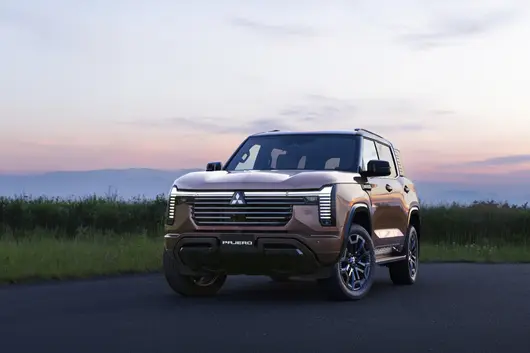
The fifth-generation Pajero is positioned as a mid-to-large SUV,the overall length, width and height dimensions are 4920/1925/1910mm, and the wheelbase is 2870mm. Looking from the outside, the whole car feels substantial, still having the style of a tough guy and muscles.
The new Pajero's front face design inspiration comes from Japanese Kendo, will provide horizontal slat and blacked-out honeycomb two grille styles. And the upright and rugged body lines combined with powerful wheel arch shapes, also give the vehicle good visual tension.

The rear part is also a design full of layers, Mitsubishi used simple lines to outline a hard enough tail shape, front and back corresponding "T-shaped" headlights not only have good technology feel, but also have some retro style.
And some classic elements on the Pajero are also preserved on the new generation models. For example, the C-pillar shape pays tribute to the first generation's roll bar, and the hexagonal rear design reinterprets the spare tire on the back of the Pajero generations.

Entering the cabin, Mitsubishi changed the previous "minimalist style", with a big swing gave the new generation Pajero a linked screen design, the three-circle instrument is reinterpreted as Multi Meter multi-function display.
A large amount of leather material inside the car and stitching soft covering, also give this Mitsubishi current flagship SUV added a lot of luxury feel. And those thick handles in the car, are still telling this model is a hardcore off-road vehicle, in off-road crossing they can play an important role.

Since as a flagship SUV, then this car's space probably won't be disappointing. The new Pajero adopts three-row seven-seat layout, second-row seats have 150mm sliding travel and support folding, third-row passengers can also insert feet below the second-row seats.
At the same time front row and second-row seats are equipped with seat ventilation function, although compared to domestic brand "8 series", "9 series", Pajero in space and configuration there may not be advantages, but in the overseas market it still has competitiveness.

Of course, I believe everyone will be more concerned about its driving performance. The new car's frame is based on the current Triton, the front section and front floor share with Triton, the rest parts are re-designed and adjusted for Pajero.
So this car is not completely a pickup shell, in driving quality aspect expected to still continue the previous performance. Chassis structure aspect, the new Pajero uses front double-wishbone independent suspension, matching rear five-link solid axle non-independent suspension + coil spring design.

Compared to third, fourth generation four-wheel independent suspension, this structure is more suitable for bearing off-road torsion, impact and long-term heavy load, also easier to obtain larger suspension travel.
230mm ground clearance, 30.4 degree approach angle, 25.8 degree departure angle and 22.6 degree traverse angle, gives it good passability.

In terms of power, the new car will be equipped with 2.4T turbocharged diesel four-cylinder engine, matching 8-speed automatic transmission. The whole power system'smaximum power is 204Ps, maximum torque 480N·m.
As for Mitsubishi's home skill second-generation Super Select 4WD, that is Super Select 4WD-II four-wheel drive system of course will not be absent. In addition to providing 2H, 4H, 4HLc and 4LLc four modes, S-AWC vehicle dynamic control system also has seven driving modes to choose from.
No doubt, the new generation Pajero will be a good hand at hardcore off-roading.

It is understood, the new generation Pajero will take production base "Thailand" as the starting point, sequentially launch Japan, Australia market; and gradually promote to ASEAN, South and Central America and Middle East and other global about 100 countries and regions.
Will it enter the Chinese market? I think the probability is that it won't.
Admittedly compared to the fourth-generation model, the new generation Pajero, whether in hardcore degree or overall design sense, has had qualitative changes. But the fourth-generation model is after all a model that has been discontinued for several years, itself competitiveness is not that strong.

Now in China market among competitive, cost-effective products really too many. Many hardcore models in "motor" and "battery" support, off-road ability improved several grades, daily car use is also relatively more convenient.
New generation Pajero in China market competitiveness, really not strong.
Although I think official probability won't import,but parallel import car dealers perhaps will bring it into China market. Like previously "Tianjin Port" parallel import Middle East version Pajero, later inventory bare car price even reached 25-300,000 yuan around.

If parallel import merchants import the new generation model, then front period price might be relatively high,but after stabilizing expected price is still around 300,000-350,000 yuan.
Believe those have nostalgia for Pajero, and at same time themselves have ability big brothers, definitely will grab first hand the fifth-generation Pajero. So if this car really sells for 300,000+ like before, you think worth choosing?
(The above content represents personal opinion only)

Di pasaran SUV Malaysia, ramai pembeli membandingkan Honda HR-V dan Chery Tiggo Cross semasa memilih kereta. Kedua-dua kereta ini mempunyai harga dan penempatan yang agak dekat, hari ini kita akan membuat perbandingan terperinci dari pelbagai aspek untuk membantu anda menjimatkan masa membuat kajian.
Harga OTR Honda HR-V di Malaysia ialah RM 115,900 - 143,900, terdapat 4 varian termasuk 2026 e:HEV 1.5L RS (RM 143,900), 2026 1.5T V (RM 137,900), 2026 1.5T E (RM 130,900) dan lain-lain.
Harga OTR Chery Tiggo Cross di Malaysia ialah RM 88,750 - 99,750, terdapat 2 varian termasuk 2025 HEV 1.5L CSH (RM 99,750), 2025 1.5T Standard (RM 88,750) dan lain-lain.
Dari segi harga, harga permulaan Chery Tiggo Cross lebih murah RM 27,150 berbanding Honda HR-V. Sejujurnya, dalam julat harga ini, jurang beberapa ribu sebenarnya tidak besar, yang penting adalah nisbah nilai harga keseluruhan dan kos penggunaan jangka panjang.
Honda HR-V dilengkapi enjin 1.5L Turbo, kuasa 140 hp. Jimat minyak rasmi 7.0 L/100km.
Chery Tiggo Cross dilengkapi enjin 1.5L 4-cyl, kuasa 105 hp. Jimat minyak rasmi 6.0 L/100km.
Dari segi kuasa, 1.5L Turbo Honda HR-V mempunyai 35 hp lebih berbanding 1.5L 4-cyl Chery Tiggo Cross, lebih yakin dalam pecutan tengah, terutama semasa memotong di lebuh raya. Namun, Jimat minyak Chery Tiggo Cross mungkin lebih baik, perbezaan untuk perjalanan harian dalam bandar tidak akan terlalu besar.
Penarafan keselamatan Honda HR-V ialah 5★ (ASEAN NCAP), sistem keselamatan aktif termasuk Honda SENSING (ACC, CMBS, LKAS, RDM).
Penarafan keselamatan Chery Tiggo Cross ialah TBD, sistem keselamatan aktif termasuk Basic.
Dari segi peralatan keselamatan, kedua-dua kereta telah menerima penarafan yang baik. Walau bagaimanapun, Honda SENSING (ACC, CMBS, LKAS, RDM) Honda HR-V dan Basic Chery Tiggo Cross mempunyai perbezaan dalam fungsi, jika anda lebih mementingkan keselamatan aktif, anda boleh membandingkan senarai fungsi kedua-duanya dengan teliti.
Honda HR-V panjang badan 4500 mm, ruang bagasi 450 L.
Chery Tiggo Cross panjang badan 4400 mm, ruang bagasi 400 L.
Dari segi ruang, badan Honda HR-V lebih panjang 100 mm daripada Chery Tiggo Cross, ruang duduk dalaman akan sedikit lebih lapang, terutamanya ruang kaki kerusi belakang. Jika anda sering membawa keluarga atau perlu meletakkan kereta bayi, badan yang lebih besar memang lebih praktikal.

Honda HR-V dan Chery Tiggo Cross kedua-duanya merupakan pilihan utama di pasaran Malaysia, sesuai untuk kegunaan keluarga, perjalanan harian. Jika anda lebih mementingkan reputasi jenama dan nilai jualan semula, anda boleh memberi keutamaan kepada model dengan reputasi lebih baik; jika anda lebih mengutamakan nisbah nilai harga dan peralatan, pilihlah model dengan konfigurasi lebih banyak. Pada akhirnya disyorkan untuk memandu uji kedua-duanya, pengalaman langsung adalah yang paling penting.

Secara keseluruhannya, Honda HR-V dan Chery Tiggo Cross kedua-duanya adalah model yang sangat baik di pasaran Malaysia. Memilih yang mana, yang penting adalah melihat keperluan dan bajet peribadi anda. Kami cadangkan untuk membuat kajian terlebih dahulu, bandingkan beberapa tawaran daripada pengedar kereta berbeza, kemudian buat keputusan akhir setelah memandu uji. Membeli kereta adalah perkara besar, meluangkan masa membuat kajian tidak akan salah.


After 20 years, the legendary Dakar Pajero finally welcomes a new generation.
On September 2, Mitsubishi Motors officially unveiled the all-new Pajero in Tokyo. As Mitsubishi Motors' new flagship model, the all-new Pajero is manufactured at the Thailand production base. It will launch in the Thai market first, followed by launches in Japan and Australia in 2026, and gradually enter around 100 countries and regions globally, including ASEAN, Latin America, and the Middle East, starting from 2027.

The all-new Pajero retains the upright and rugged body proportions and horizontal design baseline of the first-generation model. Powerful wheel arches and sculpted body surfaces further enhance visual tension. The front design is inspired by Japanese Kendo, conveying restrained yet powerful inner strength, offering both horizontal bar and honeycomb grille styles. The headlights feature a signature T-shaped design, combining modernity and technology.

The new vehicle body dimensions are 4,920 x 1,925 x 1,910 mm, wheelbase 2,870 mm, ground clearance 230 mm, approach angle 30.4°, breakover angle 22.6°, departure angle 25.8°. The 52:48 front-to-rear weight distribution further optimizes off-road stability.
Classic elements are everywhere on the body: The C-pillar design pays tribute to the roll cage of the first-generation model, while the hexagonal rear design reinterprets the spare tire mounted on the rear seen in past Pajero generations. The body offers two metallic paint themes – Armored Bronze highlights the metallic heaviness, while Phantom Blue blends gold luster into a grey-blue base, presenting a refined texture that changes with light.
The all-new Pajero adopts a three-row, seven-seat layout. The second-row seats have a 150 mm slide range and support folding. The third row provides sufficient headroom for adults, with feet able to tuck under the second-row seats. Front and second-row seats feature ventilation, and a three-zone automatic air conditioner controls temperature independently.

The cabin features a horizontally extended dashboard integrating two 14.3-inch high-resolution screens (12.3-inch for some configurations). The signature three-circle instruments of Pajero generations are reinterpreted as Multi Meter multi-function displays, presenting off-road information such as altitude, compass, temperature, vehicle pitch and roll angles, and AYC control status in real-time. The dashboard and door panels feature stitched soft material lining inspired by the traditional Japanese "Kigome" craft, creating a flagship-level luxury atmosphere. Interior colors offer Camel (Tan), forming a refined contrast with black.

The new vehicle has significantly upgraded in quietness. The front windshield and front and rear doors all use acoustic glass. Combined with full-vehicle sound insulation measures, it ensures passengers in all three rows can converse naturally at high speeds. The infotainment system supports wireless smartphone connection, and the instrument cluster offers 16 background themes that change in real-time with time.

In terms of power, the all-new Pajero is equipped with a 2.4-liter diesel engine, featuring a wide-range single Variable Geometry Turbocharger (VGT). Maximum torque reaches 480 N·m (470 N·m for some configurations), matched with a newly developed 8-speed automatic transmission (with Sport mode), balancing low-speed explosive power and high-speed smoothness.

Off-road performance remains uncompromising. The high-rigidity ladder frame uses more high-strength steel, significantly improving torsional and bending stiffness while reducing weight. Suspension is front double-wishbone independent + rear new five-link solid axle structure. Long-travel design ensures tire ground contact in complex terrain.

The all-new Pajero is equipped with Mitsubishi S-AWC Comprehensive Vehicle Dynamics Control System and SS4-II Super Select 4WD II. It offers four drive modes: 2H, 4H, 4HLc, 4LLc, and seven driving modes: Standard, Eco, Gravel, Snow, Mud, Sand, and Rock.

Regarding safety features, the new vehicle is equipped with FCM Front Collision Mitigation (including pedestrian/cyclist/motorcycle detection and intersection assist), PFCW Predictive Front Collision Warning, and EAPM Accelerator Misapplication Assist. It also features ELA Emergency Lane Assist and FCTA Front Cross Traffic Alert for the first time. The MI-PILOT High-Speed Single-Lane Driving Assist System integrates ACC and LKA to relieve long-distance driving fatigue. The whole vehicle is equipped with 8 airbags, including Mitsubishi's first application of a front center airbag. Additionally, the 3D Multi-View Panoramic Image supports chassis see-through function, allowing real-time viewing of the road under the vehicle during off-road driving.

Since its birth in 1982, the Pajero has gone through four generations of updates, with cumulative production exceeding 3.29 million units, covering over 170 countries and regions. It is one of Mitsubishi Motors' most iconic models. The all-new Pajero, building on the "Confidence (Confidence)" and "Comfort (Comfort)" product philosophies inherited since the first generation, adds the "Prestige (Prestige)" dimension. With the design concept of "Grand Charisma (Grand Charm)", luxury quality has significantly improved, evolving comprehensively into a flagship-level crossover off-road SUV.
Mitsubishi Motors President and Chief Operating Officer Keisuke Kishura stated: "The all-new Pajero is the first model to implement Mitsubishi Motors' mid-to-long-term vision for the 2030s. As a flagship, it will lead the subsequent Pajero series and even the entire Mitsubishi Motors product lineup."
The author of this article is Wenfeng from TiCheBang.

Dalam pasaran SUV di Malaysia, ramai pembeli membandingkan Honda HR-V dan Chery Tiggo Cross ketika memilih kereta. Kedua-dua kereta ini agak hampir dari segi harga dan kedudukan. Hari ini, kami akan membuat perbandingan terperinci dari pelbagai aspek, membantu anda menjimatkan masa membuat kajian.
Harga OTR Honda HR-V di Malaysia ialah RM 115,900 - 143,900, terdapat sebanyak 4 varian, termasuk 2026 e:HEV 1.5L RS (RM 143,900), 2026 1.5T V (RM 137,900), 2026 1.5T E (RM 130,900) dan lain-lain.
Harga OTR Chery Tiggo Cross di Malaysia ialah RM 88,750 - 99,750, terdapat sebanyak 2 varian, termasuk 2025 HEV 1.5L CSH (RM 99,750), 2025 1.5T Standard (RM 88,750) dan lain-lain.
Dari segi harga, harga permulaan Chery Tiggo Cross lebih murah RM 27,150 berbanding Honda HR-V. Jujur berkata, dalam julat harga ini, beza beberapa ribu sebenarnya tidak besar, yang penting masih lihat nisbah kualiti terhadap harga keseluruhan dan kos penggunaan jangka panjang.
Honda HR-V dilengkapi 1.5L Turbo, kuasa 140 hp. Penggunaan minyak rasmi 7.0 L/100km.
Chery Tiggo Cross dilengkapi 1.5L 4-cyl, kuasa 105 hp. Penggunaan minyak rasmi 6.0 L/100km.
Dari segi kuasa, 1.5L Turbo Honda HR-V mempunyai 35 kuasa kuda lebih daripada 1.5L 4-cyl Chery Tiggo Cross, percepatan sederhana lebih berkeyakinan, terutamanya ketika menyalak di lebuh raya. Namun, penggunaan minyak Chery Tiggo Cross mungkin lebih mesra, perbezaan harian untuk pengangkutan bandar tidak akan terlalu besar.
Honda HR-V panjang badan 4500 mm, bakul belakang 450 L.
Chery Tiggo Cross panjang badan 4400 mm, bakul belakang 400 L.
Dari segi ruang, badan Honda HR-V adalah 100 mm lebih panjang daripada Chery Tiggo Cross, ruang penumpang dalam kenderaan akan lebih luas sedikit, terutamanya ruang kaki baris belakang. Jika anda sering mengangkut keluarga atau perlu meletakkan kereta bayi, badan yang lebih besar memang lebih praktikal.
Honda HR-V menggunakan cara pemanduan FWD.
Chery Tiggo Cross menggunakan cara pemanduan FWD.
Kedua-dua kereta ini menggunakan cara pemanduan yang sama, iaitu FWD, rasa pemanduan harian tidak akan terlalu berbeza.
Secara keseluruhan, Honda HR-V dan Chery Tiggo Cross adalah model kereta yang sangat baik di pasaran Malaysia. Memilih yang mana, semuanya bergantung pada keperluan peribadi dan bajet anda. Disarankan untuk membuat kajian dengan rapi, bandingkan beberapa harga daripada kedai kereta, kemudian uji pemanduan untuk membuat keputusan akhir. Membeli kereta adalah perkara besar, meluangkan masa membuat kajian tidak akan salah.

Dalam pasaran SUV di Malaysia, ramai pembeli ketika memilih kereta akan membandingkan Honda HR-V dengan Mazda CX-8. Kedua-dua kereta ini dalam harga dan penjenamaannya sangat hampir, hari ini kita akan buat perbandingan terperinci dari pelbagai aspek untuk membantu anda menjimatkan masa membuat kajian.
Honda HR-V di Malaysia mempunyai harga OTR serendah RM 115,900 - 143,900, terdapat 4 varian, termasuk 2026 e:HEV 1.5L RS (RM 143,900), 2026 1.5T V (RM 137,900), 2026 1.5T E (RM 130,900) dan lain-lain.
Mazda CX-8 di Malaysia mempunyai harga OTR serendah RM 165,360 - 201,360, terdapat 5 varian, termasuk 2025 2.5T 4WD High Plus Petrol (RM 201,360), 2025 2.2L 2WD High Plus Diesel (RM 193,123), 2025 2.5L 2WD High Plus Petrol (RM 186,360) dan lain-lain.
Dari segi harga, harga permulaan Honda HR-V memang lebih murah RM 49,460 berbanding Mazda CX-8. Jika bajet anda terbatas, varian permulaan Honda sudah dapat memenuhi keperluan harian. Tetapi perlu diambil kira, ribuan ringgit yang lebih murah itu mungkin ada kompromi dalam kelengkapan, bergantung kepada keperluan anda.
Honda HR-V dilengkapi enjin 1.5L Turbo, kuasa 140 hp. Konsumsi minyak rasmi 7.0 L/100km.
Mazda CX-8 dilengkapi enjin 2.0L 4-cyl, kuasa 170 hp. Konsumsi minyak rasmi 8.0 L/100km.
Dari segi tenaga, 2.0L 4-cyl Mazda CX-8 mempunyai 30 hp lebih banyak berbanding 1.5L Turbo Honda HR-V. Namun, memandu dalam bandar secara harian, tenaga kedua-dua kereta sudah memadai, tidak akan rasa kurang tenaga.
Taraf keselamatan Honda HR-V ialah 5★ (ASEAN NCAP), sistem keselamatan aktif termasuk Honda SENSING (ACC, CMBS, LKAS, RDM).
Taraf keselamatan Mazda CX-8 ialah 5★ (ASEAN NCAP), sistem keselamatan aktif termasuk Brand ADAS.
Taraf keselamatan kedua-dua kereta sama, dalam kelas ini kelengkapan keselamatan dianggap sangat lengkap. Keselamatan kereta baharu semasa tidak buruk, tiada perlu terlalu bimbang mengenai hal ini.
Honda HR-V menggunakan cara pemacu FWD.
Mazda CX-8 menggunakan cara pemacu FWD.
Cara pemacu kedua-dua kereta sama, iaitu FWD, pengalaman memandu harian tidak akan berbeza jauh.

Secara keseluruhannya, Honda HR-V dan Mazda CX-8 adalah model kereta yang sangat bagus di pasaran Malaysia. Memilih yang mana, terletak pada keperluan dan bajet peribadi anda. Kami sarankan buat kajian, bandingkan harga beberapa dealer, kemudian uji untuk buat keputusan akhir. Membeli kereta adalah perkara besar, meluangkan masa membuat kajian pasti tidak salah.

喺馬來西亞嘅 SUV 市場,好多買家喺揀車嗰陣都會拿 Honda HR-V 同 Chery Tiggo 7 Pro 做比較。這兩款車喺價位同定位上都好接近,今日我就會從多個方面做一個詳細嘅對比,幫你省做做功課嘅時間。
Honda HR-V 喺馬來西亞嘅 OTR 售價係 RM 115,900 - 143,900,一共有 4 個版本,包括 2026 e:HEV 1.5L RS(RM 143,900)、2026 1.5T V(RM 137,900)、2026 1.5T E(RM 130,900)等等。
Chery Tiggo 7 Pro 喺馬來西亞嘅 OTR 售價係 RM 123,750 - 123,750,一共有 2 個版本,包括 1.6L Turbo Standard(RM 125,000)、1.6L Turbo Premium(RM 140,000)等等。
從價錢嚟睇,Honda HR-V 嘅起步價確實比 Chery Tiggo 7 Pro 便宜咗 RM 7,850。如果你預算有限,Honda 嘅入門版已經可以滿足日常需求。但都要注意,便宜嗰幾千蚊,可能就喺配備上會有取舍,具體要看你嘅需求。
Honda HR-V 嘅安全評級係 5★ (ASEAN NCAP),主動安全系統包括 Honda SENSING (ACC, CMBS, LKAS, RDM)。
Chery Tiggo 7 Pro 嘅安全評級係 TBD,主動安全系統包括 Basic。
安全配備方面,兩款車都拿到唔錯嘅評級。不過 Honda HR-V 嘅 Honda SENSING (ACC, CMBS, LKAS, RDM) 同 Chery Tiggo 7 Pro 嘅 Basic 喺功能上有些差異,如果你比較看重主動安全嘅話,可以仔細對比下兩者嘅功能列表。
Honda HR-V 採用 FWD 驅動方式。
Chery Tiggo 7 Pro 採用 FWD 驅動方式。
兩款車嘅驅動方式一樣,都係 FWD,日常駕駛感受唔會有太大區別。
Honda HR-V 保修 5 年/無限制里程,保養間隔 每 10,000km 或 6 個月。
Chery Tiggo 7 Pro 保修 3 年/100,000km,保養間隔 每 10,000km 或 6 個月。
總嘅嚟講,Honda HR-V 同 Chery Tiggo 7 Pro 都係馬來西亞市場幾唔錯嘅車型。揀邊一輛,關鍵都係要看你嘅個人需求同預算。建議大家做好功課,多比較幾間車行嘅報價,再去試駕做最終決定。買車係件大事,花點時間做功課絕對唔會錯。
© 2024 Bitauto.com. All Rights Reserved.
Bitauto (www.yiche.com and www.bitauto.com) is one of the most visited automotive websites in China. We provide detailed info on Chinese car brands available in your area. Please note that the information provided on this website is based on publicly available data and is for reference only. It may not be fully updated or accurate at all times.

Help us improve our website


