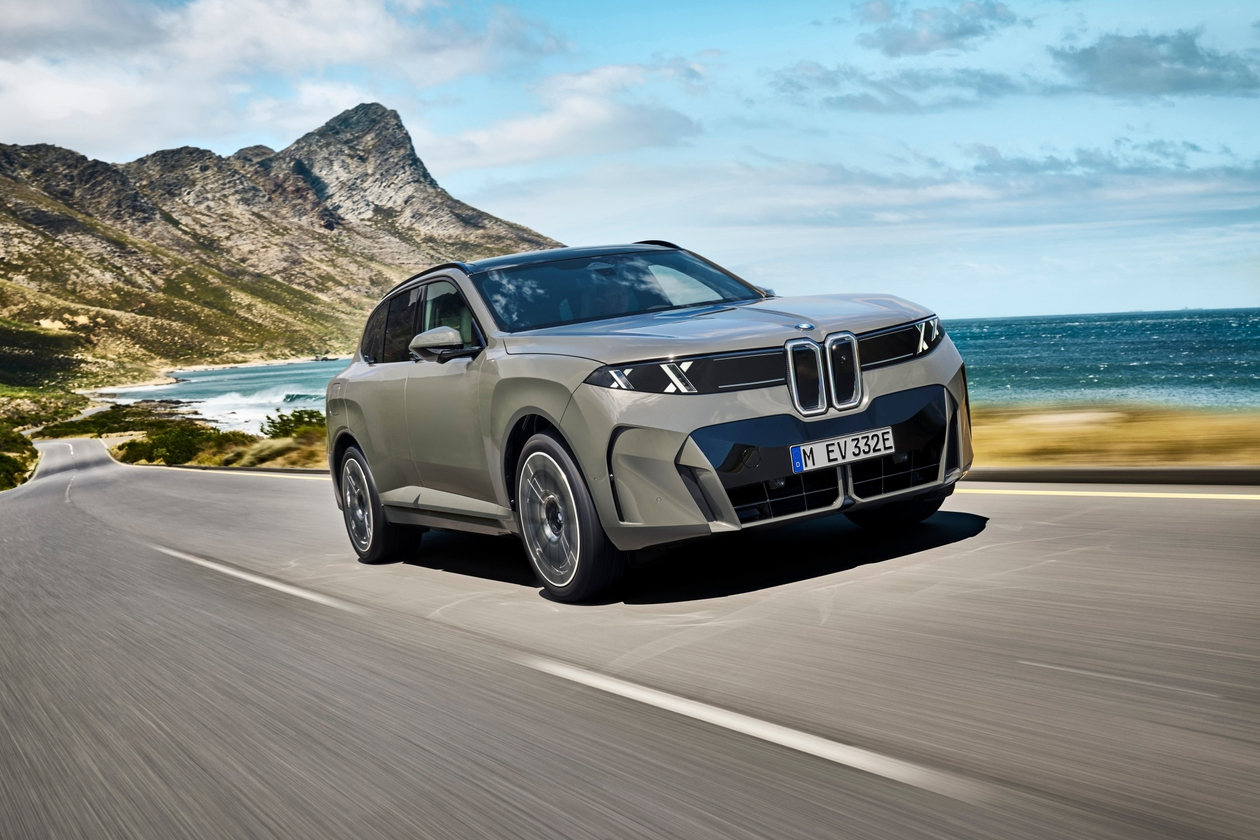
The all-new fifth-generation 2026 BMW X5, expanding the premium SUV line with major technical upgrades, a complete design overhaul, and the brand's first five-drivetrain model lineup. The fresh iteration incorporates core electrical, chassis, and digital innovations originally developed for BMW’s upcoming Neue Klasse platform.
Series production is scheduled to begin in August 2026 at BMW Group Plant Spartanburg in the United States, which has built over 3.1 million X5 units across four generations since 1999. Initial market arrivals for combustion and mild-hybrid versions are locked in for late November 2026, while the fully electric and plug-in hybrid models will follow closely in early 2027.
Technical Specifications and Performance
The powertrain strategy for the latest X5 relies on a highly adaptable architecture. Performance, range, and efficiency metrics across the five distinct variants remain provisional ahead of official production.
All-Electric: BMW iX5 60 xDrive
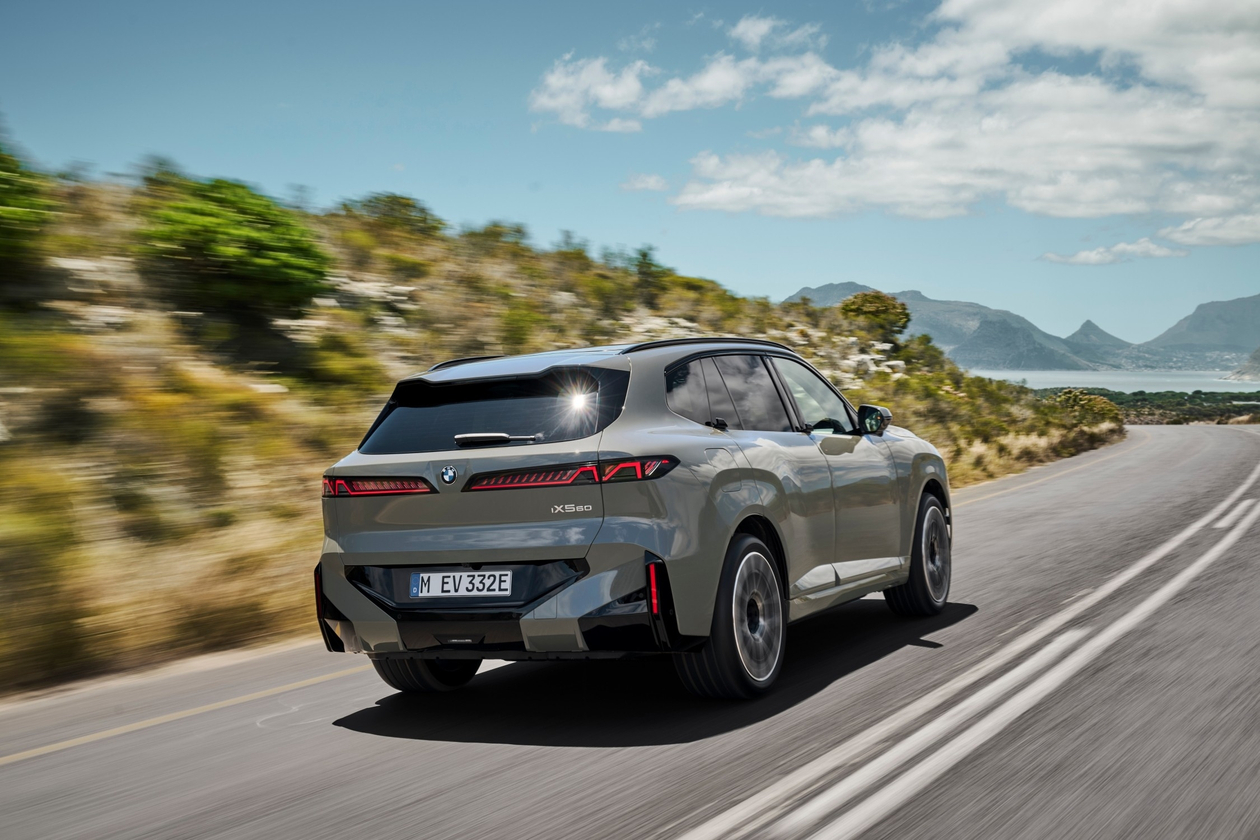
The first battery-electric X5 adopts sixth-generation (Gen6) BMW eDrive technology running on an advanced 800V system architecture. Power is managed through a dual-motor setup. The primary rear axle features an electrically excited synchronous motor generating 242 kW (329 hp) and 500 Nm of torque.
The front axle utilizes a robust asynchronous motor that contributes 183 kW (249 hp) and 305 Nm of torque, which can decouple completely during low loads to optimize efficiency. Together, the combined drive system outputs a maximum of 425 kW (578 hp) and 805 Nm of torque.
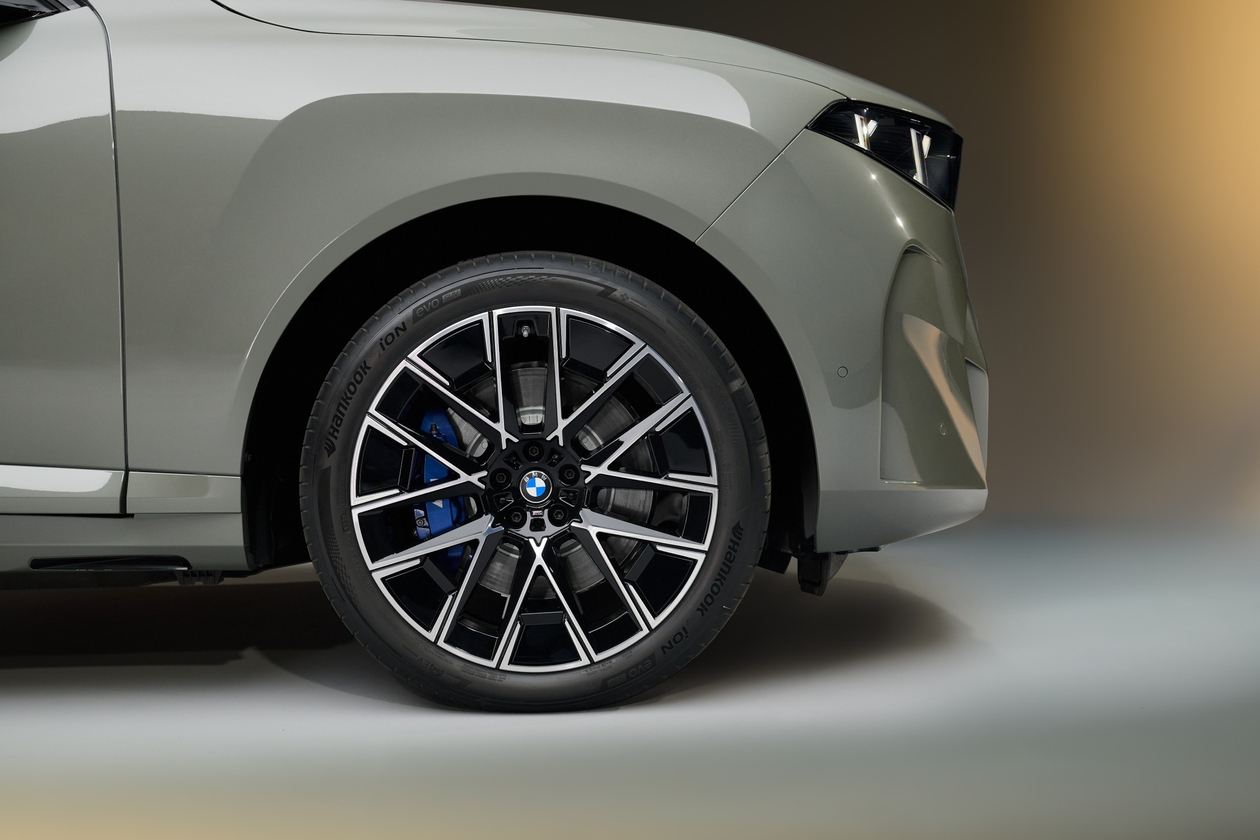
The vehicle accelerates from 0 to 100 km/h in 4.6 seconds and reaches an electronically governed top speed of 210 km/h. Its high-voltage battery pack features a net energy content of 141 kWh, yielding an estimated WLTP driving range between 645 and 845 kilometers. Combined electrical consumption matches a WLTP-rated 23.9 to 20.1 kWh/100 km.
Plug-In Hybrids: 50e xDrive and M60e xDrive
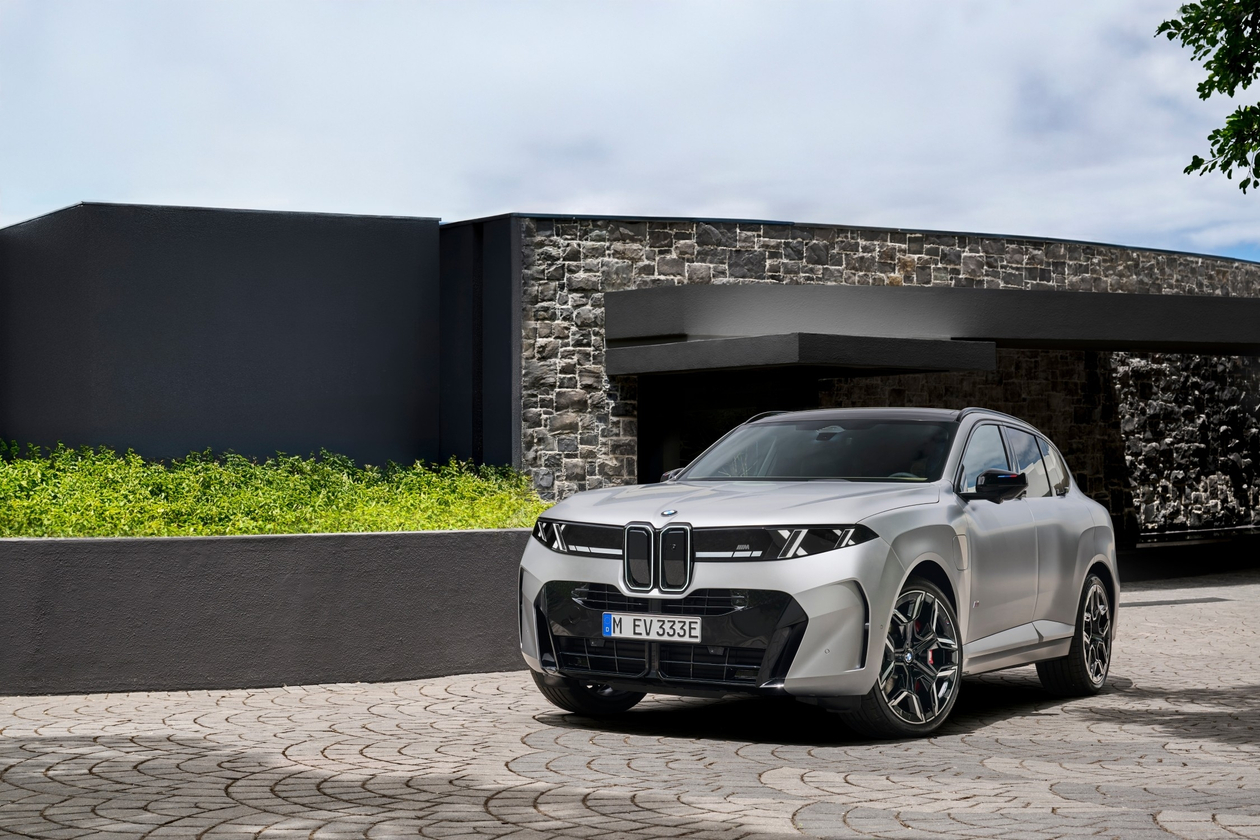
Both plug-in hybrid choices combine a heavily updated 2,998 cc inline six-cylinder turbocharged petrol engine with a synchronous electric motor integrated directly into the housing of the eight-speed Steptronic transmission. The electric motor delivers a standalone rated output of 145 kW (197 hp) and 280 Nm of torque, pulling energy from an underbody-mounted fifth-generation lithium-ion battery with 26.5 kWh of usable capacity. Both variants meet the strict EU7 emissions guidelines and can reach an all-electric top speed of 140 km/h.
BMW X5 50e xDrive: The combustion engine produces 230 kW (313 hp) on its own, creating a combined total system output of 360 kW (489 hp) and 700 Nm of torque. It reaches 100 km/h from a standstill in 5.0 seconds and tops out at 250 km/h. The pure electric range spans 86 to 102 kilometers on the WLTP cycle, with a combined fuel consumption of 6.0 to 5.2 liters per 100 kilometers.
BMW X5 M60e xDrive: Serving as the initial performance flagship, its internal combustion engine is tuned to 313 kW (426 hp), bumping total system figures to 450 kW (612 hp) and 800 Nm of torque. The standard 0 to 100 km/h sprint drops to 4.5 seconds, or a swift 4.2 seconds when using alternative one-foot rollout measurement methods. It features a WLTP electric range of 81 to 98 kilometers and a combined fuel rating of 6.2 to 5.7 liters per 100 kilometers.
48V Mild Hybrids: 40 xDrive and 40d xDrive
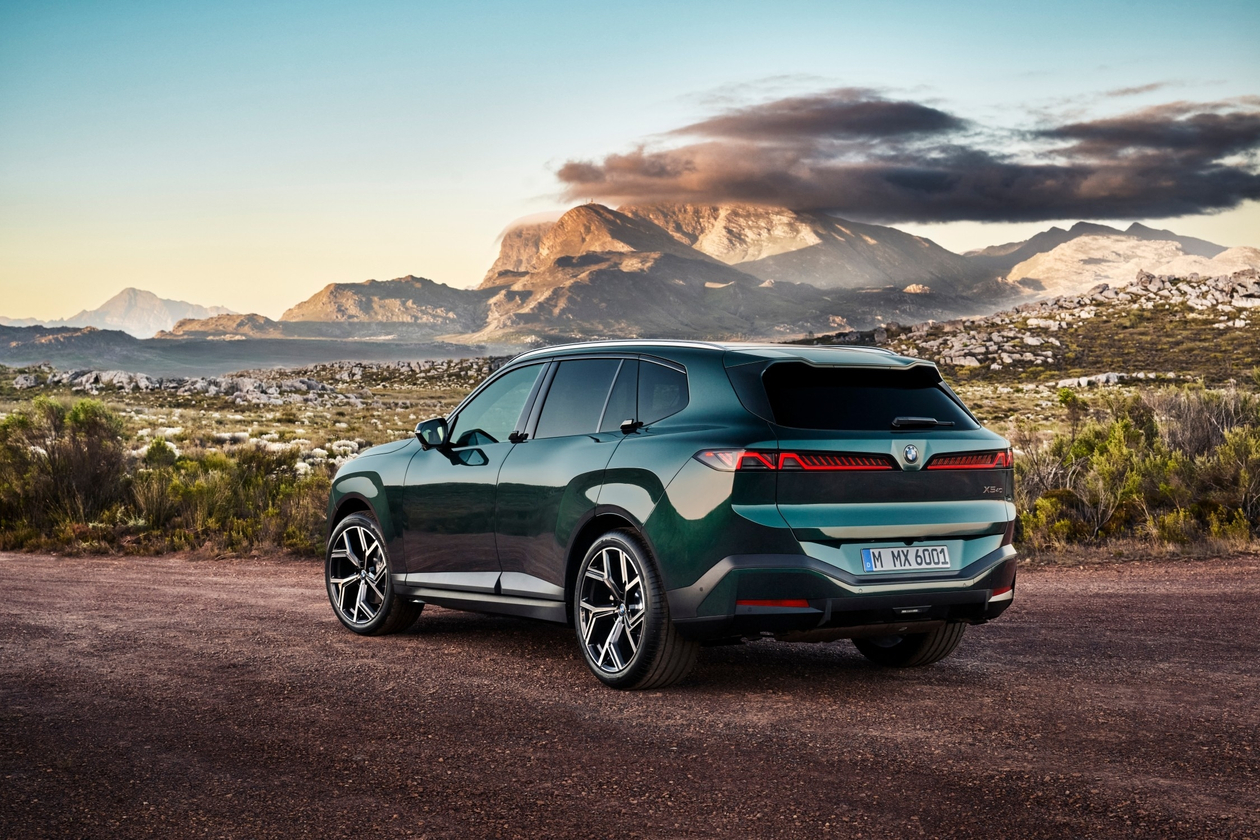
Traditional combustion engines receive standard 48V mild-hybrid integration. A crankshaft-mounted starter generator nestled inside the eight-speed transmission provides an instant electronic boost of up to 13 kW (18 hp) and 200 Nm of torque while optimizing the automatic start-stop cycles.
BMW X5 40 xDrive (Petrol): Powered by a refined 3.0-liter straight-six engine operating on the efficient Miller combustion cycle. It features VALVETRONIC variable valve control, dual fuel injection, and an electrically driven VANOS camshaft timing system. The engine yields a peak output of 294 kW (400 hp) and 540 Nm of torque, which temporarily rises to 580 Nm with electric assistance. It cracks 0 to 100 km/h in 5.3 seconds and tops out at 250 km/h, consuming 9.2 to 8.7 liters per 100 kilometers under WLTP protocols.
BMW X5 40d xDrive (Diesel): Employs a 3.0-liter inline-six diesel engine heavily optimized for acoustic refinement. It implements common-rail direct injection running solenoid valve injectors at a maximum pressure of 2,500 bar. Total system figures sit at 230 kW (313 hp) and a high torque ceiling of 670 Nm, completing the 0 to 100 km/h sprint in 6.1 seconds. Top speed is capped at 230 km/h, and it maintains a frugal combined consumption of 7.3 to 7.0 liters per 100 kilometers. Both the petrol and diesel versions debut under the EU6e standard but will transition to EU7 compliance starting from December 2026 production.
Hydrogen Fuel Cell: BMW iX5 Hydrogen
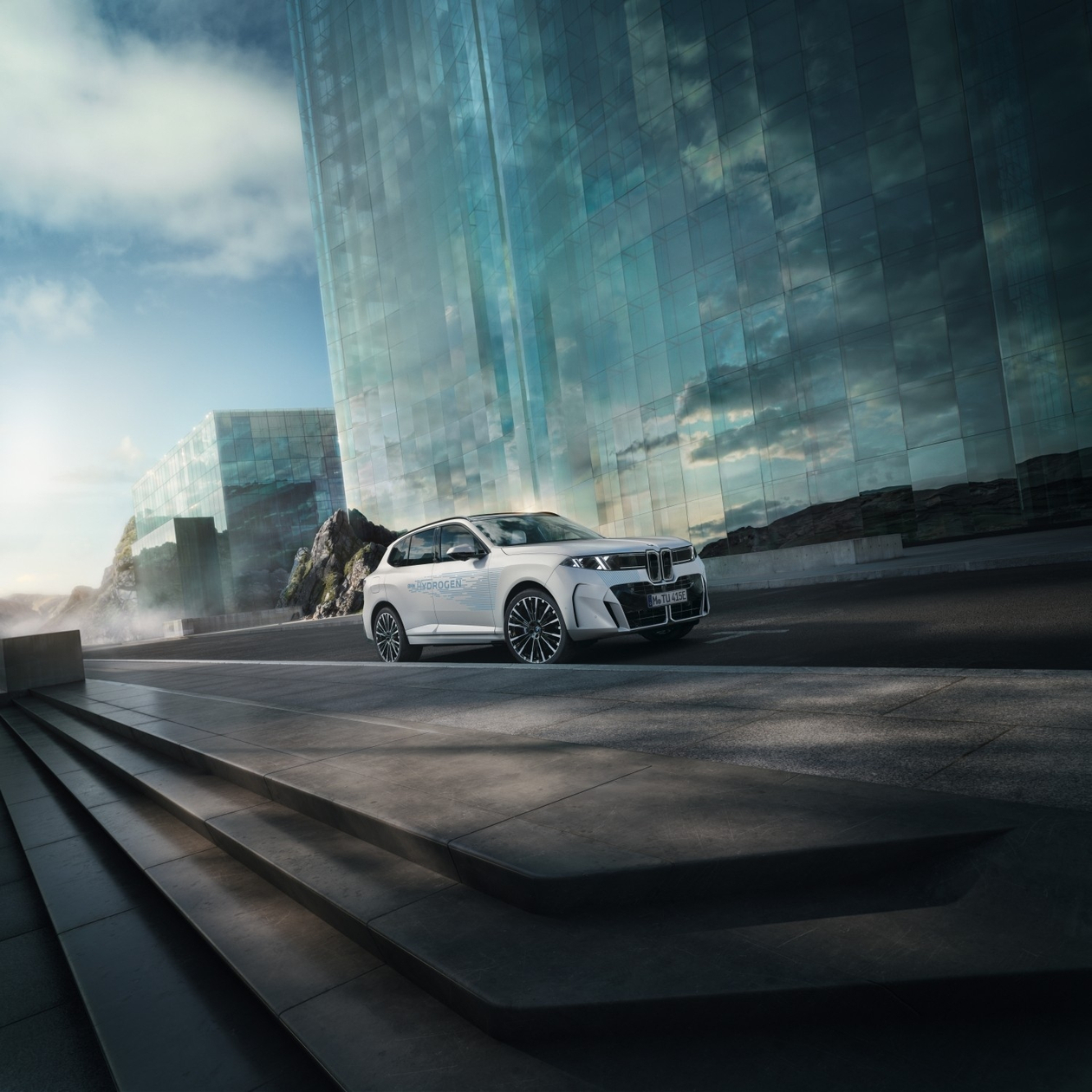
Launching at a later stage, the hydrogen-powered model features a zero-local-emission powertrain developed in partnership with Toyota Motor Corporation. The third-generation fuel cell stack is 25 percent more compact than previous versions while producing greater output.
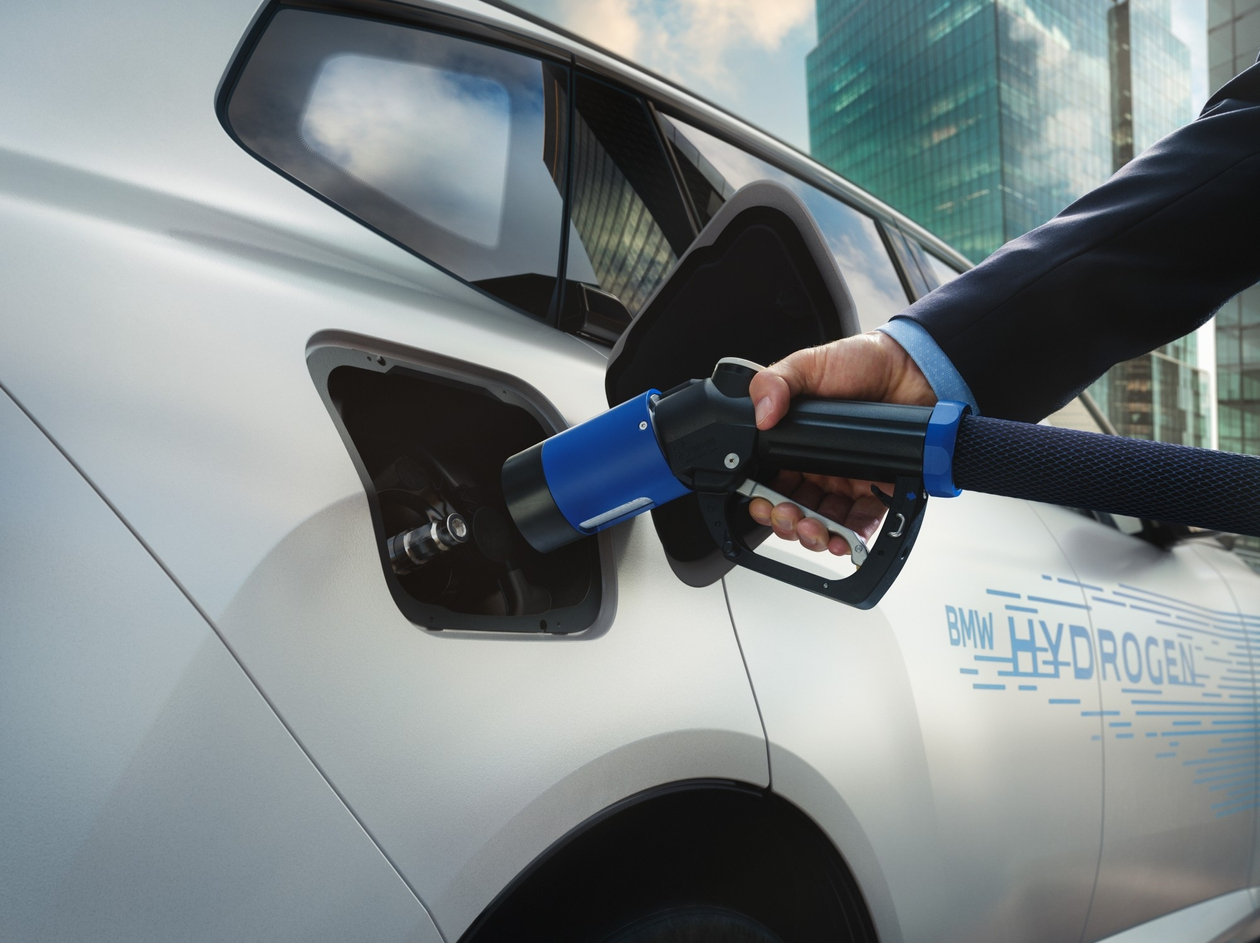
It works in unison with BMW's new Hydrogen Flat Storage technology, which packages seven high-pressure composite tanks sandwich-style inside a protective metal subframe. The system holds seven kilograms of compressed hydrogen gas, enables a full refuel in under five minutes, and achieves a calculated driving range of up to 750 kilometers.
Body Dimensions, Weights, and Practicality
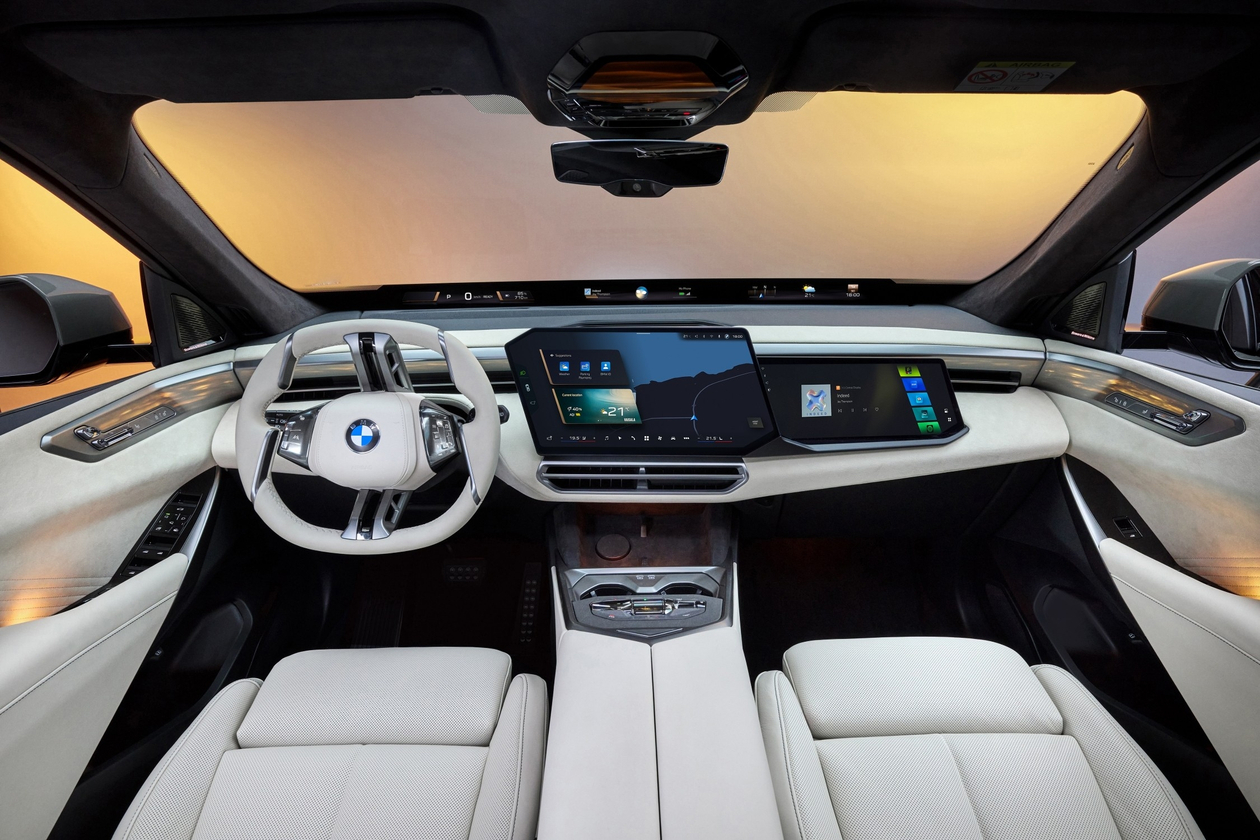
Across all model variants, the X5 retains its signature proportions but grows noticeably in footprint to improve interior packaging.
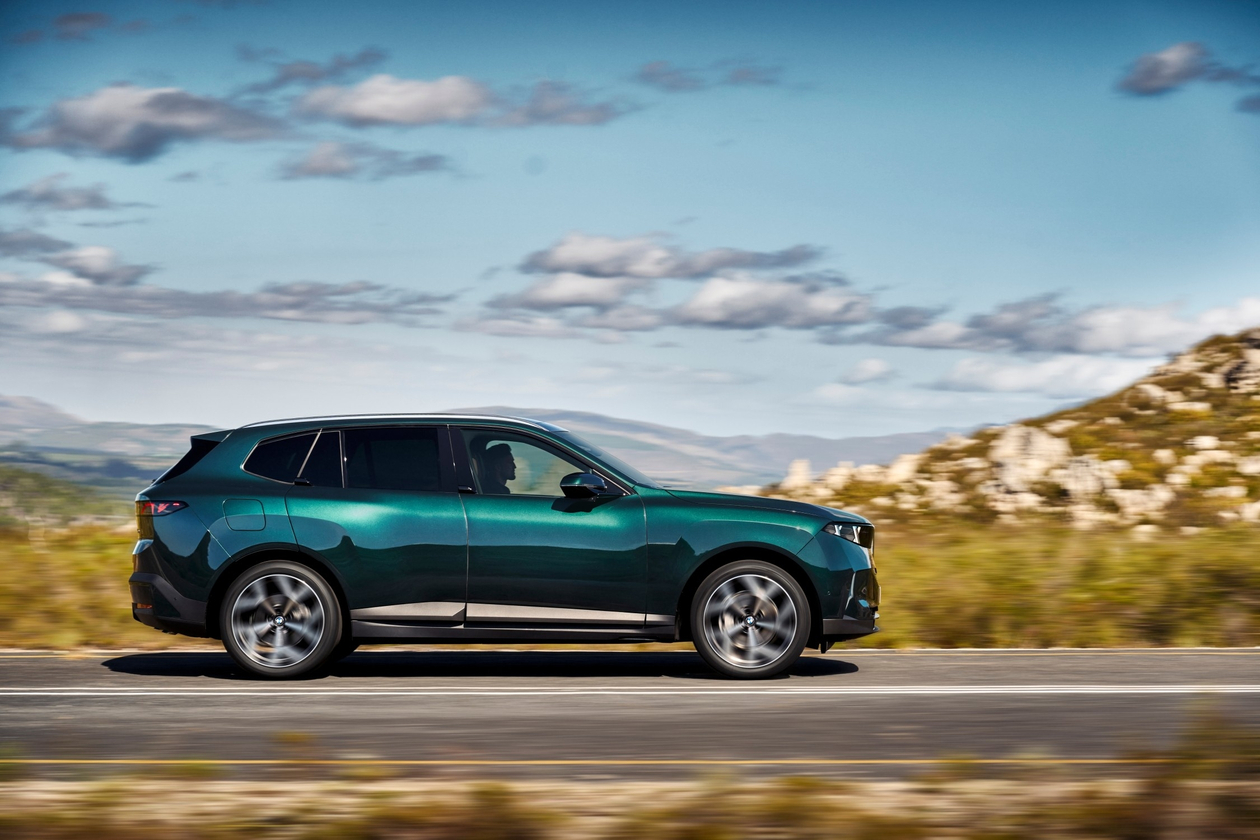
Exterior Proportions: Every model measures 4,994 mm long and 2,000 mm wide, except for the sportier M60e variant which is slightly longer at 4,998 mm. The battery-electric iX5 stands at a total height of 1,748 mm, whereas all combustion and hybrid variants measure 1,751 mm tall.
Wheelbase and Roominess: The wheelbase has been lengthened by 60 mm to a total of 3,035 mm. This dimensional shift allows for a 22 mm increase in rear seat knee-room (growing from 108 mm to 130 mm) and includes an updated rear seatback angle flattened by two degrees for long-distance comfort.
Aerodynamics: The aerodynamic profile yields a drag coefficient ($C_d$) of 0.28 for the all-electric iX5, 0.30 for the performance-oriented M60e xDrive, and a steady 0.29 for the remaining model configurations.
Weight Profiles: Unladen vehicle weights (including a 75 kg driver allowance) vary dramatically by powertrain choice. The petrol 40 xDrive tips the scales at 2,365 kg, the diesel 40d xDrive sits at 2,430 kg, the 50e plug-in hybrid registers 2,640 kg, and the dual-motor electric iX5 hits 2,900 kg. Maximum permissible weights stretch up to 3,495 kg on the electric model.
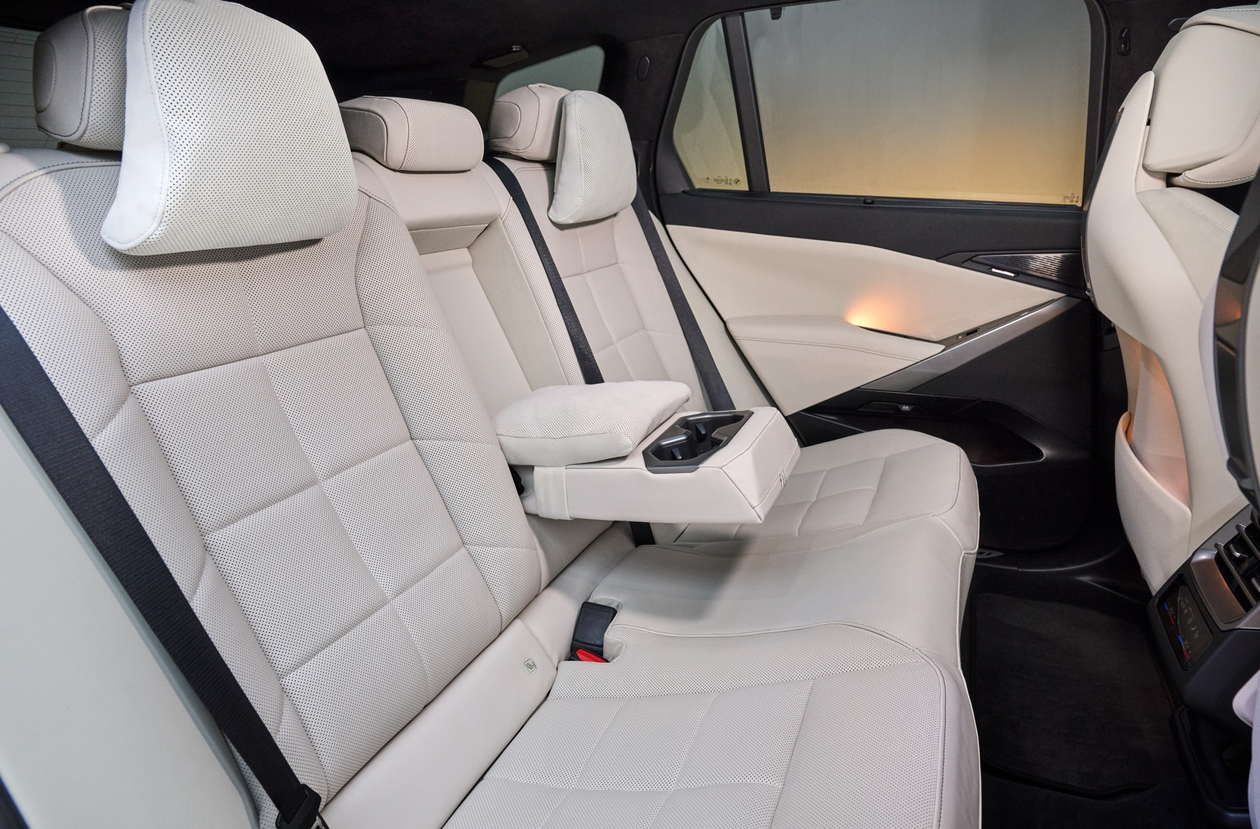
Cargo Capacities: Luggage space differs based on battery placement. Pure combustion and mild-hybrid models offer 650 to 1,850 liters of total volume. The electric iX5 matches this capacity with 655 to 1,850 liters, bolstered by an extra 53-liter storage frunk under the bonnet to house charging cables. The plug-in hybrids handle a slightly smaller 525 to 1,680 liters.
Towing Utility: Maximum braked trailer towing limits are rated at 2,700 kg for the iX5 electric, 3,000 kg for the standard inline-six engines, and peak at 3,300 kg for the heavy plug-in hybrid setups.
Charging and Electrical Architecture
The sixth-generation electric drive architecture fundamentally overhauls energy storage and recovery speeds.
Cylindrical Battery Technology
The iX5 moves away from fifth-generation prismatic cells, introducing new lithium-ion cylindrical cells with a fixed 46 mm diameter and an expanded 120 mm height. This structural change increases energy density by 20 percent at the cell level and ups usable energy content by 30 percent. A cell-to-pack assembly technique fits the cells directly into the battery housing without modular trays, decreasing overall weight, volume, and cost. An "Energy Master" control module developed in-house governs all thermal, safety, and electrical interfaces.
Charging Rates
The 800V architecture supports high-power DC fast charging up to 460 kW. When plugged into a compatible high-speed DC station, the iX5 can replenish its battery from 10 to 80 percent in 23 minutes, or capture 350 kilometers of range in 10 minutes. Standard internal switching matrices allow the vehicle to safely utilize older 400V DC hardware. For standard overnight AC charging, an onboard 22 kW charger is standard for the BEV, yielding a 0 to 100 percent fill in 7.5 hours. Plug-in hybrid models cap out at an 11 kW AC charging rate.
Bidirectional Integration
Three distinct bidirectional features are introduced using an upgraded internal "AC Charging Professional" suite:
- Vehicle-to-Load (V2L): Discharges up to 3.7 kW of power via an external adapter to run domestic electronics or outdoor appliances.
- Vehicle-to-Home (V2H): Pairs with the BMW Wallbox Professional to feed energy back into household grids, prioritizing user-defined minimum vehicle ranges.
- Vehicle-to-Grid (V2G): A joint venture with E.ON uses automatic algorithms to balance and supply power back to public energy grids when plugged in, providing financial bonuses to owners based on hourly connectivity.
Design, Chassis, and Interior Content
Exterior Elements
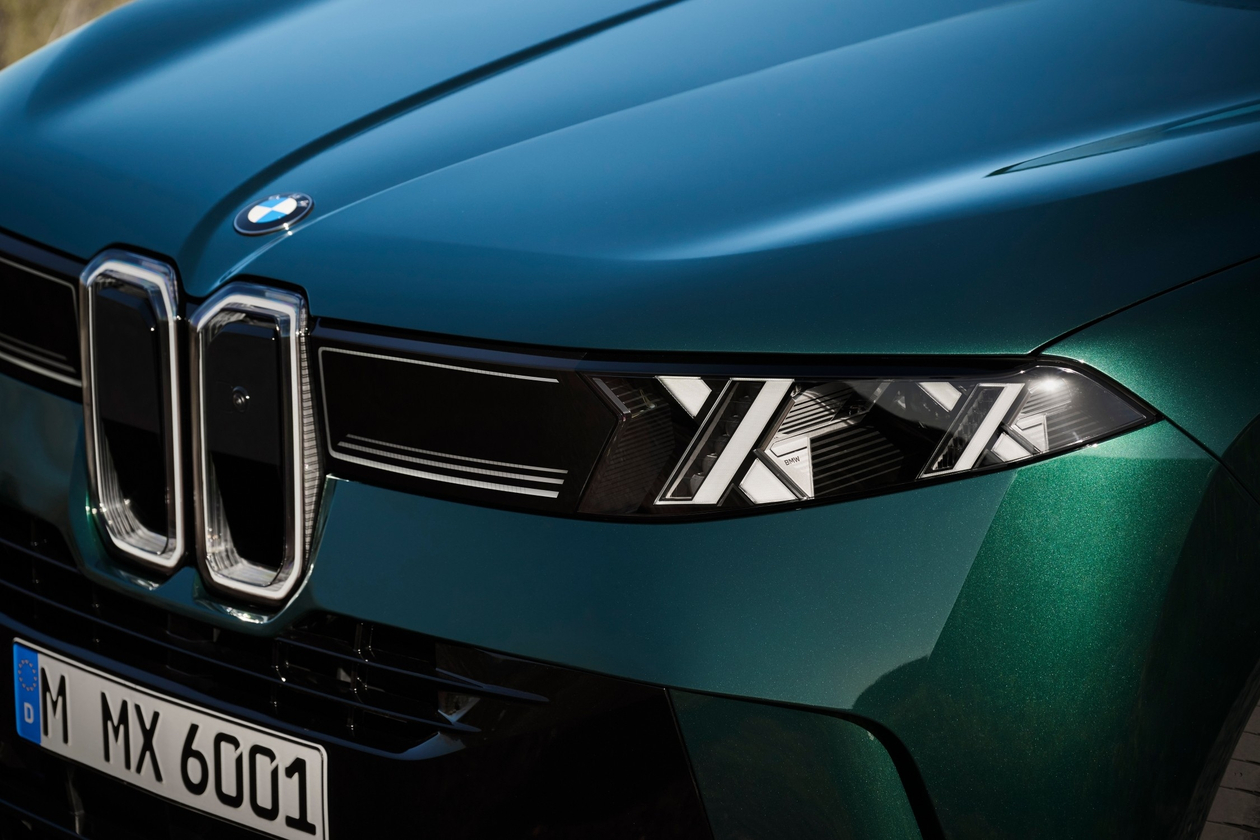
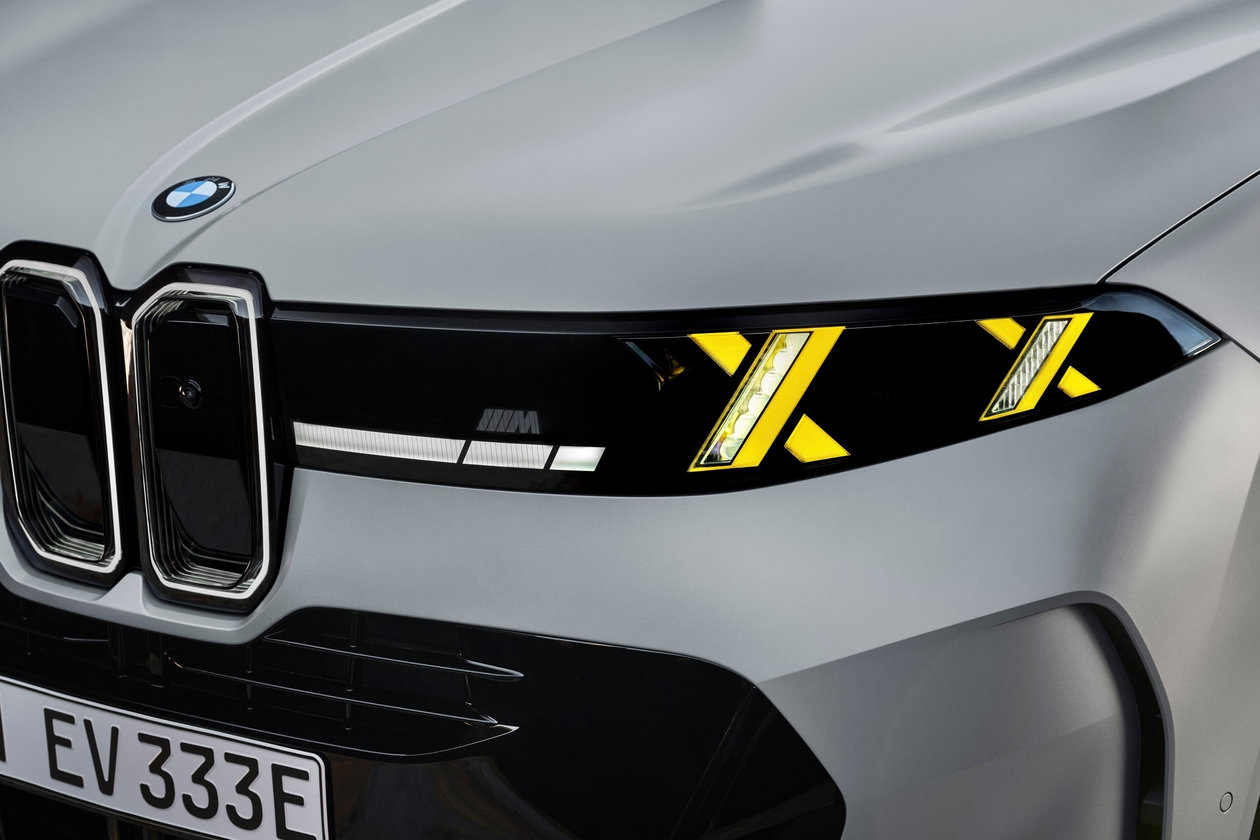
The styling language merges classic proportions with an upright front fascia. A scaled-up, matte-finished BMW roundel sits on the bonnet above a vertically aligned "Iconic Glow" kidney grille that functions alongside the daytime running lights. Making their production debut, standard adaptive LED "double-X" headlamps group low-beam, daytime driving, and matrix high-beam functions (with a 600-meter range illumination) into a single lens layout.
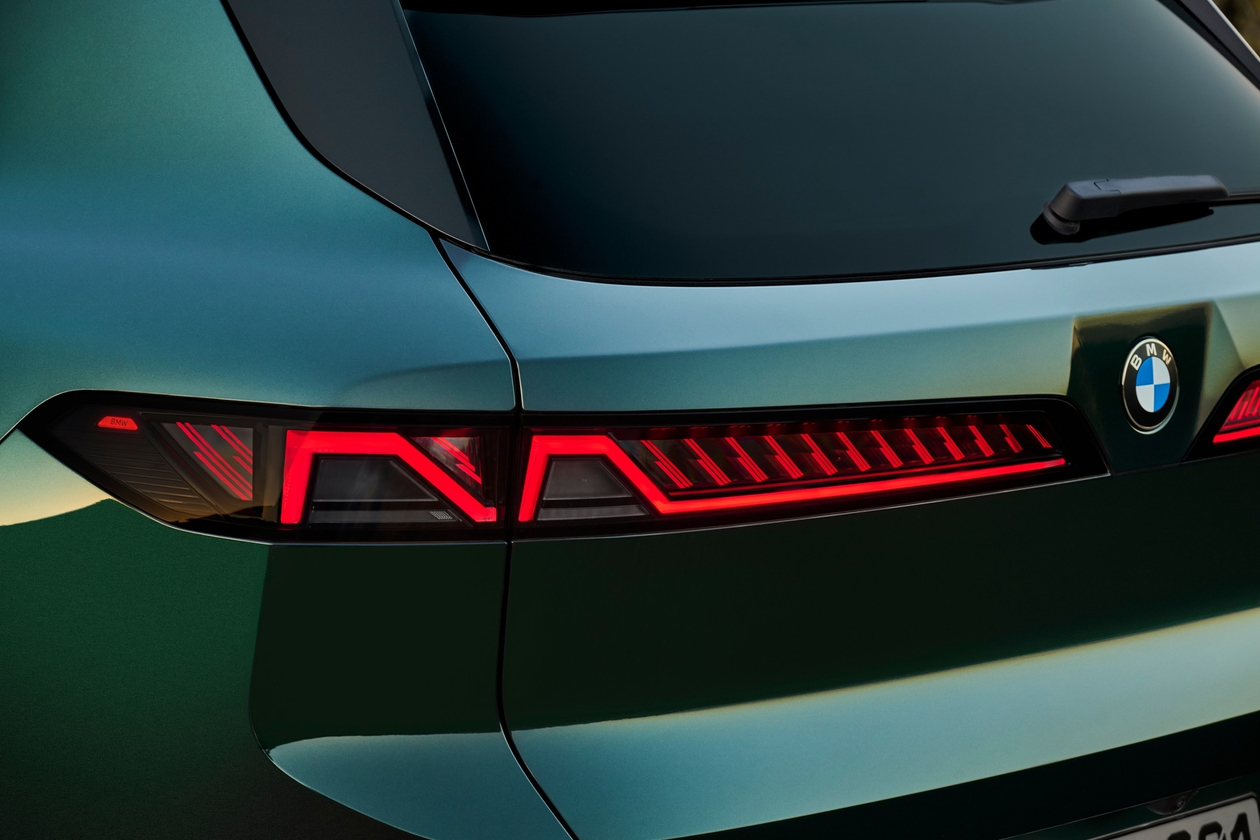
The side profile is defined by hidden window seals and touch-activated door handles integrated flush into the B- and C-pillars. The vehicle features a standard Soft Close door mechanism and runs on a revised wheel array starting at 21 inches, with optional 22-inch and 23-inch designs available. The flagship M60e xDrive adds model-specific front aprons, M Yellow headlights, a quad exhaust array, and high-gloss black aerodynamic door mirrors.
Cockpit and Operating System X
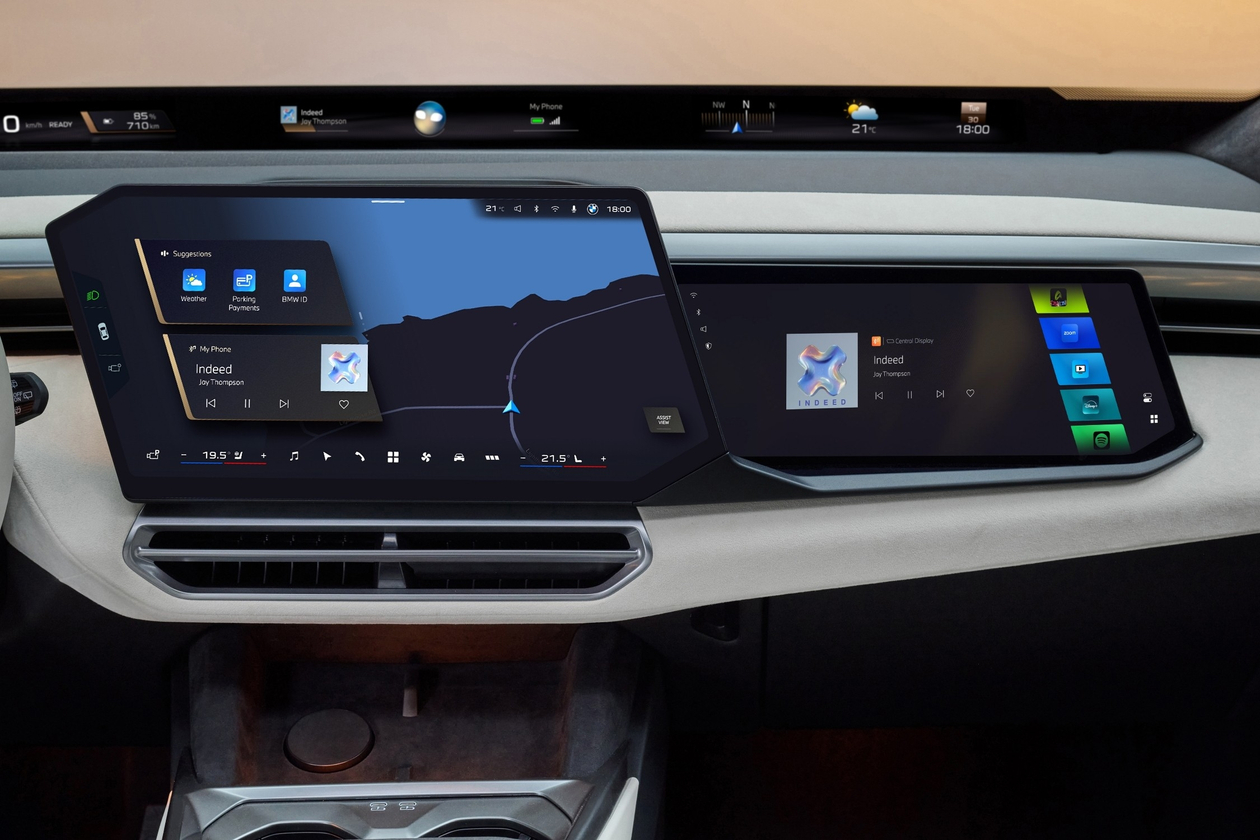
The interior is driven by BMW Operating System X, a custom software architecture built on an Android Open Source Project (AOSP) framework. The primary interaction revolves around three elements:
- BMW Panoramic Vision: A display system that projects crisp driving, navigation, and media parameters across the full width of the lower windscreen area.
- BMW 3D Head-Up Display: Projects high-precision spatial graphics directly into the driver's primary line of sight.
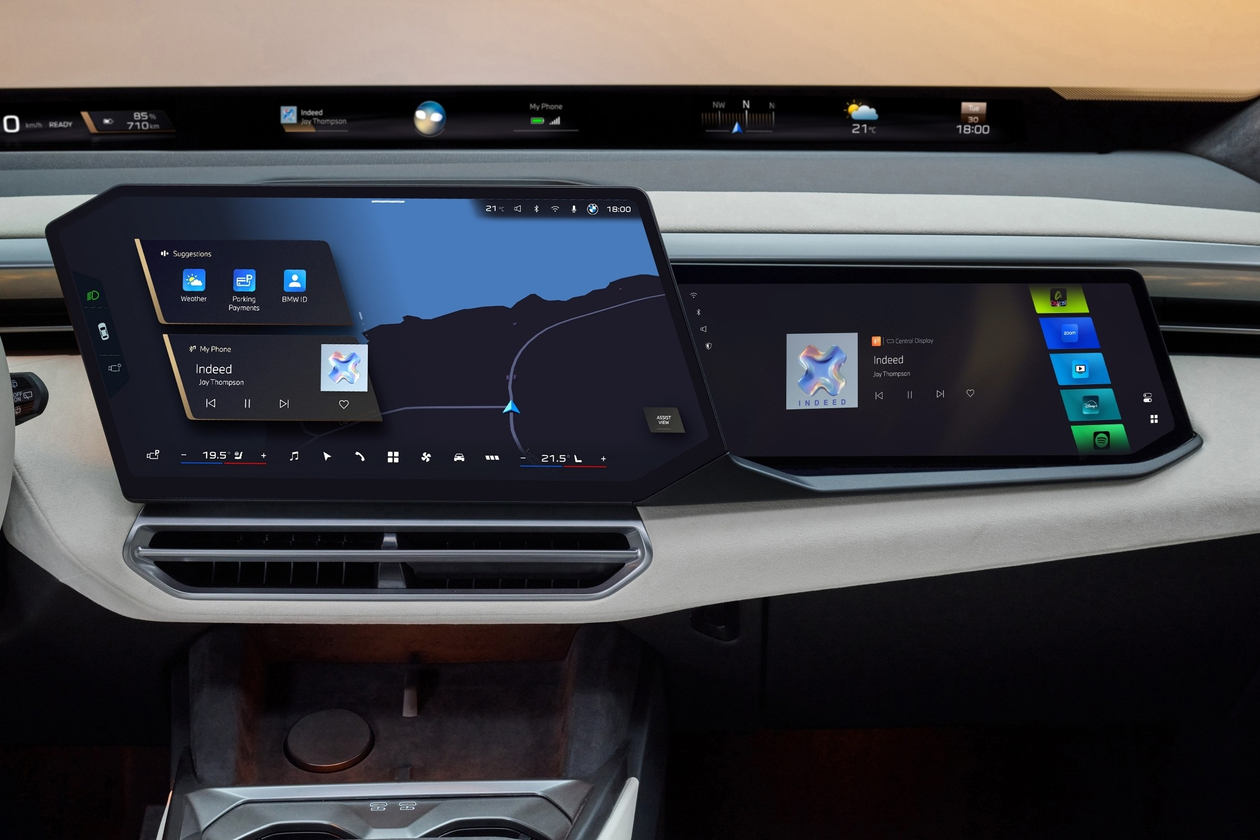
- Central Display: A floating 17.9-inch touchscreen utilizing a free-cut design and matrix backlighting. It features a revised menu structure that lets users drag and drop widgets directly onto the wider Panoramic Vision screen.
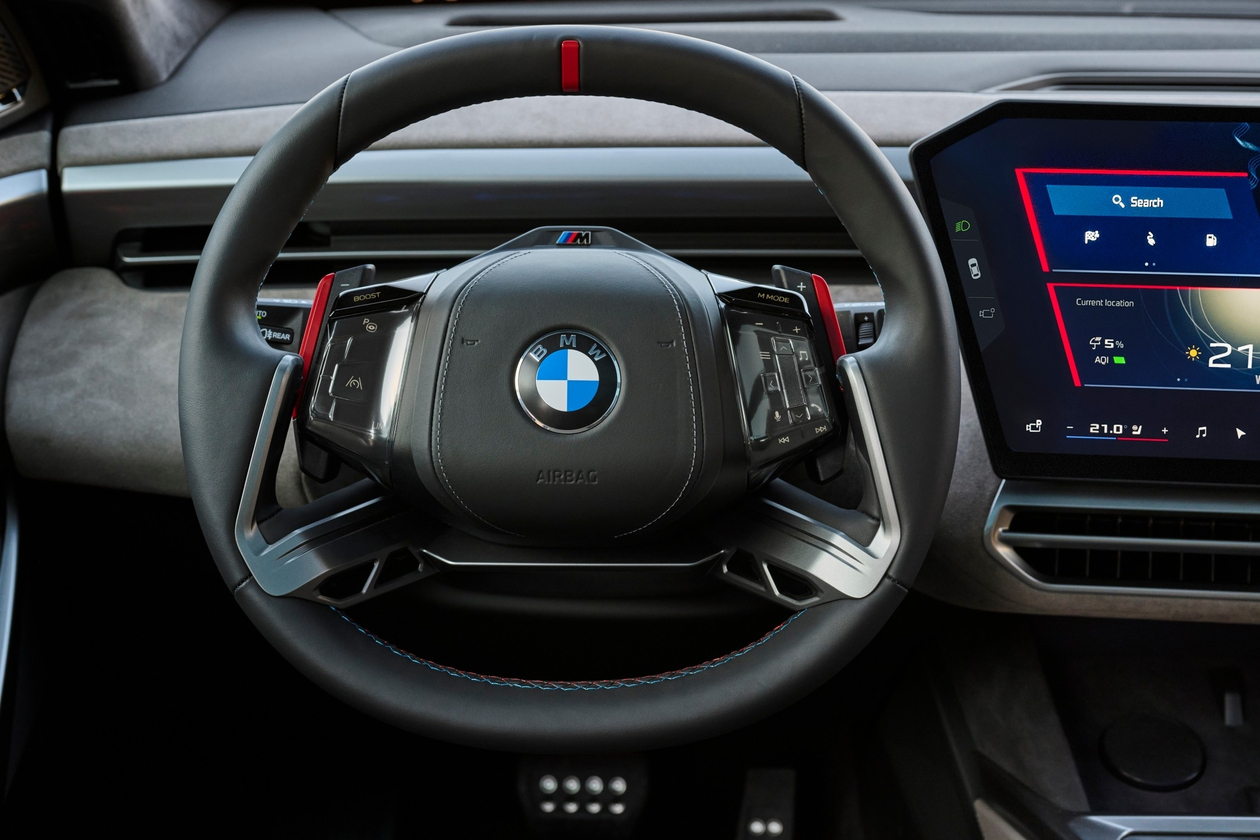
Physical switches are largely replaced by a self-supporting multifunction steering wheel with thumb-accessible touch pads providing haptic feedback. Natural speech commands are driven by an updated BMW Intelligent Personal Assistant, which now embeds Amazon’s Alexa Large Language Model (LLM) generative AI technology to handle contextual, multi-turn dialogues and custom automation routines.
Front passengers can specify an optional 14.6-inch Full-HD Passenger Screen for independent media streaming and video conferencing. An interior safety camera monitors driver eye movement, automatically dimming the passenger screen if distraction is detected.
Materials and Amenities
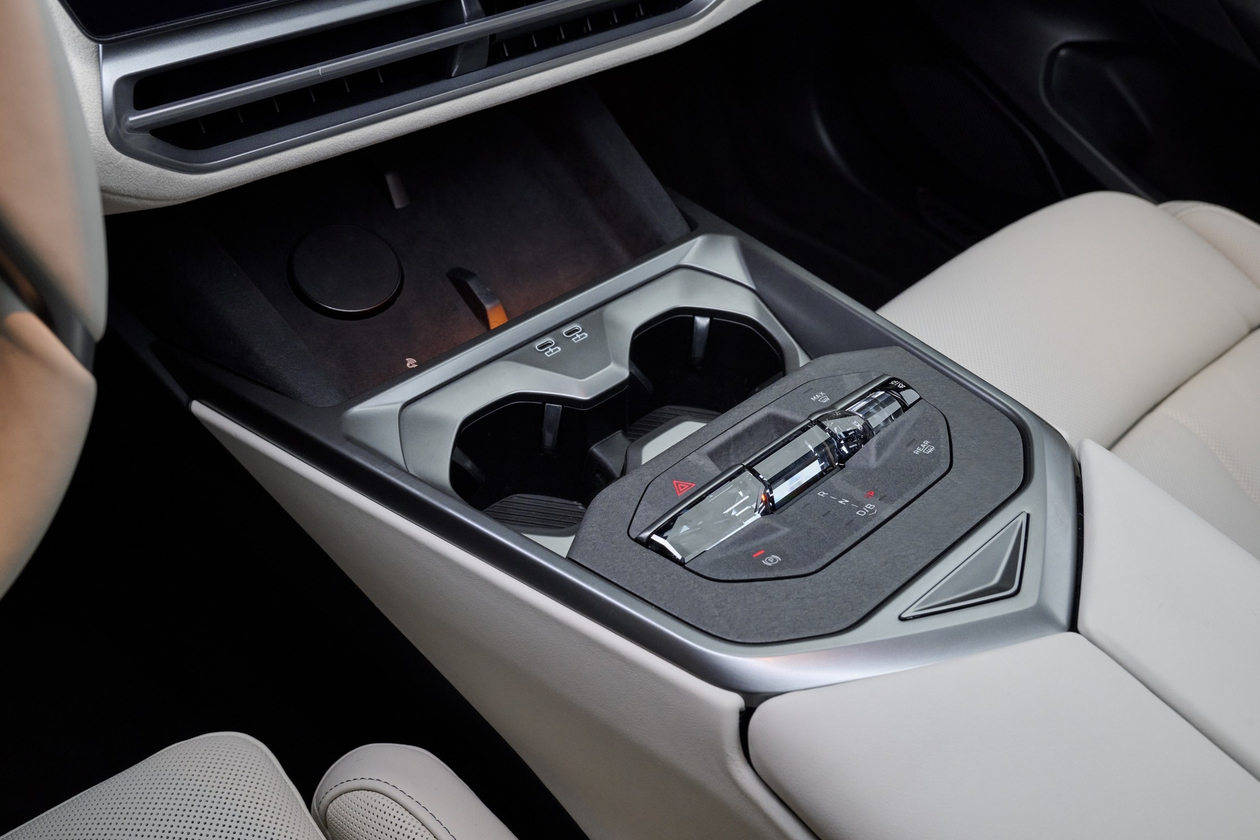
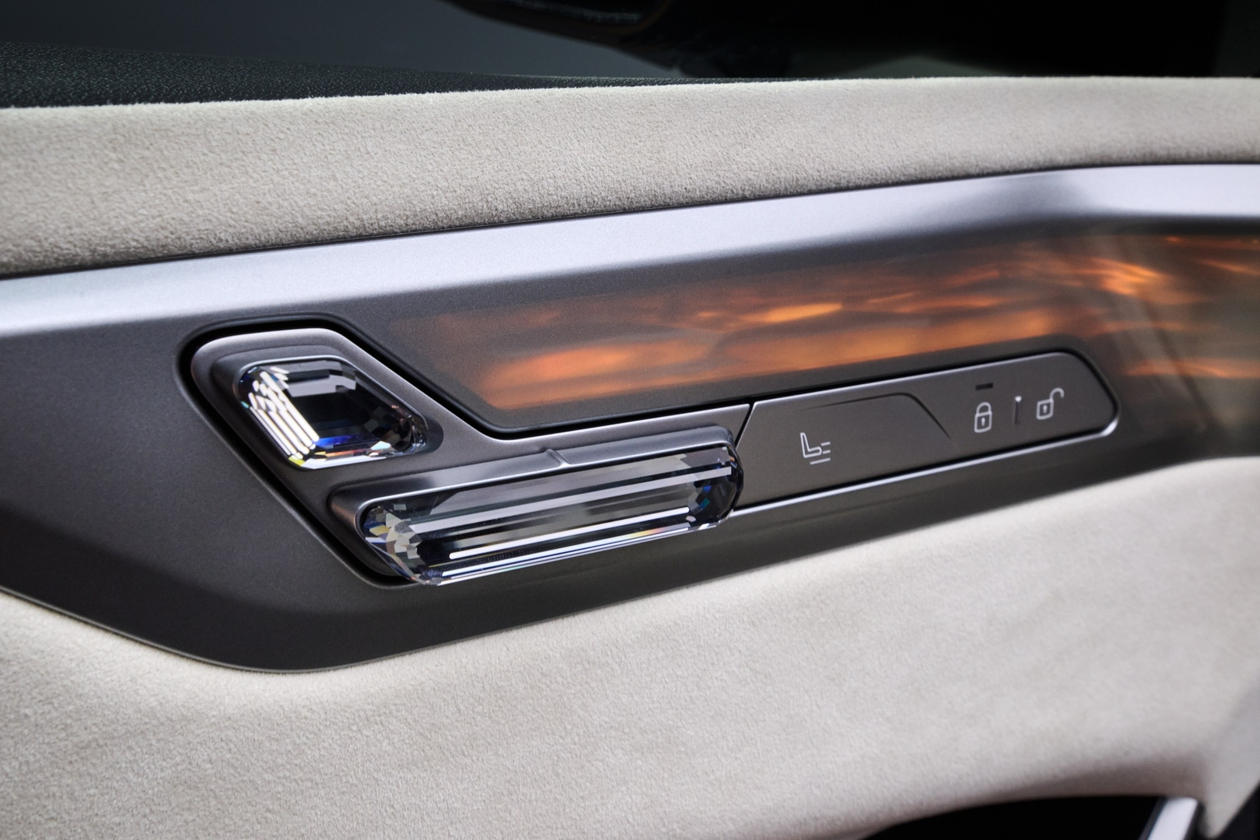
The dashboard can be specified with a "Clear & Bold" application, which uses an innovative production process to apply a thin layer of genuine slate rock across decorative interior trim panels and functional center console capacitive switches. The physical gear selector, volume roller, and seat adjustment controllers are crafted from real crystal glass.
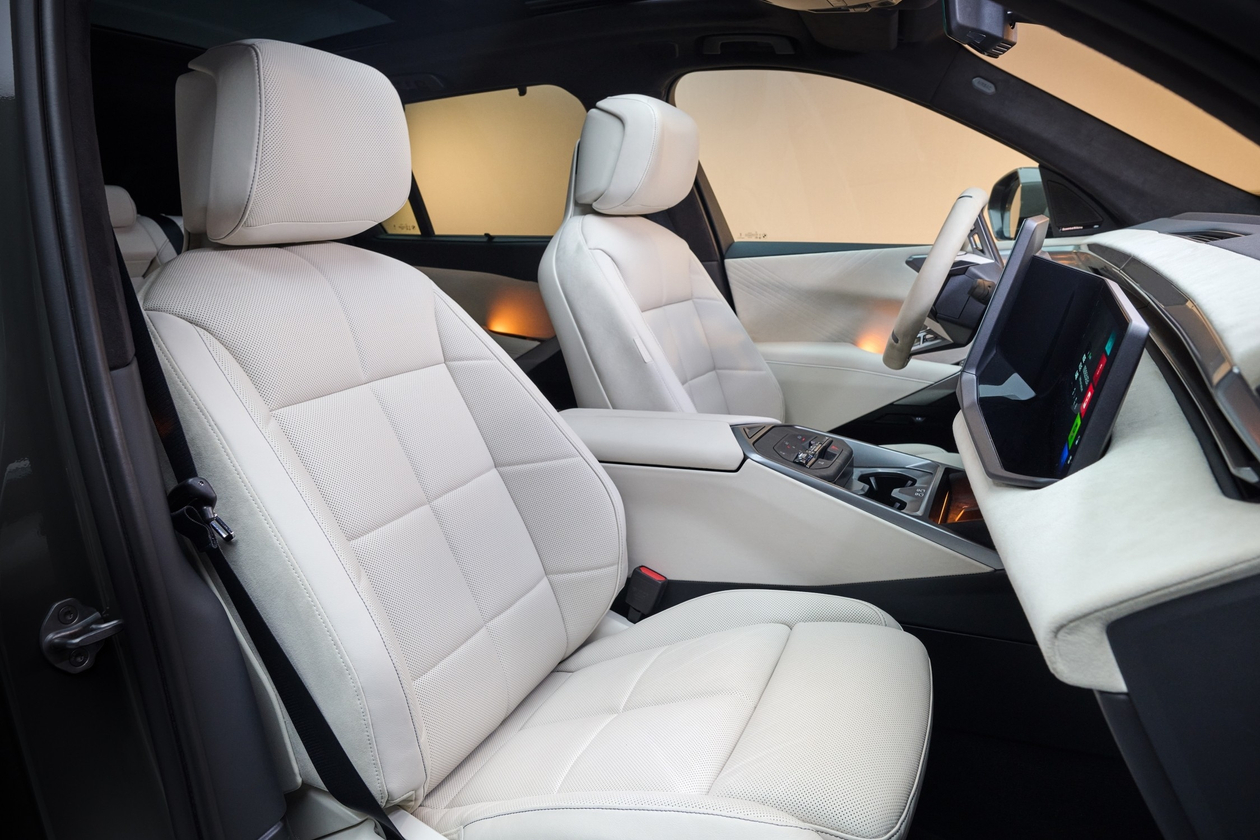
A standard 2.6-square-meter dual-pane panoramic glass sunroof sits above redesigned sports seats wrapped in leather-like Veganza material, featuring full electric adjustment and lumbar control. Upgraded multifunction seats add cooling vents and a smoother, quieter pneumatic massage system.
High-end configurations open up access to BMW Individual Merino leather trims paired with Alcantara headliners. Acoustic entertainment is driven by a standard 280-watt 12-speaker audio system, upgradeable to a 775-watt 18-speaker Bowers & Wilkins Surround Sound System with native Dolby Atmos three-dimensional audio processing.
Chassis Engineering
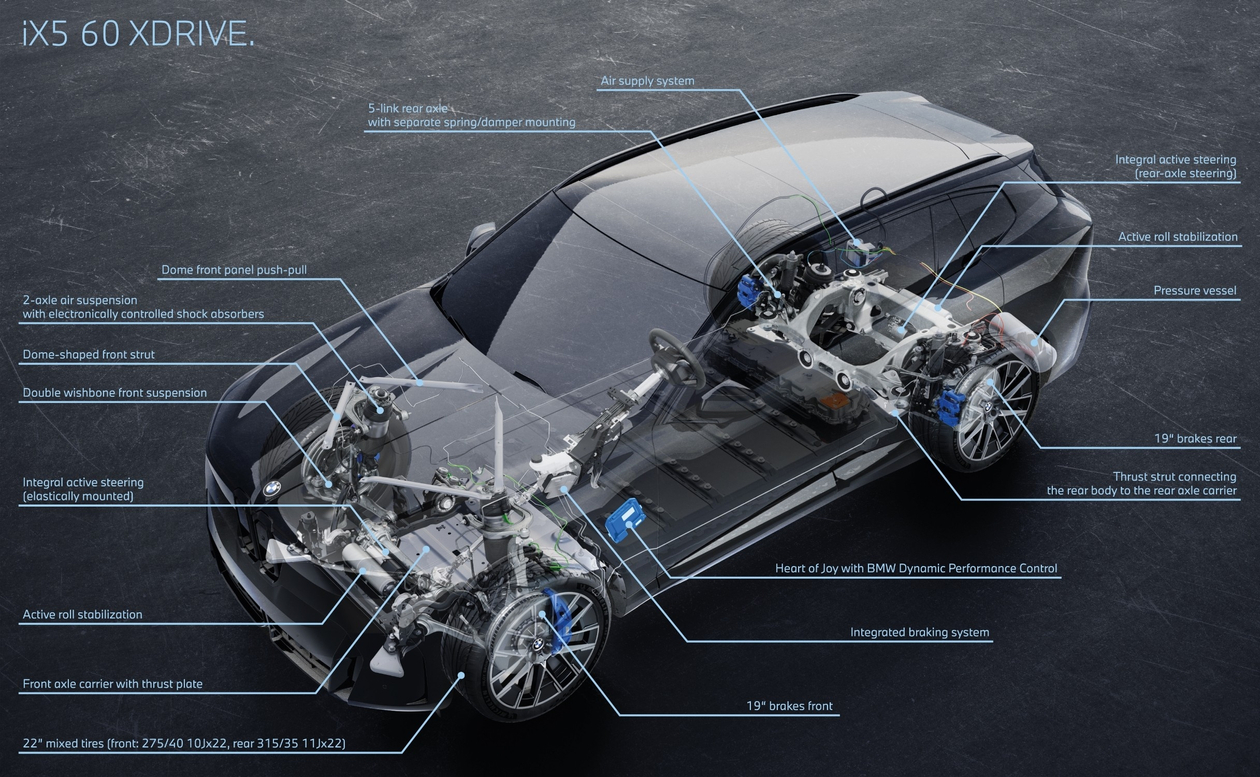
Handling is anchored by a double-wishbone front axle, a five-link rear axle, wider tracks, and a stiffened body shell. Standard equipment includes adaptive dampers with independent wheel regulation.
Optional chassis packages step up capabilities:
- Adaptive Chassis Control: Adds self-levelling two-axle air suspension. It can raise ground clearance by 20 mm for off-road obstacles or lower the vehicle by 40 mm when parked to aid loading. At speeds above 140 km/h, it automatically drops the ride height by up to 20 mm to lower aerodynamic drag. This package bundles Integral Active Steering, which turns the rear wheels by up to 3.2 degrees to reduce the turning circle by 0.8 meters.
- Adaptive Chassis Control Professional: Available on all BEV and PHEV variants, this setup links the air suspension with active roll stabilization. It utilizes independent 48V electric motors split across both axles to counteract body lean during aggressive cornering, while an Active Roll Comfort program can automatically adjust independent wheel heights over bumps to minimize head toss when driving in a straight line.
Safety and Automated Assistance
The automated driving architecture relies on upgraded sensor suites and a centralized algorithmic processing hub.
Level 2 Driver Assistance
The X5 incorporates premium SAE Level 2 automated driving functions governed by a unified processing stack. Standard configurations feature Driving Assistant Plus to manage adaptive cruise control, lane-keeping guidance, and automated speed adjustments for curves or roundabouts.
Upgrading to the Motorway and City Assistant introduces comprehensive automated driving paths:
- Motorway Assistant: Enables sustained hands-free highway driving up to 130 km/h across supported regions. Lane changes are fully automated and initiated simply by the driver looking into the corresponding side mirror to confirm the maneuver.
- City Assistant: Uses artificial intelligence and HD mapping data to guide the vehicle through complex urban environments. It provides steering and braking assistance through roundabouts, handles right-of-way filtering scenarios, and brings the car to a halt or pulls away smoothly at traffic light intersections.
- BMW Symbiotic Drive: Ensures the active Level 2 systems work in parallel with human inputs. Drivers can override the steering, throttle, or brakes at any moment to alter path trajectories without completely shutting down or deactivating the primary driving assistance software.
- BMW Soft-Stop: Exclusive to the iX5 and iX5 Hydrogen models, this system coordinates the braking stack and electric motors to deliver perfectly smooth, jerk-free stops by using regenerative braking down to zero km/h without engaging friction pads or creating brake noise.
Active Safety and Parking
Standard preventative functions feature a Lane Keeping Assistant with active steering return, automatic evasive steering within the lane, side collision warnings, cross-traffic alerts, and an exit warning delay that halts door opening if cyclists are approaching. The standard Emergency Brake Assistant includes front collision mitigation calibrated to react to wildlife hazards.
Parking tasks use the standard Parking Assistant Plus, which can automatically identify stalls and park the vehicle while providing a 360-degree camera feed with 3D, curb, and automated car-wash viewpoints. It includes a Manoeuvre Assistant that can record and autonomously replicate complex paths up to 200 meters. The optional Parking Assistant Professional adds remote parking control from up to six meters away via a smartphone app.

 Those shopping for a premium SUV should seriously consider the Volvo XC60 - one of the most established and well-known models
Here's what you need to know about Volvo's long-standing XC60. 7 hours ago
Those shopping for a premium SUV should seriously consider the Volvo XC60 - one of the most established and well-known models
Here's what you need to know about Volvo's long-standing XC60. 7 hours ago  For RM 171k, you get a made-in-Japan Mazda CX5. Worth it? #mazda #cx5 #mazdamalaysia 11 hours ago
  Made in Japan dari harga RM 171k?? Semestinya Mazda CX5 terbaru! #mazda #cx5 #mazdamalaysia 12 hours ago
  Proton


