Honda released its latest annual integrated report, Honda Report 2026, on 9 October 2026, setting out the challenges facing its automotive business and how it plans to respond.
The report takes a close look at Honda's revised electric vehicle (EV) strategy, its growing emphasis on hybrid technology and the changes being made across its operations. It also outlines how the company intends to put customers back at the centre of its business.
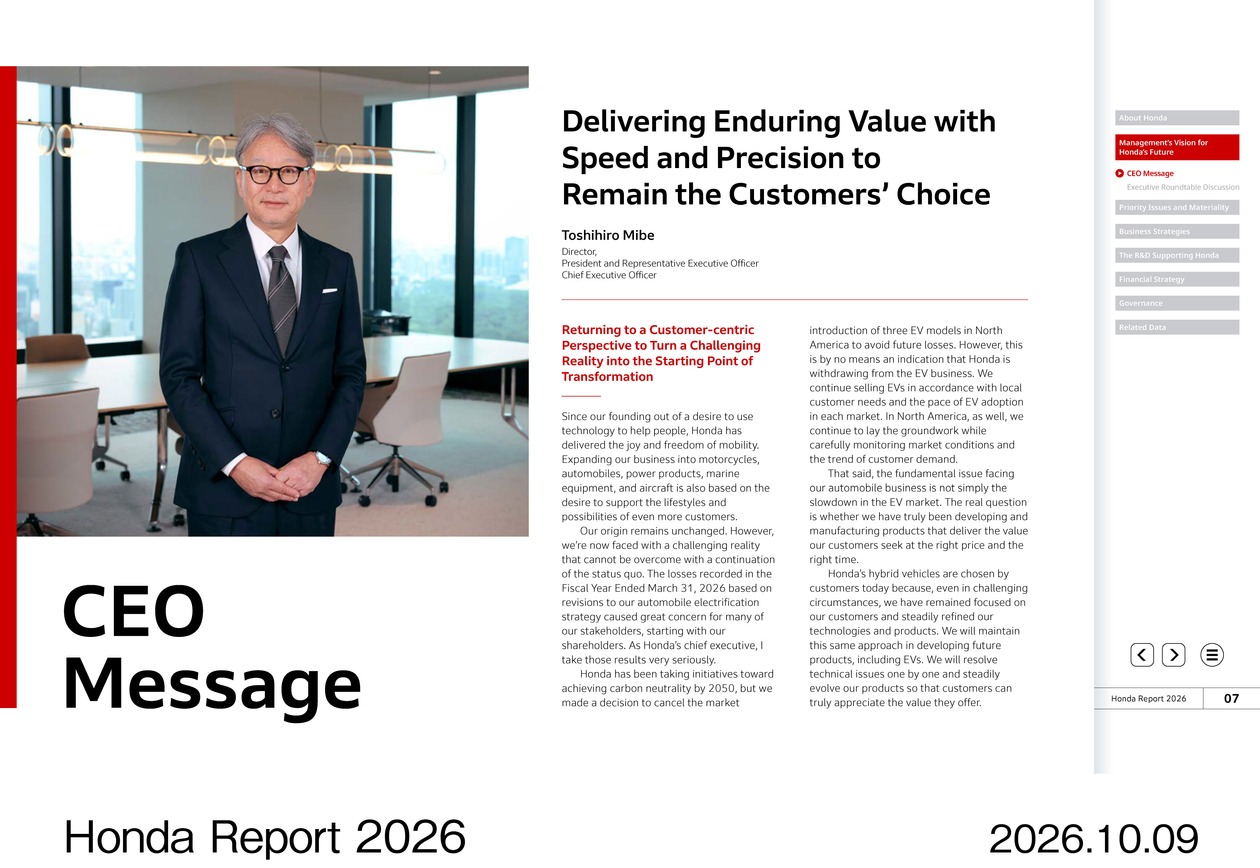
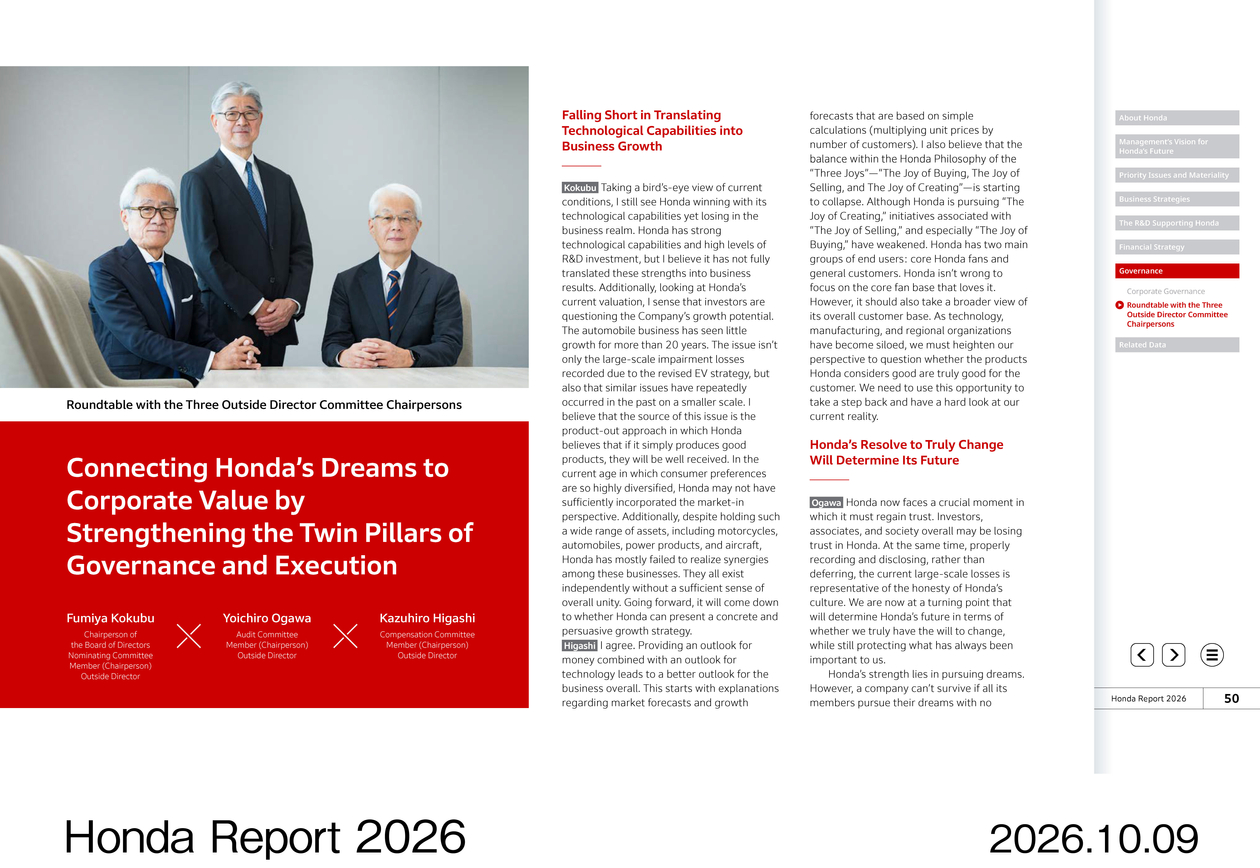
Honda acknowledged the financial impact of its revised EV strategy in the financial year ended March 2026. The decision to reassess its electrification plans led to the cancellation of certain EV projects in North America, with the automotive business recording an operating loss of JPY 414.3 billion and a net loss of JPY 423.9 billion.
Honda CEO Toshihiro Mibe accepted responsibility for the results and the decisions behind them.
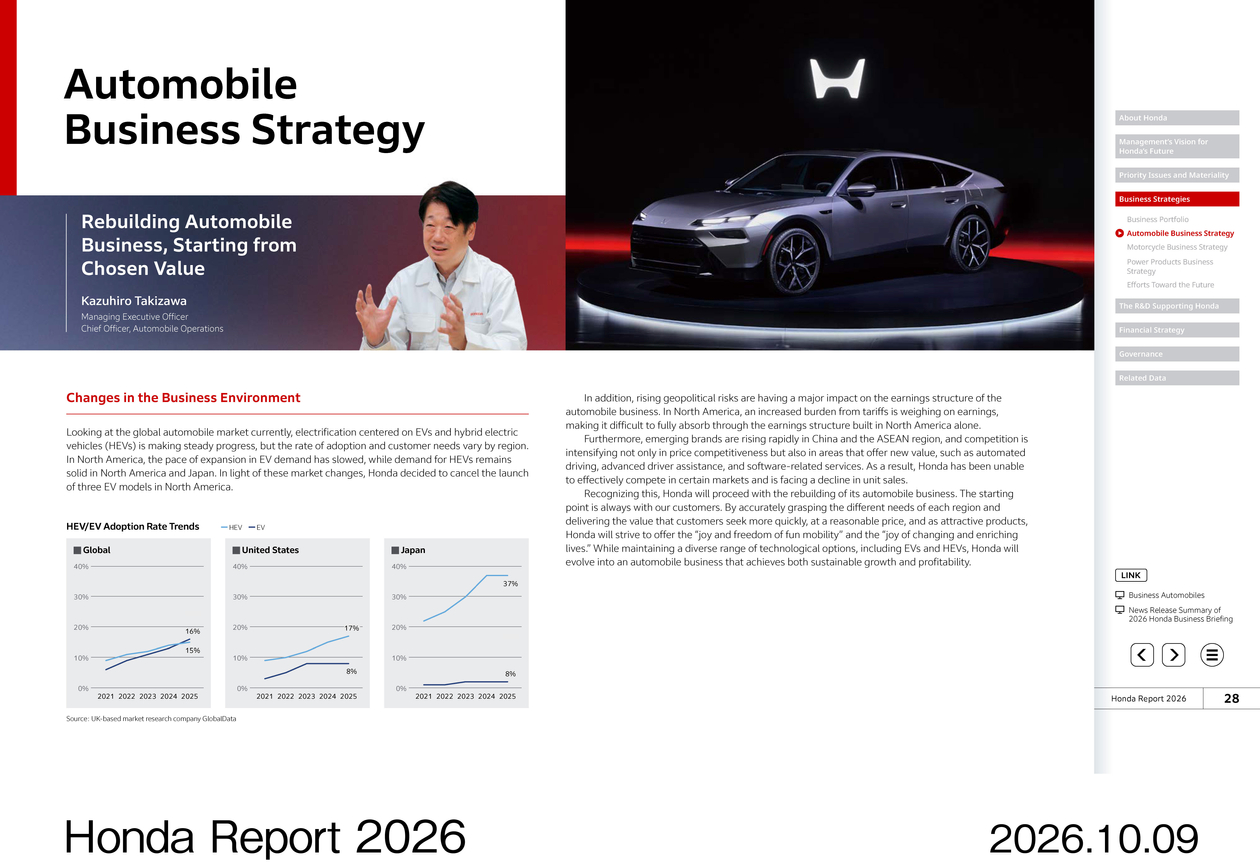
Honda is not abandoning EVs or its longer-term carbon neutrality goals. However, with demand for hybrid electric vehicles (HEVs) remaining strong in markets such as North America and Japan, the company is shifting more resources towards its next-generation e:HEV technology.
The new system is designed to deliver stronger performance and better fuel efficiency. Honda is also introducing its S+ Shift technology, which simulates gear changes to give drivers a more engaging experience, despite the absence of a conventional stepped transmission.
By 2030, Honda plans to introduce 15 new hybrid models globally. It is also developing a new V6 hybrid system for flagship models in major markets, including North America.
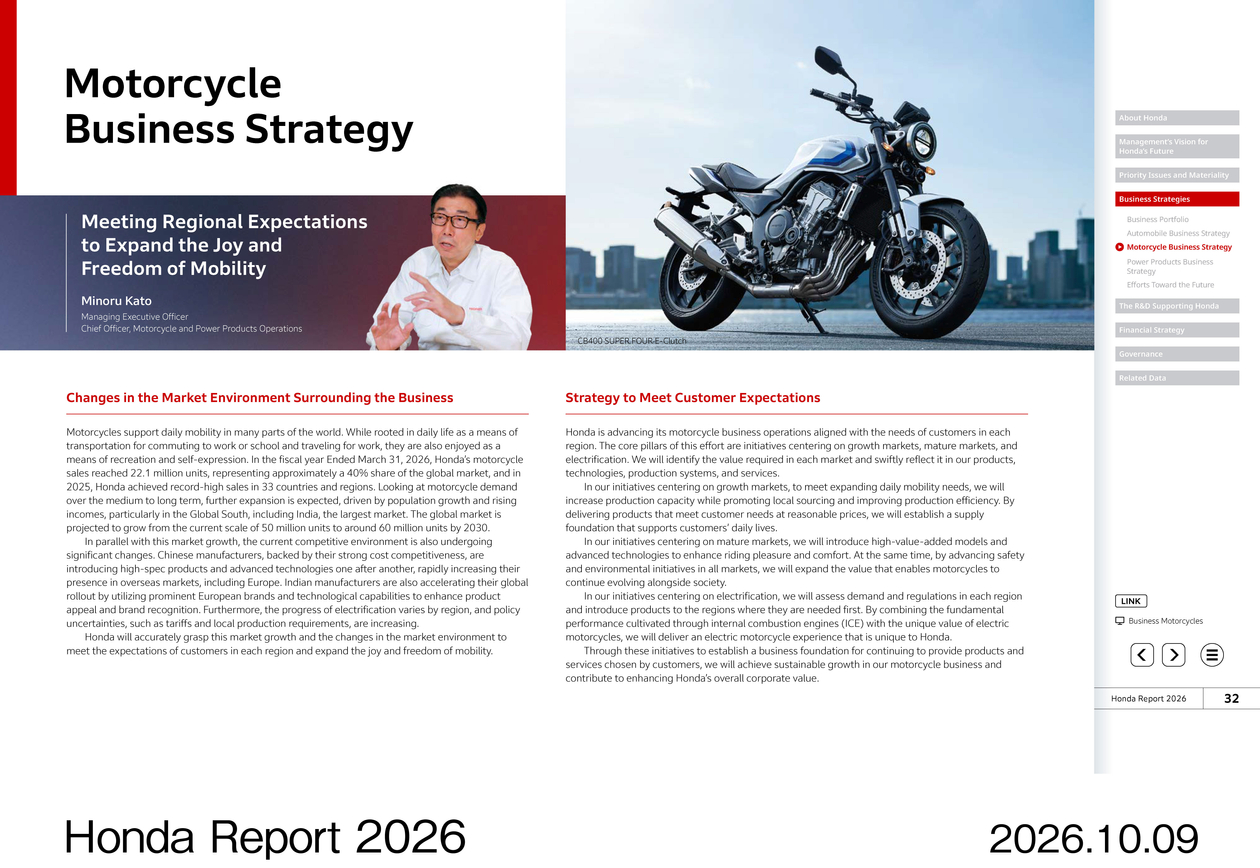
While Honda's automotive business faces challenges, its motorcycle operations continue to deliver strong sales.
Honda sold approximately 22.1 million motorcycles worldwide in the latest financial year, accounting for around 40% of the global market. The company also recorded its highest-ever motorcycle sales in 33 countries and regions.
Demand in growing markets such as India and Southeast Asia remains an important part of Honda's motorcycle business.
Alongside its established petrol-powered models, Honda is expanding its electric motorcycle range, including models such as the UC3 and QC3. The company is also introducing new electric motorcycle branding as it develops products for different markets and riding needs.
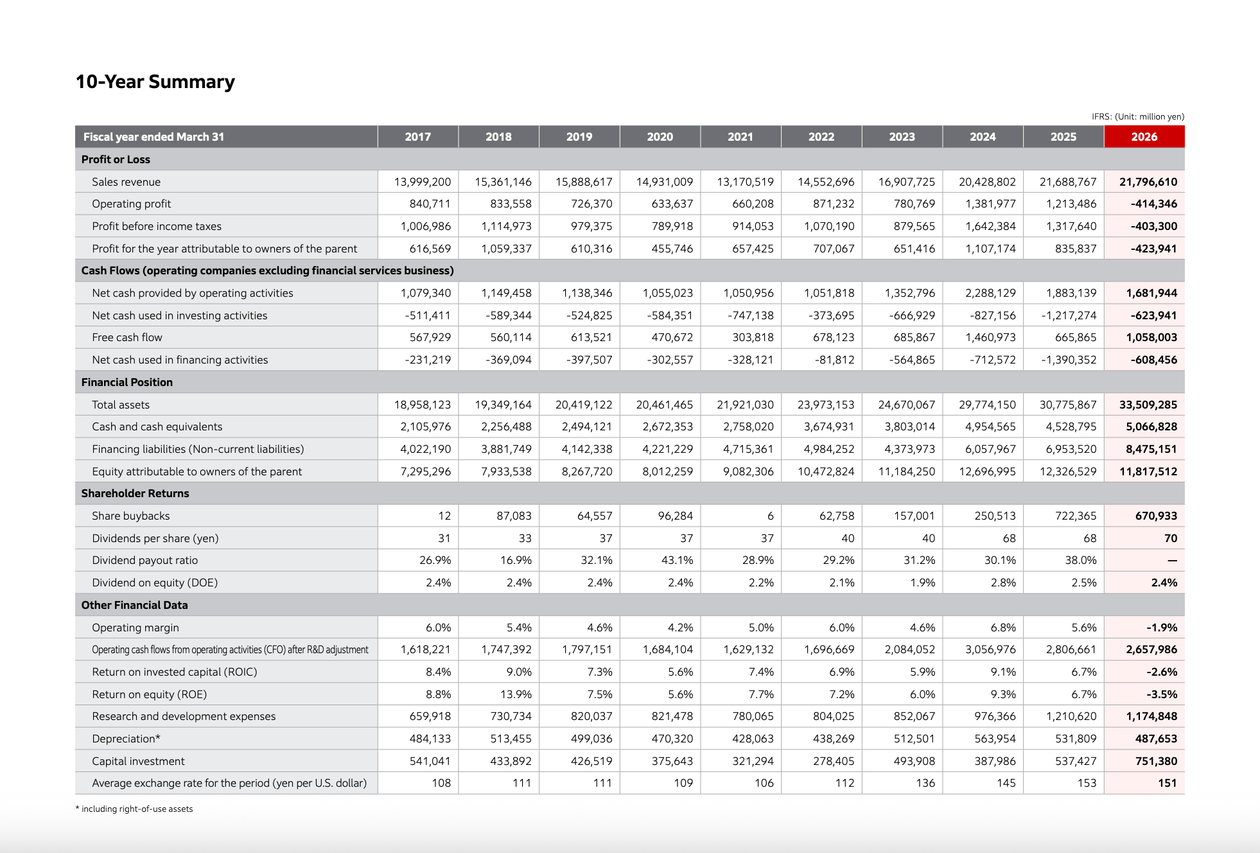
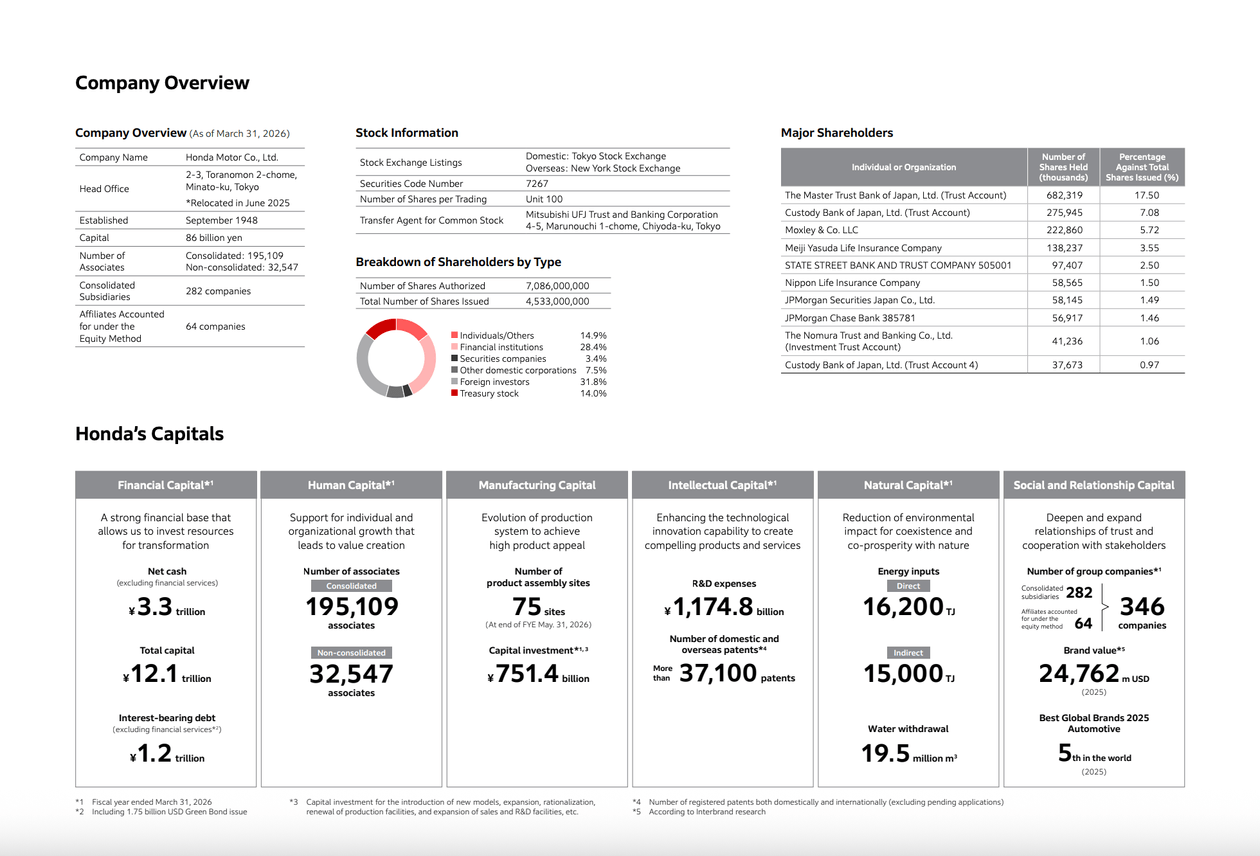
Honda's financial figures over the past decade provide some context for its current restructuring plans.
Annual revenue rose from JPY 13.99 trillion in the 2017 financial year to JPY 21.79 trillion in the latest reporting period, reflecting the scale of its global operations.
Despite the losses associated with its revised EV strategy, Honda continues to generate substantial cash from its operations. Excluding its financial services business, annual operating cash flow has generally remained above JPY 1 trillion, reaching JPY 1.68 trillion in the 2026 financial year.
Free cash flow stood at JPY 1.05 trillion, while Honda held a net cash balance of JPY 3.3 trillion as of the end of March 2026. These funds give the company financial flexibility as it restructures its automotive operations and invests in future products.
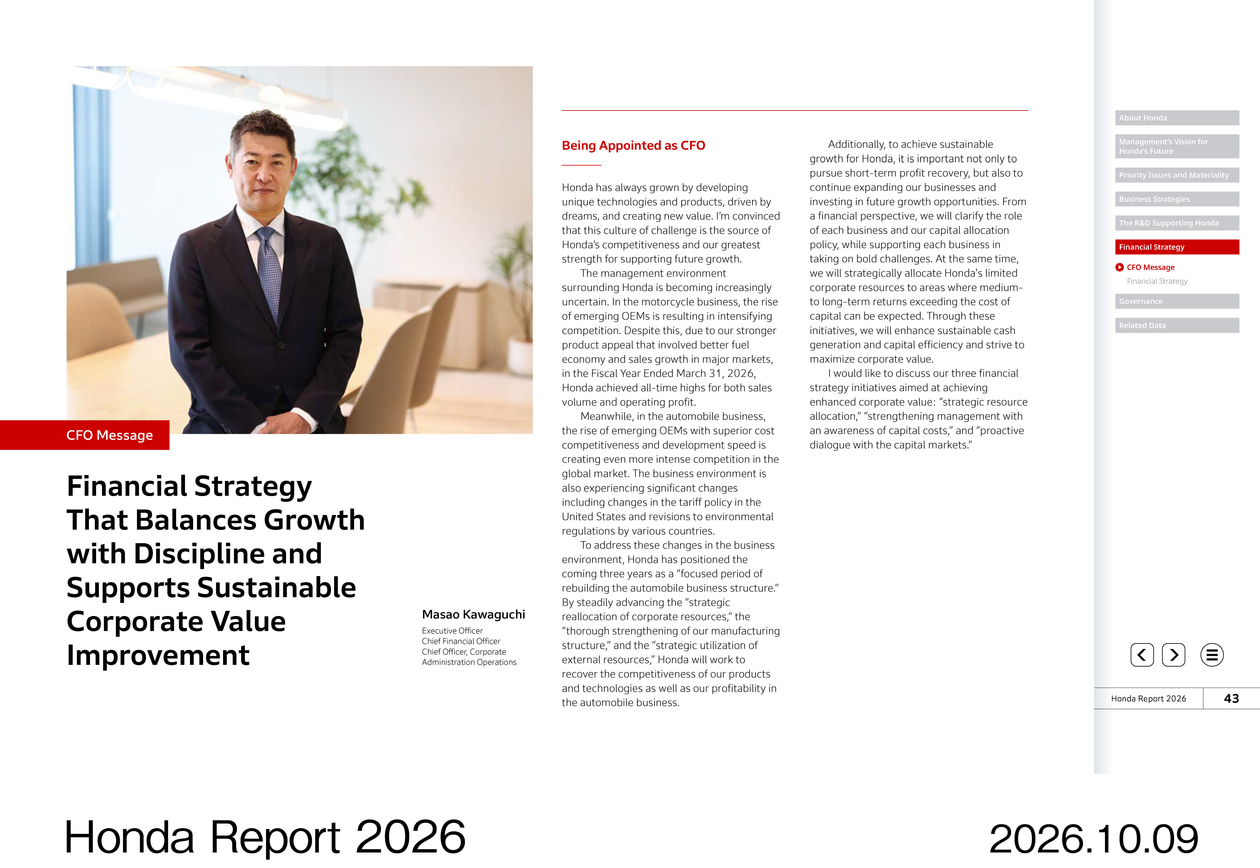
Research and development spending has also increased significantly, from JPY 659.9 billion a decade ago to JPY 1.17 trillion in the 2026 financial year. Honda continues to invest in electrification, connected vehicle technology and next-generation mobility.
The company has maintained its focus on shareholder returns. Its dividend per share increased from an adjusted JPY 31 in the 2017 financial year to JPY 70 in the latest period.
Honda also carried out share buybacks worth JPY 704.6 billion and JPY 668 billion in the 2025 and 2026 financial years respectively.
Honda is also changing how it develops and manufactures its products. Under its Triple Half initiative, the company aims to halve development costs, development time and the amount of work required.
AI is expected to play a greater role in achieving those targets. Honda is using generative AI tools, including its in-house Engineering Support System (ESS) and GITEN platform, to help engineers analyse patents and market requirements more efficiently.
The aim is to reduce time spent on repetitive processes and speed up the development of new vehicles and technologies.
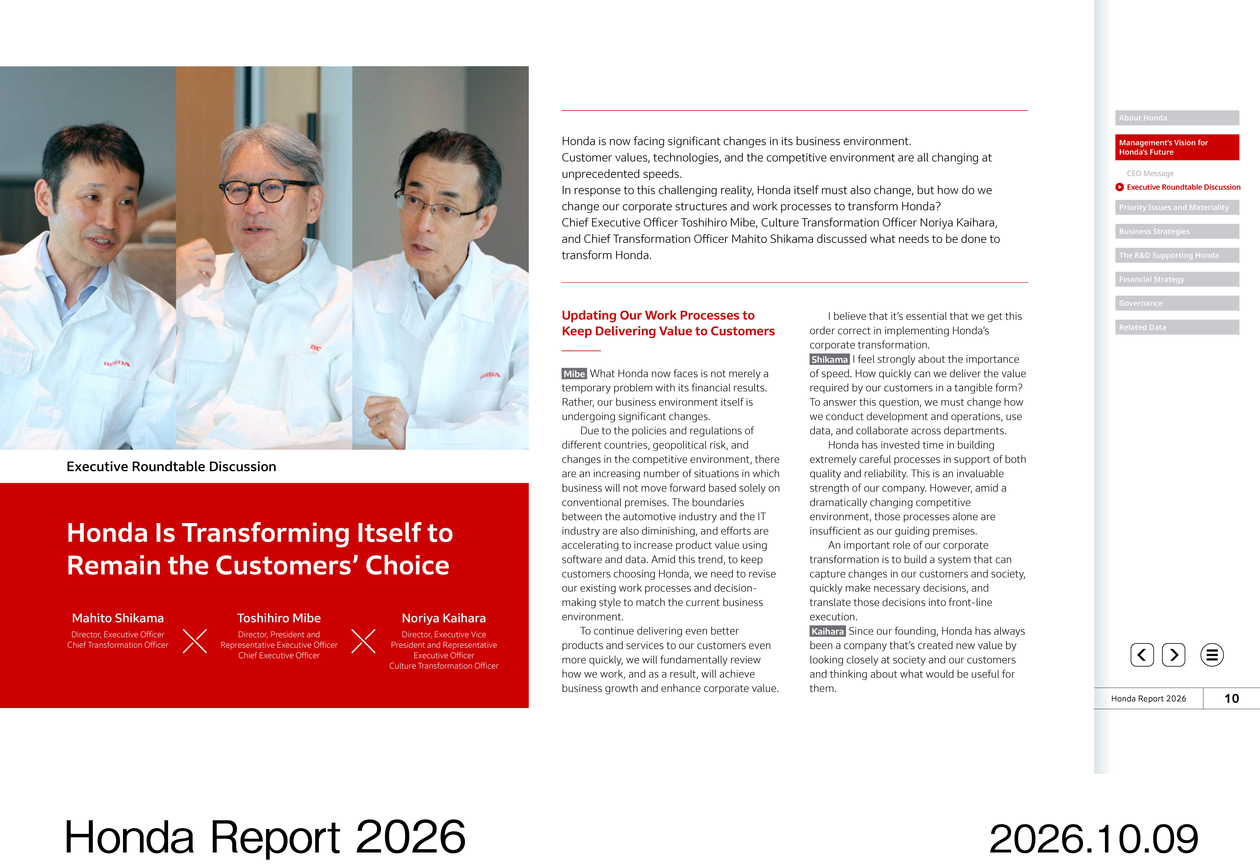
Despite the changes to its automotive strategy, Honda says its founding philosophy remains unchanged: using technology to improve people's lives and contribute to society.
The company continues to pursue a wide range of mobility technologies beyond cars and motorcycles, including HondaJet aircraft, electric vertical take-off and landing (eVTOL) vehicles, rockets and robotics.
Honda sees these businesses as part of its broader identity as a mobility company, with activities spanning land, sea, air and space.
For Honda, the immediate challenge is to restore profitability in its automotive business while continuing to invest in the technologies it believes will shape its future.

Your go-to source for all things automotive in Malaysia. 🚗 Latest reviews, breaking news, launches & industry trends.
+ Follow There's a new Wey G9 in town, and it doesn't need ANY charging.
Yes, we're referring to the new GWM Wey G9 HEV, and we're comparing the two models in our write-up below: 1 minute ago
 Turbo Hybrid confirmed!
Kia Malaysia has teased the upcoming 2027 Kia Sportage facelift with the turbo hybrid powertrain.
#kia #KiaSportage 1 minute ago
 BYD has opened a new showroom in Rawang, expanding its Klang Valley presence with a space that brings EV shopping and local creativity together.
Operated by BE Autohaus, BYD Rawang features room for up to five cars, a customer lounge and a dedicated delivery area. It will also host rotating exhibitions for emerging local artists, who keep 100% of proceeds from their artwork sales.
The opening celebration runs until 30 October 2026, with test drives, selected launch offers and lucky-draw prizes available. 9 hours ago
Get the latest car news first!
Your go-to source for all things automotive in Malaysia. 🚗 Latest reviews, breaking news, launches & industry trends.
There's a new Wey G9 in town, and it doesn't need ANY charging.
Yes, we're referring to the new GWM Wey G9 HEV, and we're comparing the two models in our write-up below: 1 minute ago Turbo Hybrid confirmed!
Kia Malaysia has teased the upcoming 2027 Kia Sportage facelift with the turbo hybrid powertrain.
#kia #KiaSportage 1 minute ago BYD has opened a new showroom in Rawang, expanding its Klang Valley presence with a space that brings EV shopping and local creativity together.
Operated by BE Autohaus, BYD Rawang features room for up to five cars, a customer lounge and a dedicated delivery area. It will also host rotating exhibitions for emerging local artists, who keep 100% of proceeds from their artwork sales.
The opening celebration runs until 30 October 2026, with test drives, selected launch offers and lucky-draw prizes available. 9 hours ago 
© 2024 Bitauto.com. All Rights Reserved.
Bitauto (www.yiche.com and www.bitauto.com) is one of the most visited automotive websites in China. We provide detailed info on Chinese car brands available in your area. Please note that the information provided on this website is based on publicly available data and is for reference only. It may not be fully updated or accurate at all times.

Help us improve our website


