

HomeKia Seltos

Search History
Popular Searches
Dealer Login / Sign Up

喺馬來西亞嘅 SUV 市場,好多買家喺揀車嘅時候都會拿 Honda CR-V 同 Mazda CX-3 嚟做比較。這兩款車喺價位同定位上都好接近,今日我哋就從多個方面做一次詳細嘅比較,幫你節省做功課嘅時間。
Honda CR-V 喺馬來西亞嘅 OTR 售價係 RM 178,200 - 195,900,合共有 4 個版本,包括 2026 e:HEV 2.0L 2WD RS(RM 195,900)、2026 1.5T 4WD V(RM 181,900)、2026 e:HEV 2.0L 2WD E(RM 178,200) 等。
Mazda CX-3 喺馬來西亞嘅 OTR 售價係 RM 126,159 - 139,159,合共有 2 個版本,包括 2023 2.0L High(RM 139,159)、2023 2.0L Plus(RM 126,159) 等。
從價錢嚟睇,Mazda CX-3 嘅起步價比 Honda CR-V 平咗 RM 52,041。老實講,喺呢個價位段,幾千蚊嘅差距其實唔算大,關鍵都係睇整體嘅性價比同長期使用成本。

Honda CR-V 嘅安全評級係 5★ (ASEAN NCAP),主動安全系統包括 Honda SENSING (ACC, CMBS, LKAS, RDM)。
Mazda CX-3 嘅安全評級係 5★ (ASEAN NCAP),主動安全系統包括 i-Activsense。
兩款車嘅安全評級一樣,喺呢個級別入面安全配備都算畀到好齊全。而家嘅新車安全性都唔差,唔使太擔心這一點。

Honda CR-V 保修 5 年/無限制里程,保養間隔 每 10,000km 或 6 個月。
Mazda CX-3 保修 5 年/150,000km,保養間隔 每 10,000km 或 6 個月。

Honda CR-V 同 Mazda CX-3 都係馬來西亞市場嘅主流選擇,適合家庭使用、日常通勤。如果你更重視品牌口碑同二手價,可以優先考慮口碑更好嗰款;如果你更在意性價比同配備,就揀配置更豐富嗰款。最後都係建議兩款都去試駕,親身體驗先係最重要。

總括嚟講,Honda CR-V 同 Mazda CX-3 都係馬來西亞市場好唔錯嘅車型。揀邊一部,關鍵都要睇你嘅個人需求同預算。建議大家做好功課,多比較幾間車行之嘅報價,再去試駕做最終決定。買車係件大事,花啲時間做功課絕對唔會錯。


Dalam pasaran SUV Malaysia, ramai pembeli membandingkan Honda HR-V dan Subaru Forester apabila memilih kereta. Kedua-dua kereta ini sangat hampir dari segi harga dan posisi. Hari ini, kami akan membuat perbandingan terperinci dari pelbagai aspek untuk membantu anda menjimatkan masa menyiapkan kajian.
Harga OTR Honda HR-V di Malaysia ialah RM 115,900 - 143,900, terdapat 4 varian, termasuk 2026 e:HEV 1.5L RS (RM 143,900), 2026 1.5T V (RM 137,900), 2026 1.5T E (RM 130,900) dan lain-lain.
Harga OTR Subaru Forester di Malaysia ialah RM 174,000 - 197,000, terdapat 3 varian, termasuk 2024 2.0L S EyeSight GT Edition (RM 189,538), 2024 2.0L S EyeSight (RM 177,538), 2024 2.0L L EyeSight (RM 167,538) dan lain-lain.
Dari segi harga, harga permulaan Honda HR-V memang lebih murah RM 58,100 berbanding Subaru Forester. Jika bajet anda terhad, versi permulaan Honda sudah cukup memenuhi keperluan harian. Tetapi perlu diingat, berapapun perbezaan harganya, mungkin ada kompromi dari segi kelengkapan, bergantung pada keperluan anda.

Honda HR-V dilengkapi enjin 1.5L Turbo, kuasa kuda 140 hp. Keran bahan api rasmi 7.0 L/100km.
Subaru Forester dilengkapi enjin 2.0L 4-silinder, kuasa kuda 170 hp. Keran bahan api rasmi 8.0 L/100km.
Dari segi kuasa, 2.0L 4-silinder Subaru Forester mempunyai 30 kuasa kuda lebih berbanding 1.5L Turbo Honda HR-V. Namun untuk memandu sehari-hari di bandar, kuasa kedua-dua kereta ini cukup dan tidak akan terasa kurang.

Pengelasan keselamatan Honda HR-V ialah 5★ (ASEAN NCAP), sistem keselamatan aktif termasuk Honda SENSING (ACC, CMBS, LKAS, RDM).
Pengelasan keselamatan Subaru Forester ialah 5★ (Euro NCAP), sistem keselamatan aktif termasuk EyeSight.
Dari segi kelengkapan keselamatan, kedua-dua kereta mendapat pengelasan yang baik. Namun Honda SENSING (ACC, CMBS, LKAS, RDM) pada Honda HR-V dan EyeSight pada Subaru Forester mempunyai perbezaan dari segi fungsi. Jika anda mengambil berat tentang keselamatan aktif, anda boleh bandingkan senarai fungsi kedua-duanya dengan teliti.

Honda HR-V jaminan 5 tahun/jarak tanpa had, selang penyelenggaraan setiap 10,000km atau 6 bulan.
Subaru Forester jaminan 3 tahun/100,000km, selang penyelenggaraan setiap 10,000km atau 6 bulan.

Honda HR-V dan Subaru Forester adalah pilihan utama di pasaran Malaysia, sesuai untuk kegunaan keluarga dan perjalanan harian. Jika anda lebih mengutamakan nama jenama dan harga jualan semula, pilih yang mempunyai reputasi lebih baik; jika anda lebih mementingkan nilai dan kelengkapan, pilih yang mempunyai konfigurasi lebih lengkap. Pada akhirnya, disyorkan untuk memandu kedua-duanya, pengalaman sendiri adalah yang paling penting.
Secara keseluruhannya, Honda HR-V dan Subaru Forester adalah model kereta yang sangat bagus di pasaran Malaysia. Pilihan bergantung pada keperluan dan bajet peribadi anda. Disyorkan untuk membuat kajian, bandingkan beberapa tawaran dari dealer kereta, kemudian uji drive untuk membuat keputusan akhir. Membeli kereta adalah perkara besar, menghabiskan masa membuat kajian tidak akan salah.


喺馬來西亞嘅 SUV 市場,好多買家揀車嗰陣都會將本田 CR-V 同豐田 Yaris Cross 黎比較。呢兩款車喺價位同定位上都好相近,今日我哋就從多個方面做一個詳細比較,幫你省返做功課嘅時間。
本田 CR-V 喺馬來西亞嘅 OTR 售價係 RM 178,200 - 195,900,合共 4 個版本,包括 2026 e:HEV 2.0L 2WD RS(RM 195,900)、2026 1.5T 4WD V(RM 181,900)、2026 e:HEV 2.0L 2WD E(RM 178,200) 等。
豐田 Yaris Cross 喺馬來西亞嘅 OTR 售價係 RM 99,900 - 109,900,合共 2 個版本,包括 2026 1.5L Standard(RM 99,900)、2026 HEV 1.5L Standard(RM 109,900) 等。
由價錢睇,豐田 Yaris Cross 嘅起步價比本田 CR-V 平咗 RM 78,300。老實講,喺呢個價位段,幾千蚊嘅差距其實唔算大,關鍵始終睇整體嘅性價比同長期使用成本。
本田 CR-V 配備 2.0L 4-cyl,馬力 170 hp。官方油耗 8.0 L/100km。
豐田 Yaris Cross 配備 1.5L 4-cyl,馬力 105 hp。官方油耗 6.0 L/100km。
動力方面,本田 CR-V 嘅 2.0L 4-cyl 比豐田 Yaris Cross 嘅 1.5L 4-cyl 多咗 65 匹馬力,中段加速更有信心,尤其係跑高速公路超車嗰陣。不過豐田 Yaris Cross 嘅油耗可能更抵用,日常市區通勤差別唔會太大。
本田 CR-V 嘅安全評級係 5★ (ASEAN NCAP),主動安全系統包括本田 SENSING (ACC, CMBS, LKAS, RDM)。
豐田 Yaris Cross 嘅安全評級係 5★ (ASEAN NCAP),主動安全系統包括 TSS。
兩款車嘅安全評級一樣,喺呢個級別裡面安全配備都算給好齊全。而家嘅新車安全性都不差,唔使太擔心呢一點。
本田 CR-V 保修 5 年/無限制里程,保養間隔 每 10,000km 或 6 個月。
豐田 Yaris Cross 保修 5 年/無限制里程,保養間隔 每 10,000km 或 6 個月。
兩款車嘅保修條件一樣,呢方面唔使糾結。實際保養成本仲要睇品牌嘅服務網絡同零件價格,建議去車友群問問真實車主嘅經驗。

總體嚟講,本田 CR-V 同豐田 Yaris Cross 都係馬來西亞市場好唔錯嘅車型。揀邊一輛,關鍵始終睇你嘅個人需求同預算。建議大家做功課,多比較幾間車行嘅報價,先去試駕做最終決定。買車係件大事,花啲時間做功課絕對唔會錯。

The moment the press conference ended, people around started placing orders
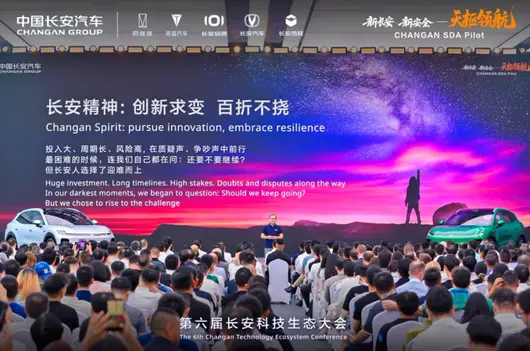
After Changan Auto released its Tianshu Pilot technology, Qiyuan Q06 simultaneously opened pre-sale orders, with a reservation price starting from 147,900 yuan. There are 7 pure electric versions and 2 extended-range versions, totaling 9 models.
Due to its strong performance in various aspects, it instantly switched to a high-volume order mode.
Where there is popularity, there are controversies. Someone asked an interesting question: Is this car the Changan version of the Xiaomi YU7?
This plainly reflects the questioning many new cars faced in the past year: Does Car A look like Car B? Is it a rushed product?
This is also the reason why Changan released the Tianshu Pilot technology before the Qiyuan Q06 pre-sale.
The strongest trump card of Qiyuan Q06 is three words — Full Self-Development. Tianshu Pilot, Tianshu Cockpit, Tianshu Chassis, three major "Tian Series" technologies gathered on one car for the first time, all developed by Changan from the ground up, representing a total release of Changan Auto's over a decade of intelligent accumulation.
In this issue, we will use four I Ching hexagrams, with Qiyuan Q06 as a product case, to excavate Changan Auto's core competitiveness in the Chinese and global markets.

Qian Hexagram: Single-segment End-to-End, Grasping the Core of Intelligent Driving
Qiyuan Q06 debuts with Tianshu Pilot Ultra, the first single-segment end-to-end intelligent driving system self-developed by a central state-owned enterprise.
What is a single-segment end-to-end? It's not engineers writing rules line by line, but the system watching over 20 million real driving videos and learning how to drive itself. Lane changes are smooth, cornering is stable, acceleration and deceleration are like an experienced driver, because it learned from real humans how to drive.
The hardware specs are tough too: 560 TOPS computing chip, 256-line LiDAR, LiDAR standard on all trims. In low light, backlight, rain, or fog, the machine sees clearer than humans. Achieving "identification earlier than humans" relies on 10Hz high-frequency inference and active LiDAR detection, so even in bad weather, it's not panic.
In terms of features, Highway NCA and City NCA are fully connected, usable from city areas to highways. Over 400 parking scenarios, including narrow spots, dead-end roads, diagonal spots, all handled in one move. 31 active safety functions monitor throughout, the system reacts before humans in emergency situations.
The most amazing is Interactive Pilot. Users just say "Lane change overtake", "Turn right at next intersection", the system understands instantly, also responds to continuous composite commands. Not making people adapt to the car, but the car adapts to people.
Why can these be done? It's the accumulation of full self-development technology. Not bought black boxes, not supplier solutions. It was polished and researched night and day by Changan's 7500 engineers.
The Qian Hexagram says "Heaven moves vigorously, the gentleman strives unceasingly". If you cannot master core technology yourself, you will always be choked by others.

Kun Hexagram: 2940mm Wheelbase plus 800V Fast Charging, Good Cars Make People Feel Secure
No matter how strong the intelligent driving is, the car is ultimately for people to sit in. In this aspect, Qiyuan Q06 goes the extra mile.
Wheelbase 2940mm, longest in its class, space efficiency 91.7%. Exterior doesn't look bulky, interior is very spacious. Rear seatback 145-degree infinite electric adjustment, all seats feature ventilation, heating, and massage. 1.3 meters interior net height, 479mm pure flat corridor, three people in rear seats don't hit legs or shoulders squeezed, dubbed the "Comfort Rear Seat King", not an exaggeration.
In terms of cockpit comfort, 15.6-inch 2.5K HD entertainment screen, sky screen with electric sunshade, instantly becomes a mobile cinema. The "Light Rail Passing Through Building" style electric sunshade, operation feels particularly ceremonial, just swipe lightly to open.
The chassis uses Tianshu Chassis, front double wishbone rear multi-link, luxury car level configuration. Class debut dual-motor rear drive, plus torque vector control, left and right wheel torque independent output. Makes Qiyuan Q06 not slip in rain, not float at high speed, not drift in turns, stable to drive, comfortable to sit.
Range and recharging are equally important, 800V Silicon Carbide platform plus 6C fast charging, fastest "one kilometer per second", charge 5 minutes, range 200 km. CATL battery cells, pure electric 700 km, extended range combined 1600 km, whether city commute or long distance travel, range anxiety basically non-existent.
"The greatness of technology lies not only in being advanced but also in being popularized". Kun Hexagram says "Virtuousness carries all things". Vehicle design is sufficiently generous, large space, stable chassis, long range, so a family can travel safely without worry, enjoying pleasure.

Ji Ji Hexagram: Not a Rushed Car, 15 Years of Ultimate Polishing
Many brands making intelligent driving cars wish to launch dozens of models a year, "Honest Car Making" Changan Auto does not do this.
In 2009, Changan established an intelligent research department, at that time most people didn't know what intelligent driving was. After 15 years, the intelligent team grew from 0 to 7500 people, investment over 60 billion. The first L3 autonomous driving official license plate in the country was taken by Changan, the only national key laboratory focusing on intelligent vehicle safety technology in the country was built by Changan.
This mass production of Tianshu Pilot Ultra on board, behind it is over 400,000 virtual simulation scenario trainings, cumulative verified mileage about 1.45 billion km. Changan executives personally served as "drivers", driving Qiyuan Q06 across dozens of cities nationwide, elevated merging, narrow road pedestrian-vehicle mixed traffic, polishing scenario by scenario.
To ensure users drive worry-free, Changan Auto also specially designed "Tianshu Pilot Peace of Mind Package", accident loss compensation, premium hike compensation, total loss replacement compensation, new and old users buying before end of 2026 all get free for one year. Full scenario protection, full process service, all users available.
Changan used 15 years to polish the sword extremely, only then do we have the today's complete intelligent driving solution composed of single-segment end-to-end, City NCA, over 400 parking scenarios together.
This is something rushed cars simply cannot do.
Ji Ji Hexagram water on fire, rice already cooked. Changan's intelligent driving feast, brewed for 15 years, verifies an old saying, good food is not afraid of being late.

Da You Hexagram: Full Stack Self-Development is the Root, Deep Roots Allow Leaves to Flourish
Someone asked, why can Qiyuan Q06 bring the pre-sale price down to 147,900?
The answer is still the previous three words: Full Self-Development.
Tianshu Pilot from chip to algorithm to chassis, all Changan does itself, not bought black boxes, not supplier patchwork solutions, it is written line by line by code by 7500 engineers.
Because of self-development, costs are controllable. 560 TOPS computing, 256 line LiDAR, 800V Silicon Carbide, 6C Fast Charging, dual-motor rear drive, full aluminum front double wishbone rear multi-link, these things put together, others need to sell for 300,000, Changan can sell for 147,900.
Because of self-development, iteration is fast enough, OTA upgrades don't need to wait for supplier schedules, Changan calls the shots.
Because of self-development, safety guarantee, the only National Key Laboratory for Intelligent Vehicle Safety in the country is Changan's own, Tianshu Intelligent Experiment Center is also Changan's own.
Tianshu Pilot divided into four gradients — Pro, Max, Ultra, Ultimate, LiDAR standard on all trims, single-segment end-to-end on all trims. Not luxury goods made for a few, but to let everyone use them.
Da You Hexagram says "Fire in the sky, light shines everywhere", full stack self-development is that fire, illuminating the road where 140,000 price range can also enjoy high-level intelligent driving.

Conclusion: Deeply Planted Roots, Branches and Leaves Can Reach Far

Full stack self-development root has been planted down, Changan's branches and leaves start to stretch outwards.
In 2025, Changan's annual overseas sales 637,000 vehicles, YoY growth 18.9%, exports accounted for 21.9% of total sales. First half of 2026, overseas delivery 402,000 vehicles, YoY sharp increase 35.1%, overseas business proportion in total sales has been raised to about 33.6%. Overseas business gross margin maintained above 20%, became Changan's high profitability second growth curve.
Thailand Rayong Factory 20,000th vehicle roll out, Brazil Anapolis Factory completed and production. Sales channels cover 129 countries and regions, global layout 93 factories. Changan plans to land Tianshu Pilot's Highway NCA solution overseas first next year.
From Chongqing to the world, from full stack self-development to global layout, Changan walks a path of "Deep Roots Flourishing Leaves".
Changan Auto Group Chairman Zhu Horong said at the press conference: "Core technology must be grasped in one's own hands, central state-owned enterprises must shoulder the banner of national competitiveness, new quality productive forces, technology self-reliance and self-strengthening."
Qiyuan Q06 is this flag. 147,900, single-segment end-to-end, 256 line LiDAR, 800V fast charging, dual-motor rear drive -, this car is not a substitute for anyone, it is Changan showing the sword polished for 15 years, pointing to the global.
Sword is drawn, the road to going global is illuminated.

【第一商用汽车网 原創】
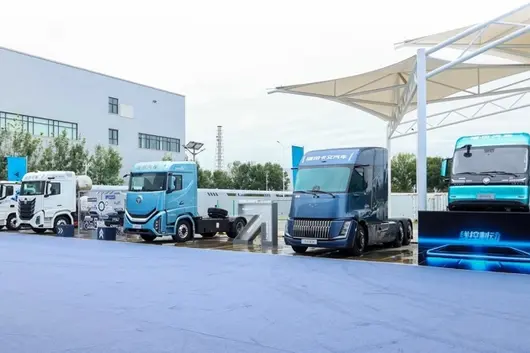
9 月 4 日,北汽福田汽車股份有限公司(簡稱「福田汽車」)公佈咗 8 月嘅產銷數據快報。2026 年 8 月,福田汽車銷售各類汽車產品超過 5 萬輛,穩居行業第一位;1 至 8 月,累計銷量達到 46.3 萬輛,按年增長 9%。
當仲餘下 4 個月嘅時候,全年累計銷量已經超過 46 萬輛,意味著只要跟住嘅 4 個月正常「發揮」,「十四五」以來嘅最高銷量紀錄鐵定被打破,極有希望創造自己新嘅「史上最高」年銷量紀錄。
請睇第一商用汽车网嘅分析解讀。
首 8 月累計銷量超過 46 萬輛,各板塊合力創造新嘅年銷量紀錄
福田汽車 8 月產銷數據快報顯示,2026 年 1 至 8 月,累計銷售各類汽車 46.3 萬輛,按年增長 9%。主要業務板塊均交咗增長嘅成績單:新能源汽車累計銷售 8.2 萬輛,按年增長 25%;中重卡車累計銷售 12.7 萬輛,按年增長 30%;輕型卡車車累計銷售 30.3 萬輛,按年增長 3.4%。
第一商用汽车网留意到,8 月過後,福田汽車 2026 年累計銷量已經超過 46 萬輛,呢個數字已經非常接近 2025 年前 9 個月銷量同 2024 年前 10 個月銷量(如以下圖)。

由以上圖亦可見到,由 1 月開始,福田汽車 2026 年累計銷量一直高於 2025 年以及 2024 年同期,8 月過後累計銷量淨增長接近 4 萬輛。按照第一商用汽车网嘅保守推算(以去年同期銷量估算),福田汽車今年累計銷量將超過 68 萬輛,極有希望創造新嘅年銷量紀錄。

2026 年即將達成嘅「史上最高」銷量,係今年以來福田各業務板塊嘅合力推進,而當中最突出嘅係出口同新能源兩大「引擎」。
由「產品出海」到「體系出海」,20 萬輛目標有望提前完成
2026 年以來,福田汽車嘅出口業務唔再係簡單嘅「賣車」,而係透過市場突破、銷量爆發、產品升級同體系化營運,實現咗由「產品出海」到「體系出海」嘅戰略跨越,並已經成為拉動公司業績增長嘅核心引擎之一。8 月,福田汽車整車出口超過 2 萬輛,按年增長 39%;1 至 8 月累計出口近 15 萬輛,按年增長 44.3%,出口結構持續優化,重卡、新能源車款等高附加值產品佔比不斷提升。

喺非洲、美洲、東南亞以及歐洲等重要海外市場,福田汽車今年都有唔錯表現:2 月份,非洲最大工業集團丹格特集團到訪並簽咗超千輛物流運輸訂單;3 月份,近百輛福田卡文樂福海外版 CAVAN C1 純電 VAN 從青島港發運,批量交付歐盟客戶,成功突破歐洲高端市場壁壘;同月,福田泰國生產基地製造嘅輕卡交付印尼市場,呢款針對東南亞工況定制開發嘅主力車型順利下線,印證咗福田「本地化生產 + 區域化分銷」模式嘅成熟落地;6 月份,超百輛歐輝 12 米高端公交批量交付南亞,刷新當地中國品牌公交客車單筆出口訂單紀錄;8 月份,800 輛歐曼重卡以「整列交付」模式再次發往非洲市場,服務於當地跨境物流與幹線運輸……
喺今年嘅品牌日發佈會上,福田汽車宣佈基於歐曼銀河智慧原生架構打造嘅海外專屬旗艦產品——Galaxus R9 高端重卡正式登陸美洲市場,成為其全面國際化戰略嘅重要一步。據介紹,Galaxus R9 整車搭載 90 多項自主核心技術同百兆以太網整車架構,支援全域 OTA 迭代,實現車輛全生命週期性能進化。為驗證產品實力,Galaxus R9 重卡曾遠赴西班牙極限測試場地,按照歐盟 ECE 標準同國際歐系重卡開展對標實測。喺高速巡航高頻場景,Galaxus R9 油耗較同級競品低 2.16%,即便喺歐盟市場,都非常有競爭力。

如果話福田汽車「3040」中長期海外戰略嘅 2030 年超 40 萬輛仲比較遠,但 2026 年 20 萬輛嘅海外目標近在咫尺。8 月過後,福田海外銷量目標達成率達到 75%,今年海外市場 20 萬輛目標大概率會提前完成。
1 至 8 月累計銷量超 8 萬輛,按年增長 25%,新能源業務夯爆咗
數據顯示,8 月份,福田汽車銷售新能源產品 1.2 萬輛,按年增長 50%,高於行業整體增速;今年 1 至 8 月,福田汽車累計銷售各類新能源產品 8.2 萬輛,按年增長 25%。

單睇增速,福田汽車新能源產品 1 至 8 月銷量按年增長 25%,都仲未算係大增,但係呢個係建立喺去年高質量嘅同期銷量同增幅之上嘅(去年 1 至 8 月福田新能源產品累計銷售 6.57 萬輛,同比去年大漲 127%)。
更關鍵嘅係,福田汽車新能源業務今年以來嘅增長並唔係簡單嘅數量擴張,其內核係建立喺技術創新、場景深耕、生態重構基礎上嘅高質量發展。
自新能源業務開啟之日起,福田汽車始終堅持純電、混動、氫燃料多技術路線並行,唔做單選題。無論係新能源「30·50 戰略」,定係「全面新能源化」戰略,無一唔彰顯出福田汽車對新能源技術路線嘅務實同雄心:純電路線追求核心模塊自主突破,混動路線依托自研實現多平台布局,氫能路線則進行前瞻攻關。福田汽車呢一多元並舉嘅策略,旨在滿足商用車用戶從城市配送到幹線物流等所有商用車場景嘅新能源需求。

而從密集發布同上市嘅新能源新品嚟睇,福田汽車正逐步補齊新能源產品矩陣,以求越來越全面咁覆蓋多場景綠色運力需求。就喺幾日之前,福田汽車喺今年嘅品牌日上一度推出兩款戰略級新能源新品:瞄準中長途幹線物流嘅卡文星海新能源旗艦重卡正式上市,主打高端客運應用場景嘅卡文樂福 V7 全球首發,進一步完善咗全場景綠色運力矩陣。值得一提嘅係,卡文樂福 V7 融合咗乘用車級智能舒適體驗同大 VAN 車廂空間優勢,創新定義咗 MPVan 呢一全新品類,精準匹配線路客運、旅遊商旅、商務接待、休旅改裝等高端場景,填補咗國內新能源高端客運 VAN 細分市場空白。
8 月過後,福田新能源產品累計銷售 8.2 萬輛,按年增長 25%,較去年同期淨增長約 1.63 萬輛。呢個銷量已經超過 2024 年全年銷量(5.4 萬輛),離去年全年 10.12 萬輛嘅全年銷量僅有唔到 2 萬輛嘅差距,按照當前嘅推進節奏,「金九銀十」之後將超過去年全年銷量。
結語
跟住嘅 9 月份,係收穫嘅季節,亦係商用車行業嘅傳統銷售旺季,福田汽車會有乜樣表現,尤其係逐漸成為福田汽車增長新「雙擎」嘅出口同新能源業務會有乜更精彩嘅表現?

End of August, Xpeng released its Q2 earnings report, 19.74 billion yuan in revenue, 20.7% gross margin, the numbers are indeed impressive. But after reviewing the full financial report, what truly makes people sit up and take notice are the overseas figures: quarterly sales surpassed 20,000 units for the first time, up 81% year-on-year, overseas business revenue contribution exceeded 25%, average price per vehicle over 40,000 Euros.

Putting several numbers together, they spell out a clear signal: Xpeng's globalization is no longer a concept on a presentation PPT, but is starting to contribute real profits to the financial statements.
Chinese car companies have been shouting about going overseas for so many years, most are still stuck in the 'having arrived' stage, entered a market, issued a press release, and then nothing happened. Xpeng this time is different, they are now starting to make money overseas, and making quite a bit.
Why Europeans Are Willing to Pay 40,000 Euros
Let's look at this price first. The overseas average price per vehicle exceeds 40,000 Euros, which converts to a little over 300,000 RMB.
What does this price point mean in the European market? Facing off head-on with Volkswagen ID. series and the base model of Tesla Model 3, behind are also a lot of mid-to-high-end models from European local brands. Maintaining sales growth at this price point shows European consumers are not paying for 'cheap', but for 'value'.

The shortcut Chinese car companies go overseas for is most easily low price for market share, using cost-effectiveness to tear a hole. Xpeng didn't take this path. Their logic is another way, making intelligent capabilities strong enough so Europeans feel spending this price to buy a set of good intelligent experience is worth it.
From the current results, this logic has proved viable.
More critically, this average price raises the overall single-vehicle revenue structure of the entire Xpeng Group. Everyone knows what the domestic new energy market situation is like, price wars have been fought for over a year, no one wants to be left behind. But the overseas market provided another script, high pricing power, relatively rational competitive environment, and a group of users willing to pay for technology. Putting this script together, overseas business is no longer just a concept of 'increment', but a substantial booster to improve gross margin.

So back to that question: Why are Europeans willing to pay 40,000 Euros? Not because they don't know cars, quite the contrary, precisely because they do, they know this intelligent experience is worth this price.
Can this high average price continue to hold? The answer is affirmative.
The competitive logic of the European market is fundamentally different from the domestic one. The domestic new energy market has rolled into the vicious cycle of 'losing money to grab share', price has become the only variable. But the European market's sensitivity to price is far lower than domestic, consumers value the product power itself more. As long as Xpeng's intelligent experience continues to maintain a technical generational gap against European local brands, the 40,000 Euro average price is not a fleeting marketing gimmick, but the market's pricing of its true value.

Of course, as more Chinese brands pour into Europe, price pressure will eventually come, but the head start window period Xpeng snatched is enough for it to take root brand awareness and user reputation first.
How Chinese Intelligent Driving 'Translates' to Europe
If the high average price is the result, then technical capability is the base supporting this result.
Xpeng's 2nd Gen VLA recently completed localized acceptance testing in Germany. This sentence in the financial report is worth repeated pondering: this model trained on Chinese data has an actual experience on European urban roads highly close to domestic, almost no extra training data added.

The information behind this is significant.
In the past, when Chinese car companies went overseas, intelligent driving functions almost always had to be re-done for local adaptation. Road conditions were different, traffic rules were different, driving habits were different. A set of autonomous driving models that ran smoothly in China, pulled to Europe often had to be fed a large amount of local data again before barely working. This is not a problem for one company, it is a common challenge faced by the entire industry.
But Xpeng's 2nd Gen VLA performance broke this convention, showing Xpeng's autonomous driving architecture at the underlying logic is already close to the true laws of the physical world, switching geographical location will not cause a cliff-style drop in capability. Chinese traffic lights and European traffic lights look different, but 'red light stop, green light go' this physical rule is consistent. Xpeng's model is grasping this underlying logic, and not just memorizing the surface features of Chinese road conditions.
This is the core value of technology 'low-friction' overseas expansion. When your model does not need to learn from scratch in every new market, the speed and cost of overseas deployment will be fundamentally improved. Xpeng's overseas sales leaping from 20,000 units to 40,000 units, the confidence at the technical level is here, they have the ability to quickly cover more markets, without needing a massive localized algorithm team for every market.
Of course, strong technical capability is one thing, whether to use is another thing. Whether regulatory permission can be obtained smoothly is the key to determining whether this intelligent driving system can truly land in Europe. But this question can also give an affirmative judgment: Xpeng's goal is to be first in Europe to obtain 2nd Gen VLA regulatory permission in the first half of next year, this schedule is based on the premise that German localized acceptance testing has been completed, not an empty slogan.

More importantly, Xpeng has made full preparations on data compliance and localized deployment, the existence of the German R&D center itself bears this mission.
From the perspective of technical preparation and policy prediction, the landing of this permission is just a matter of time, not a matter of direction. Once obtained, Xpeng's advantage over competitors in Europe's intelligent driving experience will be further widened.
Where Does the Confidence for Monthly Sales of 40,000 Units Come From
He Xiaopeng said one sentence at the performance meeting: After MONA L03 overseas delivery, overseas quarterly sales are to break 40,000 units.
What concept is 40,000 units? Xpeng currently the entire group single month sales highest is just over 50,000 units. If overseas in one quarter can achieve 40,000 units, equivalent to every month stable contribution of around 13,000 units of plate, and these cars are all high average price, high gross margin quality orders. This volume is enough to change the entire group's revenue structure.

But this goal cannot be smashed out by relying on one or two good cars. 40,000 units require system-based support, can R&D keep up, can supply chain cover, can service guarantee.
Xpeng's R&D center in Germany, manufacturing layout in Indonesia and Austria, and subsequent extended-range vehicle overseas planning, these actions put together spell out a clear path: it treats globalization as a systematic project being promoted, rather than scattered trade activities.
The difference between these two is huge. Trade-style overseas expansion is just making good cars, shipping them over, selling them, and done. System-based overseas expansion requires establishing R&D capabilities at the front-end market, laying out supply chain and manufacturing nodes in the middle, and building a closed loop of service and user experience at the back end.

The former model is light, fast, but has a low ceiling; once sales go up, after-sales and user experience will have problems. The latter model is heavy, slow, but once it runs through, it becomes a barrier that is very hard to replicate.
Xpeng chose the latter. Once this system is built, its value is not limited to selling cars. Subsequently, Robotaxi needs to land overseas, robots need to go global, all requiring localized operation networks and data pipelines. Now that the system is built, the overseas expansion of subsequent physical AI businesses follows naturally, no need to start from scratch.
Then can the path for this system going overseas run through? The answer is almost also affirmative. Although each European country's regulations, tax, and labor policies are different, and the cost and complexity of building the system is indeed not low, Xpeng is not starting from zero. They have already experienced complete supply chain ramp-up and manufacturing system building domestically, and the experience of automotive industry system construction is transferable.

More importantly, system overseas expansion itself is a moat. Wait until Xpeng's R&D, manufacturing, and service networks in Europe are all in place, latercomers wanting to replicate this will face much higher time and financial costs. Xpeng's investments made now are not for short-term sales looking good, but to lay the foundation for a long-term growth chassis.
Summary
Looking at the three subheadings together, it actually spells out a complete logic chain.
The 40,000 Euro average price proves Europeans are willing to pay for Xpeng's technology. This is not a short-term dividend won by cost-effectiveness, but product power has obtained fair pricing in the international market.
The 2nd Gen VLA running through in Germany proves this technical capability is not China-specific. A set of models trained on domestic data works after switching continents, showing Xpeng's autonomous driving architecture has already touched the bottom logic of the physical world.
The systematic overseas expansion layout gives all this a continuous operating base. German R&D center, Indonesian and Austrian manufacturing nodes, subsequent extended-range vehicle planning, these actions stacked together, Xpeng's globalization trend shifting from 'opportunity driven' to 'system driven' is already very clear.

Stacking three judgments together, the answer is obvious: Xpeng's globalization has passed the 'telling stories' stage, starting to genuinely contribute profits to the financial statements. Against the background of the new energy industry price war which still shows no sign of ending, Xpeng has found a position overseas where it can continuously earn and earn decent profits. The significance of this matter is far beyond single-quarter delivery numbers.
Chinese car companies have been shouting about going overseas for so many years, most are still stuck at the level of 'I came, I saw'. Xpeng this time used a financial report to clarify another thing: I not only came, but I also stood firm, and next am ready to stand even steadier.

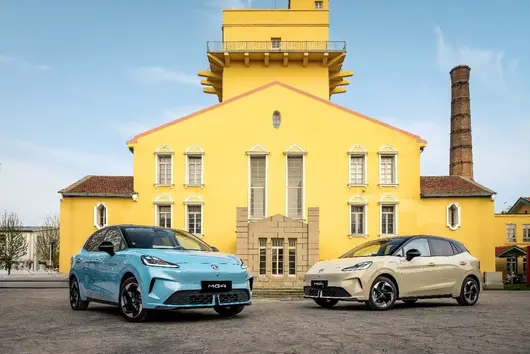
In September, MG4 reached its first anniversary since launch. August results just came out: MG4 family sold over 17,000 units, MG4 single model sustained breaking 10,000 for 11 consecutive months, cumulatively nearly 150,000 units in a year, firmly ranking in the top 3 for pure EV hatchbacks.
These numbers meant nothing two years ago, but they are worth mentioning this year. Nowadays, there are really not many EVs that dare to showcase their 'sales after one-year launch'.

Sustained sales exceeding 10,000 is the real skill
New pure EVs launched in 2025, most cannot escape these four words: high opening, low closing. The first month was very loud, but within three months they are gone from the rankings. Calculating over a whole year, only 4 models can achieve sustained monthly sales exceeding 10,000 for a long time, MG4 is the only pure EV hatchback among them.
A 100,000 yuan class hatchback, standing in this list, relies not on traffic, but on reputation built order by order. 11 months of consecutive breakthroughs over 10,000 means not a single month can fail. Even if one month goes wrong in between, this line breaks. Hits come every year, the ones that remain hot after a year are the scarce products.

From niche commuting to mainstream choice
More worth mentioning is the positioning. MG4 topped the compact car sales list multiple times — that is the market segment with the highest volume for Chinese families and also the most competitive, it has always been the domain of fuel family sedans for the past twenty-plus years. Pure EV hatchbacks have turned from a niche commuting tool to a car that mainstream families seriously consider for the first time.
There is a detail that is quite counter-intuitive: MG4 single unit average price is 84,000 yuan, and the higher-end versions sell even better. In the past, hatchback EVs were almost synonymous with cheap commuting tools; this car broke that saying. The words 'both volume and price rising' have been shouted in the auto market for ten years, landing on a hatchback, it is still the first time.
Over a year, the market also made up a point: MG4 one-year retention rate is 70.95%, ranking first among pure compact EV retention rates. Buyers recognize it, and people who switch cars after a year also recognize it by residual value. This number is harder than any ad.

One car, recognized by both sides
Turn your attention overseas. MG4 has already sold to UK & Europe, Australia, Israel, Thailand and other markets, repeatedly taking the top spot in European compact EV sales, and also winning European E-NCAP and Australian ANCAP dual five-star ratings. MG brand has been the sales champion for Chinese brands in Europe for 11 consecutive years, cumulative sales in UK & Europe 1.2 million units, it is the first Chinese car brand to break one million in Europe.
Domestic one year nearly 150,000 units, Europe segment first, dual five stars — same car, recognized simultaneously in the most picky market and the largest market. In the past, Chinese cars going overseas mostly relied on cost-effectiveness to open the road; MG4 this time is not so, it uses the same set of product capabilities to dominate both sides. 'Value-Driven Global Expansion' these four words, landing on it, are not empty talk.
At milestones like one year anniversary, many brands love to talk about sentiment. MG4 doesn't need to, 11 months of stability, position on the compact car list, name on the European list, 70.95% residual value, all these are laid out there. Chinese EVs have run both 'endurance' and 'global same-source' hard battles for the first time together, the starting point is this 100,000 yuan class small car.
Hit products are not rare, what is rare is that after a year of selling, it is still on the list. MG4's one-year anniversary deserves this sentence.

喺馬來西亞嘅 SUV 市場,好多買家喺揀車嗰陣都會拿本田 HR-V 同現代 Tucson 嚟做比較。這兩款車喺價位同定位上都幾接近,今日我哋就從多個方面做一個詳細嘅比較,幫你慳返做功課嘅時間。
本田 HR-V 喺馬來西亞嘅 OTR 售價係 RM 115,900 - 143,900,一共有 4 個版本,包括 2026 e:HEV 1.5L RS(RM 143,900)、2026 1.5T V(RM 137,900)、2026 1.5T E(RM 130,900) 等。
現代 Tucson 喺馬來西亞嘅 OTR 售價係 RM 143,888 - 197,888,一共有 5 個版本,包括 2025 HEV 1.6T AT 2WD Prestige(RM 197,888)、2025 1.6T DCT 4WD Prestige(RM 186,888)、2025 1.6T DCT 2WD Prime(RM 164,888) 等。
從價錢嚟睇,本田 HR-V 嘅起步價確實比現代 Tucson 平咗 RM 27,988。如果你預算有限,本田嘅入門版已經可以滿足日常需求。但都要注意,平嗰幾千蚊,可能喺配備上有取舍,具體要睇你嘅需求。
本田 HR-V 搭載 1.5L Turbo,馬力 140 hp。官方油耗 7.0 L/100km。
現代 Tucson 搭載 1.5L Turbo,馬力 140 hp。官方油耗 7.0 L/100km。
兩款車用嘅係同一套動力系統,日常開嘅時候感覺基本冇分別。油耗方面都差不多,唔使太糾結這一點。
本田 HR-V 車身長 4500 mm,尾箱 450 L。
現代 Tucson 車身長 4400 mm,尾箱 400 L。
空間方面,本田 HR-V 嘅車身比現代 Tucson 長咗 100 mm,車內乘坐空間會稍微闊落啲,尤其係後座腳部空間。如果你經常載家人或者需要放嬰兒車,大啲嘅車身確實更實用。
本田 HR-V 採用 FWD 驅動方式。
現代 Tucson 採用 FWD 驅動方式。
兩款車嘅驅動方式一樣,都係 FWD,日常駕駛感受唔會有太大分別。

本田 HR-V 同現代 Tucson 都係馬來西亞市場嘅主流選擇,適合家庭使用、日常通勤。如果你更睇重品牌口碑同二手價,可以優先考慮口碑更好嗰一款;如果你更在意性價比同配備,那就揀配備更豐富嗰款。最終都係建議兩款都去試駕,親身體驗先係最重要嘅。

總體嚟講,本田 HR-V 同現代 Tucson 都係馬來西亞市場好唔錯嘅車型。揀邊一輛,關鍵仲要睇你嘅個人需求同預算。建議大家做好功課,多比較幾間車行嘅報價,再去試駕做最終決定。買車係件大事,花啲時間做功課絕對無錯。

In the Malaysian SUV market, many buyers compare Honda HR-V and Mitsubishi Xforce when choosing a car. These two cars are quite close in terms of price and positioning. Today, we will make a detailed comparison from multiple aspects to help you save time on research.
Honda HR-V OTR price in Malaysia is RM 115,900 - 143,900, there are a total of 4 versions, including 2026 e:HEV 1.5L RS (RM 143,900), 2026 1.5T V (RM 137,900), 2026 1.5T E (RM 130,900), etc.
Mitsubishi Xforce OTR price in Malaysia is RM 109,930 - 119,930, there are a total of 2 versions, including 2026 1.5L Ultimate (RM 119,930), 2026 1.5L Urban (RM 109,930), etc.
From a price perspective, Mitsubishi Xforce's starting price is RM 5,970 cheaper than Honda HR-V. Honestly, in this price range, a difference of a few thousand is not really that big, the key is to look at overall cost-performance ratio and long-term usage costs.
Honda HR-V body length is 4500 mm, trunk 450 L.
Mitsubishi Xforce body length is 4400 mm, trunk 400 L.
In terms of space, Honda HR-V's body is 100 mm longer than Mitsubishi Xforce, the in-car seating space will be slightly more spacious, especially the rear legroom. If you often carry family members or need to put a stroller, a larger body is indeed more practical.
Honda HR-V adopts FWD drive mode.
Mitsubishi Xforce adopts FWD drive mode.
The drive modes of the two cars are the same, both are FWD, there will not be much difference in daily driving experience.
Honda HR-V and Mitsubishi Xforce are both mainstream choices in the Malaysian market, suitable for family use and daily commuting. If you value brand reputation and resale value more, you can prioritize the one with better reputation; if you care more about cost-performance and specifications, then choose the one with richer configuration. In the end, it is recommended to test drive both, personal experience is the most important.

Overall, Honda HR-V and Mitsubishi Xforce are both very good models in the Malaysian market. Which one to choose depends on your personal needs and budget. It is recommended to do homework, compare quotes from multiple dealerships, then go test drive to make a final decision. Buying a car is a big matter, spending some time on research will definitely not be wrong.
In the Malaysian SUV market, many buyers compare Honda HR-V and Chery Tiggo 9 when choosing a car. These two models are quite close in terms of price and positioning. Today, we will conduct a detailed comparison from multiple aspects to help you save time on research.
The OTR price of Honda HR-V in Malaysia is RM 115,900 - 143,900, with a total of 4 versions, including 2026 e:HEV 1.5L RS (RM 143,900), 2026 1.5T V (RM 137,900), 2026 1.5T E (RM 130,900), etc.
The OTR price of Chery Tiggo 9 in Malaysia is RM 166,800 - 179,800, with a total of 1 version, including 2026 2.0T Standard (RM 179,750), etc.
From a pricing perspective, the starting price of Honda HR-V is indeed RM 50,900 cheaper than Chery Tiggo 9. If your budget is limited, Honda's entry-level version can already meet daily needs. However, also note that the difference of a few thousand might involve trade-offs in features, depending on your specific needs.
Honda HR-V's safety rating is 5★ (ASEAN NCAP), active safety systems include Honda SENSING (ACC, CMBS, LKAS, RDM).
Chery Tiggo 9's safety rating is TBD, active safety systems include Basic.
In terms of safety features, both cars received good ratings. However, there are some differences in functionality between Honda HR-V's Honda SENSING (ACC, CMBS, LKAS, RDM) and Chery Tiggo 9's Basic. If you value active safety more, you can carefully compare the feature lists of both.
Honda HR-V adopts FWD drive mode.
Chery Tiggo 9 adopts FWD drive mode.
Both cars have the same drive mode, both are FWD, and there won't be a big difference in daily driving experience.
Honda HR-V warranty is 5 years/unlimited mileage, service interval is every 10,000km or 6 months.
Chery Tiggo 9 warranty is 3 years/100,000km, service interval is every 10,000km or 6 months.

Both Honda HR-V and Chery Tiggo 9 are mainstream choices in the Malaysian market, suitable for family use and daily commuting. If you value brand reputation and resale value more, you can prioritize the one with better reputation; if you care more about cost-performance ratio and features, choose the one with richer configuration. Finally, it is recommended to test drive both, as hands-on experience is the most important.
Overall, both Honda HR-V and Chery Tiggo 9 are very good models in the Malaysian market. Which one to choose depends on your personal needs and budget. It is recommended to do your homework, compare quotes from several car dealerships, and then test drive to make the final decision. Buying a car is a big deal, spending some time doing research will never be wrong.

Di pasaran SUV Malaysia, ramai pembeli membandingkan Honda HR-V dan GWM Haval H6 apabila memilih kereta.
Harga OTR Honda HR-V di Malaysia ialah RM 115,900 - RM 143,900, terdapat keseluruhan 4 versi, termasuk 2026 e:HEV 1.5L RS (RM 143,900), 2026 1.5T V (RM 137,900), 2026 1.5T E (RM 130,900) dan lain-lain.
Harga OTR GWM Haval H6 di Malaysia ialah RM 139,750 - RM 139,750, terdapat keseluruhan 2 versi, termasuk 1.5L Turbo Standard (RM 140,000), 1.5L Turbo Premium (RM 155,000) dan lain-lain.
Dari segi harga, harga permulaan Honda HR-V memang lebih murah RM 23,850 berbanding GWM Haval H6. Jika bajet anda terhad, versi pengenalan Honda sudah boleh memenuhi keperluan harian. Tetapi perlu diingat, ribuan ringgit yang lebih murah itu, mungkin ada kompromi dalam kelengkapan, bergantung pada keperluan anda.
Honda HR-V dilengkapi dengan 1.5L Turbo, tenaga kuda 140 hp. Penggunaan minyak rasmi 7.0 L/100km.
GWM Haval H6 dilengkapi dengan Hybrid, tenaga kuda 170 hp. Penggunaan minyak rasmi 4.5 L/100km.
Dari segi kuasa, Hybrid GWM Haval H6 mempunyai 30 hp lebih daripada 1.5L Turbo Honda HR-V. Namun untuk pemanduan harian di bandar, kedua-dua kereta ini cukup bertenaga, anda tidak akan terasa kurang tenaga.
Pengkelasan keselamatan Honda HR-V ialah 5★ (ASEAN NCAP), sistem keselamatan aktif termasuk Honda SENSING (ACC, CMBS, LKAS, RDM).
Pengkelasan keselamatan GWM Haval H6 ialah TBD, sistem keselamatan aktif termasuk Basic.
Dari segi kelengkapan keselamatan, kedua-dua kereta telah mendapat pengkelasan yang baik. Namun Honda SENSING (ACC, CMBS, LKAS, RDM) pada Honda HR-V dan Basic pada GWM Haval H6 mempunyai perbezaan dari segi fungsi. Jika anda lebih memutamakan keselamatan aktif, anda boleh membandingkan senarai fungsi kedua-dua tersebut dengan teliti.
Waranti Honda HR-V ialah 5 tahun / tanpa had jarak, selang penjagaan setiap 10,000km atau 6 bulan.
Waranti GWM Haval H6 ialah 7 tahun/150,000km, selang penjagaan setiap 10,000km atau 6 bulan.
Honda HR-V dan GWM Haval H6 adalah pilihan utama pasaran Malaysia, sesuai untuk kegunaan keluarga dan perjalanan harian. Jika anda lebih memutamakan reputasi jenama dan harga terpakai, boleh utamakan yang mempunyai reputasi lebih baik; jika anda lebih mengambil berat tentang nilai kos dan kelengkapan, maka pilih yang mempunyai konfigurasi lebih kaya. Pada akhirnya adalah disyorkan untuk uji jalan kedua-dua kereta, pengalaman langsung adalah yang paling penting.
Secara keseluruhannya, Honda HR-V dan GWM Haval H6 adalah model kereta yang sangat baik di pasaran Malaysia. Memilih yang mana, kunci utamanya masih bergantung pada keperluan dan bajet peribadi anda. Kami sarankan anda melakukan penyelidikan, bandingkan lebih banyak sebut harga dari dealer kereta yang berbeza, kemudian lakukan uji jalan untuk membuat keputusan akhir. Membeli kereta adalah perkara penting, menghabiskan masa untuk membuat penyelidikan tidak akan salah.

喺馬來西亞嘅 SUV 市場,好多買家喺揀車嘅時候都會拿 Honda HR-V 同 MG MG HS 做比較。這兩款車喺價位同定位上都幾接近,今日我就從多個方面做一個詳細嘅對比,幫你省下做功課嘅時間。
Honda HR-V 喺馬來西亞嘅 OTR 售價係 RM 115,900 - 143,900,一共有 4 個版本,包括 2026 e:HEV 1.5L RS(RM 143,900)、2026 1.5T V(RM 137,900)、2026 1.5T E(RM 130,900) 等。
MG MG HS 喺馬來西亞嘅 OTR 售價係 RM 130,450 - 146,450,一共有 2 個版本,包括 1.5L Standard(RM 105,000)、1.5L Executive(RM 115,000) 等。
就價錢嚟睇,Honda HR-V 嘅起步價確實比 MG MG HS 平咗 RM 14,550。如果你預算有限,Honda 嘅入門版已經可以满足日常需求。但要留意,平嗰幾千蚊,可能喺配備上會有取捨,具體要睇你嘅需求。
Honda HR-V 搭載 1.5L Turbo,馬力 140 hp。官方油耗 7.0 L/100km。
MG MG HS 搭載 1.5L Turbo,馬力 140 hp。官方油耗 7.0 L/100km。
兩款車用嘅係同一套動力系統,日常開落嚟嘅感覺基本冇分別。油耗方面都差不多,唔使太糾結這一點。
Honda HR-V 嘅安全評級係 5★ (ASEAN NCAP),主動安全系統包括 Honda SENSING (ACC, CMBS, LKAS, RDM)。
MG MG HS 嘅安全評級係 TBD,主動安全系統包括 Basic。
安全配備方面,兩款車都拿到幾好嘅評級。不過 Honda HR-V 嘅 Honda SENSING (ACC, CMBS, LKAS, RDM) 同 MG MG HS 嘅 Basic 喺功能上有啲差異,如果你比較看重主動安全嘅話,可以仔細對比吓兩者嘅功能列表。
Honda HR-V 保修 5 年/無限制里程,保養間隔 每 10,000km 或 6 個月。
MG MG HS 保修 7 年/150,000km,保養間隔 每 10,000km 或 6 個月。
總嚟講,Honda HR-V 同 MG MG HS 都係馬來西亞市場好唔錯嘅車型。揀邊一輛,關鍵始終要睇你個人需求同預算。建議大家做好功課,多比較幾間車行嘅報價,再去試駕做最終決定。買車係件大事,花少少時間做功課絕對唔會錯。

Kerjasama industri China-Mesir kembali berbuah hasil yang gemilang. Tahun 2026 merupakan ulang tahun ke-70 penubuhan hubungan diplomatik antara China dan Mesir, selepas Presiden China Xi Jinping melakukan lawatan negara ke Mesir dan kedua-dua negara menerbitkan pernyataan bersama yang menegaskan penyelarasan strategik mendalam antara inisiatif 'Rantaian Sutera Baru' dan 'Wawasan 2030' Mesir, konsensus kerjasama yang dicapai semasa lawatan tersebut sedang diubah secara pantas menjadi tindakan praktikal pada peringkat perusahaan. Dalam kalangan tersebut, Kumpulan Linglong dan Kementerian Perindustrian Mesir telah menandatangani Memorandum Persefahaman untuk membina bersama pangkalan industri tayar komprehensif, menjadikannya salah satu projek simbolik dalam kerjasama putaran ini.

Disyahkan Perdana Menteri, Kesepakatan AS$2 Bilion Taman Industri Tayar Ditandatangani
Dr. Perdana Menteri Mesir, Mustafa Madbouly, menyaksikan upacara penandatanganan. Menurut memorandum ini, Kementerian Perindustrian Mesir dan Kumpulan Linglong Shandong akan membina bersama pangkalan industri tayar komprehensif, dengan jumlah pelaburan projek kira-kira AS$2 bilion, yang mengutamakan siri produk tayar untuk kereta penumpang, bas, peralatan kejuruteraan dan belt penghantar, serta membina industri hulu dan hilir seperti jelaga karbon dan kawat keluli secara serentak.
Sekolah projek siap dibina, ia dapat mewujudkan lebih daripada 5000 peluang pekerjaan, produk berasaskan pasaran tempatan Mesir, dengan tumpuan menjangkau pasaran luar negara seperti Eropah, Amerika Syarikat, membantu Mesir membentuk pusat pengeluaran dan eksport industri tayar serantau.

Langkah Strategik Tambahan dalam Strategi Global
Bagi Kumpulan Linglong, projek Mesir merupakan lanjutan penting kepada strategi pengglobalan mereka. Sebelumnya, Kumpulan Linglong telah membina kilang luar negara dengan kapasiti pengeluaran tahunan melebihi 17.2 juta biji di Thailand, kilang di Serbia, yang merupakan pangkalan pengeluaran pertama perusahaan tayar China di Eropah, juga telah melalui kelulusan oleh pengeluar kereta utama terkenal global seperti Volkswagen, Audi, dan BMW. Setelah pangkalan Mesir siap dibina, ia akan mengukuhkan lagi sistem bekalan global Kumpulan Linglong yang 'menghasilkan di tempat, menghantar di tempat'.
Mesir terletak di persimpangan penting 'Rantaian Sutera Baru', bersebelahan dengan pasaran Eropah, dan mempunyai kelebihan lokasi dari segi cukai, kos buruh dan lain-lain. Dalam konteks Kesatuan Eropah menambahkan tindakan anti-dumping terhadap tayar China, penempatan kapasiti di Mesir juga menyediakan titik sokongan baharu bagi perusahaan tayar China untuk mengelak halangan perdagangan dan menjangkau pasaran Eropah dan Amerika Syarikat.

Peningkatan Menyeluruh dalam Kerjasama Pembuatan China-Mesir
Projek Kumpulan Linglong merupakan gambaran kecil kerjasama industri China-Mesir putaran ini. Selain industri tayar, Kementerian Perindustrian Mesir, Dana Kedaulatan Mesir juga menandatangani Memorandum Persefahaman dengan Peralatan Pintar Jiangsu Changhong dan FIDIA Itali untuk memajukan pembinaan pangkalan pengeluaran kereta Mesir; Jinda Holdings pula membina dan melabur dalam pembinaan pangkalan pengeluaran benang rami di Zon Perindustrian Sadat. Bidang kerjasama merangkumi pembuatan kereta, peralatan pintar, pemprosesan tayar, penyimpanan tenaga bateri, pembuatan linen, dan lain-lain.

Dari segi model kerjasama, kerjasama industri China-Mesir beralih daripada pelaburan projek tunggal kepada sokongan layout rantaian industri penuh, daripada pembuatan produk asas kepada pembangunan peralatan bersatu, eksport teknologi, dan perkhidmatan kejuruteraan, menunjukkan tren baharu yang bersifat tempatan, berkualiti rantaian, dan bertaraf tinggi.
Dengan penyelarasan mendalam antara inisiatif 'Rantaian Sutera Baru' dan 'Wawasan 2030' Mesir, perusahaan pembuatan buatan China diwakili oleh tayar Kumpulan Linglong, kini sedang menyuntikkan tenaga industri yang berterusan bagi hubungan strategik menyeluruh antara kedua-dua negara tersebut.

In the Malaysian SUV market, many buyers compare Honda HR-V and Chery Tiggo 8 when choosing a car.
The OTR price of Honda HR-V in Malaysia is RM 115,900 - 143,900, with a total of 4 versions, including 2026 e:HEV 1.5L RS (RM 143,900), 2026 1.5T V (RM 137,900), 2026 1.5T E (RM 130,900), etc.
The OTR price of Chery Tiggo 8 in Malaysia is RM 129,750 - 129,750, with a total of 1 version, including 2026 1.6T Standard (RM 129,750), etc.
From a price perspective, the Honda HR-V's starting price is indeed RM 13,850 cheaper than the Chery Tiggo 8. If your budget is limited, Honda's entry-level version already meets daily needs. However, keep in mind that the cheaper few thousand might involve trade-offs in features, depending on your specific needs.
Honda HR-V adopts FWD drive mode.
Chery Tiggo 8 adopts FWD drive mode.
Both cars have the same drive mode, both are FWD, daily driving experience will not differ significantly.
Honda HR-V warranty 5 years/unlimited mileage, maintenance interval every 10,000km or 6 months.
Chery Tiggo 8 warranty 3 years/100,000km, maintenance interval every 10,000km or 6 months.
Honda HR-V and Chery Tiggo 8 are both mainstream choices in the Malaysian market, suitable for family use and daily commuting. If you value brand reputation and resale value more, you can prioritize the one with better reputation; if you care more about cost-performance ratio and features, choose the one with richer configurations. Ultimately, it is recommended to test drive both, personal experience is the most important.

Overall, Honda HR-V and Chery Tiggo 8 are both very good models in the Malaysian market. Which one to choose mainly depends on your personal needs and budget. It is recommended to do your research, compare quotes from several dealerships, and then test drive to make the final decision. Buying a car is a big matter, spending time doing research is never wrong.

Dalam pasaran SUV di Malaysia, ramai pembeli membandingkan Honda HR-V dan Chery Tiggo 8 PHEV semasa memilih kereta. Dua kereta ini harga dan kelasnya agak hampir, hari ini kita akan buat perbandingan terperinci dari pelbagai aspek, membantu anda menjimatkan masa untuk melakukan penyelidikan.
Harga OTR Honda HR-V di Malaysia ialah RM 115,900 - 143,900, terdapat 4 varian, termasuk 2026 e:HEV 1.5L RS (RM 143,900), 2026 1.5T V (RM 137,900), 2026 1.5T E (RM 130,900) dan lain-lain.
Harga OTR Chery Tiggo 8 PHEV di Malaysia ialah RM 159,750 - 159,750, terdapat 2 varian, termasuk 1.6L Turbo Standard (RM 130,000), 1.6L Turbo Premium (RM 145,000) dan lain-lain.
Dari segi harga, harga permulaan Honda HR-V memang RM 43,850 lebih murah daripada Chery Tiggo 8 PHEV. Jika bajet anda terhad, varian asas Honda sudah memadai untuk keperluan harian. Namun, perlu diingat, perbezaan harga beberapa ribu itu mungkin melibatkan pengurangan pada kelengkapan, bergantung pada keperluan anda.
Honda HR-V dilengkapi enjin 1.5L Turbo, 140 hp. Kecekapan bahan api rasmi 7.0 L/100km.
Chery Tiggo 8 PHEV dilengkapi sistem Hybrid, 170 hp. Kecekapan bahan api rasmi 4.5 L/100km.
Dari segi kuasa, Hybrid Chery Tiggo 8 PHEV mempunyai 30 hp lebih daripada 1.5L Turbo Honda HR-V. Namun untuk penggunaan harian di bandar, kuasa kedua-dua kereta ini sudah mencukupi, anda tidak akan rasa kurang tenaga.
Panjang badan Honda HR-V ialah 4500 mm, bak bagasi 450 L.
Panjang badan Chery Tiggo 8 PHEV ialah 4400 mm, bak bagasi 400 L.
Dari segi ruang, badan Honda HR-V 100 mm lebih panjang daripada Chery Tiggo 8 PHEV, ruang duduk dalam kenderaan sedikit lebih luas, terutamanya ruang kaki di kerusi belakang. Jika anda kerap mengangkut ahli keluarga atau perlu meletakkan kereta dorong bayi, badan yang sedikit lebih besar memang lebih praktikal.
Honda HR-V dan Chery Tiggo 8 PHEV adalah pilihan utama pasaran Malaysia, sesuai untuk kegunaan keluarga dan perjalanan harian. Jika anda lebih mementingkan reputasi jenama dan harga kereta terpakai, anda boleh mempertimbangkan yang mempunyai reputasi lebih baik; jika anda lebih mengutamakan nilai harga dan kelengkapan, pilih yang mempunyai konfigurasi lebih kaya. Akhir sekali, disarankan untuk mencuba kedua-dua kereta, pengalaman peribadi adalah yang paling penting.
Secara keseluruhan, Honda HR-V dan Chery Tiggo 8 PHEV adalah model yang bagus di pasaran Malaysia. Memilih mana satu, kunci utama adalah keperluan dan bajet peribadi. Disarankan untuk menyiapkan kajian, bandingkan pelbagai sebut harga dari kedai kereta, kemudian mencuba untuk membuat keputusan akhir. Membeli kereta adalah perkara besar, mengambil masa untuk menyiapkan kajian pasti tidak salah.
In the Malaysian SUV market, many buyers compare the Honda HR-V and Chery Tiggo Cross when choosing a car. These two models are quite close in price and positioning. Today, we will make a detailed comparison from multiple aspects to help you save time on research.
The OTR price of the Honda HR-V in Malaysia is RM 115,900 - 143,900, with a total of 4 versions, including 2026 e:HEV 1.5L RS (RM 143,900), 2026 1.5T V (RM 137,900), 2026 1.5T E (RM 130,900), etc.
The OTR price of the Chery Tiggo Cross in Malaysia is RM 88,750 - 99,750, with a total of 2 versions, including 2025 HEV 1.5L CSH (RM 99,750), 2025 1.5T Standard (RM 88,750), etc.
Looking at the price, the starting price of the Chery Tiggo Cross is RM 27,150 cheaper than the Honda HR-V. Honestly, in this price segment, a difference of a few thousand is not really significant; the key is to look at the overall value for money and long-term usage costs.
The Honda HR-V is equipped with a 1.5L Turbo, 140 hp. Official fuel consumption 7.0 L/100km.
The Chery Tiggo Cross is equipped with a 1.5L 4-cyl, 105 hp. Official fuel consumption 6.0 L/100km.
In terms of power, the Honda HR-V's 1.5L Turbo has 35 more horsepower than the Chery Tiggo Cross's 1.5L 4-cyl, providing more confidence in mid-range acceleration, especially when overtaking on highways. However, the Chery Tiggo Cross's fuel consumption might be friendlier, and the difference in daily city commuting would not be significant.
The Honda HR-V's safety rating is 5★ (ASEAN NCAP), with active safety systems including Honda SENSING (ACC, CMBS, LKAS, RDM).
The Chery Tiggo Cross's safety rating is TBD, with active safety systems including Basic.
Regarding safety features, both cars have received good ratings. However, the Honda SENSING (ACC, CMBS, LKAS, RDM) of the Honda HR-V and the Basic of the Chery Tiggo Cross have some differences in functionality. If you value active safety more, you can compare the function lists of both in detail.
The Honda HR-V uses FWD drive type.
The Chery Tiggo Cross uses FWD drive type.
Both cars use the same drive type, both FWD, so there won't be a significant difference in daily driving feel.

Both the Honda HR-V and Chery Tiggo Cross are mainstream choices in the Malaysian market, suitable for family use and daily commuting. If you value brand reputation and resale value more, prioritize the one with better reputation; if you care more about value for money and features, choose the one with richer configurations. Ultimately, it is recommended to test drive both; experiencing it personally is the most important.

Overall, both the Honda HR-V and Chery Tiggo Cross are excellent models in the Malaysian market. Which one to choose depends mainly on your personal needs and budget. It is recommended that everyone do their research, compare quotes from several dealerships, and then test drive before making a final decision. Buying a car is a big matter; spending some time researching is never a wrong choice.
In the Malaysian SUV market, many buyers often compare the Honda HR-V and Chery Tiggo Cross when choosing a car.
Honda HR-V's OTR price in Malaysia is RM 115,900 - 143,900, with a total of 4 trims, including 2026 e:HEV 1.5L RS (RM 143,900), 2026 1.5T V (RM 137,900), 2026 1.5T E (RM 130,900), etc.
Chery Tiggo Cross's OTR price in Malaysia is RM 88,750 - 99,750, with a total of 2 trims, including 2025 HEV 1.5L CSH (RM 99,750), 2025 1.5T Standard (RM 88,750), etc.
In terms of price, the Chery Tiggo Cross starting price is RM 27,150 cheaper than the Honda HR-V. Honestly, in this price segment, a difference of a few thousand is actually not significant; the key is still looking at overall value for money and long-term usage costs.
Honda HR-V is equipped with 1.5L Turbo, 140 hp. Official fuel consumption 7.0 L/100km.
Chery Tiggo Cross is equipped with 1.5L 4-cyl, 105 hp. Official fuel consumption 6.0 L/100km.
In terms of performance, the Honda HR-V 1.5L Turbo has 35 hp more than the Chery Tiggo Cross 1.5L 4-cyl, offering more confidence in mid-range acceleration, especially when overtaking on highways. However, the Chery Tiggo Cross fuel consumption might be more favorable, and the difference in daily city commuting will not be too significant.
Honda HR-V safety rating is 5★ (ASEAN NCAP), active safety systems include Honda SENSING (ACC, CMBS, LKAS, RDM).
Chery Tiggo Cross safety rating is TBD, active safety systems include Basic.
Regarding safety features, both cars have received good ratings. However, the Honda HR-V's Honda SENSING (ACC, CMBS, LKAS, RDM) and Chery Tiggo Cross's Basic have some differences in functionality. If you value active safety more, you can carefully compare the feature lists of both.
Honda HR-V warranty 5 years/unlimited mileage, maintenance interval every 10,000km or 6 months.
Chery Tiggo Cross warranty 3 years/100,000km, maintenance interval every 10,000km or 6 months.
Overall, the Honda HR-V and Chery Tiggo Cross are both very good models in the Malaysian market. Choosing which one depends mainly on your personal needs and budget. We suggest doing your homework, comparing quotes from several dealerships, and then test driving to make the final decision. Buying a car is a major decision, and spending some time doing your research will never go wrong.

Penyebut kedua menjual 190,000 unit, manakala BYD berjaya 440,000 unit dalam sebulan! Bukan lagi carta jualan biasa, ini adalah medan serangan dimensi!

Pada 1 September, apabila "Kedudukan Jualan Kenderaan Tenaga Baharu Syarikat/Kumpulan [Kenderaan Tenaga Baharu] Pasaran Kereta China 2026 Ogos" diumumkan, industri automotif benar-benar tercengang!

BYD berjaya 440,000 unit dalam sebulan, mendahului penyebut kedua hampir 250,000 unit. SAIC kira-kira 190,000 unit, Geely kira-kira 175,000 unit, Chery kira-kira 120,000 unit... Untuk kata yang lebih jelas, gabungan penyebut kedua, ketiga, dan keempat hanya lebih 48,000 unit daripada BYD! Jurang ini bukan lagi tentang siapa menjual beberapa ribu unit lebih, tetapi sama sekali tidak dalam tahap yang sama.
Pencapaian tahap jualan baharu, pada jenama lain mungkin berita, tetapi pada BYD, ia adalah rutin harian!

Sebenarnya, selama 63 bulan berturut-turut, BYD adalah Teratas jualan tenaga baharu setiap bulan! Tetapi pasaran sebelum 63 bulan itu, benar-benar dua dunia berbeza dengan sekarang. Ketika itu, penembusan tenaga baharu baru melebihi 10%, kini sudah menuju 50%. Pasaran membesar, bahagian pasaran BYD tidak turun malah naik, justru membuktikan ia bukan sekadar menikmati kelebihan kenderaan tenaga baharu, tetapi yang mendefinisikan trek tersebut.
Jenama premium BYD juga meningkat. Ogos, Fang Cheng Bao menjual 42,000 unit, meningkat 155.6% YOY, jualan sebulan melebihi Zeekr, Li Auto, AITO, dan Xiaomi, teratas dalam kumpulan baharu di atas 200,000. Denza 16,000 unit, naik 33.4%. Gabungan dua jenama ini 58,000 unit, lebih daripada dua kali ganda. Angka-angka ini, menjadikan nilai jualan BYD semakin meningkat.

Yang lebih hebat BYD bukan jualan domestik, tetapi pasaran luar negara!
Eksport Ogos 189,000 unit, meningkat 134.6% YOY, memecahkan rekod 5 bulan berturut-turut. 8 bulan pertama 2026 di pasaran luar negara, sudah terkumpul jual 1,158,000 unit, manakala seluruh tahun lepas di luar negara jual 1,050,000 unit, tahun ini hanya 8 bulan sudah lampaui rekod ini! Mengikut kelajuan ini, jualan sepanjang tahun tidak menuju 1,500,000 unit? Setiap jenama mengiikkan seruan globalisasi sudah berbilang tahun, BYD kini betul-betul sudah melancarkan bot! Ia bukan sahaja menjual kereta di pasaran luar negara, malah menggunakan piawaian teknologi untuk mendefinisikan kenderaan tenaga baharu global!

Bateri Pisau Generasi Kedua dan teknologi cas kilat, membolehkan kenderaan tenaga baharu melaksanakan "cas siap 5 minit, cas penuh 9 minit" dalam suhu biasa, masa cas dalam persekitaran -30 C hanya bertambah 3 minit, sekali gus menghapuskan keraguan terakhir pengguna membeli kenderaan tenaga baharu. Sehingga 28 Ogos, stesen cas kilat BYD sudah lalui 10,000 stesen, meliputi 332 bandar. Dari "ada teknologi tiada tiang" ke "ada tiang ada kenderaan ada pembeli", rangkaian cas tersebar cepat, jualan hanya boleh meningkat secara nyata.
Kini, stesen cas kilat sudah dibina di kaki Gunung Everest, kilang Thailand sudah beroperasi, kilang Brazil sedang dibina, pasaran Eropah sedang diperluaskan. Apabila orang lain masih mengkaji cara meluas ke luar negara, armada BYD sudah berlari di laut menarik kereta ke seluruh dunia.

Pertama tenaga baharu 63 bulan berturut-turut, lebih bernilai untuk dikaji daripada rekod adalah struktur produk BYD. Bahagian luar negara meningkat, model premium meningkat, parit pertahanan teknologi semakin dalam! Apabila jualan bulanan menuju 500,000, BYD sudah tolak garisan permulaan jenama China ke hadapan syarikat kereta lama luar negara itu.
Menurut anda, berapa jualan BYD tahun ini boleh capai? Mari berborak.

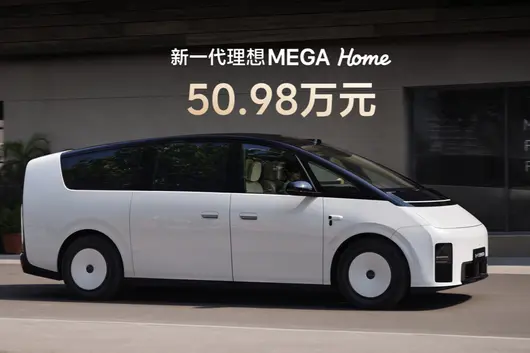
On September 2nd, Li Auto's new generation tech flagship MPV — Li Auto MEGA officially launched. The new car offers only the Home trim, with a nationwide unified retail price of 509,800 yuan. Orders open starting today, and delivery will commence within this week.

Image source: Li Auto
Compared to the 2025 model MEGA Home version with a guide price of 559,800 yuan, the new car sees a direct price drop of 50,000 yuan; even compared to the old model's 529,800 yuan Ultra entry-level version, it is 20,000 yuan lower.
The new generation Li Auto MEGA has completed systematic iteration across three core dimensions: chassis, cockpit, and intelligence. From rear-wheel steering to the living room main light, from floating seats to four LiDAR units, every evolution points to the same goal: to make the "Mobile Home" not just a spatial concept, but a perceptible, interactive, and trustworthy mobility carrier.
Driving Quality Leap
MPVs have historically compromised on flexibility due to their large bodies, but the new generation MEGA chooses to break this fate with a combination of steer-by-wire and rear-wheel steering.
The new car comes standard with a rear-wheel steering system, reducing the turning radius from 6.2 meters to 5.5 meters. This means a body exceeding 5.3 meters offers handling feel close to a mid-size SUV during U-turns on narrow roads or entering/exiting underground garages. The addition of steer-by-wire further eliminates latency caused by mechanical connections, making steering response more direct. Drivers no longer need to pay extra attention costs for the "large vehicle feel."

Image source: Li Auto
Truly reflecting technical depth is the newly developed 800V active anti-roll magic carpet chassis. This system works synergistically with dual-chamber air springs, dual-valve CDC dampers, and an 800V active anti-roll bar. The active anti-roll bar's response speed is only 30 milliseconds, capable of instantly suppressing body roll in corners. In high-speed lane change tests per ISO 3888-1 standards, the new generation MEGA maintained a stable posture completing emergency lane changes at 120 km/h. This is not just about comfort, but also about safety.
Additionally, the "Elephant Greeting" function utilizes the fast response capability of the active anti-roll bar to tilt the body and lower the threshold within 1.5 seconds. Combined with seat rotation, it provides a more user-friendly boarding and exiting experience for the elderly and children. These details indicate that the new generation MEGA's chassis evolution is not simply pursuing eye-catching parameters, but rather converting technical capabilities into conveniences used daily by family users.
Li Auto CEO Li Xiang stated directly before the launch event that the driving experience of MPVs has long been sacrificed in the fuel vehicle era — "often, the worst suspension is given to MPVs." The pure electric architecture combined with steer-by-wire, rear-wheel steering, and active anti-roll bars enables the new generation MEGA to achieve a generational leap in handling.
Cockpit Premium
If the chassis addresses "how easy it is to drive", then the cockpit upgrade answers "is it worth staying in".

Image source: Li Auto
The new generation MEGA introduces the "Home Light Living Room Main Light" for the first time, using 3500K color warm light combined with 396 LEDs to create a uniform and soft lighting atmosphere, giving the rear cabin a true "living room" lighting tone. The vehicle features three independent sunroofs and three independent electric sunshades, with the second-row side window sunshades upgraded to electric. Additionally, optional 270° electric electrochromic glass (covering second and third-row side windows and rear windows) allows users to switch freely between a transparent view and complete privacy. Whether for home entertainment, temporary dressing, or a quiet rest, the spatial boundaries are redefined.

Image source: Li Auto
The seat system upgrade is even more thorough. For the first time, the second row applies floating seat cushion technology, where the floating layer is independent of the support layer, bringing a soft fitting feel similar to a high-end mattress. Nappa leather uses air diamond pattern craftsmanship; each diamond pattern has independent compression space, ensuring 3D styling while improving long-term anti-deformation capability. The headrest, lumbar pillow, and leg rest three-piece set is fully equipped, with the headrest and leg rest featuring built-in heating functions. More critically, dual zero-gravity seats are standard in the front row, and the third row adds ventilation. All three rows of seats across the entire vehicle have ventilation and heating. Combined with surface heating at 31 locations throughout the vehicle, every place that can be touched offers a warm sensation.

Image source: Li Auto
The second row's new electric table is another practical highlight. Unlike traditional manual tables, it comes with 8 sets of gears, can self-adaptively level with the front row seat angle, and has a sensitive anti-pinch function. The foldable combination large dining table serves as a small coffee table when stowed, and when unfolded, it echoes the living room main light, creating a true "Mobile Living Room" scene. These details are no longer just items on a specification list, but are genuinely changing how users behave inside the vehicle.
Smart Full Configuration
As the Li Auto flagship, the new generation MEGA chose an "all-in-one" strategy at the intelligence level.
The new car's intelligent cockpit is powered by a Qualcomm Snapdragon 8797 chip. The 29-inch 6K panoramic OLED screen in the front row and the 21-inch 4K mobile screen in the rear row are both OLED material, combined with the 9.3.6 Star Ring Theater audio system with a peak power of 5440 watts. The audio-visual hardware has reached the first tier of current mass-produced cars.
Regarding intelligent driving, the new car comes standard with the Dual Mach Embodied Intelligent Set, including two Mach M100 chips and four LiDARs — compared to the old model's single radar solution, the redundancy of sensing hardware is significantly improved. The Mach VLA 2.0 system has been officially pushed; highway pilot, city pilot, and parking functions are all fully unlocked.
The approach of this generation of MEGA on intelligence is very clear: it does not provide "futures", does not set high and low spec intelligent driving distinctions, and all users receive the full version. This strategy both reduces users' decision costs and reserves sufficient computing power space for subsequent OTAs. Among potential buyers of high-end MPVs, decisions often value the "full lifecycle experience" more than single parameters. The intelligent configuration of the new generation MEGA exactly responds to this expectation.

Image source: Li Auto
Conclusion: After experiencing multiple rounds of competition in the 500,000 yuan level high-end pure electric MPV market, the debut of the new generation MEGA is both a recalibration of its own product power and a redefinition of flagship value standards. Using an upgrade list that almost covers all user feedback, combined with the 509,800 yuan pricing, it completes an identity transformation from a "topic flagship" to a "practical flagship."
Actually, for Li Auto, MEGA was never a volume-selling model, but a symbol of the brand's technical strength. What the new generation MEGA shows is Li Auto's extreme pursuit of the concept of "Mobile Home". It is not about defining high-end with parameters, but using perceptible evolution to make users truly "need" it. The meaning of a flagship perhaps lies exactly in this.
Additionally, Li Auto has clearly planned to launch MEGA in right-hand drive markets such as Hong Kong, Macau, Singapore, and Thailand by the end of 2026. This flagship MPV that pushes the concept of "Mobile Home" to the extreme, whether it can find its own place in the broader market subsequently, is worth continuing to follow.

喺馬來西亞嘅 SUV 市場,好多買家喺揀車嗰陣都會拿本田 HR-V 同奇瑞 Tiggo Cross 嚟做比較。這兩款車喺價位同定位上都幾接近,今日我哋就從多個方面做個詳細嘅比較,幫你省咗做功課嘅時間。
本田 HR-V 喺馬來西亞嘅 OTR 售價係 RM 115,900 - 143,900,合共 4 個版本,包括 2026 e:HEV 1.5L RS(RM 143,900)、2026 1.5T V(RM 137,900)、2026 1.5T E(RM 130,900) 等。
奇瑞 Tiggo Cross 喺馬來西亞嘅 OTR 售價係 RM 88,750 - 99,750,合共 2 個版本,包括 2025 HEV 1.5L CSH(RM 99,750)、2025 1.5T Standard(RM 88,750) 等。
由價錢睇,奇瑞 Tiggo Cross 嘅起步價比本田 HR-V 平咗 RM 27,150。老實講,喺呢個價位段,幾千蚊嘅差距其實唔算大,關鍵仲係睇整體嘅性價比同長期使用成本。
本田 HR-V 裝嵌 1.5L Turbo,馬力 140 hp。官方油耗 7.0 L/100km。
奇瑞 Tiggo Cross 裝嵌 1.5L 4-cyl,馬力 105 hp。官方油耗 6.0 L/100km。
動力方面,本田 HR-V 嘅 1.5L Turbo 比奇瑞 Tiggo Cross 嘅 1.5L 4-cyl 多咗 35 匹馬力,中段加速更有信心,尤其係跑高速路超車嗰陣。不過奇瑞 Tiggo Cross 嘅油耗可能更友好,日常市區通勤差別唔會太大。
本田 HR-V 車身長 4500 mm,後備箱 450 L。
奇瑞 Tiggo Cross 車身長 4400 mm,後備箱 400 L。
空間方面,本田 HR-V 嘅車身比奇瑞 Tiggo Cross 長咗 100 mm,車內乘坐空間會稍微寬裕啲,尤其係後座腿部空間。如果你經常載家人或者需要放嬰兒車,大一點嘅車身確實更實用。
本田 HR-V 保修 5 年/無限里程,保養間隔 每 10,000km 或 6 個月。
奇瑞 Tiggo Cross 保修 3 年/100,000km,保養間隔 每 10,000km 或 6 個月。
總括嚟講,本田 HR-V 同奇瑞 Tiggo Cross 都係馬來西亞市場好唔錯嘅車款。揀邊一輛,關鍵仲係要看你個人需要同預算。建議大家做好功課,多比較幾間車行嘅報價,再去試駕做最終決定。買車係件大事,花啲時間做功課絕對唔會錯。
© 2024 Bitauto.com. All Rights Reserved.
Bitauto (www.yiche.com and www.bitauto.com) is one of the most visited automotive websites in China. We provide detailed info on Chinese car brands available in your area. Please note that the information provided on this website is based on publicly available data and is for reference only. It may not be fully updated or accurate at all times.

Help us improve our website


