

HomeZEEKR 9X

Search History
Popular Searches
Dealer Login / Sign Up

從中國旗艦,到全球豪華車市場,中國汽車正在進入一個新的出海階段。
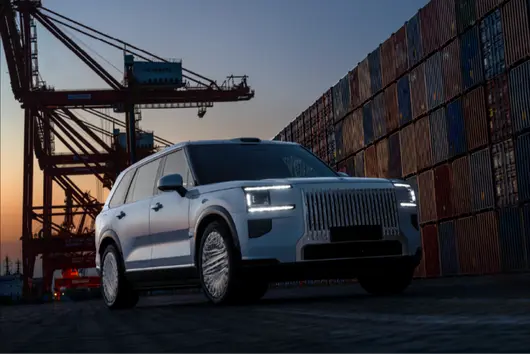
9 月 22 日,全球首款搭載 SEP 浩瀚超級電混的中國新一代豪華旗艦 SUV——極氪 9X,從福州港江陰港區正式發運阿聯酋。
這是極氪 9X 首批大規模出海,也意味著這款中國旗艦正式進入中東市場。目前,極氪 9X 在阿聯酋市場售價超過 80 萬元人民幣,在歐洲市場售價約合近 100 萬元人民幣。頂級改裝品牌邁莎銳推出的極氪 9X 定制版,海外售價更超過 270 萬元。
從過去依靠性價比打開海外市場,到今天以 50 萬元、80 萬元乃至百萬級產品進入全球高端市場,中國汽車的出海邏輯正在發生變化。
01 首批大規模發運,極氪 9X 首站為何選擇中東?

9 月 22 日,裝載著極氪 9X 的車輛從福州港江陰港區出發,駛向阿聯酋。
極氪品牌生產製造負責人趙春林介紹,極氪 9X 於 2026 年 9 月正式啟動出海,首站鎖定中東市場,隨後還將拓展至中亞、歐洲、拉美等市場。
與一些車型「先在國內開發、再根據海外市場進行改造」的路徑不同,極氪 9X 採用全球正向開發模式。
極氪 9X 從產品開發之初,就已經將全球市場納入產品規劃,就同步考慮不同國家和地區的法規、用戶需求,並針對軟件本地化、底盤標定以及售後體系進行適配。
趙春林表示,目前極氪 9X 以整車出口形式銷售,海外版本與國內版本共享產能。隨著海外市場需求增加,初步預計海外需求可能分走約 50% 的產能。而在阿聯酋市場,9X 的預售熱度已經顯現。截至發運時,9X 在中東地區的訂單已經超過 700 單。
02 80 萬元起步,中國車開始在海外賣「高價」

目前,極氪 9X 在阿聯酋售價超過 80 萬元人民幣;歐洲市場售價約合近 100 萬元人民幣。在國內市場,極氪 9X 已經進入 50 萬元以上大型 SUV 市場,並取得了較高的市場表現。
根據材料,今年 1—8 月,極氪 9X 位列 50 萬元以上 SUV 銷量冠軍,並位列 50 萬—100 萬元大型 SUV 三年保值率第一;傑蘭路報告顯示,其 NPS 值接近 85,在 50 萬元以上全車型中排名第一。而到了海外市場,9X 的價格進一步上探。
頂級改裝品牌邁莎銳推出的 9X 定制版,海外售價超過 270 萬元,成為目前海外售價最高的中國汽車之一。更值得注意的是,這種「高價」並非孤立現象。極氪 009 在新加坡市場落地價超過 200 萬元人民幣;極氪 007GT 在歐洲上市後,起售價約合人民幣 35.5 萬元,是中國市場售價的 1.7 倍。
這不是把國內產品以更低價格賣到海外,而是讓中國製造的高價值產品在海外獲得相應的價格。
03 從「油車」到「50 萬級豪華 SUV」:港口見證中國汽車出海變化
 這種變化,在港口一線工作人員眼中更加直觀。寧波三實國際貨運代理有限公司總經理張健長期從事汽車出口運輸,在他看來,極氪 9X 此次出口,有一個非常明顯的變化:
過去出口的是「車」,現在出口的是高價值的中國汽車。
張健介紹,2021 年以前,公司運輸的車輛以油車為主;隨著中國新能源汽車快速發展,新能源車開始大量走向海外。而過去出口車型的價格,大多在 8000 美元左右。
這一次大批量出口的極氪 9X,屬於 50 萬元級別的高端豪華 SUV,是此前少有的高價值車型大規模出海。他認為,隨著技術、操控、底盤、做工以及智能化水平不斷提升,海外消費者開始更加關注中國汽車本身的產品力。
這批極氪 9X 在發運前已經獲得阿聯酋市場訂單,海外消費者對車輛的關注度較高,甚至在此前海外市場現車緊缺的情況下,部分客戶願意加價購買。
04 為什麼是極氪 9X?

一款中國豪華 SUV 能夠進入中東,並以超過 80 萬元的價格銷售,靠的並不僅僅是出口渠道。
趙春林認為,極氪出海的底層優勢主要來自於技術產品力,以及吉利集團長期積累的全球化體系。

目前極氪累計申請專利超過 7000 件,其中海外佈局超過 1500 件,覆蓋三電系統、智能駕駛、車身安全、智能座艙以及智能製造等領域。而在產品層面,極氪 9X 搭載 SEP 浩瀚超級電混,並採用全棧 900V 高壓架構、2.0T 混動專用發動機以及 6C 超快充大電池等技術。其核心邏輯,是試圖同時兼顧純電車型的性能和低能耗,以及傳統燃油車型的長續航能力。
05 當中國豪華車開始進入全球高端圈層

中國品牌汽車正在進入一些過去屬於傳統豪華品牌的消費場景。據材料及阿聯酋當地媒體報導,卡塔爾首相、阿聯酋王室成員曾在公務出行中乘坐極氪 9X。在東南亞市場,極氪 009 也成為部分政要公務出行的座駕。
與此同時,即使面對美國市場接近 130% 的關稅,谷歌旗下 Waymo 仍大規模進口極氪車型。這些現象背後體現的,是中國汽車品牌在全球市場中的角色正在發生變化。
過去海外消費者對中國汽車的認知,更多集中在「價格」「性價比」。而今天則是技術、豪華、智能化,以及品牌價值,這也是中國汽車「高質量出海」的核心。
06 從「走出去」到「賣得好」:中國汽車進入高質量出海階段


今年 1—8 月,極氪穩居中國高端品牌出口第一。
截至目前,極氪已經進入 60 多個國家和地區,全球門店近 800 家,並實現五大洲交付,而極氪 9X 的海外版圖還將繼續擴大,其後續將進一步進入中東、中亞、歐洲、拉美等重點市場。
從福州港駛向阿聯酋的極氪 9X,他們所承載的是中國汽車出口邏輯的一次變化:
從數量走向價值,從產品出口走向品牌出口,從「賣出去」走向「賣得好」。中國汽車開始嘗試用技術、產品、品牌以及全球化體系,在全球豪華汽車市場獲得自己的位置。極氪 9X 的大規模出海,或許只是這條道路上的一個節點。
當一款售價超過 80 萬元的中國旗艦 SUV 駛向中東,當中國豪華新能源車型開始進入全球高端消費市場,中國汽車「走出去」的故事,也正在進入下一階段。
從中國製造,到中國智造,再到中國品牌。
這一次,目的地是全球。

From a Chinese flagship to the global luxury car market, Chinese automobiles are entering a new stage of going global.
On September 22, the first Chinese new-generation luxury flagship SUV in the world equipped with the SEP Ocean Super Electric Hybrid — Zeekr 9X, officially shipped to the UAE from Fuzhou Port Jiangyin Port Area.
This is the first large-scale overseas shipment of Zeekr 9X, also meaning this Chinese flagship officially enters the Middle East market. Currently, Zeekr 9X sells for over 800,000 RMB in the UAE market, and approximately 1,000,000 RMB in the European market. The customized version of Zeekr 9X launched by the top modification brand Mansory sells for even more than 2.7 million overseas.
From relying on cost-performance to open overseas markets in the past, to today entering the global high-end market with products ranging from 500,000, 800,000 to million-level products, the logic of Chinese cars going overseas is changing.
01 First Large-Scale Shipment, Why Did Zeekr 9X Choose the Middle East as the First Stop?
On September 22, vehicles carrying Zeekr 9X departed from Fuzhou Port Jiangyin Port Area, heading to the UAE.
Zhao Chunlin, head of production and manufacturing at Zeekr brand, introduced that Zeekr 9X officially started going global in September 2026, with the first stop locked on the Middle East market, and will subsequently expand to markets such as Central Asia, Europe, Latin America, etc.
Different from the path of some models "developing domestically first, then modifying for overseas markets", Zeekr 9X adopts a global forward development model.
From the beginning of product development, Zeekr 9X has included the global market in product planning, simultaneously considering regulations and user needs of different countries and regions, and adapting for software localization, chassis calibration, and after-sales systems.
Zhao Chunlin stated that currently Zeekr 9X is sold in the form of complete vehicle export, with overseas versions sharing capacity with domestic versions. With increasing overseas market demand, it is preliminarily estimated that overseas demand may take away about 50% of capacity. And in the UAE market, the pre-sale heat of 9X has already appeared. As of the shipment, orders for 9X in the Middle East region have exceeded 700 units.
02 Starting at 800,000, Chinese cars start selling at "High Prices" Overseas
Currently, Zeekr 9X sells for over 800,000 RMB in the UAE; the European market price is approximately 1,000,000 RMB. In the domestic market, Zeekr 9X has already entered the large SUV market over 500,000 RMB and achieved high market performance.
According to materials, from January to August this year, Zeekr 9X ranked first in sales of SUVs over 500,000 RMB, and ranked first in three-year value retention rate for large SUVs between 500,000 and 1,000,000 RMB; The Jiaranlu Report shows, its NPS value is close to 85, ranking first among all models over 500,000 RMB. And when it comes to the overseas market, the price of 9X is further increased.
The 9X customized version launched by the top modification brand Mansory sells for over 2.7 million overseas, becoming one of the Chinese cars with the highest overseas selling prices. More notably, this "high price" is not an isolated phenomenon. Zeekr 009 landed in the Singapore market for over 2,000,000 RMB; Zeekr 007GT was launched in Europe, with a starting price of approximately 355,000 RMB, which is 1.7 times the selling price in the Chinese market.
This is not about selling domestic products at a lower price overseas, but allowing high-value products made in China to obtain corresponding prices overseas.
03 From "Oil Transport Vehicles" to "500,000 Level Luxury SUV": Ports Witness Changes in Chinese Cars Going Global
This change is even more intuitive in the eyes of frontline port workers. Zhang Jian, general manager of Ningbo Sanshi International Freight Forwarding Co., Ltd., has been engaged in automobile export transportation for a long time. In his opinion, this export of Zeekr 9X has a very obvious change:
In the past, "cars" were exported; now high-value Chinese cars are exported.
Zhang Jian introduced that before 2021, the vehicles transported by the company were mainly gasoline cars; with the rapid development of China's new energy vehicles, new energy vehicles started going overseas in large numbers. And the price of exported models in the past was mostly around 8,000 USD.
The mass-exported Zeekr 9X this time belongs to the high-end luxury SUV of the 500,000 RMB level, which is one of the few high-value models to go global on a large scale before. He believes that with the continuous improvement of technology, handling, chassis, workmanship, and intelligence levels, overseas consumers are beginning to pay more attention to the product power of Chinese cars themselves.
This batch of Zeekr 9X has already obtained UAE market orders before shipment, overseas consumers pay high attention to the vehicles, and even under the situation of shortage of cars in the overseas market before, some customers were willing to pay a premium to buy.
04 Why Zeekr 9X?
A Chinese luxury SUV able to enter the Middle East and sell at a price exceeding 800,000 RMB relies not merely on export channels.
Zhao Chunlin believes that the underlying advantages of Zeekr going global mainly come from technical product power, and the globalization system accumulated by Geely Group for a long time.
Currently Zeekr has applied for over 7,000 patents in total, among which overseas layout exceeds 1,500 items, covering three-electric systems, intelligent driving, body safety, intelligent cockpit, and intelligent manufacturing and other fields. And at the product level, Zeekr 9X is equipped with SEP Ocean Super Electric Hybrid, and adopts full-stack 900V high-voltage architecture, 2.0T hybrid dedicated engine, and 6C ultra-fast charging large battery technology. Its core logic is trying to balance the performance and low energy consumption of pure electric vehicles, as well as the long-range capability of traditional fuel vehicles simultaneously.
05 When Chinese Luxury Cars Begin to Enter the Global High-End Circle
Chinese brand cars are entering some consumption scenarios that previously belonged to traditional luxury brands. According to materials and UAE local media reports, Qatar Prime Minister and UAE royal members once took Zeekr 9X in official travel. In the Southeast Asian market, Zeekr 009 also became the car for some political figures' official travel.
At the same time, even facing nearly 130% tariffs in the US market, Waymo under Google still imports Zeekr models on a large scale. What is reflected behind these phenomena is that the role of Chinese car brands in the global market is changing.
In the past, overseas consumers' cognition of Chinese cars was more concentrated on "Price" "Cost-performance". But today it is technology, luxury, intelligence, and brand value, this is also the core of Chinese cars' "High-quality going global".
06 From "Going Out" to "Selling Well": Chinese Cars Enter a High-Quality Going Global Stage
From January to August this year, Zeekr firmly maintained the first place in exports of Chinese high-end brands.
As of now, Zeekr has entered more than 60 countries and regions, with nearly 800 stores globally, and achieved delivery in five continents, and Zeekr 9X's overseas territory will continue to expand, it will further enter key markets such as Middle East, Central Asia, Europe, Latin America, etc.
Zeekr 9X sailing from Fuzhou Port to the UAE, what they carry is a change in the logic of Chinese car exports:
From quantity to value, from product export to brand export, from "selling out" to "selling well".Chinese cars are starting to try to use technology, products, brands, and globalization systems to gain their own position in the global luxury car market. The large-scale export of Zeekr 9X may just be a node on this road.
When a Chinese flagship SUV priced over 800,000 RMB heads to the Middle East, when Chinese luxury new energy models begin to enter the global high-end consumption market, the story of Chinese cars "going out" is also entering the next stage.
From Made in China, to Intelligent Made in China, to Chinese Brands.
This time, the destination is the world.

Daripada produk flagship China, ke pasaran kereta mewah global, industri kereta China kini sedang memasuki fasa baharu eksport.
22 September, SUV flagship mewah baharu global pertama yang dilengkapi SEP Super Electric Hybrid - ZEEKR 9X, secara rasmi dihantar ke Emiriah Arab Bersatu dari Pelabuhan Fuzhou, Pelabuhan Jiangyin.
Ini adalah penghantaran eksport besar-besaran pertama ZEEKR 9X, yang juga bermakna produk flagship China ini secara rasmi memasuki pasaran Timur Tengah. Pada masa ini, harga jual ZEEKR 9X di pasaran Emiriah Arab Bersatu melebihi 800,000 Yuan, manakala di pasaran Eropah harganya dianggarkan hampir 1,000,000 Yuan. Versi khusus ZEEKR 9X yang dikeluarkan oleh jenama penambahbaikan teratas Mansory, harga luar negara melebihi 2,700,000 Yuan.
Dari dahulu bergantung kepada nisbah harga-kualiti untuk membuka pasaran luar negara, sehingga kini dengan produk bertahap 500,000 Yuan, 800,000 Yuan malah jutaan produk memasuki pasaran premium global, logik eksport kereta China sedang berubah.
01 Penghantaran Besar-besaran Pertama, Mengapa ZEEKR 9X Memilih Timur Tengah Sebagai Lokasi Pertama?
Pada 22 September, kenderaan yang membawa ZEEKR 9X berlepas dari Pelabuhan Fuzhou, Pelabuhan Jiangyin, menuju ke Emiriah Arab Bersatu.
Zhao Chunlin, pegawai pengurus pengeluaran dan pembuatan jenama ZEEKR menjelaskan, ZEEKR 9X secara rasmi mula eksport pada September 2026, lokasi pertama dikunci di pasaran Timur Tengah, kemudian akan dikembangkan ke Asia Tengah, Eropah, Amerika Latin dan pasaran lain.
Berbeza dengan sesetengah model "dulu dibangunkan di negara asal, kemudian diubah suai mengikut pasaran luar negara", ZEEKR 9X menggunakan mod pengembangan global.
ZEEKR 9X dari awal pembangunan produk, telah memasukkan pasaran global ke dalam perancangan produk, mempertimbangkan serentak regulasi, keperluan pengguna negara dan wilayah berbeza, serta melakukan adaptasi untuk pengasingan perisian, penandaan sistem penggantungan dan sistem selepas jualan.
Zhao Chunlin menyatakan, pada masa ini ZEEKR 9X dijual dalam bentuk eksport kenderaan utuh, versi luar negara berkongsi kapasiti pengeluaran dengan versi negara asal. Apabila keperluan pasaran luar negara meningkat, dianggarkan awal keperluan luar negara mungkin mengambil kira kira-kira 50% kapasiti pengeluaran. Dan di pasaran Emiriah Arab Bersatu, kehangatan pra-penjualan 9X telah ketara. Sehingga ketika penghantaran, tempahan 9X di wilayah Timur Tengah telah melebihi 700 pesanan.
02 Bermula dengan 800,000 Yuan, Kereta China Mula Menjual "Harga Tinggi" di Luar Negara
Pada masa ini, harga jual ZEEKR 9X di Emiriah Arab Bersatu melebihi 800,000 Yuan; pasaran Eropah harganya dianggarkan hampir 1,000,000 Yuan. Di pasaran negara asal, ZEEKR 9X telah memasuki pasaran SUV besar melebihi 500,000 Yuan, dan telah mencapai prestasi pasaran yang tinggi.
Berdasarkan bahan, Januari - Ogos tahun ini, ZEEKR 9X menempati juara jualan SUV melebihi 500,000 Yuan, dan menempati kadar penyelenggaraan nilai pertama untuk SUV besar 500,000 - 1,000,000 Yuan selama tiga tahun; laporan Jalan Jielan menunjukkan, nilai NPS-nya hampir 85, menempati ranking pertama dalam semua model melebihi 500,000 Yuan. Apabila tiba di pasaran luar negara, harga 9X terus ditingkatkan.
Versi khusus 9X yang dikeluarkan oleh jenama penambahbaikan teratas Mansory, harga luar negara melebihi 2,700,000 Yuan, menjadi salah satu kereta China dengan harga luar negara tertinggi pada masa ini. Lebih menarik perhatian, "harga tinggi" ini bukan fenomena berasingan. ZEEKR 009 di pasaran Singapura harga tanah lebih 2,000,000 Yuan; selepas ZEEKR 007GT meluncur di Eropah, harga permulaan dianggarkan 355,000 Yuan, 1.7 kali harga pasaran negara asal.
Bukan menjual produk domestik ke luar negara dengan harga lebih rendah, tetapi membolehkan produk bernilai tinggi buatan China di luar negara memperoleh harga yang sewajarnya.
03 Dari "Kereta Minyak" ke "SUV Mewah 500,000 Yuan": Pelabuhan Menyaksikan Perubahan Eksport Kereta China
Perubahan ini, dalam pandangan pekerja di lapangan pelabuhan lebih mudah dilihat. Pengurus Besar Syarikat Pengurusan Logistik Antarabangsa Ningbo Sanshi, Zhang Jian bertahun-tahun bekerja dalam pengangkutan eksport kereta, dalam pandangannya, eksport ZEEKR 9X kali ini mempunyai perubahan yang sangat ketara:
Dulu yang dieksport adalah "kereta", sekarang yang dieksport adalah kereta China bernilai tinggi.
Zhang Jian menjelaskan, sebelum tahun 2021, kenderaan yang diangkut syarikat adalah terutamanya kereta minyak; seiring dengan pembangunan pantas kereta baharu kuasa China, kereta elektrik mula banyak menuju ke luar negara. Dan harga model yang dieksport dulu, kebanyakan sekitar 8,000 Dolar AS.
ZEEKR 9X yang dieksport secara besar-besaran kali ini, termasuk SUV mewah bertahap 500,000 Yuan, adalah model bernilai tinggi yang jarang dieksport secara besar-besaran sebelum ini. Beliau berpendapat, seiring dengan peningkatan teknologi, pengendalian, sistem penggantungan, kerja dan tahap kecerdasan, pengguna luar negara mula lebih menumpukan kepada kekuatan produk kereta China itu sendiri.
Seteri ZEEKR 9X ini telah memperoleh tempahan pasaran Emiriah Arab Bersatu sebelum penghantaran, pengguna luar negara mempunyai kepedulian tinggi terhadap kenderaan, bahkan dalam keadaan kekurangan kenderaan sedia ada di pasaran luar negara sebelum ini, sesetengah pelanggan rela membayar premium untuk membeli.
04 Mengapa ZEEKR 9X?
Satu SUV mewah China mampu memasuki Timur Tengah, dan dijual dengan harga melebihi 800,000 Yuan, bukan hanya bergantung pada saluran eksport sahaja.
Zhao Chunlin berpendapat, kelebihan asas ZEEKR mengeksport terutamanya berasal daripadakekuatan produk teknologi, dan sistem globalisasi yang dikumpul oleh kumpulan Geely secara panjang.
Pada masa ini ZEEKR telah memohon paten melebihi 7,000, di mana susun atur luar negara melebihi 1,500, merangkumi bidang seperti sistem tiga-elektrik, pemanduan pintar, keselamatan kenderaan, kabin pintar serta pembuatan pintar.
Dan pada tahap produk, ZEEKR 9X dilengkapi SEP Super Electric Hybrid, dan menggunakan struktur voltan tinggi 900V Lengkap, enjin khas hibrid 2.0T serta teknologi bateri besar pengecasan pantas 6C. Logik utamanya, adalah cuba serentak menjaga prestasi model elektrik tulen dan penjimatan tenaga rendah, serta kemampuan jarak jauh model bahan api konvensional.
05 Apabila Kereta Mewah China Mula Memasuki Lapisan Premium Global
Kereta jenama China sedang memasuki beberapa skenario pengguna yang dahulu milik jenama mewah tradisional. Mengikut bahan dan media tempatan Emiriah Arab Bersatu, Perdana Menteri Qatar, ahli keluarga diraja Emiriah Arab Bersatu pernah menaiki ZEEKR 9X dalam perjalanan rasmi. Di pasaran Asia Tenggara, ZEEKR 009 juga menjadi kenderaan bagi perjalanan rasmi sesetengah pemimpin.
Serentak itu, walaupun menghadapi cukai hampir 130% di pasaran Amerika Syarikat, Waymo di bawah Google masih secara besar-besaran mengimport model ZEEKR. Fenomena di belakang fenomena ini menunjukkan, peranan jenama kereta China di pasaran global sedang berubah.
Dulu pengguna luar negara terhadap persepsi kereta China, lebih tertumpu pada "harga", "nisbah harga-kualiti". Dan hari ini adalahteknologi, kemewahan, kecerdasan, serta nilai jenama, ini juga merupakan teras "ekspor berkualitas tinggi" kereta China.
06 Dari "Keluar" ke "Jual Baik": Kereta China Memasuki Fasa Eksport Berkualiti Tinggi
Januari - Ogos tahun ini, ZEEKR tetap menempati pertama eksport jenama premium China.
Sampai kini, ZEEKR telah memasuki lebih 60 negara dan wilayah, kedai global hampir 800 dewan, dan telah mencapai penghantaran lima benua, manakala peta luar negara ZEEKR 9X akan terus berkembang, seterusnya akan memasuki secara lebih lanjut pasaran penting Timur Tengah, Asia Tengah, Eropah, Amerika Latin.
ZEEKR 9X yang berlepas dari Pelabuhan Fuzhou menuju ke Emiriah Arab Bersatu, apa yang mereka bawa adalah perubahan satu kali dalam logik eksport kereta China:
Dari kuantiti menuju nilai, dari eksport produk menuju eksport jenama, dari "Jual Keluar" menuju "Jual Baik".
Kereta China mula cuba menggunakan teknologi, produk, jenama serta sistem globalisasi, untuk memperoleh posisi sendiri di pasaran kereta mewah global. Penghantaran besar-besaran ZEEKR 9X, mungkin hanyalah satu nod di jalan ini.
Apabila satu SUV flagship China dengan harga melebihi 800,000 Yuan menuju ke Timur Tengah, apabila model baharu kuasa mewah China mula memasuki pasaran pengguna premium global, kisah "keluar" kereta China, juga sedang memasuki fasa seterusnya.
Dari Pembuatan China, ke Pembuatan Pintar China, lagi ke jenama China.
Kali ini, tujuan adalah global.

从中国旗舰,到全球豪华车市场,中国汽车正在进入一个新的出海阶段。
9月22日,全球首款搭载SEP浩瀚超级电混的中国新一代豪华旗舰SUV——极氪9X,从福州港江阴港区正式发运阿联酋。
这是极氪9X首批大规模出海,也意味着这款中国旗舰正式进入中东市场。目前,极氪9X在阿联酋市场售价超过80万元人民币,在欧洲市场售价约合近100万元人民币。顶级改装品牌迈莎锐推出的极氪9X定制版,海外售价更超过270万元。
从过去依靠性价比打开海外市场,到今天以50万元、80万元乃至百万级产品进入全球高端市场,中国汽车的出海逻辑正在发生变化。
01 首批大规模发运,极氪9X首站为何选择中东?
9月22日,装载着极氪9X的车辆从福州港江阴港区出发,驶向阿联酋。
极氪品牌生产制造负责人赵春林介绍,极氪9X于2026年9月正式启动出海,首站锁定中东市场,随后还将拓展至中亚、欧洲、拉美等市场。
与一些车型“先在国内开发、再根据海外市场进行改造”的路径不同,极氪9X采用全球正向开发模式。
极氪9X从产品开发之初,就已经将全球市场纳入产品规划,就同步考虑不同国家和地区的法规、用户需求,并针对软件本地化、底盘标定以及售后体系进行适配。
赵春林表示,目前极氪9X以整车出口形式销售,海外版本与国内版本共享产能。随着海外市场需求增加,初步预计海外需求可能分走约50%的产能。而在阿联酋市场,9X的预售热度已经显现。截至发运时,9X在中东地区的订单已经超过700单。
02 80万元起步,中国车开始在海外卖“高价”
目前,极氪9X在阿联酋售价超过80万元人民币;欧洲市场售价约合近100万元人民币。在国内市场,极氪9X已经进入50万元以上大型SUV市场,并取得了较高的市场表现。
根据材料,今年1—8月,极氪9X位列50万元以上SUV销量冠军,并位列50万—100万元大型SUV三年保值率第一;杰兰路报告显示,其NPS值接近85,在50万元以上全车型中排名第一。而到了海外市场,9X的价格进一步上探。
顶级改装品牌迈莎锐推出的9X定制版,海外售价超过270万元,成为目前海外售价最高的中国汽车之一。更值得注意的是,这种“高价”并非孤立现象。极氪009在新加坡市场落地价超过200万元人民币;极氪007GT在欧洲上市后,起售价约合人民币35.5万元,是中国市场售价的1.7倍。
这不是把国内产品以更低价格卖到海外,而是让中国制造的高价值产品在海外获得相应的价格。
03 从“运油车”到“50万级豪华SUV”:港口见证中国汽车出海变化
这种变化,在港口一线工作人员眼中更加直观。宁波三实国际货运代理有限公司总经理张健长期从事汽车出口运输,在他看来,极氪9X此次出口,有一个非常明显的变化:
过去出口的是“车”,现在出口的是高价值的中国汽车。
张健介绍,2021年以前,公司运输的车辆以油车为主;随着中国新能源汽车快速发展,新能源车开始大量走向海外。而过去出口车型的价格,大多在8000美元左右。
这一次大批量出口的极氪9X,属于50万元级别的高端豪华SUV,是此前少有的高价值车型大规模出海。他认为,随着技术、操控、底盘、做工以及智能化水平不断提升,海外消费者开始更加关注中国汽车本身的产品力。
这批极氪9X在发运前已经获得阿联酋市场订单,海外消费者对车辆的关注度较高,甚至在此前海外市场现车紧缺的情况下,部分客户愿意加价购买。
04 为什么是极氪9X?
一款中国豪华SUV能够进入中东,并以超过80万元的价格销售,靠的并不仅仅是出口渠道。
赵春林认为,极氪出海的底层优势主要来自于技术产品力,以及吉利集团长期积累的全球化体系。
目前极氪累计申请专利超过7000件,其中海外布局超过1500件,覆盖三电系统、智能驾驶、车身安全、智能座舱以及智能制造等领域。而在产品层面,极氪9X搭载SEP浩瀚超级电混,并采用全栈900V高压架构、2.0T混动专用发动机以及6C超快充大电池等技术。其核心逻辑,是试图同时兼顾纯电车型的性能和低能耗,以及传统燃油车型的长续航能力。
05当中国豪华车开始进入全球高端圈层
中国品牌汽车正在进入一些过去属于传统豪华品牌的消费场景。据材料及阿联酋当地媒体报道,卡塔尔首相、阿联酋王室成员曾在公务出行中乘坐极氪9X。在东南亚市场,极氪009也成为部分政要公务出行的座驾。
与此同时,即使面对美国市场接近130%的关税,谷歌旗下Waymo仍大规模进口极氪车型。这些现象背后体现的,是中国汽车品牌在全球市场中的角色正在发生变化。
过去海外消费者对中国汽车的认知,更多集中在“价格”“性价比”。而今天则是技术、豪华、智能化,以及品牌价值,这也是中国汽车“高质量出海”的核心。
06 从“走出去”到“卖得好”:中国汽车进入高质量出海阶段
今年1—8月,极氪稳居中国高端品牌出口第一。
截至目前,极氪已经进入60多个国家和地区,全球门店近800家,并实现五大洲交付,而极氪9X的海外版图还将继续扩大,其后续将进一步进入中东、中亚、欧洲、拉美等重点市场。
从福州港驶向阿联酋的极氪9X,他们所承载的是中国汽车出口逻辑的一次变化:
从数量走向价值,从产品出口走向品牌出口,从“卖出去”走向“卖得好”。中国汽车开始尝试用技术、产品、品牌以及全球化体系,在全球豪华汽车市场获得自己的位置。极氪9X的大规模出海,或许只是这条道路上的一个节点。
当一款售价超过80万元的中国旗舰SUV驶向中东,当中国豪华新能源车型开始进入全球高端消费市场,中国汽车“走出去”的故事,也正在进入下一阶段。
从中国制造,到中国智造,再到中国品牌。
这一次,目的地是全球。

2026First half of the year, China's vehicle manufacturing profit margin fell to 1.5%, reaching a new low in nearly a decade.
In this context, Geely's performance is very prominent.
Total sales volume in the first half reached 1.423 million units, a year-on-year increase of only 1%. However, revenue was 173.6 billion yuan, a year-on-year increase of 15%; core net profit attributable to shareholders was 9.68 billion yuan, a year-on-year increase of 46%. Gross margin increased from 16.2% in the same period last year to 17.9%.
Management summarized it in one sentence: "Revenue growth is faster than sales volume growth, and profit growth is faster than revenue growth."

Growth drivers come from two aspects.
Premiumization — Zeekr's sales volume in the first half reached 178,000 units, a year-on-year increase of 97%, accounting for 12.5% of total sales and contributing 31.7% of revenue. Zeekr's gross margin is approximately 20%, occupying about one-third of the domestic sub-market above 500,000 yuan.
Internationalization — It is the structural change in the financial report worth analyzing most closely. To understand Geely's profit explosion, one must first see the structural explosion of its overseas business.
No New Factories, Overseas Capacity Doubled Plus
In the first half, Geely's overseas export sales reached 474,200 units, a year-on-year increase of 158%, exceeding the full-year export volume of 2025. Among them, new energy vehicle exports reached 277,200 units, a year-on-year increase of 585%.
The proportion of overseas sales to total sales jumped from about 13% in the same period last year to about 33%. In June and July, overseas monthly sales broke through 100,000 units. The growth rate ranks first among mainstream automakers.
Regional markets are showing comprehensive blossoming. Latin America and Africa increased by 298% year-on-year, Europe increased by over 280%, ASEAN over 120%, Eastern Europe and Central/West Asia approached 100%.
Geely announced that it raised the full-year export target from 640,000 units to 920,000 units, and proposed challenging 1 million units.
With going global becoming a clear card and cure-all for Chinese automakers, more worth paying attention to than numbers is Geely's unique strategy for going global.

Zhejiang Geely Holding Group Chairman Li Shufu clearly stated: "In the new process of global transformation, we will not build new capacity. We insist on win-win cooperation with global peers and share capacity."
Behind this sentence, there are three specific details.
"1": One overseas Geely system. Back-end and middle-back-end are fully unified, not acting independently. The three brands Zeekr, Lynk & Co, and Geely maintain clear positioning — Zeekr focuses on tech luxury, Lynk & Co focuses on sports trends, and Geely plans the mainstream household market.
"23456": Five regional markets, totaling 2 million units. Europe 600,000, ASEAN 500,000, Latin America & Africa 400,000, Eastern Europe 300,000, Central Asia & Middle East 200,000.
The timeline is the next 2 to 3 years. Geely Automobile Holdings Ltd. Board Chairman An Conghui reiterated the long-term strategic goal: overseas markets will contribute two-thirds of sales.
The implementation of the strategy relies on three factories.
Volvo Europe Factory — Put into production in 2028, producing Geely's high-end cars.
An Conghui revealed at the earnings call that the Volvo Europe Factory will undertake the production of high-end luxury cars within the Geely Automobile Group, expected to start production in 2028. It specifically involves the Trollhättan factory in Gothenburg, Sweden, the Ghent factory in Belgium, and the newly built EV factory in Košice, Slovakia.
Previously, Volvo signed an agreement with Lynk & Co to be responsible for the exclusive import and operation of the Lynk & Co brand in the European market. Now, the production side is also included in the Volvo Europe system, forming a complete localized layout from manufacturing and import to sales and after-sales service.

Ford Spain Factory — 500,000 units capacity, Roll-off line in 2028.
On July 23, 2026, Geely and Ford signed an agreement to acquire 34% equity of Ford's Valencia plant in Spain for 221 million euros. This factory, put into production in 1976, has an annual capacity of about 500,000 units and is one of the largest manufacturing bases in Europe.
After the joint venture company is established, the Valencia factory will undertake the production tasks for 5 car models of Geely and Ford simultaneously. Geely will put into production two new energy vehicle models including EX2 (Domestic Xingyuan), with the first car rolling off the line in 2028.
It was clarified at this earnings call that the Spain factory will produce Geely Galaxy and Lynk & Co products.
Proton Malaysia Factory — From 200,000 to 500,000 units
The Proton Malaysia factory acquired by Geely is undergoing technical transformation. Capacity is increased from 200,000 units to 500,000 units, positioned as a Southeast Asia manufacturing base. In addition, the Brazil factory cooperated by Geely and Renault has an annual capacity of about 300,000 units, and the Korean factory is also continuing to increase capacity.
As of the first half, Geely's operational overseas manufacturing factories have reached 12, overseas capacity exceeds 650,000 units, and it is planned to be increased to over 840,000 units by the end of the year.
Three factories, three cooperation forms: Volvo is capacity synergy within the system, Ford is external joint venture sharing, Proton is acquisition renovation upgrade. In terms of overseas capacity layout, Geely appears to have almost no repetitive moves, possessing the flexibility of "One Place, One Policy", which exactly reflects the unified investment concept of integrating existing resources.
How the Brand Matrix Supports Overseas Expansion
"123456" Strategy, the core meaning of "1" is an overseas system, three brands with different divisions of labor. So to what extent have Geely's three brands achieved in the overseas market?

Zeekr is the highest-end brand for going global, with an average transaction price of 350,000 yuan, with a clear goal: to occupy one-third of the market in China priced above 500,000 yuan, and to also take one-third of the global high-end market.
In the first half of this year, Zeekr has entered markets such as Malaysia and the Middle East. Zeekr 7X and 007 are the current export mainstays. In the second half of the year, Zeekr 9X, 8X, and 009 will expand to more markets: Zeekr 9X lands in Central Asia in Q3 and enters Europe in Q4; Zeekr 8X enters Latin America and Europe in Q4; Zeekr 009 and 009 Glory launch European versions in the second half of the year.
According to reports, some overseas markets have already seen situations where dealers add markups to car purchases, indicating sufficient demand.
Lynk & Co is positioned as "Sports Trends + Volvo Entry-Level Supplement", has signed 10 dealers in Belgium, and the pace of entering Europe is accelerating. Europe focuses on plug-in hybrids as the main product direction, forming differentiation with Zeekr's pure electric positioning.
Galaxy and China Star are responsible for the mainstream mass market. Geely Automobile Holdings Ltd. CEO Gan Jiayue announced at the earnings call that Geely will no longer develop traditional fuel vehicles in the future; all fuel vehicle models will turn to i-HEV Smart Hybrid, and next year all i-HEV models will be launched to the overseas market.
The i-HEV engine thermal efficiency is 48.41%, breaking the global mass production record. This is Geely's trump card to compete head-on with Japanese hybrids overseas. In the first half of the year, China Star sales volume dropped 5.7% year-on-year, but market share increased from 8.7% last year to 10.4%, winning against the industry against the background of a 31.9% decline in the fuel vehicle market.
Conclusion
Geely is also bearing the pressure of shrinking overall volume in the domestic market.
At the earnings call, An Conghui openly shared: The brand power of Geely's system in the mainstream price range is still insufficient, lacking strong mid-range products.
In the downturn cycle of the industry, the core reason why Geely was able to submit a scorecard with 46% profit growth is that it completed two leaps in the strategic dimension: using Zeekr's premiumization to break through the profit ceiling, and using deep overseas localization cooperation to broaden survival space.
The domestic elimination race is far from over; globalization is a required course for survival. But in this interim report, Geely proved one thing to the industry: car companies that plant roots deeply into the global system early can better undertake the challenges of the times.
In addition, how to coordinate brand positioning and manufacturing standards when Volvo factories OEM Geely brand models? Can the joint venture model of Ford Spain factory be replicated to other markets? How to cope with the high uncertainty of geopolitical politics? It still needs time to test.

2026Tahun Pertama 2026, margin keuntungan pembuatan kenderaan utuh China jatuh ke 1.5%, mencatatkan paras terendah dalam hampir 10 tahun.
Dalam keadaan ini, prestasi Geely sangat ketara.
Jumlah jualan setengah tahun ialah 1.423 juta unit, peningkatan hanya 1% berbanding tahun lalu. Namun pendapatan ialah 173.6 bilion Yuan, meningkat 15% secara tahunan; keuntungan bersih terkemuka milik pemegang kepentingan induk Geely ialah 9.68 bilion Yuan, meningkat 46% secara tahunan. Marginal keuntungan kasar meningkat daripada 16.2% pada tempoh sama tahun lalu kepada 17.9%.
Pengurusan merumuskan dengan satu ayat: "Kadar pertumbuhan pendapatan lebih cepat daripada kadar pertumbuhan jualan, kadar pertumbuhan keuntungan lebih cepat daripada kadar pertumbuhan pendapatan."
Pendorong pertumbuhan datang dari dua aspek.
Pendekatan Premium—ZEEKR jualan setengah tahun 178,000 unit, meningkat 97% secara tahunan, menyumbang 12.5% daripada jumlah jualan, menyumbang 31.7% daripada pendapatan. Marginal keuntungan kasar ZEEKR sekitar 20%, menguasai sekitar satu pertiga daripada pasaran di segmen di atas 500,000 Yuan di China.
Antarabangsa—merupakan perubahan struktural paling bernilai untuk dibedah dalam laporan kewangan. Untuk memahami ledakan keuntungan Geely, kita mesti melihat dengan jelas ledakan struktural dalam operasi luar negerinya.
Tanpa membina kilang baharu, kapasiti luar negara telah bertambah lebih daripada dua kali ganda
Sepanjang setengah tahun, jumlah eksport luar negara Geely mencecah 474,200 unit, meningkat 158% secara tahunan, melebihi jumlah eksport keseluruhan tahun 2025. Daripada jumlah ini, eksport kenderaan tenaga baharu sebanyak 277,200 unit, peningkatan 585% secara tahunan.
Nisbah jualan luar negara kepada jumlah jualan, melonjak daripada sekitar 13% pada tempoh sama tahun lalu kepada sekitar 33%. Bulan Jun dan Julai, jualan tunggal bulan di luar negara masing-masing mengatasi 100,000 unit. Kadar pertumbuhan menduduki tempat pertama dalam kalangan pengeluar kenderaan utama.
Pasaran wilayah menunjukkan pertumbuhan menyeluruh. Amerika Latin dan Afrika meningkat 298% secara tahunan, Eropah meningkat lebih 280%, Asean lebih 120%, Eropah Timur dan Asia Tengah serta Timur Dekat hampir 100%.
Geely mengumumkan, menaikkan sasaran eksport sepanjang tahun daripada 640,000 unit ke 920,000 unit, dan mencabar 1 juta unit.
Apabila menjadi strategi terbuka dan penyelesaian bagi pengeluar kenderaan China, perkara yang lebih bernilai daripada nombor, ialah strategi unik Geely dalam ekspansi antarabangsa.
Li Shufu, Presiden Kumpulan Pemegang Saham Geely Zhejiang, menyatakan dengan jelas: "Dalam proses transisi globalisasi baharu, kami tidak akan membina kapasiti baharu, kami berpegang pada kerja sama dan kemenangan bersama dengan rakan sejawat global, berkongsi kapasiti."
Di sebalik ayat ini, terdapat tiga butiran khusus.
"1": Satu sistem Geely luar negara. Latar belakang, pusat latar belakang semuanya diselaraskan, tidak mengamalkan pemisahan kuasa. Tiga jenama ZEEKR, Lynk & Co, dan Geely mengekalkan kedudukan yang jelas—ZEEKR fokus pada kemewahan teknologi, Lynk & Co menumpukan pada arus gerak sukan, Geely menyusun pasaran utama untuk penggunaan rumah tangga.
"23456": Lima pasaran wilayah, jumlah keseluruhan 2 juta unit. Eropah 600,000 unit, Asean 500,000 unit, Amerika Latin dan Afrika 400,000 unit, Eropah Timur 300,000 unit, Asia Tengah dan Timur Tengah 200,000 unit.
Jadual masa adalah dalam 2 hingga 3 tahun akan datang. An Conghui, Pengerusi Jawatankuasa Eksekutif Kumpulan Geely Automobile Holdings, mengukuhkan semula strategi sasaran jangka panjang: Pasaran luar negara menyumbang dua pertiga daripada jualan.
Pelaksanaan strategi bergantung pada tiga kilang.
Kilang Eropah Volvo—akan menghasilkan pada 2028, menghasilkan kenderaan premium Geely.
An Conghui mendedahkan dalam sidang prestasi, Kilang Eropah Volvo akan meneruskan pengeluaran kenderaan mewah tinggi dalam kumpulan Geely Automobile, dijangka menghasilkan pada 2028. Khususnya melibatkan Kilang Torslanda, Gothenburg, Sweden, Kilang Ghent, Belgium, serta kilang kenderaan elektrik baharu di Kosice, Slovakia.
Sebelum ini, Volvo telah menandatangani perjanjian dengan Lynk & Co, akan bertanggungjawab terhadap pengimportan dan operasi eksklusif jenama Lynk & Co di pasaran Eropah. Sekarang hujung pengeluaran juga dimasukkan ke dalam sistem Eropah Volvo, akan membentuk layouts lengkap tempatan dari pembuatan, pengimportan, jualan sehingga perkhidmatan selepas jualan.
Kilang Ford Sepanyol—kapasiti 500,000 unit, keluar baris pada 2028.
23 Julai 2026, Geely dan Ford menandatangani perjanjian, membeli 34% saham Kilang Valencia Ford Sepanyol dengan 221 juta Euro. Kilang yang menghasilkan pada 1976 ini mempunyai kapasiti tahunan kira-kira 500,000 unit, merupakan antara tapak pembuatan terbesar di Eropah.
Selepas pengasasan syarikat gabungan, Kilang Valencia akan memikul tugas pengeluaran 5 model kenderaan untuk Geely dan Ford secara serentak. Geely akan memulakan pengeluaran dua model kenderaan tenaga baharu termasuk EX2 (Star di dalam negara), model pertama keluar baris pada 2028.
Dalam sidang prestasi kali ini dinyatakan, Kilang Sepanyol akan menghasilkan produk Geely Galaxy dan Lynk & Co.
Kilang Proton Malaysia—daripada 200,000 ke 500,000 unit
Kilang Proton Malaysia yang diperoleh Geely sedang menjalani pengubahsuaian teknologi, kapasiti ditingkatkan daripada 200,000 unit ke 500,000 unit, diletakkan sebagai tapak pembuatan Asia Tenggara. Selain itu, Kilang Brazil yang bekerjasama dengan Renault Geely mempunyai kapasiti tahunan kira-kira 300,000 unit, kilang Korea juga sedang menambah kapasiti.
Sehingga setengah tahun, 12 kilang pembuatan luar negara yang beroperasi oleh Geely telah sampai, kapasiti luar negara melebihi 650,000 unit, dirancang untuk ditingkatkan kepada lebih 840,000 unit pada akhir tahun.
Tiga kilang, tiga bentuk kerjasama: Volvo adalah协同 kapasiti dalam sistem, Ford adalah perkongsian gabungan luar, Proton adalah pembelian dan pengubahsuaian peningkatan. Dalam peruntukan kapasiti luar negara, Geely kelihatan hampir tiada taktik yang sama, mempunyai fleksibiliti "satu tapak satu polisi", tepat sekali mencerminkan idea pelaburan yang bersatu untuk mengintegrasikan sumber sedia ada.
Bagaimana matriks jenama menerima ekspansi luar negara
Makna teras "1" dalam strategi "123456" ialah satu sistem luar negara, tiga jenama mempunyai tugas masing-masing. Maka sejauh manakah ketiga-tiga jenama Geely telah berbuat di luar negara?
ZEEKR adalah jenama paling premium dalam ekspor, harga purata per pelanggan 350,000 Yuan, sasaran jelas: menduduki satu pertiga dalam pasaran di atas 500,000 Yuan di China, pasaran premium global juga perlu mengambil satu pertiga.
Sepanjang tahun ini, ZEEKR telah memasuki pasaran Malaysia, Timur Tengah, dll, ZEEKR 7X dan 007 merupakan pasukan utama ekspor semasa. Separuh tahun kedua, ZEEKR 9X, 8X, 009 akan diperluaskan di lebih banyak pasaran: ZEEKR 9X mendarat di Asia Tengah pada suku ketiga, suku keempat masuk Eropah; ZEEKR 8X masuk Amerika Latin dan Eropah pada suku keempat; ZEEKR 009 dan 009 Glory akan mengeluarkan versi Eropah pada separuh tahun kedua.
Menurut maklumat, sebahagian pasaran luar negara telah muncul kes kenaikan harga melalui saluran pembelian, menunjukkan permintaan yang mencukupi.
Posisi Lynk & Co "Sukan Arus + Pelengkap Permulaan Volvo", telah menandatangani 10 ejen di Belgium, langkah masuk Eropah semakin pantas. Eropah menggunakan pam hibrid sebagai arah utama produk, membentuk perbezaan dengan penentuan ZEEKR elektrik tulen.
Galaxy dan Geely Star bertanggungjawab ke atas pasaran umum. Gan Jiayue, CEO Geely Automobile Holdings, mengumumkan dalam sidang prestasi, Geely tidak akan membangunkan kenderaan petrol tradisional pada masa hadapan, semua model petrol beralih ke hibrid i-HEV Zhiqing,明年 akan menolak semua model i-HEV ke pasaran luar negara.
Kecekapan haba enjin i-HEV 48.41%, memecahkan rekod pengeluaran global, ini adalah kad dasar Geely dalam persaingan langsung dengan hibrid Jepun di luar negara. Jualan Geely Star setengah tahun turun 5.7% secara tahunan, tetapi bahagian pasaran ditingkatkan daripada 8.7% tahun lalu ke 10.4%, lari menangi industri dalam konteks penurunan pasaran kenderaan petrol 31.9%.
Penutup
Tekanan pengecutan pasaran domestik secara keseluruhan, Geely juga sedang menanggungnya.
Dalam sidang prestasi, An Conghui mengakui dan berkongsi: daya jenama pada jalur harga utama sistem Geely pada masa ini masih tidak mencukupi, kekurangan produk pertengahan yang kuat.
Dengan berada dalam kitaran menurun industri, Geely dapat menyerahkan satu jawapan pertumbuhan keuntungan 46%, terasnya ialah ia telah melonjak dua peringkat dimensi strategi: Menggunakan pengemaraan ZEEKR untuk menembusi dan meningkatkan siling keuntungan, Menggunakan kerjasama tempatan luar negara yang mendalam untuk memperluas ruang kelangsungan.
Pertandingan eliminasi domestik juga jauh belum berakhir, globalisasi adalah kursus wajib untuk hidup. Tetapi dalam laporan tengah tahun ini, Geely telah membuktikan satu perkara kepada industri: syarikat kereta yang menanam akar lebih awal ke dalam sistem global boleh menerima tugasan zaman dengan lebih baik.
Selain itu, Kilang Volvo membuat kontrak pembuatan untuk model jenama Geely, bagaimana koordinasikan penentuan jenama dan piawaian pembuatan? Adakah model gabungan Kilang Ford Sepanyol boleh disalin ke pasaran lain? Bagaimana menghadapi ketidakpastian tinggi geopolitik? Masih memerlukan masa untuk ujian.
2026年上半年,中国整车制造利润率跌至1.5%,创近十年新低。
置身其中,吉利的业绩很显眼。
上半年总销量142.3万辆,同比仅增1%。但营收1736亿元,同比增长15%;核心归母净利润96.8亿元,同比增长46%。毛利率从去年同期的16.2%提升至17.9%。
管理层用一句话概括:“收入增速快于销量增速,利润增速快于收入增速。”
增长驱动力来自两方面。
高端化——极氪上半年销量17.8万辆,同比增长97%,占总销量12.5%,贡献31.7%营收。极氪毛利率约20%,在中国50万元以上细分市场占据约三分之一份额。
国际化——是财报里最值得拆开看的结构性变化。要理解吉利利润的爆发,必须先看清其海外业务的结构性爆发。
不建新工厂,海外产能翻了一倍多
上半年,吉利海外出口销量达47.42万辆,同比增长158%,超2025年全年出口总量。其中,新能源车型出口27.72万辆,同比增幅585%。
海外销量占总销量的比重,从去年同期的约13%跃升至约33%。6月和7月,海外单月销量均突破10万辆。增速在主流车企中排名第一。
区域市场呈现全面开花。拉美非同比增长298%,欧洲增幅超280%,东盟超120%,东欧及中东亚接近100%。
吉利宣布,将全年出口目标从64万辆上调至92万辆,并提出挑战100万辆。
在出海已经成为中国车企明牌、解药的当下,比数字更值得关注的,是吉利出海的独特方针。
浙江吉利控股集团董事长李书福明确表示:“在新的全球化转型进程中,我们不会新建产能,我们坚持与全球同行合作共赢,共享产能。”
这句话背后,有三项具体细节。
“1”:一个海外吉利体系。后台、中后台全部统一,不搞各自为政。极氪、领克、吉利三大品牌保持清晰定位——极氪主打科技豪华、领克聚焦运动潮流、吉利布局主流家用市场。
“23456”:五个区域市场,合计200万辆。欧洲60万辆、东盟50万辆、拉美及非洲40万辆、东欧30万辆、中亚与中东20万辆。
时间表是未来2到3年。吉利汽车控股有限公司董事会主席安聪慧,重申了长期战略目标:海外市场贡献三分之二销量。
战略落地靠的是三座工厂。
沃尔沃欧洲工厂——2028年投产,生产吉利高端车。
安聪慧在业绩会上透露,沃尔沃欧洲工厂将承接吉利汽车集团内部高档豪华车的生产,预计2028年投产。具体涉及瑞典哥德堡托斯兰达工厂、比利时根特工厂以及斯洛伐克科希策新建的电动车工厂。
此前,沃尔沃已与领克签署协议,将负责领克品牌在欧洲市场的独家进口与营运。如今生产端也纳入沃尔沃欧洲体系,将形成从制造、进口到销售与售后服务的完整在地化布局。
福特西班牙工厂——50万辆产能,2028年下线。
2026年7月23日,吉利与福特签署协议,以2.21亿欧元收购福特西班牙瓦伦西亚工厂34%股权。这座1976年投产的工厂年产能约50万辆,是欧洲规模最大的制造基地之一。
合资公司成立后,瓦伦西亚工厂将同时承担吉利和福特5款车型的生产任务。吉利将投产包括EX2(国内星愿)在内的两款新能源车型,首款车2028年下线。
此次业绩会上明确,西班牙工厂将生产吉利银河和领克产品。
宝腾马来西亚工厂——从20万到50万辆
吉利收购的宝腾马来西亚工厂正在进行技术改造,产能从20万辆提升至50万辆,定位为东南亚制造基地。此外,吉利与雷诺合作的巴西工厂具备约30万辆年产能,韩国工厂也在继续增加产能。
截至上半年,吉利投入运营的海外制造工厂已达12座,海外产能超65万辆,计划年底提升至84万辆以上。
三座工厂,三种合作形态:沃尔沃是体系内产能协同,福特是外部合资共享,宝腾是收购改造升级。在海外产能布局上,吉利看似几乎没有重样的打法,具有“一地一策”的灵活性,恰恰体现了整合现有资源的统一投资理念。
品牌矩阵如何承接海外扩张
“123456”战略中“1”的核心含义是一个海外体系、三个品牌各有分工。那吉利的三个品牌各自在海外做到了什么程度?
极氪是出海最高端的品牌,平均客单价35万元,目标明确:在中国售价50万元以上市场占三分之一,全球高端市场同样要拿三分之一。
今年上半年,极氪已进入马来西亚、中东等市场,极氪7X和007是当前出口主力。下半年极氪9X、8X、009将在更多市场铺开:极氪9X三季度登陆中亚,四季度进入欧洲;极氪8X四季度进入拉美和欧洲;极氪009与009 Glory下半年推出欧洲版。
据悉,部分海外市场已出现渠道加价购车的情况,说明需求充足。
领克定位“运动潮流+沃尔沃入门补充”,已在比利时签约10家经销商,进入欧洲的步伐在加速。欧洲以插电混动为主要产品方向,与极氪的纯电定位形成差异化。
银河与中国星负责主流大众市场。吉利汽车控股有限公司行政总裁淦家阅在业绩会上宣布,吉利未来不再研发传统燃油车,所有燃油车型全部转向i-HEV智擎混动,明年将把所有i-HEV车型推向海外市场。
i-HEV发动机热效率48.41%,刷新全球量产纪录,这是吉利在海外与日系混动正面竞争的底牌。上半年中国星销量同比下滑5.7%,但市场份额从去年8.7%提升至10.4%,在燃油车大盘下滑31.9%的背景下跑赢了行业。
结语
国内市场整体缩量的压力,吉利也在承受。
在业绩会上,安聪慧坦承分享:吉利体系目前主流价格带的品牌力仍然不足,缺少强势的中端产品。
置身于行业的下行周期,吉利之所以能够交出一份利润增长46%的答卷,核心在于其完成了战略维度的两级跳:用极氪的高端化攻坚拔高利润天花板,用深度的海外本地化合作拓宽生存空间。
国内淘汰赛也远未结束,全球化是生存必修课。但在这张中报里,吉利向行业证明了一件事:提早把根系扎进全球体系里的车企,可以更好的承接时代课题。
此外,沃尔沃工厂代工吉利品牌车型,品牌定位和制造标准如何协调?福特西班牙工厂的合资模式能否复制到其他市场?地缘政治的高度不确定性如何应对?依然需要时间检验。

On August 17, Geely Automobile (0175.HK) released its 2026 interim results.

In the first half of the year, the company achieved total revenue of 173.6 billion yuan, a year-on-year increase of 15%, setting a new historic high; after deducting the impact of exchange gains and losses and impairment of non-financial assets, core net profit attributable to the parent company reached 9.68 billion yuan, a year-on-year increase of 46%; total sales volume was 1.423 million vehicles, setting a new historic high for the same period.
The industry backdrop for these results is not easy. Data from the National Bureau of Statistics shows that in January to May 2026, profits in the automotive manufacturing industry fell 19.8% year-on-year; the China Passenger Car Association estimated that the automotive industry sales profit margin for the first half of the year was about 3.8%, still at a historic low. Volume competition, rising raw materials, and investment in transformation simultaneously squeezing profits has become a common industry challenge.
Therefore, observing this interim report, what is most worth focusing on is not how many new highs revenue and profits have set, but the relationship formed between the numbers: sales volume remained basically flat, revenue grew by 15%, core profit grew by 46%, revenue growth speed was faster than sales volume, and profit growth speed was faster than revenue. At the same time, gross margin rose to 17.9%, an increase of about 1.6 percentage points year-on-year; core net profit margin was 5.6%, an increase of about 1.2 percentage points; revenue per vehicle was 112,000 yuan, a year-on-year increase of 16%; core net profit attributable to parent company per vehicle was 6,806 yuan, a year-on-year increase of 45%. These indicators all point to one thing: Geely's growth is shifting from scale expansion to structural improvement and efficiency enhancement.
Integrating "Synergy" Into the Interim Report
Behind the improvement in profitability, high-end products and overseas business are two direct drivers, while system synergy constitutes a deeper reason.

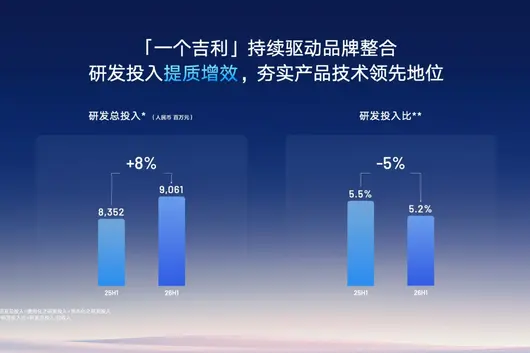
In the first half of the year, Geely's administrative expense ratio further dropped to 1.7%; the proportion of R&D investment to revenue fell from 5.5% to 5.2%, but the absolute value of R&D investment grew 8% year-on-year, reaching 9.06 billion yuan. The simultaneous occurrence of expense ratio decline and R&D investment increase means the company is reducing duplicate construction and inefficient expenditure, without contracting technical investment intensity.
The cash position also provides verification. In the first half of the year, net cash flow from operating activities approached 20 billion yuan; as of the end of June, capital reserves were about 69.6 billion yuan, at a historic high. Expense efficiency, R&D intensity, profit growth, and cash creation improved synchronously. This interim report presents not short-term elasticity brought by a certain vehicle model, but a comprehensive result after a management system gradually matures.
This also provides an entry point to re-understand "One Geely".
In September 2024, Geely Holding Group released the "Taizhou Declaration", proposing five initiatives: Strategic Focus, Strategic Integration, Strategic Synergy, Strategic Prudence, and Strategic Talent. At the beginning of 2026, "One Geely, Leading in All Aspects" was further clarified as a strategic goal for 2030, core to which is strengthening top-level planning and global synergy, forming a global "One Chessboard" of co-created technology, co-explored markets, and shared supply chains. The purpose is to recombine Geely's accumulated brands, platforms, technology, supply chains, and global resources into a unified system capable of efficient operation.
Over the past two years, Geely has successively promoted the strategic integration of Zeekr and Lynk & Co, completing Zeekr's privatization; it established large-scale procurement, R&D, and platform-based sales systems internally, and adjusted vehicle planning with overlapping models between brands. Management revealed at the results conference that after reorganization, the number of overlapping products between brands has decreased by more than 20%, and the administrative expense ratio and R&D investment ratio have also declined.
This adjustment has gradually formed a clear structure: the front office maintains brand differentiation, while the back office promotes the unification of technology, R&D, procurement, supply chain, and global resources.
Four Major Brands Form a Complete Value Ladder
"One Geely" does not mean all brands grow into the same face. After system integration, the division of labor among the four major brand sectors is rather clearer.

Geely China Star bears the scale basic board of the fuel and oil-mixed markets, with sales of 581,000 vehicles in the first half of the year, and plans to comprehensively promote i-HEV and intelligence; Geely Galaxy focuses on high-value mainstream new energy markets, with sales of 520,000 vehicles in the first half of the year, breaking through 2.5 million vehicles cumulatively after three years; Lynk & Co strengthens its positioning of sporty, trendy personalized high-end, with sales of 144,000 vehicles in the first half of the year, with the new energy proportion rising to 65%; Zeekr bears the task of technology luxury and brand upward movement, with sales of 178,000 vehicles in the first half of the year, a year-on-year increase of 97%. Thus, Geely has formed a complete product gradient from mainstream fuel, mainstream new energy, to personalized high-end, technology luxury.
The positioning of the four brands differs, while simultaneously sharing vehicle architecture, electronic and electrical architecture, intelligent driving, intelligent cockpit, battery, electric drive, and electric hybrid technical resources — reducing duplication between brands, underlying capabilities are reused, and the same technology can form scale effects across different price bands.
Zeekr is the part that best reflects the structural change. In the first half of the year, Zeekr contributed revenue of about 5.5 billion yuan, a year-on-year increase of 103%; vehicle sales above 300,000 yuan grew 578% year-on-year; accounting for about 12.5% of sales, it contributed about 31.7% of the group's revenue. Zeekr 9X delivered more than 46,000 vehicles in the first half of the year, ranking first in sales of vehicles above 500,000 yuan in the country. High-endization for Geely is no longer just a brand image project, but an operating variable that can enter revenue, gross margin, and per-vehicle profit.
Globalization Begins to Move from Sales Volume Increment to Profit Increment
Along with high-endization, overseas business is changing the revenue structure.

In the first half of the year, Geely's overseas sales were 474,000 vehicles, a 158% year-on-year increase, surpassing the full year of 2025 in half a year; among them, overseas new energy vehicle sales were 277,000 vehicles, a 585% year-on-year increase, accounting for about 59%; June single-month overseas sales broke 100,000 vehicles for the first time. The company subsequently raised the full-year overseas target from 640,000 vehicles to 920,000 vehicles, and proposed a challenge of 1 million vehicles.
The importance of this set of data is not just in growth speed. Management disclosed at the results conference that the export business comprehensive gross margin is significantly higher than domestic: domestic about 15%, overseas about 22% to 25%; the increase in the proportion of overseas high-end and new energy vehicles was an important driver for the gross margin in the second quarter rising from 17.5% to 18.4%. The overseas market has shifted from supplementing sales volume to lifting the profit center.
The outbound method is also changing synchronously. Geely proposed establishing "One Geely Overseas System", with Zeekr, Lynk & Co, and Geely brands maintaining clear positioning, and middle and back office resources unified synergy. In July this year, Geely and Ford announced the establishment of a joint venture in Spain, utilizing Ford's Valencia factory to produce models for both brands, with the factory's potential annual capacity about 500,000 vehicles; expansion of the Malaysia Proton base and cooperation with Renault in Brazil and Korea are also being promoted.
Acquiring Volvo, investing in Proton, partnering with Renault, in the past was more understood as the expansion of a global asset map. Entering the "One Geely" stage, these resources are being reorganized into local manufacturing, supply chain, channels, and brand operation capabilities. Management's summary is: products "Go Out", supply chains "Go In", brands and technology "Go Up".
AI Establishes the "One Geely" Common Foundation
Beyond the four brands and global markets, AI is another main thread to understand "One Geely".

In 2026, Geely released Full-domain AI 2.0, with the technical logic of connecting vehicle computing power, data, and models, forming a unified vehicle intelligent center, allowing intelligent cockpit, assisted driving, chassis, safety, and power systems to operate synergistically. This unified foundation is spreading on a large scale to the four brands: Qianli Haohan G-ASD will cover Zeekr, Lynk & Co, and Galaxy products, Super EVA 2.0 promotes cabin-vehicle integration, Robotaxi customized models and large-scale operations are also on the way.
The application scope of AI extends from cockpits and assisted driving to traditional automotive engineering. In the first half of the year, Geely released i-HEV Intelligent Hybrid, AI Digital Chassis, and 16-in-1 Intelligent Electric Drive; the next stage will apply large model capabilities to 900V high-voltage charging, battery thermal control, and lifecycle management.
This is exactly the value of "One Geely" at the technical level: underlying capabilities are unified for development, front-end products are differentiated for application according to brand positioning. One set of technology covers a larger sales volume and more price bands, the marginal efficiency of R&D investment continues to improve — this also explains why R&D investment is still increasing in the first half of the year, while the R&D investment ratio is falling.
"Leading in All Aspects", Entering the Quantifiable Verification Stage
Looking back from this semi-annual report, "One Geely" has a more concrete meaning than a strategic slogan.
It is a brand system: China Star, Galaxy, Lynk & Co, and Zeekr each bear clear tasks, covering from scale basic board to high-end value breakthrough.
It is a management system: R&D, procurement, sales, supply chain, and product planning reduce duplicate investment, system synergy begins to enter expense ratio, gross margin, and per-vehicle profit.
It is a global system: domestic and overseas synergy, vehicle export and localized operation proceed in parallel, global resources form a One Chessboard. Full-domain AI constitutes a common technical foundation, transforming intelligence from single-point configuration into a system capability across brands, energy forms, and markets.
And on August 17, it added the last piece: governance system. A few hours after the interim report release, Geely Automobile announced management adjustments — Li Shufu resigned as Chairman of the Board and Executive Director, and was appointed Lifetime Honorary Chairman; An Conghui succeeded as Chairman, Gan Jiayue became President, and Li Shufu continued to command Geely Holding Group. His statement at the results conference can serve as a footnote: "The automotive industry is a marathon without an end; corporate inheritance and value orientation determine a company's sustainable development capabilities." Thus, the "One Geely" integration has progressed from brand, organization, and technology to corporate governance itself — the continuity of strategy is formally handed to systems and teams.
Therefore, the value of this interim report is not just in 173.6 billion yuan revenue and 9.68 billion yuan core net profit attributable to the parent company. More worth focusing on is that capabilities previously scattered across different brands, technology platforms, and global markets are being organized into the same set of management logic, and are starting to act together on revenue structure, profit levels, and cash creation.
After the automotive industry entered a deep competition stage of electrification, intelligence, and globalization, the competition between companies is no longer about a certain hit model. Whether profitability can break dependence on price cuts, whether growth can cross a single market, whether technology can be reused on a large scale, whether brands can have clear division of labor, whether organizations can operate without relying on a single person — these factors collectively determine whether a vehicle enterprise can weather the cycle. In this sense, "Leading in All Aspects" is closer to a set of system indicators that need continuous verification, rather than a sales ranking for a certain stage.
What does "One Geely" intend to do?
The answer is walking from strategic text into financial statements, and also into governance structures: improving efficiency through system synergy, creating value through brand division of labor, opening growth space through global operations, and building long-term competitiveness through full-domain AI — and this time's management handover adds the last piece of the map to "Leading in All Aspects". After this map is fully pieced together, Geely's goal for 2030 truly has a way to run continuously.
This is perhaps also the most worth rereading part of this semi-annual report.

17 Ogos, Geely Automobile (0175.HK) melancarkan prestasi pertengahan tahun 2026.
Sepanjang separuh tahun pertama, syarikat meraih jumlah pendapatan keseluruhan 173.6 bilion Yuan, mencatatkan kenaikan 15% secara tahunan, mencapai rekod tertinggi sepanjang sejarah; selepas menolak kesan keuntungan/kerugian pertukaran mata wang dan penurunan nilai aset bukan kewangan, keuntungan bersih induk bersemula utama mencapai 9.68 bilion Yuan, meningkat 46% secara tahunan; jumlah jualan keseluruhan 1.423 juta unit, mencapai rekod tertinggi pada tempoh yang sama sepanjang sejarah.
Latar belakang industri bagi senarai keputusan ini tidaklah mudah. Data Biro Statistik Negara menunjukkan, keuntungan pembuatan automotif pada Januari hingga Mei 2026 turun 19.8% secara tahunan; menurut pengiraan Persatuan Pasaran Kenderaan, kadar keuntungan penjualan industri automotif pada separuh tahun pertama adalah sekitar 3.8%, masih berada pada takat terendah sejarah. Persaingan jualan, kenaikan bahan mentah dan pelaburan transformasi serentak menekan keuntungan, sudah menjadi isu umum industri.
Oleh itu, apabila meninjau laporan separuh tahun ini, yang paling bernilai untuk ditinjau bukan berapa banyak rekod tertinggi pendapatan dan keuntungan yang dicapai, tetapi hubungan antara nombor-nombor: jualan hampir sama, pendapatan meningkat 15%, keuntungan utama meningkat 46%, kelajuan pendapatan lebih cepat daripada jualan, kelajuan keuntungan lebih cepat daripada pendapatan. Serentak itu, margin kotor meningkat ke 17.9%, meningkat sekitar 1.6 mata peratus secara tahunan; kadar keuntungan bersih induk bersemula utama 5.6%, meningkat sekitar 1.2 mata peratus; pendapatan per kenderaan 112,000 Yuan, meningkat 16% secara tahunan; keuntungan bersih induk bersemula per kenderaan 6,806 Yuan, meningkat 45% secara tahunan. Indikator-indikator ini bersama-sama menunjukkan satu perkara: pertumbuhan Geely, sedang beralih daripada pengembangan skala kepada penambahbaikan struktur dan peningkatan kecekapan.
Menulis "Sintesis" ke dalam Laporan Separuh Tahun
Di sebalik penambahbaikan keuntungan, produk bertaraf tinggi dan bisnes luar negara ialah dua pemacu langsung, sintesis sistem membentuk sebab yang lebih mendalam.
Sepanjang separuh tahun pertama, kadar perbelanjaan pentadbiran Geely terus menurun ke 1.7%; nisbah pelaburan penyelidikan dan pembangunan kepada pendapatan menurun dari 5.5% ke 5.2%, tetapi nilai mutlak pelaburan penyelidikan dan pembangunan meningkat 8% secara tahunan, mencapai 9.06 bilion Yuan. Penurunan kadar perbelanjaan dan peningkatan pelaburan penyelidikan dan pembangunan berlaku serentak, bermaksud syarikat mengurangkan pembinaan berulang dan perbelanjaan tidak efisien, kekuatan pelaburan teknologi tidak mengecut.
Hujung tunai juga memberikan pengesahan. Sepanjang separuh tahun pertama, jumlah tunai bersih aktiviti operasi hampir 20 bilion Yuan; sehingga akhir Jun, simpanan dana kira-kira 69.6 bilion Yuan, berada di takat tertinggi sejarah. Kecekapan kos, kekuatan penyelidikan dan pembangunan, pertumbuhan keuntungan dan penciptaan tunai membaik secara serentak, apa yang laporan separuh tahun ini tawarkan bukan sekadar fleksibiliti jangka pendek yang dibawa oleh model kenderaan tertentu, tetapi hasil gabungan selepas sistem operasi semakin matang.
Ia juga menyediakan pintu masuk untuk memahami semula "Satu Geely".
September 2024, Geely Holding mengeluarkan "Deklarasi Taizhou",提出 strategi fokus, strategi integrasi, strategi sintesis, strategi ketahanan, strategi tenaga lima langkah utama. Awal tahun 2026, "Satu Geely, Kecergasan Merentasi" diperjelaskan lebih lanjut sebagai sasaran strategik terhadap tahun 2030, intinya memperkuat penyelarasan atasan dan kerjasama global, membentuk sinergi teknologi, pembukaan pasaran bersama, perkongsian rantaian bekalan "satu papan catur" global. Tujuannya, adalah untuk menggabungkan semula jenama, platform, teknologi, rantaian bekalan dan sumber global yang Geely telah terkumpul sebelum ini menjadi satu sistem bersama yang boleh beroperasi dengan efisien.
Dua tahun lalu, Geely melaksanakan secara berturutan integrasi strategik Zeekr dan Lynk & Co, menyelesaikan privatisasi Zeekr; membina sistem pembelian besar, penyelidikan dan pembangunan besar dan jualan berplatform dalam syarikat, dan melakukan penyesuaian terhadap perancangan model kenderaan yang mempunyai silang antara jenama. Pengurusan mendedahkan dalam mesyuarat prestasi, selepas penyingkiran semula, bilangan produk silang antara jenama telah berkurang lebih daripada 20%, kadar perbelanjaan pentadbiran dan nisbah pelaburan penyelidikan dan pembangunan juga turun.
Penyesuaian ini secara beransur-ansur membentuk struktur yang jelas: bahagian hadapan mengekalkan perbezaan jenama, bahagian belakang memacu penyatuan teknologi, penyelidikan, pembelian, rantaian bekalan dan sumber global.
Empat Jenama Utama, Membentuk Tangga Nilai Lengkap
"Satu Geely" bukan bermaksud semua jenama tumbuh dengan wajah yang sama. Selepas pengintegrasian sistem, pecahan tugas empat bahagian jenama utama menjadi lebih jelas.
Geely China Star memikul asas skala pasaran bahan api dan hibrid bahan api, separuh tahun pertama jualan 581,000 unit, dan merancang untuk melancarkan sepenuhnya pengubahsuaian i-HEV dan kecerdasan; Geely Galaxy tertumpu pada pasaran utama nilai tinggi untuk tenaga baharu, separuh tahun pertama jualan 520,000 unit, secara kumulatif selepas tiga tahun penubuhan melepasi 2.5 juta unit; Lynk & Co memperkukuh penentuan kedudukan tinggi khusus sukan dan trend, separuh tahun pertama jualan 144,000 unit, nisbah tenaga baharu meningkat ke 65%; Zeekr memikul tugas kemewahan teknologi dan peningkatan jenama, separuh tahun pertama jualan 178,000 unit, meningkat 97% secara tahunan. Dengan itu, Geely membentuk gradien produk lengkap dari燃油 utama, tenaga baharu utama, hingga ke jenama tinggi sukan, kemewahan teknologi.
Empat jenama mempunyai kedudukan berbeza, serentak berkongsi sumber teknologi struktur kenderaan penuh, arkitektur elektronik elektrik, pemanduan pintar, kokpit pintar, bateri, pemacu elektrik dan hibrid elektrik – antara jenana mengurangkan pengulangan, keupayaan asas mendapat digunakan semula, satu teknologi yang sama boleh membentuk kesan skala pada jalur harga yang berbeza.
Zeekr adalah bahagian yang paling menonjolkan perubahan struktur. Sepanjang separuh tahun pertama, Zeekr menyumbang pendapatan kira-kira 55 bilion Yuan, meningkat 103% secara tahunan; jualan model di atas 300,000 Yuan meningkat 578% secara tahunan; dengan sumbangan jualan kira-kira 12.5%, menyumbang pendapatan kumpulan kira-kira 31.7%. Serahan Zeekr 9X pada separuh tahun pertama melebihi 46,000 unit, menduduki tempat pertama jualan model di dalam negara melebihi 500,000 Yuan. Penarafan tinggi bagi Geely, bukan sekadar projek imej jenama, tetapi pemboleh ubah operasi yang boleh memasuki pendapatan, margin kotor dan keuntungan per kenderaan.
Pemglobalan mula beralih dari penambahan jualan kepada penambahan keuntungan
Serentak dengan penarafan tinggi yang mengubah struktur pendapatan, ialah bisnes luar negara.
Sepanjang separuh tahun pertama, jualan luar negara Geely 474,000 unit, meningkat 158% secara tahunan, enam bulan melebihi keseluruhan tahun 2025; di mana jualan luar negara tenaga baharu 277,000 unit, meningkat 585% secara tahunan, nisbah sekitar 59%; jualan luar negara bulan Jun tunggal kali pertama melepasi 100,000 unit. Syarikat kemudian menaikkan sasaran luar negara setahun dari 640,000 unit ke 920,000 unit, dan mencabar 1 juta unit.
Pentingnya kumpulan data ini tidak hanya pada kelajuan pertumbuhan. Pengurusan mendedahkan dalam mesyuarat prestasi, margin kotor gabungan bisnes eksport jelas lebih tinggi berbanding dalam negara: dalam negara sekitar 15%, luar negara sekitar 22% hingga 25%; peningkatan nisbah model tinggi dan tenaga baharu di luar negara, adalah pemacu penting margin kotor suku kedua terus meningkat dari 17.5% ke 18.4%. Pasaran luar negara telah beralih dari pelengkap jualan, ke mengangkat pusat keuntungan.
Cara ke luar negara juga berubah serentak. Geely mengemukakan untuk membentuk "sistem Geely luar negara Satu", Zeekr, Lynk & Co dan jenama Geely mengekalkan kedudukan jelas, sumber tengah-bahagian belakang diselaraskan secara seragam. Julai tahun ini, Geely dan Ford mengumumkan penubuhan syarikat bersama di Sepanyol, menggunakan kilang Ford Valencia untuk menghasilkan model jenama kedua-dua pihak, kapasiti pengeluaran tahunan berpotensi kilang itu kira-kira 500,000 unit; pengembangan tapak Proton Malaysia, kerja sama dengan Renault di Brazil dan Korea juga sedang dimajukan.
Pengambilalihan Volvo, melabur dalam Proton, berjinjau dengan Renault, dahulu lebih difahami sebagai pengembangan peta aset global. Memasuki fasa "Satu Geely", sumber ini sedang dikelola semula ke arah pembuatan tempatan, rantaian bekalan, laluan dan keupayaan operasi jenama. Ringkasan pengurusan adalah: produk "keluar", rantaian bekalan "masuk", jenama dan teknologi "naik".
AI Membangun Asas Bersama "Satu Geely"
Di luar empat jenama dan pasaran global, AI adalah jalur faham "Satu Geely" yang lain.
2026, Geely mengeluarkan AI Merentas Wilayah 2.0, logik teknologi adalah menyambung kuasa pengiraan kenderaan penuh, data dan model, membentuk pusat kecerdasan kenderaan penuh yang seragam, membolehkan kokpit pintar, pemanduan bantuan, chasis, keselamatan dan sistem kuasa beroperasi secara serasi. Tapak seragam ini sedang disebar secara berskala ke empat jenama: Qianli Haohan G-ASD akan merangkumi produk Zeekr, Lynk & Co dan Galaxy, Super EVA 2.0推进 pengintegrasian kokpit dan pemanduan, model Robotaxi tersuai dan operasi berskala juga dalam perjalanan.
Jangkauan aplikasi AI juga telah meluas ke kejuruteraan automotif tradisional dari kokpit dan pemanduan bantuan. Sepanjang separuh tahun pertama, Geely mengeluarkan i-HEV Zhiqing Hibrid, Chasis Digital AI dan 16 dalam 1 Pemacu Elektrik Pintar, fasa seterusnya akan menggunakan keupayaan Model Besar untuk pengisian tekanan tinggi 900V, kawalan suhu bateri dan pengurusan hayat.
Inilah nilai "Satu Geely" pada tahap teknologi: keupayaan asas dibangunkan secara seragam, produk hadapan digunakan secara berbeza-beza mengikut kedudukan jenama. Satu teknologi merangkumi jualan yang lebih besar dan lebih banyak jalur harga, kecekapan marjinal pelaburan penyelidikan dan pembangunan terus meningkat – inilah menjelaskan mengapa pelaburan penyelidikan dan pembangunan separuh tahun pertama masih meningkat, namun nisbah pelaburan penyelidikan dan pembangunan turun.
"Kecergasan Merentasi", Memasuki Fasa Pengesahan Terukur
Dari laporan separuh tahun ini memandang ke belakang, "Satu Geely" sudah mempunyai maksud yang lebih spesifik daripada slogan strategik.
Ia adalah satu sistem jenama: China Star, Galaxy, Lynk & Co dan Zeekr masing-masing memikul tugas yang jelas, merangkumi dari asas skala hingga penembusan nilai tinggi.
Ia adalah satu sistem operasi: penyelidikan, pembelian, jualan, rantaian bekalan dan perancangan produk mengurangkan pelaburan berulang, sintesis sistem mula memasuki kadar perbelanjaan, margin kotor dan keuntungan per kenderaan.
Ia adalah satu sistem global: penyelarasan dalam dan luar negara, eksport kenderaan penuh dan operasi tempatan selari, sumber global membentuk satu papan catur. AI Merentas Wilayah membentuk tapak teknologi bersama, membolehkan kecerdasan daripada konfigurasi titik tunggal ditukar kepada keupayaan sistem merentasi jenama, bentuk tenaga, dan pasaran.
Sedangkan pada 17 Ogos, ia melengkapi kepingan terakhir: sistem pentadbiran. Beberapa jam selepas pengumuman laporan separuh tahun, Geely Automobile mengumumkan pelarasan pengurusan – Li Shufu meletakkan jawatan sebagai Pengerusi Jawatankuasa Penguatkuasaan dan Pengarah Eksekutif, dilantik sebagai Pengerusi Kehormatan Sepanjang Hayat; An Conghui menggantikan jawatan Pengerusi, Gan Jiayue dilantik sebagai Pengurus Agung, Li Shufu terus mengemudi Geely Holding Group. Penyataannya dalam mesyuarat prestasi boleh menjadi catatan kaki: "Industri automotif adalah maraton tanpa hujung, warisan perusahaan dan orientasi nilai menentukan keupayaan pembangunan lestari perusahaan." Di sinilah, pengintegrasian "Satu Geely" dari jenama, organisasi, teknologi, diteruskan ke tadbir urus perusahaan itu sendiri – kesinambungan strategik, secara rasmi diserahkan ke tangan sistem dan pasukan.
Oleh itu, nilai kandungan laporan separuh tahun ini bukan hanya pada 173.6 bilion Yuan pendapatan dan 9.68 bilion Yuan keuntungan bersih induk bersemula utama. Yang lebih bernilai untuk ditinjau, adalah keupayaan yang sebelumnya terpecah di jenama, platform teknologi dan pasaran global yang berbeza, sedang dikelompokkan ke dalam logik operasi yang sama, dan mula bersama-sama bertindak ke atas struktur pendapatan, tahap keuntungan dan penciptaan tunai.
Seteralah industri automotif memasuki fasa persaingan mendalam elektrifikasi, kecerdasan dan pemglobalan, perbandingan antara perusahaan tidak lagi mengenai model meletup tertentu. Boleh kah keuntungan terlepas daripada kebergantungan penurunan harga, boleh kah pertumbuhan merentasi satu pasaran, boleh kah teknologi digunakan secara berskala, boleh kah jenama mempunyai pecahan tugas yang jelas, boleh kah organisasi beroperasi tanpa bergantung kepada seseorang – faktor-faktor ini bersama-sama menentukan sama ada sebuah perusahaan automotif boleh merentasi kitaran. Dalam erti kata ini, "Kecergasan Merentasi" lebih mendekati sekumpulan indikator sistem yang perlu disahkan secara berterusan, bukan satu peringkat jualan fasa sementara.
Apa yang dikehendaki "Satu Geely"?
Jawapannya sedang daripada teks strategik masuk ke laporan kewangan, juga masuk ke struktur pentadbiran: meningkatkan kecekapan dengan sintesis sistem, menciptakan nilai dengan pecahan tugas jenama, membuka ruang pertumbuhan dengan operasi global, membina daya saing jangka panjang dengan AI merentas wilayah – dan pelarasan pengurusan kali ini, melengkapi kepingan terakhir untuk "Kecergasan Merentasi". Selepas peta wilayah ini disusun lengkap, sasaran Geely terhadap tahun 2030, baru benar-benar mempunyai cara membawa yang boleh diteruskan sepanjang masa.
Inilah mungkin bahagian yang paling bernilai dibaca semula dalam laporan separuh tahun ini.

8 月 17 日,吉利汽車(0175.HK)發布 2026 年中期業績。
上半年,公司實現總收入 1736 億元,同比增長 15%,創歷史新高;剔除匯兌損益及非金融資產減值影響後,核心歸屬母公司股東淨利潤達到 96.8 億元,同比增長 46%;總銷量 142.3 萬輛,創歷史同期新高。
呢份成績單所處嘅行業背景並唔輕鬆。國家統計局數據顯示,2026 年 1—5 月汽車製造業利潤同比下降 19.8%;乘聯會測算,上半年汽車行業銷售利潤率約 3.8%,仍處歷史低位。銷量競爭、原材料上漲同轉型投入同時擠壓利潤,已經係行業嘅普遍課題。
因此,觀察呢份中期報告,最值得關注嘅唔係收入同利潤創下多少新高,而係數字之間形成嘅關係:銷量基本持平,營收增長 15%,核心利潤增長 46%,收入增速快過銷量,利潤增速又快過收入。與此同時,毛利率升至 17.9%,同比提升約 1.6 個百分點;核心歸屬母公司淨利率 5.6%,提升約 1.2 個百分點;每車收入 11.2 萬元,同比增長 16%;每車核心歸屬母公司淨利潤 6806 元,同比增長 45%。呢啲指標共同指向一件事:吉利嘅增長,正由規模擴張轉向結構改善同效率提升。
將「協同」寫進中期報告
盈利改善嘅背後,高端產品同海外業務係兩項直接驅動力,體系協同則構成咗更深層嘅原因。
上半年,吉利行政費用率進一步降至 1.7%;研發投入佔收入比重由 5.5% 降至 5.2%,但研發投入絕對值同比增長 8%,達到 90.6 億元。費用率下降同研發投入增加同時出現,意味著公司減少嘅係重複建設同低效支出,技術投入強度並未收縮。
現金端同樣提供咗驗證。上半年經營活動現金淨額接近 200 億元;截至 6 月末,資金儲備約 696 億元,處於歷史高位。費用效率、研發強度、利潤增長同現金創造同步改善,呢份中期報告呈現嘅並唔係某款車型帶來嘅短期彈性,而係一套經營體系逐漸成熟後嘅綜合結果。
這也提供咗一個重新理解「一個吉利」嘅入口。
2024 年 9 月,吉利控股發布《台州宣言》,提出戰略聚焦、戰略整合、戰略協同、戰略穩健、戰略人才五大舉措。2026 年年初,「一個吉利、全面領先」被進一步明確為面向 2030 年嘅戰略目標,核心係強化頂層統籌同全球協同,形成技術共創、市場共拓、供應鏈共享嘅全球「一盤棋」。其目的,係把吉利過去積累嘅品牌、平台、技術、供應鏈同全球資源,重新組合為一套能夠高效運轉嘅共同系統。
過去兩年,吉利先後推進極氪同領克戰略整合,完成極氪私有化;喺內部建立大採購、大研發同平台化銷售體系,並對品牌間存在交叉嘅車型規劃進行調整。管理層喺業績會上面透露,經過重新梳理,品牌間交叉產品數量已減少 20% 以上,行政費用率同研發投入比隨之下降。
呢套調整逐漸形成一個清晰結構:前台保持品牌差異,後台推動技術、研發、採購、供應鏈同全球資源合一。
四大品牌,構成一條完整嘅價值階梯
「一個吉利」唔代表所有品牌長成同一張臉。體系整合之後,四大品牌板塊嘅分工反而更加明確。
中國星承擔燃油同油混市場嘅規模基本盤,上半年銷量 58.1 萬輛,並計劃全面推進 i-HEV 化同智能化;吉利銀河聚焦高價值主流新能源市場,上半年銷量 52 萬輛,成立三年累計突破 250 萬輛;領克強化運動、潮流嘅個性化高端定位,上半年銷量 14.4 萬輛,新能源佔比提升至 65%;極氪承擔科技豪華同品牌向上嘅任務,上半年銷量 17.8 萬輛,同比增長 97%。由此,吉利形成從主流燃油、主流新能源,到個性高端、科技豪華嘅完整產品梯度。
四大品牌定位唔同,同時共享整車架構、電子電氣架構、智能駕駛、智能座艙、電池、電驅同電混等技術資源——品牌之間減少重複,底層能力得到複用,同一項技術喺不同價格帶上形成規模效應。
極氪係其中最能體現結構變化嘅部分。上半年極氪貢獻收入約 550 億元,同比增長 103%;30 萬元以上車型銷量同比增長 578%;以約 12.5% 嘅銷量貢獻咗集團約 31.7% 嘅收入。極氪 9X 上半年交付超過 4.6 萬輛,位居國內 50 萬元以上車型銷量首位。高端化對於吉利,已經唔只係品牌形象工程,而係能夠進入收入、毛利率同每車利潤嘅經營變量。
全球化開始從銷量增量走向利潤增量
同高端化一齊改變收入結構嘅,係海外業務。
上半年吉利海外銷量 47.4 萬輛,同比增長 158%,半年超過 2025 年全年;其中新能源海外銷量 27.7 萬輛,同比增長 585%,佔比約 59%;6 月單月海外銷量首次突破 10 萬輛。公司其後將全年海外目標由 64 萬輛上調至 92 萬輛,並提出挑戰 100 萬輛。
呢組數據嘅重要性唔只喺增速。管理層喺業績會上面披露,出口業務綜合毛利率明顯高於國內:國內約 15%,海外約 22% 至 25%;海外高端同新能源車型佔比提升,係二季度毛利率由 17.5% 繼續升至 18.4% 嘅重要驅動力。海外市場已經從補充銷量,轉向抬升盈利中樞。
出海方式亦喺同步變化。吉利提出建立「一個海外吉利體系」,極氪、領克同吉利品牌保持清晰定位,中後台資源統一協同。今年 7 月,吉利同福特宣布喺西班牙成立合資企業,利用福特瓦倫西亞工廠生產雙方品牌車型,該工廠潛在年產能約 50 萬輛;馬來西亞寶騰基地擴建、同雷諾喺巴西同韓國嘅合作亦喺推進。
收購沃爾沃、投資寶騰、牽手雷諾,過去更多被理解為全球資產版圖嘅擴張。進入「一個吉利」階段後,呢啲資源正被重新組織為本地製造、供應鏈、渠道同品牌運營能力。管理層嘅概括係:產品「走出去」、供應鏈「走進去」、品牌同技術「走上去」。
AI 基築「一個吉利」嘅共同底座
四大品牌同全球市場之外,AI 係理解「一個吉利」嘅另一條主線。
2026 年,吉利發布全域 AI 2.0,技術邏輯係打通整車算力、數據同模型,形成統一嘅整車智能中樞,令智能座艙、輔助駕駛、底盤、安全同動力系統協同運行。呢個統一底座正喺向四大品牌規模化鋪開:千里浩瀚 G-ASD 將覆蓋極氪、領克同銀河產品,超級 EVA 2.0 推進艙駕融合,Robotaxi 定制車型同規模化營運亦喺路上。
AI 嘅應用範圍仲由座艙同輔助駕駛延伸至傳統汽車工程。上半年,吉利發布 i-HEV 智擎混動、AI 數字底盤同 16 合 1 智能電驅,下階段將把大模型能力應用於 900V 高壓補能、電池溫度控制同壽命管理。
正係呢個「一個吉利」喺技術層面嘅價值:底層能力統一開發,前端產品按品牌定位差異化應用。一套技術覆蓋更大銷量同更多價格帶,研發投入嘅邊際效率便持續提高——呢亦都解釋咗點解上半年研發投入仲喺增加,研發投入佔比但係喺下降。
「全面領先」,進入可量化嘅驗證階段
從呢份半年報回睇,「一個吉利」已經有咗比戰略口號更具體嘅含義。
佢係一套品牌體系:中國星、銀河、領克同極氪各自承擔清晰任務,覆蓋由規模基本盤到高端價值突破。
佢係一套經營體系:研發、採購、銷售、供應鏈同產品規劃減少重複投入,體系協同開始進入費用率、毛利率同每車利潤。
佢係一套全球體系:國內同海外協同,整車出口同本地化營運並行,全球資源形成一盤棋。全域 AI 則構成共同嘅技術底座,將智能化由單點配置轉化為跨品牌、跨能源形式、跨市場嘅系統能力。
而 8 月 17 日嗰日,佢仲補上咗最後一塊:治理體系。中期報告發布數小時後,吉利汽車公告管理層調整——李書福辭任董事會主席同執行董事,獲任終身榮譽主席;安聰慧接任主席,淦家閱出任行政總裁,李書福繼續掌舵吉利控股集團。佢喺業績會上面嘅表態可以作為註腳:「汽車產業係冇盡頭嘅馬拉松,企業傳承同價值觀取向決定企業嘅可持續發展能力。」到而家,「一個吉利」嘅整合由品牌、組織、技術,推進到公司治理本身——戰略嘅延續性,被正式交落制度同團隊手入面。
因此,呢份中期報告嘅含金量並唔止於 1736 億元收入同 96.8 億元核心歸屬母公司淨利潤。更加值關注嘅係,過去分散喺不同品牌、技術平台同全球市場嘅能力,正被組織入咗同一套經營邏輯,並開始共同作用喺收入結構、利潤水平同現金創造。
汽車產業進入電動化、智能化同全球化嘅深度競爭階段後,企業之間比拼嘅早唔係某一款爆款。盈利能否擺脫減價依賴,增長能否跨越單一市場,技術能否規模化複用,品牌能否清晰分工,組織能否唔依賴某一個而運轉——呢啲因素共同決定一家車企能否穿越週期。喺呢個意義上嚟講,「全面領先」更接近一組需要持續驗證嘅體系指標,而唔係某個階段性嘅銷量排名。
「一個吉利」意欲何為?
答案正由戰略文本走進財務報表,亦走進治理結構:以體系協同提升效率,以品牌分工創造價值,以全球營運打開增長空間,以全域 AI 構建長期競爭力——而呢次嘅管理層交接,為「全面領先」補上咗最後一塊版圖。呢副版圖拼合完整之後,吉利面向 2030 年嘅目標,先至真正有咗可以一直行落去嘅承載方式。
呢或許亦都係呢份半年報最值得重讀嘅部分。

8月17日,吉利汽车(0175.HK)发布2026年中期业绩。
上半年,公司实现总收入1736亿元,同比增长15%,创历史新高;剔除汇兑损益及非金融资产减值影响后,核心归母净利润达到96.8亿元,同比增长46%;总销量142.3万辆,创历史同期新高。
这份成绩单所处的行业背景并不轻松。国家统计局数据显示,2026年1—5月汽车制造业利润同比下降19.8%;乘联会测算,上半年汽车行业销售利润率约3.8%,仍处历史低位。销量竞争、原材料上涨与转型投入同时挤压利润,已经是行业的普遍课题。
因此,观察这份中报,最值得关注的不是收入和利润创下多少新高,而是数字之间形成的关系:销量基本持平,营收增长15%,核心利润增长46%,收入增速快于销量,利润增速又快于收入。与此同时,毛利率升至17.9%,同比提升约1.6个百分点;核心归母净利率5.6%,提升约1.2个百分点;单车收入11.2万元,同比增长16%;单车核心归母净利润6806元,同比增长45%。这些指标共同指向一件事:吉利的增长,正在由规模扩张转向结构改善和效率提升。
把”协同”写进中报
盈利改善的背后,高端产品和海外业务是两项直接驱动力,体系协同则构成了更深层的原因。
上半年,吉利行政费用率进一步降至1.7%;研发投入占收入比重由5.5%降至5.2%,但研发投入绝对值同比增长8%,达到90.6亿元。费用率下降和研发投入增加同时出现,意味着公司减少的是重复建设和低效支出,技术投入强度并未收缩。
现金端同样提供了验证。上半年经营活动现金净额接近200亿元;截至6月末,资金储备约696亿元,处于历史高位。费用效率、研发强度、利润增长和现金创造同步改善,这份中报呈现的并非某款车型带来的短期弹性,而是一套经营体系逐渐成熟后的综合结果。
这也提供了一个重新理解”一个吉利”的入口。
2024年9月,吉利控股发布《台州宣言》,提出战略聚焦、战略整合、战略协同、战略稳健、战略人才五大举措。2026年年初,“一个吉利、全面领先”被进一步明确为面向2030年的战略目标,核心是强化顶层统筹和全球协同,形成技术共创、市场共拓、供应链共享的全球”一盘棋”。其目的,是把吉利过去积累的品牌、平台、技术、供应链和全球资源,重新组合为一套能够高效运转的共同系统。
过去两年,吉利先后推进极氪与领克战略整合,完成极氪私有化;在内部建立大采购、大研发和平台化销售体系,并对品牌间存在交叉的车型规划进行调整。管理层在业绩会上透露,经过重新梳理,品牌间交叉产品数量已减少20%以上,行政费用率和研发投入比也随之下降。
这套调整逐渐形成一个清晰结构:前台保持品牌差异,后台推动技术、研发、采购、供应链和全球资源合一。
四大品牌,构成一条完整的价值阶梯
“一个吉利”不意味着所有品牌长成同一张脸。体系整合之后,四大品牌板块的分工反而更加明确。
吉利中国星承担燃油及油混市场的规模基本盘,上半年销量58.1万辆,并计划全面推进i-HEV化和智能化;吉利银河聚焦高价值主流新能源市场,上半年销量52万辆,成立三年累计突破250万辆;领克强化运动、潮流的个性化高端定位,上半年销量14.4万辆,新能源占比提升至65%;极氪承担科技豪华与品牌向上的任务,上半年销量17.8万辆,同比增长97%。由此,吉利形成从主流燃油、主流新能源,到个性高端、科技豪华的完整产品梯度。
四大品牌定位不同,同时共享整车架构、电子电气架构、智能驾驶、智能座舱、电池、电驱和电混等技术资源——品牌之间减少重复,底层能力得到复用,同一项技术可以在不同价格带上形成规模效应。
极氪是其中最能体现结构变化的部分。上半年极氪贡献收入约550亿元,同比增长103%;30万元以上车型销量同比增长578%;以约12.5%的销量贡献了集团约31.7%的收入。极氪9X上半年交付超过4.6万辆,位居国内50万元以上车型销量首位。高端化对于吉利,已经不只是品牌形象工程,而是能够进入收入、毛利率和单车利润的经营变量。
全球化开始从销量增量走向利润增量
与高端化共同改变收入结构的,是海外业务。
上半年吉利海外销量47.4万辆,同比增长158%,半年超过2025年全年;其中新能源海外销量27.7万辆,同比增长585%,占比约59%;6月单月海外销量首次突破10万辆。公司随后将全年海外目标由64万辆上调至92万辆,并提出挑战100万辆。
这组数据的重要性不只在增速。管理层在业绩会上披露,出口业务综合毛利率明显高于国内:国内约15%,海外约22%至25%;海外高端和新能源车型占比提升,是二季度毛利率由17.5%继续升至18.4%的重要驱动力。海外市场已经从补充销量,转向抬升盈利中枢。
出海方式也在同步变化。吉利提出建立”一个海外吉利体系”,极氪、领克和吉利品牌保持清晰定位,中后台资源统一协同。今年7月,吉利与福特宣布在西班牙成立合资企业,利用福特瓦伦西亚工厂生产双方品牌车型,该工厂潜在年产能约50万辆;马来西亚宝腾基地扩建、与雷诺在巴西和韩国的合作也在推进。
收购沃尔沃、投资宝腾、牵手雷诺,过去更多被理解为全球资产版图的扩张。进入”一个吉利”阶段后,这些资源正被重新组织为本地制造、供应链、渠道和品牌运营能力。管理层的概括是:产品”走出去”、供应链”走进去”、品牌与技术”走上去”。
AI筑基”一个吉利”的共同底座
四大品牌和全球市场之外,AI是理解”一个吉利”的另一条主线。
2026年,吉利发布全域AI 2.0,技术逻辑是打通整车算力、数据和模型,形成统一的整车智能中枢,让智能座舱、辅助驾驶、底盘、安全和动力系统协同运行。这个统一底座正在向四大品牌规模化铺开:千里浩瀚G-ASD将覆盖极氪、领克和银河产品,超级EVA 2.0推进舱驾融合,Robotaxi定制车型和规模化运营也在路上。
AI的应用范围还从座舱和辅助驾驶延伸到了传统汽车工程。上半年,吉利发布i-HEV智擎混动、AI数字底盘和16合1智能电驱,下一阶段将把大模型能力应用于900V高压补能、电池温控和寿命管理。
这正是”一个吉利”在技术层面的价值:底层能力统一开发,前端产品按品牌定位差异化应用。一套技术覆盖更大销量和更多价格带,研发投入的边际效率便持续提高——这也解释了为什么上半年研发投入仍在增加,研发投入占比却在下降。
“全面领先”,进入可量化的验证阶段
从这份半年报回看,“一个吉利”已经有了比战略口号更具体的含义。
它是一套品牌体系:中国星、银河、领克和极氪各自承担清晰任务,覆盖从规模基本盘到高端价值突破。
它是一套经营体系:研发、采购、销售、供应链和产品规划减少重复投入,体系协同开始进入费用率、毛利率和单车利润。
它是一套全球体系:国内与海外协同,整车出口与本地化运营并行,全球资源形成一盘棋。全域AI则构成共同的技术底座,把智能化从单点配置转化为跨品牌、跨能源形式、跨市场的系统能力。
而8月17日当天,它还补上了最后一块:治理体系。中报发布数小时后,吉利汽车公告管理层调整——李书福辞任董事会主席及执行董事,获任终身荣誉主席;安聪慧接任主席,淦家阅出任行政总裁,李书福继续掌舵吉利控股集团。他在业绩会上的表态可以作为注脚:“汽车产业是没有尽头的马拉松,企业传承与价值观取向决定企业的可持续发展能力。”至此,“一个吉利”的整合从品牌、组织、技术,推进到了公司治理本身——战略的延续性,被正式交进制度和团队手里。
因此,这份中报的含金量并不只在于1736亿元收入和96.8亿元核心归母净利润。更值得关注的是,过去分散在不同品牌、技术平台和全球市场的能力,正在被组织进同一套经营逻辑,并开始共同作用于收入结构、利润水平和现金创造。
汽车产业进入电动化、智能化和全球化的深度竞争阶段后,企业之间比拼的早已不是某一款爆款。盈利能否摆脱降价依赖,增长能否跨越单一市场,技术能否规模化复用,品牌能否清晰分工,组织能否不依赖某一个人而运转——这些因素共同决定一家车企能否穿越周期。从这个意义上说,“全面领先”更接近一组需要持续验证的体系指标,而非某个阶段性的销量排名。
“一个吉利”意欲何为?
答案正在从战略文本走进财务报表,也走进治理结构:以体系协同提升效率,以品牌分工创造价值,以全球运营打开增长空间,以全域AI构建长期竞争力——而这一次的管理层交接,为”全面领先”补上了最后一块版图。这副版图拼合完整之后,吉利面向2030年的目标,才真正有了可以一直跑下去的承载方式。
这或许也是这份半年报最值得重读的部分。



Recently, an owner drove a Zeekr vehicle from Henan, entered Kazakhstan, and after that, smart functions such as vehicle navigation, audio-visual entertainment, etc., triggered backend security risk control strategies, resulting in a strong prompt interface. After the owner posted their experience to social media, it quickly triggered widespread discussion.
It needs to be clarified that this restriction only targets vehicle interface interaction functions. The vehicle's core driving systems such as power, steering, and braking operated normally throughout the journey. There was no situation of "unable to drive". The involved vehicle has completed verification, and the strong vehicle interface prompt has been resolved.

Facing user feedback, Zeekr official quickly launched optimization measures early on the morning of July 26. The brand acknowledged that although this vehicle interface restriction was intended to protect user property safety, there was indeed room for improvement in terms of user experience. Based on suggestions from users and netizens, Zeekr immediately promoted function iteration.
This attitude of "treating user voices as an evolution guide" reflects the brand's respect for real feedback. In the era of smart cars, every user feedback could become an opportunity to promote product and service upgrades.

The optimization plan launched by Zeekr this time is core to returning the "right of choice" to the vehicle owner:
Step 1, the Zeekr App officially launched the "Cross-border Guard" function entry. Owners only need one click to submit, quickly get the verification code, complete self-service unlocking, and significantly simplify the original verification process.
Step 2, the developing "Cross-border Guard Function Switch" will be pushed via OTA. This function will be turned off by default. Before crossing the border, owners can manually choose to turn it on or off on the mobile device according to their needs. If owners actively enable this function, they can still perform self-service unlocking through the App "Cross-border Guard" entry.
Step 3, for users who have already crossed the border or are about to cross the border, Zeekr opened a 24-hour customer service hotline 400-003-6036, providing a priority access channel. If unlocking fails or an emergency occurs, Zeekr will provide remote assistance immediately.
This series of measures balanced security guarantees and convenient experience, realizing the shift from "passive triggering" to "active service".
III. Industry Background: Cross-border risk control is not "overstepping one's authority"In fact, new energy vehicle enterprises deploying cross-border risk control systems is not redundant control, but a "firewall" to deal with cross-border automotive black and gray industry. In recent years, cross-border theft and robbery of new energy vehicles, dismantling and smuggling chaos are not uncommon. Previously, a flagship model of a new force brand was stolen and then transported overseas. The vehicle was transferred quickly, vehicle interface accounts and filing information were remotely tampered with, leading to owners having no way to defend their rights. Many places have also solved cases of mass new car cross-border loss, behind which are exactly the security loopholes left by the lack of security protection mechanisms.
Industry data shows that vehicle interface restriction is essentially a mature global vehicle security protection strategy of the vehicle enterprise. Mercedes-Benz, BMW, Porsche, Tesla and other global top vehicle enterprises have deployed similar mechanisms. During the Russia-Ukraine war, these brands, lacking backup communication mechanisms and intelligent fault tolerance design, caused the anti-theft system to trigger security control mechanisms due to external signal interruption or interference, thereby forcibly locking the vehicle.
Some lawyers pointed out that vehicle enterprise geographic fencing risk control only restricts vehicle interface entertainment, navigation and other auxiliary functions, and does not intervene in core hardware related to driving safety such as steering, braking, and power throughout the journey. Owners can unlock the restriction after providing materials such as passports, customs clearance certificates, and purchase proofs to complete verification, which does not constitute an infringement of property rights. Conversely, if vehicle enterprises let vehicles flow overseas without control, they will face high administrative penalties from customs.
IV. Safety Bottom Line: Protecting Property and Data Security is a Legal ResponsibilityAt a deeper level, vehicle positioning trajectories and vehicle-mounted surveying geographic information belong to nationally mandated important data. According to the "Data Security Law", "Several Provisions on the Safety Management of Automotive Data (Trial)", "Guidelines for Automotive Data Outbound Security (2026 Version)", "Surveying Law" and other relevant laws and regulations, relevant data is strictly prohibited from unauthorized cross-border transmission. Geographic fencing risk control is a necessary measure for vehicle enterprises to implement national data security and surveying confidentiality responsibilities. Moreover, in 2026, the domestic implementation of pure electric passenger car export license management system, vehicles without formal licenses are prohibited from flowing out, and vehicle enterprise risk control is also a necessary measure to cooperate with national import and export supervision and avoid compliance risks. In addition, overseas vehicle interface audio-visual and traffic services involve copyrights and local regulations of various places, and disorderly opening functions will also bring compliance troubles to owners.
Zeekr's optimization this time is not a concession to the safety bottom line, but finding a better solution between "safety backstop" and "convenient experience". The risk control logic remains unchanged, but the process is more transparent and the operation is more autonomous, truly achieving "safety not missing, experience not discounted".
V. Advanced Significance: The Inevitable Path for Chinese New Energy GlobalizationFrom a long-term industry perspective, this event was a "stress test" in the process of Chinese high-end new energy vehicle globalization. Currently, domestic high-end new energy brands are accelerating going global, and the huge price difference between domestic and foreign markets creates a huge arbitrage space: Zeekr 009 domestic selling price over 400,000 yuan, Singapore market over 2 million yuan; Zeekr 9X overseas terminals generally mark up 400,000 yuan, Mansory custom modified version overseas selling price reached 400,000 US dollars, equivalent to more than 2.7 million yuan RMB. The huge price difference bonus makes domestic high-end luxury cars the key target of cross-border black and gray industry and illegal resale dealers. Various illegal cross-border reselling, whole vehicle smuggling, and parts dismantling arbitrage behaviors are endless.
Perfect risk control mechanism is exactly the core confidence for Chinese vehicle brands to walk steadily and far. This Zeekr "listen to advice upgrade" made a positive demonstration for the whole industry: safety risk control is not unnecessary restraint, but indispensable infrastructure for Chinese vehicle brands globalization. In the future, with domestic high-end new energy vehicles continuously deepening cultivation of overseas markets such as Southeast Asia, Middle East, Singapore, the industry will surely refer to this optimization paradigm and unify and improve the standardized system of "risk control backstop + user autonomy + convenient unlocking".
VI. Brand Sincerity: User Voices are the Evolution CoordinatesThe Zeekr brand, known for global security, is hailed by users as "Highway Tank Zeekr". Not only pursuing leading technology configurations in body structure, intelligent obstacle avoidance, etc., but also walking in the forefront of the industry in privacy protection, anti-lost and anti-theft. But even the best original intention must avoid excessive protection similar to "There is a kind of cold called 'Mom fears you are cold'". Cars are essentially user property, and security strategies should not make users feel disturbed.
Reviewing the past year, Zeekr has continued to transform user voices into brand evolution drivers. From clarifying "model modifications need advance notice and no more than once a year", to launching "Zeekr Zero Distance" communication mechanism, releasing "Sunshine Service Convention", to this morning's rapid launch of "Cross-border Guard" — behind every measure is the sincerity of handing the right to speak back to users. It is this honest communication without evasion or buck-passing that has allowed the Zeekr brand NPS (Net Promoter Score) to rise significantly and formed a strong word-of-mouth effect in the market.
Market recognition is the most real. In the first half of this year, Zeekr cumulatively delivered 178,370 vehicles, an increase of 97% year-on-year, becoming the only enterprise among new force brands to complete more than half of the annual sales target. This is not only the victory of the product, but also the result of the "two-way rush" between the brand and users.
ConclusionAn overseas risk control trigger exchanged for an industry-leading outbound security guarantee system; one user feedback promoted a brand service upgrade. Zeekr proved with action: true "global security" lies not only in the hard protection of the vehicle structure, but more in the reverence for user voices. In the journey towards globalization, Chinese new energy vehicle enterprises need such confidence, and also need such warmth.

近日,一位車主駕駛極氪車輛從河南出發,駛入哈薩克斯坦後,車機導航、影音娛樂等智能功能觸發咗後台安全風控策略,出現強提示介面。車主將其經歷發布至社交平台後,迅速引發廣泛討論。
要釐清係,今次限制僅針對車機交互功能,車輛動力、轉向、制動等核心行車系統全程運轉正常,唔存在“無法駕駛”嘅情況。涉事車輛而家已完成核驗,車機強提示已解除。
面對用戶反饋,極氪官方喺7月26號凌晨迅速推出優化措施。品牌坦承,今次車機限制雖出於保護用戶財產安全嘅初衷,但喺用戶體驗層面確實存在改進空間。基於用戶同網友建議,極氪即刻推進咗功能迭代。
呢種“把用戶聲音當做進化指南”嘅態度,體現咗品牌對真實反饋嘅尊重。喺智能汽車時代,用戶每一次反饋,都可能會成為推動產品同服務升級嘅契機。
極氪今次推出嘅優化方案,核心在於將“選擇權”歸位畀車主:
第一歩,極氪App端正式上線“跨境守護”功能入口,車主只要一鍵提起,即可快速获取驗證碼,完成自助解鎖,大幅簡化咗原有核驗流程。
第二步,而家緊咗開發嘅“跨境守護功能開關”將透過OTA推送。呢個功能預設會處於關閉狀態,出境前車主可根據自己嘅需求,喺手機端手動選擇開啟或關閉。若車主主動開啟呢個功能,仍可透過App“跨境守護”入口進行自助解鎖。
第三步,針對已出境或即將出境嘅用戶,極氪開通24 小時客服熱線 400-003-6036,提供優先接入通道。如果遇到解鎖失敗或緊急情況,極氪將第一時間遠程協助。
呢一系列舉措,兼顧咗安全保障同便捷體驗,實現咗從“被動觸發”到“主動服務”嘅轉變。
三、行業背景:跨境風控並非“越俎代庖”其實,新能源車廠部署跨境風控體系並非冗餘管控,而係應對汽車跨境黑灰產嘅“防火牆”。近年嚟,新能源汽車跨境盜搶、拆解走私亂象屢見不鮮。此前,某新勢力品牌旗艦車型曾經遭盜搶後被拖運去境外,車輛被快速過戶,車機賬號同備案資訊被遠程篡改,導致車主維權無門。多個地方亦曾偵破批量新車跨境流失案件,背後正係安全防護機制缺失留下嘅安全漏洞。
行業資料顯示,車機限制本質係車廠成熟嘅全球車輛安全防護策略。奔馳、寶馬、保時捷、特斯拉等全球頭部車廠均部署類似機制,俄烏戰爭期間,呢啲品牌喺缺乏備用通信機制同智能容錯設計嘅情況下,因為外部信號中斷或干擾,導致防盜系統觸發咗安全防控機制,從而強制鎖住車輛。
有律師指出,車廠地理圍欄風控只限制車機娛樂、導航等附加功能,全程唔會幹預轉向、煞車、動力等行車安全相關嘅核心硬體。車主提供護照、通關憑證、購車證明等材料完成核驗後即可解鎖限制,並唔構成對財產權嘅侵犯。反之,若車廠放任車輛無管控流出境外,將面臨海關高額行政處罰。
四、安全底線:守護財產同數據安全係法定責任從更深層次睇,車輛定位軌跡、車載測繪地理資訊屬於國家法定重要數據。依據《數據安全法》《汽車數據安全管理若干規定(試行)》《汽車數據出境安全指引(2026 版)》《測繪法》等相關法律法規,相關數據嚴禁違規跨境傳輸。地理圍欄風控正係車廠落實國家數據安全、測繪保密責任嘅必要舉措。且 2026 年國內實施純電動乘用車出口許可證管理制度,無正規許可車輛禁止外流,車廠風控亦係配合國家進出口監管、規避合規風險嘅必要舉措。此外,境外車機影音、流量服務涉及各地版權同屬地法規,無序開放功能亦會畀車主帶嚟合規困擾。
極氪今次優化,並非對安全底線嘅退讓,而係喺“安全兜底”同“便捷體驗”之間搵到咗更優解。風控邏輯唔變,但流程更透明、操作更自主,真正做到咗“安全唔缺位、體驗唔打折”。
五、進階意義:中國新能源全球化嘅必經之路從行業長遠視角睇,今次事件係中國高端新能源汽車全球化進程中嘅一次“壓力測試”。而家,國產高端新能源品牌加速出海,國內外懸殊嘅售價差形成巨大套利空間:極氪 009 國內售價四十餘萬元,新加坡市場超 200 萬元;極氪 9X 境外終端普遍加價 40 萬元,邁莎銳定制改裝版境外售價達 40 萬美元,折合人民幣超 270 萬元。巨大嘅價差紅利,令國產高端豪車成為跨境黑灰產、非法倒賣經銷商嘅重點覬覦目標,各種非法跨境倒賣、整車走私、零件拆解套利行為層出不窮。
完善嘅風控機制,正正係中國汽車品牌行穩致遠嘅核心底氣。今次極氪“聽勸式升級”,為全行業做出咗積極示範:安全風控唔係多餘嘅束縛,而係中國汽車品牌全球化不可或缺嘅基建。將來,隨著國產高端新能源汽車持續深耕東南亞、中東、新加坡等境外市場,行業必將參考今次優化範式,統一完善“風控兜底 + 用戶自主 + 便捷解鎖”嘅標準化體系。
六、品牌誠意:用戶聲音就係進化坐標以全域安全著稱嘅極氪品牌,被用戶譽為“公路坦氪”,不僅喺車身結構、智能避障等方面追求科技配置領先,亦喺隱私保護、防丟防盜等方面走喺行業前列。但係再好嘅初心,都要避免類似“有一種冷叫做媽媽怕你冷”嘅過度保護。汽車本質上係用戶嘅財產,安全策略唔應該令用戶感到被打擾。
回顧過去一年,極氪持續將用戶聲音轉化為品牌進化驅動力。由明確“車型改款要提前預告而且一年唔超過一次”,到推出“極氪零距離溝通機制”、發布“陽光服務公約”,再到今次凌晨火速上線“跨境守護”——每一項舉措背後,都係將話語權交還畀用戶嘅誠意。正正係呢種唔迴避、唔推諉嘅誠懇溝通,令極氪品牌 NPS(用戶淨推薦值)大幅攀升,喺市場上形成咗強勁嘅口碑效應。
市場嘅認可最為真實。今年上半年,極氪累計交付 178,370 輛,同比增長 97%,成為新勢力品牌中唯一完成全年銷量目標過半嘅企業。呢唔單止係產品嘅勝利,更加係品牌同用戶“雙向奔赴”嘅成果。
結語一次境外風控觸發,換來一套行業領先嘅出境安全保護系統;一次用戶反饋,推動一次品牌服務升級。極氪用行動證明:真正嘅“全域安全”,唔單止喺車身結構嘅硬核防護,更喺對用戶聲音嘅敬畏之心。喺走向全球嘅征程中,中國新能源車企需要咁嘅底氣,亦需要咁嘅溫度。

Baru-baru ini, seorang pemandu kereta Zeekr bergerak dari Henan, memasuki Kazakhstan selepas fungsi pintar seperti navigasi sistem kenderaan, hiburan audio dan video, mencetuskan strategi kawalan risiko keselamatan di latar belakang, muncul antarama makluman kuat. Pemandu membahagikan pengalamannya ke media sosial, dengan cepat menimbulkan perdebatan meluas.
Perlu dijelaskan ialah, sekatan ini hanya untuk fungsi interaksi sistem kenderaan, sistem teras pergerakan seperti kuasa, stereng, dan brek kenderaan beroperasi dengan normal sepanjang masa, tidak wujud keadaan "tidak dapat dipandu". Kenderaan yang terlibat kini telah disahkan, makluman kuat sistem kenderaan telah dibatalkan.
Hadapan maklum balas pengguna, pihak rasmi Zeekr pada awal pagi 26 Julai dengan cepat mengeluarkan langkah optimasi. Pengmarkah mengakui, sekatan sistem kenderaan ini walaupun bermula daripada niat melindungi harta keselamatan pengguna, tetapi pada层面 pengalaman pengguna memang ada ruang penambahbaikan. Berdasarkan cadangan pengguna dan warganet, Zeekr serta-merta memacu pengulangan fungsi.
Perbuatan "mendengar suara pengguna sebagai panduan evolusi" ini, menggambarkan penghormatan pengmarkah terhadap maklum balas yang sebenar. Dalam era kenderaan pintar, setiap maklum balas pengguna, mungkin menjadi peluang untuk mendorong naik taraf produk dan perkhidmatan.
Optimasi yang dilancarkan Zeekr kali ini, teras utamanya terletak pada meletakkan "hak pilihan" kepada pemilik:
Langkah pertama, Aplikasi Zeekr di bahagian hujung rasmi melancarkan pintu masuk "Perlindungan Silang Sempadan", pemilik hanya perlu satu butang untuk membuat permohonan, boleh dengan pantas dapatkan kod pengesahan, melengkapkan pelonggaran mandiri, jauhkan memudahkan aliran pengesahan asal.
Langkah kedua, "Suis Fungsi Perlindungan Silang Sempadan" yang sedang dibangunkan akan melalui pengedaran OTA. Fungsi ini akan secara lalai berada dalam keadaan ditutup, sebelum keluar sempadan pemilik boleh mengikut keperluan sendiri, di hujung telefon memilih sama ada untuk buka atau tutup. Jika pemilik secara aktif membuka fungsi ini, masih boleh melalui pintu masuk Aplikasi "Perlindungan Silang Sempadan" untuk melakukan pelonggaran mandiri.
Langkah ketiga, menghadapi pengguna yang telah keluar sempadan atau akan keluar sempadan, Zeekr membuka saluran bantuan pelanggan 24 jam 400-003-6036, menyediakan laluan akses utama. Jika menghadapi kegagalan pelonggaran atau keadaan kecemasan, Zeekr akan membantu jauh pada masa terawal.
Serangkaian langkah ini, menggabungkan jaminan keselamatan dengan pengalaman yang mudah, mencapai perubahan daripada "pencetus pasif" kepada "perkhidmatan aktif".
III. Latar Belakang Industri: Kawalan Risiko Silang Sempadan Bukan "Melampau Wewenang"Sebenarnya, pengeluar kenderaan baharu yang menyebarkan sistem kawalan risiko silang sempadan bukan pengawalan berlebihan, tetapi "dinding api" menghadapi industri gelap dan kelabu silang sempadan kenderaan. Dalam beberapa tahun kebelakangan ini, penculikan, penghapusan dan penyeludupan kenderaan baharu luar negara sering berlaku. Sebelumnya, model flagship pengeluar baharu pernah diculik dan diangkut ke luar negara, kenderaan dipindah milik dengan cepat, akaun sistem kenderaan dan maklumat pendaftaran diubah jauh, menyebabkan pemilik tidak dapat menuntut hak. Di banyak tempat pernah menyiasat kes kehilangan kenderaan baharu secara beramai-ramai, di belakangnya ialah lubang keselamatan yang ditinggalkan oleh mekanisme perlindungan keselamatan yang hilang.
Data industri menunjukkan, teras sekatan sistem kenderaan ialah strategi perlindungan keselamatan kenderaan global yang matang dalam syarikat kereta. Mercedes-Benz, BMW, Porsche, Tesla dan lain-lain pengeluar kepala global semua menyebarkan mekanisme serupa, semasa Perang Rusia-Ukraine, dalam keadaan kekurangan mekanisme komunikasi cadangan dan reka bentuk toleransi pintar, kerana isyarat luar terputus atau gangguan, menyebabkan sistem anti penculikan mencetus mekanisme perlindungan keselamatan, dengan itu memaksa mengunci kenderaan.
Ada peguham menyatakan, kawalan risiko geofencing pengeluar kereta hanya batalkan fungsi tambahan seperti hiburan, navigasi sistem kenderaan, sepanjang masa tidak campur tangan pada pengatur gerak, brek, kuasa dan lain-lain teras perkakasan keselamatan pergerakan. Pemilik menyediakan pasport, bukti kemasukan, bukti pembelian dan lain-lain bahan lengkap pengesahan selepas boleh buka sekatan, tidak membentuk pelanggaran terhadap hak harta. Sebaliknya, jika pengeluar kereta membiarkan kenderaan tanpa kawalan mengalir ke luar negara, akan berhadapan dengan hukuman administratif kastam yang tinggi.
IV. Garis Dasar Keselamatan: Melindungi Keselamatan Harta dan Data Adalah Tanggungjawab Undang-UndangDari sudut yang lebih mendalam, laluan penjejakan lokasi kenderaan, maklumat geografi pemetaan kenderaan termasuk data penting undang-undang negara. Berdasarkan "Undang-Undang Keselamatan Data", "Beberapa Peraturan Pengurusan Keselamatan Data Kereta (Percubaan)", "Panduan Keselamatan Data Keluar Negara Kereta (Edisi 2026)", "Undang-Undang Pemetaan" dan lain-lain undang-undang dan peraturan yang berkaitan, data tersebut dilarang keras untuk hantar silang sempadan secara tidak sah. Kawalan risiko geofencing adalah langkah perlu yang pengeluar kereta melaksanakan tanggungjawab keselamatan data negara dan kerahsiaan pemetaan. Dan 2026 domestik melaksanakan sistem pengurusan lesen eksport kenderaan penumpang sepenuhnya elektrik, tanpa lesen rasmi kenderaan dilarang mengalir keluar, kawalan risiko pengeluar kereta juga adalah langkah perlu untuk menyokong pengawasan eksport dan import negara, mengelakkan risiko kepatuhan. Selain itu, hiburan dan aliran perkhidmatan sistem kenderaan luar negara melibatkan hak cipta tempatan dan undang-undang tempatan, membuka fungsi tanpa susunan juga akan memberi kesulitan kepatuhan kepada pemilik.
Optimasi kali ini Zeekr, bukanlah mundur daripada garis dasar keselamatan, tetapi dalam antara "tulang belakang keselamatan" dan "pengalaman mudah" mencari penyelesaian lebih baik. Logik kawalan risiko tidak berubah, tetapi aliran lebih telus, operasi lebih mandiri, benar-benar mencapai "keselamatan tidak hilang tempat, pengalaman tidak dikurangkan".
V. Makna Tambahan: Laluan Wajib Globalisasi Kenderaan Baharu ChinaDari sudut jangka panjang industri, kejadian kali ini adalah satu "ujian tekanan" dalam proses globalisasi kenderaan baharu tenaga baru China bermutu tinggi. Pada masa ini, pengeluar kenderaan baharu tenaga baru China bermutu tinggi mempercepatkan keluar laut, perbezaan harga antara dalam dan luar negara yang jauh membentuk ruang pencairan besar: harga jual Zeekr 009 dalam negara lebih dari 400,000 Yuan, pasaran Singapura lebih 2 juta Yuan; Zeekr 9X di luar negara secara umum menaikkan harga 400,000 Yuan, versi ubah suai Mansory di luar negara dijual dengan 400,000 Dolar AS, diangkar semula lebih 2.7 juta Yuan. Rizab perbezaan harga yang besar, menyebabkan kereta mewah baharu China menjadi sasaran重点 pengeluar gelap dan kelabu silang sempadan, pengedar penjualan terlarang, pelbagai tindakan penjualan terlarang silang sempadan, penyeludupan kenderaan lengkap, pelarasan pelarasan bahagian berterusan berlaku.
Mekanisme kawalan risiko yang sempurna, justru merupakan modal teras yang menjadi landasan pengeluar kereta China. Zeekr kali ini "tindakan mengikut saranan naik taraf", memberikan demonstrasi positif untuk seluruh industri: kawalan risiko keselamatan bukan ikatan berlebihan, adalah infrastruktur tidak terpisahkan globalisasi pengeluar kereta China. Pada masa akan datang, seiring dengan pengurusan mendalam pasaran luar negara seperti Asia Tenggara, Timur Tengah, Singapura oleh pengeluar kenderaan baharu tenaga baru China bermutu tinggi, industri pasti merujuk paradigma optimasi kali ini, menyatukan dan melengkapi sistem piawai "tulang belakang kawalan risiko + mandiri pengguna + pelonggaran mudah".
VI. Keiklanan Brand: Suara Pengguna Adalah Koordinat EvolusiPengmarkah Zeekr yang terkenal dengan keselamatan keseluruhan, dipuji pengguna sebagai "Zeekr Jalan Raya", tidak hanya mengejar keunggulan konfigurasi teknologi dalam struktur badan, pengelakan halangan pintar, tetapi juga berjalan di hadapan industri dalam perlindungan privasi, anti kehilangan dan anti penculikan. Tetapi niat baik yang sedemikian baik, juga mesti elakkan perlindungan berlebihan serupa "ada jenis sejuk disebut ibu risau anda sejuk". Pada asasnya, kenderaan adalah harta pengguna, strategi keselamatan seharusnya tidak menyebabkan pengguna rasa diganggu.
Melihat semula tahun lalu, Zeekr secara berterusan mengubah suara pengguna menjadi penggerak evolusi brand. Dari menyatakan "ubah suai model perlu diumumkan lebih awal dan tidak melebihi sekali setahun", ke推出 "Zeekr Jarak Sifar" mekanisme komunikasi,发布 "Konvensyen Perkhidmatan Transparan", sehingga ke optimasi pagi hari ini "Perlindungan Silang Sempadan" — di belakang setiap langkah, adalah keiklanan menyerahkan kuasa bercakap kepada pengguna. Tepatlah ini tidak mengelak, tidak menolak ketulusan komunikasi, membuatkan nilai NPS brand Zeekr (Nilai Cadangan Murni Pengguna) meningkat besar, di pasaran membentuk kesan reputasi yang kuat.
Pengakuan pasaran paling nyata. Setengah tahun pertama tahun ini, Zeekr terkumpul hantar 178,370 unit, peningkatan 97% tahun ke tahun, menjadi satu-satunya pengeluar brand baharu yang menyelesaikan setengah sasaran jualan tahun. Ini bukan sahaja kemenangan produk, tetapi juga hasil "berlari dua hala" antara brand dan pengguna.
PenutupSatu pencetus kawalan risiko luar negara, menukarkan satu sistem jaminan keselamatan keluar negara unggul industri; satu maklum balas pengguna, mendorong satu naik taraf perkhidmatan brand. Zeekr dengan tindakan membuktikan: "Keselamatan Keseluruhan" sebenar, tidak hanya pada perlindungan teras struktur badan, malah pada hati hormat terhadap suara pengguna. Dalam perjalanan ke arah global, pengeluar kenderaan baharu tenaga baru China memerlukan modal sedemikian, juga memerlukan kehangatan sedemikian.

近日,一位车主驾驶极氪车辆从河南出发,驶入哈萨克斯坦后,车机导航、影音娱乐等智能功能触发了后台安全风控策略,出现强提示界面。车主将其经历发布至社交平台后,迅速引发广泛讨论。
需要厘清的是,此次限制仅针对车机交互功能,车辆动力、转向、制动等核心行驶系统全程运转正常,不存在“无法驾驶”的情况。涉事车辆目前已完成核验,车机强提示已解除。
面对用户反馈,极氪官方于7月26日凌晨迅速推出优化措施。品牌坦承,此次车机限制虽出于保护用户财产安全的初衷,但在用户体验层面确实存在改进空间。基于用户及网友建议,极氪立即推进了功能迭代。
这种“把用户声音当作进化指南”的态度,体现了品牌对真实反馈的尊重。在智能汽车时代,用户的每一次反馈,都可能成为推动产品与服务升级的契机。
极氪此次推出的优化方案,核心在于将“选择权”归位于车主:
第一步,极氪App端正式上线“跨境守护”功能入口,车主只需一键提起,即可快速获取验证码,完成自助解锁,大幅简化了原有核验流程。
第二步,正在开发的“跨境守护功能开关”将通过OTA推送。该功能将默认处于关闭状态,出境前车主可根据自身需求,在手机端手动选择开启或关闭。若车主主动开启该功能,仍可通过App“跨境守护”入口进行自助解锁。
第三步,针对已出境或即将出境的用户,极氪开通24小时客服热线 400-003-6036,提供优先接入通道。如遇解锁失败或紧急情况,极氪将第一时间远程协助。
这一系列举措,兼顾了安全保障与便捷体验,实现了从“被动触发”到“主动服务”的转变。
三、行业背景:跨境风控并非“越俎代庖”事实上,新能源车企部署跨境风控体系并非冗余管控,而是应对汽车跨境黑灰产的“防火墙”。近年来,新能源汽车跨境盗抢、拆解走私乱象屡见不鲜。此前,某新势力品牌旗舰车型就曾遭盗抢后被拖运至境外,车辆被快速过户,车机账号与备案信息被远程篡改,导致车主维权无门。多地也曾侦破批量新车跨境流失案件,背后正是安全防护机制缺失留下的安全漏洞。
行业资料显示,车机限制本质是车企成熟的全球车辆安全防护策略。奔驰、宝马、保时捷、特斯拉等全球头部车企均部署类似机制,俄乌战争期间,这些品牌在缺乏备用通信机制和智能容错设计的情况下,因外部信号中断或干扰,导致防盗系统触发了安全防控机制,从而强制锁住车辆。
有律师指出,车企地理围栏风控仅限制车机娱乐、导航等附加功能,全程不干预转向、刹车、动力等行车安全相关的核心硬件。车主提供护照、通关凭证、购车证明等材料完成核验后即可解锁限制,并不构成对财产权的侵犯。反之,若车企放任车辆无管控流出境外,将面临海关高额行政处罚。
四、安全底线:守护财产与数据安全是法定责任更深层次看,车辆定位轨迹、车载测绘地理信息属于国家法定重要数据。依据《数据安全法》《汽车数据安全管理若干规定(试行)》《汽车数据出境安全指引(2026版)》《测绘法》等相关法律法规,相关数据严禁违规跨境传输。地理围栏风控正是车企落实国家数据安全、测绘保密责任的必要举措。且2026年国内实施纯电动乘用车出口许可证管理制度,无正规许可车辆禁止外流,车企风控也是配合国家进出口监管、规避合规风险的必要举措。此外,境外车机影音、流量服务涉及各地版权与属地法规,无序开放功能也会给车主带来合规困扰。
极氪此次优化,并非对安全底线的退让,而是在“安全兜底”与“便捷体验”之间找到了更优解。风控逻辑不变,但流程更透明、操作更自主,真正做到了“安全不缺位、体验不打折”。
五、进阶意义:中国新能源全球化的必经之路从行业长远视角看,此次事件是中国高端新能源汽车全球化进程中的一次“压力测试”。当前,国产高端新能源品牌加速出海,国内外悬殊的售价差形成巨大套利空间:极氪009国内售价四十余万元,新加坡市场超200万元;极氪9X境外终端普遍加价40万元,迈莎锐定制改装版境外售价达40万美元,折合人民币超270万元。巨大的价差红利,使国产高端豪车成为跨境黑灰产、非法倒卖经销商的重点觊觎目标,各类非法跨境倒卖、整车走私、零件拆解套利行为层出不穷。
完善的风控机制,恰恰是中国汽车品牌行稳致远的核心底气。此次极氪“听劝式升级”,为全行业做出了积极示范:安全风控不是多余的束缚,而是中国汽车品牌全球化不可或缺的基建。未来,随着国产高端新能源汽车持续深耕东南亚、中东、新加坡等境外市场,行业必将参考此次优化范式,统一完善“风控兜底+用户自主+便捷解锁”的标准化体系。
六、品牌诚意:用户声音就是进化坐标以全域安全著称的极氪品牌,被用户誉为“公路坦氪”,不仅在车身结构、智能避障等方面追求科技配置领先,也在隐私保护、防丢防盗等方面走在行业前列。但再好的初心,也得避免类似“有一种冷叫做妈妈怕你冷”的过度保护。汽车本质上是用户的财产,安全策略不应该让用户感到被打扰。
回顾过去一年,极氪持续将用户声音转化为品牌进化驱动力。从明确“车型改款需提前预告且一年不超过一次”,到推出“极氪零距离”沟通机制、发布“阳光服务公约”,再到此次凌晨火速上线“跨境守护”——每一项举措背后,都是把话语权交还给用户的诚意。正是这种不回避、不推诿的坦诚沟通,让极氪品牌NPS(用户净推荐值)大幅攀升,在市场上形成了强劲的口碑效应。
市场的认可最为真实。今年上半年,极氪累计交付178,370辆,同比增长97%,成为新势力品牌中唯一完成全年销量目标过半的企业。这不仅是产品的胜利,更是品牌与用户“双向奔赴”的成果。
结语一次境外风控触发,换来一套行业领先的出境安全保障系统;一次用户反馈,推动一次品牌服务升级。极氪用行动证明:真正的“全域安全”,不仅在于车身结构的硬核防护,更在于对用户声音的敬畏之心。在走向全球的征程中,中国新能源车企需要这样的底气,也需要这样的温度。

One was scolded for being locked, one was scolded for not being locked. Whose interests are the automakers' "digital fences" actually protecting?
Recently, two strange things happened in the automotive circle, and they must be viewed together.
A Zeekr, the owner drove abroad themselves, got locked for over 30 hours right after entering Kazakhstan. A Li Auto L9, the owner said the car was stolen domestically, but the location also appeared in Kazakhstan.
One actively locked, one not locked. Regarding vehicle cross-border, should automakers lock them?
Zeekr: Self-driving abroad, locked for 30 hours
On July 16, Henan owner Mr. Liu drove a Zeekr 9X to start a Eurasian self-driving tour. As soon as the car entered Kazakhstan, the next day the car system popped up a bunch of prompts——
Navigation unusable, music unplayable, storage box stuck, documents cannot be retrieved. 
Even more extreme, the fuel cap won't open, cannot refuel. This car only has one basic driving function remaining.
Lasting over 30 hours, the in-car screen repeatedly popped up prompts "Vehicle status abnormal, please contact official customer service", to unlock must return to domestic authorized store.
Mr. Liu told the store he was going abroad before departure, but no one reminded him about locking the car. 
Zeekr responded: Vehicles sold domestically only have authorization for use within the country, triggering security protection mechanisms after leaving the border to prevent theft, robbery, and illegal export. Car owner wants to unlock? Yes, submit passport, customs documents, purchase contract, invoice, driver's license, visa... full set of materials.
Netizens exploded: I spent 500,000 to buy this car, and going abroad I still have to report to you?
Li Auto: L9 disappears into thin air, theft or debt?
Look at Li Auto again.
Hangzhou owner Mr. Luo, received system notification in March this year: Li Auto L9 APP control permissions expired.
Where is the car? Car is gone. Location shows, this car appeared in Kazakhstan.
Owner questioned: Did Li Auto remotely unlock it and smuggle the car out of the country? Public opinion rapidly fermented, "Disappearing Li Auto" topped the hot searches.
Interestingly, this came out exactly on the day of the Li Auto L6 launch, the timing was quite delicate.
But the situation quickly reversed — police and media investigation found: This car was mortgaged three times.
First time mortgaged to WeBank, loaned 300,000; second time mortgaged to Zhenong Microcredit, loaned 200,000; third time directly pledged to private lending party, even the physical key was handed over. 
This isn't over. The owner also did something: Replaced the third physical key, causing the keys in the pledge party's hand to fail directly. Pledge party found car keys unusable, drove the car away overnight, transported all the way to Horgos, cleared customs overnight. Upon arriving in Kazakhstan, to allow local buyers to use it normally, the pledge party also applied to unbind the original owner's account permissions. This is not car theft, this is a debt dispute.
Li Auto legal department issued a statement on April 22: Never participated in illegal transfer, no hacker cracking involved, remote operations were all executed by the actual registered person's own account.
Locked or Not Locked, Both Scolded
Putting two things together for comparison, it's interesting.
Zeekr locked — scolded.
Owner went abroad for self-driving, inexplicably locked for 30 hours, even fuel cap won't open, experience extremely poor.
Li Auto didn't lock — also scolded. 
Some comments said: Geely too proactive, locked as soon as going abroad; Li Auto too passive, watched the car drag from Hangzhou to the seaside, transported to Horgos, exited country. Later, to let overseas buyers use it, even unbound the original owner account permissions.
Locked gets scolded, not locked also gets scolded. Whatever automakers do is wrong. But is the problem really that simple?
Why do automakers set up "digital fences"?
This thing really isn't automakers being idle. Behind it there are three layers of logic:
First, black and gray industries are rampant
The price difference between domestic and foreign new energy vehicles is huge.
Zeekr 009 domestic over 400,000, Singapore sells over 2 million; BYD Han domestic over 200,000, Europe sells to over 500,000. Smuggling cars abroad, profit space is how big, you calculate. One car smuggled out, profit can double or triple. The black industry chain behind this is far bigger than imagined.

Second, regulatory hard requirements
February this year, Ministry of Industry and Information Technology and other eight departments jointly issued "Safety Guidelines for Automotive Data Outbound (2026 Edition)", vehicle location, trajectory, mapping data, cannot be casually sent abroad. Automakers without geographic fences, they violate the law themselves first.
Third, industry common practice
Tesla, BMW, Mercedes-Benz have similar restrictions in border areas. Same logic as remote locking phones lost — not to harm you, but to protect you. Prevent vehicles from being illegally sold, or stolen and then sold abroad.
July 26, Zeekr announced emergency rectification:
First, APP launched "Cross-border Protection" function, one-click self-service unlock.
Second, develop "Cross-border Protection Function Switch", default off, owner decides to open or not before leaving country.
Third, 24-hour customer service priority channel.
Say simply — return the initiative of locking car back to owner.
As for Li Auto, legal department clarified in April, but public opinion storm continues. 
The core contradiction of these two things is actually just one:
Automakers' geographic fences, are they protecting owners, or restricting owners? The answer might be — both.
Without this mechanism, smuggling, theft, data violations would be rampant. But execution methods are too crude, indeed let compliant users suffer losses in silence. 
So Zeekr's rectification direction is right: default no lock, let owner choose before leaving country. Handing choice rights to users is more reliable than any "thinking for you". After all, car belongs to user, not automaker.
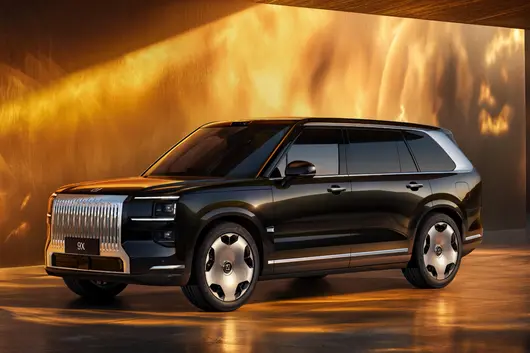

Satu dikunci dipuji (disalahkan), satu tidak dikunci pun disalahkan. "Pagar digital" syarikat kereta, sebenarnya melindungi sesiapa?
Baru-baru ini ada dua perkara pelik dalam industri automotif, perlu dilihat sebagai satu kes.
Sebuah Zeekr, pemilik memandu sendiri ke luar negara, baru masuk Kazakhstan sudah dikunci selama lebih 30 jam. Sebuah Li Auto L9, pemilik kata kereta dicuri di dalam negara, lokasi pun muncul di Kazakhstan.
Satu dikunci secara aktif, satu tidak dikunci. Untuk kenderaan merentasi sempadan, patutkah syarikat kereta menguncinya?
Zeekr: Memandu Sendiri Ke Luar Negara, Dikunci 30 Jam
16 Julai, Encik Liu dari Henan memandu Zeekr 9X untuk perjalanan merentasi Eropah dan Asia. Kereta baru masuk Kazakhstan, sehari kemudian skrin kereta keluar banyak notis—
Navigasi tidak boleh guna, muzik tidak boleh dengar, storan tidak boleh buka, dokumen tidak boleh ambil.
Lebih hebat lagi, penutup tangki minyak tidak boleh dibuka, tidak boleh isi minyak. Kereta ini hanya tinggal fungsi memandu asas sahaja yang boleh digunakan.
Berlangsung lebih 30 jam, skrin dalam kereta berulang kali keluar pop-up提示 "Status kenderaan luar biasa, sila hubungi khidmat pelanggan rasmi", untuk membuka kunci mesti kembali ke kedai autorisasi dalam negara.
Encik Liu memberitahu kedai sebelum keluar negeri nak ke luar negara, tapi tiada siapa mengingatkan pasal penguncian kereta.
Zeekr beri respons: Kereta dijual dalam negara hanya ada keizinan guna dalam sempadan, selepas keluar sempadan guna mekanisme keselamatan untuk cegah curi dan eksport haram. Pemilik nak buka kunci? Boleh, hantar pasport, dokumen通关, kontrak beli kereta, invois, lesen memandu, visa... semua dokumen.
Netizen meledak: Kereta yang saya beli dengan harga 500,000 Yuan, nak ke luar negara pun kena laporkan pada awak?
Li Auto: L9 Hilang Sekelebat, Curian atau Hutang?
Lihat pula pihak Li Auto.
Encik Luo dari Hangzhou, Mac tahun ini dapat notis sistem: Kuasa kawalan APP Li Auto L9 tidak sah lagi.
Kereta mana? Kereta hilang. Lokasi tunjuk, kereta ini ada di Kazakhstan.
Pemilik ragu: Adakah Li Auto buka kunci jauh, hantar kereta ke luar negara secara tersembunyi? Pendapat orang merebak cepat, "Li Auto Hilang" naik trending topik.
Menariknya, hal ini muncul tepat pada hari pelancaran Li Auto L6, masa amat sensitif.
Tapi perkara cepat jadi sebaliknya -> Polis dan media siasat: Kereta ini telah disetel tiga kali.
Kali pertama disetel ke Bank WeBank, pinjam 300,000 Yuan; kali kedua disetel ke Zhejiang Nongxin Small Loan, pinjam 200,000 Yuan; kali ketiga terus gadaikan pada pinjaman peribadi, kunci fizikal pun diserahkan.
Belum habis. Pemilik buat satu lagi: Ganti kunci fizikal ketiga, buat kunci di tangan pemberi gadai jadi tidak berfungsi. Pemberi gadai jumpa kunci tak guna, malam tu bawa kereta, hantar ke Khorgos, malam itu lulus sempadan keluar negara. Sampai Kazakhstan, untuk pembeli tempatan guna biasa, pemberi gadai juga mohon buka ikatan akaun pemilik asal. Ini bukan curi kereta, ini sengketa hutang.
Unit Guaman Li Auto 22 April dah beri pernyataan: Tak pernah ikut sama pemindahan haram, tiada haker, operasi jauh semua guna akaun pemilik sebenar.
Dikunci atau Tak Dikunci, Sama-Sama Disalahkan
Dua benda ini disamping, menarik.
Zeekr dikunci -> Disalahkan.
Pemilik ke luar negara, peliknya dikunci 30 jam, tak boleh buka tangki, pengalaman teruk.
Li Auto tak dikunci -> Disalahkan juga.
Ada komen: Geely terlalu aktif, sekali ke luar negara terus kunci; Li Auto terlalu pasif, tengok sahaja kereta dari Hangzhou ditarik ke tepi laut, hantar ke Khorgos, keluar negara. Kemudian untuk pembeli luar negara guna, ikatan akaun pemilik asal pun dibuang.
Dikunci kena marah, tak dikunci pun kena marah. Macam mana syarikat buat salah je. Tapi masalah betul-betul mudah macam ni?
Mengapa Syarikat Kereta Buat "Pagar Digital"?
Ini tak semudah tu. Ada tiga logik di sebaliknya:
Pertama, industri hitam dan kelabu terlalu ganas
Perbezaan harga kereta elektrik dalam dan luar negara besar.
Zeekr 009 dalam negara 400,000 Yuan+, Singapura jual 2 juta+; BYD Han dalam negara 200,000 Yuan+, Eropah jual 500,000 Yuan+. Jual semula ke luar negara, ruang untung berapa, kira sendiri. Satu kereta diselundup keluar, untung boleh jadi berlipat. Industri hitam di sebaliknya, jauh lebih besar dari jangkaan.
Kedua, keperluan undang-undang tegas
Februari tahun ini, Kementerian Perindustrian dan lapan jabatan lain keluarkan "Panduan Keselamatan Data Kereta Keluar Sempadan (Versi 2026)", lokasi kereta, lintasan, data peta, tak boleh hantar luar negara senang. Syarikat tak pasang pagar geografik, mereka sendiri melanggar.
Ketiga, amalan industri biasa
Tesla, BMW, Mercedes-Benz ada sekatan sama di kawasan sempadan. Logik sama dengan kunci jauh phone hilang -> Bukan nak ganggu awak, nak lindungi awak. Cegah kereta jual beli haram, selepas curi hancur keluar negara.
26 Julai, Zeekr umumkan pindaan mendadak:
Pertama, APP guna fungsi "Jagaan Sempadan", satu butang buka kunci sendiri.
Kedua, kembangkan "tombol fungsi Jagaan Sempadan", default tutup, sebelum keluar negara pemilik putuskan sendiri.
Ketiga, laluan utama khidmat pelanggan 24 jam.
Mudahnya -> Kembalikan kuasa kunci kepada pemilik.
Mengenai Li Auto, unit guaman April dah betulkan, tapi ribut pendapatan masih berlanjutan.
Konflik utama dua benda ini cuma satu:
Pagar geografik syarikat kereta, sebenarnya lindungi pemilik atau batasi pemilik? Jawapannya mungkin -> Kedua-duanya.
Tanpa mekanisme ini, penyelundupan, curian, data tidak sah akan merajalela. Tapi cara guna terlalu kasar, memang buat pengguna ikut undang-undang rugi tanpa suara.
Jadi arah pindaan Zeekr betul: Default tak kunci, sebelum keluar negara biar pemilik pilih sendiri. Serahkan kuasa pilih kepada pengguna, lebih baik dari "fikirkan untuk awak". Memang, kereta jadi milik pengguna, bukan milik syarikat.
© 2024 Bitauto.com. All Rights Reserved.
Bitauto (www.yiche.com and www.bitauto.com) is one of the most visited automotive websites in China. We provide detailed info on Chinese car brands available in your area. Please note that the information provided on this website is based on publicly available data and is for reference only. It may not be fully updated or accurate at all times.

Help us improve our website


