

Homeculture

Search History
Popular Searches
Dealer Login / Sign Up

During the first half of this year, China exported 5.096 million vehicles, a 65.3% increase year-on-year, with June seeing single-month exports surpass 100,000 vehicles for the first time. Among these, the proportion of new energy vehicles has exceeded 46%.
More importantly, this wave of overseas expansion is no longer just about loading cars onto ships for shipment. Chery, BYD, SAIC, and Great Wall Motor have all built factories abroad, moving entire factories, supply chains, and channels over. Even with the EU raising tariffs to 45.3%, China's car exports to Europe increased by 84.7% in the first quarter, with market share rising from 0.5% three years ago to 11%.
The opportunity has truly arrived. At this critical moment, Geely did something at its mid-year performance briefing: raising the full-year overseas sales target from 640,000 vehicles to 920,000 vehicles in one go, and also stated an ambition to aim for an annual sales volume of one million.
A single increase of 44% in targets is rare among domestic automakers. The first reaction of outsiders is "It's just bragging." However, after reviewing Geely's mid-year report and its overseas strategy, you will find it isn't gambling, but holding a clear play it has held for a long time.

These 920,000 vehicles are not made on a whim
We have seen too many companies喊 targets at the beginning of the year and quietly adjust them by mid-year. But this time, Geely's reasons are so simple you cannot refute them: the original 640,000 target was already completed in the first half.
Let's look at the data directly, all from the mid-year performance announcement: overseas sales reached 474,000 vehicles in the first half, a 158% increase year-on-year, exceeding last year's full-year volume. Last year's entire workload was finished in this year's first half.
Overseas monthly sales broke 100,000 vehicles for two consecutive months in June and July, with July alone reaching 106,700 vehicles, a massive 202% increase year-on-year. This is no longer luck, but a new normal. Cumulative sales for the first seven months were 580,900 vehicles, a 164.8% increase year-on-year. So, adjusting from 640,000 to 920,000 simply means writing the obvious trend into official numbers ahead of time.
Moreover, the quality of these 920,000 vehicles is even more worth discussing than the numbers themselves. New Energy Vehicles are the absolute main force: new energy exports reached 277,200 vehicles in the first half, skyrocketing 585% year-on-year, accounting for nearly 60% of total exports; in July alone, new energy exports were 62,600 vehicles, directly more than six times the previous year.
In other words, what Geely is selling overseas is no longer the old story of exchanging foreign exchange via low-price fuel vehicles, but new energy vehicles equipped with intelligent cockpits and three-electric technology. More impressively, as volume increases, prices do not drop — average vehicle revenue is 112,000 yuan, up 15,000 yuan year-on-year, with a gross margin of 17.9%, and core net profit per vehicle of 6,806 yuan, up 45% year-on-year.
Selling more and selling for more value. With this momentum, raising the target to 920,000 might even be considered conservative by Geely itself.

Where is the confidence? Three words — Systematic Capability
Geely's overseas expansion has long passed the stage of just shipping cars to ports; now it is moving factories, technology, and brands outward. This is the fundamental reason why it dares to shout 920,000 vehicles without feeling insecure.
The first layer of confidence is that capacity has truly landed. Overseas, 12 factories are already running, with capacity exceeding 650,000 units, aiming for 840,000 by year-end. This is not a PPT pitch, but actual production lines. Southeast Asia is the root. The Proton AHTV industrial park in Malaysia is upgrading capacity from 200,000 to 500,000 units, and was included in the Malaysian government's national development plan, handling R&D, manufacturing, and exports all at once.
Europe has two legs. On July 23, Geely spent 221 million euros to acquire 34% equity in Ford's Valencia, Spain factory, an old plant with 500,000 units annual capacity, where Galaxy and Lynk & Co will start production in 2028; the Volvo Europe factory will take over the luxury car role within the system, also aiming for 2028. For South America, it will leverage Renault's local bases and channels.
The most refined point of this asset-light, industry symbiosis strategy is: it bypasses the "Made in China, Sold Globally" tariff wall, using joint ventures, equity, and shared capacity to plant Chinese brands directly into local industrial chains. While others are still figuring out how to export, Geely is already answering how to take root.
The second layer of confidence is that channels and markets are spread out systematically. 114 core overseas markets, 17 emerging markets, and over 2,000 offline channels. Regional layout is also clear: ASEAN one 300,000-unit tier, Europe, Eastern Europe, and Latin America/Non-ASEAN three 200,000-unit tiers, Middle East & Asia one 100,000-unit tier. The benefit of this multi-polar pattern is that even if one market fluctuates, it won't cause severe damage — this is exactly the strategy only mature multinational automakers have.
The third layer of confidence is a thick war chest. R&D expenditure in the first half was 9.06 billion yuan, up 8% year-on-year; cash reserves on hand were 69.56 billion yuan. With nearly 70 billion yuan backing, daring to continue increasing R&D spending speaks of long-termism. Going overseas is a marathon, not a sprint; the money bag is the stamina for the second half.

Why偏偏 is it now?
Some might say, anyone can shout targets, why believe Geely can deliver? My view is that this window right now is almost tailor-made for Chinese automakers going global.
Sky time (Timing). In the export map of the first half of this year, Russia, Brazil, and the UK ranked top three, with emerging markets contributing over 4.14 million vehicles in one breath, and the acceptance of Chinese brands visibly warming up. Despite tariffs, market share in Europe continues to rise, proving that the product power of Chinese new energy vehicles is already hard to stop. Geely is stepping right on this biggest trend.
Earth location (Geography). Domestic new energy penetration rates hit 60%, and the world's top-tier industrial scale has given Chinese automakers cost and efficiency advantages in batteries, intelligent driving, and supply chains that others cannot catch up with in a short time. Once these advantages start flowing outward, it is the starting point for Chinese automobiles rewriting the global landscape.
People (Team/Strategy). Geely's strategy in the past two years has been doing subtraction — Geometry merging with Galaxy, Lynk & Co merging with Zeekr, brands shifting from fighting independently to collaborative warfare. The effect is real: administrative expense ratio dropped from 1.9% to 1.7% in the first half. With strength twisted into one rope, the momentum for going overseas naturally increases.
There is also a rather interesting detail. On the day the mid-year report was released, Geely announced management adjustments simultaneously: Li Shufu stepped down as Chairman of the Board and became Honorary Chairman, An Conghui took over, Gui Shengyue served as Vice Chairman, and Gan Jiayue became President. Completing this generational transition while handing in these results is itself a sense of calm — Geely's globalization no longer relies on the bravery of a single person, but on a whole set of running systems and teams.

920,000 vehicles, what does it actually mean?
To be honest, 920,000 vehicles is a hard threshold in the global automotive landscape. It means Geely is moving from "First Tier of Overseas Expansion" to "True Global Automaker". When a Chinese automaker's overseas sales approach one million units, its identity is no longer just an exporter of Made-in-China products, but someone qualified to sit at the table to discuss rules.
Geely's own words are more direct: the long-term goal is to have two-thirds of sales come from overseas. Once that day comes, Geely will change from "Chinese Geely" to "Global Geely" — this is what generations of Chinese automotive people want to do, and the outline is becoming clearer now.
Of course, I won't put too many words to fill the air. The overseas market has never been a smooth path; tariffs, geopolitics, localization, cultural differences — every hurdle requires real skill, the battle for 920,000 vehicles has just begun.
But there is one thing I dare to judge: a car company that dares to raise export targets from 640,000 to 920,000 at mid-year in front of the whole industry, with nearly 70 billion yuan in cash on hand and 12 overseas factories running — it is not gambling, it is using strength to force you to reconsider it.

Auto Review:
In the wave of exports surpassing 5 million units this half, which Chinese automaker will dare to shout for one million in overseas sales next? When Chinese car overseas sales collectively stand on one million units, how will the global automotive chessboard be played again?
This matter is worth our focus on the long view, watching slowly.


In the SUV market in Malaysia, many buyers compare Proton X90 and Volkswagen Tiguan when choosing a car. The price and positioning of these two models are quite close. Today, we will make a detailed comparison from multiple aspects to save you time doing research.
The OTR price for Proton X90 in Malaysia is RM 106,800 - 122,800, with a total of 4 versions, including 2026 1.5T Prime X (RM 122,800), 2026 1.5T Prime (RM 116,800), 2026 1.5T Lite (RM 106,800), etc.
The OTR price for Volkswagen Tiguan in Malaysia is RM 206,540 - 260,024, with a total of 2 versions, including 2025 Allspace 2.0T R-Line (RM 260,024), 2025 Allspace 1.4T Elegance (RM 206,540), etc.
From a price perspective, the starting price of Proton X90 is indeed RM 99,740 cheaper than Volkswagen Tiguan. If your budget is limited, Proton's entry-level model can already meet daily needs. But also note, the few thousand dollars saved might involve trade-offs in features, depending on your specific requirements.

Proton X90 is equipped with a 1.5L Turbo, 140 hp. Official fuel consumption is 7.0 L/100km.
Volkswagen Tiguan is equipped with a 2.0L 4-cyl, 170 hp. Official fuel consumption is 8.0 L/100km.
In terms of power, Volkswagen Tiguan's 2.0L 4-cyl has 30 more horsepower than Proton X90's 1.5L Turbo. However, for daily city driving, the power of both cars is sufficient and you won't feel underpowered.

Proton X90 warranty is 5 years/150,000km, maintenance interval every 10,000km or 6 months.
Volkswagen Tiguan warranty is 3 years/100,000km, maintenance interval every 10,000km or 6 months.

Both Proton X90 and Volkswagen Tiguan are mainstream choices in the Malaysian market, suitable for family use and daily commuting. If you value brand reputation and resale value more, consider the one with better reputation; if you care more about cost-performance ratio and features, choose the one with more configurations. Ultimately, it is recommended to test drive both, as personal experience is the most important.

Overall, Proton X90 and Volkswagen Tiguan are both excellent models in the Malaysian market. Which one to choose depends on your personal needs and budget. It is recommended to do your homework, compare quotes from several dealerships, and then test drive to make the final decision. Buying a car is a major matter; spending time doing research will never go wrong.


In Malaysia's SUV market, many buyers compare Proton X90 and Kia Sportage when choosing a car. These two models are quite close in price and positioning. Today, we will make a detailed comparison from multiple aspects to save you time doing research.
Proton X90 OTR price in Malaysia is RM 106,800 - 122,800, with a total of 4 versions, including 2026 1.5T Prime X (RM 122,800), 2026 1.5T Prime (RM 116,800), 2026 1.5T Lite (RM 106,800), etc.
Kia Sportage OTR price in Malaysia is RM 129,639 - 179,320, with a total of 4 versions, including 2025 1.6T DCT 4WD High (RM 179,320), 2025 1.6T DCT 2WD High (RM 159,320), 2025 2.0L AT 2WD High (RM 139,639), etc.
From a price perspective, Proton X90's starting price is indeed RM 22,839 cheaper than Kia Sportage. If your budget is limited, Proton's entry-level version can already meet daily needs. But be aware, the few thousand cheaper may involve trade-offs in features, depending on your specific needs.
Proton X90 is equipped with 1.5L Turbo, 140 hp. Official fuel consumption 7.0 L/100km.
Kia Sportage is equipped with 1.5L Turbo, 140 hp. Official fuel consumption 7.0 L/100km.
Both cars use the same powertrain, the driving experience is basically the same. Fuel consumption is also similar, no need to worry too much about this.
Proton X90 safety rating is 5★ (ASEAN NCAP), active safety systems include ADAS (ACC, AEB, LKA, LDA, BSM, RCTA).
Kia Sportage safety rating is 5★ (ASEAN NCAP), active safety systems include Drive Wise.
Both cars have the same safety rating, safety features are quite comprehensive at this level. New cars nowadays are not lacking in safety, no need to worry too much about this.
Proton X90 warranty 5 years/150,000km, service interval every 10,000km or 6 months.
Kia Sportage warranty 5 years/300,000km, service interval every 10,000km or 6 months.

Both Proton X90 and Kia Sportage are mainstream choices in the Malaysian market, suitable for family use and daily commuting. If you value brand reputation and resale value more, prioritize the one with better reputation; if you care more about cost-performance and features, choose the one with richer configuration. Ultimately, it is recommended to test drive both, personal experience is the most important.

Overall, Proton X90 and Kia Sportage are both very good models in the Malaysian market. Which one to choose depends on your personal needs and budget. It is recommended to do your homework, compare quotes from several dealerships, and then test drive to make a final decision. Buying a car is a big matter, spending time doing research will never be wrong.

In Malaysia's SUV market, many buyers compare the Proton X90 and Hyundai Tucson when choosing a car. These two models are quite close in terms of price and positioning. Today, we will conduct a detailed comparison from multiple aspects to help you save time doing research.
The Proton X90 OTR price in Malaysia is RM 106,800 - 122,800, with 4 variants in total, including 2026 1.5T Prime X (RM 122,800), 2026 1.5T Prime (RM 116,800), 2026 1.5T Lite (RM 106,800), etc.
The Hyundai Tucson OTR price in Malaysia is RM 143,888 - 197,888, with 5 variants in total, including 2025 HEV 1.6T AT 2WD Prestige (RM 197,888), 2025 1.6T DCT 4WD Prestige (RM 186,888), 2025 1.6T DCT 2WD Prime (RM 164,888), etc.
In terms of price, the Proton X90 starting price is indeed RM 37,088 cheaper than the Hyundai Tucson. If your budget is limited, the Proton entry-level version can already meet daily needs. However, be aware that the cheaper few thousand might involve compromises in features, depending on your specific needs.
The Proton X90 safety rating is 5★ (ASEAN NCAP), and active safety systems include ADAS (ACC, AEB, LKA, LDA, BSM, RCTA).
The Hyundai Tucson safety rating is 5★ (ASEAN NCAP), and active safety systems include SmartSense.
Both cars have the same safety rating; safety features in this segment are quite comprehensive. New cars nowadays generally have good safety, so there is no need to worry too much about this.
The Proton X90 body length is 4400 mm, trunk 400 L.
The Hyundai Tucson body length is 4400 mm, trunk 400 L.
The dimensions of both cars are almost identical, and interior space differences are minimal. Cars in this segment are sufficient for daily use.
Proton X90 warranty 5 years/150,000km, maintenance interval every 10,000km or 6 months.
Hyundai Tucson warranty 5 years/300,000km, maintenance interval every 10,000km or 6 months.

Overall, both the Proton X90 and Hyundai Tucson are excellent models in the Malaysian market. Which one to choose depends mainly on your personal needs and budget. It is recommended to do research, compare quotes from several dealers, and then test drive to make the final decision. Buying a car is a major decision; spending time on research will never be wrong.
In the Malaysian SUV market, many buyers compare the Proton X90 and GWM Haval H6 when choosing a car. These two cars are quite close in price and positioning, so today we will make a detailed comparison from multiple aspects to help you save time on research.
The Proton X90 OTR price in Malaysia is RM 106,800 - 122,800, with a total of 4 variants, including 2026 1.5T Prime X (RM 122,800), 2026 1.5T Prime (RM 116,800), 2026 1.5T Lite (RM 106,800), etc.
The GWM Haval H6 OTR price in Malaysia is RM 139,750 - 139,750, with a total of 2 variants, including 1.5L Turbo Standard (RM 140,000), 1.5L Turbo Premium (RM 155,000), etc.
From the price perspective, the starting price of the Proton X90 is indeed RM 32,950 cheaper than the GWM Haval H6. If your budget is limited, Proton's entry-level version can already meet daily needs. However, also note that the few thousand difference might involve trade-offs in features, depending on your specific needs.
The Proton X90 safety rating is 5★ (ASEAN NCAP), with active safety systems including ADAS (ACC, AEB, LKA, LDA, BSM, RCTA).
The GWM Haval H6 safety rating is TBD, with active safety systems including Basic.
Regarding safety features, both cars have received good ratings. However, there are some functional differences between the Proton X90 ADAS (ACC, AEB, LKA, LDA, BSM, RCTA) and the GWM Haval H6 Basic. If you prioritize active safety, you can compare the feature lists of both carefully.
The Proton X90 uses FWD drive mode.
The GWM Haval H6 uses FWD drive mode.
Both cars have the same drive mode, both are FWD, and there will not be a significant difference in daily driving experience.
Proton X90 warranty is 5 years/150,000km, maintenance interval is every 10,000km or 6 months.
GWM Haval H6 warranty is 7 years/150,000km, maintenance interval is every 10,000km or 6 months.
Proton X90 and GWM Haval H6 are both mainstream choices in the Malaysian market, suitable for family use and daily commuting. If you value brand reputation and resale value more, consider the one with better reputation first; if you care more about cost-performance and features, choose the one with richer configuration. Ultimately, we recommend test driving both, as experiencing it firsthand is the most important.
Overall, Proton X90 and GWM Haval H6 are both very good models in the Malaysian market. Which one to choose depends mainly on your personal needs and budget. We suggest doing your homework, comparing quotes from several dealerships, and then test driving to make the final decision. Buying a car is a big decision, spending time on research will definitely not be wrong.
继6月海外市场销量创历史新高后,上汽集团7月再次交出亮眼成绩单:7月海外市场销售14.2万辆,同比大涨72.5%;1-7月累计销售87.6万辆,同比增长52.1%,稳居中国车企出海第一梯队。
海外销量持续高歌猛进,背后是上汽从“产品出海”向“体系出海”的纵深推进。近期,上汽在欧洲、东南亚、南美等市场密集投放多款车型,同步举办海外技术大会、设立直属销售公司、深化本地化生产……全球化研发、制造、服务和品牌运营能力持续完善。
新品接连上市,海外市场反响热烈
近期,上汽MG、五菱等品牌在海外掀起新车上市潮。6月17日,MG在泰国曼谷发布全新纯电掀背车型MG4 Urban,提供标准版、长续航版与旗舰版三款配置,并实现泰国本地化生产;7月16日,该车型登陆巴西市场,携渠道、售后全生态共同亮相。作为一款“全球车”,MG4 Urban今年先后登陆英国、德国、澳大利亚、新加坡等市场,以先进智电技术和强悍产品力满足全球用户需求。
除了纯电车型,上汽MG的HEV混动车型同样表现抢眼,海外月销近2.7万辆,实现同比翻番。7月29日,MG ZS Hybrid+在印尼国际汽车展上正式发布,凭借出色的燃油经济性、平顺灵敏的驾控表现和完善的售后服务,迅速收获印尼用户的好评。
 同在印尼国际汽车展上市的还有五菱Aira EV。这款与五菱宏光MINIEV同源的“全球车”小巧灵动,精准匹配印尼街巷狭窄、车位局促、多人口出行等本土用车场景。该车型由印尼芝卡朗工厂本地生产,依托在印尼积累的制造、渠道和用户基础,树立印尼城市代步电车新标杆,持续深耕本土市场。

新车效应在各区域市场逐步显现。在欧洲,MG品牌1-7月累计销售21.8万辆,同比增长22.8%,蝉联“中国品牌欧洲销量冠军”;在意大利,MG累计用户突破15万,成为继英国市场之后,品牌在欧洲的第二个15万+市场。上汽通用五菱同样表现抢眼,海外出口连续4个月突破3万辆,1-7月海外累计销量突破20万辆,增长势头强劲。
强化体系深耕,海外战略稳步进阶
密集的新车上市是上汽在全球市场的前沿阵地,而更深层次的突破,在于技术、标准、体系的全方位进阶——分享前沿技术、融入当地市场、扎根产业生态、服务当地用户。
7月8日,MG在英国伦敦举办技术大会,将最前沿的智电技术带回品牌发源地。会上集中展示了MG Plug-in Hybrid+混动、SolidCore半固态电池和MG Parking智慧座舱与辅助驾驶,向全球用户展示了上汽雄厚的技术实力。


次日,MG携两厢纯电概念车MG Go!和轿跑SUV概念车MG Cyber亮相古德伍德速度节。两款车型设计灵感均源自品牌历史经典,MG Go!以小巧运动的姿态为用户提供纯电出行个性新选择;MG Cyber则定位电动旗舰轿跑SUV,承载品牌未来的设计语言与向上愿景。

销售渠道方面,7月MG品牌在比利时、卢森堡成立直属销售公司,全面负责当地市场的分销、销售及渠道运营。直营体系建设是MG从“卖车”到“经营”的转变,有助于品牌更直接地触达客户需求、梳理销售节奏、提升服务能力,实现对市场动态的敏捷响应。
前瞻设计的产品、前沿硬核的技术、深入布局的体系,构成了MG品牌出海逐阶而上的全新格局。从销量规模领跑转向深耕本土市场、构建长期用户关系,上汽的“Glocal战略”正在快速落地。
商用车积极布局,市场开拓稳步推进
海外乘用车市场不断突破的同时,上汽商用车也在海外取得抢眼表现。7月,上汽大通海外热销1.4万辆,同比大增69%,产品持续畅销全球100多个国家和地区。委内瑞拉石油公司首批采购200辆大通T60皮卡,叠加智利矿区皮卡批量订单的稳步落地,大通高端皮卡商用价值获得海外企业客户认可;在希腊轻型商用车市场,上汽大通MAXUS品牌连续6个月保持中国品牌市占率第一,在欧洲市场的渗透步伐持续加快。

重卡和客车领域,近期上汽红岩与泰国头部港口大客户达成1000辆新能源重卡战略合作协议,创下国内新能源重卡单次出口东南亚市场规模历史新高。这批新能源重卡针对东南亚高温、多雨、重载工况进行本地化优化,并同步完善海外充电、维保、备件生态布局,首批整车已批量登船发往泰国。申沃客车7月亮相澳大利亚巴士与客车展览会,展出了专为大洋洲市场量身定制的纯电动城市客车iEV12,满足右舵驾驶、更长运营里程、更优操控性能的需求,同时具备高可靠性和可延展性,以先进的产品与服务满足澳大利亚市场需求。
从轻客、皮卡到重卡、巴士,上汽商用车板块的出海之路不仅有多品类矩阵,更积极探索本地化深度运营。在订单突破到口碑沉淀的过程中,上汽正以体系化实力在全球商用车市场纵深布局,持续拓宽市场增长空间。
从MG在欧洲的技术大会与直营布局,到五菱在东南亚的本土化生产,再到商用车板块在多品类、多区域市场的纵深突破,上汽的全球化运营不断深入。从“走出去”到“走进去”,中国汽车出海的发展逻辑正在重塑,优秀产品与完善体系形成的协同共振,将让中国智造的品牌形象在世界舞台日益闪亮。
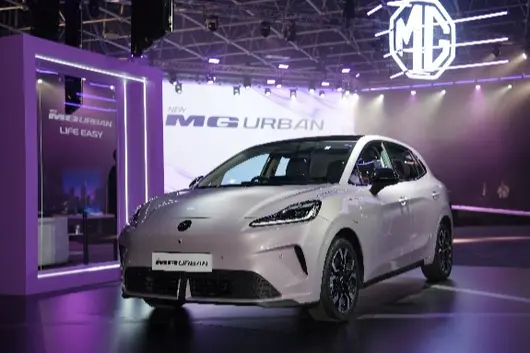

Pada pasaran SUV di Malaysia, ramai pembeli membandingkan Proton X90 dan Mitsubishi Xforce ketika memilih kereta. Kedua-dua kereta ini mempunyai harga dan kelas pasaran yang hampir sama, hari ini kita akan buat perbandingan terperinci dari pelbagai aspek untuk membantu anda menjimatkan masa membuat kajian.
Harga OTR Proton X90 di Malaysia ialah RM 106,800 - 122,800, terdapat 4 varian, termasuk 2026 1.5T Prime X (RM 122,800), 2026 1.5T Prime (RM 116,800), 2026 1.5T Lite (RM 106,800) dan lain-lain.
Harga OTR Mitsubishi Xforce di Malaysia ialah RM 109,930 - 119,930, terdapat 2 varian, termasuk 2026 1.5L Ultimate (RM 119,930), 2026 1.5L Urban (RM 109,930) dan lain-lain.
Dari segi harga, harga permulaan Proton X90 memang lebih murah RM 3,130 berbanding Mitsubishi Xforce. Jika bajet anda terhad, varian permulaan Proton sudah boleh memenuhi keperluan harian. Namun perlu diingat, beberapa ribu ringgit yang lebih murah itu mungkin melibatkan kompromi dari segi spesifikasi, bergantung pada keperluan anda.
Taraf keselamatan Proton X90 ialah 5★ (ASEAN NCAP), sistem keselamatan aktif termasuk ADAS (ACC, AEB, LKA, LDA, BSM, RCTA).
Taraf keselamatan Mitsubishi Xforce ialah 5★ (ASEAN NCAP), sistem keselamatan aktif termasuk MI-PILOT.
Taraf keselamatan kedua-dua kereta sama, dalam kelas ini pelengkapan keselamatan dianggap sangat lengkap. Keselamatan kereta baharu masa kini tidak buruk, tidak perlu terlalu bimbang mengenai hal ini.
Proton X90 mempunyai jaminan 5 tahun/150,000km, selang servis setiap 10,000km atau 6 bulan.
Mitsubishi Xforce mempunyai jaminan 3 tahun/100,000km, selang servis setiap 10,000km atau 6 bulan.
Proton X90 dan Mitsubishi Xforce kedua-duanya adalah pilihan utama pasaran Malaysia, sesuai untuk kegunaan keluarga dan perjalanan harian. Jika anda lebih mementingkan reputasi jenama dan harga jualan semula, boleh utamakan yang mempunyai reputasi lebih baik; jika anda lebih mementingkan nilai dan spesifikasi, pilih yang mempunyai konfigurasinya lebih lengkap. Akhir sekali saya cadangkan kedua-dua model perlu dicuba memandu, pengalaman langsung adalah yang paling penting.

Secara keseluruhan, Proton X90 dan Mitsubishi Xforce kedua-duanya adalah model yang sangat baik di pasaran Malaysia. Memilih mana satu, bergantung kepada keperluan peribadi dan bajet anda. Saya cadangkan anda buat kajian, bandingkan lebih banyak sebutan harga daripada showroom kereta, kemudian pergi uji pamer untuk buat keputusan akhir. Membeli kereta adalah perkara besar, menghabiskan masa membuat kajian tidak akan salah.

Dalam pasaran SUV di Malaysia, ramai pembeli apabila memilih kereta akan membandingkan Proton X90 dan GWM Haval H6. Kedua-dua kereta ini hampir sama dari segi harga dan kedudukan pasaran, hari ini kita akan membuat perbandingan terperinci dari pelbagai aspek, membantu anda menjimatkan masa untuk membuat kajian.
Proton X90 di Malaysia dijual pada harga OTR RM 106,800 - 122,800, mempunyai 4 varian, termasuk 2026 1.5T Prime X (RM 122,800), 2026 1.5T Prime (RM 116,800), 2026 1.5T Lite (RM 106,800) dan lain-lain.
GWM Haval H6 di Malaysia dijual pada harga OTR RM 139,750 - 139,750, mempunyai 2 varian, termasuk 1.5L Turbo Standard (RM 140,000), 1.5L Turbo Premium (RM 155,000) dan lain-lain.
Daripada segi harga, Proton X90 bermula lebih murah sebanyak RM 32,950 berbanding GWM Haval H6. Jika bajet anda terhad, varian asas Proton sudah boleh memenuhi keperluan harian. Namun, jangan lupa, jumlah yang lebih murah tersebut, mungkin ada pengorbanan dari segi kelengkapan, bergantung kepada keperluan anda.
Proton X90 mempunyai 1.5L Turbo, kuasa 140 hp. Penggunaan minyak rasmi 7.0 L/100km.
GWM Haval H6 mempunyai Hybrid, kuasa 170 hp. Penggunaan minyak rasmi 4.5 L/100km.
Dari segi kuasa, Hybrid pada GWM Haval H6 mempunyai 30 kuasa kuda lebih berbanding 1.5L Turbo pada Proton X90. Namun untuk memandu sehari-hari di bandar, kedua-dua kereta mempunyai kuasa yang mencukupi, tidak berasaan kurang tenaga.
Penarafan keselamatan Proton X90 ialah 5★ (ASEAN NCAP), sistem keselamatan aktif termasuk ADAS (ACC, AEB, LKA, LDA, BSM, RCTA).
Penarafan keselamatan GWM Haval H6 ialah TBD, sistem keselamatan aktif termasuk Basic.
Dari segi kelengkapan keselamatan, kedua-dua kereta mendapat penarafan yang baik. Namun ADAS pada Proton X90 (ACC, AEB, LKA, LDA, BSM, RCTA) dan Basic pada GWM Haval H6 mempunyai perbezaan dalam fungsi, jika anda mengutamakan keselamatan aktif, boleh bandingkan senarai fungsi kedua-duanya dengan teliti.
Proton X90 menggunakan sistem pemacu FWD.
GWM Haval H6 menggunakan sistem pemacu FWD.
Sistem pemacu kedua-dua kereta sama, iaitu FWD, pengalaman memandu sehari-hari tidak akan terlalu berbeza.
Proton X90 dan GWM Haval H6 adalah pilihan utama pasaran Malaysia, sesuai untuk keperluan keluarga, perjalanan harian. Jika anda lebih mengutamakan reputasi jenama dan harga kereta sedia ada, boleh prioritaskan yang mempunyai reputasi lebih baik; jika anda lebih mengutamakan nilai untuk harga dan kelengkapan, maka pilih yang lebih banyak kelengkapan. Pada akhirnya disyorkan untuk uji pandu kedua-duanya, pengalaman peribadi adalah yang paling penting.
Secara keseluruhannya, Proton X90 dan GWM Haval H6 adalah model kereta yang sangat bagus di pasaran Malaysia. Memilih mana satu, bergantung kepada keperluan dan bajet peribadi anda. Disyorkan supaya anda membuat kajian terlebih dahulu, bandingkan harga daripada lebih banyak pengedar, kemudian uji pandu untuk membuat keputusan akhir. Membeli kereta adalah perkara penting, meluangkan masa untuk kajian tidak akan salah.

喺馬來西亞嘅 SUV 市場,好多買家喺揀車嘅時候都會拿 Proton X90 同 Volkswagen Tiguan 嚟作比較。這兩款車喺價位同定位上都好接近,今日我哋就由多個方面做一個詳細嘅比較,幫你節省做功課嘅時間。
Proton X90 喺馬來西亞嘅 OTR 售價係 RM 106,800 - 122,800,一共有 4 個版本,包括 2026 1.5T Prime X(RM 122,800)、2026 1.5T Prime(RM 116,800)、2026 1.5T Lite(RM 106,800) 等。
Volkswagen Tiguan 喺馬來西亞嘅 OTR 售價係 RM 206,540 - 260,024,一共有 2 個版本,包括 2025 Allspace 2.0T R-Line(RM 260,024)、2025 Allspace 1.4T Elegance(RM 206,540) 等。
由價錢睇嚟,Proton X90 嘅起步價確實比 Volkswagen Tiguan 平咗 RM 99,740。如果你預算有限,Proton 嘅入門版已經可以滿足日常需要。但都要留意,平嗰幾千蚊,可能喺配備上會有取捨,具體要看你嘅需求。
Proton X90 車身長 4400 mm,車尾箱 400 L。
Volkswagen Tiguan 車身長 4400 mm,車尾箱 400 L。
兩款車嘅尺寸幾乎一樣,車內空間分別唔大。呢級別嘅車,日常使用完全夠用。
Proton X90 保養保修 5 年/150,000km,保養間隔 每 10,000km 或 6 個月。
Volkswagen Tiguan 保養保修 3 年/100,000km,保養間隔 每 10,000km 或 6 個月。
Proton X90 同 Volkswagen Tiguan 都係馬來西亞市場嘅主流選擇,適合家庭使用、日常通勤。如果你更重視品牌口碑同二手價,可以優先考慮口碑更好嗰一款;如果你更介意性價比同配備,就揀配置更豐富嗰款。最後都建議兩款都去試駕,親身試吓先至係最重要嘅。
總括嚟講,Proton X90 同 Volkswagen Tiguan 都係馬來西亞市場幾唔錯嘅車型。揀邊架,關鍵仲要睇你嘅個人需要同預算。建議大家做好功課,多比較幾間車行嘅報價,先至去試駕做最後決定。買車係一件大事,花少少時間做功課絕對唔會錯。
In the Malaysian SUV market, many buyers compare Proton X90 and Chery Tiggo 9 when choosing a car. These two cars are quite close in price and positioning. Today, we will do a detailed comparison from multiple aspects to help you save time on research.
Proton X90 OTR price in Malaysia is RM 106,800 - 122,800, with a total of 4 versions, including 2026 1.5T Prime X (RM 122,800), 2026 1.5T Prime (RM 116,800), 2026 1.5T Lite (RM 106,800), etc.
Chery Tiggo 9 OTR price in Malaysia is RM 166,800 - 179,800, with a total of 1 version, including 2026 2.0T Standard (RM 179,750), etc.
From a price perspective, Proton X90's starting price is indeed RM 60,000 cheaper than Chery Tiggo 9. If your budget is limited, Proton's entry-level version can already meet daily needs. However, you should also note that the few thousand less in price might involve trade-offs in features, depending on your needs.
Proton X90 is equipped with 1.5L Turbo, 140 hp. Official fuel consumption 7.0 L/100km.
Chery Tiggo 9 is equipped with 2.0L 4-cyl, 170 hp. Official fuel consumption 8.0 L/100km.
In terms of power, Chery Tiggo 9's 2.0L 4-cyl has 30 more horsepower than Proton X90's 1.5L Turbo. However, for daily city driving, the power of both cars is sufficient and won't feel underpowered.
Proton X90 body length 4400 mm, trunk 400 L.
Chery Tiggo 9 body length 4400 mm, trunk 400 L.
The dimensions of both cars are almost the same, and the interior space difference is not significant. For this class of cars, it is completely sufficient for daily use.
Proton X90 adopts FWD drive type.
Chery Tiggo 9 adopts FWD drive type.
Both cars have the same drive type, both are FWD, and there will be no big difference in daily driving feel.

Proton X90 warranty 5 years/150,000km, maintenance interval every 10,000km or 6 months.
Chery Tiggo 9 warranty 3 years/100,000km, maintenance interval every 10,000km or 6 months.

In general, Proton X90 and Chery Tiggo 9 are both very good models in the Malaysian market. Which one to choose mainly depends on your personal needs and budget. We recommend doing your research, comparing quotes from several dealers, and then test driving to make a final decision. Buying a car is a big matter, spending time doing research will definitely not be wrong.

In Malaysia's SUV market, many buyers compare Proton X90 and Chery Tiggo 9 when choosing a car. These two models are quite close in price and positioning. Today, we will make a detailed comparison from multiple aspects to help you save time on research.
Proton X90's OTR price in Malaysia is RM 106,800 - 122,800, with a total of 4 versions, including 2026 1.5T Prime X (RM 122,800), 2026 1.5T Prime (RM 116,800), 2026 1.5T Lite (RM 106,800), etc.
Chery Tiggo 9's OTR price in Malaysia is RM 166,800 - 179,800, with a total of 1 version, including 2026 2.0T Standard (RM 179,750), etc.
In terms of price, the starting price of Proton X90 is indeed RM 60,000 cheaper than Chery Tiggo 9. If your budget is limited, Proton's entry-level version can already meet daily needs. However, also note that the few thousand cheaper might involve trade-offs in features, depending on your specific needs.
Proton X90's safety rating is 5★ (ASEAN NCAP), active safety systems include ADAS (ACC, AEB, LKA, LDA, BSM, RCTA).
Chery Tiggo 9's safety rating is TBD, active safety systems include Basic.
In terms of safety features, both cars received decent ratings. However, there are some differences in functionality between Proton X90's ADAS (ACC, AEB, LKA, LDA, BSM, RCTA) and Chery Tiggo 9's Basic. If you value active safety more, you can compare their feature lists in detail.
Proton X90 body length 4400 mm, trunk 400 L.
Chery Tiggo 9 body length 4400 mm, trunk 400 L.
The dimensions of both cars are almost the same, with little difference in interior space. For a car of this class, it is more than enough for daily use.
Proton X90 warranty 5 years/150,000km, maintenance interval every 10,000km or 6 months.
Chery Tiggo 9 warranty 3 years/100,000km, maintenance interval every 10,000km or 6 months.
Both Proton X90 and Chery Tiggo 9 are mainstream choices in the Malaysian market, suitable for family use and daily commuting. If you value brand reputation and resale value more, prioritize the one with better reputation; if you care more about cost-performance ratio and features, choose the one with richer configuration. Ultimately, it is recommended to test drive both, as personal experience is the most important.
Overall, both Proton X90 and Chery Tiggo 9 are very good models in the Malaysian market. Choosing which one depends mainly on your personal needs and budget. We suggest doing your homework, comparing quotes from several dealerships, and then test driving to make a final decision. Buying a car is a big matter, spending time on research will never go wrong.

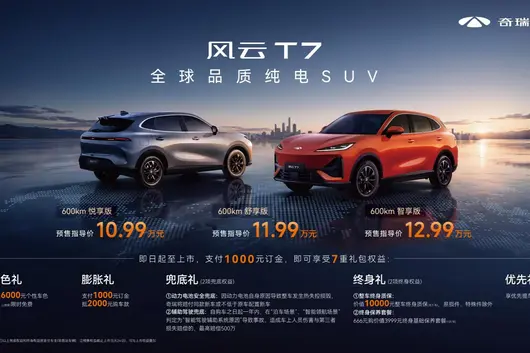
12 Ogos, di bawah Chery, SUV Elektrik Murni baru sepenuhnya Fengyun T7 memulakan pra-jualan, tiga versi harga pra-jualan adalah: 600km Edisi Nikmat 109,900 Yuan, 600km Edisi Selesa 119,900 Yuan, Edisi Cergas 129,900 Yuan.

Pelanggan yang membuat tempahan boleh menikmati 7 faedah pembelian kereta, termasuk pilihan warna kereta peribadi bernilai 6,000 Yuan secara percuma untuk masa terhad, bayaran deposit 1,000 Yuan ditukar dengan 2,000 Yuan wang pembelian, pengambilan kereta keutamaan, dan dua jaminan asas serta dua faedah seumur hidup.
Dalam dua jaminan asas tersebut termasuk: ① Jaminan keselamatan bateri kuasa, jika pemusnahan terkawal terma keseluruhan berlaku disebabkan oleh punca bateri kuasa itu sendiri, Chery akan membayar ganti kereta baharu model yang sama atau kereta baharu yang tidak kurang daripada konfigurasi kereta asal; ② Jaminan pemanduan bantuan, dalam tempoh satu tahun dari tarikh pembelian, dalam "szenario memarkir", "szenario pemanduan pintar" ditentukan sebagai "sebab sistem bantuan pemanduan pintar" yang menyebabkan kemalangan, menyebabkan kecederaan orang dalam kenderaan dan pampasan kerugian pihak ketiga, pampasan maksimum 5 juta.
Dan dua faedah seumur hidup termasuk: ① Jaminan seumur hidup keseluruhan kereta, nilai jaminan seumur hidup keseluruhan kereta bernilai 10,000 Yuan (termasuk tiga komponen elektrikal), kecuali suku kepingan mudah rosak, komponen khas; ② Pakej penyelenggaraan seumur hidup, beli pakej penyelenggaraan asas seumur hidup bernilai 3,999 Yuan dengan harga 666 Yuan (1 kali/tahun).

T7 ialah sebuah SUV Kompak, ini ialah model dengan penentuan posisi terendah dan harga jualan paling murah bagi siri Chery Fengyun T semasa. Kereta ini selepas pelancaran, Siri Fengyun T kini telah menyusun sepenuhnya semua subsemen SUV Gergasi, Pertengahan-Besar, Pertengahan dan Kompak, mencakupi julat harga 100,000 - 250,000 Yuan.
Baru-baru ini, perbahasan mengenai "kereta pantas" dalam industri automota sangat sengit. Berapa lama kitaran pembangunan sebuah kereta才算 normal? Biasanya 5, 6 tahun untuk membangun sebuah kereta, sekarang 2, 3 tahun sebuah, ada syarikat automota malah 18 bulan sudah membangun kereta baharu, adakah yang kedua dikira sebagai "kereta pantas", adakah keselamatan dan kualiti terjamin? Pandangan berbeza syarikat tidak sama.
Pengerusi Voyah Motors, Lu Fang berpendapat, masa pembangunan pendek tidak sama dengan kereta pantas. Menentukan sama ada sebuah kereta adalah "pantas", ukuran tunggalnya bukan masa, tetapi sama ada ia telah sepenuhnya menamatkan semua proses pengesahan yang diperlukan. Jika sebuah kereta melanggar peraturan, mengurangkan kerja, mengurangkan ujian dalam pembangunan, itu kereta pantas; tetapi jika tempohnya dipersingkat, tetapi ia melaksanakan setiap ujian dalam peraturan dan piawaian industri dengan teliti, maka ia patut dipanggil "kereta efisien".
Mengapa kitaran pembangunan kereta baharu sekarang secara umum lebih pendek, Lu Fang berpendapat ini adalah hasil daripada lompatan sistem teknologi. Di satu pihak, arkitektur platform, modul mencapai penggunaan semula sistem tiga komponen, arkitektur chassis merentasi model, menjimatkan kos pembangunan berulang; di pihak lain, kematangan teknologi ujian simulasi, boleh menyelesaikan simulasi keadaan terhad berjuta kilometer dalam persekitaran digital, secara besar mengurangkan kitaran ujian fizikal kereta sebenar, hakikatnya adalah revolusi kecekapan industri automota, bukan kompromi terhadap kualiti produk.

Namun, pandangan eksekutif Chery kelihatan tidak sepenuhnya sama. Naib Presiden Eksekutif Chery, Li Xueyong menyatakan dalam satu posting sebelum pra-jualan Fengyun T7, Chery membuat kereta lambat, tetapi ada masa yang benar-benar tidak berani jimat, penyelidikan pembangunan tidak boleh pantas, pengesahan tidak boleh pantas, penciptaan bersama pengguna global juga tidak boleh pantas.
Fengyun T7 ialah "kerja perlahan menghasilkan produk halus". Kereta ini bermula kajian pra dari tahun 2022, sehingga Kuartal 3 Tahun 2026 memulakan pra-jualan, mengalami 2 tahun perancangan, 3 tahun penyelidikan pembangunan positif. Fasa ujian, terdapat 81 kenderaan ketahanan eksklusif ujian jalan serentak, kenderaan penuh kumulatif ujian jarak lebih 6 juta kilometer, ujian khusus ketahanan 1.45 juta kilometer. Sementara itu terhadap musim hujan Asia Tenggara, panas terik Timur Tengah, kelembapan tinggi Indonesia pelbagai rantau global banyak melakukan ujian nyata keadaan terhad.
Fengyun T7 juga adalah model global, sama ada reka bentuk estetika, proses pembangunan, kualiti keselamatan dan piawaian, semua mempertimbangkan keperluan pengguna global dan piawaian undang-undang pasaran luar negara.
Maka, Chery Fengyun T7 yang dibangunkan selama lima tahun boleh menang kah? Seterusnya kita lihat teliti kekuatan produknya.

Fengyun T7 ialah SUV Kompak standard, saiz badan 4570×1852×1694mm, jarak gandar 2700mm. Kadar ruang dalaman 84%, lantai belakang rata tulen, ruang kaki sampai 911mm, teraju setaraf. Kerusi belakang dilemparkan boleh dikembangkan menjadi katil rata tulen 1955mm. Dalam keadaan biasa kapasiti beg barang 450L, kapasiti dikembangkan sampai 1550L, keupayaan beban menonjol. Keseluruhan kereta ada 38 ruang penyimpanan, juga dilengkapi empat cincin rivet beban maksimum 300kg dan dua kail gantungkan beban maksimum 3kg, mudah tetapkan peralatan perkhemahan dan barang besar.
Dari segi reka bentuk, reka bentuk luar Fengyun T7 bersih pantas, garis mudah, permukaan bentuk penuh. Muka depan kawalan angin, badan sutera dibentuk angin, pintu belakang cahaya ufuk, mengimbangi estetika ringkas antarabangsa dan watak halus Timur. Piawaian cat keseluruhan kereta segerak dengan keperluan tahan cuaca luar negara ketat, menyediakan 6 warna pelengkap Api Merah Jingga, Ungu Asap Gunung, Krem Berawan, Perak Alir, Kelabu Bambu, Hitam Batu.

Dalaman dibahagikan kepada dua gaya Hitam Coklat Hangat, Hitam Obsidian Malam Seterang, kabin peluk sayap awan disepadankan pelapik lembut kawasan besar, penyuara terapung kerikil, butiran quilting berlian halus; semua kulit dalaman, jalur meterai, komponen plastik tidak mudah keras pudar, penggunaan sepanjang tahun masih baru tahan rupa, memenuhi wajah dan kualiti tekstur.
Dari segi konfigurasinya selesa, kereta baharu guna kerusi rasa awan 9 lapisan, lembut tidak runtuh duduk lama tidak penat, tambahan juga ada fungsi pengudaraan pemanasan. Fungsi pemanasan sokongan 3 gear kawalan suhu, persekitaran -20℃, 5 minit pemanasan cepat ke 30℃; pendedaran kerusi guna reka bentuk sedut angin, musim panas belakang tidak pekat peluh.
Dari segi jarak dan penggunaan tenaga, kereta baharu semua setandard bateri Litium Besi Fosfat 65.05kWh, jarak CLTC 600km (ujian sebenar 667+km), penggunaan tenaga 100km 12.9kWh. Bateri SOC 30%-80% hanya 20 minit. Pengurusan haba integrasi keseluruhan sistem AC pam haba dua sumber + PTC voltan tinggi membolehkan pengguna utara musim sejuk berani buka dengan yakin. -30°C-55°C kawasan suhu stabil beroperasi, persekitaran suhu rendah memanaskan lebih jimat, persekitaran suhu tinggi penyejukan lebih cekap. Disepadankan dengan gril masuk udara pintar AGS standard semua dan 14 optima seretan angin rendah, penggunaan tenaga kelajuan tinggi rendah lebih stabil. Kenderaan juga ada fungsi pelepasan luar, kuasa 6kW.

Dari segi kuasa dan kawalan memandu, Fengyun T7 guna bentuk kuasa depan depan, kuasa maksimum motor 178kW, pusingan puncak 275Nm, kelajuan tertinggi 180km/h. Suspensi ialah MacPherson depan + belakang Multi-link suspensi bebas gabungan, chassis oleh pasukan antarabangsa dipimpin pakar penyesuaian chassis Maserati, nisbah gandar beban emas 50.8:49.2 secara berkesan menekan fenomena tolak kepala putar, ekor melempar, meningkatkan kestabilan belok dan jejak lurus.
Dari segi pemanduan bantuan pintar, versi Fengyun T7 tinggi muat sistem bantuan pemanduan Falcon 500, mengintegrasikan 3 radar gelombang milimeter, 7 kamera berprestasi tinggi, 12 radar ultrasonik, jumlah 22 sensor ketepatan tinggi (3R7V12U), menyokong fungsi NOA laju tinggi (versi tengah rendah menyokong pemanduan bantuan L2). Dari memarkir, kereta baharu boleh penuhi 300+ semua senario parkir automatik, termasuk senario parkir jalan buntu, balik belakang jejak satu butang, parkir silang tingkat, merangkumi industri terlengkap.
Dari segi kabin pintar, Fengyun T7 muat cip integrasi kabin pemanduan Qualcomm 8775 (versi rendah dan tengah muat cip Qualcomm 8155), membolehkan dua domain kabin pintar dan pemanduan pintar berkoordinasi tanpa celah. Cip ini guna proses maju 4nm, 72TOPS komputasi tinggi, respons hanya 80ms, pembukaan naik 33%, kelajuan lebih cepat, operasi lebih licin, respons interaksi pintar lebih pantas.

15.6 inci skrin 2.5K HD gambar halus benar, tahan silau, lawan pantulan, lawan jari, CarPlay, HUAWEI HiCar, CarLink sambungan tanpa wayar, merangkumi 99% di atas pasaran telefon skrin, masuk kereta boleh capai interkoneksi tanpa celah. Lingxi Kabin Pintar 2.0 bawa rakan penyertaan serba boleh, memiliki Rakan Xiao Qi, Bibi Timur Laut, Pakar Perbincangan, Guru Pertuturan, Raja Cerita, Ahli Debat enam pengalaman penyertaan nyata. Ada juga enam senario mod Rehat, Perkhemahan, Haiwan Peliharaan, Sedar, memenuhi keperluan kenderaan pelbagai senario.
Daripada aspek keselamatan badan, sangkar Fengyun T7 sembilan melintang lima membujur guna 80% keluli kekuatan tinggi, 18.84% keluli bentuk haba hasil, struktur shotgun, bingkai dua bingkai baji + balang penyangga Pack membentuk "tulang besi keluli" perlindungan keselamatan kabin penumpang serba sisi, depan 9 laluan + sisi 6 laluan transmisi hentakan memaksimumkan penyebaran tenaga hentakan, menyimpan ruang kehidupan penumpang; keseluruhannya 9 beg udara (termasuk 48L beg udara luar dua ruang dan beg udara sisi belakang) membentuk perlindungan serba sisi 360°.
Dari aspek keselamatan bateri, bateri Badak Fengyun T7 semua guna struktur perlindungan 6D kuat, perlindungan serba sisi tahan mampat, tusuk, hentak, membina pelindung keselamatan tiga dimensi berlapis untuk bateri kuasa. Aras kalis air IP68 96 kali piawaian negara, secara berkesan cegah bahaya pendam bateri pendek.
Rumusan: Fengyun T7 masuk pasar SUV Elektrik Murni Kompak banyak model, persaingan sengit. Data menunjukkan, tahun lepas, subsemen ini teratas 3 model adalah Changan Deepal S05, GAC Toyota Boshu 3X, Geely Galaxy E5, harga jualan masing-masing 119,900 - 151,900 Yuan, 109,800 - 159,800 Yuan, 109,800 - 179,800 Yuan; jualan masing-masing 111,682 unit, 94,111 unit, 91,726 unit.
Apa kelebihan persaingan Fengyun T7? Pertama semua versi 600km jarak berada di tahap teraju. Changan Deepal S05 jarak masuk 520km, Boshu 3X 430km, Galaxy E5 530km. Untuk kereta keluarga ekonomikal, jarak adalah perhatian utama banyak pengguna beli model elektr.
Kedua, kelajuan casnya juga laju, bateri SOC 30%-80% guna masa 20 minit, tetapi kelebihan ini tidak jelas. Changan Deepal S05 guna 15 minit, Boshu 3X guna 24 minit, Galaxy E5 guna 20 minit.
Akhir, dari segi pintar, pra-harga 129,900 Yuan Fengyun T7 Edisi Cergas boleh berikan NOA laju tinggi panduan bantuan, Deepal S05 semua setandard fungsi NOA laju tinggi, harga 141,900 - 151,900 Yuan versi tinggi sokong juga NOA bandar; Boshu 3X versi tinggi sediakan bandar dan laju NOA, tetapi harga pergi ke 149,800 - 159,800 Yuan; Galaxy E5 semua tidak ada laju atau bandar NOA.
Melalui perbandingan mudah di atas tidak susah dijumpai, Changan Deepal S05 di pasar SUV Kompak nombor satu ada sebab. Fengyun T7 jarak unggul, Changan Deepal S05 konfigurasi pintar lebih tinggi, hanya lihat pengguna pilih bagaimana.
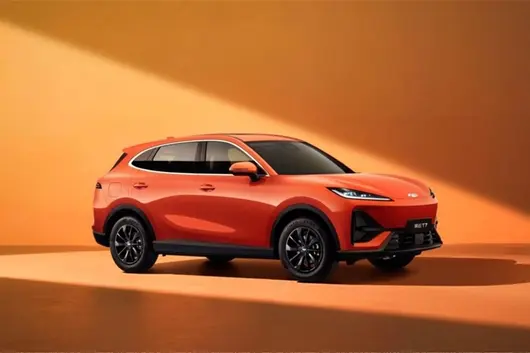
In Malaysia's SUV market, many buyers compare Proton X90 and Chery Tiggo 7 PHEV when choosing a car. Both cars are quite close in price and positioning. Today we will make a detailed comparison from multiple aspects to save you time doing research.
The OTR price for Proton X90 in Malaysia is RM 106,800 - 122,800, with a total of 4 versions, including 2026 1.5T Prime X (RM 122,800), 2026 1.5T Prime (RM 116,800), 2026 1.5T Lite (RM 106,800) etc.
The OTR price for Chery Tiggo 7 PHEV in Malaysia is RM 129,750 - 129,750, with a total of 2 versions, including 2025 1.5T 90km CSH (RM 129,750), What charging methods does the Tiggo 7 PHEV support? Can it be charged using a home power socket? (RM 117,478) etc.
From the price perspective, Proton X90's starting price is indeed RM 22,950 cheaper than Chery Tiggo 7 PHEV. If your budget is limited, Proton's entry-level version can already meet daily needs. But also note, the difference of a few thousand might involve trade-offs in features, it depends on your specific needs.
Proton X90 is equipped with 1.5L Turbo, 140 hp. Official fuel consumption 7.0 L/100km.
Chery Tiggo 7 PHEV is equipped with Hybrid, 170 hp. Official fuel consumption 4.5 L/100km.
In terms of power, Chery Tiggo 7 PHEV's Hybrid has 30 more horsepower than Proton X90's 1.5L Turbo. However, for daily driving in the city, both cars' power is sufficient, you won't feel lack of power.
Proton X90 body length 4400 mm, trunk 400 L.
Chery Tiggo 7 PHEV body length 4400 mm, trunk 400 L.
The dimensions of both cars are almost the same, interior space difference is not significant. Cars of this class are more than enough for daily use.
Proton X90 adopts FWD drive method.
Chery Tiggo 7 PHEV adopts FWD drive method.
Both cars have the same drive method, both are FWD, daily driving experience will not have much difference.

Overall, Proton X90 and Chery Tiggo 7 PHEV are both very good car models in the Malaysian market. Which one to choose depends mainly on your personal needs and budget. We recommend you do your homework, compare quotes from multiple dealerships, then test drive to make the final decision. Buying a car is a big matter, spending some time doing research is never wrong.

Di pasaran SUV Malaysia, ramai pembeli ketika memilih kereta akan membandingkan Proton X90 dan Chery Tiggo 7 PHEV. Kedua-dua kereta ini hampir sama dari segi harga dan penargetan, hari ini kita akan buat perbandingan terperinci dari pelbagai aspek, membantu anda menjimatkan masa membuat penelitian.
Proton X90 di Malaysia harga OTR adalah RM 106,800 - 122,800, keseluruhan ada 4 varian, termasuk 2026 1.5T Prime X (RM 122,800), 2026 1.5T Prime (RM 116,800), 2026 1.5T Lite (RM 106,800) dan lain-lain.
Chery Tiggo 7 PHEV di Malaysia harga OTR adalah RM 129,750 - 129,750, keseluruhan ada 2 varian, termasuk 2025 1.5T 90km CSH (RM 129,750), Apakah kaedah pengecasan yang disokong oleh Tiggo 7 PHEV? Bolehkah ia dicas menggunakan soket kuasa rumah? (RM 117,478) dan lain-lain.
Dari segi harga, harga permulaan Proton X90 memang lebih murah RM 22,950 berbanding Chery Tiggo 7 PHEV. Jika bajet anda terhad, versi pemula Proton sudah boleh memenuhi keperluan harian. Tetapi perlu diingat, beza harga beberapa ribu ringgit itu, mungkin ada pilihan dalam kelengkapan, bergantung pada keperluan anda.
Panjang badan Proton X90 4400 mm, ruang bagasi 400 L.
Panjang badan Chery Tiggo 7 PHEV 4400 mm, ruang bagasi 400 L.
Saiz kedua-dua kereta hampir sama, ruang dalam kereta hampir tiada perbezaan. Kereta dalam kelas ini, penggunaan harian sudah cukup.
Proton X90 jaminan 5 tahun/150,000km, selang penyelenggaraan setiap 10,000km atau 6 bulan.
Chery Tiggo 7 PHEV jaminan 3 tahun/100,000km, selang penyelenggaraan setiap 10,000km atau 6 bulan.
Proton X90 dan Chery Tiggo 7 PHEV adalah pilihan utama di pasaran Malaysia, sesuai untuk kegunaan keluarga dan perjalanan harian. Jika anda lebih mementingkan reputasi jenama dan harga jual semula, pertimbangkan dahulu yang mempunyai reputasi lebih baik; jika anda lebih mementingkan nisbah harga dan kelengkapan, pilih yang mempunyai konfigurasi lebih lengkap. Akhir sekali, disyorkan kedua-dua model untuk diuji cuba, pengalaman sendiri adalah yang paling penting.
Secara keseluruhan, Proton X90 dan Chery Tiggo 7 PHEV adalah model kereta yang cukup baik di pasaran Malaysia. Memilih mana satu, utama bergantung pada keperluan dan bajet peribadi anda. Disyorkan buat penelitian, bandingkan beberapa tawaran dari kedai kereta yang berbeza, baru kemudian uji cuba buat keputusan akhir. Membeli kereta adalah perkara besar, luangkan masa membuat penelitian tidak akan salah.

喺馬來西亞嘅 SUV 市場,好多買家在揀車嗰陣都會拿 寶騰 X90 同 MG MG HS 做比較。這兩款車喺價位同定位上都相當接近,今日我哋就從多個方面做一個詳細嘅比較,幫你慳返做功課嘅時間。
寶騰 X90 喺馬來西亞嘅 OTR 售價係 RM 106,800 - 122,800,一共有 4 個版本,包括 2026 1.5T Prime X(RM 122,800)、2026 1.5T Prime(RM 116,800)、2026 1.5T Lite(RM 106,800) 等。
MG MG HS 喺馬來西亞嘅 OTR 售價係 RM 130,450 - 146,450,一共有 2 個版本,包括 1.5L Standard(RM 105,000)、1.5L Executive(RM 115,000) 等。
從價錢睇落,寶騰 X90 嘅起步價確實比 MG MG HS 平咗 RM 23,650。如果你預算有限,寶騰嘅入門版已經可以滿足日常需要。但都要注意,平嗰幾千塊,可能喺配備上會有取舍,具體要睇你嘅需求。
寶騰 X90 嘅安全評級係 5★ (ASEAN NCAP),主動安全系統包括 ADAS (ACC, AEB, LKA, LDA, BSM, RCTA)。
MG MG HS 嘅安全評級係 TBD,主動安全系統包括 Basic。
安全配備方面,兩款車都拿到唔錯嘅評級。不過寶騰 X90 嘅 ADAS (ACC, AEB, LKA, LDA, BSM, RCTA) 同 MG MG HS 嘅 Basic 喺功能上有啲分別,如果你比較重視主動安全嘅話,可以仔細對比吓兩者嘅功能列表。
寶騰 X90 車身長 4400 mm,尾箱 400 L。
MG MG HS 車身長 4400 mm,尾箱 400 L。
兩款車嘅尺寸幾乎一樣,車內空間分別唔大。呢個級別嘅車,日常使用完全夠用。
寶騰 X90 採用 FWD 驅動方式。
MG MG HS 採用 FWD 驅動方式。
兩款車嘅驅動方式一樣,都係 FWD,日常駕駛感受唔會有太大分別。
總嚟講,寶騰 X90 同 MG MG HS 都係馬來西亞市場好唔錯嘅車型。揀邊一輛,關鍵都要睇你嘅個人需要同預算。建議大家做好功課,多比較幾間車行嘅報價,再去試車做最終決定。買車係件大事,花少少時間做功課絕對唔會錯。

In Malaysia's SUV market, many buyers compare the Proton X90 and Chery Tiggo 7 Pro when choosing a car. These two models are quite close in price and positioning. Today we will conduct a detailed comparison from multiple aspects to help you save time on research.
The OTR price for the Proton X90 in Malaysia is RM 106,800 - 122,800, with a total of 4 versions, including 2026 1.5T Prime X (RM 122,800), 2026 1.5T Prime (RM 116,800), 2026 1.5T Lite (RM 106,800), etc.
The OTR price for the Chery Tiggo 7 Pro in Malaysia is RM 123,750 - 123,750, with a total of 2 versions, including 1.6L Turbo Standard (RM 125,000), 1.6L Turbo Premium (RM 140,000), etc.
From a price perspective, the Proton X90's starting price is indeed RM 16,950 cheaper than the Chery Tiggo 7 Pro. If your budget is limited, Proton's entry-level version can already meet daily needs. However, be aware that the savings of a few thousand might involve trade-offs in features, depending on your specific requirements.
The safety rating of the Proton X90 is 5★ (ASEAN NCAP), and its active safety system includes ADAS (ACC, AEB, LKA, LDA, BSM, RCTA).
The safety rating of the Chery Tiggo 7 Pro is TBD, and its active safety system includes Basic.
In terms of safety features, both cars have received good ratings. However, there are some differences in functionality between the Proton X90's ADAS (ACC, AEB, LKA, LDA, BSM, RCTA) and the Chery Tiggo 7 Pro's Basic system. If you prioritize active safety, you can compare the feature lists of both in detail.
Proton X90 body length is 4400 mm, trunk 400 L.
Chery Tiggo 7 Pro body length is 4400 mm, trunk 400 L.
The dimensions of both cars are almost identical, and the interior space difference is negligible. For a car of this class, it is fully sufficient for daily use.
Proton X90 warranty is 5 years/150,000km, service interval every 10,000km or 6 months.
Chery Tiggo 7 Pro warranty is 3 years/100,000km, service interval every 10,000km or 6 months.
Both the Proton X90 and Chery Tiggo 7 Pro are mainstream choices in the Malaysian market, suitable for family use and daily commuting. If you value brand reputation and resale value more, prioritize the one with the better reputation; if you care more about value for money and features, choose the one with richer configurations. Ultimately, it is recommended to test drive both, as personal experience is the most important.
Overall, both the Proton X90 and Chery Tiggo 7 Pro are excellent models in the Malaysian market. Which one to choose mainly depends on your personal needs and budget. It is recommended to do your research, compare quotes from several car dealerships, and then test drive to make a final decision. Buying a car is a major matter, spending time on research will definitely not be wrong.

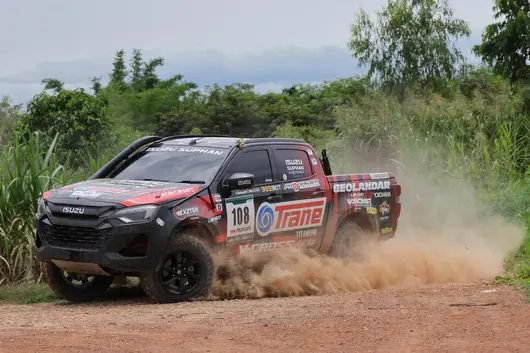
D-MAX Wins Again and Again!
The 31st AXCR Asian Off-Road Championship, known as the "Dakar of Southeast Asia", is now hotly underway in Thailand. The race route spans from Pattaya to Phitsanulok, with a total distance of approximately 2000 kilometers. The 6-day schedule covers multiple extreme road conditions including rainforests, mud, river crossings, and mountains.
Facing the high-intensity track with ever-changing conditions, the Isuzu D-MAX delivered a stunning performance, winning the Production Class championship across four stages from SS1 to SS4. Securing four consecutive victories, it solidified its status as the King of Diesel Engines, showcasing the hardcore racing gene deeply rooted in its bloodline.


Battling in the Rainforest: Production Models Prove Their Worth
This year's track spans from eastern to northern Thailand, featuring narrow jungle paths, slippery red clay mud, natural river crossing sections, and continuous mountain steep slopes alternating frequently. High temperatures and humidity combined with sudden rain showers created ever-changing road conditions. The long-distance, high-intensity off-road schedule posed extremely strict tests on the vehicle's power stability and chassis durability.
Numerous hardcore off-road models from around the world competed at full intensity. Production Class entrants kept their core major components in stock condition, competing on the vehicle's inherent quality and comprehensive hard power, making the event highly valuable. D-MAX's outstanding race record this time strongly confirms the hardcore performance and reliable quality of its production models.

Hardcore Strength: Conquering Dangerous Track Paths
On the field, the King of Diesel Engines demonstrated its strength. The 3.0T diesel engine equipped in D-MAX delivers ample low-speed torque output, with immediate and sufficient power response in scenarios like muddy climbing and river crossing recovery. Facing continuous high-temperature off-road conditions, the power system maintains stable output, becoming the reliable confidence for drivers to conquer the rainforest track.
The hardcore journey relies on a powerful chassis for protection. The D-MAX exclusive Han Shield chassis features a high-strength frame with two longitudinal and ten transverse beams and curved welding technology, offering excellent frame torsional resistance. The flat chassis layout properly protects pipelines and core components, resisting rock abrasion and mud erosion; paired with a professional off-road suspension structure, it continuously absorbs road shocks, maintaining body stability on bumpy jungle tracks and calmly coping with impacts from various complex terrains.

Global Origins, D-MAX Shows Hardcore Skills on the Track
Isuzu's globally unified IM manufacturing management system injected standardized hardcore genes into the D-MAX distributed worldwide, whose outstanding performance has been repeatedly verified in major extreme off-road tracks. Domestically, Jiangxi Isuzu D-MAX has fought in top competitions such as the Ring of Tarim and Dongchuan Mudslide for many years, establishing its status as the King of Diesel Production Pickup Trucks with the glorious record of 22 championships in 6 years.
The reliable performance tempered under extreme track conditions is a direct manifestation of the hardcore strength of the civilian production pickup truck. This hardcore performance, rigorously verified by professional competitions, can provide users with consistent, reliable, and reassuring performance guarantees in various scenarios such as daily commuting, long-distance travel, and outdoor off-roading.

From the scorching desert of the Ring of Tarim to the dangerous roads of the Dongchuan Mudslide, and then to the humid rainforest of this year's AXCR, D-MAX gallops across major top off-road tracks globally, undergoing layers of tests in various extreme conditions and winning numerous accolades. A series of outstanding records confirm the hardcore strength of the Diesel Production King.

On August 12, Chery Fengyun T7 officially started pre-sales. This launch event themed "Craftsmanship makes good cars, the wait was long" seems "incongruous" in an era where more than 3 new cars are launched daily on average.
But precisely this "incongruity" hits the most sensitive nerve of the current new energy vehicle industry.

Excitement of "Quick Fixes" and Scarcity of "Slow Craft"
Data shows that in July 2026, the monthly sales proportion of new energy vehicles broke through 60% for the first time. Industry competition has shifted comprehensively from price gaming to value competition. However, the other side of speed is underlying concern. Industry executives publicly criticized some brands for deleting necessary testing links to accelerate the launch pace, making consumers de facto test drivers. The National Automotive Standardization Technical Committee has publicly sought opinions on three new energy vehicle modeling test procedures, intending to raise the total mileage of new energy vehicle reliability driving tests to 30,000 kilometers.
The root cause of "quick-fix cars" lies in the distorted competition logic — some companies fall into "theory of speed", fearing missing the track by half a step, fearing losing traffic by a few days. But cars are not fast-moving consumer goods. It is against this background that Chery gave another answer with Fengyun T7.
Sharpening a Sword for Five Years: A Global Car "Going Overseas First, Returning Home Later"
Fengyun T7 is not a domestic-only model. Its homologous model Lepas L6 has already started pre-sales in South Africa and launched in Thailand, and will subsequently land in the EU, Australia & New Zealand, UK, Israel, Malaysia and other markets. Accepting the global market test first, then launching domestically — this reverse input product rhythm is rare among local car companies.

This is backed by Chery's solid accumulation of ranking at the forefront of domestic brand passenger car exports for 23 consecutive years, surpassing 20 million global users, and products sold in over 130 overseas markets. In the first half of 2026, China's automobile exports reached 5.096 million vehicles, with Chery leading the pack with 943,800 export vehicles. Fengyun T7 is not a car made well domestically first and then trying to sell it abroad, but a product that was researched and developed according to global standards from the start, completed validation running globally, and returned domestically only after receiving real feedback from overseas markets.
2 years of planning, 3 years of R&D. In today's industry rhythm of "one new car every 12 months", this cycle almost seems incongruous. But precisely these 5 years of slowness allowed Fengyun T7 to achieve differentiation in many dimensions.
In terms of safety, it was developed according to the 2026 version E-NCAP five-star safety standard. The 2026 version E-NCAP breaks vehicle safety into four pillars: safe driving, collision avoidance, collision protection, and post-collision safety. Fengyun T7 anchored this standard from the R&D stage, while also achieving the highest level of functional safety ASILD. This is not simple "spec stacking", but moving safety standards to the front into the product definition phase.

In terms of environmental adaptability, Fengyun T7's global adaptation interval covers -40°C to 55°C. For this, it was equipped with a dual-source wide-temperature range heat pump plus PTC system; air conditioning filters were optimized for tropical high-humidity regions; the Middle East area is equipped with a 4.5L large capacity cleaning fluid tank; battery front and rear beam protection is added on Brazilian gravel roads. These details reflect a "building cars for global users" mindset — understanding the needs of different environments first before starting to build cars.
The verification环节 further explains the problem. Fengyun T7 invested in 81 exclusive durability cars for road tests simultaneously, with the whole vehicle cumulative test mileage exceeding 6 million kilometers, and durability special tests reaching 1.45 million kilometers. Covering 100+ extreme road condition environments including EU, Australia & New Zealand, Middle East, South Africa, Russia, Mexico, Brazil, etc.
Full Series 600km Range Equality: Breaking Graded Premiums
Fengyun T7 made an unconventional decision — all configuration versions are uniformly equipped with 65.05kWh Rhino Battery, CLTC range all locked at 600km. The entry model does not cut range, high-end versions do not add price to swap range, directly breaking the industry's common graded premium logic. Official actual test range can reach 667km, 30%-80% fast charging only takes 22 minutes.

The Rhino Battery passed the 2026 version new national standard certification early, with cycle life exceeding 2,500 times. Calculating based on annual usage of 20,000 kilometers for home cars, the whole vehicle does not need battery replacement for 15 years. Chery simultaneously gave three bottom-line commitments: full series meets the latest national standard, battery thermal runaway damage compensates with the same new car, first owner non-operating owner lifetime warranty on the three-electric systems.
Safety Fully Equipped: Same-Level Top-Spec Safety Configurations Standard for All Series
Fengyun T7 adopts 80% high-strength steel body plus 18.84% hot-formed steel, nine-horizontal five-vertical cage body structure. Most 9 airbags in the same level, including 48L maximum volume dual-cavity far-end airbags, 1778mm longest side curtain airbags, 6s long-term pressure retention technology. Rhino Battery 6D lock plate armor 31-layer protection, IP68 waterproof reaches 96 times the national standard, side extrusion resistance reaches 2 times the national standard. Completed extreme safety tests including frontal pole collision, side pole collision, offset collision, 40km/h钻卡 (drill truck), MCB collision brake stop, etc.

Intelligence and Comfort: Cockpit-Drive Integration, Mobile Large Flat Floor
Regarding intelligence, Fengyun T7 launches the same-level first 4nm process 8775 Cockpit-Drive integrated chip, NPU computing power 72 TOPS, equipped with 15.6-inch 2.5K anti-glare large screen and Lingxi Smart Cockpit 2.0 × Doubao Large Model. Falcon 500 intelligent driving is equipped with 22 high-precision sensors, supporting 200+ scenarios automatic parking, highway pilot assistance.
Regarding space, body size 4570×1852×1694mm, wheelbase 2700mm, interior get rate 84%. 9-layer composite cloud-feel seats, same-level largest pure flat large bed mode 1955mm×1310mm, trunk regular 450L, max expansion 1550L.

Global Quality, National Price
Fengyun T7 launched 3 configuration models for this pre-sale, pre-sale price 109,900 - 129,900 RMB. From now until launch, paying 1,000 yuan deposit can enjoy 7 tiers of gift package benefits.
Fengyun T7 fills the last piece of the map for Chery Sequence plug-in hybrid, range extended, pure electric three technology routes. For Chery, its significance is not just a volume model — in the past Chery earned money from the global market through exports, now bringing domestically verified mature products back from the global market, using system capabilities saved by long-term investment to fight the home market.

Slow is slow, but every step is solidly placed. In this era swarmed by "quick fixes", Chery told the market with one Fengyun T7: some things cannot be fast, some roads cannot be bypassed.
China's automobile industry is moving towards the global market, transforming towards high-quality development. The true core competitiveness has never relied on the gimmick of getting one step ahead, but on product strength that can withstand the test of time, road conditions, and complex working conditions. Fengyun T7's "slow craft" might just be the clarity this industry needs most.
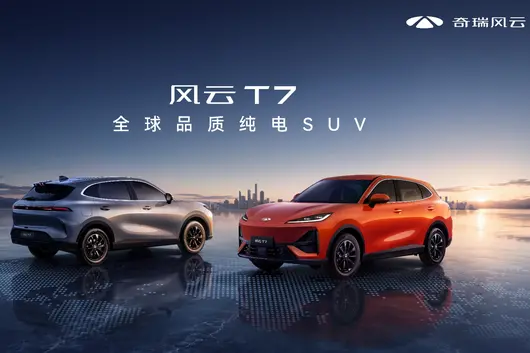

12 Ogos, SUV Elektrik Tulen Kualiti Global Fengyun T7 secara rasmi dibuka pra-jualan, kenderaan baharu ini dilancarkan dalam 3 varian, harga panduan pra-jualan dari 109,900 Yuan hingga 129,900 Yuan, dan menikmati 7 faedah pembelian kereta. Tema sidang media ini ditetapkan sebagai "Kerja Perlahan Membina Kereta Baik, Sudah Lama Dinanti", sedikit perkataan ini tepat sekali menerangkan logik pembinaan kereta paling penting bagi kenderaan ini.

Pada masa ini, di landasan tenaga baharu dengan kelajuan pantas, banyak kereta baharu dilancarkan dengan tempoh masa singkat dan lebih memprioritaskan parameter atas kertas, Chery sebaliknya menumpukan diri dengan tenang, menghabiskan 2 tahun perancangan, 3 tahun pembangunan untuk mempertajam Fengyun T7. Sebagai SUV rumah global yang telah diuji di pasaran luar negara, model asal Lepas L6 telah memasuki pasaran Afrika Selatan, Thailand, baru kemudian kembali ke dalam negara setelah menerima pengiktirafan pemilik luar negara. Pengalaman ini, dalam kereta elektrik rumah kelas 100,000 adalah benar-benar sangat jarang.

"Perlahan" dalam pembangunan: Piawaian Global 3 Tahun Mengasah Pedang
Kehadiran "Perlahan" Fengyun T7, pertama sekali terpancar dalam kitaran pembangunan. 3 tahun pembangunan, 2 tahun perancangan, diletakkan dalam sektor semestinya tidak semestinya pendek. Tetapi perkara penting ialah apa yang dilakukan selama 3 tahun itu — ia bukan tertutup di dalam bilik melukis PPT, tetapi dibina dari awal mengikut piawaian Bintang 5 E-NCAP Edisi 2026, keselamatan fungsian mencapai tahap tertinggi ASIL-D, kepatuhan data global juga dipaparkan serentak.

Pelogalan Chery bukan sekadar slogan. Eksport kereta persendirian jenama China pertama selama 23 tahun berturut-turut, 20 juta pengguna global, lebih 130 pasaran luar negara, angka-angka ini di sebalik pelaburan modal sebenar. Model asal Fengyun T7 Lepas L6 telah dilancarkan di Afrika Selatan, Thailand, selepas pengesahan sebenar luar negara barulah kembali ke dalam negeri. Ini bukan "khas dalam negeri ubah label ke luar" tipu daya, tetapi pada peringkat projek sudah seragam menyesuaikan keperluan penggunaan 210 negara dan wilayah di dunia. Penyelidikan pengguna global 5,000+, lawatan mendalam 15 negara tipikal, kerja ini dilakukan di hujung depan pembangunan, terus menentukan definisi produk tidak menyimpang. Contohnya pengguna Eropah Utara memerlukan kecekapan pemanasan -30°C, pengguna Asia Tenggara memerlukan kekuatan merendam air 500mm, pengguna Timur Tengah memerlukan tangki cecair pembersihan kapasiti besar 4.5L — keperluan ini tidak dapat diselesaikan dengan pemasangan tambahan kemudian hari, mesti ditanam awal dari peringkat arkitektur.
"Perlahan" dalam pengesahan: Kepercayaan Lari 6 Juta Kilometer
Sungguh mengagumkan, adalah skala pengesahan Fengyun T7. 81 kereta tahan lasak khas ujian jalan serentak, kenderaan penuh terkumpul lebih 6 juta kilometer, khusus tahan lasak 1.45 juta kilometer. Mengikut purata 15,000 kilometer setahun kenderaan rumah, ini bersamaan dengan simulasi keadaan penggunaan 400 tahun.

Lebih ganas adalah skop persekitaran. -40°C hingga 55°C penyesuaian seluruh kawasan, pemulaan sepasang kelas pam haba dua sumber julat suhu luas + PTC. Di persekitaran sangat sejuk Eropah Utara -20°C suhu naik ke 23°C dalam 20 minit, kadar pencapaian jarak lari musim sejuk bertambah 30%; kawasan lembap tinggi tropika 500mm off-road kekuatan merendam, penapis ACR khusus dioptimumkan cegah kulat; dataran tinggi sinar UV kuat cat diperkukuh cegah tua, gasket tahan panas sejuk. Jalan batu kerikil Brazil tambah pelindungan rangka depan belakang bateri, lebuhraya Jerman kelengkungan besar belokan optimumkan kestabilan rangka bawah — 95% jenis jalan global diliputi, bukan sekadar cakap-cakap.
Banyak syarikat dalam negeri "kereta global", sebenarnya versi dalam negeri ubah label. Fengyun T7 sebaliknya: dulu di persekitaran paling ketat dunia diuji sepenuhnya, kemudian dipegang pulang dalam negeri untuk dijual. Logik "eksport kembali jual dalam negeri" ini, pengguna paling langsung persepsi adalah kebolehpercayaan — yang anda beli bukan keadaan ideal dalam makmal, tetapi produk akhir yang melalui jalan batu kerikil Mexico, jalan tak berturap Afrika Selatan, lubang laju Brazil.
Six Needs Full Coverage: Tiada Pilihan
Lokasi Fengyun T7 sangat jelas: SUV Elektrik Tulen Selamat Keluarga Global. Pengguna rumah paling takut apa? Kecemasan jarak lari, keselamatan berkurang, ruang kompromi, konfigurasi berperingkat. Penyelesaian Fengyun T7 adalah langkah seterusnya, seluruh siri tidak bermain tipu.

Aspek jarak lari, bateri Rhipo 65.05kWh seluruh siri baku, jarak lari CLTC 600km, ujian sebenar melebihi markah ke 667km. Pengecasan pantas 30%-80% hanya 22 minit, secawan kopi kerja boleh isi tenaga 300km. Hayat kitaran bateri lebih 2,500 kali, mengikut kitaran rumah 10 tahun, dalam 15 tahun tidak perlu pertimbang tukar bateri. Bekerja sama dengan gril pengambilan udara aktif AGS, 14 rekaan rintangan angin rendah jumlah kurangkan 51 unit rintangan angin, jarak lari musim sejuk naik 30% lagi. Pelaburan tersembunyi ini pengguna tidak nampak pertama kali, tetapi dalam memegang jangka panjang rasa jelas.

Keselamatan adalah bidang utama Chery. 80% keluli tinggi kuat + 18.84% keluli pembentukan panas, badan sangkar 9 rentang 5 lungun, eksklusif separa kelas struktur shotgun, 1,088mm tangga roll melewati. 9 beg udara termasuk 48L beg udara jarak jauh dwi-kapasiti, 1,778mm tirai beg udara sisi terpanjang, 6 saat tekan cegah terbalik. Bateri Rhipo 6D pelindung cangkuk 31 lapisan pelindungan, IP68 keairan adalah 96 kali piawaian negara, sebelah kiri tahan ejen 200kN adalah 2 kali piawaian negara. Jendela jatuh air kuasa kekal lebih 5 minit, MCB selepas pecut brek automatik berhenti — konfigurasi ini diletakkan dalam kelas 300,000 tidak pelik, tetapi dalam julat harga pra-jualan Fengyun T7, dikira langsung maksimumkan.

Kokpit pintar guna pemulaan sepasang kelas chip 8775 4nm, kokpit drived terpadu, kekuatan NPU 72 TOPS, sistem respons 80ms. Skrin 2.5K 15.6 inci padu model besar Doubao, 6 watak suara真人, tanpa wayar CarPlay/HiCar/CarLink lengkap diliputi. Pemanduan pintar Falcon 500 22 sensor, parkir pintar semua situasi 300+, lebuhraya pemanduan ramalan tukar lorong 500 meter lebih. Ini bukan solusi paling mega, tetapi pengguna rumah mahu "cukup, mudah guna, tidak susah", sistem ini sudah lengkap diliputi.

Ruang lagi kebutuhan rumah. Panjang kereta 4,570mm padu tengah kereta 2,700mm, kadar penggunaan ruang dalam keruma datang 84%, kaki belakang 911mm lantai sempurna, orang 1.80m masuk tidak kepala terlalu tinggi tidak kaki melingkar. Mod katil sempurna 1,955mm×1,310mm, kemah tengahari tidur betul-betul boleh rehat. Bekas belakang 450L kapasiti biasa, maksimum kembangkan ke 1,550L, 19L kompartmen rahsia, 99L penyimpanan tenggelam, 4 titik angkur 300kg beban — muat turun troli bayi, juga gantung peralatan luaran.
Estetika Timur: Mudah Dilihat Lebih Sukar Dari Menakjubkan
Reka bentuk Fengyun T7 berjalan jalan lain. 8 pusat reka bentuk global, 5,000+ karya bersama pengguna global, model asal Lepas L6 hadir Minggu Reka Bentuk Milan dapat "mudah dilihat" penilaian. Bina badan sutra angin, lampu pisau angin, tidak ada garis berlebihan, tetapi tingkat cahaya bayang kaya. Cahaya langit pintu belakang lebarkan visual, perasaan besar SUV rumah ada, tetapi tidak kelihatan gemuk.

6 cat watak indah perlu kata sendiri. Oran Api menggunakan sepasang kelas eksklusif proses 3 lapisan Tri-coat, cat luaran 8 lapisan 2K, pigmen perak nano, di bawah cahaya berbeza berikan teksgradan beransur. Penting adalah cahaya UV kuat, jelas gores, cegah tua, melalui dataran tinggi cahaya UV kuat ujian sahkan, penggunaan jangka panjang tidak pudar. Ini bukan untuk hari ambil kereta yang menakjubkan, tetapi untuk 3 tahun selepas cuci kereta masih nampak kualiti kilang.

Dalaman sediakan 2 gaya: Hitam Coklat hangat rumah, Hitam Kemas sukan kemas. Kokpit pelukan sayap awan kurangkan perasaan tertekan SUV, speaker melayang Sony, bentuk jahitan petak berlian tahap permata, tekstur gelombang air, detail boleh terima lihat dekat. Panel tengah kurangkan bahan pantulan, sesuai wilayah cahaya terang global, kemas dan fungsian tidak bercanggah.
Biaya dan Nilai Idealisme Jangka Panjang
"Perlahan" Fengyun T7, pada dasarnya adalah pertaruhan idealisme jangka panjang. 3 tahun pembangunan, 6 juta kilometer pengesahan, ujian ekstrem beberapa wilayah global, pelaburan ini tidak langsung dapat dalam senarai konfigurasi, tetapi akan bertukar menjadi kadar kerosakan rendah, nilai sisa tinggi, kurang kecemasan dalam tempoh memegang pengguna. Dalam pasaran elektrik tulen dari "permainan bahan" beralih "permainan kualiti" titik ini, sama ada strategi ini berkesan, akhirnya oleh jualan jawab.

Gabungkan Chery posisi konsisten dan "harga rakyat sangat bernilai" kalimat penyampaian, harga pra-jualan 109,900-129,900 Yuan,让整个 siri baku 600km jarak lari, keselamatan Bintang 5 E-NCAP, chip kokpit drived 4nm, sistem pengesahan global gabungan ini dalam julat harga sama ada ada perbezaan jelas.
Akhir sekali kembali ke 3 perkataan "Sudah Lama Dinanti". Bagi syarikat, ini penjelasan jujur kitaran pembangunan; bagi pengguna, ini janji kualiti pemberitahuan awal. Dalam era kereta masuk sering keluar, bersedia tunggu kereta "perlahan", sendiri adalah penyaringan. Fengyun T7 nak rebut, mungkin mereka yang anggap membeli kereta keputusan jangka panjang, bukan pengguna impulsif rumah.

In July 2026, the Chinese passenger car market submitted a report card that presented an extreme contrast. Data from the China Passenger Car Association shows that retail sales of passenger cars in China were only 1.461 million units in July, a year-on-year decline of 20.9%.

The chill of the overall market did not hide structural highlights, with new energy vehicle penetration rate climbing to 65.1%, domestic brands taking the lead strongly, while the joint venture camp launched a long-overdue 'counterattack' in the new energy sector.
BYD: The '400,000-Level' Leader
On the July car manufacturer wholesale sales list, BYD firmly held the top spot with an absolute advantage of 410,612 units. This figure is not only 2.6 times that of Geely Automobile in second place, but also means that BYD's monthly wholesale sales have exceeded the 400,000-unit mark.

At the model level, BYD Yuan UP ranked first with 63,258 units, and the Song family ranked second with 61,012 units in wholesale sales. More worth noting is that BYD also performed strongly in the new energy export sector, with 173,721 units exported in July, almost equivalent to the combined export volume of Chery and Tesla China. From the Dynasty Series to the Ocean Series, from Denza to Fang Cheng Bao, BYD solidified its absolute leading position in the new energy market with its 'dual drive' strategy of pure electric and plug-in hybrid.
Exports Become Core Growth Engine, Domestic Brands Open a Second Battlefield
If BYD's dominant lead is 'to be expected', then the real highlight for domestic brands in July lies in the full-scale explosion of the second growth curve of exports.

Chery Group is undoubtedly the most dramatic protagonist of this month. Relying on the record of breaking 200,000 units in monthly exports for the first time, Chery exceeded Geely Automobile with sales of 261,900 units, ranking second among car manufacturers. The export volume of 202,500 units, a year-on-year increase of 70.1%, not only broke the monthly export record for Chinese brands, but also made Chery the first Chinese car manufacturer to break 200,000 units in monthly exports. On average, a 'Made by Chery' drives overseas every 16 seconds. More worth noting is that among the 203,000 units of export sales, the proportion of new energy vehicles has climbed to 41%, and Chery's overseas story is upgrading from 'fuel cars going global' to 'new energy cars going global'.
Geely Automobile staged a growth miracle. Exports in July were 106,700 units, surging 202% year-on-year, breaking the 100,000-unit mark for two consecutive months. Among them, new energy exports were 62,604 units, with a year-on-year increase of up to 616%, showing an astonishing speed in promoting export electrification. At the same time, the Zeekr brand, with 35,800 units and a year-on-year growth of 111%, became the biggest highlight within the group. Driving exports and high-endization with two wheels, Geely is attempting to replicate its domestic new energy leadership advantage in the overseas market.

SAIC Group is also not to be overlooked. New energy sales in July reached 176,700 units, surging 50.67% year-on-year; export and overseas base sales were 141,700 units, with a year-on-year increase of 72.55%. Against the background of overall sales increasing slightly by 0.32%, new energy and exports almost supported all of SAIC's incremental growth. The transformation determination of traditional giants is evident from the numbers.
Passenger car exports in July reached 918,000 units, an 87.8% year-on-year increase, accounting for 41% of total manufacturer sales. When domestic market retail sales declined by 20.9% year-on-year, exports have become a key support to hedge against weak domestic demand. BYD, Chery, Geely, Changan, and SAIC, domestic brands are opening a second battlefield in the overseas market, and this might be the chapter worth writing most about the car market in July.
Reshaping the New Forces Landscape: Leapmotor 'One Against Three'
The biggest surprise in July came from the new forces camp. Leapmotor Auto jumped to the third place among car manufacturers with a global delivery volume of 101,267 units, an increase of 102% year-on-year, becoming the first domestic new car-making brand to break 100,000 units in monthly deliveries.

What does this number mean? During the same period, NIO delivered 35,934 units, XPeng delivered 38,027 units, and Li Auto delivered 30,468 units, totaling about 104,000 units for the three. Leapmotor alone was almost equivalent to the sum of the three 'NIO, XPeng, and Li Auto'. In the 100,000 to 200,000 yuan mainstream price range, Leapmotor proved the breakout ability of new forces through scale. Overseas layout is advancing synchronously; Leapmotor B10 and C10 have officially landed in the Indonesian market and launched local KD assembly production.
Joint Venture Camp: Early Signs of New Energy 'Counterattack'
Joint venture brands, which had long been 'silent' on the new energy track, finally bared their fangs of counterattack in July. Although the penetration rate of new energy vehicles for mainstream joint venture brands only rose to 13.7%, the new energy wholesale sales of SAIC-GM, GAC Toyota, and Volkswagen Anhui all broke the 10,000-unit mark, respectively 12,662 units, 12,002 units, and 10,079 units. In the HEV market, FAW Toyota and GAC Toyota sold 34,883 units and 24,495 units respectively, showing steady performance.

More worth noting is that international oil prices surged significantly in July due to navigation blockage in the Strait of Hormuz, and domestic refined oil prices were increased by nearly 985 yuan/ton in two rounds cumulatively. This directly increased the cost of using fuel vehicles, objectively creating an external push for joint venture brands' new energy transition. As joint venture car companies intensively launch new energy new products, this 'counterattack' has just begun.
Conclusion
In July, the Chinese car market completed a new round of reshaping under overall pressure. BYD built a moat with 400,000 units-level monthly sales, Leapmotor announced the arrival of the scale era for new forces in the form of top three, and the new energy counterattack of joint venture brands indicates that competition in the second half will be more intense. When new energy penetration rate breaks through 65%, the winning move of the market has changed from 'whether to transform' to 'how fast and how thoroughly to transform'. This smokeless war is far from the endgame.
© 2024 Bitauto.com. All Rights Reserved.
Bitauto (www.yiche.com and www.bitauto.com) is one of the most visited automotive websites in China. We provide detailed info on Chinese car brands available in your area. Please note that the information provided on this website is based on publicly available data and is for reference only. It may not be fully updated or accurate at all times.

Help us improve our website


