

Homeculture

Search History
Popular Searches
Dealer Login / Sign Up

In Malaysia's SUV market, many buyers compare the Proton X70 and MG MG HS when choosing a car. These two models are quite close in price and positioning. Today, we will make a detailed comparison from multiple aspects to help you save time on research.
The Proton X70 OTR price in Malaysia is RM 106,800 - 122,300, with a total of 3 versions, including 1.5L Standard 2WD (RM 106,800), 1.5L Executive 2WD (RM 115,800), 1.5L Premium 2WD (RM 122,300), etc.
The MG MG HS OTR price in Malaysia is RM 130,450 - 146,450, with a total of 2 versions, including 1.5L Standard (RM 105,000), 1.5L Executive (RM 115,000), etc.
In terms of price, the Proton X70 starting price is indeed RM 23,650 cheaper than the MG MG HS. If your budget is limited, Proton's entry-level version can meet daily needs. However, also note that the lower price of a few thousand might involve compromises in features, depending on your specific needs.
Proton X70 body length 4400 mm, trunk 400 L.
MG MG HS body length 4400 mm, trunk 400 L.
The dimensions of both cars are almost the same, with little difference in interior space. For a car at this level, it is completely sufficient for daily use.
Proton X70 warranty 5 years/150,000km, maintenance interval every 10,000km or 6 months.
MG MG HS warranty 7 years/150,000km, maintenance interval every 10,000km or 6 months.
Both Proton X70 and MG MG HS are mainstream choices in the Malaysian market, suitable for family use and daily commuting. If you value brand reputation and resale value more, you can prioritize the one with a better reputation; if you care more about value for money and features, then choose the one with richer configuration. Ultimately, it is recommended to test drive both models; personal experience is the most important.
Overall, both Proton X70 and MG MG HS are very good car models in the Malaysian market. Which one to choose depends mainly on your personal needs and budget. It is recommended to do your research well, compare quotes from several dealers, and then test drive to make the final decision. Buying a car is a major matter, spending some time doing research will never be wrong.

In Malaysia's SUV market, many buyers compare Proton X70 and MG MG HS when choosing a car. These two cars are quite close in price and positioning. Today we will make a detailed comparison from multiple aspects to help you save time on research.
Proton X70's OTR price in Malaysia is RM 106,800 - 122,300. There are 3 versions in total, including 1.5L Standard 2WD (RM 106,800), 1.5L Executive 2WD (RM 115,800), 1.5L Premium 2WD (RM 122,300), etc.
MG MG HS's OTR price in Malaysia is RM 130,450 - 146,450. There are 2 versions in total, including 1.5L Standard (RM 105,000), 1.5L Executive (RM 115,000), etc.
From a price perspective, Proton X70's starting price is indeed RM 23,650 cheaper than MG MG HS. If your budget is limited, Proton's entry-level version can already meet daily needs. However, be aware that the few thousand difference might involve compromises on features, depending on your specific needs.
Proton X70's safety rating is 5★ (ASEAN NCAP). Active safety systems include ADAS (ACC, AEB, LKA, LDA, BSM, RCTA).
MG MG HS's safety rating is TBD. Active safety systems include Basic.
In terms of safety features, both cars have received good ratings. However, there are some differences in functionality between Proton X70's ADAS (ACC, AEB, LKA, LDA, BSM, RCTA) and MG MG HS's Basic. If you value active safety, you can compare their feature lists closely.
Proton X70 warranty 5 years/150,000km, maintenance interval every 10,000km or 6 months.
MG MG HS warranty 7 years/150,000km, maintenance interval every 10,000km or 6 months.
Proton X70 and MG MG HS are both mainstream choices in the Malaysian market, suitable for family use, daily commuting. If you value brand reputation and resale value more, prioritize the one with better reputation; if you care more about cost-performance ratio and features, choose the one with richer configuration. Ultimately, it is recommended to test drive both, as firsthand experience is the most important.
Overall, Proton X70 and MG MG HS are both very good car models in the Malaysian market. Which one to choose depends mainly on your personal needs and budget. We suggest doing your research, comparing quotes from more than one car dealership, and then test driving to make a final decision. Buying a car is a major matter, spending some time on research will never go wrong.

Dalam pasaran SUV di Malaysia, ramai pembeli sering membandingkan Proton X70 dan Hyundai Tucson semasa memilih kereta. Kedua-dua kereta ini mempunyai harga dan kedudukan pasaran yang agak hampir. Hari ini, kami akan membuat perbandingan terperinci dari pelbagai aspek untuk membantu anda menjimatkan masa membuat kajian.
Harga OTR Proton X70 di Malaysia ialah RM 106,800 - 122,300, mempunyai 3 variasi, termasuk 1.5L Standard 2WD (RM 106,800), 1.5L Executive 2WD (RM 115,800), 1.5L Premium 2WD (RM 122,300) dan lain-lain.
Harga OTR Hyundai Tucson di Malaysia ialah RM 143,888 - 197,888, mempunyai 5 variasi, termasuk 2025 HEV 1.6T AT 2WD Prestige (RM 197,888), 2025 1.6T DCT 4WD Prestige (RM 186,888), 2025 1.6T DCT 2WD Prime (RM 164,888) dan lain-lain.
Dari segi harga, harga permulaan Proton X70 memang lebih murah RM 37,088 berbanding Hyundai Tucson. Jika anda mempunyai bajet terhad, versi permulaan Proton sudah boleh memenuhi keperluan harian. Namun, perlu diingat, perbezaan harga beberapa ribu ringgit itu mungkin melibatkan kompromi pada kelengkapan, bergantung pada keperluan anda.

Proton X70 dilengkapi enjin 1.5L Turbo, kuasa 140 hp. Konsumsi bahan api rasmi 7.0 L/100km.
Hyundai Tucson dilengkapi enjin 1.5L Turbo, kuasa 140 hp. Konsumsi bahan api rasmi 7.0 L/100km.
Kedua-dua kereta menggunakan sistem kuasa yang sama, perbezaan rasa memandu harian adalah minimum. Penggunaan bahan api juga hampir sama, anda tidak perlu terlalu bimbang mengenai hal ini.

Penarafan keselamatan Proton X70 ialah 5★ (ASEAN NCAP), sistem keselamatan aktif termasuk ADAS (ACC, AEB, LKA, LDA, BSM, RCTA).
Penarafan keselamatan Hyundai Tucson ialah 5★ (ASEAN NCAP), sistem keselamatan aktif termasuk SmartSense.
Penarafan keselamatan kedua-dua kereta adalah sama. Dalam kategori ini, kelengkapan keselamatan dianggap cukup lengkap. Keselamatan kereta baru masa kini tidak boleh dipersoalkan, anda tidak perlu terlalu risau mengenai hal ini.

Proton X70 mempunyai jaminan 5 tahun/150,000km, selang penyelenggaraan setiap 10,000km atau 6 bulan.
Hyundai Tucson mempunyai jaminan 5 tahun/300,000km, selang penyelenggaraan setiap 10,000km atau 6 bulan.
Proton X70 dan Hyundai Tucson adalah pilihan utama dalam pasaran Malaysia, sesuai untuk kegunaan keluarga dan perjalanan harian. Jika anda lebih mengutamakan reputasi jenama dan nilai jualan semula, pertimbangkan dahulu yang mempunyai reputasi lebih baik; jika anda lebih mengutamakan nilai kos dan kelengkapan, pilih yang mempunyai konfigurasi lebih lengkap. Pada akhirnya, disarankan untuk memandu kedua-dua kereta, pengalaman langsung adalah yang paling penting.
Secara keseluruhannya, Proton X70 dan Hyundai Tucson adalah model yang sangat baik dalam pasaran Malaysia. Memilih mana satu, kunci utamanya bergantung pada keperluan peribadi dan bajet anda. Kami menyarankan anda membuat kajian, bandingkan sebut harga daripada beberapa pengedar kereta, dan buat ujian pemanduan untuk membuat keputusan akhir. Membeli kereta adalah perkara besar, mengambil masa untuk membuat kajian adalah langkah yang tepat.


2026 年上半年全球汽車銷量排名出爐:比亞迪(4.8%)、吉利(4.6%)、奇瑞(4.1%)分列第六、七、九位,三家合計 13.5%,首次超越排名第二的大眾——這是全球前十中首次同時出現三家中國汽車企業。若按集團口徑,上汽更以 204.5 萬輛位列第四,實際已有四家中國汽車企業躋身前十。從“市場換技術”到“技術換市場”,中國汽車用換道超車,完成了由零至全球前列的躍遷。那麼,未來全球汽車工業的格局還會改寫嗎?

由零至前十:換道超車的差異化路徑
燃油車時代,引擎、波箱的專利壁壘長期由歐美日把持,中國汽車企業處於跟跑。
新能源與智能化的浪潮,給了中國一次“重劃賽道”的機會:在動力電池、電驅、智能駕駛等核心領域,中國實現從跟跑到領跑的技术範式變革,繞開了傳統內燃機的護城河。

正是這條差異化賽道,讓中國汽車企業在十年內走完了傳統巨頭半世紀走過的路——不正面硬撼內燃機,而是用電動化、智能化另起一桌,把競爭拉到對手的短板區間。
全球汽車格局重構的五個層面
這一歷史性突破,意味著五個層面的重大變化(見下表),而非單一企業的勝利:

全球汽車產業的核心增長極正在轉移,中國汽車企業在新技術分工中贏得了主動權;同時通過“海外工廠 + 供應鏈”的本地化,輸出產能、技術與標準,構建“車 + 樁 + 服務”一體化生態,抗風險能力顯著增強。超大規模市場與最完整產業鏈的集群效應,則讓研發週期與成本優勢持續放大。
中國車全球五大區域市場的“多點開花”
東南亞:
已成新能源絕對主導。泰國純電中國品牌超 75%、印尼電動車市場佔有率 91.7%;2026 年 1 月泰國中國品牌份額 47.34%,歷史性地首超日系(47.338%),終結日系六十年壟斷。
歐洲:
5 月中國五強註冊量 13.8 萬輛、份額 12%,歷史上首次超越日本汽車企業(13 萬輛/11.3%),6 月進一步擴大;面對歐盟關稅,加速以合資建廠、技術輸出推進深度本地化。

奇瑞汽車上半年月出口明細
拉美:
巴西純電中國份額一度超 92%、2026 年 2 月比亞迪海豚 Mini 登頂巴西零售榜;墨西哥 2025 年出口 62.5 萬輛,首超俄羅斯成中國出口第一大國;智利輕型車份額過半(51.6%)。
中東:
從“低價”升級“高端”。沙特中國品牌銷量破 10 萬、市佔率超 15%;阿聯酋頭兩月進口量 10.39 萬輛、同比 +53%。針對高溫沙塵做熱管理升級,極氪、嵐圖、蔚來等高端品牌贏得富裕階層。

比亞迪上半年月出口明細
俄羅斯:
歐美日韓退出留白,中國品牌份額達 54.6%(6 月峰值 54.9%);奇瑞、長城、吉利居前列,並以技術授權 + 本地組裝(如 TENET、XCITE)規避報廢稅與 22% 增值稅。
年底全球車市前十預測
上半年中國出口 530.7 萬輛、同比 +53%,6 月單月 106.9 萬輛;新能源出口 +68.7%(3606.8 億元)。7 月延續量額齊升——前 5 月出口量 +48.7%、額 +45.5%,寧波等口岸新能源車出口量額均翻倍。全年出口有望首次破千萬輛,為更多中國集團衝入前十提供動力。
年底誰將再突破?在比亞迪、吉利、奇瑞(自主口徑)已入榜基礎上,最有力的新晉者是長安與長城:長安在巴西、墨西哥、泰國、俄羅斯多點放量,長城深耕俄、泰、巴並穩居當地前列,二者出口增速均處第一梯隊。

吉利汽車上半年月出口明細
需要說明統計口徑差異:用戶語境下的“三家”側重自主品牌,而集團口徑下上汽早已穩居第四——這意味著年底“中國方陣”的擴張比表面數字更可觀。至於零跑、小米等新能源黑馬增長雖猛(零跑上半年 26 萬輛、同比 +29%),全年集團總量距全品類前十尚有距離,更可能先衝擊新能源細分榜單。

結語
由零至擠入全球前十,中國汽車用了二十年;從一家獨秀到三家聯袂,只用了三年。但真正的挑戰才剛剛開始——從“銷量冠軍”邁向“品牌冠軍”和“技術冠軍”,從“價格戰”轉向“價值戰”,中國汽車企業需要在全球消費者心中建立超越性價比的認同。全球汽車產業的權力轉移已經發生,接下來的故事,將由中國汽車企業如何書寫。
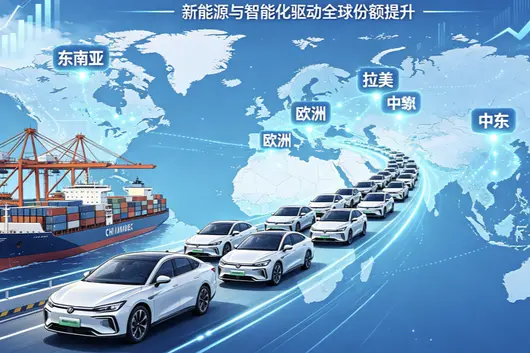

Kumpulan Chery mencatat jualan kenderaan baharu pada Julai mencapai rekod tertinggi sekali lagi, mencecah 129,067 unit, meningkat 97.5% secara tahunan, hampir menggandakan. Januari-Julai, Kumpulan Chery kumulatif jualan kenderaan baharu 604,305 unit, meningkat 42.3% secara tahunan, setakat ini empat bulan berturut-turut jualan bulanan melebihi 100,000 unit. Mengikut data yang dikeluarkan oleh Persatuan Kereta Penumpang China, Chery telah berturut-turut empat bulan jualan borong kenderaan baharu menduduki tiga teratas industri.

Perkembangan berskala memasuki fasa letupan, jualan borong berturut-turut empat bulan tiga teratas industri
Dari berdiri kukuh di 100,000 unit, sehingga berturut-turut memecahkan 110,000 unit, 120,000 unit, hingga hampir 130,000 unit, Kumpulan Chery kenderaan baharu mengekalkan pertumbuhan tinggi, perkembangan berskala memasuki fasa letupan. Tahun ini, Kumpulan Chery kumulatif jualan kenderaan baharu lebih 604,000 unit.
Mengikut Pekelisan Jualan Borong Kenderaan Penumpang Utama Julai yang dikeluarkan oleh Persatuan Kereta Penumpang China, Chery menduduki tempat ketiga dalam industri. Dengan ini, Chery pada tahun ini telah berturut-turut empat bulan jualan borong kenderaan baharu menduduki tiga teratas industri.
Transformasi Kenderaan Baharu dipercepatkan, kadar penembusan di dalam negeri melebihi 60%
Kenderaan Baharu telah menjadi label baharu bagi Kumpulan Chery. Julai, jumlah jualan keseluruhan Kumpulan Chery 276,820 unit, di mana jualan kenderaan baharu 129,067 unit, kadar penembusan keseluruhan kenderaan baharu stabil meningkat ke 46.6%.
Kenderaan Baharu telah menjadi kekuatan utama mutlak Kumpulan Chery di pasaran dalam negeri. Julai, jualan kenderaan baharu dalam negeri Kumpulan Chery ialah 46,044 unit, kadar penembusan kenderaan baharu 62.0%. Pada setiap tiga kereta yang terjual di pasaran dalam negeri Kumpulan Chery, dua adalah kenderaan baharu.

Imej menunjukkan model Fengyun A9

Imej menunjukkan QQ3 baharu
Kenderaan Baharu juga merupakan pusat pertumbuhan penting untuk Chery Group mengembangkan pasaran luar negara. Januari-Julai, jualan eksport kenderaan baharu Kumpulan Chery meningkat 175.7% secara tahunan, ganda dua lebih kelajuan keseluruhan eksport. Setengah tahun pertama, Chery menjual kenderaan baharu di Eropah 86,000 unit, meningkat 385%, kira-kira setengah daripada jualan di Eropah, iaitu kadar penembusan kenderaan baharu Chery di Eropah sudah berada sekitar 50%.
Menjalin matriks produk letupan di dalam dan luar negara, meraih kegemaran pengguna global
Lebih ramai pengguna global, sedang memilih produk kenderaan baharu China, memilih kenderaan baharu Chery. Chery sekarang telah membentuk matriks produk letupan kenderaan baharu di dalam dan luar negara:
Di pasaran dalam negeri, QQ3 baharu berturut-turut empat bulan jualan memecahkan 10,000 unit; Fengyun A9 pra-jualan 15 hari tempahan melebihi 31,000 unit; iCAR V27 kekal di puncak jualan bulanan SUV kategori 200,000; MPV baharu kenderaan baharu Zhi Jie V9 penghantaran tunggal bulan melebihi 10,000 unit.
Di pasaran luar negara, JAECOO 7 menduduki puncak jualan pasaran keseluruhan bulanan United Kingdom, JAECOO 5 menduduki puncak pasaran SUV kecil elektrik sepenuhnya di Australia, pasaran kereta elektrik sepenuhnya di Indonesia dan Thailand, iCAR V23 merebut puncak sub-pasaran SUV kotak di Afrika Selatan, Thailand, Nepal.

Imej menunjukkan Zhi Jie V9 penghantaran tunggal bulan melebihi 10,000 unit

Imej menunjukkan model kenderaan baharu JAECOO 7
Memantaskan "Tiub Bateri", membina asas keselamatan dan pengisian semula tenaga kenderaan baharu
Pertumbuhan ganda jualan dan kadar penembusan, tidak berpisah daripada terobosan berterusan teknologi teras kenderaan baharu. "Tiub Bateri" Chery sedang terus diperkukuhkan. Pada masa ini,布局布局 Chery bateri telah meliputi sistem bahan Litium Tiga dan Litium Fosfat Besi, struktur sel bateri tiga jenis Blade, Kotak, Silinder Besar, tiga siri produk utama khusus Hibrid, khusus Elektrik, khusus Pepejal. Tenaga kepadatan sel bateri Rhino Pepejal Chery telah mencapai 400Wh/kg, sedang menuju 600Wh/kg. Sehingga hujung 2025, jumlah kilometer dikendarai kenderaan yang diperbuat oleh bateri Rhino Chery melebihi 1.2 bilion kilometer, satu kenderaan tertinggi 160,000 kilometer, memberikan "0 pembakaran sendiri, 0 keselamatan bateri" jawapan pasaran.
Chery telah menerima pengiktirafan berwibawa secara berterusan dalam bidang keselamatan bateri. Julai, dalam pertandingan algoritma amaran keselamatan bateri tenaga baharu Persekutuan di bawah Pusat Teknologi Inovasi Agensi Kawalan Pasaran Negara, Kumpulan Chery meraih tiga anugerah pertama dalam dua litar Litium Tiga dan Litium Fosfat Besi; serentak telah melalui ujian ekstrem enam siri bersiri keseluruhan kereta yang dilaksanakan oleh Pusat Automotif China, mengesahkan keupayaan keselamatan di persekitaran ekstrem.

Imej menunjukkan model Fengyun A9 menjalankan ujian ekstrem enam siri bersiri keseluruhan kereta
Keselamatan bateri adalah tapak, kadar pengisian tenaga pula adalah kunci pengalaman pengguna. Teknologi tenaga "Xunlong Cas Pantas" Chery, mendorong kenderaan baharu dari kenderaan pengangkutan ke nod tenaga bergerak; bateri Rhino sokongan pengecasan 8 minit julat 500 kilometer, masa meminum kopi dapat berlepas semula. Chery merancang sebelum 2029 membina lebih 20,000 stesen pengecasan yang menyokong fungsi V2G.
Dari jualan borong kenderaan baharu berturut-turut empat bulan menduduki tiga teratas industri, ke kadar penembusan dalam negeri melebihi 60%; Dari matriks produk letupan dalam dan luar negara sepenuhnya dibentuk, ke teknologi bateri terobosan berterusan, Kumpulan Chery sedang dengan transformasi kenderaan baharu berkualiti tinggi, memandu ke landasan laju jenama ke atas.
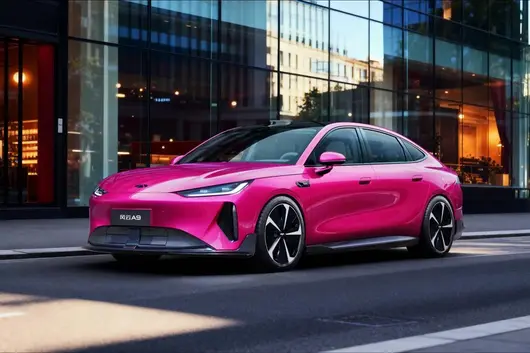

In the Malaysian SUV market, many buyers compare Perodua Ativa and Honda WR-V when choosing a car. The price ranges and positioning of these two cars are quite close. Today, we will make a detailed comparison from multiple aspects to help you save time on research.
The OTR price of Perodua Ativa in Malaysia is RM 62,500 - 73,400, totaling 3 versions, including 1.0L Turbo X (RM 62,500), 1.0L Turbo H (RM 67,300), 1.0L Turbo AV (RM 73,400), etc.
The OTR price of Honda WR-V in Malaysia is RM 89,900 - 107,900, totaling 4 versions, including 2023 1.5L V (RM 99,900), 2023 1.5L E (RM 95,900), 2023 1.5L S (RM 89,900), etc.
Looking at the price, the starting price of Perodua Ativa is indeed RM 27,400 cheaper than Honda WR-V. If your budget is limited, Perodua's entry-level version can already meet daily needs. But note that the few thousand dollars difference might involve trade-offs in features, depending on your specific needs.

Perodua Ativa is equipped with 1.5L 4-cyl, horsepower 105 hp. Official fuel consumption 6.0 L/100km.
Honda WR-V is equipped with 1.5L 4-cyl, horsepower 105 hp. Official fuel consumption 6.0 L/100km.
Both cars use the same powertrain system, and the driving experience in daily use is basically the same. Fuel consumption is also similar, so there is no need to worry too much about this point.

Perodua Ativa warranty 5 years/150,000km, service interval every 10,000km or 6 months.
Honda WR-V warranty 5 years/unlimited mileage, service interval every 10,000km or 6 months.

Perodua Ativa and Honda WR-V are both mainstream choices in the Malaysian market, suitable for family use and daily commuting. If you value brand reputation and resale value more, you can prioritize the one with better reputation; if you care more about price-performance ratio and features, choose the one with richer configurations. Ultimately, it is recommended to test drive both cars; personal experience is the most important.

In general, Perodua Ativa and Honda WR-V are both very good car models in the Malaysian market. Which one to choose mainly depends on your personal needs and budget. It is recommended that everyone do their homework, compare quotes from multiple car dealerships, and test drive before making a final decision. Buying a car is a big matter, spending time on research will definitely not be a mistake.


In Malaysia's SUV market, many buyers compare Perodua Ativa and Honda WR-V when choosing a car. These two models are quite close in price and positioning. Today, we will make a detailed comparison from multiple aspects to help you save time on research.
Perodua Ativa's OTR price in Malaysia is RM 62,500 - 73,400, with a total of 3 versions, including 1.0L Turbo X (RM 62,500), 1.0L Turbo H (RM 67,300), 1.0L Turbo AV (RM 73,400), etc.
Honda WR-V's OTR price in Malaysia is RM 89,900 - 107,900, with a total of 4 versions, including 2023 1.5L V (RM 99,900), 2023 1.5L E (RM 95,900), 2023 1.5L S (RM 89,900), etc.
In terms of price, Perodua Ativa's starting price is indeed RM 27,400 cheaper than Honda WR-V. If your budget is limited, Perodua's entry-level version can already meet daily needs. But keep in mind, the few thousand dollars difference might involve trade-offs in features, depending on your specific needs.
Perodua Ativa is equipped with 1.5L 4-cyl, 105 hp. Official fuel consumption is 6.0 L/100km.
Honda WR-V is equipped with 1.5L 4-cyl, 105 hp. Official fuel consumption is 6.0 L/100km.
Both cars use the same powertrain system, the driving feel is basically no difference in daily use. Fuel consumption is also similar, no need to worry too much about this point.
Perodua Ativa's safety rating is 5★ (ASEAN NCAP), active safety systems include ASA 3.0 + ACC + LDA + LKA + BSM + RCTA.
Honda WR-V's safety rating is 5★ (ASEAN NCAP), active safety systems include Honda SENSING.
Both cars have the same safety rating, safety features are quite comprehensive in this class. New cars' safety is not poor nowadays, no need to worry too much about this.
Perodua Ativa adopts FWD drive mode.
Honda WR-V adopts FWD drive mode.
Both cars have the same drive mode, both are FWD, there won't be too much difference in daily driving feel.
In general, Perodua Ativa and Honda WR-V are both very good models in the Malaysian market. Which one to choose depends mainly on your personal needs and budget. It is recommended to do research, compare quotes from several car dealerships, and go for a test drive to make the final decision. Buying a car is a big thing, spending some time on research will definitely not be wrong.

In the Malaysian SUV market, many buyers compare Perodua Ativa and Honda WR-V when selecting a car. These two vehicles are quite close in price and positioning. Today, we will make a detailed comparison from multiple aspects to help you save time on preparation.
Perodua Ativa's OTR price in Malaysia is RM 62,500 - 73,400, with a total of 3 versions, including 1.0L Turbo X (RM 62,500), 1.0L Turbo H (RM 67,300), 1.0L Turbo AV (RM 73,400), etc.
Honda WR-V's OTR price in Malaysia is RM 89,900 - 107,900, with a total of 4 versions, including 2023 1.5L V (RM 99,900), 2023 1.5L E (RM 95,900), 2023 1.5L S (RM 89,900), etc.
From a price perspective, Perodua Ativa's starting price is indeed RM 27,400 cheaper than Honda WR-V. If your budget is limited, Perodua's entry-level version is already sufficient for daily needs. But note, the few thousand ringgit cheaper may involve trade-offs in features, it depends on your specific needs.
Perodua Ativa is equipped with 1.5L 4-cyl, 105 hp. Official fuel consumption 6.0 L/100km.
Honda WR-V is equipped with 1.5L 4-cyl, 105 hp. Official fuel consumption 6.0 L/100km.
Both cars use the same powertrain system, the driving experience is basically no difference in daily use. Fuel consumption is also about the same, no need to worry too much about this point.
Perodua Ativa body length 4400 mm, trunk 400 L.
Honda WR-V body length 4400 mm, trunk 400 L.
The dimensions of both cars are almost the same, the interior space difference is not large. Cars at this level are more than enough for daily use.
Perodua Ativa uses FWD drive system.
Honda WR-V uses FWD drive system.
Both cars have the same drive system, both are FWD, there won't be too much difference in daily driving experience.
Perodua Ativa and Honda WR-V are both mainstream choices in the Malaysian market, suitable for family use and daily commuting. If you value brand reputation and resale value more, you can prioritize the one with better reputation; if you care more about cost-performance and features, then choose the one with richer configuration. Finally, it is recommended to test drive both, personal experience is the most important.

Overall, Perodua Ativa and Honda WR-V are both very good models in the Malaysian market. Which one to choose depends on your personal needs and budget. It is recommended to do your homework, compare quotes from several car dealerships, and then test drive to make the final decision. Buying a car is a big matter, spending some time on research will never go wrong.

In Malaysia's SUV market, many buyers compare Perodua Ativa and Honda HR-V when choosing a car. These two cars are quite close in price and positioning. Today, we will do a detailed comparison from multiple aspects to help you save time on research.
Perodua Ativa's OTR price in Malaysia is RM 62,500 - 73,400, with a total of 3 versions, including 1.0L Turbo X (RM 62,500), 1.0L Turbo H (RM 67,300), 1.0L Turbo AV (RM 73,400), etc.
Honda HR-V's OTR price in Malaysia is RM 115,900 - 143,900, with a total of 4 versions, including 2026 e:HEV 1.5L RS (RM 143,900), 2026 1.5T V (RM 137,900), 2026 1.5T E (RM 130,900), etc.
From a price perspective, Perodua Ativa's entry price is indeed RM 53,400 cheaper than Honda HR-V. If your budget is limited, Perodua's entry version can already meet daily needs. But note, the few thousand cheaper might involve compromises on features, depending on your specific needs.
Perodua Ativa comes with a 1.5L 4-cyl, 105 hp. Official fuel consumption 6.0 L/100km.
Honda HR-V comes with a 1.5L Turbo, 140 hp. Official fuel consumption 7.0 L/100km.
In terms of power, Honda HR-V's 1.5L Turbo has 35 hp more than Perodua Ativa's 1.5L 4-cyl. However, for daily city driving, the power of both cars is sufficient, you won't feel underpowered.
Perodua Ativa's safety rating is 5★ (ASEAN NCAP), active safety systems include ASA 3.0 + ACC + LDA + LKA + BSM + RCTA.
Honda HR-V's safety rating is 5★ (ASEAN NCAP), active safety systems include Honda SENSING (ACC, CMBS, LKAS, RDM).
Both cars have the same safety rating, safety features in this class are quite comprehensive. New cars nowadays have good safety, no need to worry too much about this.
Perodua Ativa warranty 5 years/150,000km, maintenance interval every 10,000km or 6 months.
Honda HR-V warranty 5 years/unlimited mileage, maintenance interval every 10,000km or 6 months.

Overall, Perodua Ativa and Honda HR-V are both quite good models in the Malaysian market. Choosing which one depends mainly on your personal needs and budget. It is recommended to do your research, compare quotes from several car dealers, and then go for a test drive to make the final decision. Buying a car is a big matter, spending time on research is never wrong.

Di pasaran SUV di Malaysia, banyak pembeli apabila memilih kereta akan membandingkan Proton X70 dan GWM Haval H6. Kedua-dua kereta ini hampir sama dari segi harga dan kedudukan pasaran, hari ini kita akan buat perbandingan terperinci dari pelbagai aspek, membantu anda menjimatkan masa membuat penyelidikan.
Harga OTR Proton X70 di Malaysia ialah RM 106,800 - 122,300, jumlah ada 3 varian, termasuk 1.5L Standard 2WD (RM 106,800), 1.5L Executive 2WD (RM 115,800), 1.5L Premium 2WD (RM 122,300) dan lain-lain.
Harga OTR GWM Haval H6 di Malaysia ialah RM 139,750 - 139,750, jumlah ada 2 varian, termasuk 1.5L Turbo Standard (RM 140,000), 1.5L Turbo Premium (RM 155,000) dan lain-lain.
Daripada segi harga, harga permulaan Proton X70 memang lebih murah RM 32,950 berbanding GWM Haval H6. Jika bajet anda terhad, varian asas Proton sudah boleh memenuhi keperluan harian. Tetapi perlu diingat, beza beberapa ribu itu mungkin ada kompromi pada kelengkapan, bergantung kepada keperluan anda.
Proton X70 dilengkapi 1.5L Turbo, kuasa 140 hp. Konsumsi minyak rasmi 7.0 L/100km.
GWM Haval H6 dilengkapi Hybrid, kuasa 170 hp. Konsumsi minyak rasmi 4.5 L/100km.
Daripada segi kuasa, Hybrid GWM Haval H6 mempunyai 30 hp lebih berbanding 1.5L Turbo Proton X70. Namun untuk memandu harian di bandar, kuasa kedua-dua kereta sudah mencukupi, tidak terasa kurang kuasa.
Penarafan keselamatan Proton X70 adalah 5★ (ASEAN NCAP), sistem keselamatan aktif termasuk ADAS (ACC, AEB, LKA, LDA, BSM, RCTA).
Penarafan keselamatan GWM Haval H6 adalah TBD, sistem keselamatan aktif termasuk Basic.
Daripada segi kelengkapan keselamatan, kedua-dua kereta mendapat penarafan yang bagus. Namun ADAS (ACC, AEB, LKA, LDA, BSM, RCTA) pada Proton X70 dan Basic pada GWM Haval H6 mempunyai perbezaan dari segi fungsi. Jika anda lebih mementingkan keselamatan aktif, boleh bandingkan senarai fungsi antara keduanya.
Proton X70 jaminan 5 tahun/150,000km, selang penyelenggaraan setiap 10,000km atau 6 bulan.
GWM Haval H6 jaminan 7 tahun/150,000km, selang penyelenggaraan setiap 10,000km atau 6 bulan.
Proton X70 dan GWM Haval H6 adalah pilihan utama di pasaran Malaysia, sesuai untuk kegunaan keluarga, perjalanan harian. Jika anda lebih mementingkan jenama dan harga jualan semula, boleh memprioritaskan model dengan reputasi lebih baik; jika anda lebih mementingkan nilai wang dan kelengkapan, pilih model yang lebih lengkap. Pada akhirnya, disarankan untuk memandu ujian kedua-dua model, pengalaman langsung adalah yang paling penting.
Secara keseluruhan, Proton X70 dan GWM Haval H6 adalah model yang sangat bagus di pasaran Malaysia. Memilih yang mana, tertakluk kepada keperluan peribadi dan bajet anda. Disarankan untuk membuat penyelidikan, membandingkan pelbagai tawaran dari kedai kereta, kemudian buat ujian memandu untuk keputusan akhir. Membeli kereta adalah perkara besar, meluangkan masa untuk penyelidikan tidak akan salah.

Editor's Note: BYD sales achieved positive year-over-year growth for three consecutive months. The overall operation shows signs of recovery. Among them, the explosion in overseas markets has become the biggest highlight of BYD's development this year. However, at the same time, the situation where its domestic market sales declined by over 30% has not yet been reversed, and achieving comprehensive stability still faces multiple challenges.
Three Consecutive Sales Increases, Recovery Signals Emerge
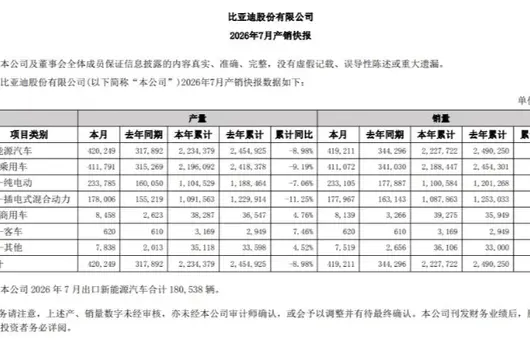
On August 1, BYD released the latest production and sales data. July sales reached 419,000 units, a year-over-year increase of 21.8%, achieving positive year-over-year growth for the third consecutive month.

In May, BYD sales were 383,000 units, a slight year-over-year increase of only 0.2%. June sales were 403,000 units, with the year-over-year increase expanding to 5.4%, and July's year-over-year growth rate increased to 21.8%. The significant expansion of single-month increments shows that the strength of BYD's recovery has strengthened month by month. Before this three-month consecutive year-over-year growth trend appeared, BYD experienced continuous year-over-year deep decline. The industry growth leader fell into a continuous period of deceleration.
From September 2025 to April 2026, BYD experienced an 8-month cycle of consecutive year-over-year declines in overall vehicle sales. In January, February, March, and April this year, BYD's overall vehicle sales dropped significantly with two-digit figures for four consecutive months. Among them, January sales dropped 30.67% year-over-year, February's year-over-year drop widened to 36%, March year-over-year declined 30.13%, and April's year-over-year drop narrowed but still remained in the two-digit decline range at 26.17%.
The eight consecutive year-over-year declines for BYD were caused by the resonance of multiple factors: The expiration of new energy vehicle purchase tax incentives at the end of 2025 caused a large amount of car buying demand to be prepaid into the fourth quarter; Since 2026, the policy of halving the purchase tax was implemented, causing market purchasing power to contract in phases at the beginning of the year; At the same time, the competition in the domestic new energy market has fully upgraded, and competitor hybrid and pure electric new products were launched centrally, eroding BYD's market share, and overseas local production capacity has not been fully released.
With the market performance recovery starting in May, BYD officially bid farewell to the low-level market trend of continuous multiple-month year-over-year decline. The repair effect of cumulative sales for the year also appeared synchronously. Data shows that from January to July 2026, BYD's cumulative overall vehicle sales reached 2.22 million units, with the year-over-year decline narrowing to 10.5%. Compared to the significant decline of around 30% in the first quarter, the overall operating pressure has been significantly alleviated.
However, looking at the sales structure, the growth momentum of this round of BYD recovery is not balanced. Its overseas markets contributed the main increments. The performance in the domestic market has not yet walked out of the downward channel. The overall recovery shows a differentiated pattern of 'strong abroad, weak domestically'. The recovery in growth rate is largely due to the explosive growth of overseas businesses supporting it. The domestic basic floor has not yet returned to the positive growth track. The foundation of recovery still needs to be further solidified.
Overseas Supports Growth, Domestic Still Faces Pressure
The overseas market is the core engine for this round of BYD sales recovery. Official data shows that in July alone, BYD's overseas market contributed about 180,000 units of sales, a year-over-year increase of 125%. From January to July this year, BYD's cumulative export sales reached 970,000 units, a significant year-over-year increase of 76.1%. The proportion of overseas sales in total sales continued to increase, rising from 22% year-on-year at the same period last year to the current 43%.
According to the current progress, BYD's original overseas target of 1.6 million units has completed 64%. The remaining 5 months with a monthly average overseas sales of 126,000 units can achieve the target. Under this trend, BYD has already given a higher expectation than 1.6 million units. Previously, BYD Chairman Wang Chuanfu stated, 'The overseas sales target set for 2026 at the beginning of the year was 1.5 million units. Now it is expected that it will exceed this target.'

The high-speed growth of BYD's overseas business is the concentrated realization of its long-term global layout over the past two years. In recent years, BYD has accelerated the implementation of global production capacity, successively building whole vehicle manufacturing bases in many places such as Thailand, Brazil, Hungary, etc. Localized production not only avoids tariff barriers but also better fits the consumption demands and policy rules of local markets. On the product level, BYD has also laid out dual technology routes for pure electric and plug-in hybrid. Vehicle models cover entry-level commuting, home commuting to multiple levels of mid-to-high-end, which can adapt to consumption levels of different markets such as Southeast Asia, Latin America, and Europe.
However, what needs to be paid attention to is that, in sharp contrast to the high growth overseas, the weak state of the domestic market has not been fundamentally reversed. Apart from BYD's overseas sector, from January to July this year, BYD's domestic cumulative sales were about 1.25 million units, a year-over-year decline of 35.5%. July domestic sales were 239,000 units, a year-over-year decline of 9.4%. Although the decline narrowed compared to before, it has not yet returned to the positive growth track.
The pressure in the domestic market mainly stems from the continuous intensification of industry competition. Over the past two years, independent car companies have fully turned to new energy. New products in the hybrid and pure electric tracks were launched intensively. Price wars ran through the full price range of 100,000 to 300,000. BYD's previously established cost and cost-performance advantages based on vertical integration were gradually diluted. At the same time, the main models of the Dynasty series entered the middle-to-late stage of the product lifecycle, and product attractiveness decreased;
Including the slow implementation pace in the field of intelligence compared to leading competitors. The insufficient popularity of high-level intelligent driving also affected the brand's competitiveness in the mid-to-high-end market to a certain extent.
Stabilization Still Awaits Breakthrough on Domestic and International Lines
For BYD, although the high growth in the overseas market is able to support the overall sales volume, the domestic market, as the core basic floor of the brand, still needs stable market performance. Currently, the domestic new energy market has entered the stage of stock competition. For BYD to hold the share of the mainstream home market, it faces dual squeezing from new forces and traditional car companies, and operating pressure remains significant.
Facing the challenges in the domestic market, BYD has launched multi-dimensional adjustments to break through the situation.

On the product end, the main models of the Dynasty series will usher in replacement modifications one after another. Including products such as 'Tang, Han' have been launched into the market or are waiting to be launched, reactivating terminal attraction; On the intelligence level, BYD is accelerating the implementation and popularity of high-level intelligent driving systems, making up for intelligence shortcomings, and narrowing the experience gap with leading competitors. On the brand matrix side, relying on the three high-end brands of Denza, Fang Cheng Bao, and Yang Wang to continue to exert force, covering the 200,000 to 1 million level market, pulling up brand premium ability, and getting rid of the low-end price involution.
Overall, the positive signals in BYD's adjustment process are the year-over-year growth for the past three consecutive months, marking that BYD has passed the previous downward cycle, but it does not mean that BYD has comprehensively stabilized.
Especially the overseas market it currently relies on, growth is not without risks either. Trade protectionism is rising in many places globally. Tariff policies and localized access rules may change. Global traditional car companies are also accelerating electrification transformation. Competition between local brands and other multinational car companies will gradually intensify. Superimposed with uncertainty factors such as exchange rate fluctuations, whether BYD's high growth rate in overseas sales can be maintained long-term still has many uncertainties.
This actually means that for BYD's true stabilization and recovery, it is inseparable from substantial recovery in the domestic sector as support. Subsequently, with the implementation of new product iterations and intelligent upgrades, whether BYD can re-activate domestic terminal demand and finally achieve balanced development of domestic and foreign markets will be the core indicator to observe whether BYD can continue to lead the market in the future after standing on the height of scale.
In the Malaysian SUV market, many buyers tend to compare the Proton X70 and Chery Tiggo 8 PHEV when choosing a car. Both of these vehicles are quite close in price and positioning. Today, we will make a detailed comparison from multiple aspects to help you save time on research.
The OTR price for the Proton X70 in Malaysia is RM 106,800 - 122,300, with a total of 3 versions, including 1.5L Standard 2WD (RM 106,800), 1.5L Executive 2WD (RM 115,800), 1.5L Premium 2WD (RM 122,300), etc.
The OTR price for the Chery Tiggo 8 PHEV in Malaysia is RM 159,750 - 159,750, with a total of 2 versions, including 1.6L Turbo Standard (RM 130,000), 1.6L Turbo Premium (RM 145,000), etc.
In terms of price, the starting price of the Proton X70 is indeed RM 52,950 cheaper than the Chery Tiggo 8 PHEV. If your budget is limited, Proton's entry-level version can already meet daily needs. However, note that for that few thousand price difference, there may be compromises in features, which depends on your specific needs.
Proton X70 comes with 1.5L Turbo, horsepower 140 hp. Official fuel consumption 7.0 L/100km.
Chery Tiggo 8 PHEV comes with Hybrid, horsepower 170 hp. Official fuel consumption 4.5 L/100km.
In terms of power, Chery Tiggo 8 PHEV's Hybrid has 30 more horsepower than Proton X70's 1.5L Turbo. However, for daily city driving, both vehicles have sufficient power and you won't feel like they lack power.
Proton X70's safety rating is 5★ (ASEAN NCAP), active safety systems include ADAS (ACC, AEB, LKA, LDA, BSM, RCTA).
Chery Tiggo 8 PHEV's safety rating is TBD, active safety systems include Basic.
Regarding safety features, both vehicles have received good ratings. However, there are some differences in functionality between Proton X70's ADAS (ACC, AEB, LKA, LDA, BSM, RCTA) and Chery Tiggo 8 PHEV's Basic. If you value active safety more, you can compare the feature lists of both carefully.
Proton X70 adopts FWD drivetrain.
Chery Tiggo 8 PHEV adopts FWD drivetrain.
Both vehicles have the same drivetrain, which is FWD, so the daily driving experience will not differ significantly.
Proton X70 and Chery Tiggo 8 PHEV are both mainstream choices in the Malaysian market, suitable for family use and daily commuting. If you value brand reputation and resale value more, you can prioritize the one with better reputation; if you care more about value for money and features, then choose the one with richer configuration. Ultimately, we recommend test driving both, as hands-on experience is the most important.
Overall, Proton X70 and Chery Tiggo 8 PHEV are both very good models in the Malaysian market. Choosing which one ultimately depends on your personal needs and budget. We suggest doing your homework well, comparing quotes from several car dealers, and then test driving to make the final decision. Buying a car is a major decision, spending time on research is never a mistake.

In the Malaysia SUV market, many buyers compare the Proton X70 and Chery Tiggo 8 PHEV when choosing a car. Both cars are quite close in price and positioning. Today, we will make a detailed comparison from multiple aspects to help you save time on research.
The OTR price of Proton X70 in Malaysia is RM 106,800 - 122,300, with a total of 3 versions, including 1.5L Standard 2WD (RM 106,800), 1.5L Executive 2WD (RM 115,800), 1.5L Premium 2WD (RM 122,300), etc.
The OTR price of Chery Tiggo 8 PHEV in Malaysia is RM 159,750 - 159,750, with a total of 2 versions, including 1.6L Turbo Standard (RM 130,000), 1.6L Turbo Premium (RM 145,000), etc.
Looking at the price, Proton X70 is indeed RM 52,950 cheaper at the start price compared to Chery Tiggo 8 PHEV. If your budget is limited, Proton's entry-level version can already meet daily needs. However, note that the cheaper amount may involve trade-offs in specifications, specifically depends on your needs.
Proton X70 is equipped with 1.5L Turbo, 140 hp. Official fuel consumption 7.0 L/100km.
Chery Tiggo 8 PHEV is equipped with Hybrid, 170 hp. Official fuel consumption 4.5 L/100km.
In terms of power, Chery Tiggo 8 PHEV's Hybrid has 30 more horsepower compared to Proton X70's 1.5L Turbo. However, for daily city driving, both cars' power is sufficient, you won't feel it's lacking.
Proton X70's safety rating is 5★ (ASEAN NCAP), active safety systems include ADAS (ACC, AEB, LKA, LDA, BSM, RCTA).
Chery Tiggo 8 PHEV's safety rating is TBD, active safety systems include Basic.
Regarding safety features, both cars have received decent ratings. However, there are some differences in functionality between Proton X70's ADAS (ACC, AEB, LKA, LDA, BSM, RCTA) and Chery Tiggo 8 PHEV's Basic. If you value active safety more, you can compare the feature lists of both carefully.
Proton X70 warranty 5 years/150,000km, maintenance interval every 10,000km or 6 months.
Chery Tiggo 8 PHEV warranty 3 years/100,000km, maintenance interval every 10,000km or 6 months.
Proton X70 and Chery Tiggo 8 PHEV are both mainstream choices in the Malaysia market, suitable for family use and daily commuting. If you value brand reputation and resale value more, you can prioritize the one with better reputation; if you care more about cost-performance and features, choose the one with richer specs. In the end, it is recommended to test drive both, personal experience is the most important.
Overall, Proton X70 and Chery Tiggo 8 PHEV are both very good models in the Malaysia market. Which one to choose depends on your personal needs and budget. It is recommended to do research, compare quotes from several dealerships, and then go for a test drive to make the final decision. Buying a car is a big matter, spending time on research will never be wrong.
In Malaysia's SUV market, many buyers compare the Proton X70 and the Chery Tiggo 8 PHEV when choosing a car. These two vehicles are quite close in price and positioning. Today, we will make a detailed comparison from multiple aspects to help you save time on research.
The Proton X70's OTR price in Malaysia is RM 106,800 - 122,300, with a total of 3 versions, including 1.5L Standard 2WD (RM 106,800), 1.5L Executive 2WD (RM 115,800), 1.5L Premium 2WD (RM 122,300), etc.
The Chery Tiggo 8 PHEV's OTR price in Malaysia is RM 159,750 - 159,750, with a total of 2 versions, including 1.6L Turbo Standard (RM 130,000), 1.6L Turbo Premium (RM 145,000), etc.
From a price perspective, the Proton X70's starting price is indeed RM 52,950 cheaper than the Chery Tiggo 8 PHEV. If your budget is limited, Proton's entry-level version is already sufficient for daily needs. However, note that the few thousand RM savings might involve trade-offs in features, depending on your specific requirements.
The Proton X70's safety rating is 5★ (ASEAN NCAP), with active safety systems including ADAS (ACC, AEB, LKA, LDA, BSM, RCTA).
The Chery Tiggo 8 PHEV's safety rating is TBD, with active safety systems including Basic.
In terms of safety features, both vehicles have received decent ratings. However, there are some differences in functionality between the Proton X70's ADAS (ACC, AEB, LKA, LDA, BSM, RCTA) and the Chery Tiggo 8 PHEV's Basic. If you value active safety highly, you can compare their feature lists in detail.
Proton X70 body length 4400 mm, trunk 400 L.
Chery Tiggo 8 PHEV body length 4400 mm, trunk 400 L.
The dimensions of both cars are almost the same, with little difference in interior space. For cars in this class, daily use is more than sufficient.
Proton X70 warranty 5 years/150,000km, maintenance interval every 10,000km or 6 months.
Chery Tiggo 8 PHEV warranty 3 years/100,000km, maintenance interval every 10,000km or 6 months.
Both the Proton X70 and Chery Tiggo 8 PHEV are mainstream choices in the Malaysian market, suitable for family use and daily commuting. If you value brand reputation and resale value more, prioritize the one with better reputation; if you care more about cost-performance and features, choose the one with richer configurations. Ultimately, it is recommended to test drive both, as personal experience is the most important.
Overall, the Proton X70 and Chery Tiggo 8 PHEV are both excellent models in the Malaysian market. Which one to choose depends on your personal needs and budget. We suggest doing your research, comparing quotes from multiple car dealerships, and then test driving to make a final decision. Buying a car is a big matter, spending some time researching will never go wrong.

喺馬來西亞嘅 SUV 市場,好多買家喺揀車嘅時候都會拎 Perodua Aruz 同 Honda WR-V 嚟做比較。呢兩款車喺價錢同定位上都幾接近嘅,今日我哋就從多個方面做一個詳細嘅比較,幫你省返做功課嘅時間。
Perodua Aruz 喺馬來西亞嘅 OTR 售價係 RM 72,900 - 77,900,一共有 2 個版本,包括 1.5L X(RM 72,900)、1.5L AV(RM 77,900) 等等。
Honda WR-V 喺馬來西亞嘅 OTR 售價係 RM 89,900 - 107,900,一共有 4 個版本,包括 2023 1.5L V(RM 99,900)、2023 1.5L E(RM 95,900)、2023 1.5L S(RM 89,900) 等等。
由價錢睇,Perodua Aruz 嘅入門價的確比 Honda WR-V 平咗 RM 17,000。如果你預算有限,Perodua 嘅入門版已經可以滿足日常需求。但亦要留意,平嗰幾千蚊,可能喺配備上會有取捨,具體要睇你嘅需求。

Perodua Aruz 搭載 1.5L 4-cyl,馬力 105 hp。官方油耗 6.0 L/100km。
Honda WR-V 搭載 1.5L 4-cyl,馬力 105 hp。官方油耗 6.0 L/100km。
兩款車用咗同一套動力系統,日常開起身嘅感覺基本冇咩分別。油耗方面都差唔多,唔使太諗呢一點。
Perodua Aruz 嘅安全評級係 5★ (ASEAN NCAP),主動安全系統包括 。
Honda WR-V 嘅安全評級係 5★ (ASEAN NCAP),主動安全系統包括 Honda SENSING。
兩款車嘅安全評級一樣,喺呢個級別入面安全配備都算畀得好齊全。而家嘅新車安全性都唔差,唔使太擔心呢一點。
Perodua Aruz 保修 5 年/150,000km,保養間隔 每 10,000km 或 6 個月。
Honda WR-V 保修 5 年/無限制里程,保養間隔 每 10,000km 或 6 個月。
總體嚟講,Perodua Aruz 同 Honda WR-V 都係馬來西亞市場幾唔錯嘅車款。揀邊台,關鍵始終都要睇你嘅個人需求同預算。建議大家做足功课,多比較幾間車行嘅報價,先再去試駕先做最終決定。買車係件大嚟嘅事,花少少時間做功課絕對唔會錯。


In Malaysia's SUV market, many buyers compare the Perodua Aruz and Proton X90 when choosing a car. These two models are quite close in price and positioning. Today, we will make a detailed comparison from multiple aspects to help you save time on research.
The Perodua Aruz OTR price in Malaysia is RM 72,900 - 77,900, with a total of 2 versions, including 1.5L X (RM 72,900), 1.5L AV (RM 77,900), etc.
The Proton X90 OTR price in Malaysia is RM 106,800 - 122,800, with a total of 4 versions, including 2026 1.5T Prime X (RM 122,800), 2026 1.5T Prime (RM 116,800), 2026 1.5T Lite (RM 106,800), etc.
In terms of price, the Perodua Aruz's starting price is indeed RM 33,900 cheaper than the Proton X90. If your budget is limited, Perodua's entry-level version is sufficient for daily needs. However, keep in mind that the difference of a few thousand might involve trade-offs in features, depending on your needs.
The Perodua Aruz comes with a 1.5L 4-cyl engine, 105 hp. Official fuel consumption is 6.0 L/100km.
The Proton X90 comes with a 1.5L Turbo engine, 140 hp. Official fuel consumption is 7.0 L/100km.
In terms of power, the Proton X90's 1.5L Turbo has 35 more horsepower than the Perodua Aruz's 1.5L 4-cyl. However, for daily driving in the city, the power of both cars is sufficient, and you won't feel underpowered.
The Perodua Aruz body length is 4400 mm, trunk 400 L.
The Proton X90 body length is 4400 mm, trunk 400 L.
The dimensions of both cars are almost the same, with little difference in interior space. For a car at this level, it is fully sufficient for daily use.
Both the Perodua Aruz and Proton X90 are mainstream choices in the Malaysian market, suitable for family use and daily commuting. If you value brand reputation and resale value more, consider the one with better reputation; if you care more about value for money and features, choose the one with richer configurations. Ultimately, it is recommended to test drive both, as personal experience is the most important.

Overall, both the Perodua Aruz and Proton X90 are very good models in the Malaysian market. Which one to choose depends on your personal needs and budget. We suggest doing your research, compare quotes from several car dealers, and then go for a test drive to make the final decision. Buying a car is a big deal, taking some time to research is never wrong.

In the Malaysian SUV market, many buyers compare Perodua Aruz and Proton X90 when choosing a car. These two cars are quite close in price and positioning. Today, we will make a detailed comparison from multiple aspects to help you save time on research.
Perodua Aruz's OTR price in Malaysia is RM 72,900 - 77,900. There are 2 versions in total, including 1.5L X (RM 72,900), 1.5L AV (RM 77,900), etc.
Proton X90's OTR price in Malaysia is RM 106,800 - 122,800. There are 4 versions in total, including 2026 1.5T Prime X (RM 122,800), 2026 1.5T Prime (RM 116,800), 2026 1.5T Lite (RM 106,800), etc.
From a price perspective, Perodua Aruz's starting price is indeed RM 33,900 cheaper than Proton X90. If your budget is limited, Perodua's entry-level version can already meet daily needs. However, please note that the cheaper price may involve trade-offs in equipment, depending on your specific requirements.
Perodua Aruz body length 4400 mm, trunk 400 L.
Proton X90 body length 4400 mm, trunk 400 L.
The dimensions of both cars are almost the same, with little difference in interior space. Cars of this class are fully sufficient for daily use.
Perodua Aruz warranty 5 years/150,000km, maintenance interval every 10,000km or 6 months.
Proton X90 warranty 5 years/150,000km, maintenance interval every 10,000km or 6 months.
Both cars have the same warranty conditions, no need to worry about this. Actual maintenance costs depend on the brand's service network and parts prices. It is recommended to ask real owners in car owner groups for their experience.
Both Perodua Aruz and Proton X90 are mainstream choices in the Malaysian market, suitable for family use and daily commuting. If you value brand reputation and second-hand price more, you can prioritize the one with better reputation; if you care more about cost-performance ratio and equipment, then choose the one with richer configuration. Ultimately, it is recommended to test drive both, as personal experience is the most important.
Overall, Perodua Aruz and Proton X90 are both very good models in the Malaysian market. Which one to choose depends mainly on your personal needs and budget. We suggest everyone do their research, compare quotes from several dealerships, and then go for a test drive to make the final decision. Buying a car is a big matter; spending some time on research will never be wrong.

Dalam pasaran SUV di Malaysia, banyak pembeli membandingkan Proton X70 dengan Chery Tiggo 9 apabila memilih kereta. Kedua-dua model ini sangat hampir dari segi harga dan kedudukannya, hari ini kita akan buat perbandingan terperinci dari pelbagai aspek, membantu anda menjimatkan masa untuk membuat kajian.
Harga OTR Proton X70 di Malaysia ialah RM 106,800 - 122,300, terdapat 3 varian, termasuk 1.5L Standard 2WD (RM 106,800), 1.5L Executive 2WD (RM 115,800), 1.5L Premium 2WD (RM 122,300) dan lain-lain.
Harga OTR Chery Tiggo 9 di Malaysia ialah RM 166,800 - 179,800, terdapat 1 varian, termasuk 2026 2.0T Standard (RM 179,750) dan lain-lain.
Dilihat dari segi harga, harga permulaan Proton X70 memang lebih murah RM 60,000 berbanding Chery Tiggo 9. Jika bajet anda terhad, varian asas Proton sudah boleh memenuhi keperluan harian. Tetapi anda juga perlu perhatikan, perbezaan harga beberapa ribu ringgit itu mungkin melibatkan kompromi dalam kelengkapan, bergantung kepada keperluan anda.

Proton X70 menggunakan sistem pemacu FWD.
Chery Tiggo 9 menggunakan sistem pemacu FWD.
Kedua-dua kereta menggunakan cara pemacu yang sama, iaitu FWD, pengalaman memandu harian tidak akan mempunyai perbezaan yang besar.

Proton X70 jaminan 5 tahun/150,000km, selang penyelenggaraan setiap 10,000km atau 6 bulan.
Chery Tiggo 9 jaminan 3 tahun/100,000km, selang penyelenggaraan setiap 10,000km atau 6 bulan.

Proton X70 dan Chery Tiggo 9 adalah pilihan utama pasaran Malaysia, sesuai untuk penggunaan keluarga, perjalanan harian. Jika anda lebih mengutamakan reputasi jenama dan harga runcit semula, anda boleh memberikan keutamaan kepada model yang lebih baik reputasinya; jika anda lebih mengutamakan nilai dan kelengkapan, pilih model yang lebih kaya dengan konfigurasi. Pada akhirnya disyorkan kedua-dua model untuk disemak, pengalaman langsung adalah yang paling penting.
Secara keseluruhan, Proton X70 dan Chery Tiggo 9 adalah model kereta yang sangat bagus di pasaran Malaysia. Memilih yang mana, kunci utamanya adalah melihat keperluan dan bajet peribadi anda. Kami mencadangkan anda membuat kajian, bandingkan beberapa harga daripada dealer, kemudian buat uji jalan untuk membuat keputusan akhir. Membeli kereta adalah perkara besar, mengambil masa membuat kajian tidak akan salah.


In the Malaysian SUV market, many buyers compare Perodua Aruz and Honda WR-V when choosing a car. These two cars are quite close in price and positioning. Today, we will make a detailed comparison from multiple aspects to help you save time on research.
Perodua Aruz OTR price in Malaysia is RM 72,900 - 77,900, with a total of 2 versions, including 1.5L X (RM 72,900), 1.5L AV (RM 77,900), etc.
Honda WR-V OTR price in Malaysia is RM 89,900 - 107,900, with a total of 4 versions, including 2023 1.5L V (RM 99,900), 2023 1.5L E (RM 95,900), 2023 1.5L S (RM 89,900), etc.
From the price perspective, Perodua Aruz's starting price is indeed RM 17,000 cheaper than Honda WR-V. If your budget is limited, Perodua's entry-level version is enough for daily needs. But also note, the few thousand cheaper may have compromises in features, it depends on your needs.
Perodua Aruz comes with 1.5L 4-cyl, 105 hp. Official fuel consumption 6.0 L/100km.
Honda WR-V comes with 1.5L 4-cyl, 105 hp. Official fuel consumption 6.0 L/100km.
Both cars use the same powertrain system, the driving feel is basically no difference. Fuel consumption is also similar, no need to fuss too much about this.
Perodua Aruz safety rating is 5★ (ASEAN NCAP), active safety system includes.
Honda WR-V safety rating is 5★ (ASEAN NCAP), active safety system includes Honda SENSING.
Both cars have the same safety rating, safety features are quite complete in this class. New cars' safety is not bad now, no need to worry too much about this.
Perodua Aruz body length 4400 mm, trunk 400 L.
Honda WR-V body length 4400 mm, trunk 400 L.
Both cars are almost the same size, interior space difference is not large. Cars in this class are enough for daily use.
Perodua Aruz and Honda WR-V are both mainstream choices in the Malaysian market, suitable for family use, daily commuting. If you value brand reputation and resale value more, you can prioritize the one with better reputation; If you care more about price-performance ratio and features, choose the one with richer configuration. Ultimately it is recommended to test drive both, personal experience is the most important.
In summary, Perodua Aruz and Honda WR-V are both very good models in the Malaysian market. Which one to choose depends on your personal needs and budget. We suggest doing your homework, compare quotes from several dealerships, then test drive to make the final decision. Buying a car is a big deal, spending time doing research will definitely not be wrong.

In the Malaysian SUV market, many buyers compare Perodua Aruz and Honda HR-V when choosing a car. These two models are quite close in price and positioning. Today we will make a detailed comparison from multiple aspects to help you save time on research.
Perodua Aruz OTR price in Malaysia is RM 72,900 - 77,900, with 2 versions available, including 1.5L X (RM 72,900), 1.5L AV (RM 77,900), etc.
Honda HR-V OTR price in Malaysia is RM 115,900 - 143,900, with 4 versions available, including 2026 e:HEV 1.5L RS (RM 143,900), 2026 1.5T V (RM 137,900), 2026 1.5T E (RM 130,900), etc.
From a price perspective, Perodua Aruz starting price is indeed RM 43,000 cheaper than Honda HR-V. If your budget is limited, Perodua's entry-level version can already meet daily needs. But also note, the few thousand difference in price might involve trade-offs in features, depending on your specific needs.
Perodua Aruz safety rating is 5★ (ASEAN NCAP), active safety systems include.
Honda HR-V safety rating is 5★ (ASEAN NCAP), active safety systems include Honda SENSING (ACC, CMBS, LKAS, RDM).
Both cars have the same safety rating, safety features are quite complete in this class. New cars nowadays do not have poor safety, so there is no need to worry too much about this.
Perodua Aruz body length 4400 mm, trunk 400 L.
Honda HR-V body length 4500 mm, trunk 450 L.
Regarding space, Honda HR-V body is 100 mm longer than Perodua Aruz, offering better passenger space. However, Perodua Aruz is a bit more flexible for parking in the city, each has its trade-offs.
Perodua Aruz warranty 5 years/150,000km, maintenance interval every 10,000km or 6 months.
Honda HR-V warranty 5 years/unlimited mileage, maintenance interval every 10,000km or 6 months.
Overall, Perodua Aruz and Honda HR-V are both very good models in the Malaysian market. Which one to choose depends mainly on your personal needs and budget. We suggest doing your research, comparing quotes from several dealerships, and then test driving before making a final decision. Buying a car is a big matter, spending time on research is never wrong.
© 2024 Bitauto.com. All Rights Reserved.
Bitauto (www.yiche.com and www.bitauto.com) is one of the most visited automotive websites in China. We provide detailed info on Chinese car brands available in your area. Please note that the information provided on this website is based on publicly available data and is for reference only. It may not be fully updated or accurate at all times.

Help us improve our website


