

Homevideos

Search History
Popular Searches
Dealer Login / Sign Up


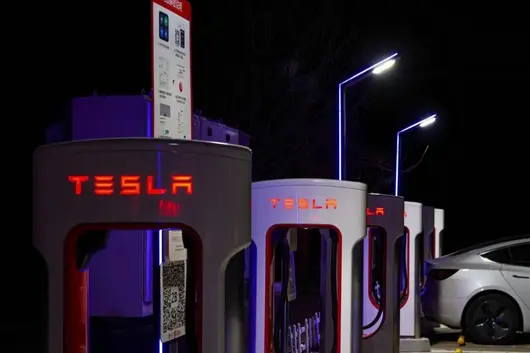
Di penghujung Julai, di dalam parkiran bawah tanah sebuah taman perumahan di Pudong, Shanghai, Encik Zhou menatap stesen cas selama beberapa ketika. Lampu hijau menyala, dia mencabut penyambung, masuk ke Model Y, memandu ke Lebuhraya Yan'an.
Jam puncak malam, jalan bawah sesak teruk. Dia melihat kiri kanan, depan belakang semua plat hijau, sekurang-kurangnya tiga daripada lima kereta menggunakan plat hijau.
Berapa tahun lalu semasa tukar kereta, Encik Zhou mengira: plat tidak perlu bayar, elektrik lebih murah dari minyak, penyelenggaraan lebih mudah.
Habis kira terus tukar, berpuas hati kerana pilih kereta elektrik, pilih Tesla.
Encik Zhou bukan kes tunggal, beberapa tahun dulu orang beli kereta elektrik ada unsur cuba baru, sekarang tiada, kerana kereta elektrik sudah jadi rutin harian.
Apabila sudah jadi rutin sangat, perlu fikir satu soalan: selepas tepu, kereta elektrik seterusnya nak jual pada siapa?
Data beri satu sisi jawapan.
Semenjak awal tahun peruncitan kenderaan penumpang 8.701 juta, kurang 20% dari tahun lalu. Jun, kereta minyak biasa tinggal 591,000 unit.
Sebelah lagi, bahagian kenderaan baharu sampai 62.8%, daripada 100 kereta baharu, lebih 62 ada plat hijau.
Galeri kereta minyak lama makin kosong, wajar, jenama gabungan hari paling susah.
FAW Toyota awal tahun jual 273,700 unit, kurang hampir sepertiga dari tahun lalu, kurang lebih 100,000 unit kereta. Dulu bergantung pada model klasik seperti RAV4 dan Corolla Cross boleh sokong jualan, sekarang tidak berfungsi lagi.
Antara harga 100,000 ke 200,000, jenama sendiri hybrid colok dan elektrik tulen banyak dipasang, ruang besar, kabin pintar, bantuan memandu semuanya turun, hanya靠 perang harga susah tahan.

GAC Toyota keadaan lebih baik, awal tahun jual lebih 340,000 unit, lawan balik hampir 70,000 unit. Perbezaan ada satu model boleh laku elektrik tulen Platinum 3X, 12 bulan lepas jual lebih 90,000 unit, dah setara air keras minyak utama, seterusnya ada Platinum 7 keluar, sepatutnya jual bagus.
Ini说明 jenama gabungan ada peluang, selama boleh hasilkan kenderaan baharu berkualiti tinggi, sama ada boleh lawan kekuatan baru.
Lihat jenama mewah lagi. Awal tahun BMW jualan di China lebih 260,000 unit, turun 20%; Mercedes 210,000 unit, turun hampir 30%; Audi hampir 220,000 unit, turun hampir 20%.

Tiga jenama tambah turun lebih 20%, harga turun lagi turun, Audi Q6 ganjaran gabungan 130,000, tahun dulu harga 500,000 sekarang kereta kosong 330,000 boleh dapat. BMW iX1 jual stok, tunai 180,000 lebih.
Sekarang, saham pasar kenderaan penumpang jenama China lebih 75%, jenama gabungan tambah kurang 1/4. Jun, penelusan kenderaan baharu jenama gabungan hanya 11.9%, jenama sendiri 81.8%.
Bahkan Raja Gabungan FAW-Volkswagen kenderaan baharu saham borong tinggal 0.1%.
Uang lama kereta minyak mengecil, elektrik tak mampu tangkap, jenama gabungan dua-dua tak dapat.
Jenama gabungan turun, siapa naik? Beberapa bandar utama tarik keluar lihat.
Shanghai awal tahun 148,700 unit, nombor satu negara, naik 10% dari tahun lalu.

Kilang Tesla Shanghai pemain besar, hasil tidak hanya jual dalam negara, ke Korea, Jepun, Timur Tengah, Amerika Selatan. Shanghai boleh jual baik,靠 plat percuma + kapasiti Tesla, ditambah mana-mana boleh cas, tapi cara lain tempat lain tak boleh tiru.
Beijing 144,600 unit, hampir tak berubah, sebab tidak rumit, plat hanya ada begitu.
2026 Beijing beri indeks keluarga hampir 120,000, individu 30,000, mohon hampir 900,000. Rindukan plat 5 tahun kawan kata, sekarang tidak harap plat, harap jawapan, bila giliran. Pasar Beijing struktur begitu, beri berapa plat, jual berapa kereta.
Chengdu 136,400 unit,排 ketiga. Tidak had plat, lebih 60% orang beli elektrik,全靠 produk sendiri cakap.
Shenzhen 122,000 unit, kurang 16% dari tahun lalu. HQ BYD, bahagian kenderaan baharu lama lewat 60%, elektrik tulen 70%; Guangzhou 130,500 unit, Hangzhou 123,500 unit, yang nak beli dah beli.
Lihat satu圈 habis satu soalan, bandar ini ada ruang lagi?
Barisan pertama dan baru dah cap max, sisa 40% orang, atau tak ada parking tak boleh pasang, atau risau jarak, atau takut buka beberapa tahun nilai sisa jatuh, atau tunggu kereta lebih murah, orang ini sementara tidak akan buka dompet beli kereta.
Memandangkan permintaan dalam bandar utama cap langit-langit, penambahan cari di tempat lain, polisi beri arah turun.

Jun, Kementerian Perindustrian, Perdagangan dan 5 jabatan lain mula kenderaan baharu turun kampung tahun ini, cadang 155 model, lebih 31 dari tahun lalu. Dari 2020 sampai sekarang, turun kampung model akumulasi jual lebih 20 juta unit.
Dalam akaun lihat syarat dah ada. Akhir Mei, seluruh negara stesen cas 22.497 juta. Gunter biasa, 100km 5 yuan elektrik, 1 tahun kos kereta kurang 2000 yuan. Kira ini di bandar kecil senang.
Muka lihat syarat lengkap, tapi turun kampung bukan gaya bandar bawa turun, logik lain.
Masalah sebenar bukan pada stesen, tapi pada pemutar arus.
Pemutar arus kampung kapasiti tidak cukup, satu kampung dulu 100 kVA, pasang lebih beberapa stesen senang trip.
Lebih susah baik kereta, bandar kecil tukang baik kenderaan baharu tak ramai, rosak kena tarik ke bandar kecil atau bandar.
Jadi turun kampung bukan jual kereta, stesen, grid, selepas jual, kewangan turun sama, satu sistem projek, tidak fikir jual di bandar tak laku, tidak mahu elektrik, jual ke kampung.
Bukan saja jual keluar, lebih mesti boleh guna, inilah satu gelombang turun elektrik boleh jauh kunci.
Permintaan dalam ada halangan, kaki lain mesti ke luar.
Awal tahun eksport 5.096 juta unit, naik 65%. Kenderaan baharu eksport 2.355 juta unit, naik dua kali.
Perusahaan kereta China ke luar jalan, lalui tiga fasa.

Paling awal ialah eksport kereta siap, kereta di China buat siap kapal bawa, modal kecil cepat, tapi paling senang kena pukul.
2024 Eropah tambah tinggi 35.3% cukai subsidi, awal tahun eksport Eropah elektrik tulen terus turun 15%.
Cukai tambah, semua tukar jalan, fasa dua ialah bina kilang luar.

BYD Thailand kilang 16 bulan siap produksi, kapasiti setahun 150,000 unit, cukai kos tekan turun 20%. Hungary kilang hujung tahun keluar kereta, Leapmotor borrow Stellantis Sepanyol kilang rakit, Chery ambil Nissan Barcelona lama kilang. Dari eksport kereta ke eksport kapasiti, ini kali pertama switch.
Sekarang beberapa pemimpin sampai fasa ketiga, ekosistem bersama.
NIO di Emiriah Arab Bersatu set pusat penyelidikan, Great Wall Thailand buat bateri dan rangkaian cas satu, Geely masuk Proton selepas, minta supplier guna piawaian sistem pengurusan bateri China. Produk keluar, kilang keluar, piawaian juga keluar.
Tiga fasa habis, pasaran luar sedang berubah.

Eropah Mei ada satu node tanda. BYD, SAIC, Geely, Chery, Leapmotor lima perusahaan kereta China di 31 negara Eropah jual 138,400 unit, pertama kali bulan tunggal lebih enam gabungan jenama Jepun.
Di YouTube, ada netizen Jerman tukar BYD Dolphin, gembira kata: 30,000 Euro, ada semua, dari Jepun murah secebir.
Perlu nyatakan puji adalah Leapmotor, awal tahun eksport hampir 100,000 unit, lebih tahun lalu penuh, kekuatan baru排 pertama.
靠 eksport kereta cap jumlah senang, untung susah. Kira balik, perlu produksi lokal. BYD Thailand, Brazil kilang dah siap.
Jalan ke luar, pada akhirnya mesti di sana tanam akar.
Ke luar sambil, belakang juga berubah.
Dari 1 Jan 2026, kenderaan baharu cukai pembelian dari kecualian jadi setengah, ikut 5% laku, kereta tunggal tinggi potong 15,000. Kereta tak bercukai 300,000, tahun lalu bebas 30,000, tahun ini perlu bayar 15,000. 10 tahun penuh keccualian mula mundur.
Polisi bonus mengecil, hujung keuntungan masalah lebih sukar.

Awal tahun pembuatan kereta purata kadar keuntungan hanya 1.5%, hampir 10 tahun terendah. Kira semula, kereta 100,000, pengeluar untung tak sampai 1,500 yuan, ni selepas perang harga pukul lebih setahun angka.
Kereta minyak stok tinggi, terpaksa besar turun harga; kenderaan baharu untuk rebut pasar, juga aktif turun harga. Dua daya satu tempat padu, purata turun serentak hampir 15% dan 30,000.
Perang harga pukul sekarang, satu baris perusahaan sudah rugi. Polisi mundur, untung nipis, inilah seluruh industri paling dalam kebimbangan.
Perikatan IndustriAutomotif China Timbalan Jurutera Xu Haidong kata, satu, dua baris dah dekat cap, kampung才是 masa depan 10 tahun pelan biru.
Pendapat besar begini, jatuh ke individu atas lagi lain hal.

Encik Zhou Model Y jalan 60,000 km, cas penuh dari kereta baru kurang lebih 40 km, selepas jual kata biasa menurun.
Jalan Lebuhraya Yan'an plat hijau masih tambah, satu sambung satu, tingkap masih buka, tapi tahun satu lebih satu sempit.
Balik lihat semula, lama baru ganti bukan proses licin, tapi penuh pedang bayang, kamu mati saya hidup.
Pasar kereta semakin macam membiak racun, siapa hidup, siapa menang makan semua, merentasi empat lautan. Siapa mati, adalah产能 ketinggalan, segera perlu dibersihkan产能.
Persaingan pasar, begitu saja yang rendah .......

Di pasaran SUV Malaysia, ramai pembeli akan membandingkan Proton X50 dan Mitsubishi Xforce semasa memilih kereta. Kedua-dua kereta ini mempunyai harga dan penempatan yang hampir sama, hari ini kita akan membuat perbandingan terperinci dari pelbagai aspek untuk membantu anda menjimatkan masa membuat kajian.
Harga OTR Proton X50 di Malaysia ialah RM 89,800 - 113,300, terdapat 4 varian, termasuk 1.5T Executive (RM 89,800), 1.5T Premium (RM 101,800), 1.5T Flagship (RM 113,300) dan lain-lain.
Harga OTR Mitsubishi Xforce di Malaysia ialah RM 109,930 - 119,930, terdapat 2 varian, termasuk 2026 1.5L Ultimate (RM 119,930), 2026 1.5L Urban (RM 109,930) dan lain-lain.
Dari segi harga, harga permulaan Proton X50 memang lebih murah RM 20,130 berbanding Mitsubishi Xforce. Jika bajet anda terhad, varian permulaan Proton sudah cukup memenuhi keperluan harian. Namun, perlu diingat, perbezaan harga tersebut mungkin melibatkan kompromi pada kelengkapan, bergantung pada keperluan anda.

Panjang badan Proton X50 ialah 4400 mm, tempat letak barang 400 L.
Panjang badan Mitsubishi Xforce ialah 4400 mm, tempat letak barang 400 L.
Saiz kedua-dua kereta hampir sama, ruang dalam kenderaan juga tidak banyak perbezaan. Kereta pada tahap ini, cukup untuk kegunaan harian.

Jaminan Proton X50 5 tahun/150,000km, selang penyelenggaraan setiap 10,000km atau 6 bulan.
Jaminan Mitsubishi Xforce 3 tahun/100,000km, selang penyelenggaraan setiap 10,000km atau 6 bulan.

Proton X50 dan Mitsubishi Xforce adalah pilihan utama di pasaran Malaysia, sesuai untuk kegunaan keluarga, perjalanan harian. Jika anda lebih mementingkan reputasi jenama dan nilai jual semula, anda boleh mempertimbangkan terlebih dahulu model dengan reputasi lebih baik; jika anda lebih mementingkan nisbah harga-kualiti dan kelengkapan, pilih model dengan kelengkapan lebih banyak. Akhir sekali adalah dinasihatkan untuk mencuba kedua-duanya, pengalaman peribadi adalah yang paling penting.

Secara keseluruhan, Proton X50 dan Mitsubishi Xforce adalah model kereta yang sangat bagus di pasaran Malaysia. Memilih yang mana, terasnya adalah melihat keperluan dan bajet anda. Adalah dinasihatkan membuat kajian dengan baik, bandingkan harga dari beberapa diler, kemudian buat ujian memanduan untuk membuat keputusan akhir. Membeli kereta adalah perkara besar, meluangkan masa membuat kajian pasti tidak salah.


在马来西亚的汽车市场,很多买家在选车的时候都会拿 Mercedes-Benz GLE 和 Land Rover Discovery Sport 来做比较。今天我们从多个方面做一个详细的对比,帮你省下做功课的时间。


Mercedes-Benz GLE 在马来西亚的 OTR 售价是 RM 544,888 - 544,888,一共有 1 个版本,包括 Standard(RM 544,888) 等。
Land Rover Discovery Sport 在马来西亚的 OTR 售价是 RM 499,800 - 499,800,一共有 1 个版本,包括 Standard(RM 499,800) 等。
从价钱来看,Land Rover Discovery Sport 的起步价比 Mercedes-Benz GLE 便宜了 RM 45,088。老实讲,在这个价位段,几千块的差距其实不算大,关键还是看整体的性价比和长期使用成本。

Mercedes-Benz GLE 搭载 3.0L Turbo,马力 350 hp。官方油耗 12.0 L/100km。
Land Rover Discovery Sport 搭载 3.0L Turbo,马力 350 hp。官方油耗 12.0 L/100km。
两款车用的是同一套动力系统,所以日常开起来的感受基本没有差别。油耗方面也差不多,不用太纠结这一点。

Mercedes-Benz GLE 的安全评级是 5★ (Euro NCAP),主动安全系统包括 Premium ADAS。
Land Rover Discovery Sport 的安全评级是 TBD,主动安全系统包括 Basic。
安全配备方面,两款车都拿到了不错的评级。不过 Mercedes-Benz GLE 的 Premium ADAS 和 Land Rover Discovery Sport 的 Basic 在功能上有些差异,如果你比较看重主动安全的话,可以仔细对比一下两者的功能列表。

Mercedes-Benz GLE 保修 3年/100,000km,保养间隔 每10,000km或6个月。
Land Rover Discovery Sport 保修 3年/100,000km,保养间隔 每10,000km或6个月。
两款车的保修条件一样,这方面不用纠结。实际保养成本还要看品牌的服务网络和零件价格,建议去车友群问问真实车主的经验。

总的来说,Mercedes-Benz GLE 和 Land Rover Discovery Sport 都是马来西亚市场很不错的车型。选择哪一辆,关键还是要看你的个人需求和预算。建议大家做好功课,多比较几间车行的报价,再去试驾做最终决定。买车是件大事,花点时间做功课绝对不会错。


在马来西亚的轿车市场,很多买家在选车的时候都会拿 Volkswagen Golf R 和 Mercedes-Benz E-Class PHEV 来做比较。这两款车在价位和定位上都蛮接近的,今天我们就从多个方面做一个详细的对比,帮你省下做功课的时间。
Volkswagen Golf R 在马来西亚的 OTR 售价是 RM 338,812 - 338,812,一共有 2 个版本,包括 2026 2.0T Standard(RM 338,812)、DCT(RM 294,800) 等。
Mercedes-Benz E-Class PHEV 在马来西亚的 OTR 售价是 RM 427,888 - 427,888,一共有 2 个版本,包括 E 200 Avantgarde(RM 350,000)、E 300 AMG Line(RM 400,000) 等。
从价钱来看,Volkswagen Golf R 的起步价确实比 Mercedes-Benz E-Class PHEV 便宜了 RM 89,076。如果你预算有限,Volkswagen 的入门版已经可以满足日常需求。但也要注意,便宜的那几千块,可能在配备上会有取舍,具体要看你的需求。

Volkswagen Golf R 车身长 4400 mm,后备箱 400 L。
Mercedes-Benz E-Class PHEV 车身长 4400 mm,后备箱 400 L。
两款车的尺寸几乎一样,车内空间差别不大。这个级别的车,日常使用完全够用。

Volkswagen Golf R 保修 3年/100,000km,保养间隔 每10,000km或6个月。
Mercedes-Benz E-Class PHEV 保修 3年/100,000km,保养间隔 每10,000km或6个月。
两款车的保修条件一样,这方面不用纠结。实际保养成本还要看品牌的服务网络和零件价格,建议去车友群问问真实车主的经验。

Volkswagen Golf R 和 Mercedes-Benz E-Class PHEV 都是马来西亚市场的主流选择,适合家庭使用、日常通勤。如果你更看重品牌口碑和二手价,可以优先考虑口碑更好的那一款;如果你更在意性价比和配备,那就选配置更丰富的那款。最终还是建议两款都去试驾,亲身体验才是最重要的。

总的来说,Volkswagen Golf R 和 Mercedes-Benz E-Class PHEV 都是马来西亚市场很不错的车型。选择哪一辆,关键还是要看你的个人需求和预算。建议大家做好功课,多比较几间车行的报价,再去试驾做最终决定。买车是件大事,花点时间做功课绝对不会错。


在马来西亚的SUV市场,很多买家在选车的时候都会拿 Mercedes-Benz GLS 和 Land Rover Range Rover Sport 来做比较。这两款车在价位和定位上都蛮接近的,今天我们就从多个方面做一个详细的对比,帮你省下做功课的时间。
Mercedes-Benz GLS 在马来西亚的 OTR 售价是 RM 1,020,888 - 1,020,888,一共有 1 个版本,包括 Standard(RM 1,020,888) 等。
Land Rover Range Rover Sport 在马来西亚的 OTR 售价是 RM 1,698,000 - 2,500,000,一共有 1 个版本,包括 Standard(RM 1,698,000) 等。
从价钱来看,Mercedes-Benz GLS 的起步价确实比 Land Rover Range Rover Sport 便宜了 RM 677,112。如果你预算有限,Mercedes-Benz 的入门版已经可以满足日常需求。但也要注意,便宜的那几千块,可能在配备上会有取舍,具体要看你的需求。

Mercedes-Benz GLS 的安全评级是 5★ (Euro NCAP),主动安全系统包括 Premium ADAS。
Land Rover Range Rover Sport 的安全评级是 TBD,主动安全系统包括 Basic。
安全配备方面,两款车都拿到了不错的评级。不过 Mercedes-Benz GLS 的 Premium ADAS 和 Land Rover Range Rover Sport 的 Basic 在功能上有些差异,如果你比较看重主动安全的话,可以仔细对比一下两者的功能列表。

Mercedes-Benz GLS 采用 FWD 驱动方式。
Land Rover Range Rover Sport 采用 4WD 驱动方式。
Mercedes-Benz 的 FWD 和 Land Rover 的 4WD 在操控上会有不同感受,建议试驾对比。

Mercedes-Benz GLS 和 Land Rover Range Rover Sport 都是马来西亚市场的主流选择,适合家庭使用、日常通勤。如果你更看重品牌口碑和二手价,可以优先考虑口碑更好的那一款;如果你更在意性价比和配备,那就选配置更丰富的那款。最终还是建议两款都去试驾,亲身体验才是最重要的。

总的来说,Mercedes-Benz GLS 和 Land Rover Range Rover Sport 都是马来西亚市场很不错的车型。选择哪一辆,关键还是要看你的个人需求和预算。建议大家做好功课,多比较几间车行的报价,再去试驾做最终决定。买车是件大事,花点时间做功课绝对不会错。


Model Overview

Whether the Audi SQ8 Sportback e-tron is worth buying, the key is not how attractive it looks, but whether it can meet your actual vehicle usage needs. This article will focus on long-distance stability and passenger comfort.
Regarding versions, the Audi SQ8 Sportback e-tron currently can be compared around the 2025 471km quattro model.
Purchase Price Guide
When evaluating the purchase budget for the Audi SQ8 Sportback e-tron, it is recommended to start with version positioning and subsequent ownership costs. Price is not the only focus; what truly determines value is whether those configurations are used daily.
If you are hesitating between several versions, you can list the 2025 471km quattro together for comparison. Daily commuters should prioritize comfort and safety, while buyers who frequently drive on highways should place more importance on power, assisted driving, and cabin convenience.
Core Specifications Summary
When looking at the core specifications of the Audi SQ8 Sportback e-tron, the most important thing is to translate the numbers into real-life experiences.
114 kWh battery capacity, the key is whether it can support a week of commuting and weekend trips. The energy consumption of 25.3 kWh/100km affects how often you need to recharge. Output of 370 kW and 973 N·m gives more confidence for highway lane changes and short-distance overtaking. Length 4915 mm, Width 1976 mm, Height 1617 mm, Wheelbase 2928 mm, which helps you assess parking difficulty and rear seat space.
Pros and Cons Analysis
The pros of the Audi SQ8 Sportback e-tron need no exaggeration; what is truly valuable is whether it makes daily use more worry-free: clear benchmarks for daily energy costs, power output that supports highway driving and overtaking needs, and space/body dimensions that make it easy for family buyers to assess practicality.
It is important to note that you must first confirm charging conditions at home, work, or frequently visited malls. City parking and narrow roads still depend on personal driving habits. These are not negative factors, but life details that should be clarified before placing an order.
Common Purchase FAQ
Before purchasing the Audi SQ8 Sportback e-tron, buyers often ask not about single specifications, but whether it can fit into their lives.
Who is this car suitable for? Suitable for buyers who prioritize long-distance stability and passenger comfort. What should family users look for? Prioritize rear seating, child seats, luggage, and ease of daily entry and exit. Will driving daily be troublesome? As long as charging conditions are stable, the EV commuting experience is usually quieter and easier to manage in terms of daily energy costs.
Competitor Comparison
When placing the Audi SQ8 Sportback e-tron on the list of comparable vehicles, it is not recommended to look only at the brand or appearance. The truly useful comparison order is: check if power is sufficient for highways and full load, then compare energy costs and recharging convenience, and finally check if space suits family and luggage.
The results screened this way are closer to daily life. You will be clearer on whether it is suitable for city commuting, family transportation, long-distance cruising, or is more suitable as a choice that emphasizes personality.
Vehicle Usage Full-Cycle Guide
The key to owning the Audi SQ8 Sportback e-tron is to clarify the charging arrangement first. Whether it is home charging, work charging, or mall fast charging, as long as one option is stable, the daily experience will be much easier.
If you frequently drive on major highways, power and cabin comfort are more important than simply a low price; if mainly in the city, parking flexibility, visibility, and low-speed smoothness will affect your mood more.

Dalam pasaran SUV di Malaysia, ramai pembeli semasa memilih kereta akan menggunakan Proton X50 dan Chery Tiggo 8 PHEV sebagai perbandingan. Kedua-dua kereta ini mempunyai harga dan penarafan yang agak hampir. Hari ini kita akan buat perbandingan terperinci dari pelbagai aspek, membantu anda menjimatkan masa membuat kajian.
Harga OTR Proton X50 di Malaysia adalah RM 89,800 - 113,300, terdapat 4 varian, termasuk 1.5T Executive (RM 89,800), 1.5T Premium (RM 101,800), 1.5T Flagship (RM 113,300) dan lain-lain.
Harga OTR Chery Tiggo 8 PHEV di Malaysia adalah RM 159,750 - 159,750, terdapat 2 varian, termasuk 1.6L Turbo Standard (RM 130,000), 1.6L Turbo Premium (RM 145,000) dan lain-lain.
Dari segi harga, harga permulaan Proton X50 memang lebih murah RM 69,950 daripada Chery Tiggo 8 PHEV. Jika bajet anda terbatas, varian permulaan Proton sudah boleh memenuhi keperluan harian. Namun perlu diingat, beberapa ribu ringgit yang lebih murah itu, mungkin ada pengorbanan pada kelengkapan, bergantung pada keperluan anda.
Proton X50 dilengkapi dengan 1.5L 4-cyl, kuasa 105 hp. Penggunaan bahan api rasmi 6.0 L/100km.
Chery Tiggo 8 PHEV dilengkapi dengan Hybrid, kuasa 170 hp. Penggunaan bahan api rasmi 4.5 L/100km.
Dari segi kuasa, Hybrid pada Chery Tiggo 8 PHEV mempunyai 65 kuda kuasa lebih daripada 1.5L 4-cyl Proton X50. Namun, untuk penggunaan harian di bandar, kuasa kedua-dua kereta adalah mencukupi, anda tidak akan rasa kurang tenaga.
Proton X50 jaminan 5 tahun/150,000km, selang servis setiap 10,000km atau 6 bulan.
Chery Tiggo 8 PHEV jaminan 3 tahun/100,000km, selang servis setiap 10,000km atau 6 bulan.
Proton X50 dan Chery Tiggo 8 PHEV adalah pilihan utama di pasaran Malaysia, sesuai untuk kegunaan keluarga dan perjalanan harian. Jika anda lebih mementingkan reputasi jenama dan harga semula, anda boleh utamakan model yang lebih mempunyai reputasi baik. Jika anda lebih mementingkan nilai dan kelengkapan, pilihlah model yang mempunyai kelengkapan lebih banyak. Akhirnya, disarankan kedua-dua model untuk diuji memandu, pengalaman sendiri adalah yang paling penting.
Secara keseluruhannya, Proton X50 dan Chery Tiggo 8 PHEV adalah model kereta yang sangat baik di pasaran Malaysia. Pilihan mana, bergantung pada keperluan dan bajet peribadi anda. Disarankan untuk membuat kajian terlebih dahulu, bandingkan harga dari beberapa showroom kereta, kemudian buat ujian memandu untuk membuat keputusan akhir. Membeli kereta adalah perkara besar, meluangkan masa untuk kajian tidak akan salah.
車款概覽

奧迪 RS 4 值唔值得買,關鍵唔係佢睇落幾吸引,而係佢有冇解決你嘅真實用車需求。呢篇文章會把重點放喺版本之間嘅取舍。
版本方面,奧迪 RS 4 而家可圍繞 2025 Avant quattro 嚟比較。
買車價格指南
評估 奧迪 RS 4 嘅買車預算時,建議先從版本定位同後續用車成本著手。價格唔係唯一重點,真正決定係咪划算嘅係日日有冇用到嗰啲配備。
如果你喺幾個版本之間猶豫,可以將 2025 Avant quattro 放喺同一張清單入面比較。日常通勤買家優先睇舒適同安全,常行高速嘅買家則更應重視動力、輔助駕駛同車廂便利。
核心參數彙總
睇 奧迪 RS 4 嘅核心規格,最緊要係將數字翻譯成生活入面嘅感覺。
奧迪 RS 4 嘅核心價值應回歸日常場景判斷:你要佢負責通勤、家庭出行、長途,定係作為更有個性嘅選擇。
優缺點分析
奧迪 RS 4 嘅優點唔使誇張,真正有價值嘅係佢有冇令日常使用更省心:車款定位清楚,適合先作為同級比較對象。
要留意嘅係,最終取舍會落喺版本配備、保險同長期保養成本。呢啲唔係扣分項,而係落單前應該要先諗清楚嘅生活細節。
買車常見問題解答
購買 奧迪 RS 4 前,買家最常問嘅唔係單一規格,而係佢有冇融入自己嘅生活。
呢部車適合邊個?適合把版本之間嘅取舍放喺第一位嘅買家。 家庭用戶要睇咩?優先睇後排乘搭、兒童座椅、行李同日常上下車係咪啱手。 日日開會唔會麻煩?如果能源成本、停車便利同版本配備都符合你嘅生活節奏,佢會比較容易相處。
競爭對手比較內容
將 奧迪 RS 4 放進同級車名單嗰陣時,唔建議只睇品牌或外形。真正有用嘅比較順序係:先從版本定位、品牌售後同日常用途開始比較。
咁樣篩選出嚟嘅結果更貼近日常生活。你都會更清楚佢係適合市區通勤、家庭代步、長途巡航,定係更加適合作為一輛講求個性嘅選擇。
用車全週期指南
擁有 奧迪 RS 4 嘅重點,係確認保險、路稅、保養同輪胎成本喺可接受範圍內。買車唔係一次付款就結束,而係日日都要相處。
如果你常行南北大道,動力同車廂舒適度會比單純低價更重要;如果主要喺市區,停車靈活度、視野同低速順滑度會更影響心情。


Vehicle Overview

Whether the Audi A6 is worth buying depends not on how attractive it looks, but on whether it can meet your actual driving needs. This article will focus on seating space, luggage arrangement, and family comfort.
Regarding versions, the Audi A6 can currently be compared around the 2025 Sedan 40 TFSI S line, 2025 Avant, and 2025 Sedan 55 TFSI quattro.
Purchase Price Guide
When evaluating the Audi A6 purchase budget, it is recommended to start with version positioning and subsequent ownership costs. Price is not the only focus; what truly determines cost-effectiveness is whether you will use those features daily.
If you are hesitating between several versions, you can compare the 2025 Sedan 40 TFSI S line, 2025 Avant, and 2025 Sedan 55 TFSI quattro on the same list. Daily commuters should prioritize comfort and safety, while frequent highway drivers should focus more on power, driver assistance, and cabin convenience.
Core Specifications Summary
When looking at the core specifications of the Audi A6, the most important thing is to translate the numbers into real-life experiences.
The core value of the Audi A6 should be judged in daily scenarios: do you need it for commuting, family trips, long-distance travel, or as a more personalized choice.
Pros and Cons Analysis
The advantages of the Audi A6 do not need to be exaggerated; what truly matters is whether it can make daily use more hassle-free: the vehicle positioning is clear, making it suitable for comparison with peers first.
It is important to note that the final trade-offs will come down to version configurations, insurance, and long-term maintenance costs. These are not deduction points, but life details that should be clarified before placing the order.
Purchase FAQ
Before purchasing the Audi A6, buyers most often ask not about a single specification, but whether it can fit into their lives.
Who is this car for? It is suitable for buyers who prioritize seating space, luggage arrangement, and family comfort. What should family users look for? Prioritize rear seating, child seats, luggage, and whether getting in and out daily is convenient. Will daily driving be troublesome? If energy costs, parking convenience, and version configurations match your lifestyle rhythm, it will be easier to get along with.
Competitor Comparison
When putting the Audi A6 into the list of peer vehicles, it is not recommended to look only at the brand or appearance. The truly useful comparison order is: start by comparing version positioning, brand after-sales, and daily usage.
The results filtered this way are closer to daily life. You will understand better whether it is suitable for city commuting, family transportation, long-distance cruising, or is more suitable as a choice emphasizing personality.
Full Vehicle Lifecycle Guide
The key to owning an Audi A6 is confirming that insurance, road tax, maintenance, and tire costs are within acceptable ranges. Buying a car is not over with a single payment, but is something you deal with every day.
If you frequently drive the North-South Highway, power and cabin comfort will be more important than simply a low price; if mainly in the city, parking flexibility, visibility, and low-speed smoothness will affect your mood more.

車型概覽

Aeolus Yixuan 值唔值得買,關鍵唔係佢睇落幾吸引,而係佢可唔可以解決你嘅真實用車需求。呢篇文章會把重點放喺佢同同級車相比嘅生活適應度。
版本方面,Aeolus Yixuan 目前可圍繞 2025 Standard 嚟比較。
購車價格指南
評估 Aeolus Yixuan 嘅購車預算時,建議先從版本定位同後續養車成本入手。價格唔係唯一重點,真正決定係唔係抵嘅係每日會唔會用到嗰啲配備。
如果你喺幾個版本之間猶豫,可以把 2025 Standard 放喺同一張清單入面比較。日常通勤買家優先睇舒適同安全,常跑高速嘅買家則應更重視動力、輔助駕駛同車艙便利。
核心參數匯總
睇 Aeolus Yixuan 嘅核心規格,最重要係將數字轉譯成生活入面嘅感受。
Aeolus Yixuan 嘅核心價值應回到日常場景判斷:你要佢負責通勤、家庭出行、長途,定係作為更有個性嘅選擇。
優缺點分析
Aeolus Yixuan 嘅優點唔使誇張,真正有價值嘅係佢可唔可以令日常使用更加省心:車型定位清楚,適合先作為同級比較對象。
需要留意嘅係,最終取舍會落喺版本配備、保險同長期保養成本。呢啲唔係扣分項,而係落單前要諗清楚嘅生活細節。
購車常見問題解答
購買 Aeolus Yixuan 前,買家最常問嘅唔係單一規格,而係佢可唔可以融入自己嘅生活。
呢車適合邊個?適合把佢同同級車相比嘅生活適應度放喺首位嘅買家。 家庭用戶要看啲咩?優先睇後排乘坐、兒童座椅、行李同日常上下車有無順手。 每日開會唔會麻煩?如果能源成本、停車便利同版本配備都符合你嘅生活節奏,佢會比較容易相處。
競品對比內容
把 Aeolus Yixuan 放進同級車名單時,建議唔好只睇品牌或外形。真正有用嘅比較順序係:先從版本定位、品牌售後同日常用途開始比較。
咁樣篩選出嚟嘅結果更貼近日常生活。你會更清楚佢係適合城市通勤、家庭代步、長途巡航,定係更適合做一輛講求個性嘅選擇。
用車全周期指南
擁有 Aeolus Yixuan 嘅重點,係確認保險、路稅、保養同輪胎成本都在可接受範圍內。買車唔係一次付款結束,而係每日都要相處。
如果你常跑南北大道,動力同車艙舒適度會比單純低價更重要;如果主要喺市區,停車靈活性、視野同低速順滑度會更影響心情。

車型概覽

法拉利 Purosangue 值唔值得買,關鍵唔係佢睇落有幾吸引,而係佢係咪能夠解決你嘅真實用車需要。這篇文章會將重點放喺版本之間嘅取捨。
版本方面,法拉利 Purosangue 目前可圍繞 2025 年 6.5 公升 標準版嚟比較。
買車價格指南
評估法拉利 Purosangue 嘅買車預算時,建議先由版本定位同後續養車成本入手。價格唔係唯一重點,真正決定係咪划算嘅係每日會唔會用到嗰啲配備。
如果你喺幾個版本之間猶豫,可以將 2025 年 6.5 公升 標準版放喺同一張清單入面比較。日常通勤買家優先睇舒適同安全,常跑高速嘅買家則更應重視動力、輔助駕駛同車廂方便。
核心參數彙總
睇法拉利 Purosangue 嘅核心規格,最重要係將數字轉化為生活裏嘅感受。
自然進氣、12 缸嘅動力底子,適合拿嚟判斷市區跟車同高速巡航係咪輕鬆。 533 千瓦、716 牛·米嘅輸出,真正意義係滿載、爬坡同超車時唔會太吃力。 車長 4973 毫米、車寬 2028 毫米、車高 1589 毫米、軸距 3018 毫米,可以幫手你預判泊車難度同後排乘坐空間。 DCT 雙離合變速箱、四輪驅動佈局 嘅設定,會影響起步順暢度、濕滑路面穩定感同長途巡航感。
優點缺點分析
法拉利 Purosangue 嘅優點唔必誇張,真正有價值嘅係佢係咪能夠令日常使用更省心:動力輸出能支撐高速同超車需要、空間同車身尺寸便於家庭買家預判實用性。
需要留意嘅係,市區泊車同狹窄路段仲係睇個人駕駛習慣。呢啲唔係扣分項,而係落訂前應該想清楚嘅生活細節。
買車常見問題解答
購買法拉利 Purosangue 前,買家最常問嘅唔係單一規格,而係佢係咪能夠融入自己嘅生活。
呢部車適合邊個?適合將版本之間嘅取捨放喺首位嘅買家。 家庭用戶要睇咩?優先睇後排乘坐、兒童座椅、行李同日常上下車係唔係順手。 每日開係唔係麻煩?如果能源成本、泊車便利同版本配備都符合你嘅生活節奏,佢會比較容易相處。
競爭對手對比內容
將法拉利 Purosangue 放進同級車名單時,唔建議只看品牌或外形。真正有用嘅比較順序係:再睇動力係咪足夠應付高速同滿載、最後睇空間係唔係適合家人同行李。
咁樣篩選出嚟嘅結果更貼近日常生活。你會更清楚佢係適合城市通勤、家庭代步、長途巡航,定係更適合作為一輛講求個性嘅選擇。
用車全週期指南

擁有法拉利 Purosangue 嘅重點,係確認保險、路稅、保養同輪胎成本都喺可接受範圍內。買車唔係一次付款結束,而係每日都要相處。
如果你常跑南北大道,動力同車廂舒適度會比單純低價更重要;如果主要喺市區,泊車靈活度、視野同低速順暢度會更影響心情。


In the previous article, we discussed that the consumption tax on lithium batteries will formally begin to be levied starting from September 2026. It starts at 2%, rising to 4% after one year. Calculated out, the cost of a car increases by a few hundred yuan, at most about a thousand yuan, having a negligible impact on the final selling price.

I left a question at the end of the article: "What Remains for Car Manufacturers When Privileges Are Gone?" Over the past decade, new energy vehicles developed like the sun in the sky with the support of various policy benefits, such as tax exemption on purchase and unrestricted green license plates, making fuel car owners extremely envious. In such an environment, it was relatively easy for a new energy car manufacturer to survive.
Therefore, various industries and sectors all wanted to get a share, thus creating a strange scene. In the early years, there were cumulative hundreds of companies declaring they would start making cars, phone makers making cars, real estate developers making cars, appliance manufacturers making cars, as if making cars suddenly had no threshold.
Making cars is not easy. Only after Xiaomi Auto's Lei Jun started making cars did he exclaim "Making cars is too hard", and that was when there was still policy support. Now, the truly surviving new force car manufacturers can be counted on the fingers of two hands, let alone the fact that the policy support is being withdrawn step by step now, making the survival of new energy car manufacturers even more difficult.
So what is left? Rather than saying what is left, perhaps it's about how to survive?
Those with confidence and ability to survive are those car manufacturers that still poured money into R&D and quality during the policy bonus period, focusing solely on product strength.
Take BYD as an example. Many see it selling millions of units a year, the global new energy sales champion. But looking back more than ten years, when others were lying on the "credit book" of fuel cars to make money, BYD was self-developing batteries, chips, and DM hybrid systems. These things seemed hard, tiring, and unappreciable at the time, but when battery costs became the deciding factor of competition, Blade Batteries became the ace in hand.

Therefore, when privileges are gone, what car manufacturers are left with is product strength. The three words "Product Strength" look light, but they are actually a combination of technology, cost, efficiency, quality control, etc. Each item requires time and real money to accumulate.
Some brands, established for three to five years, have iterated seven or eight models. But look closely, the tri-electric system is bought, the smart driving solution is from suppliers, the chassis is tuned by others, the only self-developed capability lies in the UI design of the vehicle system. Tell them what to compete with BYD, when BYD becomes a price butcher, who isn't gritting their teeth to follow? Everything is from others, so the cost cannot be reduced.
Previously, policy support could offer some relief, but what about after fuel and electricity truly have equal rights? Those car manufacturers without core technology, relying on low prices to stay alive, will fall one after another. Competition among top brands will shift from "who discounts more" to "who has stronger technology". The new energy vehicle industry is shifting from "policy-driven" to "technology-driven". You see, lithium batteries are taxed starting September 1st this year, but solid-state batteries and sodium-ion batteries don't require this. CPCA's Cui Dongshu said clearly, lithium battery policy adjustments mean the new energy vehicle tax "protection period" is exiting in phases and rhythmically.
Tesla's Q2 financial report shows that the reason they almost incurred losses was that they invested all the money earned from selling cars into future technologies, AI infrastructure, Robotaxi, Humanoid Robot Optimus, all hard-core high-tech work. Back then, no one was optimistic about FSD, but now aren't some car manufacturers taking it as a benchmark?

Technical barriers are the real moat.
Besides product strength, there is another dimension where a real gap has emerged in recent years — going overseas. No matter how big the domestic new energy market is, it's a bowl of over 20 million vehicles a year, and it has already become so competitive that profit margins are thin as cicada wings. If you want to break out of the internal competition and really make money, you still have to go overseas.

But going overseas is two completely different logics compared to selling cars domestically. Domestically, if the product is passable, prices are in place, and channels are spread, the basic foundation is set. Going overseas? Just the market access standards in various markets can strip a team's skin. The EU's WVTA certification, the US's FMVSS standards, tax policies of various Southeast Asian countries, every link is a hard bone to chew. Not to mention how to build after-sales networks, how to solve spare parts supply cycles, how to eliminate the natural distrust local consumers have for Chinese brands.
To be honest, these things are much harder than discounting 20,000 yuan domestically. And for enterprises that can chew through these things one by one, the gap with those who only compete on price domestically will only grow larger.
BYD exported over 400,000 units last year, being the pure electric sales champion in Thailand, Brazil, and Israel. Do you think it was sold cheap? The BYD factory in Thailand went from start to production in less than a year and a half, the factory in Uzbekistan is also running, overseas dealer networks spread to over 70 countries. This landing speed, behind it is the joint action of supply chain management capabilities, localization operation capabilities, and various comprehensive strengths.
MG sold well in Europe, last month's sales in Europe were 38,640 units, ranking high among Chinese brands, not relying on the price card. Besides the inherent European local brand awareness, a large part is also local operation. Great Wall in Russia, Chery in Brazil, also can only stand firm after rooting down.

Going overseas is like a magnifying glass. However strong your comprehensive capabilities are domestically, when put overseas, they are either amplified or reduced to their original state. What car manufacturers ultimately compete on is actually comprehensive strength.
Why is BYD dare to shout "Electricity is cheaper than Oil"? Not because of subsidies, but because it makes its own batteries, makes its own chips, vertically integrated down to the teeth. This cost capability, whether policies are opened or not, it's not afraid. Why does Tesla dare to repeatedly adjust prices in the global market? Because its manufacturing efficiency and supply chain management can support profit margins. These are the real trump cards.
Weaning is certainly unpleasant, but truly solid enterprises actually don't need that milk. Policy privileges are a crutch, leaning on it walking is naturally less effort, but there will always be the day to throw it away. And those enterprises that spent their energy polishing products, accumulating technology, and building brands during the protection period will instead thank that day for coming early enough. Because once privileges are gone, those insubstantial things will scatter. What remains are all real things.


車型概覽

Perodua Traz 值唔值買,關鍵唔係佢睇落嚟有幾吸引,而係佢有冇解決你嘅實際用車需要。呢篇文章會把重點放喺版本之間嘅取捨。近期圍繞呢款車嘅討論包括「KLIMS 2026: Perodua Traz and the National Brand's SUV Foundation」,說明佢喺本地買家視野入面仍有關注度。
價格落喺 RM 76,100 - 82,000,買家可以先用它判斷預算壓力同同級定位。
購車價格指南
Perodua Traz 嘅購車預算可以先從 RM 76,100 - 82,000 開始衡量。呢個數字真正影響嘅係月供、保險同現金流,而不係展廳入面嘅標價。
如果你喺幾個版本之間猶豫,可以將 2026 1.5L H 2T(RM 82,000)、2026 1.5L H(RM 81,100)、2026 1.5L X(RM 76,100) 喺同一張清單入面比較。日常通勤買家優先睇舒適同安全,常跑高速嘅買家則更加應重視動力、輔助駕駛同座艙便利。
核心參數匯總
睇 Perodua Traz 嘅核心規格,最重要係把數字翻譯成生活入面嘅感受。
自然進氣、4 缸嘅動力底子,適合拿來判斷市區跟車同高速巡航係咪輕鬆。 106 Ps、138 N·m 嘅輸出,真正意義在於滿載、上坡同超車時唔會太吃力。 4.69 L/100km 嘅油耗,對每天通勤嘅人嚟講會直接影響加油頻率。 車長 4310 mm、車寬 1770 mm、車高 1655 mm、軸距 2620 mm,可以幫你預判停車難度同後排乘坐空間。
優點缺點分析
Perodua Traz 嘅優點唔使誇張,真正有價值嘅係佢有冇令日常使用更安心:預算位置清楚,方便同同級車直接比較、日常能源成本有明確參考、動力輸出能支撐高速同超車需求。
需要留意嘅係,市區停車同狹窄路段仍要睇個人駕駛習慣。呢啲唔係扣分項,而係落訂前應該先諗清楚嘅生活細節。
購車常見問題解答
購買 Perodua Traz 前,買家最常問嘅唔係單一規格,而係佢有冇融入自己嘅生活。
這辆车适合谁?適合邊個?適合把版本之間嘅取捨放在首位嘅買家。 家庭用戶要睇咩?優先睇後排乘坐、兒童座椅、行李同日常落車係唔係顺手。 每天開會唔會麻煩?4.69 L/100km 嘅油耗參考令通勤成本更容易預估。
競爭對手對比內容
把 Perodua Traz 放喺同級車名單嗰陣,唔建議只看品牌或外形。真正有用嘅比較順序係:先用 RM 76,100 - 82,000 鎖定預算圈、再睇動力係唔夠应付高速同滿載、接著比較能源成本同補能便利、最後睇空間係咪適合家人同行李。
咁樣篩選出嚟嘅結果更加貼近日常生活。你會更加清楚佢係適合城市通勤、家庭代步、長途巡航,定係更適合作為一辆講求個性嘅選擇。
用車全週期指南

擁有 Perodua Traz 嘅日常成本,最直接會反映喺燃油、保險、輪胎同定期保養上。4.69 L/100km 嘅油耗令通勤預算更容易掌握。
如果你常跑南北大道,動力同座艙舒適度會比單純低價更重要;如果主要喺市區,停車靈活性、視野同低速順滑度會更加影響心情。


7 月 21 日,汽車圈有件大嘢——長城歐拉將全球嘅投資人請到保定老家,舉辦一場聲勢浩大嘅歐拉「家庭派對」——海外全球投資人峰會。這唔係一次簡單嘅會議參觀走訪,更似一場中國智造嘅「超級路演」。當睇慣咗奔馳、寶馬嘅海外投資人喺徐水試車場對住一輛中國車頻頻點頭時,反映咗其實係一個無可爭辯嘅事實:中國汽車出海嘅故事,真係翻篇咗。

小標題:當全球投資人走進保定,佢哋睇到咩?
7 月嘅保定,因為呢場峰會變得特別火熱。來自全球各地嘅投資人,冇去五星级酒店度假,而係直奔長城嘅技術中心同徐水試車場,展開一場超級「硬核」嘅造車版圖「長城」深度遊。
對於呢啲見慣咗大場面嘅投資人嚟講,PPT 上嘅參數遠唔如賽道上嘅實測嚟得真實具體。喺徐水專業試車場,佢哋深度體驗咗本次活動嘅 C 位主角——長城歐拉 5。更關鍵嘅係,長城歐拉 5 亮出咗「一車多動力」嘅王牌:純電、混合動力、燃油三個版本一字排開,任君挑選。

小標題:點解一款車要搞「一車多動力」?呢係歐拉品牌嘅全球大局觀
好多朋友可能會問,而家唔係都喺度講純電嗎?點解長城歐拉 5 仲要大費周章搞燃油同混合動力?
呢正係歐拉最聰明嘅地方——佢讀懂咗全球市場嘅差異。
我哋來看看數據:長城歐拉 5 喺巴西,首批 2,000 輛 24 小時售罄;喺泰國,訂單突破 5,000 輛且混合動力版供唔應求。巴西同泰國嘅基礎設施能好似中國一線城市一樣遍地超充樁嗎?唔得。所以,歐拉冇固執咁只推純電,而係依托「歸元平台」嘅強大兼容性,推出咗「一車多動力」。

呢種戰略被形象咁稱為「按需定制,自由出行」:
· 純電版(480km/580km 續航),搭載 Coffee OS 3 智能座艙,主打「超級智能」,劍指歐洲等成熟嘅純電市場;
· 混合動力版,搭載 Hi2 智能混合動力系統,實現「三擎六模」智能切換,主打「省 + 順」,精準狙擊東南亞、南美等正在轉型中嘅市場;
· 燃油版,則覆蓋基建尚在完善嘅新興市場。
簡單嚟講,長城歐拉 5 唔再係一款車打天下,而係一個平台,衍生出三種動力,精準卡位不同國家嘅能源政策同消費習慣。呢種靈活嘅身段,正係佢撬動全球市場嘅「芝麻開門」金鑰匙。
小標題:從「中國製造」到「全球品質」,歐拉做咗啱咗乜?

過去,中國車出海總係畀人留下「低價走量」嘅印象。但今次峰會,我哋明顯感覺到風向變咗。
6 月份,歐拉品牌銷量暴漲 229.15%,突破萬台大關。這唔僅係銷量嘅勝利,更係品牌溢價嘅勝利。喺西班牙,歐拉聯手 ACB 籃球聯賽搞體育營銷;喺意大利,長城歐拉 5 開啟浪漫之旅。歐拉正用高顏值嘅設計、唔輸豪華車嘅底盤調校,同越級嘅智能體驗,告訴世界:中國車唔再係「廉價」嘅代名詞,而係「質優價美」嘅「Right Car」。
呢種底氣,來源於長城歐拉 5 對全球品質嘅堅持。無論係銷往巴西、泰國仲係歐洲,長城歐拉 5 都共享同樣嘅設計語言、同樣嘅智能座艙同同樣嘅舒適標準。呢種「無差別嘅高品質」,正係打破海外用戶固有偏見嘅最強武器。
小標題:年輕人嘅第一台車,點解唔可以係「全球車」?
最後,我哋把視角拉返返去國內。好多年輕人覺得,剛上班買個代步車,將就一下得咗。

長城歐拉 5 告訴你,唔使將就。佢擁有極簡圓潤嘅「自然美學」外觀,一眼驚艷;佢擁有唔輸高端電車嘅智能座艙同大模型語音系統;最關鍵嘅係,你可以根据自己嘅錢包同充電條件,選擇純電、混合動力或燃油。佢既係年輕人嘅第一台高顏值座駕,亦係家庭嘅增購換購首選。
車尚語錄:
當全球投資人排隊試駕、紛紛點贊中國智駕時,長城歐拉 5 已經唔僅僅係一款車,佢代表咗中國車企出海嘅新範式——唔盲目追隨,唔閉門造車,而係用「全球品質」去適應「全球需求」。
7 月起,長城歐拉 5 即將落地上澳洲、南非、印尼……#長城歐拉 5 全球車全球讚# 這唔僅係一個話題,更係中國汽車工業走向世界舞臺中央嘅鏗鏘腳步聲。這盤全球化嘅大棋,歐拉唔僅落子無悔,而且落子落得靚!
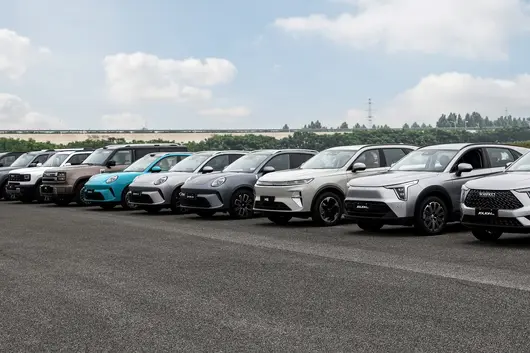

Recently, the Great Wall Ora Global Overseas Investor Summit was held in Baoding. Investors from around the globe visited the Great Wall Technology Center and production bases, completing in-depth test drives of all power versions of the Great Wall Ora 5 at the Xushui Professional Test Track, conducting a comprehensive on-site inspection from intelligent manufacturing processes to dynamic performance. As the Great Wall Ora 5 successively delivered strong sales results in markets like Brazil and Thailand, this summit also refocused the global market on this "Born Global" Chinese new car.

Product capability has always been the core confidence behind market recognition, a point intuitively verified during this test drive session.
The Great Wall Ora 5 Pure Electric version features "Super Intelligence", offering 480km and 580km range versions, with 100km electricity consumption as low as 11.6kWh and motor system efficiency reaching 95%, achieving a balance between low energy consumption and high performance; the vehicle is equipped with the Coffee OS 3 Smart Cockpit, featuring a built-in Coffee GPT Large Model Voice System, with infotainment system smoothness comparable to high-end pure electric models, and intelligent functions like automatic parking also allowed overseas investors to genuinely feel the intelligent strength of Chinese automobiles.

The Hybrid version focuses on the core experience of "Saving + Smooth", equipped with the Great Wall Auto New Generation Hi2 Intelligent Hybrid System, innovatively adopting a two-speed direct drive architecture, capable of "Three Engines, Six Modes" AI intelligent switching, covering "Quiet, Fast, Saving, Smooth" for all-scenario usage. In strict items such as fuel consumption tests and smoothness challenges at the test drive site, the Great Wall Ora 5 Hybrid version performed brilliantly in overall fuel consumption performance, power response, and gear shift connection, confirming product advantages with real test data and receiving unanimous recognition from attending investors.

Feedback from the market is also the best proof of product capability. Data shows that in June this year, the Ora brand monthly sales reached 10,806 units, surging 229.15% year-over-year, and the brand's cumulative sales for the entire series have exceeded 584,133 units. Among them, the Great Wall Ora 5 ignited the market both domestically and internationally with its one-car-three-power product matrix: in the Brazilian market, the first batch of 2,000 units sold out within 24 hours of listing, breaking the local first-month sales target; after the Thailand launch, cumulative orders exceeded 5,000 units, with the hybrid version competing directly with traditional Japanese brands, marking that the product capability of Chinese self-owned brands has been widely accepted by the international market.
The Great Wall Ora 5's ability to quickly land in multiple markets within a short cycle lies in the core "One Car, Multiple Powertrains" globalization strategy. Relying on the native compatibility advantages of the Genyuan Platform, the Great Wall Ora 5 requires no re-development for a single market; simply by flexibly adjusting power combinations, localization adaptation can be completed, with Pure Electric, Hybrid, and Fuel three major versions sharing unified global quality standards.

This model accurately adapts to the differentiated needs of global markets: the Pure Electric version targets tracks like Europe where new energy infrastructure is mature, the Hybrid version adapts to regions like Southeast Asia with high fuel economy requirements, and the Fuel version covers emerging markets where charging facilities are still being perfected, with multi-line layouts forming complements. Starting from July this year, the Great Wall Ora 5 will also land in Australia, South Africa, Indonesia, and Central and South America successively, continuously expanding the global sales map; previously listed in Spain and Italy, combined with sports marketing and localization experience events, gradually building brand awareness in regional markets.
Along with the hot sales of the product, the user positioning of the Ora brand is also completing an upgrade and expansion. Different from previous segmented population tags, the Great Wall Ora 5 is expanding to broader user groups such as "First-time Family Car Buyers" and "Trade-in/Exchange Buyers". Adopting the "Natural Aesthetics" design language, the Great Wall Ora 5 creates an appearance meeting global aesthetics with flowing body lines, aligning with global young people's personalized preferences. More critically, regardless of which power version is chosen, users can obtain consistent design standards, smart configurations, and comfort experience, without compromising on experience outside of power, truly realizing "Choose According to Needs, Freedom of Travel".

From an industry perspective, the globalization path of the Great Wall Ora 5 provides a completely new "Ora Sample" for Chinese automobiles going global. Different from the early Chinese car enterprise export model of "Low Price High Volume", Ora, relying on the adaptability capability of the full power matrix and unified global quality standards, broke the inherent prejudice of overseas markets towards Chinese automobiles, becoming a typical representative of Chinese "New Quality Productive Forces" going global. When Chinese automobile exporting shifts from "Selling Cars Out" to "Taking Value Out", the Ora brand's idea of covering global diverse needs with one car model not only verifies the technical competitiveness of Chinese automobiles but also provides a path for more self-owned brands' globalization layout to learn from — standing on the real needs of the global market, using technology and quality to establish a foothold, is the core confidence for Chinese automobile brands to stand firmly globally in the long term.
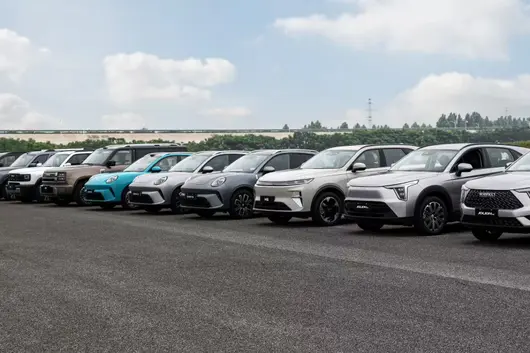

Dalam pasaran SUV Malaysia, ramai pembeli yang membandingkan Proton X50 dan Mazda CX-30 semasa memilih kereta. Kedua-dua kereta ini berada pada harga dan kedudukan yang agak hampir. Hari ini, kita akan membuat perbandingan terperinci dari pelbagai aspek untuk membantu anda menjimatkan masa membuat kajian.
Harga OTR Proton X50 di Malaysia adalah RM 89,800 - 113,300, terdapat 4 varian, termasuk 1.5T Executive (RM 89,800), 1.5T Premium (RM 101,800), 1.5T Flagship (RM 113,300) dan lain-lain.
Harga OTR Mazda CX-30 di Malaysia adalah RM 122,409 - 146,409, terdapat 4 varian, termasuk 2025 2.0L High+ Premium (RM 146,409), 2025 2.0L High+ (RM 138,409), 2025 2.0L High (RM 130,409) dan lain-lain.
Dari segi harga, harga permulaan Proton X50 memang RM 32,609 lebih murah berbanding Mazda CX-30. Jika bajet anda terhad, model permulaan Proton sudah boleh memenuhi keperluan harian. Namun, perlu diingat, beberapa ribu ringgit yang lebih murah itu mungkin mempunyai kompromi dari segi peralatan, bergantung pada keperluan anda.
Penilaian keselamatan Proton X50 ialah 5★ (ASEAN NCAP), sistem keselamatan aktif termasuk ADAS (ACC, AEB, LKA, LDA, BSM, RCTA).
Penilaian keselamatan Mazda CX-30 ialah 5★ (ASEAN NCAP), sistem keselamatan aktif termasuk i-Activsense.
Penilaian keselamatan kedua-dua kereta adalah sama, peralatan keselamatan dalam kategori ini dianggap cukup lengkap. Keselamatan kereta baru sekarang tidak buruk, tidak perlu terlalu risau.
Panjang badan Proton X50 ialah 4400 mm, ruang muatan 400 L.
Panjang badan Mazda CX-30 ialah 4500 mm, ruang muatan 450 L.
Dari segi ruang, badan Mazda CX-30 lebih panjang 100 mm berbanding Proton X50, ruang duduk lebih unggul. Namun, Proton X50 lebih fleksibel untuk parkir di bandar, masing-masing ada kelebihan.
Proton X50 jaminan 5 tahun/150,000km, selang servis setiap 10,000km atau 6 bulan.
Mazda CX-30 jaminan 5 tahun/150,000km, selang servis setiap 10,000km atau 6 bulan.
Syarat jaminan kedua-dua kereta adalah sama, tidak perlu bimbang mengenai ini. Kos penyelenggaraan sebenar bergantung pada rangkaian servis jenama dan harga komponen, disarankan bertanya pengalaman pemilik sebenar dalam kumpulan kereta.

Proton X50 dan Mazda CX-30 adalah pilihan utama di pasaran Malaysia, sesuai untuk kegunaan keluarga, perjalanan harian. Jika anda lebih mementingkan reputasi jenama dan harga pasaran semula, boleh utamakan yang mempunyai reputasi lebih baik; jika anda lebih mementingkan nisbah harga dan prestasi serta peralatan, pilih yang lebih kaya konfigurasi. Akhir sekali, disarankan kedua-duanya dipandu, pengalaman langsung adalah yang paling penting.

Secara keseluruhannya, Proton X50 dan Mazda CX-30 adalah model kereta yang sangat baik di pasaran Malaysia. Memilih mana satu, kuncinya bergantung pada keperluan dan bajet peribadi anda. Kami sarankan anda membuat kajian, membandingkan beberapa tawaran daripada dealer, kemudian membuat ujian jalan untuk keputusan akhir. Membeli kereta adalah perkara besar, meluangkan masa membuat kajian tidak akan rugi.

On July 16, Geely Galaxy released the world's first "Thunder 16-in-1 Intelligent Electric Drive" (hereinafter referred to as Thunder 16-in-1) at Xingqu Technology's Wuxi base, and will equip it first on Geely Galaxy TT. At the launch event, this electric drive system won two Guinness World Records. Galaxy TT completed the lowest energy consumption challenge for a mass-produced pure electric sedan around Qinghai Lake, with a measured power consumption of 8.20kWh/100km; simultaneously completed the longest continuous dual-car drifting challenge on a slippery road surface, with a continuous drifting distance exceeding 46 km, breaking the record held by Porsche in 2020.

But if you zoom the camera back a bit, you will find that the true protagonist of this launch event was not actually the Thunder 16-in-1, but the partner behind this system, Xingqu Technology. It is the "ace card" of electric drive technology, according to Li Chuanhai, Vice President of Geely Automobile Group and Dean of Geely Automobile Research Institute.
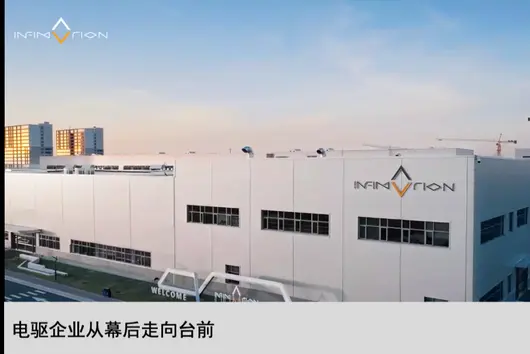
This is the first time Xingqu Technology has stepped into the spotlight as an independent identity. In the previous few years, it existed more as a behind-the-scenes supplier, assisting customers in achieving multiple industry premieres. In addition to Geely, Xingqu Technology is also a partner behind a long list of globally recognized automakers such as Renault, Jaguar Land Rover, Vinfast, HORSE, and Tier 1.
01.
Who is Xingqu Technology
Xingqu Technology, English name InfiMotion, Infi comes from Infinite, Motion means power, implying "providing infinite power for the future". It is an independently operated global electric drive system supplier, whose products and technology services cover brands such as Geely, Zeekr, Lynk & Co, Volvo, smart, Polestar, Proton, as well as international automakers such as Jaguar Land Rover and Renault, and has established deep cooperation with international top-tier Tier 1 suppliers such as ZF and Magna Powertrain.

Geely Galaxy is a representative of its many customers.
Its technical resume is not short.
In 2021, Xingqu Technology pioneered the first 400V SiC electric drive solution in China on the Zeekr 001, which remains a classic benchmark for electric drive efficiency and performance to date;
In 2024, Xingqu Technology mass-produced the world's first 11-in-1 domain control electric drive, equipped on Geely Galaxy E5, it is the pioneer of the super-integrated electric drive route, and the first-equipped vehicle has also become the sales champion for exports of China's A-segment pure electric SUV;
In 2025, Xingqu Technology first applied magnesium alloy housing technology to the distributed electric drive system, and then immediately mass-produced the world's first 900V high-performance magnesium alloy coaxial dual electric drive.
Today, Xingqu Technology's revenue has grown from 40 million yuan in its first year to over 20 billion yuan this year. There are nearly 1,000 R&D engineers, with the Sweden team exceeding 100 people. The R&D and manufacturing network spans Wuxi, Shanghai, Hangzhou, Ningbo, Jiaxing, Quzhou in China, as well as Sweden and Malaysia, covering Eurasia and serving the global market.
Therefore, the Thunder 16-in-1 was able to win two Guinness World Records as soon as it was launched. Relying on it behind the scenes is not luck in a single instance, but the result of years of technical accumulation by Geely and Xingqu Technology.
02.
The advantages of Thunder 16-in-1 are not limited to ultra-high integration
The voltage platform of Thunder 16-in-1 is 800V, peak power is 245kW, and peak torque is 320Nm.
Its "16" refers to 16 functions and components deeply integrated into one system: motor, motor controller, reducer, DCDC, OBC, PDU, HBMS, LBMS, VCU, TMS, active pre-charge control, powertrain gateway, as well as intelligent energy management, intelligent energy replenishment management, intelligent motion control, and intelligent health management.

After integration, high-voltage harnesses are reduced by 30%, low-voltage harnesses are reduced by 15%. Combined with magnesium alloy housing, the whole unit is reduced by 20kg, weighing only 75kg; Z-dimension size is less than 325mm, 8% lower than industry mainstream multi-in-one products.
There is a natural contradiction in multi-in-one systems: the more components integrated, the easier efficiency losses are to accumulate. Thunder 16-in-1's CLTC comprehensive efficiency reached 93.8%, number one in its class, already close to the level of a three-in-one electric drive. Behind it are two methodologies called "Joule Engineering" and "Mirror Engineering", deeply integrating technical points such as 800V high-voltage platform, SiC power modules, Umini-Pin flat wire windings, ultra-thin silicon steel sheets, gear honing, low-viscosity lubricating oil, and active lubrication technology into a system-level solution.
Beyond performance, what is more worth noting is the reconstruction of the control chain. In traditional electric drives, control algorithms are distributed in different chips, and signals have to be "transferred across departments", with an average response latency of 40 milliseconds. Thunder 16-in-1 adopts a single-chip integrated architecture, compressing this chain to the fastest 2 milliseconds. Ren Xiangfei, Chief Engineering Technology Scientist of Geely Automobile Group, gave an analogy at the launch event: the difference of these two milliseconds is like Messi, who is 39 years old, still leading the team to turn the tables in adversity, relying on a reaction that is naturally one beat faster than others, and the gap between top-tier and ordinary often lies between this beat. Combined with AI deviation predictive control, real-time torque deviation was reduced from 3% to 1%, and this control capability was finally verified in the extreme scenario of 46 km continuous dual-car drifting.
Continuous output capability relies on thermal management as a safety net. Thunder 16-in-1 adopted 54-way directional cooling technology for the first time. 54 nozzles precisely cover the winding ends and rotor cores, reducing the maximum motor temperature by 15°C and increasing insulation life by 10%.
In terms of reliability, 16-in-1 reduced over 180 components at the design stage, lowering failure points structurally. This system ultimately passed over 9,000 test items, and vehicle-level road durability verification cumulative exceeded 5 million km, and much of these tests and verification work were completed by Xingqu Technology's test system.
03.
Assisting customers in multiple premieres, where does Xingqu Technology really excel
In fact, to turn an advanced electric drive system into a product that can be mass-produced stably and withstand 9,000 tests, there is still a long way to go in between.
This road is hard to walk, but it is exactly where Xingqu Technology's core competitiveness lies.
Xingqu Technology CEO Lin Xiaozhe summarized the company's capabilities into three core strengths: technology, quality, and globalization. The first two determine whether Xingqu Technology can precisely manufacture the system; the third determines whether Xingqu Technology can gain global customer recognition.
Technical strength can be intuitively shown from the rigor of "1 mm".
The efficiency of multi-in-one electric drives can be affected by various factors, one of which is the flat wire windings in the motor stator. The parts sticking out at both ends of the winding are called "end turns". This part of the copper wire does not participate in work, but it is always consuming electricity and occupying space. Starting from first principles, Xingqu Technology's logic is simple: since it doesn't do work, it must be compressed to the extreme.
Saying this is light, but doing it is hard.
From a coil of copper wire to a set of flat wire windings, it goes through multiple processes such as straightening, enamel removal, 2D and 3D forming, wire insertion, twisting, expanding, and welding. During this process, if the enamel breaks it will short circuit, if the twisting angle is off the copper wires will interfere with each other, if the weld strength is not enough or there is missed welding, the entire stator will be scrapped. Xingqu Technology's R&D and process teams, in order to reduce the end height by 1 mm, need to repeatedly optimize every process parameter. Every set of matching new tooling fixtures needs to spend several months adjusting.
In 2022, the end height of Xingqu Technology's first-generation U-Pin motor was 8~10 mm; this year, the 4 mm height Umini-P product has gone into production; the next generation 3 mm U-MiniP evo is also on the way (2027). And the current industry average level is still around 5 mm.
The Thunder 16-in-1 used in this event is using this Umini-Pin process. The end height is reduced by 4 mm, and the total length of copper wire per motor is shortened by about 1,296 mm, and copper loss is reduced by over 2%. This is not a technology temporarily overcome by this product, but experience accumulated by Xingqu Technology with a monthly shipment volume exceeding 100,000 units.
This rigor is also reflected in materials and NVH. Xingqu Technology is the first enterprise in the industry to mass-produce 900V magnesium alloy dual electric drives. The magnesium alloy housing reduces weight by over 30% compared to traditional aluminum alloys, and Thunder 16-in-1 is already the fourth product to mass-produce and apply this technology. At the same time, Xingqu Technology is also exploring the application space of amorphous materials to further improve motor efficiency.
In terms of NVH, Xingqu Technology treats it as a "sensory engineering" to overcome — electromagnetic harmonic optimization, gear micro-modification, housing modal analysis and structural frequency avoidance, compressing vehicle cabin noise to below 25 decibels, and also introducing AI large models to analyze massive data to improve noise performance from the source.
Quality strength is reflected in generous investment in test benches.
In 2024, Xingqu Technology commissioned the world's first 30,000 rpm motor direct drive test bench. Before this, the highest speed of global motor test benches was 25,000 rpm. Exceeding this number, the bench would be pushed into the blank area after the limit. Xingqu Technology and the bench supplier team fought for several months to solve this problem, and now this equipment has been running stably for over 10,000 hours.
At the same time, Xingqu Technology is also the fourth electric drive enterprise in China to have assembly-level (motor + controller) EMC testing capabilities, with the entire EMC lab investment exceeding 10 million.
Beyond single-item capabilities, what best reflects Xingqu Technology's emphasis on quality is its set of complete validation systems.
Xingqu Technology test center obtained CNAS national certification, able to cover 100% of electric drive test requirements. Every electric drive development process must go through temperature field tests from -60°C to 140°C, 660,000 peak torque cycles, and over 2,500 hours of comprehensive durability tests. Durability tests start at 300,000 km, reaching up to 800,000 km. To meet the global market, they also have to go through over 1,500 hours of salt spray durability tests.
Not only that, Xingqu Technology has also built an AI test data platform, precipitating 300,000 hours of historical data, using failure prediction models to identify potential risks in advance.
Xingqu Technology has finally implemented this system to the manufacturing end.
Xingqu Technology has deployed five major intelligent manufacturing bases in China, with electric drive total annual capacity of 3 million units. The production line's highest automation rate exceeds 95%, placement machine accuracy is ±25 microns, measurement equipment accuracy is 0.1 microns, which is equivalent to 1% of a cell size. The production line also sets up 106 error-proofing processes, using a 20 million pixel AI visual inspection system to identify subtle defects, with a minimum recognition accuracy of 20 microns. Every part has a digital identity upon entering the site, and process parameters, operators, and quality data are traceable throughout.

The electric drive industry, when it comes to the later stage, is not about single-point technology, but about system capability. Single-point technology can make prototypes, only system capability can ensure stable mass production. Xingqu Technology has repeatedly won industry premieres, relying precisely on this complete closed loop from technology to manufacturing.
04.
Xingqu Technology's global path: an "unconventional" choice
Where Xingqu Technology is more worth expanding is its globalization path.
Many parts companies' logic of going global is to first run scale domestically, and then push mature products to overseas markets. Xingqu Technology chose another approach: putting global R&D, global validation, global processes, and global customer coordination in advance.
Lin Xiaozhe said very directly: the electric drive industry has no option of "domestic first, then global". Different regions have huge differences in environmental conditions, and these diverse global demands will push the product to different boundaries. Whether a system can enter the global automaker supply chain depends not only on performance parameters, but also on software processes, functional safety, validation standards, manufacturing consistency, and response speed.
Lin Xiaozhe cited a European customer case. Xingqu Technology received an order from a European luxury brand customer this year. The other party put forward over 9,000 test indicators, one of which required a large SUV to reach 107% climbing ability, converted to a gradient of about 47 degrees. This has almost never appeared in China.
This indicator is harsh because ordinary family sedans usually have a climbing ability of 15 to 20 degrees, professional off-road vehicles are at 30 to 40 degrees, and vehicles that can reach 45 degrees are already rare. More difficultly, customers require the vehicle to not only climb up, but also be able to stop on a 45-degree slope and start again.
This tests not a single motor power. When the vehicle starts under near-limit slopes, the lubrication system needs to cover all conditions, high-performance motors continuously output high torque, and the motor control system must also adjust wheel-end torque distribution at microsecond level speed, making the vehicle stable, climbable, and non-slip.
This case can explain a characteristic of Xingqu Technology going global. Overseas customers do not just look at electric drive parameter tables, but use real-world scenarios and extreme conditions to test suppliers. Whether entering a European luxury brand project depends on whether motors, motor controllers, lubrication, thermal management, software control, and verification systems can pass together.
In terms of overseas layout, Xingqu Technology has established an R&D and after-sales service center in Gothenburg, Sweden, with full industry chain design, development, and manufacturing capabilities from key components to assembly system levels. Another difficulty of globalization is collaborative development. For this, Xingqu Technology has built a cloud-based collaborative development platform called "World Tree", allowing China and Europe teams to complete software, hardware, and algorithm collaborative development in the same system. This name is taken from the tree in Nordic mythology that connects nine worlds. Xingqu Technology develops according to ASPICE Level 3 processes, following ASIL D highest functional safety level.
For overseas customers, these process capabilities are often more critical than individual performance indicators. It determines whether a supplier can enter project early development, participate in vehicle definition, and bear long-term iteration responsibility.

Changes can also be seen on the customer side. Xingqu Technology has signed nearly 30 billion yuan orders with top European automakers such as UK, France, Germany, and Tier 1. 2026 export growth is expected to exceed 100%.

This shows that Xingqu Technology's global expansion output is not a single electric drive product, but a complete engineering capability from R&D, testing, manufacturing to customer coordination.
This path has barriers and also value. The domestic new energy market has pushed the electric drive to a stage of high efficiency, high integration, and high cost-performance. Overseas markets will continue to filter suppliers using regulations, roads, climate, customer processes, and reliability standards. Xingqu Technology entering the global system in advance is equivalent to putting itself in a stricter evaluation environment. In the short term, this will increase development difficulty; in the long term, it will raise the enterprise's capability ceiling.
Summary.
This launch of Thunder 16-in-1, on the surface, is a Geely electric drive new product launch, but if placed on a longer timeline, it seems more like a centralized display of Xingqu Technology's phased capabilities.
From 400V SiC, to 11-in-1 domain control electric drive, to 900V magnesium alloy coaxial dual electric drive and Thunder 16-in-1, Xingqu Technology has formed a continuous technical promotion rhythm. This behind-the-scenes cannot be separated from the support of R&D teams, test benches, intelligent manufacturing bases, global customers, and complete process systems.
In addition, those detail capabilities usually ignored are also equally important. Tooling adjusted for months for 1 mm, test benches running stably for over 10,000 hours of 30,000 rpm, verification systems behind over 9,000 tests, and also the persistence of "leaving problems in the laboratory" which sounds simple but is hard to do.
Thunder 16-in-1 is certainly the protagonist product of this launch, but what it truly points to is the capability upgrade of Xingqu Technology as an independent electric drive supplier. Electric drives are moving from behind the scenes to the spotlight, and Xingqu Technology is gradually becoming an independent brand remembered by the industry, changing from an invisible supplier supplying multiple car companies. And this launch is just the first one fully told among its many global customer cooperation cases.
When new energy vehicle competition enters the system capability stage, whether a car company can continuously launch high-efficiency, high-performance, and high-reliability products can no longer be seen just from vehicle definition, but also whether it has powerful partners behind it, handling electric drive technology platforms, manufacturing systems, and global delivery capabilities.
Xingqu Technology is exactly such a partner being chosen by more car companies simultaneously.

[CNMO Tech News] Recently, XPENG Motors announced a key victory in overseas trademark protection. The Supreme Court of Indonesia made a final ruling on the case where Guangzhou XPENG Motor Technology Co., Ltd. sued an individual for squatting on the "XPENG" trademark, officially recognizing "XPENG" as a well-known trademark, and revoked the two squatting trademarks.

XPENG Company
This trademark protection battle was not smooth sailing. XPENG Motors did not win the first instance, then filed an appeal (retrial procedure). On April 8, 2026, the Supreme Court of Indonesia made a final ruling, fully supporting XPENG's claims — revoke the squatting trademark, recognize as well-known trademark, confirm the squatter acted in bad faith. The case number is 41 K/Pdt.SusHKI/2026.
The Supreme Court of Indonesia focused on the following facts in the ruling reasons:
The "XPENG" trademark has been registered in multiple markets including China, the US;
XPENG has invested significantly in brand promotion;
The brand has high public recognition in international markets;
XPENG also has successful trademark protection practices in other markets previously.
The collegial panel determined that Guangzhou XPENG has fully proved "XPENG" belongs to well-known trademarks, and enjoys legal protection under Indonesian law. At the same time, the court determined the squatter had no legitimate reason for commercial use, belonging to malicious registration acquisition, and both squatting "XPENG" trademarks were revoked.

XPENG Motors
It is reported that trademark squatting is a major hurdle often encountered by automakers going global. Previously, when Lexus entered the Indonesian market, the "LEXUS" trademark was squatting by local businessmen, causing the brand to have to operate for many years under the name "Lexus" before gradually recovering it. It is worth mentioning that XPENG went from losing the first instance to winning the final appeal this time, reclaiming the trademark through legal means rather than compromise, a much tougher path. This is another case of a Chinese new energy vehicle company successfully defending brand assets in the Southeast Asian market, following NIO winning trademark protection in Indonesia in 2021.

Di pasaran SUV Malaysia, banyak pembeli akan membandingkan Proton X50 dan Honda CR-V semasa memilih kereta.
Proton X50 dijual pada harga OTR RM 89,800 - 113,300 di Malaysia, terdapat 4 versi, termasuk 1.5T Executive (RM 89,800), 1.5T Premium (RM 101,800), 1.5T Flagship (RM 113,300) dan lain-lain.
Honda CR-V dijual pada harga OTR RM 178,200 - 195,900 di Malaysia, terdapat 4 versi, termasuk 2026 e:HEV 2.0L 2WD RS (RM 195,900), 2026 1.5T 4WD V (RM 181,900), 2026 e:HEV 2.0L 2WD E (RM 178,200) dan lain-lain.
Dari segi harga, harga permulaan Proton X50 memang RM 88,400 lebih murah daripada Honda CR-V. Jika bajet anda terhad, versi permulaan Proton sudah mampu memenuhi keperluan harian. Tetapi perlu diingat, perbezaan harga beberapa ribu ringgit ini mungkin melibatkan kompromi pada kelengkapan, bergantung pada keperluan anda.
Proton X50 menggunakan sistem pemacu 4WD.
Honda CR-V menggunakan sistem pemacu FWD.
Sistem 4WD Proton dan FWD Honda memberikan pengalaman pengendalian yang berbeza, disarankan untuk membandingkan melalui ujian memandu.
Proton X50 memiliki waranti 5 tahun/150,000km, penyelenggaraan setiap 10,000km atau 6 bulan.
Honda CR-V memiliki waranti 5 tahun/tiada had kilometer, penyelenggaraan setiap 10,000km atau 6 bulan.
Proton X50 dan Honda CR-V kedua-duanya pilihan utama di pasaran Malaysia, sesuai untuk penggunaan keluarga dan perjalanan harian. Jika anda lebih mengutamakan reputasi jenama dan harga resale, boleh utamakan yang mempunyai reputasi lebih baik; jika anda lebih mementingkan nisbah harga dan kelengkapan, pilih yang mempunyai kelengkapan lebih banyak. Pada akhirnya disarankan untuk melakukan ujian memandu terhadap kedua-dua model, pengalaman peribadi adalah yang paling penting.

Secara keseluruhannya, Proton X50 dan Honda CR-V adalah model kereta yang sangat bagus di pasaran Malaysia. Memilih yang mana, utama bergantung pada keperluan peribadi dan bajet anda. Disarankan membuat kajian, membandingkan beberapa tawaran dari pengedar kereta, kemudian membuat ujian memandu untuk membuat keputusan akhir. Membeli kereta adalah perkara besar, mengambil sedikit masa untuk membuat kajian pasti tidak akan rugi.

Dalam pasaran SUV di Malaysia, ramai pembeli sering membandingkan Perodua Aruz dan Subaru Crosstrek semasa memilih kereta. Kedua-dua kereta ini agak rapat dari segi harga dan penempatan pasaran, hari ini kita akan membuat perbandingan terperinci dari pelbagai aspek untuk membantu anda menjimatkan masa membuat kajian.
Perodua Aruz dijual di Malaysia dengan harga OTR RM 72,900 - 77,900, terdapat 2 varien, termasuk 1.5L X (RM 72,900), 1.5L AV (RM 77,900) dan lain-lain.
Subaru Crosstrek dijual di Malaysia dengan harga OTR RM 145,000 - 160,000, terdapat 1 varien, termasuk 2.0L e-Boxer (RM 150,000) dan lain-lain.
Dari segi harga, harga permulaan Perodua Aruz memang lebih murah RM 72,100 daripada Subaru Crosstrek. Jika bajet anda terhad, varian permulaan Perodua sudah boleh memenuhi keperluan harian. Tetapi perlu diingat, beberapa ribu ringgit yang lebih murah mungkin mempunyai pengorbanan dari segi kelengkapan, bergantung pada keperluan anda.

Perodua Aruz dilengkapi enjin 1.5L 4-silinder, kuasa 105 hp. Penggunaan bahan api rasmi 6.0 L/100km.
Subaru Crosstrek dilengkapi enjin 1.5L Turbo, kuasa 140 hp. Penggunaan bahan api rasmi 7.0 L/100km.
Dari segi kuasa, Turbo 1.5L Subaru Crosstrek mempunyai 35 hp lebih daripada 1.5L 4-silinder Perodua Aruz. Namun untuk memandu harian di bandar, kuasa kedua-dua kereta sudah memadai, tidak akan berasa kurang tenaga.
Perodua Aruz panjang badan 4400 mm, ruang bagasi 400 L.
Subaru Crosstrek panjang badan 4400 mm, ruang bagasi 400 L.
Saiz kedua-dua kereta hampir sama, ruang dalaman tidak banyak berbeza. Kereta dalam kategori ini sudah memadai untuk penggunaan harian.

Perodua Aruz menggunakan sistem drif FWD.
Subaru Crosstrek menggunakan sistem drif FWD.
Sistem drif kedua-dua kereta sama, iaitu FWD, pengalaman memandu harian tidak akan banyak berbeza.

Perodua Aruz jaminan 5 tahun/150,000km, selang servis setiap 10,000km atau 6 bulan.
Subaru Crosstrek jaminan 3 tahun/100,000km, selang servis setiap 10,000km atau 6 bulan.

Secara keseluruhan, Perodua Aruz dan Subaru Crosstrek adalah model kereta yang sangat baik di pasaran Malaysia. Memilih yang mana satu, kuncinya bergantung pada keperluan dan bajet peribadi anda. Kami mengesyorkan anda membuat kajian, membandingkan banyak tawaran daripada kedai kereta, kemudian melakukan ujian pemanduan untuk membuat keputusan akhir. Membeli kereta adalah perkara besar, meluangkan masa untuk kajian tidak akan salah.

© 2024 Bitauto.com. All Rights Reserved.
Bitauto (www.yiche.com and www.bitauto.com) is one of the most visited automotive websites in China. We provide detailed info on Chinese car brands available in your area. Please note that the information provided on this website is based on publicly available data and is for reference only. It may not be fully updated or accurate at all times.

Help us improve our website


