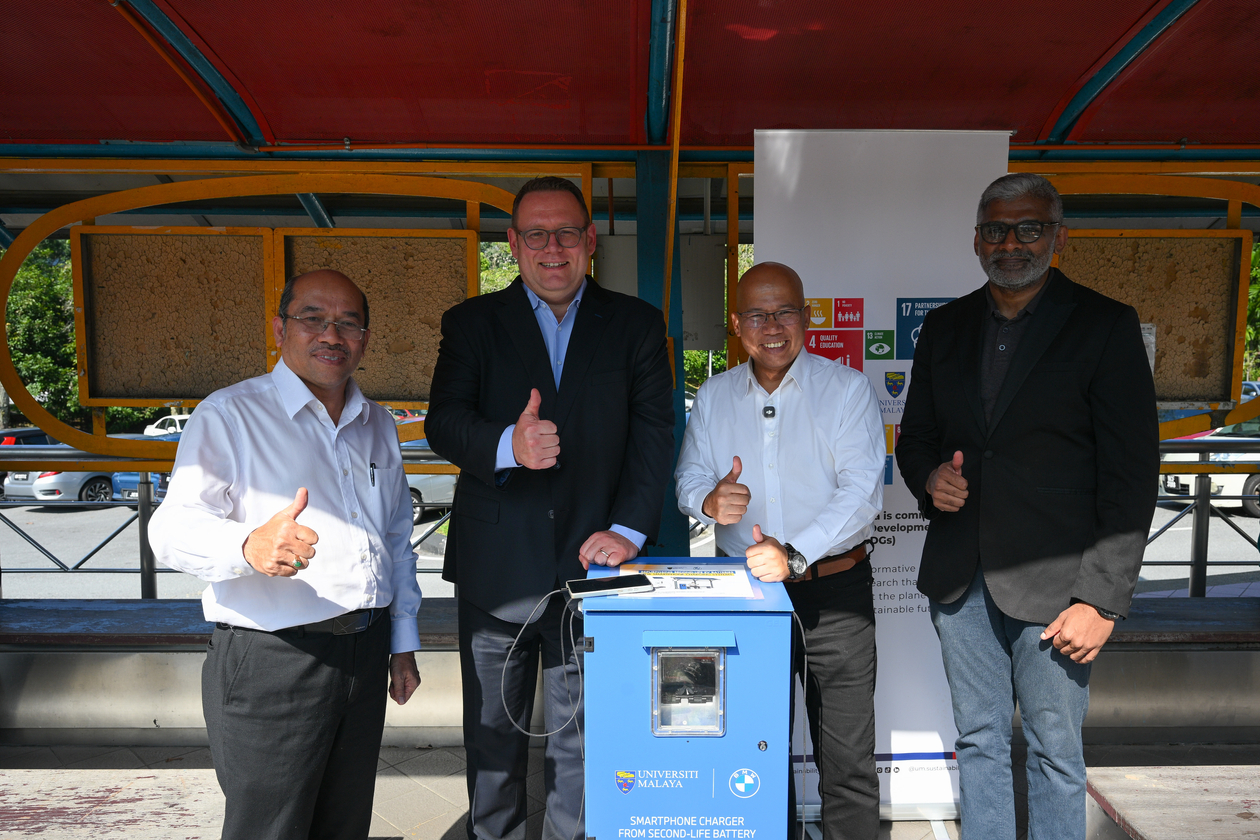
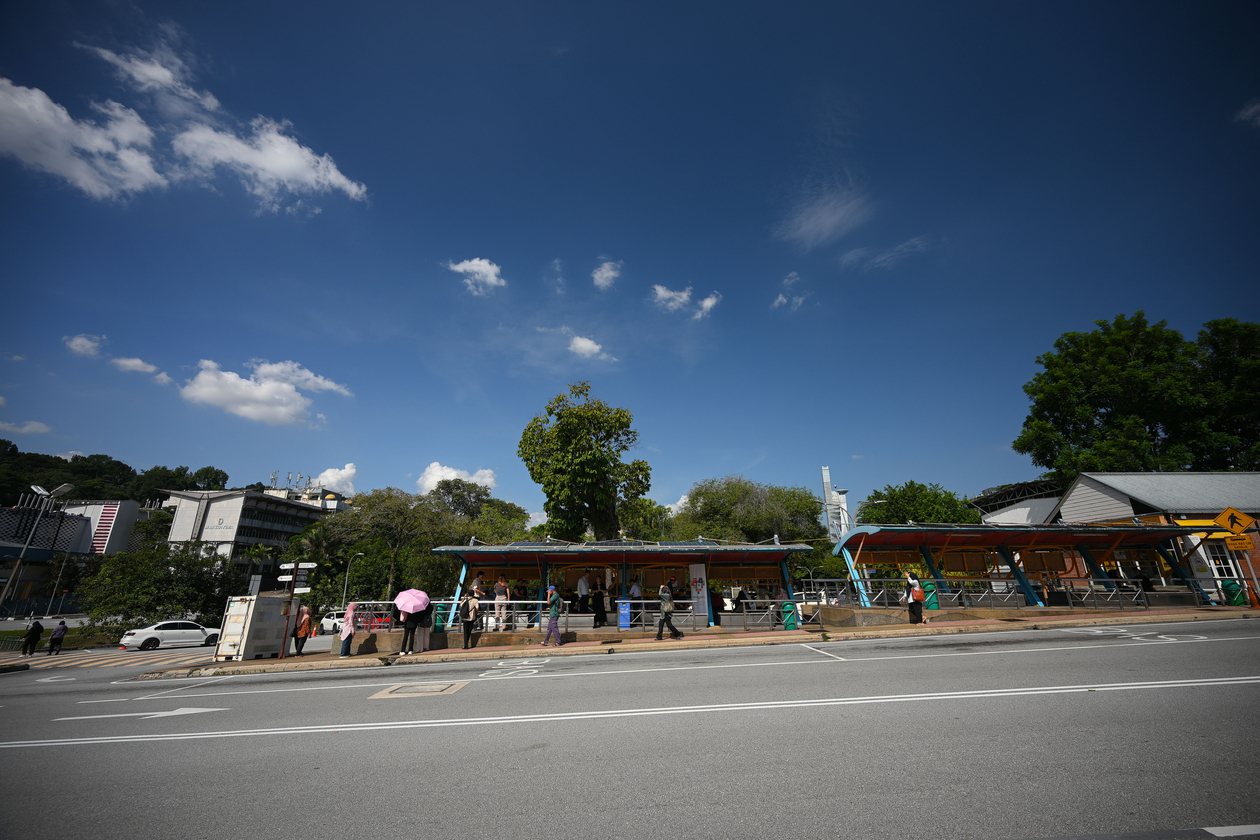
BMW Group Malaysia and Universiti Malaya (UM) have installed a solar-powered smartphone charging station running on second-life BMW EV batteries at the UM Central bus stop, marking the first real-world application of the RE:GENERATE x Universiti Malaya research initiative.
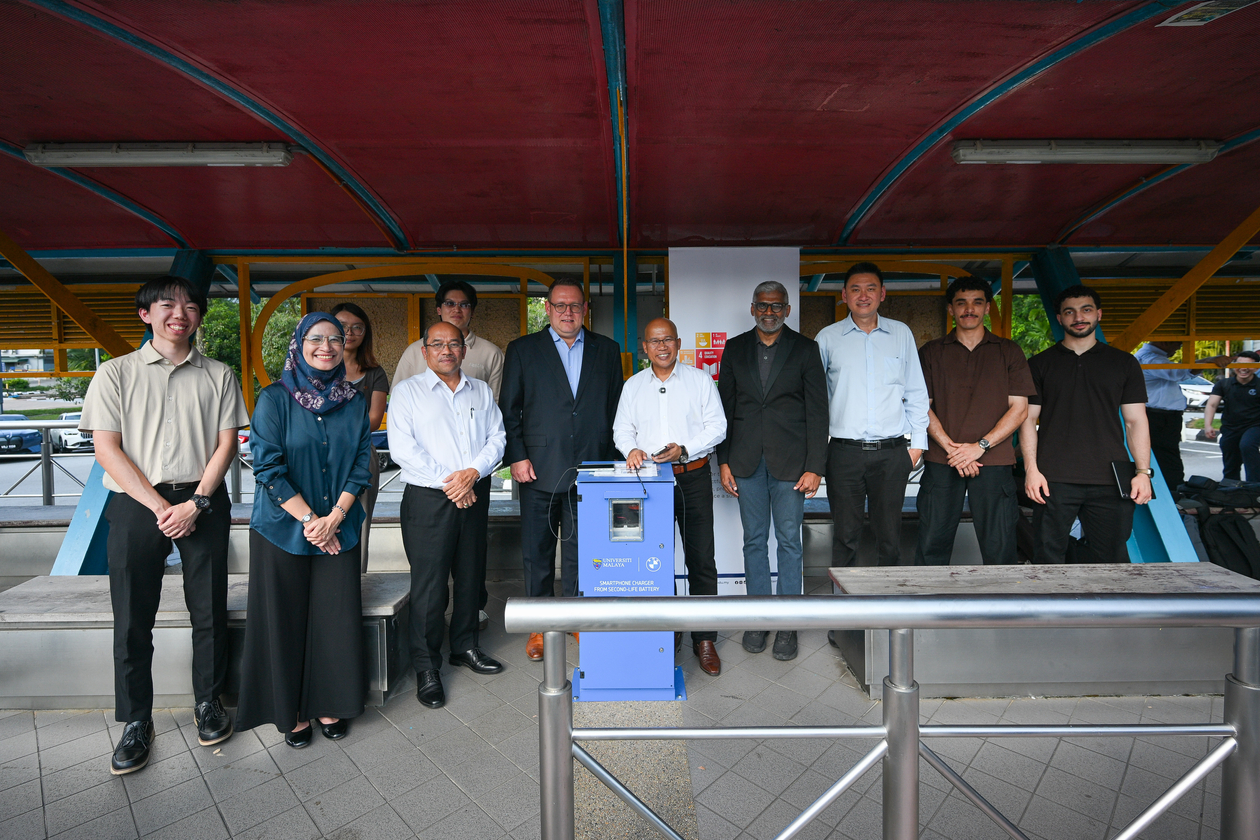
The station was engineered by Associate Professor Dr. Tan Chia Kwang and his team at the UM Power Energy Dedicated Advanced Centre (UMPEDAC), translating over two years of laboratory research into everyday use at a bus stop serving more than 3,000 users daily.
It is one of two applications to come out of the initiative. Lower-capacity battery packs power the campus station, while higher-capacity packs from the same programme are being prepared for deployment to Pos Sinderut, Kuala Lipis, Pahang, where they will provide off-grid electricity to a Semai Orang Asli community.
Read Also: NA0 BMW i3 Neue Klasse series production starts in Munich, Malaysia launch in 2027?
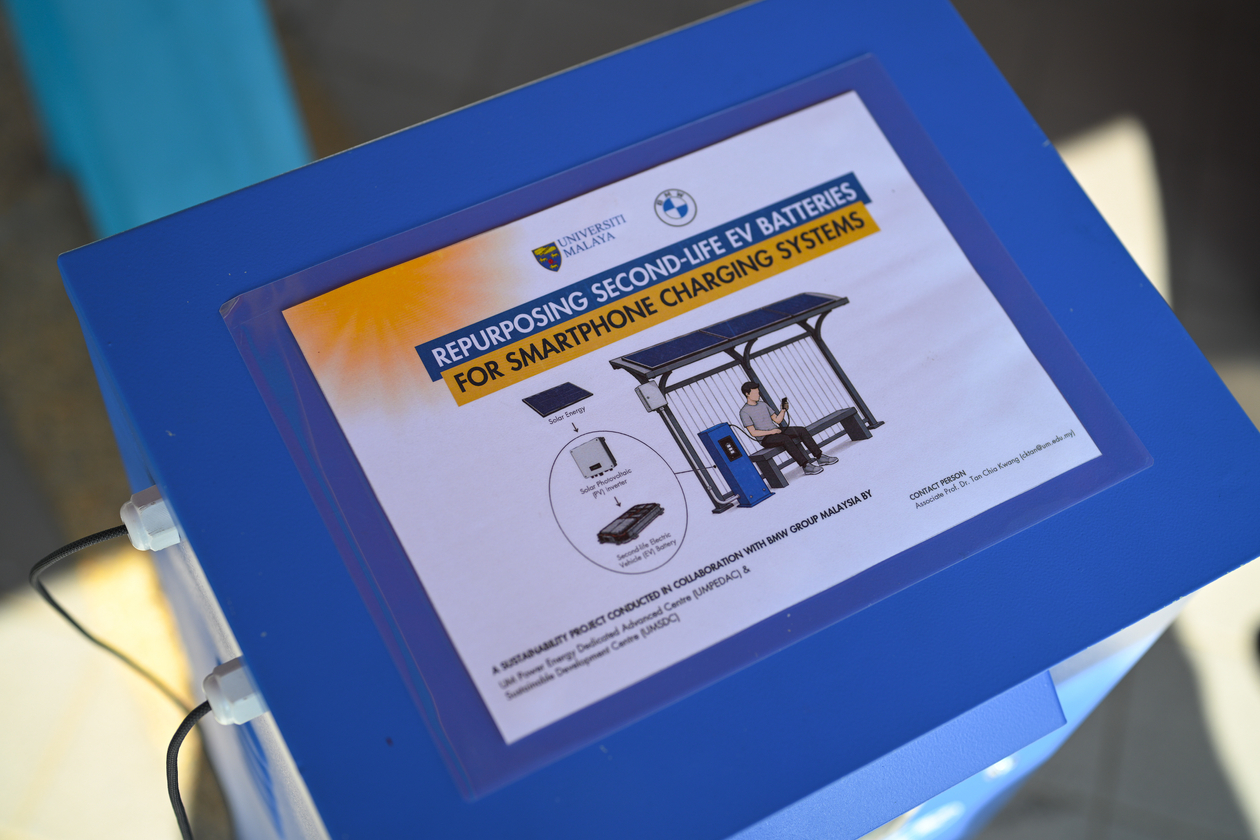
The station runs on a 1.5 kWh system built from three BMW battery modules, each around 10 years old. Testing, grading and modification by Dr. Tan's team recover 30-40% of the batteries' original capacity — these are the lower-capacity cells from the sorting process, with higher-capacity batteries reserved for the more demanding rural electrification project.
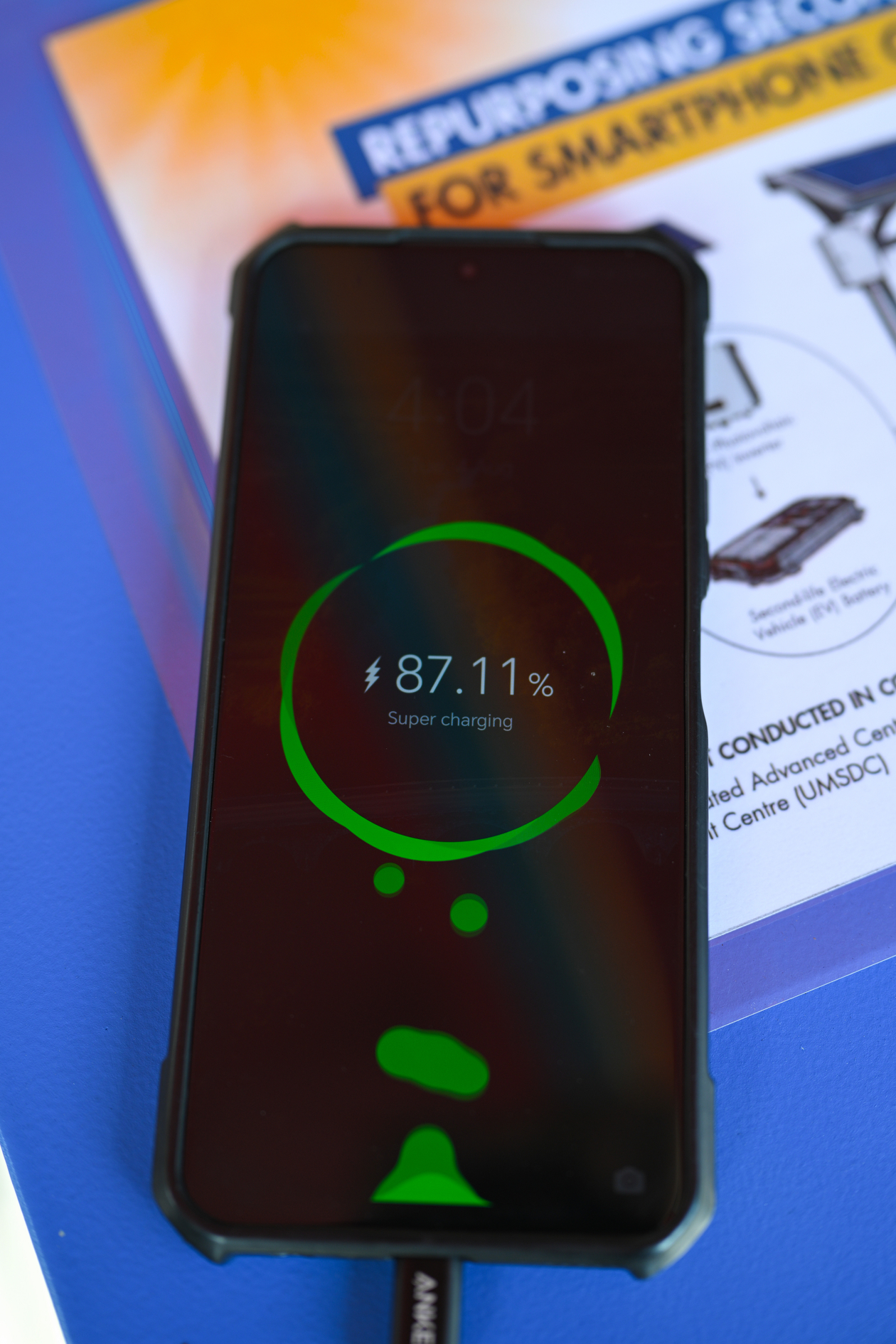
The setup combines the second-life batteries with second-life solar panels, a solar charge controller, a photovoltaic inverter, a Battery Management System (BMS) and a USB fast charger. It offers four charging ports — three USB-C and one Lightning — with a combined output of 200W and a maximum of 100W per port.
Data loggers track battery parameters and usage, with a trained group of students handling monitoring and maintenance, which mainly involves reviewing logger data and periodic visual checks. The system is designed to last at least five years, with lifespan projections based on the batteries' current condition, expected usage and depth of discharge.
Read Also: Neue Klasse BMW iX3 LWB range rated at 919 km, coming to Malaysia?
The lower-capacity batteries used in this charging station are unlikely to see a third life given their degradation. However, the higher-capacity batteries — retaining up to 80% of their original capacity — will move on to the Pos Sinderut project, after which Dr. Tan's team plans to repurpose them once more into third-life charging stations, completing a full lifecycle from electric vehicle, to rural home, to public charger.

Your go-to source for all things automotive in Malaysia. 🚗 Latest reviews, breaking news, launches & industry trends.
+ Follow This weekend is your chance to own a Volvo Selekt Certified Used Car, priced from just RM 148,000.
What are you waiting for?
#volvo 1 minute ago
This weekend is your chance to own a Volvo Selekt Certified Used Car, priced from just RM 148,000.
What are you waiting for?
#volvo 1 minute ago  We saw this accident this morning, and here’s a reminder to everyone: please drive safe. 2 days ago
  The G50 BMW 3 series is now here, adopting much of the i3's design elements.
So, where's the BMW M3?
#bmw #BMW3Series 4 days ago
The G50 BMW 3 series is now here, adopting much of the i3's design elements.
So, where's the BMW M3?
#bmw #BMW3Series 4 days ago Get the latest car news first!
Your go-to source for all things automotive in Malaysia. 🚗 Latest reviews, breaking news, launches & industry trends.
This weekend is your chance to own a Volvo Selekt Certified Used Car, priced from just RM 148,000.
What are you waiting for?
#volvo 1 minute ago We saw this accident this morning, and here’s a reminder to everyone: please drive safe. 2 days ago The G50 BMW 3 series is now here, adopting much of the i3's design elements.
So, where's the BMW M3?
#bmw #BMW3Series 4 days ago  ProtonGWMVolkswagenJAECOOVolvoPeroduaToyotaHondaTESLAMitsubishiMazdaJetourCheryBYDLexusBMWMercedes-BenziCAURZeekrIsuzuNissanLeapmotorPorscheFordOMODAMINIMGSuzukiXPengHyundaiWulingKiaSubaruDenzaGACLand RoverDongfengCAMAudiPeugeotFotonMAXUSsmartDaihatsuJACJMCMaseratiLotusAlfa RomeoRenaultGolden DragonKaiceneSeresLamborghiniFerrariJeepRolls-RoyceLepasAston MartinMcLarenChevroletBentleyFiatBAICForthingGeelyRoeweAeolusChanganARCFOXDeepalExeedHongqiVoyahJaguarKGMBuforiAcuraCadillacDodgeAbarthINEOSMHEROJMEVFreelander
© 2024 Bitauto.com. All Rights Reserved.
Bitauto (www.yiche.com and www.bitauto.com) is one of the most visited automotive websites in China. We provide detailed info on Chinese car brands available in your area. Please note that the information provided on this website is based on publicly available data and is for reference only. It may not be fully updated or accurate at all times.
Help us improve our website


