Baru-baru ini kami mengikuti sesi laporan prestasi Geely, di mana strategi "123456" dan teknologi pengisian tenaga generasi kelima menjadi tumpuan utama.
Maka dari perspektif pemerhati luar untuk memahami perkara ini, sebenarnya Geely ingin mempercepatkan kadar globalisasinya sendiri.
Anda perhatikan dengan teliti, anda akan mendapati bahawa kebanyakan syarikat automotif domestik sekarang yang disebut sebagai "globalisasi produk", adalah sejenis globalisasi palsu. Sama ada produk dibina di negara asal kemudian diangkut keluar untuk dijual, atau membina kilang di tempat tersebut menggunakan komponen tempatan untuk tempatan.

Tetapi globalisasi Geely bukan model ini, ia menggunakan kilang orang lain untuk membina kereta sendiri. Jadi anda lihat kenapa Geely perlu melabur 221 juta Euro untuk menyertai saham kilang Ford Sepanyol, kenapa perlu meningkatkan kapasiti kilang Proton Malaysia dari 200,000 unit ke 500,000 unit. Sebenarnya ia adalah versi 2.0 daripada "pembuatan kereta tempatan".

Walaupun ramai orang mungkin berfikir, jika penerakisan, bekalan, dan saluran jualan sebuah kereta diuruskan sepenuhnya oleh orang asing, ia sudah tidak dianggap sebagai "kereta China". Namun pengguna asing melihat negara pengeluaran di luar China, secara teori memang lebih mudah untuk mencapai jualan yang tinggi, memandangkan stereotaip mereka ialah "Buatan China murah tetapi tidak berani membeli".
Sebenarnya teknologi pengisian tenaga generasi kelima juga menyelesaikan masalah yang sama, iaitu mengatasi ketakutan pengguna yang lebih asas. Hanya kerana pengguna berani membeli, kereta itu boleh terjual.

Jadi kandungan sebenar globalisasi Geely ialah menanggalkan label "kereta China" dari produk tersebut, akhirnya menjadikan dirinya sendiri sebagai jenama global tanpa atribut negara.
Pengguna mungkin menolak "Buatan China", tetapi sukar menolak sebuah kereta yang dihasilkan di Sepanyol, dirakit oleh orang Eropah, dan mempunyai piawaian teknologi yang telus.


On August 17, Geely Automobile announced its mid-year 2026 performance. Almost at the same time, a more symbolic handover was also taking place.
Li Shufu resigned as Chairman and Executive Director of Geely Automobile Holdings Limited, with An Conghui taking over as Chairman. For Geely, amidst simple personnel adjustments, the enterprise achieved a governance upgrade after a new phase of development.
After all, today Geely Automobile has set its 2030 goal at sales volume over 6.5 million units and revenue exceeding 1 trillion yuan. Having reached the current scale, how to establish a systemic, professional, and young management system, to let Geely transform from being driven by "one person" to truly becoming the cause of "a group of people", has become key to supporting the next round of growth.
Right at this node, Geely presented a semi-annual report with considerable weight. In the first half of the year, Geely's total sales volume exceeded 1.42 million units, total revenue reached 173.6 billion yuan, up 15% year-on-year, maintaining growth for six consecutive years; core net profit attributable to shareholders reached 9.68 billion yuan, up 46% year-on-year, profit growth significantly outpaced revenue growth; gross margin reached 17.9%, core net profit margin increased to 5.6%, revenue per vehicle increased 16% year-on-year to 112,000 yuan. By the end of June, cash reserves further reached a historic high of 69.56 billion yuan.

If the management handover solves the question of "who will lead Geely forward in the future", then the semi-annual report this year answers what kind of Geely the new management team is taking over. At least based on the current portfolio, An Conghui is taking over an automotive group with a stable financial foundation, a gradually clear brand matrix, rapid expansion in overseas markets, while still possessing ample technology and cash reserves.
Of course, a good hand does not mean the game will be easy. Geely's full-year sales target for this year reached 3.45 million, completed 1.423 million in the first half, still needs to complete over 2 million in the second half; after rapid growth in new energy vehicle sales, the mainstream market of 120,000 to 250,000 yuan still needs to strengthen "mid-range products"; after overseas sales exceeded 470,000, how to move from exports to truly local operations has become a new exam question; meanwhile, "One Geely" still needs to continue to solve the efficiency problems behind multiple brands, multiple platforms, and a huge organizational system...
At this time, what is truly worth discussing in this semi-annual report is no longer how much money Geely earned. After the important management handover, they are jointly answering: When Geely goes from a 3 million unit-level automaker to a 6.5 million unit-level global automotive group, what does it rely on to achieve the next round of growth?
Aiming for One Million Units, Geely's Globalization Reached the Moment to "Change Track"
One of the most notable changes Geely witnessed in the first half of the year was overseas markets. Data shows that in the first half of the year, Geely Automobile overseas sales exceeded 474,000 units, up 158% year-on-year. Among them, new energy vehicle overseas sales reached 277,000 units, up 585% year-on-year, new energy vehicles accounted for 58.5% of overseas sales proportion. By the first half of the year, Geely has covered 114 core overseas markets, global channels exceeded 2,000.
Such growth directly changed Geely's goals set at the beginning of the year.
At the mid-year performance conference, An Conghui, Chairman of Geely Automobile Holdings Limited, announced raising the 2026 overseas sales target from 640,000 units to 920,000 units, and further proposed challenging 1 million units. The more long-term goal is even more aggressive; in the future, Geely hopes two-thirds of sales come from overseas.
The importance of this sentence may be even greater than "exporting one million units" itself. Because if calculated based on Geely's 2030 sales target of over 6.5 million units, two-thirds means in the future Geely may need to support a sales scale of millions of units overseas. At that time, overseas markets will not be a supplement to Chinese sales but must truly become core business on par with the Chinese market.
Therefore, what Geely is doing now is no longer just "selling more cars abroad".

Gan Jiayue, CEO of Geely Automobile Holdings Limited, stated that Geely is building an overseas system of "One Geely". Zeekr, Lynk & Co, Geely, and other brands share middle and back-office resources, and establish different scale goals around Pan-European, ASEAN, Latin America & Africa, Eastern Europe, Central Asia, and Middle East regions. Among them, Pan-European market target reaches 600,000 units, ASEAN 500,000 units, Latin America & Africa 400,000 units, Eastern Europe 300,000 units, Central Asia & Middle East 200,000 units, together forming a 2 million unit overseas foundation. This is also what Geely internationalization calls the "123456" strategy.
Overseas goals have changed, and the methods to achieve these numbers are all different.
In the past, the most typical path for Chinese cars going overseas was producing domestically and exporting via trade; one step further, independently building factories locally. Now, Geely is trying to utilize industrial resources accumulated from years of global mergers and acquisitions and cooperation to turn overseas partners' existing capacity into its own global manufacturing network.
An Conghui revealed that Geely's overseas manufacturing system has already begun to take shape. Malaysia Proton factory is upgrading to a 500,000 unit Southeast Asian production base; Spain Ford factory has about 500,000 units capacity, will produce multiple Geely brand models in the future; Volvo Europe factory can take on Geely's high-end products; Renault合作的 Brazil project planned capacity about 300,000 units. Geely summarizes this as "industrial symbiotic" going overseas, that is, using existing resources of partners like Volvo, Proton, Renault, Ford, etc., to accelerate localization with a relatively lighter asset model.

The value of this system will be more obvious in the environment where global trade barriers are increasing. For an enterprise planning for most future sales to come from overseas, true globalization is having R&D, production, supply chain, channels, and after-sales service capabilities in different markets. To this, Gan Jiayue specifically emphasized at the press conference "whether after-sales service can be done well is one of the important marks of whether Chinese automakers can successfully go global", which actually explains that Geely's understanding of globalization is changing.
From selling products to managing markets, then to managing local industrial systems, this is a layer of change behind Geely's export numbers that deserves more attention. Moreover, overseas growth is turning back to improve Geely's profit structure. Taking Galaxy Xingyuan as an example, it undertakes the task of sales volume domestically, but overseas markets, due to higher selling prices and profit space, can contribute better revenue per vehicle. In the first half of the year, Xingyuan exported 87,000 units, accounting for over 40% of Galaxy brand exports, some overseas market selling prices significantly higher than domestic.

In other words, past exports solved "selling more cars", in the future Geely hopes to solve "where to sell cars for more profit".
Strengthen Both Ends, Next Step is to Strengthen the "Waist"
However, the beautiful numbers in the semi-annual report do not mean Geely has no problems. At the performance meeting, An Conghui directly pointed out the most realistic shortcoming in the current product structure: Geely new energy still lacks a strong enough "mid-range product".
Today Geely's product matrix two ends are already quite clear.
High-end market, Zeekr has gradually built price and brand support. In the first half of the year, Zeekr sales reached 178,400 units, up 97% year-on-year, sales accounted for 12.5% of Geely total sales, but contributed 31.7% of revenue, average transaction price around 350,000 yuan, meaning Zeekr is undertaking the important task of Geely improving revenue per vehicle and profit structure. The other end, Galaxy has established scale advantages. In the first half of the year, Galaxy sales close to 520,000 units, Xingyuan and other products became important volume-driving models.

What truly needs strengthening is the middle.
120,000 to 250,000 yuan is exactly one of the most cruel and largest mainstream battlefields for China's new energy vehicles today. This market faces not a single brand, but a product group formed by many domestic new energy brands densely layout. Consumers are extremely sensitive to range, space, intelligent driving, cockpit, hybrid efficiency, and even price.
Of course, Geely is not without products. Galaxy E5, Starship 7, and Lynk & Co some models have already entered this market, but from the whole new energy matrix perspective, there is still a need for more "mid-range forces" that can continuously stand at the top of niche markets and form stable monthly sales volumes. This is why the second half of the year is so important for Geely.

Gan Jiayue stated that Galaxy TT, Galaxy Warship 700, and Lynk & Co 07 GT, New Lynk & Co Z20, and other products are entering the market one after another, essentially bearing the same task: to let Geely new energy's sales structure further transform from "few star models + high-end brands" to a product matrix with multiple stable pivot points. According to Geely announced plans, Galaxy will also expand mainstream market coverage through featured new products, main model upgrades, etc., while Lynk & Co 07 GT aims for the 150,000 to 200,000 yuan B-class plug-in hybrid wagon market.
An automotive group that reached 3 million units, 4 million units, and future 6.5 million units scale cannot always rely on one or two hit products to support growth. In the second half of the year, what Geely truly needs to prove is whether it can establish a whole row of "mid-range forces". This is the first product system exam that "One Geely" must accept after completing brand sorting.
"One Geely" Starts Subtraction, Profit Sheet Starts Addition
In the past decade or so, Geely built a huge brand and technology system through acquisitions, incubation, and internal innovation. It helped Geely complete the leap from a Chinese independent automaker to a global automotive group, but following this came multiple brands, multiple platforms, multiple R&D teams, multiple sales systems, and even product cross-over in similar price ranges.
During the industry's high-growth period, this model could cover efficiency problems through incremental growth; when the industry enters stock competition, repeated R&D, repeated procurement, repeated channels, and internal product competition will directly reflect on the profit sheet. Therefore, the most important significance of "One Geely" is to do a "subtraction" to the complex system left behind by past rapid expansion.
Gan Jiayue revealed that after "One Geely" integration, Geely has adjusted product planning with cross-over, reducing product quantity by about 20%. At the same time, R&D starts sharing vehicle architecture, electronic-electrical architecture, three-electric, assisted driving, and smart cockpit technology resources; procurement promotes joint procurement; manufacturing coordinates production; channels and after-sales gradually co-build, middle and back-office human resources, finance, legal, and other resources also begin coordination.

These changes have finally entered the financial statements. In the first half of the year, Geely's administrative expense ratio decreased 0.2 percentage points year-on-year to 1.7%, R&D investment ratio decreased 0.3 percentage points to 5.2%; in the case of rapid overseas business expansion, sales expense ratio still remains basically flat compared to the same period last year. At the same time, Geely's total R&D investment still reached 9.061 billion yuan, up 8% year-on-year.

Even more noteworthy is that in the first half of this year, Geely continued to actively compress supplier payment terms, currently supplier payment terms have been unified to within 60 days, small and medium suppliers further shortened to within 30 days; listed company accounts payable turnover days decreased from 115 days last year to 103 days, second quarter further dropped to 96 days.
For automakers, extending payment terms can improve short-term cash flow, shortening payment terms means true money flows out earlier. Geely chose the latter, essentially using its own cash reserves to exchange for supply chain stability. By the end of June, Geely cash reserves still reached a historic high of 69.56 billion yuan.
So, the value of 69.56 billion yuan besides "Geely has a lot of money on the ledger", it also gave Geely the qualification to make long-term choices in the industry's low-profit cycle.
Gasoline Vehicles Are Another Card in Geely's Globalization
There is another number in the semi-annual report that is easily overlooked.
In the first half of the year, Geely gasoline and gasoline hybrid model sales reached 623,500 units, down 8.8% year-on-year. Surface appearance seems not very eye-catching. But Gan Jiayue responded that the same period China gasoline and gasoline hybrid market overall decreased about 17%, Geely decline significantly smaller than market, thus instead achieving market share increase.
In past few years, some automakers equated "comprehensive new energy transformation" with quickly exiting gasoline vehicles, but for an ultra-large automotive group like Geely, the answer is obviously more complex. So what Geely did to gasoline vehicles was redefinition, laying out from harmless and intelligentization two directions.

Gan Jiayue pointed out that in the future Geely will no longer continue to develop traditional pure gasoline products, but gradually transition to i-HEV Smart Engine hybrid, reducing fuel consumption through electrification, while moving intelligent cockpit, assisted driving, and other capabilities formed in new energy era to gasoline foundation.
Currently i-HEV has covered Emgrand, Xingyue L, Xingrui and other main products, within the year will also add 3 model types, year-end i-HEV plan to hit monthly sales over 30,000 units, and enter European, Asia-Pacific, UK, Australia New Zealand and other overseas markets in 2027. In this way, China Star's role will also change. In the first half of the year, China Star sales exceeded 580,000 units, continuing to contribute stable sales and profits to Geely. For today's Geely, cash flow created by gasoline vehicles can continue to support large-scale investment in new energy, AI, globalization, etc.; after i-HEV transformation, China Star can again become an important product tool for Geely entering some overseas markets.
This strategy is actually a very realistic technical route selection, letting different energy forms serve different markets. Pure electric suits mature infrastructure markets, plug-in hybrid, extended-range cover more new energy scenarios, i-HEV adapts to areas with insufficient charging facilities, methanol can enter more special energy markets. Geely ultimately hopes to establish a system where five technical routes parallel: pure electric, plug-in hybrid, extended-range, gasoline hybrid, alcohol-hydrogen.
From this perspective, gasoline vehicles are not Geely new energy transformation's "historical burden", but are being re-constructed as a tool in the globalization era.


17 Ogos, Geely Automobile merilis prestasi perantaraan 2026. Hampir pada masa yang sama, penyerahan jabatan yang lebih bermakna simbolik juga berlaku.
Li Shufu meletakkan jawatan sebagai Pengerusi Jawatankuasa Eksekutif Geely Automobile Holdings Limited dan Ahli Jawatankuasa Eksekutif, An Conghui mengambil alih sebagai Pengerusi Jawatankuasa Eksekutif. Bagi Geely, di sebalik perubahan pentadbiran yang ringkas, perkembangan perusahaan telah mencapai peningkatan tadbir urus selepas satu fasa baharu.
Akhirnya, Geely Automobile hari ini telah menetapkan sasaran pada 2030 sebanyak 6.5 juta unit atau lebih, dengan pendapatan merebak melebihi 1 trilion Yuan. Untuk mencapai skala semasa, bagaimana membina satu sistem pengurusan yang bersifat institusi, profesional dan muda, supaya Geely benar-benar berubah daripada perniagaan yang digerakkan oleh 'seseorang' kepada 'seorang ramai', menjadi kunci sokongan untuk pertumbuhan peringkat seterusnya.
Khusus pada ketika ini, Geely telah menyerahkan laporan perantaraan tahun yang mempunyai berat. Pada semester pertama, jualan keseluruhan Geely merebak melebihi 1.42 juta unit, pendapatan keseluruhan mencapai 173.6 bilion Yuan, meningkat 15% dari tahun sebelumnya, mengekalkan pertumbuhan selama enam tahun berturut-turut; pendapatan bersih utama pemegang saham induk mencapai 9.68 bilion Yuan, meningkat 46%, kadar pertumbuhan keuntungan jelas lebih cepat daripada kadar pertumbuhan pendapatan; kadar keuntungan kotor mencapai 17.9%, kadar keuntungan bersih utama pemegang saham induk meningkat ke 5.6%, pendapatan per kenderaan meningkat 16% dari tahun sebelumnya sehingga 112,000 Yuan. Hingga akhir Jun, rizab dana semakin mencapai paras tinggi sejarah 69.56 bilion Yuan.

Jika pertukaran pengurusan menyelesaikan masalah 'siapa yang memimpin Geely untuk terus bergerak ke hadapan pada masa depan', maka laporan perantaraan tahun tahun ini menjawab, Geely seperti apa yang diambil alih oleh pasukan pengurusan baharu. Setidaknya dari rancangan semasa, An Conghui telah mengambil alih kumpulan automotif dengan asas kewangan yang stabil, matriks jenama yang jelas, pengembangan pasaran luar negara yang cepat, dan masih mempunyai rizab teknologi dan tunai yang mencukupi.
Tentu saja, kad yang baik tidak bermaksud mudah dimainkan seterusnya. Sasaran jualan keseluruhan Geely tahun ini mencapai 3.45 juta unit, semester pertama menyelesaikan 1.423 juta unit, semester kedua masih perlu menyelesaikan lebih daripada 2 juta unit; selepas jualan kenderaan energi baru meningkat pesat, pasaran utama 120,000 – 250,000 Yuan masih perlu menambah 'produk pinggang'; selepas jualan luar negara telah merebak melebihi 470,000 unit, bagaimana dari eksport menuju kepada pentadbiran tempatan sebenar, menjadi soalan baharu; pada masa yang sama, 'Satu Geely' masih perlu menyelesaikan masalah kecekapan di sebalik pelbagai jenama, pelbagai platform dan sistem organisasi yang besar...
Pada masa ini, laporan perantaraan tahun ini benar-benar layak dibincangkan, bukan lagi berapa banyak duit yang dibuat Geely. Selepas pertukaran pengurusan yang penting, mereka sedang menjawab bersama: Apabila Geely bergerak daripada kumpulan automotif berskala 3 juta unit menuju kepada kumpulan automotif global berskala 6.5 juta unit, ia bergantung pada apa untuk menyelesaikan pertumbuhan peringkat seterusnya?
Menembus Juta Unit, Geely Globalisasi Sampai 'Mengganti Laluan'
Satu daripada perubahan paling menarik perhatian bagi Geely pada semester pertama, ialah pasaran luar negara. Data menunjukkan, jualan luar negara Geely Automobile pada semester pertama merebak melebihi 474,000 unit, meningkat 158% dari tahun sebelumnya. Di antaranya, jualan luar negara kenderaan energi baru mencapai 277,000 unit, meningkat 585% dari tahun sebelumnya, nisbah kenderaan energi baru kepada jualan luar negara mencapai 58.5%. Hingga semester pertama, Geely telah meliputi 114 pasaran luar negara utama, saluran global merebak melebihi 2,000 lokasi.
Pertumbuhan sedemikian, telah memaksa Geely mengubah sasaran yang ditetapkan pada awal tahun secara langsung.
Pada persidangan prestasi perantaraan, An Conghui Pengerusi Jawatankuasa Eksekutif Geely Automobile Holdings Limited mengumumkan bahawa sasaran jualan luar negara 2026 dinaikkan dari 640,000 unit kepada 920,000 unit, dan lebih lanjut mencabar untuk 1 juta unit. Sasaran jangka masa yang lebih panjang adalah lebih agresif, pada masa depan Geely mahu dua pertiga jualan datang dari luar negara.
Kepentingan pernyataan ini, mungkin lebih besar daripada 'eksport 1 juta unit' itu sendiri. kerana jika berdasarkan sasaran jualan Geely 2030 lebih 6.5 juta unit, dua pertiga bermaksud pada masa depan Geely mungkin perlu menanggung skala jualan beratus-ratus ribu unit di luar negara. Pada ketika itu, pasaran luar negara bukan lagi pelengkap selain daripada jualan China, tetapi mesti benar-benar menjadi perniagaan utama yang sebanding dengan pasaran China.
Oleh itu, perkara yang dilakukan Geely sekarang sudah bukan sekadar 'eksport lebih banyak kereta'.

Ham Kiah Yue, Ketua Pegawai Eksekutif Geely Automobile Holdings Limited menyatakan, Geely sedang membina sistem luar negara 'Satu Geely', jenama Zeekr, Lynk & Co, Geely berkongsi sumber pusat dan belakang, dan di sekitar Pan-Eropah, ASEAN, Amerika Latin dan Afrika, Eropah Timur, Asia Tengah dan Timur Tengah membina sasaran skala berbeza. Di antaranya, sasaran pasaran Pan-Eropah mencapai skala 600,000 unit, ASEAN 500,000 unit, Amerika Latin dan Afrika 400,000 unit, Eropah Timur 300,000 unit, Asia Tengah dan Timur Tengah 200,000 unit, bersama-sama membentuk asas luar negara berskala 2 juta unit. Dan ini, ialah strategi '123456' yang disebut-sebut Geely sebagai internasionalisasi.
Sasaran luar negara telah berubah, kaedah untuk mencapai nombor ini juga telah berubah.
Laluan paling tipikal bagi eksport automotif China sebelum ini, adalah menghasilkan di negara ini, kemudian mengeksport melalui perdagangan ke luar negara; satu langkah lebih jauh, adalah melabur secara bebas membina kilang di lokasi tersebut. Sekarang, Geely sedang cuba menggunakan sumber industri yang ditimbun dari akuisisi dan kerjasama global bertahun-tahun, untuk menjadikan kapasiti sedia ada rakan kongsi luar negara menjadi rangkaian pembuatan global mereka sendiri.
An Conghui mendedahkan, sistem pembuatan luar negara Geely sekarang telah mula membentuk. Kilang Proton Malaysia sedang menuju ke pengasasan pengeluaran Asia Tenggara skala 500,000 unit; Kilang Ford Sepanyol mempunyai kapasiti kira-kira 500,000 unit, pada masa depan akan menghasilkan banyak model jenama Geely; Kilang Volvo Eropah boleh menampung produk berjenama tinggi di bawah Geely; projek Brazil yang bekerjasama dengan Renault merancang kapasiti kira-kira 300,000 unit. Geely merumuskannya sebagai 'jenis kewujudan bersama industri' dalam eksport, iaitu melalui sumber sedia ada rakan kongsi seperti Volvo, Proton, Renault, Ford, dengan model aset yang lebih ringan untuk mempercepatkan tempatanisasi.

Nilai sistem ini, akan lebih jelas dalam persekitar di mana pelambakan perdagangan global semakin meningkat. Bagi sebuah perusahaan yang merancang untuk sebahagian besar jualan pada masa depan datang dari luar negara, globalisasi sebenar adalah mempunyai kemampuan penyelidikan dan pembangunan, pengeluaran, rantaian bekalan, saluran serta perkhidmatan selepas jualan di pasaran yang berbeza. Terhadap ini, Ham Kiah Yue pada persidangan khas menekankan 'sama ada perkhidmatan selepas jualan boleh dibuat dengan baik, adalah satu daripada tanda penting sama ada automotif China boleh berjayaan menuju ke global', pada hakikatnya sudah menunjukkan pemahaman Geely terhadap globalisasi sedang berubah.
Dari menjual produk, kepada mengurus pasaran, lagi mengurus sistem industri tempatan, ini ialah perubahan lapisan yang lebih menarik perhatian di sebalik angka eksport Geely. Dan, pertumbuhan luar negara kini sedang memperbaiki struktur keuntungan Geely. Sebagai contoh Galaxy Harapan Bintang, di negara ini menanggung tugas jualan skala besar, tetapi pasaran luar negara kerana harga dan ruang keuntungan lebih tinggi, boleh menyumbang pendapatan per unit yang lebih baik. Pada semester pertama Harapan Bintang mengeksport 870,000 unit, menyumbang lebih daripada 40% daripada eksport jenama Galaxy, harga pasaran luar negara tertentu jelas lebih tinggi daripada negara ini.

Dengan kata lain, pada masa lalu eksport menyelesaikan masalah 'jualan lebih banyak kereta', pada masa depan Geely mahu menyelesaikan masalah 'di mana jualan kereta lebih menguntungkan'.
Memperkuat Kedua Hujung, Langkah Seterusnya Memperkuat 'Pinggang'
Namun, angka cantik laporan perantaraan tahun tidak bermaksud Geely sudah tiada masalah. Pada persidangan prestasi, An Conghui terus menunjuk kelemahan struktur produk semasa yang paling nyata: Geely energi baru masih kekurangan 'produk pinggang' yang cukup kuat.
Matriks produk Geley hari ini kedua-dua hujungnya sudah agak jelas.
Pasaran berhigh-end, Zeekr sudah secara beransur-ansur membina sokongan harga dan jenama. Pada semester pertama, jualan Zeekr mencapai 178,400 unit, meningkat 97%, jualan menyumbang 12.5% daripada jualan keseluruhan Geely, tetapi menyumbang 31.7% pendapatan, purata harga pelanggan sekitar 350,000 Yuan, bermaksud Zeekr sedang menanggung tugas penting Geely untuk meningkatkan pendapatan per unit dan struktur keuntungan. Di hujung lain, Galaxy sudah membina kelebihan skala. Pada semester pertama jualan Galaxy hampir 520,000 unit, produk seperti Harapan Bintang menjadi model jualan skala penting.

Benar-benar perlu ditambah, adalah di tengah.
120,000 – 250,000 Yuan tepat adalah salah satu medan utama paling kejam, dan kapasiti terbesar bagi pasaran automotif energi baru China hari ini. Pasaran ini menghadapi bukan jenama tunggal, tetapi kumpulan produk yang dibentuk oleh banyak jenama energi baru自主 yang berjajar rapat. Pengguna ke arah jarak jauh, ruang, pemanduan pintar, kokpit, kecekapan hibrid malahan sensitiviti harga adalah sangat tinggi.
Tentu saja, Geely bukan tiada produk. Galaxy E5, Xingjia 7 dan model Lynk & Co tertentu sudah memasuki pasaran ini, namun daripada keseluruhan matriks energi baru, masih perlu lebih banyak 'kekuatan pinggang' yang boleh berterusan menegak di puncak segmen pasaran, membentuk jualan bulanan yang stabil. Inilah sebab mengapa semester kedua begitu penting untuk Geely.

Ham Kiah Yue menyatakan, Galaxy TT, Galaxy Battleship 700 serta Lynk & Co 07GT, Lynk & Co Z20 Baharu dan produk lain secara beransur-ansur memasuki pasaran, pada asasnya semua menanggung tugas yang sama: Membiarkan struktur jualan Geely energi baru dari 'beberapa model bintang + jenama berhigh-end' menjadi matriks produk yang mempunyai banyak titik sokongan yang stabil. Menurut perancangan yang diumumkan Geely, Galaxy akan melalui produk baharu khusus, ganti model utama dan kaedah lain untuk semakin mengembangkan liputan pasaran utama, manakala Lynk & Co 07GT menargetkan pasaran kereta persiaran hibrid dicas kelas B 150,000 – 200,000 Yuan.
Sebuah kumpulan automotif yang mencapai skala 3 juta unit, 4 juta unit malahan 6.5 juta unit pada masa depan, tidak mungkin sepanjang masa bergantung pada satu dua model yang laris untuk sokong pertumbuhan. Semester kedua Geely benar-benar perlu membuktikan, sama ada boleh membina keseluruhan barisan 'kekuatan pinggang'. Ini juga ialah ujian pertama sistem produk yang mesti diterima selepas 'Satu Geely' menyiapkan penyusunan jenama.
'Satu Geely' Mula Mengurangkan, Borang Keuntungan Mula Menambah
Lebih 10 tahun lalu, Geely melalui akuisisi, inkubasi dan inovasi dalaman, membina sistem jenama dan teknologi yang besar. Ini membantu Geely menyelesaikan lompatan dari sebuah perusahaan automotif自主 China menuju ke kumpulan automotif global, tetapi datang bersama-sama ialah jenama banyak, platform banyak, pasukan penyelidikan dan pembangunan banyak, sistem jualan banyak, selang harga yang sama malahan muncul persilangan produk.
Pada tempoh pertumbuhan industri yang pesat, model ini boleh menutup masalah kecekapan melalui penambahan; apabila industri memasuki persaingan存kuan, penyelidikan berulangkali, pembelian berulangkali, saluran berulangkali dan persaingan produk dalaman, akan terus mencerminkan di Borang Keuntungan. Oleh itu, maksud paling penting 'Satu Geely' adalah untuk melakukan 'pengurangan' sekali pada sistem kompleks yang ditinggalkan oleh pengembangan pantas pada masa lalu.
Ham Kiah Yue mendedahkan, selepas penggabungan 'Satu Geely', Geely telah menjalankan penyesuaian terhadap pelan produk yang ada persilangan, jumlah produk berkurang kira-kira 20%. Pada masa yang sama, bahagian penyelidikan dan pembangunan mula berkongsi struktur kereta keseluruhan, struktur elektronik elektrik, tiga kuasa, pemanduan bantuan dan sumber teknologi kokpit pintar; bahagian pembelian推进 pembelian bersama; bahagian pembuatan menyelaraskan pengeluaran; saluran dan perkhidmatan selepas jualan secara beransur-ansur berkongsi, sumber tenaga kerja, kewangan, undang-undang pusat dan belakang mula menyelaraskan.

Perubahan ini akhirnya sudah memasuki laporan kewangan. Pada semester pertama, kadar perbelanjaan pentadbiran Geely menurun 0.2 mata peratus dari tahun sebelumnya sehingga 1.7%, nisbah pelaburan R&D menurun 0.3 mata peratus sehingga 5.2%; di bawah keadaan pengembangan pesat perniagaan luar negara, kadar perbelanjaan penjualan masih pada tahap yang sama seperti tahun lalu. Pada masa yang sama, pelaburan R&D keseluruhan Geely masih mencapai 9.061 bilion Yuan, meningkat 8%.

Yang lebih menarik perhatian, pada semester pertama tahun ini, Geely terus secara aktif menekan tempoh pembayaran pembekal, sekarang tempoh pembayaran pembekal sudah diseragamkan hingga di bawah 60 hari, pembekal kecil dan sederhana semakin dikurangkan sehingga di bawah 30 hari; hari pusingan akaun perlu dibayar syarikat tersenarai menurun dari 115 hari pada tahun lalu hingga 103 hari, suku kedua semakin menurun hingga 96 hari.
Bagi syarikat automotif, memanjangkan tempoh pembayaran boleh memperbaiki arus tunai jangka pendek, mempersingkat tempoh pembayaran bermaksud wang tunai lebih awal keluar. Geely memilih yang kedua, pada hakikatnya adalah menukar rizab tunai mereka untuk mendapatkan kestabilan rantaian bekalan. Hingga akhir Jun, simpanan dana Geely masih mencapai paras tinggi sejarah 69.56 bilion Yuan.
Oleh itu, nilai 69.56 bilion Yuan selain daripada 'Geely mempunyai banyak wang di akaun', ia juga memberikan Geely资格 untuk membuat pilihan jangka panjang dalam kitaran keuntungan industri yang rendah.
Kereta Benzina ialah Kad Lain bagi Globalisasi Geely
Dalam laporan perantaraan tahun, ada satu nombor yang mudah terlepas pandang.
Pada semester pertama, jualan model Geely bensin dan hibrid minyak mencapai 623,500 unit, menurun 8.8% dari tahun lalu. Secara permukaan, ini seolah-olah tidak menarik. Namun Ham Kiah Yue menjawab, pasaran keseluruhan China untuk bensin dan hibrid minyak semasa menurun kira-kira 17%, penurunan Geely jelas lebih kecil daripada pasaran, oleh itu sebaliknya meningkatkan pangsa pasaran.
Beberapa tahun lalu, sesetengah perusahaan automotif menganggap 'penyelarasan energi baru sepenuhnya' bermaksud dengan pantas meninggalkan kereta benzina, namun bagi kumpulan automotif besar seperti Geely, jawapannya jelas lebih kompleks. Oleh itu, Geely melakukan重新definisi terhadap kereta benzina, dari dua hala tidak berbahaya dan kecerdasan membina.

Ham Kiah Yue menunjuk masa depan Geely tidak lagi meneruskan penyelidikan dan pembangunan produk benzina tulen secara tradisional, tetapi secara beransur-ansur beralih ke hibrid i-HEV pintar, melalui elektrifikasi mengurangkan penggunaan minyak, pada masa yang sama memindahkan kemampuan seperti kokpit pintar, pemanduan bantuan yang terbentuk pada zaman energi baru ke asas benzina.
Kini i-HEV sudah meliputi produk utama seperti Xingrui, Xingyue L, Emgrand, tahun ini masih akan menambah 3 model, akhir tahun rancangan i-HEV menembus jualan bulanan lebih 30,000 unit, dan memasuki pasaran luar negara Eropah, Asia Pasifik, Inggeris, Australia dan Selandia Baru pada 2027. Dengan cara ini, peranan China Star juga akan berubah. Pada semester pertama jualan China Star melebihi 580,000 unit, terus menyumbang jualan dan keuntungan yang stabil untuk Geely. Bagi Geley hari ini, arus tunai yang dicipta kereta benzina, boleh terus menyokong pelaburan berskala besar di bidang energi baru, AI, globalisasi dan lain-lain, selepas i-HEV, China Star boleh menjadi alat produk penting untuk Geely memasuki beberapa pasaran luar negara.
Strategi ini pada hakikatnya ialah pilihan laluan teknologi yang sangat realiti, membiarkan bentuk tenaga berbeza melayani pasaran berbeza. Elektrik tulen sesuai dengan pasaran yang mempunyai infrastruktur matang, hibrid dicas, range extender meliputi lebih banyak senario energi baru, i-HEV menyesuaikan dengan kawasan yang kurang fasilitas pengecas, metanol boleh memasuki pasaran tenaga yang lebih khusus. Geely akhirnya mahu membina sistem yang lima laluan teknologi iaitu elektrik tulen, hibrid dicas, range extender, hibrid minyak, alkohol hidrogen berjalan selari.
Dari sudut pandangan ini, kereta benzina bukan 'beban sejarah' bagi transformasi energi baru Geely, malah sedang diubah menjadi satu alat untuk zaman globalisasi.

Recently, Geely's series of moves were quite aggressive. Besides the adjustments in executive management, the layout and specific operations of the overseas market also have clearer plans. First, regarding sales targets, Geely's 2026 exports were raised from 640,000 vehicles to 920,000 vehicles, challenging an annual sales volume of one million.

In the first half of the year, Geely's overseas sales were approximately 480,000 vehicles, a year-on-year increase of 158%. With the traditional peak season of the second half of the year, Geely's standard for raising the sales target is very pragmatic, and there is a high probability of successfully challenging an annual sales volume of one million vehicles.

Meanwhile, Geely Holding Group CEO An Conghui stated: Volvo's factories in Europe will become an important base for Geely's European strategy, undertaking the production of high-end luxury cars within the Geely Automobile Group, expected to start production in 2028. Looking at the data, Volvo's year-on-year decline in the European market in 2025 was 10%, dropping to approximately 332,700 vehicles.

Entering the first quarter of 2026, Volvo's sales in Europe and other regions worldwide were 95,335 vehicles, a further year-on-year decline of 2%. Global sales from March to May were 179,000 vehicles, a year-on-year drop of 5.5%. The surge in Geely's sales in the overseas market can just utilize Volvo factories' idle capacity, which is quite reasonable.
Meanwhile, regarding layout in other overseas markets, Geely previously acquired Proton's factory in Malaysia. After upgrading, it has an annual production capacity of 500,000 vehicles to meet the needs of the Southeast Asian market. In South America, it relies on Renault Brazil's industrial collaboration, sharing manufacturing resources and market channels between the two parties, significantly reducing the investment cost of building its own factories.

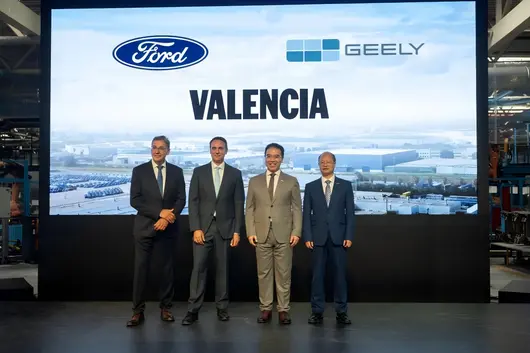
Additionally, in July this year, Geely and Ford also reached an agreement. Both parties will establish a joint venture company in Valencia, Spain. Through capacity sharing, they will create various new energy vehicle models for the Ford and Geely brands for the European market. From this perspective, Geely's layout in the overseas market is mainly to revitalize the group's various brand resources, or establish joint venture companies with other brands, trying to avoid the high investment of building factories alone, and also serving a role in risk avoidance.

During the first half of this year, China exported 5.096 million vehicles, a 65.3% increase year-on-year, with June seeing single-month exports surpass 100,000 vehicles for the first time. Among these, the proportion of new energy vehicles has exceeded 46%.
More importantly, this wave of overseas expansion is no longer just about loading cars onto ships for shipment. Chery, BYD, SAIC, and Great Wall Motor have all built factories abroad, moving entire factories, supply chains, and channels over. Even with the EU raising tariffs to 45.3%, China's car exports to Europe increased by 84.7% in the first quarter, with market share rising from 0.5% three years ago to 11%.
The opportunity has truly arrived. At this critical moment, Geely did something at its mid-year performance briefing: raising the full-year overseas sales target from 640,000 vehicles to 920,000 vehicles in one go, and also stated an ambition to aim for an annual sales volume of one million.
A single increase of 44% in targets is rare among domestic automakers. The first reaction of outsiders is "It's just bragging." However, after reviewing Geely's mid-year report and its overseas strategy, you will find it isn't gambling, but holding a clear play it has held for a long time.

These 920,000 vehicles are not made on a whim
We have seen too many companies喊 targets at the beginning of the year and quietly adjust them by mid-year. But this time, Geely's reasons are so simple you cannot refute them: the original 640,000 target was already completed in the first half.
Let's look at the data directly, all from the mid-year performance announcement: overseas sales reached 474,000 vehicles in the first half, a 158% increase year-on-year, exceeding last year's full-year volume. Last year's entire workload was finished in this year's first half.
Overseas monthly sales broke 100,000 vehicles for two consecutive months in June and July, with July alone reaching 106,700 vehicles, a massive 202% increase year-on-year. This is no longer luck, but a new normal. Cumulative sales for the first seven months were 580,900 vehicles, a 164.8% increase year-on-year. So, adjusting from 640,000 to 920,000 simply means writing the obvious trend into official numbers ahead of time.
Moreover, the quality of these 920,000 vehicles is even more worth discussing than the numbers themselves. New Energy Vehicles are the absolute main force: new energy exports reached 277,200 vehicles in the first half, skyrocketing 585% year-on-year, accounting for nearly 60% of total exports; in July alone, new energy exports were 62,600 vehicles, directly more than six times the previous year.
In other words, what Geely is selling overseas is no longer the old story of exchanging foreign exchange via low-price fuel vehicles, but new energy vehicles equipped with intelligent cockpits and three-electric technology. More impressively, as volume increases, prices do not drop — average vehicle revenue is 112,000 yuan, up 15,000 yuan year-on-year, with a gross margin of 17.9%, and core net profit per vehicle of 6,806 yuan, up 45% year-on-year.
Selling more and selling for more value. With this momentum, raising the target to 920,000 might even be considered conservative by Geely itself.

Where is the confidence? Three words — Systematic Capability
Geely's overseas expansion has long passed the stage of just shipping cars to ports; now it is moving factories, technology, and brands outward. This is the fundamental reason why it dares to shout 920,000 vehicles without feeling insecure.
The first layer of confidence is that capacity has truly landed. Overseas, 12 factories are already running, with capacity exceeding 650,000 units, aiming for 840,000 by year-end. This is not a PPT pitch, but actual production lines. Southeast Asia is the root. The Proton AHTV industrial park in Malaysia is upgrading capacity from 200,000 to 500,000 units, and was included in the Malaysian government's national development plan, handling R&D, manufacturing, and exports all at once.
Europe has two legs. On July 23, Geely spent 221 million euros to acquire 34% equity in Ford's Valencia, Spain factory, an old plant with 500,000 units annual capacity, where Galaxy and Lynk & Co will start production in 2028; the Volvo Europe factory will take over the luxury car role within the system, also aiming for 2028. For South America, it will leverage Renault's local bases and channels.
The most refined point of this asset-light, industry symbiosis strategy is: it bypasses the "Made in China, Sold Globally" tariff wall, using joint ventures, equity, and shared capacity to plant Chinese brands directly into local industrial chains. While others are still figuring out how to export, Geely is already answering how to take root.
The second layer of confidence is that channels and markets are spread out systematically. 114 core overseas markets, 17 emerging markets, and over 2,000 offline channels. Regional layout is also clear: ASEAN one 300,000-unit tier, Europe, Eastern Europe, and Latin America/Non-ASEAN three 200,000-unit tiers, Middle East & Asia one 100,000-unit tier. The benefit of this multi-polar pattern is that even if one market fluctuates, it won't cause severe damage — this is exactly the strategy only mature multinational automakers have.
The third layer of confidence is a thick war chest. R&D expenditure in the first half was 9.06 billion yuan, up 8% year-on-year; cash reserves on hand were 69.56 billion yuan. With nearly 70 billion yuan backing, daring to continue increasing R&D spending speaks of long-termism. Going overseas is a marathon, not a sprint; the money bag is the stamina for the second half.

Why偏偏 is it now?
Some might say, anyone can shout targets, why believe Geely can deliver? My view is that this window right now is almost tailor-made for Chinese automakers going global.
Sky time (Timing). In the export map of the first half of this year, Russia, Brazil, and the UK ranked top three, with emerging markets contributing over 4.14 million vehicles in one breath, and the acceptance of Chinese brands visibly warming up. Despite tariffs, market share in Europe continues to rise, proving that the product power of Chinese new energy vehicles is already hard to stop. Geely is stepping right on this biggest trend.
Earth location (Geography). Domestic new energy penetration rates hit 60%, and the world's top-tier industrial scale has given Chinese automakers cost and efficiency advantages in batteries, intelligent driving, and supply chains that others cannot catch up with in a short time. Once these advantages start flowing outward, it is the starting point for Chinese automobiles rewriting the global landscape.
People (Team/Strategy). Geely's strategy in the past two years has been doing subtraction — Geometry merging with Galaxy, Lynk & Co merging with Zeekr, brands shifting from fighting independently to collaborative warfare. The effect is real: administrative expense ratio dropped from 1.9% to 1.7% in the first half. With strength twisted into one rope, the momentum for going overseas naturally increases.
There is also a rather interesting detail. On the day the mid-year report was released, Geely announced management adjustments simultaneously: Li Shufu stepped down as Chairman of the Board and became Honorary Chairman, An Conghui took over, Gui Shengyue served as Vice Chairman, and Gan Jiayue became President. Completing this generational transition while handing in these results is itself a sense of calm — Geely's globalization no longer relies on the bravery of a single person, but on a whole set of running systems and teams.

920,000 vehicles, what does it actually mean?
To be honest, 920,000 vehicles is a hard threshold in the global automotive landscape. It means Geely is moving from "First Tier of Overseas Expansion" to "True Global Automaker". When a Chinese automaker's overseas sales approach one million units, its identity is no longer just an exporter of Made-in-China products, but someone qualified to sit at the table to discuss rules.
Geely's own words are more direct: the long-term goal is to have two-thirds of sales come from overseas. Once that day comes, Geely will change from "Chinese Geely" to "Global Geely" — this is what generations of Chinese automotive people want to do, and the outline is becoming clearer now.
Of course, I won't put too many words to fill the air. The overseas market has never been a smooth path; tariffs, geopolitics, localization, cultural differences — every hurdle requires real skill, the battle for 920,000 vehicles has just begun.
But there is one thing I dare to judge: a car company that dares to raise export targets from 640,000 to 920,000 at mid-year in front of the whole industry, with nearly 70 billion yuan in cash on hand and 12 overseas factories running — it is not gambling, it is using strength to force you to reconsider it.

Auto Review:
In the wave of exports surpassing 5 million units this half, which Chinese automaker will dare to shout for one million in overseas sales next? When Chinese car overseas sales collectively stand on one million units, how will the global automotive chessboard be played again?
This matter is worth our focus on the long view, watching slowly.

Selama enam bulan pertama tahun ini, eksport kenderaan automotif China mencapai 5.096 juta unit, meningkat 65.3% secara tahunan. Pada bulan Jun, eksport bulanan tunggal pertama kali mencapai lebih 1 juta unit. Di dalamnya, peratusan kenderaan baharu melebihi 46%.
Yang lebih worth talking about, gelombang ekspansi luar negara ini bukan lagi sekadar menaburkan ke kapal untuk dihantar. Chery, BYD, SAIC, Great Wall semuanya telah membina kilang di luar negara, membawa keseluruhan rangkaian kilang, rantaian bekalan dan saluran. Malah walaupun EU menaikkan tarif hingga 45.3%, eksport kenderaan China ke EU pada suku pertama masih meningkat 84.7%, bahagian pasaran daripada 0.5% tiga tahun lalu meningkat ke 11%.
Peluang memang nyata telah bermula. Pada ketika ini, Geely telah melakukan sesuatu dalam persidangan prestasi pertengahan tahun: meningkatkan sasaran penjualan luar negara sepanjang tahun daripada 640,000 unit, serentak ke 920,000 unit, malah menyatakan mahu menembusi jualan tahunan sebanyak satu juta.
Sasaran dinaikkan 44% pada satu masa, ini sangat jarang dalam syarikat automotif domestik. Orang luar reaksi pertama adalah 'bercakap kosong'. Tetapi jika meneliti laporan pertengahan Geely dan strateginya di luar negara, anda akan dapati, ia tidak sedang bertaruh, ini adalah kartu terang yang disimpan lama.

Ini 920,000 unit, bukan hasil terkaan
Kita sudah melihat terlalu banyak sasaran di awal tahun, diam-diam diubah di pertengahan tahun. Tetapi kali ini Geely, alasannya telus sehingga anda tidak boleh menafikan, sasaran asal 640,000 unit, ia telah selesai dalam enam bulan pertama.
Langsung kepada data, semua dari pengumuman prestasi pertengahan: Eksport luar negara enam bulan pertama terjual 474,000 unit, meningkat 158% berbanding tahun lalu, sudah melebihi jumlah keseluruhan tahun lalu. Kerja satu tahun tahun lalu, selesai dalam setengah tahun tahun ini.
Bulan Jun dan Julai secara berturut-turut dua bulan, eksport bulanan luar negara menembusi 100,000 unit, bulan Julai malah 106,700 unit, meningkat 202% berbanding tahun lalu. Ini bukan lagi kebetulan, ia trend baharu. 7 bulan pertama kumulatif 580,900 unit, meningkat 164.8% berbanding tahun lalu. Jadi dari 640,000 ditukar ke 920,000, mudah kata ia menuliskan trend yang dilihat semua orang, ke dalam angka rasmi lebih awal.
Dan kualiti 920,000 unit ini, lebih bernilai untuk dibincangkan berbanding kuantiti itu sendiri. Kenderaan baharu adalah kekuatan utama: Eksport kenderaan baharu enam bulan pertama 277,200 unit, meningkat mendadak 585% berbanding tahun lalu, menempati hampir 60% jumlah eksport; Eksport bulanan kenderaan baharu bulan Julai 62,600 unit, meningkat langsung 6 kali ganda lebih berbanding tahun lalu.
Dengan kata lain, apa yang Geely jual ke luar negara sekarang, bukan lagi cerita lama menggunakan kereta api bahan api murah untuk dapatkan mata wang asing, sebaliknya kenderaan baharu satu persatu membawa kabin pintar, teknologi tiga elektrik. Lebih jarang, jumlah naik, harga tidak turun — pendapatan per kenderaan 112,000 yuan, meningkat 15,000 yuan berbanding tahun lalu, margin keuntungan kasar 17.9%, keuntungan bersih teras per kenderaan 6806 yuan, meningkat 45% berbanding tahun lalu.
Jualan semakin banyak, dan semakin bernilai. Dengan momentum ini, menaikkan sasaran ke 920,000, Geely sendiri mungkin menganggapnya terlalu konservatif.

Di mana kepercayaannya? Tiga perkataan — kekuatan sistem
Ekspansi luar negara Geely, sudah melepasi tahap menghantar kereta ke pelabuhan, sekarang membawa kilang, teknologi dan jenama keluar bersama. Ini juga sebab utama mengapa berani menyebut 920,000 unit, tidak ragu-ragu.
Tahap keyakinan pertama, kapasiti pengeluaran benar-benar telah dilaksanakan. 12 kilang luar negara telah beroperasi, kapasiti melebihi 650,000 unit, menuju ke 840,000 unit pada akhir tahun. Ini bukan PPT, ia garisan pengeluaran sebenar. Tenggara adalah akar. Taman Industri AHTV Proton Malaysia, sedang naik taraf kapasiti daripada 200,000 unit ke 500,000 unit, dan telah dimasukkan dalam pelan pembangunan negara oleh kerajaan Malaysia, penyelidikan, pembuatan, eksport serentak.
Eropah mempunyai dua kaki. 23 Julai, Geely membelikan 34% saham kilang Ford Valencia Sepanyol dengan kos 221 juta Euro, pangkalan lama kapasiti 500,000 unit setahun, 2028 akan menurunkan Galaxy dan Lynk & Co; Kilang Volvo Eropah pula mengambil kerja kenderaan mewah dalam sistem, juga menyasar 2028. Amerika Selatan, pinjam pangkalan dan saluran tempatan Renault untuk dilaksanakan.
Strategi aset ringan dan ekosistem industri ini, bahagian paling cermat ialah: ia mengelakkan dinding tarif 'Dibuat di China, Dijual di seluruh dunia', menggunakan perkongsian, saham, kongsi kapasiti, menanam jenama China secara terus ke dalam rantaian industri tempatan. Orang lain masih berfikir cara eksport, Geely sudah menjawab cara berakar.
Tahap keyakinan kedua, saluran dan pasaran telah dibina secara sistematik. 114 pasaran utama luar negara, 17 pasaran baharu, saluran luar talian melebihi 2,000 syarikat. Susun atur wilayah jelas: ASEAN satu tahap 300,000, Eropah, Eropah Timur, Amerika Latin dan Afrika tiga tahap 200,000, Timur Tengah Asia satu tahap 100,000. Struktur kutub ini, faedah jika sesuatu pasaran berfluktuasi, tidak sehingga kecederaaan teruk — ini tepat strategi hanya dimiliki oleh syarikat automotif antarabangsa matang.
Tahap keyakinan ketiga, modal tebal. enam bulan pertama penyelidikan dan pembangunan melabur 9.06 bilion yuan, meningkat 8%; simpanan tunai di akaun 69.56 bilion yuan. Hampir 70 bilion tunai sebagai asas, berani menambah penyelidikan dan pembangunan, barulah boleh bicara orientasi jangka panjang. Ekspansi luar negara adalah maraton bukan lari 100 meter, dompet wang adalah tenaga separuh kedua.

Mengapa tepat sekarang?
Ada yang berkata, sasaran siapa tak boleh sebut, kenapa percaya Geely boleh capai? Pandangan saya, tingkap masa ini, hampir dibuat khas untuk ekspansi luar negara syarikat automotif China.
Masa yang sesuai. Dalam peta eksport China enam bulan pertama, Rusia, Brazil, United Kingdom berada tiga teratas, pasaran baharu memberikan lebih 4.14 juta unit, penerimaan jenama China kelihatan meningkat. Eropah menanggung tarif bahagian masih naik, menunjukkan kuasa produk kenderaan baharu China, sudah keras tidak dapat ditolak. Geely menunggang angin paling kuat ini.
Lokasi yang sesuai. Penetrasi kenderaan baharu domestik naik ke 60%, saiz industri nombor satu dua dunia, membolehkan syarikat automotif China mengumpul kelebihan kos dan kecekapan pada bateri, pemanduan pintar, rantaian bekalan yang orang lain tidak boleh kejar dalam masa singkat. Kelebihan ini sekali mula dikongsi, ia permulaan automotif China menulis semula struktur global.
Orang yang sesuai. Strategi Geely dua tahun kebelakangan ini sentiasa membuat pengurangan — Geometry bergabung dengan Galaxy, Lynk & Co bergabung dengan Zeekr, jenama dari berpecah menjadi operasi bersinergi. Kesan juga nyata, kadar kos pentadbiran enam bulan pertama diturunkan dari 1.9% ke 1.7%. Kuatan diputar jadi satu tali, kekuatan eksplorasi luar negara semula jadi lebih kuat.
Ada butiran yang menarik. Hari pengumuman laporan pertengahan, Geely mengumumkan penyesuaian pengurusan serentak: Li Shufu meletak jawatan Pengerusi Jawatankuasa Pentadbiran, berpindah ke Pengerusi Kehormat Seumur Hidup, An Conghui meneruskan, Gui Shengyue sebagai Timbalan Presiden, Gan Jiayue sebagai Presiden. Menyerahkan catatan pencapaian ini sambil lengkapkan pertukaran generasi, ia sendiri adalah ketenangan — globalisasi Geely, tidak lagi bergantung kepada keberanian seseorang, tetapi kepada satu sistem penuh dan pasukan.

920,000 unit, sebenarnya membawa maksud apa?
Sejujurnya, angka 920,000 unit ini, diletakkan dalam peta automotif global adalah ambang yang keras. Ia bermaksud Geely sedang bergerak dari 'Barisan Terdepan Ekspansi Luar', menuju 'Syarikat Automotif Global Sejati'. Syarikat automotif China jualan luar negara menghampir sejuta unit, statusnya tidak lagi hanya eksportir pembuatan China, tetapi mempunyai hak untuk duduk di meja membincangkan peraturan.
Perkataan Geely sendiri lebih lurus: Sasaran jangka panjang adalah membiarkan dua pertiga jualan berasal dari luar negara. Bila tiba hari itu, Geely akan berubah dari 'Geely China' menjadi 'Geely Dunia' — ini perkara yang ingin dilakukan oleh beberapa generasi orang automotif China, sekarang kontur sudah semakin jelas.
Tentu saja, saya tidak perlu terlalu pasti. Pasaran luar negara selalunya bukan jalan rata, tarif, geografi, tempatan, perbezaan budaya, mana-mana halangan perlu usaha sebenar, perang 920,000 unit baru baru bermula.
Tetapi ada perkara saya berani membuat keputusan: sebuah syarikat automotif berani di pertengahan tahun, di depan seluruh industri, menaikkan sasaran eksport dari 640,000 ke 920,000, di akaun masih ada hampir 70 bilion tunai, 12 kilang luar negara beroperasi — ia tidak sedang bertaruh, sedang memaksa anda mengenali semula dengan kekuatan.

Ulasan AutoNet:
Dalam gelombang eksport lima juta unit dalam enam bulan ini, syarikat automotif China seterusnya yang berani sebut satu juta unit ekspansi luar negara akan jadi siapa? Bila jualan luar negara kenderaan China secara kolektif berdiri di satu juta unit, catur automotif global, akan dimainkan semula bagaimana?
Perkara ini, bernilai kita arahkan pandangan lebih jauh, lihat perlahan-lahan.

Tindakan terkini Geely sangat agresif. Selain penyesuaian eksekutif, pembangunan dan operasi khusus pasaran luar negara juga telah mempunyai perancangan yang lebih jelas. Pertama, dalam sasaran jualan, eksport Geely pada tahun 2026 dinaikkan dari 640,000 unit kepada 920,000 unit, dan mencabar jualan tahunan satu juta unit.

Pada separuh tahun pertama, jualan luar negara Geely adalah sekitar 480,000 unit, meningkat 158% secara tahunan, ditambah musim puncak tradisional separuh tahun kedua, piawai kenaikan sasaran jualan Geely adalah cukup praktikal, bahkan ada kemungkinan besar untuk berjaya mencabar jualan tahunan satu juta unit.

Pada masa yang sama, CEO Konglomerat Geely, An Conghui menyatakan: Kilang Volvo di Eropah akan menjadi tapak penting strategi Eropah Geely, menanggung pengeluaran kereta mewah kelas tinggi di dalam Kumpulan Automotif Geely, dijangka memulakan pengeluaran pada tahun 2028. Dari segi data, jualan Volvo di pasaran Eropah pada tahun 2025 menurun 10% secara tahunan, jatuh kepada kira-kira 332,700 unit.

Memasuki suku pertama 2026, jualan Volvo di Eropah dan wilayah lain di dunia adalah 95,335 unit, menurun lagi 2% secara tahunan. Jualan global Mac-Mei adalah 179,000 unit, menurun 5.5% secara tahunan. Jualan Geely di pasaran luar negara meningkat mendadak, tepat untuk meningkatkan kapasiti yang tidak ter-utilisasi kilang Volvo, agak munasabah.
Pada masa yang sama, dalam aspek pelanaran pasaran luar negara yang lain, Geely sebelumnya telah membeli kilang Proton Automotive di Malaysia, selepas naik taraf memiliki kapasiti tahunan 500,000 unit, untuk memenuhi keperluan pasaran Asia Tenggara. Amerika Selatan bergantung kepada sinergi industri Renault Brazil, kedua-dua pihak berkongsi sumber pembuatan dan saluran pasaran, mengurangkan kos pelaburan pembinaan kilang sendiri dengan ketara.

Selain itu, pada Julai tahun ini, Geely dan Ford juga telah mencapai perjanjian, kedua-dua pihak akan membentuk syarikat bersama di Valencia, Sepanyol, melalui perkongsian kapasiti, untuk mencipta pelbagai model kenderaan tenaga baharu jenama Ford dan Geely bagi pasaran Eropah. Jika dilihat sedemikian, pelanaran Geely di pasaran luar negara, terutamanya untuk mengaktifkan sumber jenama pelbagai dalam kumpulan, atau membentuk syarikat bersama dengan jenama lain, mengelakkan sebanyak mungkin pelaburan pembinaan kilang sendiri yang tinggi, juga mempunyai peranan untuk mengelakkan risiko.

On August 17, Geely Automobile (0175.HK) released its 2026 interim results.

In the first half of the year, the company achieved total revenue of 173.6 billion yuan, a year-on-year increase of 15%, setting a new historic high; after deducting the impact of exchange gains and losses and impairment of non-financial assets, core net profit attributable to the parent company reached 9.68 billion yuan, a year-on-year increase of 46%; total sales volume was 1.423 million vehicles, setting a new historic high for the same period.
The industry backdrop for these results is not easy. Data from the National Bureau of Statistics shows that in January to May 2026, profits in the automotive manufacturing industry fell 19.8% year-on-year; the China Passenger Car Association estimated that the automotive industry sales profit margin for the first half of the year was about 3.8%, still at a historic low. Volume competition, rising raw materials, and investment in transformation simultaneously squeezing profits has become a common industry challenge.
Therefore, observing this interim report, what is most worth focusing on is not how many new highs revenue and profits have set, but the relationship formed between the numbers: sales volume remained basically flat, revenue grew by 15%, core profit grew by 46%, revenue growth speed was faster than sales volume, and profit growth speed was faster than revenue. At the same time, gross margin rose to 17.9%, an increase of about 1.6 percentage points year-on-year; core net profit margin was 5.6%, an increase of about 1.2 percentage points; revenue per vehicle was 112,000 yuan, a year-on-year increase of 16%; core net profit attributable to parent company per vehicle was 6,806 yuan, a year-on-year increase of 45%. These indicators all point to one thing: Geely's growth is shifting from scale expansion to structural improvement and efficiency enhancement.
Integrating "Synergy" Into the Interim Report
Behind the improvement in profitability, high-end products and overseas business are two direct drivers, while system synergy constitutes a deeper reason.

In the first half of the year, Geely's administrative expense ratio further dropped to 1.7%; the proportion of R&D investment to revenue fell from 5.5% to 5.2%, but the absolute value of R&D investment grew 8% year-on-year, reaching 9.06 billion yuan. The simultaneous occurrence of expense ratio decline and R&D investment increase means the company is reducing duplicate construction and inefficient expenditure, without contracting technical investment intensity.
The cash position also provides verification. In the first half of the year, net cash flow from operating activities approached 20 billion yuan; as of the end of June, capital reserves were about 69.6 billion yuan, at a historic high. Expense efficiency, R&D intensity, profit growth, and cash creation improved synchronously. This interim report presents not short-term elasticity brought by a certain vehicle model, but a comprehensive result after a management system gradually matures.
This also provides an entry point to re-understand "One Geely".
In September 2024, Geely Holding Group released the "Taizhou Declaration", proposing five initiatives: Strategic Focus, Strategic Integration, Strategic Synergy, Strategic Prudence, and Strategic Talent. At the beginning of 2026, "One Geely, Leading in All Aspects" was further clarified as a strategic goal for 2030, core to which is strengthening top-level planning and global synergy, forming a global "One Chessboard" of co-created technology, co-explored markets, and shared supply chains. The purpose is to recombine Geely's accumulated brands, platforms, technology, supply chains, and global resources into a unified system capable of efficient operation.
Over the past two years, Geely has successively promoted the strategic integration of Zeekr and Lynk & Co, completing Zeekr's privatization; it established large-scale procurement, R&D, and platform-based sales systems internally, and adjusted vehicle planning with overlapping models between brands. Management revealed at the results conference that after reorganization, the number of overlapping products between brands has decreased by more than 20%, and the administrative expense ratio and R&D investment ratio have also declined.
This adjustment has gradually formed a clear structure: the front office maintains brand differentiation, while the back office promotes the unification of technology, R&D, procurement, supply chain, and global resources.
Four Major Brands Form a Complete Value Ladder
"One Geely" does not mean all brands grow into the same face. After system integration, the division of labor among the four major brand sectors is rather clearer.

Geely China Star bears the scale basic board of the fuel and oil-mixed markets, with sales of 581,000 vehicles in the first half of the year, and plans to comprehensively promote i-HEV and intelligence; Geely Galaxy focuses on high-value mainstream new energy markets, with sales of 520,000 vehicles in the first half of the year, breaking through 2.5 million vehicles cumulatively after three years; Lynk & Co strengthens its positioning of sporty, trendy personalized high-end, with sales of 144,000 vehicles in the first half of the year, with the new energy proportion rising to 65%; Zeekr bears the task of technology luxury and brand upward movement, with sales of 178,000 vehicles in the first half of the year, a year-on-year increase of 97%. Thus, Geely has formed a complete product gradient from mainstream fuel, mainstream new energy, to personalized high-end, technology luxury.
The positioning of the four brands differs, while simultaneously sharing vehicle architecture, electronic and electrical architecture, intelligent driving, intelligent cockpit, battery, electric drive, and electric hybrid technical resources — reducing duplication between brands, underlying capabilities are reused, and the same technology can form scale effects across different price bands.
Zeekr is the part that best reflects the structural change. In the first half of the year, Zeekr contributed revenue of about 5.5 billion yuan, a year-on-year increase of 103%; vehicle sales above 300,000 yuan grew 578% year-on-year; accounting for about 12.5% of sales, it contributed about 31.7% of the group's revenue. Zeekr 9X delivered more than 46,000 vehicles in the first half of the year, ranking first in sales of vehicles above 500,000 yuan in the country. High-endization for Geely is no longer just a brand image project, but an operating variable that can enter revenue, gross margin, and per-vehicle profit.
Globalization Begins to Move from Sales Volume Increment to Profit Increment
Along with high-endization, overseas business is changing the revenue structure.

In the first half of the year, Geely's overseas sales were 474,000 vehicles, a 158% year-on-year increase, surpassing the full year of 2025 in half a year; among them, overseas new energy vehicle sales were 277,000 vehicles, a 585% year-on-year increase, accounting for about 59%; June single-month overseas sales broke 100,000 vehicles for the first time. The company subsequently raised the full-year overseas target from 640,000 vehicles to 920,000 vehicles, and proposed a challenge of 1 million vehicles.
The importance of this set of data is not just in growth speed. Management disclosed at the results conference that the export business comprehensive gross margin is significantly higher than domestic: domestic about 15%, overseas about 22% to 25%; the increase in the proportion of overseas high-end and new energy vehicles was an important driver for the gross margin in the second quarter rising from 17.5% to 18.4%. The overseas market has shifted from supplementing sales volume to lifting the profit center.
The outbound method is also changing synchronously. Geely proposed establishing "One Geely Overseas System", with Zeekr, Lynk & Co, and Geely brands maintaining clear positioning, and middle and back office resources unified synergy. In July this year, Geely and Ford announced the establishment of a joint venture in Spain, utilizing Ford's Valencia factory to produce models for both brands, with the factory's potential annual capacity about 500,000 vehicles; expansion of the Malaysia Proton base and cooperation with Renault in Brazil and Korea are also being promoted.
Acquiring Volvo, investing in Proton, partnering with Renault, in the past was more understood as the expansion of a global asset map. Entering the "One Geely" stage, these resources are being reorganized into local manufacturing, supply chain, channels, and brand operation capabilities. Management's summary is: products "Go Out", supply chains "Go In", brands and technology "Go Up".
AI Establishes the "One Geely" Common Foundation
Beyond the four brands and global markets, AI is another main thread to understand "One Geely".

In 2026, Geely released Full-domain AI 2.0, with the technical logic of connecting vehicle computing power, data, and models, forming a unified vehicle intelligent center, allowing intelligent cockpit, assisted driving, chassis, safety, and power systems to operate synergistically. This unified foundation is spreading on a large scale to the four brands: Qianli Haohan G-ASD will cover Zeekr, Lynk & Co, and Galaxy products, Super EVA 2.0 promotes cabin-vehicle integration, Robotaxi customized models and large-scale operations are also on the way.
The application scope of AI extends from cockpits and assisted driving to traditional automotive engineering. In the first half of the year, Geely released i-HEV Intelligent Hybrid, AI Digital Chassis, and 16-in-1 Intelligent Electric Drive; the next stage will apply large model capabilities to 900V high-voltage charging, battery thermal control, and lifecycle management.
This is exactly the value of "One Geely" at the technical level: underlying capabilities are unified for development, front-end products are differentiated for application according to brand positioning. One set of technology covers a larger sales volume and more price bands, the marginal efficiency of R&D investment continues to improve — this also explains why R&D investment is still increasing in the first half of the year, while the R&D investment ratio is falling.
"Leading in All Aspects", Entering the Quantifiable Verification Stage
Looking back from this semi-annual report, "One Geely" has a more concrete meaning than a strategic slogan.
It is a brand system: China Star, Galaxy, Lynk & Co, and Zeekr each bear clear tasks, covering from scale basic board to high-end value breakthrough.
It is a management system: R&D, procurement, sales, supply chain, and product planning reduce duplicate investment, system synergy begins to enter expense ratio, gross margin, and per-vehicle profit.
It is a global system: domestic and overseas synergy, vehicle export and localized operation proceed in parallel, global resources form a One Chessboard. Full-domain AI constitutes a common technical foundation, transforming intelligence from single-point configuration into a system capability across brands, energy forms, and markets.
And on August 17, it added the last piece: governance system. A few hours after the interim report release, Geely Automobile announced management adjustments — Li Shufu resigned as Chairman of the Board and Executive Director, and was appointed Lifetime Honorary Chairman; An Conghui succeeded as Chairman, Gan Jiayue became President, and Li Shufu continued to command Geely Holding Group. His statement at the results conference can serve as a footnote: "The automotive industry is a marathon without an end; corporate inheritance and value orientation determine a company's sustainable development capabilities." Thus, the "One Geely" integration has progressed from brand, organization, and technology to corporate governance itself — the continuity of strategy is formally handed to systems and teams.
Therefore, the value of this interim report is not just in 173.6 billion yuan revenue and 9.68 billion yuan core net profit attributable to the parent company. More worth focusing on is that capabilities previously scattered across different brands, technology platforms, and global markets are being organized into the same set of management logic, and are starting to act together on revenue structure, profit levels, and cash creation.
After the automotive industry entered a deep competition stage of electrification, intelligence, and globalization, the competition between companies is no longer about a certain hit model. Whether profitability can break dependence on price cuts, whether growth can cross a single market, whether technology can be reused on a large scale, whether brands can have clear division of labor, whether organizations can operate without relying on a single person — these factors collectively determine whether a vehicle enterprise can weather the cycle. In this sense, "Leading in All Aspects" is closer to a set of system indicators that need continuous verification, rather than a sales ranking for a certain stage.
What does "One Geely" intend to do?
The answer is walking from strategic text into financial statements, and also into governance structures: improving efficiency through system synergy, creating value through brand division of labor, opening growth space through global operations, and building long-term competitiveness through full-domain AI — and this time's management handover adds the last piece of the map to "Leading in All Aspects". After this map is fully pieced together, Geely's goal for 2030 truly has a way to run continuously.
This is perhaps also the most worth rereading part of this semi-annual report.

17 Ogos, Geely Automobile (0175.HK) melancarkan prestasi pertengahan tahun 2026.

Sepanjang separuh tahun pertama, syarikat meraih jumlah pendapatan keseluruhan 173.6 bilion Yuan, mencatatkan kenaikan 15% secara tahunan, mencapai rekod tertinggi sepanjang sejarah; selepas menolak kesan keuntungan/kerugian pertukaran mata wang dan penurunan nilai aset bukan kewangan, keuntungan bersih induk bersemula utama mencapai 9.68 bilion Yuan, meningkat 46% secara tahunan; jumlah jualan keseluruhan 1.423 juta unit, mencapai rekod tertinggi pada tempoh yang sama sepanjang sejarah.
Latar belakang industri bagi senarai keputusan ini tidaklah mudah. Data Biro Statistik Negara menunjukkan, keuntungan pembuatan automotif pada Januari hingga Mei 2026 turun 19.8% secara tahunan; menurut pengiraan Persatuan Pasaran Kenderaan, kadar keuntungan penjualan industri automotif pada separuh tahun pertama adalah sekitar 3.8%, masih berada pada takat terendah sejarah. Persaingan jualan, kenaikan bahan mentah dan pelaburan transformasi serentak menekan keuntungan, sudah menjadi isu umum industri.
Oleh itu, apabila meninjau laporan separuh tahun ini, yang paling bernilai untuk ditinjau bukan berapa banyak rekod tertinggi pendapatan dan keuntungan yang dicapai, tetapi hubungan antara nombor-nombor: jualan hampir sama, pendapatan meningkat 15%, keuntungan utama meningkat 46%, kelajuan pendapatan lebih cepat daripada jualan, kelajuan keuntungan lebih cepat daripada pendapatan. Serentak itu, margin kotor meningkat ke 17.9%, meningkat sekitar 1.6 mata peratus secara tahunan; kadar keuntungan bersih induk bersemula utama 5.6%, meningkat sekitar 1.2 mata peratus; pendapatan per kenderaan 112,000 Yuan, meningkat 16% secara tahunan; keuntungan bersih induk bersemula per kenderaan 6,806 Yuan, meningkat 45% secara tahunan. Indikator-indikator ini bersama-sama menunjukkan satu perkara: pertumbuhan Geely, sedang beralih daripada pengembangan skala kepada penambahbaikan struktur dan peningkatan kecekapan.
Menulis "Sintesis" ke dalam Laporan Separuh Tahun
Di sebalik penambahbaikan keuntungan, produk bertaraf tinggi dan bisnes luar negara ialah dua pemacu langsung, sintesis sistem membentuk sebab yang lebih mendalam.

Sepanjang separuh tahun pertama, kadar perbelanjaan pentadbiran Geely terus menurun ke 1.7%; nisbah pelaburan penyelidikan dan pembangunan kepada pendapatan menurun dari 5.5% ke 5.2%, tetapi nilai mutlak pelaburan penyelidikan dan pembangunan meningkat 8% secara tahunan, mencapai 9.06 bilion Yuan. Penurunan kadar perbelanjaan dan peningkatan pelaburan penyelidikan dan pembangunan berlaku serentak, bermaksud syarikat mengurangkan pembinaan berulang dan perbelanjaan tidak efisien, kekuatan pelaburan teknologi tidak mengecut.
Hujung tunai juga memberikan pengesahan. Sepanjang separuh tahun pertama, jumlah tunai bersih aktiviti operasi hampir 20 bilion Yuan; sehingga akhir Jun, simpanan dana kira-kira 69.6 bilion Yuan, berada di takat tertinggi sejarah. Kecekapan kos, kekuatan penyelidikan dan pembangunan, pertumbuhan keuntungan dan penciptaan tunai membaik secara serentak, apa yang laporan separuh tahun ini tawarkan bukan sekadar fleksibiliti jangka pendek yang dibawa oleh model kenderaan tertentu, tetapi hasil gabungan selepas sistem operasi semakin matang.
Ia juga menyediakan pintu masuk untuk memahami semula "Satu Geely".
September 2024, Geely Holding mengeluarkan "Deklarasi Taizhou",提出 strategi fokus, strategi integrasi, strategi sintesis, strategi ketahanan, strategi tenaga lima langkah utama. Awal tahun 2026, "Satu Geely, Kecergasan Merentasi" diperjelaskan lebih lanjut sebagai sasaran strategik terhadap tahun 2030, intinya memperkuat penyelarasan atasan dan kerjasama global, membentuk sinergi teknologi, pembukaan pasaran bersama, perkongsian rantaian bekalan "satu papan catur" global. Tujuannya, adalah untuk menggabungkan semula jenama, platform, teknologi, rantaian bekalan dan sumber global yang Geely telah terkumpul sebelum ini menjadi satu sistem bersama yang boleh beroperasi dengan efisien.
Dua tahun lalu, Geely melaksanakan secara berturutan integrasi strategik Zeekr dan Lynk & Co, menyelesaikan privatisasi Zeekr; membina sistem pembelian besar, penyelidikan dan pembangunan besar dan jualan berplatform dalam syarikat, dan melakukan penyesuaian terhadap perancangan model kenderaan yang mempunyai silang antara jenama. Pengurusan mendedahkan dalam mesyuarat prestasi, selepas penyingkiran semula, bilangan produk silang antara jenama telah berkurang lebih daripada 20%, kadar perbelanjaan pentadbiran dan nisbah pelaburan penyelidikan dan pembangunan juga turun.
Penyesuaian ini secara beransur-ansur membentuk struktur yang jelas: bahagian hadapan mengekalkan perbezaan jenama, bahagian belakang memacu penyatuan teknologi, penyelidikan, pembelian, rantaian bekalan dan sumber global.
Empat Jenama Utama, Membentuk Tangga Nilai Lengkap
"Satu Geely" bukan bermaksud semua jenama tumbuh dengan wajah yang sama. Selepas pengintegrasian sistem, pecahan tugas empat bahagian jenama utama menjadi lebih jelas.

Geely China Star memikul asas skala pasaran bahan api dan hibrid bahan api, separuh tahun pertama jualan 581,000 unit, dan merancang untuk melancarkan sepenuhnya pengubahsuaian i-HEV dan kecerdasan; Geely Galaxy tertumpu pada pasaran utama nilai tinggi untuk tenaga baharu, separuh tahun pertama jualan 520,000 unit, secara kumulatif selepas tiga tahun penubuhan melepasi 2.5 juta unit; Lynk & Co memperkukuh penentuan kedudukan tinggi khusus sukan dan trend, separuh tahun pertama jualan 144,000 unit, nisbah tenaga baharu meningkat ke 65%; Zeekr memikul tugas kemewahan teknologi dan peningkatan jenama, separuh tahun pertama jualan 178,000 unit, meningkat 97% secara tahunan. Dengan itu, Geely membentuk gradien produk lengkap dari燃油 utama, tenaga baharu utama, hingga ke jenama tinggi sukan, kemewahan teknologi.
Empat jenama mempunyai kedudukan berbeza, serentak berkongsi sumber teknologi struktur kenderaan penuh, arkitektur elektronik elektrik, pemanduan pintar, kokpit pintar, bateri, pemacu elektrik dan hibrid elektrik – antara jenana mengurangkan pengulangan, keupayaan asas mendapat digunakan semula, satu teknologi yang sama boleh membentuk kesan skala pada jalur harga yang berbeza.
Zeekr adalah bahagian yang paling menonjolkan perubahan struktur. Sepanjang separuh tahun pertama, Zeekr menyumbang pendapatan kira-kira 55 bilion Yuan, meningkat 103% secara tahunan; jualan model di atas 300,000 Yuan meningkat 578% secara tahunan; dengan sumbangan jualan kira-kira 12.5%, menyumbang pendapatan kumpulan kira-kira 31.7%. Serahan Zeekr 9X pada separuh tahun pertama melebihi 46,000 unit, menduduki tempat pertama jualan model di dalam negara melebihi 500,000 Yuan. Penarafan tinggi bagi Geely, bukan sekadar projek imej jenama, tetapi pemboleh ubah operasi yang boleh memasuki pendapatan, margin kotor dan keuntungan per kenderaan.
Pemglobalan mula beralih dari penambahan jualan kepada penambahan keuntungan
Serentak dengan penarafan tinggi yang mengubah struktur pendapatan, ialah bisnes luar negara.

Sepanjang separuh tahun pertama, jualan luar negara Geely 474,000 unit, meningkat 158% secara tahunan, enam bulan melebihi keseluruhan tahun 2025; di mana jualan luar negara tenaga baharu 277,000 unit, meningkat 585% secara tahunan, nisbah sekitar 59%; jualan luar negara bulan Jun tunggal kali pertama melepasi 100,000 unit. Syarikat kemudian menaikkan sasaran luar negara setahun dari 640,000 unit ke 920,000 unit, dan mencabar 1 juta unit.
Pentingnya kumpulan data ini tidak hanya pada kelajuan pertumbuhan. Pengurusan mendedahkan dalam mesyuarat prestasi, margin kotor gabungan bisnes eksport jelas lebih tinggi berbanding dalam negara: dalam negara sekitar 15%, luar negara sekitar 22% hingga 25%; peningkatan nisbah model tinggi dan tenaga baharu di luar negara, adalah pemacu penting margin kotor suku kedua terus meningkat dari 17.5% ke 18.4%. Pasaran luar negara telah beralih dari pelengkap jualan, ke mengangkat pusat keuntungan.
Cara ke luar negara juga berubah serentak. Geely mengemukakan untuk membentuk "sistem Geely luar negara Satu", Zeekr, Lynk & Co dan jenama Geely mengekalkan kedudukan jelas, sumber tengah-bahagian belakang diselaraskan secara seragam. Julai tahun ini, Geely dan Ford mengumumkan penubuhan syarikat bersama di Sepanyol, menggunakan kilang Ford Valencia untuk menghasilkan model jenama kedua-dua pihak, kapasiti pengeluaran tahunan berpotensi kilang itu kira-kira 500,000 unit; pengembangan tapak Proton Malaysia, kerja sama dengan Renault di Brazil dan Korea juga sedang dimajukan.
Pengambilalihan Volvo, melabur dalam Proton, berjinjau dengan Renault, dahulu lebih difahami sebagai pengembangan peta aset global. Memasuki fasa "Satu Geely", sumber ini sedang dikelola semula ke arah pembuatan tempatan, rantaian bekalan, laluan dan keupayaan operasi jenama. Ringkasan pengurusan adalah: produk "keluar", rantaian bekalan "masuk", jenama dan teknologi "naik".
AI Membangun Asas Bersama "Satu Geely"
Di luar empat jenama dan pasaran global, AI adalah jalur faham "Satu Geely" yang lain.

2026, Geely mengeluarkan AI Merentas Wilayah 2.0, logik teknologi adalah menyambung kuasa pengiraan kenderaan penuh, data dan model, membentuk pusat kecerdasan kenderaan penuh yang seragam, membolehkan kokpit pintar, pemanduan bantuan, chasis, keselamatan dan sistem kuasa beroperasi secara serasi. Tapak seragam ini sedang disebar secara berskala ke empat jenama: Qianli Haohan G-ASD akan merangkumi produk Zeekr, Lynk & Co dan Galaxy, Super EVA 2.0推进 pengintegrasian kokpit dan pemanduan, model Robotaxi tersuai dan operasi berskala juga dalam perjalanan.
Jangkauan aplikasi AI juga telah meluas ke kejuruteraan automotif tradisional dari kokpit dan pemanduan bantuan. Sepanjang separuh tahun pertama, Geely mengeluarkan i-HEV Zhiqing Hibrid, Chasis Digital AI dan 16 dalam 1 Pemacu Elektrik Pintar, fasa seterusnya akan menggunakan keupayaan Model Besar untuk pengisian tekanan tinggi 900V, kawalan suhu bateri dan pengurusan hayat.
Inilah nilai "Satu Geely" pada tahap teknologi: keupayaan asas dibangunkan secara seragam, produk hadapan digunakan secara berbeza-beza mengikut kedudukan jenama. Satu teknologi merangkumi jualan yang lebih besar dan lebih banyak jalur harga, kecekapan marjinal pelaburan penyelidikan dan pembangunan terus meningkat – inilah menjelaskan mengapa pelaburan penyelidikan dan pembangunan separuh tahun pertama masih meningkat, namun nisbah pelaburan penyelidikan dan pembangunan turun.
"Kecergasan Merentasi", Memasuki Fasa Pengesahan Terukur
Dari laporan separuh tahun ini memandang ke belakang, "Satu Geely" sudah mempunyai maksud yang lebih spesifik daripada slogan strategik.
Ia adalah satu sistem jenama: China Star, Galaxy, Lynk & Co dan Zeekr masing-masing memikul tugas yang jelas, merangkumi dari asas skala hingga penembusan nilai tinggi.
Ia adalah satu sistem operasi: penyelidikan, pembelian, jualan, rantaian bekalan dan perancangan produk mengurangkan pelaburan berulang, sintesis sistem mula memasuki kadar perbelanjaan, margin kotor dan keuntungan per kenderaan.
Ia adalah satu sistem global: penyelarasan dalam dan luar negara, eksport kenderaan penuh dan operasi tempatan selari, sumber global membentuk satu papan catur. AI Merentas Wilayah membentuk tapak teknologi bersama, membolehkan kecerdasan daripada konfigurasi titik tunggal ditukar kepada keupayaan sistem merentasi jenama, bentuk tenaga, dan pasaran.
Sedangkan pada 17 Ogos, ia melengkapi kepingan terakhir: sistem pentadbiran. Beberapa jam selepas pengumuman laporan separuh tahun, Geely Automobile mengumumkan pelarasan pengurusan – Li Shufu meletakkan jawatan sebagai Pengerusi Jawatankuasa Penguatkuasaan dan Pengarah Eksekutif, dilantik sebagai Pengerusi Kehormatan Sepanjang Hayat; An Conghui menggantikan jawatan Pengerusi, Gan Jiayue dilantik sebagai Pengurus Agung, Li Shufu terus mengemudi Geely Holding Group. Penyataannya dalam mesyuarat prestasi boleh menjadi catatan kaki: "Industri automotif adalah maraton tanpa hujung, warisan perusahaan dan orientasi nilai menentukan keupayaan pembangunan lestari perusahaan." Di sinilah, pengintegrasian "Satu Geely" dari jenama, organisasi, teknologi, diteruskan ke tadbir urus perusahaan itu sendiri – kesinambungan strategik, secara rasmi diserahkan ke tangan sistem dan pasukan.
Oleh itu, nilai kandungan laporan separuh tahun ini bukan hanya pada 173.6 bilion Yuan pendapatan dan 9.68 bilion Yuan keuntungan bersih induk bersemula utama. Yang lebih bernilai untuk ditinjau, adalah keupayaan yang sebelumnya terpecah di jenama, platform teknologi dan pasaran global yang berbeza, sedang dikelompokkan ke dalam logik operasi yang sama, dan mula bersama-sama bertindak ke atas struktur pendapatan, tahap keuntungan dan penciptaan tunai.
Seteralah industri automotif memasuki fasa persaingan mendalam elektrifikasi, kecerdasan dan pemglobalan, perbandingan antara perusahaan tidak lagi mengenai model meletup tertentu. Boleh kah keuntungan terlepas daripada kebergantungan penurunan harga, boleh kah pertumbuhan merentasi satu pasaran, boleh kah teknologi digunakan secara berskala, boleh kah jenama mempunyai pecahan tugas yang jelas, boleh kah organisasi beroperasi tanpa bergantung kepada seseorang – faktor-faktor ini bersama-sama menentukan sama ada sebuah perusahaan automotif boleh merentasi kitaran. Dalam erti kata ini, "Kecergasan Merentasi" lebih mendekati sekumpulan indikator sistem yang perlu disahkan secara berterusan, bukan satu peringkat jualan fasa sementara.
Apa yang dikehendaki "Satu Geely"?
Jawapannya sedang daripada teks strategik masuk ke laporan kewangan, juga masuk ke struktur pentadbiran: meningkatkan kecekapan dengan sintesis sistem, menciptakan nilai dengan pecahan tugas jenama, membuka ruang pertumbuhan dengan operasi global, membina daya saing jangka panjang dengan AI merentas wilayah – dan pelarasan pengurusan kali ini, melengkapi kepingan terakhir untuk "Kecergasan Merentasi". Selepas peta wilayah ini disusun lengkap, sasaran Geely terhadap tahun 2030, baru benar-benar mempunyai cara membawa yang boleh diteruskan sepanjang masa.
Inilah mungkin bahagian yang paling bernilai dibaca semula dalam laporan separuh tahun ini.

On July 15, Geely Star Wish cumulative sales broke through the 800,000 unit mark. From 0 to 800,000, it took only 21 months, averaging 1 vehicle sold per minute and over 1,200 vehicles sold per day. This A0-class compact car, once viewed as merely "for grocery runs and commuting", has forcefully turned itself into a phenomenon-level blockbuster in the Chinese automotive market. On August 10, Star Wish released another big move — exclusive fan appreciation rights for 800,000 users were officially launched. This wave directly maximized expectations in the car community.

I. One Vehicle Delivered Every 60 Seconds
21 months, 800,000 units, what is the concept? Equivalent to on average every 60 seconds, one Star Wish finds an owner. In 2025, Star Wish directly topped the Chinese automotive market all-category sales champion, leaving a crowd of sedans and SUVs behind; in the first half of 2026, cumulative sales rushed to 249,000 units, year-on-year growth of 21%; July single month sold 55,105 units, breaking the 50,000 unit mark for two consecutive months. In the A0-class pure electric market, its market share has already exceeded 30%. Some people always say the ceiling of A0-class compact cars is low, Star Wish counters and proves: compact cars can also dominate the whole field.
This image appears to be AI-generated

II. From China's Sales Champion to Global Top Trend
Even more impressive is that Star Wish's ambition is not limited to domestic. In Q1 2026, it directly joined the global new energy vehicle sales top three, it is the only Chinese brand model to appear on the list. Currently, Star Wish has landed in global 30+ countries, taking China new energy two-door models export TOP2; Brazil launched 5 months sales exceeded 10,000, June topped Thailand new energy sales champion, August 5 again officially launched in Australia, third quarter still to enter EU and UK. From emerging markets all the way to developed countries, galloping on foreign streets Star Wish, has already become a moving Chinese business card.


III. The Ace Card Behind the Galaxy Speed
Star Wish's surge also propelled the entire Geely Galaxy brand. From January to July 2026, Geely Galaxy cumulative sales reached 627,000 units, holding the number one spot for emerging EV brand sales, and also ranking in the top three global new energy brands; as of now, cumulative sales have exceeded 2.44 million units, becoming the fastest new energy brand globally to reach this scale. Behind this dazzling "Galaxy Speed", Star Wish is the most powerful engine. Without Star Wish's sprint, there is no Galaxy takeoff. An A0-class compact car supporting the entire brand's prestige — if said two years ago, no one would have believed it.

800,000 units is a milestone, and also a brand new starting line. From "a hit upon launch" to "being a champion is the norm", Star Wish uses a series of hardcore data to vividly display the big impact of a compact model. Next, it will take the trust of 800,000 users to sprint towards the Million Club. This acceleration legend staged by Chinese compact cars has just begun.

800,000 people buying cars, what answer would they choose? The sales list writes it clearly: Geely Xingyuan. 21 months on the market, 800,000 users voted with their hard-earned money, bringing this A0-class small car to the sales champion throne. Someone asks, why is it them? Peel away the marketing filter, take it apart to see the hard-core assets of this small car, and you will find: Hit products never rely on luck, but rather on solid, cross-class product strength.

1. Good Battery, No Blind Box Gaming
What are small cars most afraid of? False range claims, unreliable batteries. Xingyuan directly gives you peace of mind: Equipped with CATL cells across the board, regardless of version or batch, users never have to play the blind box. Coupled with an all-domain liquid cooling temperature control system, CLTC range up to 480km, real-world tested range redemption rate exceeds 100%; 30% to 80% fast charging takes only 19 minutes, recharging efficiency leads in class. Plus Shenhu battery safety system and 11-in-1 intelligent e-drive, full-link protection from cell protection to BMS smart management. Regarding the battery, Xingyuan welded 'peace of mind' to the car.

2. Good Chassis, Even Beginners Dare to Let Loose
Having a good battery isn't enough, driving well is the real skill. Xingyuan's chassis is honed with real skill: Joint tuning by China and Germany, rear-wheel drive + multi-link independent suspension standard across the board, 4.95m turning radius, U-turn in narrow alleys in one go. This January, the team also partnered with Lotus Engineering to travel to Sweden, repeatedly honed ESC and anti-slip systems in minus 30°C ice and snow, sediment track experience into daily stability. 130km/h Fishhook Test, 80.7km/h Moose Test, unique in its class. Wenzhou owner avoided danger twice with emergency evasions on a foggy day, this is the best live ad for this chassis.

3. Good Safety, Stand Tough Without Fear
Driving control is face, safety is the lining. Xingyuan partnered with CCTV to challenge frontal 50km/h + lateral 55km/h continuous collision, high voltage system powers down in seconds, battery pack does not smoke or catch fire, passenger cabin structure intact; AEB stop at 120km/h, AES active avoidance at 130km/h, active and passive safety maxed out directly. A Chengdu owner's car was rear-ended by a box truck, crashed into 'total loss level' but unscathed, bought another Xingyuan afterward; Thailand owner rear-ended and crushed by 18-wheeler heavy truck, similarly escaped safely. Regarding safety matters, Xingyuan never plays games.


Small cars shouldn't just be cheap, they must be reliable. Xingyuan achieved cross-class quality in battery, chassis, safety three major matters, only then earned the confidence of 800,000 users. How to choose an A0-class small car? Remember one sentence: Like Xingyuan, willing to pile up materials, daring to weld safety bottom line, just buy it without hesitation.

August has just begun, Geely has made two moves.
First, July sales report reached 250,161 units, with same-period and month-on-month growth for 5 consecutive months, new energy vehicles accounting for 64%.
Following closely, on August 2, Geely Automobile Group Sales Headquarters was officially launched.
To be honest, restructuring when sales are at a high point is harder than radical treatment when sales are low.
Geely's step of "retracting the fist to strike harder" reveals a rare composure and puts the industry's chronic issue of multi-brand management on the table.
250,000+ Units: Refusing Imbalanced Growth for Balanced Development
Zeekr delivered 35,837 units, a 111% increase year-on-year.
The 9X secured the 500,000+ RMB range, the 7X delivery exceeded 10,000.
This proves that Zeekr's foothold in the high-end market is not a fleeting phenomenon.
Galaxy withstood the fire of the mainstream market, Star Wish sold 55,105 units individually, cumulative sales broke 800,000.
A7 EM's Guinness Record of 2,608 kilometers negated range anxiety at its source.
Lynk & Co 07GT had over 10,000 major orders within 27 minutes of launch, and immediately plans to compete in rally racing. This contrast of half-home, half-racing is exactly the scarcity Lynk & Co found in the red ocean.
More worth mentioning is the overseas market.
Exports reached 106,663 units, breaking 100,000 for two consecutive months, with new energy vehicles accounting for 59%.
Star Wish topped charts in Thailand and Brazil, Zeekr 7X led in Australia and Malaysia.
This shows Geely is no longer solely dependent on domestic involution, but has built a multi-tiered brand echelon in the global market.
This pattern of internal and external cultivation is more valuable than sales numbers alone.
Sales Headquarters: From Warlord Division to Legion Warfare"
This establishment of the Sales Headquarters is by no means a simple departmental merger, but a closure of a Geely strategy in the "Taizhou Declaration."
Lin Jie leads, also managing Zeekr; Fan Junyi serves as Executive Vice President, managing Lynk & Co on one hand and Galaxy on the other, preserving Zeekr's independence and premium tone, while enabling Lynk & Co and Galaxy, two brands with similar tones and slightly overlapping price bands, to achieve synergy in the middle and back office.
Wang Bo manages China Star, Guan Jiuyang serves as Executive Vice President of Galaxy.
In this era of micro-profits with vehicle gross margins falling to 1.5%, the enemy of multi-brands is often themselves.
In the same city and on the same street, Galaxy and Lynk & Co compete for customers. Repeated channel construction devours profits. This is a common disease of many car companies.
Geely's move to retract its fist is essentially treating front-office brands as special forces to maintain flexibility, while managing channel, data, budget, and other middle and back-office resources as a unified logistics army.
This "split front office, unified middle and back office" model can effectively solve internal friction and improve marginal efficiency.
Zhang Guan Commentary: Geely's "Entropy Reduction" Experiment
In my opinion, this step by Geely is an "entropy reduction" experiment on automotive industry involution.
Previously, when discussing multi-brands, the talk was about differentiation; now discussing multi-brands, efficiency must be discussed.
Referring to the previous experience of integrating Zeekr and Lynk & Co, the sales expense ratio dropped to 5.9%, which is actual profit.
With the operation of the Sales Headquarters, Geely's channel reuse rate overseas will increase significantly. Selling multi-brand models at a single set of outlets can greatly dilute overseas costs.
Of course, organizational change inevitably accompanies pain.
Six originally independent sales systems need to divide budgets and set strategies at one table; an adaptation period is inevitable.
But Geely chooses to act when winning, rather than passively putting out fires. This strategic resolve deserves praise.

Ogos baru sahaja bermula, Geely telah mengeluarkan dua langkah. Pertama, laporan pantas jualan Julai 250,161 unit, mencatatkan peningkatan dua hala untuk 5 bulan berturutan, bahagian tenaga baharu 64%. Seterusnya, pada 2 Ogos, Syarikat Jualan Pusat Kumpulan Kereta Geely dilancarkan. Jujur, mengubah organisasi pada masa jualan tinggi lebih sukar daripada memulihkan penyakit secara drastik pada masa jualan lesu. Langkah "mengumpulkan tenaga untuk memukul semula" Geely ini, memancarkan ketenangan yang jarang, dan meletakkan penyakit kronik pengurusan jenama pelan di atas meja.
Kualiti 250,000 unit+: Pertumbuhan seimbang menolak kecenderungan sebelah
Zeekr hantar 35,837 unit, meningkat 111% sama tahun. 9X kukuh di julat atas 500,000, 7X penghantaran melebihi 10,000. Ini membuktikan Zeekr berdiri di pasaran mewah bukan sekadar sementara. Galaxy lebih berjaya menahan serangan pasaran utama, Star Wish tunggal model 55,105 unit, terkumpul melebihi 800,000. Rekod Guinness A7 EM sejauh 2,608 kilometer, menghapuskan kebimbangan julat kuasa dari punca. Lynk & Co 07GT dilancarkan 27 minit tempahan besar melebihi 10,000, kemudian masuk ke arena lumba kereta rally, percanggahan separuh rumah separuh litar ini, adalah keunikan yang Lynk & Co temukan di lautan merah.
Antara yang lebih menarik ialah pasaran luar. Eksport 106,663 unit, dua bulan berturutan melebihi 100,000, bahagian tenaga baharu mencecah 59%. Star Wish di Thailand, Brazil, Zeekr 7X di Australia, Malaysia masing-masing menduduki puncak. Ini menunjukkan Geely tidak lagi bergantung hanya pada persaingan dalam negara, tetapi telah membina jenama berlapis di pasaran global. Pola luar dalam ini lebih bernilai berbanding angka jualan semata-mata.
Syarikat Jualan Pusat: Dari Pemimpin Berkuasa ke Operasi Pasukan
Pembentukan Syarikat Jualan Pusat kali ini, bukan sekadar gabungan jabatan, tetapi penutup bulatan strategi Geely dalam "Deklarasi Taizhou". Lin Jie mengetuai, mengurus Zeekr juga; Fan Junyi sebagai Naib Presiden Eksekutif, mengendalikan Lynk & Co, dan mengurusi Galaxy, mempertahankan autonomi Zeekr dan sifat premium, membolehkan Lynk & Co dan Galaxy, jenama dengan sifat sama dan julat harga sedikit bertindih, dapat mencapai sinergi di latar belakang operasi. Wang Bo mengurus China Star, Guan Jiuyang sebagai Naib Presiden Eksekutif Galaxy.
Di era keuntungan kecil kini apabila marjin keuntungan kereta penuh jatuh ke 1.5%, musuh jenama pelan sering kali adalah diri sendiri. Di bandar dan jalan yang sama, Galaxy dan Lynk & Co berebut pelanggan, pembinaan saluran berulang menggerunkan keuntungan, ini adalah penyakit umum banyak pengilang kereta. Geely mengumpulkan tenaga kali ini, pada asasnya menjadikan jenama hadapan sebagai pasukan khas mengekalkan fleksibiliti, dan sumber latar belakang seperti saluran, data, bajet sebagai tentera logistik untuk pengurusan terpadu. Pola "pasukan hadapan berpecah, latar belakang bersatu" ini, dapat menyelesaikan kekeduan dalaman, meningkatkan kecekapan margin.
Ulasan Zhang Guan: "Eksperimen Penurunan Entropi" Geely
Menurut saya, langkah Geely ini adalah eksperimen "penurunan entropi" terhadap persaingan melampau dalam industri automotif. Dahulu kita bincang jenama pelan, bincang pembezaan; sekarang bincang jenama pelan, mesti bincang kecekapan. Merujuk pengalaman integrasi Zeekr dan Lynk & Co sebelum ini, nisbah kos jualan turun ke 5.9%, ini adalah keuntungan yang nyata. Dengan pengoperasian Syarikat Jualan Pusat, kadar penggunaan semula saluran Geely di luar negara akan meningkat dengan ketara, satu rangkaian menjual model jenama pelan, boleh mengurangkan kos keluar negara dengan ketara.
Tentu sahaja, perubahan organisasi pasti disertai kesakitan. Enam sistem jualan yang asalnya bebas, perlu bahagikan bajet dan tentukan strategi di atas meja yang sama, fasa penyelarasan tidak dapat dielakkan. Tapi Geely memilih untuk bertindak apabila menang, bukan secara pasif memadam api, keteguhan strategi ini patut dipuji.

On July 23, 2026, Valencia, Spain. On this day, Geely Automobile and Ford Motor—two "old friends" shaking hands again after 16 years—signed a significant agreement in a factory with nearly 50 years of history.
Geely Automobile announced the acquisition of a 34% equity stake in Ford's Valencia, Spain factory for 221 million euros. Both parties established a joint venture, sharing one of Europe's largest automobile factories with an annual capacity of about 500,000 units. Geely will launch two new energy models here, with the first vehicle rolling off the line in 2028; Ford will continue producing three multi-energy models such as Kuga.

This is not only capacity sharing between the two automakers but also a key strategic move in Geely's globalization strategy—from "going out" to "integrating in," from complete vehicle exports to local manufacturing. Geely is exploring its own path amidst the changes in the global automotive industry.
The "Trust Vote" from 16 Years Ago
To understand the origins of this cooperation, we must turn the clock back to March 28, 2010.
On that day, Geely Holding Group acquired Volvo Cars entirely from Ford for 1.8 billion USD. At that time, Geely was an unknown Chinese private car company, while Volvo was a well-known luxury brand. This "small swallowing big" deal shocked the global automotive industry.
But what kept this story going until now was not the deal itself, but what happened after the deal.
After taking over Volvo, Geely did not rush to integrate but chose to "let the tiger return to the mountains"—keeping Volvo's Swedish headquarters and Belgian factories, respecting its independent development system, and fulfilling all commitments to the brand, employees, and unions made during the acquisition. Ford, as the former parent company, witnessed throughout how Geely protected and revived a classic brand with pragmatic actions.

This commercial integrity of "doing what you say" won Ford's respect and trust for Geely. 16 years later, when Ford faced challenges in capacity efficiency and the market in Europe—the Valencia factory has an annual capacity of 500,000 units, but actual production in 2025 was less than 100,000 units—it chose to extend an olive branch to Geely again. Through capacity sharing, it aims to create new energy vehicle products for Geely and Ford brands for the European market, improve capacity utilization, and jointly expand the regional market. Behind this lies trust accumulation across time cycles.
As Geely Holding Group Chairman Li Shufu often said internally: The fun of business lies in making friends and doing deals at the same time, achieving win-win results in every cooperation, and leaving pleasant memories. This philosophy was concretely embodied in this cooperation.

"Light Asset" Going Overseas: Building a "Network of Friends" Instead of Factories
Unlike most Chinese automakers choosing to "build their own factories" for going overseas, Geely took a differentiated path.
In April this year, Geely Holding Group clarified a new strategy for overseas expansion: instead of building new production factories, it proceeds to advance business layout through cooperation, integration, and reviving existing capacity. For Geely, in the context of tense geopolitical situations and changing global patterns, prioritizing the use of existing factories by partners is a more pragmatic choice.
This "light asset" logic has been repeatedly verified in Geely's previous global layout:
Volvo's European factories provide a manufacturing pivot for Geely to enter high-end markets;
Proton's Southeast Asian network allowed Geely to build a High-Tech Automotive Valley in Tanjong Malim, Malaysia;
Renault's Brazilian factories and channels support new energy cooperation between both parties in the Latin America and Africa market;
The establishment of HORSE Powertrain with Renault achieves deep technical synergy for the global market.

Geely and partners use these ready resources together. This Geely-style localization method improves overseas and market expansion efficiency while reducing regional barrier risks. Wanlian Securities Investment Consultant Qu Fang evaluated: "This belongs to a light asset, high efficiency 'going overseas' layout mode. Compared with building factories, the investment is lower, the implementation cycle is shorter, and the pace of capacity expansion can be adjusted flexibly."
The Spanish joint venture is the European debut of this model. Geely secured a 34% equity stake and stable subcontracting capacity with only 221 million euros, quickly obtaining a production base compliant with EU standards. Relying on Ford's accumulated European supply chain and local operation experience over many years, it greatly reduced the cost and risk of overseas layout.
From "Product Export" to "System Going Overseas"
In the first half of 2026, Geely Automobile's overseas sales reached 474,000 units, up 158% year-on-year, exceeding the total export volume of the full year of 2025. Among them, new energy exports were 277,000 units, surging 585% year-on-year, accounting for 58%.
Behind these numbers is a net Geely wove globally over the past decade-plus—acquiring Volvo, investing in Proton, holding Lotus, and cooperating with Renault to build factories in Korea and Brazil. Now, this net has added a key node: Spain.
Geely Automobile Group CEO Gan Jiayue once emphasized that Geely promotes international development by adhering to the strategies of "global synergy" and "regional deep plowing." Geely has built a global strategic system composed of "five major design centers, five major research and development centers, five major test areas, five major energy technology forms, and five major AI intelligent ecosystems."
In January 2026, Geely Holding released the "One Geely, Leading Comprehensively" 2030 strategic goal: achieving a breakthrough in global total sales of 6.5 million, revenue exceeding 1 trillion yuan, and ranking among the top five global automakers by sales by 2030. The core of the new strategy is integration—unified scheduling in R&D, manufacturing, supply chain, and global market levels, reducing internal duplicate investment, and improving efficiency through scaled synergy.
In terms of overseas layout, Geely focuses on the "3+2" five major markets: Europe, Eastern Europe, ASEAN, Latin America and Africa, and Middle East Asia Pacific. Plan to increase overseas outlets to 2,200 by the end of 2026. Based on the strong performance in the first half of the year, Geely has adjusted the full-year export target to 900,000 units.
Why Europe? Why Now?
Europe is the highland of the global automotive industry and a key market for Geely's global strategy. But the threshold of the European market is rising.
Currently, the EU has set high additional tariffs on imported electric vehicles from China, and direct export would greatly compress price competitiveness. Geely's choice to localize production in Spain is essentially using "local manufacturing" to bypass tariff barriers. A Citigroup research report points out that local production bases help the company avoid import tariffs that the EU might impose on Chinese electric vehicles and greatly improve price competitiveness.
This strategy was also used by foreign automakers entering China thirty years ago—in the 1990s, international giants like Volkswagen and General Motors established joint ventures with Chinese automakers to enter the Chinese market, bypassing high import tariffs through local production. The logic at the time was "trading technology for market." Now the roles are reversing—under the premise of acting in accordance with laws and regulations, Chinese automakers take technology and products to Europe to "trade capacity for market."

A few words by Ford Europe President Jim Baumback at the signing scene were particularly meaningful. He evaluated Geely as "one of the fastest-growing automotive forces globally," possessing world-class electrification capabilities, speed, and vast global scale; while Ford has over a century of engineering wisdom, an unbreakable bond with European users, and the best workforce. He believes the combination of the two will form unparalleled competitive advantages. This statement is both recognition of Geely and reflects Ford's practical considerations for this cooperation.
From "Going Out" to "Integrating In"
Geely Automobile Group Vice President Nan Shengliang defined this cooperation as a "milestone event in global development." He stated that this will further solidify Geely's localization layout in Europe, enabling Geely to truly establish roots in and deeply cultivate Europe with safe and low-carbon products and leading new energy technologies.
From the European media title at the 2006 Frankfurt Motor Show "The Chinese are coming, but can their cars run?" to sharing a factory with Ford in the European heartland in 2026—in 20 years, Geely has walked the complete cycle from being questioned to being recognized.
Behind this is a deep evolution of Geely's globalization strategy: from simple product export to "going out" to establish overseas sales networks; from early capital acquisition learning advanced brands and technologies to "integrating in" through local manufacturing to deeply integrate into regional markets. Geely is exploring not simply product output, but a new paradigm of "using global resources to serve regional markets, using local capabilities to win global competition."
Ending Words
This factory in Valencia, Spain, was once an important asset of Ford in Europe, and now is becoming a key piece on the board of Geely's new globalization game. From the "small swallowing big" of acquiring Volvo to the "light asset" of regional expansion—Geely has written a progressive history of Chinese automaker globalization in 16 years. And this history is still being written.

23 Julai 2026, Valencia, Sepanyol. Pada hari ini, Geely Automobile dan Ford Motor — dua "rakan lama" yang bersalaman semula setelah 16 tahun, telah menandatangani satu perjanjian yang penuh makna di sebuah kilang yang telah berusia hampir 50 tahun.
Geely Automobile mengumumkan telah memperoleh 34% ekuiti di Kilang Valencia Ford Sepanyol dengan harga 221 juta euro, kedua-dua pihak menubuhkan syarikat bersama, berkongsi salah satu kilang automotif terbesar Eropah dengan keupayaan pengeluaran tahunan sekitar 500,000 kenderaan. Geely akan memulakan pengeluaran dua model kenderaan tenaga baharu di sini; kenderaan pertama akan keluar pada tahun 2028; Ford akan meneruskan pengeluaran tiga model pelbagai tenaga termasuk Kuga.

Ini bukan sekadar perkongsian keupayaan pengeluaran antara dua syarikat automotif, tetapi juga langkah strategik utama dalam strategi globalisasi Geely — dari "keluar" ke "menyelami", dari eksport kenderaan lengkap ke pembuatan tempatan, Geely sedang meneroka sebuah jalan yang menjadi milik sendiri dalam perubahan industri automotif global.
"Undian Kepercayaan" 16 Tahun Lalu
Untuk memahami asal usul kerjasama ini, kita perlu kembali ke tarikh 28 Mac 2010.
Pada hari itu, Geely Holdings membeli secara sepenuhnya syarikat Volvo Automobile dari Ford dengan harga 1.8 bilion dolar AS. Pada masa itu, Geely adalah pengeluar kenderaan swasta China yang tidak diketahui ramai, Volvo adalah jenama mewah yang terkenal, perdagangan "ular menelan gajah" ini mengejutkan industri automotif global.
Tetapi yang benar-benar membolehkan kisah ini diteruskan hingga ke hari ini bukanlah transaksi itu sendiri, tetapi perkara yang berlaku selepas transaksi.
Selepa Geely mengambil alih Volvo, mereka tidak tergesa-gesa mengintegrasikan, tetapi memilih untuk "lepaskan harimau ke gunung" — mengekalkan ibu pejabat Sweden Volvo dan kilang Belgium, menghormati sistem pembangunan bebasnya, dan menepati semua janji semasa pengambilan terhadap jenama, pekerja dan serikat pekerja. Ford sebagai ibu pejabat sebelumnya, menyaksikan sepanjang masa bagaimana Geely melindungi dan memulihkan sebuah jenama klasik melalui tindakan yang berpraktikal.

Integriti perniagaan "menguja dan berbuat" ini telah memeterai hormat dan kepercayaan Ford terhadap Geely. 16 tahun kemudian, apabila Ford menghadapi cabaran keupayaan pengeluaran dan pasaran di Eropah — Kilang Valencia mempunyai keupayaan 500,000 kenderaan setahun, pengeluaran sebenar tahun 2025 kurang daripada 100,000 kenderaan, Ford memilih untuk mengulangi pendekatan kepada Geely sekali lagi. Melalui perkongsian keupayaan, mereka mencipta produk automotif tenaga baharu jenama Geely dan Ford untuk pasaran Eropah, meningkatkan kecekapan kegunaan keupayaan pengeluaran semasa sama-sama mengembangkan pasaran wilayah. Di sebalik ini, terdapat pendulangan kepercayaan merentas kitaran masa.
Seperti yang berulangkali dikatakan oleh Pengerusi Geely Holdings, Li Shufu, secara dalaman: keseronokan perniagaan ialah membuat kawan dan melakukan transaksi, membolehkan setiap kerjasama mencapai kemenangan bersama, meninggalkan kenangan yang gembira. Konsep ini telah terwujud secara konkrit dalam kerjasama kali ini.

Eksport "Aset Ringan": Tidak Membina Kilang, Membina "Kumpulan Rakan"
Berbeza dengan kebanyakan syarikat automotif China yang memilih "membina kilang sendiri" untuk eksport, Geely telah memilih laluan yang berbeza.
Pada April tahun ini, Geely Holdings memperjelaskan strategi pengembangan baharu di luar negara: tidak lagi membina kilang pengeluaran baharu, sebaliknya memajukan susun atur perniagaan melalui kerjasama, pengintegrasian dan mengaktifkan keupayaan sedia ada. Bagi Geely, dalam konteks ketegangan geopolitik dan perubahan corak globalisasi, menggunakan kilang sedia ada rakan kongsi adalah pilihan yang lebih praktikal.
Logik "aset ringan" ini telah disahkan berulang kali dalam susun atur globalisasi Geely sebelum ini:
Kilang Eropah Volvo menyediakan titik sokongan pembuatan untuk Geely memasuki pasaran bertaraf tinggi;
Rangkaian Asia Tenggara Proton membolehkan Geely membangunkan Lembah Teknologi Automotif Tinggi di Tanjung Malim, Malaysia;
Kilang dan saluran Renault Brazil menyokong kerjasama tenaga baharu kedua-dua pihak di pasaran Amerika Latin;
Dengan Renault menubuhkan syarikat enjin dan transmission global HORSE Powertrain, koordinasi teknik mendalam telah dicapai untuk pasaran global.

Sumber sedia ada ini digunakan bersama oleh Geely dan rakan kongsi, strategi tempatanan gaya Geely ini, sambil meningkatkan kecekapan eksport dan pengembangan pasaran, juga mengurangkan risiko halangan wilayah. Qu Fang, penasihat pelaburan Wanlian Securities menilai: "Ini adalah model susun atur 'eksport' aset ringan dan kecekapan tinggi, berbanding membina kilang sendiri, pelaburan lebih rendah, kitaran pelaksanaan lebih pendek, dan boleh menyesuaikan kelajuan pengembangan keupayaan pengeluaran dengan fleksibel."
Syarikat bersama Sepanyol adalah persembahan perdana Eropah bagi model ini. Dengan hanya 221 juta euro, Geely telah memperoleh 34% ekuiti dan keupayaan pengeluaran kontrak yang stabil, dengan pantas mendapatkan sebuah pangkalan pengeluaran yang sepadan dengan standard Unio Eropah, bergantung kepada rantaian bekalan Eropah yang dikumpulkan Ford selama bertahun-tahun dan pengalaman operasi tempatan, secara drastik mengurangkan kos dan risiko susun atur luar negara.
Dari "Eksport Produk" ke "Eksport Sistem"
Setengah tahun pertama 2026, jualan luar negara Geely Automobile mencapai 474,000 kenderaan, meningkat 158% dari tahun sebelumnya, lebih tinggi daripada jumlah keseluruhan eksport tahun 2025. Di mana eksport tenaga baharu adalah 277,000 kenderaan, meningkat mendadak 585% dari tahun sebelumnya, mewakili 58%.
Di sebalik angka-angka ini, adalah sebuah rangkaian yang telah dirajut Geely di seluruh dunia selama beberapa tahun kebelakangan ini — mengambil alih Volvo, membeli ekuiti Proton, mengawal Lotus, bekerjasama dengan Renault untuk membina kilang di Korea dan Brazil. Kini, rangkaian ini telah menambah satu nod penting: Sepanyol.
Pengarah Urusan Geely Automobile Group, Gan Jiayue, pernah menekankan bahawa Geely mengamalkan strategi "koordinasi global" dan "penggalian mendalam wilayah" untuk memajukan pembangunan antarabangsa. Geely telah membina sistem strategi globalisasi yang terdiri daripada "Lima Pusat Bentuk, Lima Pusat Pembangunan, Lima Kawasan Ujian, Lima Bentuk Teknologi Tenaga, Lima Ekosistem Kecerdasan AI".
Pada Januari 2026, Geely Holdings melancarkan strategi sasaran 2030 "Satu Geely, Kepimpinan Sepenuhnya": pada tahun 2030, capai jualan global melangkaui 6.5 juta kenderaan, hasil melebihi 1 trilion yuan, dan menduduki lima teratas syarikat automotif global. Inti strategi baharu ialah pengintegrasian — mencapai penjadualan seragam pada tahap penyelidikan pembangunan, pembuatan, rantaian bekalan dan pasaran global, mengurangkan pelaburan berulang dalaman, meningkatkan kecekapan melalui koordinasi berskala besar.
Dalam susun atur pasaran luar negara, Geely menumpukan pada lima pasaran "3+2": Eropah, Eropah Timur, ASEAN, Amerika Latin dan Afrika, Timur Tengah dan Asia Pasifik. Rancangan akhir tahun 2026, jumlah cawangan luar negara bertambah kepada 2,200 lokasi. Berasaskan prestasi yang kukuh setengah tahun pertama, Geely telah menaikkan sasaran eksport keseluruhan tahun kepada 900,000 kenderaan.
Kenapa Eropah? Kenapa Sekarang?
Eropah adalah puncak industri automotif global, juga pasaran utama strategi global Geely. Tetapi ambang pasaran Eropah sedang dinaikkan.
Pada masa ini, Kesatuan Eropah telah menetapkan cukai tambahan tinggi terhadap kenderaan elektrik import dari China, eksport langsung akan mengurangkan daya saing harga secara drastik. Geely memilih pembuatan tempatan di Sepanyol, pada asasnya menggunakan "pembuatan tempatan" untuk mengelakkan penghalang cukai. Laporan kajian Citi menyatakan, pangkalan pengeluaran tempatan membantu syarikat mengelakkan cukai import yang mungkin dikenakan Kesatuan Eropah terhadap kenderaan elektrik China, dan meningkatkan daya saing harga secara ketara.
Strategi ini juga digunakan sebelum ini oleh syarikat automotif asing yang masuk ke China tiga puluh tahun lalu — pada era 1990an, raksasa antarabangsa seperti Volkswagen dan General Motors, demi memasuki pasaran China, bersama-sama syarikat automotif China menubuhkan syarikat bersama, mengelakkan cukai import tinggi melalui pengeluaran tempatan. Logik pada masa itu ialah "guna teknologi tukar pasaran". Kini peranan sedang terbalik — dalam keadaan mematuhi undang-undang, syarikat automotif China membawa teknologi dan produk, pergi ke Eropah "guna keupayaan tukar pasaran".

Jim Baumbrick, Presidens Eropah Ford, telah mengucapkan beberapa perkataan yang penuh makna di tapak penandatangan. Beliau menilai Geely adalah "salah satu kuasa automotif yang berkembang paling cepat di dunia", mempunyai keupayaan pengelectrian bertaraf dunia, kelajuan dan saiz global yang besar; manakala Ford mempunyai kecerdasan kejuruteraan lebih dari satu abad, ikatan yang kukuh dengan pengguna Eropah, dan pasukan pekerja yang terbaik. Beliau percaya gabungan kedua-duanya akan membentuk kelebihan bersaing yang tidak dapat diumpamakan. Ujaran ini, selain pengiktirafan terhadap Geely, juga mencerminkan pertimbangan realistik Ford terhadap kerjasama ini.
Dari "Keluar" ke "Menyelami"
Timbalan Pengarah Urusan Geely Automobile Group, Nan Shengliang, mendefinisikan kerjasama ini sebagai "peristiwa penting dalam pembangunan globalisasi". Beliau menyatakan, ini akan lagi mengukuhkan susun atur tempatan Geely di Eropah, membolehkan Geely berakar di Eropah dan menggali Eropah dengan produk selamat rendah karbon dan teknologi tenaga baharu yang unggul.
Dari tajuk "Orang China telah datang, tetapi bolehkah kenderaan mereka dipandu" yang digunakan media Eropah pada Pameran Automoten Frankfurt 2006, hingga perkongsian kilang dengan Ford di tengah Eropah pada tahun 2026 — dalam 20 tahun, Geely telah melalui kitaran lengkap dari disoal sehingga diakui.
Di sebalik ini adalah evolusi mendalam strategi globalisasi Geely: dari eksport produk mudah, hingga "keluar" membina rangkaian jualan luar negara; dari penggabungan modal awal untuk mempelajari jenama dan teknologi canggih, hingga "menyelami" melalui pembuatan tempatan untuk memasuki pasaran wilayah dengan mendalam. Geely sedang meneroka bukan sekadar output produk, tetapi satu pola baharu "gunakan sumber global untuk melayani pasaran wilayah, guna keupayaan tempatan untuk menang persaingan global".
Akhir Kata
Kilang Valencia Sepanyol ini, pernah menjadi aset penting Ford di Eropah, kini sedang menjadi bidak penting pada papan catur baharu globalisasi Geely. Dari "ular menelan gajah" pengambilan Volvo hingga "aset ringan" pengembangan wilayah — Geely menggunakan masa 16 tahun untuk menulis sejarah kemajuan globalisasi syarikat automotif China. Dan sejarah ini, masih terus ditulis.

Written by Han Zihan Edited | Qingzhu
A Prime Minister, plus three cabinet ministers, standing behind an investment by a Chinese automaker. Amid the EU adding layer upon layer of measures to Chinese electric vehicles, it itself conveys a signal.
On July 23, at the Geely Valencia factory, in the presence of Prime Minister Pedro Sánchez, Geely Automobile and Ford signed a joint venture agreement to create new energy vehicles for Geely and Ford brands for the European market through capacity sharing.

Not buying a factory, but a joint venture; not defeating others, but win-win cooperation.
Whether bringing in or going out, Geely's internationalization has always implemented Chairman Li Shufu's words: "Business is beautiful, doing business and making friends at the same time".
Time rewind to 16 years ago. On March 28, 2010, Geely Holding Group signed the final 100% equity acquisition agreement for Volvo Cars Group with Ford Motor Company. Geely became the first multinational corporation in the Chinese automotive industry. Ford witnessed and supported this cooperation case with global automotive industry influence, forging commercial friendship with Geely.
Today, 16 years later, Geely and Ford shake hands again. For the current explosive growth of Chinese cars going overseas, this has strong implications.
2026, the overseas expansion of China's automotive industry is undergoing a key leap from quantitative change to qualitative change.
In the first half of the year, China's vehicle export volume reached 5.096 million, up 65.3% year-on-year. June's single-month exports broke the 1 million vehicle threshold for the first time. For every 10 vehicles produced domestically, nearly 4 head to overseas docks.
Consulting firm AlixPartners predicts that China's annual vehicle export volume is expected to reach 10 million, becoming the first country globally to break this number.
Behind the numbers, deeper changes are occurring.
In June, the market share of major Chinese brands in Europe was 13%, surpassing Japanese brands for two consecutive months. When we occupy a larger share of the EU market, we cannot just sell cars simply, we must achieve harmonious win-win with the local industrial ecosystem, laws and regulations, and social well-being.
The joint venture between Geely Automobile and Ford to establish a company in Spain happens to stand at this node of qualitative change. It is also another practice of Li Shufu from "going out" to "integrating in".
A Prime Minister's Endorsement, and Two Handshakes Spanning 16 Years
On July 23, the day of the signing ceremony. Spanish Prime Minister Pedro Sánchez appeared at the Almussafes factory in Valencia, followed by three ministers from the Ministry of Labor and Economy, Ministry of Industry and Tourism, and Ministry of Science, as well as the President of the Valencian Community.

The Almussafes factory was built in 1976, and was once Ford's largest production base outside the United States, with cumulative production of over 11 million vehicles to date. For nearly 50 years, this factory has been the livelihood for tens of thousands of families in the Valencia region of Spain.
But the industrial era never stops for sentiment. Starting from 2024, with the promotion of EU industry and electrification, Ford gradually ceased production of multiple fuel models such as Mondeo, S-MAX, Galaxy, leaving only one production line producing the Kuga in the huge factory.
Last year, the factory with an annual capacity of 500,000 vehicles actually produced less than 100,000 vehicles, with utilization rate less than one-quarter. The factory that once fed thousands of Spanish families is facing a crossroads of fate.
Geely's arrival could not have been more timely. Through capacity sharing, it not only brings jobs, capacity, and tax revenue to the locality, but also allows Ford to activate remaining assets in a more efficient way, continuing to generate value.
According to the plan, the joint venture company will officially commence operations in the first half of 2027.
In the new factory, Geely will launch two new energy vehicle models, and Ford will also produce three multi-energy vehicle models, including continuing to produce the Kuga, and launching an all-new rugged compact SUV of the Bronco family in 2028.
The five models will share capacity and coordinate production scheduling. Both sides stated in the announcement that the joint venture will "promote more model choices and value enhancement", and through "integrating output to reduce per-vehicle costs". For the local economy, jobs are preserved, and an industrial lifeline of a region is reactivated, which can be called a win-win on multiple fronts.
Currently, Spain is becoming a strategic pivot for Chinese automakers landing in Europe. Labor costs are about one-third of Germany's, energy costs are lower than Germany and France, possessing world-class port clusters, and Barcelona is the core gateway for Chinese cars entering Europe.
In Q1 2026, Chinese brands sold approximately 38,700 vehicles in Spain, up 67% year-on-year.
Jian Jiayue, CEO of Geely Automobile Group, said a passage: Automakers going overseas will face many issues, from the overseas perspective, Chinese brands are there to "conquer" other people's markets, so the "going out" of Chinese automotive brands is actually to "walk in". Walking into the local market. Building factories in joint venture locally, mobilizing local resources, is a path of multi-win.

For Geely, although it seems like taking a small loss, cannot enjoy profits exclusively. But it actually avoided many hidden costs and efficiency frictions.
The EU has always been a high threshold market, with high compliance costs, high environmental protection requirements, long approval processes, influence of local voter opinions and political factions, which will make business behavior complicated. Specific cases can refer to the drama-like twists and turns of Tesla's German factory.
Actually, now there are already domestic automakers who suffered the same loss. Fighting alone, one-sidedly emphasizing ambition and sales targets, instead resulted in much hostility and obstruction, even becoming a chip in local political party games.
But the other path Geely took, preserving jobs in overseas markets, activating assets for old car companies, taking root for Chinese brands locally, letting technology flow become a constructive force, by "win-win cooperation, beauty shared" making oneself a welcomed partner.
Seeking Strategic Depth, Prioritizing Synergy
Citi estimates that if Geely obtains the 150,000 vehicle annual production quota in the Valencia factory, the cost is only equivalent to 10%-20% of building a new greenfield factory.
Beyond cost advantage, the more critical value lies in time. From signing to production, the joint venture model requires only 18 months, while self-built factories usually take three to five years. In the rapidly changing European electric vehicle market, an 18-month time difference is enough to determine whether a brand can lock in position.

Geely has already validated this strategy in many markets globally.
In Malaysia, in 2017, Geely acquired 49.9% stake in Proton and fully dominated operations. Let Proton walk out of the quagmire of losses, achieving brand revitalization.
In January 2026, Proton's exclusive EV factory at Tanjung Malim Automotive High-Tech Valley officially started production, and the first pure electric model eMas7 started CKD local assembly. The eMas7 is built on the Geely Galaxy E5 platform, ranking champion in Malaysia EV sales for consecutive months.
Until today, from Malaysia's political circles to the public, they still regard Proton as "their own brand". What Geely does is not replacing, but making it better.
In Korea, Geely cooperated with Renault to launch intelligent hybrid models. In Brazil, Geely acquired 26.4% stake in Renault Brazil, sharing factory capacity and market network.
In Europe, Volvo Cars is fully responsible for Lynk & Co's commercial and brand operations in the European region, assisting Lynk & Co brand's regional expansion in Europe.
This is exactly Geely's unique logic of global layout — not advancing alone, but weaving an ecological synergy network. Every cooperation node is both a strategic pivot to enter local markets, and proof of long-term trust from partners. Making globalization a value network of multi-win cooperation and continuous deepening.

So, although "from product exports to system exports" has become industry consensus, what exactly is the system? Moving your own system forcefully there, or building a system from scratch, or integrating into the local system? These operational details reflect a company's business values and development outlook.
Geely's Spain joint venture and the logic behind this system provide a good sample and idea for the Chinese automotive industry, and reflect as substantial growth data.
In the first half of 2026, Geely's overseas sales reached 474,000, up 158% year-on-year, already exceeding the total export volume of the full year 2025. Based on the first half performance, Geely has upped the full year export target to 900,000 vehicles.
Conclusion: From "Student" to "Partner", the Metamorphosis and Responsibility of Chinese Automakers
In early 2010, Geely and Ford signed an agreement in Gothenburg, Sweden, to acquire the globally renowned Swedish luxury brand Volvo for 1.8 billion US dollars, and the media used "snake swallowing an elephant" to describe this transaction.
Geely fulfilled all commitments with action, did not intervene in Volvo's independent operations, protected and respected its existing development systems, letting Volvo achieve brand revitalization in the following decade plus.
More importantly, Geely also learned Volvo's systematic R&D capabilities, safety-first manufacturing standards and quality control. This transaction allowed Geely to complete an "advanced study", laying the capability foundation for active performance on the global stage later.
Traditional automakers hold existing capacity, channels, and sales teams, while Chinese automakers hold the advantages and cost efficiency of the fastest growing new energy system, both sides found what both parties need in this stage.

As Ford Europe President Jim Baumback said: "Geely's world-class electrification capabilities, speed, and massive global scale, combined with Ford, are unparalleled competitive advantages."
From the humble "student" in 2010 to the equal "partner" in 2026, Geely exchanged pragmatism for trust, won respect with capability, and integrated into global industry development in the best way.
Geely's globalization has never been a simple capital game, but constantly exploring open and win-win global industry cooperation models under the premise of legality and compliance, it is respect for brands and technology, layout and deep construction of synergy systems.
From Volvo to Proton, Lotus, then Mercedes-Benz, Renault, and Ford, Geely's built global system synergy not only activated new momentum for Geely's global development, but also formed a solid guarantee to help brand going overseas. This also confirms what Li Shufu said, "Business is the most equal and beautiful manifestation of human civilization."

Penulis | Han Zi-Han Penyunting | Qing Zhu
Seorang Perdana Menteri negara, ditambah dengan tiga menteri kabinet, menyokong pelaburan sebuah syarikat automotif China. Pada masa kini, apabila Kesatuan Eropah semakin memperketat sekatan terhadap kenderaan elektrik China, tindakan ini sendiri sudah menghantar satu isyarat.
23 Julai, Pabrik Valencia, Sepanyol, di bawah saksikan Perdana Menteri Pedro Sanchez, Geely Motors dan Ford menandatangani perjanjian perkongsian, akan melalui perkongsian kapasiti, menyediakan kenderaan tenaga baharu jenama Geely dan Ford untuk pasaran Eropah.

Bukan membeli pabrik, tetapi perkongsian; bukan mengalahkan orang lain, tetapi kerjasama yang saling menguntungkan.
Baik mendatangkan masuk, mahupun keluar ke luar, internasionalisasi Geely, sentiasa melaksanakan kata-kata Pengerusi Li Shufu: "Bisnis adalah indah, sama ada berniaga atau menjalinkan persahabatan".
Masa kembali 16 tahun lalu. 28 Mac 2010, Kumpulan Geely Holdings menandatangani protokol akhir 100% ekuiti akuisisi Syarikat Kenderaan Volvo bersama Ford Motor Group. Geely menjadi syarikat automotif China pertama menjadi multinasional. Ford menyaksian dan menyokong kes contoh kerjasama yang mempunyai kesan industri automotif global, membentuk persahabatan bisnis dengan Geely.
16 tahun kemudian hari ini, Geely dan Ford kembali bersalaman. Bagi sekarang ledakan eksport kenderaan automotif China, mempunyai ilham yang sangat kuat.
2026, eksport kenderaan automotif China sedang mengalami lonjakan kualiti penting dari perubahan kuantiti.
Sepuluh bulan pertama, jumlah eksport kenderaan automotif China mencapai 5.096 juta unit, meningkat 65.3% berbanding tahun lalu. Bulan Jun, jumlah eksport tunggal bulan pertama mencapaai sempadan 1 juta unit. Di setiap 10 kenderaan yang keluar dari kilang, hampir 4 unit berlayar ke dermaga luar negara.
Konsultan AlixPartners meramal, jumlah eksport kenderaan automotif China sepanjang tahun ini berpotensi mencapai 10 juta unit, akan menjadi negara pertama di dunia mencapai angka ini.
Di sebalik nombor, perubahan yang lebih mendalam sedang berlaku.
Bulan Jun, pasaran jenama utama China di Eropah mencapai 13%, selama dua bulan berturut-turut mengatasi jenama Jepun. Apabila kita menduduki lebih banyak bahagian pasaran Eropah, kita tidak boleh hanya menjual kereta begitu saja, mesti bekerjasama harmoni dengan ekosistem industri, undang-undang peraturan dan kesejahteraan sosial setempat.
Geely Motors dan Ford menubuhkan syarikat perkongsian di Sepanyol, tepat berada pada titik lonjakan kualiti ini. Ini juga adalah satu lagi amalan Li Shufu dari "keluar ke luar" kepada "menyelam masuk".
Satu Perdana Menteri menyokong, dengan dua kali genggaman tangan merentasi 16 tahun
23 Julai, hari penandatanganan. Perdana Menteri Sepanyol Pedro Sanchez muncul di Pabrik Almussafes, Valencia, diikuti dengan tiga menteri dari Kementerian Buruh dan Ekonomi, Perindustrian dan Pelancongan, serta Sains, serta Presiden Wilayah Valencia.

Pabrik Almussafes dibina pada tahun 1976, pernah menjadi lokasi pengeluaran terbesar Ford di luar Amerika Syarikat, sehingga kini telah memhasilkan lebih 11 juta kenderaan. Lebih 50 tahun, pabrik ini menjadi mata air nafkah bagi puluhan ribu keluarga di wilayah Valencia, Sepanyol.
Tetapi zaman industri tidak pernah berhenti kerana sentimen. Mulai 2024, dengan kemajuan industri dan elektrifikasi Eropah, Ford secara beransur-ansur menghentikan pengeluaran model diesel seperti Mondeo, S-MAX, Galaxy dan lain-lain, pabrik yang besar itu hanya mempunyai satu laluan pengeluaran untuk Kuga.
Tahun lepas secara keseluruhan, pabrik dengan kapasiti 500,000 unit ini, sebenarnya hanya memproduksikan kurang 100,000 unit kenderaan, kegunaan tidak sampai satu per empat. Pabrik yang pernah memberi makan ribuan keluarga Sepanyol, kini sedang menghadapi persimpangan nasib.
Kedatangan Geely, boleh dikata tepat pada masanya. Melalui perkongsian kapasiti, tidak sahaja membawa pekerjaan, kapasiti, cukai kepada setempat, tetapi juga membolehkan Ford memanfaatkan semula aset tinggal dengan cara lebih efisien, terus menghasilkan nilai.
Berdasarkan perancangan, syarikat perkongsian akan rasmi beroperasi pada separuh pertama 2027.
Dalam pabrik baru, Geely akan melancarkan dua model kenderaan tenaga baharu, Ford juga akan memproduksikan tiga model tenaga berbilang, termasuk meneruskan pengeluaran Kuga, dan pada 2028 akan melancarkan SUV kompak keras keluarga Bronco baru.
Lima model akan berkongsi kapasiti, menjadualkan pengeluaran bersama, kedua-dua pihak dalam notis menyatakan, syarikat perkongsian akan "mendorong lebih banyak pilihan model dan peningkatan nilai", dan melalui "mengintegrasikan jumlah pengeluaran menurunkan kos per unit". Bagi ekonomi setempat, pekerjaan dipelihara, nadi industri sebuah kawasan diaktifkan semula, boleh dikatakan satu tindakan, banyak kemenangan.
Sekarang, Sepanyol sedang menjadi titik sokong strategik untuk syarikat automotif China mendarat di Eropah. Kos buruh kira-kira satu per tiga daripada Jerman, kos tenaga lebih rendah daripada Jerman dan Perancis, mempunyai kelompok pelabuhan bertaraf dunia, Barcelona lebih merupakan pintu utama kenderaan China masuk ke Eropah.
Suku pertama 2026, jenama China di Sepanyol menjual kira-kira 38,700 unit, meningkat 67% berbanding tahun lalu.
CEO Kumpulan Geely Motors, Gan Jiayue pernah menyatakan sebuah kata: Syarikat automotif keluar ke luar negara akan berhadapan banyak masalah, di luar negara dilihat, jenama China pergi "mempunyai" pasaran orang lain, jadi kenderaan automotif China "keluar ke luar", sebenarnya ingin "masuk ke dalam". Masuk ke pasaran setempat. Membina pabrik bersekutu di dalam negara, melibatkan sumber tempatan, adalah satu laluan kemenangan bersama.

Bagi Geely, walaupun nampak sedikit rugi, tidak boleh menikmati keuntungan bersendirian. Tetapi sebenarnya mengelakkan banyak kos tersembunyi dan geseran kecekapan.
Eropah sentiasa menjadi pasaran tinggi pintu gerbang, kos kepatuhan sangat tinggi, keperluan alam sekitar sangat tinggi, proses kelulusan berpanjang, pendapat pemilih setempat dan pengaruh faksi politik, akan menjadikan tingkah laku bisnis menjadi rumit. Contoh khusus boleh rujuk drama tragedi pabrik Tesla di Jerman yang berlapis-lapis.
Sebenarnya, sekarang sudah ada syarikat automotif dalam negara telah menderita kerugian yang sama. Bertindak sendiri, hanya menekankan ambisi dan matlamat jualan, sebaliknya menarik banyak permusuhan dan halangan, bahkan menjadi pion perbincangan politik parti politik setempat.
Tetapi jalan lain yang diambil Geely, memelihara pekerjaan di pasaran luar negara, memulihkan aset syarikat automotif lama, akar jenama China setempat, menjadikan aliran teknologi menjadi kekuatan membina, melalui "kerjasama saling menguntungkan, keindahan bersama" menjadikan diri sendiri rakan yang disambut.
Mencari kedalaman strategik, mengutamakan kerjasama
Citigroup mengira, jika Geely memperoleh kelonggaran kapasiti 150,000 unit setahun di Pabrik Valencia, kos hanyalah setara 10%-20% daripada membina pabrik hijau.
Di luar kelebihan kos, nilai yang lebih penting terletak pada masa. Dari penandatanganan sehingga pengeluaran, model perkongsian hanya memerlukan 18 bulan, manakala membina pabrik sendiri biasanya memerlukan tiga hingga lima tahun. Dalam pasaran kenderaan elektrik Eropah yang berubah dengan pantas, jurang masa 18 bulan cukup untuk menentukan sama ada satu jenama boleh menempah kedudukan.

Perkara ini, Geely sudah berjaya di pelbagai pasaran global.
Dalam Malaysia, Geely pada 2017 membeli saham Proton 49.9% dan memimpin operasi sepenuhnya. Membawa Proton keluar dari lumpur kerugian, merealisasikan kebangkitan jenama.
Januari 2026, pabrik kenderaan elektrik khas Proton di Lembah Teknologi Automotif Tanjung Malim rasmi memulakan pengeluaran, model kenderaan elektrik murni eMas7 membuka pengumpulan CKD tempatan. eMas7 dibina berdasarkan platform Geely Galaxy E5, selama berbulan-bulan berturut-turut merebut kejuaraan jualan EV Malaysia.
Hingga hari ini, dari kalangan politik Malaysia sehingga rakyat, masih menganggap Proton sebagai "jenama sendiri". Apa yang dilakukan Geely bukanlah menggantikan, tetapi membuatnya lebih baik.
Dalam Korea, Geely bekerjasama dengan Renault melancarkan model hibrid pintar. Dalam Brazil, Geely membeli saham syarikat Renault Brazil 26.4%, berkongsi kapasiti pabrik dan rangkaian pasaran.
Dalam Eropah, oleh Volvo Motors penuh bertanggungjawab atas operasi bisnis dan jenama Lynk & Co di wilayah Eropah, membantu perkembangan wilayah jenama Lynk & Co di Eropah.
Inilah logik unik Geely dalam strategi globalisasi - bukan menyelinap sendirian, tetapi menenun rangkaian kerjasama ekosistem. Setiap nod kerjasama, adalah titik sokong strategik untuk masuk ke pasaran tempatan, juga bukti kepercayaan jangka panjang rakan kongsi. Membuatkan globalisasi menjadi rangkaian nilai kemenangan bersama, pengukuhan berterusan.

Oleh itu, walaupun "dari eksport produk ke eksport sistem" sudah menjadi konsensus industri, tetapi apakah sebenarnya sistem ini? Membawa keras sistem diri sendiri, atau mula dari awal membina sistem, atau menyelaraskan dengan sistem setempat? Butiran operasi ini, mencerminkan nilai bisnis dan pandangan pembangunan satu syarikat.
Geely syarikat perkongsian Sepanyol dan logik di sebalik sistem ini, memberikan sampel dan idea yang baik untuk industri automotif China, juga tercermin sebagai data pertumbuhan yang nyata.
Sepuluh bulan pertama 2026, jualan luar negara Geely Motors 474,000 unit, meningkat 158%, sudah melebihi jumlah eksport keseluruhan 2025. Berdasarkan prestasi sepuluh bulan pertama, Geely telah menaikkan jumlah eksport keseluruhan ke 900,000 unit.
Penutup: Dari "pelajar" kepada "rakan", transformasi dan tanggungjawab syarikat automotif China
Awal 2010, Geely dan Ford menandatangani protokol di Gothenburg, Sweden, dengan 1.8 bilion dolar untuk membeli jenama mewah Sweden Volvo yang terkenal di seluruh dunia, media menggunakan "ular menelan gajah" untuk menggambarkan transaksi ini.
Geely telah menepati semua janji dengan tindakan, tidak mengganggu operasi bersendirian Volvo, melindungi dan menghormati sistem pembangunan sedia ada, membolehkan Volvo pada lebih sepuluh tahun kemudian merealisasikan kebangkitan jenama.
Lebih penting, Geely juga belajar sistem R&D, piawaian pembuatan mengutamakan keselamatan dan kawalan kualiti daripada Volvo. Transaksi ini membolehkan Geely menyiapkan satu "pendidikan lanjut", untuk asas kemahiran masa depan di pentas global.
Syarikat automotif tradisional di tangan memegang kapasiti sedia ada, saluran dan pasukan jualan, syarikat automotif China di tangan memegang keunggulan sistem tenaga baharu pertumbuhan paling pantas dan kos kecekapan, kedua-dua pihak dalam peringkat ini, mencari barang yang masing-masing perlukan.

Seperti kata Jim Baumbacker, Presiden Ford Eropah: "Keupayaan elektrifikasi bertaraf dunia, kelajuan dan skala global yang besar Geely, bila digabungkan dengan Ford, merupakan kelebihan bersaing tiada tandingan."
Dari 2010 yang rendah hati "pelajar", kepada 2026 yang "rakan" setara, Geely menggunakan praktikaliti untuk mendapatkan kepercayaan, menggunakan keupayaan untuk menang hormat, menggunakan cara terbaik untuk menyelaraskan ke dalam pembangunan industri global.
Globalisasi Geely memang bukan permainan modal mudah, tetapi di bawah syarat mematuhi undang-undang, terus meneroka model kerjasama industri global terbuka dan saling menguntungkan, menghormati jenama, teknologi, susun atur dan pembinaan sistem kerjasama.
Dari Volvo ke Proton, Lotus, hingga Mercedes-Benz, Renault, dan Ford, sistem kerjasama global yang dibentuk Geely, bukan sahaja menggerakkan tenaga baharu pembangunan globalisasi Geely, malah membentuk perlindungan kukuh untuk membantu jenama keluar ke luar negara. Ini juga membuktikan kata Li Shufu, "Bisnis adalah manifestasi paling adil dan indah bagi tamadun manusia."

16 years ago, Geely bought Volvo from Ford.
At that time, many people's first reaction was not admiration, but worry: a Chinese private car company suddenly taking over a European luxury brand, was this an overseas acquisition, or simply spending money to buy a master to worship?

16 years later, the story circled back to Ford.This time, however, the positions of the people sitting at both sides of the negotiation table were slightly different.
On July 23, Ford and Geely announced they will establish a joint venture company targeting the European market around the Valencia, Spain factory.Ford holds about 66%, Geely holds about 34%, both parties will produce multi-energy models of Ford and Geely brands here. According to the plan, two Geely new energy SUVs will be rolled off the line in 2028, and both parties will jointly develop a new car that offers pure electric, plug-in hybrid, and extended-range versions.

So strictly speaking,Geely did not buy the Ford factory with people and land as a package deal.
But what is most worth looking at is not who has a few more percentage points on the equity table, but who needs whom more.
The Valencia factory has an annual capacity of about 500,000 vehicles and was once one of Ford's most important manufacturing bases in Europe, producing a long list of models familiar to European consumers such as Fiesta, Mondeo, Galaxy. However, now the factory mainly relies on Kuga to maintain production, capacity utilization is only about 30%, and production volume has dropped by more than 70% compared to 2019.

A factory capable of producing 500,000 cars is now waiting for orders most of the time. Machines are still there, workers are still there, supply chains are still there,but there aren't enough cars to sell.
It is like an old restaurant that once had people queuing for two hours to eat; the kitchen, tables and chairs, waiters, nothing was missing, but finally discovered there were only three tables of guests in the hall.
At this time, Geely pushed the door and walked in.Not here to eat, but bringing menus, chefs, and a group of new customers, asking Ford: Your kitchen is empty anyway, why don't we partner up?
This is the really interesting part of this news. In the past, Chinese car companies going to Europe were usually there to learn. Learn how Europeans do design, learn how Germans tune chassis, learn how century-old car companies manage supply chains. If really can't learn, directly hire a few designers, chassis engineers, and sales executives back.

Chinese cars at that time were like students who suddenly made money, searching the world for famous teachers. European car companies sat on the podium, collecting tuition fees while being somewhat condescending.
In 2010, Geely acquired Volvo, which was the most representative transaction under this historical background. Why did Ford sell Volvo back then? Because after the financial crisis, they lacked money and needed to contract their frontline. Why did Geely buy? Because it needed brands, technology, and a mature global system.
That was a standard exchange of Chinese capital for European technology.
But the logic of today's Valencia cooperation has been reversed. What Ford needs from Geely is not just money,but new energy products, vehicle platforms, development speed, and orders that can fill the factory again.
In other words, 16 years ago Geely bought a European luxury brand from Ford; 16 years later, Ford is starting to invite Geely back to help solve what cars the European factory should actually build.

This is not simply "feng shui goes in cycles", but a rearrangement of power relations in the automotive industry. Because for an automotive company, what is truly dangerous has never been selling fewer cars, but gradually losing the ability to define the next car.
Factory idleness is just the appearance.Behind the appearance is Ford's awkwardness in Europe's new energy transformation.
In the past few years, Ford has done a lot of things in Europe. It cooperated with Volkswagen, launching Explorer EV and Capri EV based on Volkswagen's MEB platform; also cooperated with Renault, hoping to jointly develop cheaper small electric vehicles; now inviting Geely into Valencia.

Cooperation is certainly not wrong. The automotive industry is inherently a highly collaborative industry, no car company can manufacture everything from chips to tires by itself.
But when a century-old car company's new products rely more and more on others to provide platforms, technology, or capacity solutions, things are not as easy as "open cooperation".It shows that Ford is using partners to make up for its speed and cost shortcomings in European new energy products.

Past Ford, others came to borrow platforms, factories, brands. Present Ford, started looking for partners everywhere. Volkswagen handles part of the pure electric platform, Renault helps solve small electric vehicles, now Geely brings new energy SUVs and new platforms into the Spanish factory.
Those who don't know might think Ford pulled a group chat in the auto industry, the group name being "European Business Self-Help Mutual Aid Society".
And Geely choosing to enter Valencia at this time is absolutely not doing charity in Europe.
Chinese car companies going overseas, the simplest stage, is to load cars onto ships from domestic and ship them to Europe to sell. But with tariffs, local manufacturing rules, and political reviews increasing, pure exports are becoming a business with higher costs and lower certainty.
The EU currently still implements countervailing measures on pure electric vehicles produced in China, and is also discussing more clear "Made in Europe" requirements.

So now what Chinese car companies are thinking is no longer "how to sell cars to Europe",but "how to make themselves part of the local European industry". That is exactly the purpose behind BYD poaching a former Hungarian foreign minister; Geely's cooperation with Ford in the Spanish Valencia factory today is the same.
After all, building a factory from scratch is like registering a new account again. But entering a factory that Ford has operated for many years is like taking over an old account with real-name certification, credit records, and lists of local government and union friends.

What is truly valuable is not those stamping machines in the factory building, but the workers behind them, suppliers, certification experience, and interest relationships formed with the local government and community.
In the past, what Europe feared most was whether Chinese cars would take away Europeans' jobs. Now a slightly awkward picture has emerged,if Chinese car companies don't come, some European workers' jobs will be even harder to keep.
Europe is adding tariffs on Chinese EVs on one side, worrying that Chinese brands will impact the local industry; on the other side, welcoming Chinese models into local factories, because factories need orders, local areas need tax revenue, workers need jobs.
What they say on their mouths is "prevent industrial hollowing out", but their bodies honestly ask: When can those two models of SUVs go on the production line?
However, seeing this, don't rush to open champagne yet.
Chinese car companies walking into European factories does not mean they have obtained permanent property rights from then on.On the contrary, the troubles Chinese enterprises have encountered overseas in the past year and a half are already so many that they could almost shoot an international business war serial drama alone.

The UK government forcibly nationalized British Steel under China's Jingye Group; The Netherlands government implemented rare operational intervention on Nexperia under Wingtech Technology; Panama Supreme Court ruled contracts invalid for companies under Hutchison Whampoa operating two canal ports; Australian government clearly promoted Darwin Port to return to national control, Landbridge Group holding 99-year lease has launched legal action.
The resource countries are not idle either.Niger expelled three Chinese oil company executives, wanting to avoid debt; Indonesia, after relying on Chinese capital and technology to become a global nickel industry center, started tightening ore quotas, raising taxes and fees, adjusting pricing methods, hoping to keep more profit and resource control rights in its own hands.

The most uncomfortable is India, planning to maintain strict review for Chinese enterprises for a long time, BYD was recently investigated due to import parts tariff issues. The Indian government also issued a 650 million tax bill to BYD.
Looking at these things together, it is indeed easy to feel a sense of an approaching storm.
It seems as soon as Chinese enterprises prepare to go out on a large scale, the whole world starts closing doors and changing locks, then tells you, sorry, recently the four words "National Security" are a bit busy, ports are managed by it, chips are managed by it, steel is managed by it, mines are also managed by it.
But this is exactly the proof that Chinese enterprises have truly started globalization.
In the past, Chinese companies had less presence overseas, of course not so much friction. You just sell some goods, others treat you as a supplier; when you start buying factories, getting ports, controlling resources, building supply chains, even affecting a country's employment and industrial security, the way others look at you naturally changes.

A person who never goes to sea certainly will not encounter storms at sea. But this cannot prove the shore is safer, it can only prove he can never reach the other shore.
So the question has never been whether Chinese enterprises should go overseas or not,the way of going overseas must be upgraded.
In the past, Chinese enterprises were best at calculating production costs, how much a battery costs, how long it takes for a car to roll off the line, how much efficiency can be improved.
In the future, we also have to learn to calculate political costs, whether the government will change, whether industrial policy will turn, whether the boundary of "National Security" will suddenly expand, after contract disputes, whether local laws and arbitration mechanisms are reliable.
From this angle, looking at the joint venture between Geely and Ford, it is even more interesting.
Ford holds 66%, Geely holds 34%, on the surface Geely has no control, not enough "to feel proud". But this may exactly be a design where courage and wisdom coexist.

Geely did not buy a European factory alone, then hang a sign at the door announcing flag planting success, but kept Ford on the ship, kept Spanish workers on the production line, tied local suppliers, government tax revenue and employment into the project.
If someone really wants to overturn the table in the future, those whose feet will be hit first are not just Geely, but also Ford, local unions, parts enterprises, and families relying on this factory to eat.
This is mature globalization.It is not walking to a country, declaring this belongs to me from now on; but making more and more locals discover that if this project is gone, they will also feel the pain.
So these recent overseas frictions are certainly worth being vigilant, but not worth concluding "Chinese enterprises should not go overseas".

The larger the contact surface, the more friction points there are naturally. The heavier the assets Chinese enterprises take out, the more critical the industries entered, the more resistance encountered will not just be commercial competition, but become a mixed question of law, politics, public opinion, and national security.
This is very troublesome, but it is also an unavoidable path.
16 years ago, Geely bought Volvo from Ford, buying a ticket to enter the global automotive industry.
16 years later, Geely walked into Ford's European factory, bringing not just money, but products, technology, efficiency, and orders.
In the past, Chinese cars going overseas, they sold cars. In the future, what truly needs to be exported is a complete car-making method, and the ability to survive in unfamiliar rules.
The thing European cars worried most about has indeed happened. Chinese car companies not only drove cars into the European market, but also started to embed themselves into the production lines of the European automotive industry.
But for Chinese enterprises, the real test has just begun.
Selling cars is just the first step. True globalization is walking outwards while getting beaten, while learning how not to get beaten for nothing.

16 tahun lalu, Geely membeli Volvo dari tangan Ford.
Pada masa itu, reaksi pertama ramai bukan kekaguman, sebaliknya kebimbangan: Sebuah syarikat automotif swasta China, tiba-tiba mengambil alih sebuah jenama mewah Eropah, adakah ini pembelian asing, ataukah membayar wang untuk membawa nenek moyang pulang untuk disembah?

16 tahun kemudian, cerita itu kembali kepada Ford.Hanya kali ini, orang yang duduk di kedua-dua sisi meja rundingan, posisinya sudah agak berbeza.
23 Julai, Ford dan Geely mengisytiharkan bahawa mereka akan menubuhkan sebuah syarikat patuh yang bertujuan untuk pasaran Eropah di sekitar kilang Valensia, Sepanyol.Ford memegang kira-kira 66% saham, Geely memegang kira-kira 34% saham, kedua-dua pihak akan menghasilkan pelbagai model enajeri berkadar jenama Ford dan Geely di sini. Mengikut pelan, dua model SUV tenaga baharu Geely akan keluar dari garisan pengeluaran pada 2028, kedua-dua pihak juga akan membangunkan secara bersama sebuah kereta baharu yang menawarkan versi elektrik tulen, hibrid boleh dicas dan range extender.

Jadi secara ketat,Geely tidak membeli kilang Ford dengan orang dan tanah sebagai satu bungkusan.
Tetapi satu perkara yang paling patut dilihat, sebenarnya bukan berapa peratus lebih pada jadual ekuiti, tetapi siapa yang lebih memerlukan siapa.
Kapasiti tahunan kilang Valensia adalah kira-kira 500,000 kenderaan, pada masa dahulu merupakan salah satu tapak pembuatan terpenting Ford di Eropah, pernah menghasilkan Fiesta, Mondeo, Galaxy dan banyak lagi model yang dikenali ramai oleh pengguna Eropah. Namun kini, kilang ini bergantung kepada Kuga untuk mengekalkan pengeluaran, kegunaan kapasiti hanya sekitar 30%,产量相比 2019 年 sudah menurun lebih 70%.

Sebuah kilang yang boleh mengeluarkan 500,000 kenderaan, kini kebanyakan masa menunggu order. Mesin masih ada, pekerja masih ada, rantai bekalan masih ada,hanya kereta tidak cukup dijual.
Ini sama seperti sebuah restoran lama yang pernah perlu beratur dua jam untuk makan, dapur, meja kerusi, pelayan semuanya tidak kurang, akhirnya ditemukan bahawa di dewan hanya ada tiga meja tetamu.
Pada masa ini, Geely mendorong pintu masuk.Bukan untuk makan, tetapi membawa senarai menu, tukang masak dan sekumpulan pelanggan baru, bertanya kepada Ford: Dapur kosong Anda juga kosong, tidak baik kalau kita berkongsi?
Inilah bahagian paling menarik berita ini. Dahulu syarikat automotif China pergi ke Eropah, biasanya untuk belajar. Belajar bagaimana orang Eropah melakukan reka bentuk, belajar bagaimana orang Jerman menyetel chassis, belajar bagaimana syarikat automotif seratus tahun mengurus rantai bekalan. Jika benar-benar tidak boleh belajar, terus merekrut beberapa pereka, jurutera chassis dan eksekutif jualan pulang.

Pada masa itu, automotif China, seperti seorang pelajar yang baru dapat wang, beraya mencari guru mahir. Syarikat automotif Eropah duduk di atas podium, sambil mengambil yuran sekolah, sedikit banyak agak merendahkan.
Geely mengambil alih Volvo pada 2010, merupakan satu transaks yang paling representatif di bawah latar belakang zaman ini. Mengapa Ford menjual Volvo pada masa itu? Kerana selepas krisis kewangan mereka kurang wang, perlu menarik balik lini. Mengapa Geely membeli? Kerana perlu jenama, teknologi dan sistem global yang matang.
Itu adalah pertukaran modal China dengan teknologi Eropah yang piawai.
Tetapi kerjasama Valensia hari ini, logik sudah berbalik. Ford perlu daripada Geely, bukan sekadar wang,melainkan produk tenaga baharu, platform model, kelajuan pembangunan, dan order yang boleh memenuhi semula kilang.
Dengang kata lain, 16 tahun lalu Geely membeli sebuah jenama mewah Eropah dari tangan Ford; 16 tahun kemudian, Ford mulai mengajak Geely pulang, membantu dirinya menyelesaikan masalah kilang Eropah sebenarnya harus menghasilkan kereta apa.

Ini bukan sekadar "perputaran nasib", tetapi satu penyusunan semula hubungan kuasa industri automotif. Kerana bagi sebuah syarikat automotif, yang benar-benar berbahaya bukan kurang menjual sebuah kereta, tetapi perlahan-lahan kehilangan keupayaan menentukan kereta seterusnya.
Kilang terbiar, hanyalah fenomena.Di belakang fenomena, adalah keraguan Ford dalam transformasi tenaga baharu Eropah.
Beberapa tahun kebelakangan ini, Ford di Eropah telah membuat banyak perkara. Ia bekerjasama dengan Volkswagen, berdasarkan platform MEB Volkswagen mengeluarkan Explorer EV dan Capri EV; kemudian bekerjasama dengan Renault, berharap membangunkan kereta elektrik kecil yang lebih murah; sekarang sekali lagi membawa Geely masuk Valensia.

Kerjasama sememangnya tidak salah. Industri automotif asalnya adalah industri yang sangat kolaboratif, tiada syarikat automotif boleh membuat sendiri dari cip hingga tayar.
Tetapi apabila produk baharu syarikat automotif seratus tahun semakin bergantung pada orang lain menyediakan platform, teknologi atau pelan kapasiti, perkara tidak lagi mudah seperti "kerjasama terbuka" begitu sahaja.Ia menunjukkan Ford sedang menggunakan rakan kongsi, membaiki kelemahan kelajuan dan kos dalam produk tenaga baharu Eropah.

Ford dahulu, adalah orang lain yang meminjam platform, meminjam kilang, meminjam jenama. Ford sekarang, mulai mencari rakan kongsi di mana-mana. Volkswagen bertanggungjawab sebahagian platform elektrik tulen, Renault membantu menyelesaikan kereta elektrik kecil, sekarang Geely membawa SUV tenaga baharu dan platform baru masuk kilang Sepanyol.
Yang tidak tahu, sangka Ford telah membuat kumpulan dalam industri automotif, nama kumpulan itu "Kumpulan Bantuan Dan Selamatkan Perniagaan Eropah".
Dan Geely memilih pada masa ini masuk Valensia, juga bukan semata-mata pergi ke Eropah untuk beramal kebajikan.
Syarikat automotif China keluar negeri, fasa paling mudah, adalah memuatkan kereta dari dalam negara ke atas bot, hantar ke Eropah jualan. Tetapi dengan tarif, peraturan pembuatan tempatan dan semakan politik yang semakin banyak, pengeluaran tulen sedang menjadi bisnes dengan kos lebih tinggi, kepastian lebih rendah.
Uni Eropah ketika ini masih melaksanakan langkah anti subsidi bagi kereta elektrik tulen yang dihasilkan di China, pada masa sama juga membincangkan keperluan "pembuatan Eropah" yang lebih jelas.

Maka sekarang syarikat automotif China berfikir, bukan lagi "bagaimana menjual kereta ke Eropah",melainkan "bagaimana menjadikan diri sendiri sebahagian industri tempatan Eropah". Tujuan BYD mencabut bekas menteri luar Hungary adalah sedemikian, Geely hari ini bekerjasama kilang Valensia Sepanyol dengan Ford juga sedemikian.
Memang, membina kilang sendiri dari sifar, seperti mendaftar akaun baharu. Tetapi masuk kilang Ford yang telah beroperasi bertahun-tahun, seperti mengambil alih akaun lama yang disahkan nama, ada rekod kredit, dan senarai kawan kerajaan tempatan dan serahan pekerja.

Yang benar-benar bernilai bukan beberapa mesin pengejan di dalam bangunan kilang, tetapi pekerja di belakangnya, penyedia bekalan, pengalaman pengesahan, dan hubungan kepentingan yang terbentuk dengan kerajaan tempatan dan masyarakat.
Dahulu Eropah paling bimbang, adakah automotif China akan merebut mangkuk nasi orang Eropah. Kini muncul satu gambar agak pelik,syarikat automotif China tidak datang, beberapa mangkuk nasi pekerja Eropah malah lebih sukar dijamin.
Eropah sebelah menambah tarif pada kereta elektrik China, bimbang jenama China mengganggu industri tempatan; sebelah lagi menyambut masuk kereta model China ke kilang tempatan, kerana kilang perlu order, kawasan perlu cukai, pekerja perlu bekerja.
Yang di mulut mengatakan "mencegah pengkosongan industri", badan sangat jujur bertanya satu soalan, dua model SUV anda, bila boleh masuk garisan pengeluaran?
Walau bagaimanapun, melihat sampai sini jangan tergesa-gesa buka cawan sampanye.
Syarikat automotif China masuk kilang Eropah, tidak sama dengan daripada sekarang memegang hak milik kekal.Justru sebaliknya, syarikat China tahun lebih satu akhir-akhir ini masalah yang dihadapi di luar negara, sudah banyak sehingga boleh secara berasingan merakam satu drama siri perang dagangan antarabangsa.

Kerajaan Britain secara paksa memilikikan semula Britain Steel di bawah kumpulan Jingye China; Kerajaan Belanda melaksanakan campur tangan operasi jarang sekali pada Nexperia di bawah Wingtech; Mahkamah Rayuan Tertinggi Panama memutuskan kontrak pengendali dua pelabuhan terusan di bawah Hutchison adalah tidak sah; Kerajaan Australia secara jelas mendorong Darwin Port kembali kepada kawalan negara, Lanqiao Holdings yang memegang sewa 99 tahun sudah memulakan tindakan undang-undang.
Di sebelah negara sumber juga tidak berdiam diri.Niger mengusir tiga eksekutif syarikat minyak China, ingin berhutang; Indonesia bergantung kepada modal dan teknologi China menjadi pusat industri nikel global, kemudian mulai mengemas semula kuota bijih, menaikkan cukai dan yuran, menyesuaikan cara penetapan harga, berharap mengekalkan lebih banyak keuntungan dan kawalan sumber di tangan sendiri.

Yang paling sukar untuk ditahan adalah India, merancang mengekalkan semakan ketat terhadap syarikat China untuk jangka masa panjang, BYD baru-baru ini kerana isu cukai komponen import telah disiasat. Kerajaan India juga memberikan BYD sebil cukai bernilai 650 juta.
Apabila perkara ini dilihat bersama-sama, memang mudah memunculkan rasa badai akan datang.
Seperti syarikat China baru bersedia keluar secara besar-besaran, seluruh dunia mula menutup pintu, mengganti kunci, kemudian memberitahu anda, maaf, "keselamatan negara" empat perkataan agak sibuk, pelabuhan dikawal olehnya, cip dikawal olehnya, besi dikawal olehnya, bijih juga dikawal olehnya.
Tetapi ini tepat sekali adalah bukti syarikat China benar-benar mula melakukan globalisasi.
Dahulu syarikat China di luar negara kehadiran tidak begitu kuat, sememangnya tidak begitu banyak gesekan. Anda hanya menjual barangan, orang lain menganggap anda pembekal; Apabila anda mulai membeli kilang, memegang pelabuhan, mengawal sumber, membina rantai bekalan, malah mempengaruhi pekerjaan dan keselamatan industri sebuah negara, pandangan orang lain terhadap anda semula jadi berubah.

Seorang yang tidak pernah pergi ke laut, memang tidak akan menghadapi ombak di atas laut. Tetapi ini tidak boleh menunjukkan darat lebih selamat, hanya menunjukkan dia tidak akan pernah sampai ke seberang.
Maka masalah bukan sama ada syarikat China masih perlu keluar negeri,melainkan kaedah keluar negeri perlu diunggulkan.
Dahulu syarikat China paling mahir mengira kos pengeluaran, sekeping bateri berapa wang, sebuah kereta berapa lama keluar garisan, kecekapan boleh tingkatkan beberapa peratus.
Seterusnya juga mesti belajar mengira kos politik, kerajaan akan bertukar pemerintahan, dasar industri akan berubah arah, had "keselamatan negara" akan tiba-tiba meluas, apabila kontrak keluar perbezaan, undang-undang tempatan dan mekanisme arbitrase sebenarnya boleh dipercayai atau tidak.
Dari sudut ini melihat semula Geely dan Ford patuh, sebaliknya lebih menarik.
Ford memegang 66% saham, Geely memegang 34%, secara nampaknya Geely tidak mempunyai kawalan, kurang "bangga". Tetapi ini mungkin sekali adalah desain yang serentak mempunyai keberanian dan kebijaksanaan.

Geely tidak membeli sendiri sebuah kilang Eropah, kemudian gantung papan di pintu mengisytiharkan menegak bendera kejayaan, tetapi meninggalkan Ford di atas bot, meninggalkan pekerja Sepanyol di garisan pengeluaran, memasukkan penyedia tempatan, cukai kerajaan dan pekerjaan dalam projek.
Nanti benar-benar ada orang mahu menggulingkan meja, yang tidak hanya Geely yang kaki akan tersangkut, tetapi juga Ford, serahan pekerja tempatan, syarikat komponen, dan keluarga yang bergantung kilang ini untuk makan.
Inilah globalisasi matang.Bukan berjalan masuk sebuah negara, mengisytiharkan selepas ini tempat ini sudah menjadi milik saya; sebaliknya membiarkan lebih banyak orang tempatan mengetahui, projek ini jika tiada, mereka juga akan rasa sakit.
Maka gesekan luar negara baru-baru ini, sememangnya bernilai berhati-hati, tetapi tidak bernilai kerana itu membuat kesimpulan "syarikat China tidak sepatutnya keluar negeri".

Kawasan hubungan semakin luas, titik gesekan semula jadi semakin banyak. Aset syarikat China berjalan keluar semakin berat, industri yang dimasuki semakin kritikal, rintangan yang dihadapi yang tidak hanya akan menjadi persaingan perniagaan, tetapi akan menjadi soalan campuran undang-undang, politik, pendapat awam dan keselamatan negara.
Ini sangat rumit, tetapi juga laluan yang mesti dilalui.
16 tahun lalu, Geely membeli tiket masuk ke dalam industri automotif global dari tangan Ford.
16 tahun kemudian, Geely masuk kilang Eropah Ford, yang dibawa bukan sekadar wang, tetapi produk, teknologi, kecekapan dan order.
Dahulu automotif China keluar negeri, menjual kereta. Seterusnya yang benar-benar ingin dieksport, adalah keseluruhan kaedah pembuatan kereta, dan keupayaan hidup dalam peraturan asing.
Perkara yang paling bimbang industri automotif Eropah, memang berlaku. Syarikat automotif China tidak hanya memandu kereta masuk pasaran Eropah, juga mulai menanamkan diri dalam garisan pengeluaran industri automotif Eropah.
Tetapi untuk syarikat China, ujian sebenar baru bermula.
Menjual kereta hanyalah langkah pertama. Globalisasi sebenar, adalah sambil berjalan keluar, sambil menerima tamparan, sambil belajar cara tidak menerima tamparan dengan sia-sia.

The first half of the new energy vehicle race tests the ability to build hit models; the second half shifts the focus to the power to define standards for core components.
While many automakers are still weighing whether to self-develop components, Geely has completed an independent layout of the full three-electric chain, from batteries to electric drives and from hybrid to pure electric.
Shortly before this, Geely Galaxy held a "Star Drive Era" launch event to officially release the Thunder 16-in-1 Intelligent Electric Drive. On the same day, Star Drive Tech, carrying this electric drive product, made its first public appearance. This enterprise, expected to break 20 billion yuan in revenue this year, is the key move by Geely in laying out the electric drive track.
At the same time, the three "Hidden Champion" enterprises cultivated by Geely in three major areas of hybrid-electric, batteries, and electric drives — Haosi Power, Jiyao Mobility, Star Drive Tech — collectively announced, fully unfolding Geely's full-stack self-developed map for its three-electric systems.
These component companies growing within the Geely system are continuously entering the procurement lists of mainstream global automakers as independent suppliers.
Behind the 16-in-1, a dual narrative of energy efficiency and performance
In the new energy vehicle industry, the competition for electric drive integration is essentially an ultimate game about "space, weight, and efficiency".
For every additional component integrated, a set of connecting wiring harnesses is reduced, energy loss at one point is lowered, and chassis space is saved.
However, the higher the integration, the exponentially rising challenges in heat dissipation, electromagnetic interference, and reliability.
The Thunder 16-in-1 Intelligent Electric Drive released by Geely this time deeply integrated 12 core hardware items including motor, motor control, reducer, inverter, onboard charger, DC/DC converter, high-voltage distribution unit, vehicle control unit, battery management system slave control, thermal management controller, smart gateway, torque control module, and 4 software functions: smart energy management, smart charging management, smart motion control, and smart health management.

Image Source: Geely
It is reported that this system weighs only 75kg, significantly simplifies the power transmission chain, effectively reduces energy loss during transmission, and achieves a dual breakthrough in energy efficiency optimization and vehicle lightweighting from a structural level.
At the technical and craft level, this electric drive relies on Geely's mature 800V high-voltage platform architecture, paired with AI smart energy optimization technology, achieving precise distribution and efficient utilization of energy; it also breaks through energy efficiency bottlenecks further through multiple refined craft innovations such as 0.2mm low-stress ultra-thin silicon steel sheet material selection, high-precision gear honing process, and innovative inverted V gear structure, achieving the industry's highest comprehensive efficiency of 93.8% (CLTC) for mass-produced vehicles at this level, with energy consumption as low as 10 kWh/100km, turning every unit of electricity into vehicle driving kinetic energy efficiently.
In the Qinghai Lake energy consumption challenge, the Geely Galaxy TT equipped with the Thunder 16-in-1 Intelligent Electric Drive ultimately achieved an ultra-low energy consumption of 8.20 kWh/100km, successfully creating the "Lowest Energy Consumption for Driving a Mass-Produced Pure Electric Sedan around Qinghai Lake" Guinness World Record.
Beyond efficient energy saving, the Thunder 16-in-1 Intelligent Electric Drive also achieved a leap in power performance. The Geely Galaxy TT four-wheel drive comprehensive power is as high as 425kW, and 0-100 acceleration is as low as 3.8s.
It is reported that this system adopts a single-chip integration solution, integrating signal analysis, calculation processing, dynamic control, etc. of the power chassis into a high-computing-power chip, compressing the average 40ms of traditional control links to the fastest 2ms, achieving high-speed response of power commands.
Through AI deviation prediction control and adaptive PID algorithms, real-time torque deviation is reduced from 3% to 1%, making vehicle body attitude control more precise and delicate; 54-channel directional cooling technology is applied, doubling the heat dissipation efficiency compared to traditional oil channel schemes, reducing the maximum motor temperature by 15 degrees, effectively solving the problems of power decay and performance overheating under high-load conditions, creating an ultimate "human-vehicle unity" experience for users with no delay in response, no deviation in output, and no decay in continuity.
At the level of safety, reliability, and durability, the deeply integrated monolithic architecture design of the Thunder 16-in-1 Intelligent Electric Drive reduces a large number of external connection points and low-voltage wiring harness layouts, lowering the probability of failure from the source.
In the production manufacturing process, the precision of key processes reaches micrometer level, production data throughout the process is 100% traceable, ensuring the quality standardization and reliable zero difference of every electric drive and every component.
Meanwhile, this electric drive is also equipped with an industry-leading smart health management system. Through the electric drive AI lifespan prediction model, active checkups and maintenance are performed on key components, like a "online doctor" in the cloud, changing from "passive maintenance" to "active care", effectively ensuring vehicle safety and user experience for a long time.
Star Drive Tech moves to the forefront, globalization accelerates
Behind the successful mass production and launch of the Thunder 16-in-1 Intelligent Electric Drive is the deep technical accumulation and global industrial system strength of Geely's core ecosystem partner — Star Drive Tech.
As Geely's ace card for electric drive technology, Star Drive Tech has been redefining the boundaries of electric drive technology:
In 2021, the industry's first self-developed 400V silicon carbide electric drive was pioneered, equipped on Zeekr 001, and remains a classic benchmark for balancing electric drive efficiency and performance to this day; in 2024, the industry's first ultra-high integration 11-in-1 intelligent electric drive was launched, becoming the lightest weight, smallest volume, and highest comprehensive efficiency electric drive product at that time; in 2025, the world's first 900V high-performance magnesium alloy coaxial dual electric drive was released, creating the record for the highest power density and highest torque density of mass-produced magnesium alloy dual electric drive assemblies in the industry.
Star Drive Tech defining a new benchmark for global electric drive technology is not just a slogan, but a systemic capability based on a full-stack technical moat where "mass production + pre-research" advance on two tracks.
At the mass production level, the 900V high-voltage magnesium-aluminum alloy electric drive assembly, full-series silicon carbide motor control, and X-pin platform motors have been scaled up for installation, proving reliability and advancement in mass market validation; at the pre-research level, next-generation technologies such as amorphous alloy motors, three-level motor controllers, and embedded motor controllers have been reserved, leaving enough "technical margin" for subsequent product iterations.
Currently, Star Drive Tech has outlined a growth curve that is steep and almost unbelievable:
2022 revenue was 40 million, leaped to 600 million in 2023, broke through 1.7 billion in 2024, and reached 14.8 billion in 2025. From 1.7 billion to breaking 10 billion, it only took 1 year, nearly 6 times annual growth, which is rare in the automotive parts industry.

Image Source: Geely
Star Drive Tech CEO Lin Xiaoze stated that in the first half of this year, the installation volume of motors and motor controls of Star Drive Tech has firmly ranked in the industry top 3, with technical strength located in the global first echelon. According to him, based on predictions, in 2026, Star Drive Tech revenue will exceed 20 billion yuan.
Lin Xiaoze stated that Star Drive Tech showed its "ambition" from the beginning: if doing, must do global electric drive technology!
Speaking with hardcore technology, facing the world with a global layout, Star Drive Tech is turning ambition into reality. Starting from Geely's full series of brands, Star Drive Tech quickly opened up the situation and has become an electric drive partner commonly selected and recognized by global leading automakers.
Currently, Star Drive has smoothly entered the supply chain systems of many global known vehicle factories such as Volvo, Polestar, Renault, Jaguar Land Rover, etc., and multiple in-depth cooperation projects are steadily advancing. It is understood that Star Drive Tech has signed 30 billion in overseas orders, and the export in 2026 is expected to increase by 100%.
Behind the orders is a global layout map that is becoming increasingly perfect. Currently, Star Drive Tech has established R&D and after-sales service centers in Gothenburg, Sweden and many places globally, with Central European teams relaying cooperation, possessing the ability to respond timely to serve global customers 24 hours a day.
Overall, Star Drive Tech has built a global R&D and manufacturing network covering five major cities in China: Wuxi, Shanghai, Hangzhou, Ningbo, Jiaxing, Quzhou, linked with Gothenburg, Sweden, possessing full-chain independent R&D and manufacturing capabilities from key components to assembly system levels.
Worth mentioning is that the globalization of Star Drive Tech is also accelerating. According to public reports, Star Drive Tech's first overseas factory in Malaysia will be put into production in 2026, becoming a bridgehead radiating the Southeast Asian market.
When the core competition of new energy vehicles moves from "vehicle integration" to "core component definition power", Star Drive Tech has the potential to become the "CATL" of the electric drive world.
New Energy Race Second Half, Fighting for "Supply Chain Sovereignty"
At the "Star Drive Era" launch event, Geely Automobile Group Vice President and Geely Automobile Research Institute Dean Li Chuanhai disclosed for the first time the three "Hidden Champion" enterprises cultivated by Geely in three major areas of hybrid-electric, batteries, and electric drives — Haosi Power, Jiyao Mobility, Star Drive Tech.
These three enterprises constitute the true "technical base" of Geely's new energy strategy, and also make Geely the only domestic automaker with global-level independent suppliers in three core tracks simultaneously.

Image Source: Geely
Haosi Power was merged and established by Geely's Aurora Bay Technology and Renault's Horse Tech. Geely and Renault each hold 45% shares, Saudi Aramco holds 10%.
Haosi Power has matched 25 global vehicle enterprises, covering brands such as Geely, Renault, Volvo, Mercedes-Benz, Nissan, Mitsubishi, and is the only global hybrid solution provider in the industry that supplies multiple brands in Europe, America, China, and Korea simultaneously.
Haosi Power's products cover engines, transmissions, hybrid power platforms, and extend to range extender, alcohol-hydrogen alternative fuel and other diverse routes. Zeekr 9X is known as the "Strongest Hybrid SUV on Earth", equipped with the Hanhai Super Hybrid System with power breaking the megawatt level, which was made by Haosi Power.
Jiyao Mobility was established by Geely integrating its battery business, and unified Gold Brick Battery, Shendun Short Blade Battery into the Shendun Gold Brick Battery brand. Currently, Jiyao Mobility has built ten major intelligent manufacturing bases and three research institutes in cities such as Quzhou, Zhejiang, Jianhu, Jiangsu, Ganzhou, Jiangxi, Ningguo, Anhui. As of the second quarter of 2026, the cumulative shipment of cells has reached 75 million units. With the production of existing capacity, the total capacity will reach 150GWh, making it the company with the largest short blade battery capacity globally.
As mentioned above, Star Drive Tech, with its amazing growth curve and technical iteration speed, firmly stays in the domestic electric drive first echelon.
The three enterprises perform their respective duties, allowing Geely to form an independent closed loop of full-link from energy to drive, from hybrid to pure electric.
Then, why does Geely spend such great effort to cultivate three "Hidden Champions" within the system?
The answer is hidden in two macro trends:
First, Supply Chain Security. The crisis of "chip shortage and expensive electricity" previously made all Chinese automakers realize that core three-electric technology cannot rely on external suppliers. Self-research and self-production is not a question of "whether to", but a question of "whether to survive".
Second, Technical Standard Output. When Chinese new energy vehicle exports increased by 585% year-on-year in the first half of 2026, exporting complete vehicles is just a phenomenon, the real profit highland lies in the power to define standards for core components.
According to the sales data disclosed by Geely Holding Group on July 15 for the first half of 2026, the group's total sales reached 1,934,842 vehicles, creating a new high for the same period. Among them, New Energy vehicle sales were 1,100,893 vehicles, an increase of 10% compared to the same period last year, and the new energy penetration rate increased to 56.9%.
Listed company Geely Automobile cumulative sales in the first half were 1,422,958 vehicles, new energy vehicle sales 799,454 vehicles, with a penetration rate of 56%.
During the same period, Geely Automobile's overseas export volume reached 474,228 vehicles, a year-on-year increase of 158%, this number has already exceeded the total export volume of the whole year of 2025. Among the total export volume, new energy vehicles accounted for 58%, export volume was 277,189 vehicles, a significant year-on-year increase of 585%.
When a car company's new energy penetration rate exceeds 56% and overseas exports double in growth, what supports all this is certainly not just product design or brand marketing, but the full-chain independent and controllable system behind it from batteries to electric drives, from hybrids to pure electric, from R&D to manufacturing.
Nowadays, the competition of China's automotive industry has upgraded from the contest of complete vehicle parameters to the fight for core supply chain sovereignty. As Li Chuanhai said at the launch event: "Hidden champions are the solid base for the stable development of China's industrial chain and also the greatest confidence for China's automobiles to participate in global competition head-on."