
Search History
Popular Searches
English
Dealer Login / Sign Up
At KLIMS 2026, the Proton stand tells two stories at once. While the eMAS sub-brand courts Malaysia’s early EV adopters, the Proton X90 sits at the opposite end of the display as a reminder that the national carmaker’s immediate volume still flows from conventional powertrains. As the flagship of Proton’s SUV line, positioned above the X70, the X90 carries the responsibility of stretching the brand upward without abandoning the internal-combustion expertise that still pays the bills.
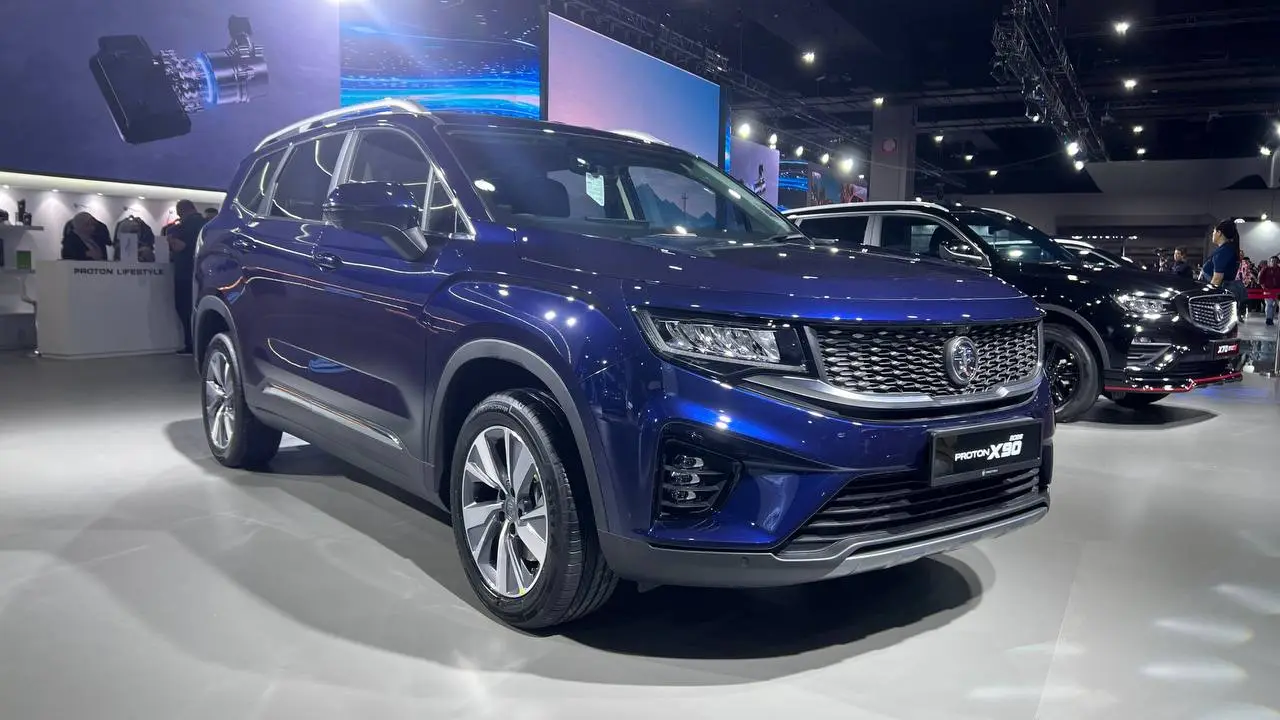
The X90 targets a very specific Malaysian buyer: the growing family that has outgrown a Saga, Persona, or even the compact dimensions of the X50, but still wants to stay within the Proton ecosystem. With a cabin configured for larger families, it fills a gap that the national brand had historically left to Toyota, Honda, or Perodua. By offering noticeably more space and a more premium environment, Proton gives its loyal customers a reason to trade up rather than defect to a rival showroom when children, parents, and luggage multiply.
This upward retention matters more than ever. Proton has publicly signalled ambitions to push annual sales toward the 200,000-unit mark, and that goal cannot be met by entry-level sedans alone. The X90 is the ceiling of Proton’s SUV pyramid, a model designed to capture higher margins and prove that the marque can assemble, sell, and service a vehicle that competes on space and refinement rather than just price.
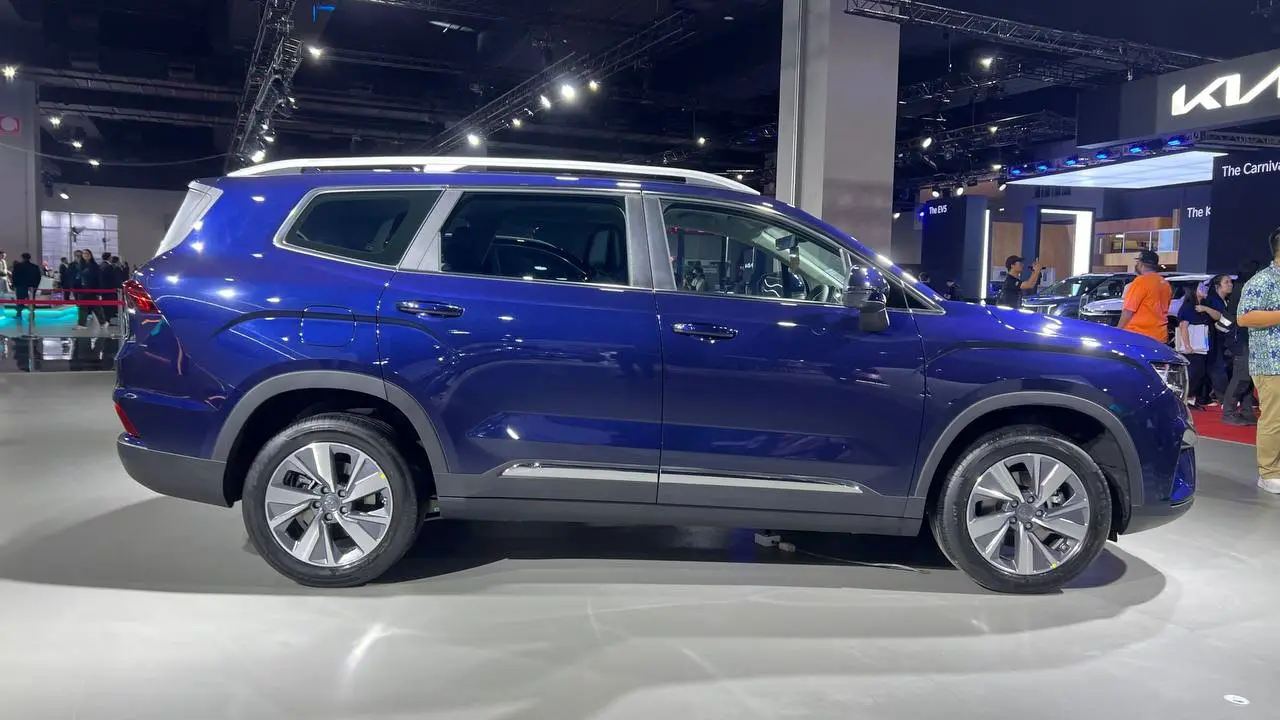
Unlike the battery-electric eMAS models that dominate headlines, the X90 employs a mild-hybrid petrol setup. In the current Malaysian market, this is a deliberately middle-ground choice. Public charging infrastructure is expanding but remains patchy outside the Klang Valley and major city centres; many provincial buyers still view full electrification with range and resale anxiety. A mild-hybrid system offers electrical assistance for smoother stop-start driving and modest fuel savings, yet demands no change in refuelling habits or home wiring.
The technology also reflects Proton’s continuing relationship with Geely. Rather than developing an entirely indigenous flagship platform from scratch, Proton leverages its strategic shareholder’s architectures and powertrain expertise. For consumers, this brings a quiet confidence: the underlying engineering carries global validation, while the final assembly and after-sales network remain locally rooted at Tanjung Malim and across Proton’s national dealer chain.
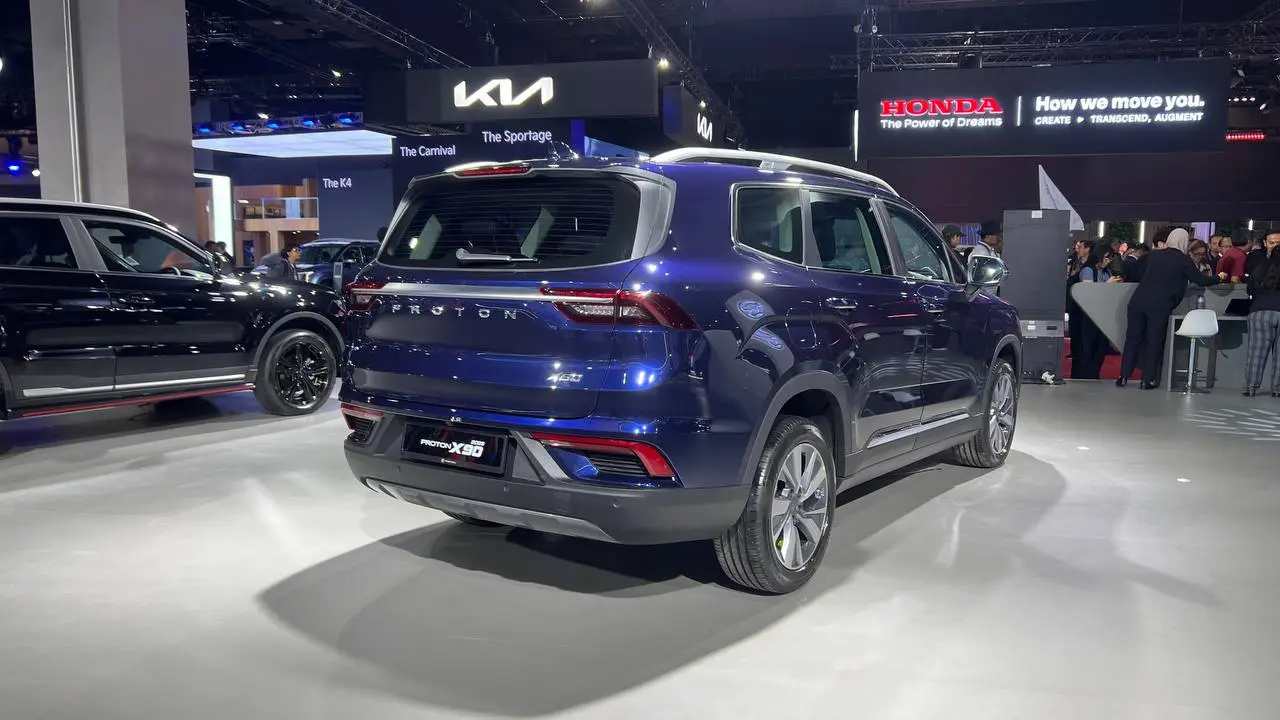
The large-family SUV segment in Malaysia is no longer the quiet preserve of Japanese nameplates. Buyers cross-shopping the X90 may look at everything from the Perodua Alza at the value end to Toyota’s established large-family vehicles and the influx of Chinese-brand PHEVs that promise electrification with generous equipment lists. The X90’s pitch is neither the cheapest nor the most technologically radical; instead, it sells itself as the rational national-brand alternative with a balance of space, mild-hybrid efficiency, and familiar ownership experience.
That familiarity is a double-edged sword. Some consumers still associate Proton with budget transportation, and convincing them to park a flagship SUV in the driveway requires more than a glossy KLIMS display. It requires proof that interior materials, long-term durability, and service costs have all moved into a higher tier. The X90’s presence here is therefore a statement of intent as much as a product showcase.
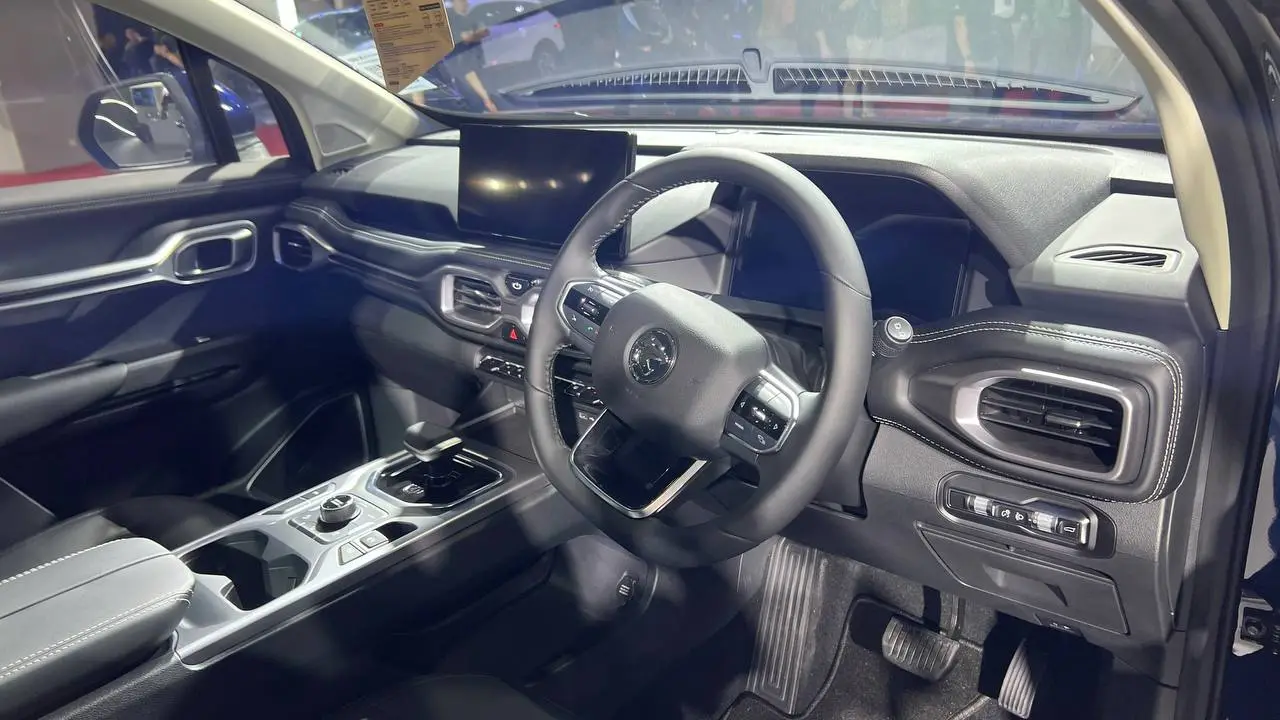
Viewed in isolation, the Proton X90 is simply the brand’s largest and most expensive SUV. But placed within the context of KLIMS 2026, it represents the older half of a dual-track strategy: eMAS chases the electric future, while the X90 defends the present. For Proton to hit its 2026 targets, it needs both narratives to succeed. The X90 does not need to be the flashiest vehicle on the floor; it only needs to persuade Malaysia’s family buyers that the national carmaker can build a trustworthy flagship for the internal-combustion age while the industry pivots toward an electric one.


Your go-to source for all things automotive in Malaysia. 🚗 Latest reviews, breaking news, launches & industry trends.
+ Follow Kereta Rally Karamjit Singh & Proton Wira Schumacher Ada Sini! | HME Asia 2026
Hujung minggu dah tiba dan anda mencari sesuatu untuk cuci mata? Jemput datang ke Heritage Motor Exchange Asia 2026 yang berlangsung di Dewal Merdeka, World Trade Centre (WTC) Kuala Lumpur!
Berbeza dengan pameran biasa, acara ini memberi tumpuan khas kepada kenderaan-kenderaan warisan dan klasik yang menggamit memori. Antara daya tarikan utama yang dipamerkan termasuk:
🏎️ Kereta Rally Legenda: Kereta rally ikonik yang pernah dipandu oleh pemandu legenda negara, Karamjit Singh!
🏎️ Proton Wira Schumacher: Model Proton Wira penuh sejarah yang pernah dipandu oleh pelumba F1 legenda, Michael Schumacher!
🚘 Kereta Klasik & Mewah: Mercedes-Benz W111 Cabriolet (1960-an), Rolls-Royce Silver Cloud, Jaguar E-Type, dan pelbagai lagi model berprestasi tinggi.
Membawa tema "When Passion Meets Acquisition", pameran ini menghimpunkan lebih 50 buah kereta daripada pelbagai era. Ia turut memperkenalkan sistem penilaian Concours 100 mata serta kemudahan urusan pemeriksaan, insurans, dan cukai jalan bersama agensi seperti Puspakom dan JPJ di lokasi.
📅 Tarikh: 23 – 25 Oktober 2026
📍 Lokasi: Dewan Merdeka, WTC Kuala Lumpur
Tonton video ini sampai habis untuk lihat sendiri kehebatan jentera-jentera klasik ini! Jangan lupa untuk Like, Comment, dan Subscribe ke saluran BitAuto!
#HeritageMotorExchange #HMEAsia2026 #BitAuto #WTCKL #KeretaKlasik 1 day ago
Kereta Rally Karamjit Singh & Proton Wira Schumacher Ada Sini! | HME Asia 2026
Hujung minggu dah tiba dan anda mencari sesuatu untuk cuci mata? Jemput datang ke Heritage Motor Exchange Asia 2026 yang berlangsung di Dewal Merdeka, World Trade Centre (WTC) Kuala Lumpur!
Berbeza dengan pameran biasa, acara ini memberi tumpuan khas kepada kenderaan-kenderaan warisan dan klasik yang menggamit memori. Antara daya tarikan utama yang dipamerkan termasuk:
🏎️ Kereta Rally Legenda: Kereta rally ikonik yang pernah dipandu oleh pemandu legenda negara, Karamjit Singh!
🏎️ Proton Wira Schumacher: Model Proton Wira penuh sejarah yang pernah dipandu oleh pelumba F1 legenda, Michael Schumacher!
🚘 Kereta Klasik & Mewah: Mercedes-Benz W111 Cabriolet (1960-an), Rolls-Royce Silver Cloud, Jaguar E-Type, dan pelbagai lagi model berprestasi tinggi.
Membawa tema "When Passion Meets Acquisition", pameran ini menghimpunkan lebih 50 buah kereta daripada pelbagai era. Ia turut memperkenalkan sistem penilaian Concours 100 mata serta kemudahan urusan pemeriksaan, insurans, dan cukai jalan bersama agensi seperti Puspakom dan JPJ di lokasi.
📅 Tarikh: 23 – 25 Oktober 2026
📍 Lokasi: Dewan Merdeka, WTC Kuala Lumpur
Tonton video ini sampai habis untuk lihat sendiri kehebatan jentera-jentera klasik ini! Jangan lupa untuk Like, Comment, dan Subscribe ke saluran BitAuto!
#HeritageMotorExchange #HMEAsia2026 #BitAuto #WTCKL #KeretaKlasik 1 day ago  Rare cars, legendary icons and automotive dreams come alive at Heritage Motor Exchange Asia!
#HMEA #HeritageMotorExchangeAsia #ClassicCars #Supercars #CarCulture #MalaysiaCars 1 day ago
Rare cars, legendary icons and automotive dreams come alive at Heritage Motor Exchange Asia!
#HMEA #HeritageMotorExchangeAsia #ClassicCars #Supercars #CarCulture #MalaysiaCars 1 day ago  Waze could be banned?
IT seems like the Malaysian government may look into banning Waze, but only when local alternatives are ready. 1 day ago
Waze could be banned?
IT seems like the Malaysian government may look into banning Waze, but only when local alternatives are ready. 1 day ago Get the latest car news first!
Your go-to source for all things automotive in Malaysia. 🚗 Latest reviews, breaking news, launches & industry trends.
Kereta Rally Karamjit Singh & Proton Wira Schumacher Ada Sini! | HME Asia 2026
Hujung minggu dah tiba dan anda mencari sesuatu untuk cuci mata? Jemput datang ke Heritage Motor Exchange Asia 2026 yang berlangsung di Dewal Merdeka, World Trade Centre (WTC) Kuala Lumpur!
Berbeza dengan pameran biasa, acara ini memberi tumpuan khas kepada kenderaan-kenderaan warisan dan klasik yang menggamit memori. Antara daya tarikan utama yang dipamerkan termasuk:
🏎️ Kereta Rally Legenda: Kereta rally ikonik yang pernah dipandu oleh pemandu legenda negara, Karamjit Singh!
🏎️ Proton Wira Schumacher: Model Proton Wira penuh sejarah yang pernah dipandu oleh pelumba F1 legenda, Michael Schumacher!
🚘 Kereta Klasik & Mewah: Mercedes-Benz W111 Cabriolet (1960-an), Rolls-Royce Silver Cloud, Jaguar E-Type, dan pelbagai lagi model berprestasi tinggi.
Membawa tema "When Passion Meets Acquisition", pameran ini menghimpunkan lebih 50 buah kereta daripada pelbagai era. Ia turut memperkenalkan sistem penilaian Concours 100 mata serta kemudahan urusan pemeriksaan, insurans, dan cukai jalan bersama agensi seperti Puspakom dan JPJ di lokasi.
📅 Tarikh: 23 – 25 Oktober 2026
📍 Lokasi: Dewan Merdeka, WTC Kuala Lumpur
Tonton video ini sampai habis untuk lihat sendiri kehebatan jentera-jentera klasik ini! Jangan lupa untuk Like, Comment, dan Subscribe ke saluran BitAuto!
#HeritageMotorExchange #HMEAsia2026 #BitAuto #WTCKL #KeretaKlasik 1 day ago Rare cars, legendary icons and automotive dreams come alive at Heritage Motor Exchange Asia!
#HMEA #HeritageMotorExchangeAsia #ClassicCars #Supercars #CarCulture #MalaysiaCars 1 day ago Waze could be banned?
IT seems like the Malaysian government may look into banning Waze, but only when local alternatives are ready. 1 day ago © 2024 Bitauto.com. All Rights Reserved.
Bitauto (www.yiche.com and www.bitauto.com) is one of the most visited automotive websites in China. We provide detailed info on Chinese car brands available in your area. Please note that the information provided on this website is based on publicly available data and is for reference only. It may not be fully updated or accurate at all times.

Help us improve our website


