
Search History
Popular Searches
English
Dealer Login / Sign Up
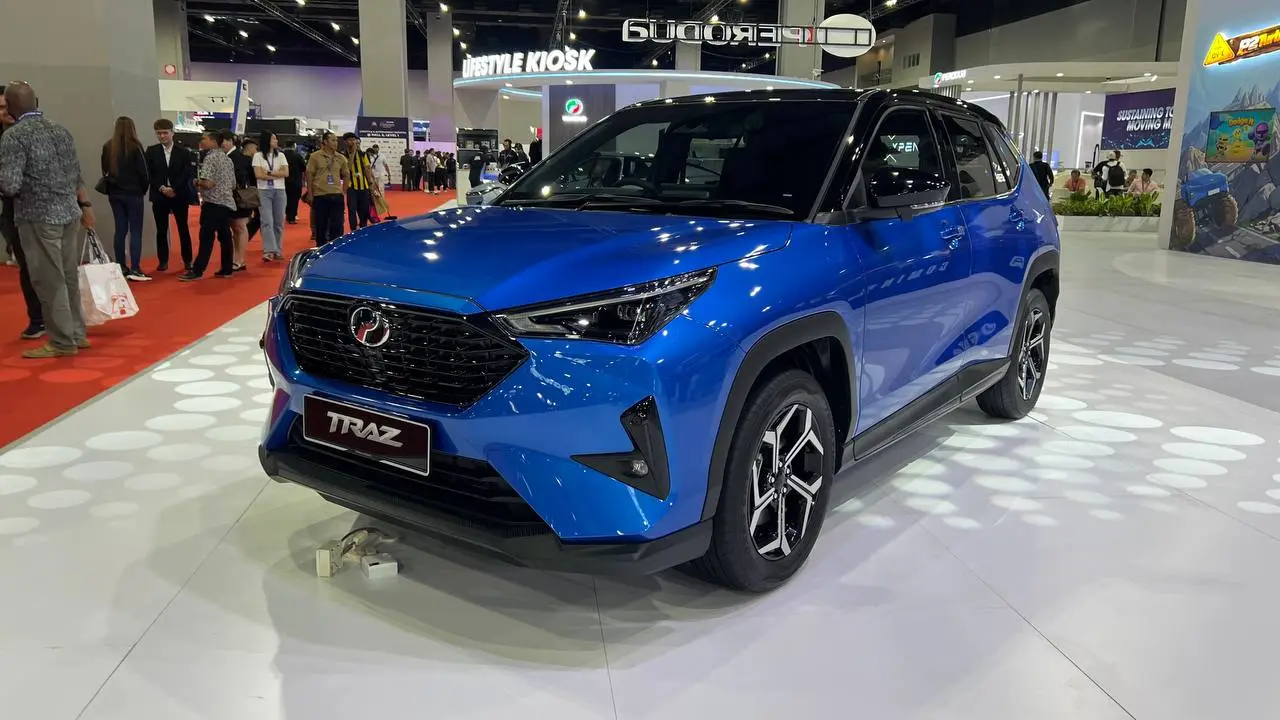
At KLIMS 2026, Perodua's QV-E draws the flashbulbs as the company's first homegrown battery electric vehicle, but the Traz shoulders a quieter mission that is no less critical. Launched in December 2025, this compact SUV enters a Malaysian market where elevated driving positions and flexible cabins have shifted from preference to expectation. The Traz does not chase early-adopter curiosity. It targets the broad centre of the market—families stepping up from the Axia, Bezza or Myvi who want SUV practicality without surrendering the affordability that defined their first car purchase.
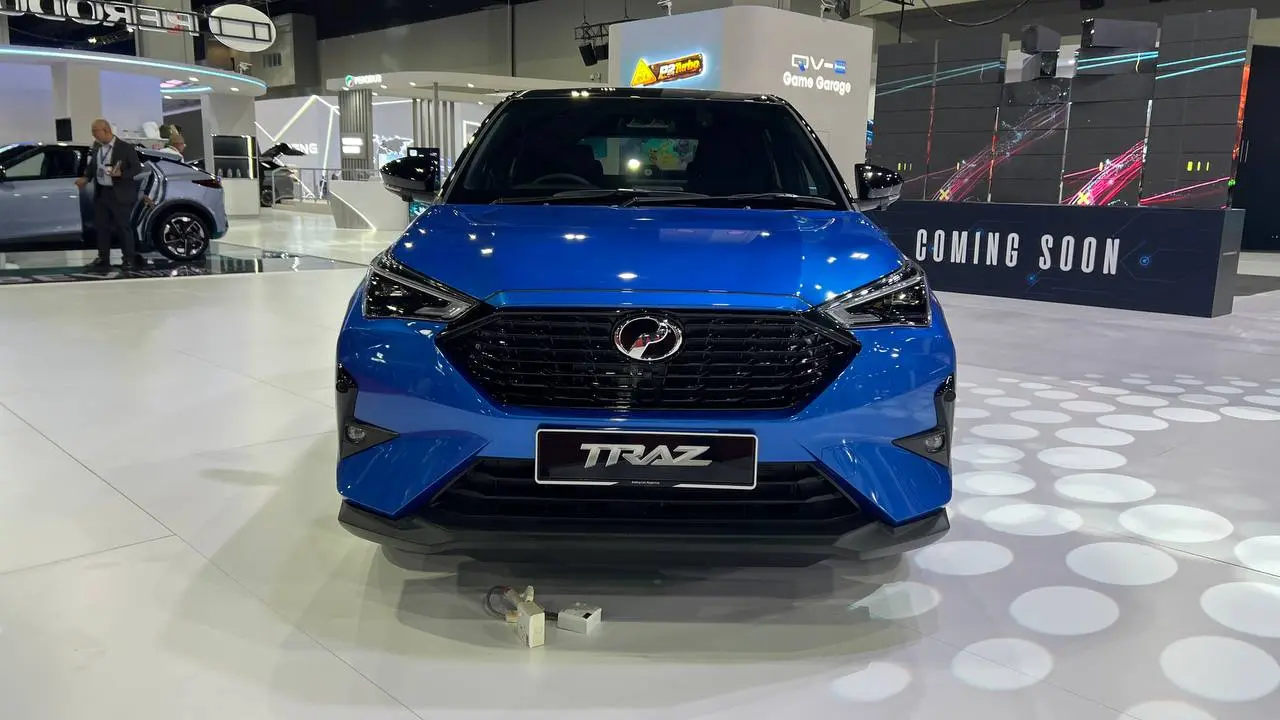
The Traz shares its underlying architecture with the Toyota Yaris Cross, yet its Malaysian role is deliberately detached from that premium positioning. While the Toyota hybrid sits in a higher price bracket, the Perodua opens at RM76,100 and tops out at RM81,100. That gap is not accidental. It creates breathing room for buyers who desire the same fundamental packaging—compact exterior, usable rear seat, respectable cargo hold—but who depend on national-brand pricing and financing accessibility. For these households, the Traz is less a downgrade from Toyota and more a validation of Perodua's ability to localise a global platform for mass-market consumption.
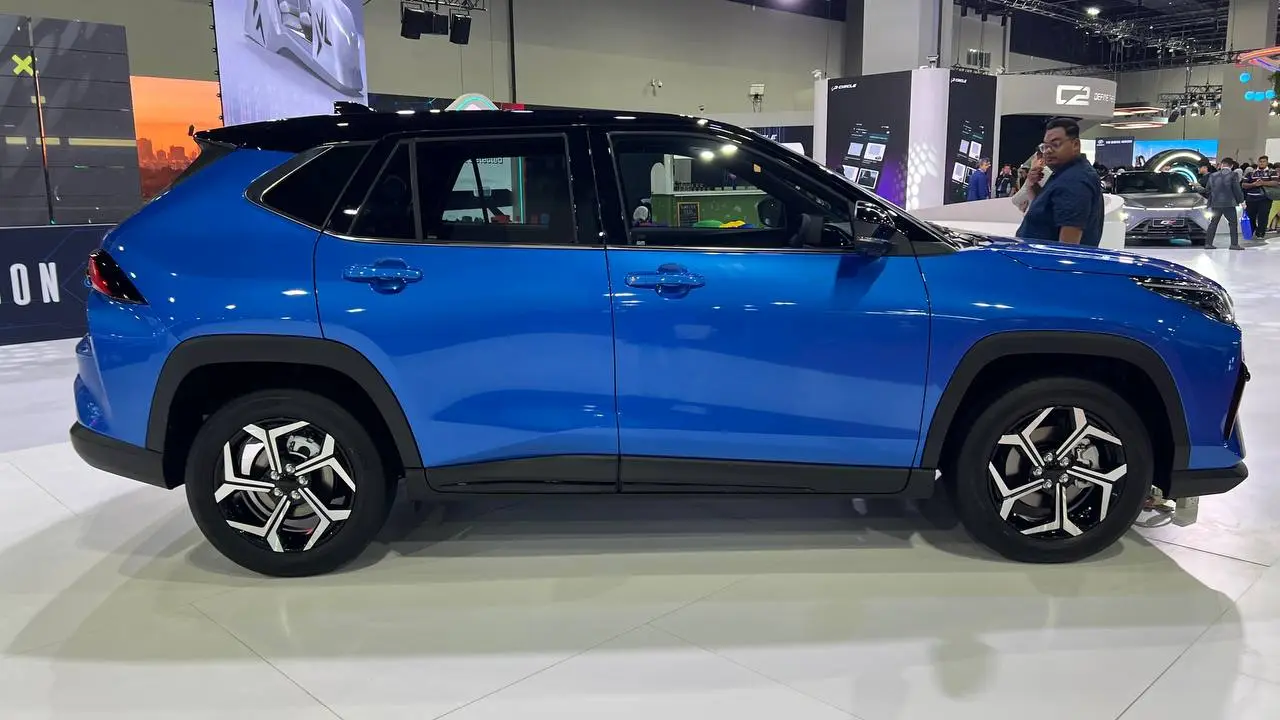
Perodua offers the Traz in just two grades, X and H, a restraint that mirrors the brand's long-standing retail philosophy. Rather than forcing buyers to parse equipment matrices across four or five variants, the Traz presents a straightforward value equation. This reduces showroom friction and accelerates the path from test drive to deposit, a dynamic that has historically favoured Perodua in high-volume months. Against rivals such as the Proton X50 and Honda WR-V, which pitch more complex variant ladders, the Traz's streamlined structure becomes a subtle but decisive competitive weapon.
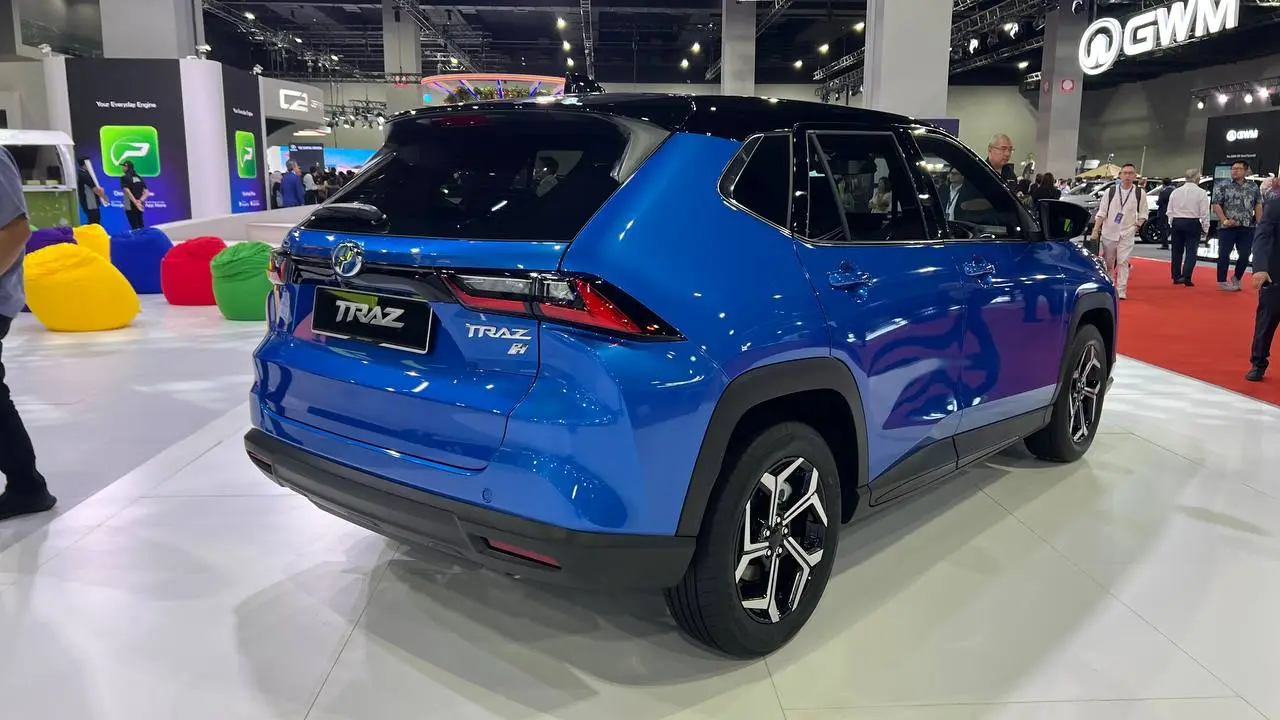
In the B-segment SUV arena, the Traz faces scrutiny from multiple directions. The Proton X50 tempts buyers with turbocharged power and a premium interior ambience. The Honda WR-V brings established badge trust at a comparable footprint. Chinese alternatives like the Chery Omoda 5 add digital cockpit flair and longer equipment lists. The Traz does not win on paper against all of these rivals. Its defence is logistical: locally rooted assembly, a parts network that reaches deep into secondary towns, and resale values supported by sheer market saturation. For buyers who measure a car's cost across five to seven years rather than at the point of sale, those factors frequently override spec-sheet battles.
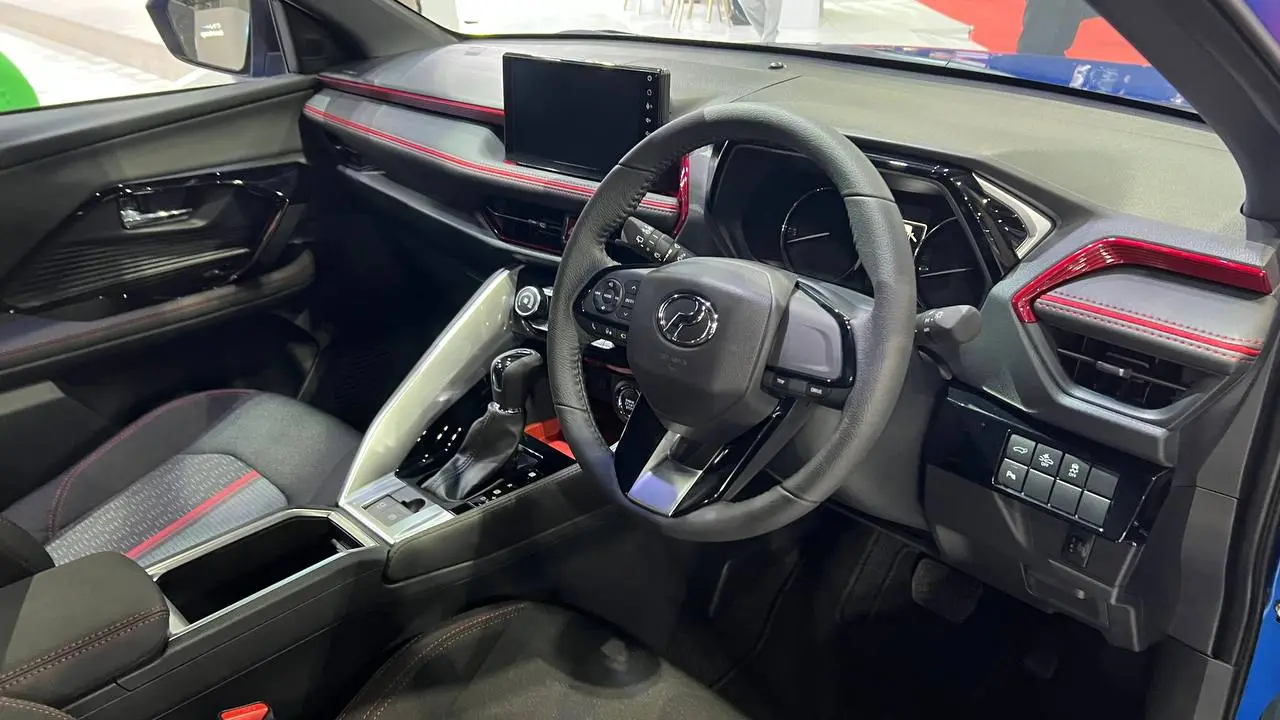
Viewed alongside the QV-E, the Traz completes a narrative that Perodua is carefully constructing at KLIMS 2026. The QV-E is the statement of intent—a declaration that the national carmaker can participate in electrification. The Traz is the revenue engine that buys time and resources for that transition. With the Ativa covering the entry-level SUV space and the Alza and Aruz serving larger families, the Traz occupies a precise midpoint: compact enough for urban commutes, spacious enough for weekend outings, and priced to stay below the psychological ceiling that defines mainstream Malaysian family budgets.
For the typical visitor walking the Perodua stand, the Traz offers a familiar handshake rather than a revolutionary proposition. It promises no autonomous driving miracles and no headline-grabbing acceleration. Instead, it delivers what has sustained Perodua's market leadership for decades—predictable running costs, manageable monthly instalments, and the confidence that neighbourhood service centres can keep it moving. In a year when Malaysian automotive discourse is obsessed with battery subscriptions and charging infrastructure, the Traz is a reminder that the nation's mobility transformation still rests on a vast foundation of conventional family cars. That foundation is exactly what the Traz is built to protect.


Your go-to source for all things automotive in Malaysia. 🚗 Latest reviews, breaking news, launches & industry trends.
+ Follow Kereta Rally Karamjit Singh & Proton Wira Schumacher Ada Sini! | HME Asia 2026
Hujung minggu dah tiba dan anda mencari sesuatu untuk cuci mata? Jemput datang ke Heritage Motor Exchange Asia 2026 yang berlangsung di Dewal Merdeka, World Trade Centre (WTC) Kuala Lumpur!
Berbeza dengan pameran biasa, acara ini memberi tumpuan khas kepada kenderaan-kenderaan warisan dan klasik yang menggamit memori. Antara daya tarikan utama yang dipamerkan termasuk:
🏎️ Kereta Rally Legenda: Kereta rally ikonik yang pernah dipandu oleh pemandu legenda negara, Karamjit Singh!
🏎️ Proton Wira Schumacher: Model Proton Wira penuh sejarah yang pernah dipandu oleh pelumba F1 legenda, Michael Schumacher!
🚘 Kereta Klasik & Mewah: Mercedes-Benz W111 Cabriolet (1960-an), Rolls-Royce Silver Cloud, Jaguar E-Type, dan pelbagai lagi model berprestasi tinggi.
Membawa tema "When Passion Meets Acquisition", pameran ini menghimpunkan lebih 50 buah kereta daripada pelbagai era. Ia turut memperkenalkan sistem penilaian Concours 100 mata serta kemudahan urusan pemeriksaan, insurans, dan cukai jalan bersama agensi seperti Puspakom dan JPJ di lokasi.
📅 Tarikh: 23 – 25 Oktober 2026
📍 Lokasi: Dewan Merdeka, WTC Kuala Lumpur
Tonton video ini sampai habis untuk lihat sendiri kehebatan jentera-jentera klasik ini! Jangan lupa untuk Like, Comment, dan Subscribe ke saluran BitAuto!
#HeritageMotorExchange #HMEAsia2026 #BitAuto #WTCKL #KeretaKlasik 1 day ago
Kereta Rally Karamjit Singh & Proton Wira Schumacher Ada Sini! | HME Asia 2026
Hujung minggu dah tiba dan anda mencari sesuatu untuk cuci mata? Jemput datang ke Heritage Motor Exchange Asia 2026 yang berlangsung di Dewal Merdeka, World Trade Centre (WTC) Kuala Lumpur!
Berbeza dengan pameran biasa, acara ini memberi tumpuan khas kepada kenderaan-kenderaan warisan dan klasik yang menggamit memori. Antara daya tarikan utama yang dipamerkan termasuk:
🏎️ Kereta Rally Legenda: Kereta rally ikonik yang pernah dipandu oleh pemandu legenda negara, Karamjit Singh!
🏎️ Proton Wira Schumacher: Model Proton Wira penuh sejarah yang pernah dipandu oleh pelumba F1 legenda, Michael Schumacher!
🚘 Kereta Klasik & Mewah: Mercedes-Benz W111 Cabriolet (1960-an), Rolls-Royce Silver Cloud, Jaguar E-Type, dan pelbagai lagi model berprestasi tinggi.
Membawa tema "When Passion Meets Acquisition", pameran ini menghimpunkan lebih 50 buah kereta daripada pelbagai era. Ia turut memperkenalkan sistem penilaian Concours 100 mata serta kemudahan urusan pemeriksaan, insurans, dan cukai jalan bersama agensi seperti Puspakom dan JPJ di lokasi.
📅 Tarikh: 23 – 25 Oktober 2026
📍 Lokasi: Dewan Merdeka, WTC Kuala Lumpur
Tonton video ini sampai habis untuk lihat sendiri kehebatan jentera-jentera klasik ini! Jangan lupa untuk Like, Comment, dan Subscribe ke saluran BitAuto!
#HeritageMotorExchange #HMEAsia2026 #BitAuto #WTCKL #KeretaKlasik 1 day ago  Rare cars, legendary icons and automotive dreams come alive at Heritage Motor Exchange Asia!
#HMEA #HeritageMotorExchangeAsia #ClassicCars #Supercars #CarCulture #MalaysiaCars 1 day ago
Rare cars, legendary icons and automotive dreams come alive at Heritage Motor Exchange Asia!
#HMEA #HeritageMotorExchangeAsia #ClassicCars #Supercars #CarCulture #MalaysiaCars 1 day ago  Waze could be banned?
IT seems like the Malaysian government may look into banning Waze, but only when local alternatives are ready. 1 day ago
Waze could be banned?
IT seems like the Malaysian government may look into banning Waze, but only when local alternatives are ready. 1 day ago Get the latest car news first!
Your go-to source for all things automotive in Malaysia. 🚗 Latest reviews, breaking news, launches & industry trends.
Kereta Rally Karamjit Singh & Proton Wira Schumacher Ada Sini! | HME Asia 2026
Hujung minggu dah tiba dan anda mencari sesuatu untuk cuci mata? Jemput datang ke Heritage Motor Exchange Asia 2026 yang berlangsung di Dewal Merdeka, World Trade Centre (WTC) Kuala Lumpur!
Berbeza dengan pameran biasa, acara ini memberi tumpuan khas kepada kenderaan-kenderaan warisan dan klasik yang menggamit memori. Antara daya tarikan utama yang dipamerkan termasuk:
🏎️ Kereta Rally Legenda: Kereta rally ikonik yang pernah dipandu oleh pemandu legenda negara, Karamjit Singh!
🏎️ Proton Wira Schumacher: Model Proton Wira penuh sejarah yang pernah dipandu oleh pelumba F1 legenda, Michael Schumacher!
🚘 Kereta Klasik & Mewah: Mercedes-Benz W111 Cabriolet (1960-an), Rolls-Royce Silver Cloud, Jaguar E-Type, dan pelbagai lagi model berprestasi tinggi.
Membawa tema "When Passion Meets Acquisition", pameran ini menghimpunkan lebih 50 buah kereta daripada pelbagai era. Ia turut memperkenalkan sistem penilaian Concours 100 mata serta kemudahan urusan pemeriksaan, insurans, dan cukai jalan bersama agensi seperti Puspakom dan JPJ di lokasi.
📅 Tarikh: 23 – 25 Oktober 2026
📍 Lokasi: Dewan Merdeka, WTC Kuala Lumpur
Tonton video ini sampai habis untuk lihat sendiri kehebatan jentera-jentera klasik ini! Jangan lupa untuk Like, Comment, dan Subscribe ke saluran BitAuto!
#HeritageMotorExchange #HMEAsia2026 #BitAuto #WTCKL #KeretaKlasik 1 day ago Rare cars, legendary icons and automotive dreams come alive at Heritage Motor Exchange Asia!
#HMEA #HeritageMotorExchangeAsia #ClassicCars #Supercars #CarCulture #MalaysiaCars 1 day ago Waze could be banned?
IT seems like the Malaysian government may look into banning Waze, but only when local alternatives are ready. 1 day ago © 2024 Bitauto.com. All Rights Reserved.
Bitauto (www.yiche.com and www.bitauto.com) is one of the most visited automotive websites in China. We provide detailed info on Chinese car brands available in your area. Please note that the information provided on this website is based on publicly available data and is for reference only. It may not be fully updated or accurate at all times.

Help us improve our website


