
Search History
Popular Searches
English
Dealer Login / Sign Up
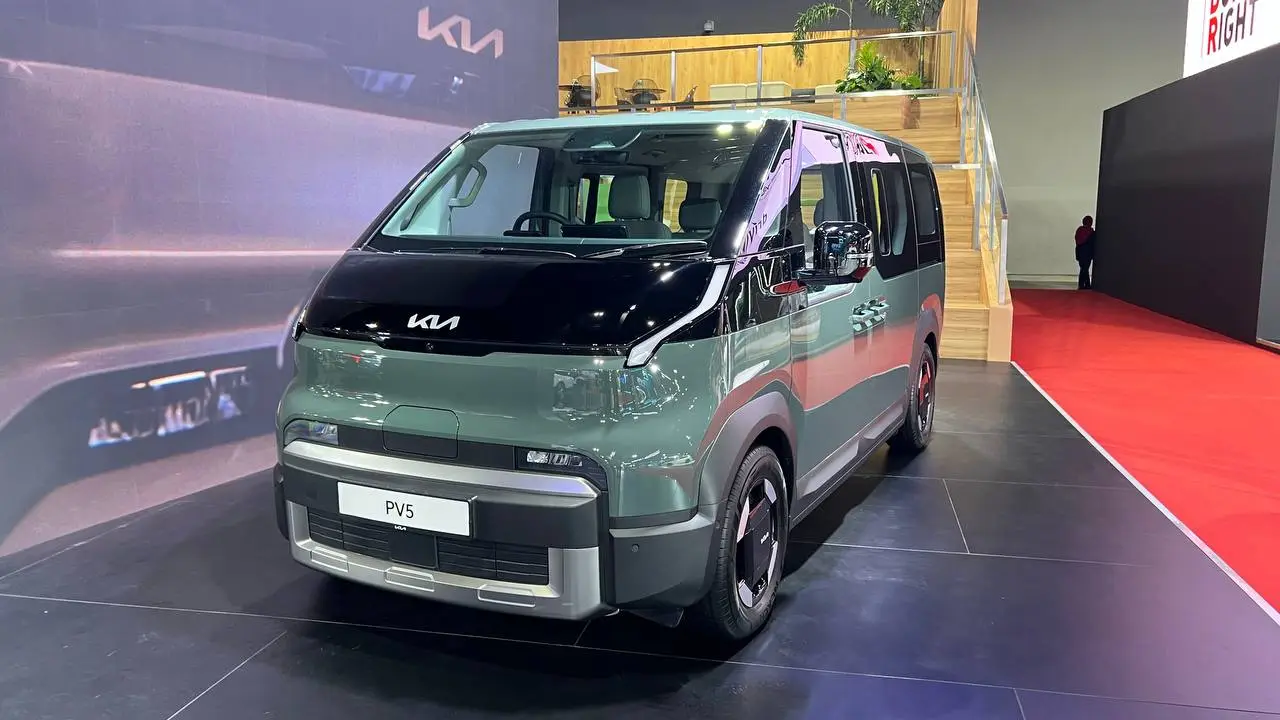
If the Kia PV5 appears in the KLIMS 2026 conversation, its importance is not simply that Kia has another electric van. The PV5 was fully unveiled at the 2025 Kia EV Day as the brand's first production PBV, or Platform Beyond Vehicle, model. It has been developed from the start for passenger transport, cargo delivery, ride-hailing, wheelchair access and conversion use, rather than being a conventional SUV or MPV adapted later for business users.
That makes it especially relevant to Malaysia. Kia Sales Malaysia is rebuilding the brand locally with clearer control over sales and aftersales, while the Sportage, Carnival and EV9 currently cover the mainstream SUV, family MPV and flagship EV roles. A future PV5 would represent something different. It would move Kia into electric fleet, urban logistics and service-operator territory, where purchasing decisions are shaped by uptime, charging operations and total cost of ownership.
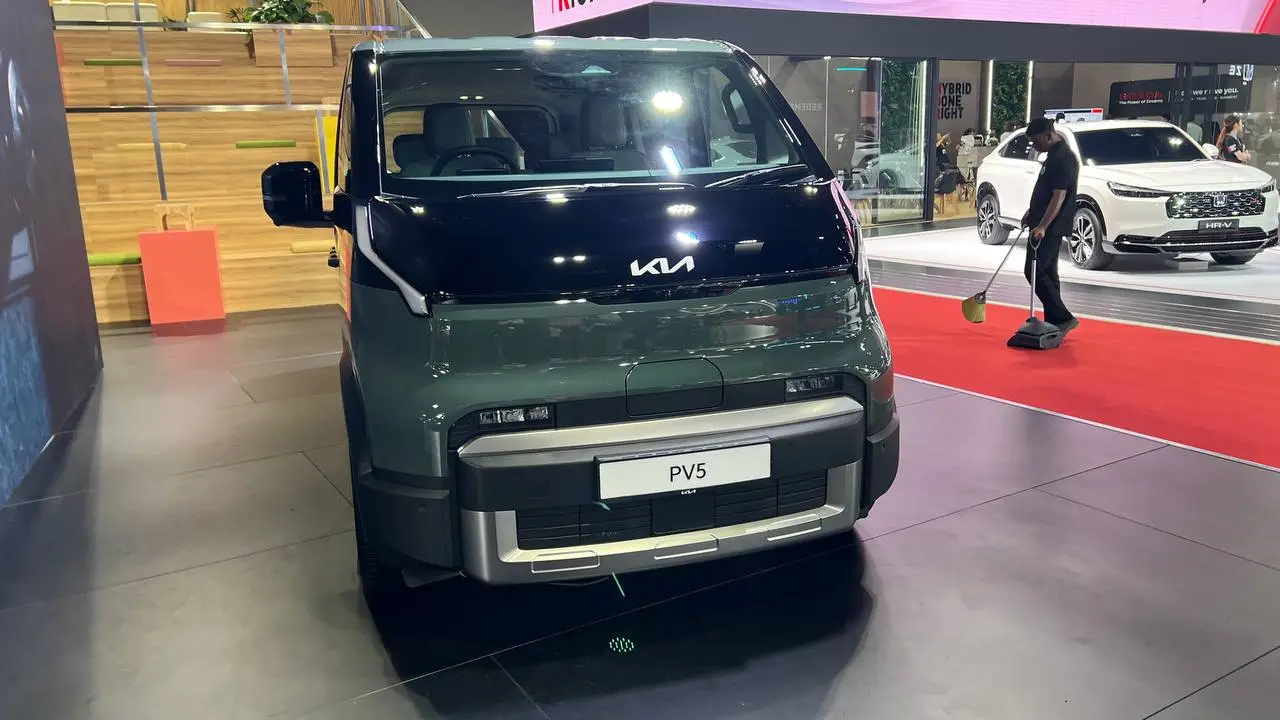
The PV5 is built on Kia's E-GMP.S platform, a dedicated electric skateboard architecture for PBVs. Its purpose is to standardise major components such as batteries and motors, then combine them with different upper bodies on a flat base. Kia describes the approach as an Integrated Modular Architecture. The objective is not only lower development cost, but also the ability to create Passenger, Cargo, Chassis Cab and WAV versions, as well as Crew, Drop Side, Box Van, Freezer Box, Light Camper and other conversion models.
This is a different starting point from many traditional light commercial vehicles. Those often begin as cargo vans and are later adapted for passenger or specialist roles. The PV5 is designed around conversion from the platform stage. Kia also refers to a dedicated PBV EVO Plant and a planned conversion centre, intended to bring customised vehicles closer to the factory, warranty and data ecosystem instead of leaving everything to the aftermarket.
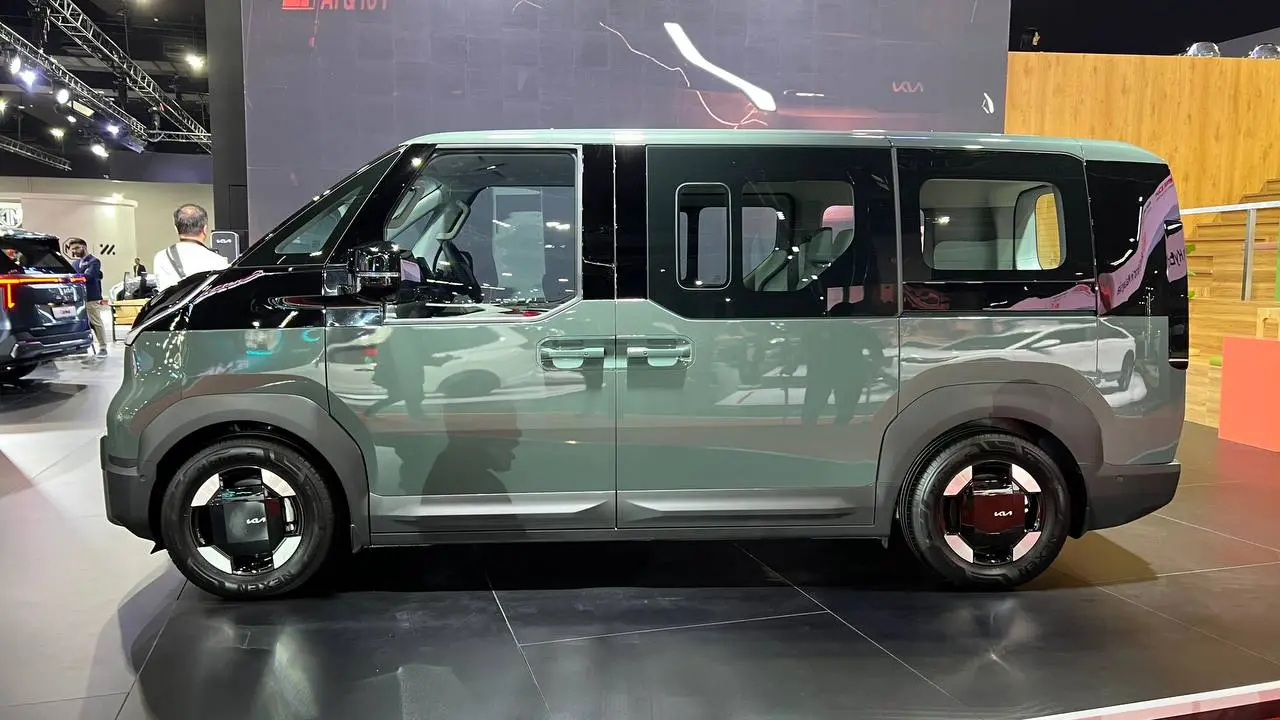
Kia EV Day data lists the PV5 Passenger 2-3-0 and PV5 Cargo Long at 4,695 mm long, 1,895 mm wide and 1,923 mm tall including the antenna, or 1,899 mm without it. The wheelbase is 2,995 mm. Those dimensions place the PV5 in a useful middle ground: more space-efficient than a normal MPV, but less intimidating than a full-size commercial van. That size could suit hotel shuttles, ride-hailing fleets, company transport and urban delivery routes.
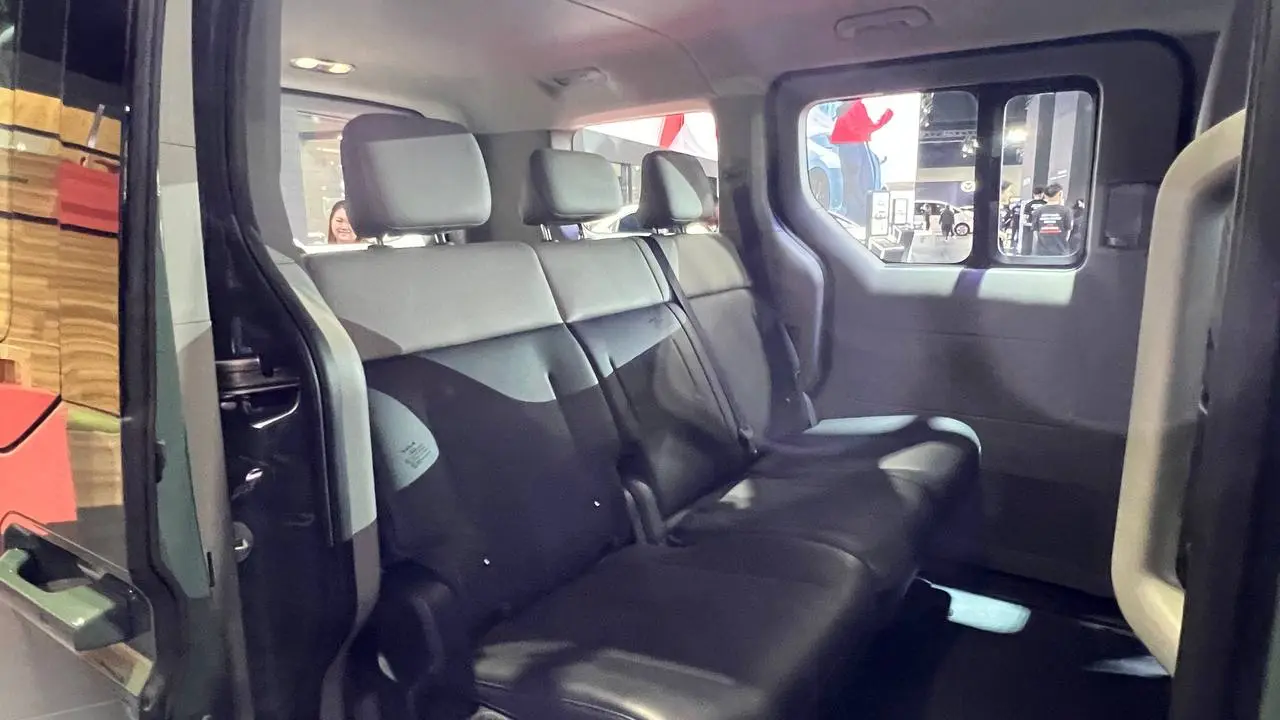
The Passenger version uses a three-row concept with flexible configurations. In 2-3-0 layout, the third-row area becomes a large luggage zone. In 1-2-3 layout, the space beside the driver can be used for storage or luggage. Reclining and folding functions in the second row, paired with a flat board, allow a weekend-camping type setup. Kia also worked with Uber during development, suggesting that passenger access, storage and ride-hailing use cases were not treated as secondary considerations.
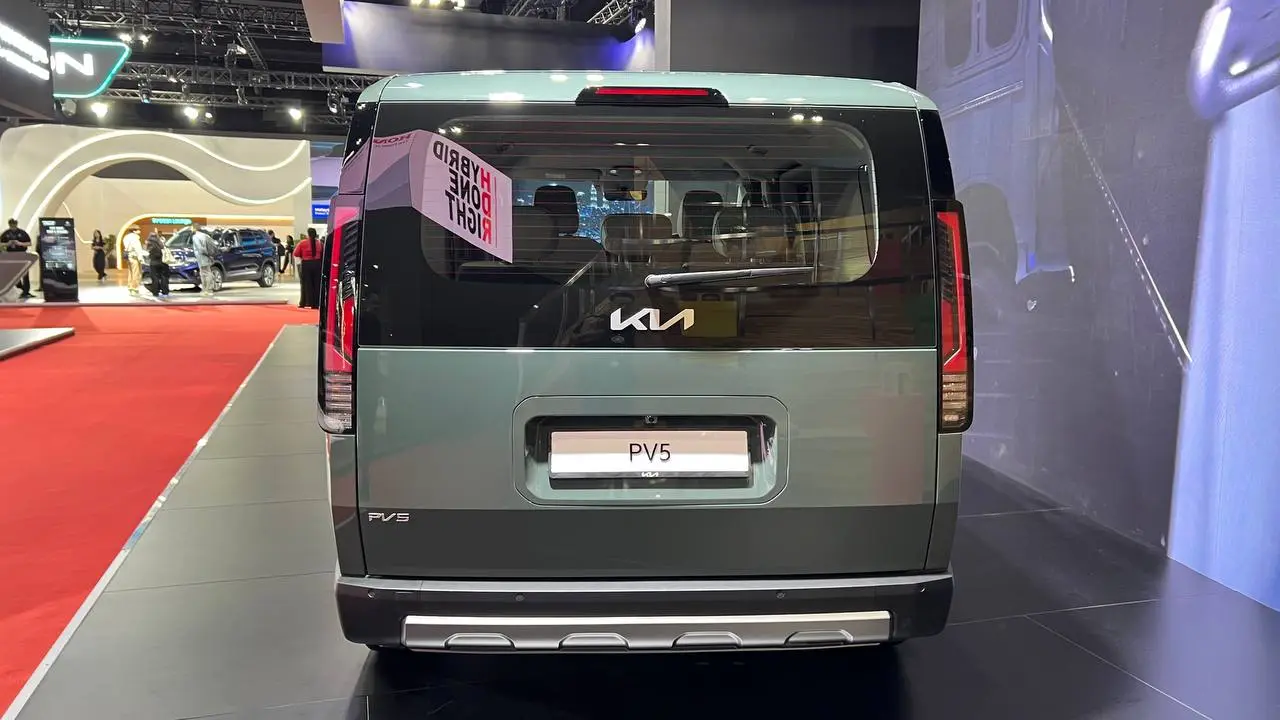
The PV5 Cargo is offered in Standard, Long and High-roof specifications, with a Walk-Through option for the High-roof version. Kia lists maximum cargo volume of up to 5.1 cubic metres, enough to accommodate two Euro pallets. The loading step height is just 419 mm, reducing the physical burden of repeated loading and unloading. An optional L-track mounting system can be fitted along the cargo area's side walls, headlining and partition, allowing tie-down rings to be positioned according to the load.
Vehicle-to-Load capability adds another layer of usefulness. For mobile service teams, event crews, small traders or temperature-controlled operations, the vehicle itself can become a power source. Kia also emphasises vehicle data, API access and predictive maintenance as ways to reduce downtime. That matters because a commercial EV is not judged only by its range figure. Fleet buyers care whether the vehicle can stay on duty every day with predictable service support.
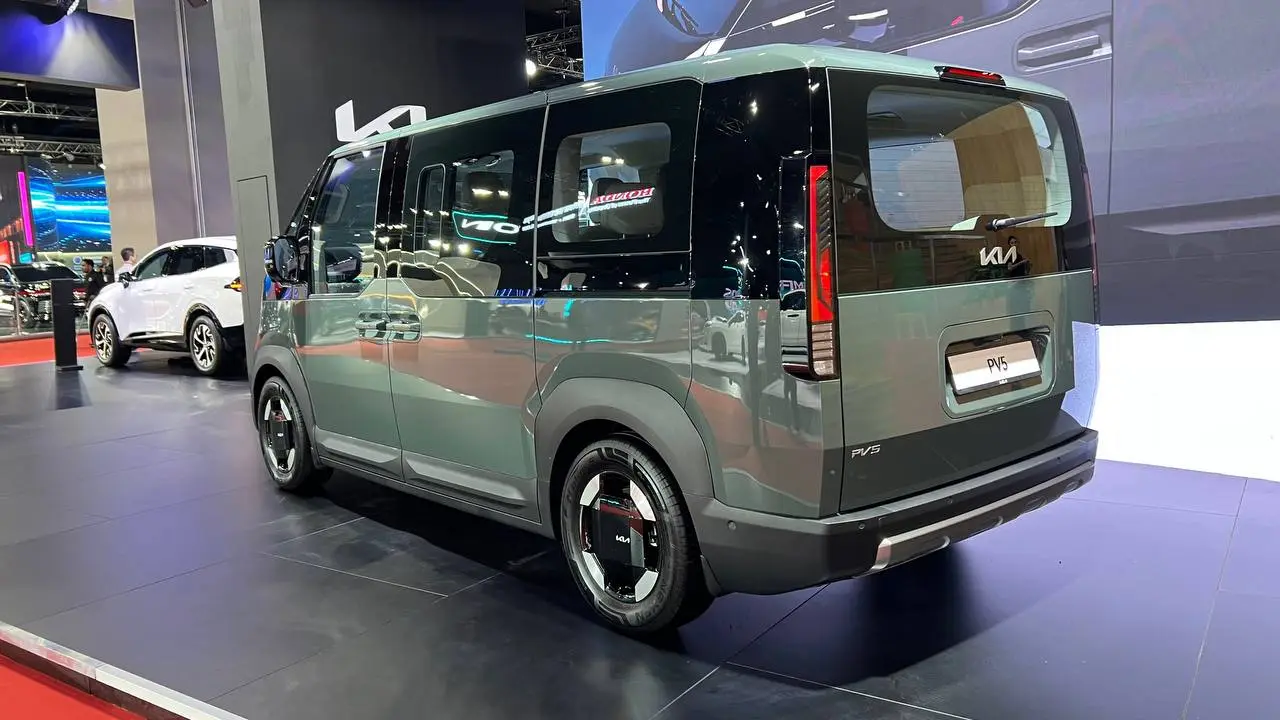
All PV5 versions use a front motor producing 120 kW and 250 Nm. Battery options include 51.5 kWh and 71.2 kWh NCM packs, while the Cargo version also offers a 43.3 kWh LFP battery. With the 71.2 kWh battery, the PV5 Passenger targets up to 400 km of range, and Kia states a 10-80% fast-charging time of around 30 minutes. The battery uses a cell-to-pack structure, removing traditional modules to improve energy efficiency.
These are not performance-car numbers, and they do not need to be. For ride-hailing, urban logistics and staff transport, 120 kW is sufficient for daily use. The more important questions are charging predictability, maintenance cost and whether the battery options can be matched to different operating patterns. If the PV5 is introduced to Malaysia later, fleet charging plans and high-voltage service coverage will matter more than acceleration figures.
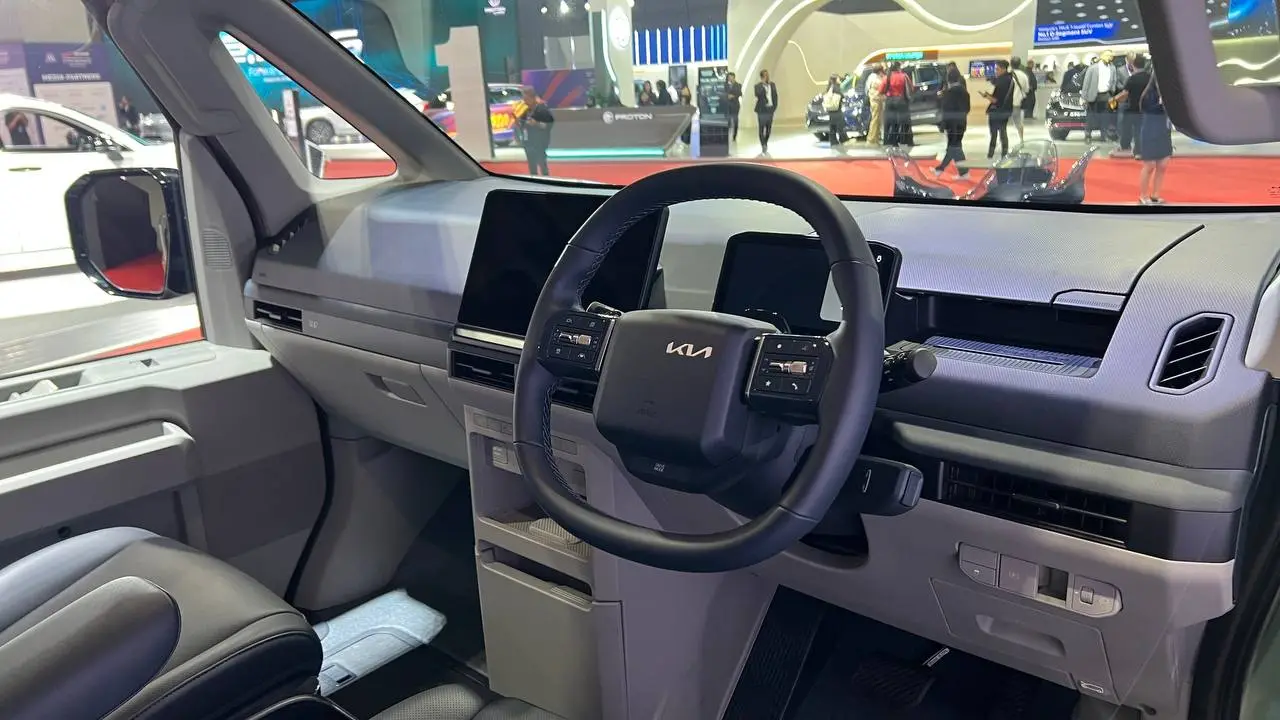
The PV5 is equipped with a 7-inch instrument cluster and a 12.9-inch navigation screen. Its Android Automotive OS-based in-vehicle infotainment system is designed to support business-specific apps through an app market. Kia also refers to over-the-air updates for power electronics, battery management systems and other controllers, allowing the vehicle to remain current through its life cycle. Digital Key 2.0, V2L and fleet data interfaces push the PV5 closer to a mobile work platform than a conventional van.
The interior follows an open-box concept, supported by Kia AddGear modular accessories that allow owners to add or change storage and functional components after purchase. Kia also mentions TPO flooring, Bio PU seat materials and interior colour themes such as Deep Navy, Dove Gray, Espresso Brown, Terracotta Brown and Iceberg Green. The message is that a working vehicle does not have to feel crude. It needs to be durable, cleanable and acceptable for passengers who may use it every day.
Kia has not announced Malaysian pricing or local launch timing for the PV5. The EV Day material states that Korea and Europe begin from the second half of 2025, with other markets following from 2026. For Malaysia, the responsible reading is therefore to treat the PV5 as a future-facing product rather than a confirmed local showroom model.
The opportunity is still clear. Malaysia has ride-hailing operators, hotel shuttles, city logistics fleets, medical transport needs and accessibility gaps that could all benefit from a modular electric vehicle. The PV5 Passenger, Cargo, Chassis Cab and WAV family lines up well with those use cases. The hard part will be execution. Fleet customers will want clear total-cost calculations, charging support, residual-value confidence and fast repair response. If Kia Sales Malaysia can eventually package the PV5 with credible aftersales, fleet financing and charging solutions, it could become the model that moves Kia from a passenger-car brand into a broader mobility-solutions role.


Your go-to source for all things automotive in Malaysia. 🚗 Latest reviews, breaking news, launches & industry trends.
+ Follow The funky looks you see isn't just...for looks, but it serves a purpose as the VW Mission Efficiency is designed to be the most EFFICIENT EV.
It managed to cover 1,278 km, travelling from Wolfsburg to Vienna with just one charge. Even so, upon reaching Vienna, the estimated range is at 164 km.
#Volkswagen 1 minute ago
The funky looks you see isn't just...for looks, but it serves a purpose as the VW Mission Efficiency is designed to be the most EFFICIENT EV.
It managed to cover 1,278 km, travelling from Wolfsburg to Vienna with just one charge. Even so, upon reaching Vienna, the estimated range is at 164 km.
#Volkswagen 1 minute ago  From now till 2030, Volvo is planning to launch no less than 13 new models.
There might even be sedans and wagons - two of Volvo's most popular bodystyles.
#Volvo 3 hours ago
From now till 2030, Volvo is planning to launch no less than 13 new models.
There might even be sedans and wagons - two of Volvo's most popular bodystyles.
#Volvo 3 hours ago  Hyundai Stargazer launching soon?
The first 300 units of the CBU Hyundai Stargazer have arrived in Malaysia, ready for their owners.
#hyundai #HyundaiStargazer 6 hours ago
Hyundai Stargazer launching soon?
The first 300 units of the CBU Hyundai Stargazer have arrived in Malaysia, ready for their owners.
#hyundai #HyundaiStargazer 6 hours ago Get the latest car news first!
Your go-to source for all things automotive in Malaysia. 🚗 Latest reviews, breaking news, launches & industry trends.
The funky looks you see isn't just...for looks, but it serves a purpose as the VW Mission Efficiency is designed to be the most EFFICIENT EV.
It managed to cover 1,278 km, travelling from Wolfsburg to Vienna with just one charge. Even so, upon reaching Vienna, the estimated range is at 164 km.
#Volkswagen 1 minute ago From now till 2030, Volvo is planning to launch no less than 13 new models.
There might even be sedans and wagons - two of Volvo's most popular bodystyles.
#Volvo 3 hours ago Hyundai Stargazer launching soon?
The first 300 units of the CBU Hyundai Stargazer have arrived in Malaysia, ready for their owners.
#hyundai #HyundaiStargazer 6 hours ago  ProtonGWMVolkswagenJAECOOVolvoPeroduaToyotaHondaTESLAMitsubishiMazdaJetourCheryBYDLexusBMWMercedes-BenziCAURZeekrIsuzuNissanLeapmotorPorscheFordOMODAMINIMGSuzukiXPengHyundaiWulingKiaSubaruDenzaGACLand RoverDongfengCAMAudiPeugeotFotonMAXUSsmartDaihatsuJACJMCMaseratiLotusAlfa RomeoRenaultGolden DragonKaiceneSeresLamborghiniFerrariJeepRolls-RoyceLepasAston MartinMcLarenChevroletBentleyFiatBAICForthingGeelyRoeweAeolusChanganARCFOXDeepalExeedHongqiVoyahJaguarKGMBuforiAcuraCadillacDodgeAbarthINEOSMHEROJMEVFreelander
 © 2024 Bitauto.com. All Rights Reserved.
Bitauto (www.yiche.com and www.bitauto.com) is one of the most visited automotive websites in China. We provide detailed info on Chinese car brands available in your area. Please note that the information provided on this website is based on publicly available data and is for reference only. It may not be fully updated or accurate at all times.
Help us improve our website


