
Search History
Popular Searches
English
Dealer Login / Sign Up
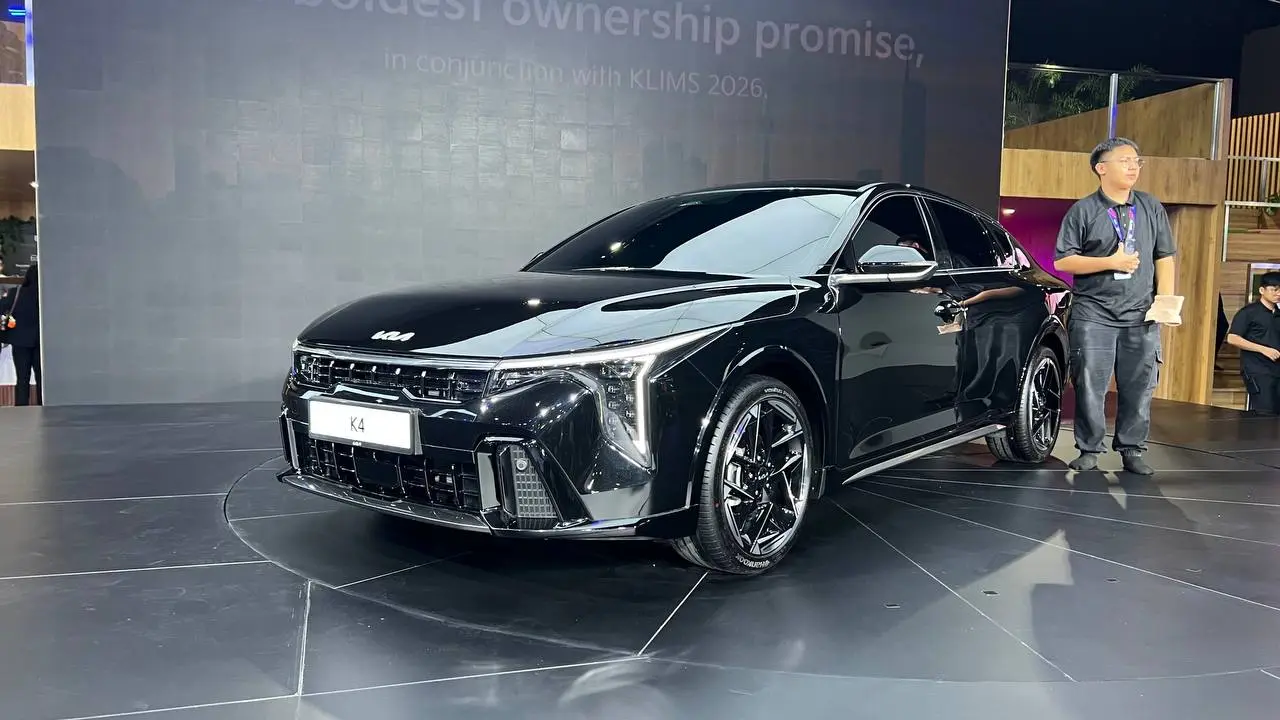
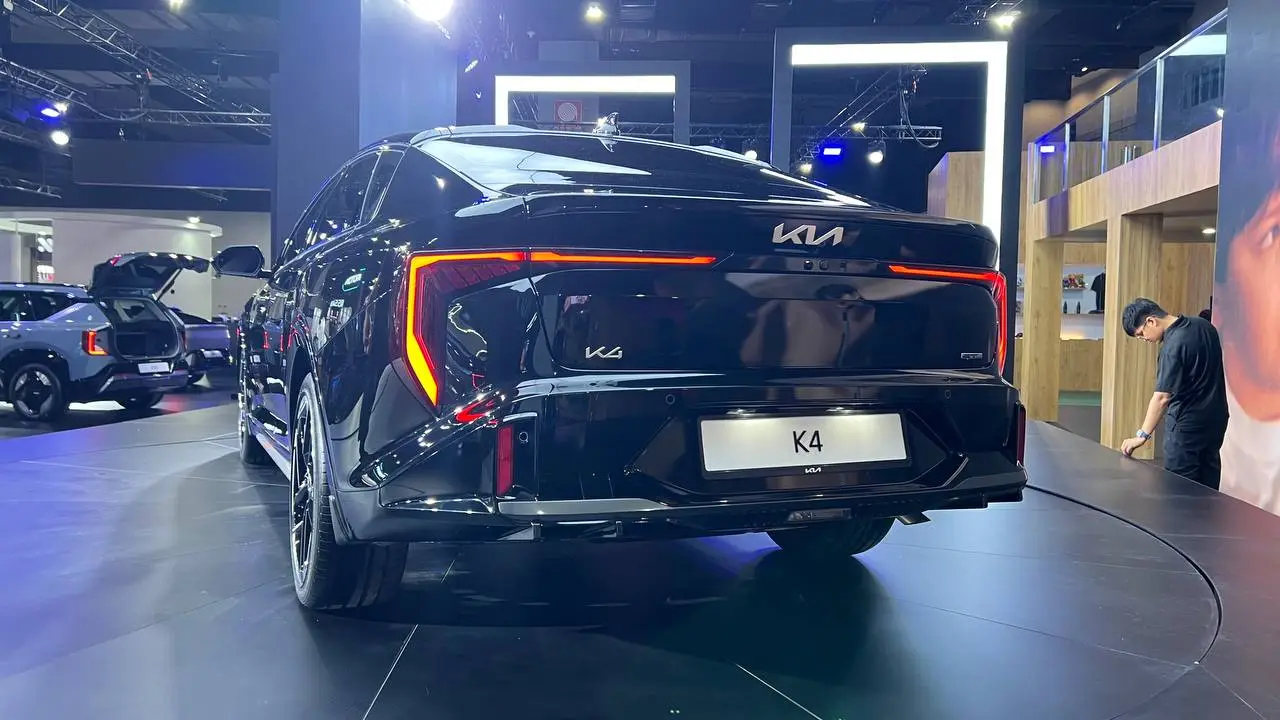
The Kia K4 is useful because it says something that is often lost in the rush toward electrification: not every buyer is ready to move into a full EV. Based on the K4 First Drives release and the technical specification file shared by Eric, the K4 is a Europe-focused hatchback positioned between the C- and D-segments. It combines a larger footprint, a more connected cabin and a wide powertrain range for customers who still want petrol or hybrid familiarity.
In a KLIMS 2026 context, that makes the K4 relevant even though it is not Kia's most advanced electric product. Kia Sales Malaysia is trying to rebuild confidence after a reset in local sales and aftersales. The Sportage and Carnival cover the family-car base, while the EV9, EV4 and EV5 point toward electrification. A future K4 would serve a different buyer: someone who wants new-generation Kia design and technology, but is not yet ready to accept the cost, charging habits or resale questions that come with EV ownership. The documents do not include Malaysian pricing or launch timing, so the car should be read as a global product reference rather than a confirmed local model.
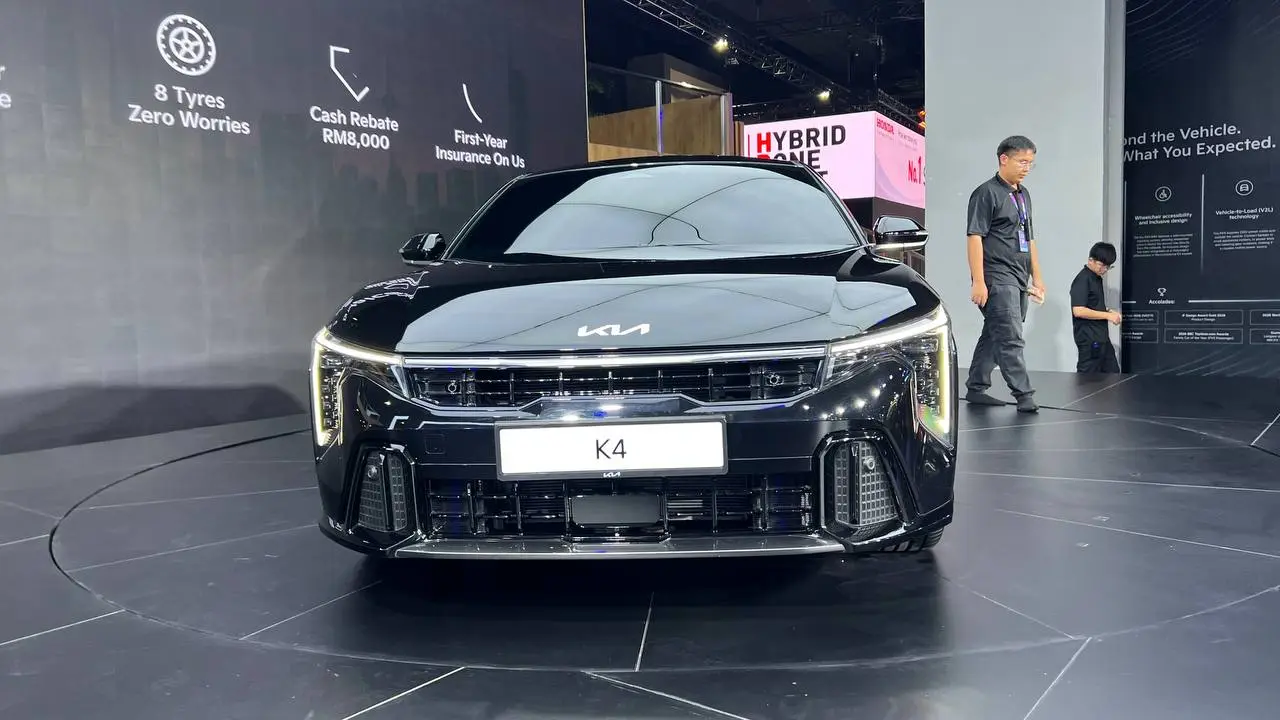
The K4 measures 4,440 mm long, 1,850 mm wide and 1,435 mm tall, with a 2,720 mm wheelbase and 140 mm of ground clearance. Those dimensions explain why Kia says the model blurs the line between C- and D-segment cars. Rear legroom is listed at 964 mm, with rear headroom of 973 mm. Up front, legroom is 1,074 mm and headroom is 991 mm. For family users, these numbers are more meaningful than the sporty design language.
Cargo capacity is also competitive. The petrol version offers 438 litres behind the second row and 1,217 litres with the rear seats folded. The MHEV version reduces that to 328 litres and 1,107 litres respectively because of the electrified components. The design uses a floating roofline, hidden rear door handles integrated into the C-pillar, Star Map lighting and visual cues inspired by Kia's newer EVs. GT-Line models add a three-spoke steering wheel, paddle shifters, 17- or 18-inch alloy wheels, gloss black mirror caps, side sills and wheel arch mouldings.
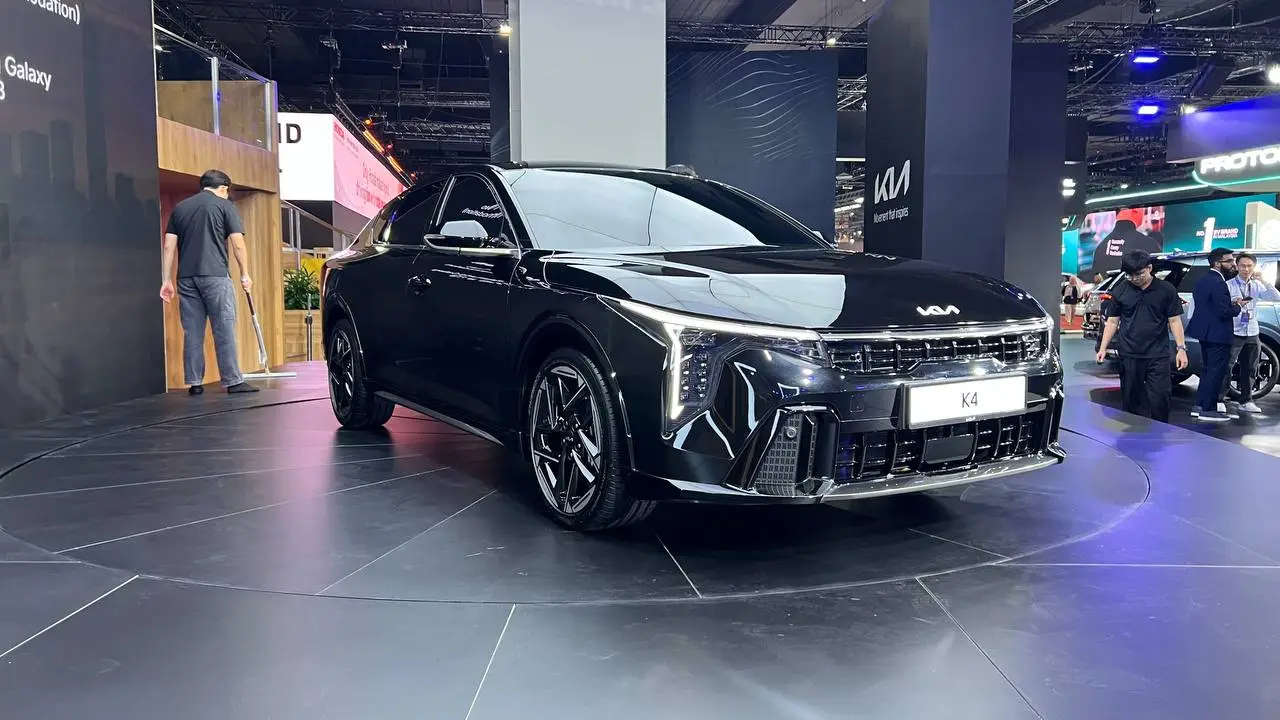
In Europe, the K4 is offered with five powertrain choices, two of them electrified. The range begins with a 1.0-litre T-GDI petrol engine producing 115 PS and paired with a six-speed manual gearbox. The same engine is also available with mild-hybrid technology, with the MHEV version able to use a seven-speed dual-clutch automatic. The 1.6-litre T-GDI petrol engine is paired with a seven-speed dual-clutch transmission and offered in 150 PS or 180 PS outputs. Kia also plans to add a full hybrid option later in 2026.
The technical specification PDF focuses on a 1.6-litre T-GDI four-cylinder turbocharged petrol test car. It displaces 1,598 cc, produces 150 PS and 250 Nm, drives the front wheels through a 7DCT and reaches 100 km/h in 9.1 seconds. Top speed is listed at 207 km/h, while fuel tank capacity is 47 litres. These are not hot-hatch figures, but they are more than adequate for a family hatchback. The real value of the K4 is that it gives buyers a modern, connected car without forcing them immediately into full electrification.
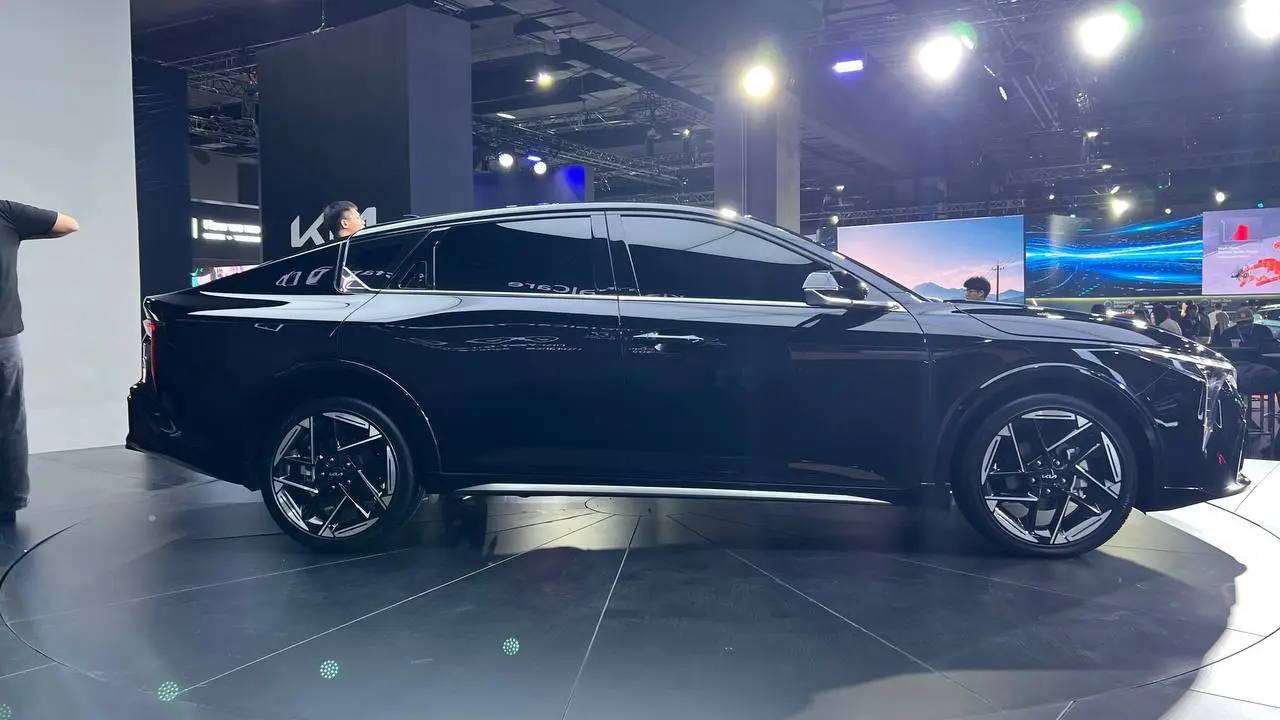
The K4 is not relying only on styling and screens. Kia says the car was tuned at the Hyundai Motor Europe Technical Center and across European proving grounds, with engineers focusing on comfort, predictability and steering response. The suspension uses MacPherson struts at the front and a multi-link rear setup. Springs, anti-roll bars, shock absorbers and engine mounts have all been optimised. The PDF also lists column-type motor-driven power steering, 2.41 turns lock-to-lock and a 5.36 m turning radius.
This matters in Malaysia because many new-car discussions are dominated by screen size, output figures and electrification labels. Long-term satisfaction still comes from ride quality, steering linearity and high-speed stability. If the K4 were introduced locally, buyers would likely compare it with the Honda Civic, Toyota Corolla, Mazda3 and newer Chinese sedan or hatchback alternatives. Its European chassis tuning could give it a more mature personality than cars that compete mainly on feature count.
The K4 cabin uses a panoramic display made up of a 12.3-inch instrument cluster, a 5.3-inch climate display and a 12.3-inch central touchscreen. Kia's connected car Navigation Cockpit system integrates navigation, multimedia and vehicle settings. Wireless Apple CarPlay and Android Auto are standard across trims, while higher trims can add wireless charging, Harman Kardon audio, heated and ventilated front seats, black bio-based artificial leather upholstery, Kia Connect services, over-the-air updates, Wi-Fi hotspot capability and an AI-powered voice assistant. Digital Key 2.0 allows compatible smartphones to function as a virtual key.
The driver-assistance list is also substantial. The release mentions Blind-Spot View Monitor, Blind-spot Collision-Avoidance Assist, Smart Cruise Control 2, Highway Driving Assist 2.0, Rear Cross-Traffic Collision-Avoidance Assist, Surround View Monitor and Forward Collision-Avoidance Assist 2. The specification sheet for the test car also includes High Beam Assist, Rear View Monitor, front and rear parking sensors, Lane Follow Assist, Lane Keep Assist and Intelligent Speed Limit Assist. For a non-premium hatchback, this is a serious safety and convenience package.
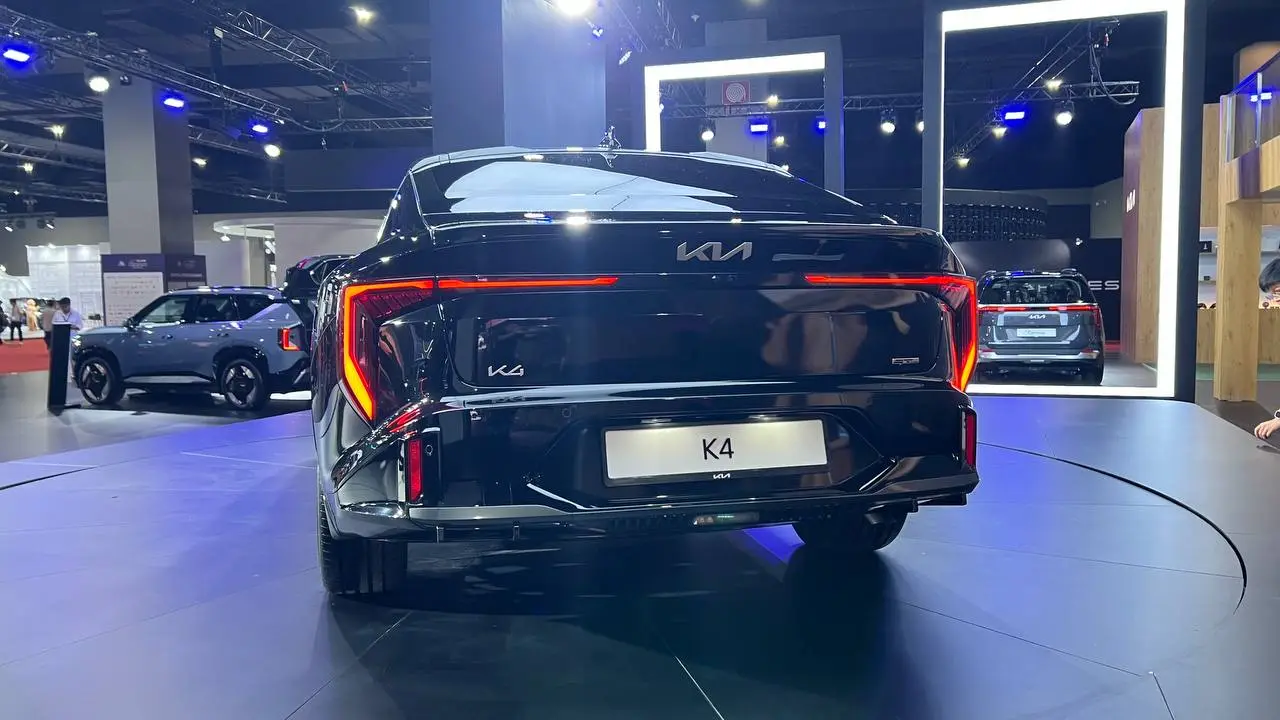
The K4 is produced at Kia Mexico in Pesquería, Nuevo León, a plant that opened in 2016 and has annual capacity of up to 400,000 units. Kia allocated USD150 million to adapt and expand the facility for K4 production. That gives the model a global manufacturing base, but it does not confirm Malaysian availability. Any local introduction would depend on Kia Sales Malaysia's product planning.
If it eventually reaches Malaysia, the K4 should not be positioned as just another petrol hatchback. The local sedan and hatchback market is already defended by Japanese and national brands, while Chinese marques are changing price expectations through SUVs and EVs. The K4's opportunity would be to offer something less radical than a full EV but more modern than an old-school petrol car: sharper design, connected cabin technology, credible driver assistance and a choice of petrol, mild hybrid or future hybrid powertrains. The product case is coherent, but success would still depend on sensible pricing, stable parts supply and aftersales confidence under Kia Sales Malaysia.


Your go-to source for all things automotive in Malaysia. 🚗 Latest reviews, breaking news, launches & industry trends.
+ Follow The funky looks you see isn't just...for looks, but it serves a purpose as the VW Mission Efficiency is designed to be the most EFFICIENT EV.
It managed to cover 1,278 km, travelling from Wolfsburg to Vienna with just one charge. Even so, upon reaching Vienna, the estimated range is at 164 km.
#Volkswagen 1 minute ago
The funky looks you see isn't just...for looks, but it serves a purpose as the VW Mission Efficiency is designed to be the most EFFICIENT EV.
It managed to cover 1,278 km, travelling from Wolfsburg to Vienna with just one charge. Even so, upon reaching Vienna, the estimated range is at 164 km.
#Volkswagen 1 minute ago  From now till 2030, Volvo is planning to launch no less than 13 new models.
There might even be sedans and wagons - two of Volvo's most popular bodystyles.
#Volvo 3 hours ago
From now till 2030, Volvo is planning to launch no less than 13 new models.
There might even be sedans and wagons - two of Volvo's most popular bodystyles.
#Volvo 3 hours ago  Hyundai Stargazer launching soon?
The first 300 units of the CBU Hyundai Stargazer have arrived in Malaysia, ready for their owners.
#hyundai #HyundaiStargazer 6 hours ago
Hyundai Stargazer launching soon?
The first 300 units of the CBU Hyundai Stargazer have arrived in Malaysia, ready for their owners.
#hyundai #HyundaiStargazer 6 hours ago Get the latest car news first!
Your go-to source for all things automotive in Malaysia. 🚗 Latest reviews, breaking news, launches & industry trends.
The funky looks you see isn't just...for looks, but it serves a purpose as the VW Mission Efficiency is designed to be the most EFFICIENT EV.
It managed to cover 1,278 km, travelling from Wolfsburg to Vienna with just one charge. Even so, upon reaching Vienna, the estimated range is at 164 km.
#Volkswagen 1 minute ago From now till 2030, Volvo is planning to launch no less than 13 new models.
There might even be sedans and wagons - two of Volvo's most popular bodystyles.
#Volvo 3 hours ago Hyundai Stargazer launching soon?
The first 300 units of the CBU Hyundai Stargazer have arrived in Malaysia, ready for their owners.
#hyundai #HyundaiStargazer 6 hours ago  ProtonGWMVolkswagenJAECOOVolvoPeroduaToyotaHondaTESLAMitsubishiMazdaJetourCheryBYDLexusBMWMercedes-BenziCAURZeekrIsuzuNissanLeapmotorPorscheFordOMODAMINIMGSuzukiXPengHyundaiWulingKiaSubaruDenzaGACLand RoverDongfengCAMAudiPeugeotFotonMAXUSsmartDaihatsuJACJMCMaseratiLotusAlfa RomeoRenaultGolden DragonKaiceneSeresLamborghiniFerrariJeepRolls-RoyceLepasAston MartinMcLarenChevroletBentleyFiatBAICForthingGeelyRoeweAeolusChanganARCFOXDeepalExeedHongqiVoyahJaguarKGMBuforiAcuraCadillacDodgeAbarthINEOSMHEROJMEVFreelander
 © 2024 Bitauto.com. All Rights Reserved.
Bitauto (www.yiche.com and www.bitauto.com) is one of the most visited automotive websites in China. We provide detailed info on Chinese car brands available in your area. Please note that the information provided on this website is based on publicly available data and is for reference only. It may not be fully updated or accurate at all times.
Help us improve our website


