
Search History
Popular Searches
English
Dealer Login / Sign Up
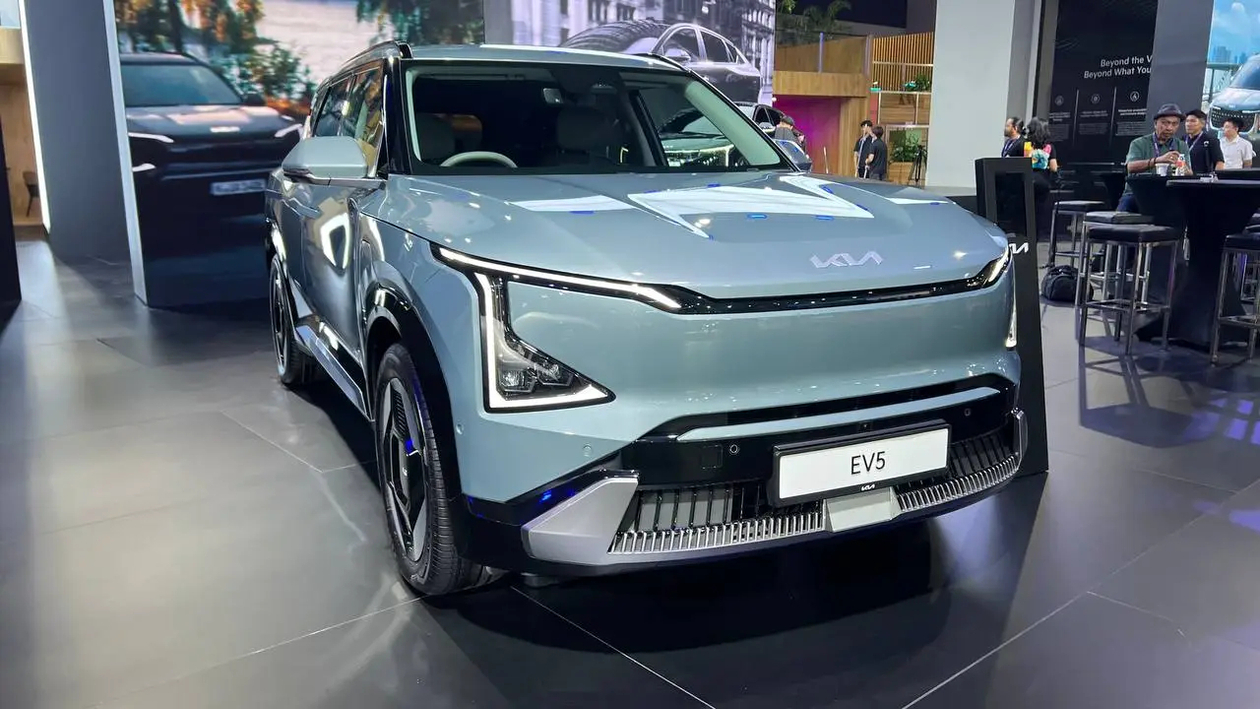
The Kia EV5 sits much closer to mainstream family buyers than the EV9. The EV9 works as a flagship, carrying Kia's electric technology image with size and presence. The EV5 is a more conventional five-seat electric SUV, designed to bring Kia's dedicated EV platform thinking and Opposites United design language to a broader customer base. According to the Kia release shared by Eric, the EV5 global rollout begins in the second half of 2025, starting in Korea and Europe, with Canada following in early 2026.
Kia has not announced Malaysian pricing, local variants or launch timing in the document, so the EV5 should not be treated as a confirmed Malaysian showroom model yet. In a KLIMS 2026 context, it is better read as a future product direction for Kia. If the Sportage and Carnival are responsible for rebuilding trust in the conventional family-car market, and the EV9 lifts the brand's electric image, the EV5 is the model that could eventually make more Malaysian families consider a Kia EV seriously.
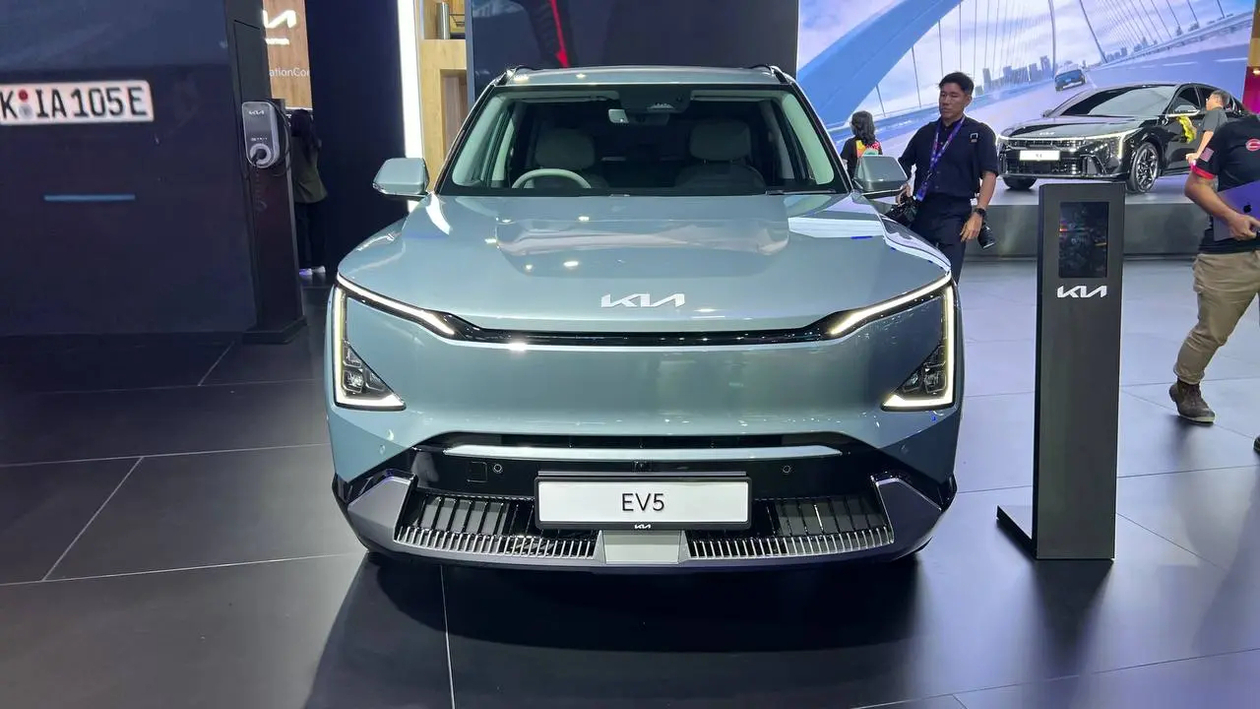
The EV5 applies Kia's Opposites United design philosophy, but it does not chase the fastback-crossover look that now dominates many EV line-ups. It uses a more upright SUV shape. The long-range 2WD specification measures 4,610 mm long, 1,875 mm wide and 1,675 mm tall without roof rails, or 1,680 mm with roof rails. The wheelbase is 2,750 mm, and ground clearance is listed at 176 mm. That places it between compact and mid-size SUV territory, giving it a more usable family footprint than many smaller electric crossovers without approaching EV9 scale.
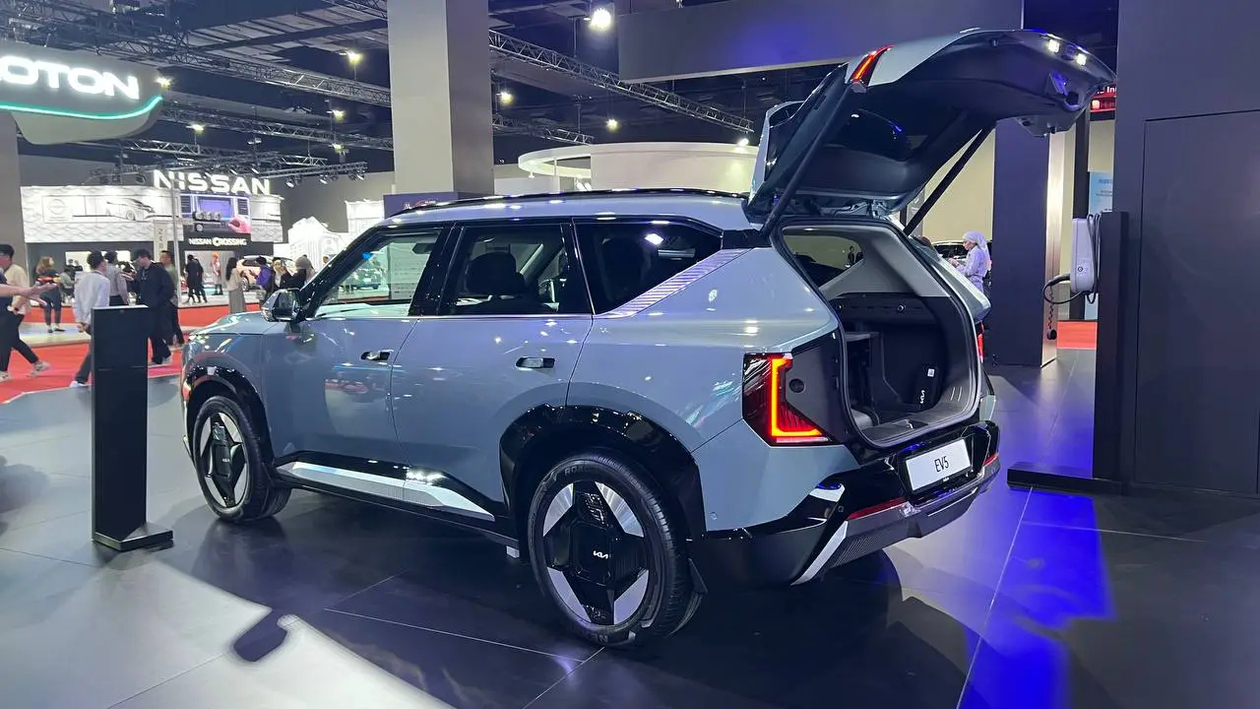
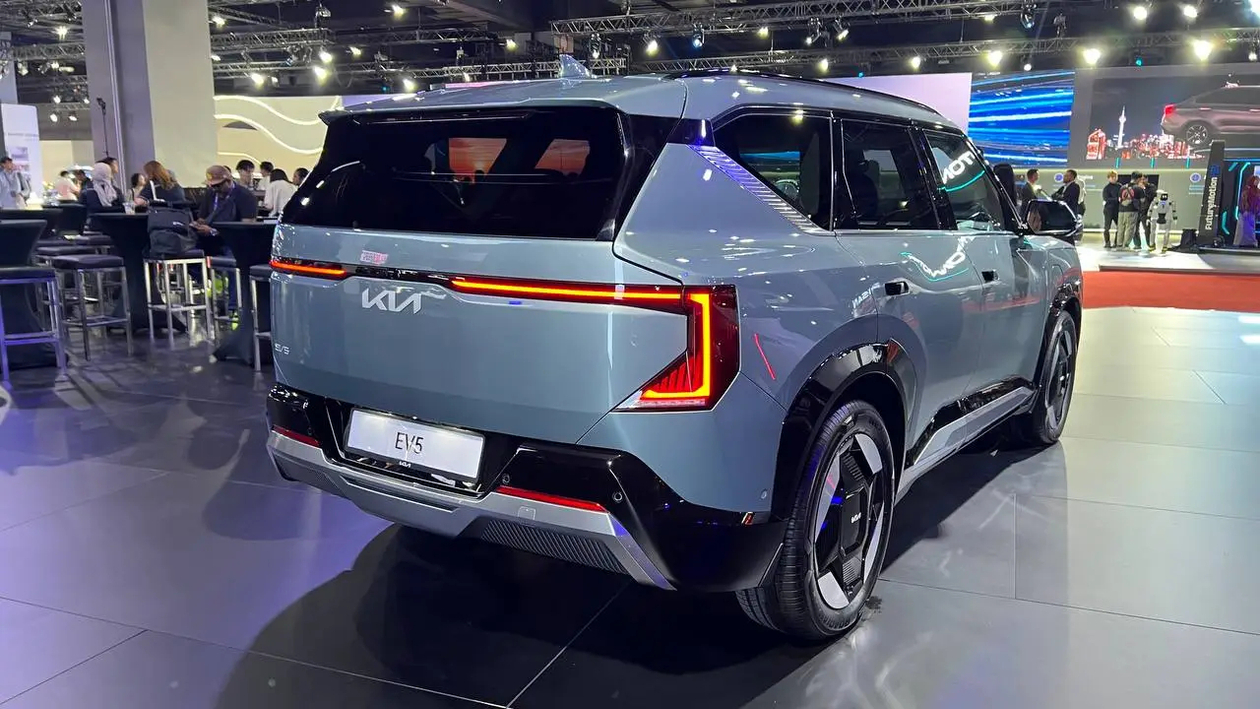
Design details include a wide nose, a muscular bonnet, three-dimensional Star Map daytime running lights, Kia's digital tiger face, square fenders, a strong shoulder line and vertical body elements. The rearward-shifted D-pillar improves rear-seat visibility and draws attention to the cargo area. The 18- and 19-inch wheel options use geometric patterns to reinforce the vehicle's robust stance. For Malaysian family buyers, this kind of packaging may be more persuasive than a purely sleek EV shape because SUV purchase decisions still depend heavily on space, visibility and load practicality.
The document focuses on the EV5 Long range 2WD. It uses an 81.4 kWh battery and a 160 kW motor, driving the front wheels. The 0-100 km/h time is 8.4 seconds, and towing capacity is rated at 1,200 kg. In Base Line trim, the EV5 delivers up to 530 km of WLTP range on 18-inch wheels and 520 km on 19-inch wheels. The GT-Line is rated at 505 km. Charging power is listed at 11 kW AC and 150 kW DC, with a 10-80% DC fast charge taking around 30 minutes.
These figures show that the EV5 is not chasing performance. It is designed around long range, predictable charging and sufficient daily response. A 160 kW output is adequate for a family SUV, and an 8.4-second 0-100 km/h time is more than enough for normal use. The more important number is the 530 km WLTP range. If a future Malaysian version can preserve similar battery capacity and efficiency, the EV5 would have a stronger case as a first EV for households that still worry about intercity driving.
The EV5's interior is central to its product case. Front headroom is 1,075 mm, rear headroom is 1,024 mm, front legroom is 1,117 mm and rear legroom is 1,041 mm. Cargo capacity behind the second row is listed at 566 litres by VDA measurement, or 965 litres by SAE measurement. With the rear seats folded, that expands to 1,650 litres VDA, or 2,080 litres SAE. There is also a 44.4-litre frunk.
Kia says the second-row seats can fold nearly flat, connecting with the luggage area to create a continuous surface for everyday carrying, outdoor activities or even overnight use. The cabin also includes three-zone climate control with an after-blow function to reduce odour, a wide centre console accessible to front and rear occupants, and a sliding tray that extends into the second row. These details make the EV5 feel targeted at young families, pet owners and light outdoor lifestyles rather than buyers who only want a battery and a screen.
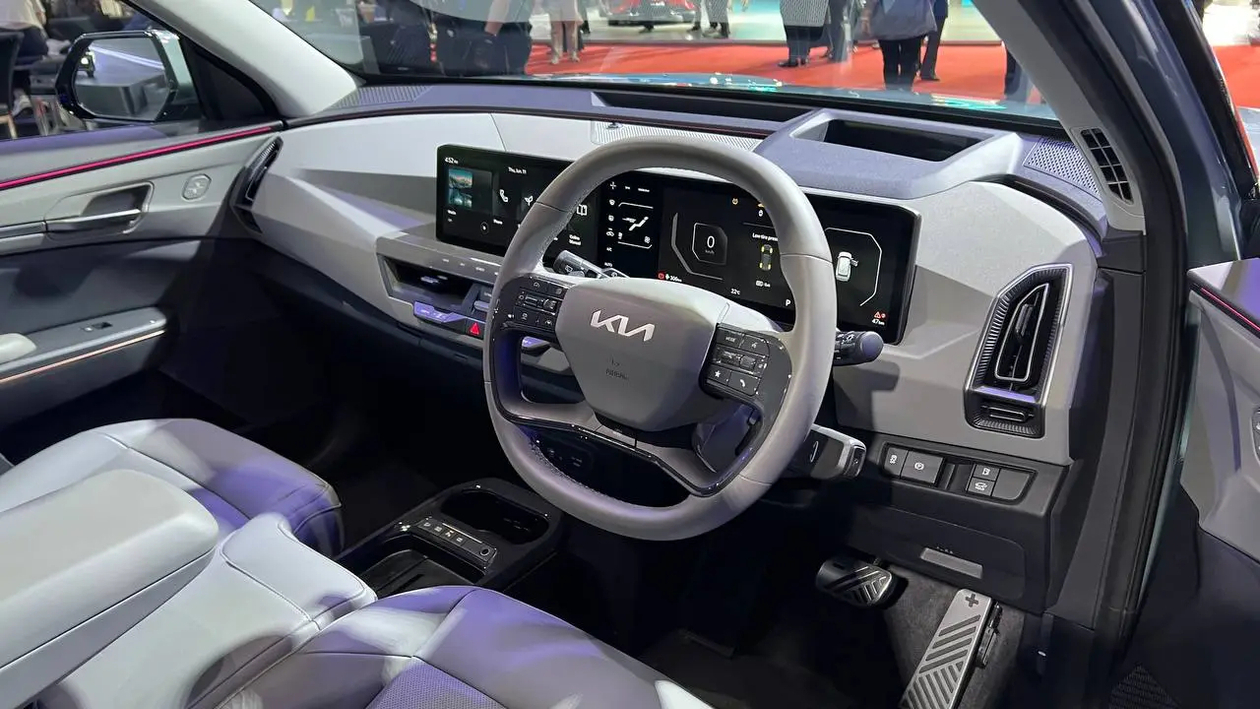
The EV5's digital cabin is built around a Panoramic Wide Display, combining a 12.3-inch instrument cluster, a 12.3-inch infotainment display and a 5-inch climate-control display. Kia's new Unified Graphical User Interface is integrated into the connected car Navigation Cockpit system, creating a consistent interface across audio-visual, navigation and telematics screens. Over-the-air updates and the Kia Connect Store allow functions and services to be updated after purchase.
Pet Mode is one of the more memorable features. It maintains an appropriate cabin temperature to create a more comfortable environment for pets. This may sound like a small function, but it fits the EV5's positioning well. Kia is not only talking about batteries and software; it is thinking about how families actually use a car. An optional head-up display, Kia Sound 2.0 and EV-specific range and charging information further support daily usability.
The release highlights Highway Driving Assist 2 and Remote Smart Parking Assist 2, which are intended to reduce driver workload during lane changes, highway cruising and parking. The EV5 also uses Kia's i-Pedal 3.0 system, allowing drivers to adjust regenerative braking and use smoother one-pedal driving in urban conditions. With the battery mounted low in the floor, the EV5 should have a lower centre of gravity than a conventional petrol SUV, helping stability and agility.
This matters in Malaysia because many family buyers still think of EVs mainly in terms of fuel savings or new technology. Long-term satisfaction depends on more ordinary qualities: low-speed control, ride comfort, visibility, driver-assist confidence and highway stability. If the EV5 eventually comes here, it will need to prove that it is not only an efficient SUV, but also one that feels natural to drive every day.
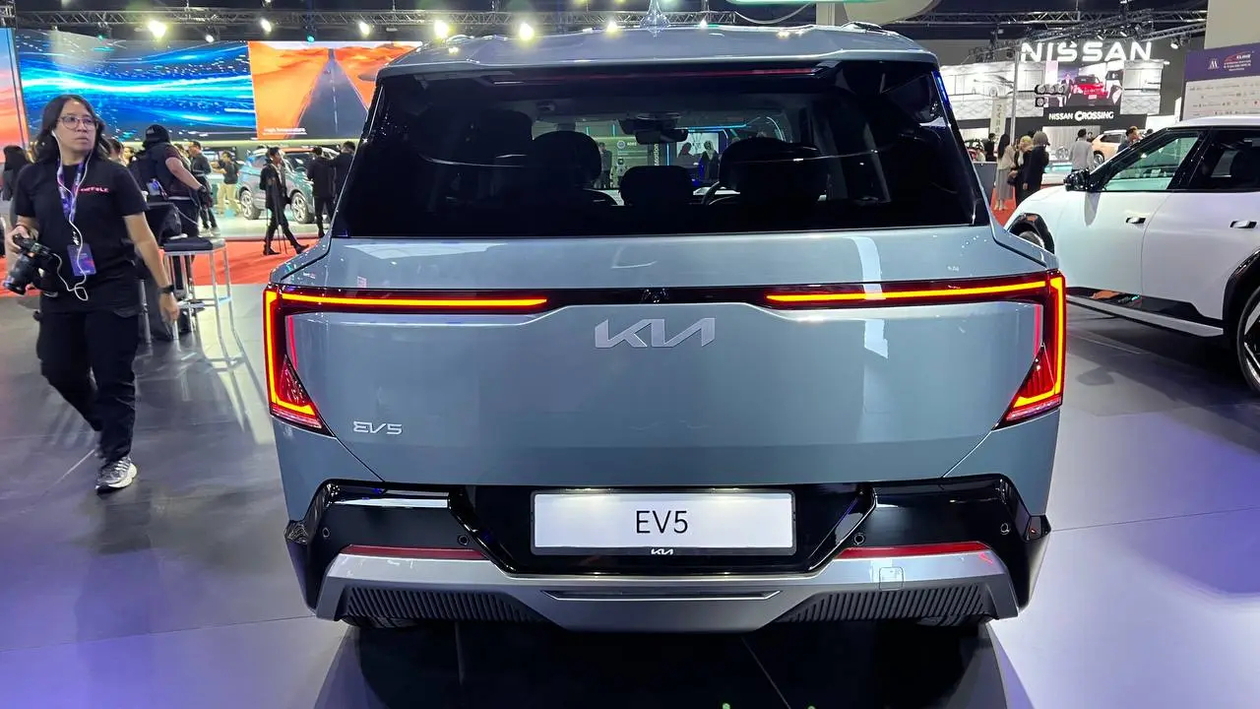
On product logic, the EV5 has more mainstream potential in Malaysia than the EV9. It is reasonably sized, practical inside and offers range figures that could support family road trips. Its likely rivals would include electric SUVs and crossovers from BYD, Proton e.MAS, GWM, MG and other Chinese brands. Buyers in this class are price-sensitive and will compare warranty, charging convenience, service support and residual value closely.
If Kia Sales Malaysia eventually introduces the EV5, the question will not be whether the global specification looks strong. The question will be whether local customers can own it with confidence. Sensible pricing, clear battery warranty terms, trained high-voltage service support and cooperation with the local charging ecosystem will matter as much as equipment. The EV5 already has a coherent product foundation: a family-focused electric SUV with long range and practical packaging. Its Malaysian success would depend on turning that global product strength into a credible local ownership experience.

Your go-to source for all things automotive in Malaysia. 🚗 Latest reviews, breaking news, launches & industry trends.
+ Follow We saw this accident this morning, and here’s a reminder to everyone: please drive safe. 2 days ago
  The G50 BMW 3 series is now here, adopting much of the i3's design elements.
So, where's the BMW M3?
#bmw #BMW3Series 4 days ago
The G50 BMW 3 series is now here, adopting much of the i3's design elements.
So, where's the BMW M3?
#bmw #BMW3Series 4 days ago  DRIFT PARTY in Malaysia! Can the Xiaomi SU7, Yangwang U8 mix it up against JDM favourites in KL?
Our adventure with the Xiaomi SU7 and Yangwang U8 brings us to APDCrew circuit as we give witness a drift show. With pro drifters and fan-favourites - RX7s, S15s, Skylines, Supras, and more - in the mix, can our Xiaomi SU7 and Yangwang U8 hold their own?
It's also a quick look at Malaysian car culture, including some wildly modified minivans, and more!
#drift #malaysia #xiaomisu7 #yangwangu8 #larrychen #drifting #JDM跑車 4 days ago
DRIFT PARTY in Malaysia! Can the Xiaomi SU7, Yangwang U8 mix it up against JDM favourites in KL?
Our adventure with the Xiaomi SU7 and Yangwang U8 brings us to APDCrew circuit as we give witness a drift show. With pro drifters and fan-favourites - RX7s, S15s, Skylines, Supras, and more - in the mix, can our Xiaomi SU7 and Yangwang U8 hold their own?
It's also a quick look at Malaysian car culture, including some wildly modified minivans, and more!
#drift #malaysia #xiaomisu7 #yangwangu8 #larrychen #drifting #JDM跑車 4 days ago Get the latest car news first!
Your go-to source for all things automotive in Malaysia. 🚗 Latest reviews, breaking news, launches & industry trends.
We saw this accident this morning, and here’s a reminder to everyone: please drive safe. 2 days ago The G50 BMW 3 series is now here, adopting much of the i3's design elements.
So, where's the BMW M3?
#bmw #BMW3Series 4 days ago DRIFT PARTY in Malaysia! Can the Xiaomi SU7, Yangwang U8 mix it up against JDM favourites in KL?
Our adventure with the Xiaomi SU7 and Yangwang U8 brings us to APDCrew circuit as we give witness a drift show. With pro drifters and fan-favourites - RX7s, S15s, Skylines, Supras, and more - in the mix, can our Xiaomi SU7 and Yangwang U8 hold their own?
It's also a quick look at Malaysian car culture, including some wildly modified minivans, and more!
#drift #malaysia #xiaomisu7 #yangwangu8 #larrychen #drifting #JDM跑車 4 days ago  ProtonGWMVolkswagenJAECOOVolvoPeroduaToyotaHondaTESLAMitsubishiMazdaJetourCheryBYDLexusBMWMercedes-BenziCAURZeekrIsuzuNissanLeapmotorPorscheFordOMODAMINIMGSuzukiXPengHyundaiWulingKiaSubaruDenzaGACLand RoverDongfengCAMAudiPeugeotFotonMAXUSsmartDaihatsuJACJMCMaseratiLotusAlfa RomeoRenaultGolden DragonKaiceneSeresLamborghiniFerrariJeepRolls-RoyceLepasAston MartinMcLarenChevroletBentleyFiatBAICForthingGeelyRoeweAeolusChanganARCFOXDeepalExeedHongqiVoyahJaguarKGMBuforiAcuraCadillacDodgeAbarthINEOSMHEROJMEVFreelander
 © 2024 Bitauto.com. All Rights Reserved.
Bitauto (www.yiche.com and www.bitauto.com) is one of the most visited automotive websites in China. We provide detailed info on Chinese car brands available in your area. Please note that the information provided on this website is based on publicly available data and is for reference only. It may not be fully updated or accurate at all times.
Help us improve our website


