
Search History
Popular Searches
English
Dealer Login / Sign Up
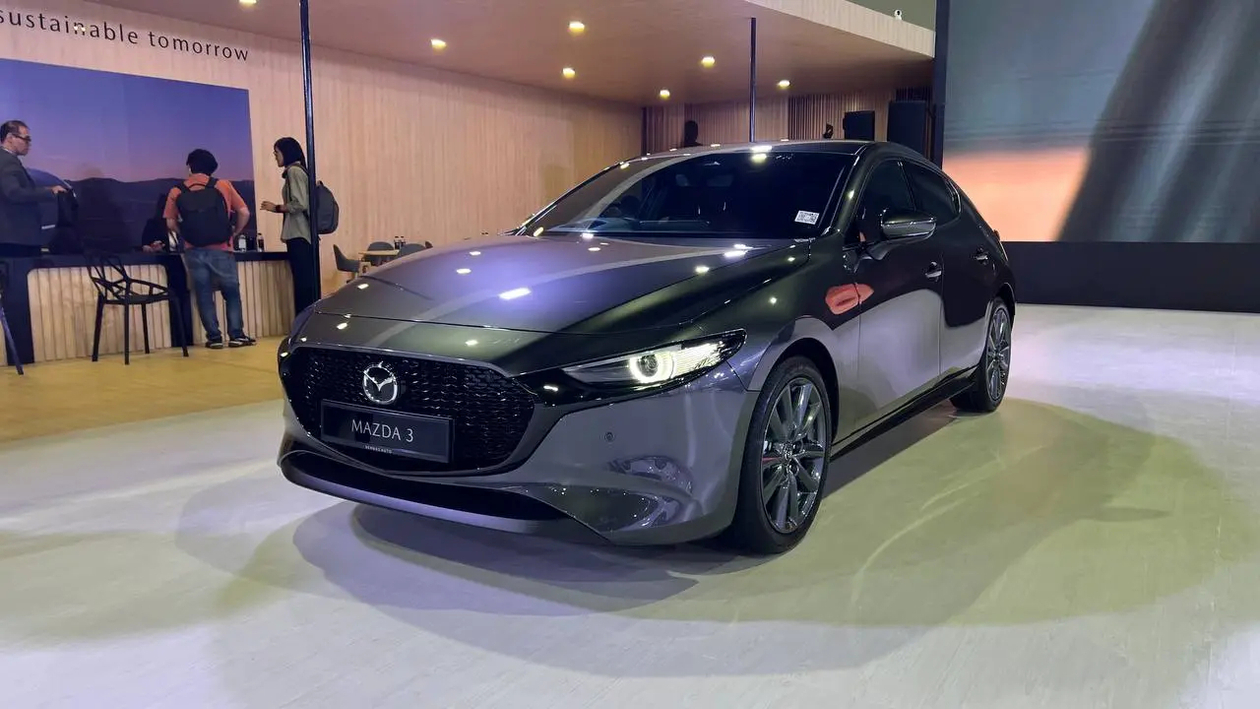
At KLIMS 2026, the Mazda3 arrives without the elevated ride height or battery-electric fanfare that dominates much of the exhibition floor. As a hatchback and sedan offering, it occupies a lane that has grown narrower in Malaysia’s market, where crossovers and SUVs have absorbed significant buyer attention over the past half-decade. Yet the Mazda3’s presence here is deliberate. Its Kodo design language still reads as one of the more sculptural propositions in the compact segment, offering a visual polish that transcends the typical mainstream hatchback or sedan brief. For visitors who see the car as more than a mobility appliance, the Mazda3 reinforces Mazda’s reputation for treating compact dimensions with premium ambition.
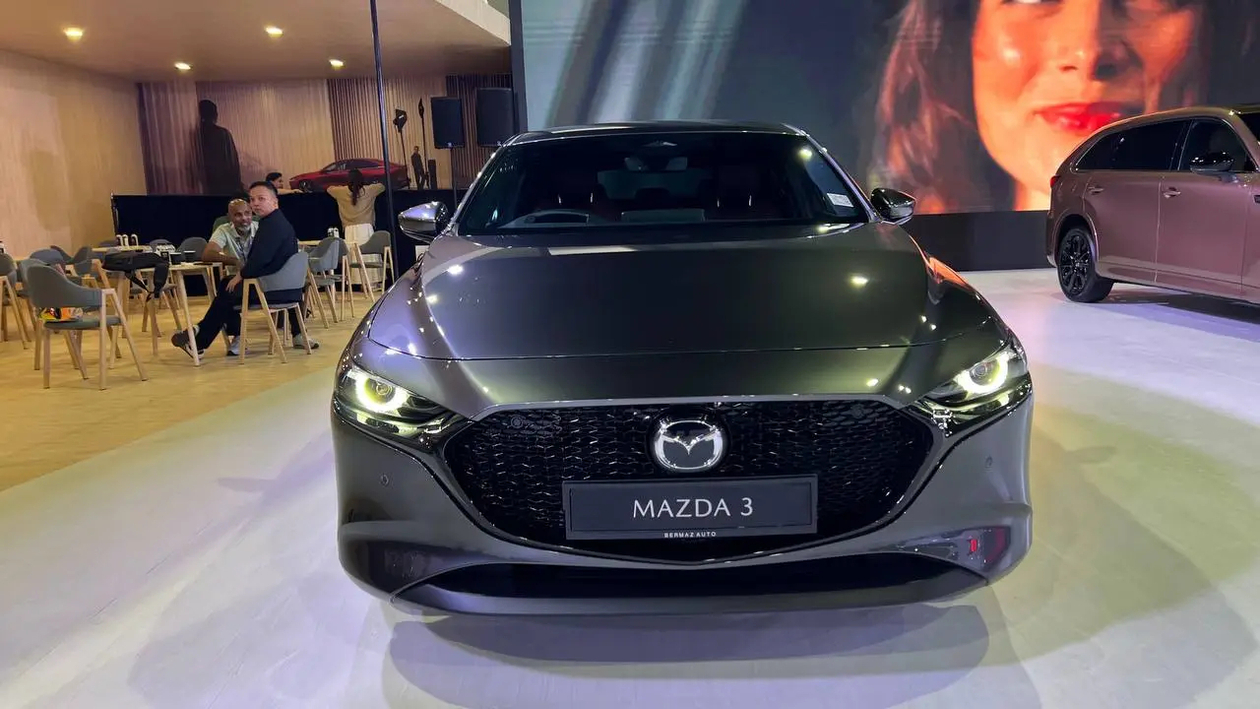
Positioned against the Honda Civic and Toyota Corolla, the Mazda3 does not compete purely on cabin volume or rear-seat acreage. Instead, it courts a different kind of buyer—one who prioritises material quality, dashboard architecture and driving engagement over outright practicality. In Malaysia, where Bermaz Motor oversees distribution, the Mazda3 has historically served as an entry point into the Mazda ownership ecosystem. It is the model that introduces younger professionals or small families to the brand before they potentially graduate into the CX-30 or CX-5. At KLIMS 2026, this ladder logic remains intact, even as the market around it chases electrification headlines and SUV launches.
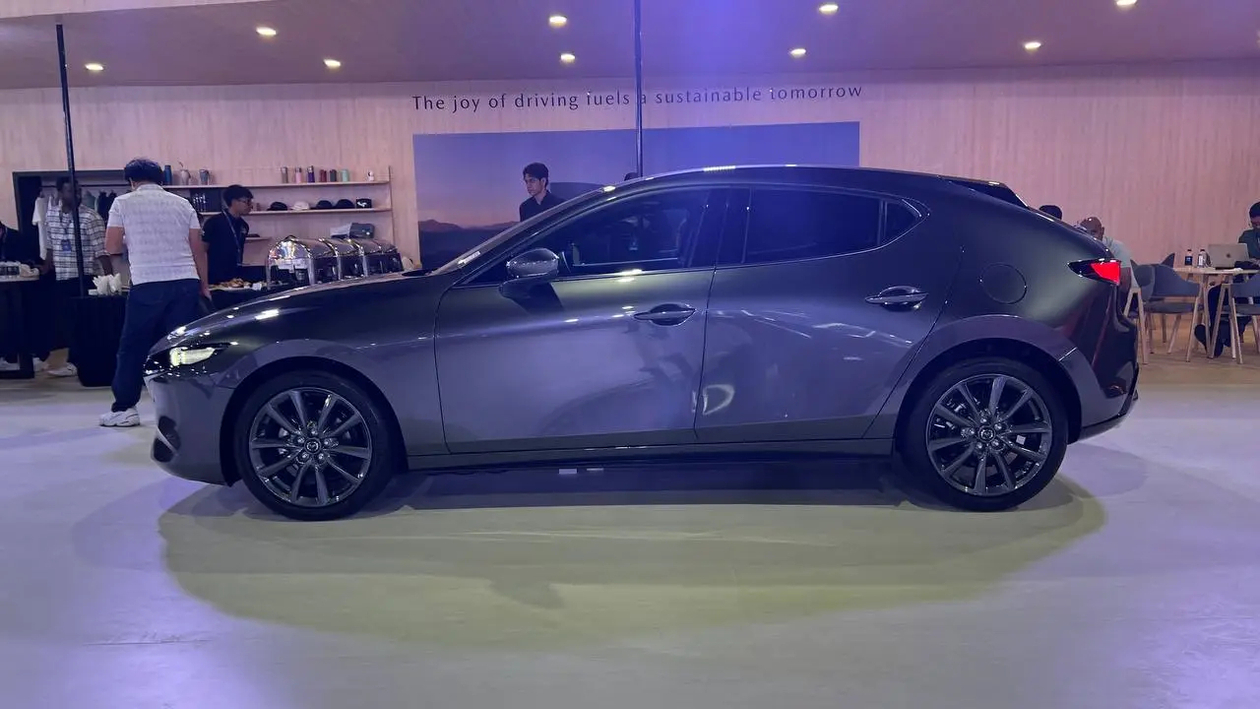
Mazda’s resistance to simply following the SUV and EV drumbeat gives the Mazda3 a distinct identity on the show floor. While competitors race to announce hybrid iterations or battery variants, the Mazda3 continues to emphasise linear power delivery, chassis discipline and steering precision. In the Malaysian context, where urban commutes and highway cruising still reward a well-sorted suspension, this focus on dynamics is not anachronistic; it is a deliberate niche strategy. The model asks whether there remains room for a compact car that privileges driver involvement over powertrain complexity, and the brand appears willing to make that wager.
The interior execution supports this narrative. Where some rivals in the segment have moved toward oversized touchscreens and minimalist cabins, the Mazda3 maintains a driver-oriented cockpit with tactile controls and restrained use of glossy surfaces. This consistency between exterior design language and interior philosophy creates a holistic impression that few compact rivals match at this tier. For the Malaysian consumer who spends hours in congested urban traffic, the quality of the seating position and the logical placement of controls matter as much as any specification figure.
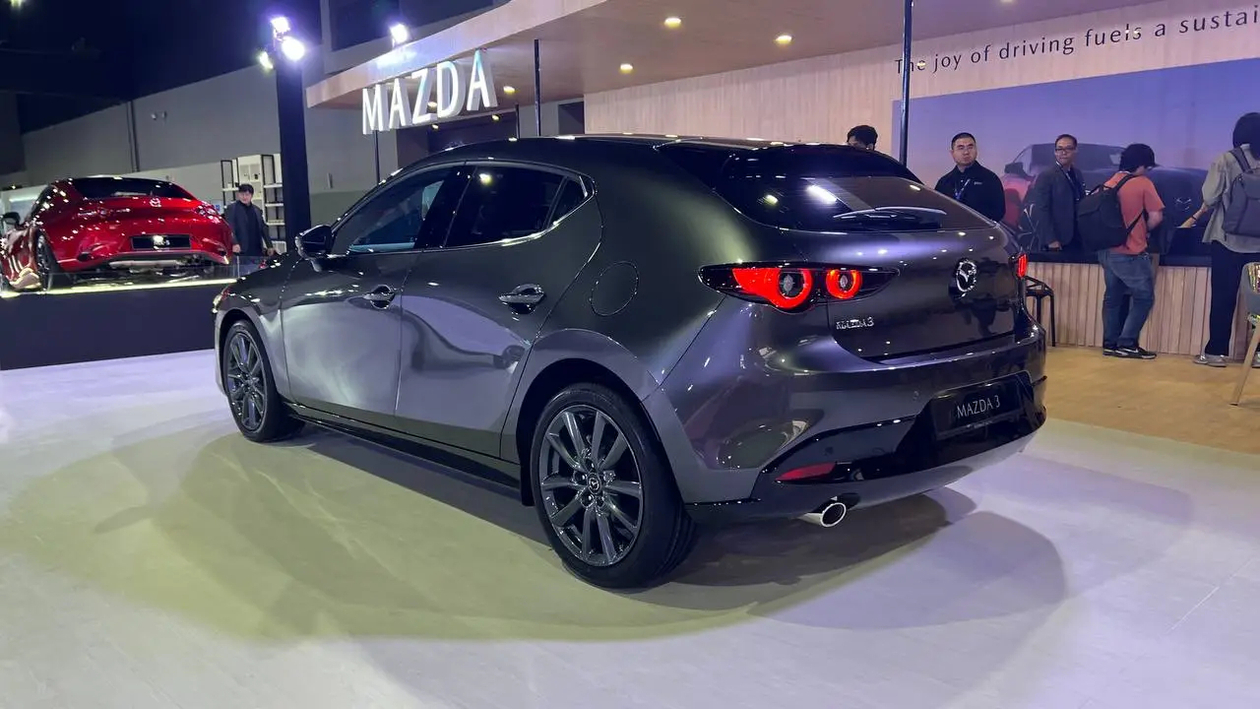
The Bermaz-backed sales and service network gives the Mazda3 a degree of aftermarket reassurance that newer market entrants are still building. Mazda’s association with local assembly activities, noted through Sime Motors’ network involvement in Kulim, also feeds into the broader narrative of Malaysian automotive manufacturing. For buyers weighing the Mazda3 against entry-level premium offerings from European brands, this local operational footprint—combined with Japanese reliability expectations—offers a pragmatic middle ground. It is not merely about the car itself, but about the continuity of parts availability, service familiarity and resale confidence that Bermaz has cultivated over years of local representation.
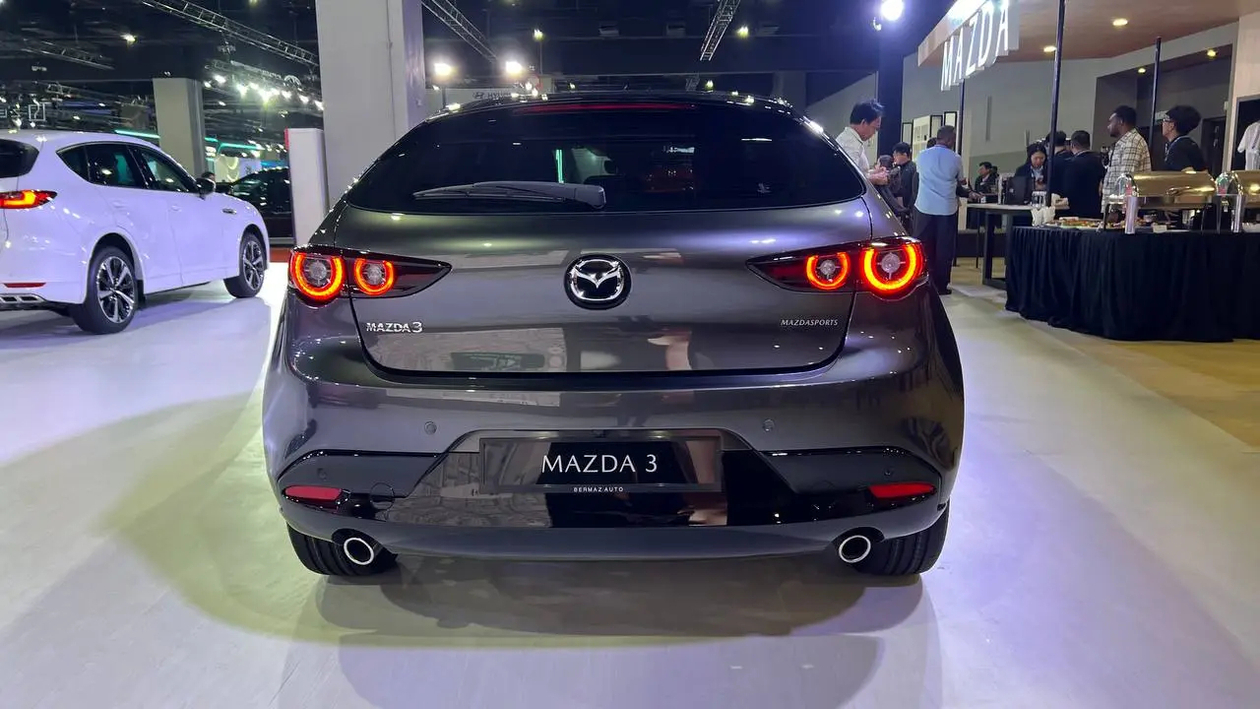
This operational stability becomes particularly relevant when consumers compare the Mazda3 against the growing roster of Chinese crossovers and value-oriented SUVs. While those alternatives may offer more features per ringgit or a higher driving position, the Mazda3 counters with proven after-sales infrastructure and a brand history that Malaysian buyers have lived with for decades. In a market transitioning toward new powertrains and unfamiliar nameplates, that familiarity is a measurable asset.
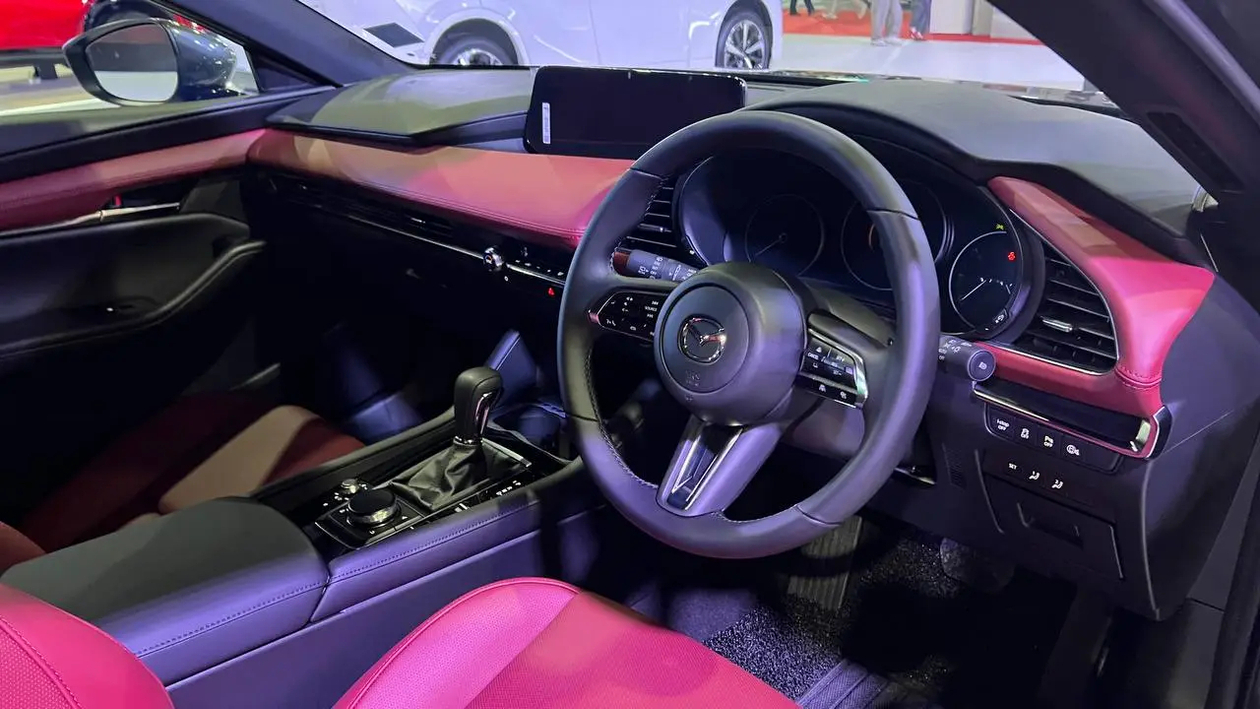
Ultimately, the Mazda3 at KLIMS 2026 functions as a litmus test for the enduring appeal of the traditional compact car. It does not promise zero-emission driving or command a towering road presence. What it offers is coherence: a unified design philosophy, a consistent driving character and a clear understanding of its audience. In a transitioning market where consumer attention is fragmented between aggressive EV pricing and SUV practicality, the Mazda3 stands as a composed reminder that some buyers still seek refinement in a lower, lighter package.
Whether that audience grows or contracts will determine how Mazda’s sedan and hatchback strategy evolves in Malaysia. For now, the model remains a credible premium-mainstream counterpoint in a hall full of disruption. It serves the loyalist, the design-conscious commuter and the driver who still believes that a compact car can feel special without pretending to be something it is not. At KLIMS 2026, that honesty is itself a market position.

Your go-to source for all things automotive in Malaysia. 🚗 Latest reviews, breaking news, launches & industry trends.
+ Follow We saw this accident this morning, and here’s a reminder to everyone: please drive safe. 2 days ago
  The G50 BMW 3 series is now here, adopting much of the i3's design elements.
So, where's the BMW M3?
#bmw #BMW3Series 4 days ago
The G50 BMW 3 series is now here, adopting much of the i3's design elements.
So, where's the BMW M3?
#bmw #BMW3Series 4 days ago  DRIFT PARTY in Malaysia! Can the Xiaomi SU7, Yangwang U8 mix it up against JDM favourites in KL?
Our adventure with the Xiaomi SU7 and Yangwang U8 brings us to APDCrew circuit as we give witness a drift show. With pro drifters and fan-favourites - RX7s, S15s, Skylines, Supras, and more - in the mix, can our Xiaomi SU7 and Yangwang U8 hold their own?
It's also a quick look at Malaysian car culture, including some wildly modified minivans, and more!
#drift #malaysia #xiaomisu7 #yangwangu8 #larrychen #drifting #JDM跑車 4 days ago
DRIFT PARTY in Malaysia! Can the Xiaomi SU7, Yangwang U8 mix it up against JDM favourites in KL?
Our adventure with the Xiaomi SU7 and Yangwang U8 brings us to APDCrew circuit as we give witness a drift show. With pro drifters and fan-favourites - RX7s, S15s, Skylines, Supras, and more - in the mix, can our Xiaomi SU7 and Yangwang U8 hold their own?
It's also a quick look at Malaysian car culture, including some wildly modified minivans, and more!
#drift #malaysia #xiaomisu7 #yangwangu8 #larrychen #drifting #JDM跑車 4 days ago Get the latest car news first!
Your go-to source for all things automotive in Malaysia. 🚗 Latest reviews, breaking news, launches & industry trends.
We saw this accident this morning, and here’s a reminder to everyone: please drive safe. 2 days ago The G50 BMW 3 series is now here, adopting much of the i3's design elements.
So, where's the BMW M3?
#bmw #BMW3Series 4 days ago DRIFT PARTY in Malaysia! Can the Xiaomi SU7, Yangwang U8 mix it up against JDM favourites in KL?
Our adventure with the Xiaomi SU7 and Yangwang U8 brings us to APDCrew circuit as we give witness a drift show. With pro drifters and fan-favourites - RX7s, S15s, Skylines, Supras, and more - in the mix, can our Xiaomi SU7 and Yangwang U8 hold their own?
It's also a quick look at Malaysian car culture, including some wildly modified minivans, and more!
#drift #malaysia #xiaomisu7 #yangwangu8 #larrychen #drifting #JDM跑車 4 days ago  ProtonGWMVolkswagenJAECOOVolvoPeroduaToyotaHondaTESLAMitsubishiMazdaJetourCheryBYDLexusBMWMercedes-BenziCAURZeekrIsuzuNissanLeapmotorPorscheFordOMODAMINIMGSuzukiXPengHyundaiWulingKiaSubaruDenzaGACLand RoverDongfengCAMAudiPeugeotFotonMAXUSsmartDaihatsuJACJMCMaseratiLotusAlfa RomeoRenaultGolden DragonKaiceneSeresLamborghiniFerrariJeepRolls-RoyceLepasAston MartinMcLarenChevroletBentleyFiatBAICForthingGeelyRoeweAeolusChanganARCFOXDeepalExeedHongqiVoyahJaguarKGMBuforiAcuraCadillacDodgeAbarthINEOSMHEROJMEVFreelander
 © 2024 Bitauto.com. All Rights Reserved.
Bitauto (www.yiche.com and www.bitauto.com) is one of the most visited automotive websites in China. We provide detailed info on Chinese car brands available in your area. Please note that the information provided on this website is based on publicly available data and is for reference only. It may not be fully updated or accurate at all times.
Help us improve our website


