
Search History
Popular Searches
English
Dealer Login / Sign Up
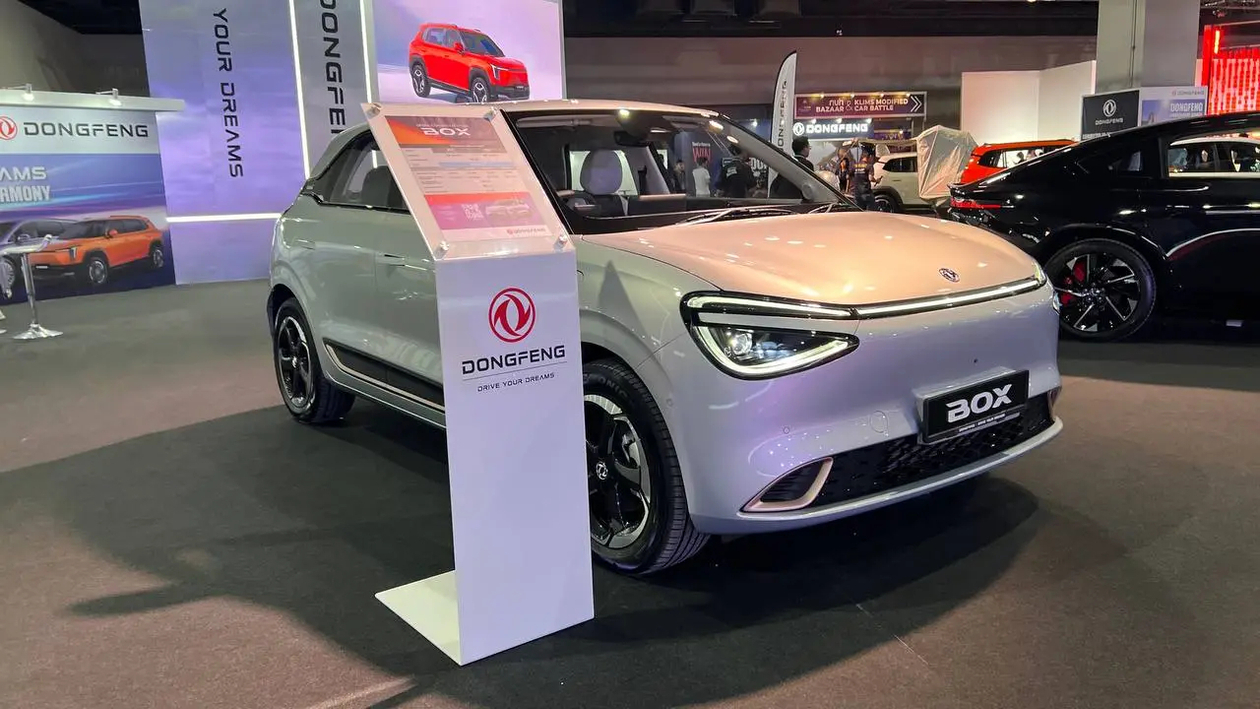
The Dongfeng BOX story in Malaysia did not begin at KLIMS 2026. An article on Dongfeng Cars Malaysia's website refers to the earlier right-hand-drive reveal by Central Auto Distributors Bhd, a subsidiary of PEKEMA, with the key talking points being 95 PS, up to 430 km of range and an intended launch around October. The later local launch report placed the actual Malaysian introduction on 22 November 2024, with on-the-road prices before insurance of RM100,700 for the E2 and RM113,700 for the E3.
Seen at KLIMS 2026, the BOX plays a different role from the newer Dongfeng 007 and Vigo. The 007 and Vigo represent Dongfeng's broader 2026 EV push in Malaysia, while the BOX is the smaller car that helped CADB establish early showroom presence and consumer awareness. It is not a technology flagship, nor is it trying to win buyers through size. Its target is urban commuting, second-car use and first-time EV ownership.
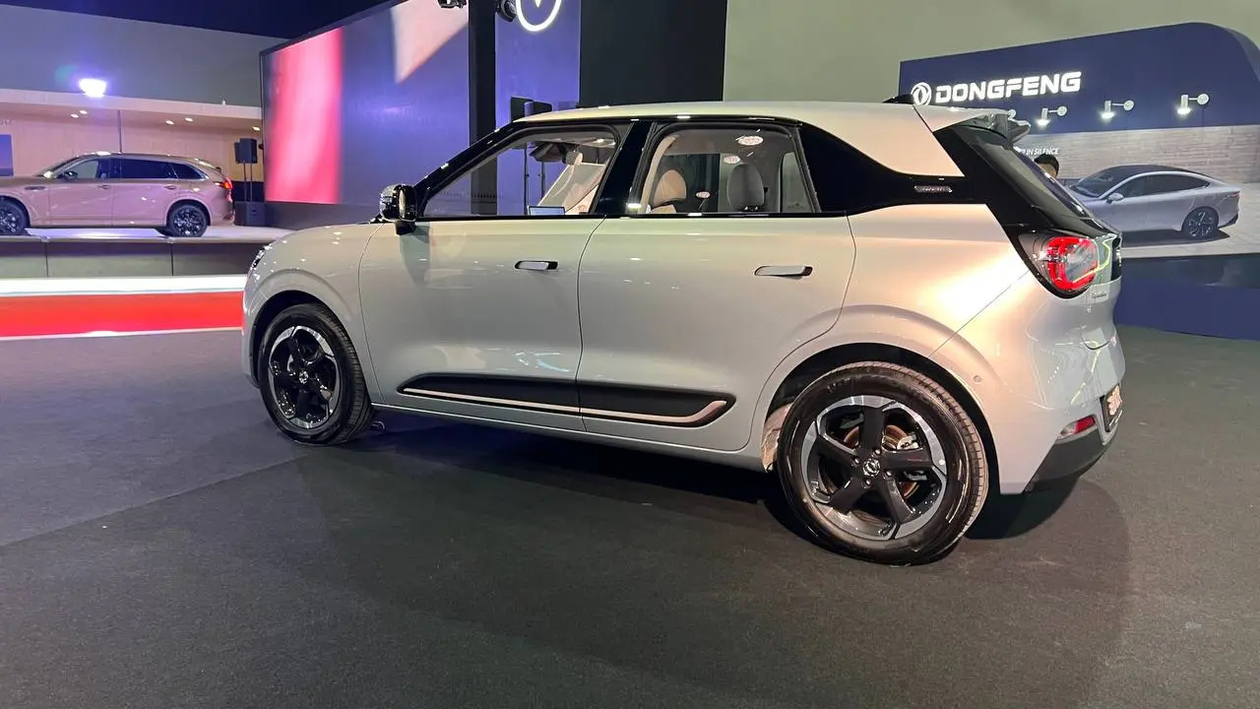
Dongfeng's current Malaysian model page lists the BOX at 4,020 mm long, 1,800 mm wide and 1,570 mm tall, with a 2,663 mm wheelbase. It is a five-door, five-seat hatchback. That footprint gives it more width and cabin presence than a basic city car, while keeping it small enough for dense urban parking and narrow streets. In Malaysia's city-driving context, that balance can be more useful than simply chasing larger dimensions.
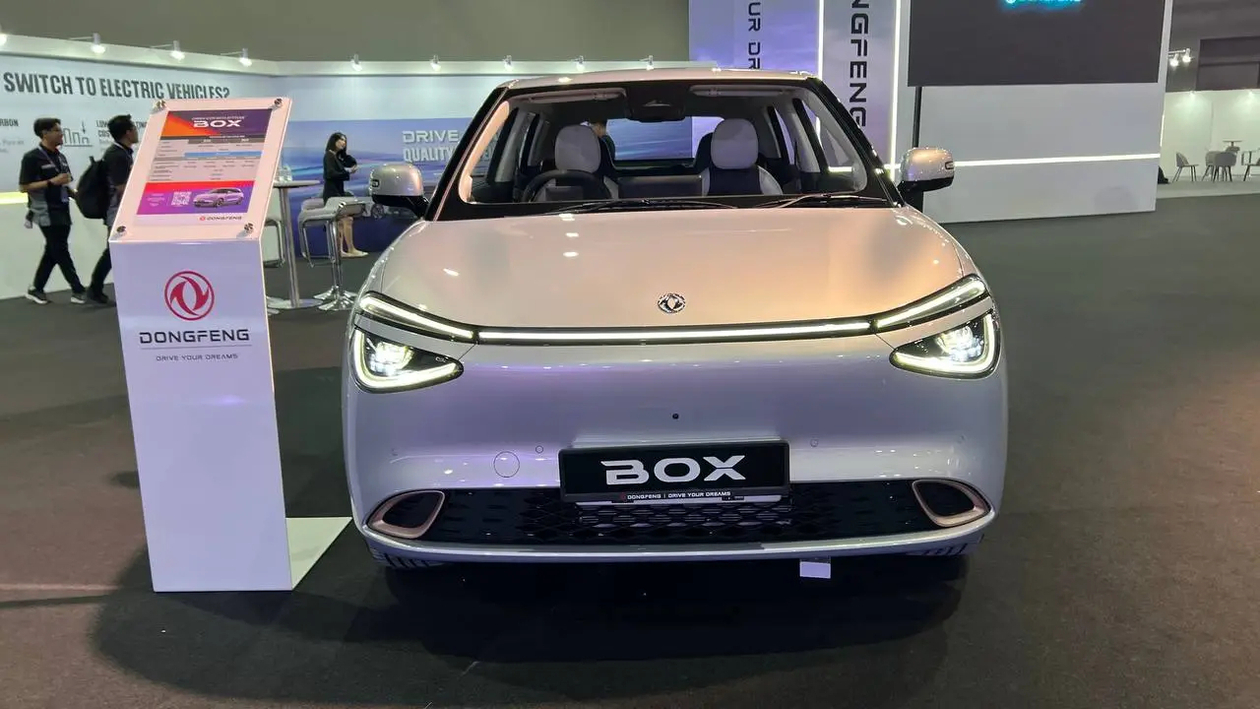
The design is also more expressive than the entry-EV label suggests. The official page lists LED headlights, LED taillights, frameless doors and 17-inch wheels. The Malaysian launch report notes that the E2 uses wheels with aerodynamic covers, while the E3 gets two-tone five-spoke alloys. E3 buyers can also choose the Floating Cloud white-roof treatment, reported at RM2,000 unless the body colour is already white. For a small EV priced around the RM100,000 threshold, details such as frameless windows and pop-out handles do much of the showroom work.
The official specification table lists a front-mounted permanent-magnet synchronous motor for all variants. Output is 70 kW and 160 Nm, driving the front wheels. Top speed is 140 km/h, and 0-50 km/h takes around 4.6 to 4.8 seconds. That output is commonly rounded to about 95 PS, matching the RHD preview and the local launch report. It is not a performance-oriented setup, but it is adequate for urban driving and short highway use.
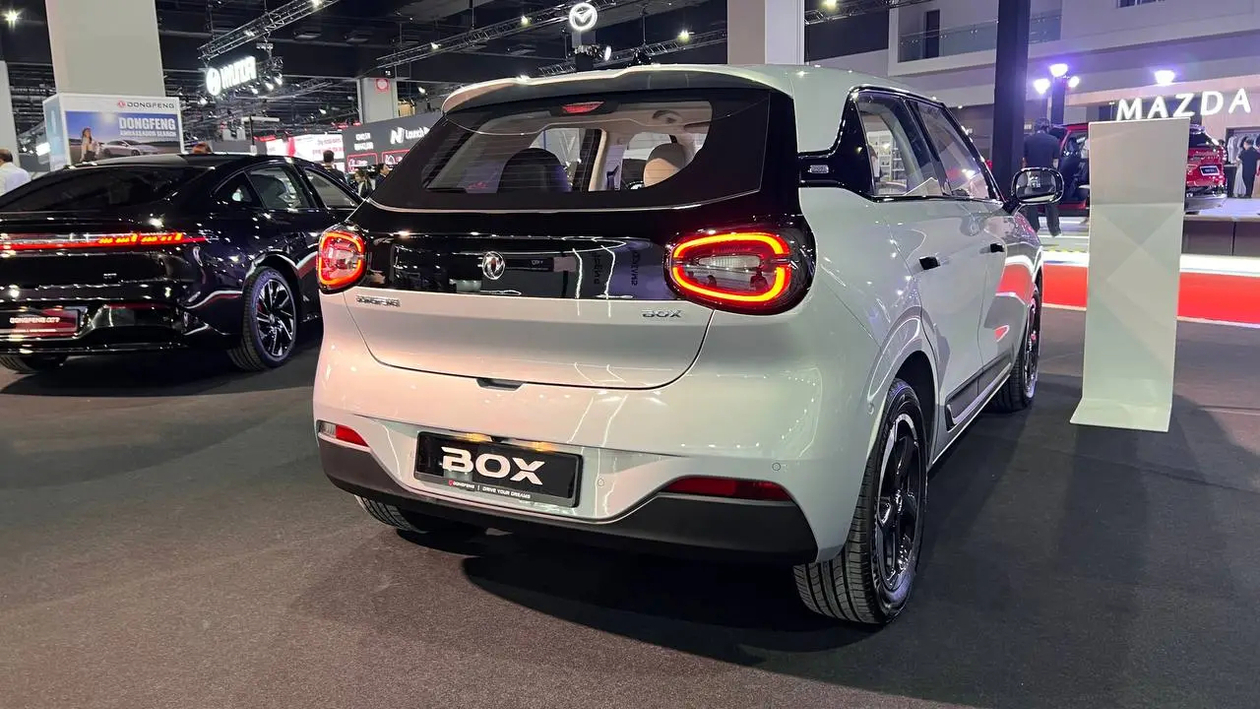
The real difference between E2 and E3 is the battery. Dongfeng's current Malaysian page lists the E2 with a 32.56 kWh LFP battery and 330 km of range, while the E3 and E3 Floating Cloud use a 43.89 kWh LFP battery and 430 km of range. The earlier launch report used slightly lower battery-capacity figures but reflected the same short-range and long-range split. All versions support DC fast charging to 80% in around 30 minutes. AC charging power is 3.3 kW for the E2 and 6.6 kW for the E3.
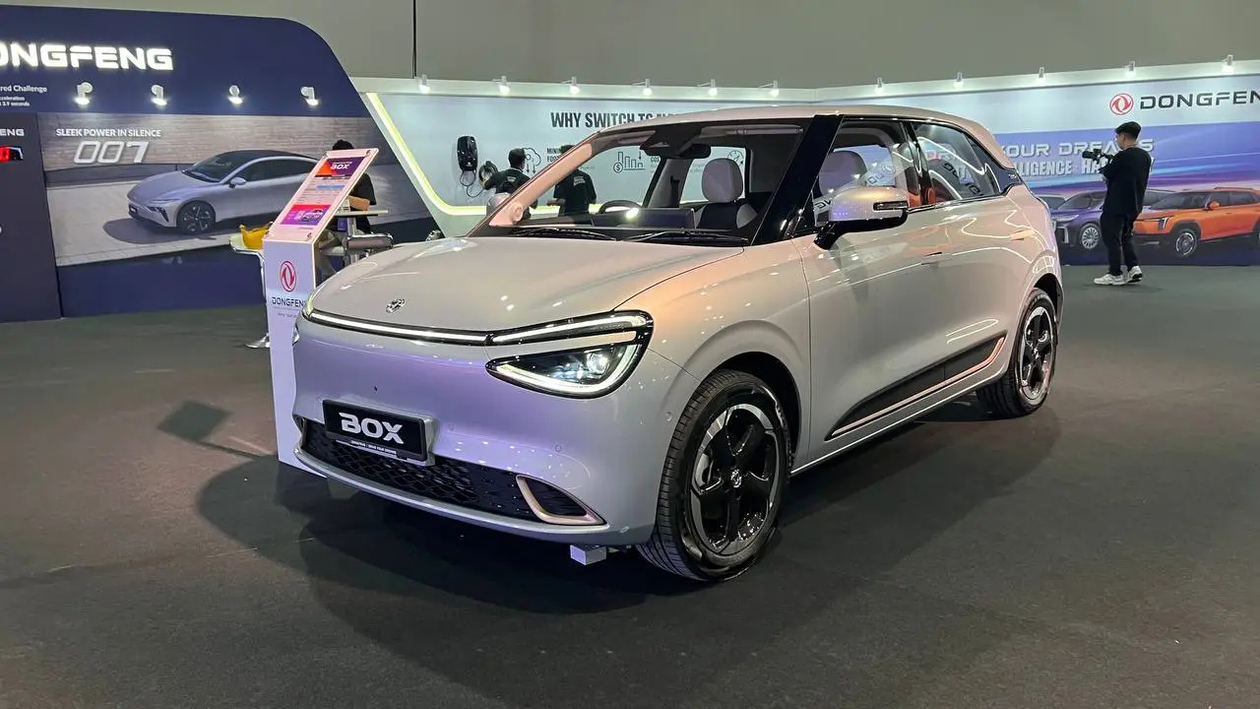
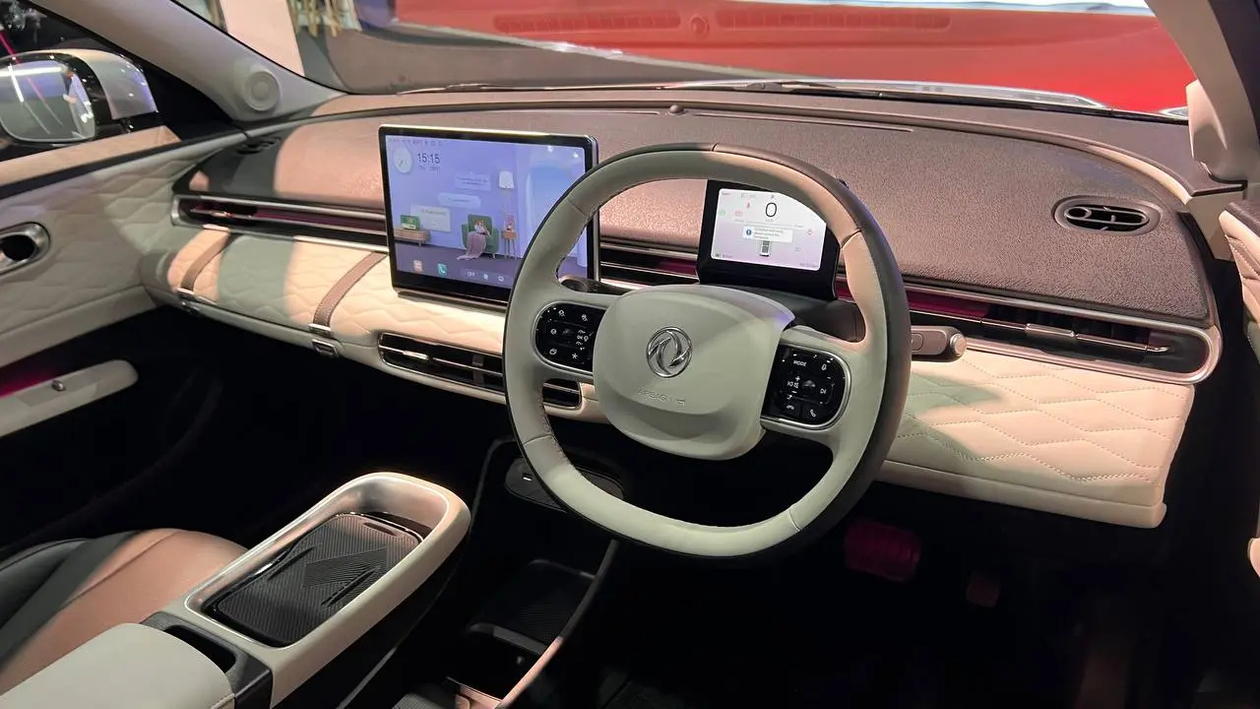
The BOX's variant structure is straightforward. All three versions include ISOFIX, ABS, EBD/CBC, hill-start assist, ESC, brake assist, traction control, an electronic parking brake, Auto Hold, Normal/Eco/Sport drive modes, a 12-inch central display, Bluetooth, wireless charging, a 360-degree camera and automatic parking. That standard kit gives the car more showroom substance than a basic city EV might suggest.
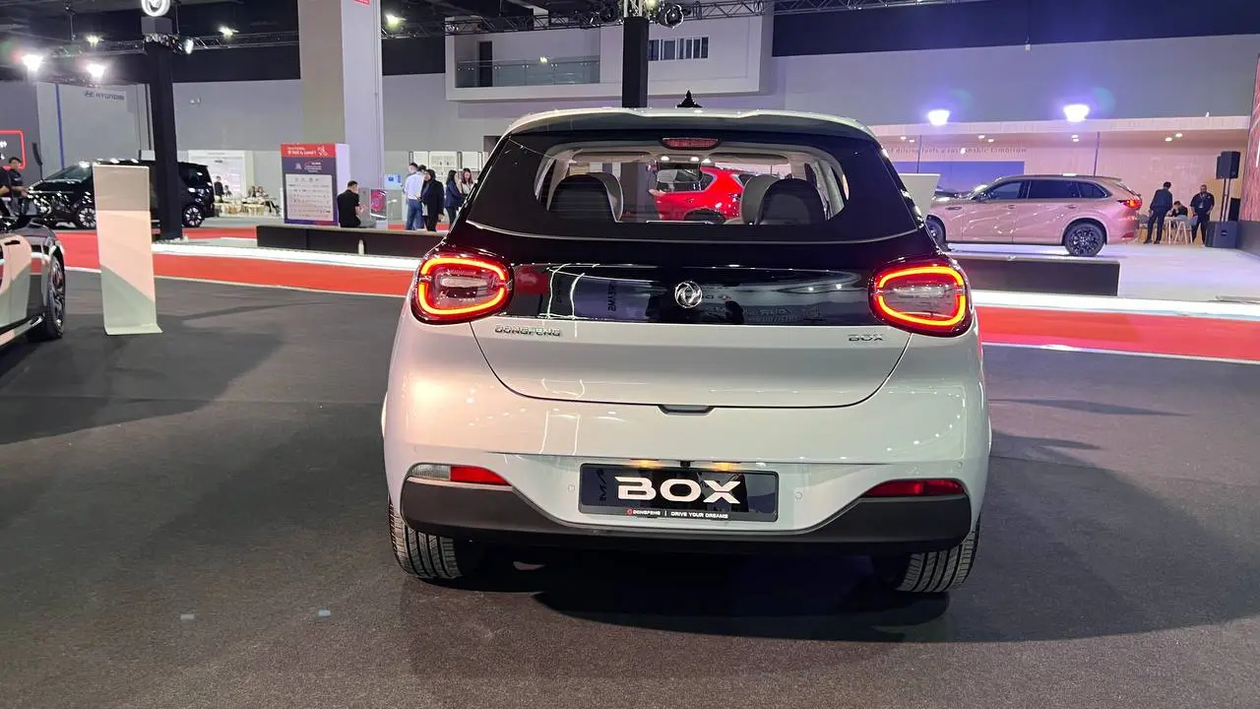
The more important differences are in safety and comfort. Dongfeng's official page shows that the E2 does not get AEB, front collision warning, lane departure warning, lane keeping assist, traffic-sign recognition, intelligent speed control or the ICA function that switches between traffic-jam assistance and highway assistance based on speed. These features begin with the E3. The E2 also uses indirect tyre-pressure monitoring, while the E3 gets direct monitoring. Comfort-wise, the E2 has electric air-conditioning control, while E3 versions get automatic air-conditioning. The E2 has four speakers, while the E3 has six, and adaptive high-low beam headlights are also E3-only.
The BOX's most obvious limitation is safety hardware. The official page lists airbags for the driver and front passenger only across the range. Even though the E3 adds a broader ADAS package, the airbag count remains modest. In a market where even affordable vehicles increasingly use safety equipment as a selling point, this is a real consideration for family buyers.
That does not remove the BOX from the market, but it defines its best use case. It makes the most sense for buyers who mainly drive in the city, want a compact EV with low running costs, and accept the car's hardware trade-offs. As a sole family car for frequent interstate journeys, it will face stronger questions from larger and better-equipped alternatives.
CADB's role is central to the BOX's local story. The launch report referred to a five-year or 150,000 km vehicle warranty, an eight-year or 150,000 km high-voltage battery warranty, 16 authorised dealers and two Klang Valley experience centres at launch. For a new Chinese EV brand, that infrastructure matters as much as the product specification. Malaysian buyers need evidence that servicing, parts and warranty support will remain available beyond the launch period.
The BOX also exposes a difficult reality in Malaysia's EV market. Because imported EVs sit above a policy-influenced price floor, a small electric hatchback cannot be priced in Malaysia the way it is in China. At just above RM100,000, the BOX is inevitably compared with larger petrol cars, high-spec national models and some mainstream EV alternatives. Its argument is therefore not absolute cheapness. Its argument is a distinctive small EV shape, enough range for city use, and a local distribution base already in place. If it appears again in Dongfeng's KLIMS 2026 narrative, it should be understood as the early foothold that preceded the brand's larger 007 and Vigo push.

Your go-to source for all things automotive in Malaysia. 🚗 Latest reviews, breaking news, launches & industry trends.
+ Follow We saw this accident this morning, and here’s a reminder to everyone: please drive safe. 2 days ago
  The G50 BMW 3 series is now here, adopting much of the i3's design elements.
So, where's the BMW M3?
#bmw #BMW3Series 4 days ago
The G50 BMW 3 series is now here, adopting much of the i3's design elements.
So, where's the BMW M3?
#bmw #BMW3Series 4 days ago  DRIFT PARTY in Malaysia! Can the Xiaomi SU7, Yangwang U8 mix it up against JDM favourites in KL?
Our adventure with the Xiaomi SU7 and Yangwang U8 brings us to APDCrew circuit as we give witness a drift show. With pro drifters and fan-favourites - RX7s, S15s, Skylines, Supras, and more - in the mix, can our Xiaomi SU7 and Yangwang U8 hold their own?
It's also a quick look at Malaysian car culture, including some wildly modified minivans, and more!
#drift #malaysia #xiaomisu7 #yangwangu8 #larrychen #drifting #JDM跑車 4 days ago
DRIFT PARTY in Malaysia! Can the Xiaomi SU7, Yangwang U8 mix it up against JDM favourites in KL?
Our adventure with the Xiaomi SU7 and Yangwang U8 brings us to APDCrew circuit as we give witness a drift show. With pro drifters and fan-favourites - RX7s, S15s, Skylines, Supras, and more - in the mix, can our Xiaomi SU7 and Yangwang U8 hold their own?
It's also a quick look at Malaysian car culture, including some wildly modified minivans, and more!
#drift #malaysia #xiaomisu7 #yangwangu8 #larrychen #drifting #JDM跑車 4 days ago Get the latest car news first!
Your go-to source for all things automotive in Malaysia. 🚗 Latest reviews, breaking news, launches & industry trends.
We saw this accident this morning, and here’s a reminder to everyone: please drive safe. 2 days ago The G50 BMW 3 series is now here, adopting much of the i3's design elements.
So, where's the BMW M3?
#bmw #BMW3Series 4 days ago DRIFT PARTY in Malaysia! Can the Xiaomi SU7, Yangwang U8 mix it up against JDM favourites in KL?
Our adventure with the Xiaomi SU7 and Yangwang U8 brings us to APDCrew circuit as we give witness a drift show. With pro drifters and fan-favourites - RX7s, S15s, Skylines, Supras, and more - in the mix, can our Xiaomi SU7 and Yangwang U8 hold their own?
It's also a quick look at Malaysian car culture, including some wildly modified minivans, and more!
#drift #malaysia #xiaomisu7 #yangwangu8 #larrychen #drifting #JDM跑車 4 days ago  ProtonGWMVolkswagenJAECOOVolvoPeroduaToyotaHondaTESLAMitsubishiMazdaJetourCheryBYDLexusBMWMercedes-BenziCAURZeekrIsuzuNissanLeapmotorPorscheFordOMODAMINIMGSuzukiXPengHyundaiWulingKiaSubaruDenzaGACLand RoverDongfengCAMAudiPeugeotFotonMAXUSsmartDaihatsuJACJMCMaseratiLotusAlfa RomeoRenaultGolden DragonKaiceneSeresLamborghiniFerrariJeepRolls-RoyceLepasAston MartinMcLarenChevroletBentleyFiatBAICForthingGeelyRoeweAeolusChanganARCFOXDeepalExeedHongqiVoyahJaguarKGMBuforiAcuraCadillacDodgeAbarthINEOSMHEROJMEVFreelander
 © 2024 Bitauto.com. All Rights Reserved.
Bitauto (www.yiche.com and www.bitauto.com) is one of the most visited automotive websites in China. We provide detailed info on Chinese car brands available in your area. Please note that the information provided on this website is based on publicly available data and is for reference only. It may not be fully updated or accurate at all times.
Help us improve our website


