
Search History
Popular Searches
English
Dealer Login / Sign Up
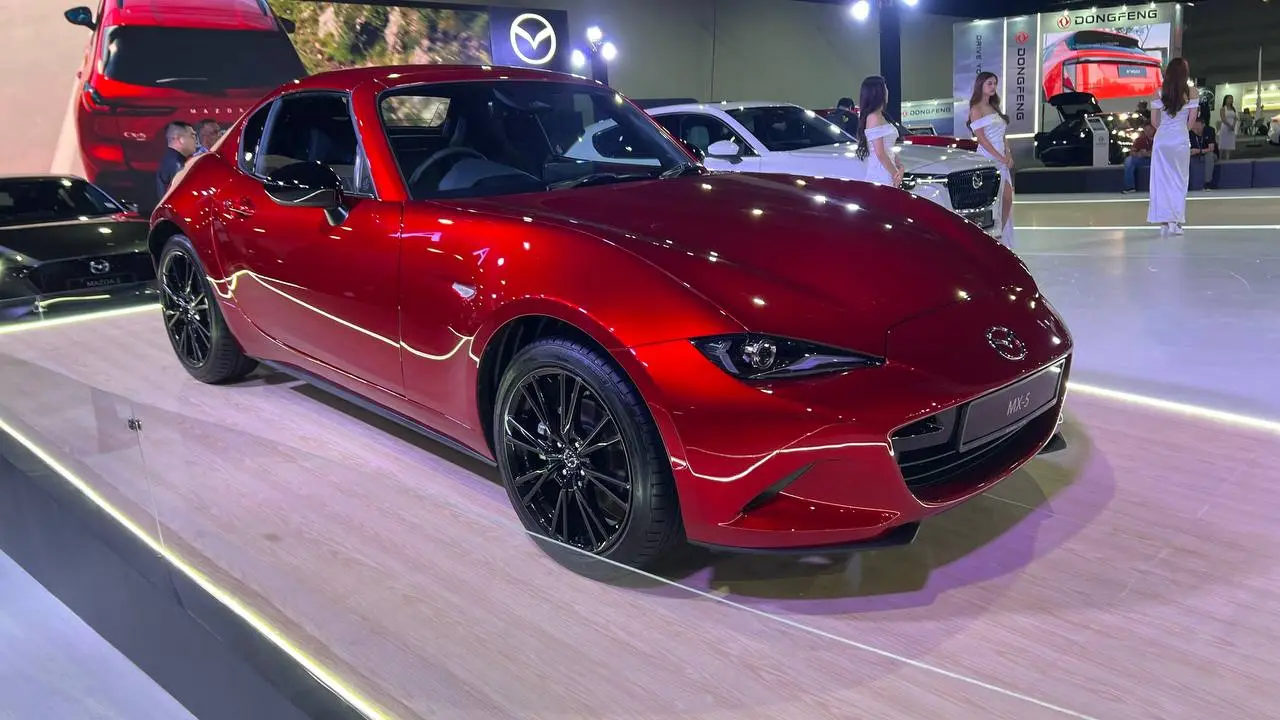
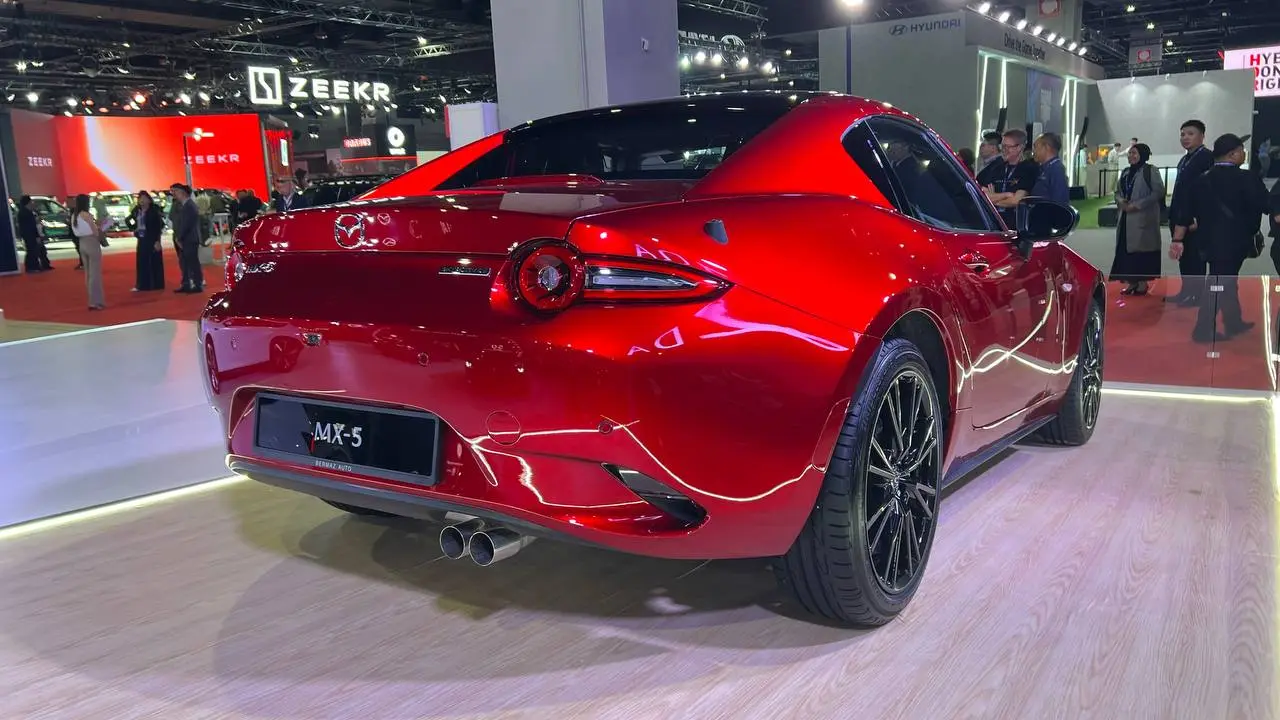
At KLIMS 2026, the Mazda MX-5 RF stands apart from the SUVs, hybrids and EVs that dominate the floor. It is not a family vehicle, and it does not try to win buyers with three rows, massive screens or electrified range figures. It is a two-seat rear-drive sports car, and its purpose is closer to a brand statement: Mazda still believes in lightness, steering response and driver involvement.
In Malaysia, the MX-5 RF is not Mazda's sales anchor. That role belongs to SUVs such as the CX-5, CX-30, CX-8 and CX-60. The MX-5 RF matters for another reason. It keeps Mazda's Jinba-Ittai idea visible on the showroom floor. For buyers who still care about how a car feels through their hands and feet, this model communicates more directly than any campaign line.
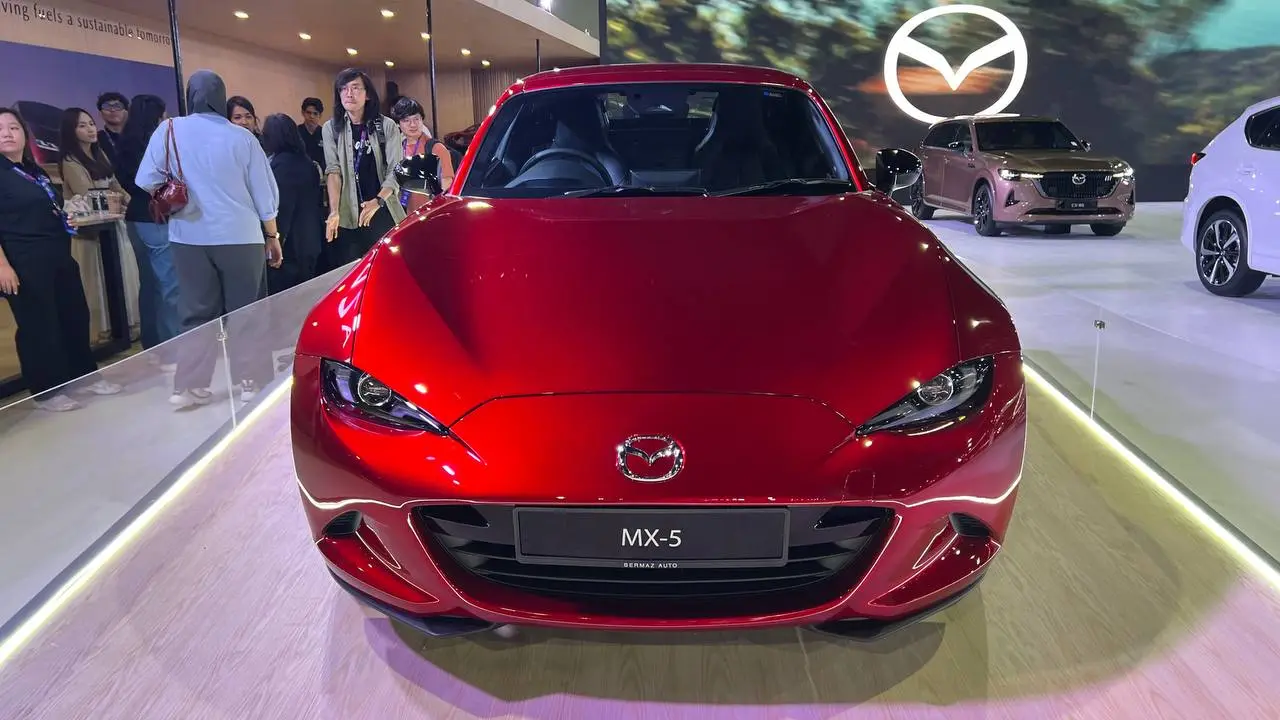
The Malaysian MX-5 is offered in RF form, with an electrically retractable hardtop. Compared with a conventional soft-top roadster, the RF gives the car a fastback-style profile when the roof is closed and a stronger sense of daily usability. It offers more security, more insulation and a cleaner silhouette, while still allowing the driver to open the cabin when the road and weather suit.
The dimensions are compact: 3,915 mm long, 1,735 mm wide and 1,235 mm tall. The manual variant has a kerb weight of 1,119 kg, while the automatic weighs 1,143 kg. These numbers explain the MX-5 formula. It does not rely on extreme power. Its character comes from low weight, a low centre of gravity, short proportions and immediate response, which can be more rewarding on Malaysian city roads and winding routes than raw speed.
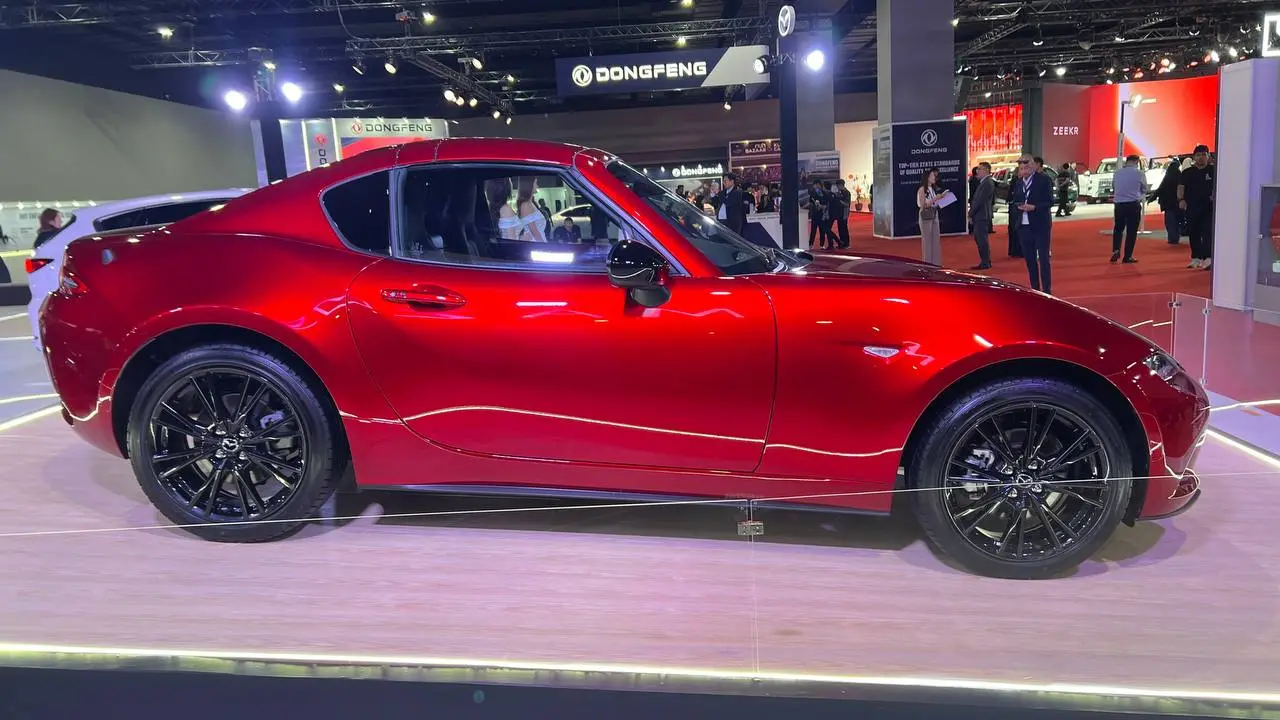
The MX-5 RF uses a 1,998 cc Skyactiv-G 2.0-litre naturally aspirated four-cylinder petrol engine producing 181 hp at 7,000 rpm and 205 Nm at 4,000 rpm. In West Malaysia, Mazda's official page lists the manual from RM293,000 and the automatic from RM295,000. The small price gap makes the choice less about budget and more about how the buyer wants to drive.
The manual is the purer MX-5 choice. Its six-speed manual gearbox is paired with an asymmetric limited-slip differential, giving the driver more direct involvement in how the car accelerates, turns and exits a corner. The automatic uses a six-speed transmission with manual shift mode and paddle shifters, making it the easier daily option for buyers who want the MX-5 body and chassis feel without committing to a clutch pedal.
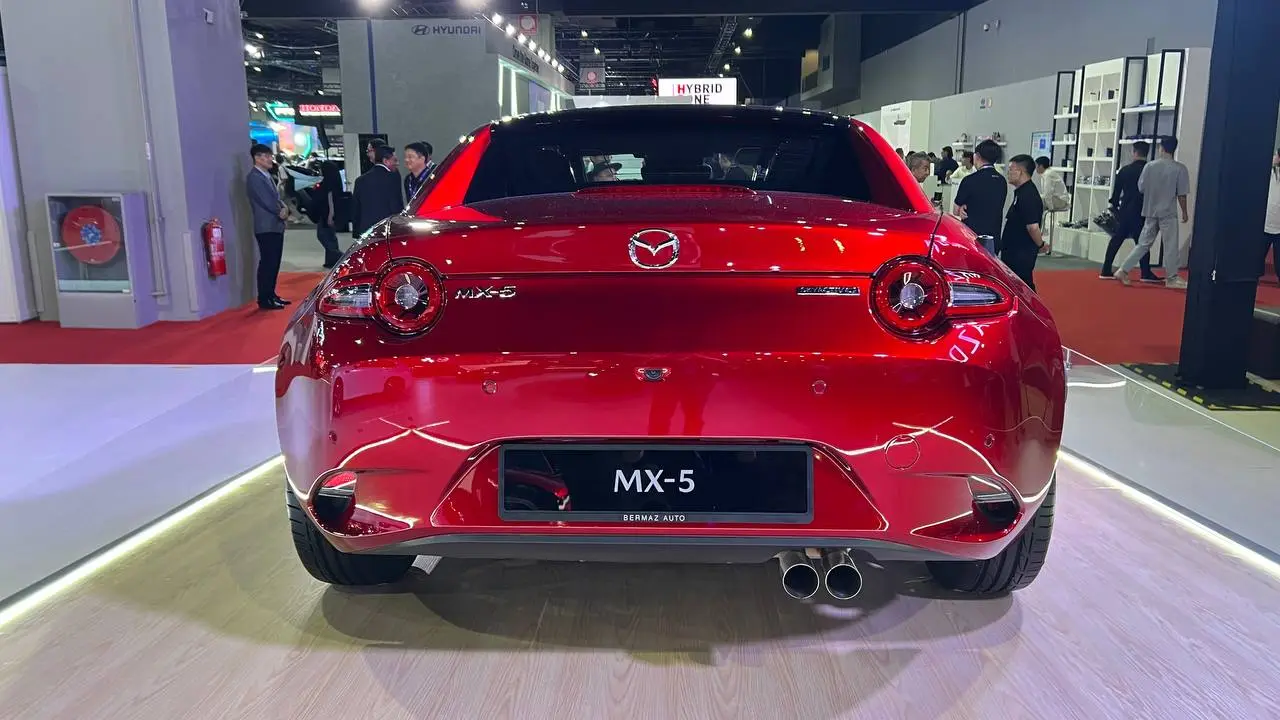
The MX-5 RF uses double-wishbone front suspension and a multi-link rear suspension, with ventilated front discs, solid rear discs, electronic power-assisted steering, 17 x 7J wheels and 205/45 R17 tyres. None of these figures are excessive, and that is the point. The MX-5 does not hide mass behind huge tyres and high output. It uses balance, feedback and predictability to make ordinary speeds feel interesting.
The current model also includes Kinematic Posture Control. Mazda describes KPC as a system that applies slight braking to the inner rear wheel during high-G cornering, using the rear suspension's characteristics to reduce roll and stabilise the car's posture. Importantly, it does this without adding weight. That fits the MX-5 philosophy well: improve the way the car moves, without burdening it with unnecessary hardware.
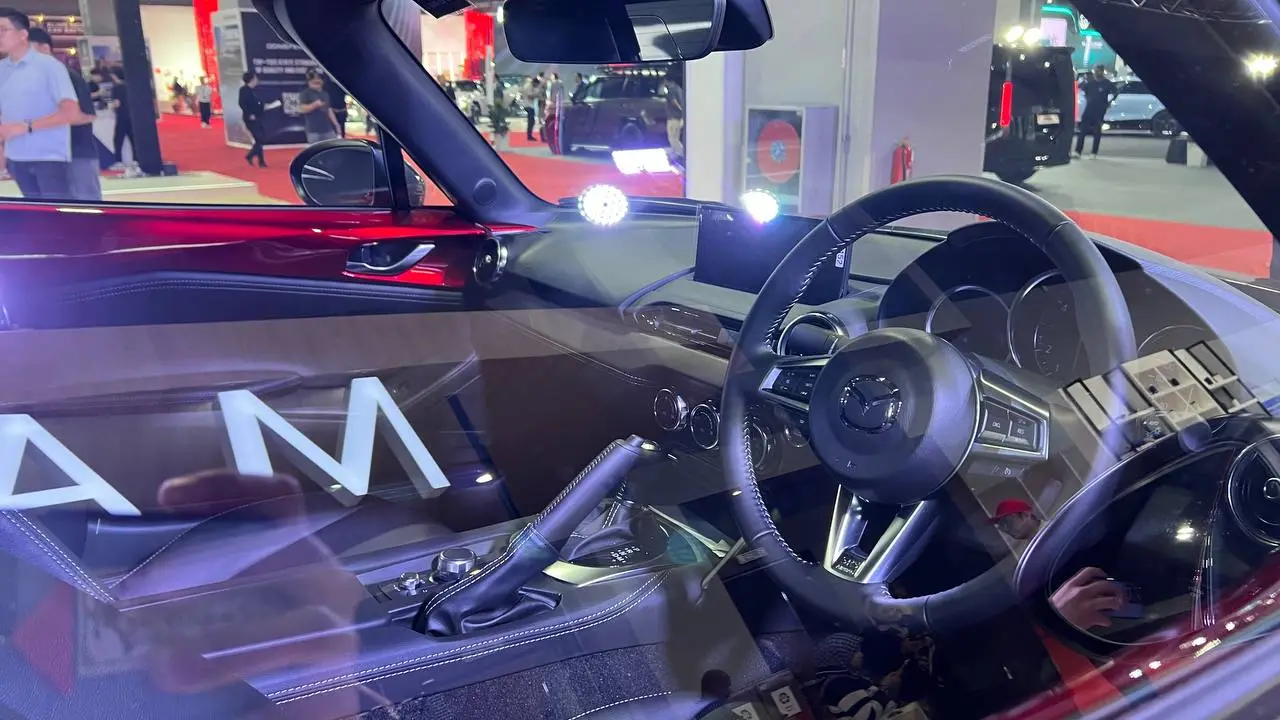
The MX-5 RF cabin is not designed as a luxury lounge. It is built around seating position, steering, shifting and sightlines. Equipment includes an engine start/stop button, steering-wheel audio and Bluetooth hands-free controls, wireless Apple CarPlay, Android Auto, two Type-C USB ports and a Bose audio system. The Bose setup includes headrest UltraNearfield speakers, which are useful when the roof is open.
Both manual and automatic versions include LED headlights, automatic headlight levelling, LED daytime running lights and Mazda Advanced Keyless Entry. The automatic adds paddle shifters, while the manual places more emphasis on mechanical engagement. Storage and practicality are secondary here. The MX-5 RF is a driving tool first, and its cabin is shaped around that purpose.
Safety equipment includes SRS airbags, ABS, EBD, emergency brake assist, dynamic stability control, traction control, emergency stop signal, hill launch assist, an engine immobiliser, anti-theft system and Walk Away Lock. The manual specification also lists DSC Track Mode. Advanced safety features include Adaptive LED Headlights, Blind Spot Monitoring, Rear Cross Traffic Alert, Lane Departure Warning System, Driver Attention Alert and Smart Brake Support.
The MX-5 RF will not be Mazda's biggest-selling model in Malaysia, but it gives the brand a kind of completeness that many mainstream line-ups lack. While other cars compete on screen size, range and seating capacity, the MX-5 RF keeps the conversation anchored in the relationship between driver and machine. Its audience is narrow, but that is exactly why its role within Mazda's KLIMS 2026 display is so clear.


Your go-to source for all things automotive in Malaysia. 🚗 Latest reviews, breaking news, launches & industry trends.
+ Follow This weekend is your chance to own a Volvo Selekt Certified Used Car, priced from just RM 148,000.
What are you waiting for?
#volvo 1 minute ago
This weekend is your chance to own a Volvo Selekt Certified Used Car, priced from just RM 148,000.
What are you waiting for?
#volvo 1 minute ago  We saw this accident this morning, and here’s a reminder to everyone: please drive safe. 2 days ago
  The G50 BMW 3 series is now here, adopting much of the i3's design elements.
So, where's the BMW M3?
#bmw #BMW3Series 4 days ago
The G50 BMW 3 series is now here, adopting much of the i3's design elements.
So, where's the BMW M3?
#bmw #BMW3Series 4 days ago Get the latest car news first!
Your go-to source for all things automotive in Malaysia. 🚗 Latest reviews, breaking news, launches & industry trends.
This weekend is your chance to own a Volvo Selekt Certified Used Car, priced from just RM 148,000.
What are you waiting for?
#volvo 1 minute ago We saw this accident this morning, and here’s a reminder to everyone: please drive safe. 2 days ago The G50 BMW 3 series is now here, adopting much of the i3's design elements.
So, where's the BMW M3?
#bmw #BMW3Series 4 days ago  ProtonGWMVolkswagenJAECOOVolvoPeroduaToyotaHondaTESLAMitsubishiMazdaJetourCheryBYDLexusBMWMercedes-BenziCAURZeekrIsuzuNissanLeapmotorPorscheFordOMODAMINIMGSuzukiXPengHyundaiWulingKiaSubaruDenzaGACLand RoverDongfengCAMAudiPeugeotFotonMAXUSsmartDaihatsuJACJMCMaseratiLotusAlfa RomeoRenaultGolden DragonKaiceneSeresLamborghiniFerrariJeepRolls-RoyceLepasAston MartinMcLarenChevroletBentleyFiatBAICForthingGeelyRoeweAeolusChanganARCFOXDeepalExeedHongqiVoyahJaguarKGMBuforiAcuraCadillacDodgeAbarthINEOSMHEROJMEVFreelander
 © 2024 Bitauto.com. All Rights Reserved.
Bitauto (www.yiche.com and www.bitauto.com) is one of the most visited automotive websites in China. We provide detailed info on Chinese car brands available in your area. Please note that the information provided on this website is based on publicly available data and is for reference only. It may not be fully updated or accurate at all times.
Help us improve our website


