
Search History
Popular Searches
English
Dealer Login / Sign Up
On 26 February 2026, Toyota officially released its global sales results for January 2026. Amid multiple pressures—slowing growth in the global auto market, volatile trade policies, and intensifying electrification competition—the automaker delivered a strong performance of 887,266 units (including Daihatsu and Hino), representing a year-on-year increase of 4.8%.
Of this total, Toyota and Lexus brands combined sold 822,577 units, up 4.7% year-on-year, setting a new January sales record. This marks two consecutive months of year-on-year growth, solidifying Toyota’s position as the world’s top-selling automaker.
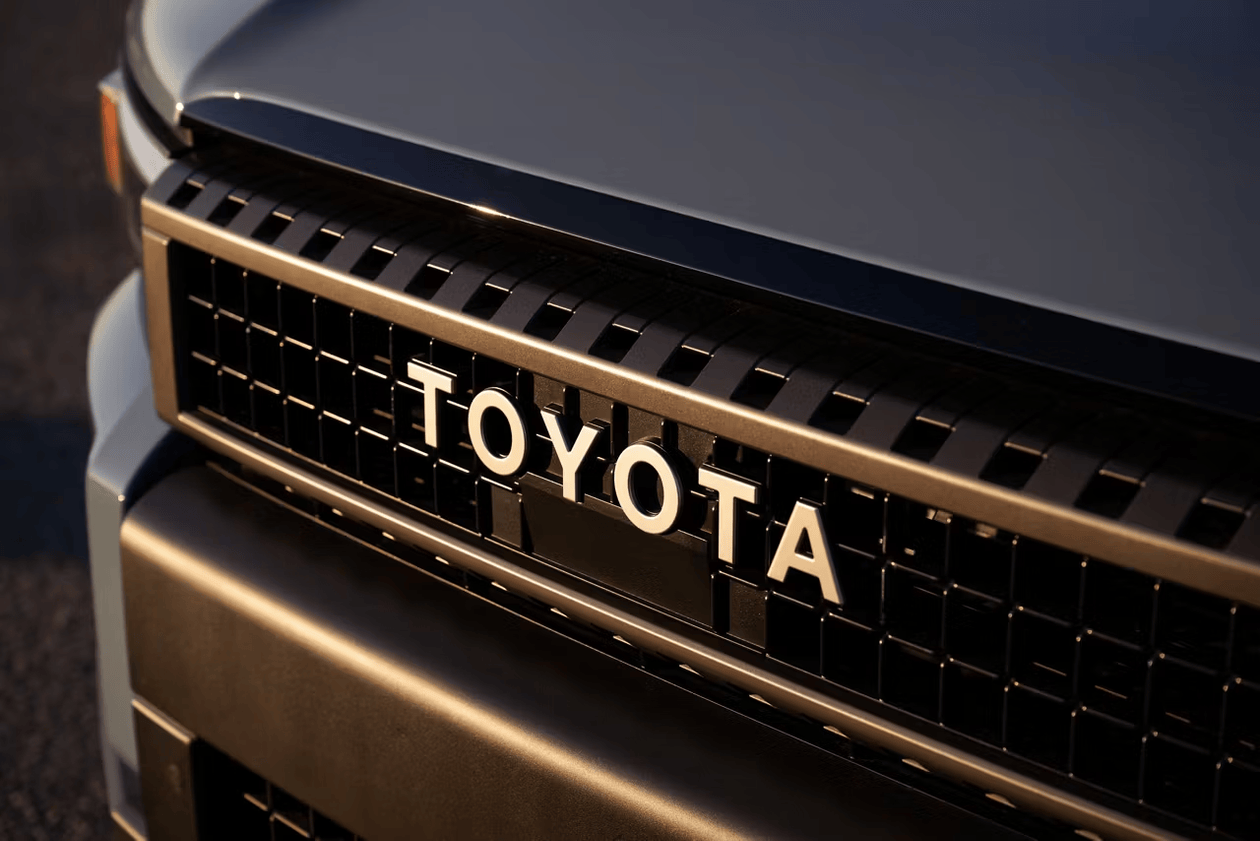
What makes this result remarkable is that it was achieved against a backdrop of intersecting challenges: the Trump administration’s imposition of additional tariffs, fierce competition in the Chinese market, and Toyota’s own model renewal cycle. Setting a new high in this environment underscores the global giant’s resilience.
For Malaysian consumers, Toyota is not only the global sales leader but also the absolute core of the Japanese brand lineup in Malaysia, firmly ranking third in the local market. Its global performance and local footprint directly reflect the automaker’s resilience and growth logic in Southeast Asia.
Key Data Overview
|
Metric |
Sales (units) |
YoY Change |
Key Highlights |
|
Toyota Group (incl. Daihatsu, Hino) |
887,266 |
+4.8% |
Record January sales, 2 consecutive months of growth |
|
Toyota + Lexus |
822,577 |
+4.7% |
New January single-month sales record |
|
Japan Domestic |
123,065 |
-2.7% |
Slight decline amid market saturation, no impact on overall performance |
|
Overseas |
716,443 |
+5.9% |
Contributes over 80% of growth, core pillar |
Regional Growth: North America & Europe Lead, Asia Steady
North America: 205,582 units sold, +7.5% YoY
Europe: 104,727 units sold, +11%+ YoY
Asia (ex-Japan): 268,164 units sold, +8.3% YoY
China: 145,464 units sold, +6.6% YoY
Notably, Toyota’s rising sales have not translated into parallel profit growth, as high costs continue to squeeze margins. Hit by US tariff policies, Toyota’s net profit for the third quarter of fiscal 2025 plummeted 43% YoY, with a 26.1% drop in net profit for the first three fiscal quarters. Tariffs alone caused a loss of 1.2 trillion yen. This severe divergence between sales and profit has become Toyota’s most pressing operational challenge.
Shortly before the sales data release, Toyota announced a major management reshuffle: Chief Financial Officer Koji Sato will replace Akio Toyoda as President in April. This marks the first time since 2009 that Toyota has been led by a manager with a financial background and no prior experience in the automotive industry.
The intent behind this move is clear: amid profit pressure, massive transformation investments, and rising external uncertainty, Toyota needs a leader skilled in financial control to stabilize operations with strict financial discipline.
This does not mean Toyota will slow its technology push. Akio Toyoda will become Vice Chairman and concurrently serve as the newly created Chief Industry Officer, continuing to focus on industry collaboration and technology strategy. Takeshi Uchiyamada remains Chairman, retaining overall strategic oversight.
This “Technology + Finance” dual-core structure reflects Toyota’s assessment of the current landscape: it must both plan for the future and secure the present. In an era requiring massive, sustained investment in electrification and smart mobility, a solid financial foundation is prerequisite to realizing any vision.
At his appointment press conference, Koji Sato stated: “My role is to build a healthy profit structure and financial foundation so the team can dare to challenge.” This encapsulates the core logic of the leadership change.
Viewed against the tide of industry transformation, Toyota’s January sales performance sends a deeper message. The record global sales confirm the company’s solid core: growth in the US despite tariff pressures, double-digit gains in Europe, a rebound in China, and electrified vehicles accounting for over half of sales—all data points validate the multinational’s global competitiveness.
Placing a finance-focused leader at the helm signals Toyota’s greater emphasis on operational efficiency and capital allocation. Retaining a technology veteran to drive industry strategy confirms Toyota’s commitment to forward-looking technological development.
January’s sales record is a strong start, but the real tests lie ahead for Toyota.
Investments in electrification continue to ramp up, the era of software-defined vehicles is arriving, China’s competitive landscape evolves, and geopolitical risks remain ever-present. These challenges will not disappear with a single month’s sales growth.
Koji Sato’s appointment signals a sharper focus on financial health and investment efficiency. Yet Toyota’s future will ultimately be decided by products and technology. How long will hybrid models sustain their advantage? When will pure electric vehicles gain real traction? Can smart technology keep pace with Chinese competitors? These questions will be answered only by time and the market.

Your go-to source for all things automotive in Malaysia. 🚗 Latest reviews, breaking news, launches & industry trends.
+ Follow We saw this accident this morning, and here’s a reminder to everyone: please drive safe. 2 days ago
  The G50 BMW 3 series is now here, adopting much of the i3's design elements.
So, where's the BMW M3?
#bmw #BMW3Series 4 days ago
The G50 BMW 3 series is now here, adopting much of the i3's design elements.
So, where's the BMW M3?
#bmw #BMW3Series 4 days ago  DRIFT PARTY in Malaysia! Can the Xiaomi SU7, Yangwang U8 mix it up against JDM favourites in KL?
Our adventure with the Xiaomi SU7 and Yangwang U8 brings us to APDCrew circuit as we give witness a drift show. With pro drifters and fan-favourites - RX7s, S15s, Skylines, Supras, and more - in the mix, can our Xiaomi SU7 and Yangwang U8 hold their own?
It's also a quick look at Malaysian car culture, including some wildly modified minivans, and more!
#drift #malaysia #xiaomisu7 #yangwangu8 #larrychen #drifting #JDM跑車 4 days ago
DRIFT PARTY in Malaysia! Can the Xiaomi SU7, Yangwang U8 mix it up against JDM favourites in KL?
Our adventure with the Xiaomi SU7 and Yangwang U8 brings us to APDCrew circuit as we give witness a drift show. With pro drifters and fan-favourites - RX7s, S15s, Skylines, Supras, and more - in the mix, can our Xiaomi SU7 and Yangwang U8 hold their own?
It's also a quick look at Malaysian car culture, including some wildly modified minivans, and more!
#drift #malaysia #xiaomisu7 #yangwangu8 #larrychen #drifting #JDM跑車 4 days ago Get the latest car news first!
Your go-to source for all things automotive in Malaysia. 🚗 Latest reviews, breaking news, launches & industry trends.
We saw this accident this morning, and here’s a reminder to everyone: please drive safe. 2 days ago The G50 BMW 3 series is now here, adopting much of the i3's design elements.
So, where's the BMW M3?
#bmw #BMW3Series 4 days ago DRIFT PARTY in Malaysia! Can the Xiaomi SU7, Yangwang U8 mix it up against JDM favourites in KL?
Our adventure with the Xiaomi SU7 and Yangwang U8 brings us to APDCrew circuit as we give witness a drift show. With pro drifters and fan-favourites - RX7s, S15s, Skylines, Supras, and more - in the mix, can our Xiaomi SU7 and Yangwang U8 hold their own?
It's also a quick look at Malaysian car culture, including some wildly modified minivans, and more!
#drift #malaysia #xiaomisu7 #yangwangu8 #larrychen #drifting #JDM跑車 4 days ago  ProtonGWMVolkswagenJAECOOVolvoPeroduaToyotaHondaTESLAMitsubishiMazdaJetourCheryBYDLexusBMWMercedes-BenziCAURZeekrIsuzuNissanLeapmotorPorscheFordOMODAMINIMGSuzukiXPengHyundaiWulingKiaSubaruDenzaGACLand RoverDongfengCAMAudiPeugeotFotonMAXUSsmartDaihatsuJACJMCMaseratiLotusAlfa RomeoRenaultGolden DragonKaiceneSeresLamborghiniFerrariJeepRolls-RoyceLepasAston MartinMcLarenChevroletBentleyFiatBAICForthingGeelyRoeweAeolusChanganARCFOXDeepalExeedHongqiVoyahJaguarKGMBuforiAcuraCadillacDodgeAbarthINEOSMHEROJMEVFreelander
 © 2024 Bitauto.com. All Rights Reserved.
Bitauto (www.yiche.com and www.bitauto.com) is one of the most visited automotive websites in China. We provide detailed info on Chinese car brands available in your area. Please note that the information provided on this website is based on publicly available data and is for reference only. It may not be fully updated or accurate at all times.
Help us improve our website


