
Search History
Popular Searches
English
Dealer Login / Sign Up
230,000 fans flocked to the Shanghai International Circuit, with box office revenue exceeding 190 million yuan. 74% of spectators were from outside the city, and 14% were from overseas — these figures prove that F1 is no longer a niche sport in China.
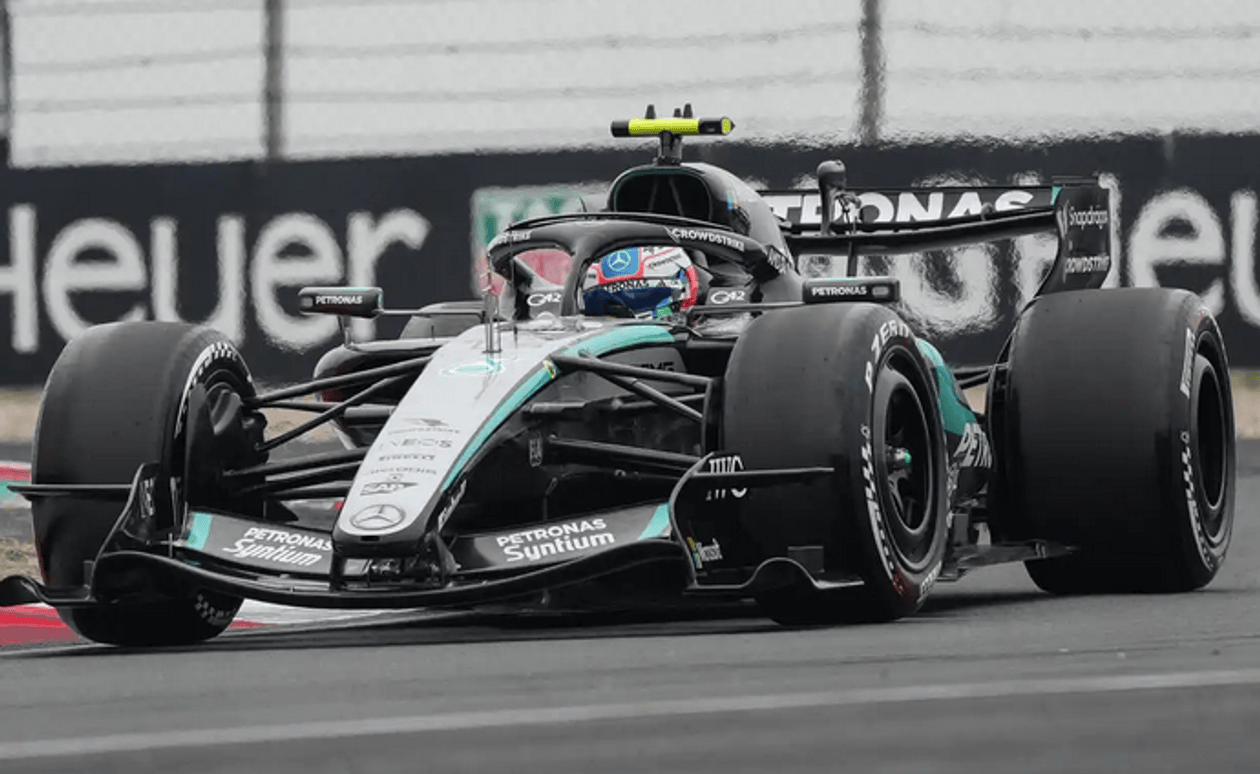
Mercedes took a 1–2 finish, and 19-year-old Andrea Kimi Antonelli became the second-youngest race winner in history. That is certainly a headline. But what truly makes this race unforgettable is the fierce intra-team battle between Ferrari’s two drivers over more than ten laps, the absurdity of both McLarens being absent from the starting grid, and the chaos as world champions including Verstappen and Alonso retired one after another. This was a complete story of speed, passion, chaos, and a new order.
First, the race winner. Antonelli started from pole position. Although briefly overtaken by Hamilton, his teammate Russell helped him retake the lead on Lap 4. What followed was one-sided domination.
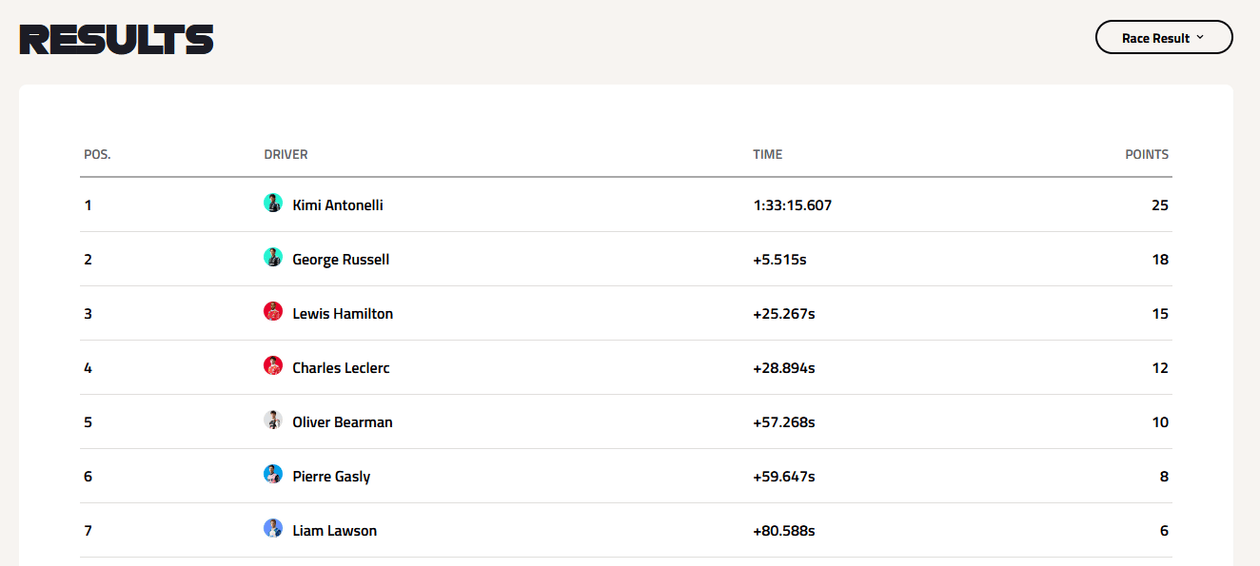
The most terrifying moment came after Lap 28 — when the cars switched to white hard tires, Russell launched an all-out attack, overtaking Leclerc and Hamilton in quick succession to comfortably take second place, forming a Mercedes 1–2.
Ferrari Team Principal Vasseur spoke the truth after the race: “We were about half a second slower per lap.”What does half a second mean? Over a 56-lap race, that’s a 28-second gap — enough to be lapped. This was not a strategy issue, not a driver issue, but a pure technical gap. The Mercedes W17’s advantages in battery management, long-run pace, and tire wear were overwhelming.
Even more impressively, this advantage continued on the white hard tires. Hard tires normally mean less grip and slower lap times, but Mercedes seemed to defy physics. Their pace on hard tires was even faster than some rivals on soft tires. This “faster after tire change” phenomenon can only be explained by their superior understanding of the tires.
Antonelli was moved to tears after the race, becoming the second-youngest Grand Prix winner in F1 history, behind only Verstappen. But with Mercedes’ current dominance, his second and third wins will come quickly. The real question is: how long will this domination last? McLaren was untouchable last season, yet this year they failed to even start the race. Such is the cruelty of F1: today’s champion could be stuck in the garage tomorrow.
If Mercedes represents cold technical rationality, Ferrari embodies fiery Latin passion. Starting from Lap 25, the intra-team battle between Hamilton and Leclerc pushed this passion to the limit.
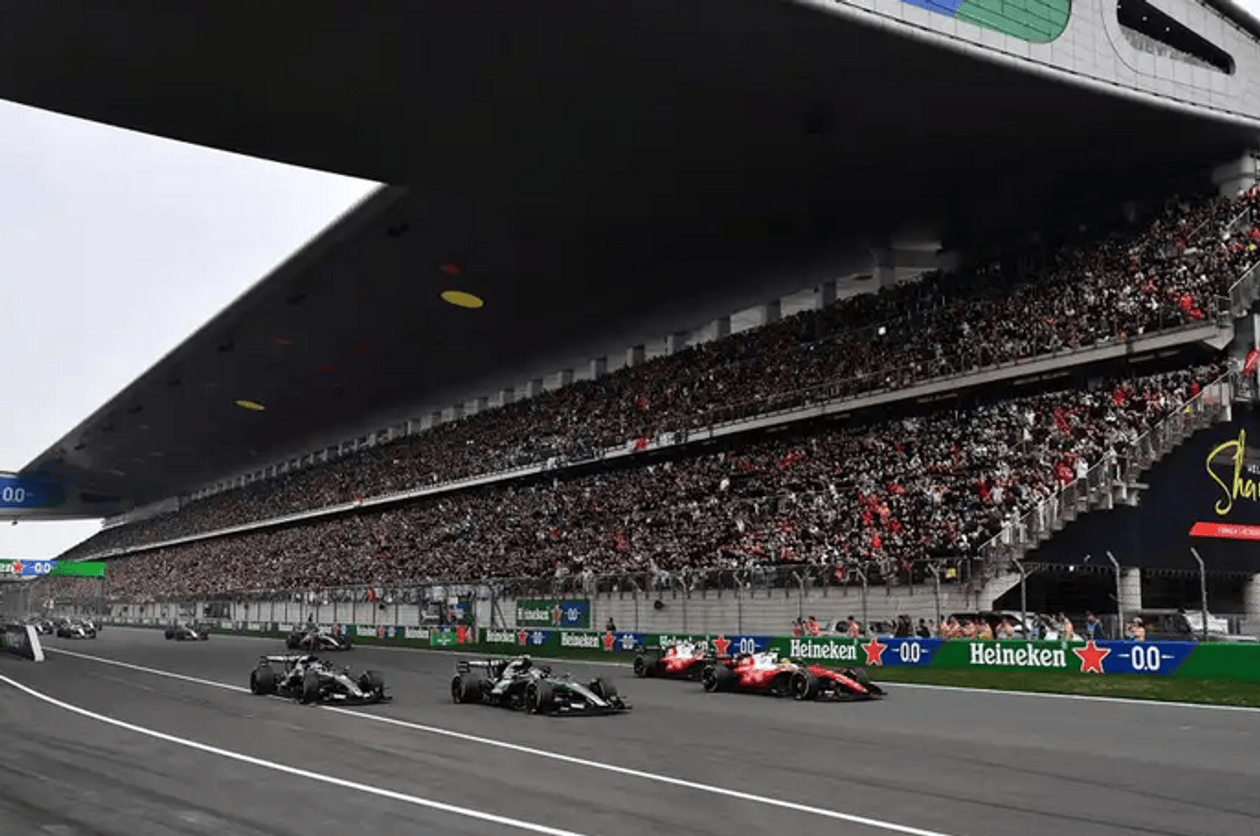
The two red cars went wheel to wheel, swapping positions multiple times and nearly colliding. Leclerc overtook on Lap 25, Hamilton retook on Lap 26, Leclerc again on Lap 27, Hamilton countered on Lap 36 — this more-than-ten-lap internal fight is extremely rare in F1. Usually teams issue “hold position” orders, but Ferrari did not.
Team Principal Vasseur said: “I didn’t want to stop their fight. It wouldn’t have been fair to the driver behind if I froze the positions.”
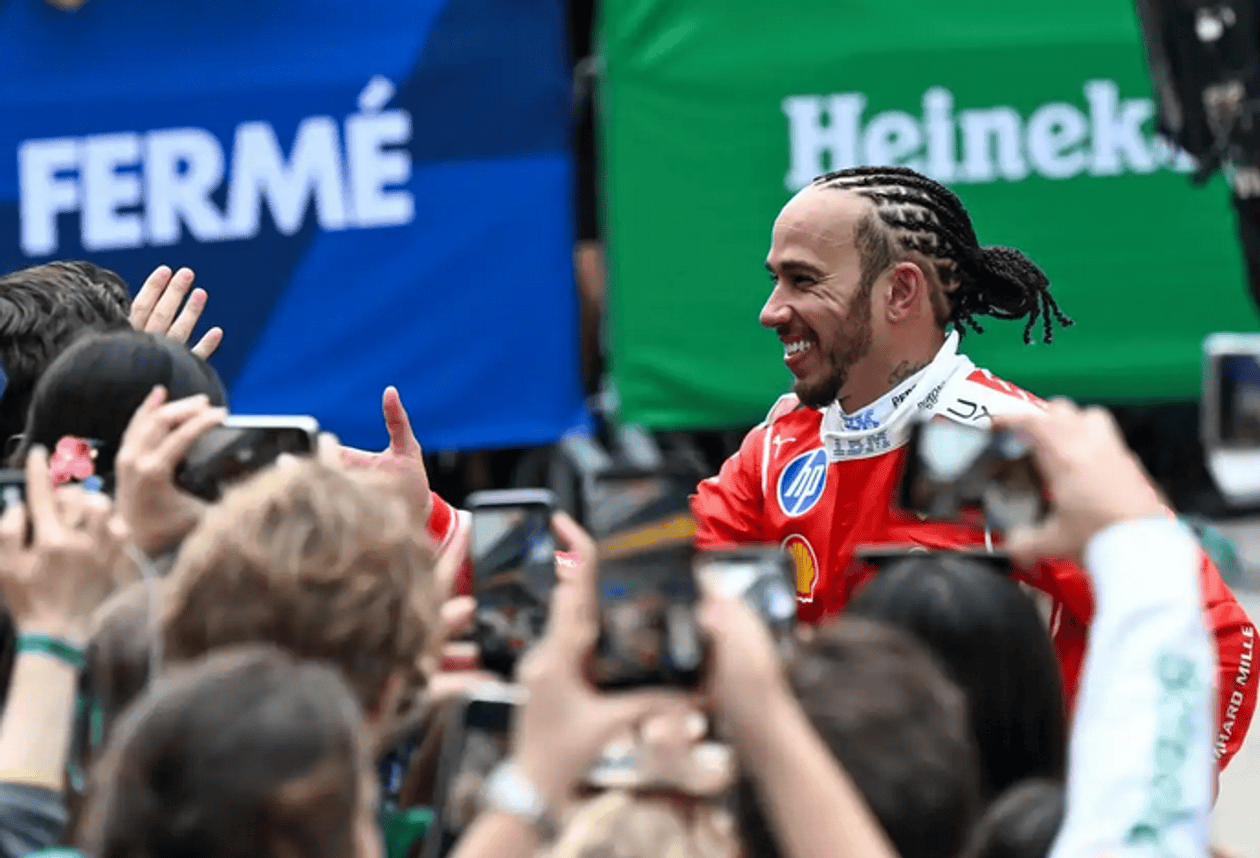
The post-race interviews showed real sportsmanship. Hamilton called it “so much fun,” Leclerc said he “really enjoyed it.” Two drivers who had just battled fiercely smiled and congratulated each other. This was genuine respect between competitors. They know this uncompromising racing is what makes F1 great.
Sportingly, this duel did help Russell benefit. If Ferrari had coordinated earlier, they might have challenged Russell for second. But from a fan and F1 brand perspective, this battle was worth far more than a few points. Vasseur understood: “This kind of fighting is good for F1.”
If Ferrari shows F1 at its most exciting, McLaren shows it at its cruellest. Last season’s title contender suffered disaster in both opening races. In China, it was even more absurd: Norris had an electrical failure, Piastri was pushed off the grid six minutes before the start — both cars retired before the race even began.
Team Principal Stella called it “an extremely unfortunate coincidence,” but I see it as systemic risk under the new regulations. The 2026 technical rules introduce major changes to power units, aerodynamics, and chassis. Mercedes got it right, Ferrari is close, but McLaren and Aston Martin are clearly struggling.
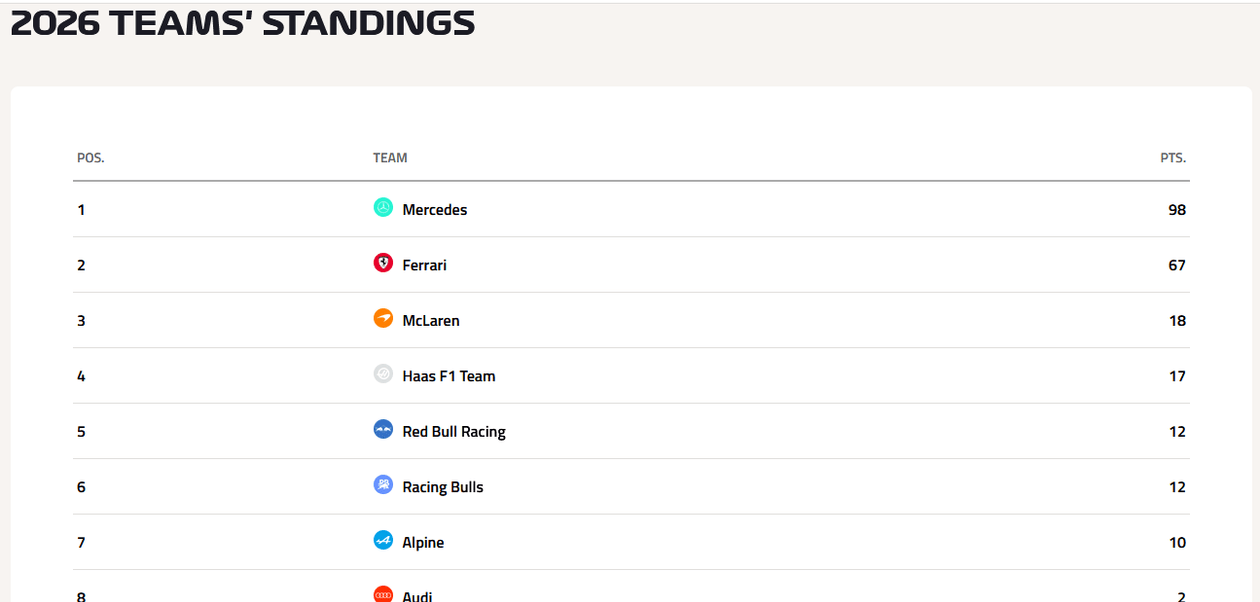
Aston Martin’s situation is even worse: two races, two full retirements, at the bottom of the standings alongside Williams and Cadillac. Alonso spoke of “catastrophic vibrations” exposing the struggles of smaller teams. This is F1’s reality: top teams have budgets 10 times or more than smaller teams, leading to vastly different development speeds. New rules aim to close the gap, but often widen it — only wealthy teams can adapt quickly.
The 2026 F1 Chinese Grand Prix is over, but the questions it raised have just begun.
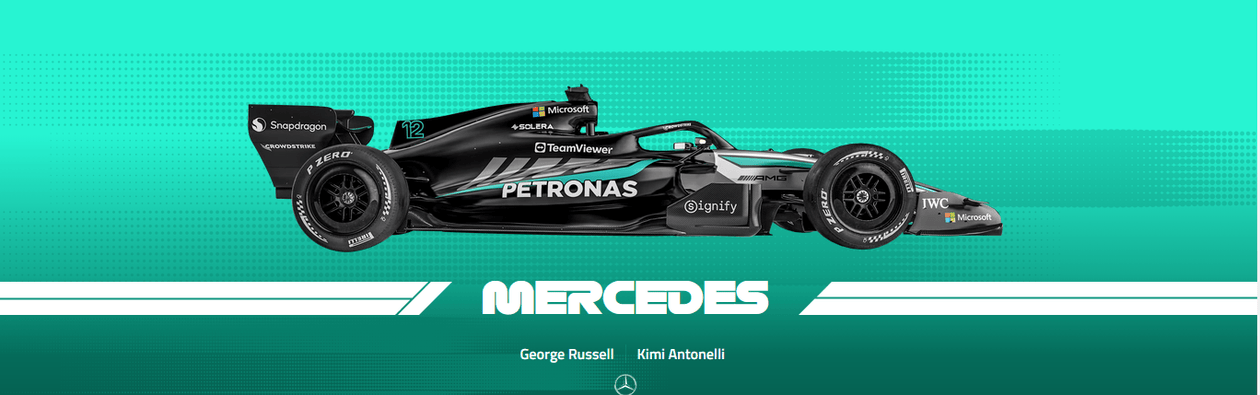
How long can Mercedes dominate? Is Ferrari’s “internal battle” a strategy or a gamble? When will McLaren fix its issues? How can smaller teams survive? The answers will unfold over the next 21 races.
Vasseur supports free racing, the FIA has delayed rule changes, and 230,000 fans showed with their tickets what they want: not just perfect machines, but real human drama, wheel to wheel battles, and the tension between passion and control.
In this race, Antonelli won the trophy, Ferrari won the spotlight, and 230,000 fans won an unforgettable experience. For F1 itself, it once again proved: when racing returns to human spirit and competition to pure passion, the world will always go crazy for it.

Your go-to source for all things automotive in Malaysia. 🚗 Latest reviews, breaking news, launches & industry trends.
+ Follow We saw this accident this morning, and here’s a reminder to everyone: please drive safe. 2 days ago
  The G50 BMW 3 series is now here, adopting much of the i3's design elements.
So, where's the BMW M3?
#bmw #BMW3Series 4 days ago
The G50 BMW 3 series is now here, adopting much of the i3's design elements.
So, where's the BMW M3?
#bmw #BMW3Series 4 days ago  DRIFT PARTY in Malaysia! Can the Xiaomi SU7, Yangwang U8 mix it up against JDM favourites in KL?
Our adventure with the Xiaomi SU7 and Yangwang U8 brings us to APDCrew circuit as we give witness a drift show. With pro drifters and fan-favourites - RX7s, S15s, Skylines, Supras, and more - in the mix, can our Xiaomi SU7 and Yangwang U8 hold their own?
It's also a quick look at Malaysian car culture, including some wildly modified minivans, and more!
#drift #malaysia #xiaomisu7 #yangwangu8 #larrychen #drifting #JDM跑車 4 days ago
DRIFT PARTY in Malaysia! Can the Xiaomi SU7, Yangwang U8 mix it up against JDM favourites in KL?
Our adventure with the Xiaomi SU7 and Yangwang U8 brings us to APDCrew circuit as we give witness a drift show. With pro drifters and fan-favourites - RX7s, S15s, Skylines, Supras, and more - in the mix, can our Xiaomi SU7 and Yangwang U8 hold their own?
It's also a quick look at Malaysian car culture, including some wildly modified minivans, and more!
#drift #malaysia #xiaomisu7 #yangwangu8 #larrychen #drifting #JDM跑車 4 days ago Get the latest car news first!
Your go-to source for all things automotive in Malaysia. 🚗 Latest reviews, breaking news, launches & industry trends.
We saw this accident this morning, and here’s a reminder to everyone: please drive safe. 2 days ago The G50 BMW 3 series is now here, adopting much of the i3's design elements.
So, where's the BMW M3?
#bmw #BMW3Series 4 days ago DRIFT PARTY in Malaysia! Can the Xiaomi SU7, Yangwang U8 mix it up against JDM favourites in KL?
Our adventure with the Xiaomi SU7 and Yangwang U8 brings us to APDCrew circuit as we give witness a drift show. With pro drifters and fan-favourites - RX7s, S15s, Skylines, Supras, and more - in the mix, can our Xiaomi SU7 and Yangwang U8 hold their own?
It's also a quick look at Malaysian car culture, including some wildly modified minivans, and more!
#drift #malaysia #xiaomisu7 #yangwangu8 #larrychen #drifting #JDM跑車 4 days ago  ProtonGWMVolkswagenJAECOOVolvoPeroduaToyotaHondaTESLAMitsubishiMazdaJetourCheryBYDLexusBMWMercedes-BenziCAURZeekrIsuzuNissanLeapmotorPorscheFordOMODAMINIMGSuzukiXPengHyundaiWulingKiaSubaruDenzaGACLand RoverDongfengCAMAudiPeugeotFotonMAXUSsmartDaihatsuJACJMCMaseratiLotusAlfa RomeoRenaultGolden DragonKaiceneSeresLamborghiniFerrariJeepRolls-RoyceLepasAston MartinMcLarenChevroletBentleyFiatBAICForthingGeelyRoeweAeolusChanganARCFOXDeepalExeedHongqiVoyahJaguarKGMBuforiAcuraCadillacDodgeAbarthINEOSMHEROJMEVFreelander
 © 2024 Bitauto.com. All Rights Reserved.
Bitauto (www.yiche.com and www.bitauto.com) is one of the most visited automotive websites in China. We provide detailed info on Chinese car brands available in your area. Please note that the information provided on this website is based on publicly available data and is for reference only. It may not be fully updated or accurate at all times.
Help us improve our website


