
Search History
Popular Searches
English
Dealer Login / Sign Up
On March 12th, the BMW Group officially released its full-year financial report for the 2025 fiscal year. This report clearly presents the operational pressure and strategic perseverance of this luxury automotive giant during the period of industry transformation — the full-year revenue decreased by 6.3% year-on-year to 133.453 billion euros, while both pre-tax profit and net profit declined simultaneously. Although global sales increased slightly, profitability contracted significantly. The differentiated performance of regional markets and the imbalance in the electrification transformation have become the core factors affecting the financial report.
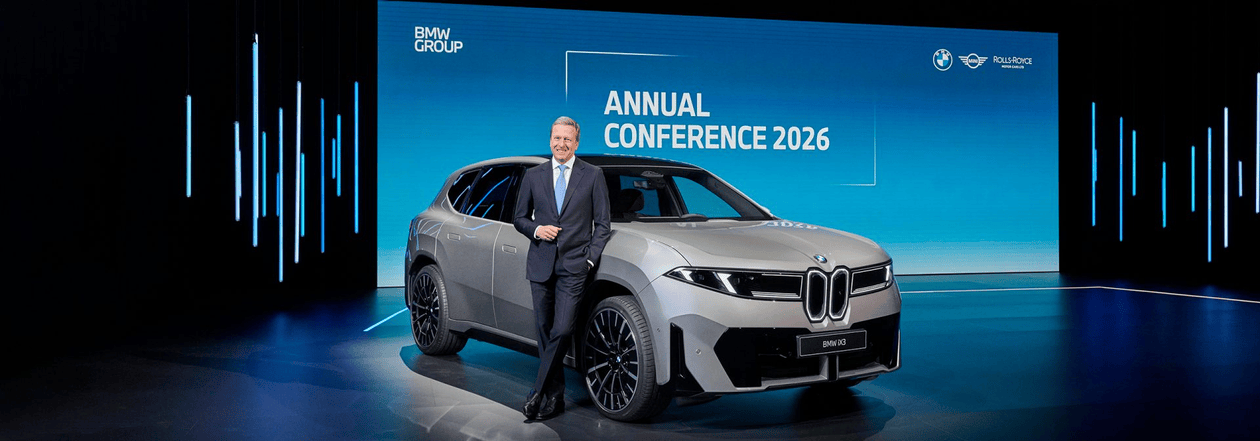
From the perspective of core financial data, the BMW Group's overall profitability showed a downward trend in 2025. The financial report shows that the full-year pre-tax profit (EBT) reached 10.236 billion euros, a year-on-year decrease of 6.7%; the net profit was 7.451 billion euros, a year-on-year decrease of 3.0%. Behind the profit decline is the continuous contraction of the profitability of the automotive business. In 2025, the EBIT margin of the BMW Group's automotive business dropped to 5.3%, a year-on-year decrease of 1 percentage point, which is at the bottom of the group's adjusted target range of 5% to 7%. The pre-tax profit per vehicle decreased by about 680 euros compared with the previous year. The dilemma of "not making money from selling cars" highlights the cost pressure and market competition pressure during its transformation period. The BMW Group stated that the revenue decline was mainly affected by factors such as lower dealer deliveries, fierce market competition, and support for the dealer network in China. At the same time, the continuous erosion of U.S. tariff costs further squeezed the profit space.
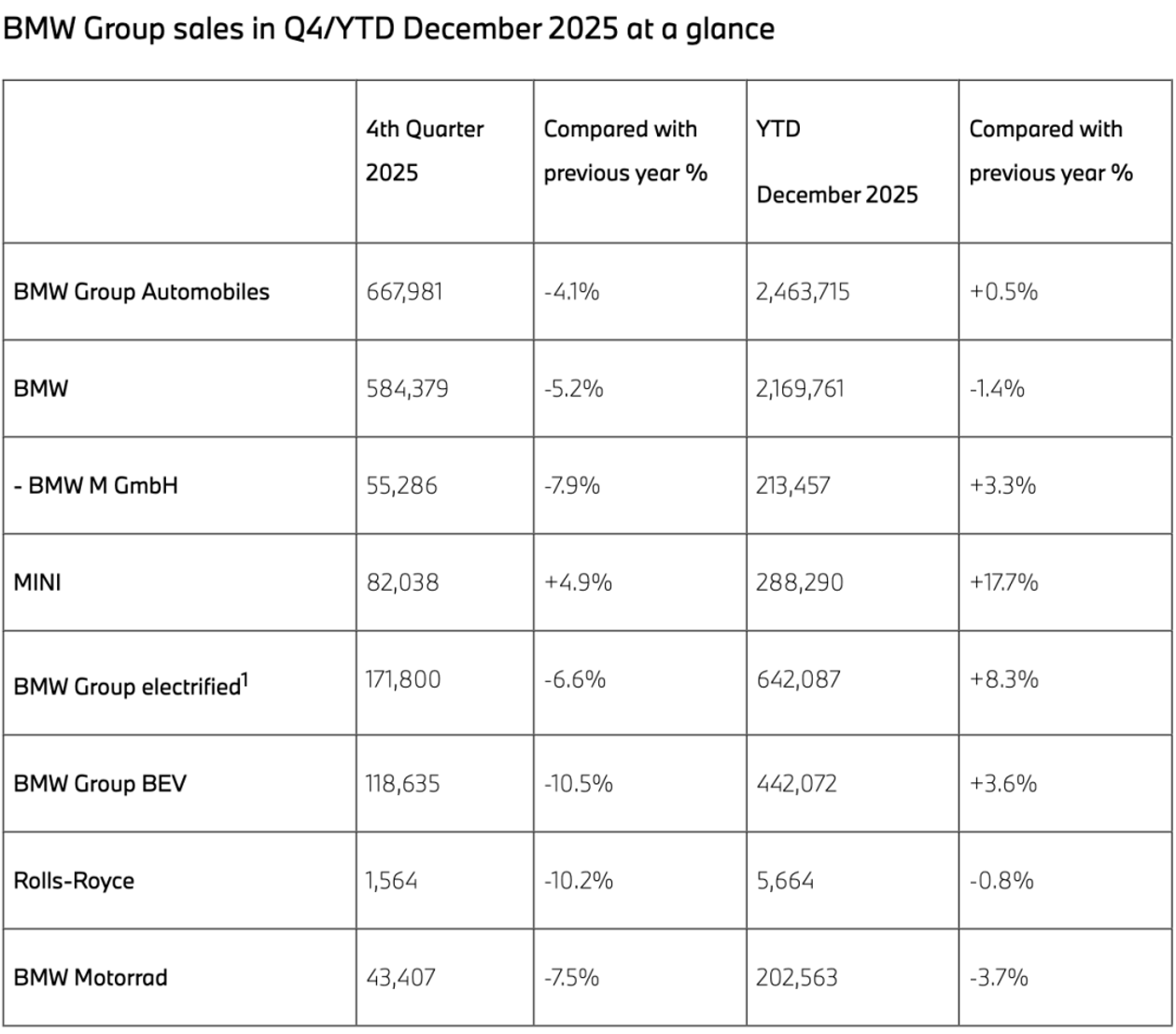
In contrast to the pressure on financial data, the BMW Group achieved a slight increase in global sales in 2025, barely maintaining its scale advantage. The total global vehicle deliveries throughout the year reached 2.4637 million units, a year-on-year increase of 0.5%. Against the backdrop of increasingly fierce competition in the global luxury car market, it still maintained its leading position in the BBA camp. The performance of sub-brands showed obvious differentiation: the core brand BMW's annual sales decreased by 1.4% year-on-year to 2.1698 million units, accounting for 88% of the group's total sales, and it remains the absolute main force. Among them, the BMW M high-performance vehicles performed brilliantly, with sales increasing by 3.3% year-on-year to 213,500 units, achieving sales growth for 14 consecutive years and becoming an important growth highlight of the brand; the MINI brand performed strongly, with a year-on-year increase of 17.7% to 288,300 units, showing strong market vitality; Rolls-Royce Motor Cars decreased by 0.8% year-on-year to 5,664 units, less affected by fluctuations in demand in the ultra-luxury market.
The pattern of differentiated regional markets is particularly prominent. The growth in European and American markets has successfully offset the decline in the Asian market, becoming the key for the BMW Group to stabilize sales. Among them, the European market has become the main growth driver, with annual sales increasing by 7.3% year-on-year to 1.0164 million units. The German domestic market performed particularly strongly, with a year-on-year increase of 8.7% to 290,700 units. The growth of the European market is mainly driven by the local strict emission reduction policies. In 2025, the EU required the average carbon emissions of new cars to drop to 95 grams per kilometer. BMW exceeded the target with a fleet emission of 90 grams per kilometer. The sales of pure electric models increased by more than 28% year-on-year, and one out of every four cars sold locally was a pure electric model. Pure electric and plug-in hybrid models accounted for 40% of the total new car sales. The American market also performed steadily, with a year-on-year increase of 5.6% to 508,200 units, of which the U.S. market increased by 5.0% year-on-year to 417,600 units, becoming another major growth pillar.
In contrast, the Asian market has become the main drag on the BMW Group, with annual sales decreasing by 9.3% year-on-year to 871,600 units, accounting for 35% of global total sales. As BMW's largest single market in the world, the Chinese market performed below expectations, with annual sales decreasing by 12.5% year-on-year to 625,600 units, accounting for 72% of the Asian market's total sales and 25% of the global total sales. The core reason for the decline in the Chinese market lies in the mismatch between BMW's electrification transformation rhythm and local market demand. The current pure electric models are inferior to local Chinese new energy brands in terms of cruising range, fast charging and intelligence, and do not carry core technologies such as 800V high-voltage fast charging, making it difficult to meet Chinese consumers' demand for intelligent electric models. In addition, the pattern of China's luxury market is being reshaped, and the rise of local brands has further squeezed BMW's market space.
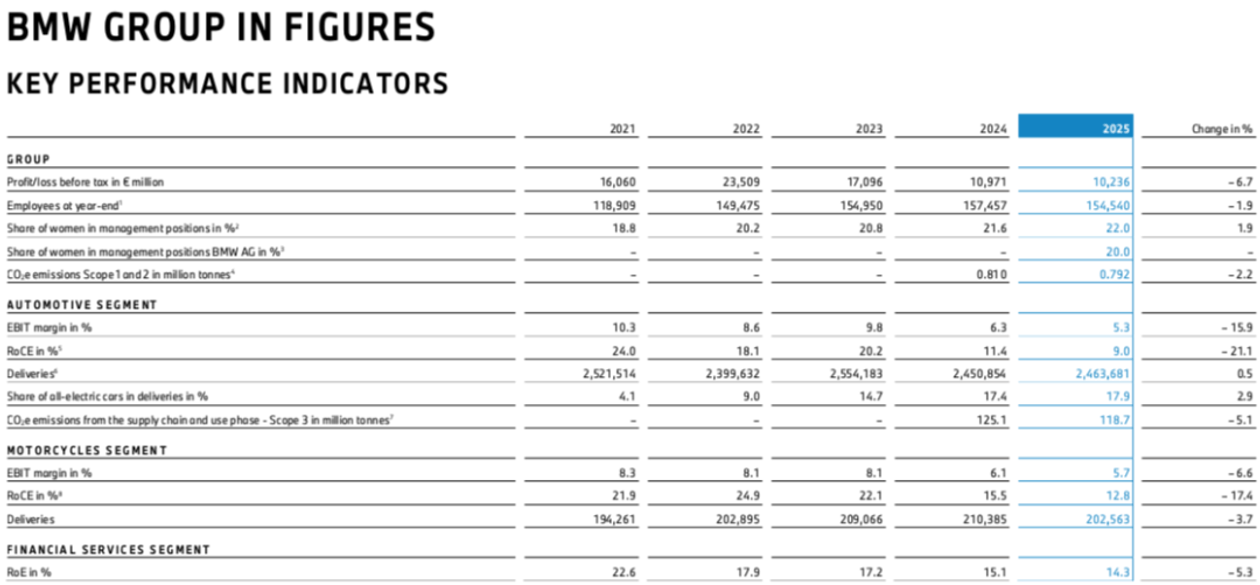
In terms of electrification transformation, the BMW Group presents a trend of "plug-in hybrids leading, pure electric growth slowing down". Throughout 2025, the sales of BMW electric vehicles (including pure electric and plug-in hybrids) increased by 8.3% year-on-year to 642,100 units, of which pure electric vehicle sales increased by 3.6% year-on-year to 442,100 units, accounting for 17.9% of total sales; plug-in hybrid model sales increased by 20% year-on-year to 200,000 units, becoming the main driving force for new energy growth. This also means that in markets outside Europe, most users still tend to choose plug-in hybrid power solutions that are closer to the usage habits of fuel vehicles. Although pure electric sales have maintained growth, there is still a large gap from the BMW Group's goal of pure electric vehicles accounting for 50% of global sales by 2030.
Faced with the operational pressure in 2025, the BMW Group has adopted strict cost control measures, with R&D expenditure, capital expenditure, sales and administrative expenses shrinking simultaneously, cutting a total of 2.5 billion euros in expenses throughout the year to improve profitability. At the same time, the BMW Group has pinned its hope for future growth on the new generation platform and the breakthrough in the Chinese market. According to the plan, 2026 will be a major product year for the BMW Group in China. BMW, MINI, and BMW Motorrad will launch about 20 new models, among which the new generation BMW i3 made its global debut in Munich on March 18th, and the new generation BMW iX3 long-wheelbase version will make its debut at the Beijing Auto Show and be launched within the year. This pure electric SUV, extended specifically for the Chinese market, is equipped with an 800V high-voltage platform, with a CLTC cruising range exceeding 900 kilometers. A 10-minute fast charge can supplement more than 400 kilometers of cruising range. It is also equipped with a China-exclusive high-level intelligent driving system, becoming the core chip for BMW to reverse the situation in China.
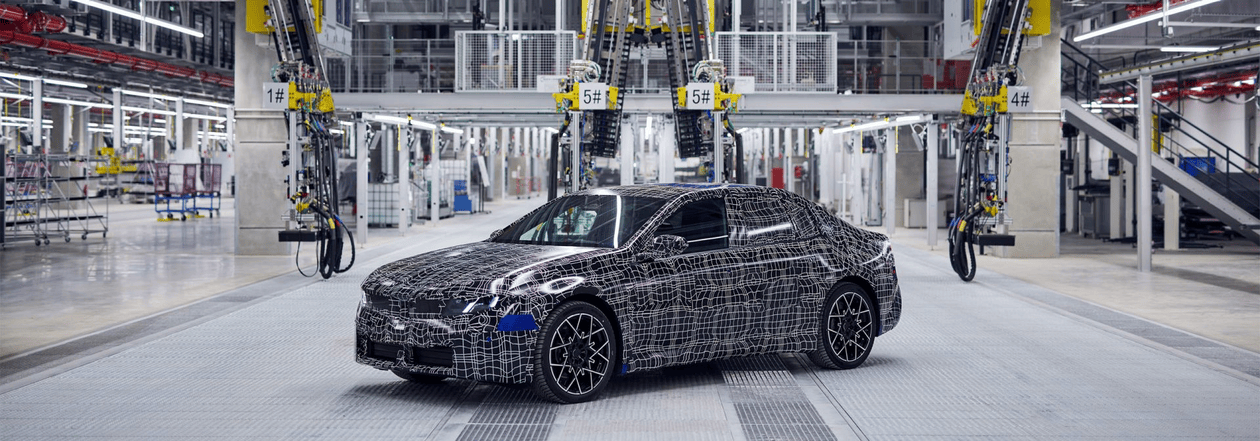
In the longer term, the BMW Group plans to launch more than 40 all-new or revised models by the end of 2027, including core models such as the all-new BMW 3 Series and X5, which will provide a full range of power options, covering fuel, plug-in hybrid and pure electric fields, to achieve a strategic layout of "parallel development of fuel and electric vehicles" — stabilizing the luxury profit base with fuel and plug-in hybrid models, and focusing on the new energy growth market with new generation pure electric models. In addition, in 2027, the BMW M brand will also launch its first pure electric M model based on the new generation platform with professional track capabilities, opening a new era of electrification in the high-performance segment market.
For the BMW Group, 2025 was a year of pressure and adjustment. The decline in revenue and profits reflects the growing pains during its transformation period, and the differentiation of regional markets and the imbalance in electrification transformation are the core issues that need to be solved. In 2026, with the concentrated launch of new generation models and the precise efforts in the Chinese market, whether BMW can reverse the profit decline trend and reactivate the growth potential of the Asian market through technological upgrading and localized layout is worthy of continuous attention from the global automotive industry and consumers.

Your go-to source for all things automotive in Malaysia. 🚗 Latest reviews, breaking news, launches & industry trends.
+ Follow We saw this accident this morning, and here’s a reminder to everyone: please drive safe. 2 days ago
  The G50 BMW 3 series is now here, adopting much of the i3's design elements.
So, where's the BMW M3?
#bmw #BMW3Series 4 days ago
The G50 BMW 3 series is now here, adopting much of the i3's design elements.
So, where's the BMW M3?
#bmw #BMW3Series 4 days ago  DRIFT PARTY in Malaysia! Can the Xiaomi SU7, Yangwang U8 mix it up against JDM favourites in KL?
Our adventure with the Xiaomi SU7 and Yangwang U8 brings us to APDCrew circuit as we give witness a drift show. With pro drifters and fan-favourites - RX7s, S15s, Skylines, Supras, and more - in the mix, can our Xiaomi SU7 and Yangwang U8 hold their own?
It's also a quick look at Malaysian car culture, including some wildly modified minivans, and more!
#drift #malaysia #xiaomisu7 #yangwangu8 #larrychen #drifting #JDM跑車 4 days ago
DRIFT PARTY in Malaysia! Can the Xiaomi SU7, Yangwang U8 mix it up against JDM favourites in KL?
Our adventure with the Xiaomi SU7 and Yangwang U8 brings us to APDCrew circuit as we give witness a drift show. With pro drifters and fan-favourites - RX7s, S15s, Skylines, Supras, and more - in the mix, can our Xiaomi SU7 and Yangwang U8 hold their own?
It's also a quick look at Malaysian car culture, including some wildly modified minivans, and more!
#drift #malaysia #xiaomisu7 #yangwangu8 #larrychen #drifting #JDM跑車 4 days ago Get the latest car news first!
Your go-to source for all things automotive in Malaysia. 🚗 Latest reviews, breaking news, launches & industry trends.
We saw this accident this morning, and here’s a reminder to everyone: please drive safe. 2 days ago The G50 BMW 3 series is now here, adopting much of the i3's design elements.
So, where's the BMW M3?
#bmw #BMW3Series 4 days ago DRIFT PARTY in Malaysia! Can the Xiaomi SU7, Yangwang U8 mix it up against JDM favourites in KL?
Our adventure with the Xiaomi SU7 and Yangwang U8 brings us to APDCrew circuit as we give witness a drift show. With pro drifters and fan-favourites - RX7s, S15s, Skylines, Supras, and more - in the mix, can our Xiaomi SU7 and Yangwang U8 hold their own?
It's also a quick look at Malaysian car culture, including some wildly modified minivans, and more!
#drift #malaysia #xiaomisu7 #yangwangu8 #larrychen #drifting #JDM跑車 4 days ago  ProtonGWMVolkswagenJAECOOVolvoPeroduaToyotaHondaTESLAMitsubishiMazdaJetourCheryBYDLexusBMWMercedes-BenziCAURZeekrIsuzuNissanLeapmotorPorscheFordOMODAMINIMGSuzukiXPengHyundaiWulingKiaSubaruDenzaGACLand RoverDongfengCAMAudiPeugeotFotonMAXUSsmartDaihatsuJACJMCMaseratiLotusAlfa RomeoRenaultGolden DragonKaiceneSeresLamborghiniFerrariJeepRolls-RoyceLepasAston MartinMcLarenChevroletBentleyFiatBAICForthingGeelyRoeweAeolusChanganARCFOXDeepalExeedHongqiVoyahJaguarKGMBuforiAcuraCadillacDodgeAbarthINEOSMHEROJMEVFreelander
 © 2024 Bitauto.com. All Rights Reserved.
Bitauto (www.yiche.com and www.bitauto.com) is one of the most visited automotive websites in China. We provide detailed info on Chinese car brands available in your area. Please note that the information provided on this website is based on publicly available data and is for reference only. It may not be fully updated or accurate at all times.
Help us improve our website


