
Search History
Popular Searches
English
Dealer Login / Sign Up
For performance cars, what best conveys the essence of driving control is never the gorgeous exterior kits, but every detail touched by the driver's fingertips and palms. Toyota Gazoo Racing (GR) clearly understands this well. In the upgrade of the 2026 GR Yaris, instead of choosing a drastic power revolution, it focused its core efforts on the redesign of the steering wheel—the part most frequently touched by the driver. With seemingly minor adjustments, it achieved a qualitative leap in driving experience, and this upgrade has also become the most eye-catching highlight of this classic hot hatch.
According to official information released on Toyota Japan's official website on March 13th, the research and development of this new GR steering wheel has been permeated with motorsport genes throughout. The R&D team collaborated in depth with professional racing drivers, integrating real feedback from on-track tests into every design detail. After numerous clay prototype tests and on-track adjustments, the optimal plan was finally determined—this is a direct embodiment of GR's philosophy of "forging better cars through motorsports", which is highly consistent with the core idea emphasized on Toyota's global official website of "continuously optimizing products through motorsports".
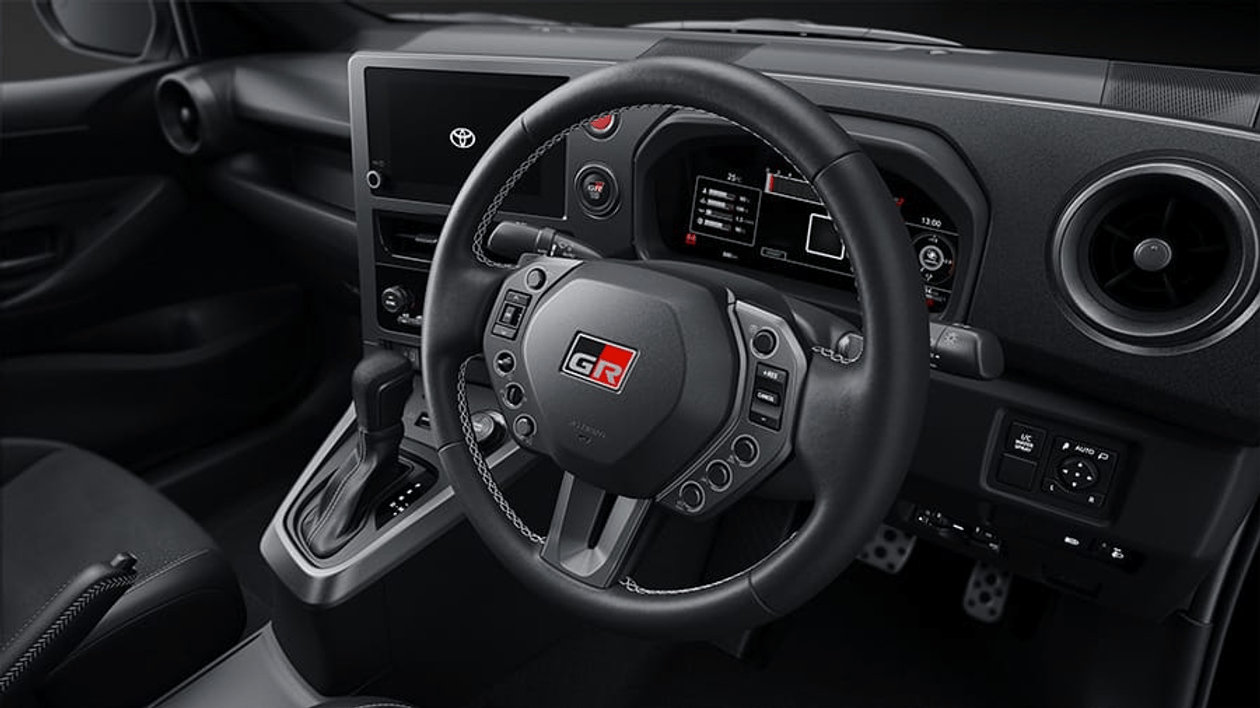
Although the previous GR Yaris steering wheel already had good sporty attributes, professional drivers still reported two major pain points during extreme driving: first, the steering wheel diameter was slightly large, resulting in insufficient responsiveness in scenarios such as intense cornering and 180-degree turns without hand changes; second, the centralized button layout was prone to accidental touches when the palm pushed or pulled the steering wheel, affecting driving concentration. To solve these problems, the new GR steering wheel has been targeted optimized, and every change directly addresses core needs.
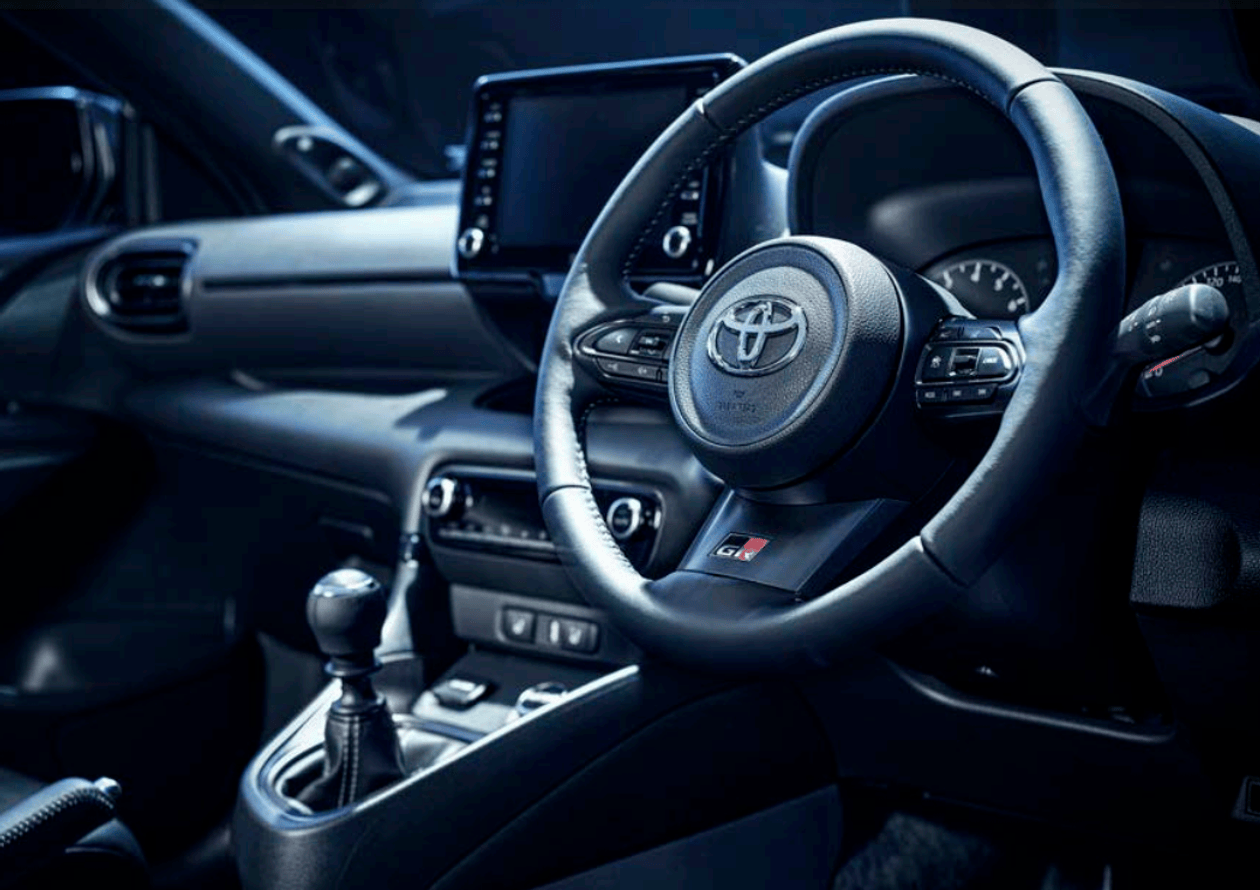
The most intuitive upgrade is the size adjustment: the outer diameter of the new steering wheel is reduced to 360 millimeters, about 5 millimeters smaller than the previous model. This subtle change greatly improves steering response speed, making the steering operation lighter and more precise when the driver is cornering on the track or changing lanes suddenly.
At the same time, the left and right grip parts are deliberately increased in size and adopt an arc design that fits the palm better, allowing the driver to apply more uniform palm pressure when cornering. Even during long periods of intense driving, a stable grip can be maintained. This design has also been highly affirmed by the European official website for "improving driving concentration".
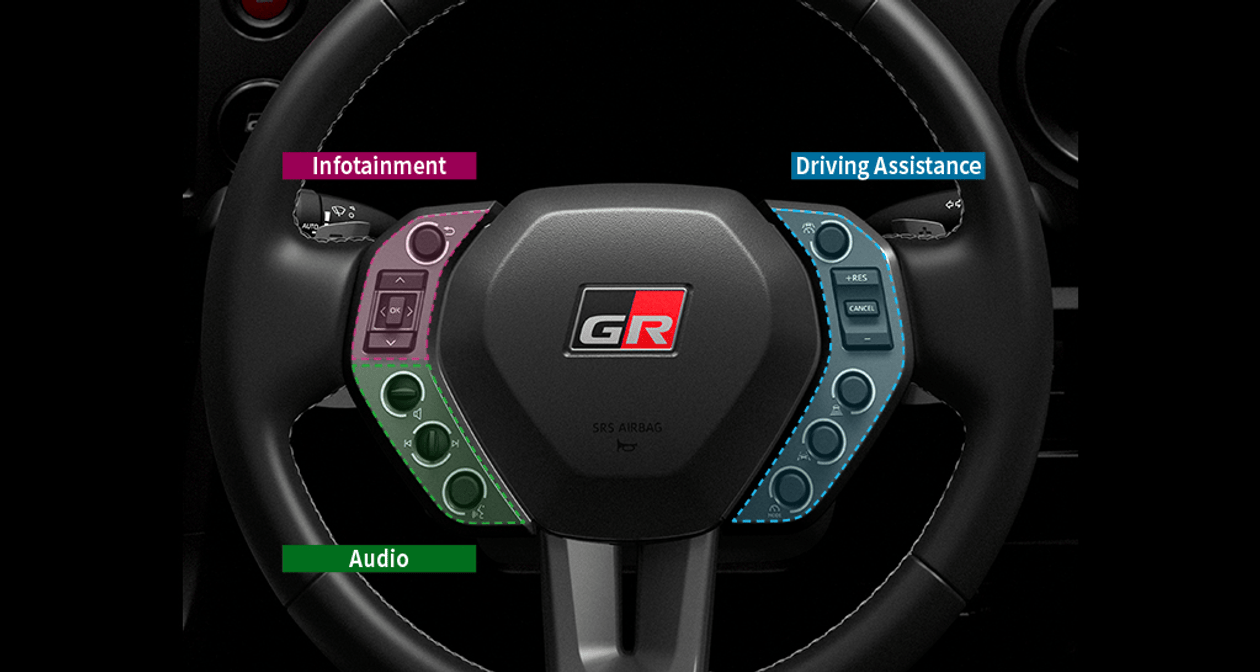
The redesign of the button layout also demonstrates professionalism. The GR team changed the original centralized buttons to an independent and scattered layout, away from the commonly used grip positions at 9 o'clock and 3 o'clock, fundamentally reducing the probability of accidental touches during intense driving. More thoughtfully, annular lighting is added around all buttons, allowing the driver to clearly identify the button functions even when driving on the track at night without looking down, further improving driving safety and convenience.
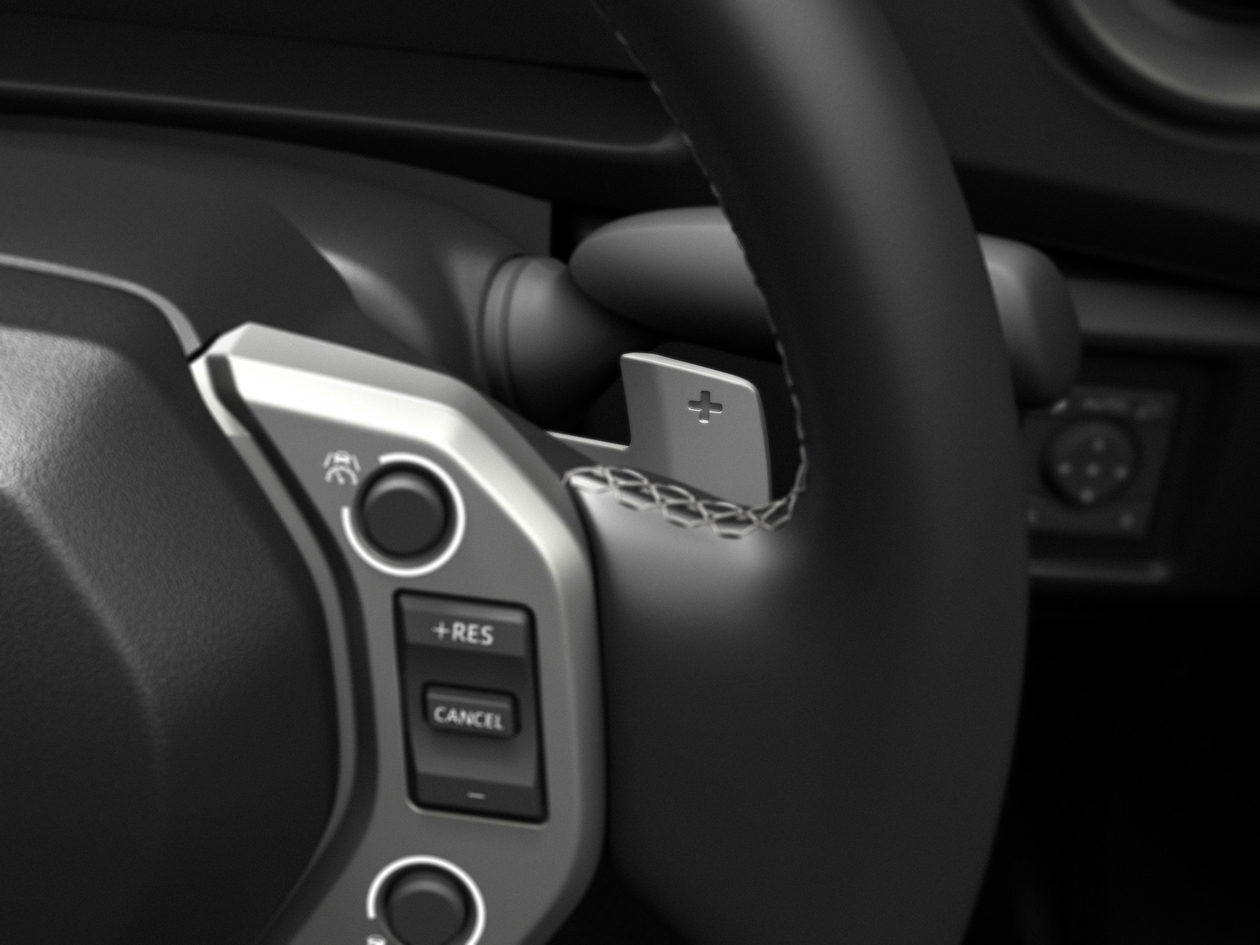
For models equipped with the 8-speed Gazoo Racing Direct automatic transmission, the shift paddles have also undergone a complete innovation. Based on feedback from professional drivers, the previous shift paddles had a stuck feeling during operation, which was particularly obvious in extreme scenarios where the middle finger was used for operation while firmly holding the steering wheel. The new shift paddles have adjusted the lever position, redesigned the shape of the back of the steering wheel to reserve more operating space, and optimized the paddle arc to fit the natural movement trajectory of the fingers, making the shifting operation smoother. Even during high-intensity driving, precise and rapid gear changes can be achieved.
In addition to the steering wheel itself, the GR team also optimized the Electric Power Steering (EPS) system simultaneously. By adjusting the stiffness of the torsion bar in the torque sensor and upgrading the control software, the steering torque detection range is expanded. Even during high-load cornering (such as using high-grip track tires), it can provide stable and linear steering assistance, allowing the driver to clearly perceive road feedback and further enhance driving confidence.
The upgrade of the GR Yaris this time has not changed its core power configuration—it still carries the G16E-GTS 1.6-liter turbocharged three-cylinder engine, outputting 304 horsepower and 400 Nm of torque, matched with a 6-speed manual or 8-speed automatic transmission. The GR-FOUR all-wheel drive system and front and rear Torsen limited-slip differentials are also retained, ensuring its pure performance foundation. In addition, some models are also equipped with Bridgestone Potenza racing tires as standard, paired with retuned front and rear shock absorbers, which work in synergy with the new steering wheel to maximize extreme driving performance.
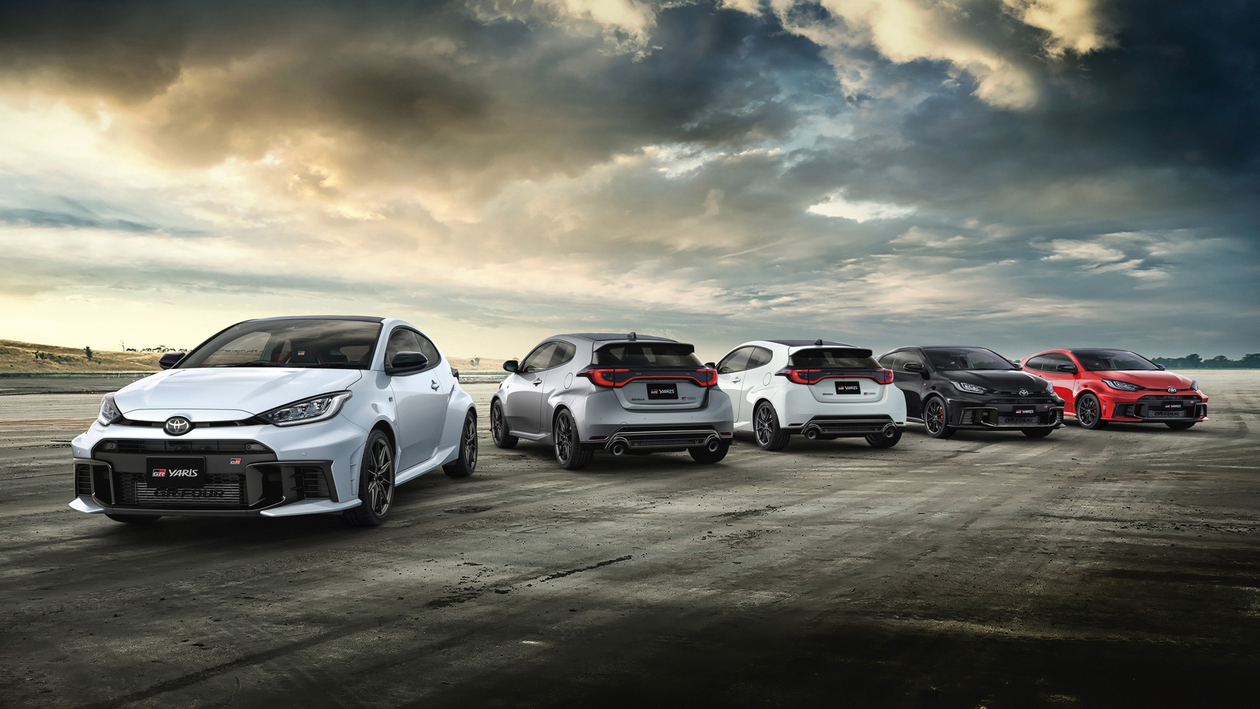
For GR Yaris enthusiasts in Malaysia, since this car landed in the local market, it has gained many fans with its strong performance. Among the currently sold local models, the automatic version is priced at RM 325,600, and the manual version is RM 315,600. Currently, the upgraded version has opened for pre-order in Japan and is scheduled to go on sale on April 6th, and the European market is also expected to follow soon. However, as of now, UMW Toyota Motor has not announced whether this steering wheel upgrade will be introduced to the Malaysian market, which has become the focus of local car fans.

Your go-to source for all things automotive in Malaysia. 🚗 Latest reviews, breaking news, launches & industry trends.
+ Follow We saw this accident this morning, and here’s a reminder to everyone: please drive safe. 2 days ago
  The G50 BMW 3 series is now here, adopting much of the i3's design elements.
So, where's the BMW M3?
#bmw #BMW3Series 4 days ago
The G50 BMW 3 series is now here, adopting much of the i3's design elements.
So, where's the BMW M3?
#bmw #BMW3Series 4 days ago  DRIFT PARTY in Malaysia! Can the Xiaomi SU7, Yangwang U8 mix it up against JDM favourites in KL?
Our adventure with the Xiaomi SU7 and Yangwang U8 brings us to APDCrew circuit as we give witness a drift show. With pro drifters and fan-favourites - RX7s, S15s, Skylines, Supras, and more - in the mix, can our Xiaomi SU7 and Yangwang U8 hold their own?
It's also a quick look at Malaysian car culture, including some wildly modified minivans, and more!
#drift #malaysia #xiaomisu7 #yangwangu8 #larrychen #drifting #JDM跑車 4 days ago
DRIFT PARTY in Malaysia! Can the Xiaomi SU7, Yangwang U8 mix it up against JDM favourites in KL?
Our adventure with the Xiaomi SU7 and Yangwang U8 brings us to APDCrew circuit as we give witness a drift show. With pro drifters and fan-favourites - RX7s, S15s, Skylines, Supras, and more - in the mix, can our Xiaomi SU7 and Yangwang U8 hold their own?
It's also a quick look at Malaysian car culture, including some wildly modified minivans, and more!
#drift #malaysia #xiaomisu7 #yangwangu8 #larrychen #drifting #JDM跑車 4 days ago Get the latest car news first!
Your go-to source for all things automotive in Malaysia. 🚗 Latest reviews, breaking news, launches & industry trends.
We saw this accident this morning, and here’s a reminder to everyone: please drive safe. 2 days ago The G50 BMW 3 series is now here, adopting much of the i3's design elements.
So, where's the BMW M3?
#bmw #BMW3Series 4 days ago DRIFT PARTY in Malaysia! Can the Xiaomi SU7, Yangwang U8 mix it up against JDM favourites in KL?
Our adventure with the Xiaomi SU7 and Yangwang U8 brings us to APDCrew circuit as we give witness a drift show. With pro drifters and fan-favourites - RX7s, S15s, Skylines, Supras, and more - in the mix, can our Xiaomi SU7 and Yangwang U8 hold their own?
It's also a quick look at Malaysian car culture, including some wildly modified minivans, and more!
#drift #malaysia #xiaomisu7 #yangwangu8 #larrychen #drifting #JDM跑車 4 days ago  ProtonGWMVolkswagenJAECOOVolvoPeroduaToyotaHondaTESLAMitsubishiMazdaJetourCheryBYDLexusBMWMercedes-BenziCAURZeekrIsuzuNissanLeapmotorPorscheFordOMODAMINIMGSuzukiXPengHyundaiWulingKiaSubaruDenzaGACLand RoverDongfengCAMAudiPeugeotFotonMAXUSsmartDaihatsuJACJMCMaseratiLotusAlfa RomeoRenaultGolden DragonKaiceneSeresLamborghiniFerrariJeepRolls-RoyceLepasAston MartinMcLarenChevroletBentleyFiatBAICForthingGeelyRoeweAeolusChanganARCFOXDeepalExeedHongqiVoyahJaguarKGMBuforiAcuraCadillacDodgeAbarthINEOSMHEROJMEVFreelander
 © 2024 Bitauto.com. All Rights Reserved.
Bitauto (www.yiche.com and www.bitauto.com) is one of the most visited automotive websites in China. We provide detailed info on Chinese car brands available in your area. Please note that the information provided on this website is based on publicly available data and is for reference only. It may not be fully updated or accurate at all times.
Help us improve our website


