
Search History
Popular Searches
English
Dealer Login / Sign Up
Despite a recent slowdown in Honda's global EV rollout, the automaker is keeping the momentum alive in Southeast Asia. The Honda e:N2 officially made its regional debut at the ongoing 2026 Bangkok International Motor Show. As a C-segment electric SUV, its arrival in Thailand has naturally left Malaysian enthusiasts asking one big question: when is it our turn?
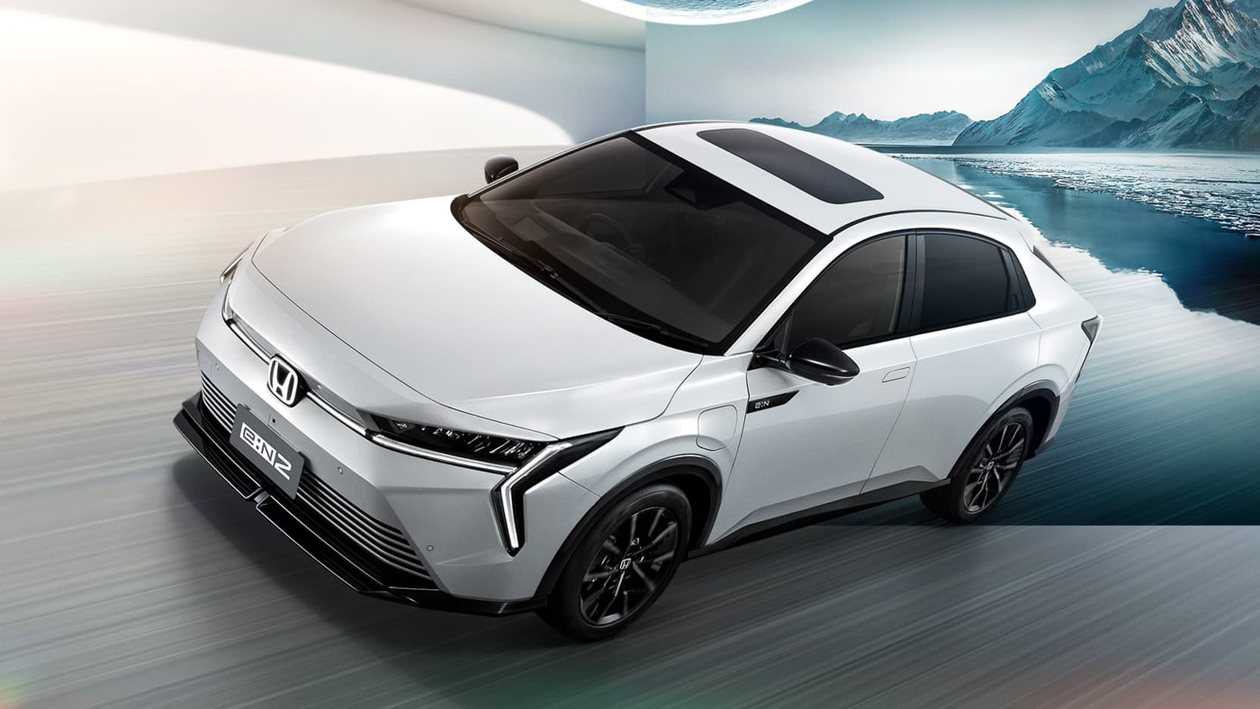
Before diving into the specs, it helps to understand where the e:N2 fits into the Honda family. Think of it as the sibling to the e:N1 (Honda's first pure EV in Malaysia, priced at RM149,900). Essentially, both models are rebadged versions of the Dongfeng Honda e:NS2 from China. In Japan, this model will be sold under the classic "Insight" nameplate, but its core configuration and performance are basically the same. For the Malaysian market, the badge matters less than what's underneath — and the core performance remains identical across regions.
As the "elder sibling" of the e:N lineup, the e:N2 steps up in both size and positioning, making it a true C-segment contender. Its dimensions are 4,788 mm in length, 1,838 mm in width, 1,570 mm in height, with a wheelbase of 2,733 mm. This puts it squarely in the ring with heavyweights like the BYD Atto 3 and Proton e.MAS 7 — both are top sellers in Malaysia's 2025 EV market. Notably, the e:N2 has a ground clearance of 143 mm, slightly higher than the e:N1's 135 mm, offering better practicality and peace of mind on poorly maintained roads.
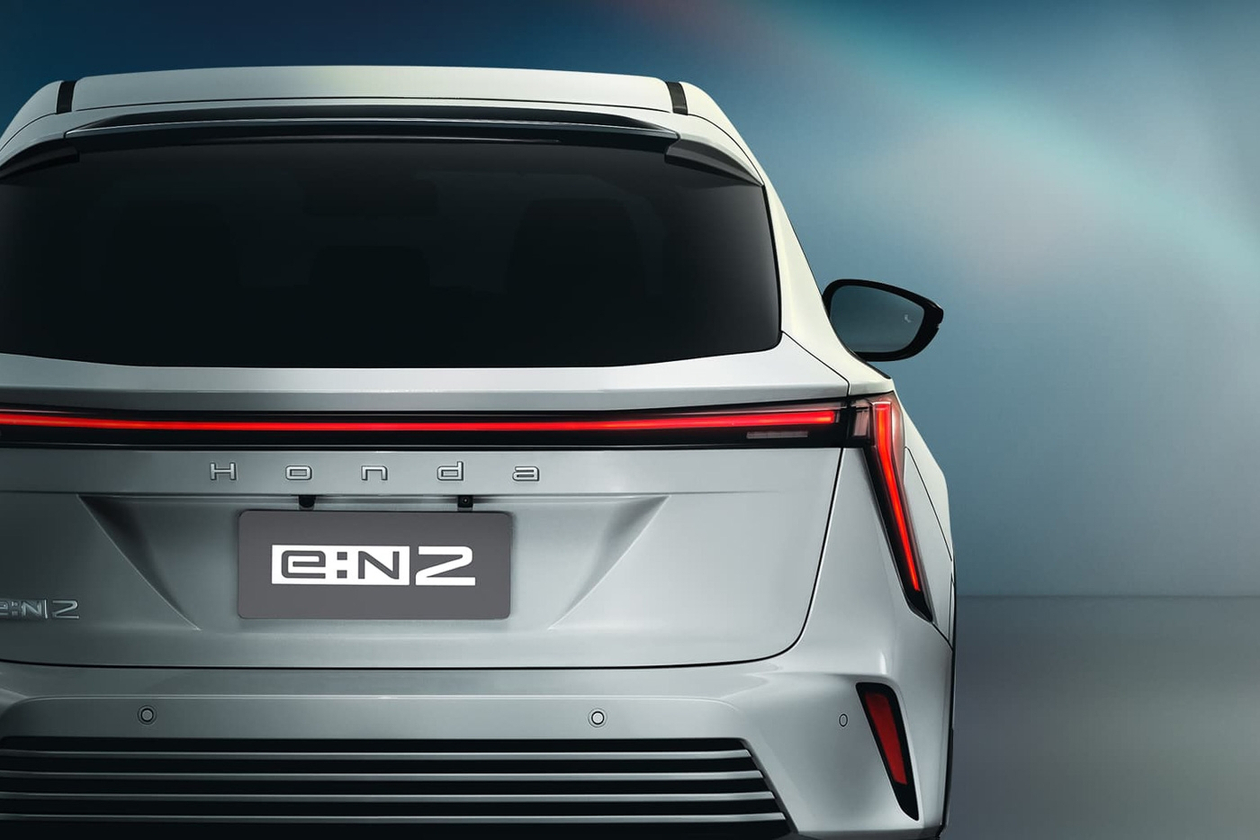
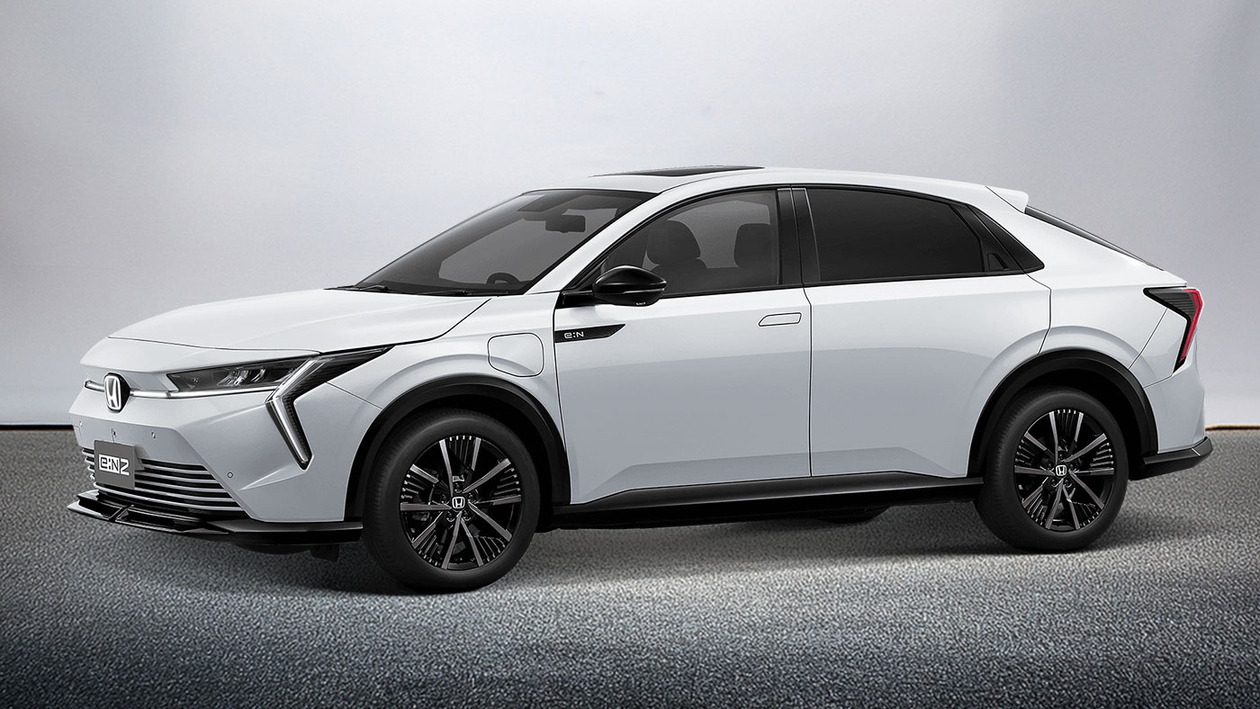
In terms of exterior design, the e:N2 is more stylish than the e:N1, departing from the e:N1's family-friendly style similar to the Honda HR-V. It adopts a fastback roofline, sharp arrow-shaped headlights and a full-width taillight. The slim horizontal front grille and rear bumper trim adds to its unique flair, but beauty is subjective, and everyone can judge according to their own preferences. In addition, the new car is equipped with hidden pop-out door handles (at least for the front doors), and the charging port is conveniently relocated to the front left fender, which is much easier to access than the e:N1's nose-mounted port. The Thai-spec model also comes standard with 18-inch dark two-tone wheels.
The interior and configuration are major highlights of the e:N2, which is more futuristic than the e:N1. It features a minimalist dashboard layout, with a 12.9-inch horizontal infotainment touchscreen as the centerpiece, equipped with the latest Honda Connect 4.0 system for improved responsiveness. This is complemented by a 9.4-inch letterbox-style instrument cluster and an 11.5-inch Head-Up Display (HUD), keeping crucial driving data directly in the driver's line of sight.
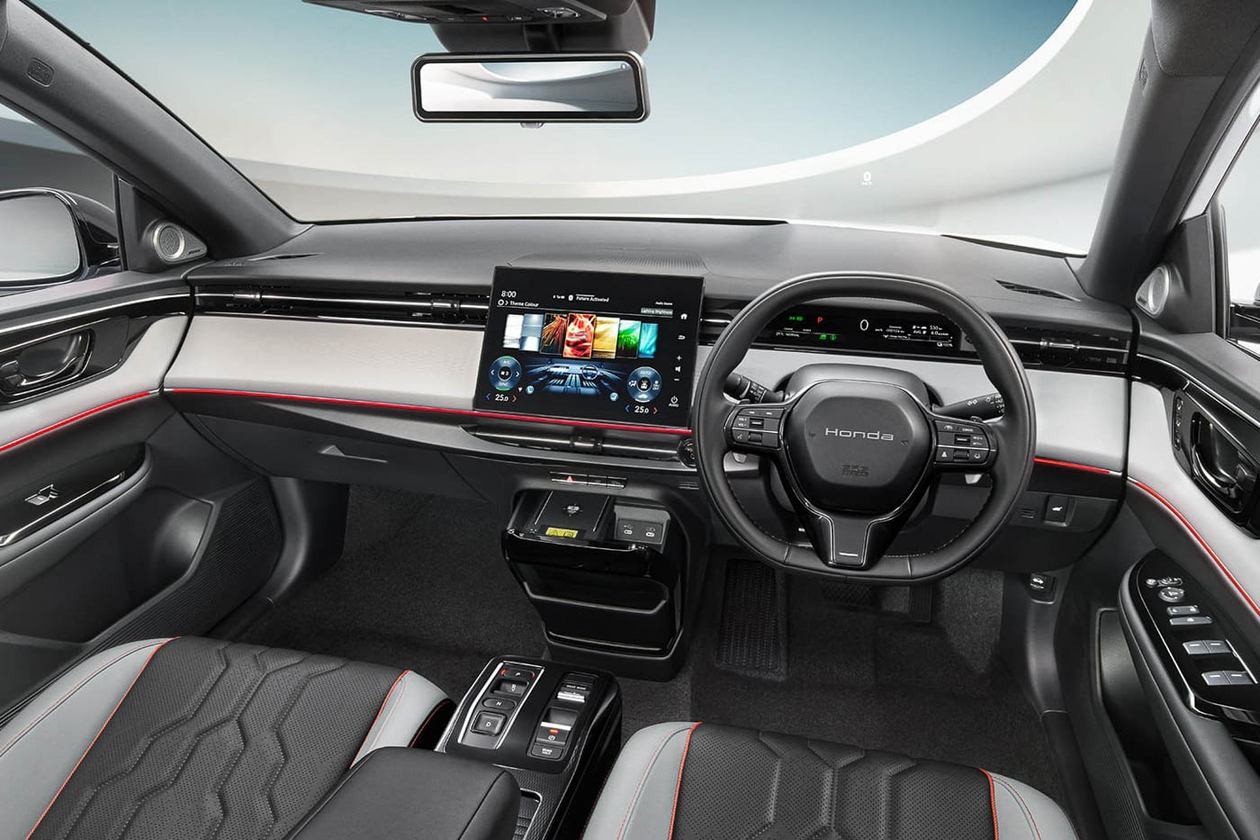
Judging by the standard equipment in the Thai market, the e:N2 offers great value. Malaysian drivers can refer to the following: ventilated power-adjustable front seats (highly practical during the scorching Malaysian heat), dual-zone automatic climate control with rear air vents for family comfort, fragrance system, sunroof, Qi wireless charging pad, 12-speaker Bose sound system, and wireless Apple CarPlay and Android Auto — all of these are frequently used functions. Especially seat ventilation and wireless connectivity, which are considered mid-to-high-end configurations in local models. The interior is equipped with two-tone gray and black seats, contrasted by vibrant orange accents on the dashboard, door panels and headrests.
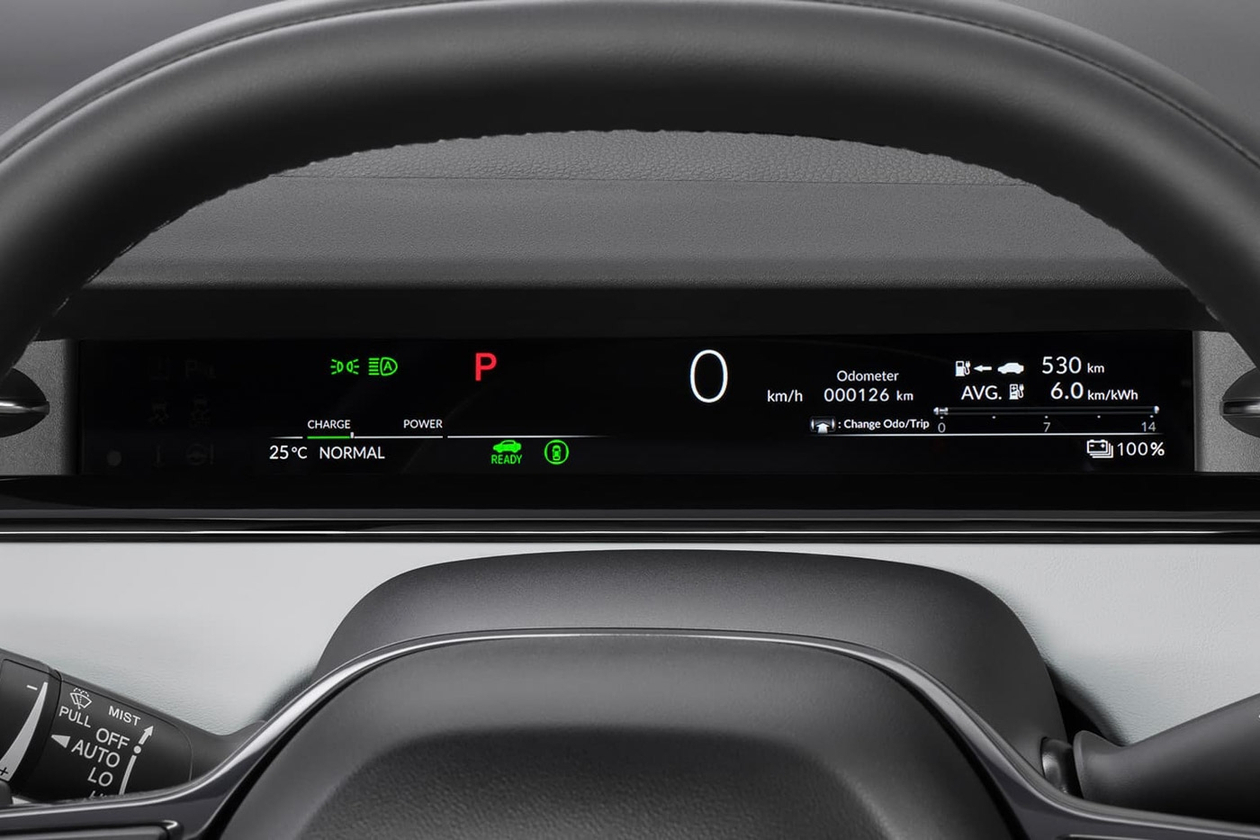
Under the hood, the e:N2 is equipped with the same three-in-one electric drive system as the e:N1, with a maximum power of 150 kW (approximately 204 PS) and a peak torque of 310 Nm, providing sufficient performance for daily commuting and highway driving. It is equipped with a 68.8kWh ternary lithium battery pack provided by CATL, with an NEDC range of up to 530 km and a WLTP range of approximately 412 km — basically the same as the e:N1's WLTP range (412 km). Despite its larger size, the range performance remains impressive. In terms of charging, it supports a maximum 78kW DC fast charging, taking only about 40 minutes to charge from 30% to 80%. Daily slow charging can also meet household needs, and it is consistent with the e:N1’s charging specifications, compatible with most existing charging piles in Malaysia.
Currently, the Honda e:N2 is only available in a single variant in Thailand, priced at 1.429 million Thai baht (approximately RM180,000), about 230,000 Thai baht higher than the e:N1 in the Thai market. Based on the e:N1's price in Malaysia (RM149,900), if the e:N2 is launched in Malaysia, the expected price will be between RM180,000 and RM200,000, positioned higher than the e:N1 and targeting the mid-to-high-end C-segment electric SUV market.
To date, Honda Malaysia has not yet officially announced plans to launch the e:N2. However, given the popularity of the e:N1 in Malaysia (hundreds of units in the first batch were quickly booked when launched in 2025) and the rapid development of Malaysia's EV market (led by Tesla and BYD), the possibility of the e:N2 arriving in Malaysia is very high. After all, the car's size, configuration and positioning perfectly fill the gap in Honda's local lineup, and can also meet Malaysian consumers' demand for spacious, high-configuration electric SUVs.
We'll be keeping a close eye on Honda Malaysia for any official updates. As soon as local launch dates, finalized specs, and official pricing drop, we'll bring the news straight to you.

Your go-to source for all things automotive in Malaysia. 🚗 Latest reviews, breaking news, launches & industry trends.
+ Follow Another Chery Omoda 5 rear axle has detached, and this time it happened in Tebrau.
#chery #cheryOmoda5 1 minute ago
Another Chery Omoda 5 rear axle has detached, and this time it happened in Tebrau.
#chery #cheryOmoda5 1 minute ago  Checking out Aylezo/Zen Low's Garage: One of Malaysia's best collections with BIG SECRETS inside!
Today, we visit one acclaimed Malaysian racer, Zen Low, and his garage in the outskirts of KL. Known for his forays in various racing disciplines, Zen is also an astute entrepreneur with an eye for top-notch vehicles.
In this exclusive behind-the-scenes look, we take a peek behind those metal gates...and see (and hear!) the stuff we could only dream about.
#malaysia #carculture #zenlow #ferrari #maserati 1 hour ago
Checking out Aylezo/Zen Low's Garage: One of Malaysia's best collections with BIG SECRETS inside!
Today, we visit one acclaimed Malaysian racer, Zen Low, and his garage in the outskirts of KL. Known for his forays in various racing disciplines, Zen is also an astute entrepreneur with an eye for top-notch vehicles.
In this exclusive behind-the-scenes look, we take a peek behind those metal gates...and see (and hear!) the stuff we could only dream about.
#malaysia #carculture #zenlow #ferrari #maserati 1 hour ago  Proton S70 i-GT 1.5 Prime kini lebih mampu dimiliki!
Dengan harga yang lebih mampu milik ia masih menawarkan pakej yang cukup lengkap.
Dalam video kali ini, saya membawa anda melihat dengan lebih dekat Proton S70 i-GT 1.5 Prime.
Dari reka bentuk luaran, ruang kabin, teknologi, ciri keselamatan dan yang paling penting, pengalaman memandu.
#ProtonS70 #ProtonS70Prime #ProtonS70Review #ProtonMalaysia #CarReviewMalaysia #KeretaMalaysia #SedanMalaysia #AutomotifMalaysia 1 day ago
Proton S70 i-GT 1.5 Prime kini lebih mampu dimiliki!
Dengan harga yang lebih mampu milik ia masih menawarkan pakej yang cukup lengkap.
Dalam video kali ini, saya membawa anda melihat dengan lebih dekat Proton S70 i-GT 1.5 Prime.
Dari reka bentuk luaran, ruang kabin, teknologi, ciri keselamatan dan yang paling penting, pengalaman memandu.
#ProtonS70 #ProtonS70Prime #ProtonS70Review #ProtonMalaysia #CarReviewMalaysia #KeretaMalaysia #SedanMalaysia #AutomotifMalaysia 1 day ago Get the latest car news first!
Your go-to source for all things automotive in Malaysia. 🚗 Latest reviews, breaking news, launches & industry trends.
Another Chery Omoda 5 rear axle has detached, and this time it happened in Tebrau.
#chery #cheryOmoda5 1 minute ago Checking out Aylezo/Zen Low's Garage: One of Malaysia's best collections with BIG SECRETS inside!
Today, we visit one acclaimed Malaysian racer, Zen Low, and his garage in the outskirts of KL. Known for his forays in various racing disciplines, Zen is also an astute entrepreneur with an eye for top-notch vehicles.
In this exclusive behind-the-scenes look, we take a peek behind those metal gates...and see (and hear!) the stuff we could only dream about.
#malaysia #carculture #zenlow #ferrari #maserati 1 hour ago Proton S70 i-GT 1.5 Prime kini lebih mampu dimiliki!
Dengan harga yang lebih mampu milik ia masih menawarkan pakej yang cukup lengkap.
Dalam video kali ini, saya membawa anda melihat dengan lebih dekat Proton S70 i-GT 1.5 Prime.
Dari reka bentuk luaran, ruang kabin, teknologi, ciri keselamatan dan yang paling penting, pengalaman memandu.
#ProtonS70 #ProtonS70Prime #ProtonS70Review #ProtonMalaysia #CarReviewMalaysia #KeretaMalaysia #SedanMalaysia #AutomotifMalaysia 1 day ago  ProtonGWMVolkswagenJAECOOVolvoPeroduaToyotaHondaTESLAMitsubishiMazdaJetourCheryBYDLexusBMWMercedes-BenziCAURZeekrIsuzuNissanLeapmotorPorscheFordOMODAMINIMGSuzukiXPengHyundaiWulingKiaSubaruDenzaGACLand RoverDongfengCAMAudiPeugeotFotonMAXUSsmartDaihatsuJACJMCMaseratiLotusAlfa RomeoRenaultGolden DragonKaiceneSeresLamborghiniFerrariJeepRolls-RoyceLepasAston MartinMcLarenChevroletBentleyFiatBAICForthingGeelyRoeweAeolusChanganARCFOXDeepalExeedHongqiVoyahJaguarKGMBuforiAcuraCadillacDodgeAbarthINEOSMHEROJMEVFreelander
 © 2024 Bitauto.com. All Rights Reserved.
Bitauto (www.yiche.com and www.bitauto.com) is one of the most visited automotive websites in China. We provide detailed info on Chinese car brands available in your area. Please note that the information provided on this website is based on publicly available data and is for reference only. It may not be fully updated or accurate at all times.
Help us improve our website


