
Search History
Popular Searches
English
Dealer Login / Sign Up
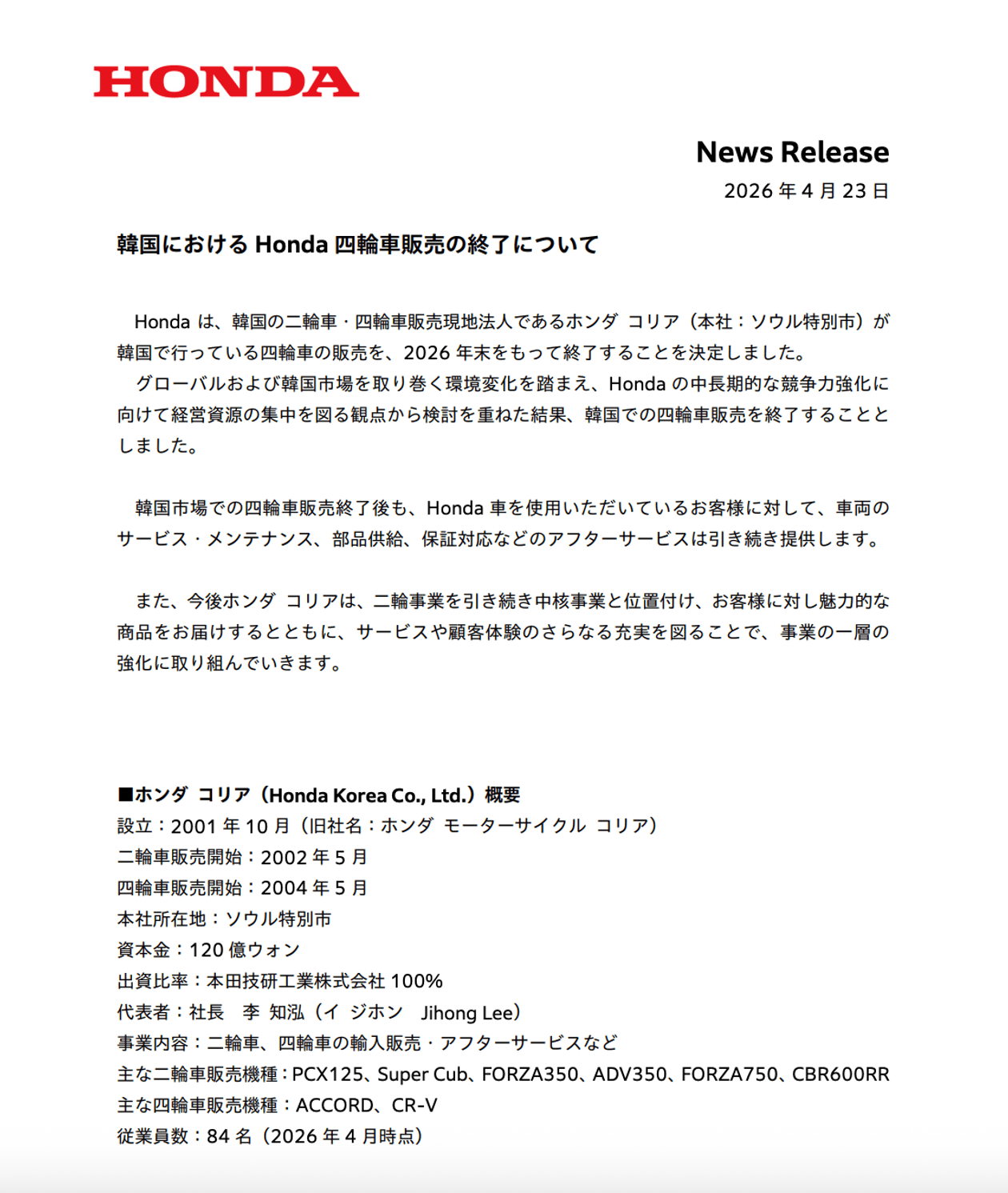
Honda, the Japanese giant that once redefined South Korea's import landscape as the first brand to eclipse 10,000 annual sales, has officially entered its final countdown. In a recent announcement, Honda confirmed that due to the global automotive transition and a sharp downturn in local performance, it will cease all passenger car sales operations in South Korea by the end of 2026.
This signals a definitive retreat for the Japanese powerhouse. After 23 years, the brand that once saw Korean consumers lining up for its keys is officially waving the white flag.
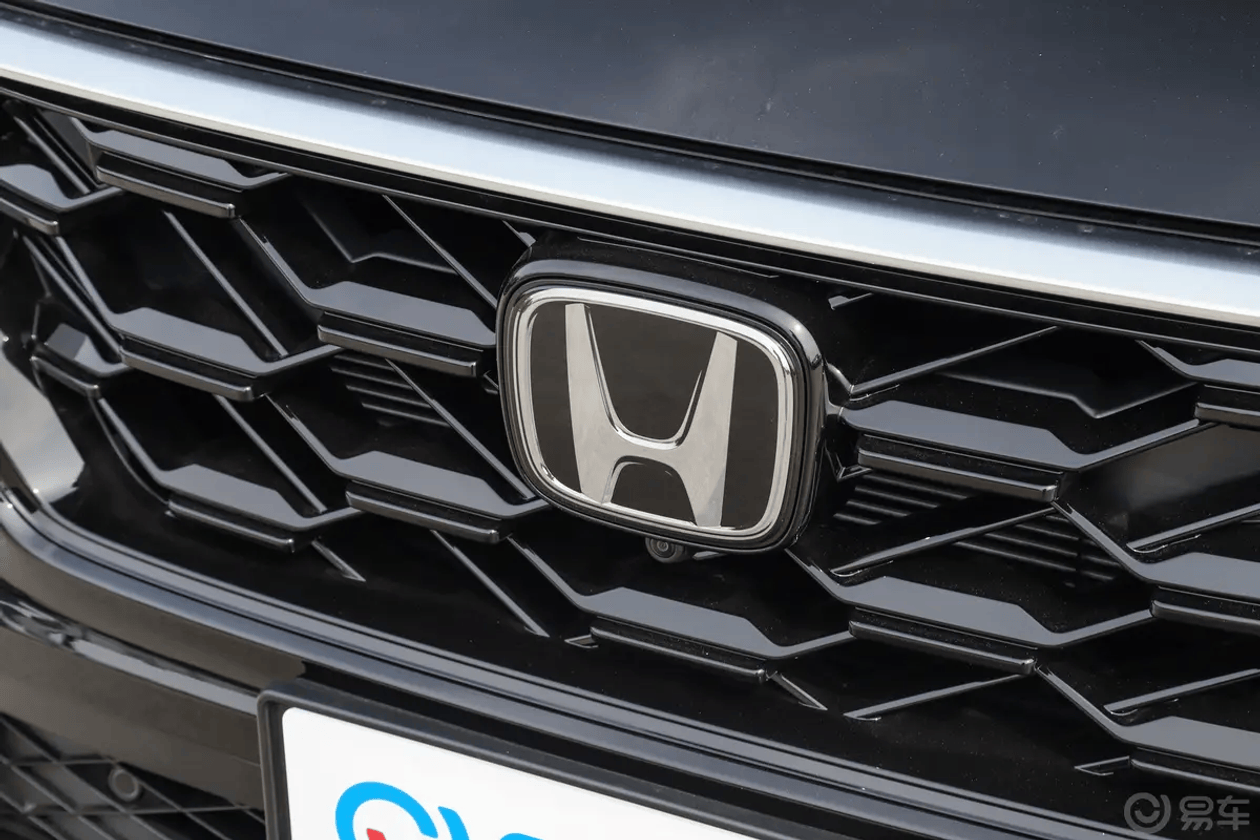
Honda's journey in South Korea was once the gold standard for foreign automakers.
2001: Leveraging market liberalization, Honda debuted its motorcycle division.
2003: Formally entered the passenger car market. The Accord and CR-V quickly cultivated a loyal following, built on a reputation for excellent durability and fuel efficiency.
2008 (The Zenith): Honda reached its pinnacle with annual sales of 12,356 units, becoming the first import brand in South Korean history to break the 10,000-unit milestone.
However, the tide turned in 2019. The Korea-Japan trade dispute ignited the "Boycott Japan" movement, crippling Honda's momentum. By 2025, annual sales plummeted to just 1,951 units, with market share withering to less than 1%. The situation became untenable in Q1 2026, with a mere 84 units sold in the month of March.
Why did the "H-badge" falter in South Korea?
The Hyundai-Kia Hegemony: While Malaysians are familiar with Proton and Perodua's market presence, they pale in comparison to Hyundai and Kia, which commanded a near-monopoly of 90% market share in 2025.
Currency and Logistics: Most Honda models were sourced from the U.S. (Ohio plant). Vulnerable to exchange rate volatility and a weakening Won, Honda lost its competitive pricing edge against localized domestic rivals.
The EV Vacuum: As South Korea accelerated its transition to EVs, Honda remained anchored to ICE and hybrid platforms. While Tesla and BYD moved 59,916 and 6,107 units respectively in 2025, Honda was left on the sidelines, further disadvantaged by subsidy structures that favor local production.
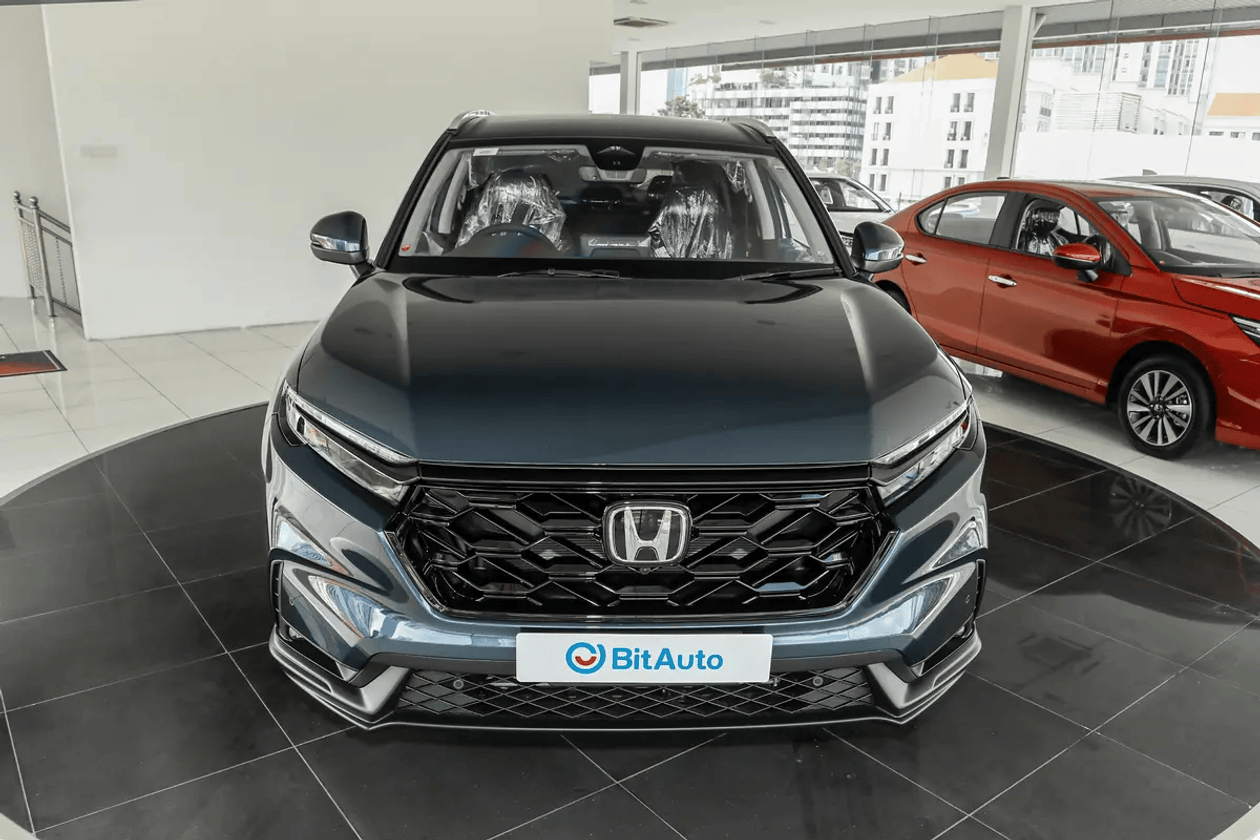
This exit is less a global defeat and more a strategic consolidation. Facing projected losses for FY2025, Honda is reclassifying South Korea as a "non-core market". Resources are being diverted to "profit lifelines" like North America, China, and Southeast Asia (specifically Malaysia and Thailand). Crucially, Honda's motorcycle division, which maintains its #1 market position in Korea, will remain operational.
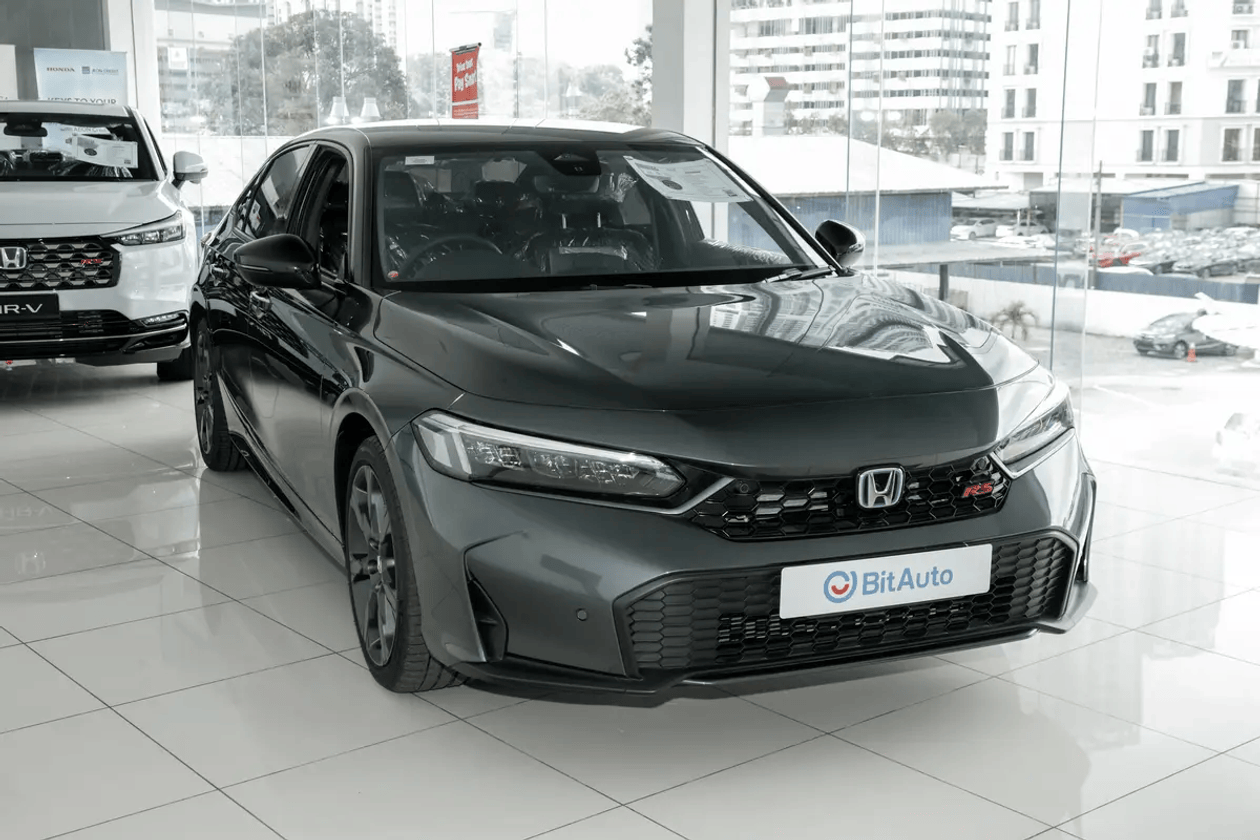
Existing owners will not be "orphaned". Honda has committed to maintaining its after-sales network, ensuring that parts, maintenance, and warranty support remain available long after the last new car leaves the showroom floor.

Your go-to source for all things automotive in Malaysia. 🚗 Latest reviews, breaking news, launches & industry trends.
+ Follow Bookings are now opened for the upcoming 2027 GWM Ora 5 HEV!
RM 115k estimated? That's quite a deal, don't you think? 1 minute ago
Bookings are now opened for the upcoming 2027 GWM Ora 5 HEV!
RM 115k estimated? That's quite a deal, don't you think? 1 minute ago  This weekend is your chance to own a Volvo Selekt Certified Used Car, priced from just RM 148,000.
What are you waiting for?
#volvo 1 minute ago
This weekend is your chance to own a Volvo Selekt Certified Used Car, priced from just RM 148,000.
What are you waiting for?
#volvo 1 minute ago  We saw this accident this morning, and here’s a reminder to everyone: please drive safe. 3 days ago
 Get the latest car news first!
Your go-to source for all things automotive in Malaysia. 🚗 Latest reviews, breaking news, launches & industry trends.
Bookings are now opened for the upcoming 2027 GWM Ora 5 HEV!
RM 115k estimated? That's quite a deal, don't you think? 1 minute ago This weekend is your chance to own a Volvo Selekt Certified Used Car, priced from just RM 148,000.
What are you waiting for?
#volvo 1 minute ago We saw this accident this morning, and here’s a reminder to everyone: please drive safe. 3 days ago  ProtonGWMVolkswagenJAECOOVolvoPeroduaToyotaHondaTESLAMitsubishiMazdaJetourCheryBYDLexusBMWMercedes-BenziCAURZeekrIsuzuNissanLeapmotorPorscheFordOMODAMINIMGSuzukiXPengHyundaiWulingKiaSubaruDenzaGACLand RoverDongfengCAMAudiPeugeotFotonMAXUSsmartDaihatsuJACJMCMaseratiLotusAlfa RomeoRenaultGolden DragonKaiceneSeresLamborghiniFerrariJeepRolls-RoyceLepasAston MartinMcLarenChevroletBentleyFiatBAICForthingGeelyRoeweAeolusChanganARCFOXDeepalExeedHongqiVoyahJaguarKGMBuforiAcuraCadillacDodgeAbarthINEOSMHEROJMEVFreelander
 © 2024 Bitauto.com. All Rights Reserved.
Bitauto (www.yiche.com and www.bitauto.com) is one of the most visited automotive websites in China. We provide detailed info on Chinese car brands available in your area. Please note that the information provided on this website is based on publicly available data and is for reference only. It may not be fully updated or accurate at all times.
Help us improve our website


