Volvo Cars has reported its financial results for the second quarter and first half of 2026, delivering a return to operating profit despite a challenging global automotive market marked by geopolitical uncertainty, economic headwinds and slowing demand in several regions.
While revenue declined during the quarter, the Swedish automaker said tighter cost controls and restructuring measures helped improve profitability, with management expressing confidence that performance will strengthen further in the second half of the year.
|
Metric (SEK million) |
Q2 2026 |
Q2 2025 |
Comment |
|
Revenue |
7,770 |
9,350 |
Lower wholesale volumes, product mix and pricing weighed on revenue |
|
Operating Profit (EBIT) |
80 |
-1,000 |
Returned to profit from an EBIT loss a year earlier |
|
EBIT Margin |
1.1% |
-10.6% |
Improved by 11.7 percentage points year-on-year |
|
Basic EPS (SEK) |
0.42 |
-2.53 |
Returned to positive earnings per share |
|
Free Cash Flow |
-520 |
420 |
Negative due to EX60 inventory build-up and strategic investments |
Revenue
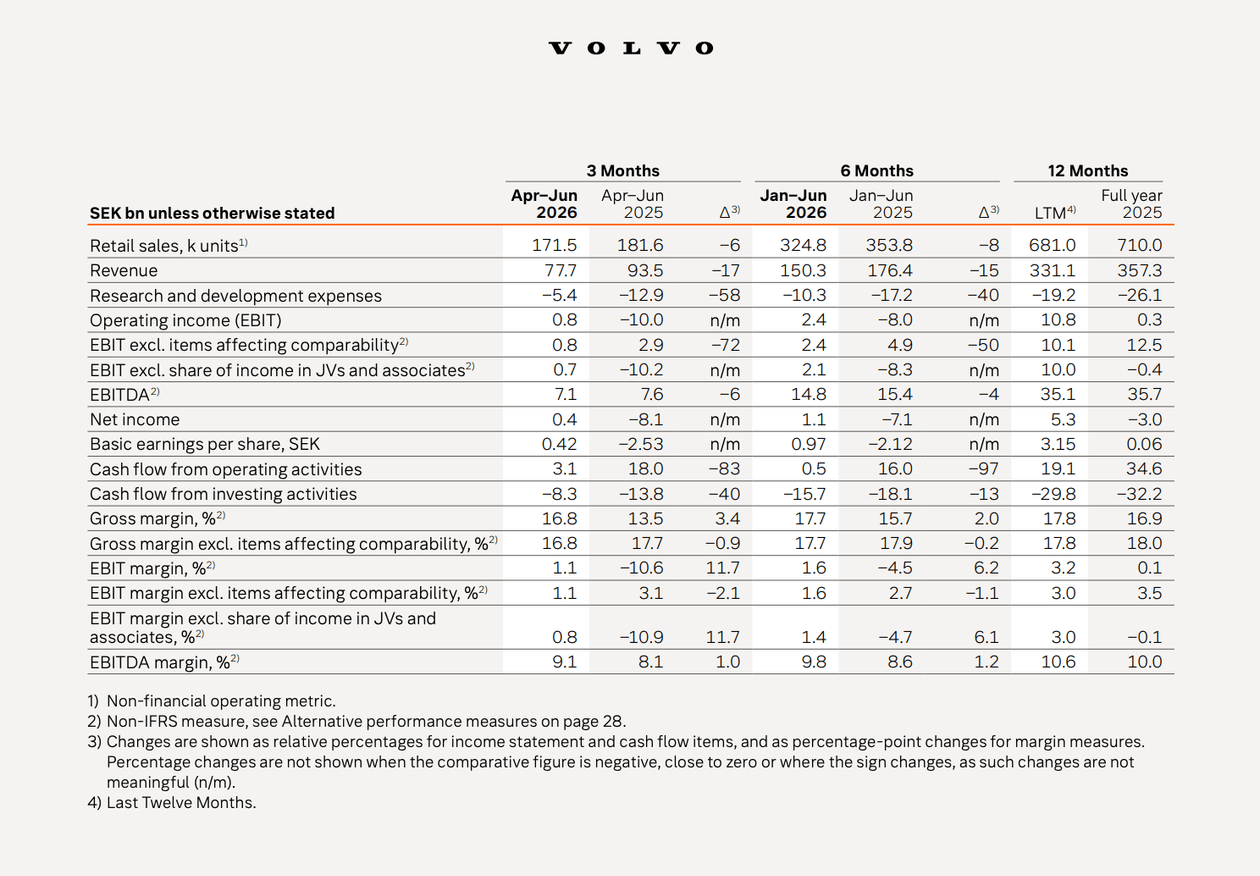
Second-quarter revenue came in at SEK 7.77 billion, down from SEK 9.35 billion a year earlier.
Volvo attributed the decline to lower wholesale volumes, changes in product mix and pricing, as well as the absence of one-off gains recorded in the second quarter of 2025. Those gains totalled around SEK 4.0 billion, including SEK 3.3 billion from the one-time sale of its subscription car asset portfolio.
Operating Profit (EBIT)
Volvo returned to an operating profit of SEK 80 million in the second quarter, compared with an EBIT loss of SEK 1.0 billion in the same period last year. EBIT margin improved to 1.1%, up from -10.6% a year ago.
Earnings Per Share (EPS)
Basic earnings per share rose to SEK 0.42, compared with -SEK 2.53 in the second quarter of 2025.
Free Cash Flow
Free cash flow from operating and investing activities was negative SEK 520 million, versus a positive SEK 420 million a year earlier.
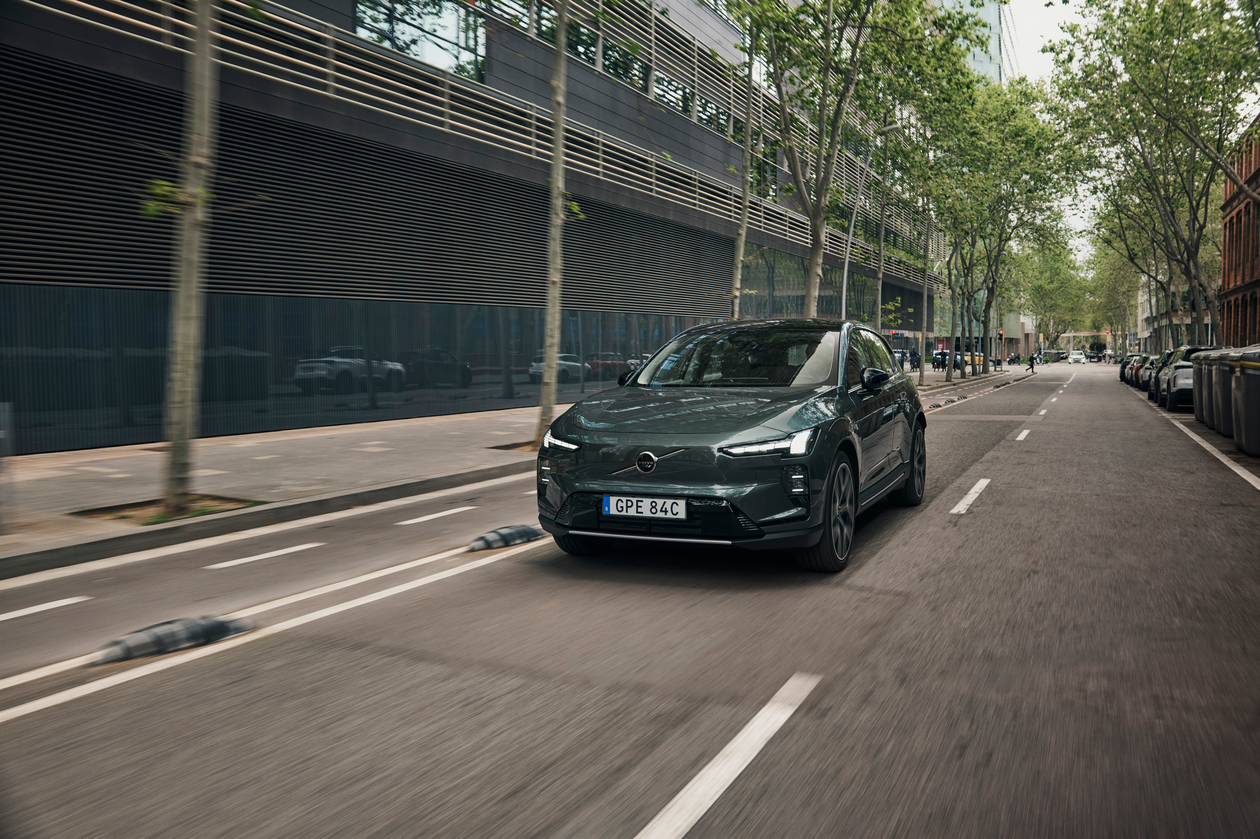
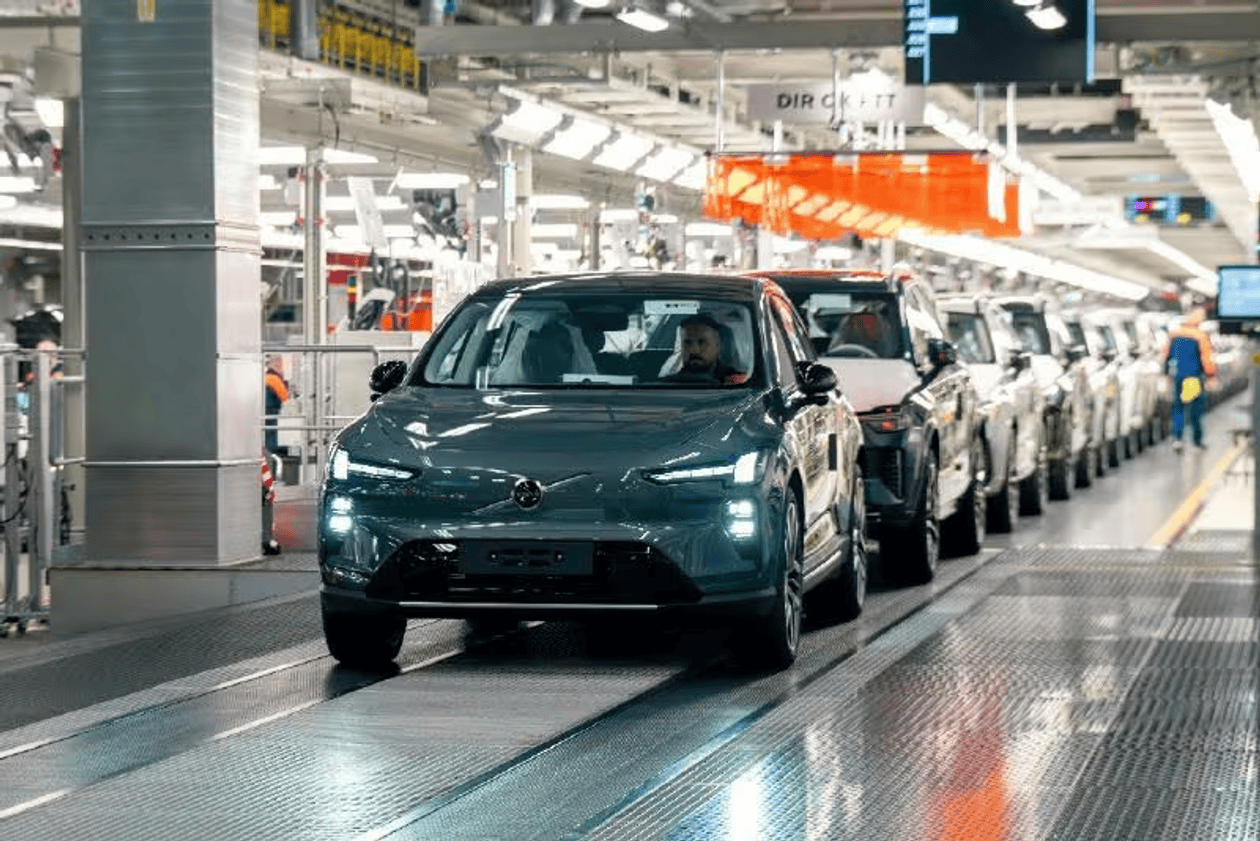
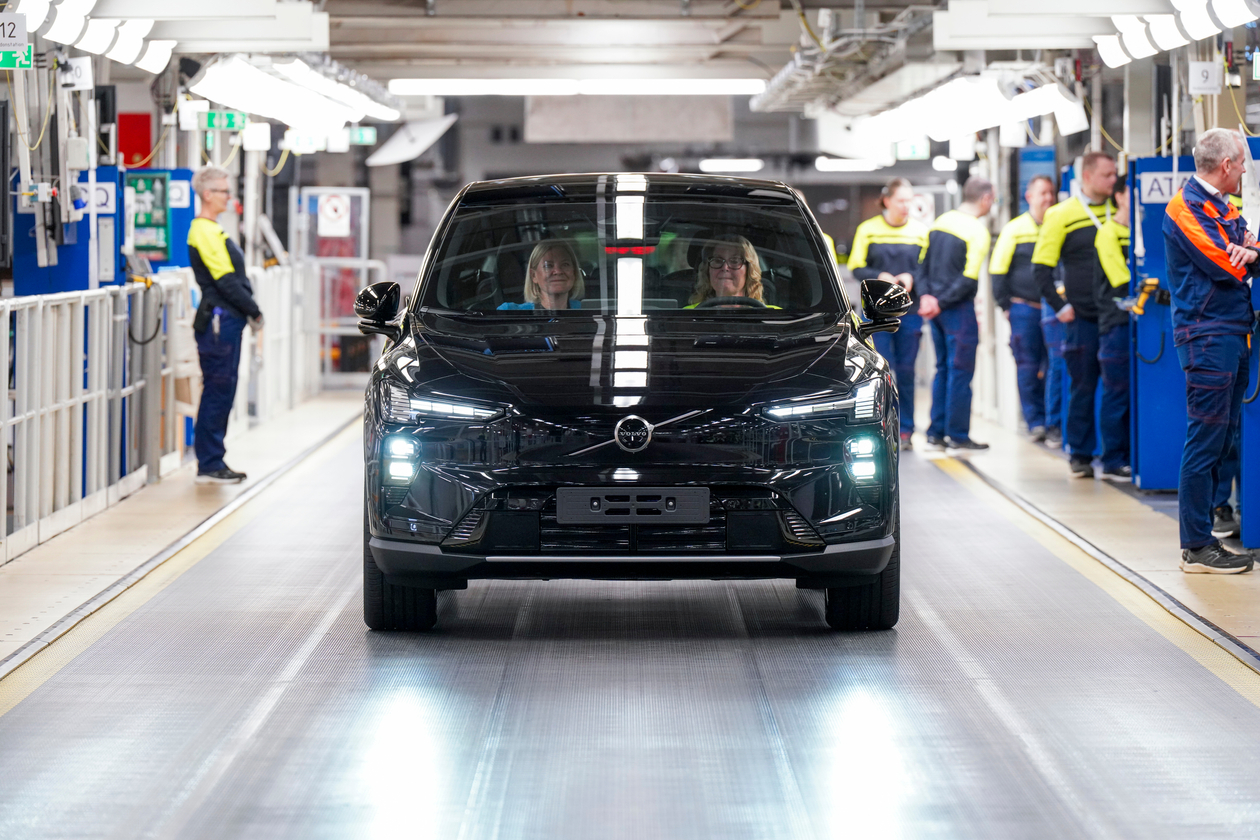
Volvo said the outflow mainly reflected planned inventory build-up at its Torslanda plant ahead of the start of EX60 production, together with strategic investments to support expected market demand.

Volvo Cars also reported progress in its efficiency programme.
The company has already achieved its target of SEK 5 billion in indirect and variable cost savings six months ahead of schedule despite rising raw material costs. This follows the SEK 8 billion in cost reductions completed during 2025.
The savings were supported by structural changes across the business, including a workforce reduction of around 3,000 positions compared with the first half of 2025.
Meanwhile, Volvo signed a memorandum of understanding with the Belgian federal government and the Flemish regional government to strengthen the long-term competitiveness of its Ghent manufacturing plant, including exploring opportunities for contract vehicle production.
Regional performance continued to vary across global markets during the second quarter.
|
Metric |
Q2 2026 |
Notes |
|
BEV Sales Share |
25% |
Up from 21% in Q2 2025 |
|
Electrified vehicle mix (BEV + PHEV) |
52% |
Up from 44% in Q2 2025 |
|
Europe |
+23% YoY |
Growth supported by the inclusion of Türkiye, full-scale EX30 production and strong EX90 demand |
|
United States |
Sales recovered in May and June |
Policy headwinds eased, with further recovery expected in H2 |
|
China |
Challenging market conditions |
Intense competition and pricing pressure, partly offset by stronger demand for premium PHEVs |
|
Fleet CO₂ emissions |
Down 32% vs 2018 baseline |
Reduction maintained during the first half of 2026 |
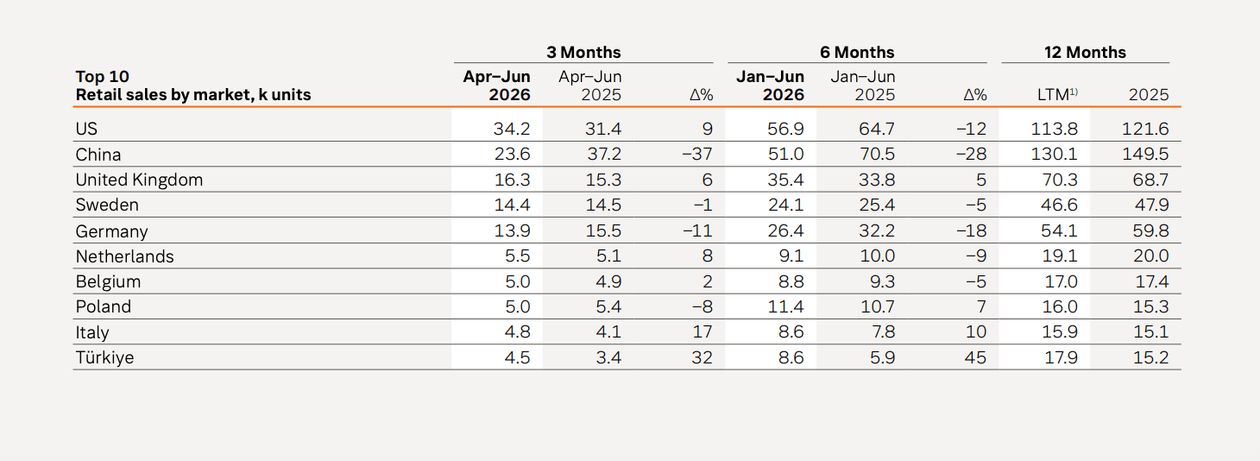
Europe remained Volvo's strongest market. Battery electric vehicle (BEV) sales in Europe, including Türkiye, increased 23% year-on-year, supported by full-scale production of the EX30 and strong demand for the EX90.
In the United States, sales returned to growth in both May and June after several weaker months. Volvo expects the market to continue recovering in the second half of the year as the impact of policy changes affecting electrified vehicles gradually eases.
China remained the most challenging market, with intense competition and ongoing pricing pressure across the industry. However, improving demand for premium plug-in hybrid vehicles helped provide some support.
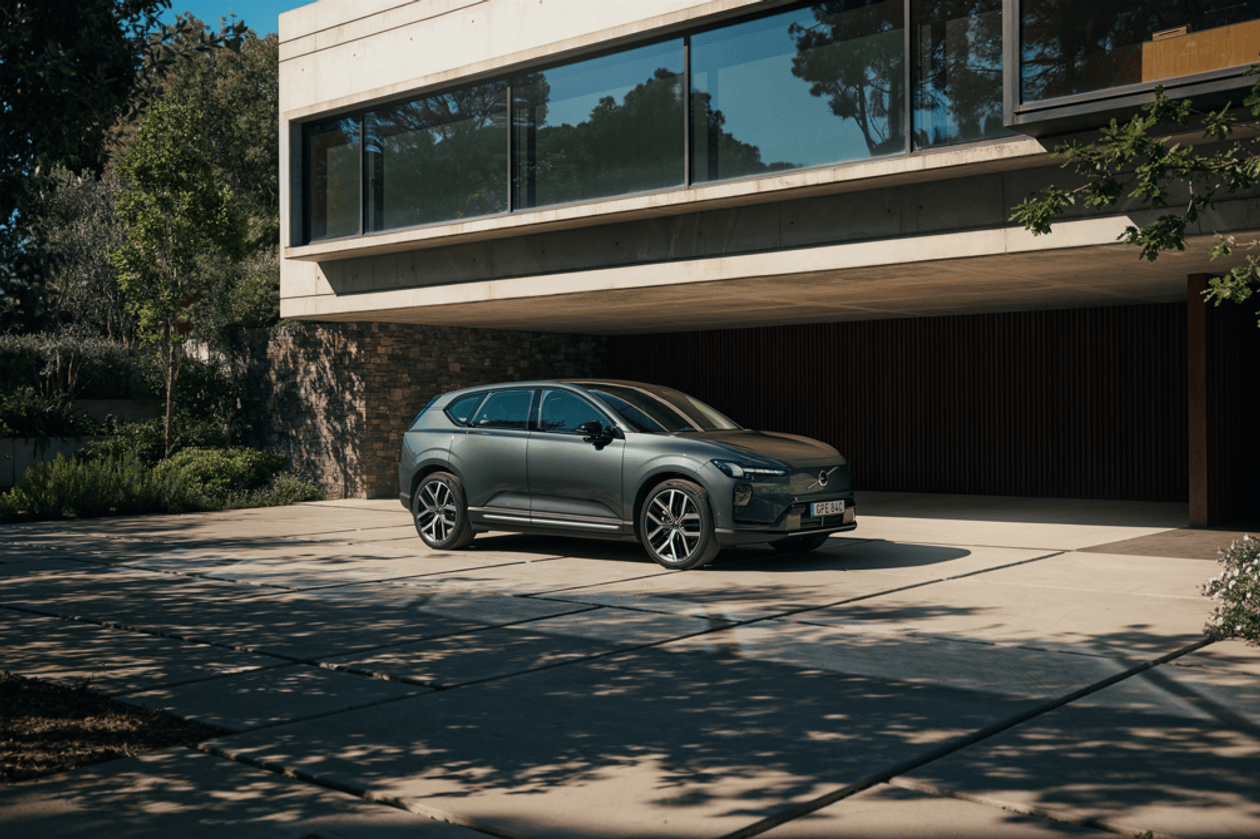
Volvo continued to make progress towards its electrification strategy during the quarter.
Electrification
Battery electric vehicles accounted for 25% of total sales, up from 21% a year earlier, while electrified models, including BEVs and plug-in hybrids, represented 52% of total deliveries, compared with 44% in the second quarter of 2025.
The company also reported a 32% reduction in average carbon emissions per vehicle compared with its 2018 baseline.
Key model updates
The all-new Volvo EX60, the first model based on Volvo's new SPA3 electric platform, entered production at the Torslanda plant in April, with customer deliveries beginning in early July.
The electric SUV offers a claimed driving range of up to 810 km, while DC fast charging from 10% to 80% takes just 16 minutes.
Smart features
Volvo also became the first mainstream automaker to integrate Google Gemini into its infotainment system.
The AI assistant will be available not only on new models but will also be delivered via over-the-air updates to approximately 2.5 million connected Volvo vehicles built as far back as 2020.

Looking ahead, Volvo Cars expects business conditions to improve in the second half of 2026.
President and CEO Håkan Samuelsson said the company had made meaningful progress on its strategic priorities despite a challenging operating environment, adding that management expects the second half of the year to outperform the first.

The company expects stronger sales in the second half, supported by continued growth in Europe, a gradual recovery in the US and measures to address market challenges in China.
Volvo will unveil two new models after the summer, followed by its Strategy Update on 17 September, where it will outline its most ambitious product programme and regional strategy to date.
Free cash flow is expected to turn strongly positive later in the second half, with the company targeting broadly break-even cash flow for the full year.
Read Also: Volvo Cars Q2 2026 Full Financial Report

Your go-to source for all things automotive in Malaysia. 🚗 Latest reviews, breaking news, launches & industry trends.
+ Follow This weekend is your chance to own a Volvo Selekt Certified Used Car, priced from just RM 148,000.
What are you waiting for?
#volvo 1 minute ago
This weekend is your chance to own a Volvo Selekt Certified Used Car, priced from just RM 148,000.
What are you waiting for?
#volvo 1 minute ago  We saw this accident this morning, and here’s a reminder to everyone: please drive safe. 2 days ago
  The G50 BMW 3 series is now here, adopting much of the i3's design elements.
So, where's the BMW M3?
#bmw #BMW3Series 4 days ago
The G50 BMW 3 series is now here, adopting much of the i3's design elements.
So, where's the BMW M3?
#bmw #BMW3Series 4 days ago Get the latest car news first!
Your go-to source for all things automotive in Malaysia. 🚗 Latest reviews, breaking news, launches & industry trends.
This weekend is your chance to own a Volvo Selekt Certified Used Car, priced from just RM 148,000.
What are you waiting for?
#volvo 1 minute ago We saw this accident this morning, and here’s a reminder to everyone: please drive safe. 2 days ago The G50 BMW 3 series is now here, adopting much of the i3's design elements.
So, where's the BMW M3?
#bmw #BMW3Series 4 days ago  ProtonGWMVolkswagenJAECOOVolvoPeroduaToyotaHondaTESLAMitsubishiMazdaJetourCheryBYDLexusBMWMercedes-BenziCAURZeekrIsuzuNissanLeapmotorPorscheFordOMODAMINIMGSuzukiXPengHyundaiWulingKiaSubaruDenzaGACLand RoverDongfengCAMAudiPeugeotFotonMAXUSsmartDaihatsuJACJMCMaseratiLotusAlfa RomeoRenaultGolden DragonKaiceneSeresLamborghiniFerrariJeepRolls-RoyceLepasAston MartinMcLarenChevroletBentleyFiatBAICForthingGeelyRoeweAeolusChanganARCFOXDeepalExeedHongqiVoyahJaguarKGMBuforiAcuraCadillacDodgeAbarthINEOSMHEROJMEVFreelander
© 2024 Bitauto.com. All Rights Reserved.
Bitauto (www.yiche.com and www.bitauto.com) is one of the most visited automotive websites in China. We provide detailed info on Chinese car brands available in your area. Please note that the information provided on this website is based on publicly available data and is for reference only. It may not be fully updated or accurate at all times.
Help us improve our website


